
Rufous-breasted Hermit

Scientific name: Glaucis hirsutus
The Rufous-breasted Hermit is a medium-sized hermit hummingbird of humid forest understory, forest edges, and thickets from Central Panama south through much of northern and central South America and on several Caribbean islands. Its global population is estimated at 5,000,000–50,000,000 mature individuals, the overall trend is decreasing, it is not a migrant, and it is currently assessed as Least Concern.
At a Glance
Family: Trochilidae (hummingbirds)
Clade: Phaethornithinae – Hermits
Genus: Glaucis — 3 species in total
Range: Central Panama, western Colombia, east of the Andes south to central Bolivia, Venezuela, the Guianas, much of northern, western, and eastern Brazil; islands of Grenada, Trinidad, and Tobago
Habitat: Humid lowland and foothill forest, forest edges, second growth, thickets, plantations near forest, often near streams
Elevation: Generally from near sea level up to about 900–1,000 m, locally higher in parts of its range
Length: About 10–12 cm (4–4.7 in)
Weight: Around 7 g (0.25 oz) on average
Number of mature individuals: 5,000,000–50,000,000
Population trend: Decreasing
Movement: Not a migrant
IUCN Red List category: Least Concern
Name Origin
The genus name Glaucis comes from the Greek glaukos, meaning “bluish-gray,” “gleaming,” or “pale green.” The species name hirsutus is Latin for “hairy” or “bristly,” likely referring to filamentous feathering or overall texture in early descriptions. The English name “Rufous-breasted Hermit” describes its rich rufous underparts and its placement among the hermit hummingbirds.
Taxonomy
Glaucis hirsutus is a member of the hermit subfamily Phaethornithinae. Within Glaucis, it is one of three species, along with the Bronzy Hermit (Glaucis aeneus) and Hook-billed Hermit (Glaucis dohrnii).
Subspecies and Distribution
Two subspecies:
Glaucis hirsutus insularum
Distribution: Grenada, Trinidad and Tobago.Glaucis hirsutus hirsutus
Distribution: Central Panama to western Colombia, east of the Andes south to central Bolivia, and widely across Venezuela, the Guianas, and northern, western, and eastern Brazil.
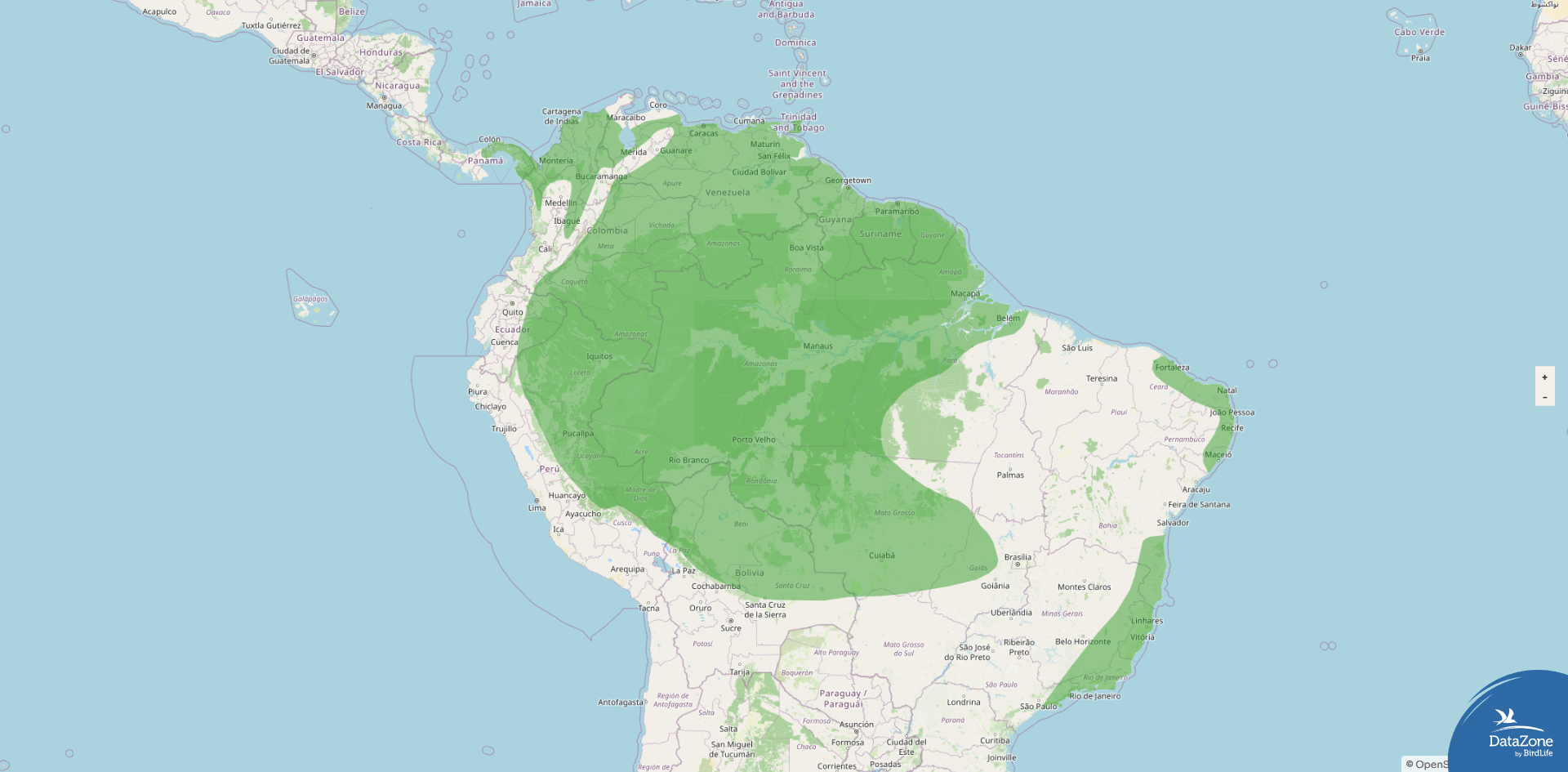
Legend
Green Resident
Species Overview
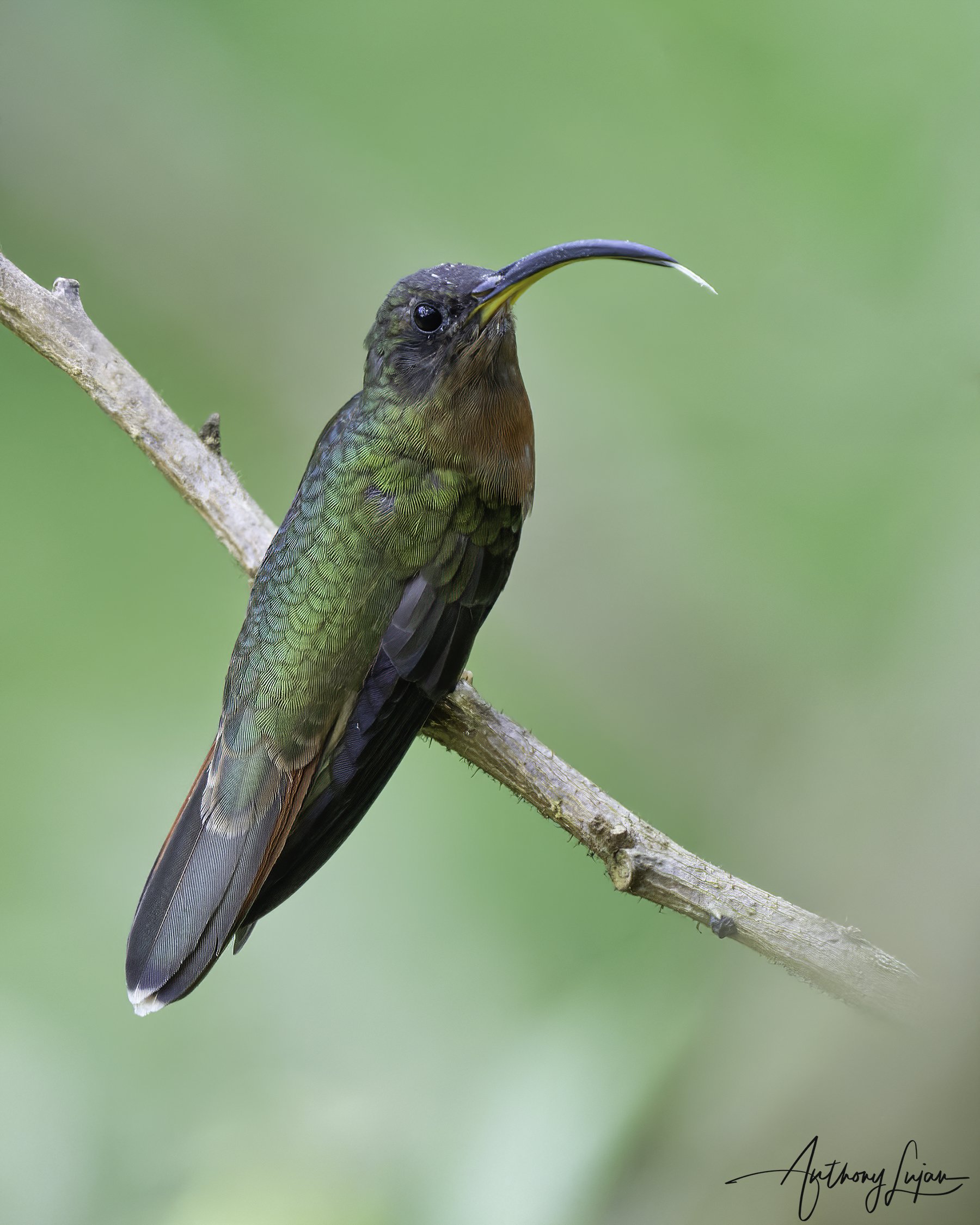
The Rufous-breasted Hermit is a widespread and generally common hermit with dark green upperparts and warm rufous underparts. A dusky face with pale supercilium and moustachial stripe, plus a rufous tail with black subterminal band and white tips, make it distinctive. It favors dense understory and edge habitats, often near running water, and is usually seen alone working along regular nectar routes.
Male Description
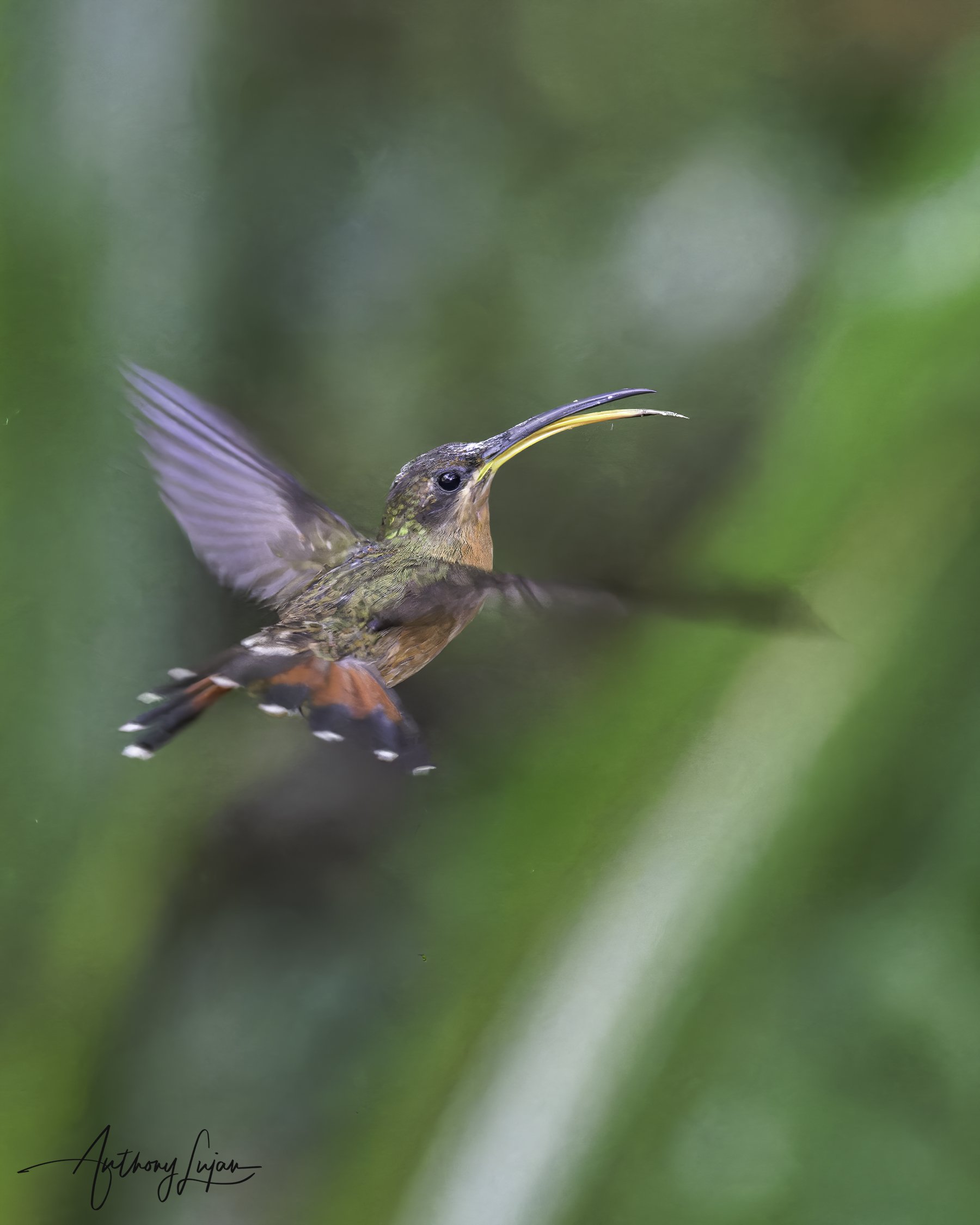
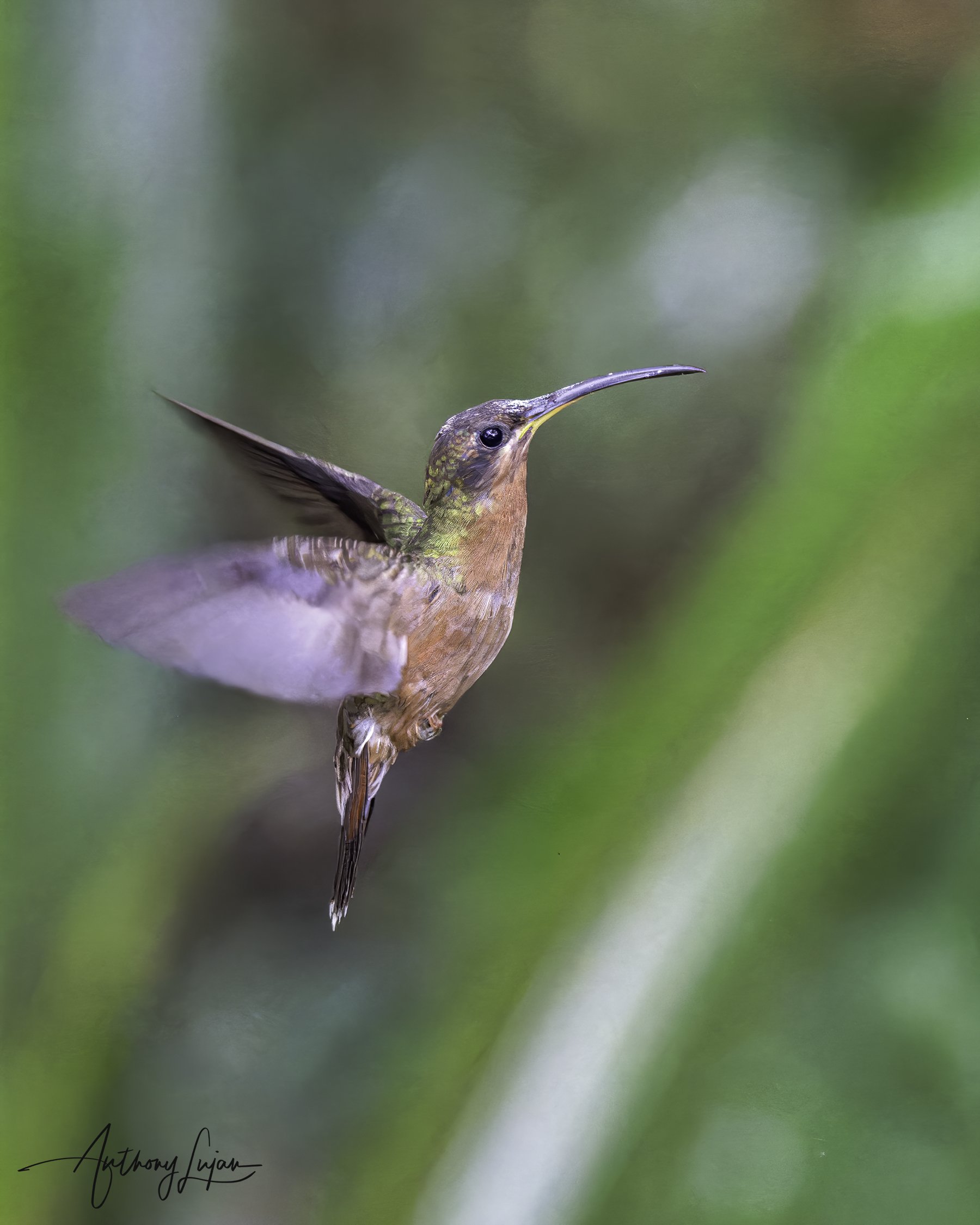
Males are medium-sized hermits, about 10–12 cm long and around 7 g in weight. They have dark green to bronzy-green upperparts and a long, decurved bill with a yellowish lower mandible. The throat, breast, and belly are rufous to reddish-brown, with the color typically strongest on the throat and upper breast. The tail feathers are rufous with a broad black subterminal band and small white tips on the outer feathers, which are visible in flight or when the tail is spread. The face is dusky with a pale supercilium and moustachial stripe typical of hermits.
Female Description
Females are very similar to males, with the same overall pattern of green upperparts and rufous underparts. Their plumage can be slightly duller, and the bill tends to be a bit shorter and more strongly curved than in males. Sexes are often difficult to separate in the field. Juveniles resemble adults but may show somewhat fresher feathers and slightly less intense coloration.
Habitat & Behavior
Rufous-breasted Hermits inhabit humid lowland and foothill forests, forest borders, clearings with dense vegetation, tall second growth, thickets, and plantations near forest, typically remaining in the understory and shrub layer. They are particularly associated with areas near streams or other running water, where flowering plants and insect prey are abundant.
They feed primarily on nectar from tubular flowers, including Heliconia and other understory plants, often visiting flowers along a regular circuit (traplining) rather than defending a single territory. They also take small arthropods, gleaned from foliage, trunks, and spiderwebs or caught in short aerial sallies. Birds are generally solitary and can be inconspicuous as they move quietly through dense vegetation.
Breeding
Nests are typically small, cup-shaped structures made of plant fibers, moss, and spiderweb, often attached to a sheltered support such as a root, twig, or overhanging bank, sometimes near streams. The nest is camouflaged with bits of moss and other material.
The clutch usually consists of two white eggs. The female alone incubates the eggs and feeds the chicks. Incubation and nestling periods together span several weeks, as is typical for medium-sized hermits. Breeding timing varies across the range, generally aligning with periods of high flower availability in humid forests.
Movement
The Rufous-breasted Hermit is considered non-migratory. It is resident throughout its broad range, although local movements may occur as birds track flowering patterns or respond to seasonal changes in rainfall and watercourses. These shifts are local and not considered true long-distance migrations.
Population
With an estimated 5,000,000–50,000,000 mature individuals, the Rufous-breasted Hermit is one of the more numerous hermit species. It is generally widespread and fairly common in suitable forest and edge habitats, although it may disappear locally where habitat is heavily altered. Despite its large global population, the species is thought to be undergoing a slow decline due to ongoing habitat loss and degradation.

Conservation
The Rufous-breasted Hermit is currently assessed as Least Concern, reflecting its extensive range and large total population. However, deforestation, forest fragmentation, and degradation of humid lowland and foothill forests, especially near streams and in fertile lowlands, continue to erode habitat quality. Maintaining forest cover, riparian corridors, and structurally complex secondary growth is important for sustaining populations, even though the species remains far from qualifying for a higher threat category at present.
Below is the Rufous-breasted Hermit (Glaucis hirsutus hirsutus)
Photographed at Waqanki/Quebrada Mishquiyaquillo, San Martín, Peru and Hummingbirds Tayrona, Magdalena, Colombia
These individuals belong to the subspecies hirsutus, which ranges across much of tropical South America including east of the Andes in Peru and northern Colombia. This form shows warm rufous underparts, bold facial markings, and a long decurved bill. It occupies lowland rainforest and adjacent second growth, typically foraging in shady areas or dense vegetation.

taken in Peru
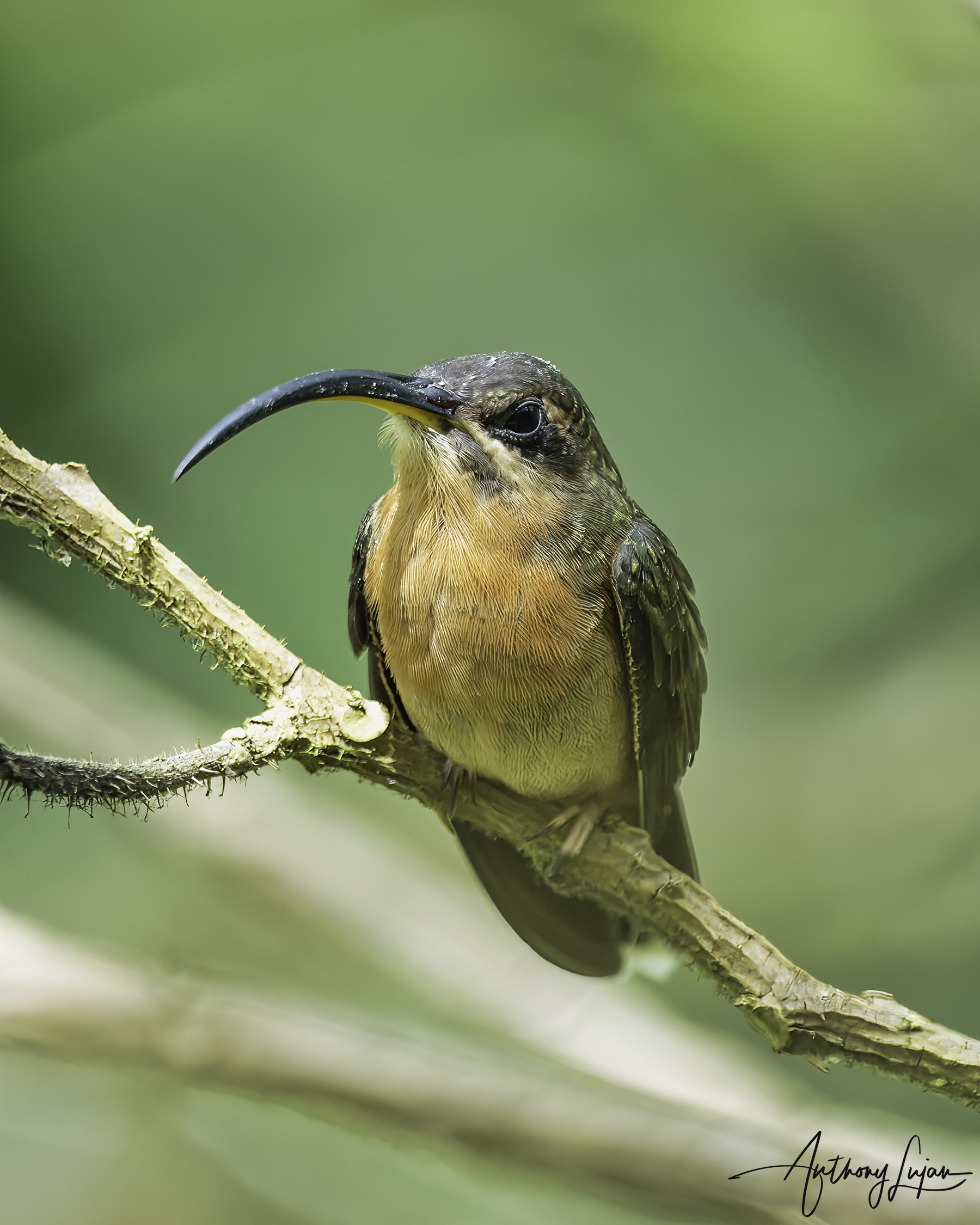
Below is the Rufous-breasted Hermit (Glaucis hirsutus insularum)
Photographed at Cuffie River Nature Retreat and Cafe Mariposa Gardens, Trinidad and Tobago
These individuals belong to the subspecies insularum, which is restricted to the islands of Trinidad, Tobago, and Grenada. This form is very similar in appearance to mainland hirsutus but may show slightly more muted tones and smaller size on average. It inhabits forest edges, plantations, and humid gardens, often returning to favored feeding sites along known routes.

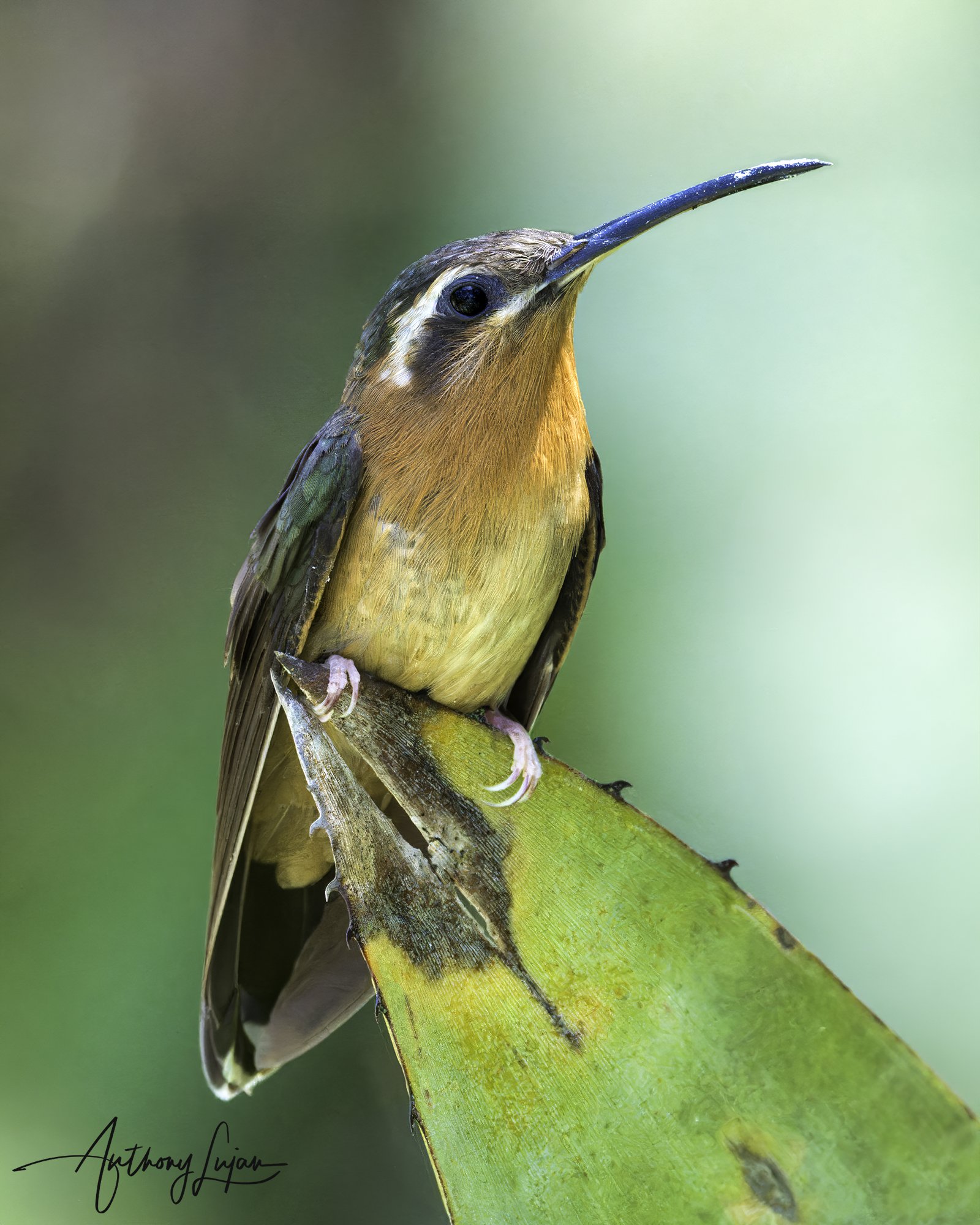
Related species in the Glaucis genus (3 species total)


Please note: The content provided in this article reflects Anthony’s personal experience and photographic approach. Results can vary depending on light, weather, location, equipment, subject behavior, and field conditions.