
Violet Sabrewing

Scientific name: Campylopterus hemileucurus
The Violet Sabrewing is a very large, spectacular hummingbird found from southern Mexico through Central America to western Panama. An estimated 50,000–499,999 mature individuals exist, the population is decreasing, and it is listed as Least Concern, with two subspecies, considered an altitudinal migrant that moves seasonally along mountain slopes rather than undertaking long-distance migration.
At a Glance
Family: Trochilidae (hummingbirds)
Clade: Trochilini – Emeralds
Genus group: Campylopterus — 10 species, 6 subspecies
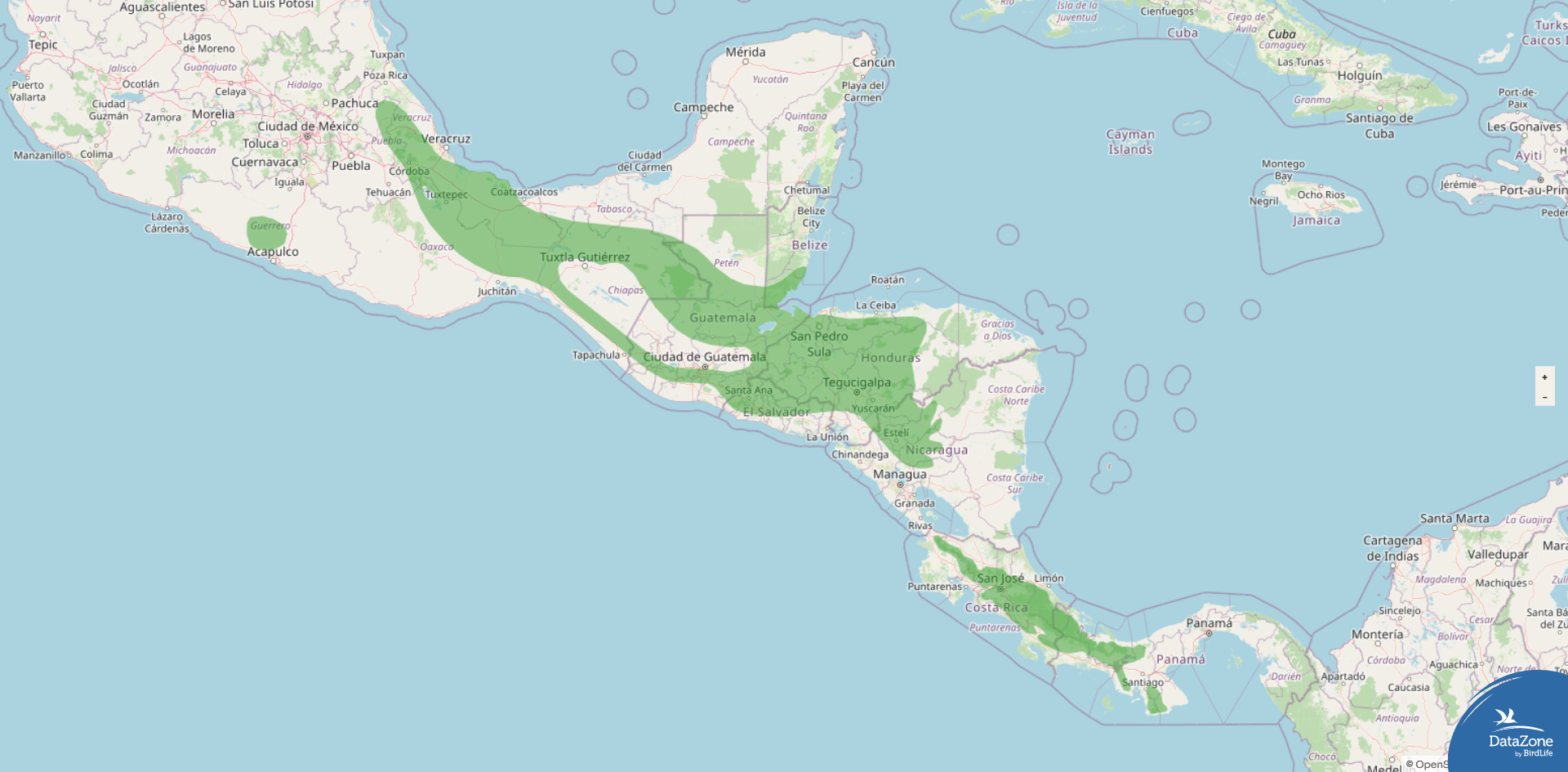
Range: Southern Mexico south through Guatemala, southern Belize, Honduras, and El Salvador into northern Nicaragua, and south through Costa Rica into western Panama.
Habitat: Edges and interior of humid evergreen montane forest and mature secondary forest, ravines and streamside vegetation, banana plantations, old second growth, and gardens.
Elevation: Mostly about 500–2,500 m, typically around 500–2,000 m in Mexico and 1,500–2,400 m in Costa Rica, descending to lower elevations outside the breeding season.
Length: About 13–15 cm (5.1–5.9 in), the largest hummingbird in Mexico and Central America.
Weight: Males around 11.5 g; females around 9.5 g.
Number of mature individuals: 50,000–499,999
Population trend: Decreasing
Status: Least Concern (IUCN)
Name Origin
The genus name Campylopterus means “curved wing,” referring to the thickened, sabre-shaped outer primaries that define sabrewings. The species name hemileucurus combines roots meaning “half-white tail,” alluding to the black tail with extensive white on the outer feathers. The English name “Violet Sabrewing” emphasizes both its deep violet plumage and its membership in the sabrewing group.
Subspecies & Distribution
Two subspecies are recognized:
Campylopterus hemileucurus hemileucurus
Occurs from southern Mexico south through Guatemala, southern Belize, Honduras, and El Salvador into northern Nicaragua. It inhabits edges and interior of humid evergreen montane forest and mature secondary forest, as well as disturbed wooded areas and banana plantations along this Central American corridor.Campylopterus hemileucurus mellitus
Found from most of Costa Rica into western Panama. It uses similar habitats—montane forest understory and edge, ravines, streamsides, old second growth, plantations, and gardens—mostly at somewhat higher average elevations.
Overall, the Violet Sabrewing ranges from southern Mexico through much of Central America to western Panama, primarily along humid mountain slopes and foothills where evergreen montane forest and mature secondary forest persist.
Ledged
Green Resident
Species Overview
The Violet Sabrewing is the largest hummingbird in Mexico and Central America, a powerful, broad-winged species of humid mountain forests, ravines, and disturbed wooded areas. It regularly visits banana plantations and gardens, taking advantage of both native and cultivated flowers. Though still fairly common in parts of its range and classified as Least Concern, continued deforestation and habitat modification across Central America are thought to be causing a gradual decline in its numbers.
Male Description
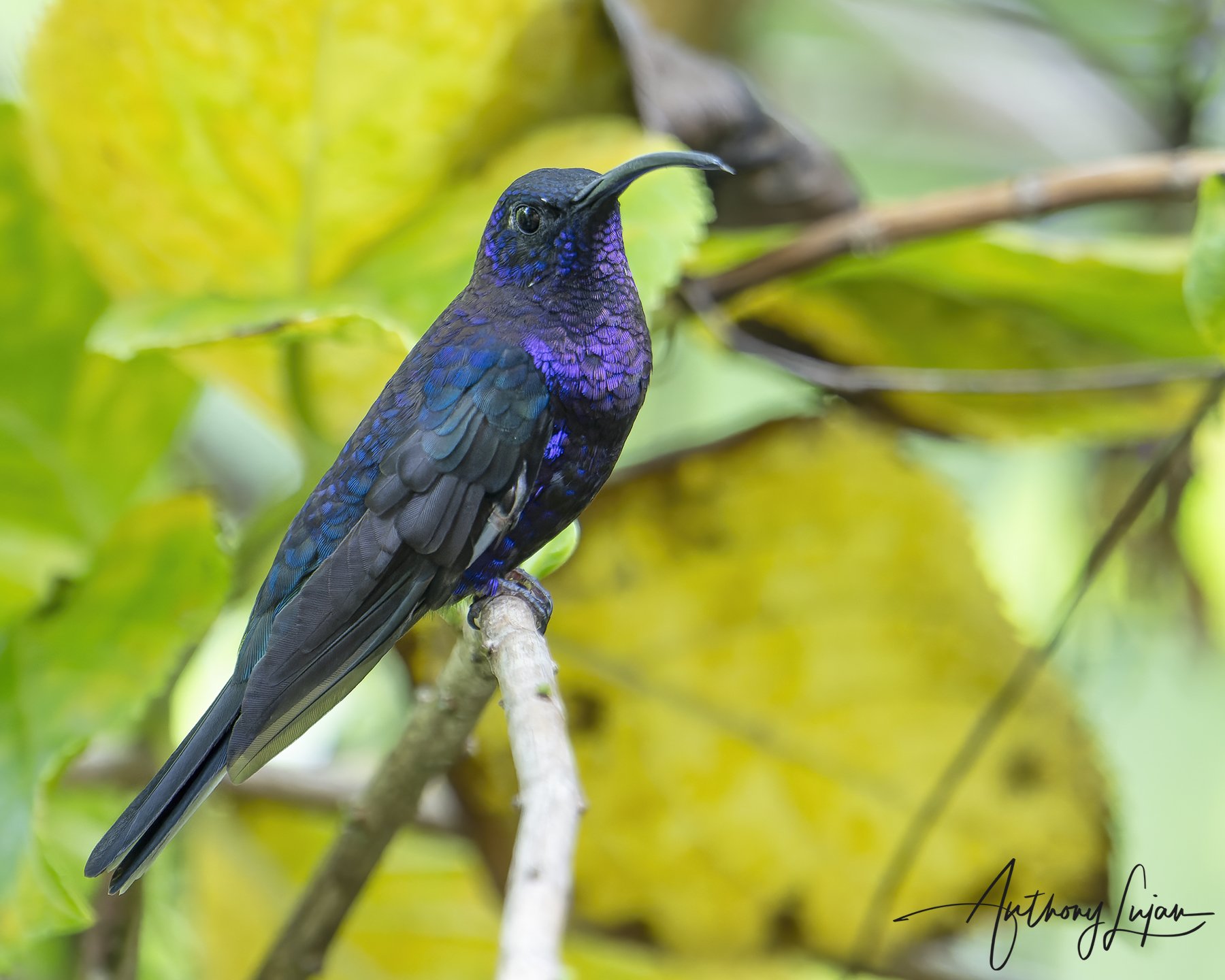
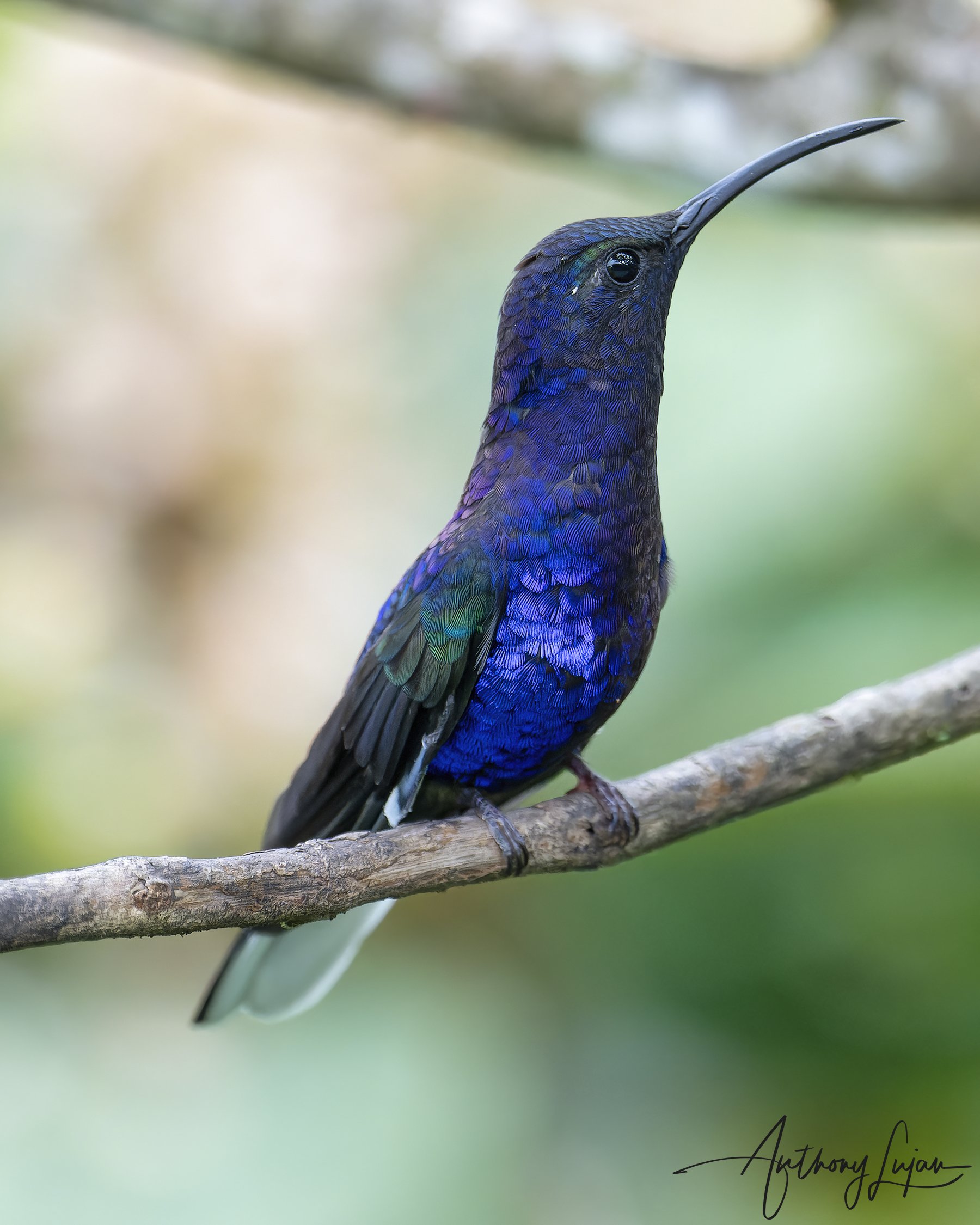
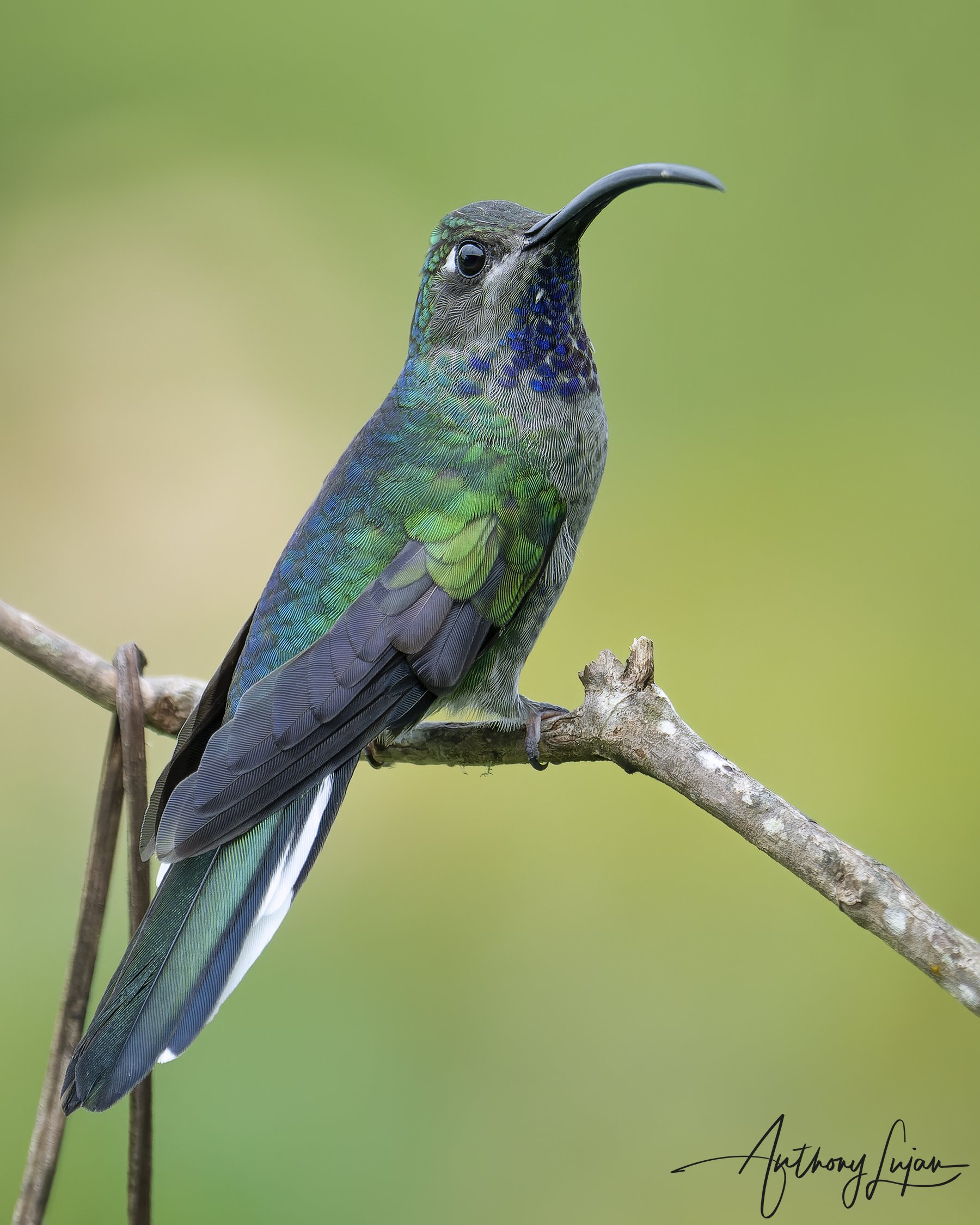
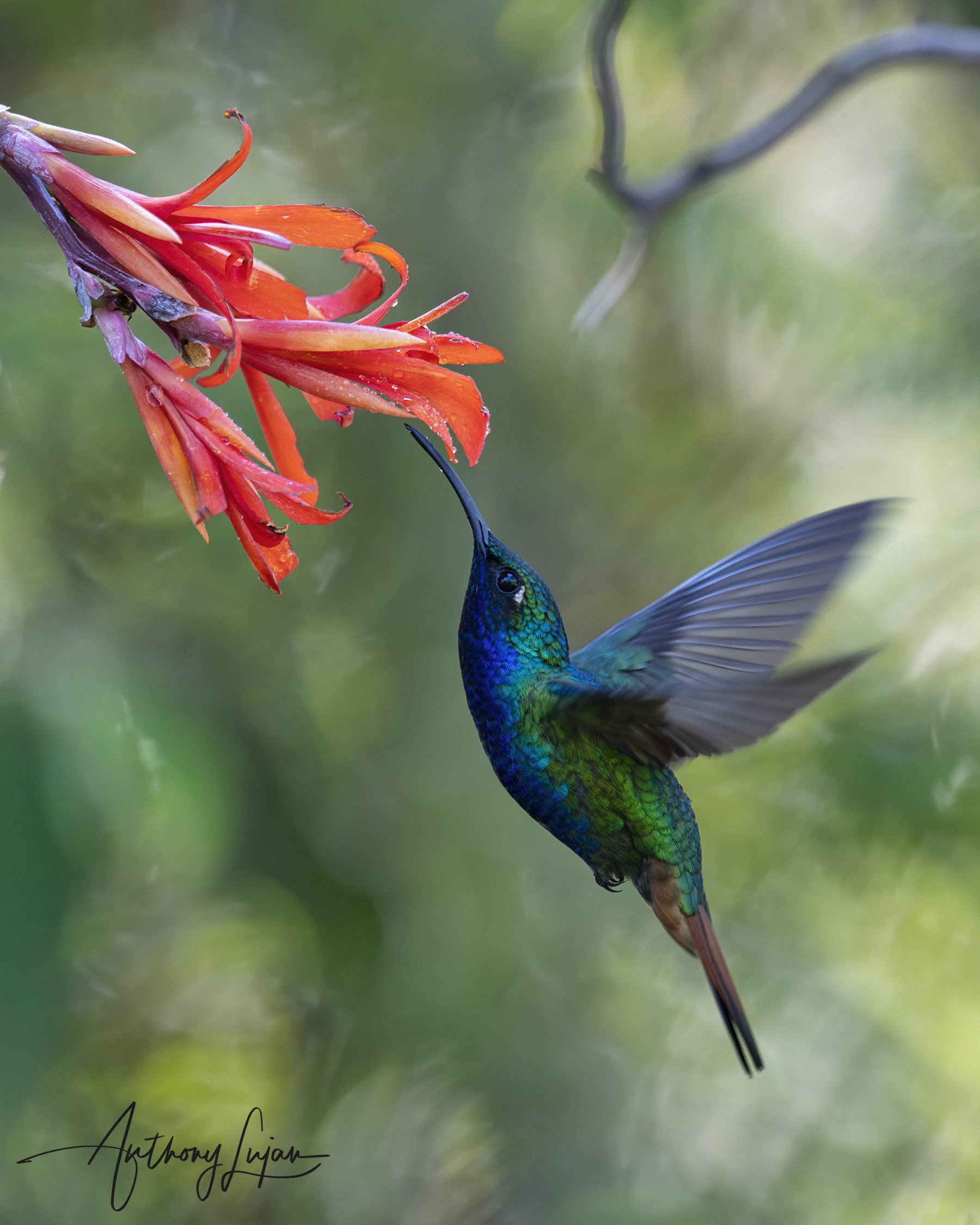
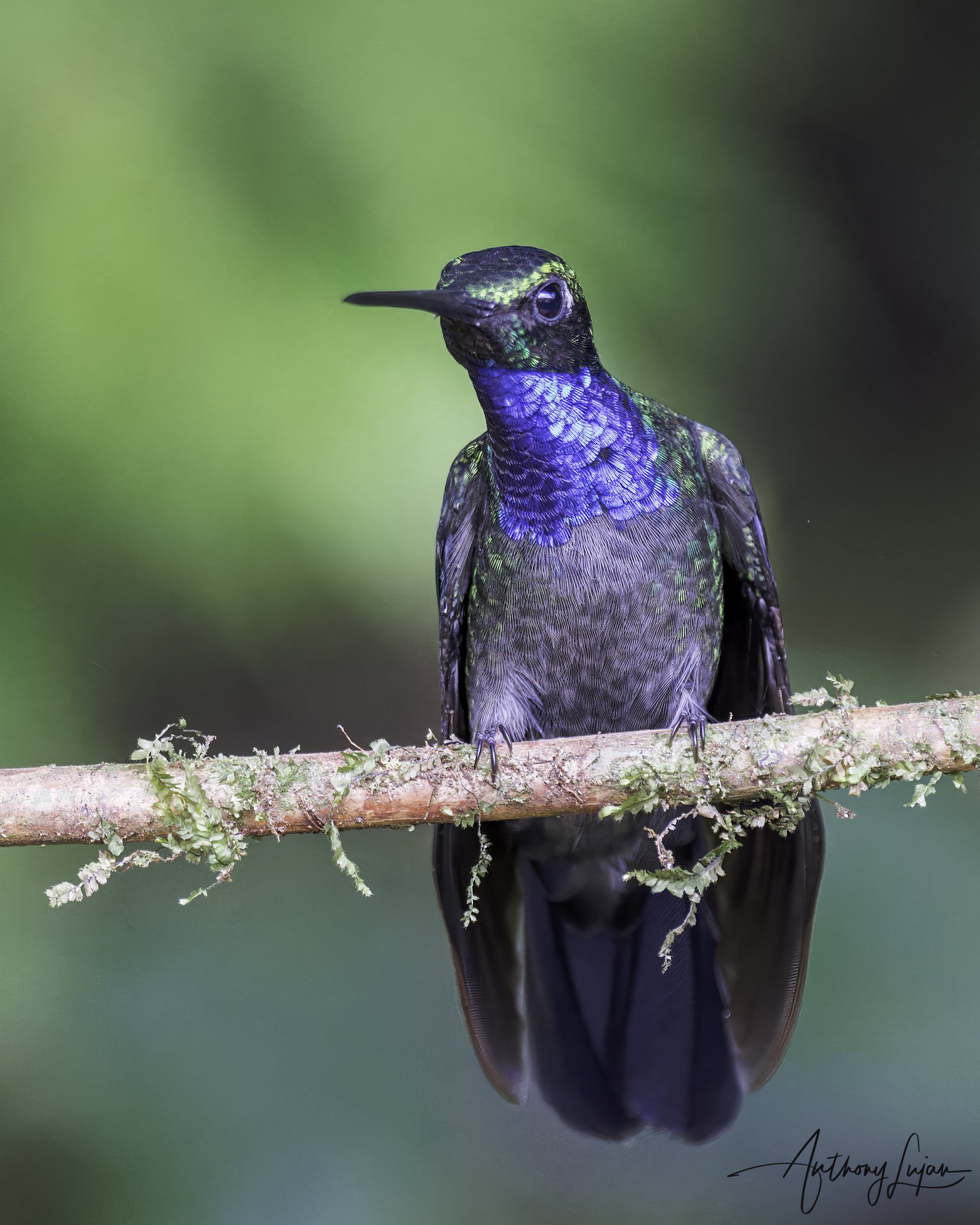
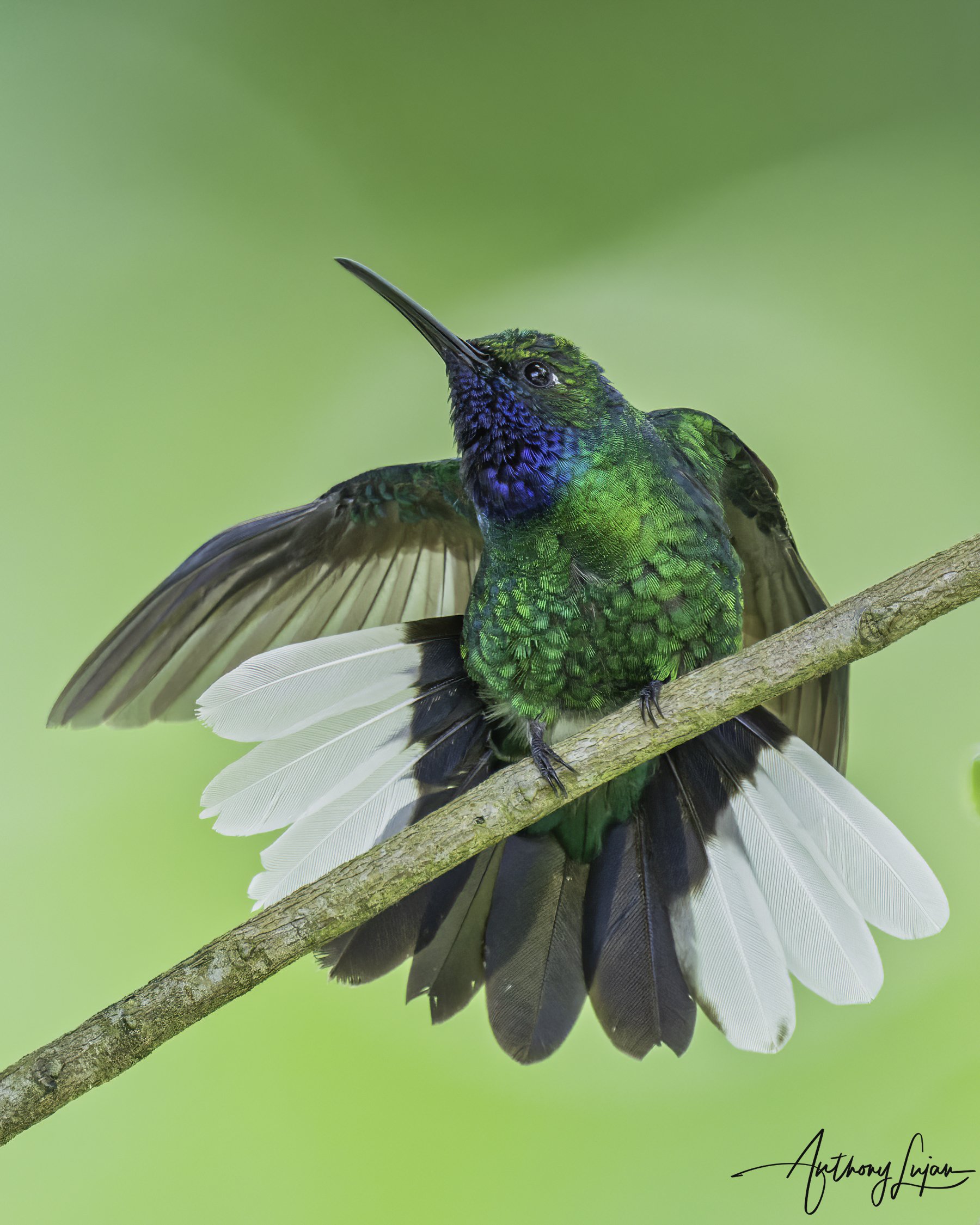
Adult males are large, with a long, decurved black bill and a small white spot behind the eye. The head, underparts, and upper back are deep violet to dark violet-blue, while the wing coverts and posterior upperparts are dark green. The tail is black with the three outer pairs of feathers largely white, producing a striking black-and-white tail pattern in flight. Overall, males appear as big, dark, violet-blue hummingbirds with a green back, bold white tail patches, and thick sabre-like primaries.
Female Description
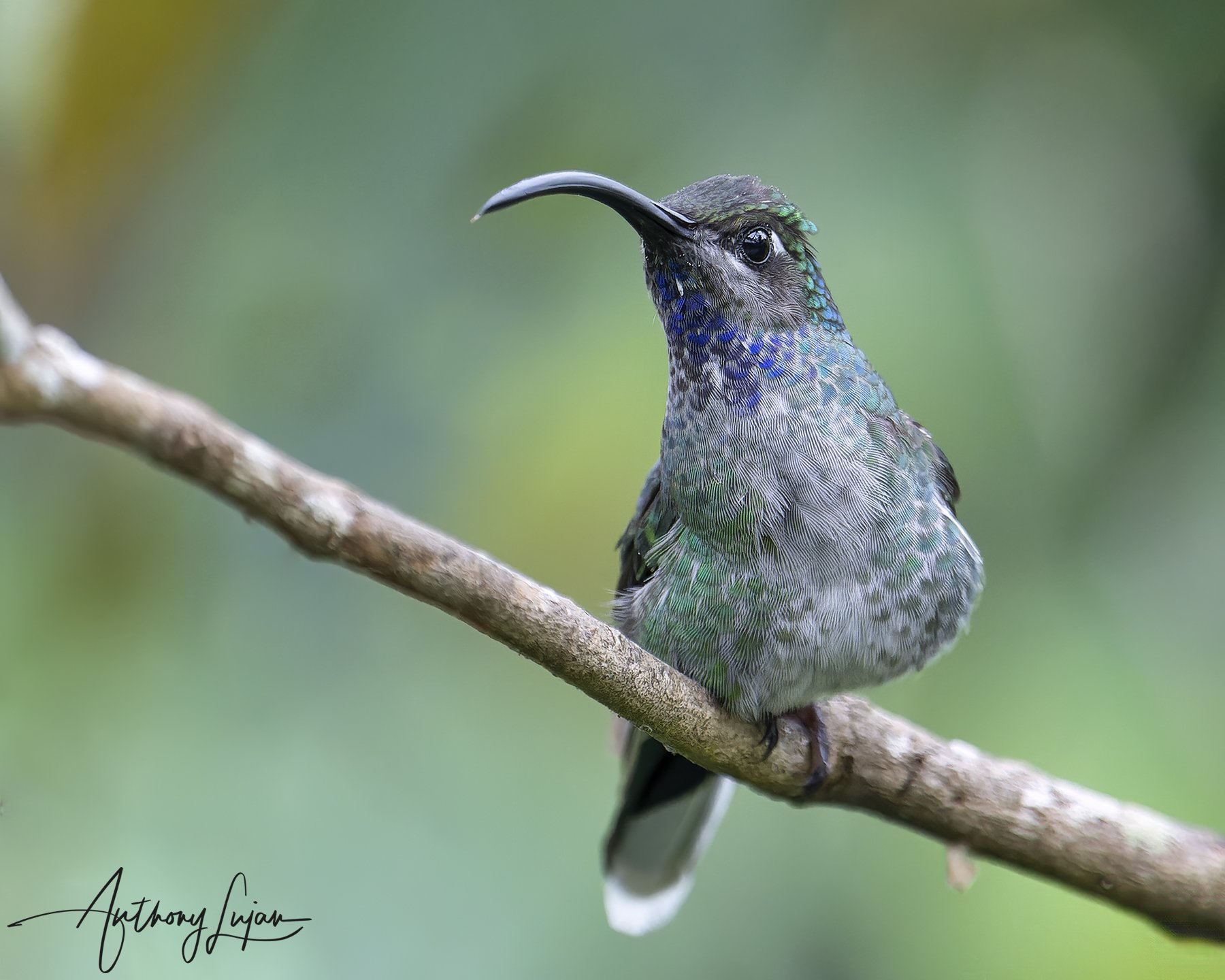
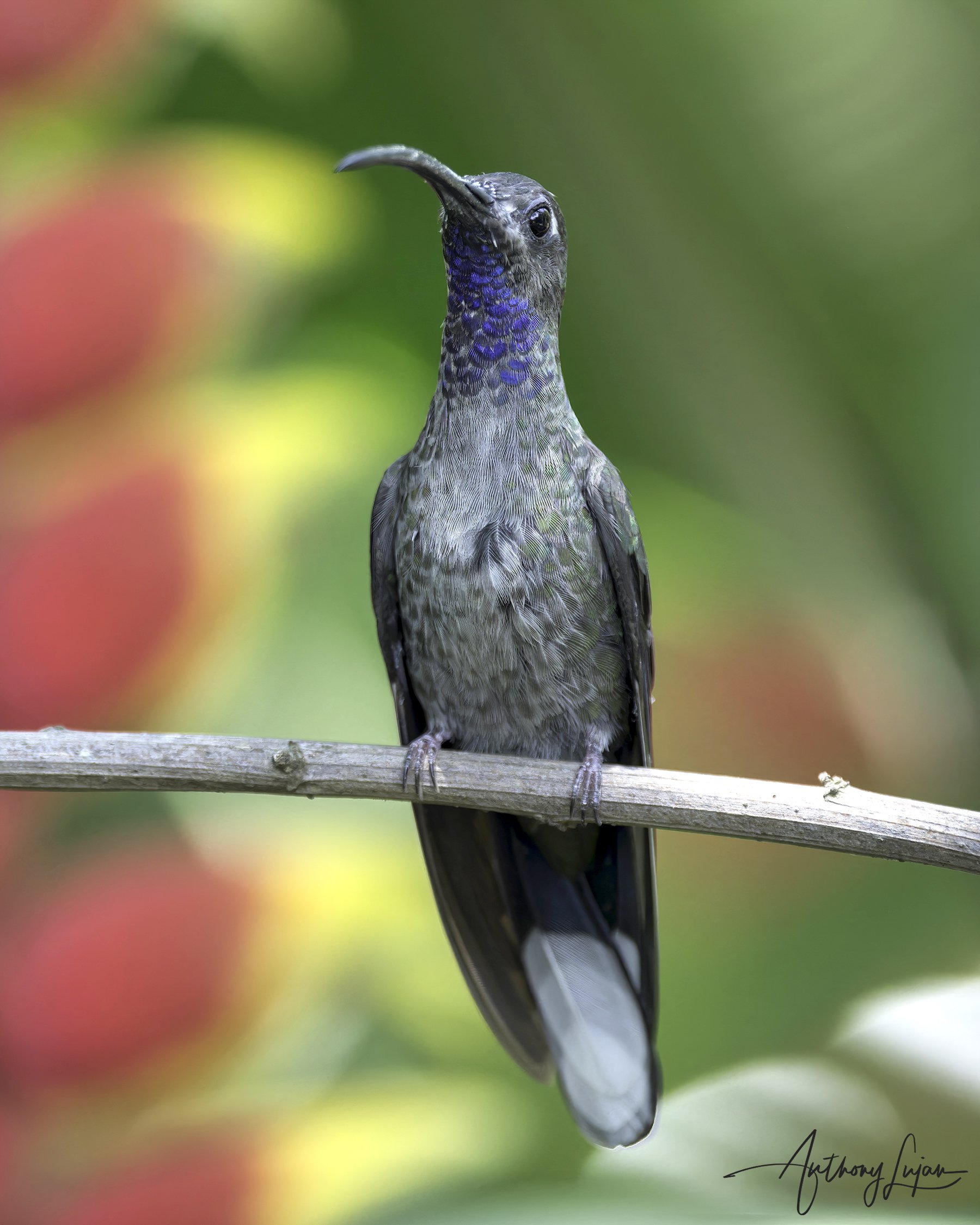
Adult females have dark green to bronze-green upperparts, with the rump and lower back more blue-green. The underparts are mostly gray, with a distinctive violet throat patch that contrasts with the paler belly and breast. The tail pattern matches the male’s, with black feathers showing extensive white on the outer pairs. Females thus look like large, green-backed hummingbirds with gray underparts, a violet throat, and bold black-and-white tails; juveniles are duller with buffy feather edges.
Habitat & Behavior
Violet Sabrewings typically occupy the understory and edges of humid evergreen montane forest, ravines, and areas near streams, as well as disturbed wooded areas, old secondary forest, banana plantations, and flowering gardens. They feed mainly on nectar from undergrowth flowers, especially Heliconias and bananas, and also take small insects. Despite their large size, males are often less aggressively territorial at flowers than might be expected and may share rich nectar sources with other hummingbirds. The species is an altitudinal migrant, breeding at higher elevations and then descending to lower elevations after the breeding season to exploit different flowering zones.
Population
The global population of Violet Sabrewing is estimated at roughly 50,000–499,999 mature individuals, with a wide but patchy distribution from Mexico to western Panama. Within suitable montane and foothill forests it can be relatively common, particularly in areas with abundant flowering Heliconias, bananas, and other nectar sources. However, ongoing deforestation, fragmentation of montane forests, and changes in agricultural landscapes are believed to be causing a continuing, though not rapid, population decline.

Conservation
Violet Sabrewing is assessed as Least Concern thanks to its broad geographic range and relatively large population, but its decreasing trend reflects continued habitat loss and degradation in Central American montane forests. Clearing of cloud forest and montane evergreen forest for agriculture, pasture, and development reduces available habitat and may disrupt elevational movements between breeding and non-breeding zones. Conservation actions that protect and restore humid montane forests, maintain forested ravines and streamsides, and encourage native flowering vegetation in plantations and gardens will help sustain this species. Ongoing monitoring is important to detect any acceleration in declines that might eventually warrant a higher threat category.
Below is the Violet Sabrewing (Campylopterus hemileucurus mellitus)
Photographed at Rualdo Restaurante y Cafetería, Alajuela, Bosque Del Tolomuco, San José, and Catarata del Toro, Alajuela, Costa Rica
These individuals belong to the subspecies mellitus, which occurs in Costa Rica and western Panama. All three Costa Rica sites are well within that range. The species is found in humid montane forest, forest edge, second growth, and gardens, especially where flowering understory plants and feeders are present.
Compared with the nominate form, mellitus is the Costa Rica to western Panama population and is often described as showing greener above and more uniformly violet underparts in males.
Below is the Violet Sabrewing (Campylopterus hemileucurus hemileucurus)
Photographed at Private Home, San Marcos, Guatemala, and El Edén, Atoyac de Álvarez, Guerrero, Mexico
These individuals belong to the nominate subspecies hemileucurus, which occurs from southern Mexico south through Guatemala and into north-central Nicaragua. Your Guerrero and Guatemala records both fall solidly within that range. The species inhabits humid montane forest, forest edge, ravines, and flowering gardens, often near streams.
The Violet Sabrewing is a large, heavy-bodied hummingbird with deep violet-blue plumage and broad wings. Females are greener above with grayer underparts and a violet throat. It is often dominant at feeders and flowering shrubs and tends to favor shaded mid-elevation habitats.

View all the videos by clicking the three lines in the top right corner for the playlist.
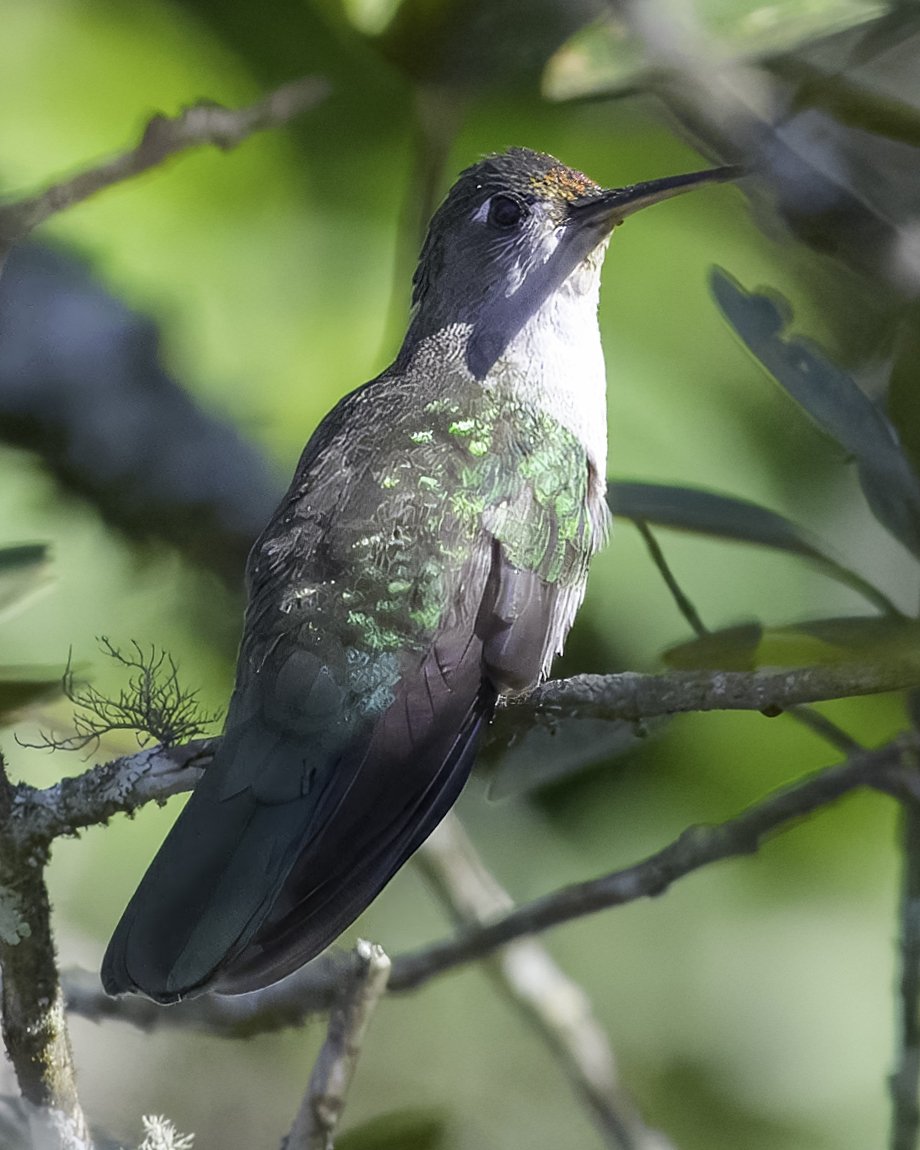
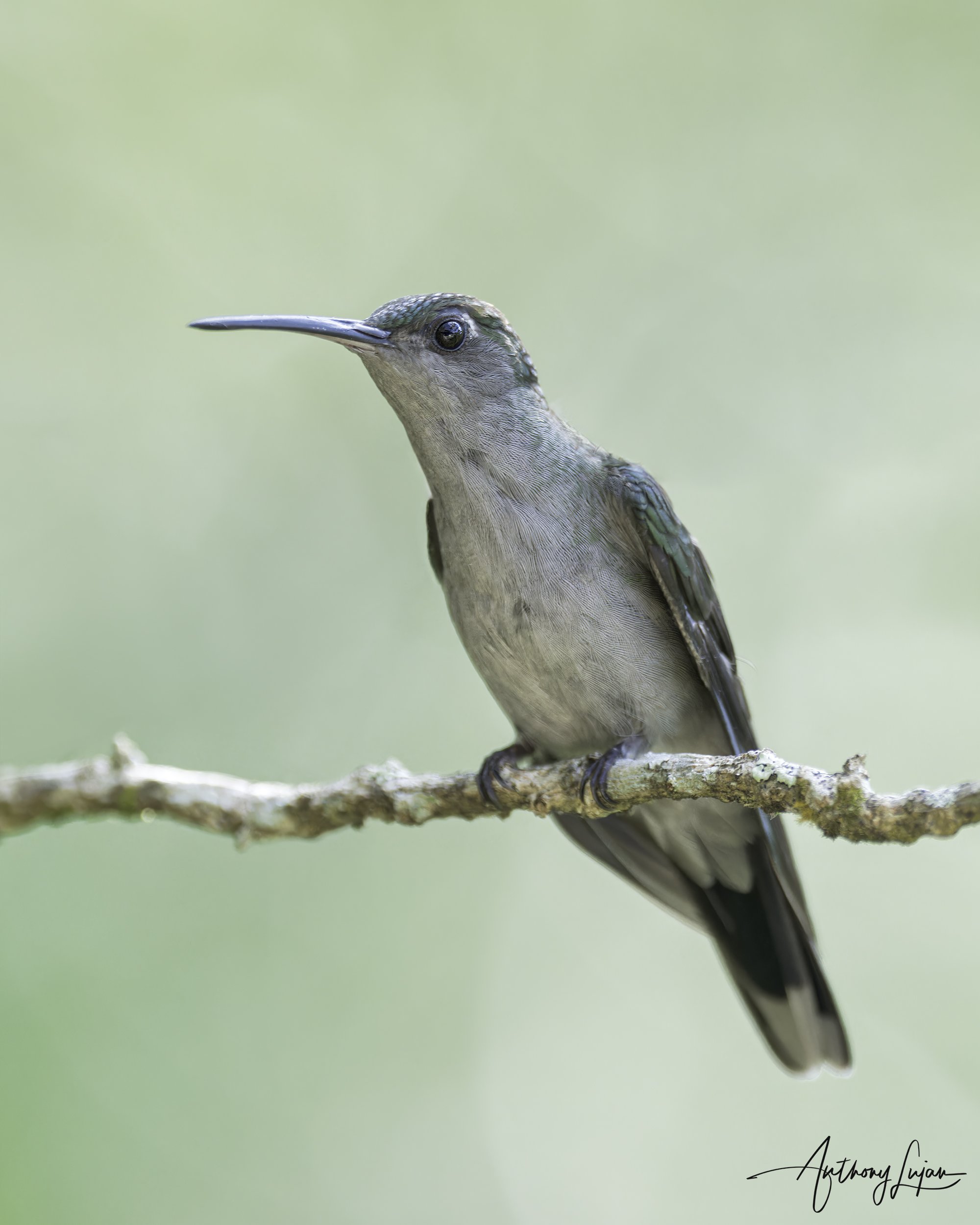
Related species in the Campylopterus genus (10 species total):


Please note: The content provided in this article reflects Anthony’s personal experience and photographic approach. Results can vary depending on light, weather, location, equipment, subject behavior, and field conditions.