
Why I Wrote Endangered Hummingbirds
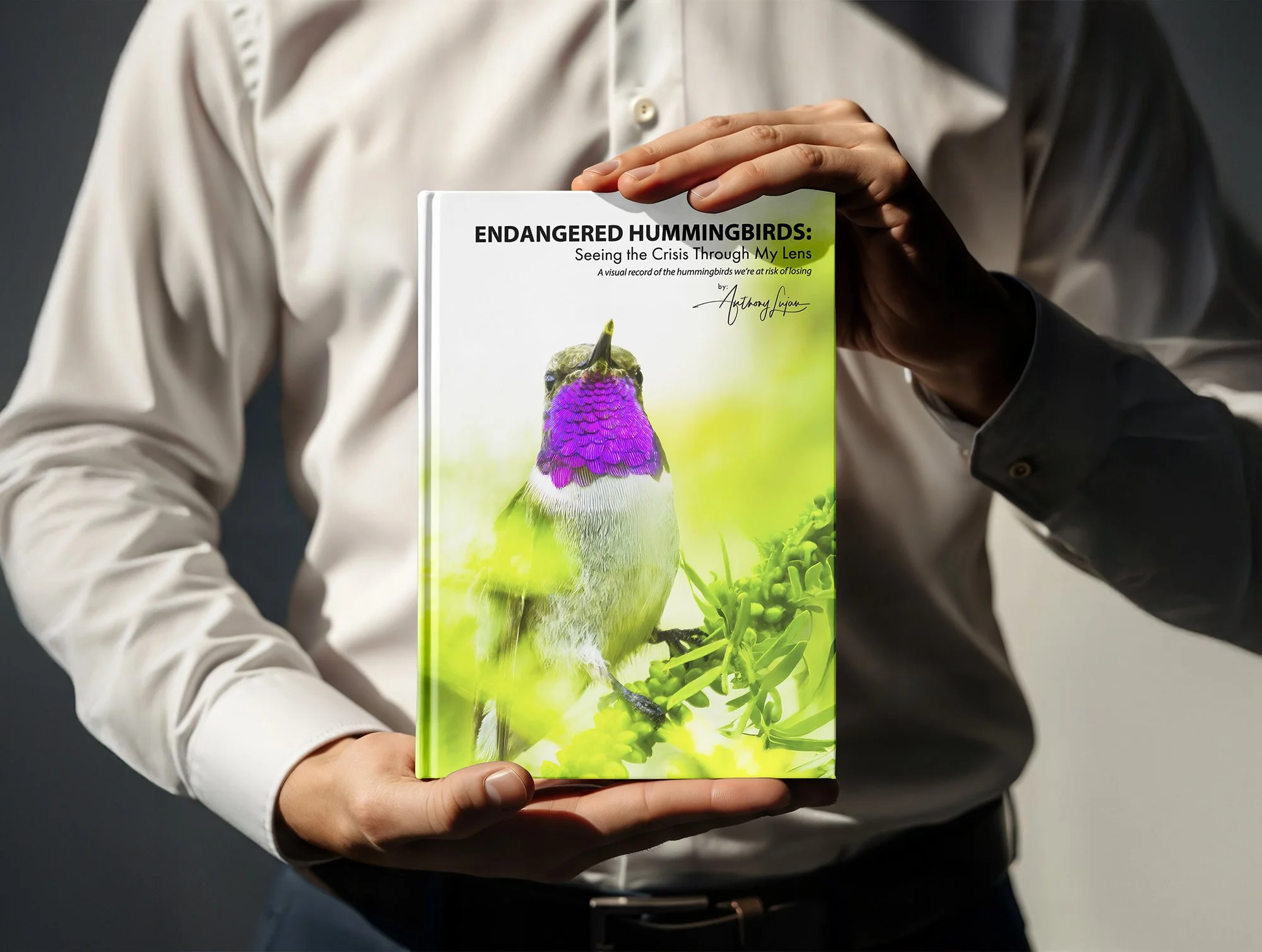
This book was never part of a long-term plan.
For years, my focus was simple: photograph hummingbirds in the wild, especially species that few people ever see. Over time, that work took me into places where habitat was thinning, forests were breaking apart, and populations were hanging on by margins far smaller than most people realize. The more species I photographed, the harder it became to ignore the pattern. Too many hummingbirds were disappearing quietly, often without public attention, and sometimes without anyone even realizing how close they were to being lost.
That is why Endangered Hummingbirds: Seeing the Crisis Through My Lens exists.
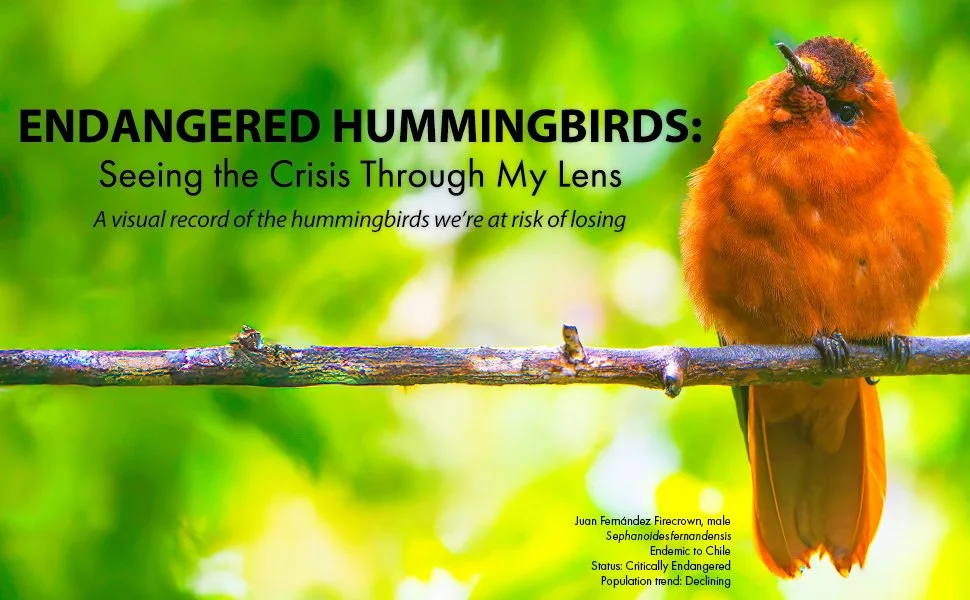
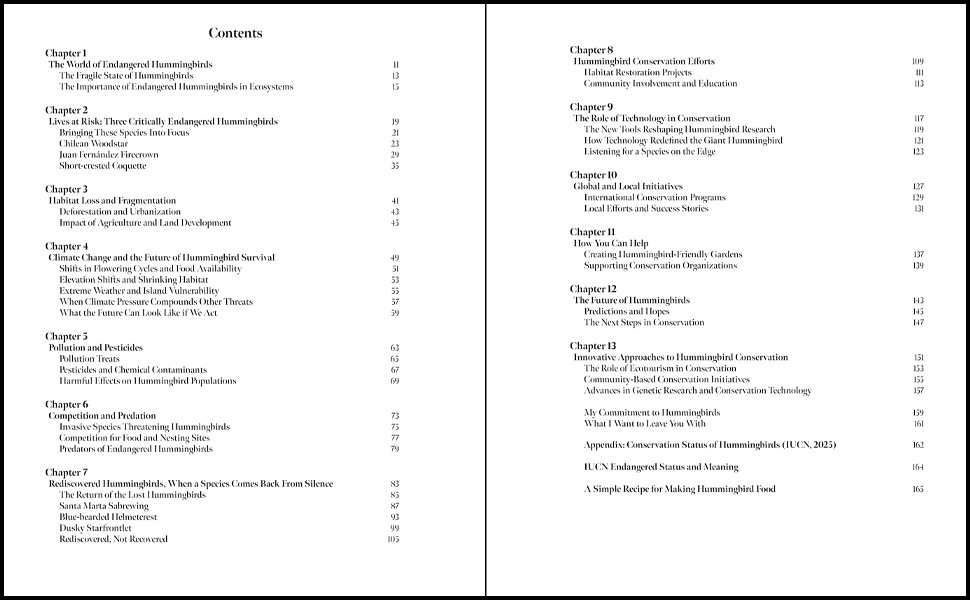
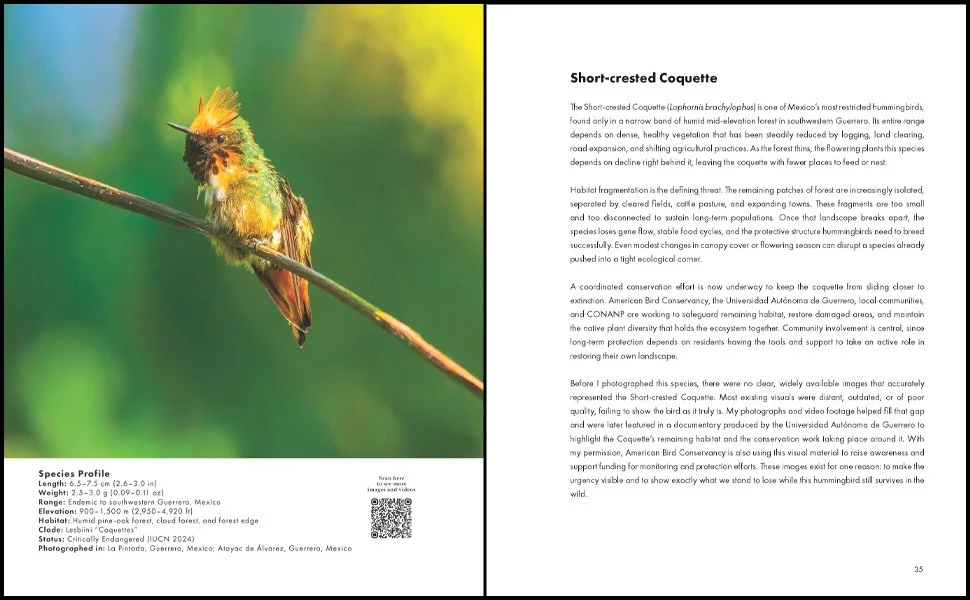
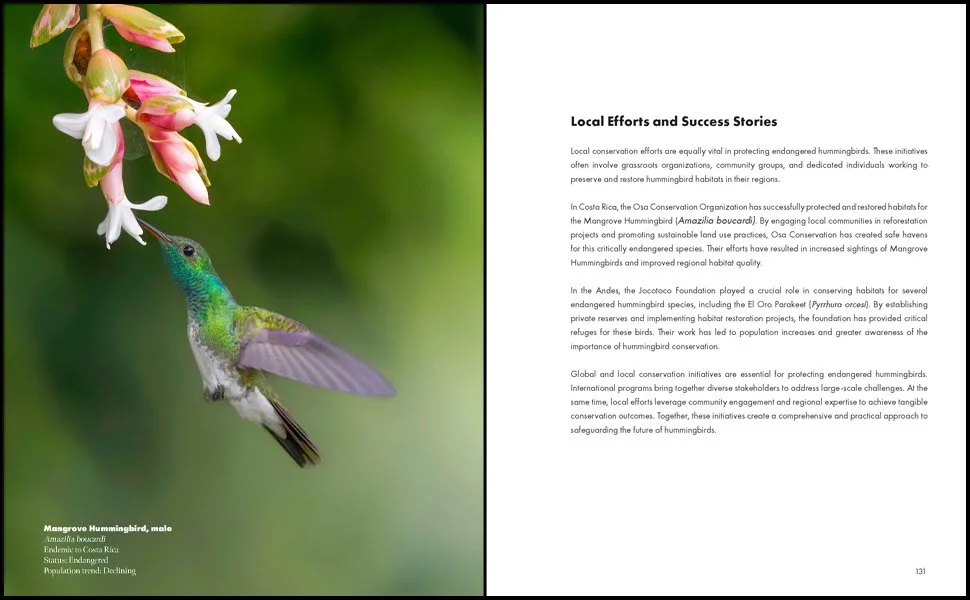
This book is a visual record of hummingbirds we are at risk of losing. It documents species restricted to small ranges, isolated mountains, islands, and fragile ecosystems where one storm, one fire season, or one development project can undo decades of survival. From the deserts of northern Chile to the páramo of the Sierra Nevada de Santa Marta in Colombia, these hummingbirds live in landscapes under pressure from habitat loss, climate disruption, and environmental instability.
I wanted this book to do something specific. Not to be a field guide. Not to overwhelm with data. But to make the situation visible. When people can see these hummingbirds clearly, understand where they live, and recognize what threatens them, conservation stops feeling abstract.
That message is echoed in the endorsements the book has received.
Daniel Lebbin, Vice President of Threatened Species at American Bird Conservancy, put it into words better than I could:
“Hummingbirds are among the world’s most beautiful species, yet many are also among the most endangered, restricted to small and remote ranges. As a result, most people never have the opportunity to see them. This book’s brilliant photography reveals their beauty, while the text clearly explains their conservation needs and highlights the local organizations working to protect hummingbirds and the habitats they depend on.”
For me, that captures the heart of the book. These hummingbirds are not rare because they are elusive. They are rare because the places they depend on are disappearing.
Peter Hodum, Board President of Oikonos Ecosystem Knowledge, reflected on the urgency of that reality:
“The stunning photographs, paired with compelling and accessible text, create a clear call to action for all of us to help ensure these magical hummingbirds survive. The book presents a sobering, realistic view of the magnitude of the challenges facing hummingbirds while simultaneously empowering readers to take action to support their conservation.”
That balance mattered to me. The situation is serious. Some species are critically endangered. Some were thought lost until recently. Others may already be gone. But there are also people, communities, and organizations doing real work to protect what remains. This book highlights those efforts because conservation does not happen in isolation. It happens through collaboration, long-term commitment, and local stewardship.
Writing this book was not about positioning myself as an expert or a protector. It was about using photography as a tool to make hummingbirds visible, especially endemic and endangered species that are easy to overlook because they live far from cities and outside public awareness.
If there is one thing I hope readers take away, it is this: hummingbirds are not just symbols of beauty. They are indicators of ecosystem health. When they disappear, something deeper has already gone wrong.
Endangered Hummingbirds is my attempt to make that reality impossible to ignore, while there is still time to respond.
Silence is how species disappear.
Awareness is where protection begins.
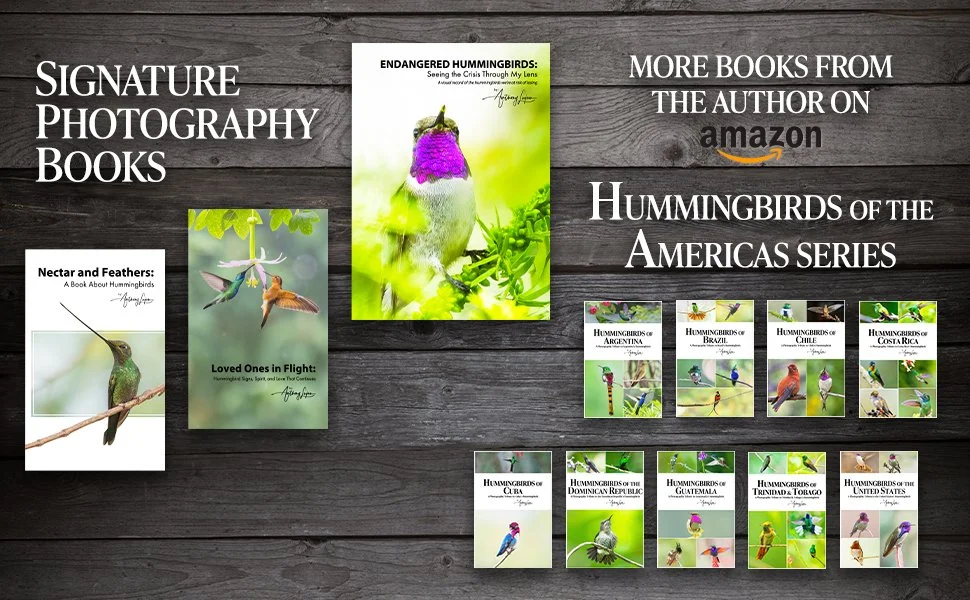
Order this book and explore my other titles on Amazon. Every purchase helps support hummingbird conservation efforts:
https://www.amazon.com/author/anthonylujan
Frequently Asked Questions
Protecting hummingbirds requires more than admiration. It takes awareness, research, and conservation work to help these remarkable birds survive. Here are some common questions people ask about endangered hummingbirds and why conservation matters.
-
Most hummingbird species are declining, but several species are considered vulnerable or endangered due to habitat loss and environmental changes.
-
One of the rarest hummingbirds is the Santa Marta Sabrewing, a critically endangered species found only in Colombia.
-
Habitat destruction, climate change, and limited geographic ranges are the main reasons some hummingbird populations are declining.
-
Planting native flowers, avoiding pesticides, and supporting conservation programs can help protect hummingbird habitats.
-
Hummingbirds are important pollinators and play a key role in maintaining healthy ecosystems.