
Black-tailed Trainbearer
Scientific name: Lesbia victoriae
The Black-tailed Trainbearer is a medium-sized Andean hummingbird best known for the male’s extremely long, black tail, found in high-elevation habitats from Colombia through Ecuador to Peru. The number of mature individuals is unknown, the population trend is Decreasing, and it is currently assessed as Least Concern.
At a Glance
Family: Trochilidae (hummingbirds)
Clade: Lesbiini – Coquettes
Genus: Lesbia — Andean trainbearers with very long tails in males and slim, decurved bills
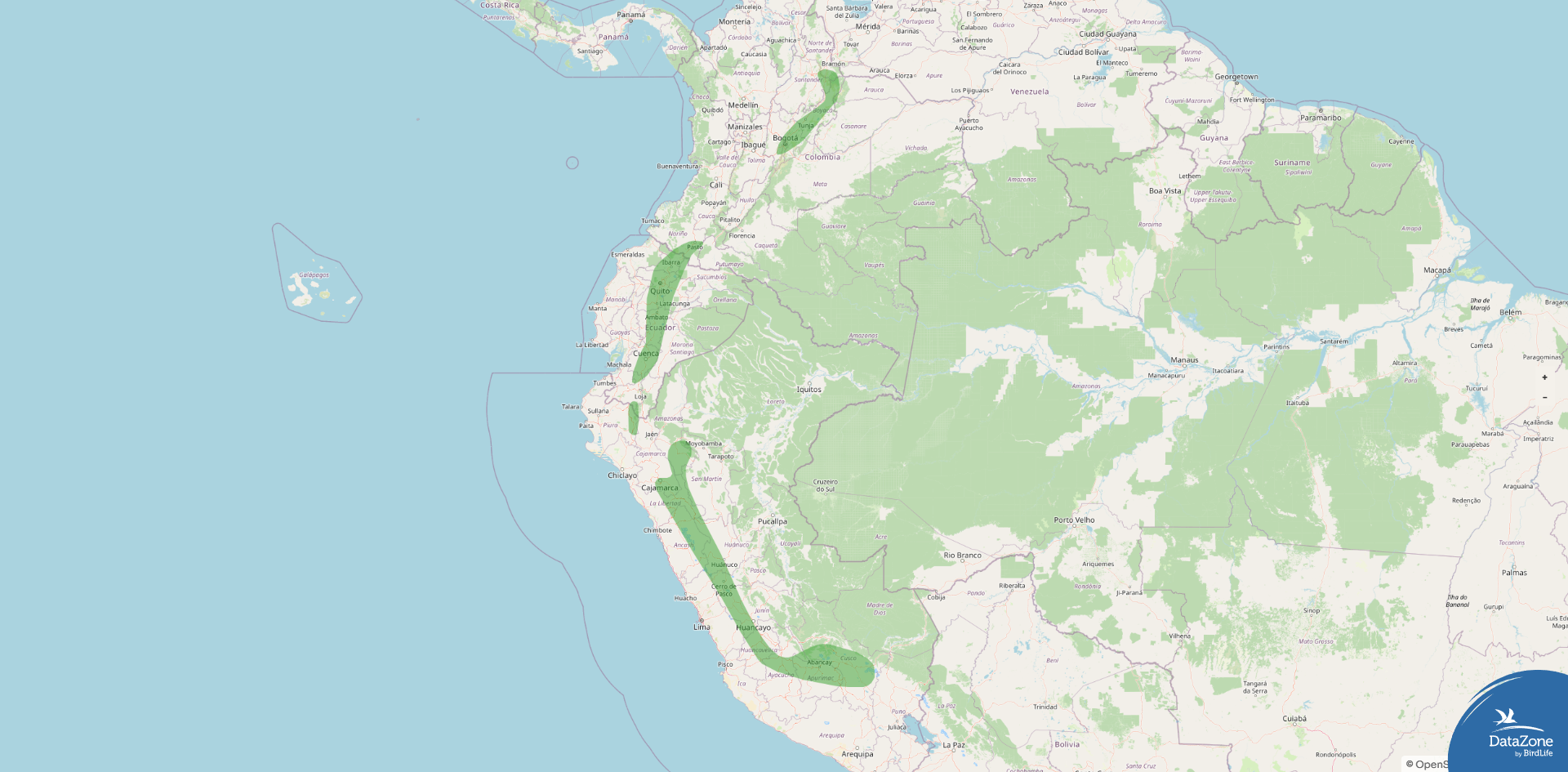
Range: Central and northern Andes from Colombia through Ecuador into central and southern Peru
Habitat: Subtropical and tropical moist montane forest, high-altitude shrubland and scrub, open slopes with bushes, gardens, and heavily degraded former forest
Elevation: Mainly about 2,500–3,800 m, locally up to around 4,000 m
Length: Male 21–24 cm (8–9.5 in) including tail; female 13.5–14.5 cm (5–5.5 in)
Weight: Around 4–6 g (varies with sex and tail length)
Number of mature individuals: Unknown
Population trend: Decreasing
Status: Least Concern (IUCN)
Name Origin
The genus name Lesbia is derived from “Lesbos,” used here in a classical sense and now applied to a small group of long-tailed Andean hummingbirds. The species name victoriae honors Marie Anne Victoire Mulsant, mother of French ornithologist Martial Mulsant. The English name “Black-tailed Trainbearer” highlights the male’s extremely long, mostly black tail that trails behind him like a train.
Subspecies & Distribution
Three subspecies are recognized:
Lesbia victoriae victoriae
Occurs in Colombia and Ecuador, along Andean slopes and high inter-Andean valleys.Lesbia victoriae juliae
Found from southern Ecuador into central Peru, including Andean slopes from southern Loja to Huánuco and northern Lima.Lesbia victoriae berlepschi
Restricted to southeastern Peru, from Junín south to Cusco and neighboring highland regions.
Across this combined range, the Black-tailed Trainbearer inhabits high Andean zones in Colombia, Ecuador, and Peru, favoring semi-open montane scrub, forest edges, and gardens, often near human settlements and in degraded or secondary habitats.
Ledged
Green Resident
Species Overview
The Black-tailed Trainbearer is one of the classic high-Andes hummingbirds, especially conspicuous where males display their extraordinarily long tail streamers on scrubby slopes and in gardens. It is well adapted to cool, open or semi-open habitats, including shrublands, hedgerows, gardens, and edges of montane forest, often near towns and farms. Its broad Andean distribution and tolerance of disturbed areas support a Least Concern status, but localized habitat changes and climate-driven shifts at high elevations contribute to a decreasing overall trend.
Male Description
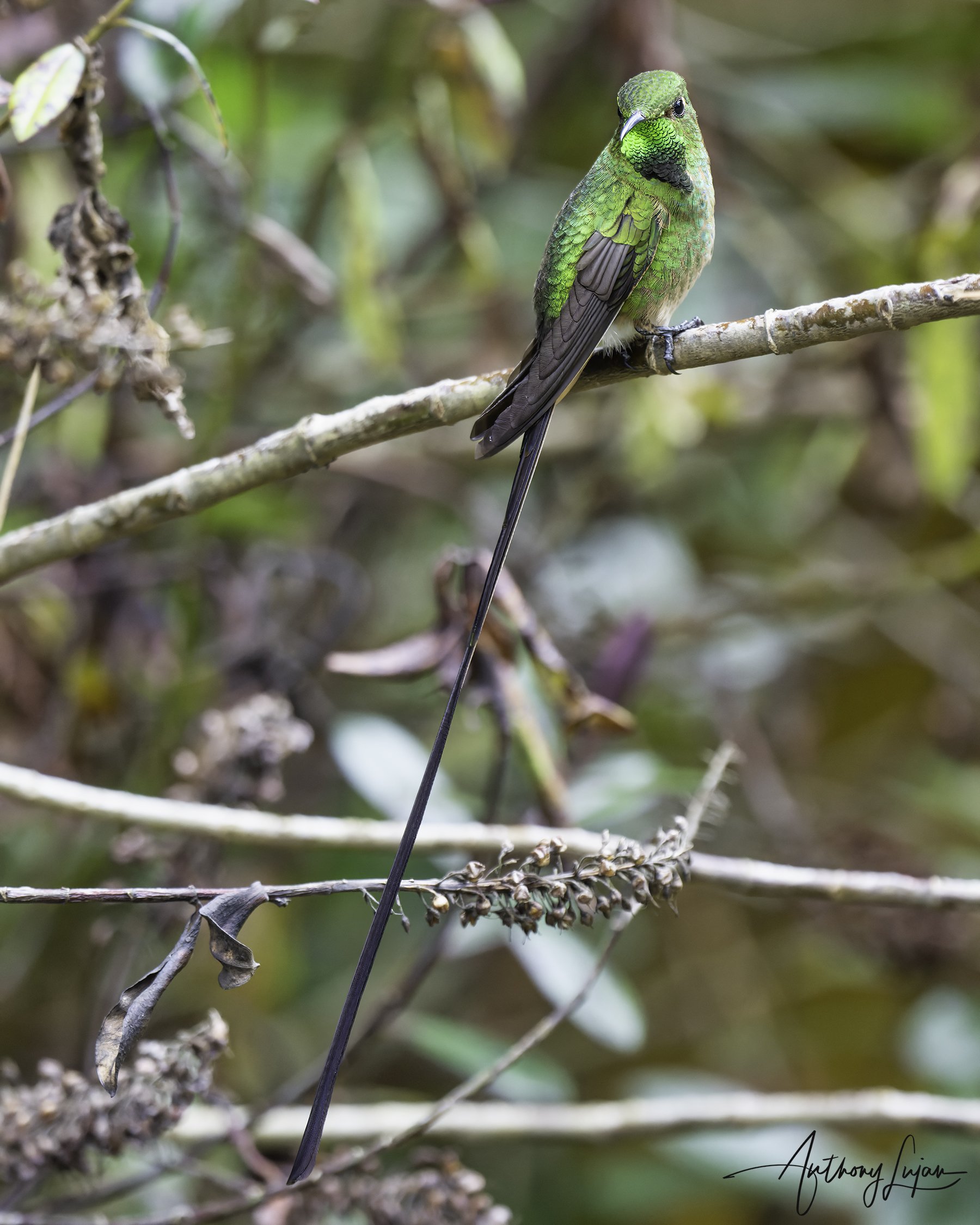
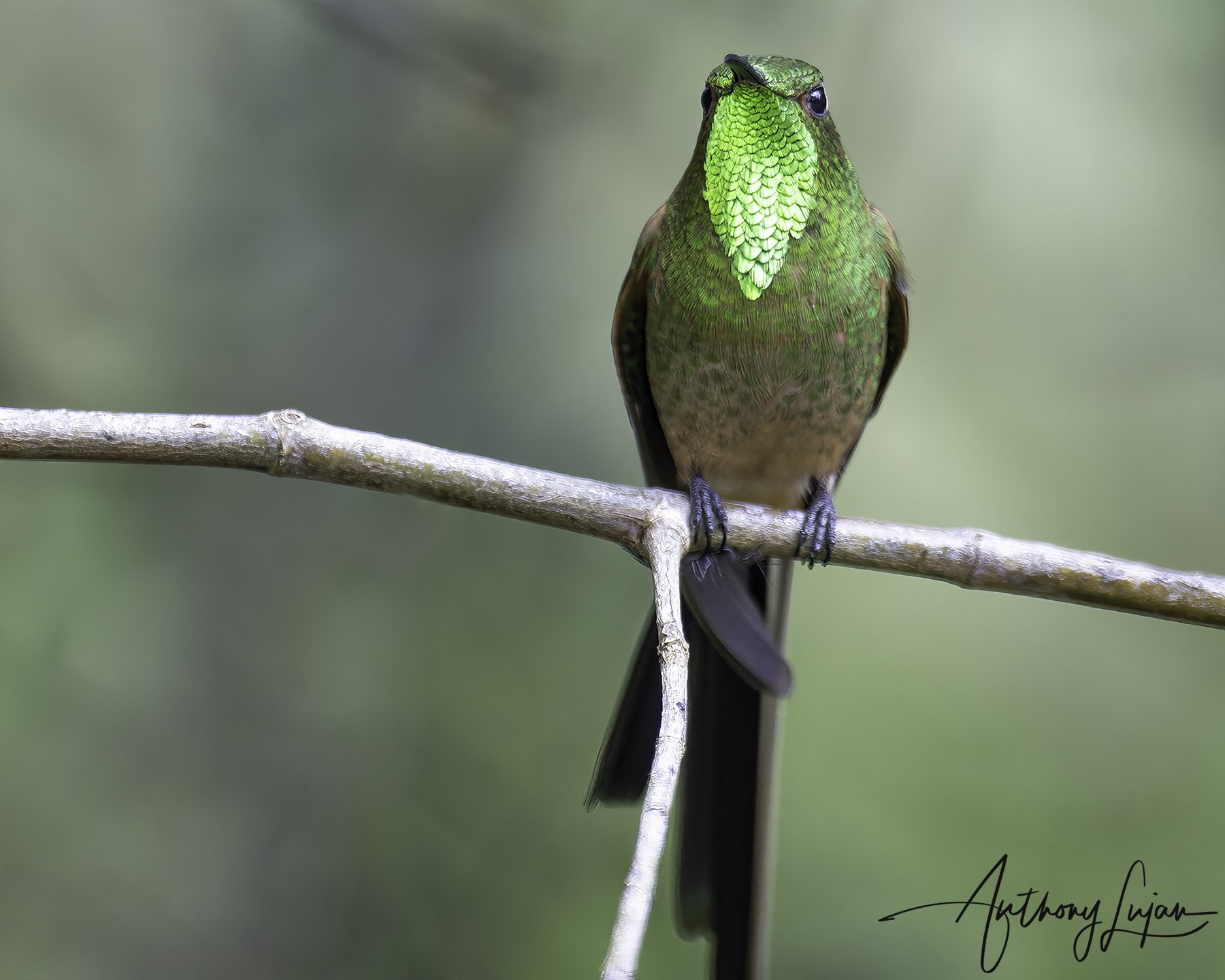
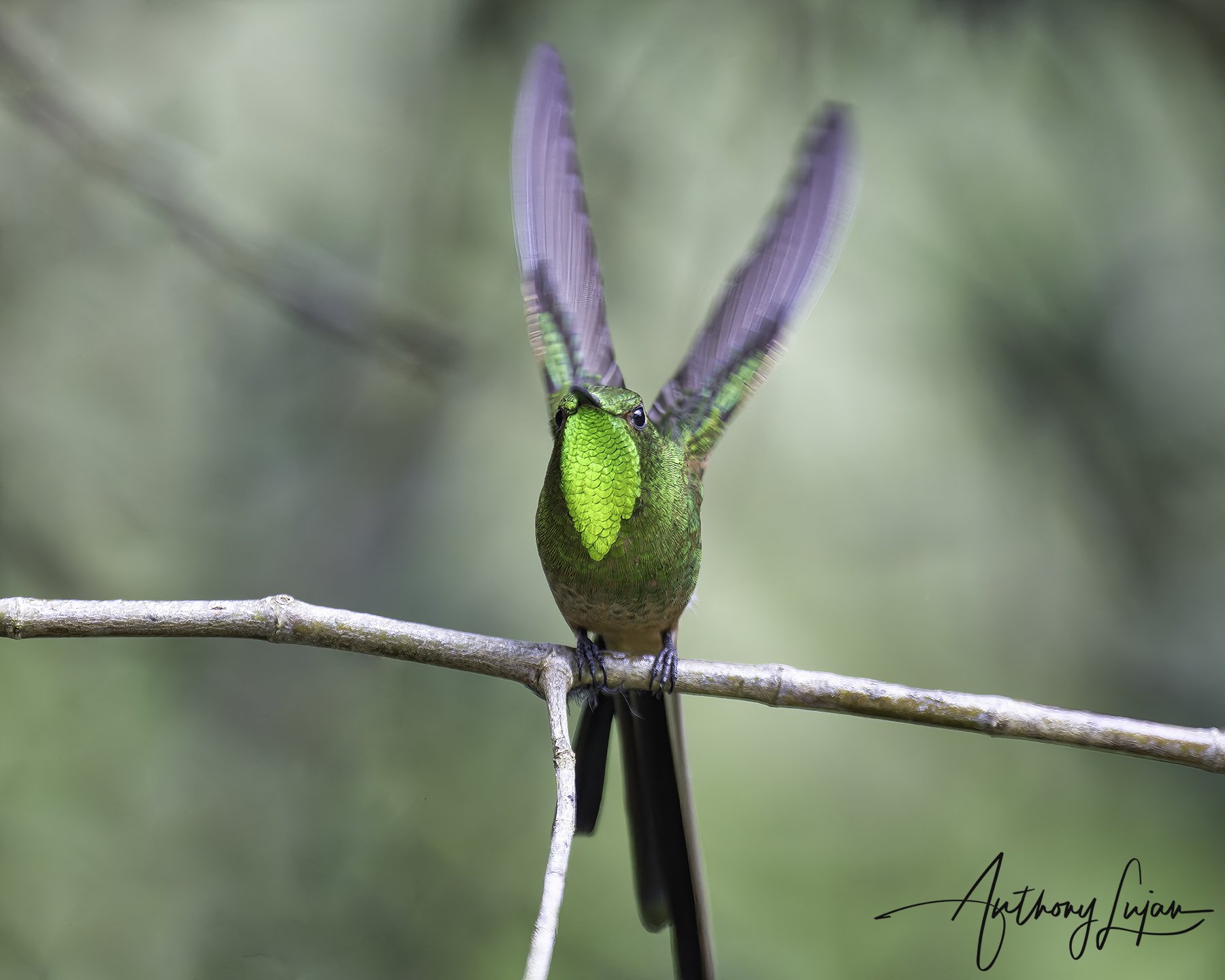
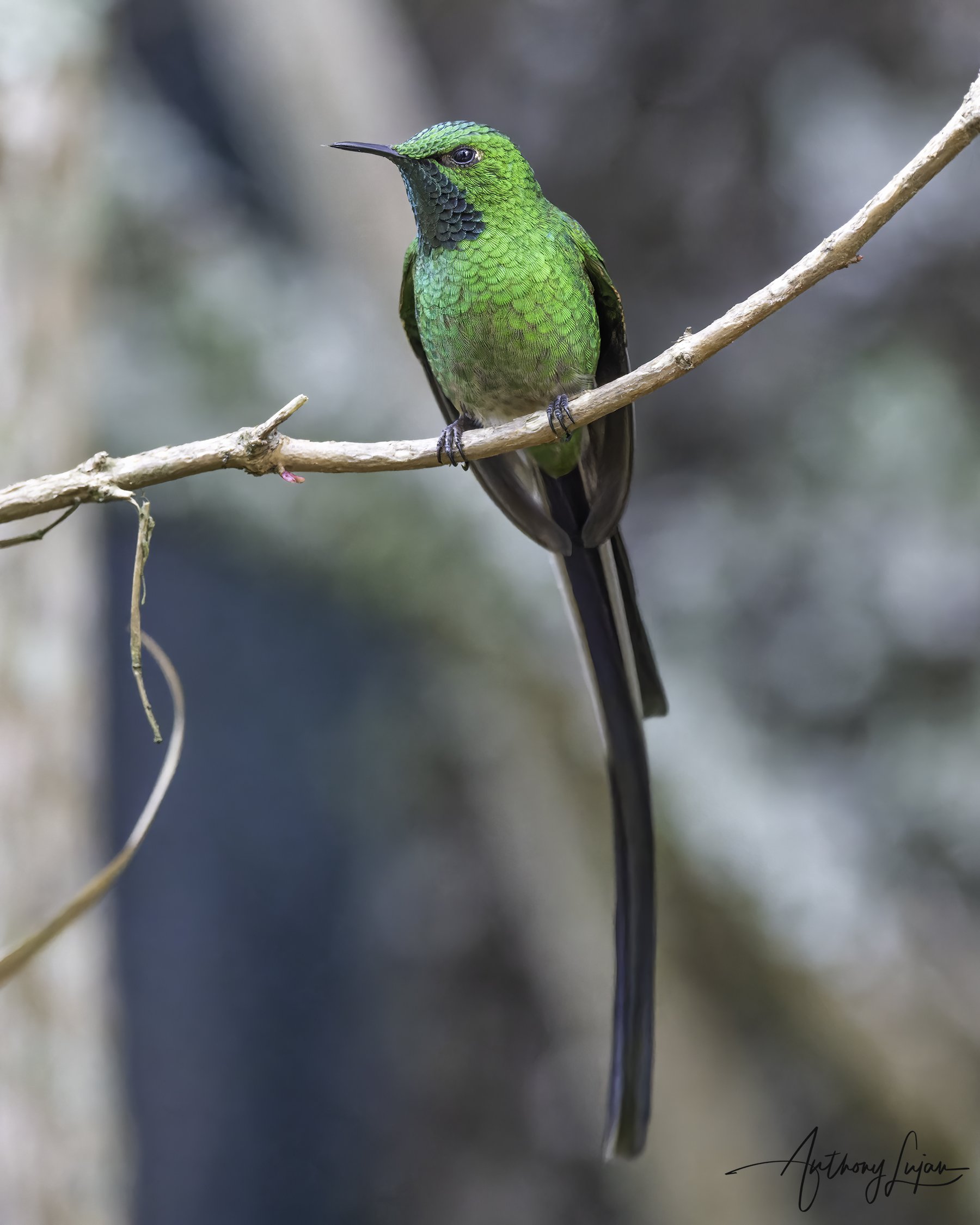
Adult males are slim hummingbirds with a medium-length, slightly decurved bill and a strikingly long, black tail that can be two to three times the length of the body. The upperparts are shimmering green, with an iridescent green gorget on the throat and greenish breast and belly, often with a paler vent area. The tail feathers are mostly dusky to black with reduced green or coppery tips, forming the “black-tailed” look and a long, flowing train when the bird is perched or in flight. In silhouette, the male appears small-bodied with a very long, narrow, drooping tail that swings and curves as he hovers and chases.
Female Description
Females are noticeably shorter-tailed and more subtly patterned than males. They have green upperparts and a shorter, dark tail, while their underparts are whitish to grayish with green spotting or streaking across the throat and breast. The bill is similar in shape but the overall impression is of a compact hummingbird rather than a trainbearer, with only a modest tail projection beyond the wingtips. Females can be told from similar species by the combination of habitat, decurved bill, and pattern of green-speckled underparts and darker tail.
Habitat & Behavior
Black-tailed Trainbearers inhabit high-elevation landscapes, including moist montane forest edges, high-altitude shrublands and scrub, hedgerows, gardens, and heavily degraded former forest. They favor semi-open areas with scattered bushes and flowering plants rather than closed forest, which allows them to adapt well to human-modified habitats such as parks, gardens, and roadside vegetation. They feed mainly on nectar from a variety of flowering shrubs and herbs, often making hovering visits along hedges and scrubby slopes, and they also take small insects and spiders for protein. Males often perch conspicuously on exposed twigs to show off their tail and may perform aerial chases and display flights over open slopes and gardens.
Population
The total number of mature individuals is not known, but within its Andean range the Black-tailed Trainbearer is generally considered common to fairly common in suitable high-elevation habitats. Its broad distribution across three countries and wide elevational band provide some resilience, yet the population trend is considered Decreasing. Ongoing changes in land use, local urban expansion, and climate-driven shifts in vegetation zones can alter the availability of suitable scrub, hedgerows, and flowering plants, especially at the upper and lower edges of its elevational range.

Conservation
Black-tailed Trainbearer is listed as Least Concern because it remains widespread and adaptable, occurring in many regions and even thriving in some human-modified landscapes. However, its decreasing trend reflects broader pressures on Andean ecosystems, including the loss of native scrub and forest, intensification of agriculture, and urban growth in montane zones. Conservation actions that maintain native shrublands, hedgerows, and flowering gardens, protect patches of montane forest, and retain a mosaic of semi-open habitats will help sustain this species. Monitoring Andean hummingbird communities and preserving key high-elevation areas are important to ensure this distinctive trainbearer continues to be a familiar sight in Andean towns and countryside.
Below is the Black-tailed Trainbearer (Lesbia victoriae victoriae)
Photographed at the Observatorio de Colibríes, Bogotá, Cundinamarca, Colombia
This individual belongs to the nominate subspecies victoriae, which occurs along the Eastern Andes of Colombia south through Ecuador. It inhabits high Andean shrublands, open forest edge, and gardens between 2,500 and 3,800 meters, where it is a frequent visitor to flowering shrubs and hedgerows.
Related species in the Lesbia genus (2 species total):
Please note: The content provided in this article reflects Anthony’s personal experience and photographic approach. Results can vary depending on light, weather, location, equipment, subject behavior, and field conditions.