
Black-throated Brilliant
Scientific name: Heliodoxa schreibersii
The Black-throated Brilliant is a large, uncommon hummingbird of humid lowland and foothill forests east of the Andes in Brazil, Colombia, Ecuador, and Peru. The number of mature individuals is unknown, its population trend is Decreasing, it is assessed as Least Concern, and it is considered Not a Migrant aside from local movements.
At a Glance
Family: Trochilidae (hummingbirds)
Clade: Heliantheini – Brilliants
Genus:Heliodoxa — robust brilliants with long tails, glittering throats, and straight to slightly curved bills
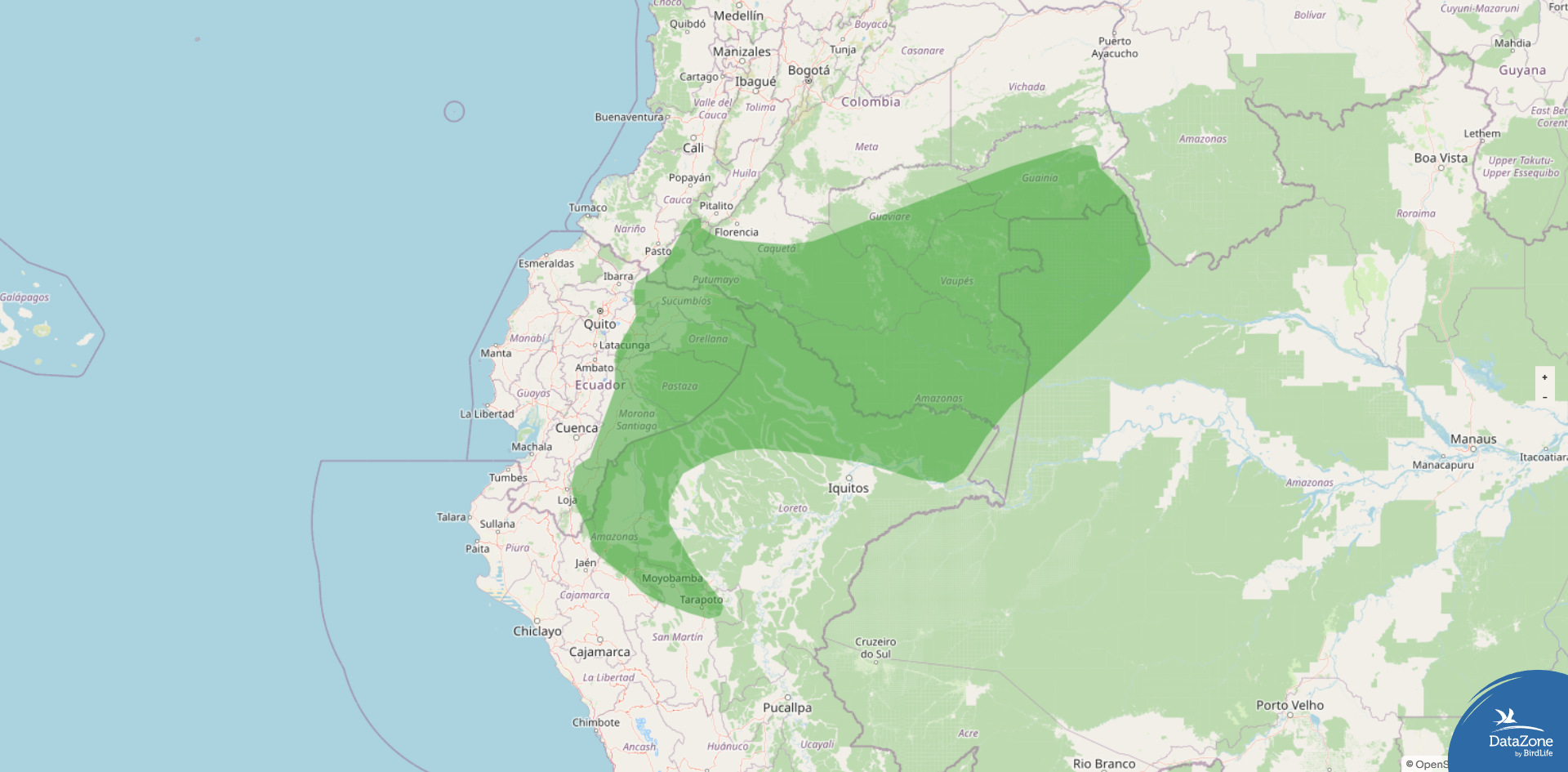
Range: Western Amazonia in southeastern Colombia, eastern Ecuador, northeastern and eastern Peru, and extreme northwestern Brazil (upper Rio Negro and adjacent areas)
Habitat: Interior of mature humid lowland and foothill forest and tall scrublands, occasionally forest edges and clearings with good canopy cover
Elevation: Mostly about 400–1,000 m; locally up to about 1,450 m, rarely to 1,900 m
Length: Nominate 11.5–13 cm (4.5–5.1 in); whitelyana 13–14 cm (5.1–5.5 in)
Weight: Males about 9.9 g (0.35 oz); females 7.1–8.5 g (0.25–0.30 oz)
Number of mature individuals: Unknown
Population trend: Decreasing
Status: Least Concern (IUCN)
Name Origin
The genus name Heliodoxa combines Greek elements meaning “sun” and “glory,” reflecting the bright, shining gorgets typical of brilliants. The species name schreibersii honors Austrian naturalist Karl Franz Anton von Schreibers. The English name “Black-throated Brilliant” describes the male’s distinctive black throat and upper breast combined with the typical brilliant-like sheen.
Subspecies & Distribution
Two subspecies are recognized:
Heliodoxa schreibersii schreibersii
Ranges from southeastern Colombia south through eastern Ecuador into northeastern Peru (north of the Amazon) and east into extreme northwestern Brazil in the upper Rio Negro watershed.Heliodoxa schreibersii whitelyana
Found in central and southeastern Peru, in humid montane and foothill forest on the east slope of the Andes and outlying ridges.
Across this range, the Black-throated Brilliant inhabits humid lowland and foothill forests and tall scrublands in western Amazonia and along the lower Andean slopes.
Ledged
Green Resident
Species Overview
The Black-throated Brilliant is a robust, long-tailed hummingbird of western Amazonia and adjacent Andean foothills, most often encountered inside mature, humid forest. It favors the interior and lightly broken understory of lowland and foothill forests rather than very open edges, moving along shaded trails and through tall scrub. Despite being generally uncommon and tied to relatively intact forest, its wide distribution across four countries and presence in protected areas support a Least Concern status, even as deforestation drives a Decreasing trend.
Male Description
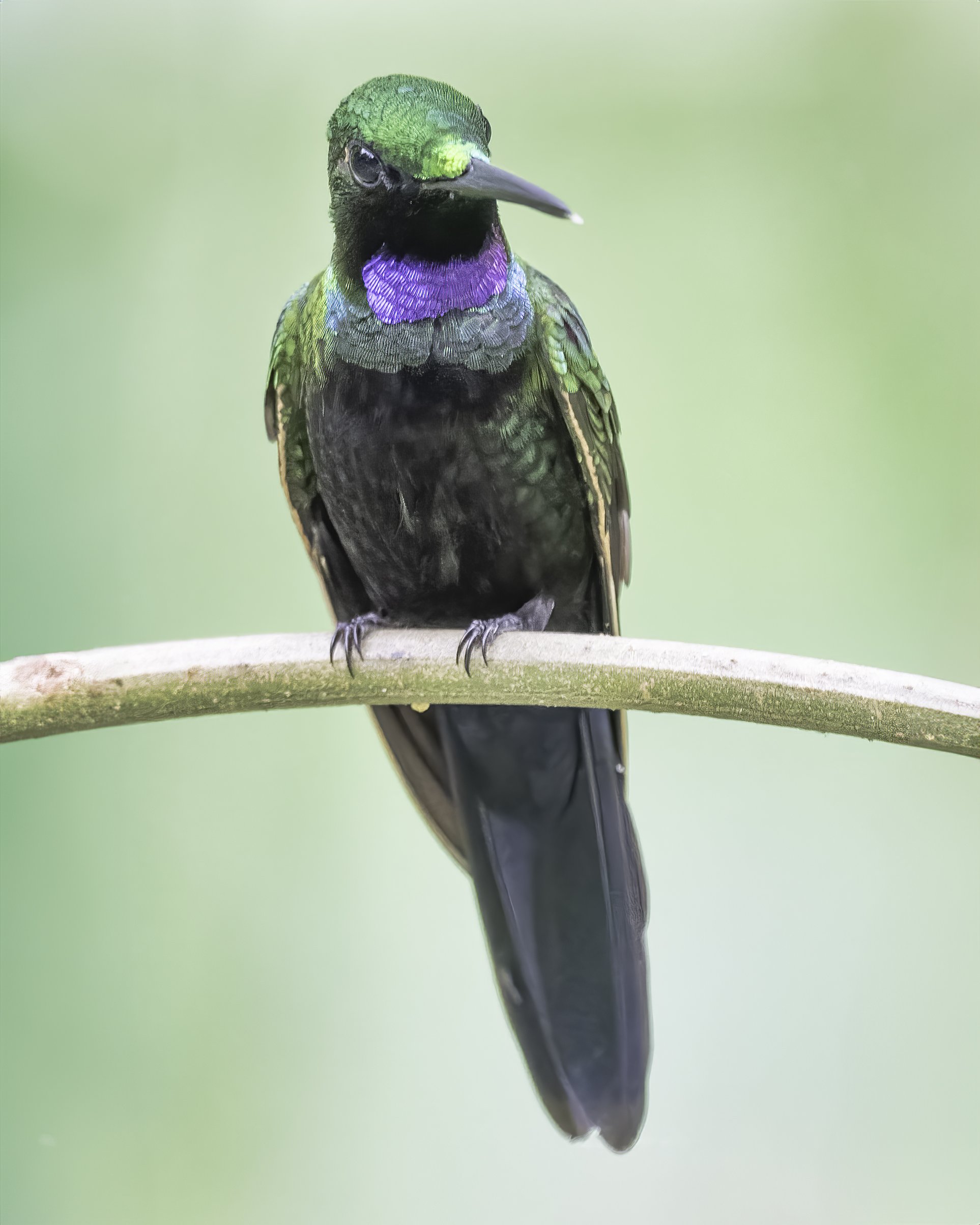
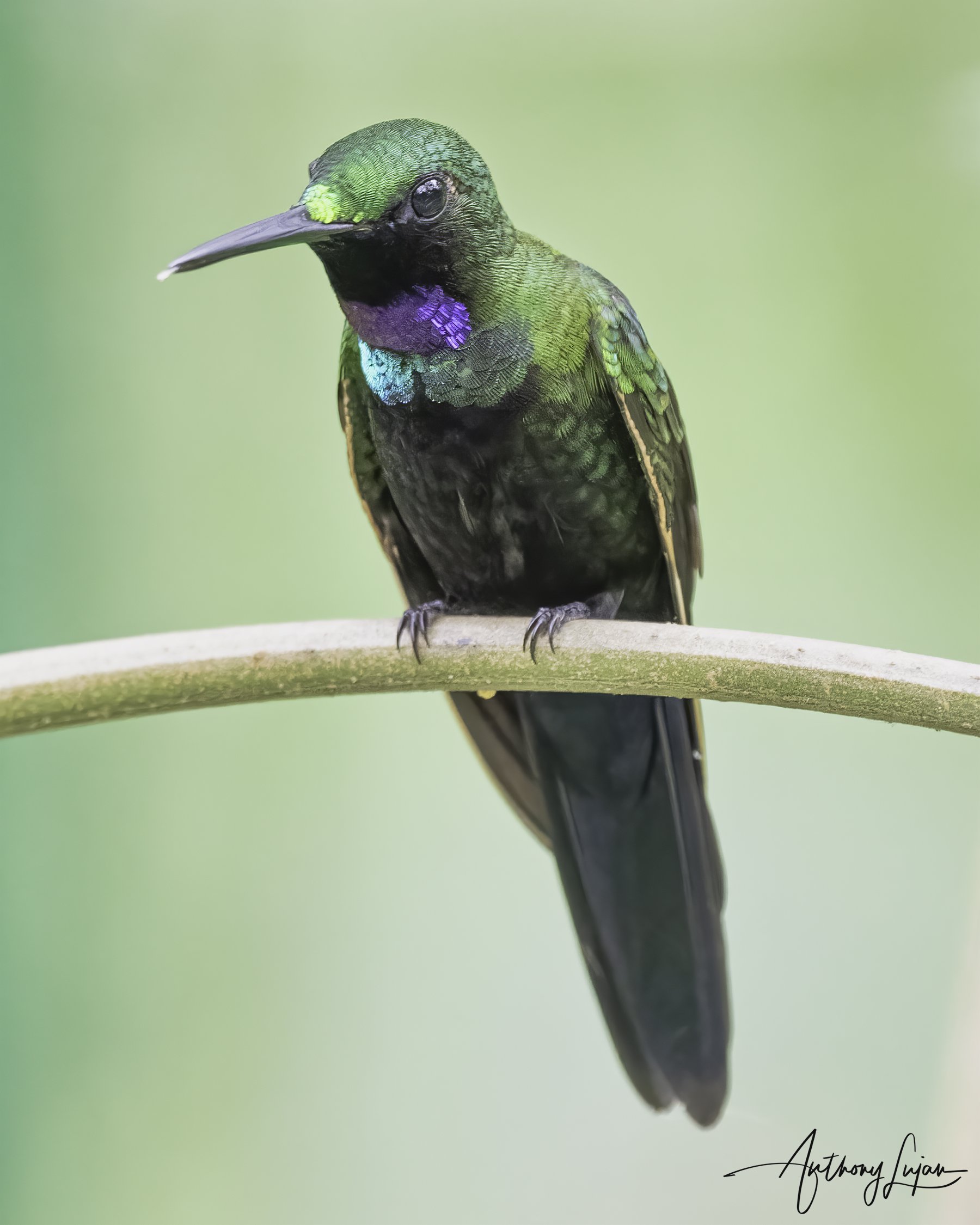
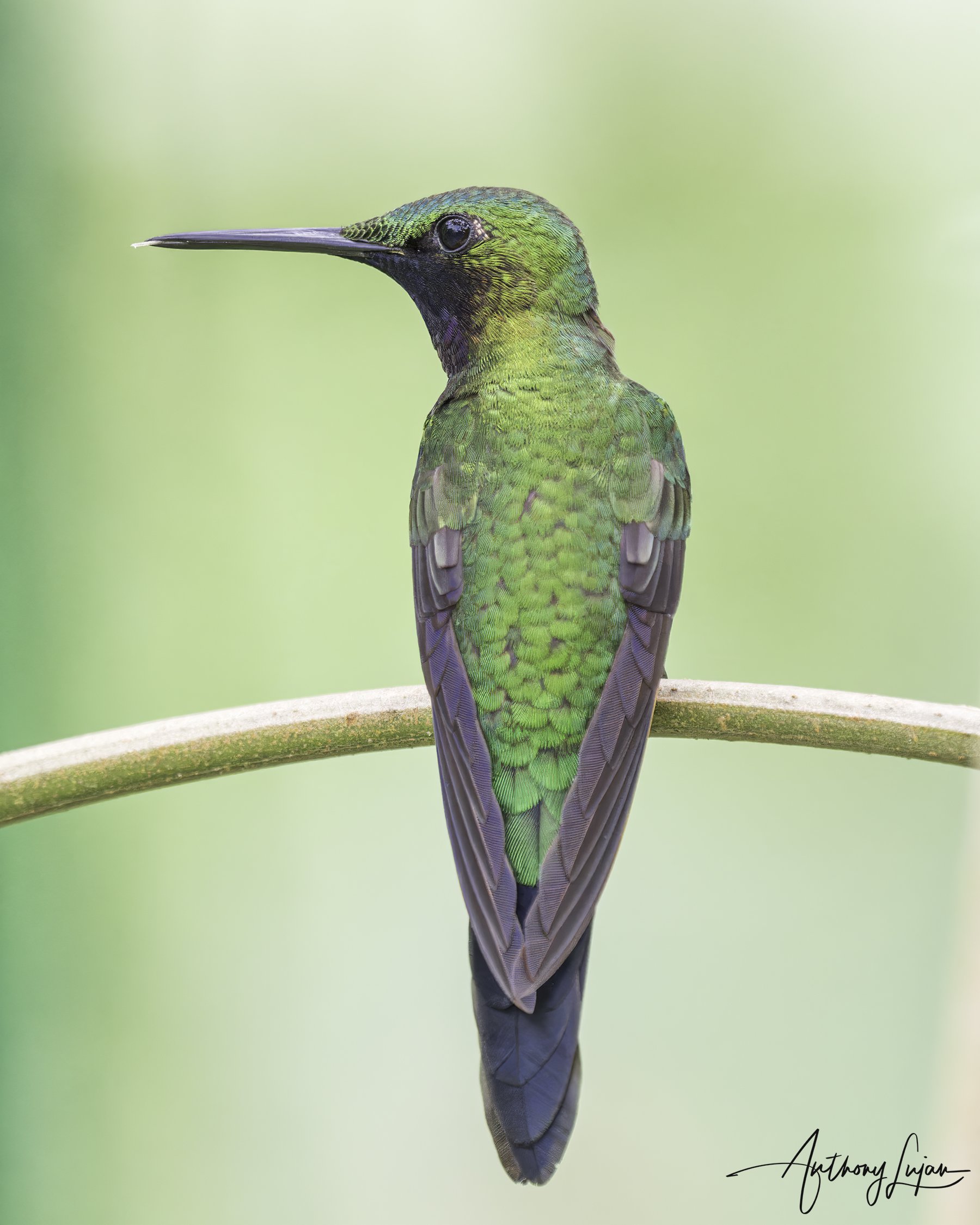
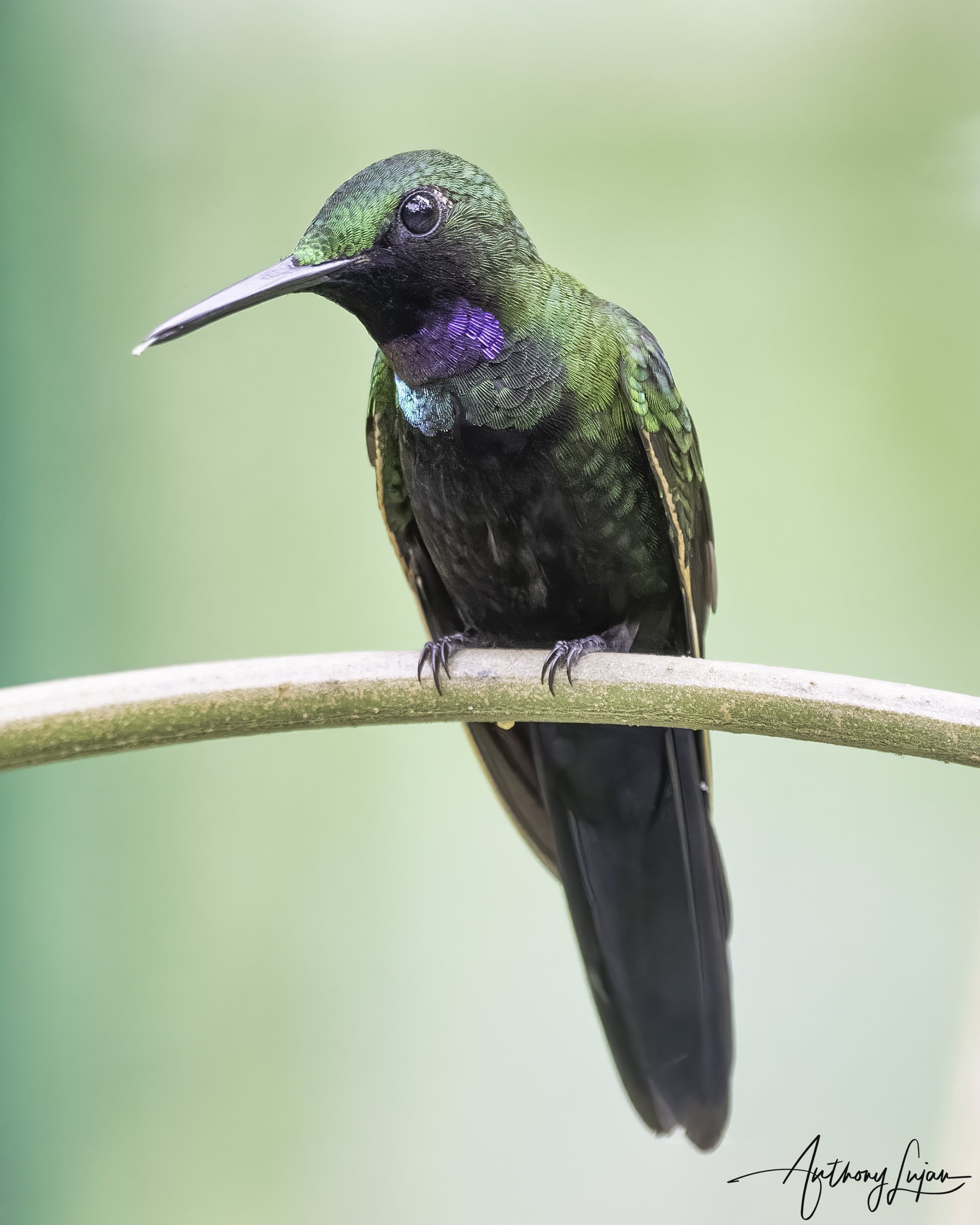
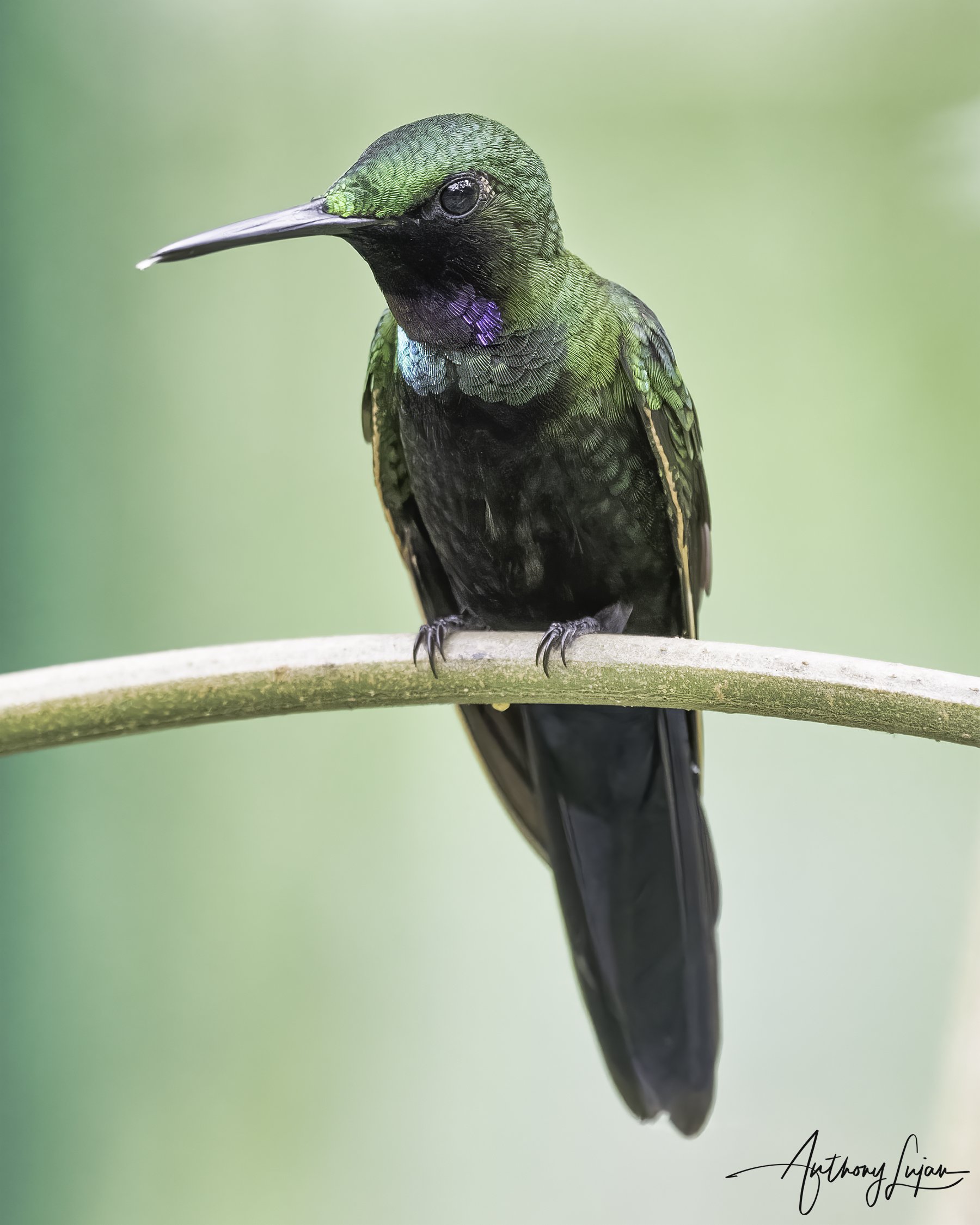
Adult males of the nominate subspecies are large hummingbirds with shining green upperparts and a glittering green forehead. They have black underparts with a small glittering purple patch and a narrow glittering green band on the lower throat, forming the “black-throated” look. The tail is steel-blue, very long, and deeply forked, extending well beyond the wingtips. The bill is almost straight, dark, and about 2.8 cm long, and a small white spot behind the eye adds a sharp facial accent. Males of whitelyana are similar but larger overall, with the entire upperparts shining green including the forehead.
Female Description
Females share the green upperparts of males but differ strongly below. They show a whitish to rufous malar stripe and gray underparts with bronzy green spots, giving a speckled look on the throat and breast. Their central tail feathers are green, and the tail is less deeply forked than the male’s, though still fairly long. A small white spot behind the eye is also present. Juveniles resemble females but often show a more intensely colored malar stripe and can appear slightly duller overall as plumage matures.
Habitat & Behavior
Black-throated Brilliants inhabit the interior of mature humid lowland and foothill forest and tall scrublands, occasionally using forest edges and more open spots as long as canopy cover remains. They typically range between about 400 and 1,000 meters in elevation, but in eastern Ecuador they are regularly found up to around 1,450 meters and occasionally as high as 1,900 meters. They primarily forage for nectar in the understory, usually between 2 and 4 meters above the ground, visiting flowers of plants in families such as Ericaceae and Malvaceae. They also take small insects by hawking from perches, sallying out to catch prey in mid-air. The song of the nominate form is a drawn-out, descending reeling trill lasting about 4–5 seconds, often given repeatedly, and both subspecies also give short “chup” notes.
Population
The total number of mature individuals is unknown, but the species is generally considered uncommon throughout much of its range, with localized concentrations in suitable habitat. It occupies a wide expanse of western Amazonia and Andean foothills, but its dependence on relatively intact humid forest makes it vulnerable to rapid habitat loss. The overall population trend is Decreasing, driven by deforestation, forest fragmentation, and degradation in the Amazon Basin and lower Andean slopes.

Conservation
Black-throated Brilliant is listed as Least Concern due to its broad distribution across Brazil, Colombia, Ecuador, and Peru and its presence in several protected areas. Nonetheless, ongoing deforestation for agriculture, logging, and infrastructure continues to erode its forest habitat, especially in lowland Amazonia and along foothill zones. Conservation efforts that protect large tracts of humid lowland and foothill forest, maintain forest interior conditions, and control fragmentation will benefit this species. Continued monitoring of habitat change and population status is important to ensure that this uncommon brilliant remains part of the western Amazonian hummingbird community.
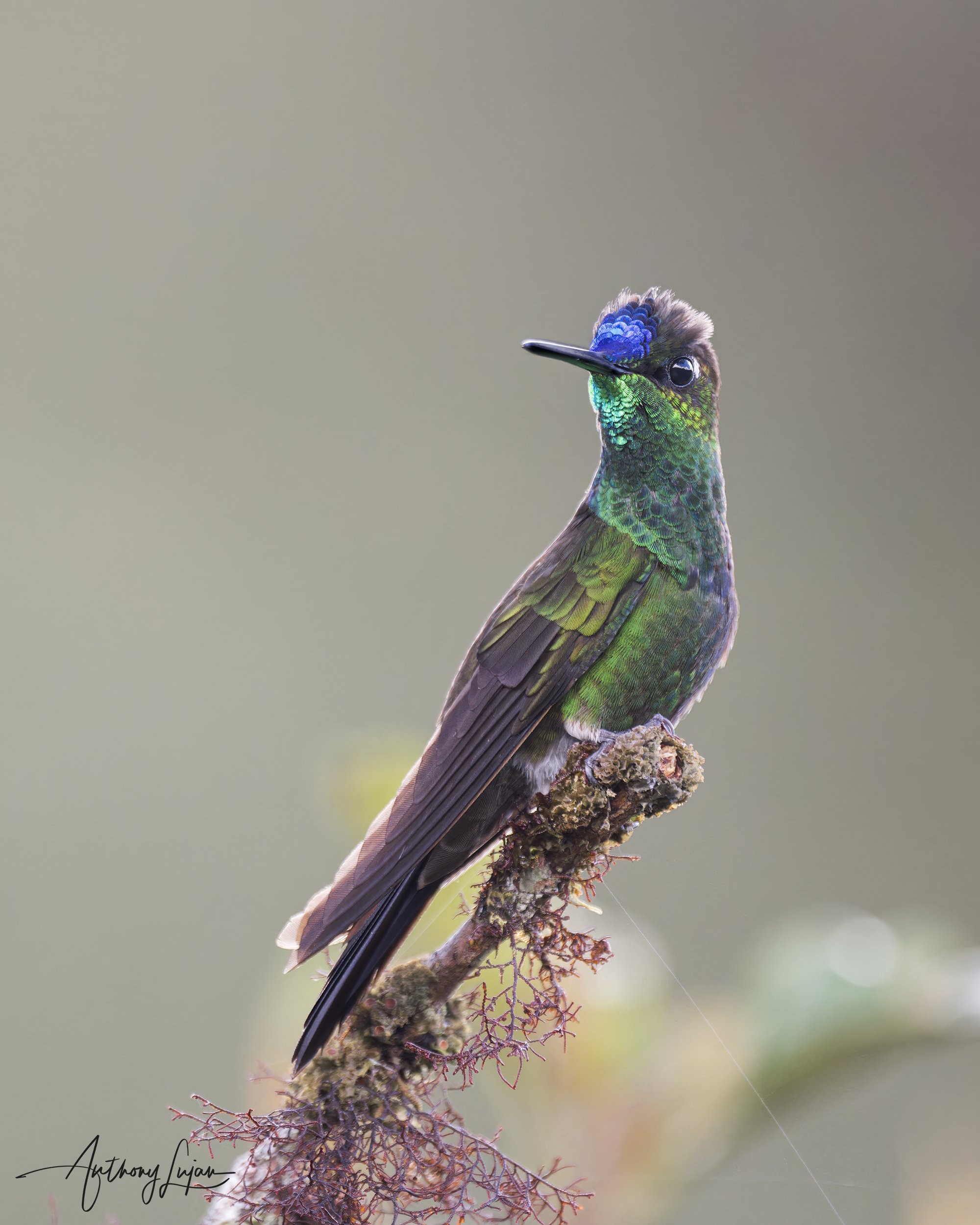
Below is the Black-throated Brilliant (Heliodoxa schreibersii schreibersii)
Photographed at Reserva Arena Blanca, San Martín, Peru
This individual belongs to the subspecies schreibersii, which occurs in the eastern Andean foothills from southern Colombia through Ecuador and northern Peru. It inhabits humid forest edge and interior clearings between 500 and 1,600 meters elevation, where it forages at flowering trees and heliconias.
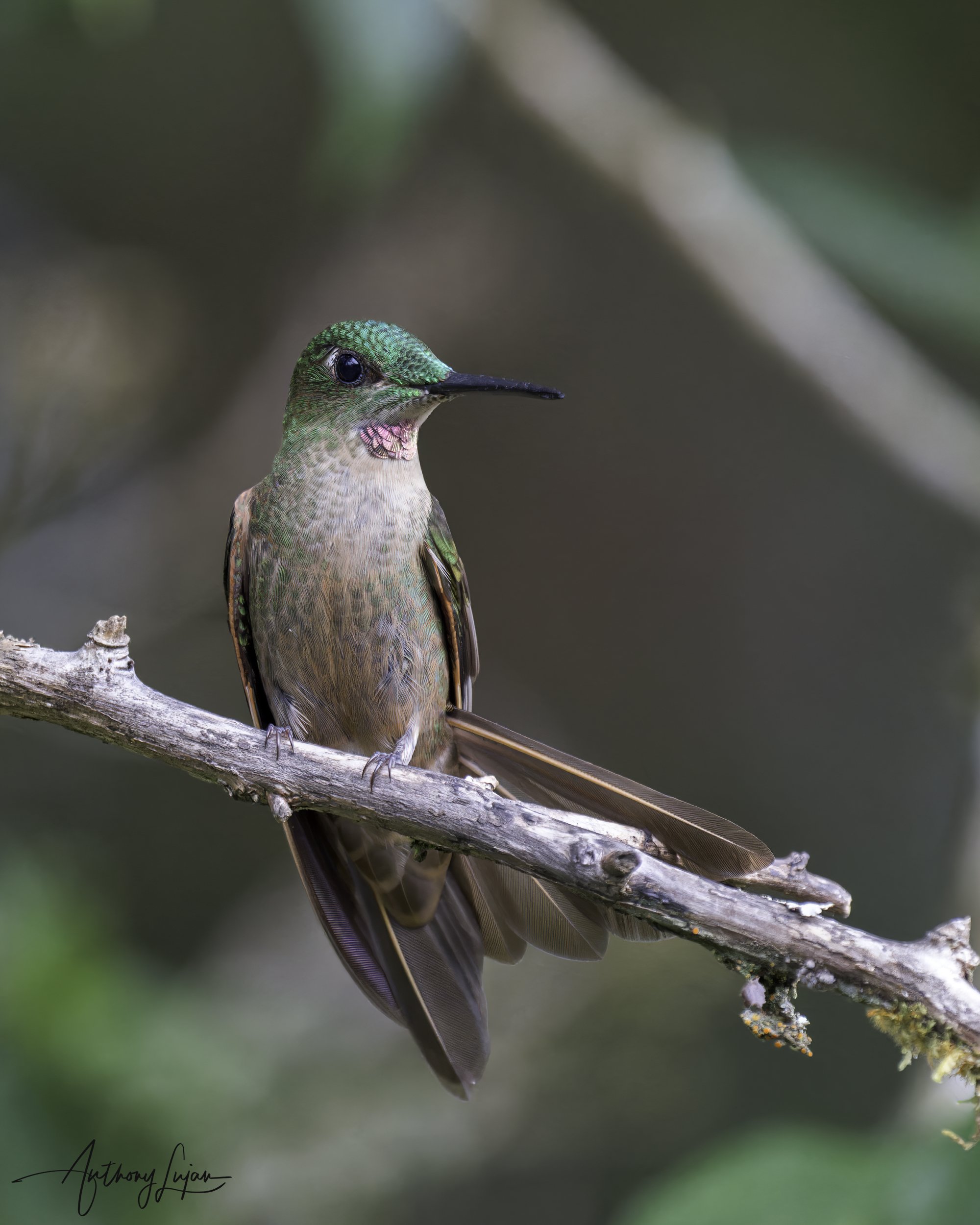
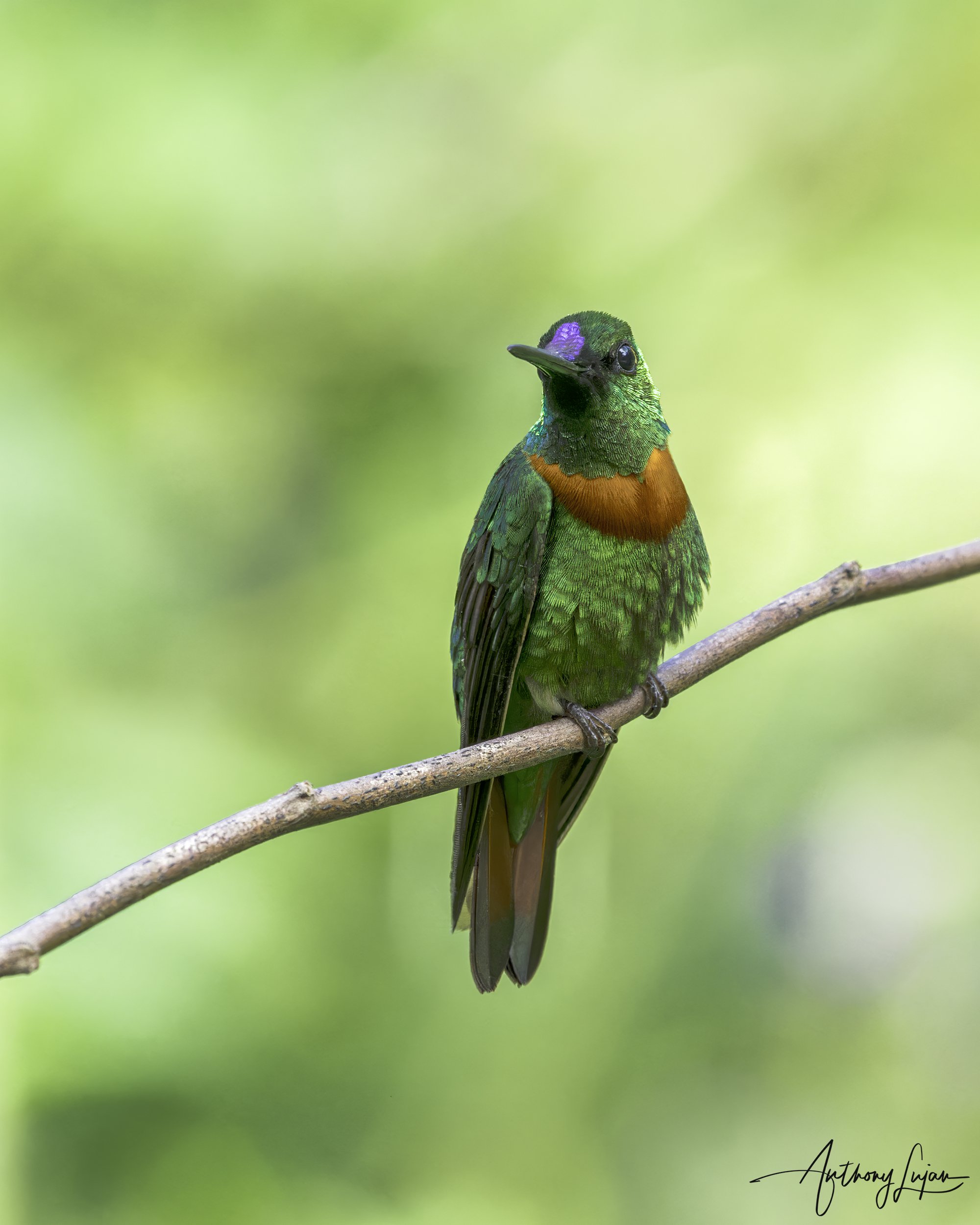
Related species in the Heliodoxa genus (10 species total):



Please note: The content provided in this article reflects Anthony’s personal experience and photographic approach. Results can vary depending on light, weather, location, equipment, subject behavior, and field conditions.