
Black-throated Mango
Scientific name: Anthracothorax nigricollis
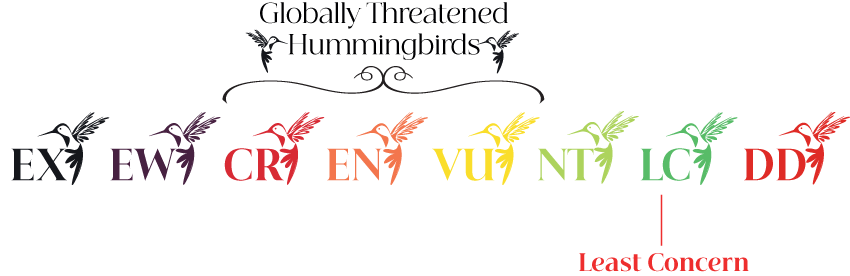
The Black-throated Mango is a widespread, adaptable hummingbird found from western Panama through most of tropical South America and on Trinidad and Tobago. The global number of mature individuals is estimated at 5,000,000–50,000,000, the population trend is Stable, it is assessed as Least Concern, and it is treated as a full migrant in parts of its range.
At a Glance
Family: Trochilidae (hummingbirds)
Clade: Polytminae – Mangoes
Genus: Anthracothorax
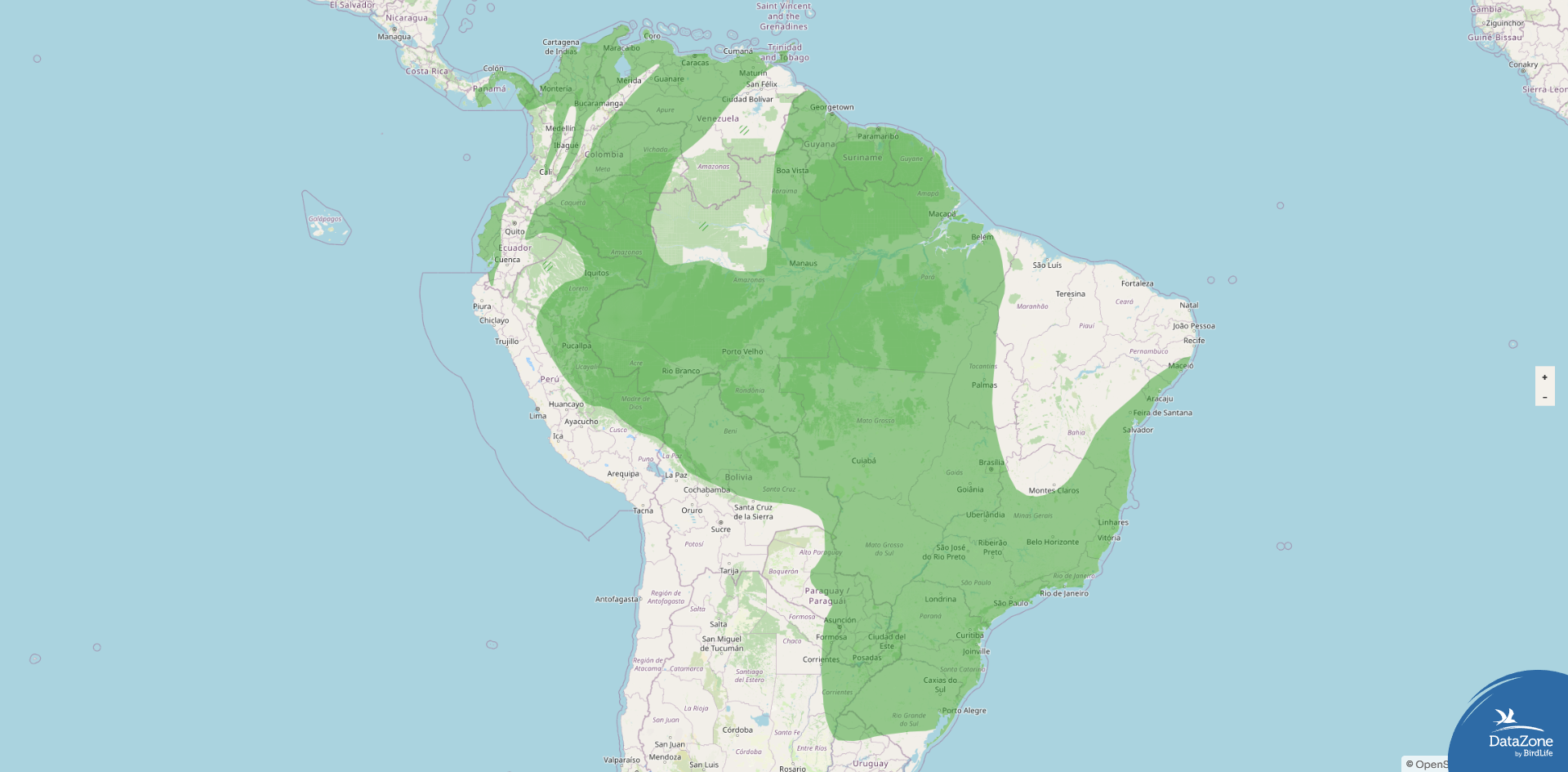
Range: Western Panama into much of Colombia and Venezuela, the Guianas, eastern Ecuador and Peru, northern and eastern Bolivia, most of Brazil, eastern Paraguay, far northern Argentina, and Trinidad and Tobago (with vagrants to Uruguay)
Habitat: Semi-open to open tropical lowland landscapes including gallery forests, forest edges, secondary and gallery woodland, shade coffee and cacao, plantations, and parks and gardens
Elevation: Mostly lowlands up to about 1,000 m, reaching around 1,400 m in Venezuela, 1,700 m in Colombia, and 2,000 m in eastern Brazil
Length: About 10–14 cm (roughly 4.0–5.5 in)
Weight: About 6–9 g
Number of mature individuals: 5,000,000–50,000,000
Population trend: Stable
Status: Least Concern (IUCN)
Name Origin
The genus name Anthracothorax combines words meaning “coal” and “chest,” referencing the dark-throated, dark-breasted appearance of many mangoes. The species name nigricollis means “black-necked” or “black-throated,” directly describing the bold dark stripe down the throat and chest. The English name “Black-throated Mango” matches this, emphasizing the prominent dark throat patch and its place among the mango hummingbirds.
Subspecies & Distribution
Two subspecies are recognized:
Anthracothorax nigricollis nigricollis
Found from western Panama into much of Colombia and Venezuela, the Guianas, eastern Ecuador and Peru, northern and eastern Bolivia, most of Brazil, eastern Paraguay, far northern Argentina, and on Trinidad and Tobago; also recorded as a vagrant in Uruguay.Anthracothorax nigricollis iridescens
Occurs in extreme southwestern Colombia, western Ecuador, and extreme northwestern Peru.
Together these subspecies occupy a broad swath of tropical lowland South and Middle America, largely east of the Andes and including Trinidad and Tobago, with a strong association to semi-open lowland habitats.
Ledged
Green Resident
Species Overview
The Black-throated Mango is a medium-sized, strikingly patterned hummingbird of open and semi-open lowland habitats, often seen around flowering trees, gardens, and plantations. Its adaptability to disturbed habitats and extensive range from Panama across most of tropical South America make it one of the more widespread mango species. Despite localized habitat changes, its very large population and tolerance of human-modified environments underpin a Stable trend and Least Concern status.
Male Description
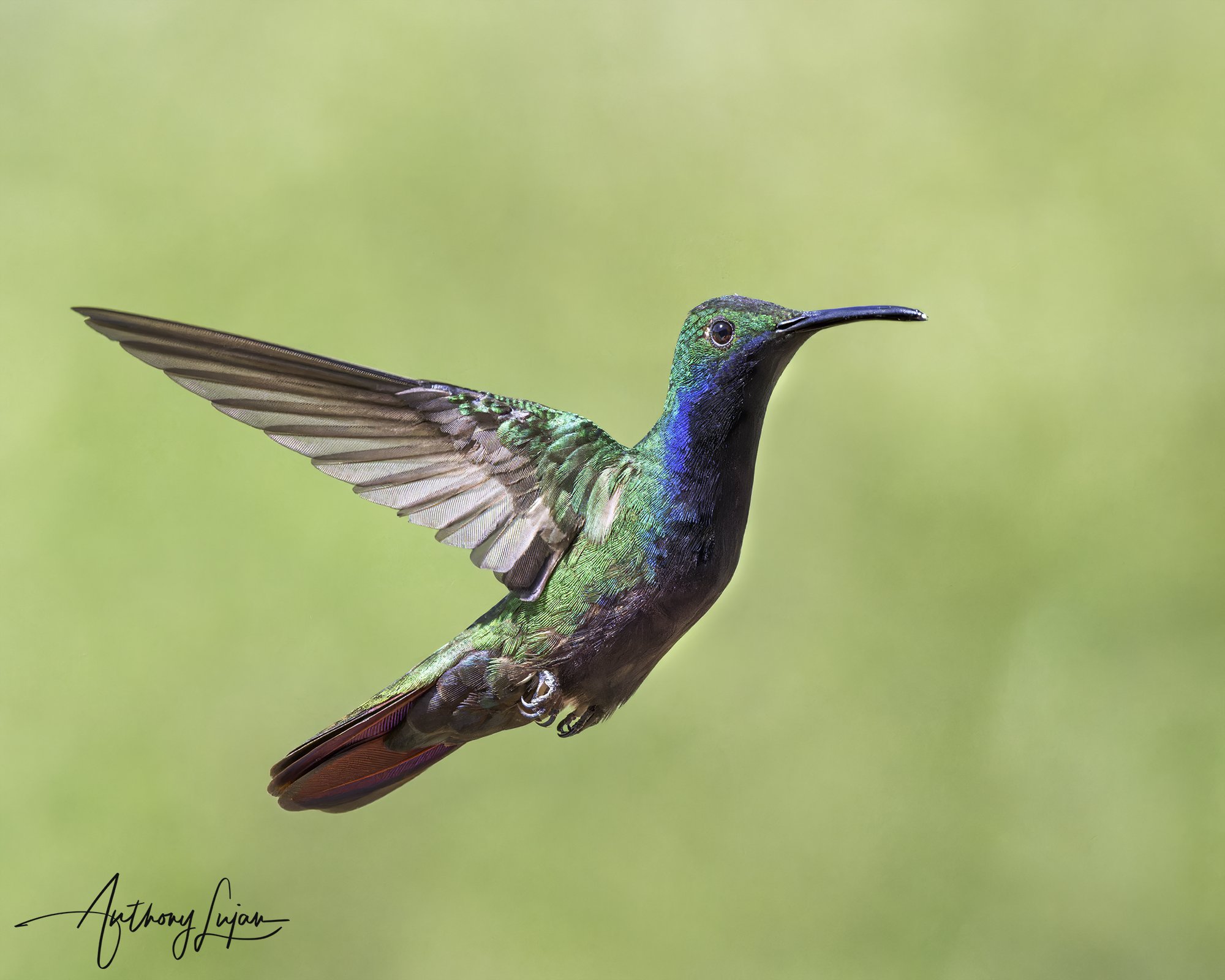
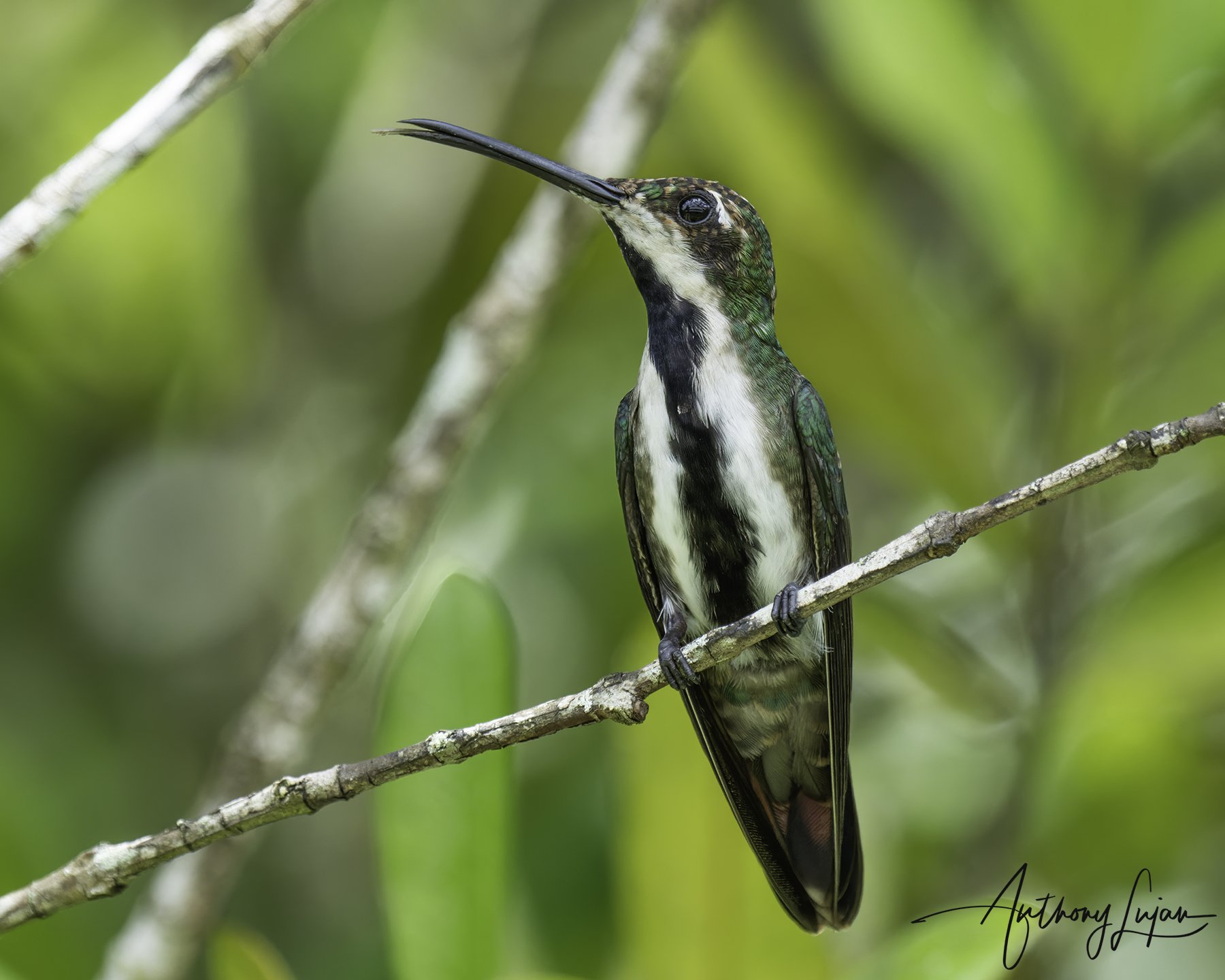
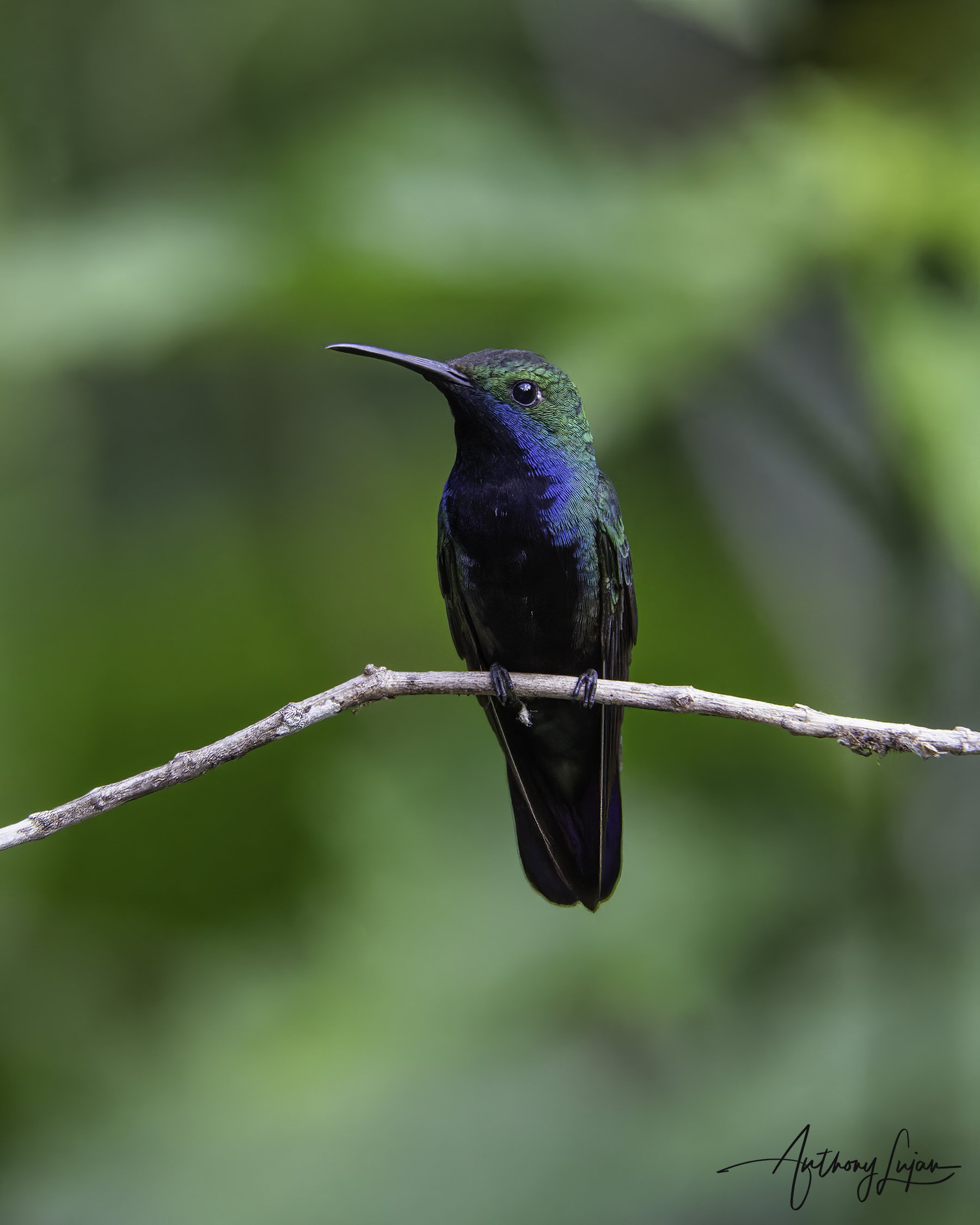
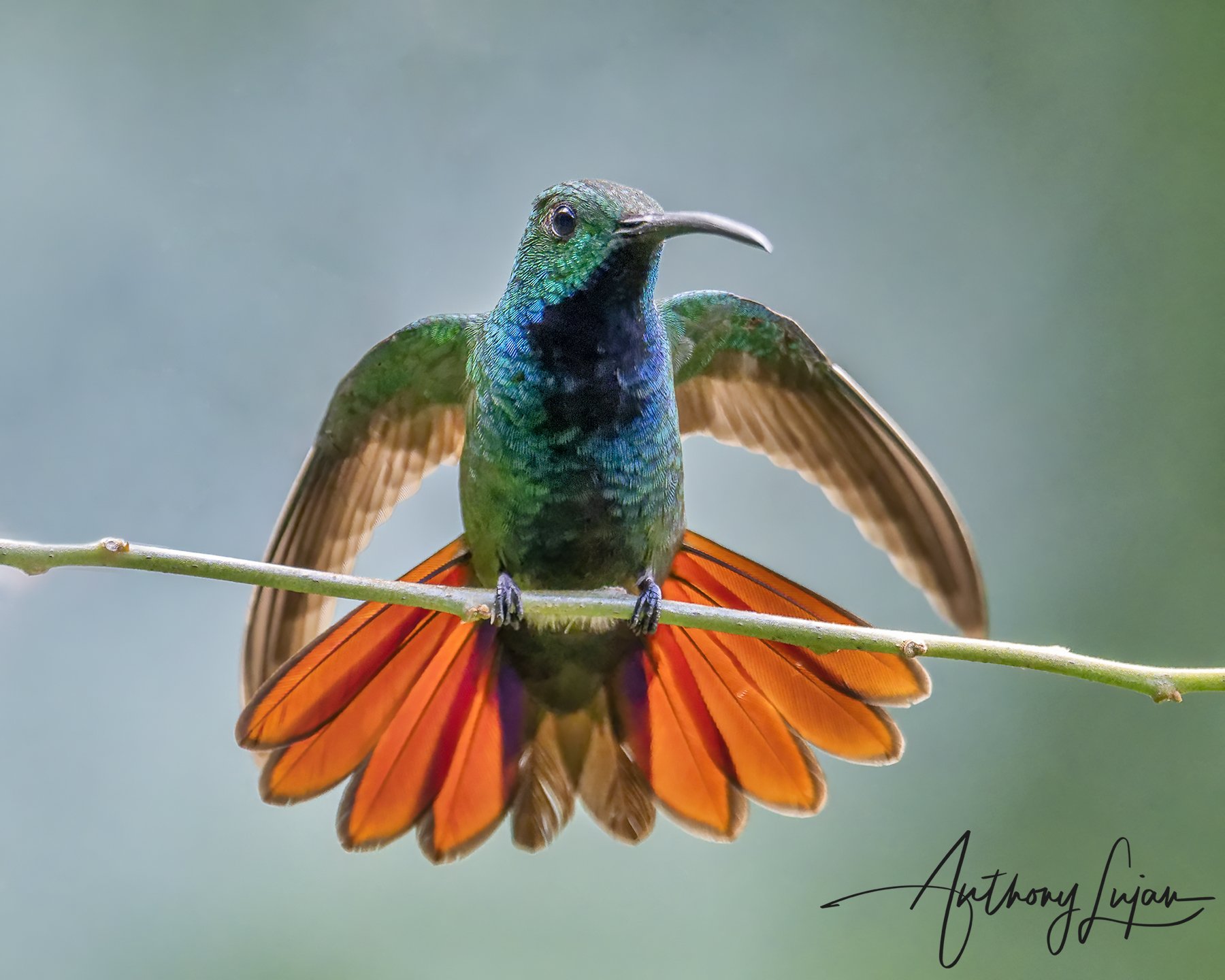
Adult males have metallic green upperparts and a glossy bronze-green crown and nape. The throat and central line of the breast and belly form a bold, black stripe bordered by white on either side, with white underparts outside the central dark stripe. The tail is mostly dark with a bronzy or purplish sheen, often with some pale or whitish tips on the outer feathers depending on angle and wear. The bill is slightly decurved and black, and the overall effect is of a green-backed hummingbird with a distinctive black “tie” on a white underbody.
Female Description
Females are similarly green above but differ strongly below. Instead of a solid black central stripe, they typically show a dark central line that is narrower and often broken, with more extensive white on the throat and underparts and less intense black. Their outer tail feathers are usually rufous with a wide purple base and whitish tips, strongly contrasting with the more bronzy inner pair. The bill is slightly decurved and black, and the sides and flanks are bronzy green. Overall, females appear paler below with more rufous and patterned tails compared to males.
Habitat & Behavior
Black-throated Mangos inhabit a wide range of lowland tropical habitats, especially semi-open and open landscapes such as gallery forests, forest edges, secondary and gallery woodland, shade coffee and cacao plantations, savanna groves, and urban and suburban gardens. They are usually found near flowering trees and shrubs, often fairly close to water, and commonly visit ornamental plantings in towns. Their diet consists mainly of nectar from a variety of flowers in both natural and cultivated settings, and they also take small flying insects, often hawking them in open air around flowering trees. The species is considered a full migrant in parts of its range, with documented seasonal movements—for example, populations in Trinidad and Tobago showing regular seasonal presence and apparent movements to and from the mainland—while elsewhere it behaves as a resident or local mover.
Population
The global population is estimated at 5,000,000–50,000,000 mature individuals. Across its huge range, the Black-throated Mango is generally described as fairly common to common in suitable habitats, especially where flowering trees, plantations, and gardens are widespread. Its ability to use secondary habitats, plantations, and urban green spaces supports a Stable overall population trend, even though local densities may vary with land use and flower availability.
Conservation
Black-throated Mango is listed as Least Concern due to its enormous range, very large population, and adaptability to human-modified landscapes. While deforestation and habitat conversion affect parts of its distribution, this species’ reliance on semi-open and secondary habitats, including plantations and gardens, makes it less sensitive than many forest-dependent hummingbirds. Conservation actions that maintain flowering trees, hedgerows, riparian gallery forests, and diverse agroforestry systems will continue to favor this species. Ongoing monitoring is still valuable, especially in regions experiencing rapid agricultural expansion or urbanization, to ensure that its currently stable status is maintained.
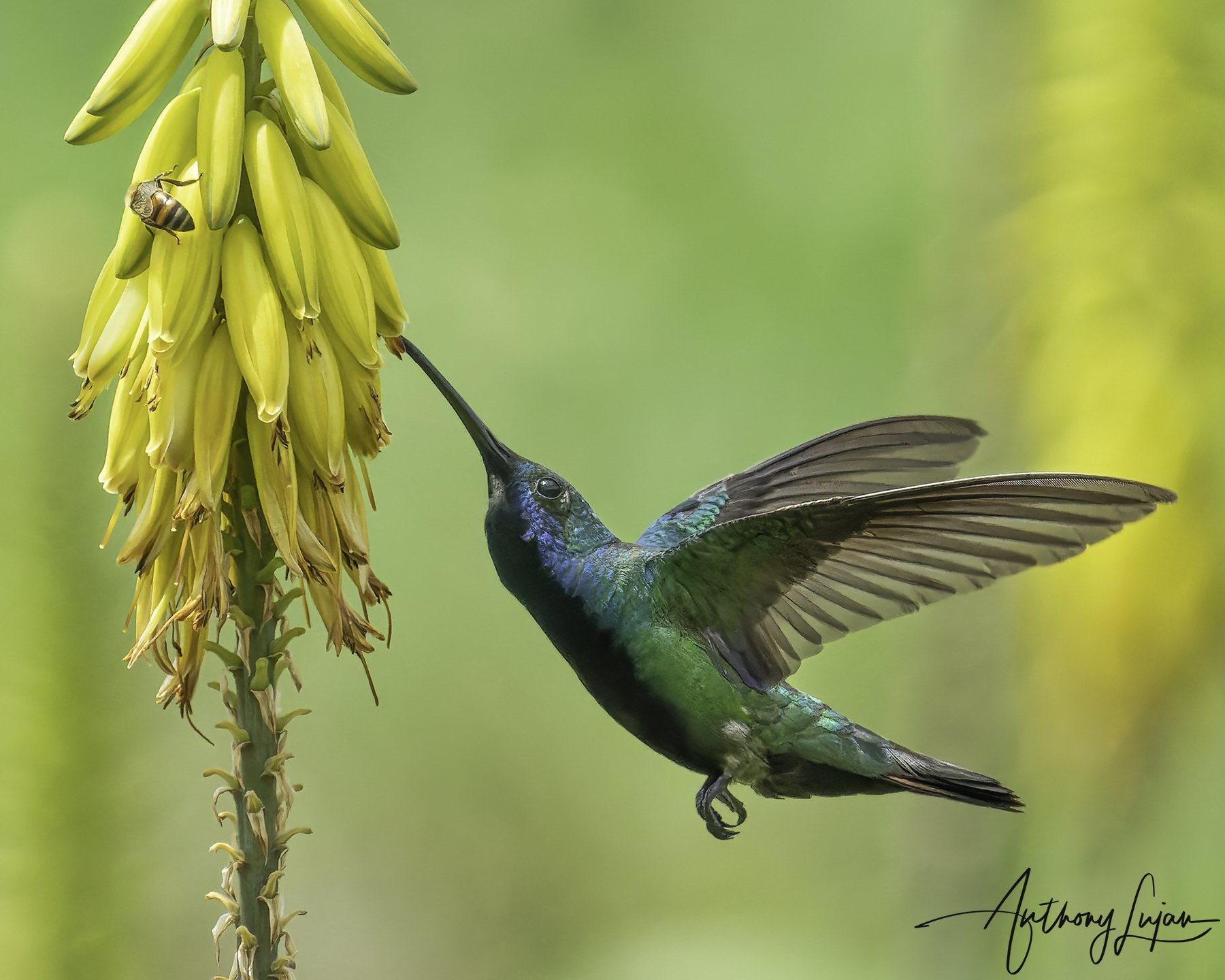
Below is the Black-throated Mango (Anthracothorax nigricollis iridescens)
Photographed at Parque Nacional de la Uva, Valle del Cauca, Colombia and Finca La Araucana, Valle del Cauca, Colombia
This individual belongs to the subspecies iridescens (Gould, 1861), which occurs in extreme southwestern Colombia, western Ecuador, and extreme northwestern Peru — restricted to the west of the Andes in the Chocó-Pacific lowland zone. Valle del Cauca sits squarely within this narrow western range. It inhabits gallery forests, forest edges, gardens, and shade plantations in the lowland tropics, generally below 1,700 m in Colombia.
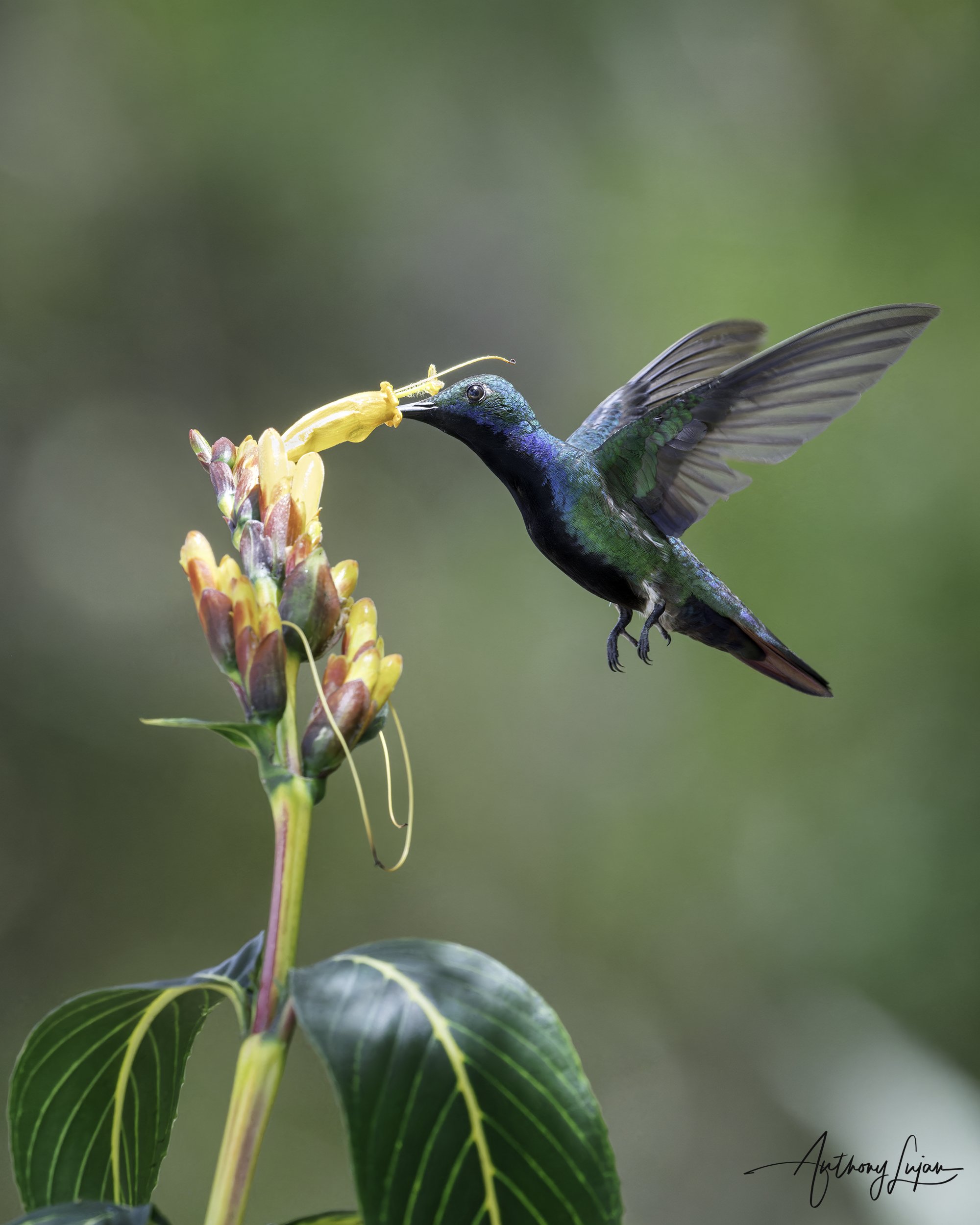
Below is the Black-throated Mango (Anthracothorax nigricollis nigricollis)
Photographed at Boa Nova–Lajedo dos Beija-Flores, Boa Nova, Bahia, Brazil; Eldorado–Recanto Gavião-de-penacho, Eldorado, São Paulo, Brazil; Bonfim, Roraima, Brazil; Cuffie River Nature Retreat, Tobago, Trinidad and Tobago; and Yerette Home of the Hummingbird, Tunapuna-Piarco, Trinidad and Tobago
This individual belongs to the nominate subspecies nigricollis (Vieillot, 1817), the wide-ranging form found from western Panama through most of Colombia east of the Andes, Venezuela, the Guianas, eastern Ecuador and Peru, northern and eastern Bolivia, eastern Paraguay, far northern Argentina, most of Brazil, and on both Trinidad and Tobago. It inhabits a variety of lowland tropical landscapes — gallery forests, shade coffee and cacao plantations, forest edges, parks, and gardens — generally below 1,400 m, though it has been recorded up to 2,000 m in eastern Brazil.

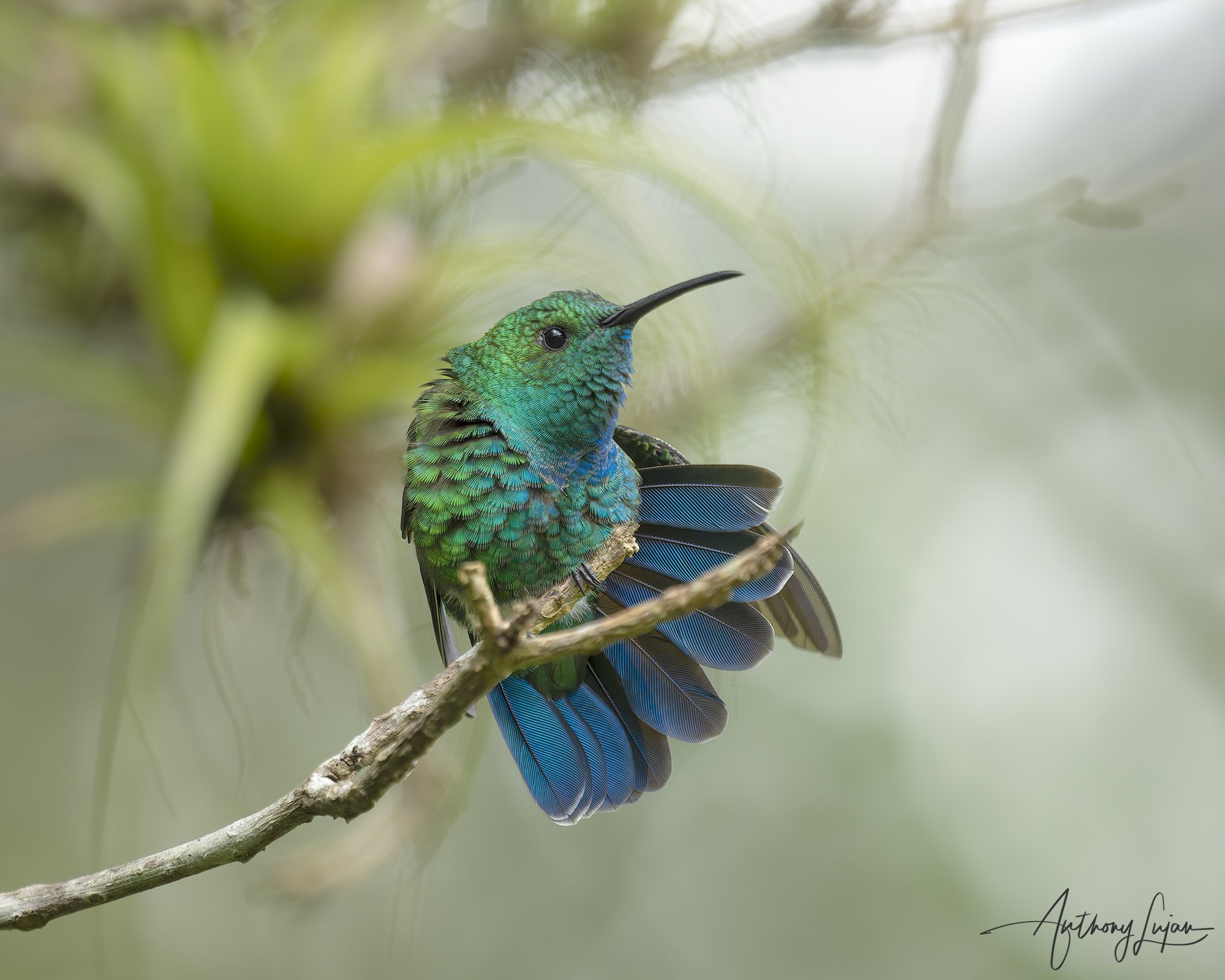
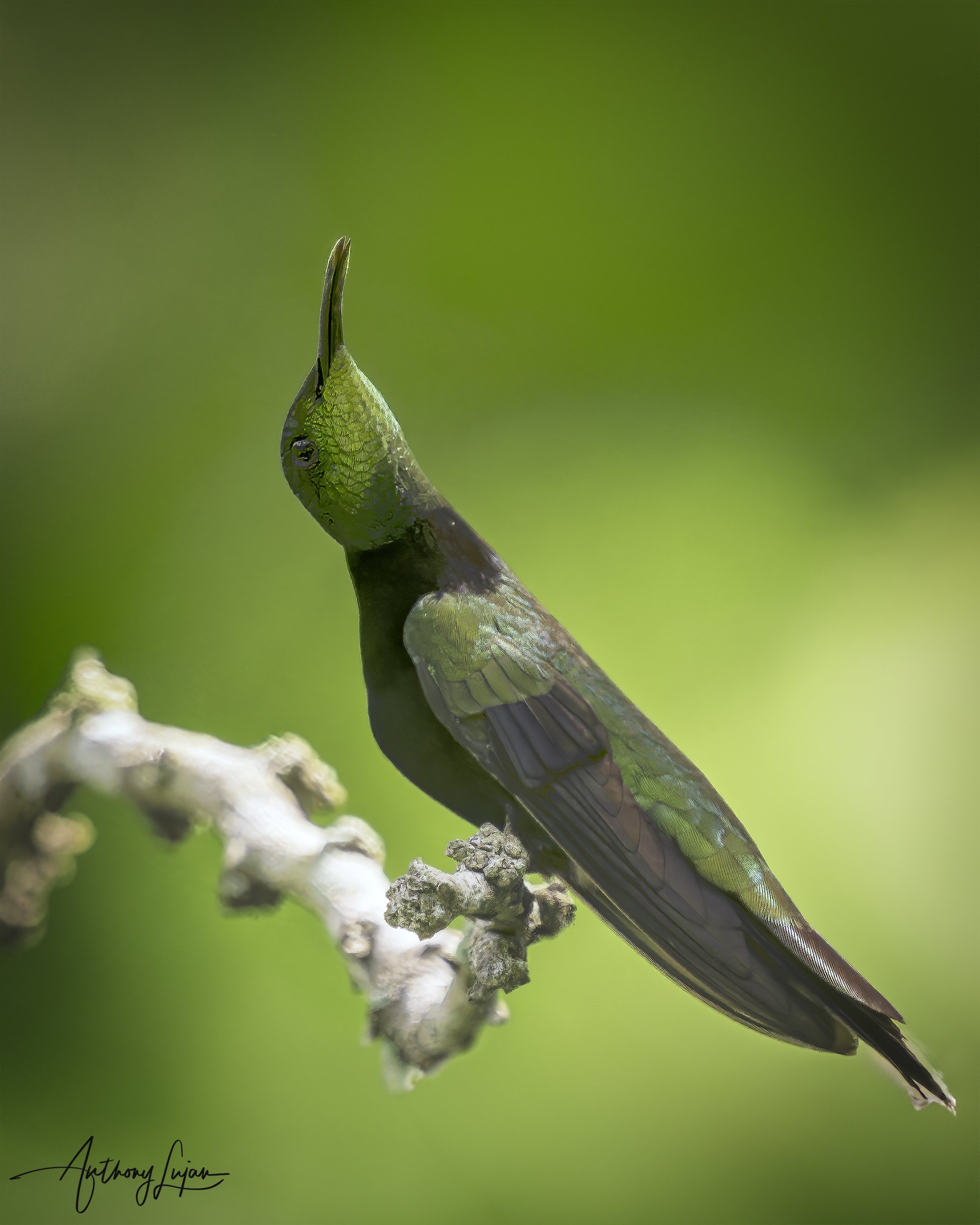
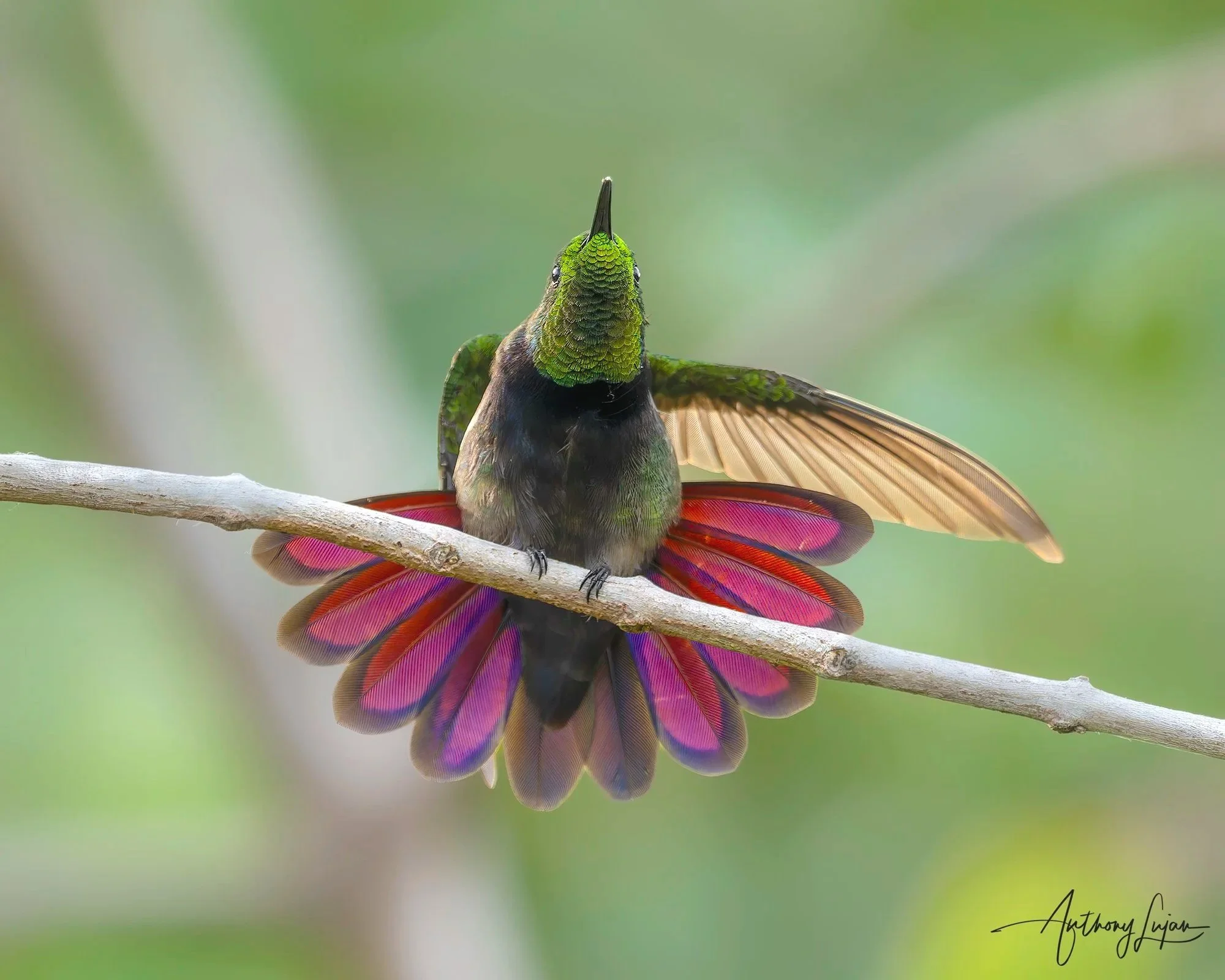
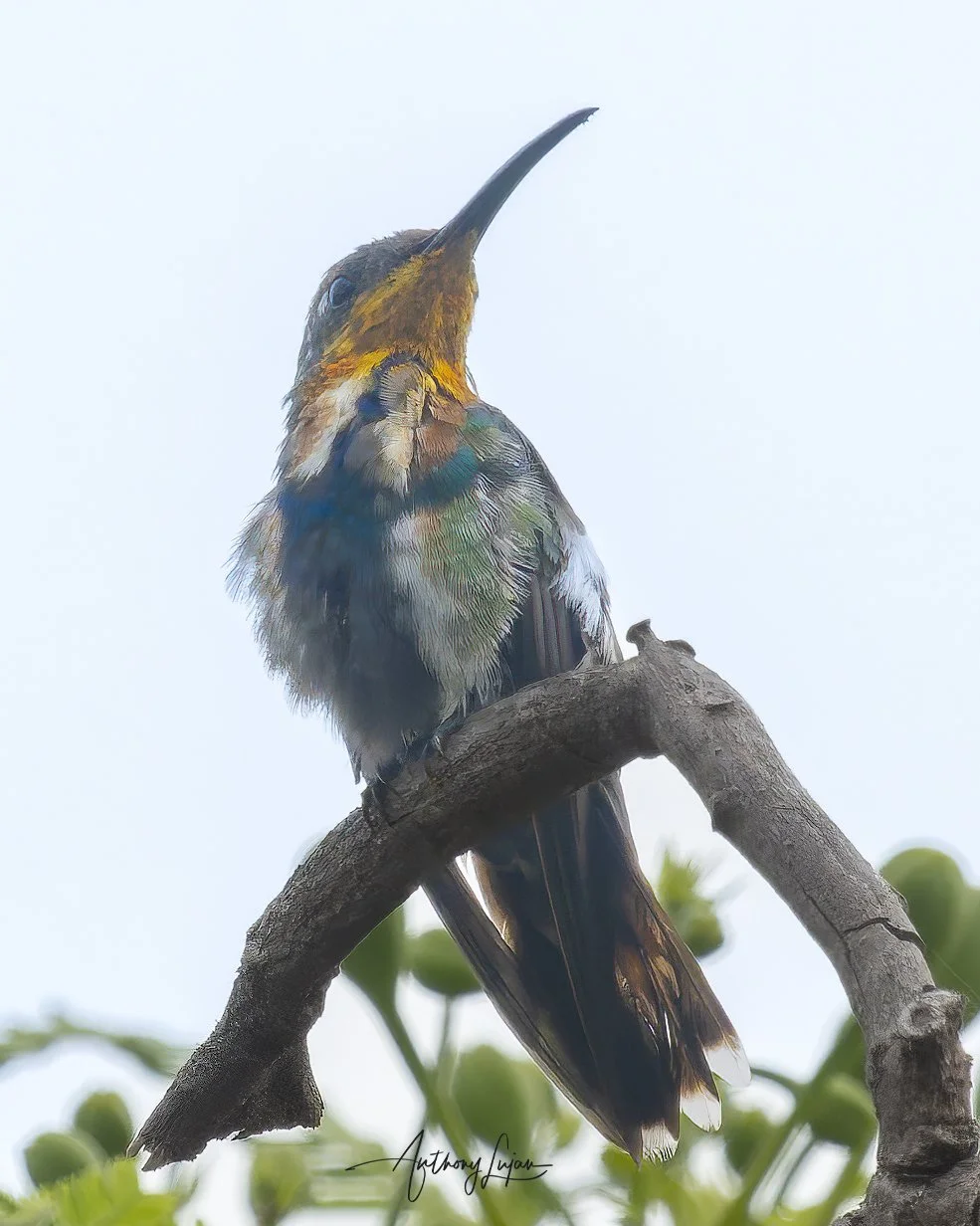
Related species in the Anthracothorax genus (8 species total):

Please note: The content provided in this article reflects Anthony’s personal experience and photographic approach. Results can vary depending on light, weather, location, equipment, subject behavior, and field conditions.