
Crowned Woodnymph
Scientific name: Thalurania colombica
The Crowned Woodnymph, also known as the Violet-crowned Woodnymph, is a medium-sized forest hummingbird of humid lowland and foothill forests, edges, and tall second growth from eastern Guatemala and Honduras south through Panama, Colombia, Ecuador, and northwestern Peru. It is listed as Least Concern, with an estimated 5,000,000–49,999,999 mature individuals, a decreasing population trend, and it is considered not a migrant at the species level, although some populations make local elevational movements.
At a Glance
Family: Trochilidae (hummingbirds)
Clades: Trochilini – Emeralds
Genus group: Thalurania — woodnymphs (4 species in total: Crowned, Green-crowned, Violet-capped, Long-tailed)
Range: Eastern Guatemala and Honduras through Nicaragua, Costa Rica, and Panama, south through Colombia and Ecuador to northwestern Peru.
Habitat: Humid lowland and foothill forests, forest edges, tall second growth, and partially open woodlands, as well as shaded plantations and large gardens with tall trees and understory shrubs.
Elevation: From sea level up to about 1,800–2,000 m, depending on region.
Length: About 9–11 cm (3.5–4.3 in).
Weight: About 4–5 g (0.14–0.18 oz).
Number of mature individuals: 5,000,000–49,999,999.
Population trend: Decreasing.
Status: Least Concern (IUCN Red List category).
Migration: Not a migrant (some local elevational movements in parts of the range).
Name Origin
The genus name Thalurania combines Greek roots meaning “sea” and “queen,” likely referencing a “sea‑green queen” and evoking the rich green and violet colors typical of woodnymphs. The species name colombica refers to Colombia, where the nominate form was originally described. The English name “Crowned Woodnymph” highlights the male’s brightly colored crown and the association with the woodnymph group of forest hummingbirds.
Taxonomy & Distribution
Thalurania colombica
Crowned Woodnymph is part of the emerald clade (tribe Trochilini) and one of four species in the genus Thalurania. It is widely distributed from eastern Guatemala and Belize and adjacent Honduras south through Nicaragua, Costa Rica, Panama, Colombia, and Ecuador to far northwestern Peru. Within this range, multiple subspecies have been grouped informally into Northern Violet-crowned, Colombian Violet-crowned, Green-crowned, and Emerald-bellied groups, reflecting differences in crown and belly coloration across regions.
Subspecies and Distribution
Crowned Woodnymph has eight recognized subspecies, often discussed in four color groups.
Crowned Woodnymph (Northern Violet-crowned Group)
Thalurania colombica townsendi
Distribution: Eastern Guatemala to southeastern Honduras. This subspecies occurs on the Caribbean slope in humid lowland and foothill forests, forest edges, tall second growth, and shaded plantations, where it is a common forest hummingbird.Thalurania colombica venusta
Distribution: Eastern Nicaragua to central Panama. It occupies similar humid lowland and foothill forests and edges along the Caribbean slope and locally on the Pacific side, including tall second growth, plantations, and gardens with tall trees and flowering understory.
Crowned Woodnymph (Colombian Violet-crowned Group)
Thalurania colombica colombica
Distribution: Northern Colombia (south to the head of the Magdalena Valley) and northwestern Venezuela (Andes south from northern Lara). This nominate subspecies is found in humid lowland and foothill forests, forest edges, and tall second growth on both Caribbean and Andean slopes, often in broken forest and forest–pasture mosaics.Thalurania colombica rostrifera
Distribution: Western Venezuela (southwestern Táchira). It inhabits humid foothill and lower montane forests, edges, and tall second growth in this Andean region, using similar forest‑edge and semi‑open habitats as the nominate form.
Crowned Woodnymph (Green-crowned Group)
Thalurania colombica fannyae
Distribution: Eastern Panama (eastern San Blas and Darién) to southwestern Colombia. This subspecies occurs in humid lowland and foothill forests and edges along the Caribbean slope in eastern Panama and into the Chocó and adjacent Andean foothills of southwestern Colombia, often in tall second growth and forest–edge habitats.Thalurania colombica subtropicalis
Distribution: West-central Colombia, in the Cauca Valley and along the adjacent Western and Central Andes. It inhabits humid foothill and lower montane forests, forest edges, and tall second growth, frequently using forest–agriculture mosaics and riparian woodlands within the Cauca and nearby Andean valleys.Thalurania colombica verticeps
Distribution: Pacific slope of the western Andes of extreme southwestern Colombia (western Nariño) and western Ecuador (northern Los Ríos, southern Manabí, and northern Guayas). This subspecies occupies humid lowland and foothill forests and edges along the Pacific slope, including forest fragments, tall second growth, and shaded plantations.
Crowned Woodnymph (Emerald-bellied Group)
Thalurania colombica hypochlora
Distribution: Pacific lowlands of southern Ecuador (northeastern Guayas, southwestern Chimborazo) and northwestern Peru (Tumbes). It inhabits humid and semi‑humid lowland forests, edges, and tall second growth in this more southerly part of the range, often in forest–agriculture mosaics and riparian woodland strips.
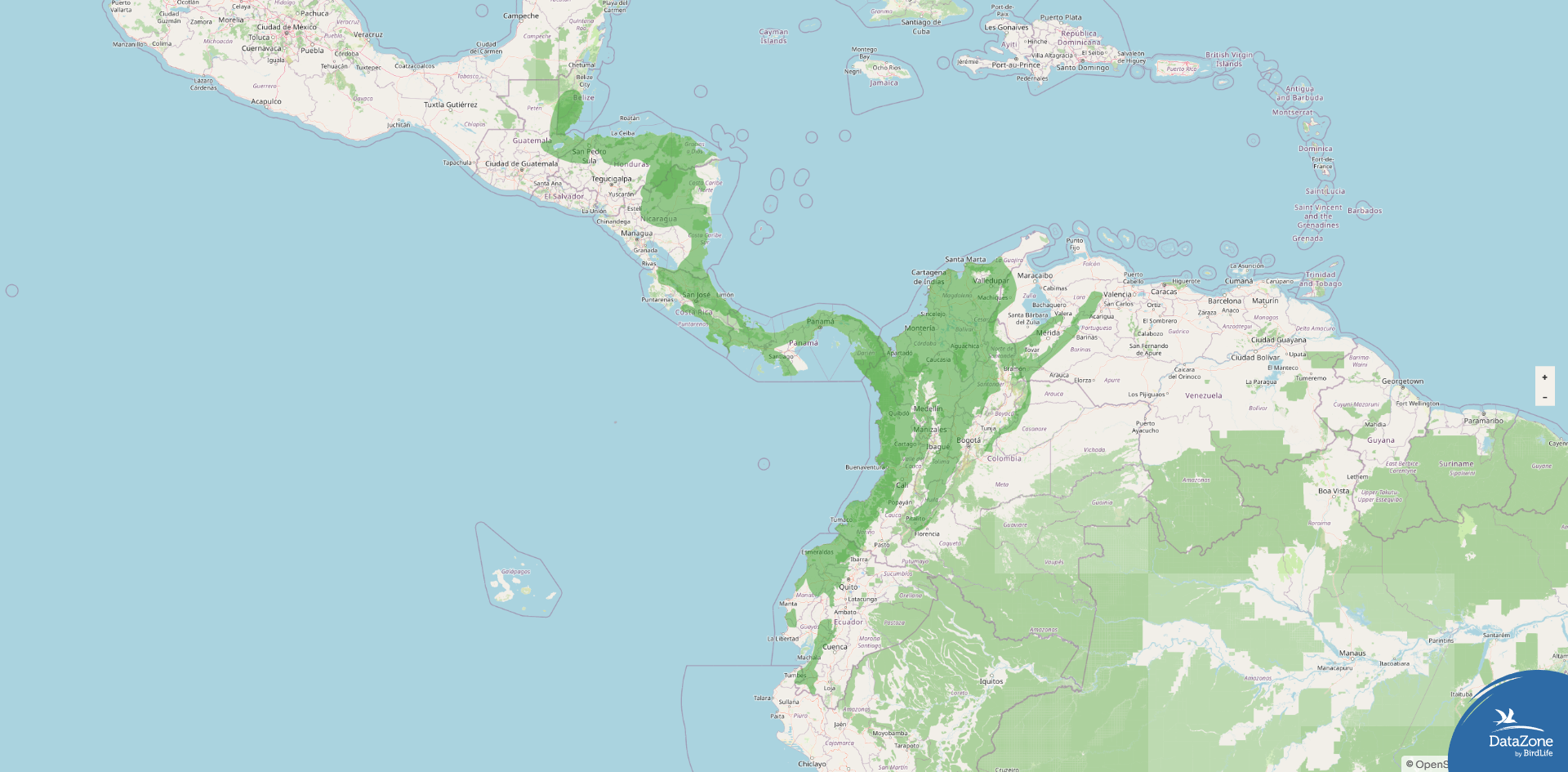
Legend
Green Resident
Species Overview
The Crowned Woodnymph is one of the commonest forest hummingbirds across much of its range, especially in humid lowland and foothill forests and forest edges. Males are striking, with a glittering violet to blue crown and throat, contrasting with green or turquoise underparts and darker wings and tail, while females are green above and pale below with green spotting. The species tolerates a degree of habitat alteration and frequently uses secondary forest, forest edges, and large gardens, although ongoing deforestation is reducing some local populations.
Male Description
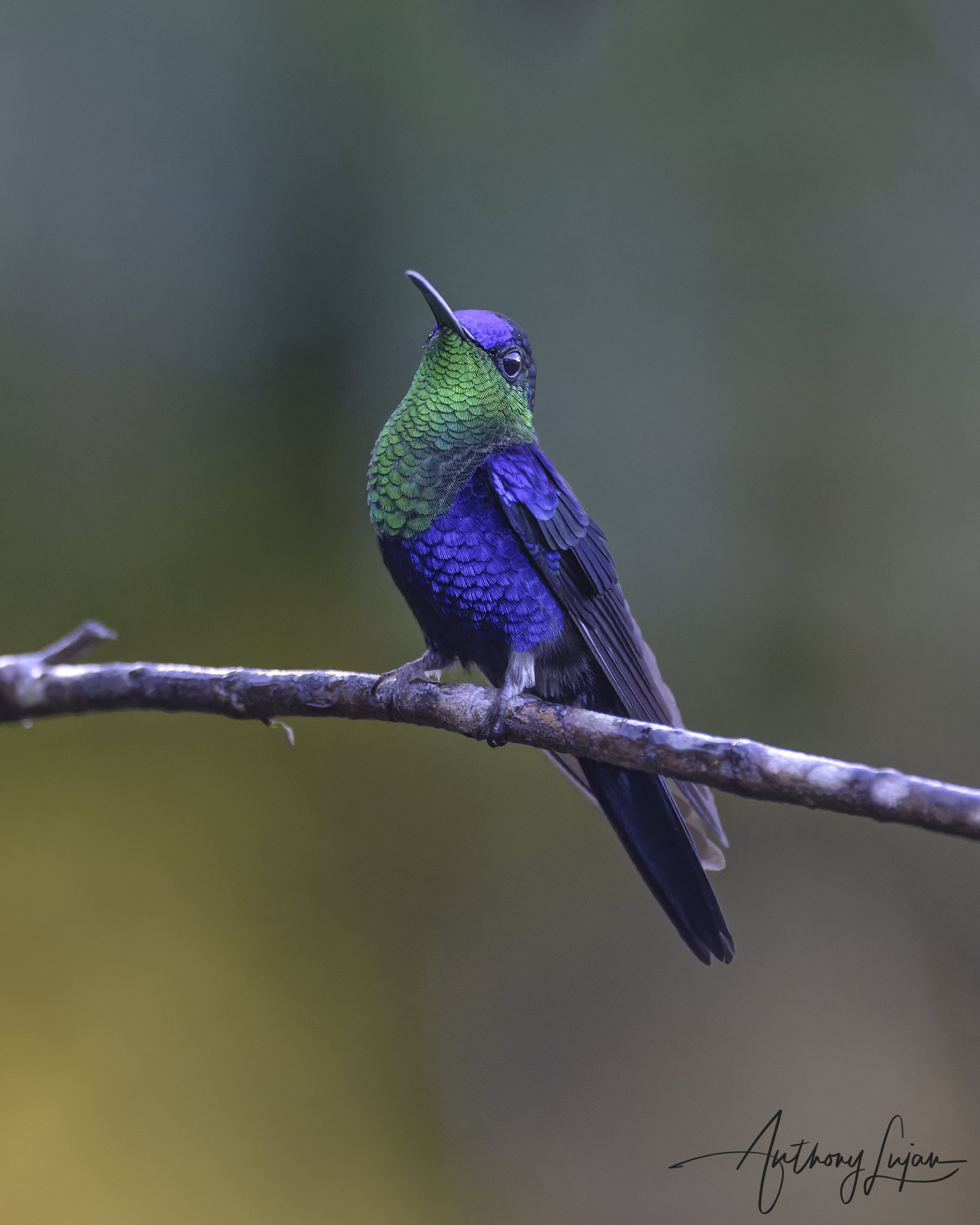
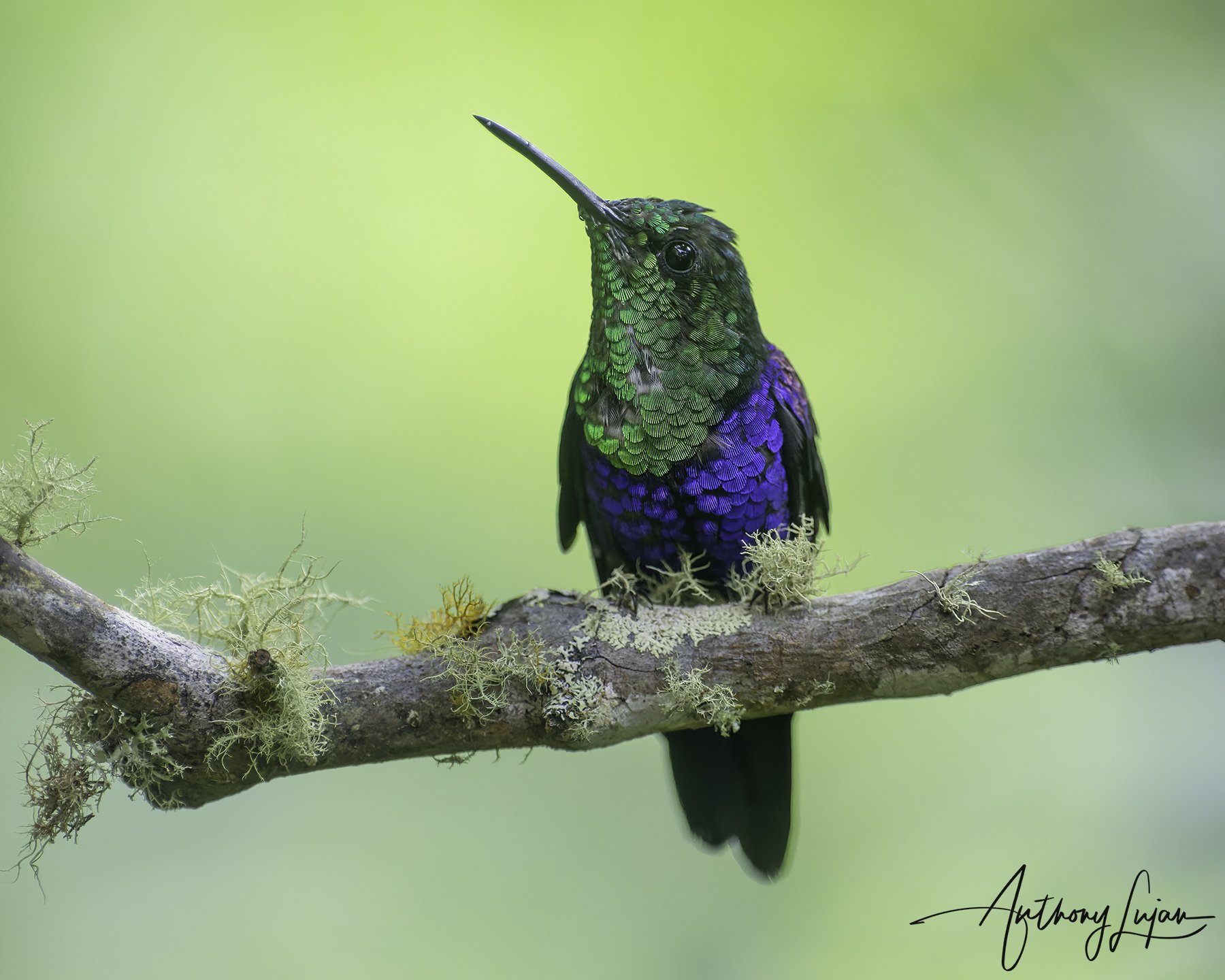
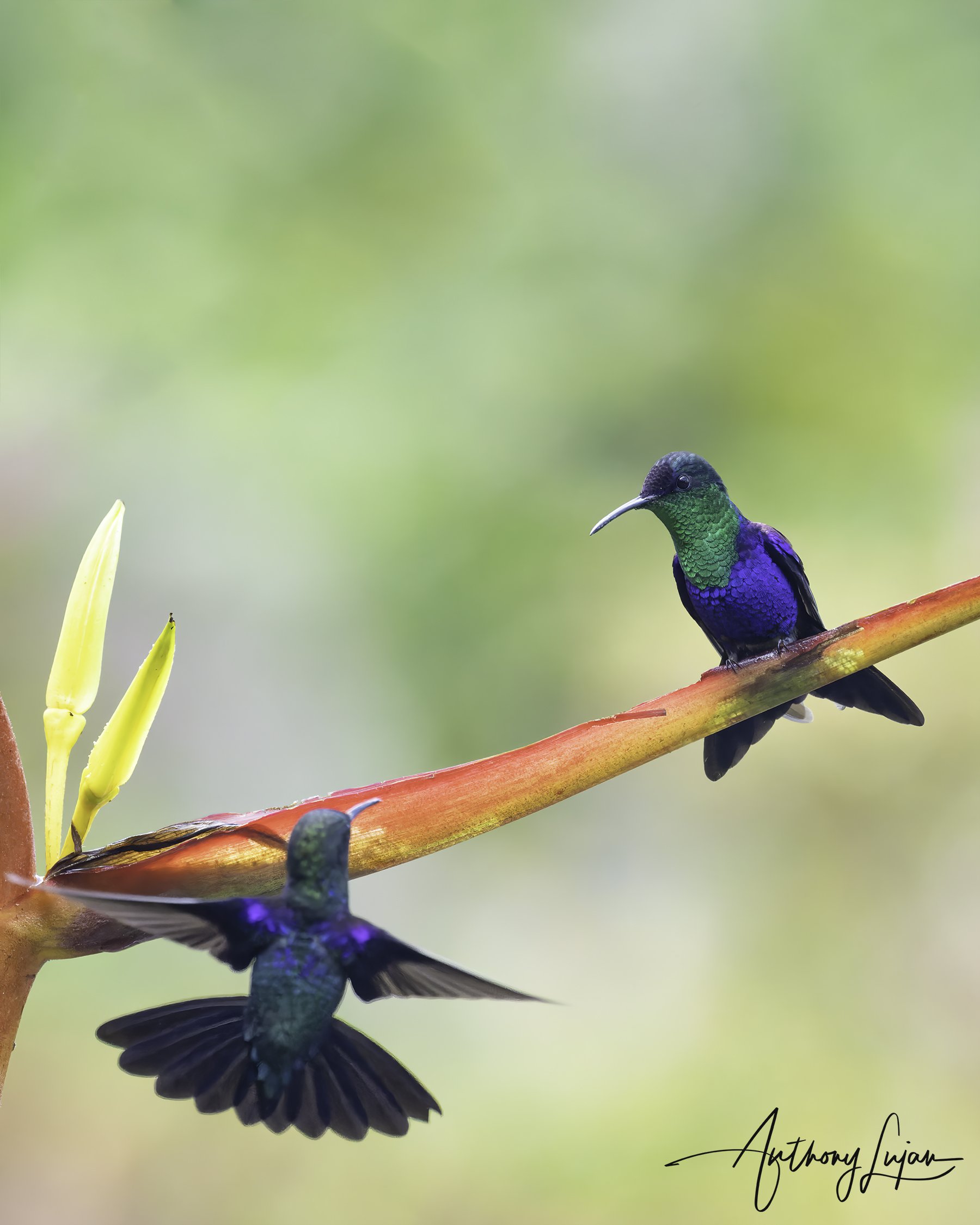
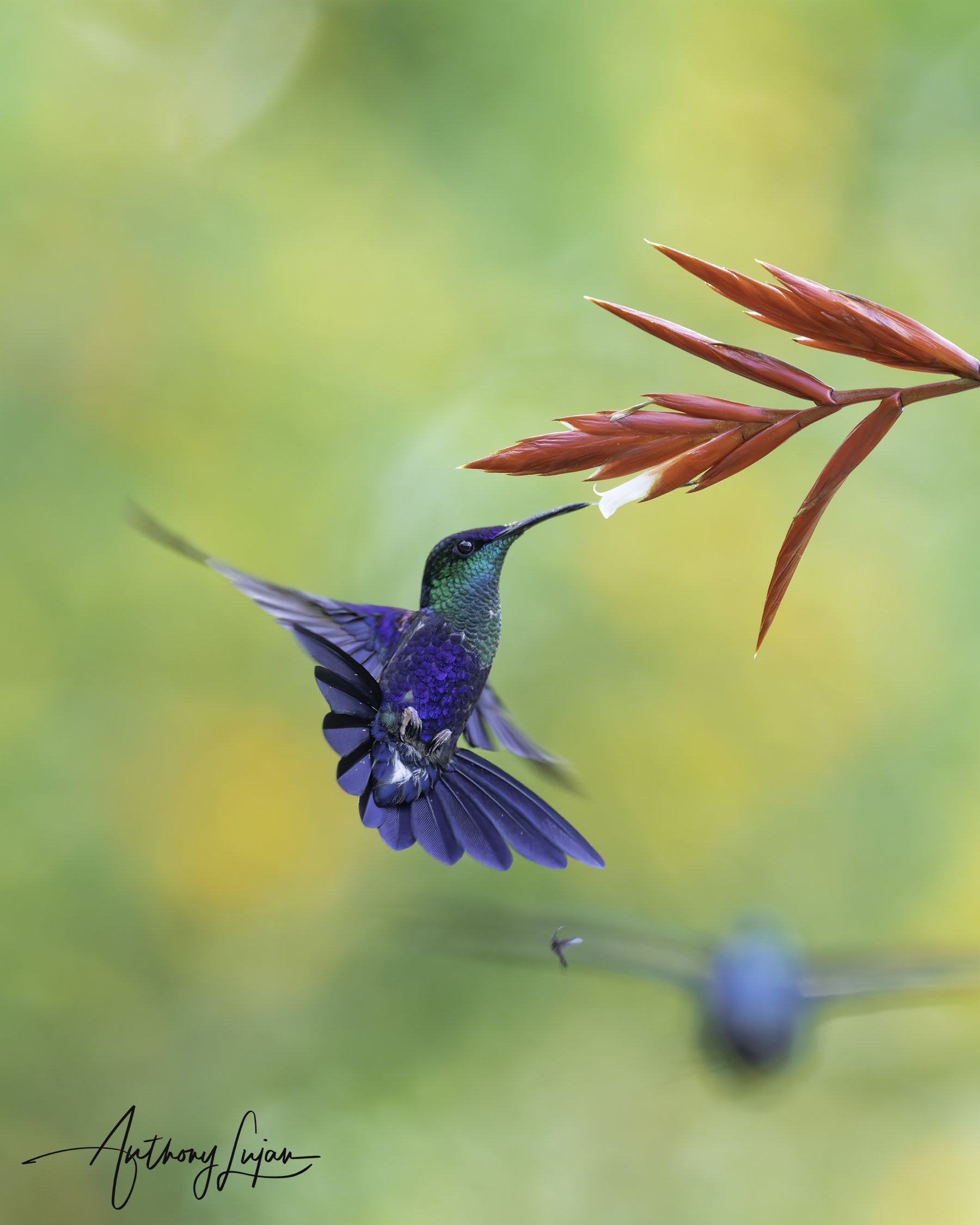
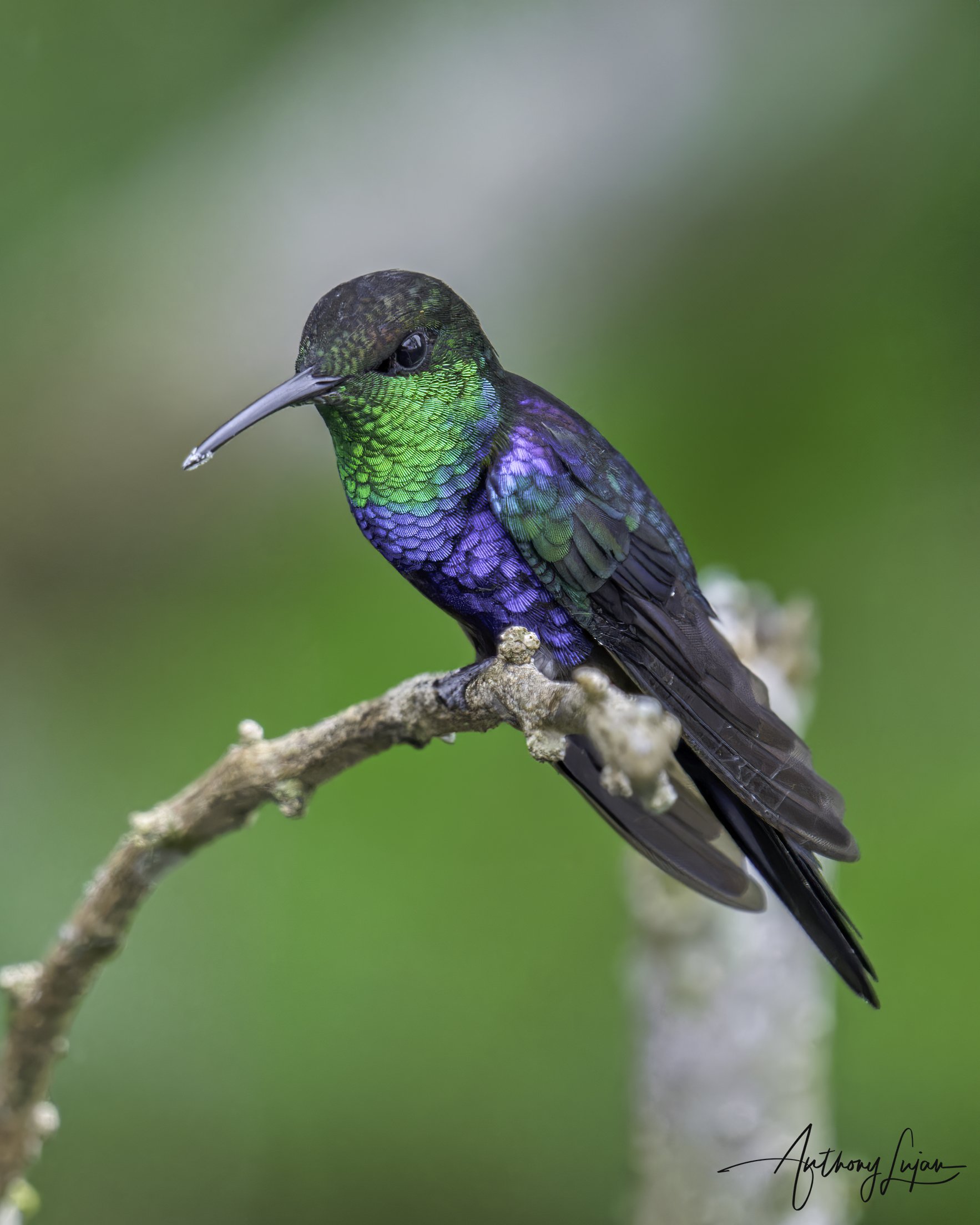
Adult males are medium‑sized, with a straight black bill. The crown, forehead, and throat are typically brilliant violet to blue‑violet, forming a glittering hood that contrasts with a darker mask around the eye. The upperparts are metallic green, and the breast and belly can range from green to bluish‑green depending on subspecies. The wings are dark, and the tail is dark with a slight fork; in some forms the tail may show subtle bluish or purplish tones. In good light, males show a vivid violet or blue crown and throat, bright green upperparts, and contrasting darker wings and tail.
Female Description
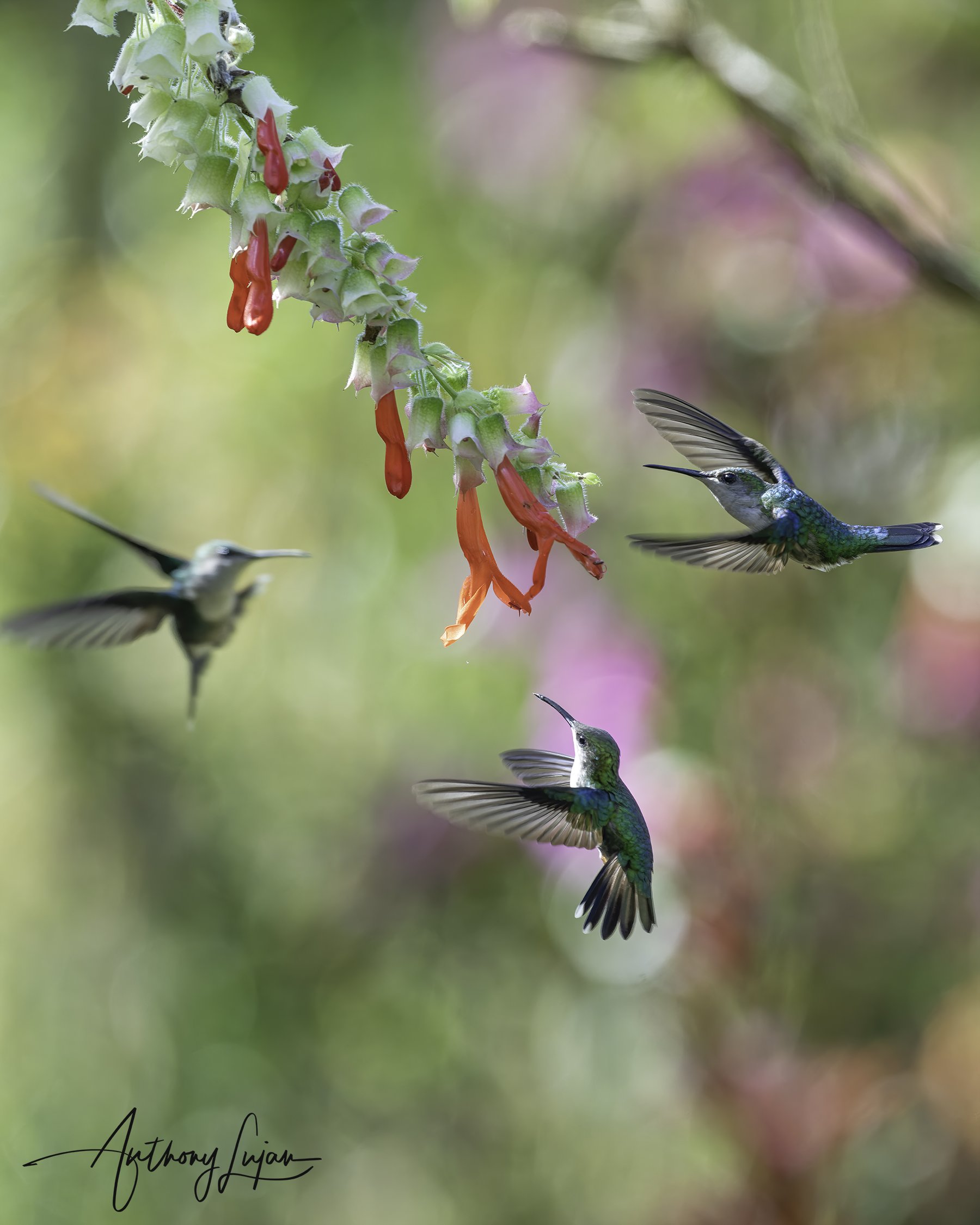
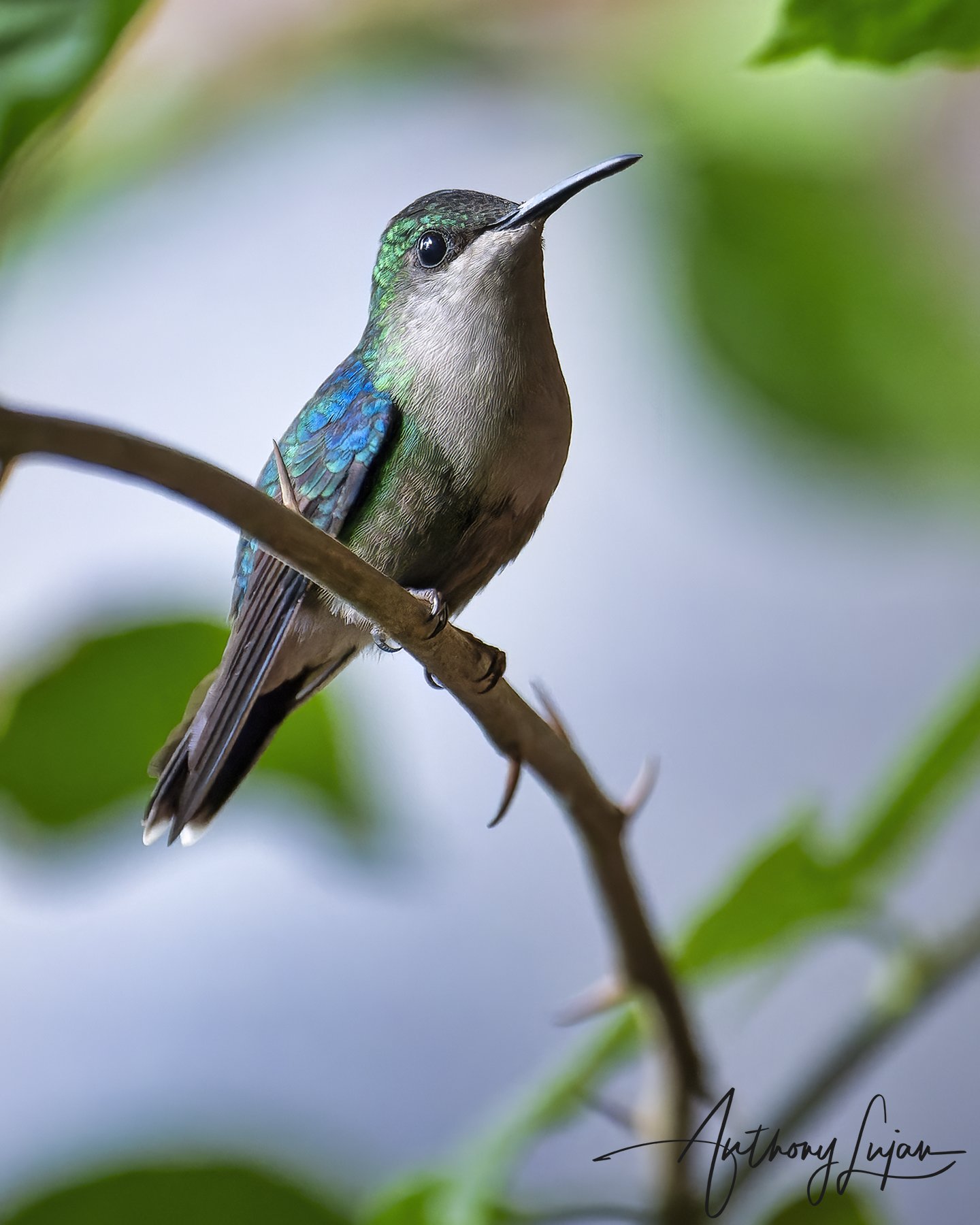
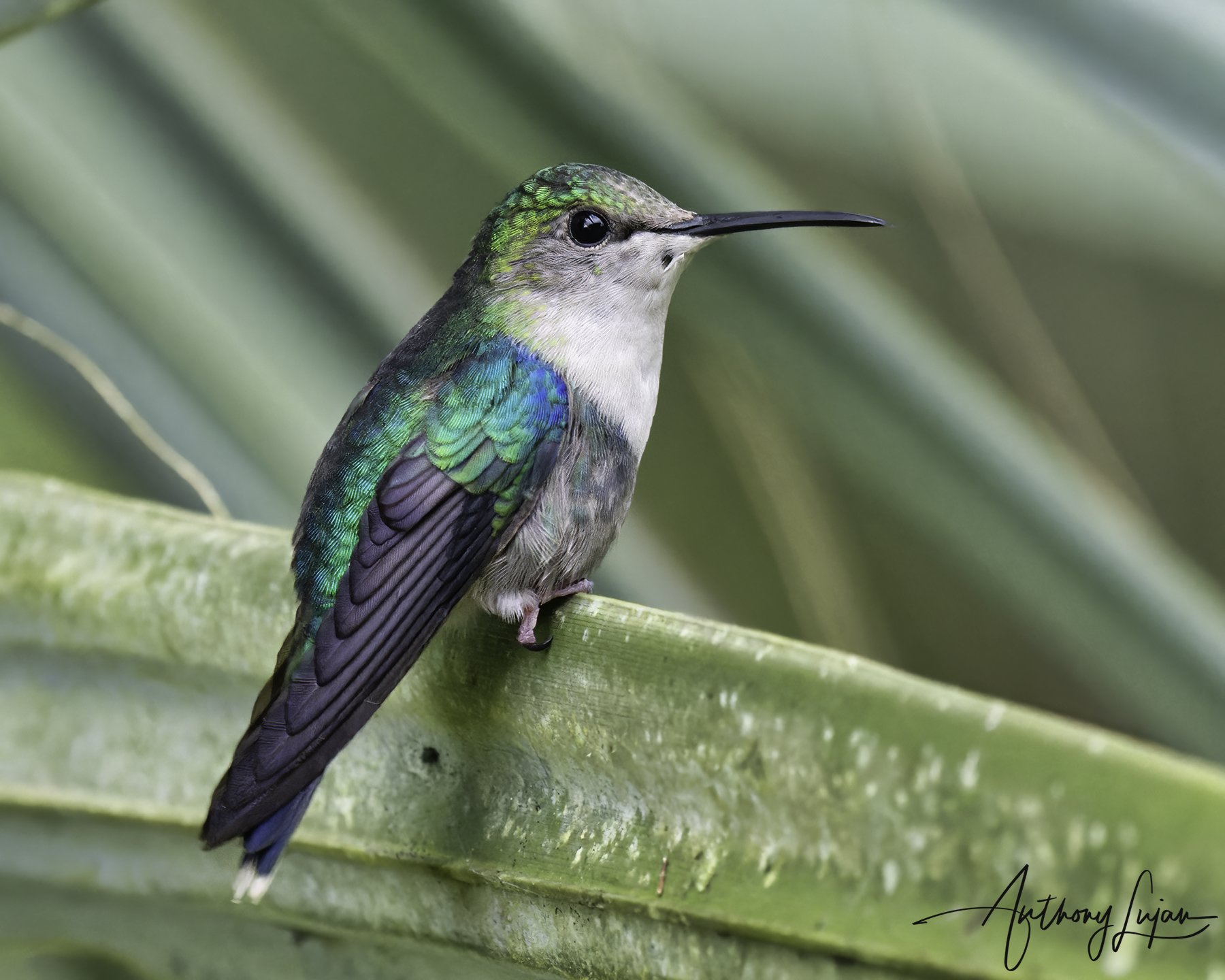
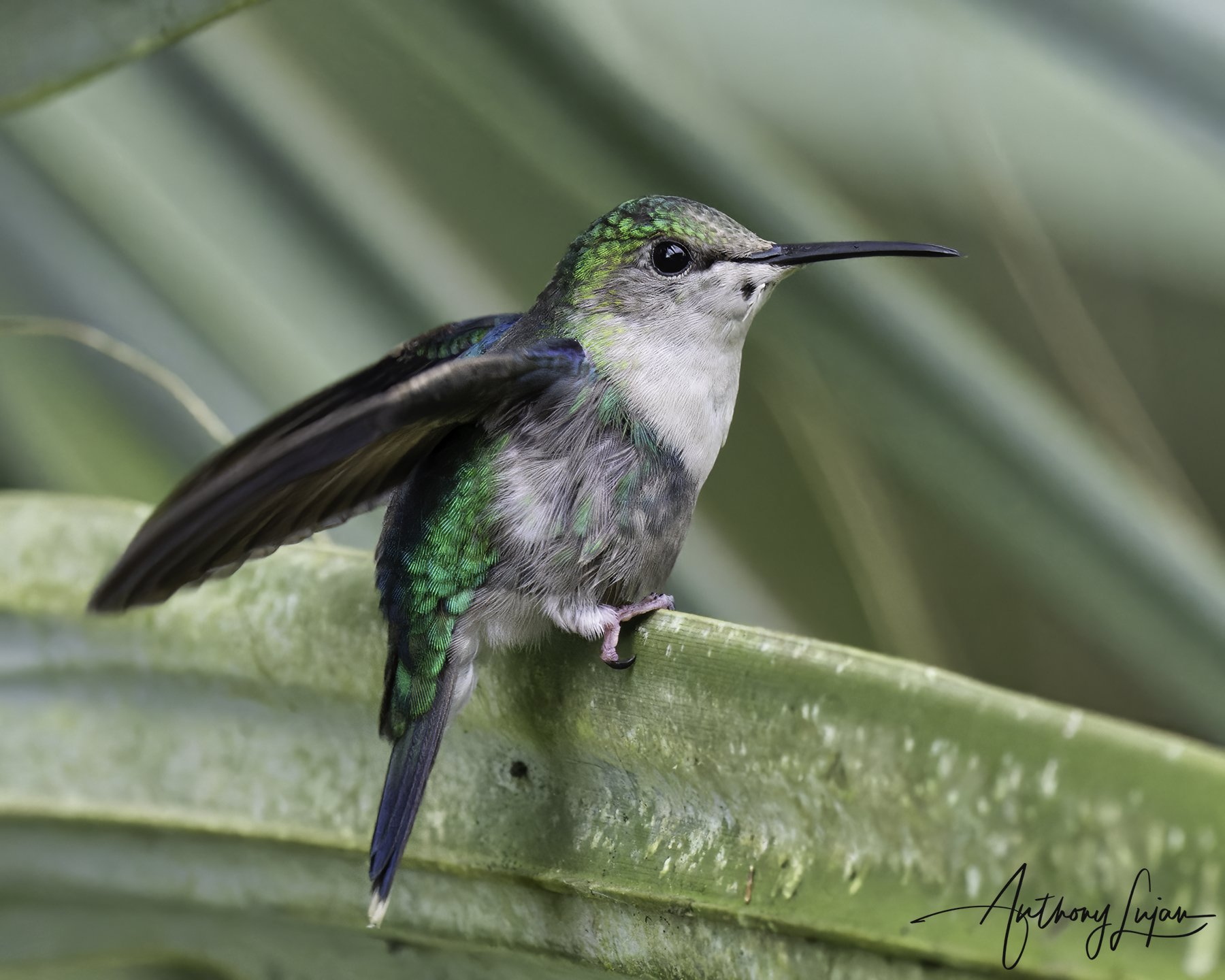
Females are smaller and much less intensely colored than males. The upperparts are metallic green, with a whitish spot behind the eye. The underparts are whitish to pale gray with varying amounts of green spotting or mottling on the throat and sides. The tail is dark with pale or whitish tips to the outer feathers. The bill is straight and black with a slightly paler base. Juveniles resemble females but are duller overall, sometimes with buffy fringes on the head and wing feathers and less distinct underpart markings; young males gradually develop the full violet crown and throat as they mature.
Habitat & Behavior
Crowned Woodnymphs inhabit humid lowland and foothill forests, edges, and tall second growth across their range, as well as shady plantations and large gardens with tall trees and dense understory. They often forage in the mid‑story and understory, visiting flowering shrubs, vines, and small trees, and they also feed higher in the canopy when flowers are abundant. They readily visit hummingbird feeders in forested regions and are active and agile, moving quickly between nectar sources. The species also consumes small insects and spiders for protein, catching them in the air or gleaning near flowers.
Breeding
Breeding seasons vary across the wide range of this species but generally follow regional patterns of rainfall and flowering. The female builds a small, neat cup nest of soft plant fibers and spiderweb, often decorated with moss or lichen and usually placed on a horizontal branch or in a fork a few meters above the ground in forest or along forest edges. She lays two white eggs and alone incubates and rears the chicks, as is typical for hummingbirds. Nesting can occur in both primary and secondary forests, as well as along forest edges in more fragmented landscapes.
Population
With an estimated 5,000,000–49,999,999 mature individuals and a very wide distribution from eastern Guatemala to northwestern Peru, the Crowned Woodnymph has a large global population. It is considered one of the commonest forest hummingbirds over much of its range, especially in Central America and northern Colombia and Venezuela, though it is less common in Peru. Despite this, its overall population is believed to be decreasing due to ongoing deforestation and habitat fragmentation in humid lowland and foothill forests.

Conservation
Crowned Woodnymph is assessed as Least Concern, reflecting its large range and overall high numbers. It tolerates moderate habitat disturbance and can thrive in forest edges, secondary growth, and gardens, which has helped buffer against some habitat loss. However, widespread deforestation in Central America and northern South America continues to reduce and fragment suitable forest habitats. Protecting remaining lowland and foothill forests, maintaining forest corridors and riparian strips, and encouraging reforestation and shade‑grown agriculture all support this species and many associated forest hummingbirds.
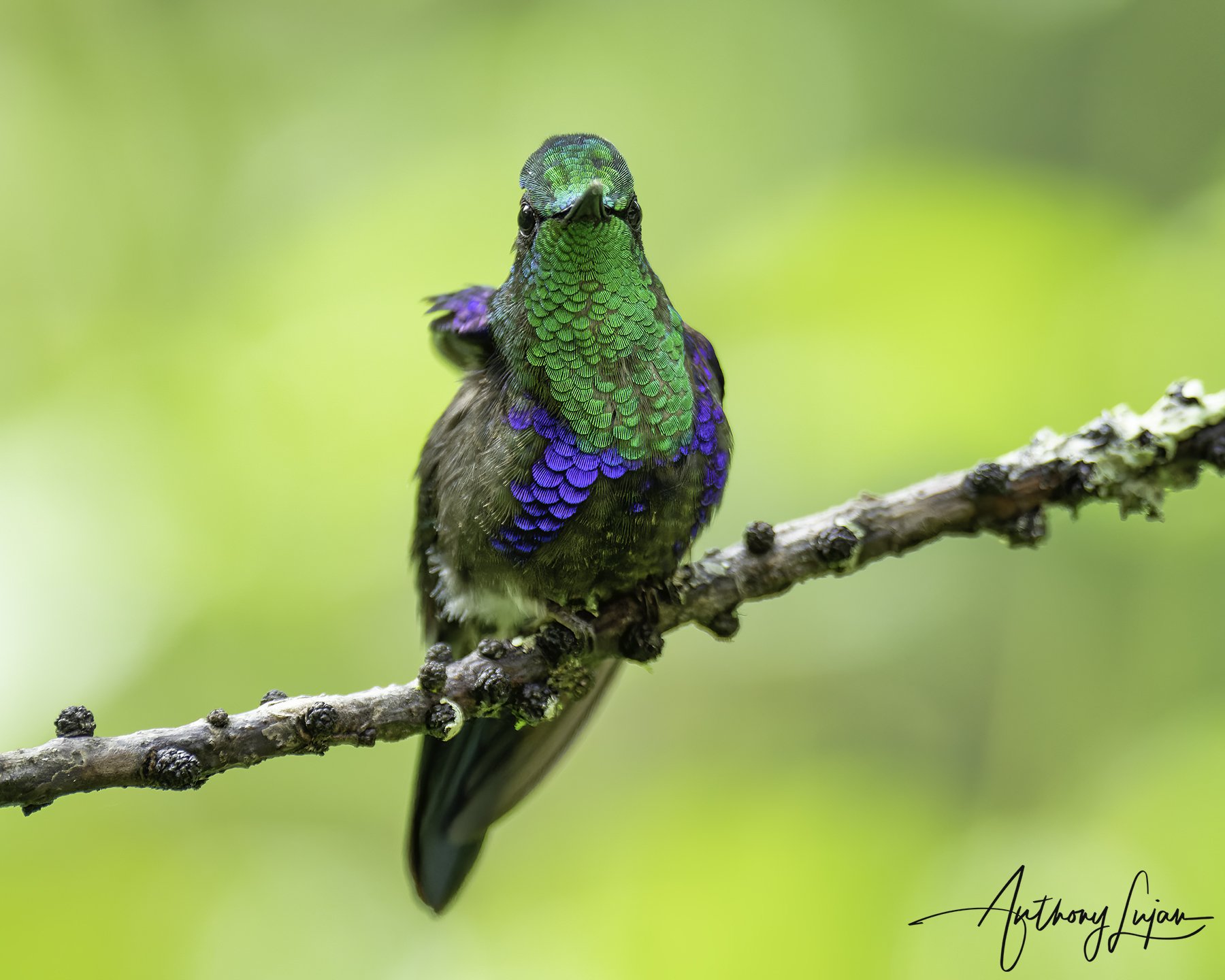
Below is the Crowned Woodnymph (Northern Violet-crowned), (Thalurania colombica venusta)
Photographed in Limón and Puntarenas, Costa Rica
This individual belongs to the subspecies venusta, which occurs in the Caribbean lowlands and foothills of Costa Rica and south into Panama. It is found in humid forest, shaded understory, and forest edges where flowering shrubs and small trees are present.


Below is the Crowned Woodnymph (Colombian Violet-crowned), (Thalurania colombica colombica)
Photographed in Magdalena and Cauca, Colombia
These individuals represent the nominate subspecies colombica, found in northern Colombia in humid foothill forest and forest edge zones. In these regions it occupies shaded flowering understory and often visits gardens and semi-open clearings.
For more details on the trips behind this species, visit the Costa Rica Hummingbird Expedition | July 2025 page and explore My Travel 2025-05 Costa Rica for guides and trip reports.
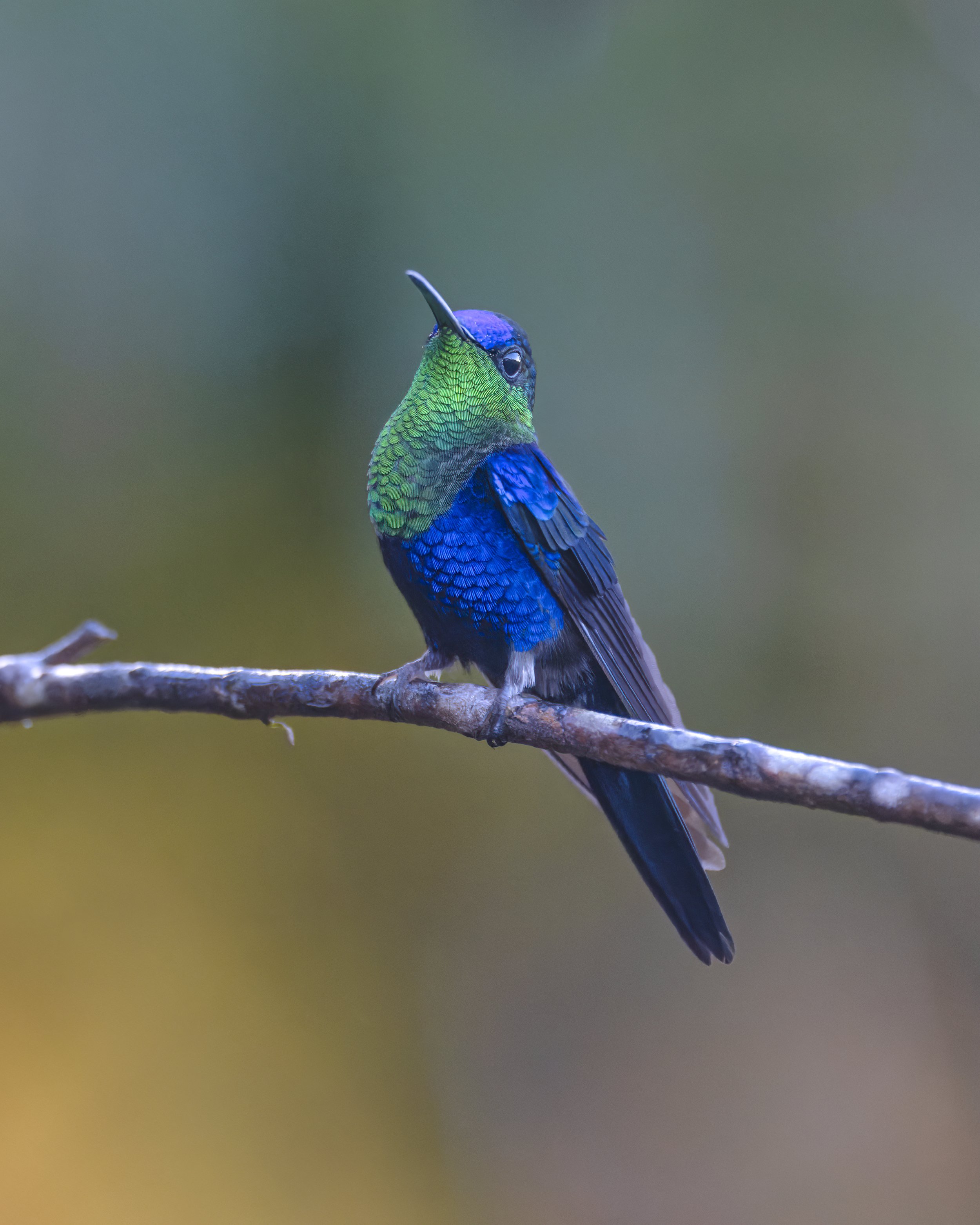
Related species in the Thalurania genus (4 species in total):

Please note: The content provided in this article reflects Anthony’s personal experience and photographic approach. Results can vary depending on light, weather, location, equipment, subject behavior, and field conditions.