
Fork-tailed Woodnymph
Scientific name: Thalurania furcata
The Fork-tailed Woodnymph is a medium-sized hummingbird of humid lowland and foothill forests, edges, and semi‑open habitats across much of tropical South America east of the Andes. It is listed as Least Concern, with an unknown number of mature individuals, a decreasing population trend, and it is considered not a migrant at the species level, though some populations may make local elevational movements.
At a Glance
Family: Trochilidae (hummingbirds)
Clades: Trochilini – Emeralds
Genus group: Thalurania — woodnymphs (4 species in total: Crowned, Green-crowned, Violet-capped, Fork-tailed)
Range: Widespread east of the Andes from northeastern Venezuela and the Guianas south through the Amazon basin and eastern Brazil to Bolivia, Paraguay, and northern Argentina.
Habitat: Humid lowland and montane forests, forest edges, várzea and terra firme forest, mature secondary forest, and semi‑open areas such as plantations, gardens, and forest–agriculture mosaics.
Elevation: From sea level up to about 2,000 m, most common in lowlands and foothills.
Length: About 9–11 cm (3.5–4.3 in).
Weight: About 4–5 g (0.14–0.18 oz).
Number of mature individuals: Unknown.
Population trend: Decreasing.
Status: Least Concern (IUCN Red List category).
Migration: Not a migrant (some local elevational and regional movements).
Name Origin
The genus name Thalurania combines Greek roots meaning “sea” and “queen,” evoking the shimmering green and blue colors typical of woodnymphs. The species name furcata means “forked,” referring to the deeply forked tail of the male. The English name “Fork-tailed Woodnymph” likewise emphasizes the distinctive forked tail and the bird’s membership in the woodnymph group of forest hummingbirds.
Taxonomy & Distribution
Thalurania furcata
Fork-tailed Woodnymph is part of the emerald clade (tribe Trochilini) and one of four species in the genus Thalurania. It is widely distributed east of the Andes, occurring in Venezuela, the Guianas, Colombia (east of the Andes), Ecuador (eastern slope), Peru, Bolivia, Brazil, Paraguay, and northern Argentina. Throughout this broad range, 13 subspecies have been described, differing in subtle plumage details and geography but sharing the basic fork‑tailed woodnymph pattern.
Subspecies and Distribution
Fork-tailed Woodnymph has thirteen recognized subspecies.
Thalurania furcata refulgens
Distribution: Northeastern Venezuela (east from northeastern Anzoátegui), including the Paria Peninsula and nearby highlands; reports from Trinidad are considered erroneous. It inhabits humid lowland and foothill forests, forest edges, and tall second growth in this coastal and inland region.Thalurania furcata furcata
Distribution: Extreme eastern Venezuela, the Guianas, and northeastern Brazil (north of the Amazon in Pará and Amapá). This nominate subspecies occupies lowland rainforest, riverine forest, and forest edges across much of the Guianan Shield and adjacent northern Amazonia.Thalurania furcata fissilis
Distribution: Eastern Venezuela and adjacent extreme western Guyana and northern Brazil (northern Roraima). It is found in humid forests and forest edges in this border region, often along river basins and in mature secondary forest.Thalurania furcata orenocensis
Distribution: Southern Venezuela (upper Orinoco region, Amazonas). It inhabits humid lowland forests and riverine forest along the upper Orinoco and nearby tributaries, using both interior forest and edges.Thalurania furcata nigrofasciata
Distribution: Eastern Colombia (Guainía), northwestern Brazil (upper Rio Negro), and extreme southern Venezuela (southwestern Amazonas). This subspecies occurs in lowland rainforest and riverine forest along the upper Rio Negro and adjacent areas, often in forest edges and semi‑open habitats near water.Thalurania furcata viridipectus
Distribution: Eastern foothills of the Andes and adjacent lowlands of eastern Colombia, eastern Ecuador, and northeastern Peru (north of the Marañón River). It inhabits humid foothill and lowland forests, forest edges, and tall second growth on the eastern Andean slopes and nearby Amazonian lowlands.Thalurania furcata jelskii
Distribution: Most of eastern Peru and adjacent western Brazil. This subspecies occupies lowland and foothill Amazonian rainforests, forest edges, and mature secondary forests, often in river basins and forest–agriculture mosaics.Thalurania furcata simoni
Distribution: Upper Amazon region (south of the Amazon, west of the Rio Tefé) in extreme eastern Peru and western Brazil. It inhabits terra firme and várzea forests, edges, and semi‑open habitats in the upper and central Amazon basin south of the main river.Thalurania furcata balzani
Distribution: North-central Brazil (south of the Amazon, east to the Rio Tapajós). This subspecies occupies lowland rainforest, forest edges, and secondary forests in the south‑central Amazon region, especially in areas between major tributaries.Thalurania furcata furcatoides
Distribution: Lower Amazon region of eastern Brazil (south of the Amazon, east from the Rio Tapajós). It inhabits lowland forests and forest edges in eastern Amazonia south of the main river, including degraded and secondary habitats.Thalurania furcata boliviana
Distribution: Andean foothills and adjacent lowlands of southeastern Peru (from eastern Pasco) to east-central Bolivia (western Santa Cruz). This subspecies is found in humid foothill forests, lower montane forests, and adjacent lowland forests and edges on the eastern Andean slope and nearby lowlands.Thalurania furcata baeri
Distribution: Northeastern and central Brazil (Ceará south to Mato Grosso do Sul and Goiás), extending south to Bolivia and north-central Argentina. It occupies a variety of humid and semi‑humid forest habitats, including gallery forests, forest fragments, and tall secondary forests in this more southern and eastern part of the range.Thalurania furcata eriphile
Distribution: Southeastern Brazil (southern Bahia to Paraná), adjacent Paraguay, and northeastern Argentina (Misiones). This subspecies inhabits Atlantic Forest, semi‑deciduous forest, forest edges, and secondary woodlands, as well as shaded plantations and gardens within the Atlantic Forest region and nearby areas.
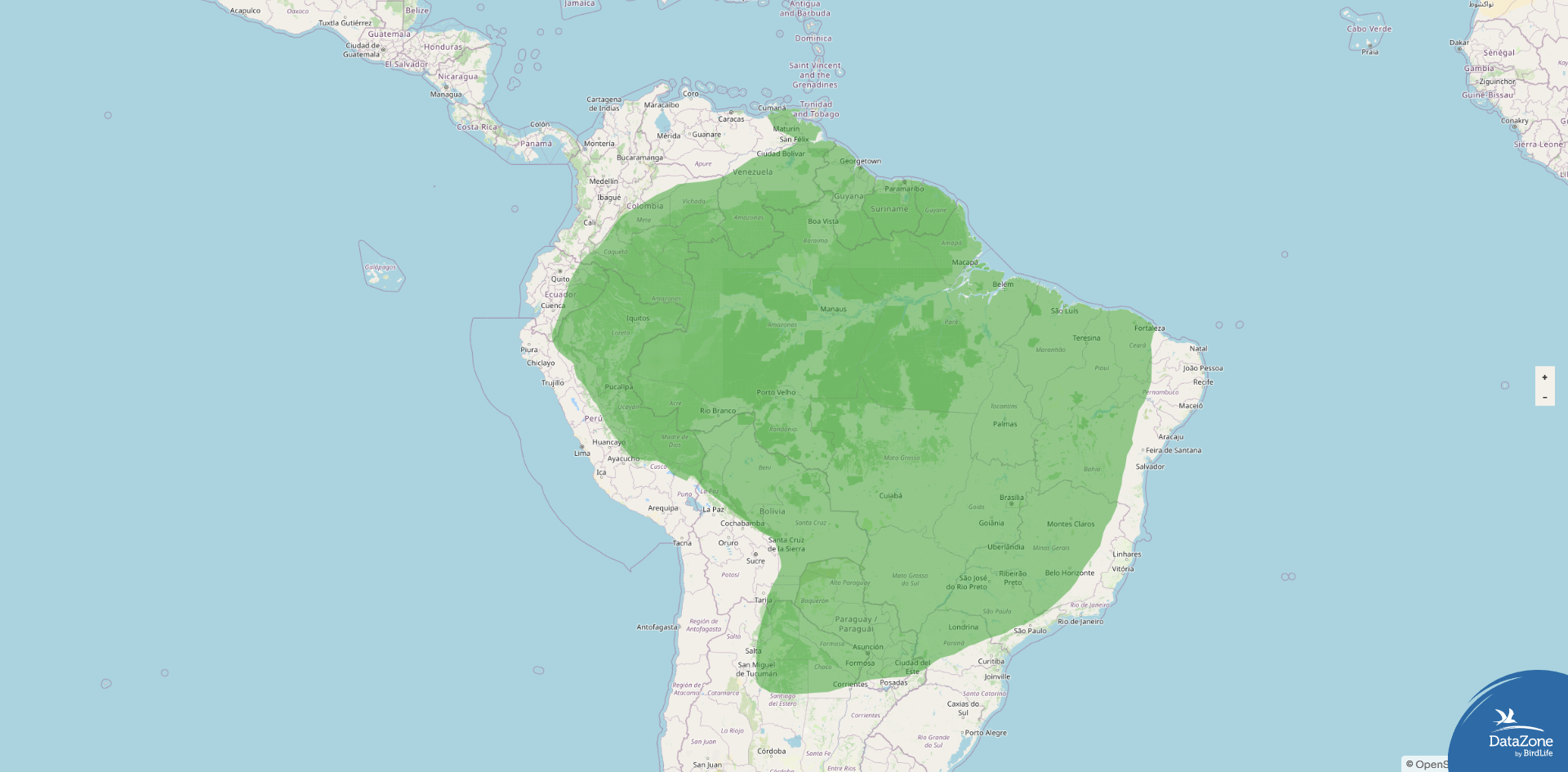
Legend
Green Resident
Species Overview
The Fork-tailed Woodnymph is one of the most widespread and familiar hummingbirds of lowland and foothill forests in Amazonia and eastern South America. Males are characterized by a glittering green body, bright crown and throat, and a distinctly forked tail, while females are green above and pale below with a straighter tail and white tips. The species adapts well to edges, secondary forests, and semi‑open landscapes, frequently visiting flowering shrubs, trees, and garden plantings, although extensive deforestation and forest degradation are believed to be driving a gradual population decline.
Male Description
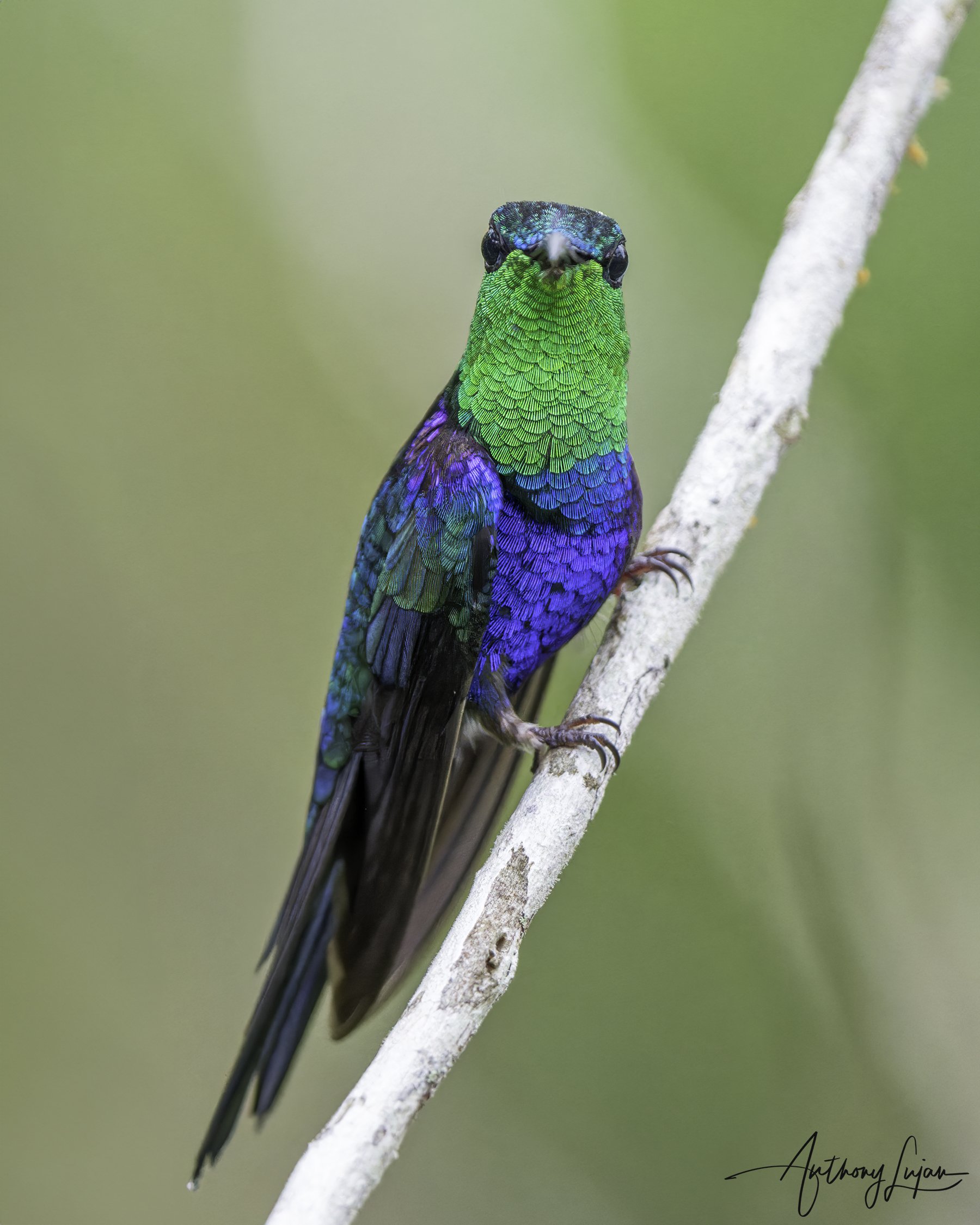
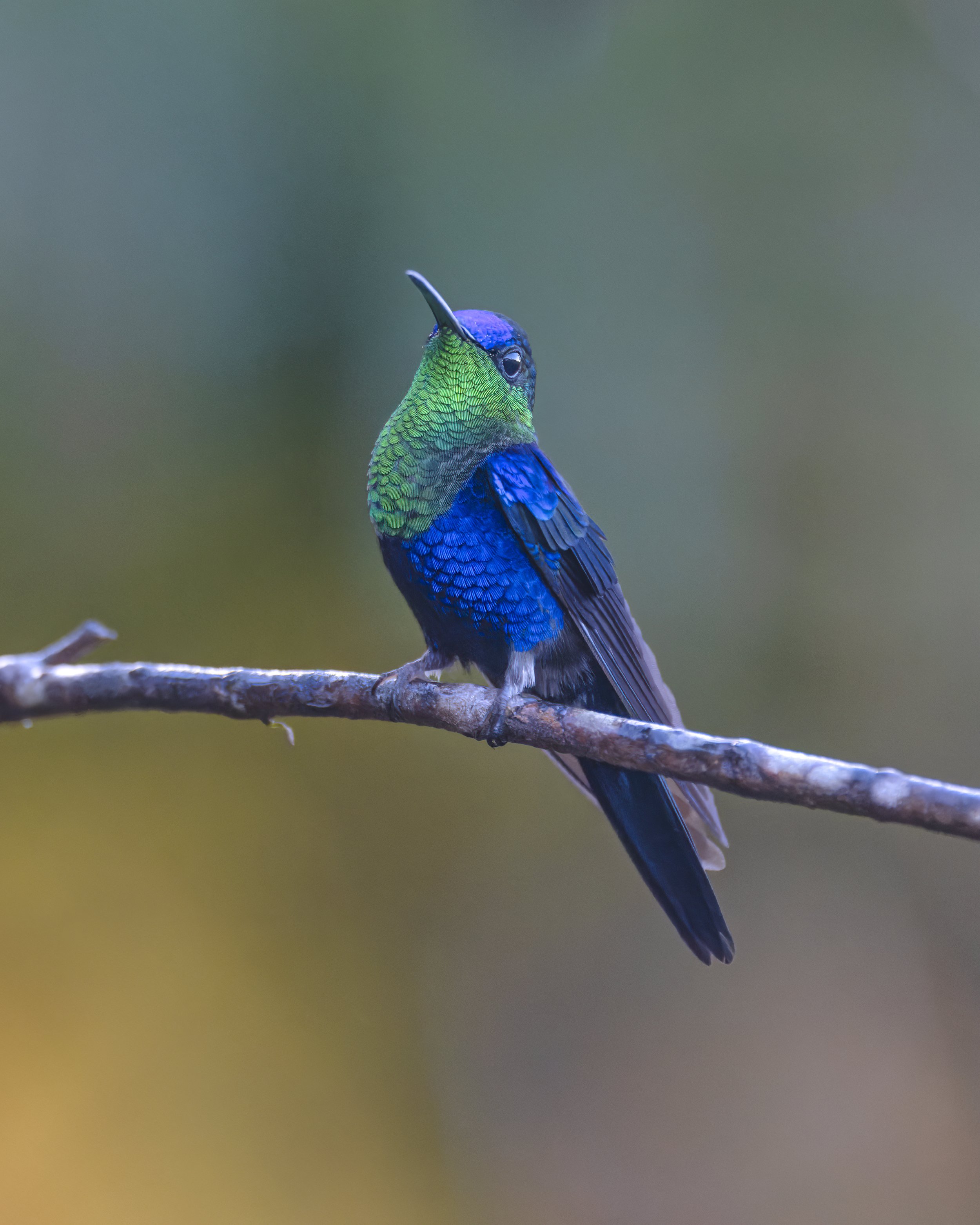
Adult males are medium‑sized with a straight, medium‑length black bill. The crown and forehead are usually bright green to bluish‑green, and the throat and breast are glittering green, often merging with similarly colored upperparts. The belly may show slightly bluer or more emerald tones depending on subspecies. The back and rump are metallic green. The tail is long and distinctly forked, with green to bluish or dark central feathers and darker outer feathers that can show a bluish gloss. The wings are dusky. In good light, males show a bright green or bluish hood, shining green body, and a clearly forked tail that sets them apart from many similar-sized emerald hummingbirds.
Female Description
Females are smaller and duller, with metallic green upperparts and a more bronzy crown. The underparts are whitish to pale gray, often with faint green spotting or suffusion on the sides of the breast. The tail is green near the base and steely blue‑black toward the tips, with distinct white tips on the outer tail feathers; it is less deeply forked than the male’s. The bill is straight and black with a slightly paler base in some birds. Juveniles resemble females but are duller overall, sometimes with buffy fringes on upperpart feathers and less sharply defined tail patterning; young males gradually acquire a deeper fork to the tail and more intensely green throat and belly.
Habitat & Behavior
Fork-tailed Woodnymphs inhabit a variety of humid forest landscapes, including terra firme and várzea forests, forest edges, gaps, mature secondary forests, gallery forests, and semi‑open areas such as plantations, clearings, and large gardens. They forage from understory to mid‑story and occasionally into the canopy, visiting flowers of shrubs, vines, trees, and epiphytes for nectar. They are regular visitors to hummingbird feeders in some areas and can be moderately territorial around rich nectar sources. Like other woodnymphs, they also take small insects and spiders for protein, hawking them from perches or gleaning near flowers.
Breeding
Breeding seasons vary widely across the species’ extensive range but generally align with regional wet seasons and peaks in flowering. The female builds a small cup nest of plant fibers, soft down, and spiderweb, often decorated externally with moss or lichens, and typically places it on a horizontal branch or in a fork a few meters above the ground in forest or along forest edges. She lays two white eggs and alone incubates and raises the chicks, as is typical of hummingbirds. Nesting may occur in both primary and secondary forests, as well as in forest fragments and along streams or forest borders.
Population
The total number of mature individuals is unknown, but Fork-tailed Woodnymph is generally considered common to locally abundant over much of its wide range, especially in Amazonia and parts of eastern Brazil. It is present in many protected areas and can adapt to a range of forest and edge habitats. Despite this, ongoing deforestation, habitat fragmentation, and degradation across Amazonia and the Atlantic Forest are believed to be causing a slow decrease in overall population size.

Conservation
Fork-tailed Woodnymph is assessed as Least Concern due to its very large range and overall abundance, yet its decreasing trend underscores the impact of habitat loss. Large‑scale deforestation for agriculture, pasture, logging, mining, and urban expansion continues across Amazonia, the Cerrado, and the Atlantic Forest, reducing and fragmenting suitable habitats. Conservation measures that protect extensive tracts of lowland and foothill forest, safeguard gallery and riparian forests, and promote restoration and shade‑grown agriculture help maintain populations of this adaptable but increasingly pressured species.
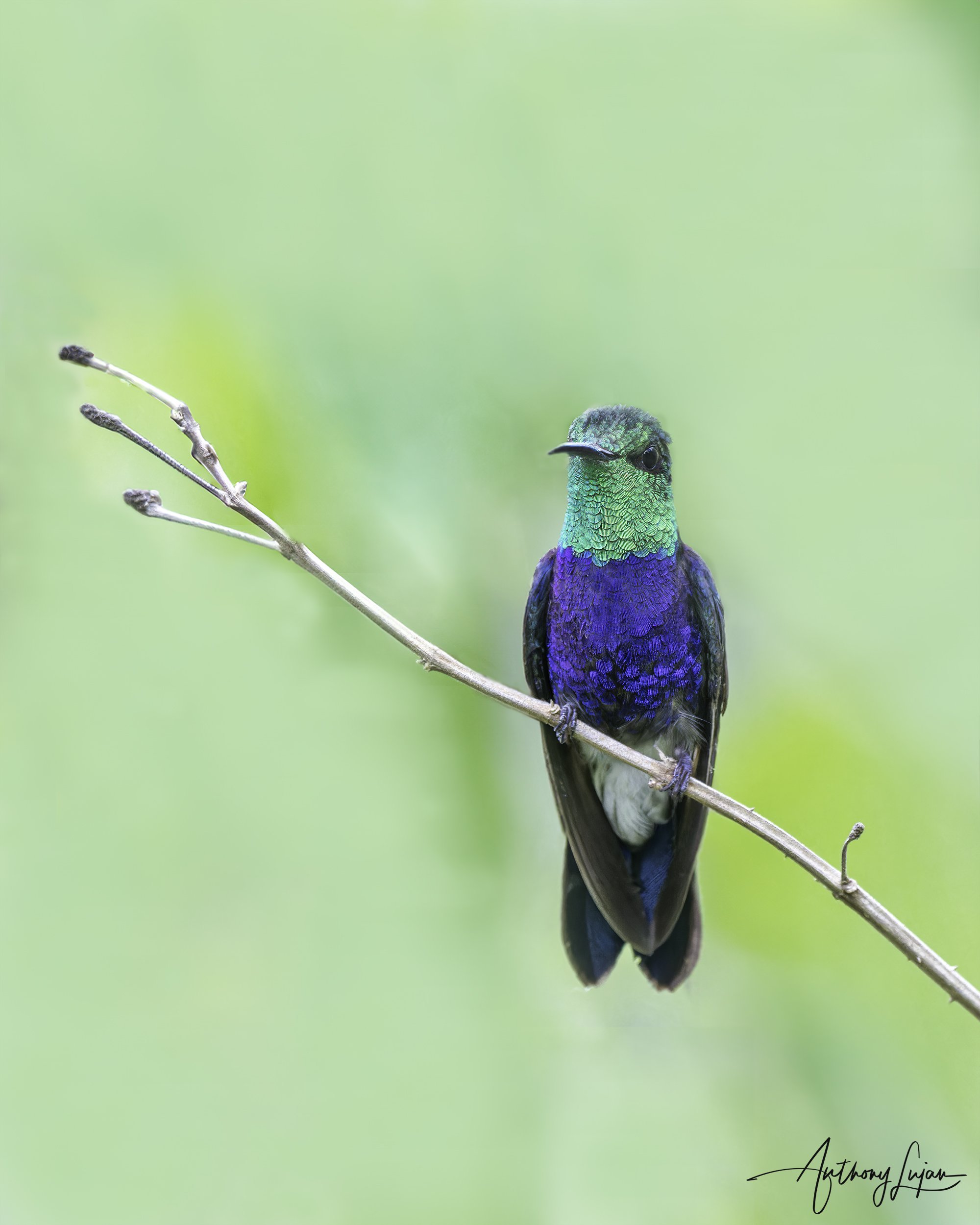
Below is the Fork-tailed Woodnymph (Thalurania furcata baeri)
Photographed at Jardim dos Beija-Flores, Brasília, Distrito Federal, Brazil
This individual belongs to the subspecies baeri, which occurs in northeastern and central Brazil (including Goiás, Mato Grosso, and the Distrito Federal), extending south into Bolivia and northern Argentina. It inhabits gallery forest, semi-open woodland, and urban gardens within the Cerrado biome.
The baeri form is slightly paler below and brighter green overall than the Amazonian subspecies. It is a frequent visitor to flowering Inga trees and garden feeders, moving actively between shaded blossoms and open perches.
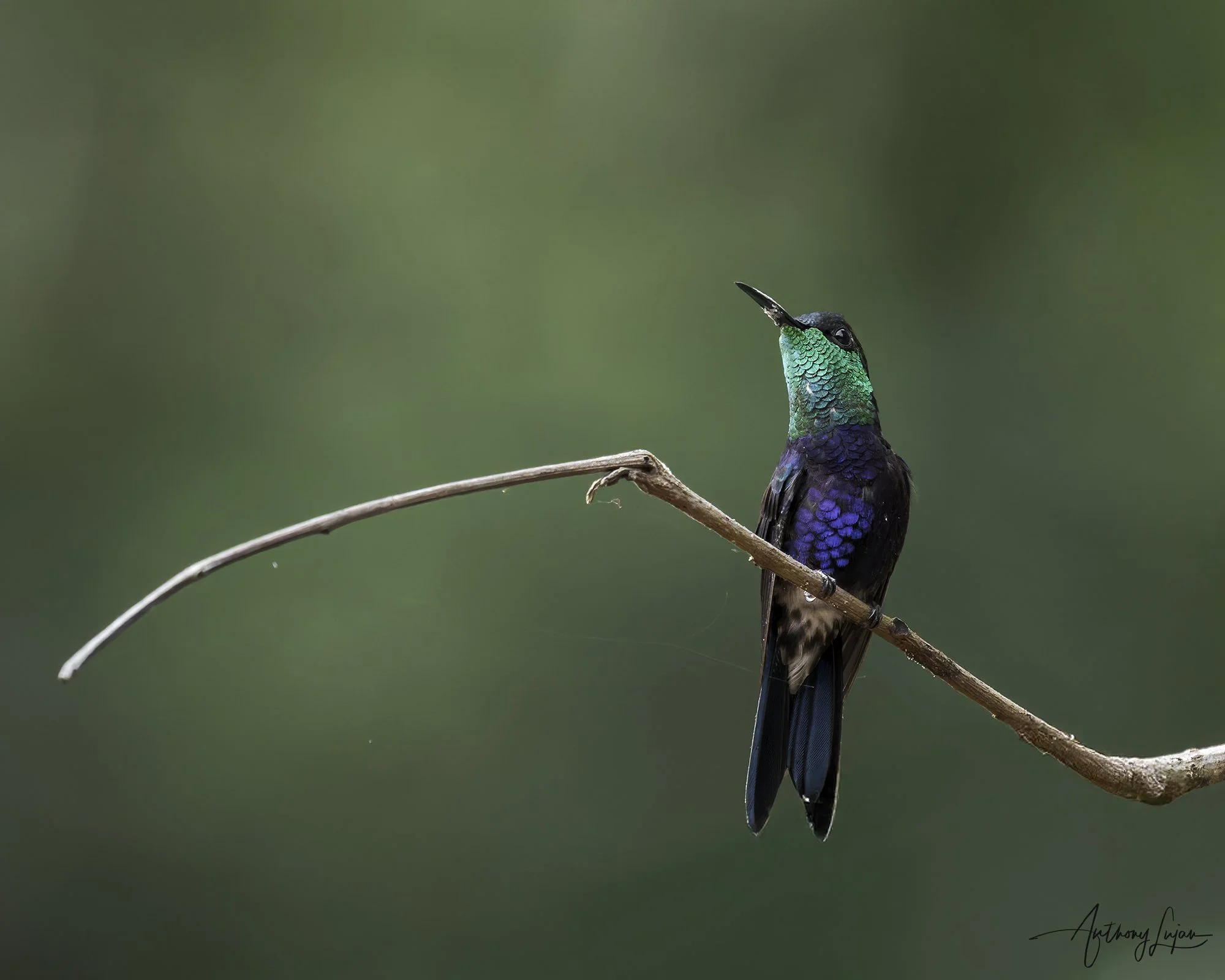
Below is the Fork-tailed Woodnymph (Thalurania furcata nigrofasciata)
Photographed in Manaus, Amazonas, Brazil
This individual belongs to the subspecies nigrofasciata, which occurs from eastern Colombia and southern Venezuela into northwestern Brazil, primarily in the Rio Negro basin around Manaus. It inhabits lowland rainforest, forest edge, and riverine woodland, often near clearings or secondary growth.
The nigrofasciata form is richly colored, with males showing a luminous violet breast contrasting with green upperparts and a dark blue tail. It forages in the understory and lower canopy, commonly along forest streams.
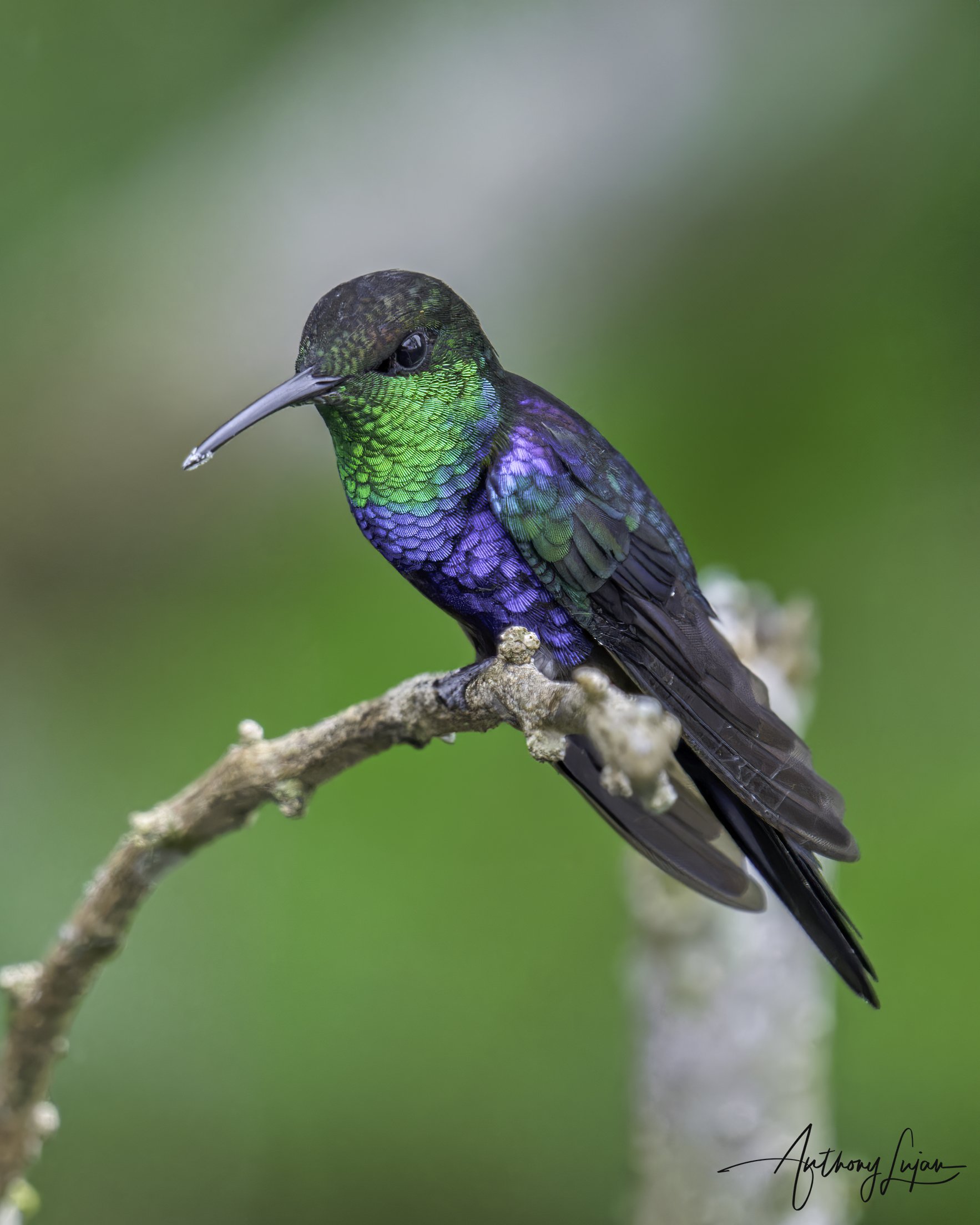
Below is the Fork-tailed Woodnymph (Thalurania furcata jelskii)
Photographed at Waqanki / Quebrada Mishquiyaquillo, San Martín, Peru
This individual belongs to the subspecies jelskii, which occurs throughout eastern Peru and adjacent western Brazil, south of the Marañón River. It inhabits humid lowland and foothill forest, forest edge, and clearings between 300 and 1,200 meters, where it frequents flowering shrubs and canopy blossoms.
Checkout Anthony’s playlist of this species! Click the top right dropdown to see all the videos.
Related species in the Thalurania genus (4 species in total):

Please note: The content provided in this article reflects Anthony’s personal experience and photographic approach. Results can vary depending on light, weather, location, equipment, subject behavior, and field conditions.