
Scientific name: Lampornis amethystinus
The Amethyst-throated Mountain-gem is a relatively large highland hummingbird of humid evergreen and pine-oak forests in the mountains of Mexico and northern Central America. Its dark mask, whitish eyestripe, and often dusky-looking throat can make it appear surprisingly subtle for a bird named after a gemstone, since the amethyst gorget only flashes in just the right light.
At a Glance
Family: Trochilidae (hummingbirds)
Clade: Lampornithini – Mountain-gems
Genus group: Lampornis — mountain-gem
Range: Highlands of Mexico and northern Central America (Guatemala, El Salvador, Honduras), with rare vagrant records north to Texas and Quebec.Habitat: Interior and edges of montane evergreen and pine-oak forest, cloud forest, and coniferous forest.
Elevation: Mostly about 900–3,000 m (3,000–9,800 ft) in Mexico and Guatemala.
Length: about 11.5–12.5 cm (4.5–4.9 in).
Weight: generally around 5–7.8 g (0.18–0.28 oz), with females on the lower end of the range.
Number of mature individuals: 50,000 - 499,999
Population trend: Decreasing
Status: Least Concern (IUCN)
Name Origin
The genus name Lampornis comes from Greek roots meaning “bright” or “radiant” and “bird,” referring to the striking, iridescent plumage typical of mountain-gems. The species name amethystinus is derived from “amethyst,” the purple gemstone, with the Latin suffix “‑inus” indicating that the bird is characterized by an amethyst-like coloration, a nod to the male’s amethyst throat.
Subspecies and Distribution
The Amethyst-throated Mountain-gem includes several subspecies that together occupy a band of highland forest from central Mexico to Honduras.
Lampornis amethystinus amethystinus
Found in the mountains of central and eastern Mexico, from southern Nuevo León and southern Tamaulipas south through Veracruz to northern Oaxaca.Lampornis amethystinus nobilis
Occurs in southwestern Mexico, from Nayarit and Jalisco south to Michoacán and western Oaxaca.Lampornis amethystinus amethystinus (southern population as treated in your draft)
Southern Mexico in the western Sierra de Miahuatlán in southwestern Oaxaca.Lampornis amethystinus circumventus
Inhabits the highlands of southern Mexico (Chiapas), Guatemala, and El Salvador.Lampornis amethystinus salvin
Occurs in the highlands of Honduras, where it is a characteristic bird of montane forests.Lampornis amethystinus margaritae (Violet-throated)
A distinctive Violet-throated form sometimes highlighted separately in field treatments, occurring in part of the southern portion of the species’ range.
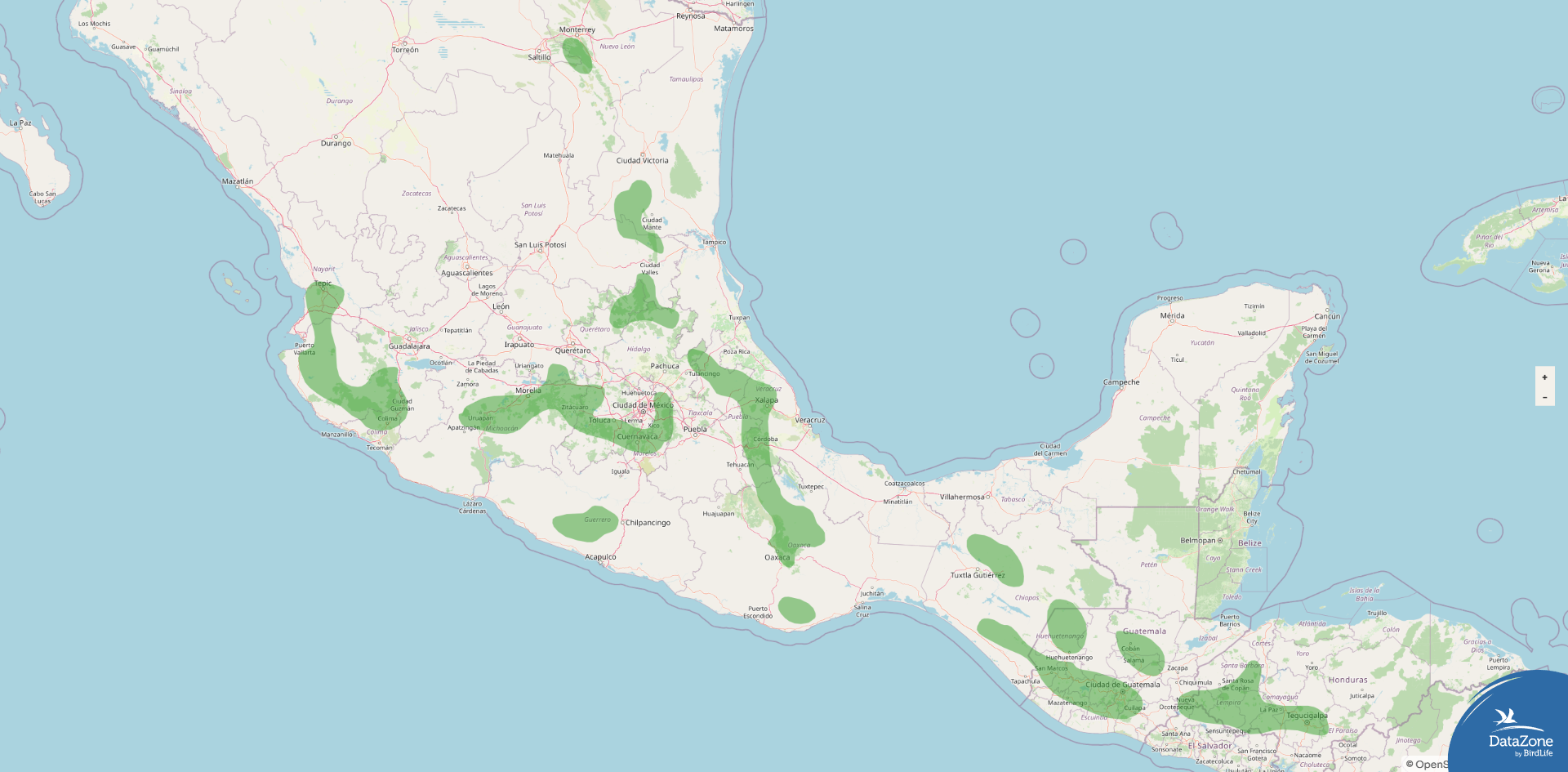
Legend
Green Resident
Species Overview
This is a rather large hummingbird compared with many lowland species, adapted to cool, moist mountain environments. It is fairly common in the shady understory and at forest edges, where it feeds on flowers at multiple levels from undergrowth blossoms to blooms in gaps and along slopes. Though it carries an exciting name, its appearance can often be drab and grayish, with a dark mask, whitish eyestripe, and dusky throat; the amethyst gorget usually shows only briefly when the light hits it just right.
Identification
Male
Male Amethyst-throated Mountain-gems have a dark facial mask set off by a whitish eyestripe and generally grayish or dusky underparts. The namesake amethyst gorget can look almost black in shade but glows vivid purple when it catches the light, contrasting with otherwise muted body tones. The tail is mostly blackish with pale gray corners, and the bird’s size and structure mark it as a robust mountain-gem rather than a tiny, slim hummingbird.
Female
Females are similar in overall shape and size but usually lack the fully developed amethyst throat, instead showing plainer, more lightly marked underparts. They share the dark mask and pale eyestripe, with a less intense or absent glittering gorget, and a similar dark tail with pale corners.
Habitat and Behavior
The Amethyst-throated Mountain-gem inhabits the interior and edges of montane evergreen and pine-oak forest, cloud forest, and coniferous forest. In Guatemala, for example, it is one of the common hummingbirds in high-elevation cloud forests, pine-oak, and coniferous forests, typically above about 2,000 m. It feeds mainly on nectar from tubular flowers, often making short sallies from shaded perches to flowers at all forest levels, and it also catches small insects in flight as an important protein source. Males can be territorial around rich flower patches, frequently perching conspicuously to watch over feeding sites before darting back into cover.
Population and Threats
The global population of Amethyst-throated Mountain-gem is estimated at about 50,000–499,999 mature individuals, and the overall trend is considered Decreasing. The species remains locally fairly common in suitable high-elevation forest, but ongoing loss and fragmentation of humid montane evergreen and pine-oak forest—through logging, agriculture, and other land-use change—are believed to be driving a slow decline.

Conservation
Because the species is still widespread in suitable habitat and shows no evidence of rapid global decline, it remains in the Least Concern category. However, conservation of cloud forest and pine-oak forest in the highlands of Mexico, Guatemala, El Salvador, and Honduras is important to maintain healthy populations and preserve the broader montane bird community. Protecting forest reserves, promoting sustainable forestry, and maintaining flowering native plants along forest edges and ravines all support this mountain-gem’s habitat needs.
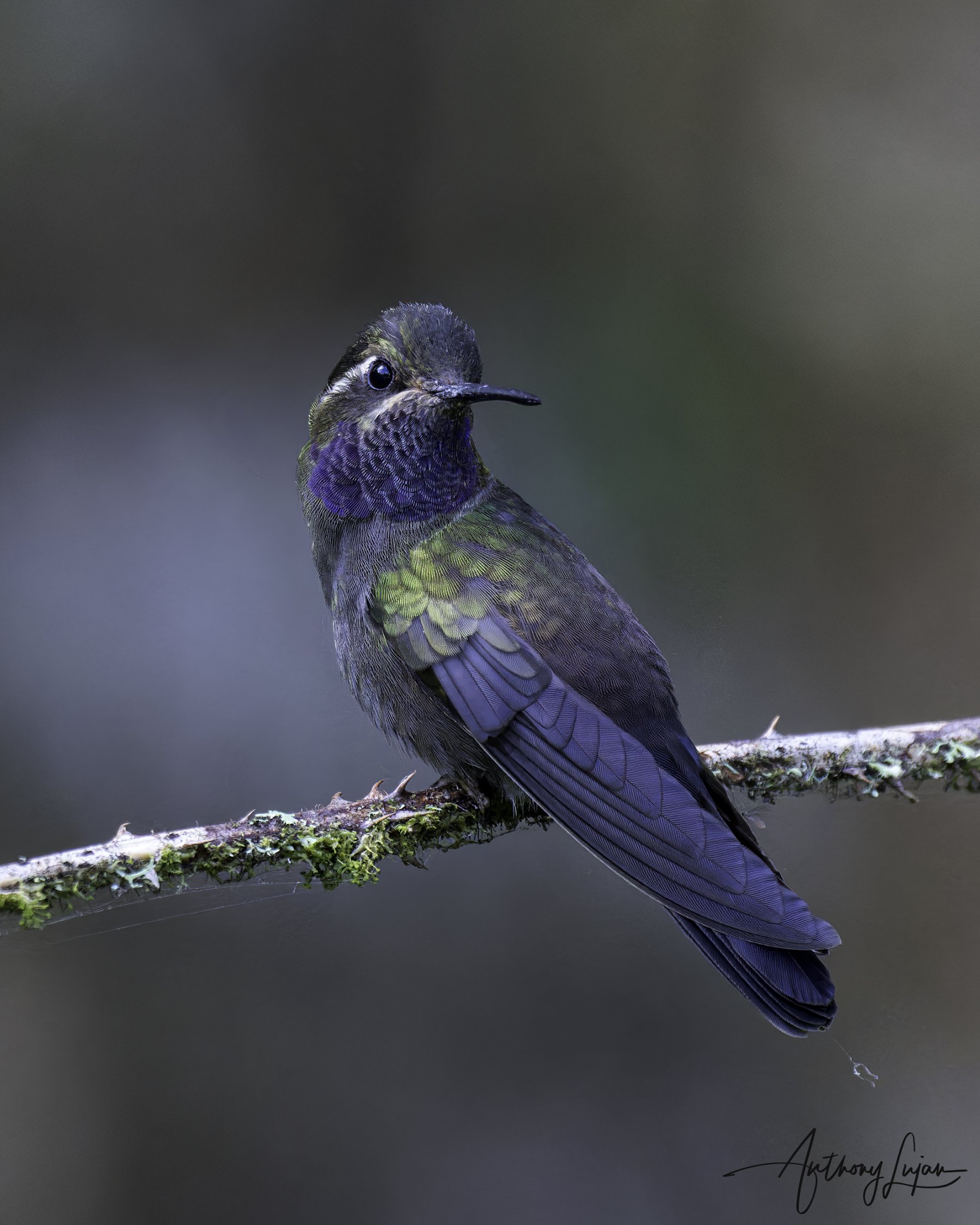
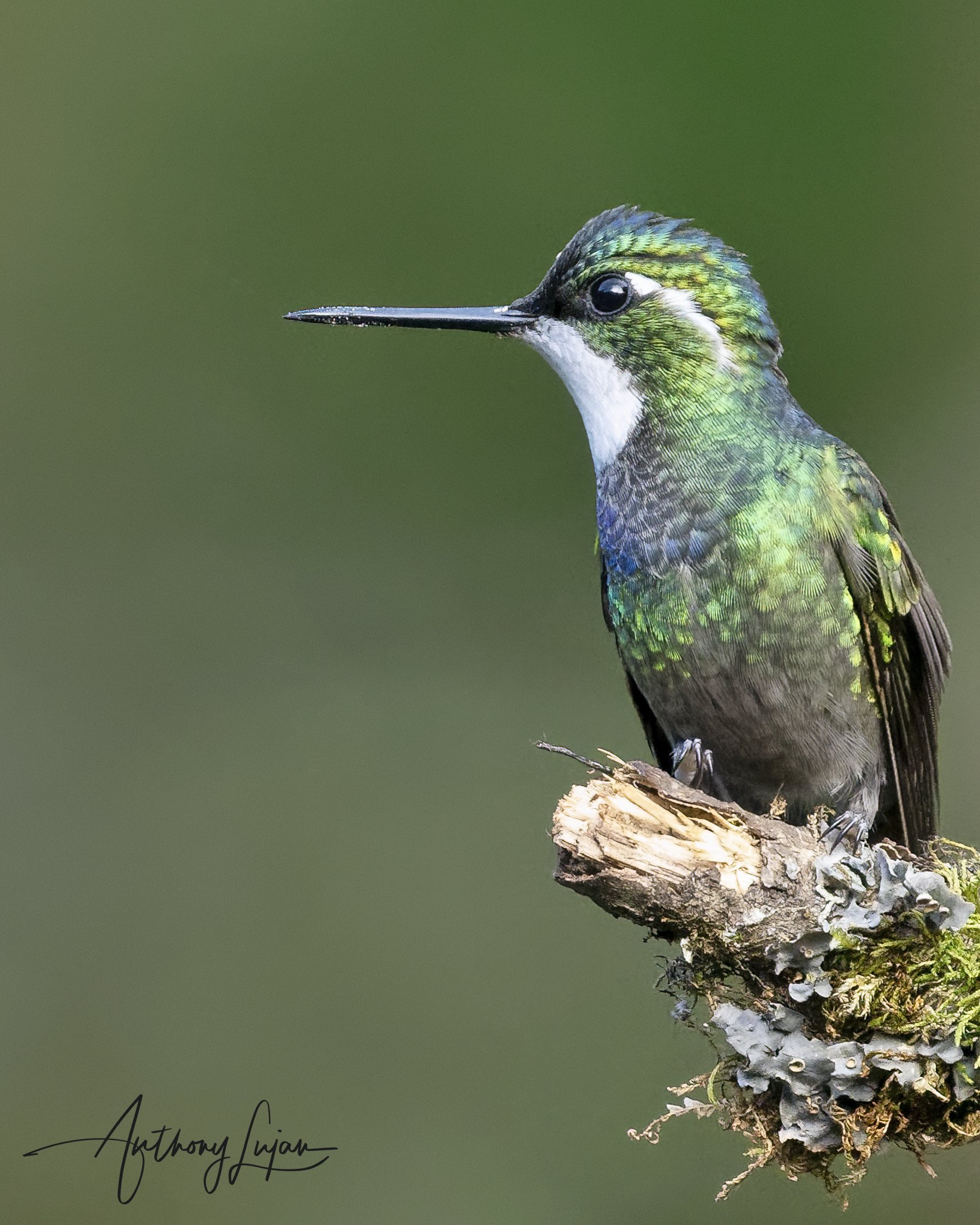
Below is the Amethyst-throated Mountain-gem (Lampornis amethystinus margaritae)
Photographed in Puerto del Gallo, General Heliodoro Castillo, Guerrero, Mexico
This individual belongs to the subspecies margaritae, which occurs along the Pacific slope of southwestern Mexico, from Nayarit and Jalisco through Michoacán and into western Oaxaca and Guerrero. In this region, the species inhabits humid montane forest, pine-oak woodland, and forest edge zones with dense flowering shrubs.
The male shows a deep amethyst-violet throat that glows under direct light, with metallic green upperparts and a contrasting grayish chest band. Females are green above with pale underparts and faint violet wash on the throat. The species is often vocal and active around flowering trees and forest edge clearings.


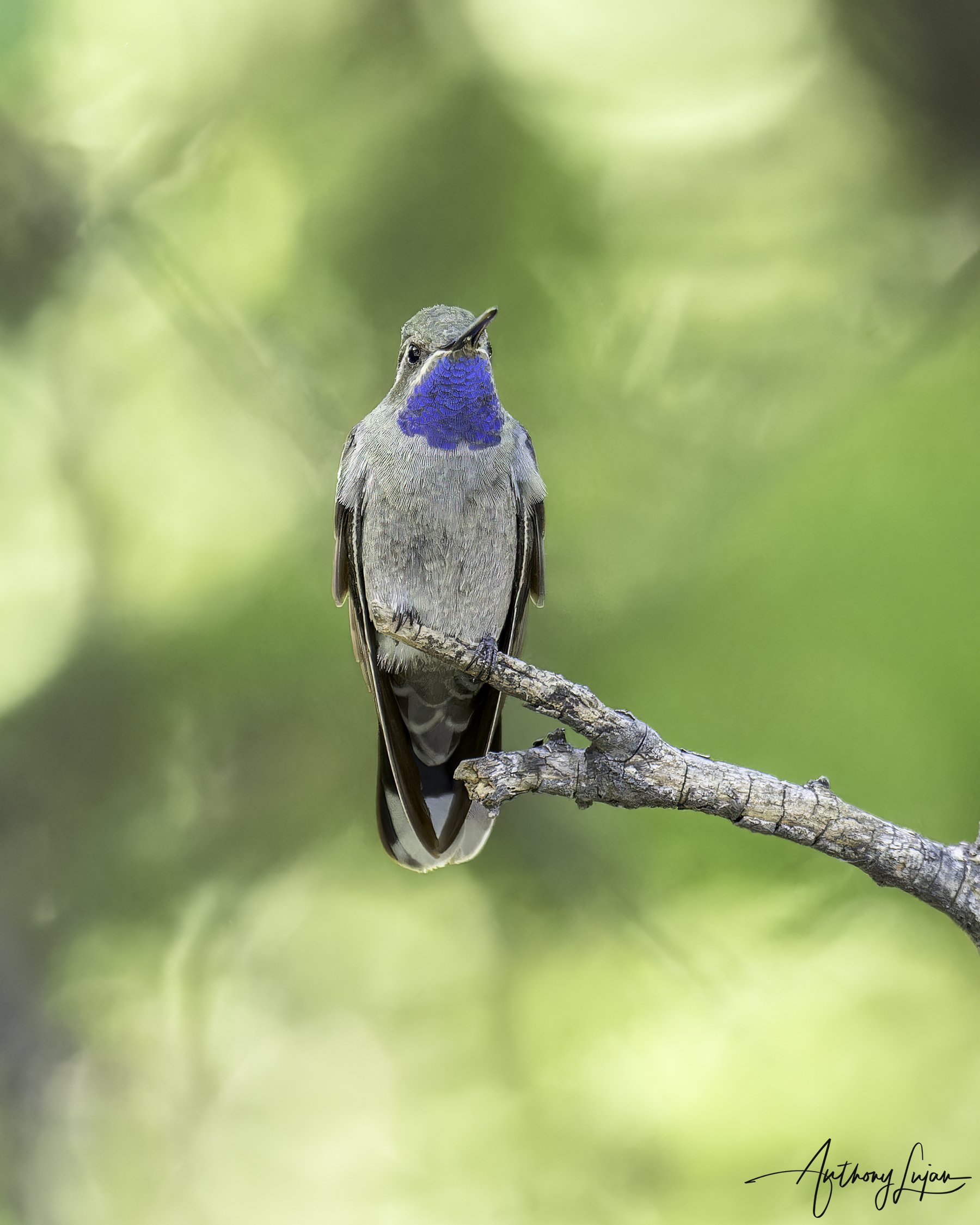
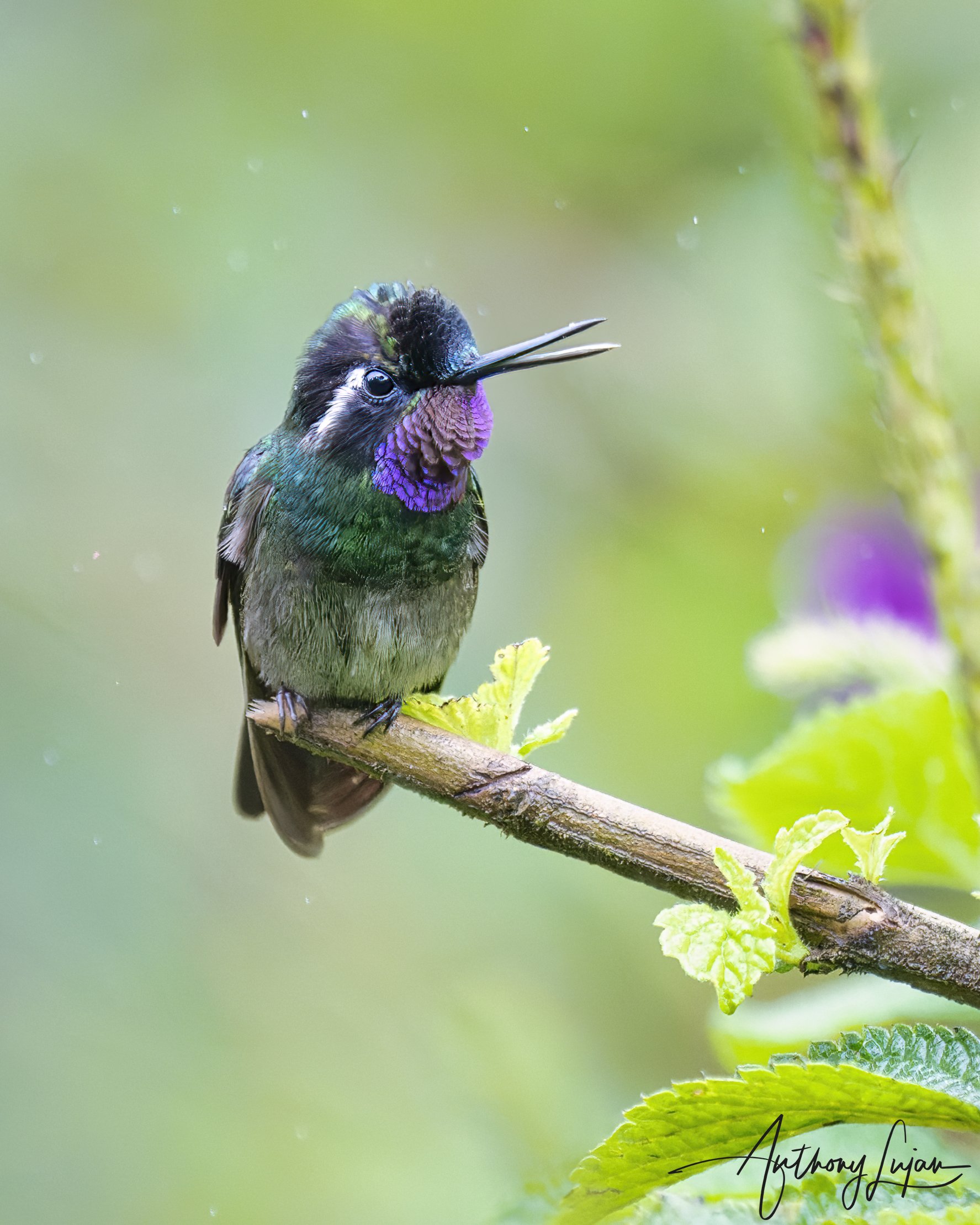
Related species in the Lampornis genus (7 species total):


Please note: The content provided in this article reflects Anthony’s personal experience and photographic approach. Results can vary depending on light, weather, location, equipment, subject behavior, and field conditions.