
Andean Hillstar
Scientific name: Oreotrochilus estella
The Andean Hillstar is a high-Andean hummingbird of puna grasslands and rocky slopes in Peru, Bolivia, northern Chile, and northwestern Argentina. It is unusually well adapted to cold, windy conditions at 3,000–5,000 m, often perching low on rocks or shrubs near giant Puya raimondii plants and Polylepis woodland edges.
At a Glance
Family: Trochilidae (hummingbirds)
Clade: Lesbiini – Coquettes
Genus group: Oreotrochilus — hillstars of the high Andes.
Range: High central Andes from southwestern Peru and northwestern Bolivia south to northern Chile and northwestern Argentina, with two main population centers on the northern and southern west slope of the Andes.
Habitat: Puna grasslands and high-altitude scrub with rock outcrops, Puya raimondii stands, and edges of Polylepis woodlands; also near isolated houses and buildings in this zone.
Elevation: About 2,400–5,000 m (7,900–16,400 ft), most common between roughly 3,500 and 4,500 m (11,500–14,800 ft).
Length: around 15 cm (about 6 in).
Weight: not well documented; a relatively large, robust hummingbird compared with many lowland species.
Number of mature individuals: not quantified; considered one of the more common birds of puna grasslands where habitat is intact.
Population trend: Stable (believed to be stable overall).
Status: Least Concern (IUCN).
Name Origin
The genus name Oreotrochilus comes from Greek oreos (“mountain”) and trochilos (“small bird” / “hummingbird”), referring to a hummingbird of the mountains. The species name estella is a Latinized form of “Estella,” a personal name that means “star” in Spanish and is often associated with brightness. Together, Oreotrochilus estella can be interpreted as “the mountain hummingbird, the star,” emphasizing both its high-Andean habitat and its striking appearance.
Subspecies and Distribution
Andean Hillstar has two subspecies.
Oreotrochilus estella estella
Occurs from southwestern Peru’s Ayacucho region south through western Bolivia and northern Chile into northwestern Argentina as far as Tucumán Province. It inhabits typical puna grasslands and rocky slopes across much of the high central Andes.Oreotrochilus estella bolivianus
Restricted to Bolivia’s Cochabamba Department. Birds there occupy the same general puna and rocky-slope habitats but show subtle plumage differences, including details of the belly stripe pattern described in field references.
Together, these populations form a high-Andean band from Peru through Bolivia into northern Chile and Argentina, occupying cold, treeline and above‑treeline landscapes.
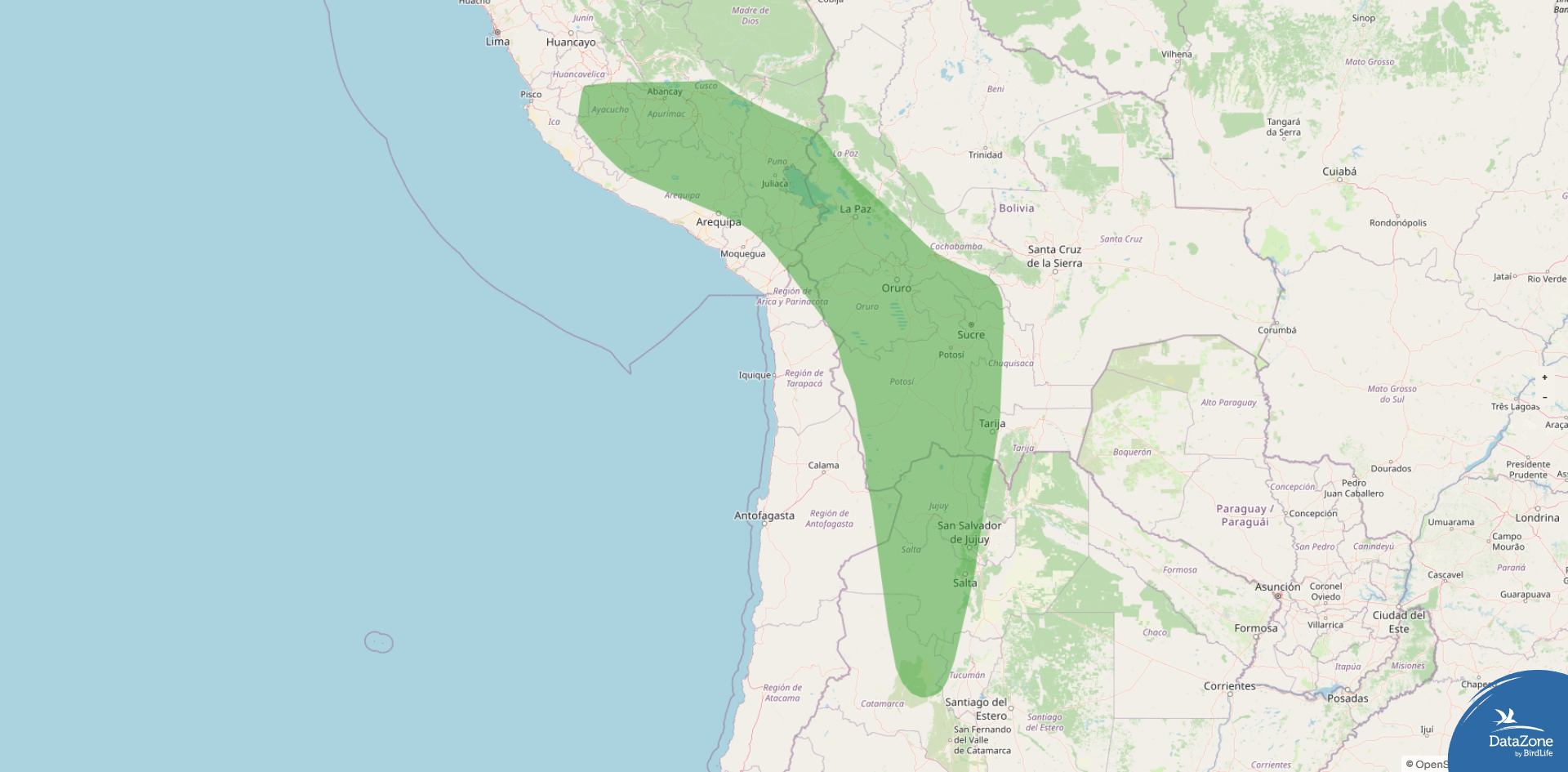
Legend
Green Resident
Species Overview
The Andean Hillstar is one of the signature hummingbirds of the puna zone, where many other hummingbirds are scarce or absent. Unlike most hummingbirds, it often perches while feeding, a behavior thought to conserve energy in thin, cold air. It survives freezing nights by entering deep torpor, reducing its metabolic rate in rock crevices or caves in a way analogous to short-term hibernation. In much of its range it is considered one of the most common birds of puna grasslands.
Identification
Male
Male Andean Hillstars are medium-sized hummingbirds with a slightly decurved black bill and overall brownish or drab upperparts. They show a very shiny emerald-green gorget bordered by black, contrasted with mostly white underparts marked by a rufous or chestnut median line along the belly. The tail is forked and strikingly white, with the central pair of feathers more bronzy and the outer edges and tips of the lateral feathers bronzy black. Males of the race bolivianus have a median belly stripe that is chestnut spotted with black.
Female
Females are duller, with a more finely speckled throat and generally drabber underparts. Their tail is greenish‑black, with the outer three to four feathers showing white inner webs at both base and tip. Juveniles tend to be more grayish overall, often with a yellowish base to the mandible, and immature males develop a darker glaucous gorget as they age. In the field, the combination of high‑elevation habitat, white tail with dark outer edges, and the male’s green gorget and belly stripe are key cues.
Habitat and Behavior
Andean Hillstars inhabit high-altitude puna grasslands, scrub, and rocky slopes, often with scattered shrubs, cacti, and giant bromeliads such as Puya raimondii. They occur near rock outcrops, at the edges of Polylepis woodland, and even around isolated houses and buildings within the puna zone. In elevation, they range from about 2,400 to 5,000 m, but are most common between roughly 3,500 and 4,500 m.
These birds feed on nectar from a variety of flowering shrubs, cacti, and high-Andean trees, often perching while feeding rather than hovering to save energy. They also take small arthropods by gleaning from vegetation or catching them on the wing. During the breeding season, females hold territories near rock outcrops and nest semi-colonially in bushy gorges, while males roam more widely across the landscape. Both sexes may move slightly downslope during the austral winter, but the species remains an obligate high-Andean bird overall.
Population and Threats
The Andean Hillstar is listed as Least Concern, and available information indicates that its overall population trend is Stable. Its global population size has not been quantified, but the species is described as one of the most common birds of puna grasslands and occurs in several protected areas. While high-Andean habitats face pressures from overgrazing, burning, and local development, current evidence suggests that these impacts are not yet causing rapid declines at the species level. Continued monitoring is nonetheless important given the sensitivity of puna ecosystems to land-use and climate change.

Conservation
Because Andean Hillstar is tightly linked to puna and high-Andean scrub, conservation of these cold, open habitats is critical. Protecting puna grasslands from excessive burning and overgrazing, conserving Polylepis woodlands and Puya raimondii stands, and limiting poorly planned development in high-Andean areas all help maintain its habitat. As a visible and charismatic bird of high Andean landscapes, Andean Hillstar can serve as a flagship for broader puna conservation efforts.
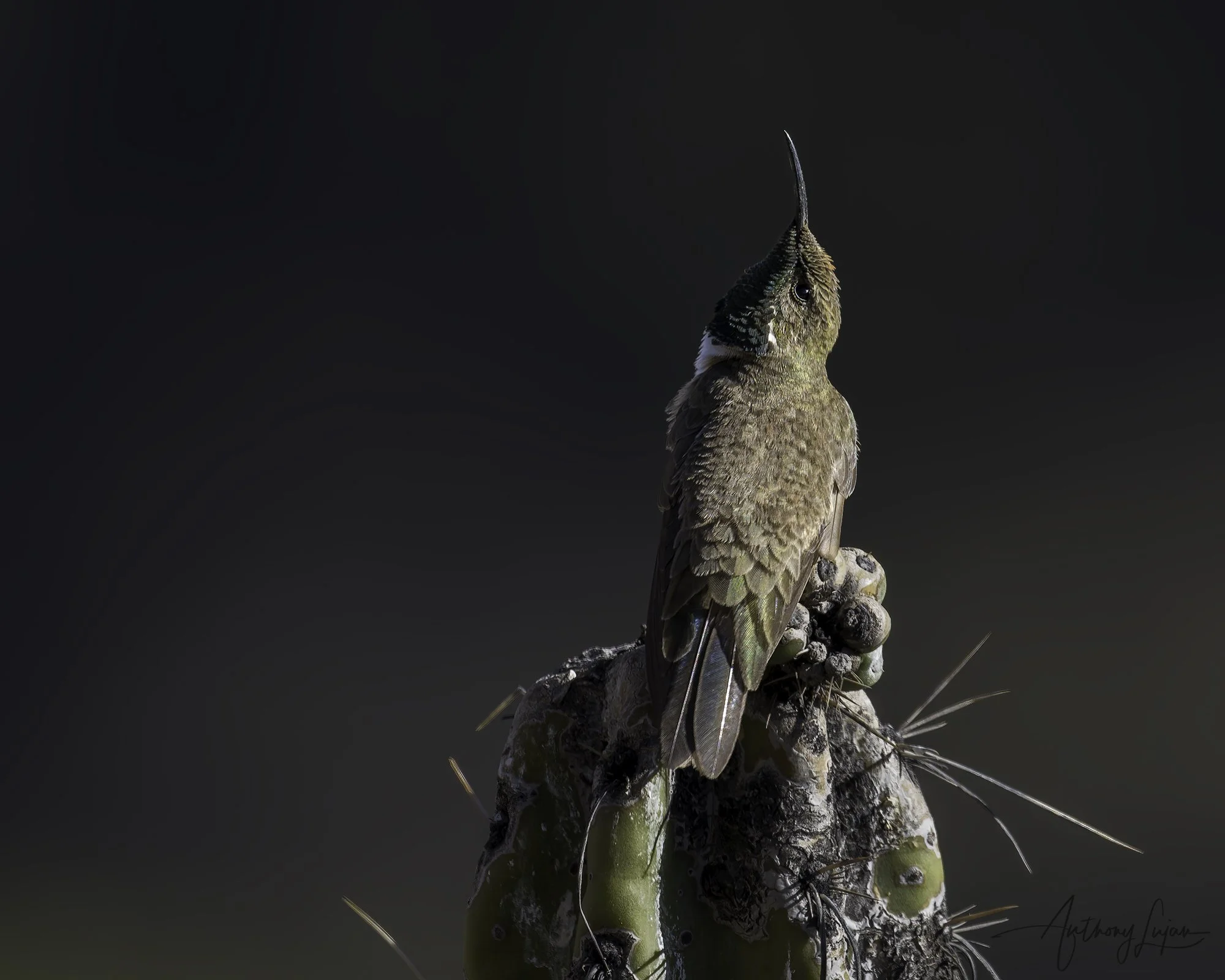
Below is the Andean Hillstar (Oreotrochilus estella estella)
Photographed in Socoroma, Putre, Arica y Parinacota, Chile
This individual belongs to the nominate subspecies estella, which occurs in the central and southern Andes from southern Peru through Bolivia and into northern Chile and northwestern Argentina. In Chile, it is typically found in high Andean valleys and arid puna zones above 3,000 meters, where it perches on rocks or low shrubs between feeding bouts.
The Andean Hillstar is a high-elevation specialist with metallic green upperparts, a contrasting white belly, and a shimmering violet or purple throat in males. Females are duller, with streaked underparts and reduced iridescence. It feeds primarily on high-altitude flowers such as Chuquiraga, often enduring cold winds and intense sun typical of puna habitat.



Checkout Anthony’s playlist of this species! Click the top right dropdown to see all the videos.
Related species in the Oreotrochilus genus (7 species total):


Please note: The content provided in this article reflects Anthony’s personal experience and photographic approach. Results can vary depending on light, weather, location, equipment, subject behavior, and field conditions.