
Anna’s Hummingbird
Scientific name: Calypte anna
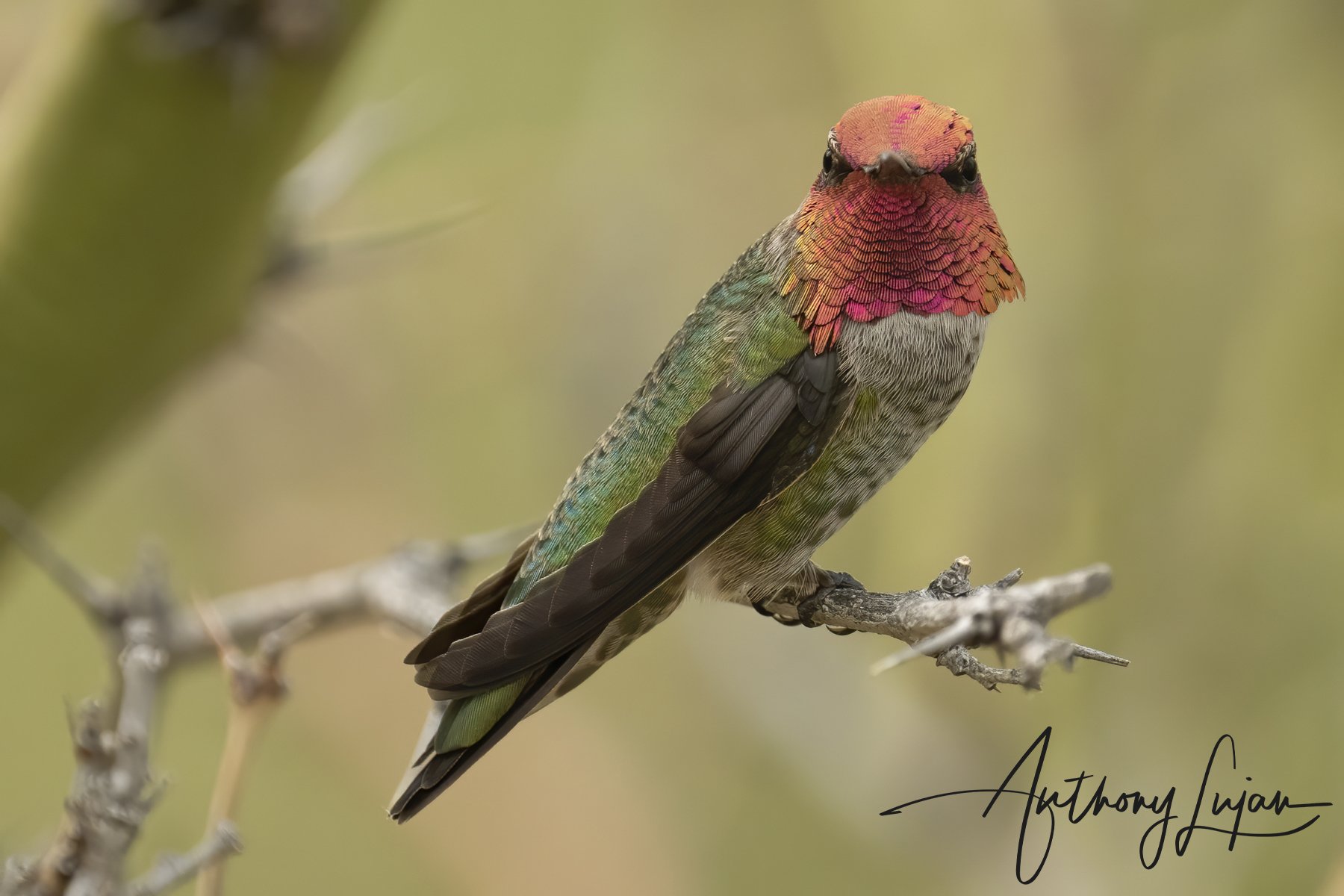
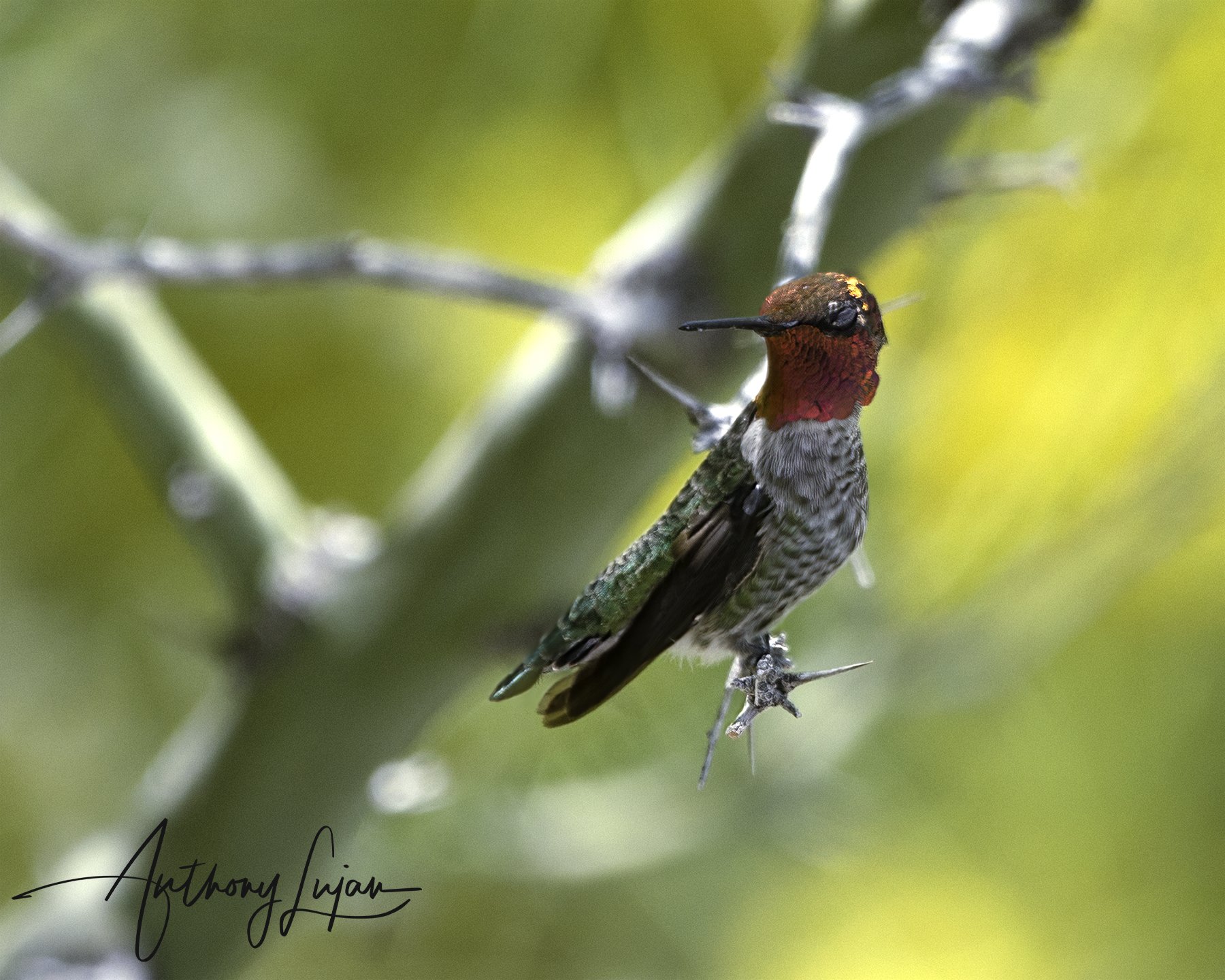
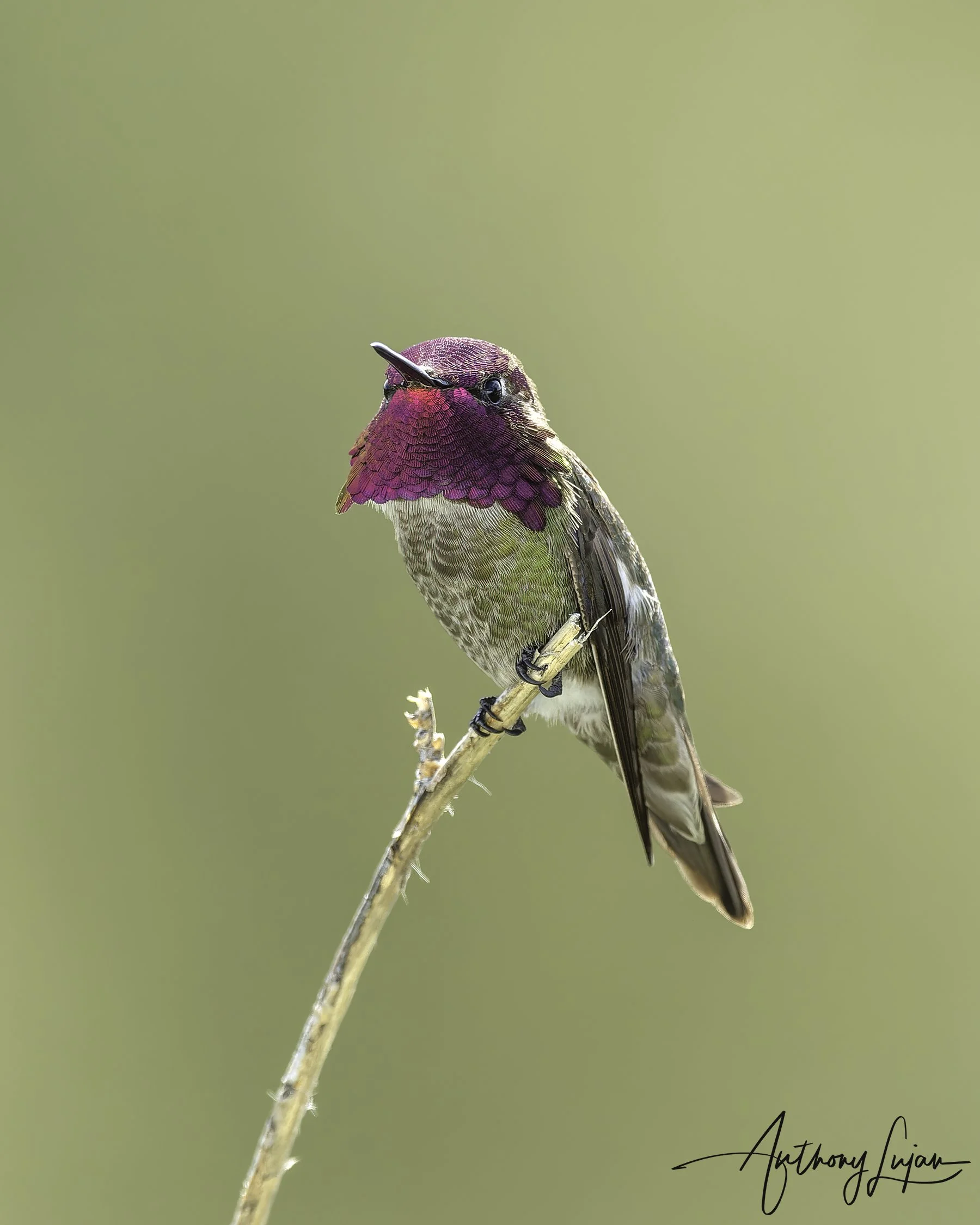
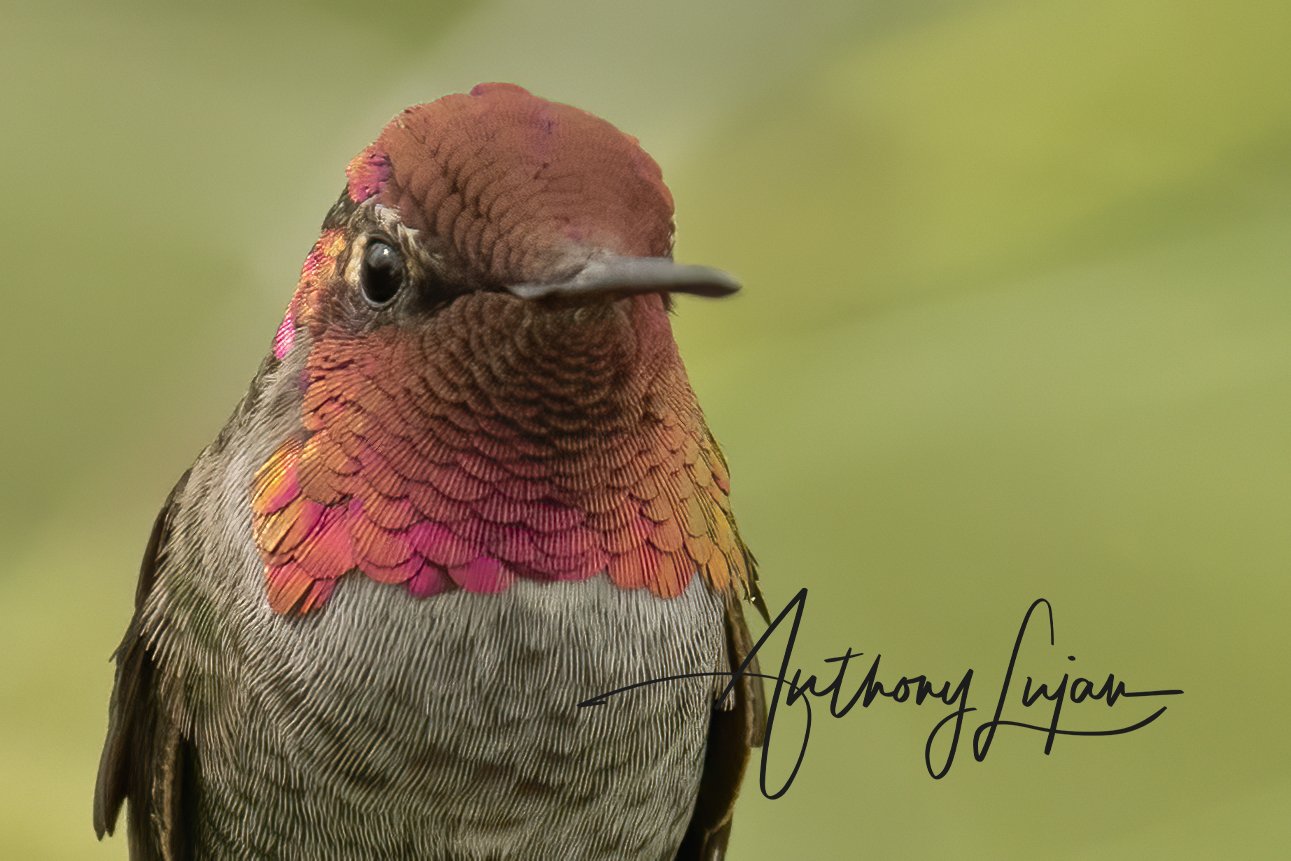
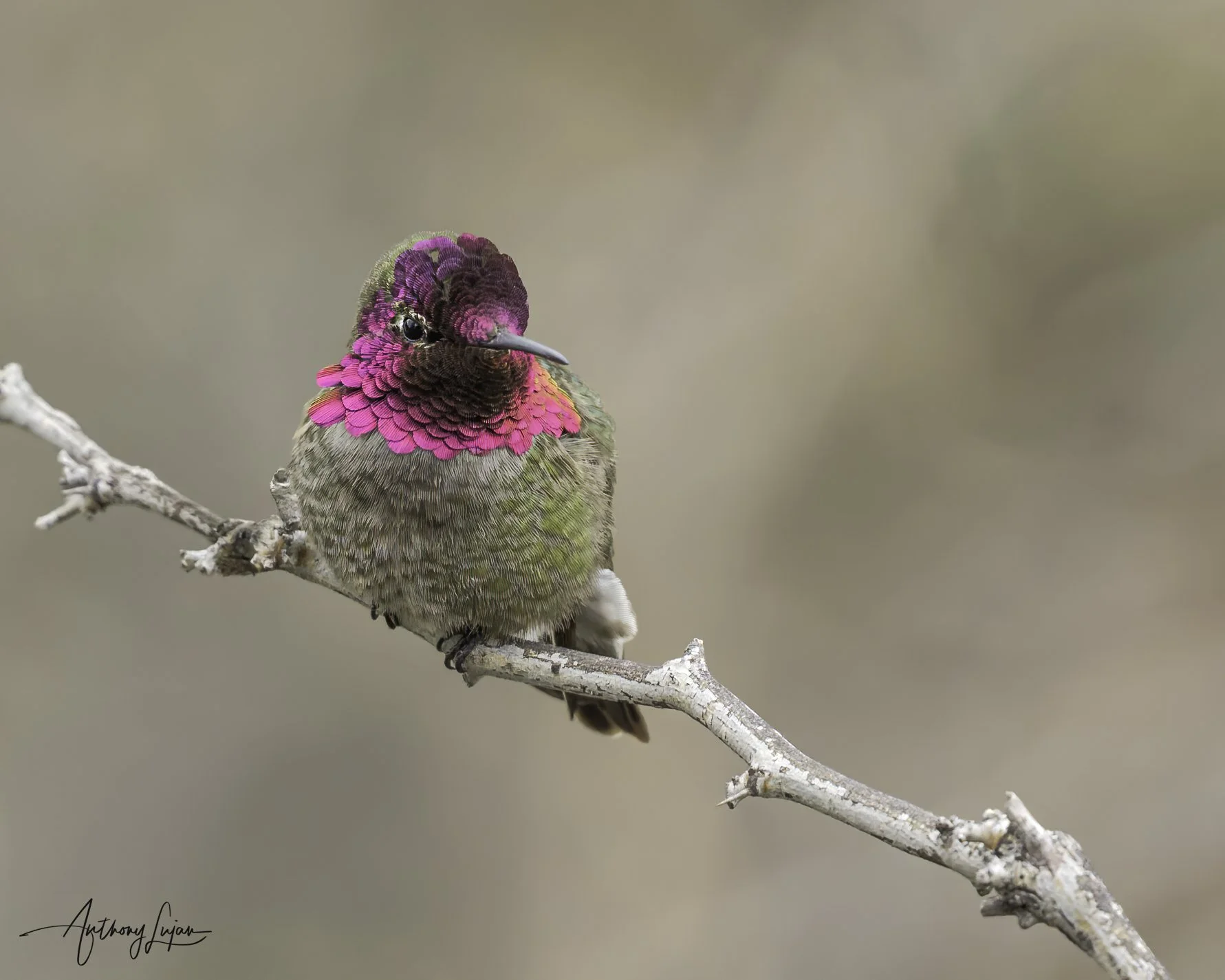
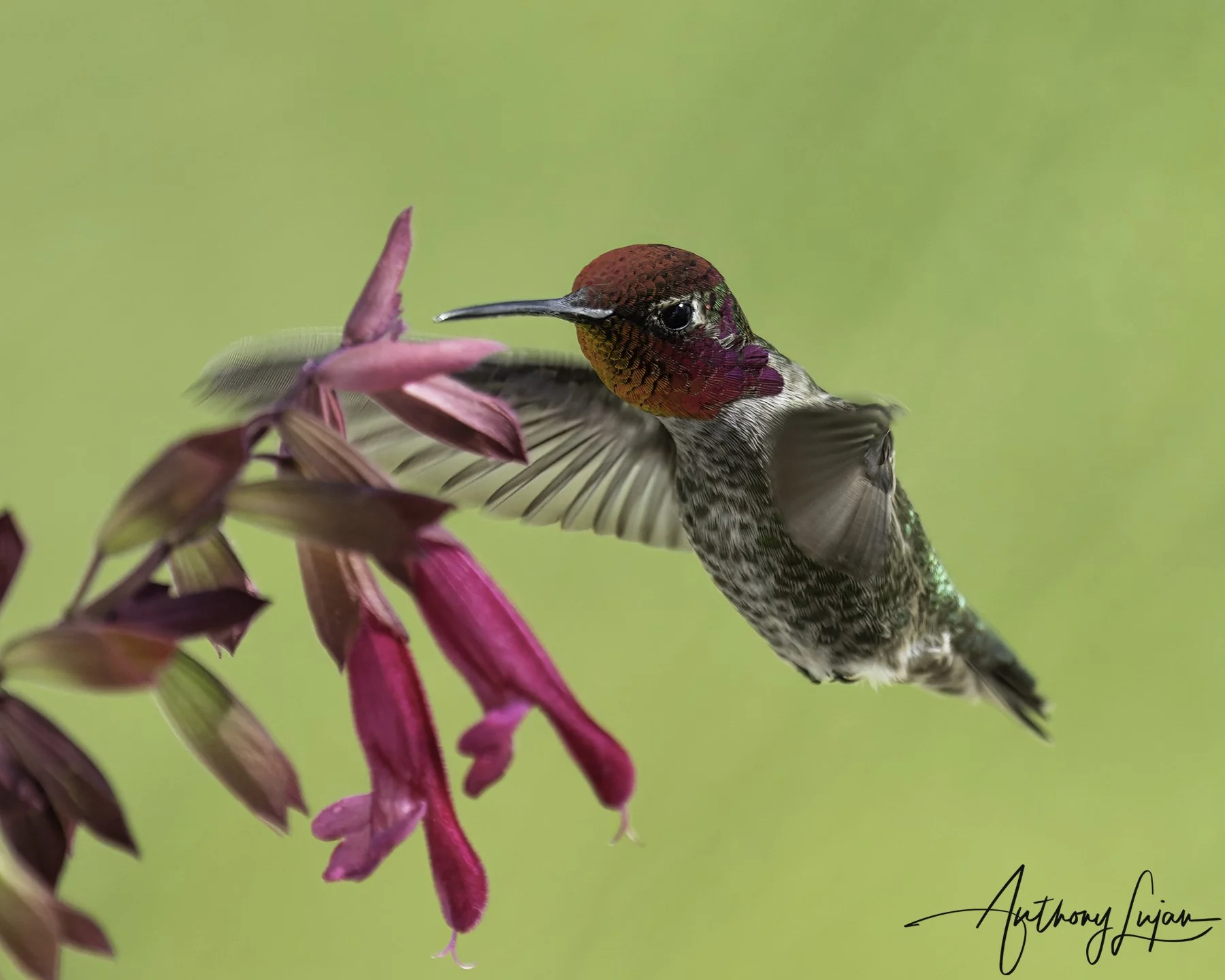
Anna’s Hummingbird is a medium-sized hummingbird of western North America that has adapted remarkably well to urban and suburban landscapes, now occurring year-round from Baja California to southern British Columbia and well inland. Its iridescent rose-pink crown and throat make males some of the most vividly colored hummingbirds in North America, often glowing brilliantly in strong light.
At a Glance
Family: Trochilidae (hummingbirds)
Clade: Mellisugini – Bees
Genus group: Calypte — Anna’s and Costa’s hummingbirds of western North America.
Range: Western North America from Baja California north through much of coastal and near‑coastal California and the Pacific Northwest to southern British Columbia, with inland expansion into the interior West.
Habitat: Urban and suburban gardens, coastal scrub, chaparral, oak woodland, riparian corridors, and open forest edges with flowering trees and shrubs.
Elevation: From sea level to about 2,000 m (6,600 ft).
Length: about 9–10 cm (3.5–3.9 in).
Weight: around 4–4.5 g (0.14–0.16 oz).
Number of mature individuals: 9,600,000
Population trend: Increasing.
Status: Least Concern (IUCN).
Name Origin
The genus name Calypte is derived from the Greek kalyptē (“covered” or “veiled”), referencing the iridescent crown and throat feathers that appear to change color with the angle of light. The species name anna honors Anna Masséna, Duchess of Rivoli, wife of French ornithologist François Victor Masséna, who described the species in the 19th century. Together, Calypte anna can be read as “Anna’s veiled hummingbird,” reflecting both its namesake and shimmering plumage.
Subspecies and Distribution
Anna’s Hummingbird is monotypic — no recognized subspecies.
It is resident along the Pacific coast from Baja California north through most of coastal and near‑coastal California and the Pacific Northwest to southern British Columbia. In recent decades, the species has expanded inland and northward, now occurring in cities and towns across parts of the interior West wherever ornamental plantings and feeders provide year‑round nectar. Historically more centered in coastal California chaparral and oak woodland, Anna’s has become a familiar garden bird across much of the region.
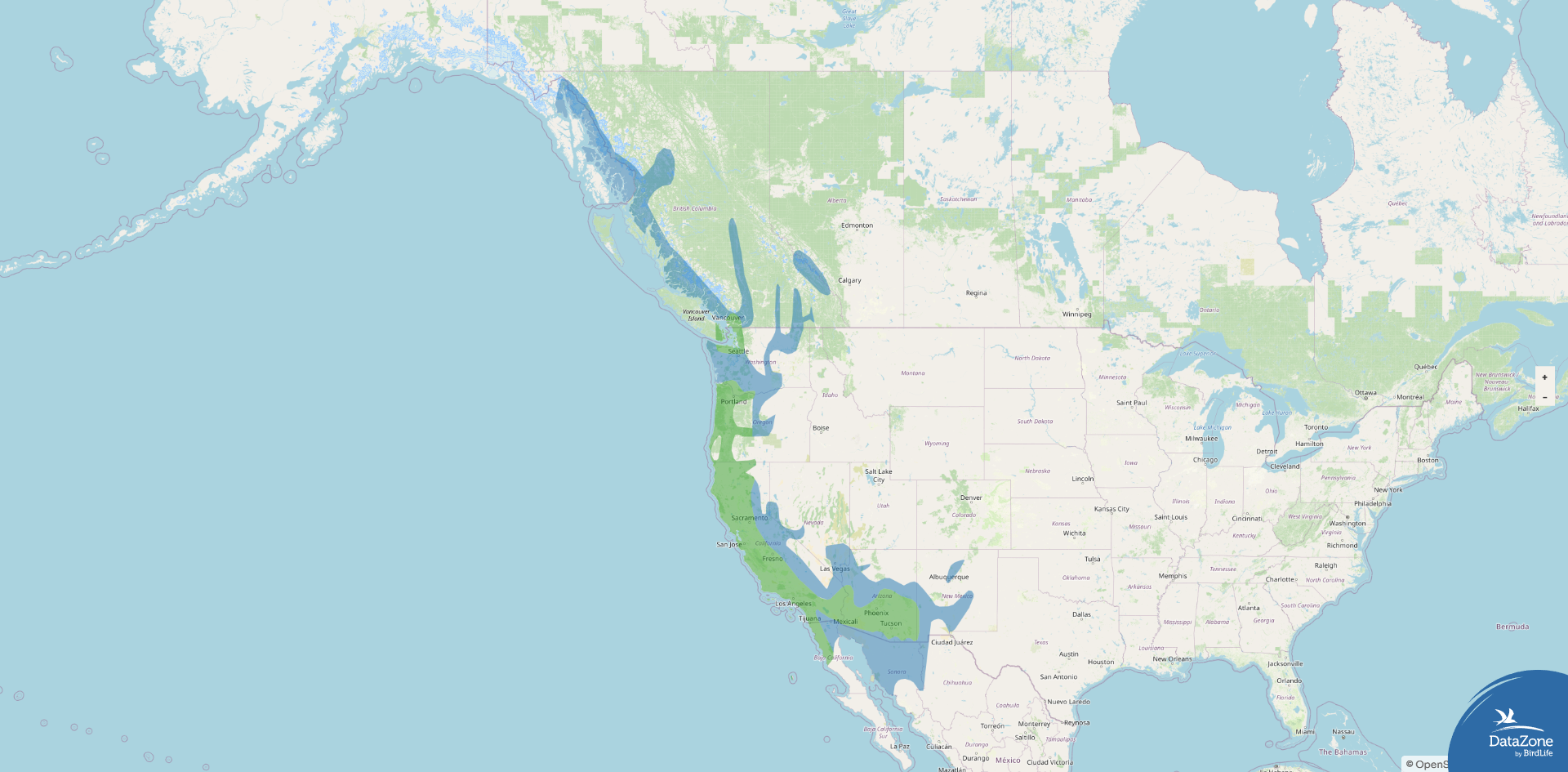
Legend
Green Resident
Yellow Breeding
Blue Non-breeding
Species Overview
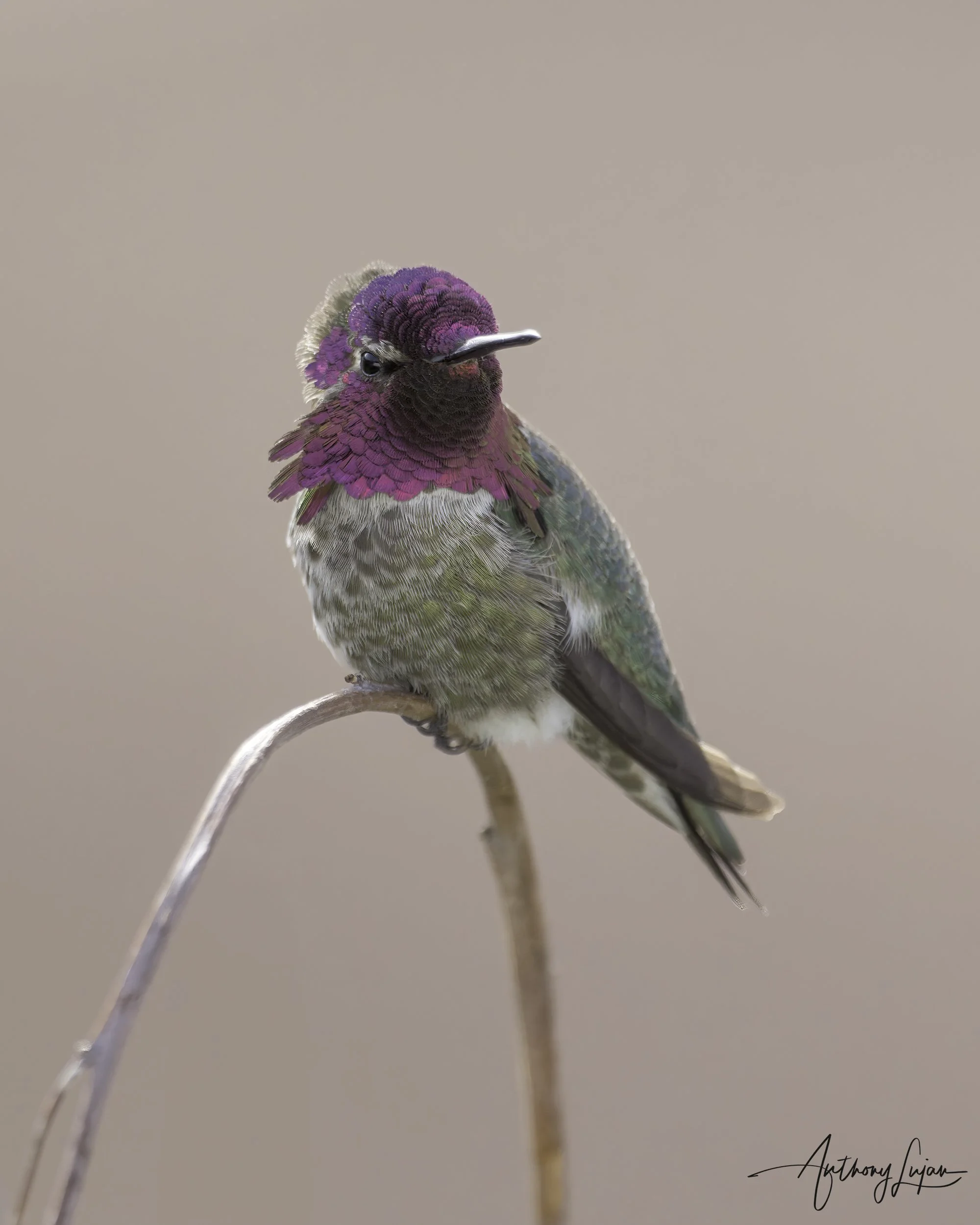
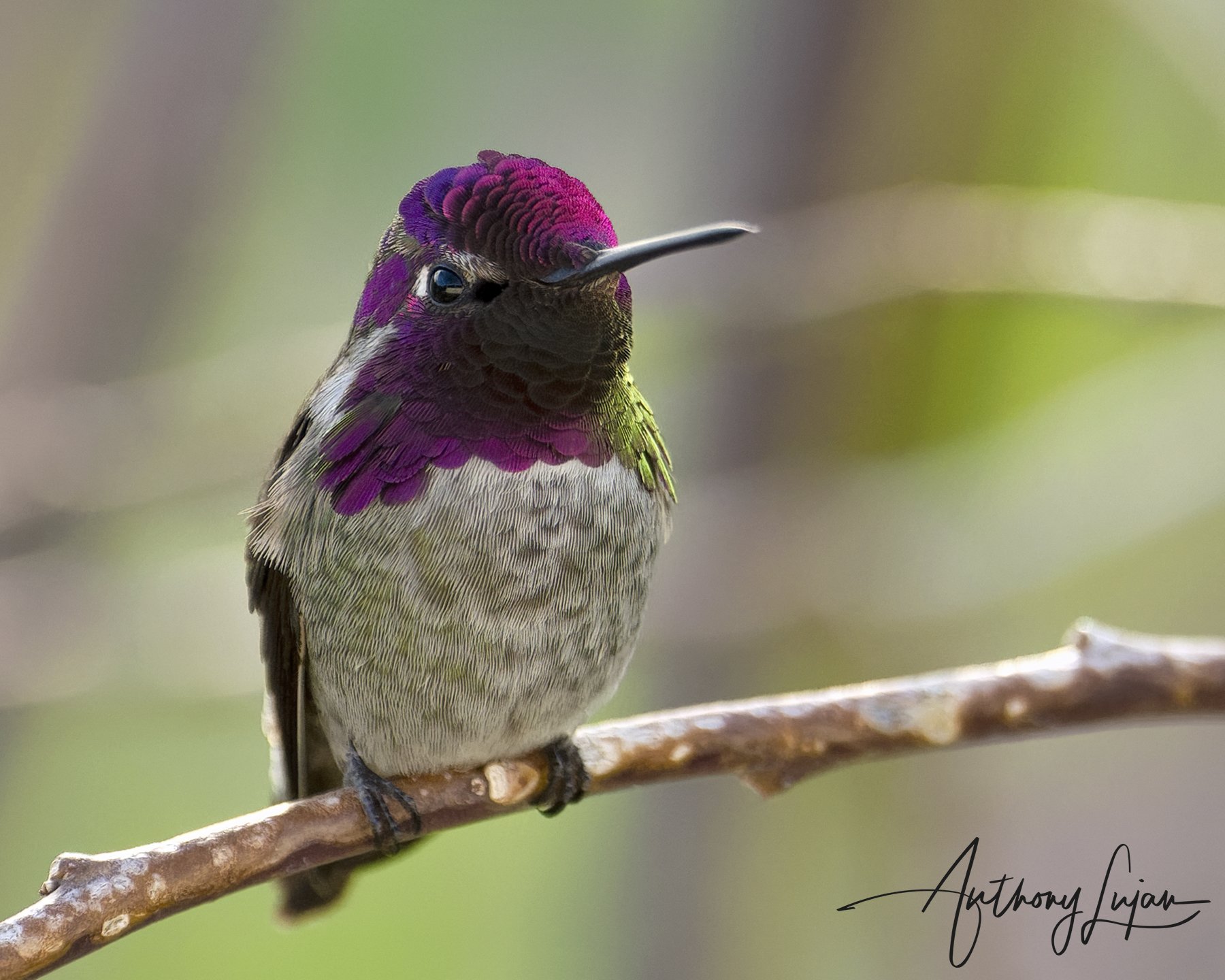
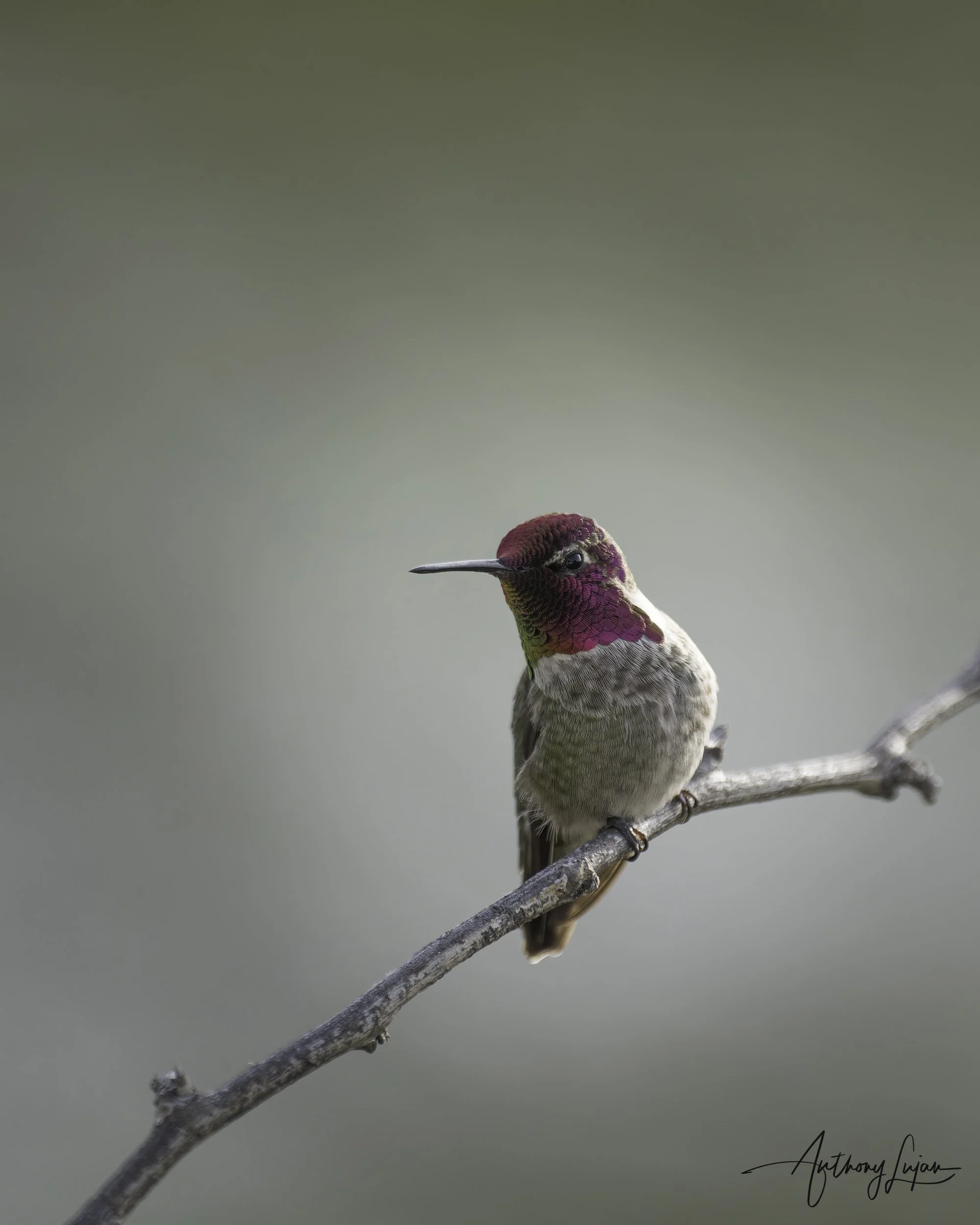
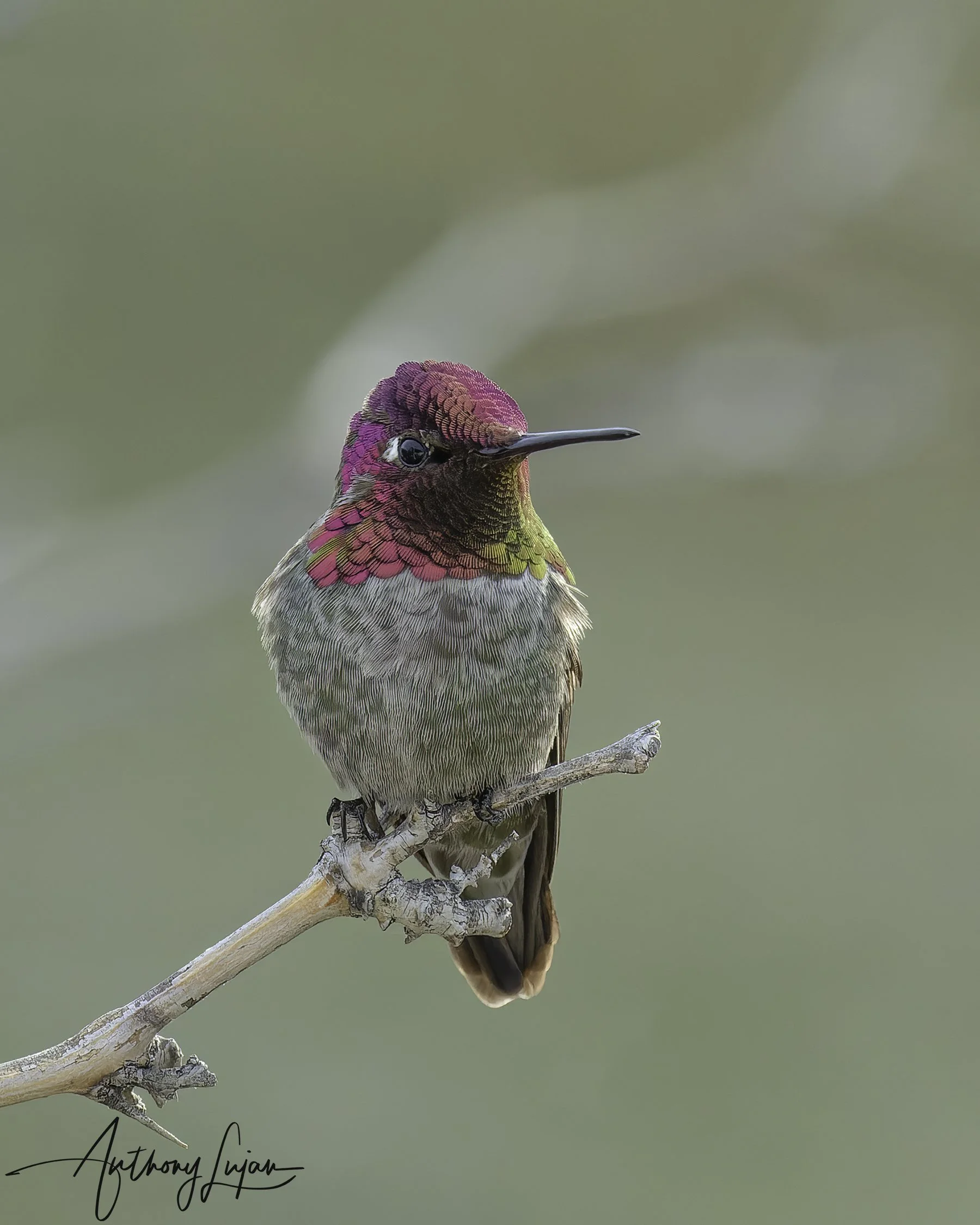
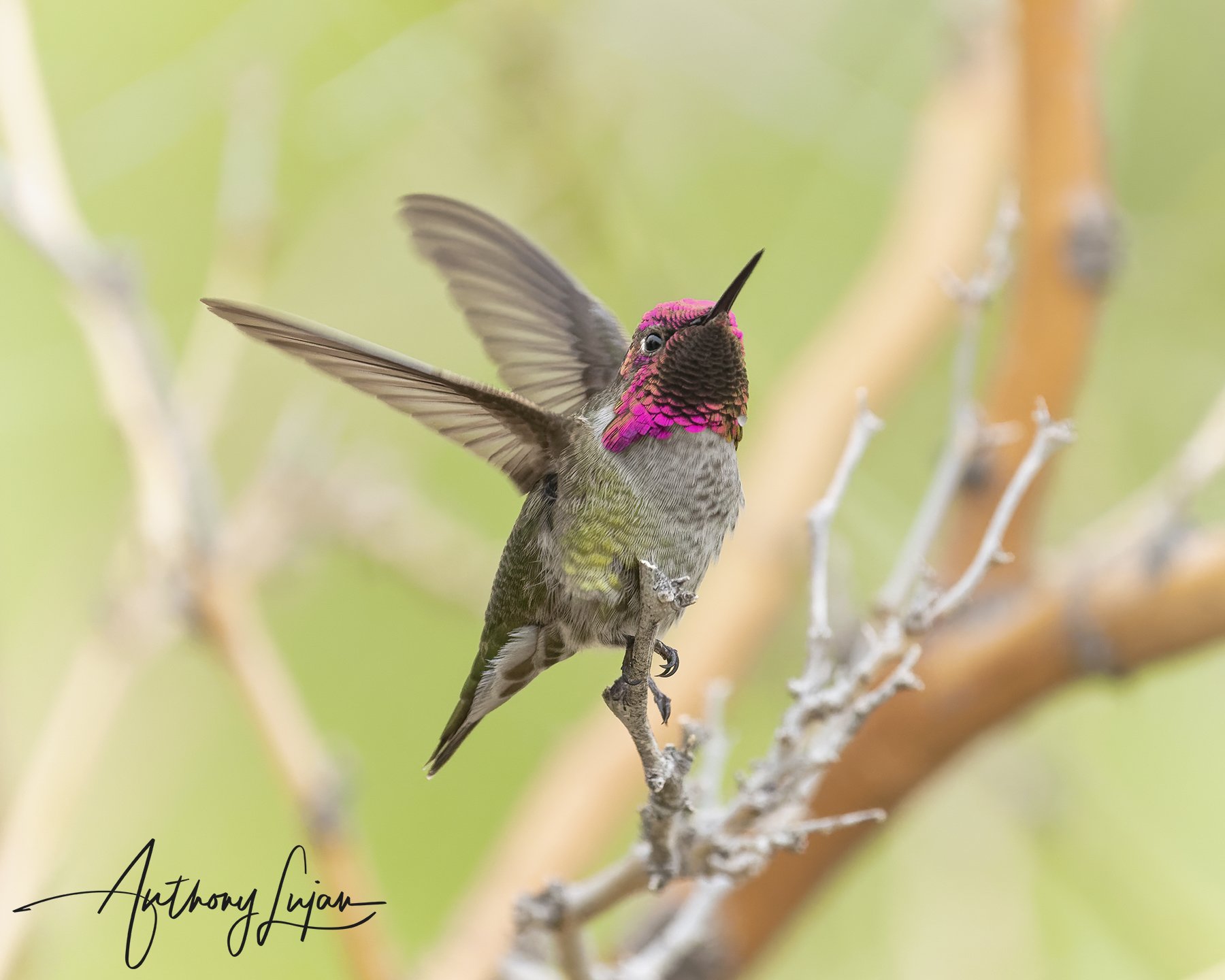
Anna’s Hummingbird is a symbol of adaptability and urban resilience in western North America. Once largely limited to California’s chaparral and coastal scrub, it now thrives in cities and suburbs from Baja California to southern British Columbia, supported by year‑round blooms, ornamental trees, and hummingbird feeders. Males are especially striking, with an iridescent rose-pink crown and gorget that can look dull gray in shade but ignite into magenta and crimson in direct sunlight.
Identification
Male
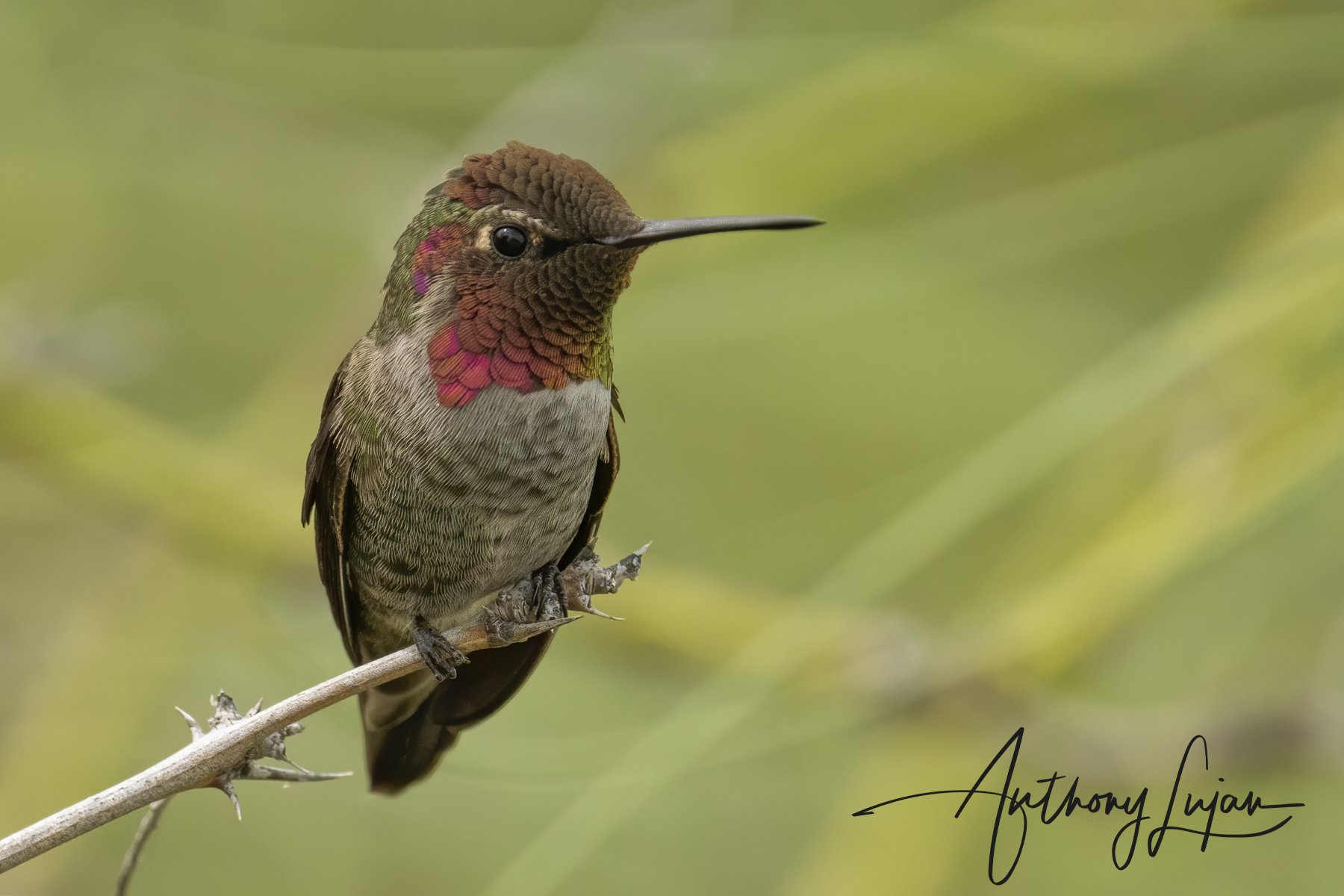
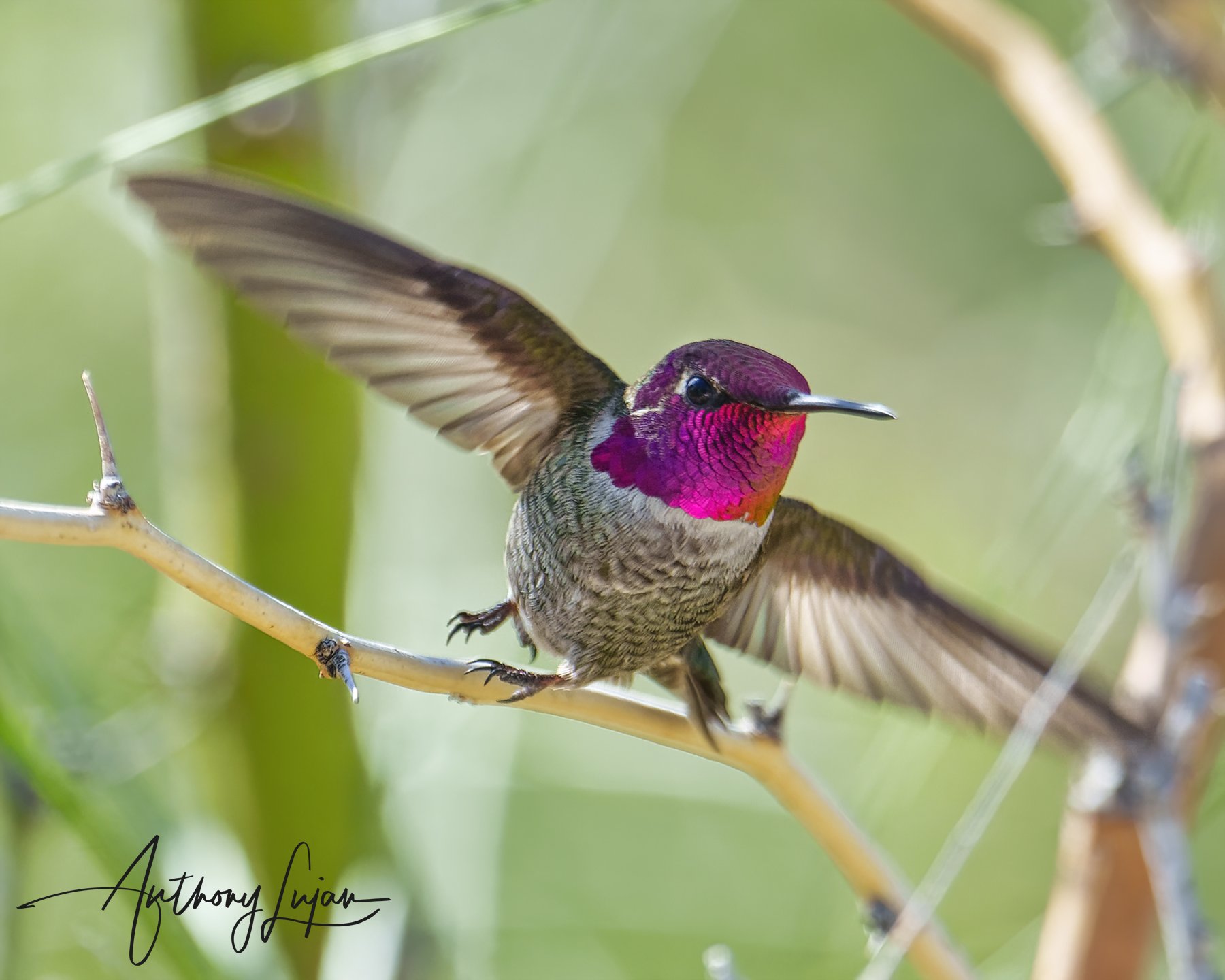
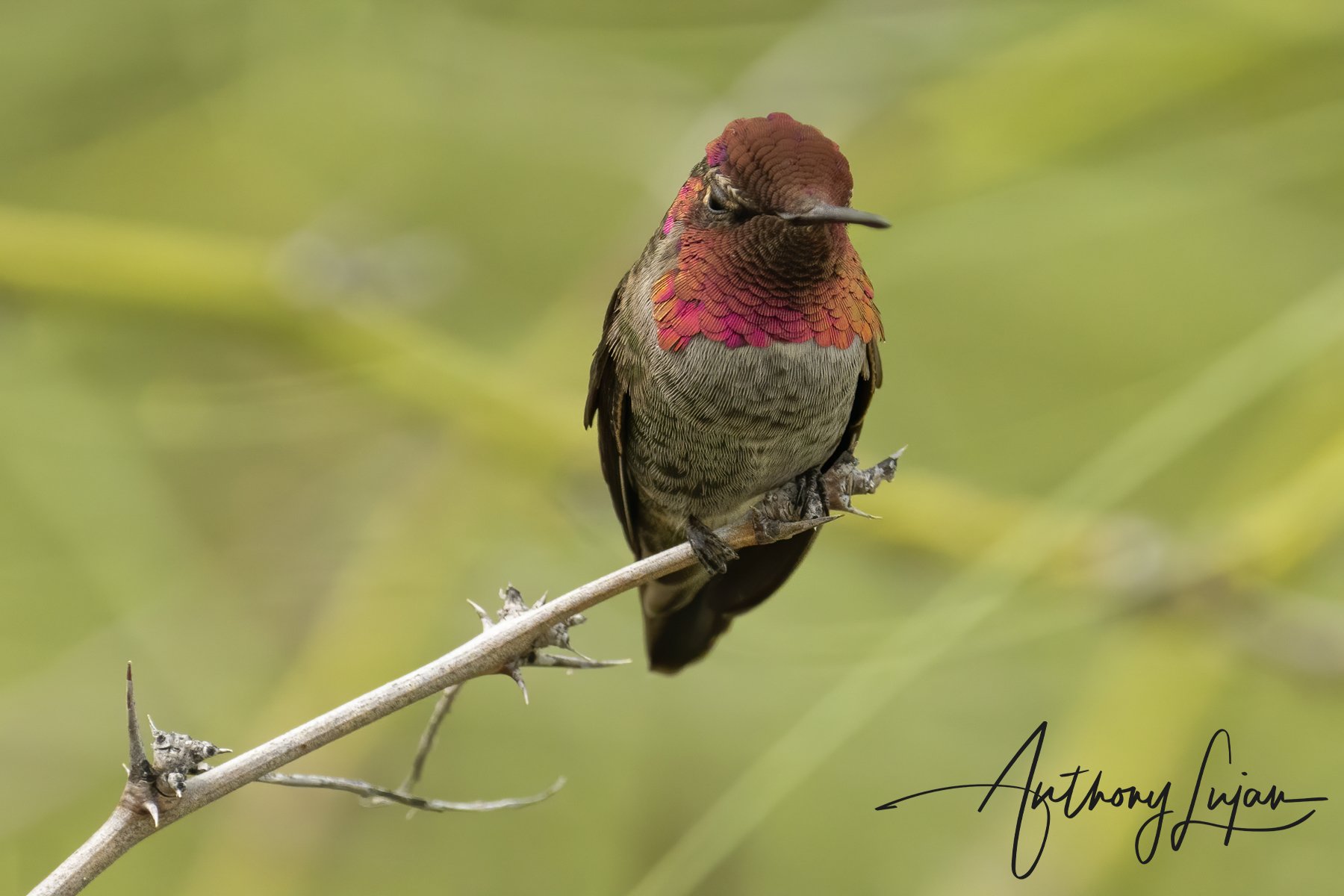
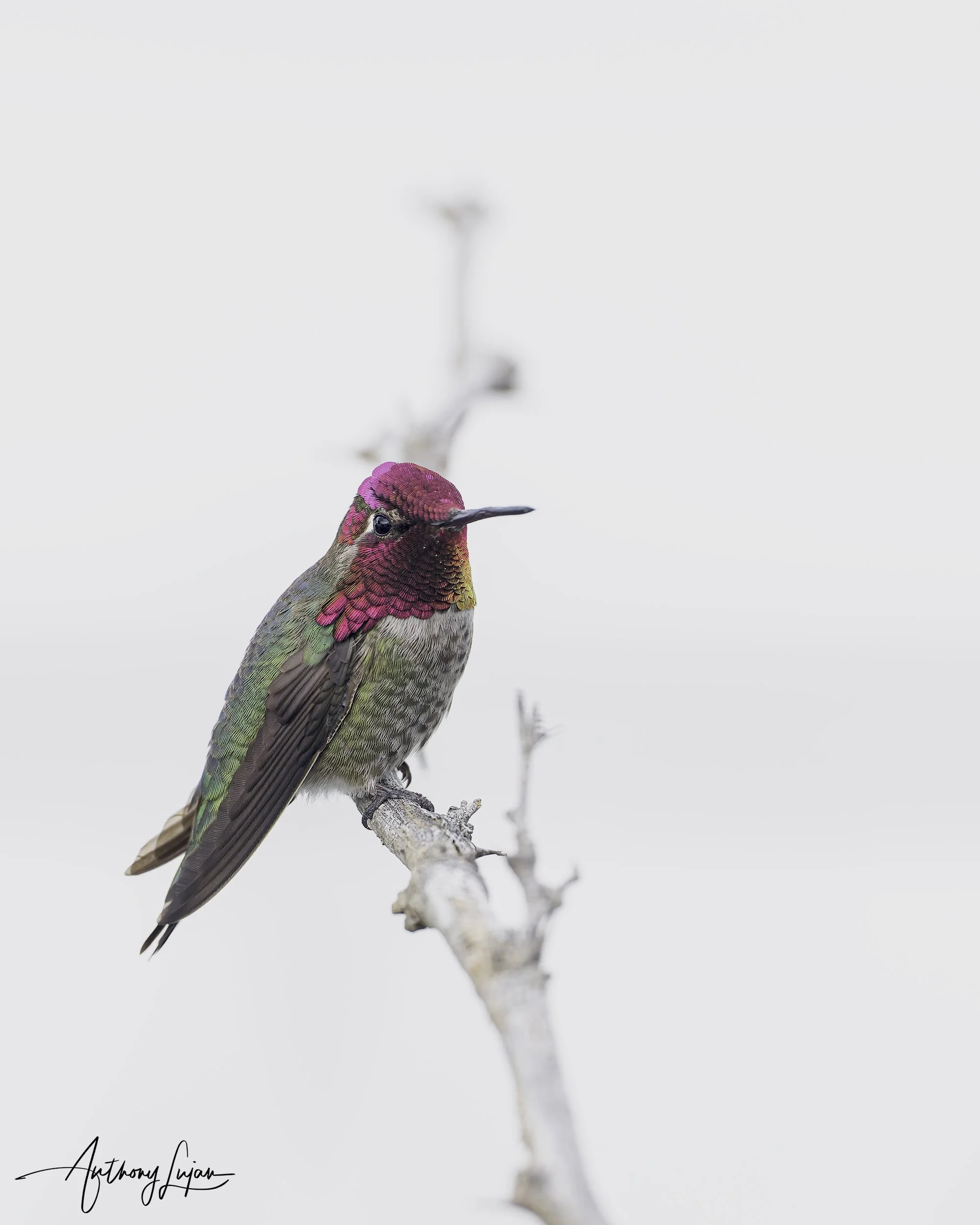
Adult males have a brilliant rose-pink crown and gorget that wrap around the head, appearing from certain angles as a full magenta helmet. The back and flanks are metallic green, the underparts grayish with some green wash on the sides, and the tail is dark. Males perform spectacular courtship dives, climbing high into the air and then plummeting past females or intruders while producing a sharp, buzzing or “chirping” sound from their tail feathers.
Female
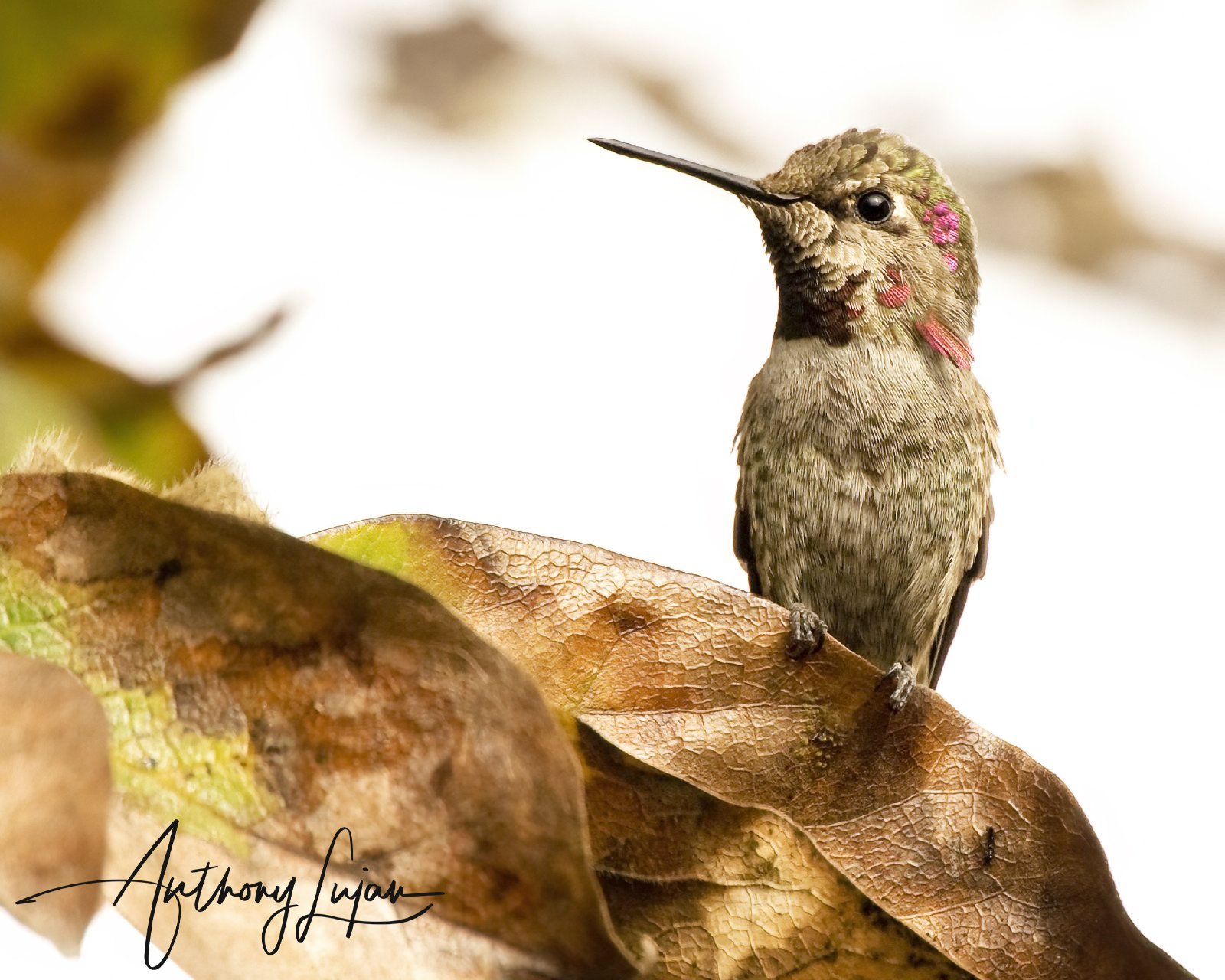
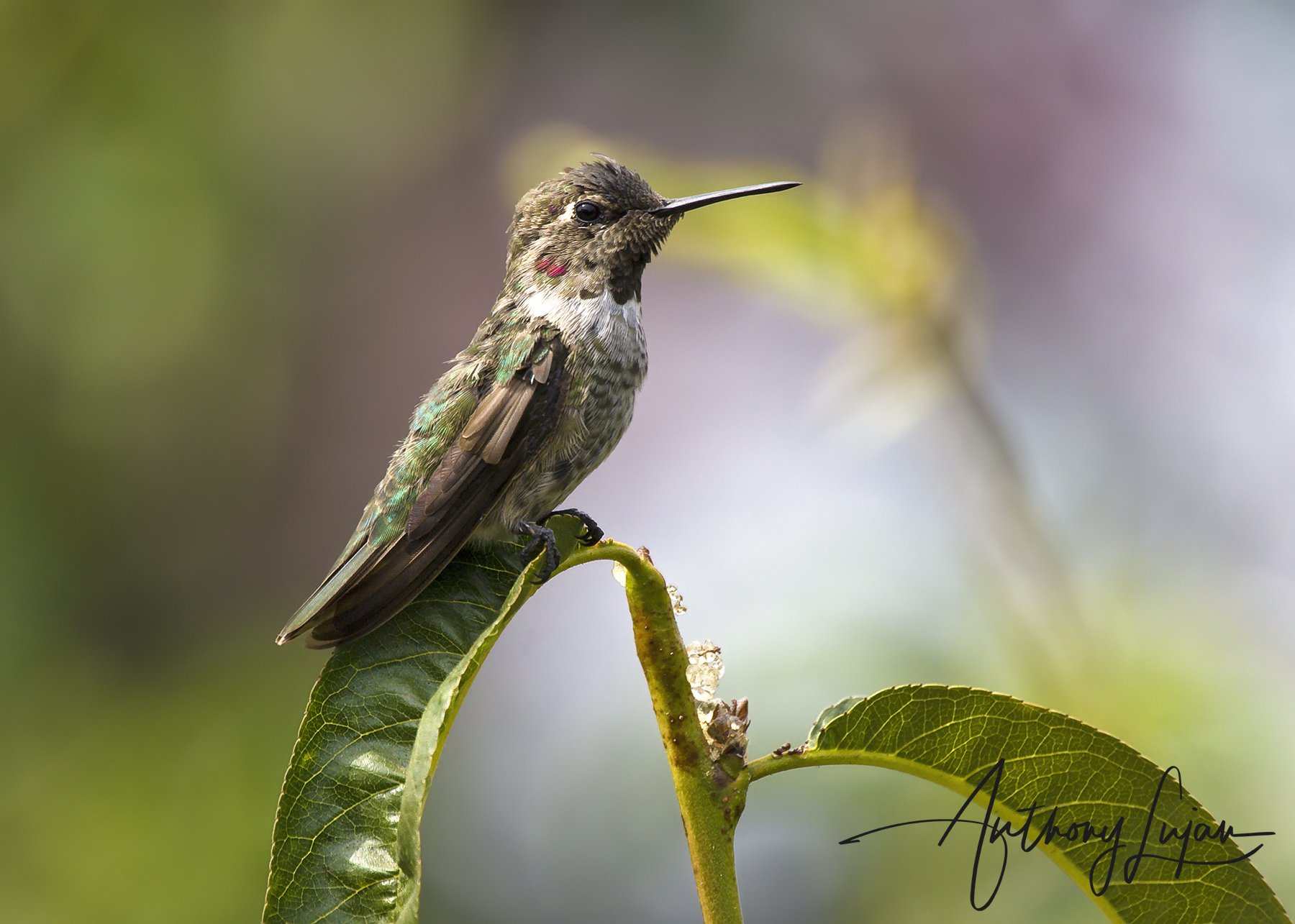
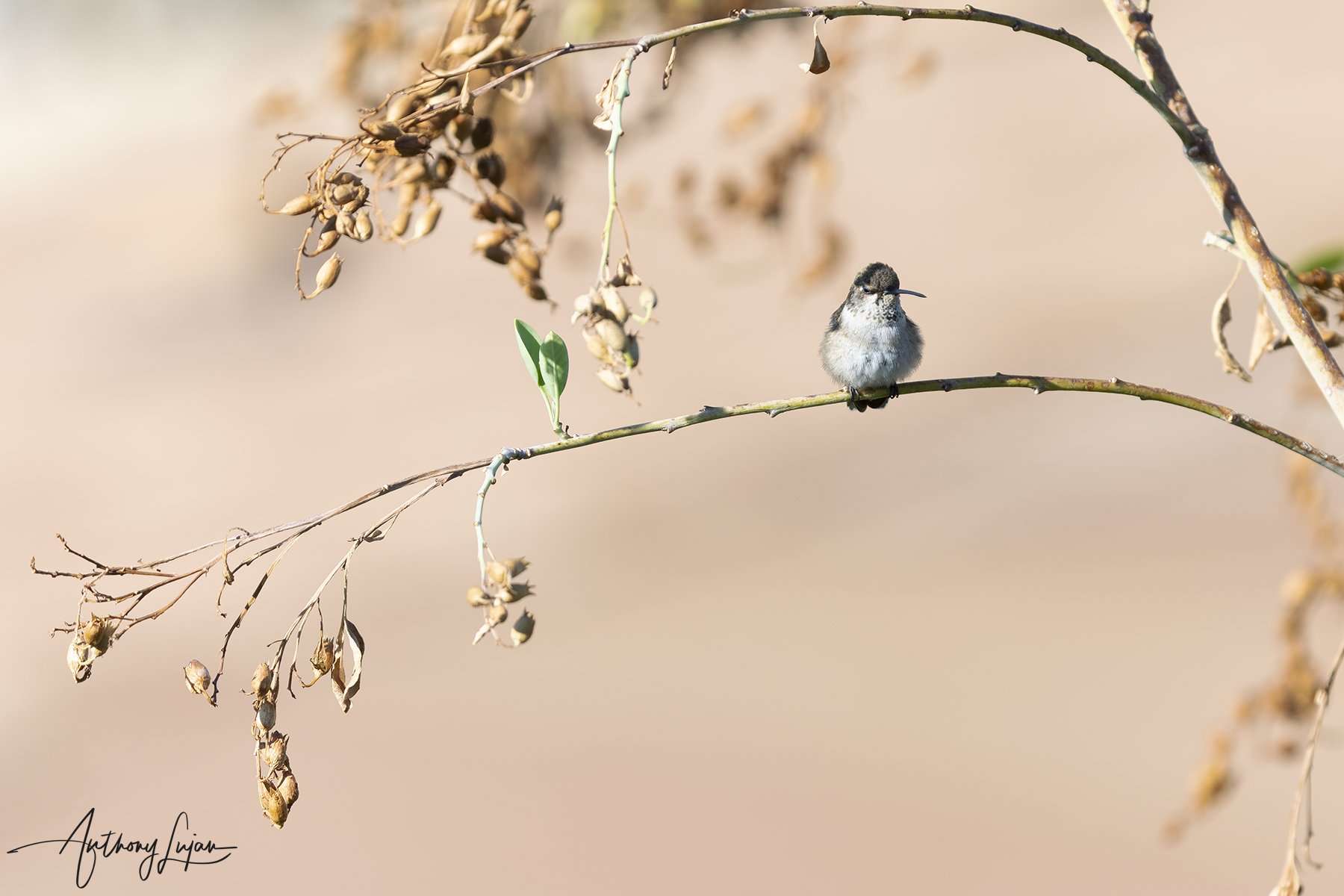
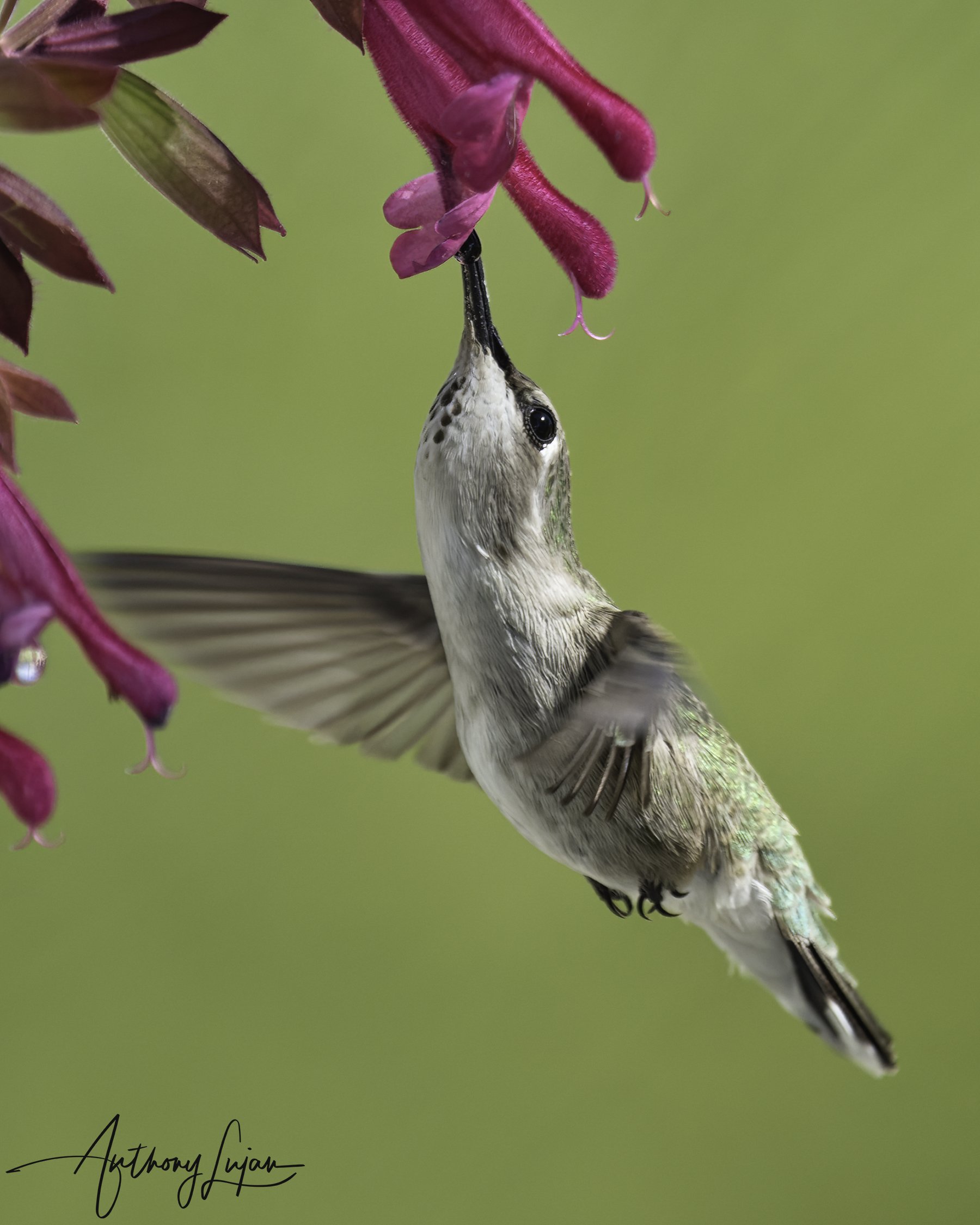
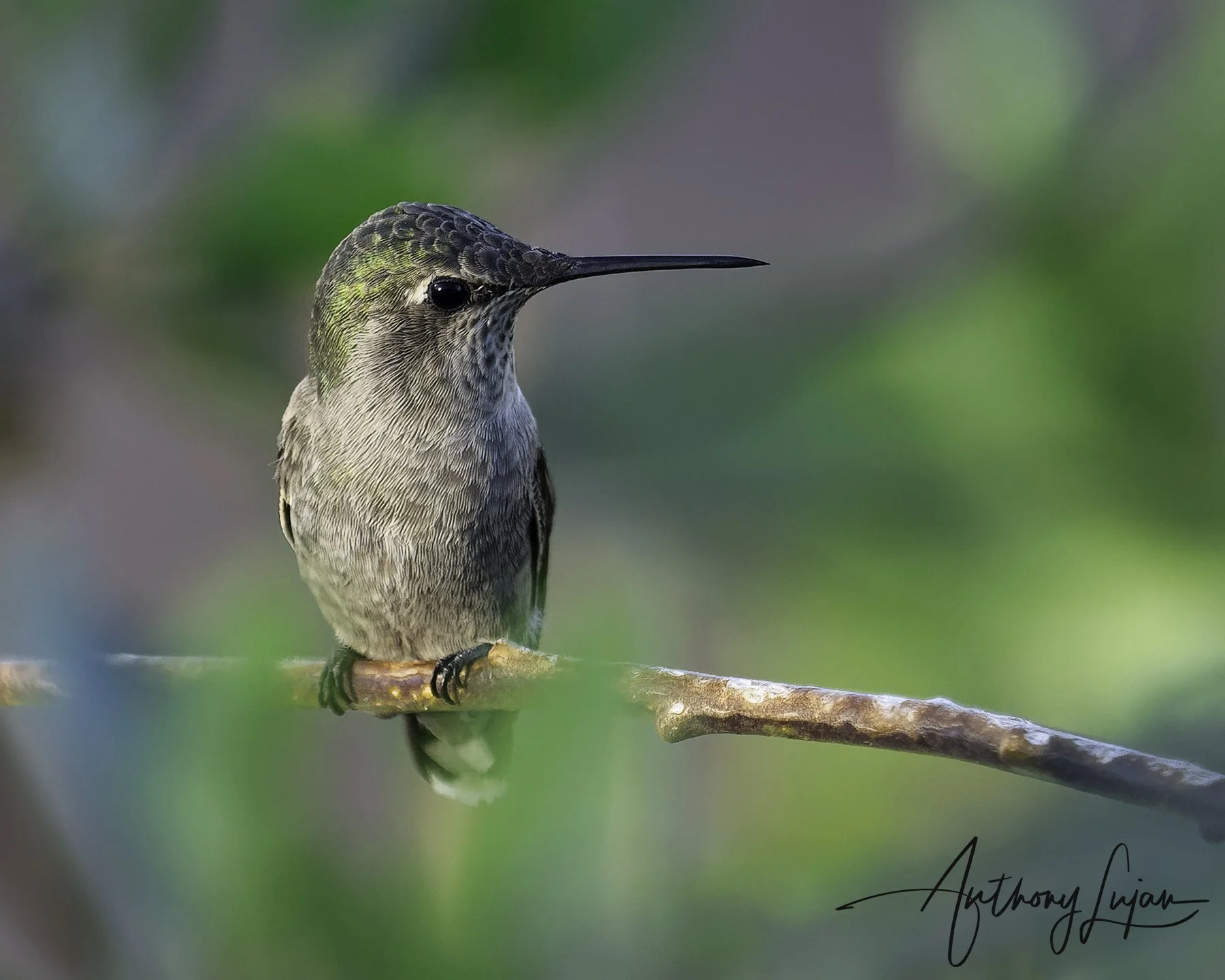
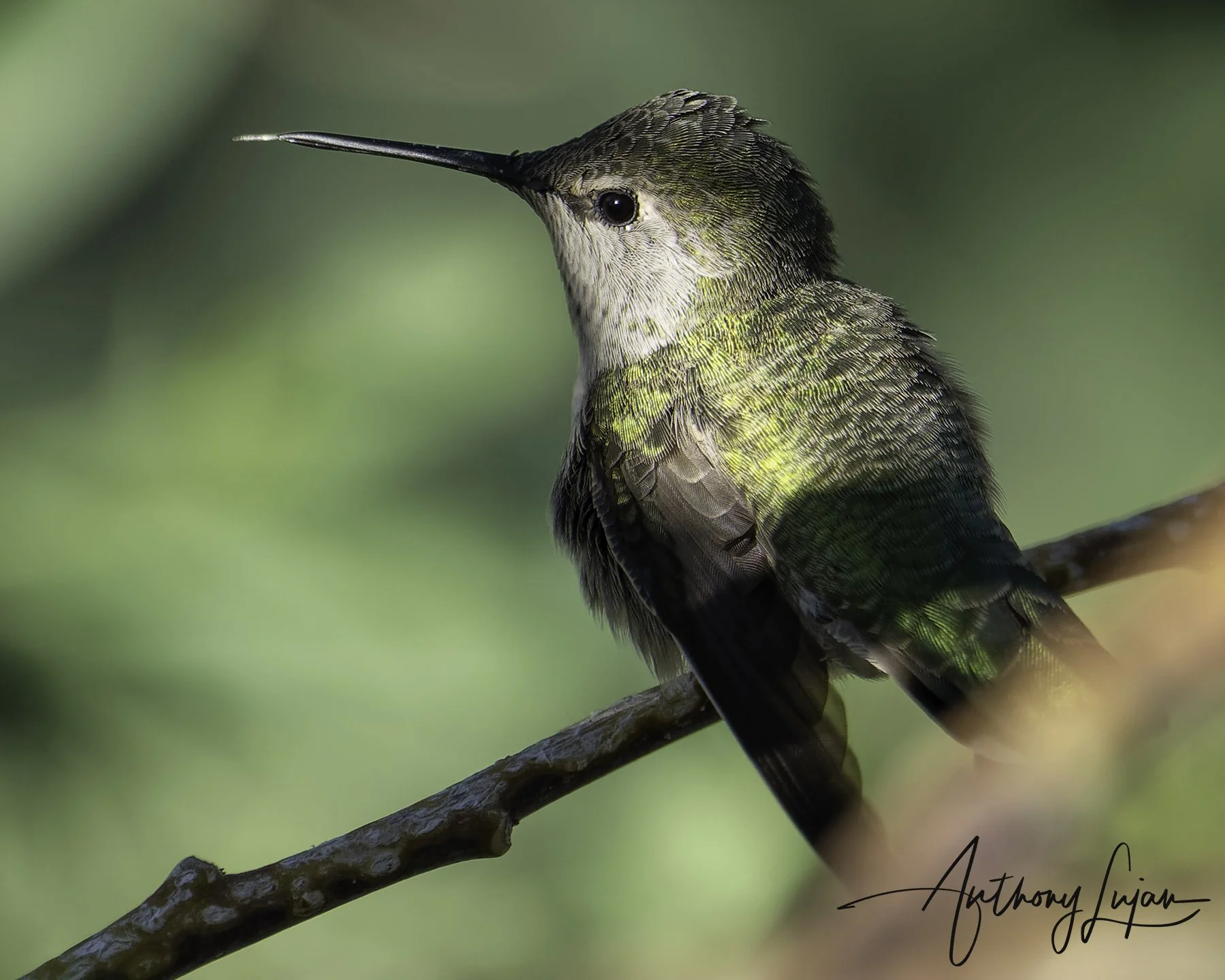
Females are green above and grayish below, usually with a paler throat that may show a few rose‑colored spots. Their tails are rounded with white‑tipped outer feathers, and they lack the full crown gorget combination of the male. Females are skilled nest builders, weaving tiny cups of plant down and spider silk on branches of trees and shrubs, often in gardens and yards where nests can persist and be reused.
Habitat and Behavior
Anna’s Hummingbirds use coastal scrub, chaparral, oak woodland, riparian corridors, urban parks, and gardens with flowering trees and shrubs. They feed on nectar from a wide array of native and exotic flowers, as well as tree sap and small insects and spiders, which they glean from foliage or catch on the wing. Unlike most North American hummingbirds, Anna’s is a year‑round resident across much of its range, breeding in late winter and early spring and singing a complex song of squeaky buzzes and chips from exposed perches.
Population and Threats
Anna’s Hummingbird is assessed as Least Concern, with a large and increasing population. Its range and numbers have expanded substantially over the last century, especially northward and inland, largely due to urbanization, ornamental plantings, and widespread use of hummingbird feeders that provide nectar outside natural flowering seasons. At the same time, the species still depends on native vegetation and insect prey, and local threats include loss of natural habitats, pesticide use that reduces insect availability, and climate-driven changes in flowering and rainfall patterns.

Conservation
Because Anna’s has adapted so well to human-modified environments, it is often cited as a conservation success story among hummingbirds. Continued pollinator‑friendly landscaping—with a mix of native flowering plants, reduced pesticide use, and responsible feeder practices—helps maintain healthy populations across its expanded range. Protecting and restoring coastal scrub, oak woodland, and riparian habitats also benefits Anna’s Hummingbirds and many other pollinators and songbirds in western North America.
Checkout Anthony’s playlist of this species! Click the top-right dropdown to see all the videos.
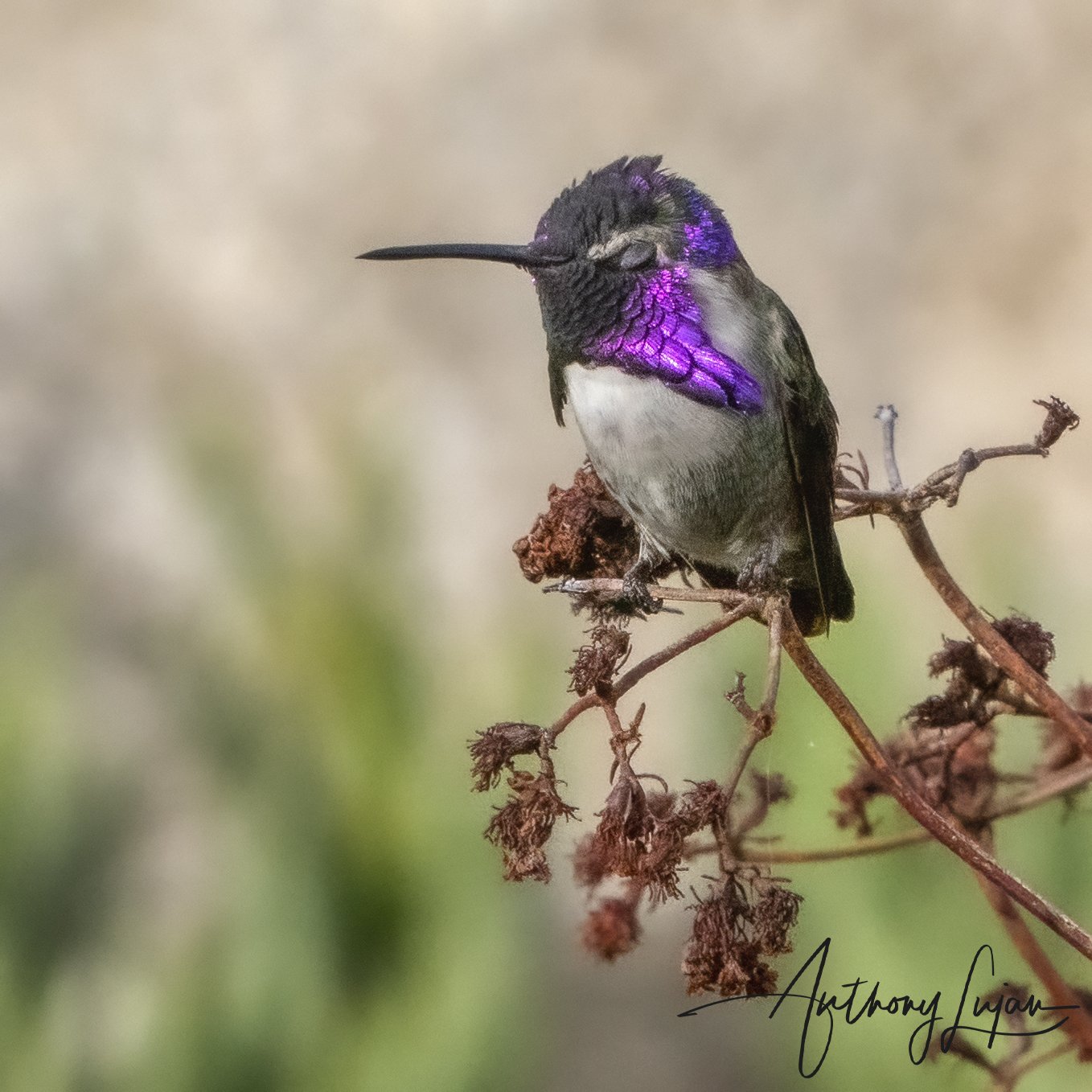
Related species in the Calypte genus (2 species total):
Please note: The content provided in this article reflects Anthony’s personal experience and photographic approach. Results can vary depending on light, weather, location, equipment, subject behavior, and field conditions.