
Scientific name: Selasphorus calliope
The Calliope Hummingbird is the smallest bird native to the United States and Canada and the smallest known long‑distance migrant in the world. It breeds in cool montane environments of western North America, from southern British Columbia and Alberta south through the northwestern United States, and winters primarily in the highlands of western Mexico and parts of Central America. Despite its tiny size, it completes a remarkable elliptical migration of thousands of kilometers each year between breeding and wintering grounds.
At a Glance
Family: Trochilidae (hummingbirds)
Clade: Mellisugini – “Bee” hummingbirds
Genus group: Selasphorus — small hummingbirds with bright gorgets and distinctive migratory and display behaviors (includes Rufous, Allen’s, Broad-tailed, and others)
Range: Breeds in western North America from southern British Columbia and Alberta south through the northwestern U.S. into parts of California, Nevada, Utah, Wyoming, Montana, and Idaho; winters mainly in the highlands of western Mexico and locally into Central America
Habitat: Breeds in open montane forest and edges, mountain meadows, and willow–alder thickets near streams, often in second growth following fire or logging; winters in pine–oak forests, scrub, chaparral, and semi‑arid woodlands in Mexico
Elevation: Typically from about 1,200–3,400 m (3,900–11,200 ft) on breeding grounds, sometimes as low as ~600 ft in parts of the Northwest; winters from lowland scrub up to highland pine–oak zones in Mexico
Length: About 7.5–9 cm (3.0–3.5 in)
Weight: About 2–3 g (0.07–0.11 oz)
Number of mature individuals: 4,500,000
Population trend: Increasing
Status: Least Concern (IUCN)
Name Origin
The genus name Selasphorus is derived from Greek roots interpreted as “light-bearing” or “glowing,” referring to the brilliant iridescent gorgets and crowns of many species in this genus. The species name calliope comes from Calliope, the muse of epic poetry in Greek mythology, whose name means “beautiful‑voiced.” Together, Selasphorus calliope evokes a “glowing hummingbird of Calliope,” linking its dazzling throat to a mythic muse.
Subspecies and Distribution
Calliope Hummingbird is monotypic — no recognized subspecies.
It breeds in western North America from southern British Columbia and Alberta south through Washington, Oregon, Idaho, Montana, Wyoming, Utah, Nevada, and parts of California, typically in mountainous regions. During migration it follows an elliptical route, moving north along the Pacific Coast in spring and returning south along interior mountain ranges, especially the Rockies, in late summer and fall. In winter it occurs mainly in western Mexico, especially in pine–oak forests and scrub from about Jalisco southward, with some individuals reaching Central America.
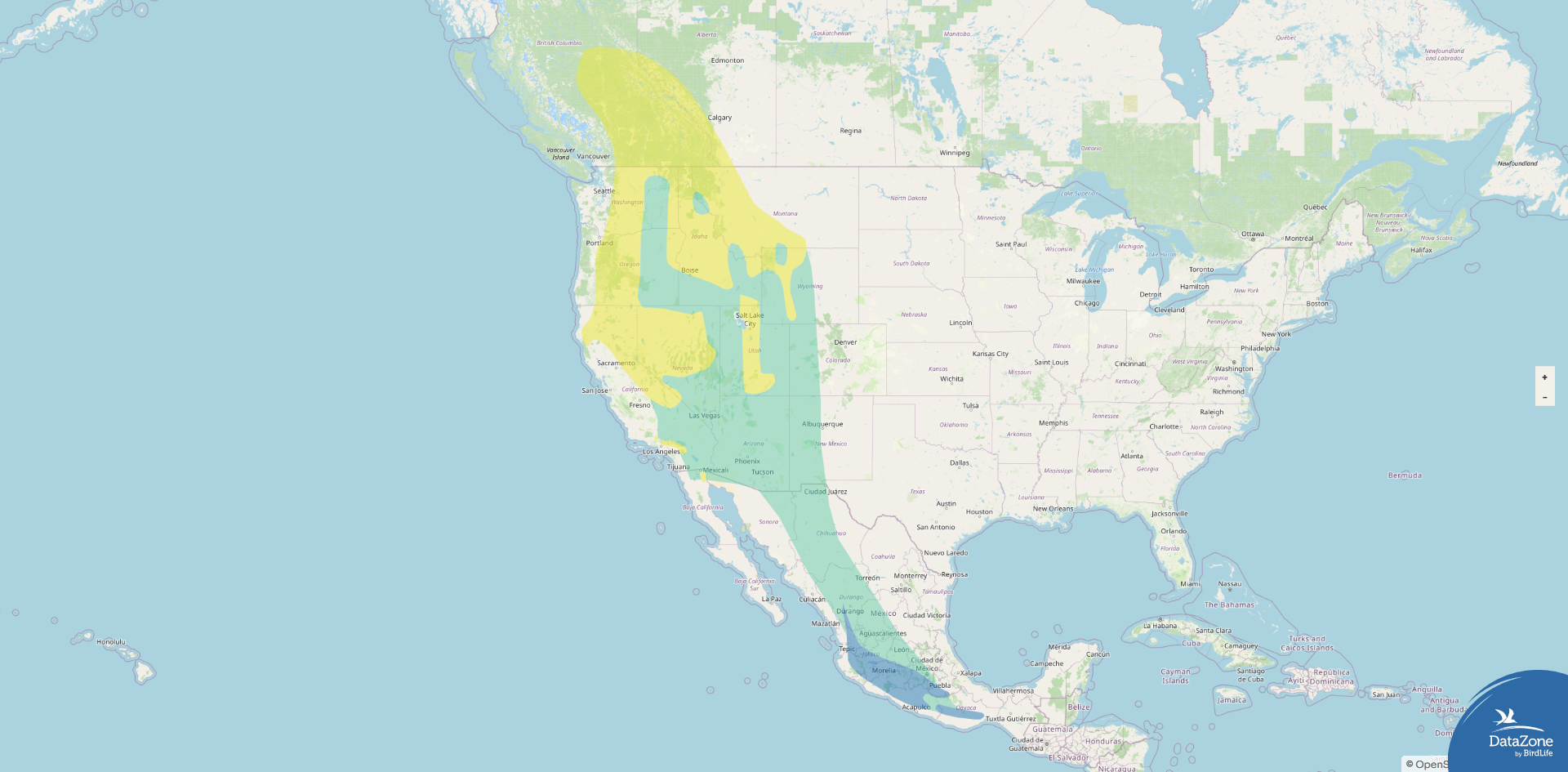
Legend
Green Resident
Yellow Breeding
Blue Non-breeding
Species Overview
The Calliope Hummingbird is the smallest bird in the United States and Canada yet undertakes one of the most impressive long‑distance migrations of any hummingbird, traveling thousands of kilometers between breeding and wintering grounds. On its breeding grounds it is a bird of cool mountain environments, using open conifer forests, aspen stands, meadows, and riparian thickets. With an estimated 4,500,000 mature individuals and an Increasing population trend, it is currently assessed as Least Concern, though it depends heavily on healthy montane and highland habitats throughout its annual cycle.
Identification
Male
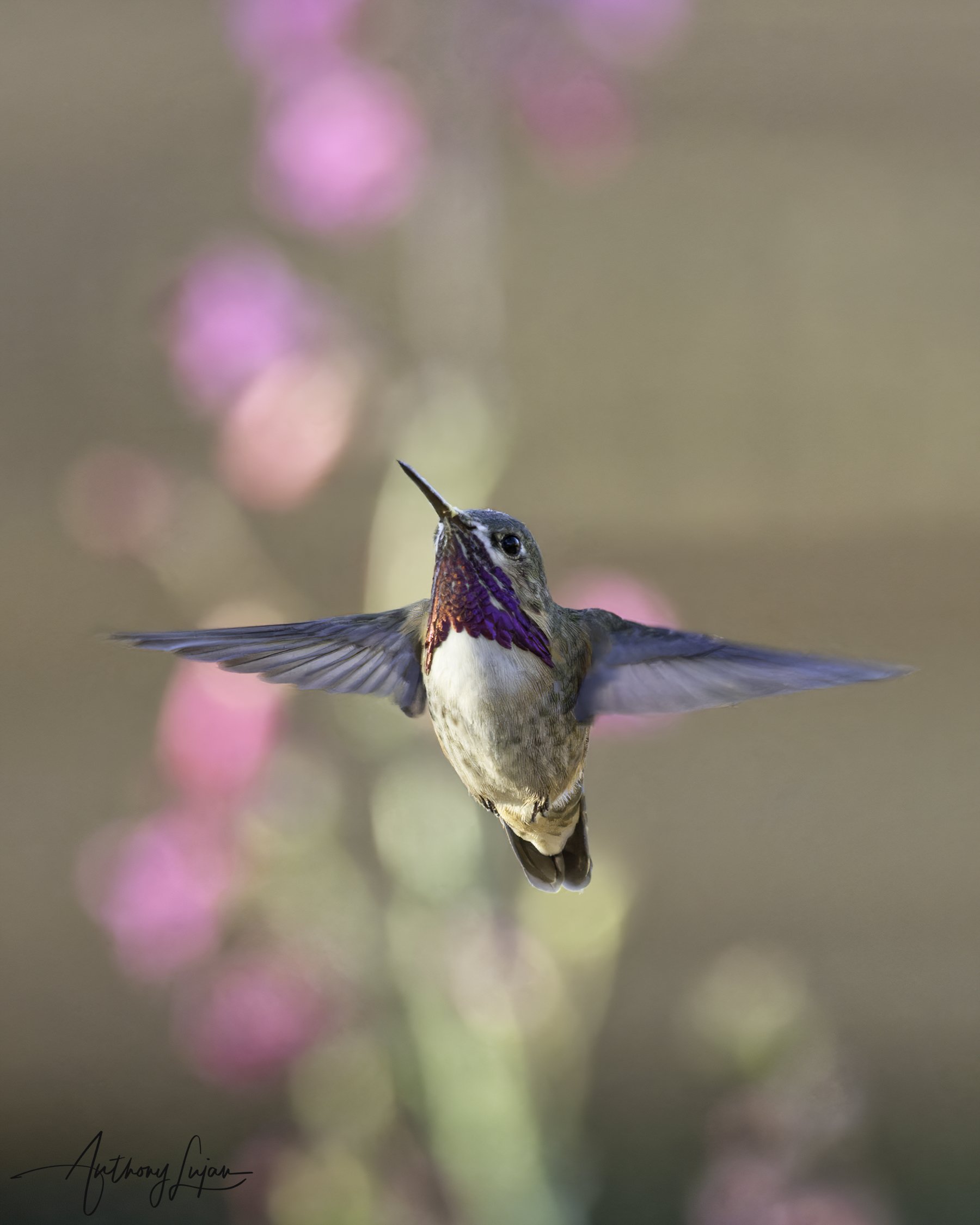
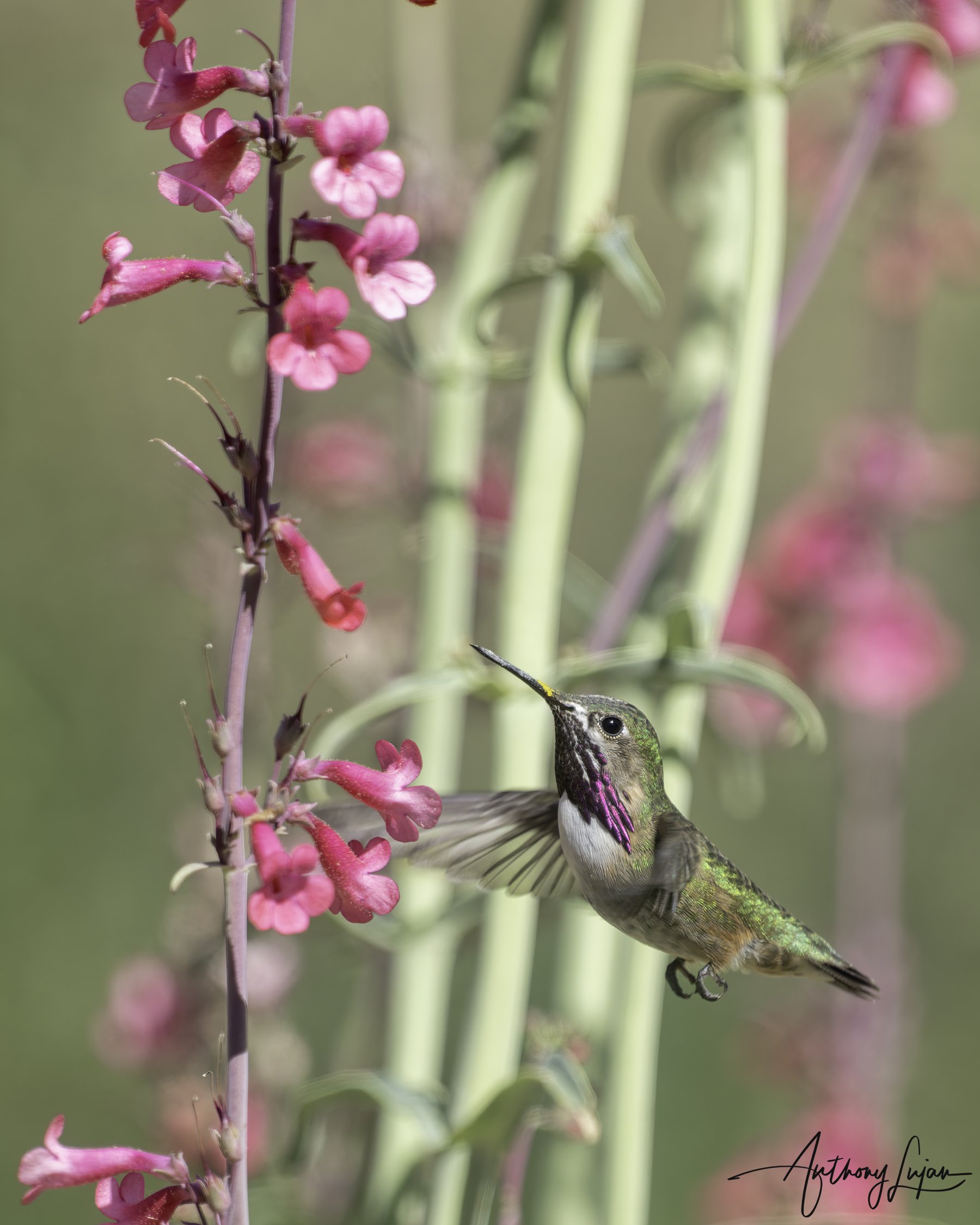
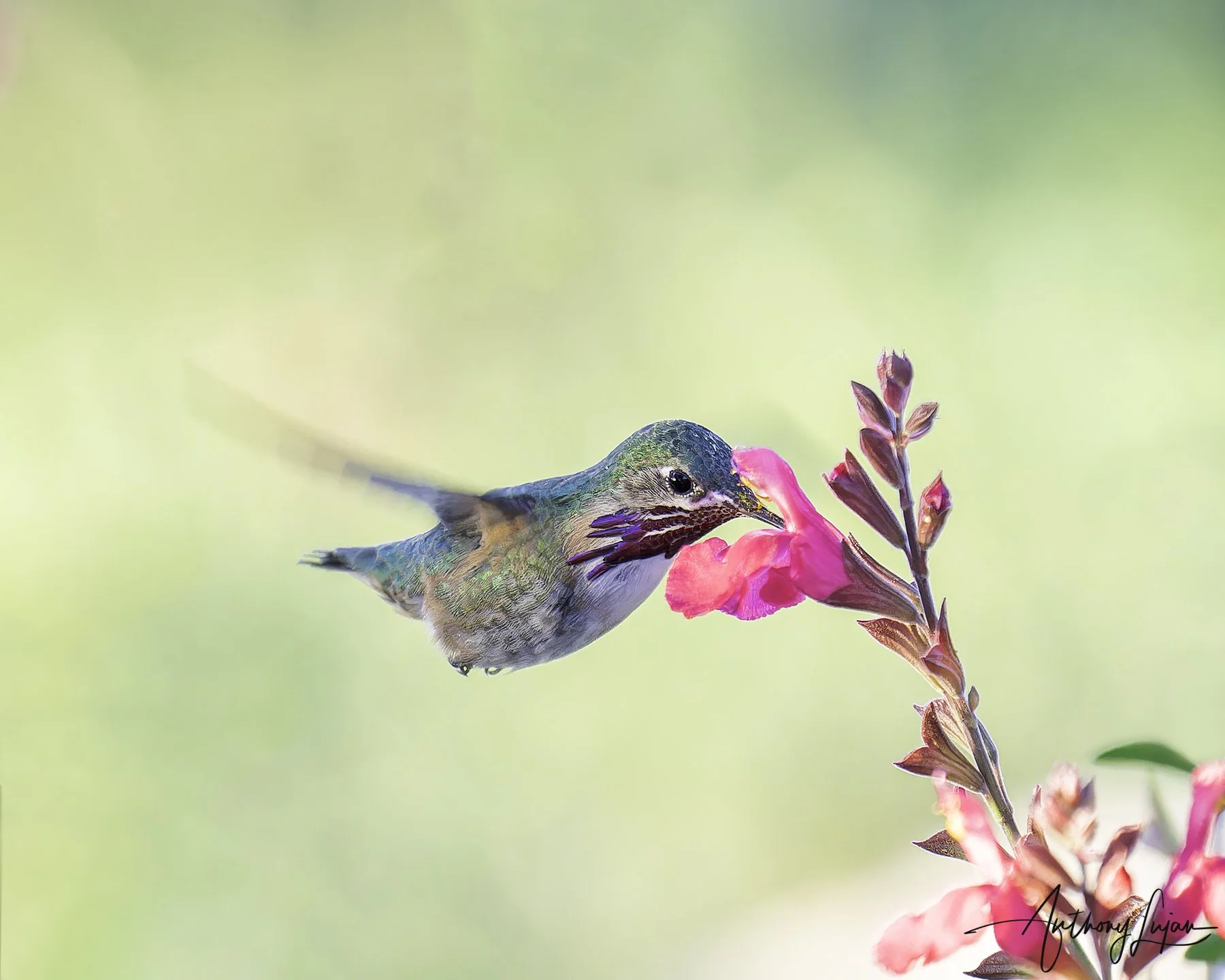
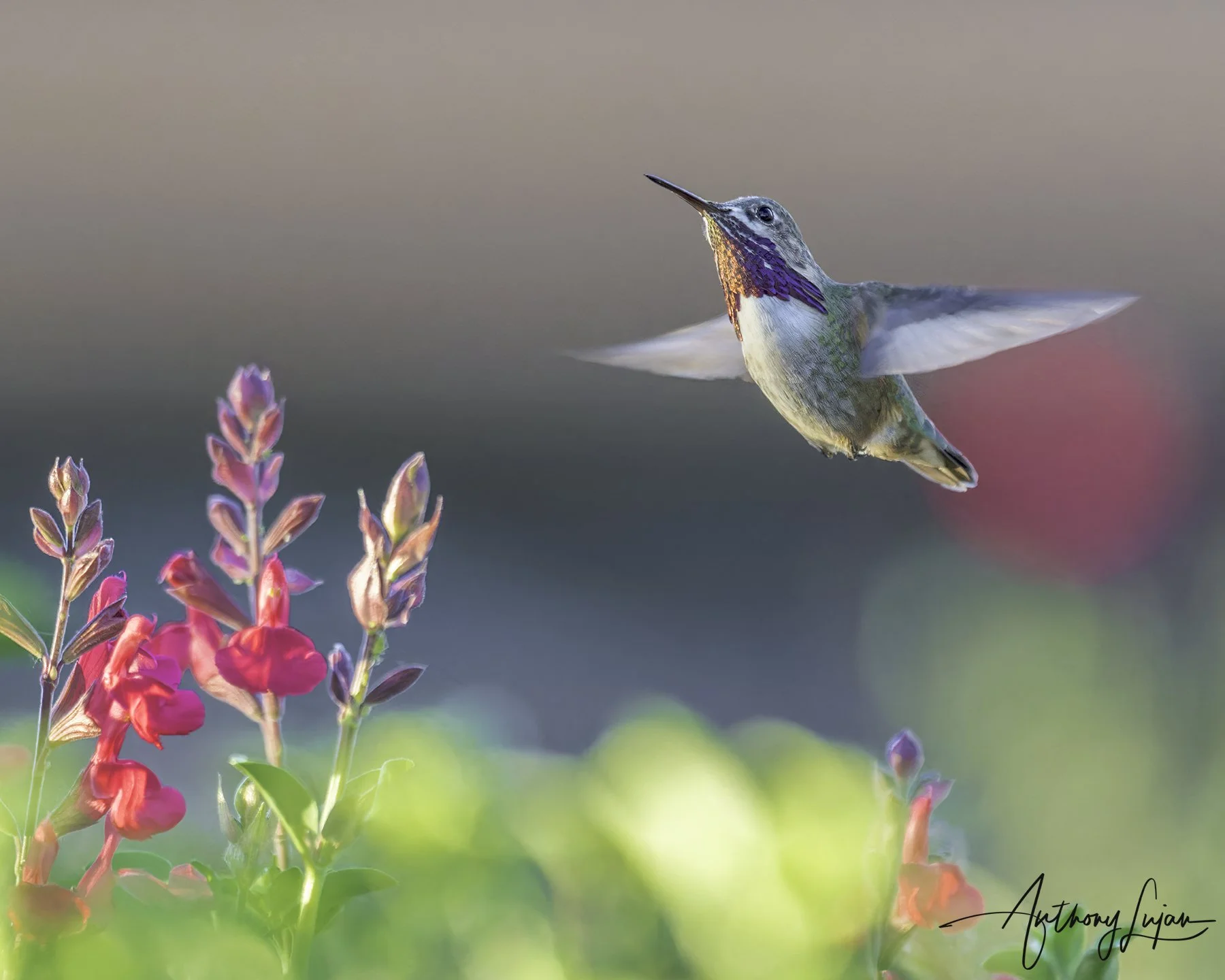
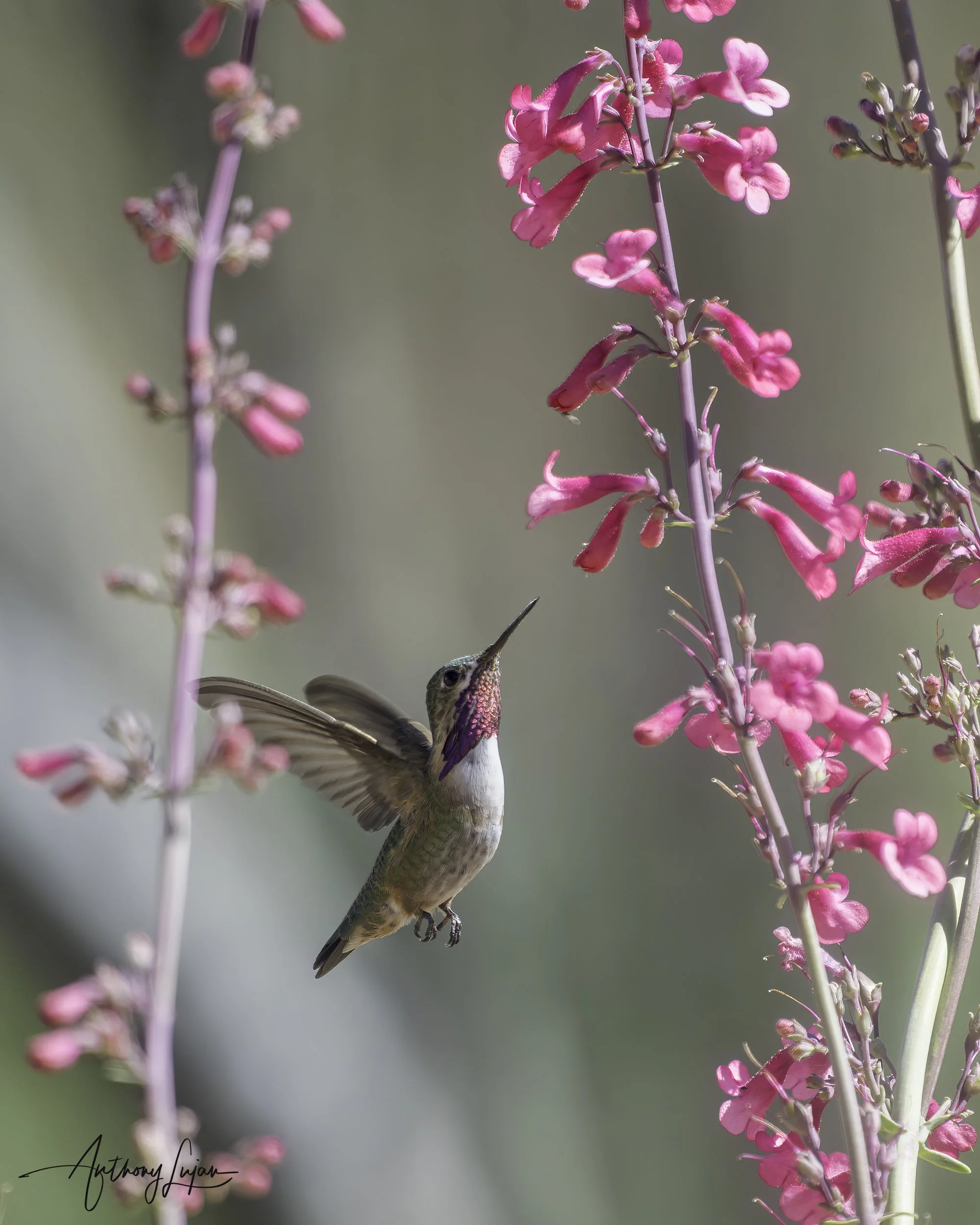
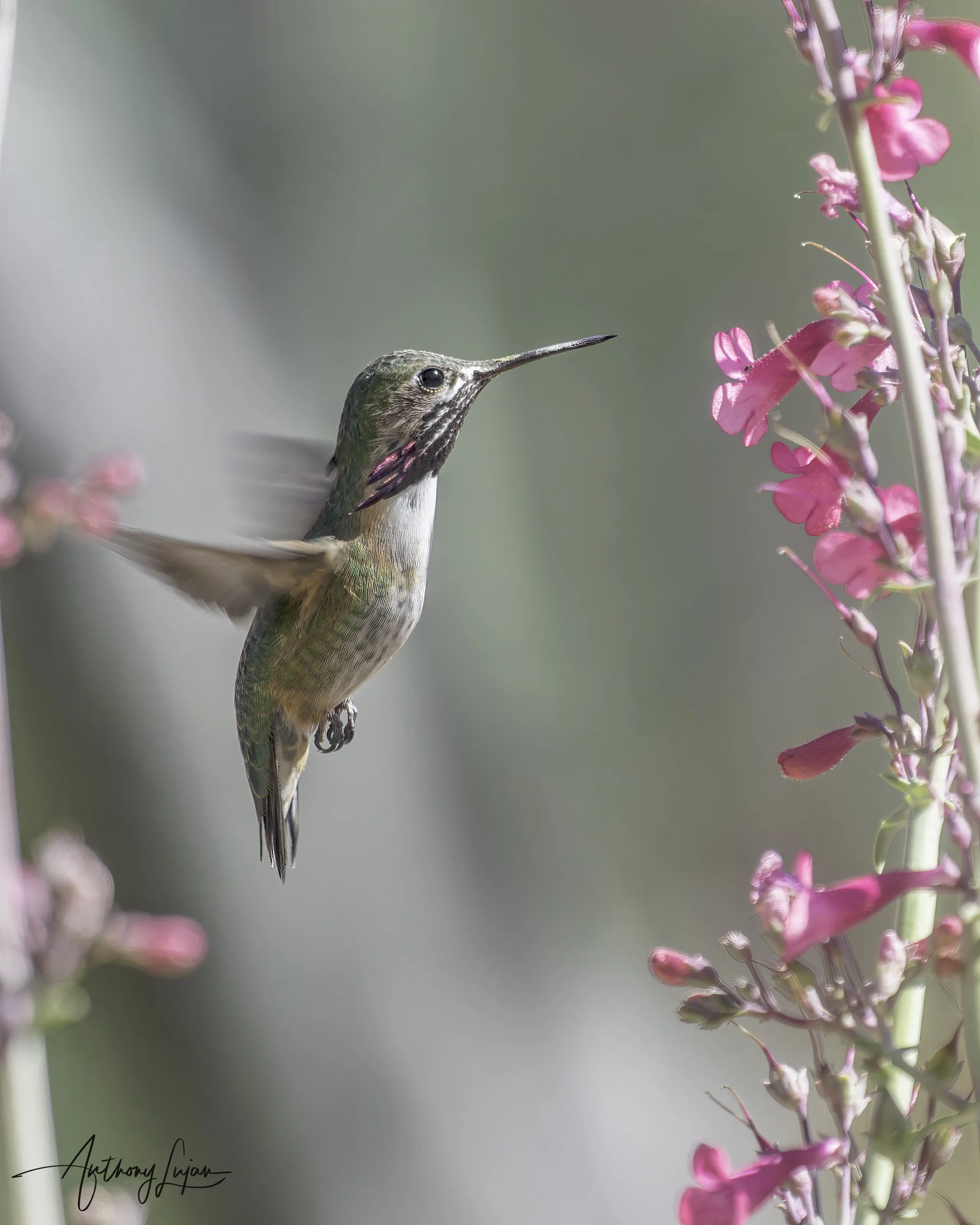
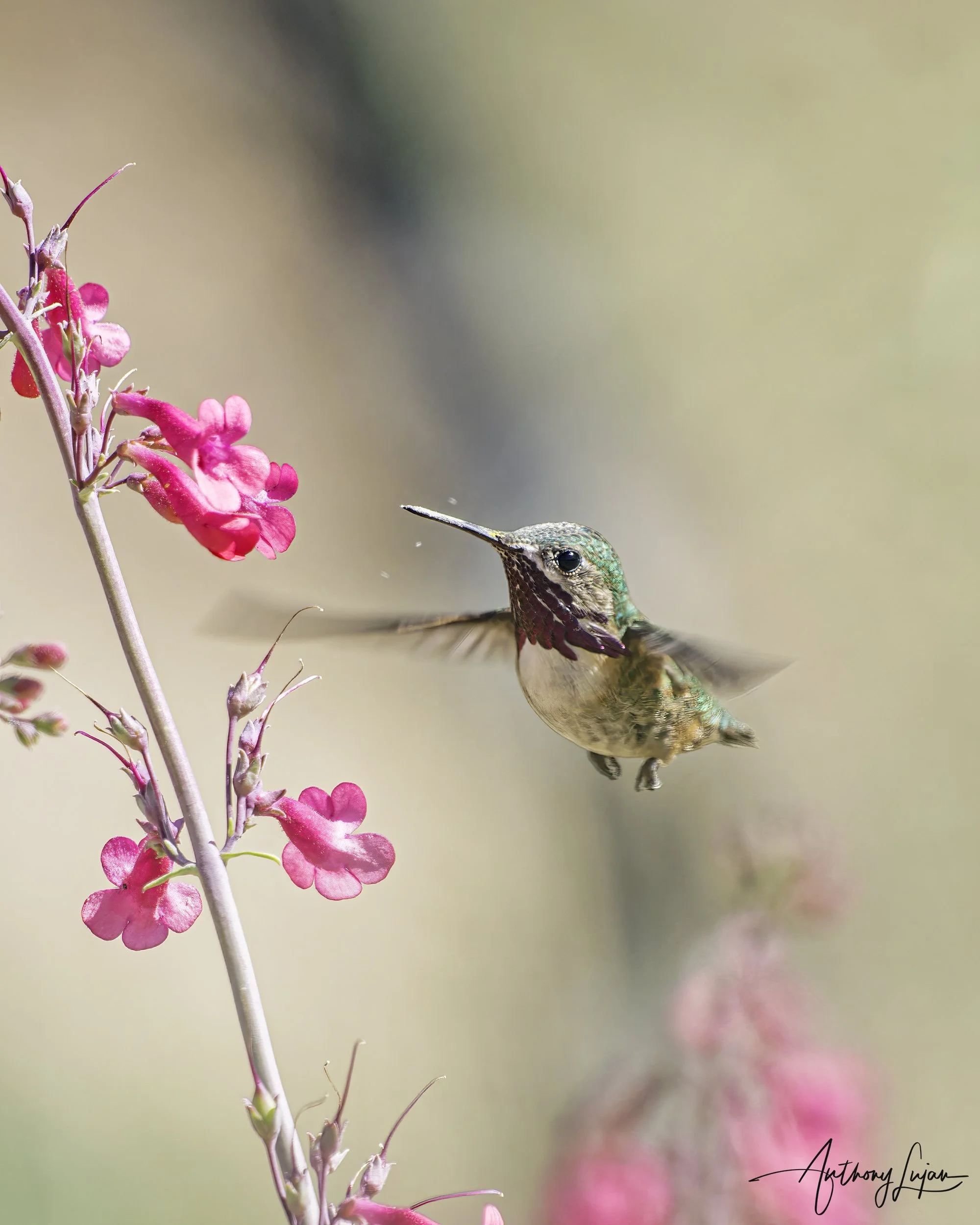
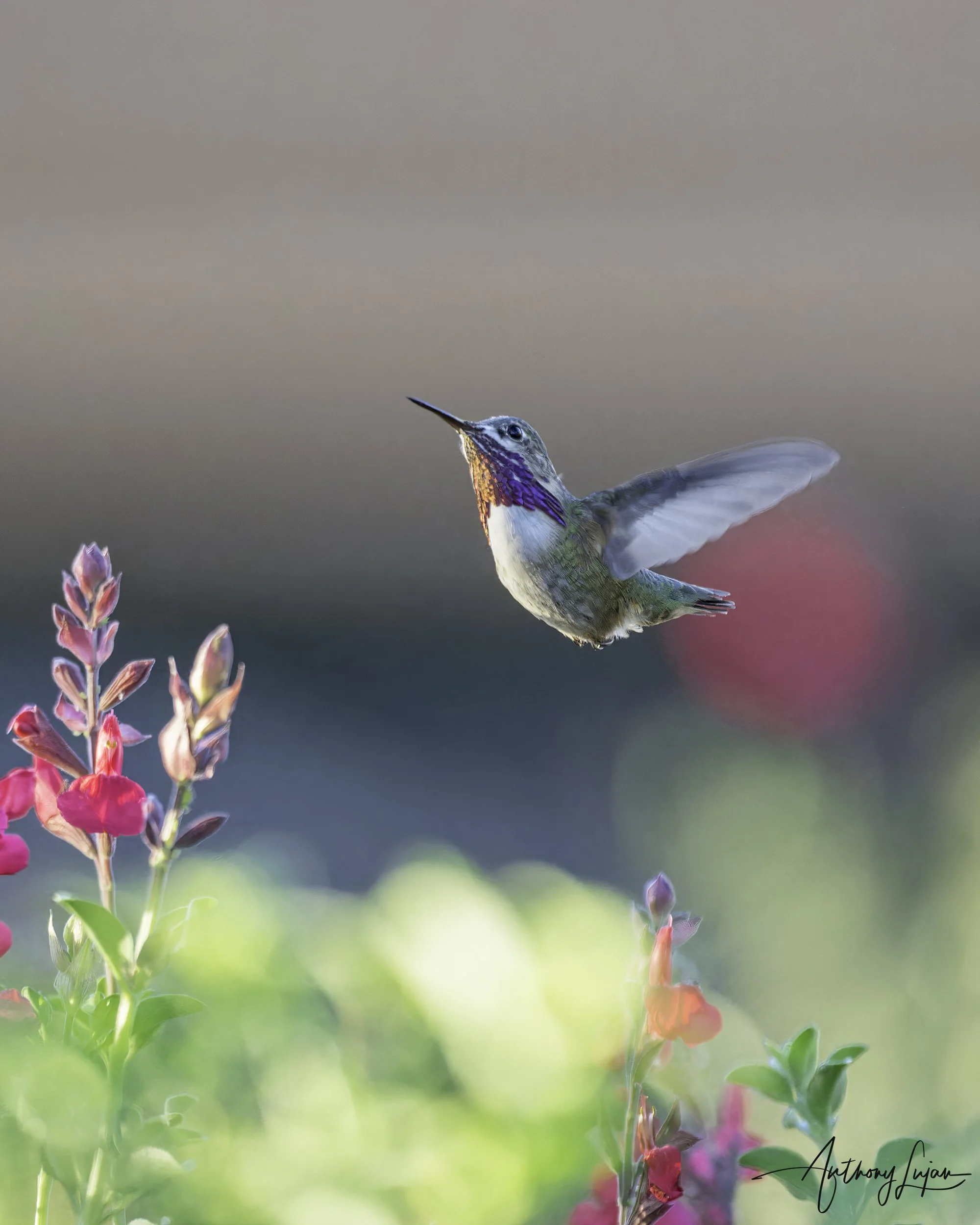
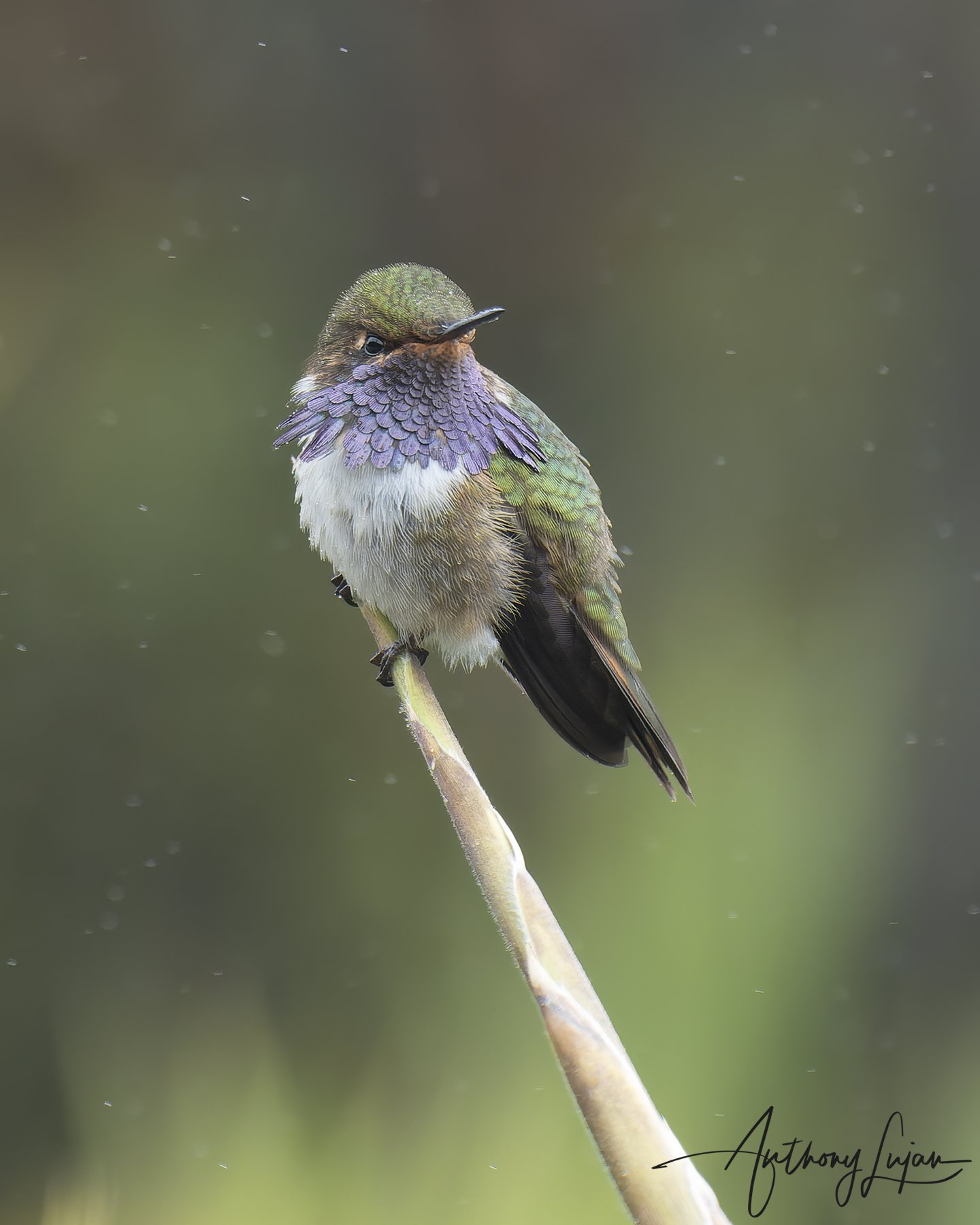
Adult males are very small with green upperparts, buffy sides, and a short, straight black bill. The most distinctive feature is the gorget, composed of elongated magenta or wine‑colored throat feathers that form streaks radiating down over a white background, giving a “streaked” or flared appearance rather than a solid throat patch. The underparts are otherwise whitish, and the tail is relatively short and dark with greenish tones, lacking the extensive rufous of some Selasphorus relatives. In display, males perform U‑shaped dives, producing a “zing” sound with their wings and showing off the magenta throat.
Female
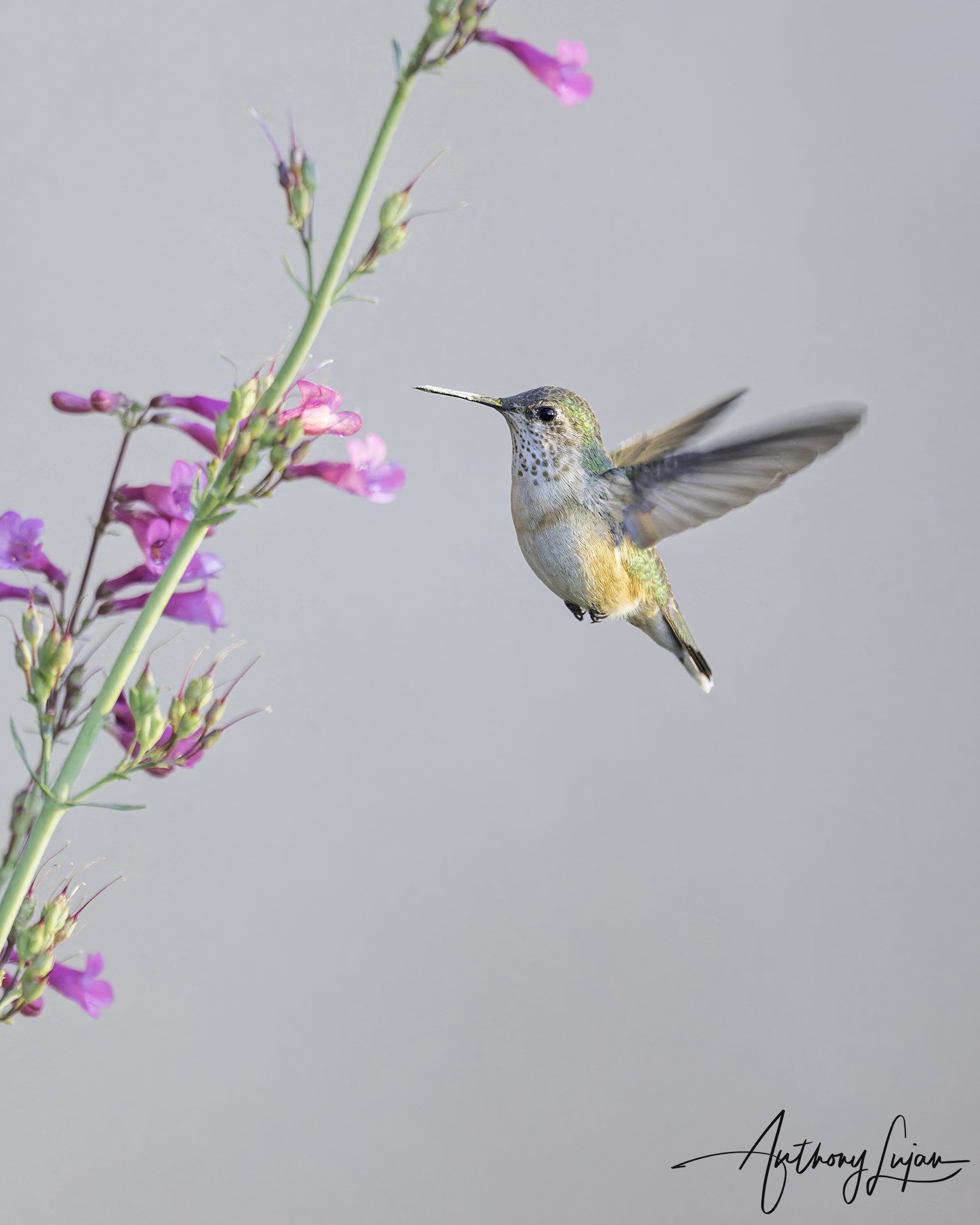
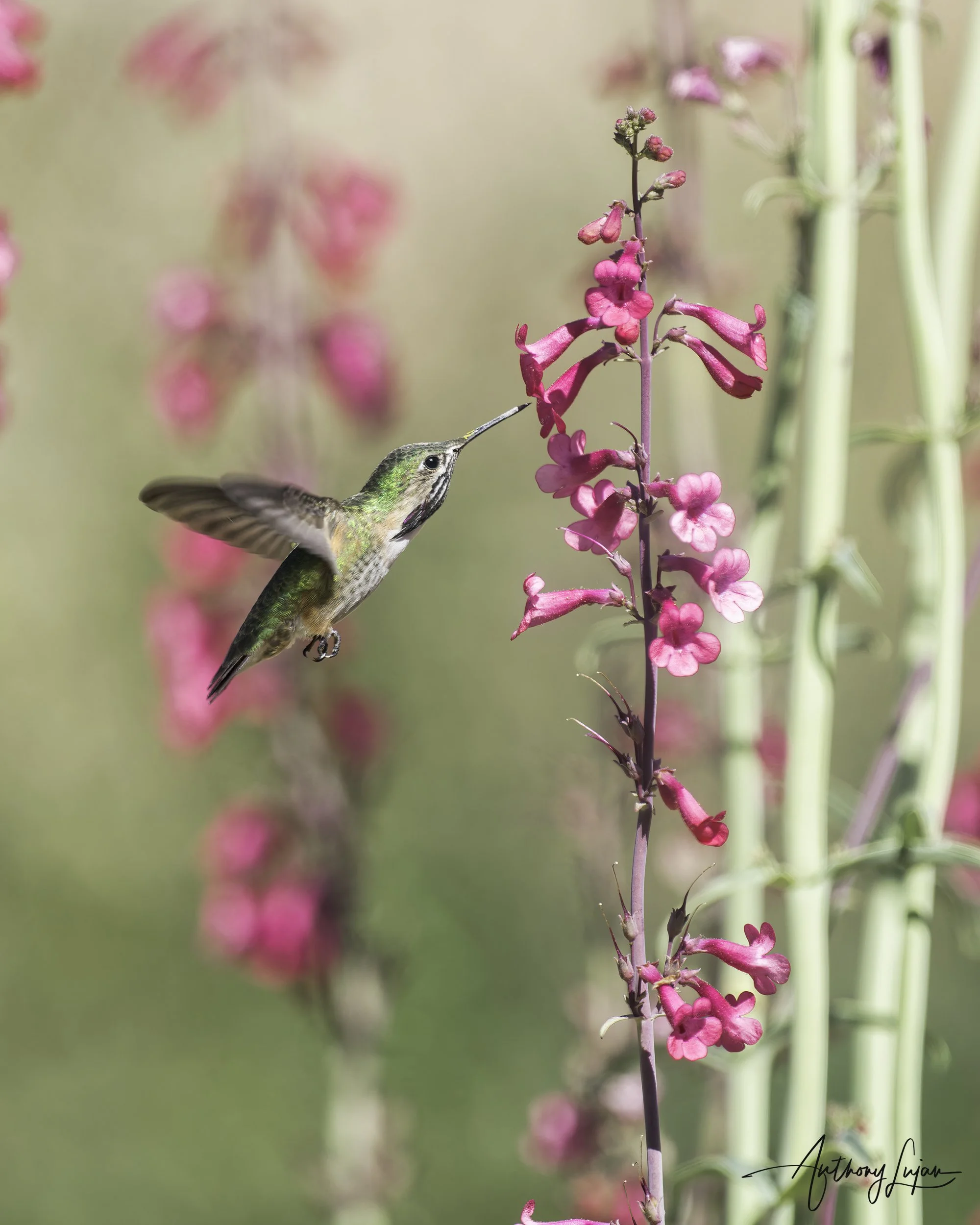
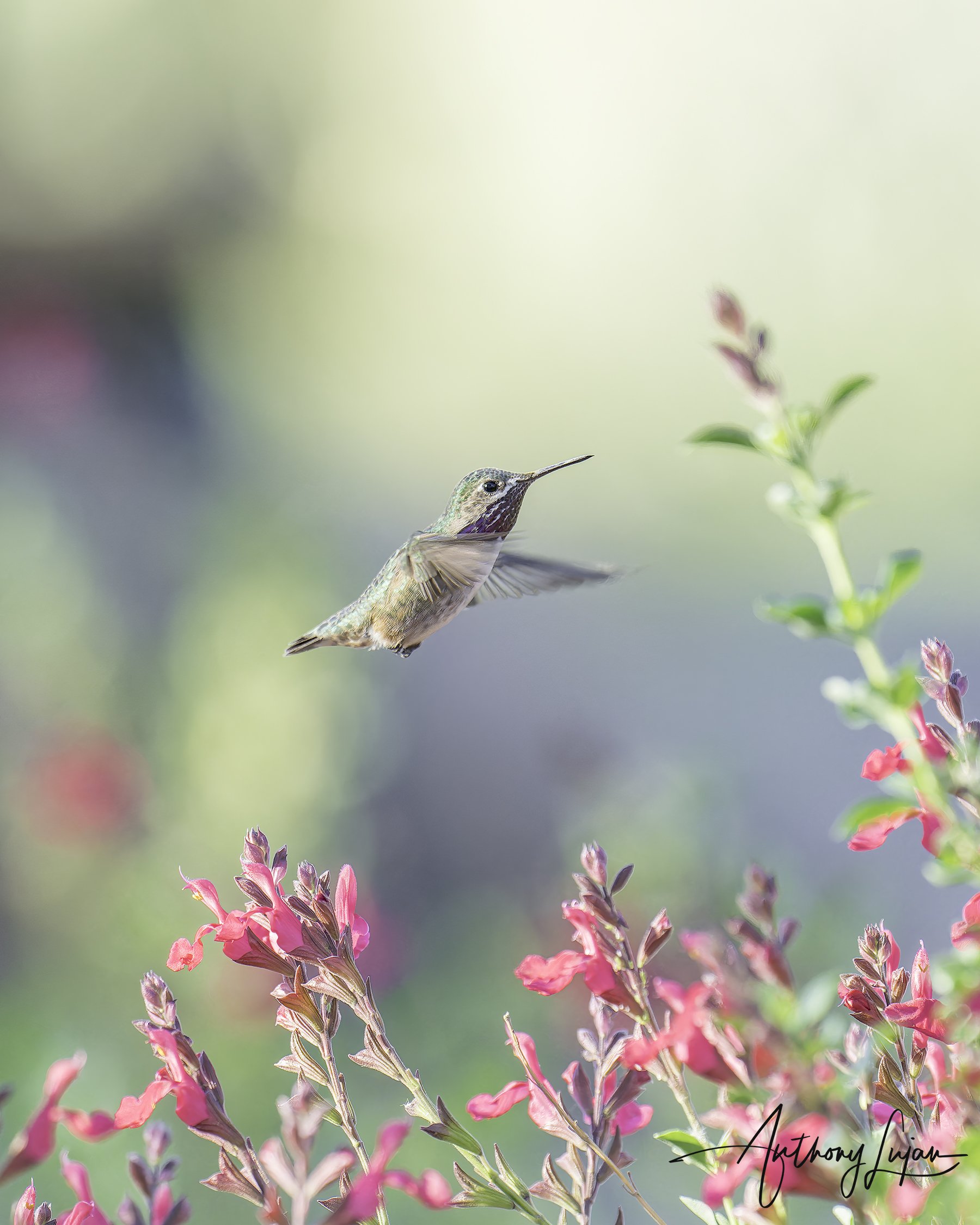
Females are similarly tiny, with green upperparts and pale underparts washed buffy on the flanks. The throat is mostly whitish with small dusky spots or faint streaking rather than a full magenta gorget. The tail is somewhat longer than in males relative to body size and shows white tips on the outer feathers, a key field mark. Juveniles resemble females until young males begin to acquire the elongated, colored throat feathers.
Habitat and Behavior
On the breeding grounds, Calliope Hummingbirds occupy open montane forest, mountain meadows, forest edges, and willow–alder thickets near streams, often in seral forests regenerating after fire or logging. They breed mostly between about 1,200 and 3,400 m, though nests have been found lower in parts of the Pacific Northwest and higher near treeline in the Rockies and Sierra Nevada. During migration and winter they use a wide range of habitats from chaparral and lowland brush to deserts, semi‑desert, and pine–oak woods in Mexico, as well as roadsides, farms, and ranches where flowering plants are present.
Calliope Hummingbirds feed primarily on nectar from a variety of flowers, including penstemons, paintbrushes, currants, and other montane and highland plants, and they readily visit feeders. They also take small insects and spiders for protein, especially during the breeding season. Their migration is elliptical: in spring they move north along the Pacific Coast, while in fall they return south through interior mountain ranges, particularly the Rockies, making them the smallest long‑distance migrant known among birds.
Population and Threats
Calliope Hummingbird is currently assessed as Least Concern, with an estimated 4,500,000 mature individuals and an Increasing population trend. It remains widespread and relatively common across much of its breeding range in western North America and wintering areas in western Mexico. Nonetheless, it relies heavily on intact montane forests, meadows, and riparian corridors, and could be affected by habitat degradation, altered fire regimes, climate change, and loss of flowering plants and insect prey at key stopover and wintering sites.

Conservation
Conserving Calliope Hummingbird means maintaining healthy montane and highland habitats along its entire migratory pathway—from breeding sites in western North American mountains to wintering areas in Mexican pine–oak forests and scrub. Protecting mountain meadows, willow and alder thickets, and regenerating forests, while preserving native flowering plants and limiting pesticide use, will help sustain nectar and insect resources. Continued monitoring of population trends and habitat changes, especially under a warming climate, will be important to ensure this tiny, long‑distance migrant remains abundant.
Related species in the Selasphorus genus (9 species total):



Please note: The content provided in this article reflects Anthony’s personal experience and photographic approach. Results can vary depending on light, weather, location, equipment, subject behavior, and field conditions.