
Charming Hummingbird
Scientific name: Polyerata decora
The Charming Hummingbird is a small, regionally endemic hummingbird found in Costa Rica and western Panama. An estimated 50,000–499,999 mature individuals exist, the population is decreasing, it is considered non-migratory, and it is currently listed as Least Concern and monotypic.
At a Glance
Family: Trochilidae (hummingbirds)
Clade: Trochilini – Emeralds
Genus group: Polyerata — 3 species, 3 subspecies
Range: Endemic to Costa Rica and western Panama, mainly on the Pacific slope and adjacent highlands.
Habitat: Subtropical and tropical moist lowland and foothill forest, forest edges, clearings, gardens, and heavily degraded former forest with scattered flowering shrubs and trees.
Elevation: Mostly from near sea level in lowland forest up into foothills and lower montane zones, commonly between roughly 300–1,500 m and locally higher in humid highlands.
Length: About 9–10 cm (3.5–3.9 in).
Weight: Approximately 4–5 g.
Number of mature individuals: 50,000–499,999
Population trend: Decreasing
Status: Least Concern (IUCN)
Name Origin
The genus name Polyerata derives from Greek roots meaning “much adorned” or “richly decorated,” referring to the bright, ornamented plumage of these emerald hummingbirds. The species name decora means “handsome,” “fine,” or “ornamental,” echoing the common name and emphasizing its attractive, beryl-toned crown and overall coloration. The English name “Charming Hummingbird” reflects both its appealing appearance and its dainty size and behavior, while the alternate name “Beryl-crowned Hummingbird” highlights the jewel-like crown of the male.
Subspecies & Distribution
Occurs from southwestern Costa Rica south and east into western Panama, including the Cordillera de Talamanca and adjacent foothills and lowlands, where it inhabits humid forest, forest edge, and semi-open landscapes.
Across its range, Polyerata decora is a regional endemic restricted to Costa Rica and western Panama, with populations concentrated in humid Pacific-slope forest and nearby highland zones.
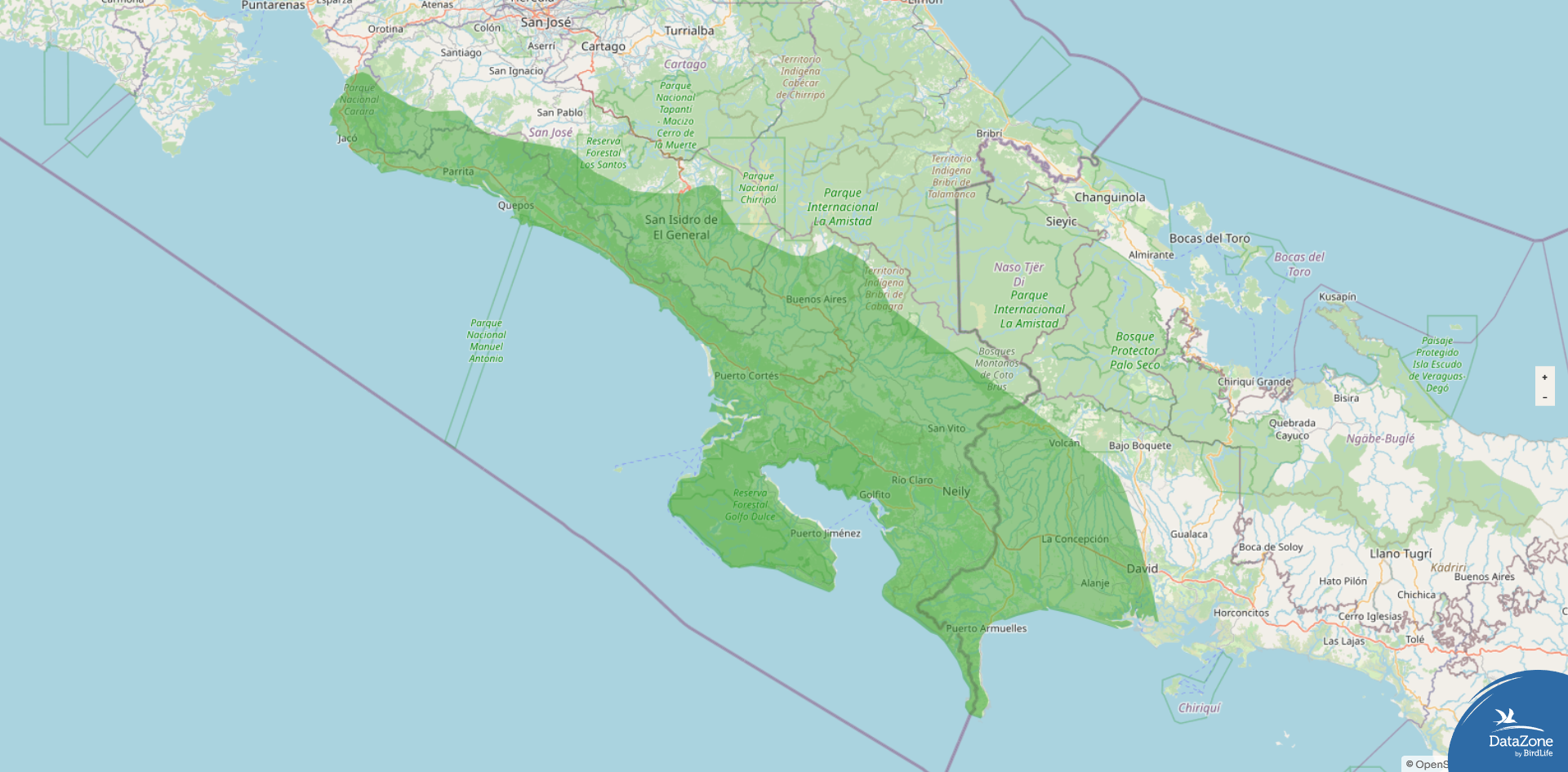
Legend
Green Resident
Species Overview
The Charming Hummingbird is a classic Central American endemic, closely associated with the moist forests and forest edges of Costa Rica and western Panama. It is often encountered around clearings, forest borders, and gardens where flowering shrubs, Heliconias, and ornamental plants are abundant. Although still locally common in suitable habitat, its relatively small overall population and limited range make ongoing habitat loss a concern.
Male Description
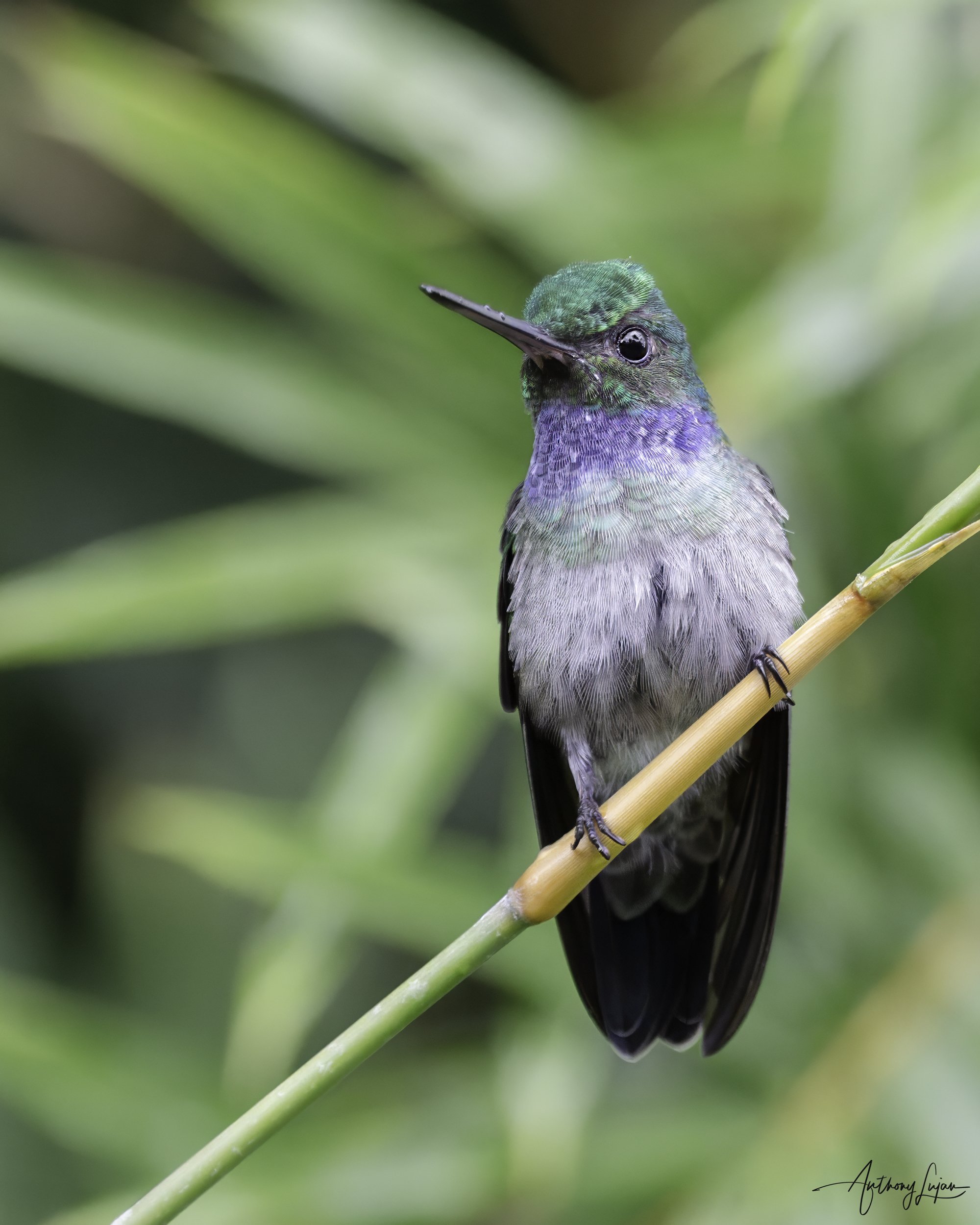
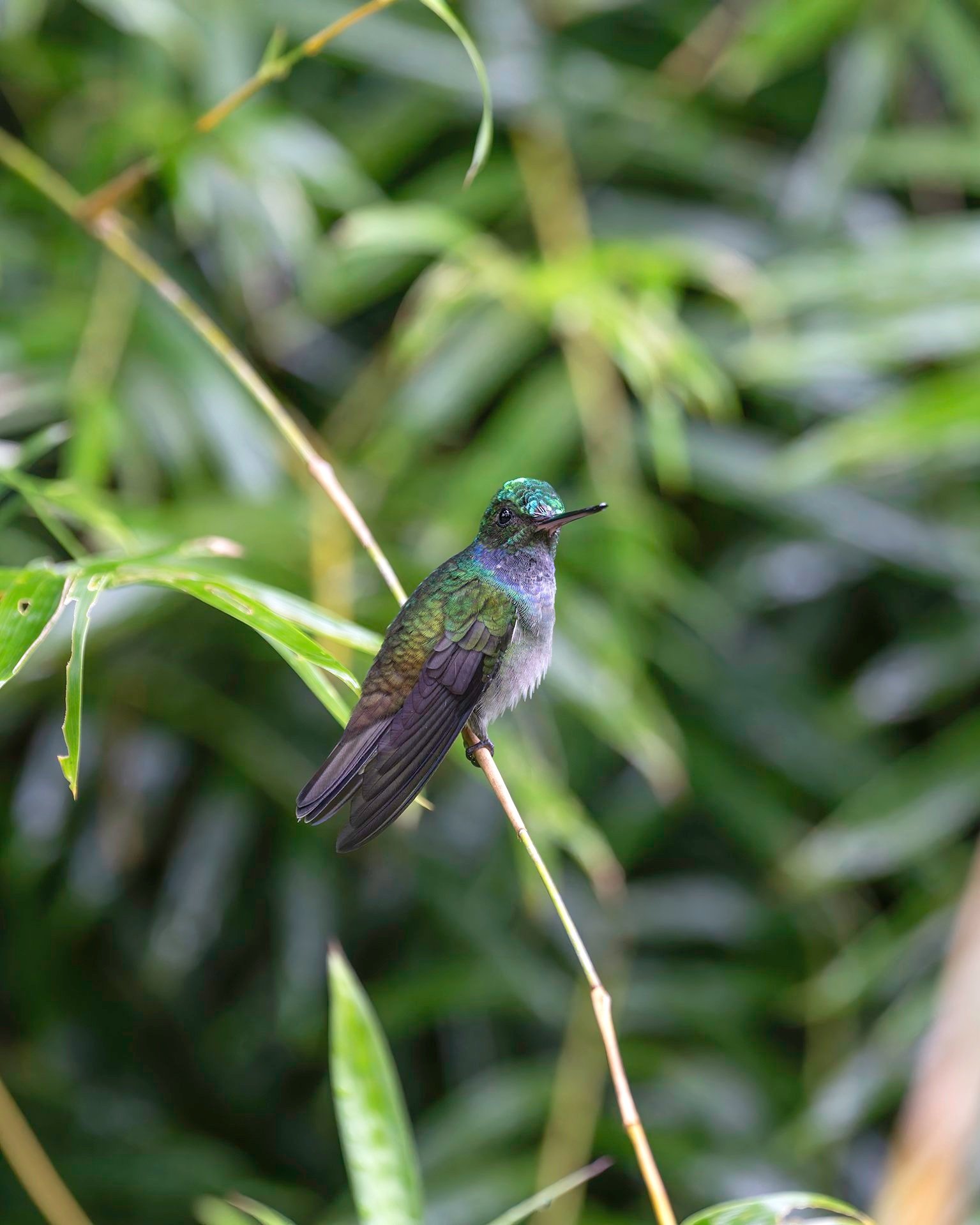
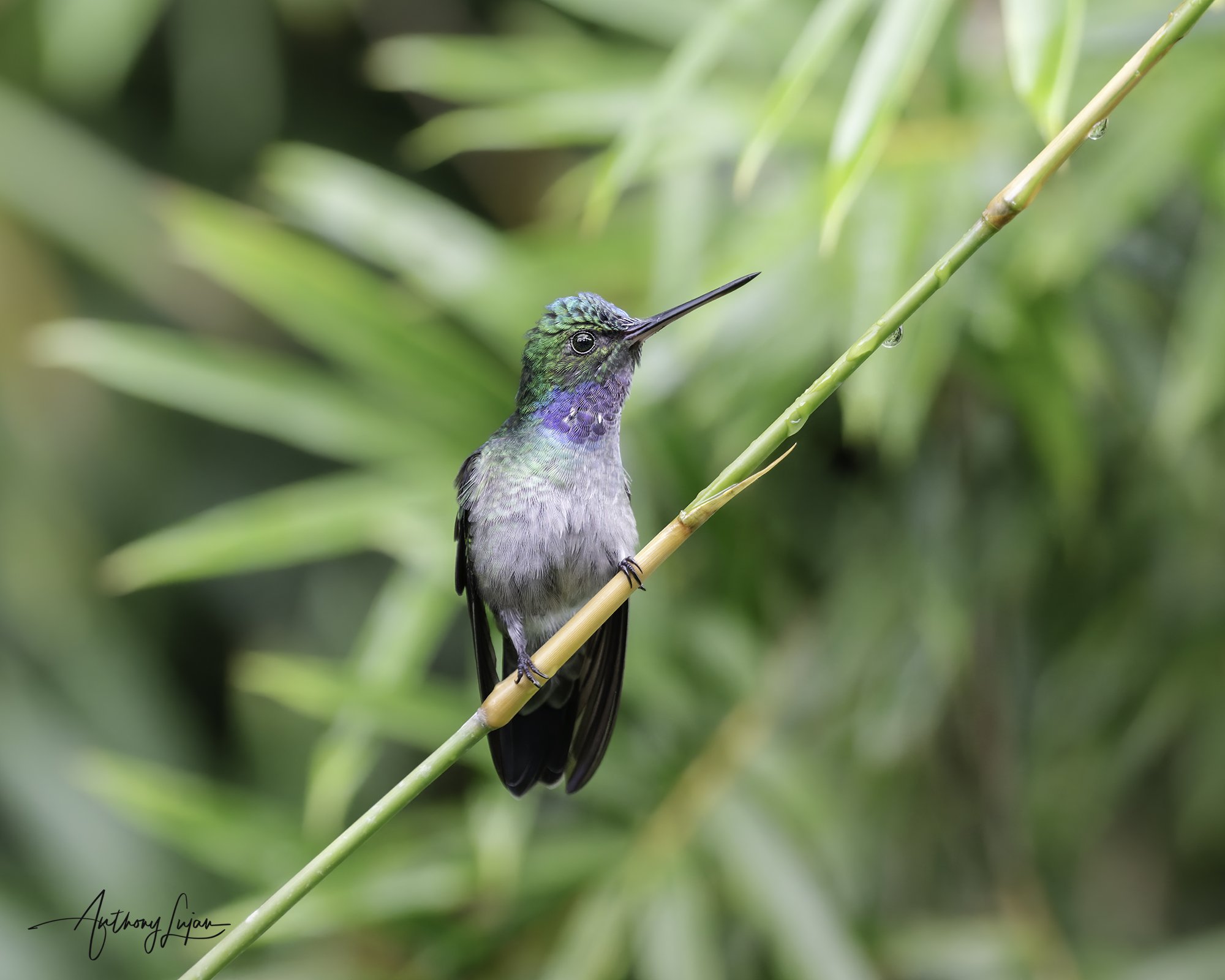
Adult males are small emerald hummingbirds with a bright green back and crown, often showing a vivid beryl or emerald sheen on the crown that gives the species its alternate English name. The throat and chest are glittering bluish-green or teal, blending into a paler whitish or grayish belly and undertail area, and the tail is dark, slightly forked, and lacks large white patches. The bill is straight and black, and in good light males show a compact, clean look with a shining crown and throat set off against the paler underparts. Overall, males appear as neatly proportioned, bright green hummingbirds with a distinctive beryl crown and glowing green chest.
Female Description
Females are similar in size but duller and less uniformly iridescent than males, with green upperparts and a whitish or grayish underpart that may show faint green spotting or wash on the throat and chest. The crown is less intensely beryl-toned, and the throat typically lacks the solid glittering patch of the male, instead appearing more lightly scaled or washed with green. The tail is dark with little or no white, sometimes with slightly paler tips, and the bill is straight and dark. In the field, females look like small, modestly marked green hummingbirds with pale underparts and without the strongly defined beryl crown and bright chest that make males stand out.
Habitat & Behavior
Charming Hummingbirds inhabit subtropical and tropical moist lowland and foothill forest, forest edges, gardens, and degraded former forest with scattered flowering shrubs and trees. They often forage in semi-open areas at forest margins, along trails, and around ornamental plantings, visiting a wide variety of tubular flowers and Heliconias for nectar. Like many small hummingbirds, they use a combination of trap-lining between scattered nectar sources and defending small feeding territories, especially in flower-rich patches. They also take tiny insects and spiders for protein, capturing them in short sallies from perches or gleaning from foliage. The species is generally considered resident, with no large-scale migratory movements, though local shifts in elevation and habitat use likely track the seasonal availability of flowers.
Population
With an estimated 50,000–499,999 mature individuals, the Charming Hummingbird has a relatively small global population confined to a restricted geographic range. Within suitable habitats it can be fairly common, especially in forest edge and garden settings with abundant flowering plants. However, the combination of limited range and ongoing habitat alteration contributes to an overall decreasing trend.

Conservation
The Charming Hummingbird is assessed as Least Concern because it remains locally common and occupies a variety of forest and semi-open habitats across parts of Costa Rica and western Panama. Nonetheless, continued deforestation, fragmentation of humid lowland and foothill forest, and conversion of land to agriculture and development reduce habitat quality and connectivity. Protection of remaining forest tracts, maintenance of forest edges and riparian corridors, and promotion of wildlife-friendly gardens and agroforestry systems with flowering shrubs and shade trees are all important for sustaining this regional endemic. Ongoing monitoring is needed to ensure that declines do not accelerate, given its relatively modest global population and limited distribution.
For more details on the trips behind this species, visit the Costa Rica Hummingbird Expedition | July 2025 page and explore My Travel 2025-05 Costa Rica for guides and trip reports.
Checkout Anthony’s playlist of this species! Click the top right dropdown to see all the videos.
Related species in the Polyerata genus (3 species total):


Please note: The content provided in this article reflects Anthony’s personal experience and photographic approach. Results can vary depending on light, weather, location, equipment, subject behavior, and field conditions.