
Scientific name: Saucerottia castaneiventris
The Chestnut-bellied Hummingbird is a localized Andean “emerald” hummingbird endemic to Colombia, confined to dry and semi‑dry valleys on the west slope of the Eastern Andes. It is one of the more range‑restricted hummingbirds in the country and has undergone multiple status changes as new populations have been found and monitored.
At a Glance
Family: Trochilidae (hummingbirds)
Clade: Trochilini – Emeralds
Genus group: Saucerottia — emerald hummingbirds of Mexico, Central America, and northern South America.
Range: Endemic to Colombia, restricted to drier parts of the Magdalena Valley and adjacent Andean slopes, especially the Chicamocha, Suárez, and Chucurí River valleys on the west slope of the Eastern Andes.
Habitat: Arid and semi‑arid brushy canyons, dry shrublands, and lower edges of humid montane forest; often in steep, scrubby slopes and river valleys.
Elevation: Mostly 500–1,500 m (1,600–4,900 ft), with records from about 340–2,200 m and one as low as 120 m.
Length: about 9 cm (3.5 in).
Weight: not well quantified; a small to medium hummingbird similar in size to other Saucerottia emeralds.
Number of mature individuals: estimated 10,000–20,000.
Population trend: Decreasing.
Status: Near Threatened (IUCN).
Name Origin
The genus name Saucerottia honors Antoine Claudius Saucerotte, an 18th‑century French physician and naturalist who worked on hummingbirds. The species name castaneiventris comes from Latin castaneus (“chestnut‑colored”) and venter (“belly”), meaning “chestnut‑bellied,” referring to the bird’s brownish‑chestnut underparts. The English name “Chestnut-bellied Hummingbird” directly describes this distinctive plumage feature.
Subspecies and Distribution
Chestnut-bellied Hummingbird is monotypic, with no recognized subspecies.
Its distribution appears to be restricted to the drier parts of the Magdalena Valley of Colombia, with a core known range in the Chicamocha, Suárez, and Chucurí River valleys on the west slope of the Eastern Andes. As of recent assessments, it is known from a limited set of localities in north‑central Colombia and uses a mosaic of dry scrub, arid canyons, and lower montane forest edges within this small range. Seasonal movements are not well understood; the species is not regularly documented at all known sites, possibly due to local shifts in response to flowering and microclimate.
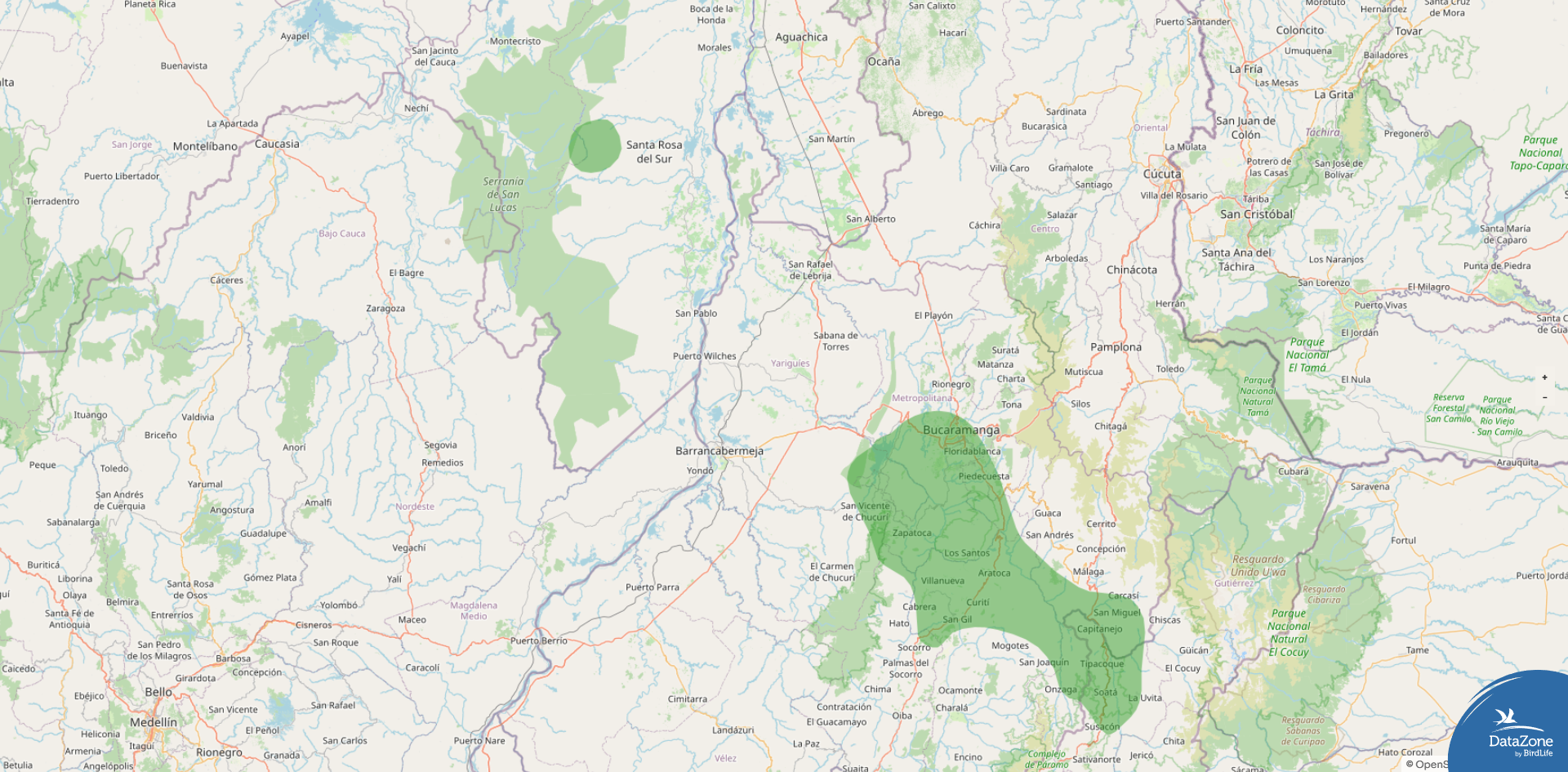
Legend
Green Resident
Species Overview
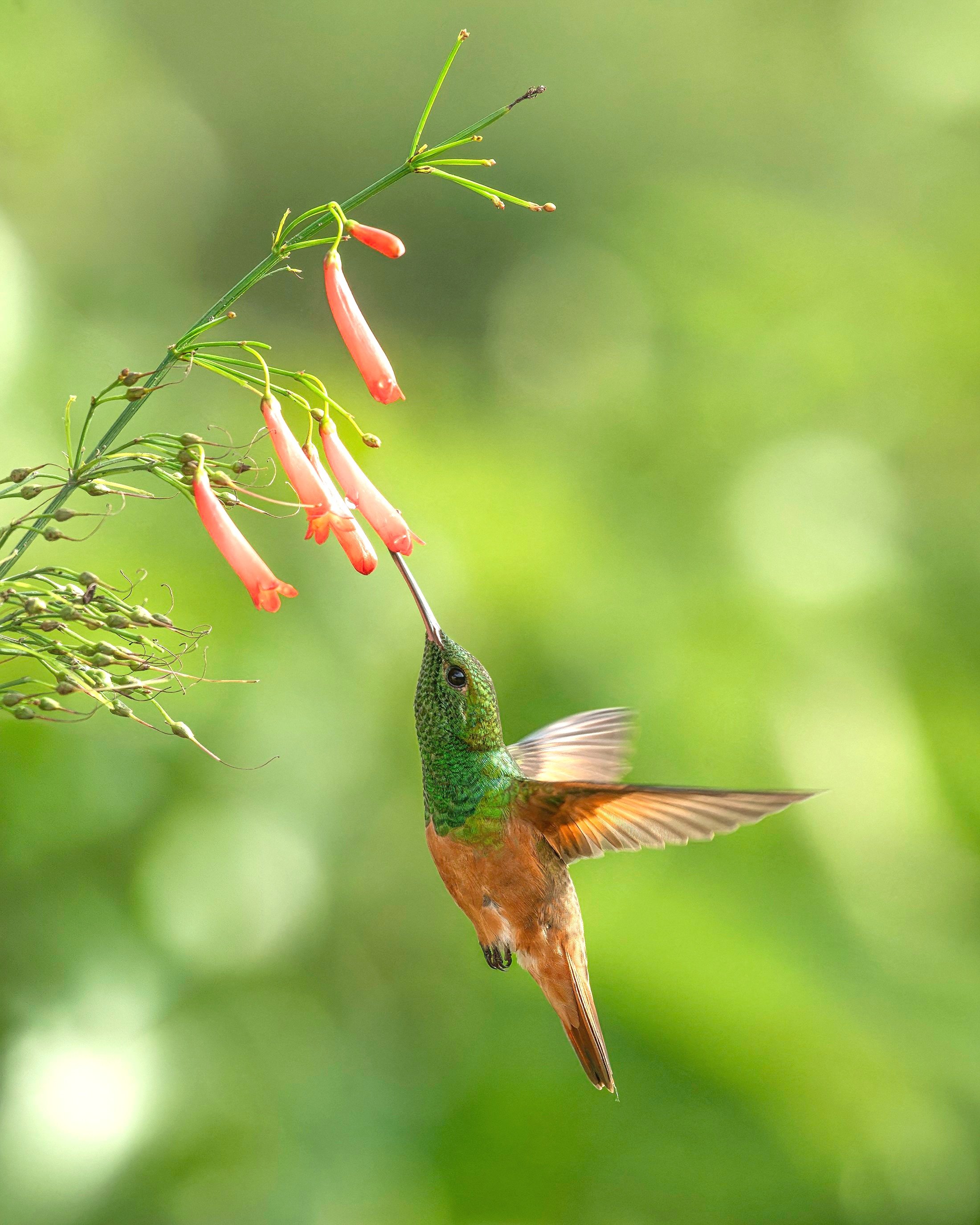
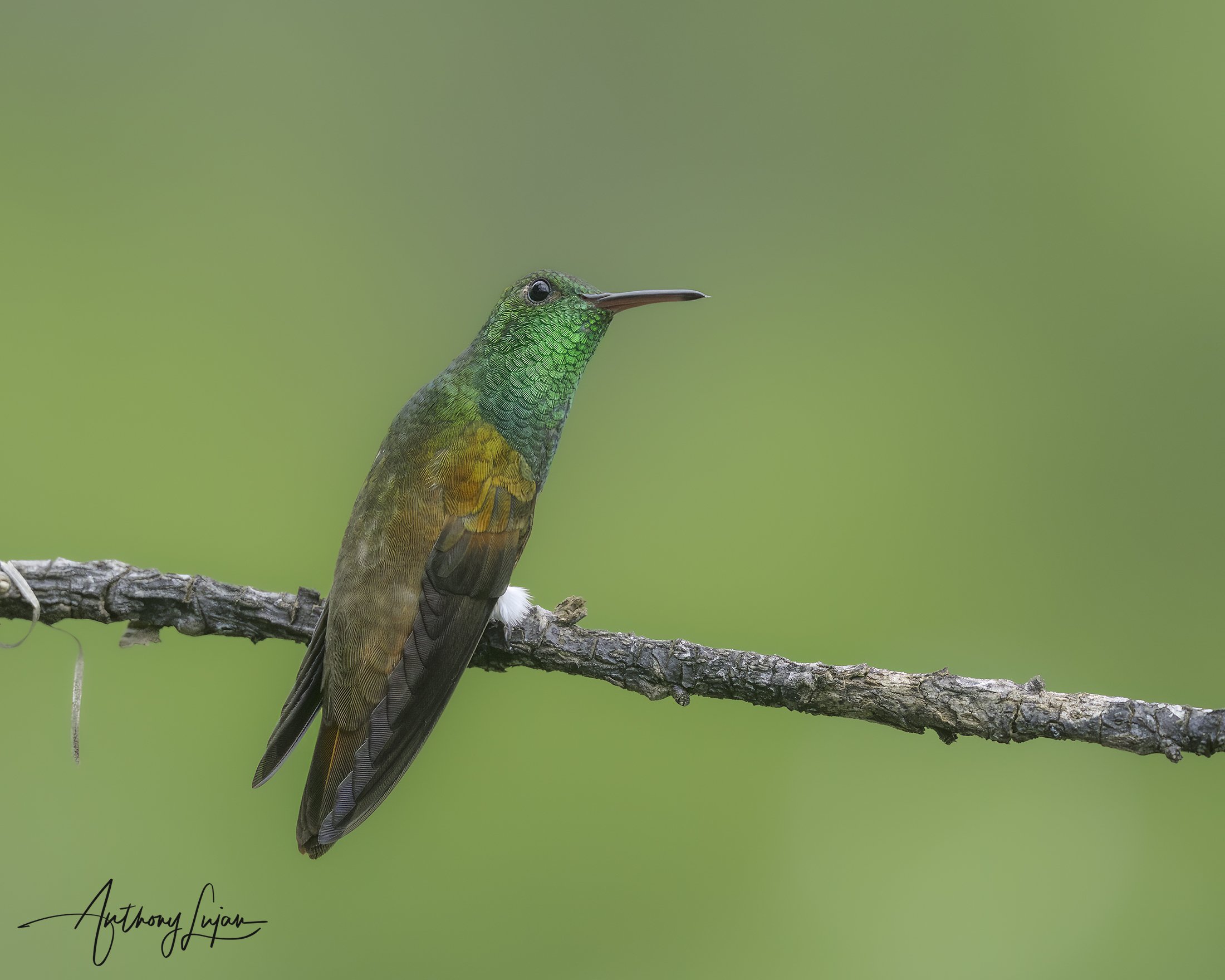
The Chestnut-bellied Hummingbird is a small emerald that stands out by combining a glittering green throat and breast with a rich chestnut belly and tail. It is considered one of Colombia’s more localized hummingbirds and has been the focus of recent ecological studies and targeted searches. Historically thought to be extremely rare and possibly close to extinction, additional populations have been found, but its narrow range and ongoing habitat pressures still warrant a Near Threatened status.
Identification
Male
Adult males have bronze‑green upperparts and a chestnut tail. The throat and upper breast are glittering green, transitioning to a chestnut belly and chestnut undertail coverts with greenish edges. The bill is black with a red base to the lower mandible. In the field, the combination of bright green throat and solid chestnut belly and tail in dry Andean valleys is highly distinctive.
Female
Females are similar to males but with a slightly paler belly and white bars near the tips of some throat feathers, giving a lightly barred or scaled look to the lower throat. Immatures resemble females but show rufous edges on the feathers of the neck and rump. Both sexes share the same general pattern and occur in the same dry canyon and scrub habitats.
Habitat and Behavior
Chestnut-bellied Hummingbirds are typically found in arid brushy canyons and dry shrublands, often on steep slopes with scattered shrubs, small trees, and cacti. They also use the lower edges of humid montane forest and transitional zones where drier scrub meets more wooded slopes. The species feeds on nectar from flowers of shrubs and small trees typical of dry Andean valleys, and, like other hummingbirds, also takes small insects for protein. Recent behavioral studies have documented territorial males defending small feeding territories, with both sexes using a limited set of flowering plants within their home ranges.
Population and Threats
The Chestnut-bellied Hummingbird has an estimated 10,000–20,000 mature individuals and is considered to have a Decreasing population trend. It occurs in a region of Colombia with dense human populations and strong economic development, including mining, logging, agriculture, and infrastructure expansion. The principal threats include loss and degradation of dry and semi‑dry valley habitats due to deforestation, expansion of sugarcane and coffee plantations, other agricultural conversion, and associated pollution and human settlement. Because its range is small and fragmented, continued habitat loss could quickly push the species toward a higher threat category.

Conservation
The species has previously been listed as Endangered or even Critically Endangered, but new population data have led to its current Near Threatened status. Nonetheless, conservation of dry Andean valleys and associated scrub and lower montane forest in the Magdalena and adjacent valleys remains crucial. Protecting key sites in the Chicamocha, Suárez, and Chucurí river systems, promoting habitat restoration, and managing agriculture to retain native scrub and flowering shrubs can all help stabilize populations. Continued research on its ecology, territory size, and breeding and foraging requirements will further inform conservation actions for this range‑restricted Colombian endemic.




Checkout Anthony’s playlist of this species! Click the top right dropdown to see all the videos.
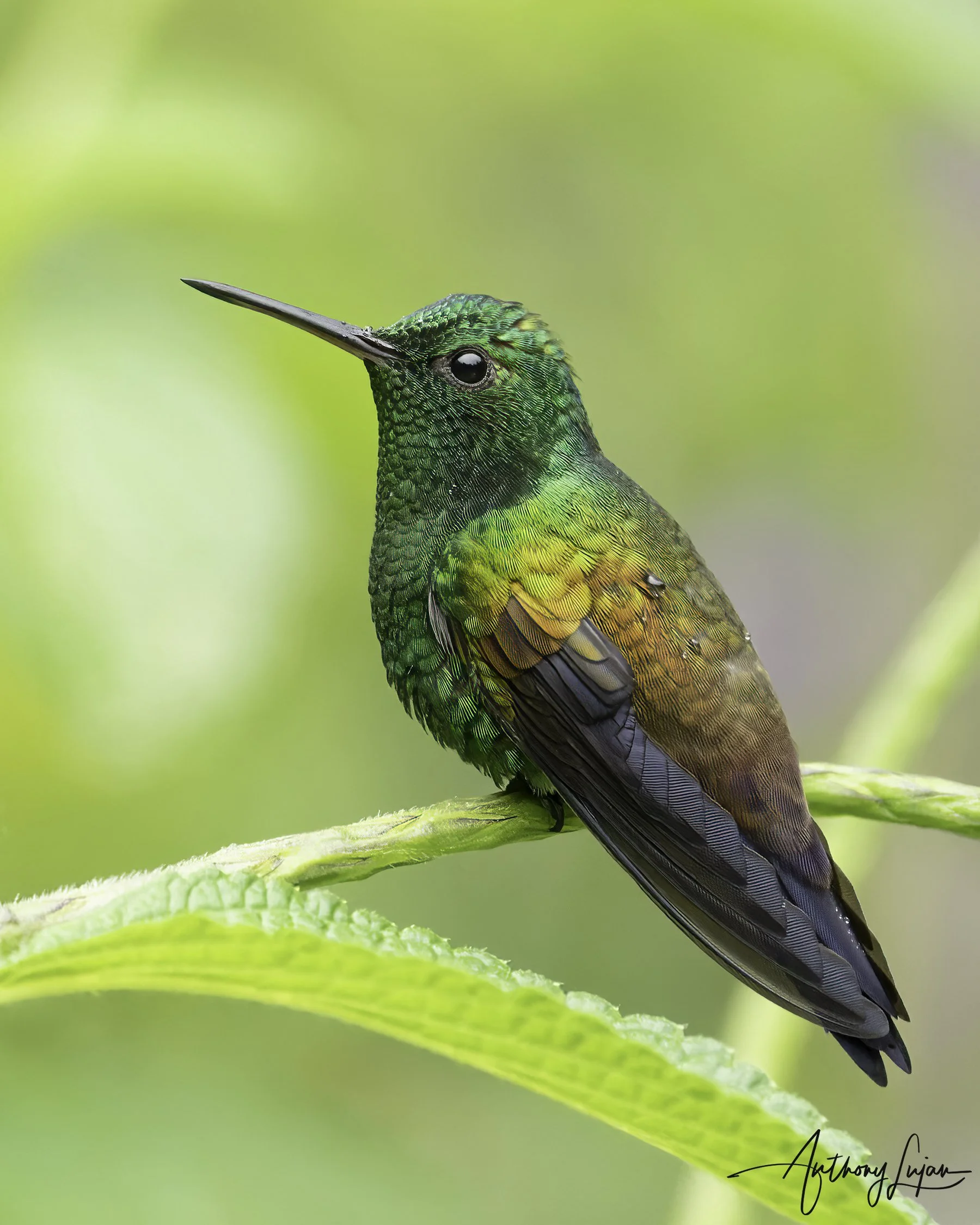
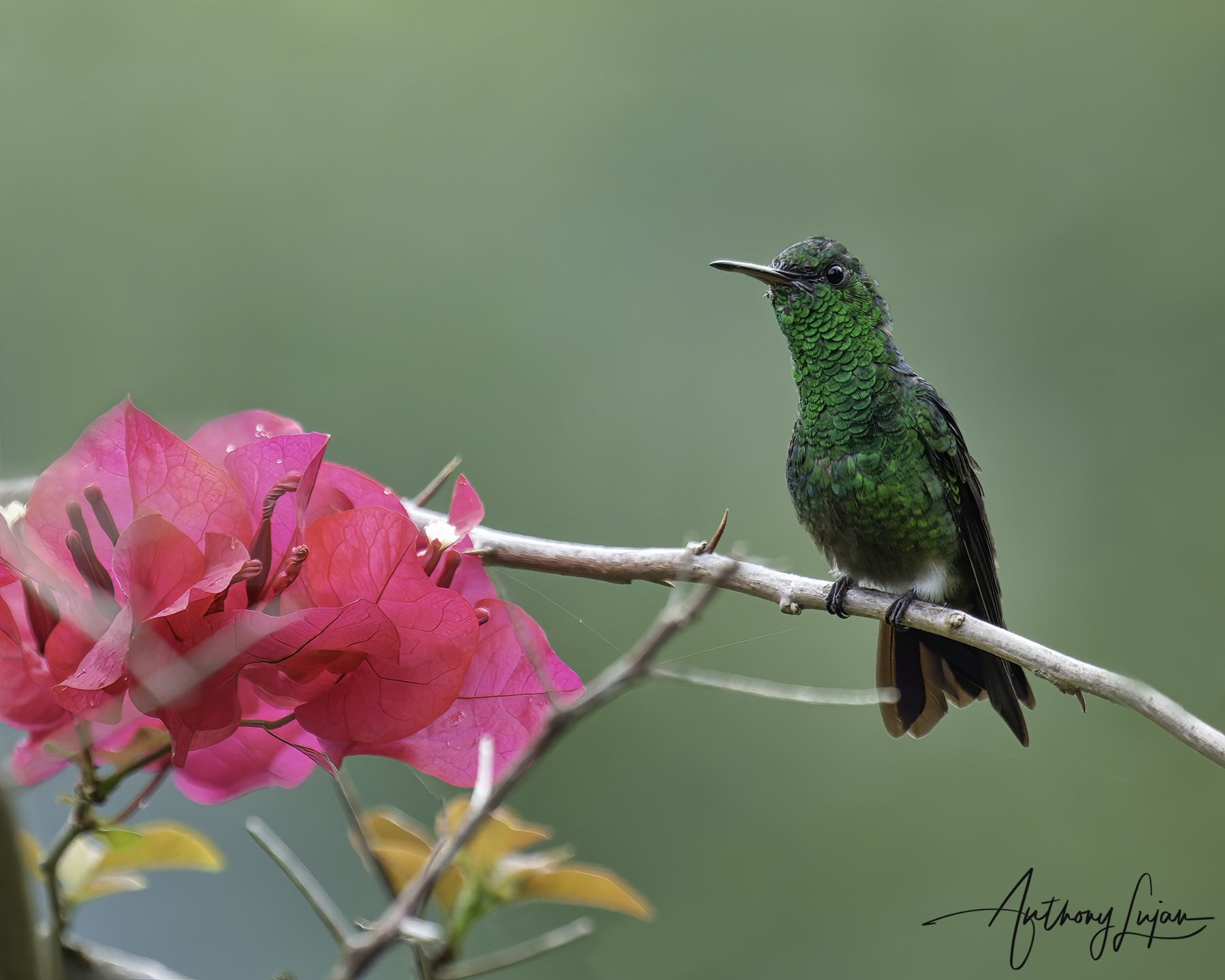
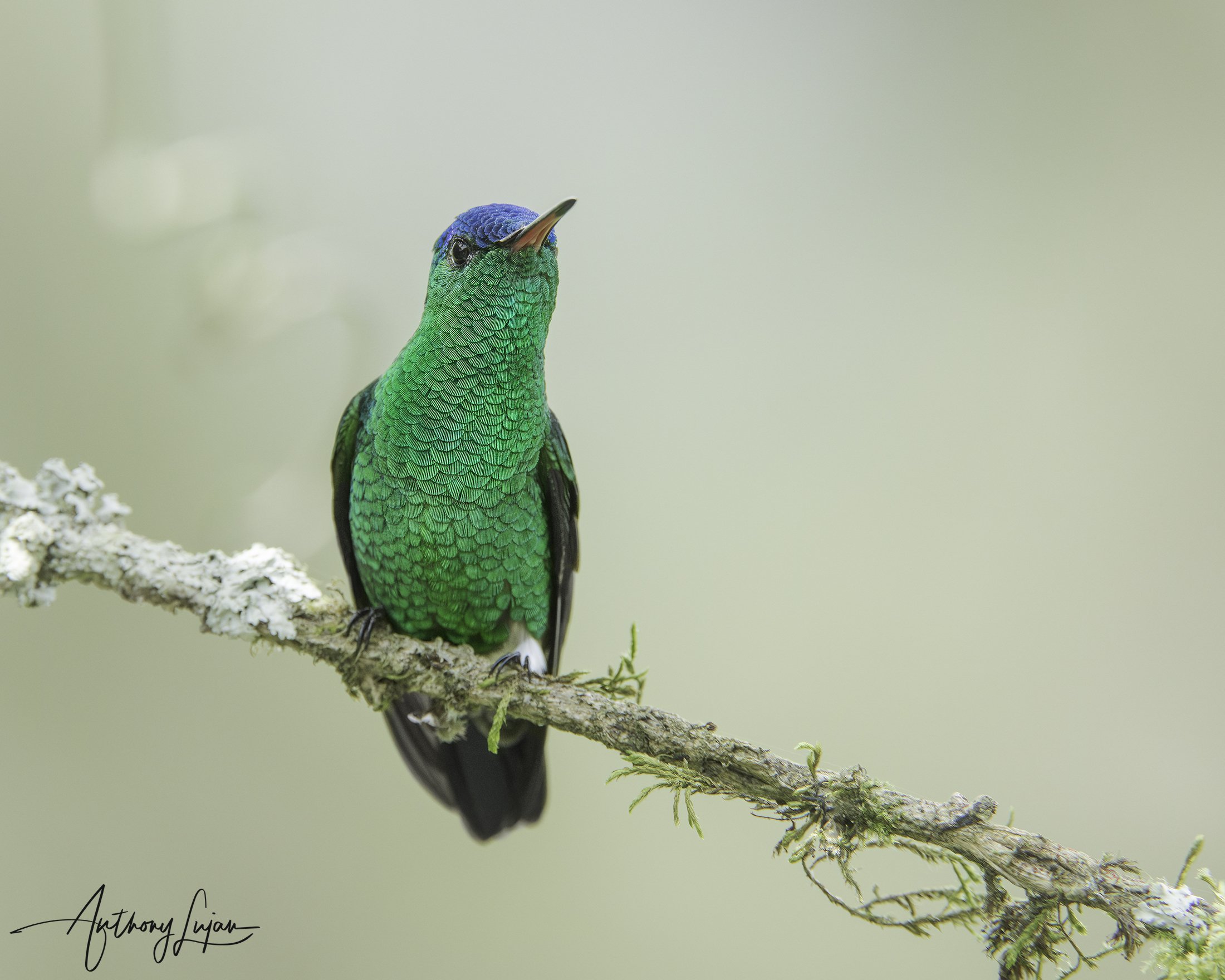
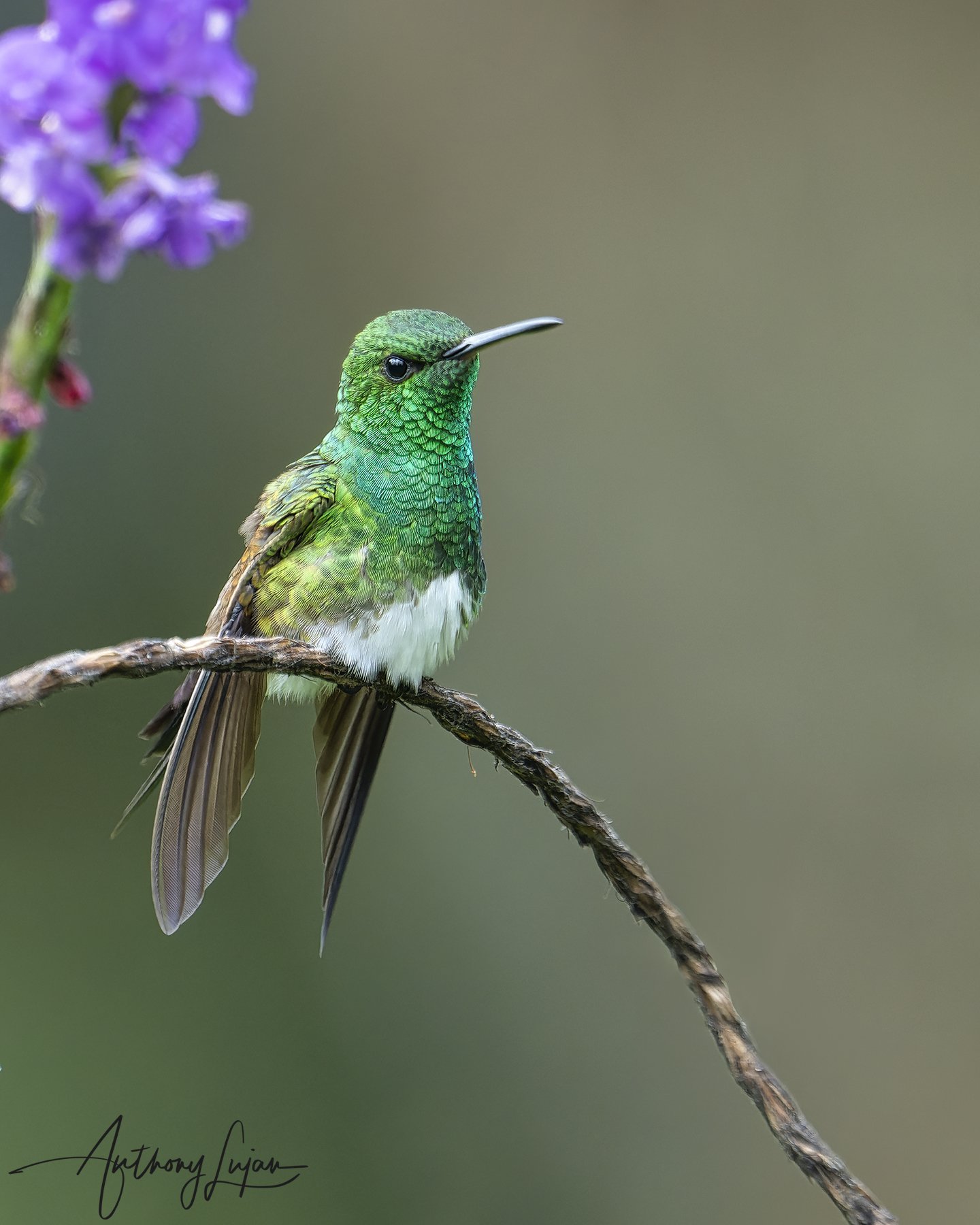
Related species in the Saucerottia genus (11 species total):



Please note: The content provided in this article reflects Anthony’s personal experience and photographic approach. Results can vary depending on light, weather, location, equipment, subject behavior, and field conditions.