
Scientific name: Calypte costae
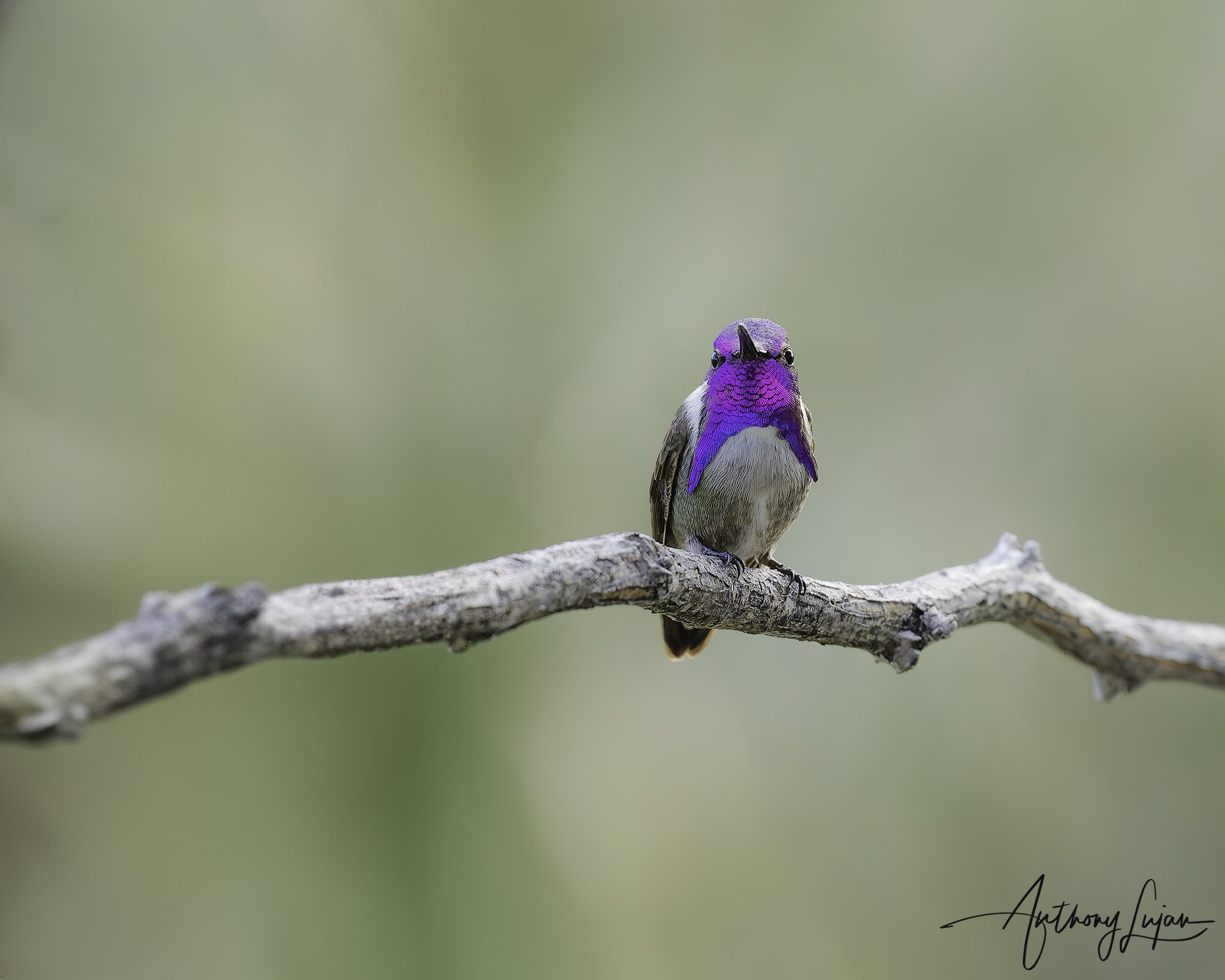
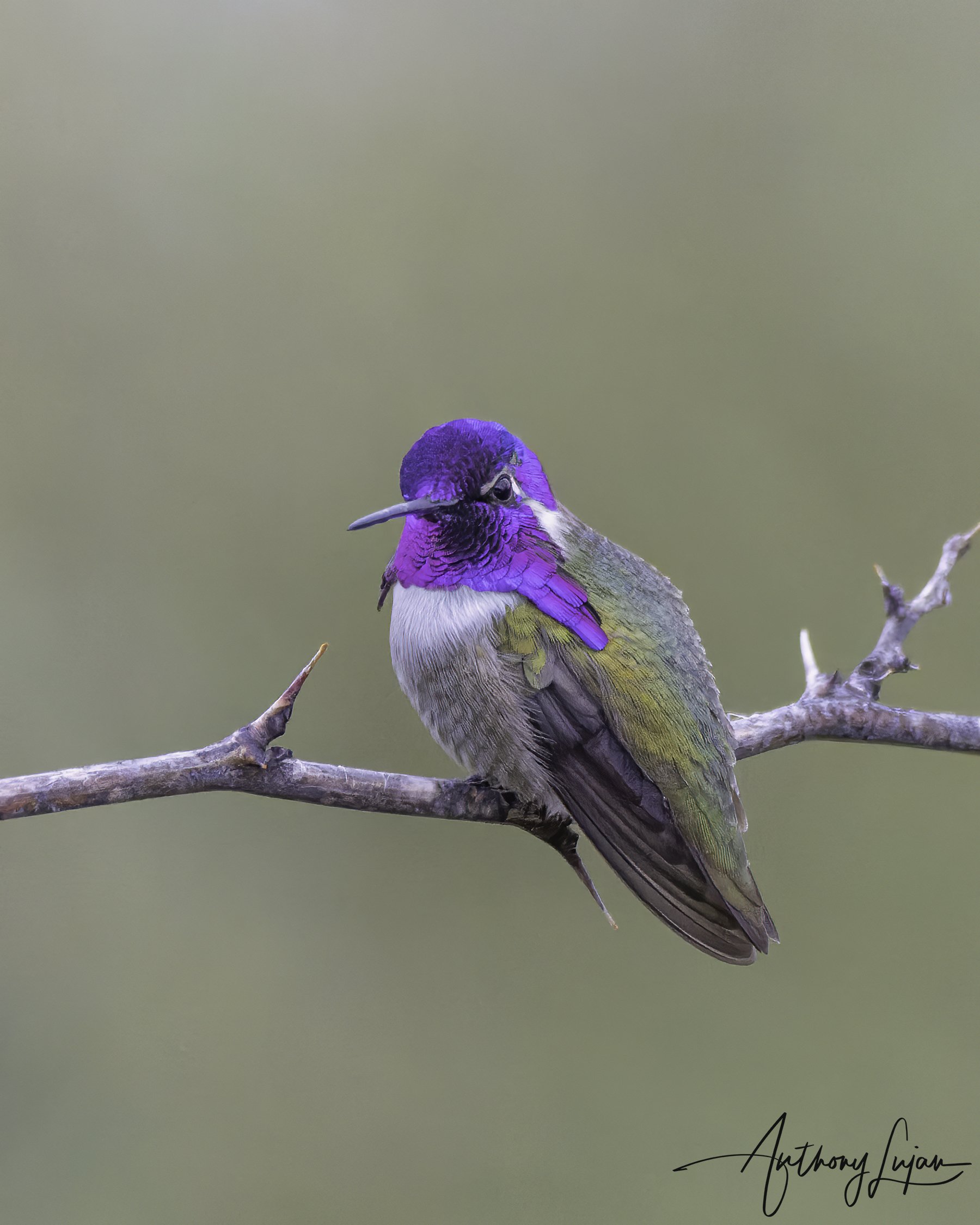
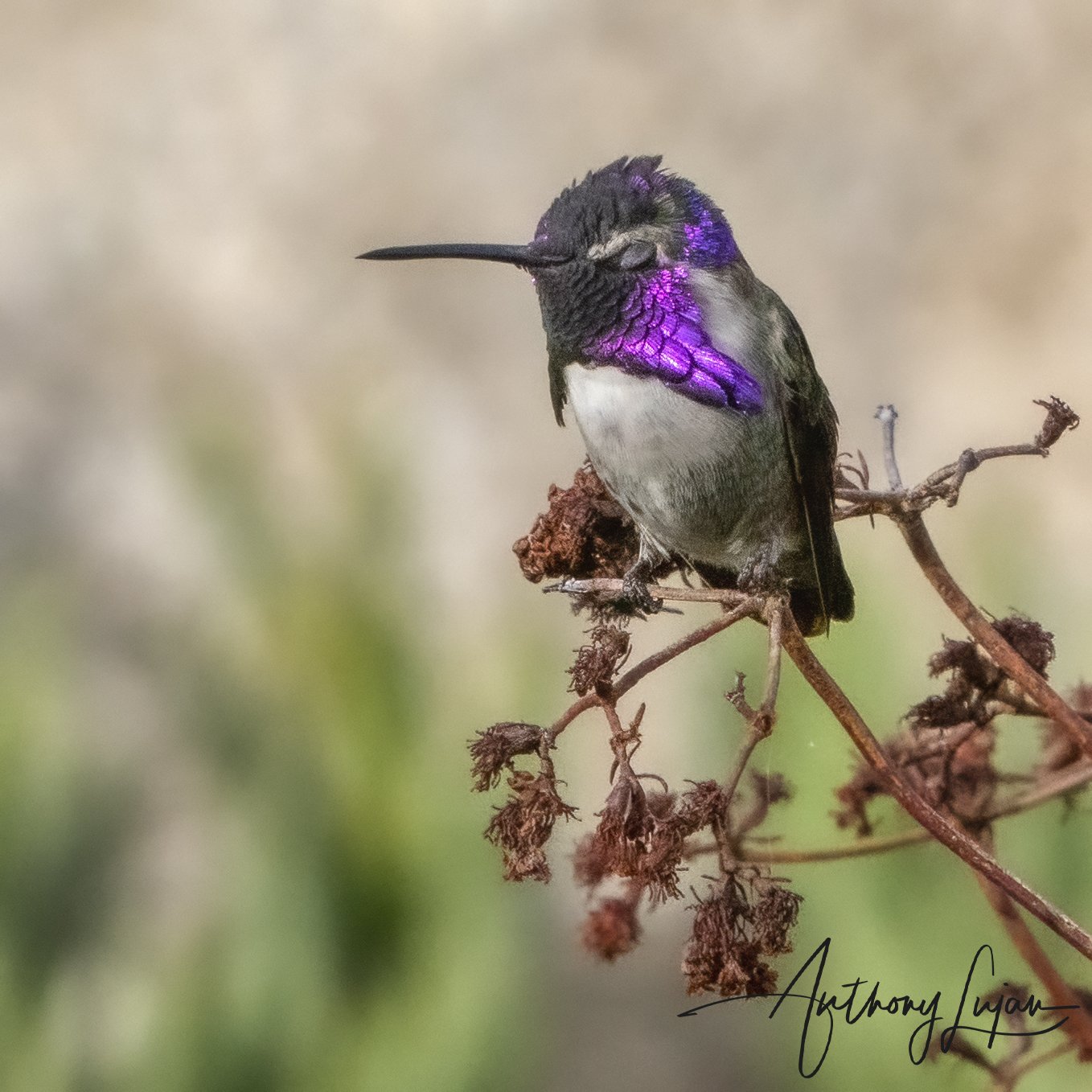
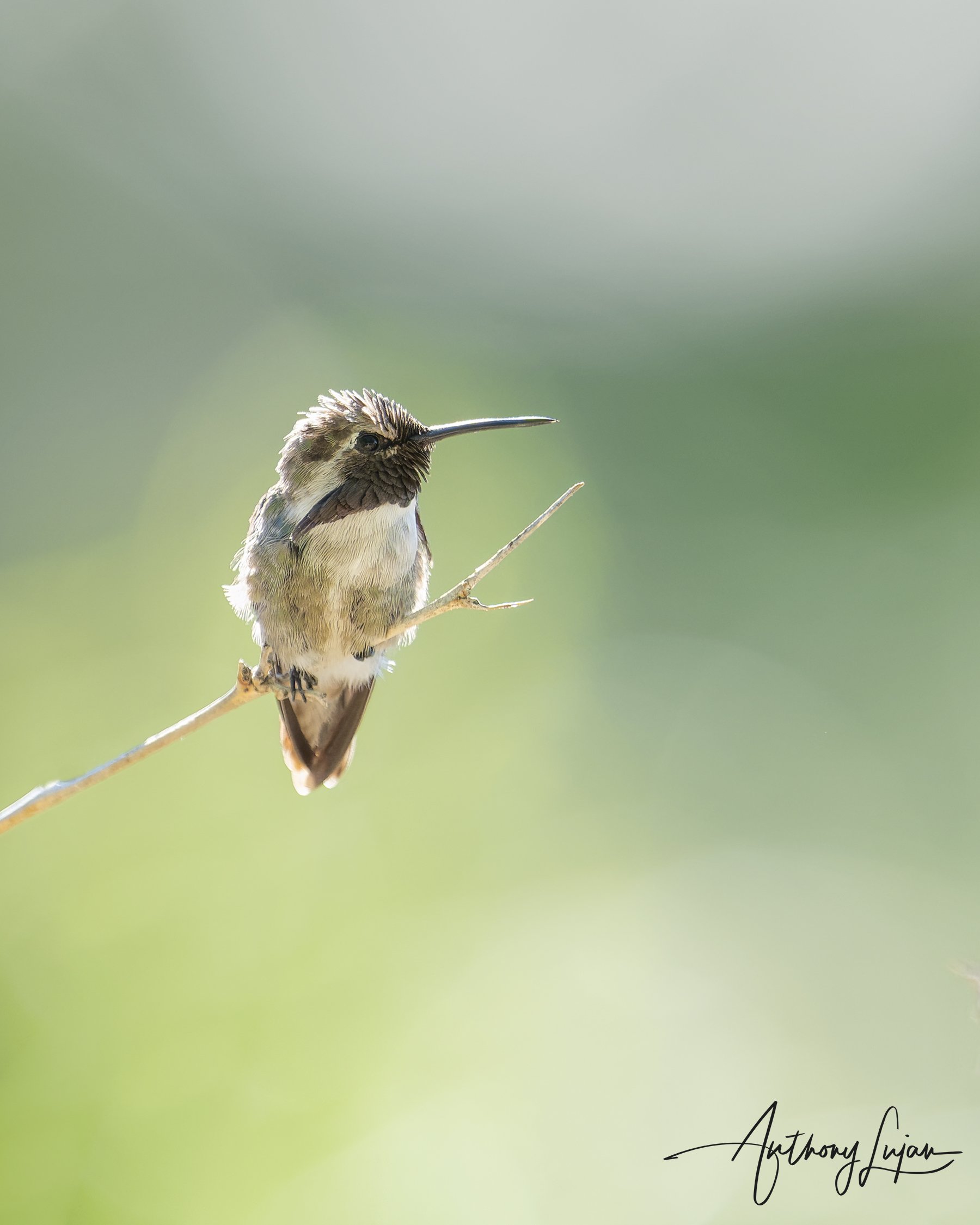
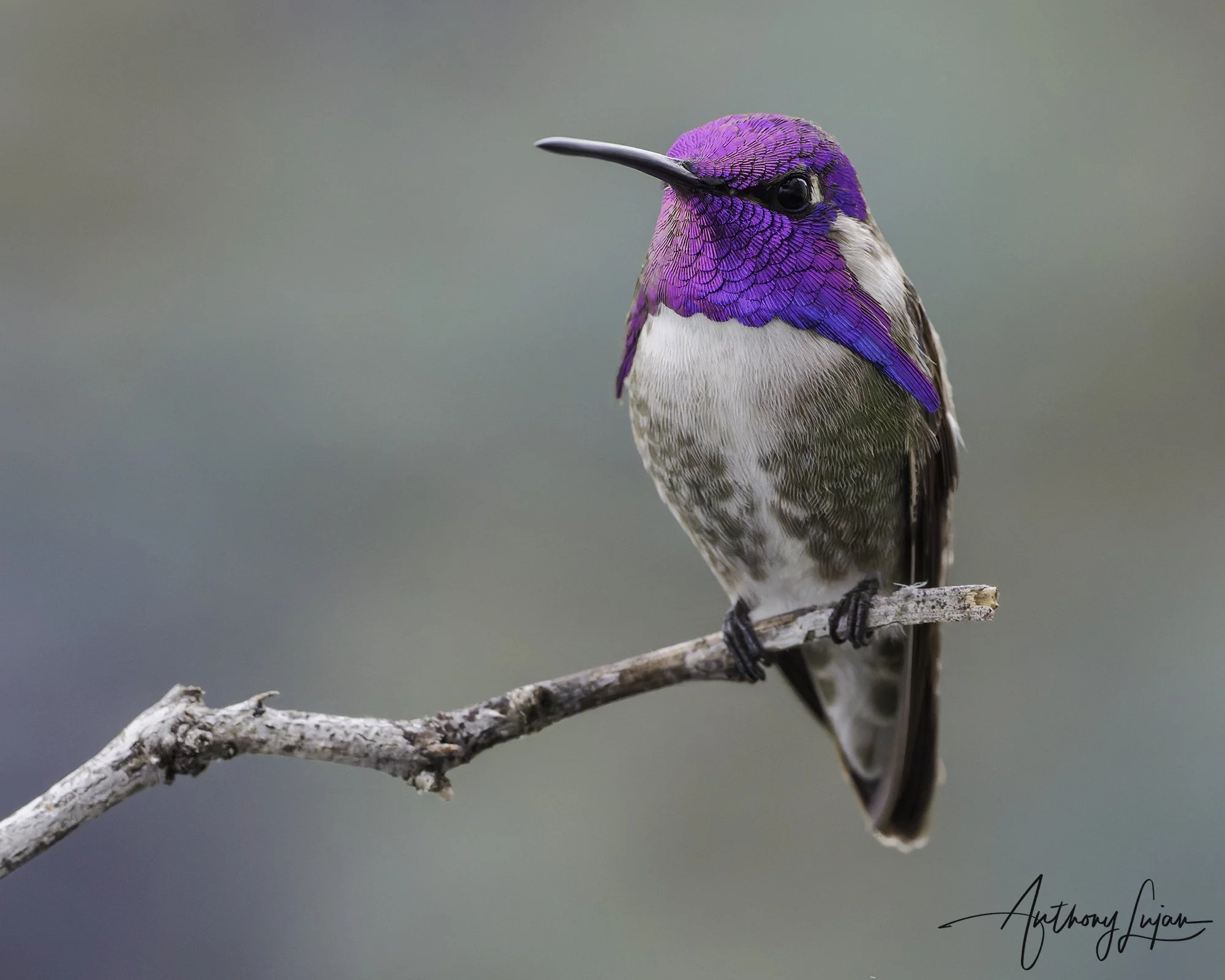
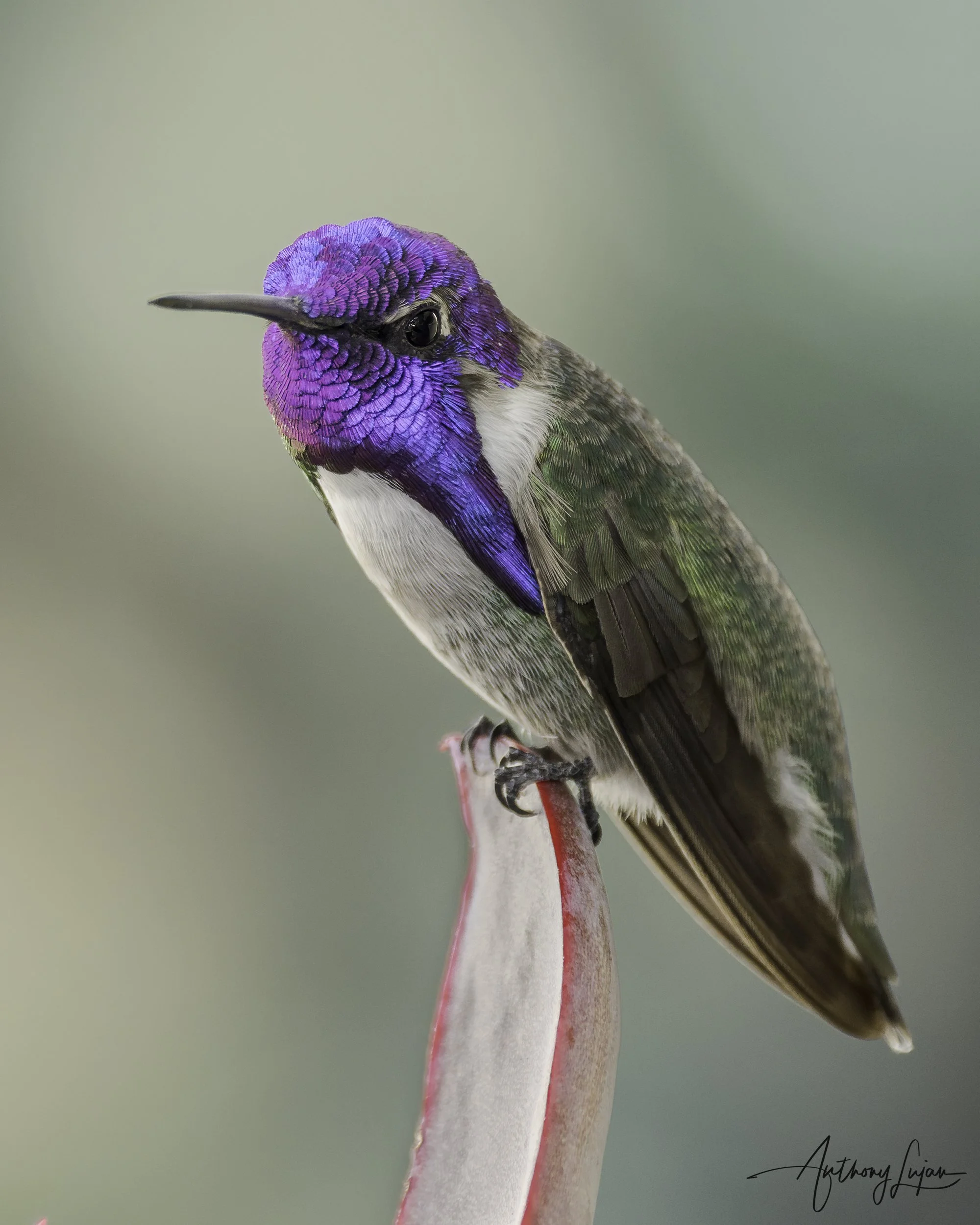
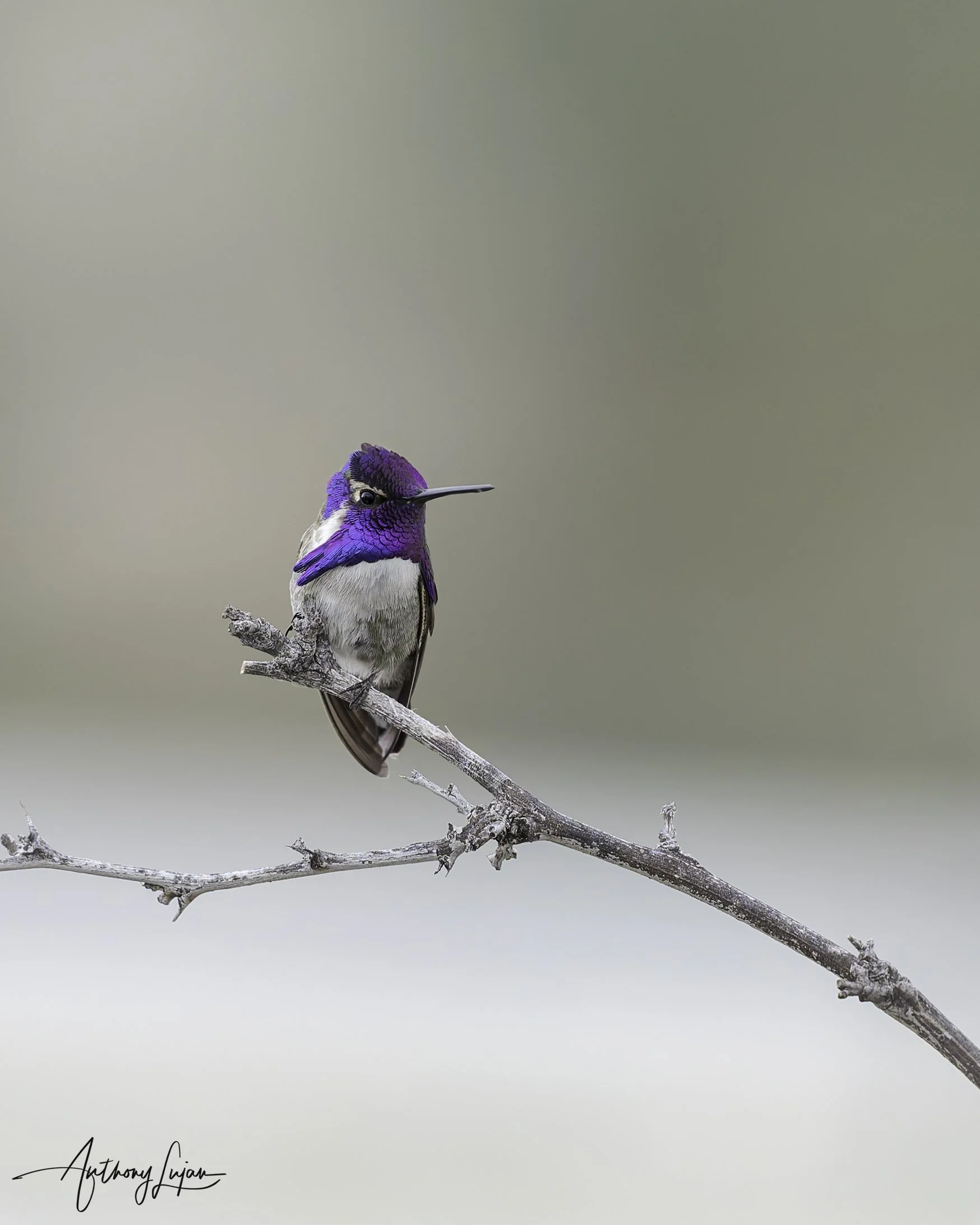
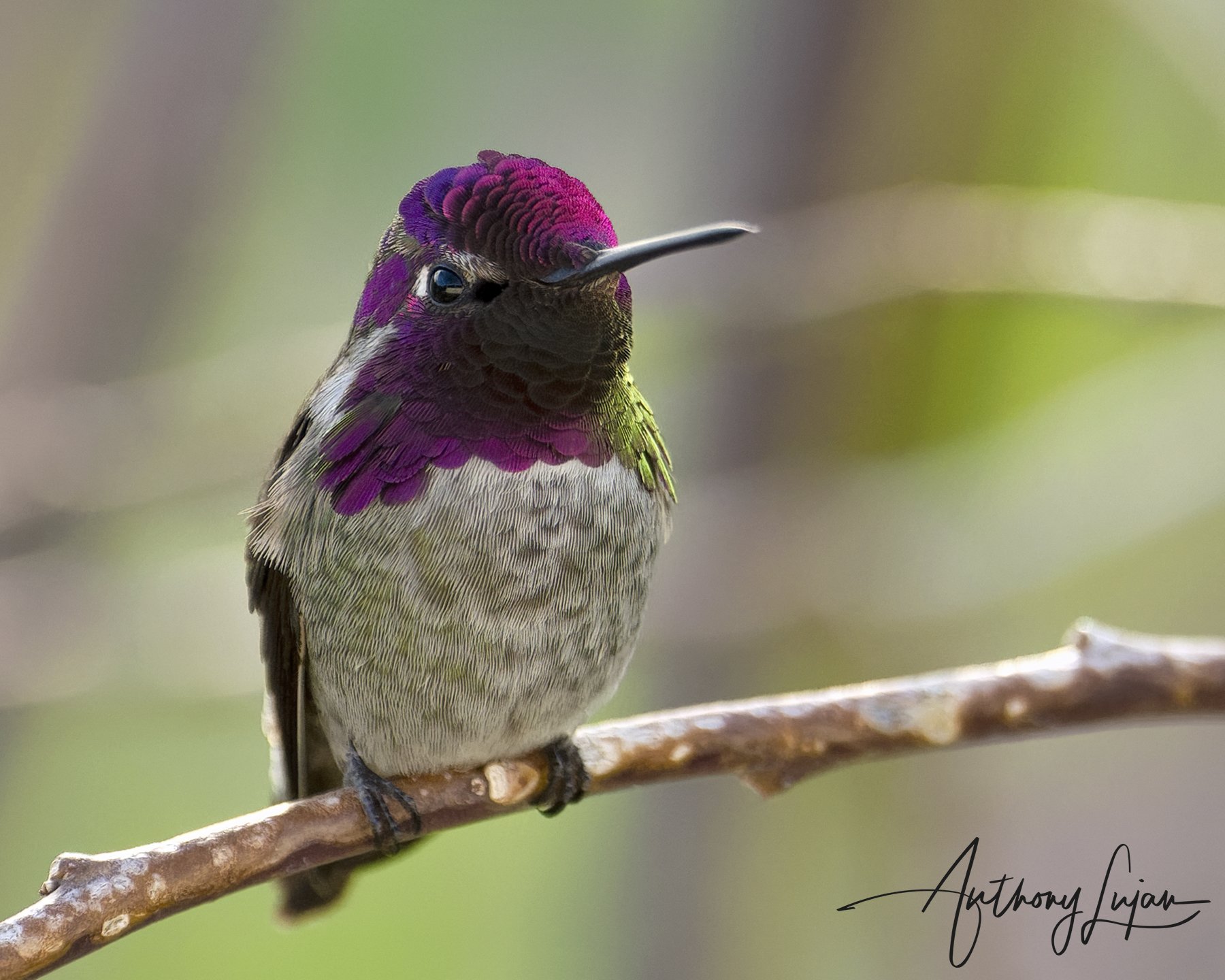
Costa’s Hummingbird is a tiny desert hummingbird of the southwestern United States and northwestern Mexico, adapted to hot, arid landscapes where few other hummingbirds can thrive. Males are famous for their vivid violet crown and gorget that flare into long side plumes, flashing brilliantly when they face the sun.
At a Glance
Family: Trochilidae (hummingbirds)
Clade: Trochilini – Emeralds
Genus group: Calypte — Anna’s and Costa’s hummingbirds of western North America.
Range: Southwestern United States (southern California, Nevada, Utah, Arizona, New Mexico) south through Baja California and northwestern Mexico (Sonora, Sinaloa, and adjacent regions).
Habitat: Desert scrub, arid washes, chaparral, cactus‑studded slopes, mesquite thickets, and coastal sage scrub; also edges of forest and chaparral where flowering plants are abundant.
Elevation: From near sea level to around 1,500 m (4,900 ft), locally higher in parts of its range.
Length: about 7.5–9 cm (3.0–3.5 in).
Weight: about 2–3 g (0.07–0.11 oz).
Number of mature individuals: 3,400,000
Population trend: Increasing globally (IUCN); long‑term continental trend roughly stable with some regional declines.
Status: Least Concern (IUCN).
Name Origin
The genus name Calypte derives from the Greek kalyptē (“veil” or “covering”), referencing the male’s expansive iridescent crown and throat feathers that seem to cover the head. The species name costae honors Louis Marie Pantaleon Costa, a 19th‑century French nobleman and patron of natural history who collected hummingbirds and other birds. Together, Calypte costae can be read as “Costa’s veiled hummingbird,” linking its namesake to its dramatic head and throat plumage.
Subspecies and Distribution
Costa’s Hummingbird is monotypic, with no recognized subspecies.
It occurs in arid and semi‑arid regions of the southwestern United States, including southern California, southern Nevada, parts of Utah and Arizona, and localized areas of New Mexico. South of the U.S. border it ranges through Baja California and northwestern mainland Mexico (especially Sonora and Sinaloa), using desert scrub, coastal scrub, and irrigated areas with flowering plants. Many individuals are resident or make short‑distance shifts in response to flowering patterns, moving seasonally between breeding deserts and coastal or lowland areas where nectar remains available.
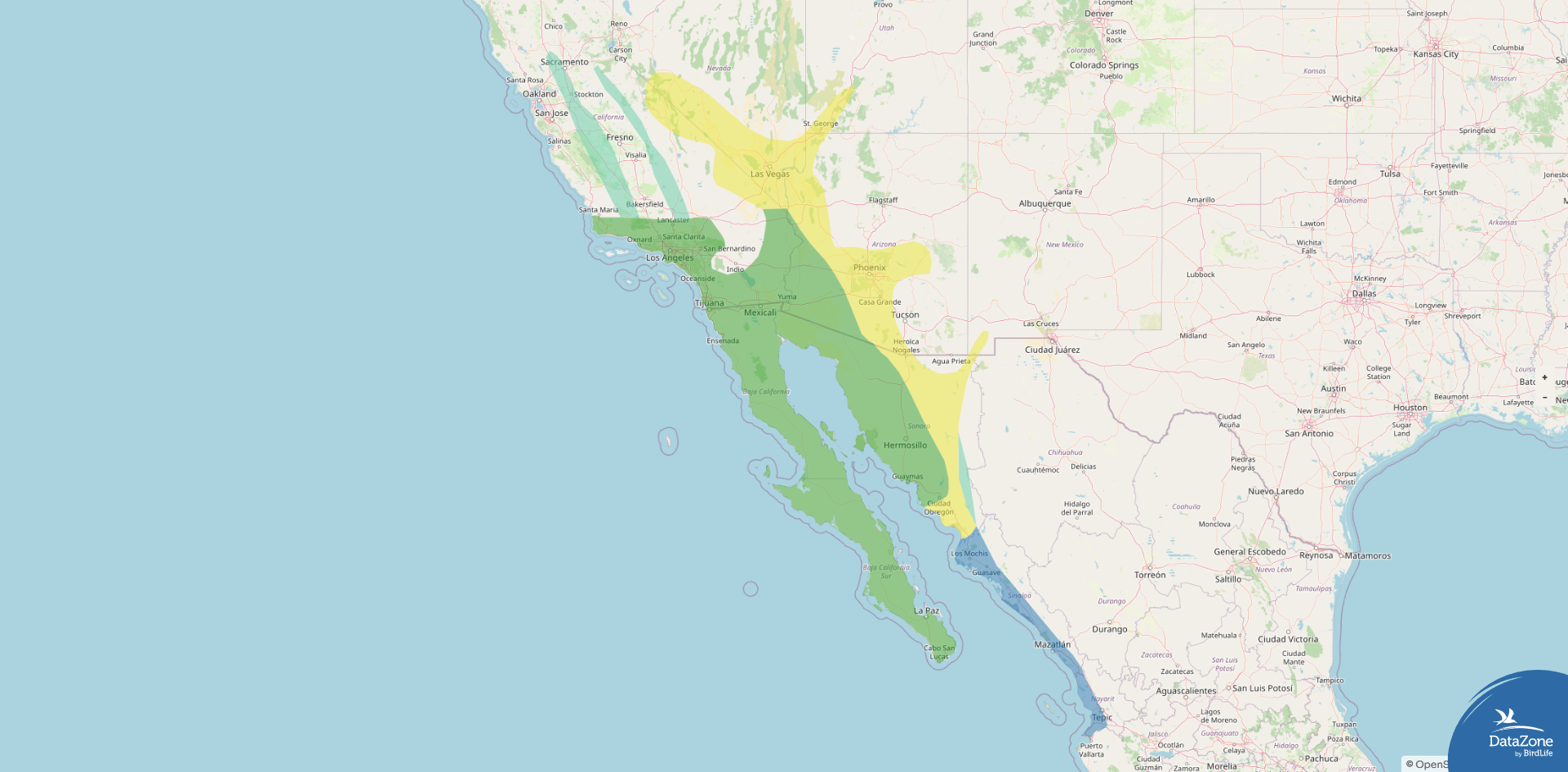
Legend
Green Resident
Yellow Breeding
Blue Non-breeding
Species Overview
Costa’s Hummingbird is one of the signature hummingbirds of the Sonoran and Mojave deserts, well suited to extreme heat, low humidity, and highly variable flower availability. Its small size, efficient flight, and ability to exploit scattered flowering shrubs and cacti allow it to persist in areas where few other hummingbirds occur regularly. The male’s compact body and brilliant violet crown and gorget make it one of the most distinctive hummingbirds in the southwestern United States.
Identification
Male
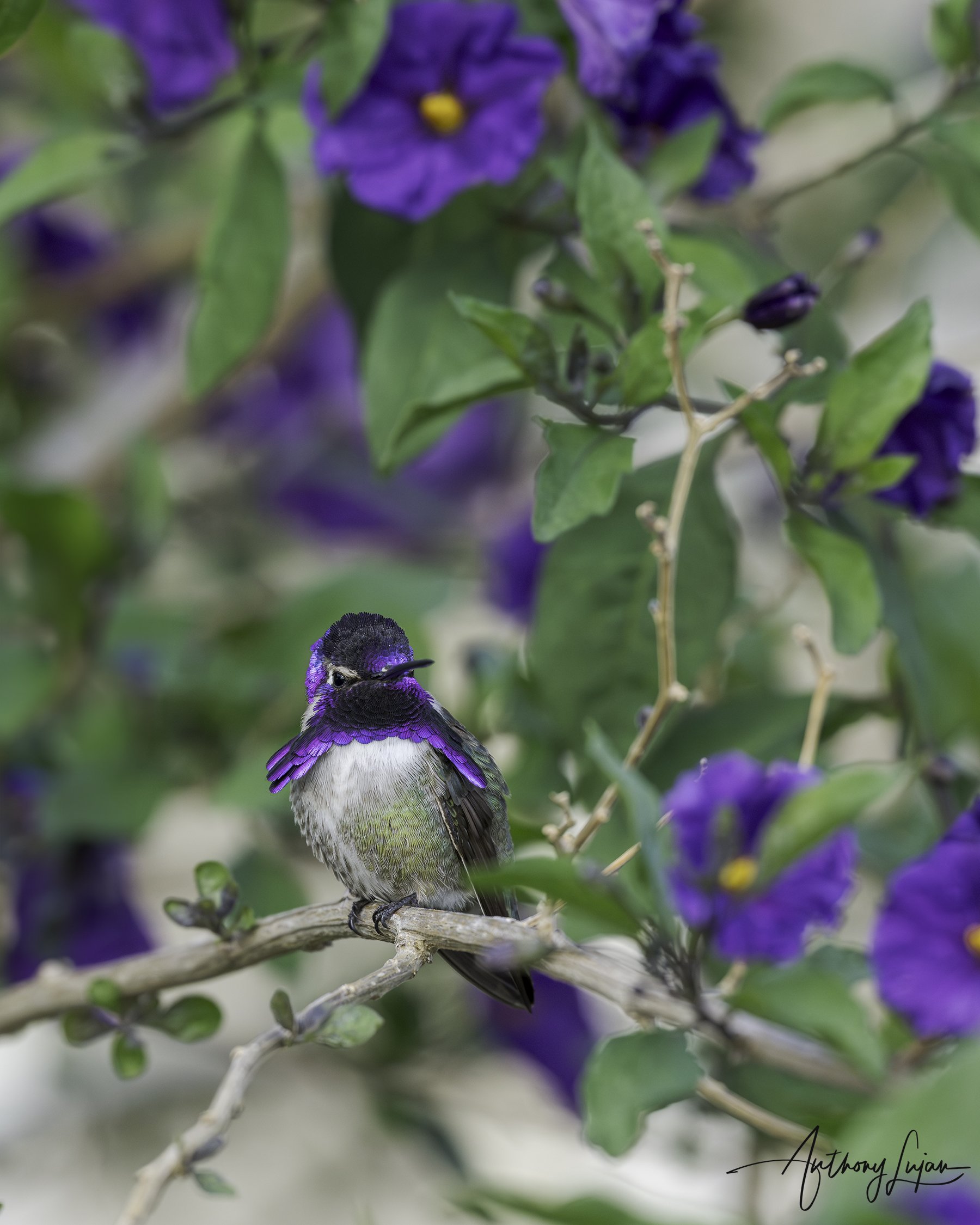
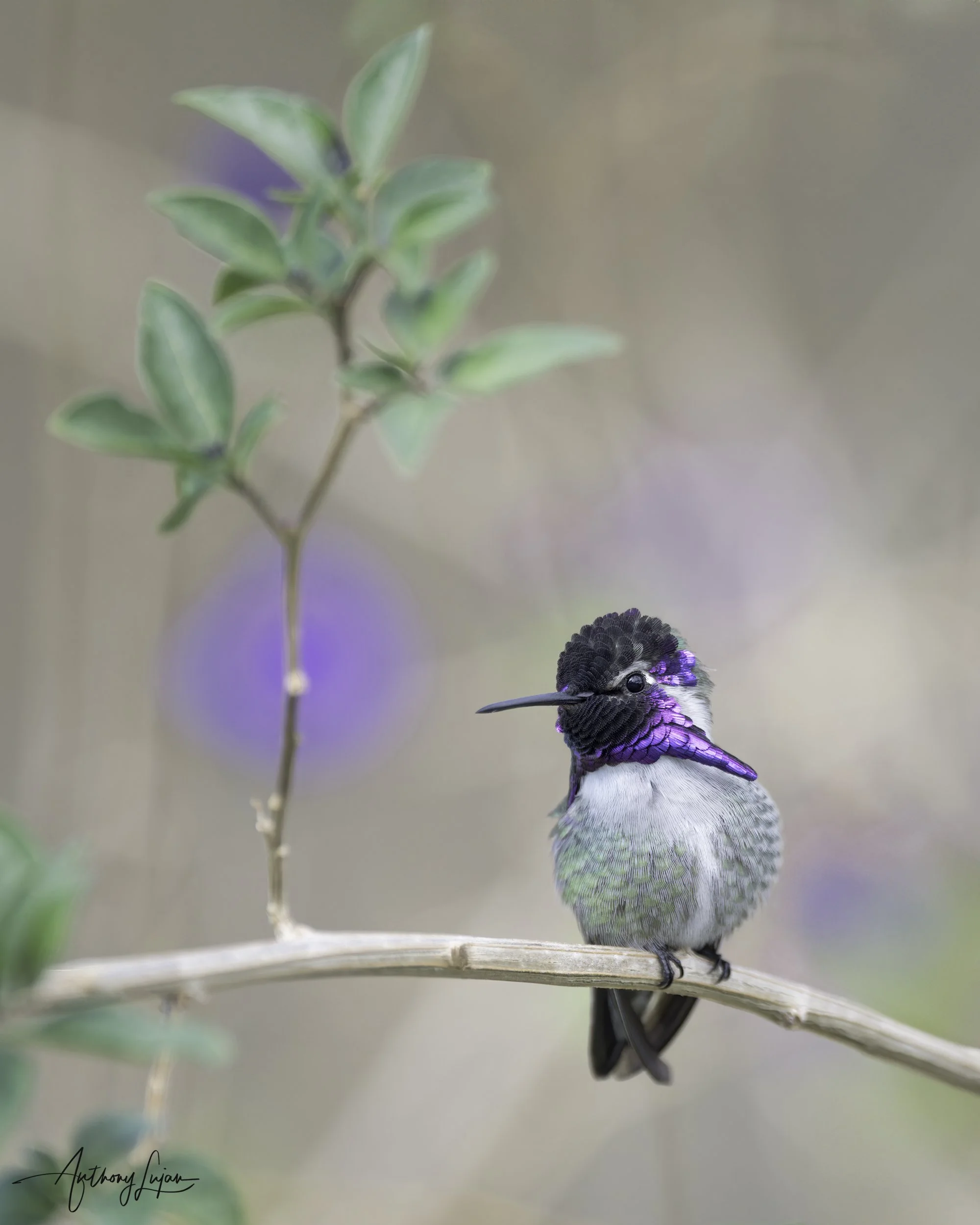
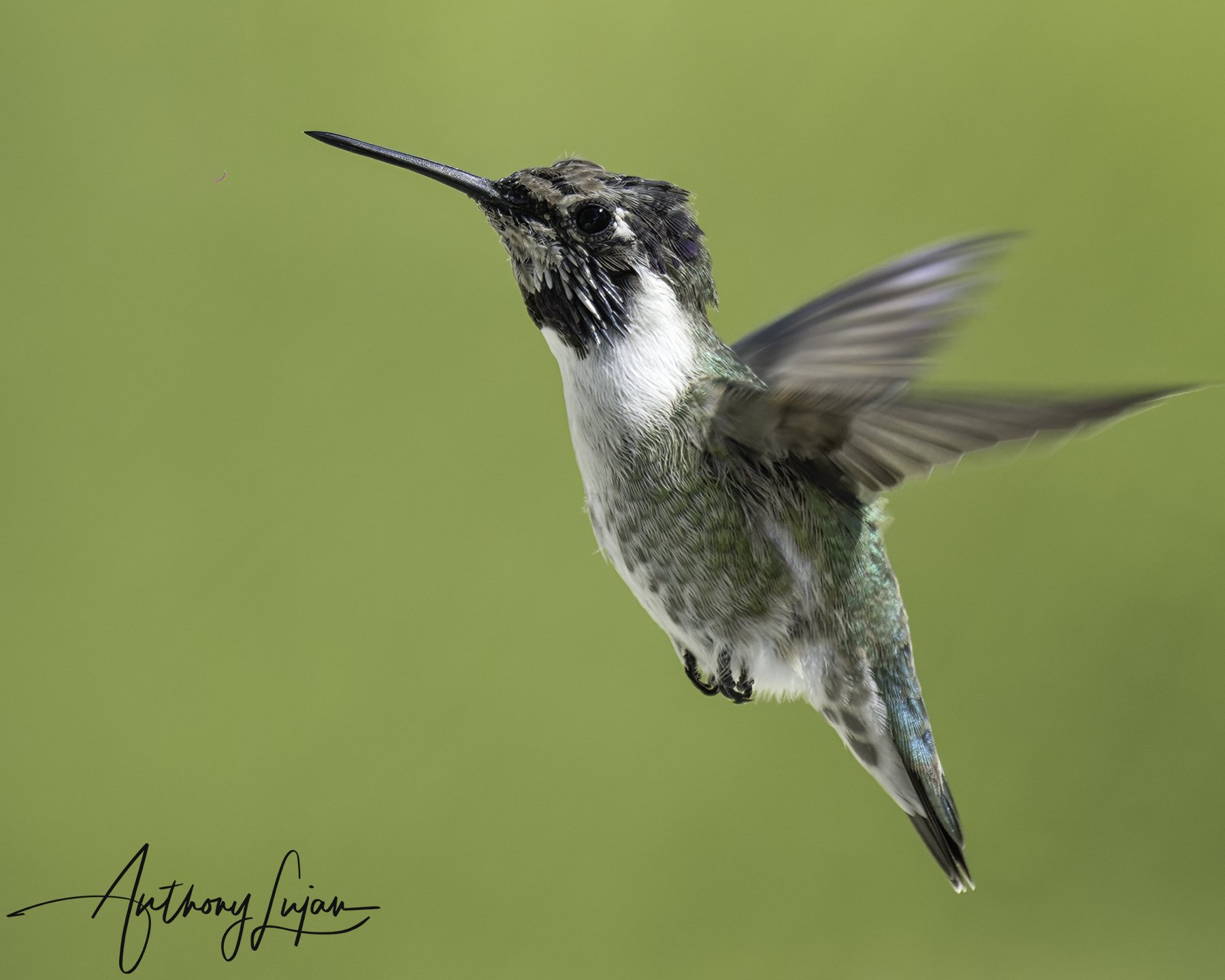
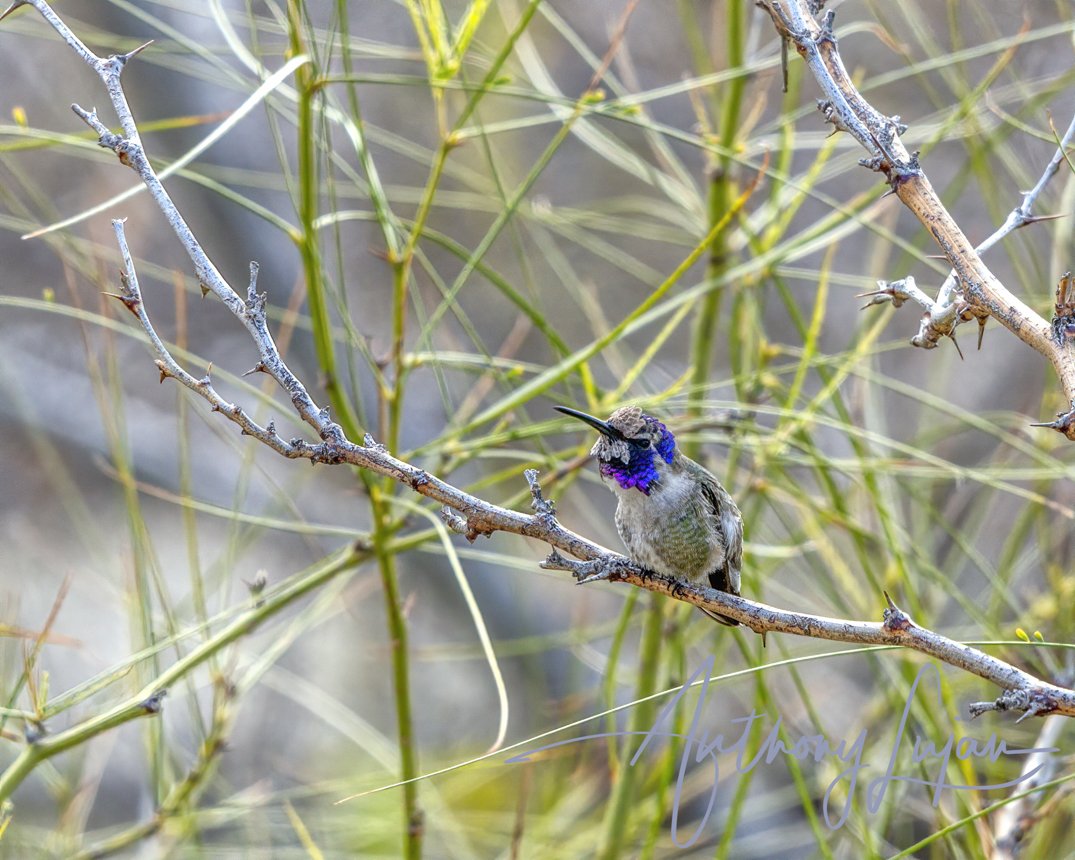
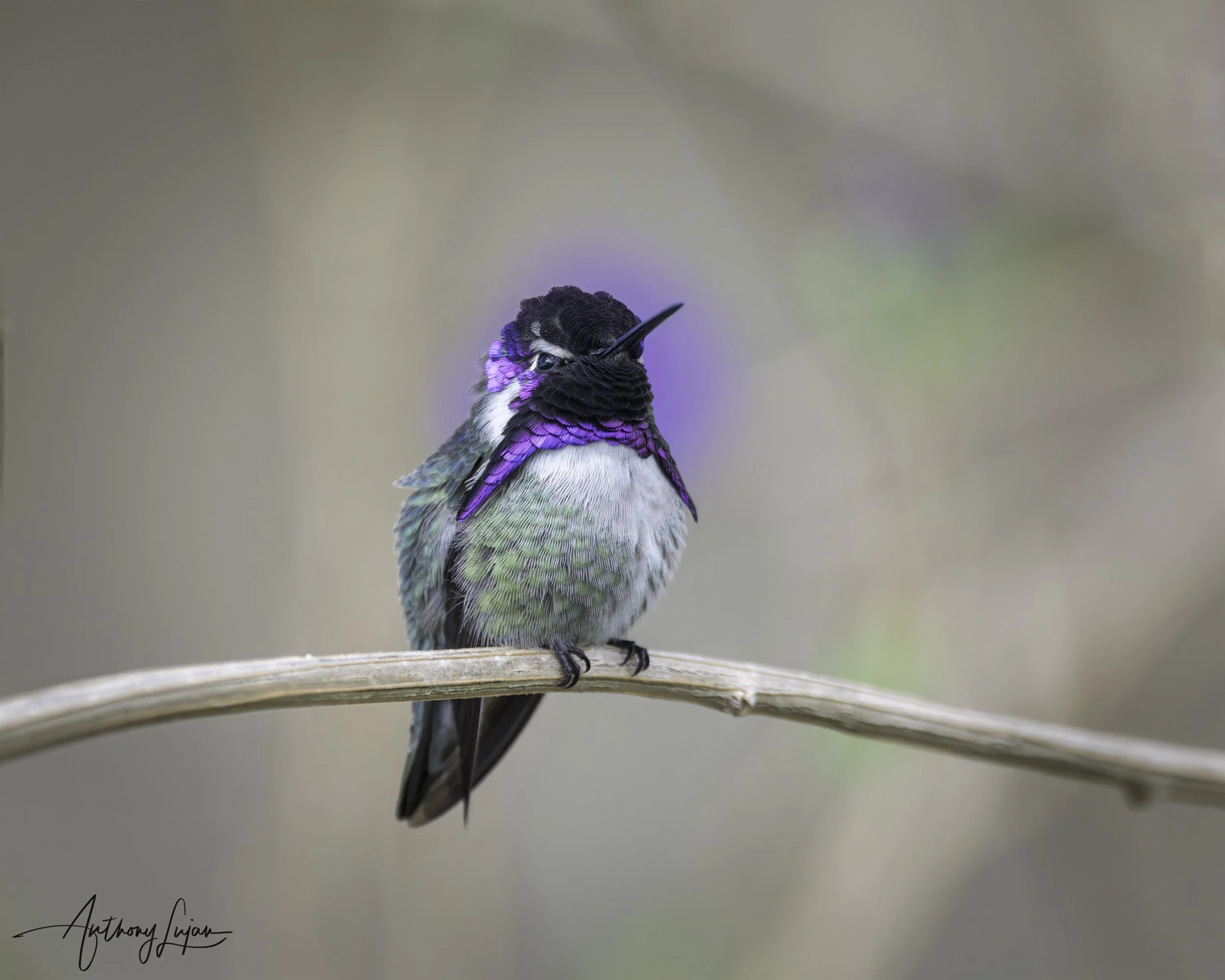
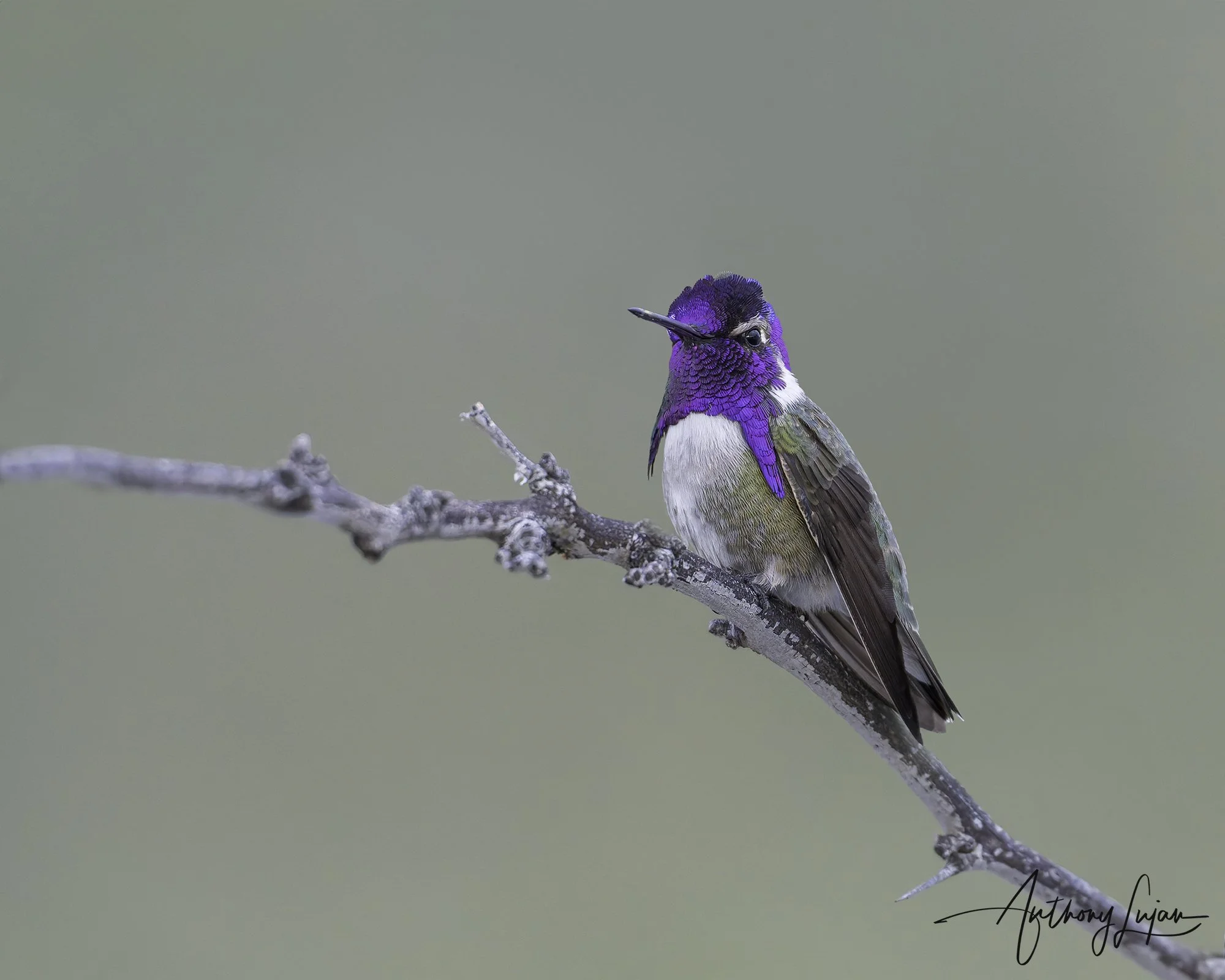
Adult males have a brilliant metallic violet crown and gorget, with elongated throat feathers that flare out to the sides like a small collar. The upperparts are iridescent green, the underparts grayish‑white with some green on the flanks, and the tail is dark with greenish reflections. Depending on the angle of light, the violet feathers may look blackish or suddenly flash bright purple, making the bird appear to “turn on” its color.
Female
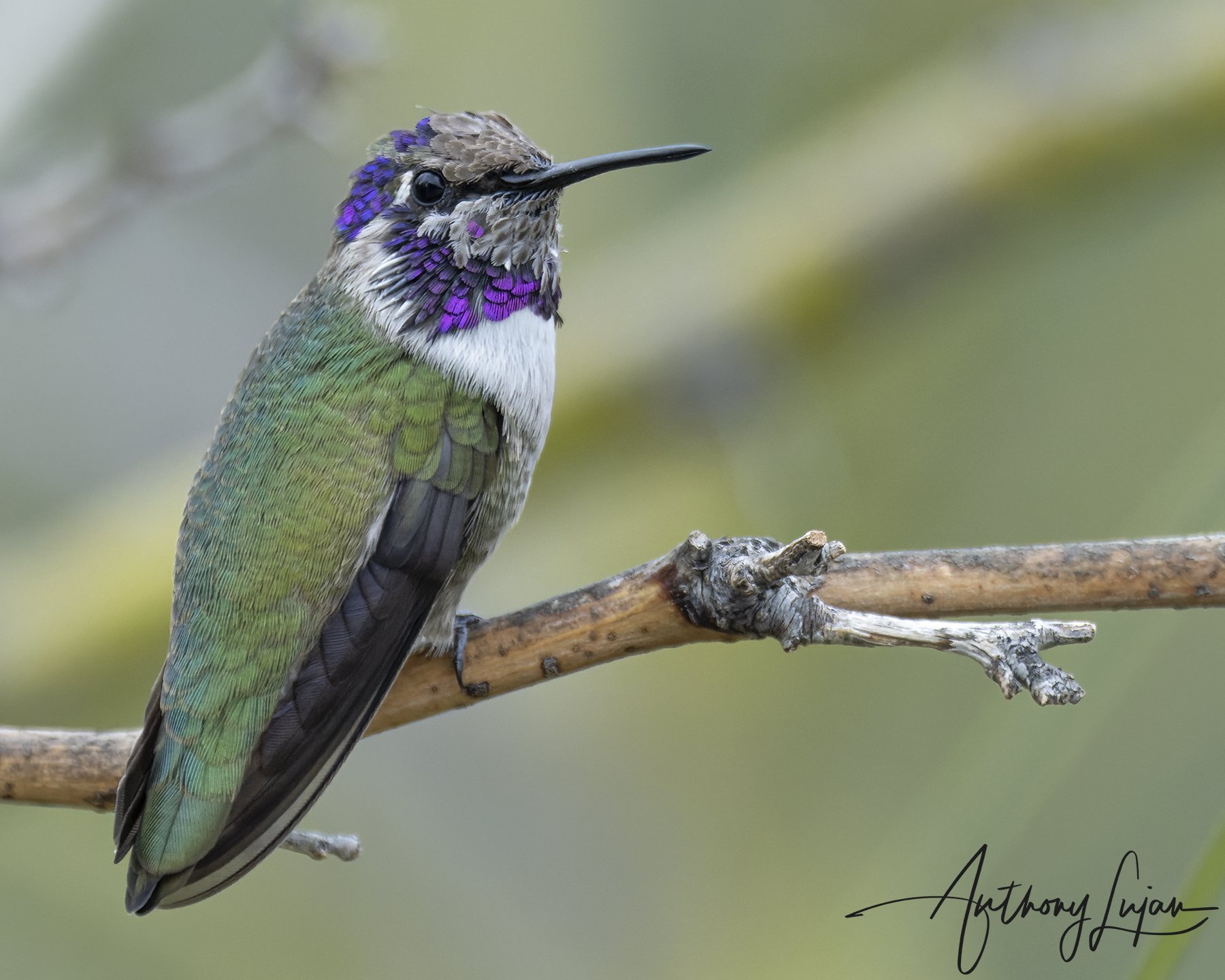
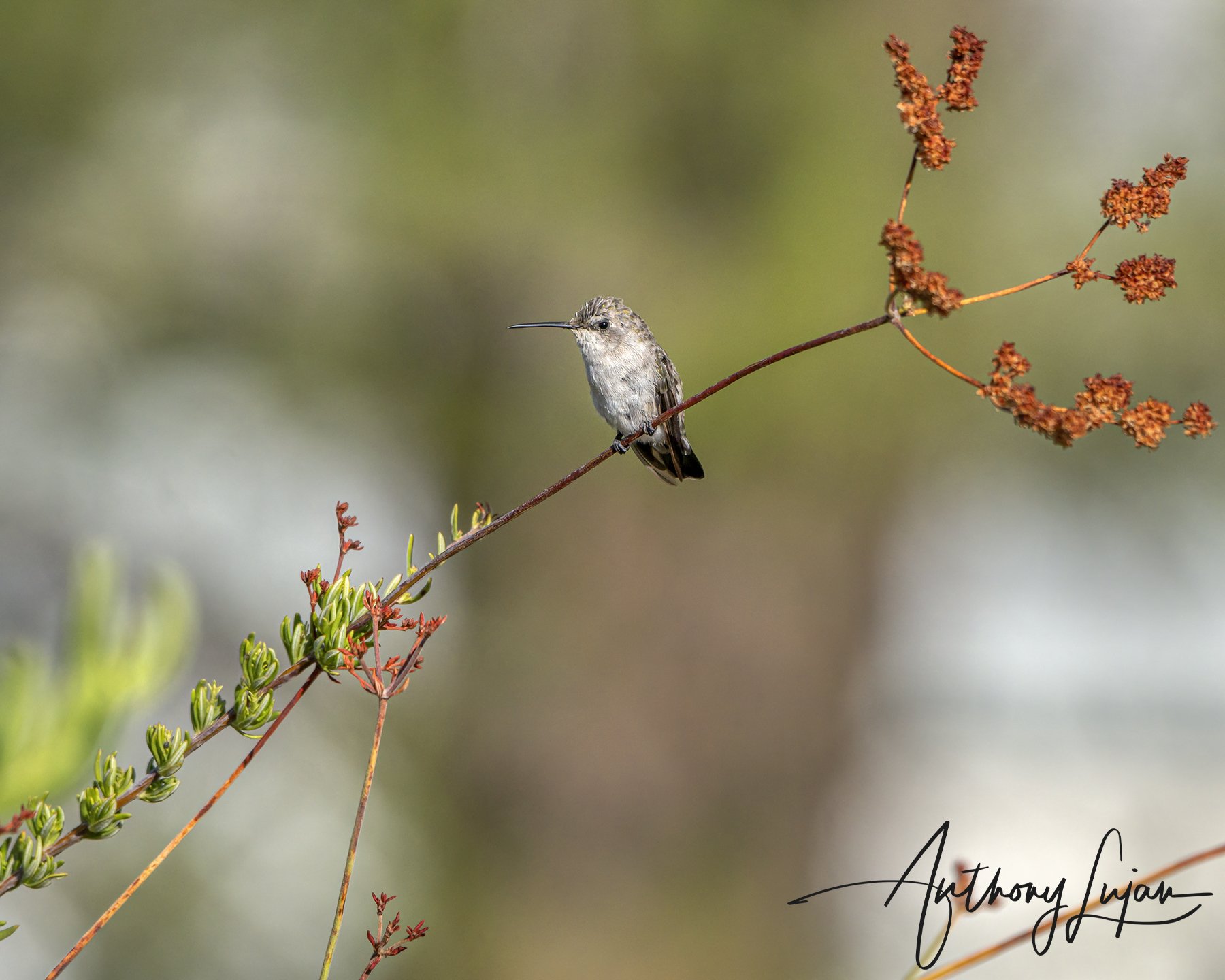
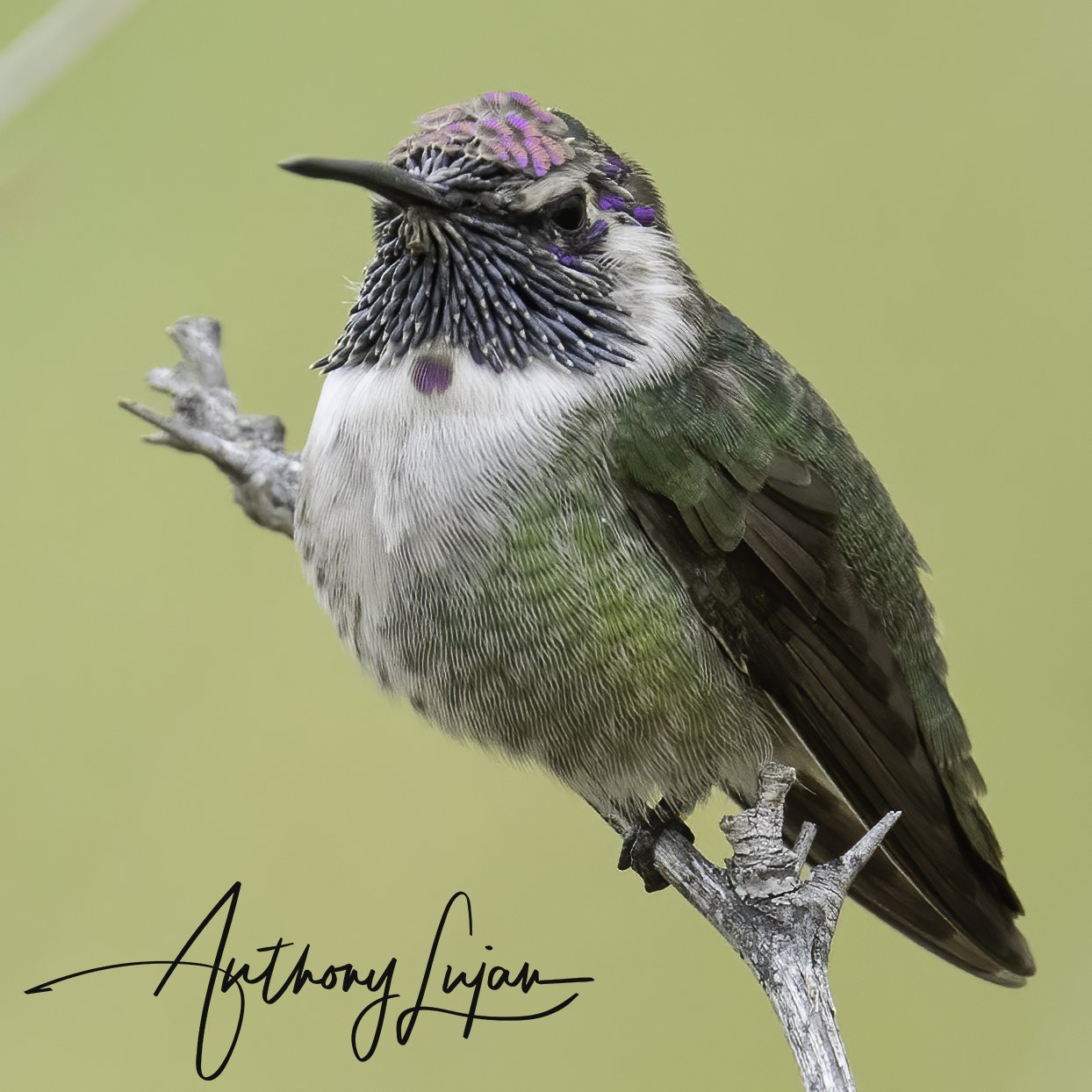
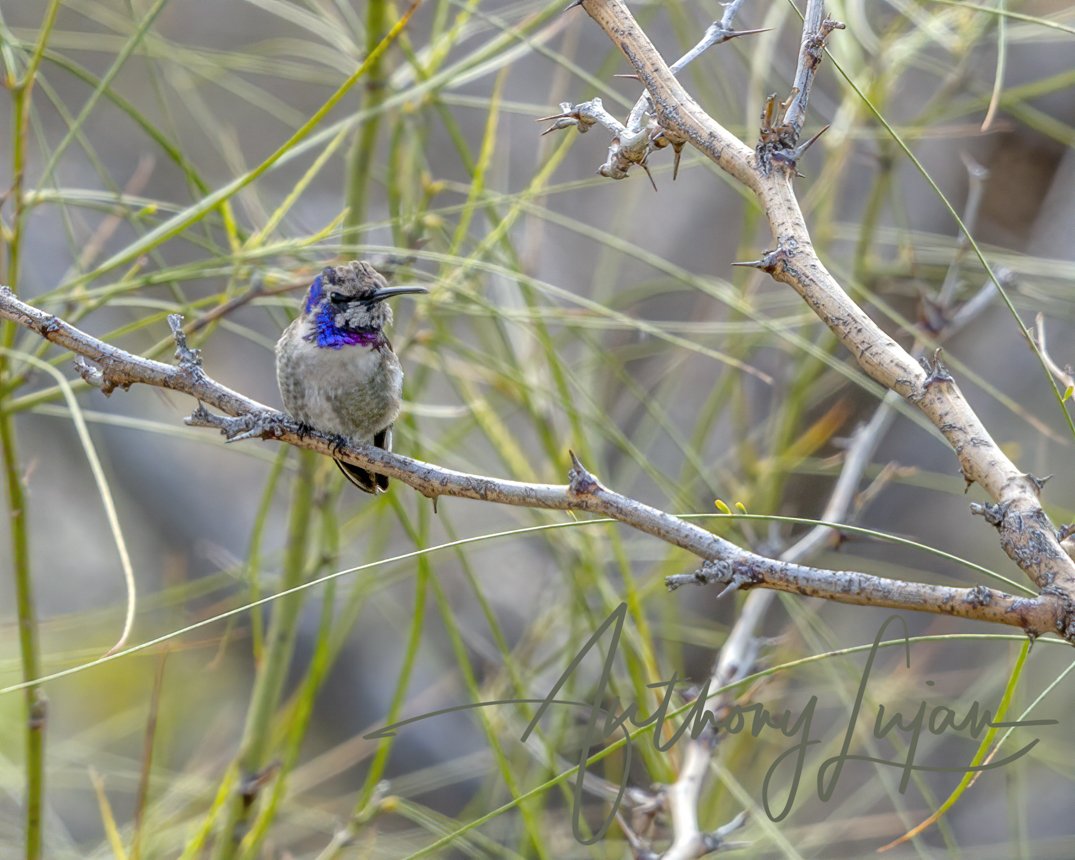
Females are green above and grayish‑white below, with a whitish throat that may show a small tuft or scattered violet feathers in the center. Their tail is rounded and tipped with white on the outer feathers, and they lack the extensive violet crown and long side plumes of the male. In the field, females can resemble small female Anna’s, but Costa’s tends to be smaller and more strongly associated with desert and arid scrub habitats.
Habitat and Behavior
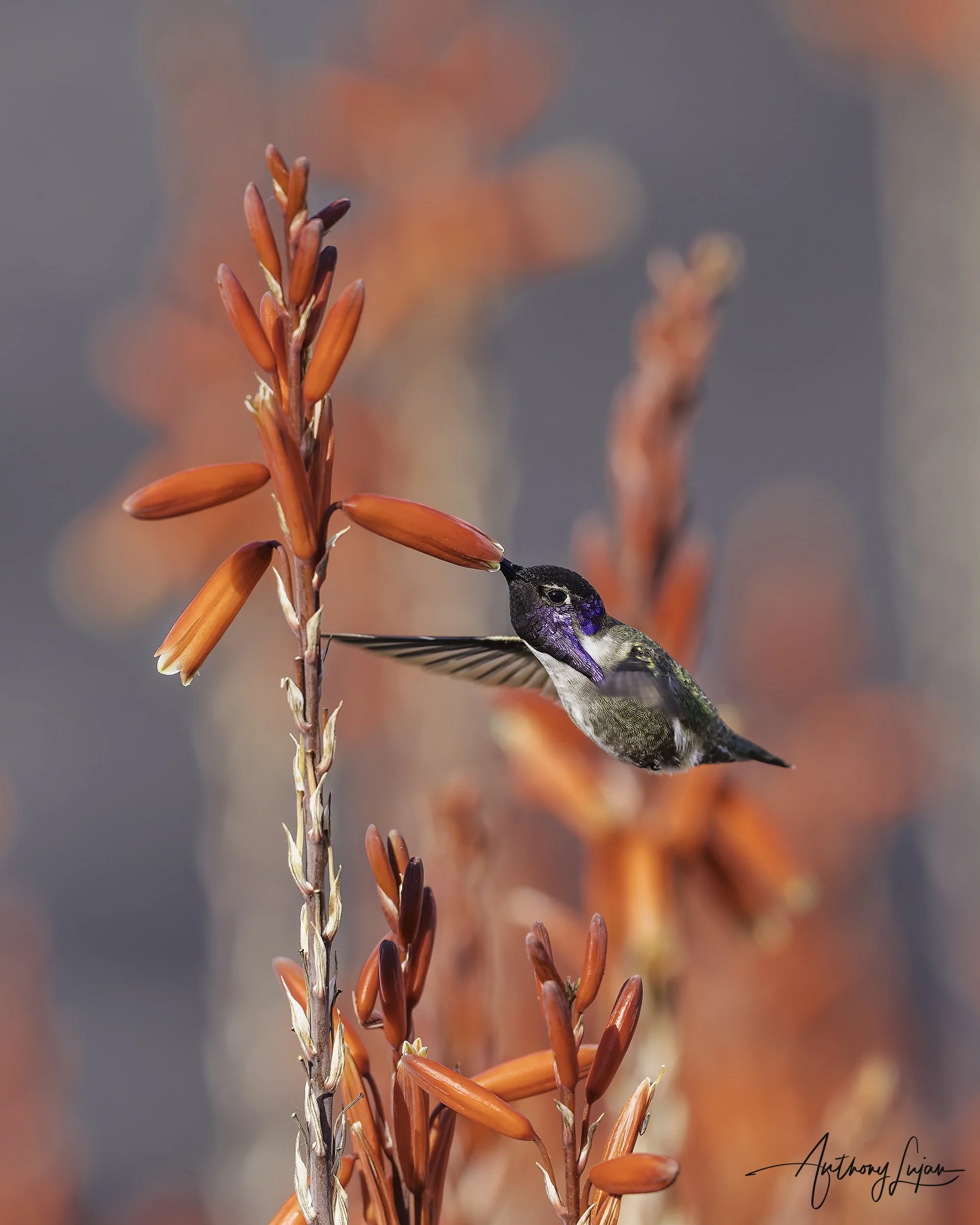
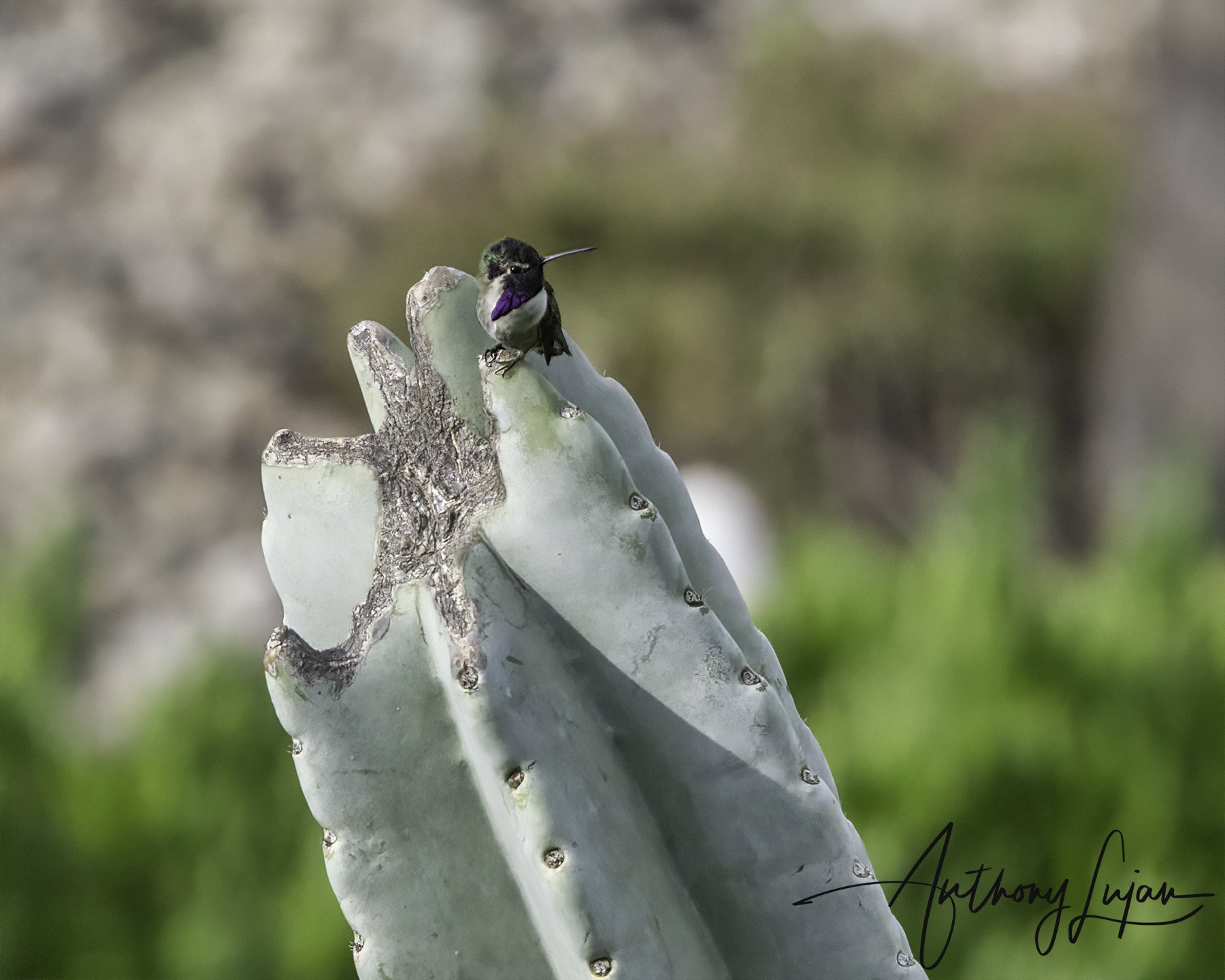
Costa’s Hummingbirds favor desert washes, mesquite thickets, ocotillo stands, Chuparosa patches, cactus‑studded slopes, and coastal sage scrub, nesting in low shrubs, cacti, or small trees within these arid landscapes. They feed on nectar from a variety of desert plants, including Justicia californica (Chuparosa), Fouquieria splendens (Ocotillo), Salvia, and other flowering shrubs and herbs, and supplement their diet with small insects and spiders caught in flight or gleaned from foliage. The male’s courtship display includes steep dives and arcing flights in front of females, producing a loud whistling or buzzing sound with the tail feathers as he swoops past.
Population and Threats
Costa’s Hummingbird is globally listed as Least Concern, and IUCN assessments describe its overall population trend as Increasing, with a large estimated population size. Long‑term analyses across North America suggest that Costa’s populations have been broadly stable at the continental scale, although some Breeding Bird Survey data indicate regional declines in portions of the Mojave and Sonoran deserts. Key pressures include habitat loss and fragmentation due to urbanization, agriculture, and water diversion; invasive plants and altered fire regimes; and climate‑change‑driven droughts that can reduce flowering and nectar availability in desert ecosystems.

Conservation
Because Costa’s Hummingbird is tightly linked to native desert vegetation, conservation of desert scrub, arid wash ecosystems, and associated flowering plants is essential for maintaining its populations. Protecting mesquite and ocotillo stands, conserving Chuparosa and other nectar‑rich shrubs, and limiting large‑scale conversion of desert habitats all support this species. In developed areas, pollinator‑friendly landscaping with native desert plants and responsible feeder use can help supplement natural nectar sources without replacing the importance of intact desert plant communities.
Checkout Anthony’s playlist of this species! Click the top right dropdown to see all the videos.
Related species in the Calypte genus (2 species total):
Please note: The content provided in this article reflects Anthony’s personal experience and photographic approach. Results can vary depending on light, weather, location, equipment, subject behavior, and field conditions.