
Scientific name: Chlorostilbon russatus
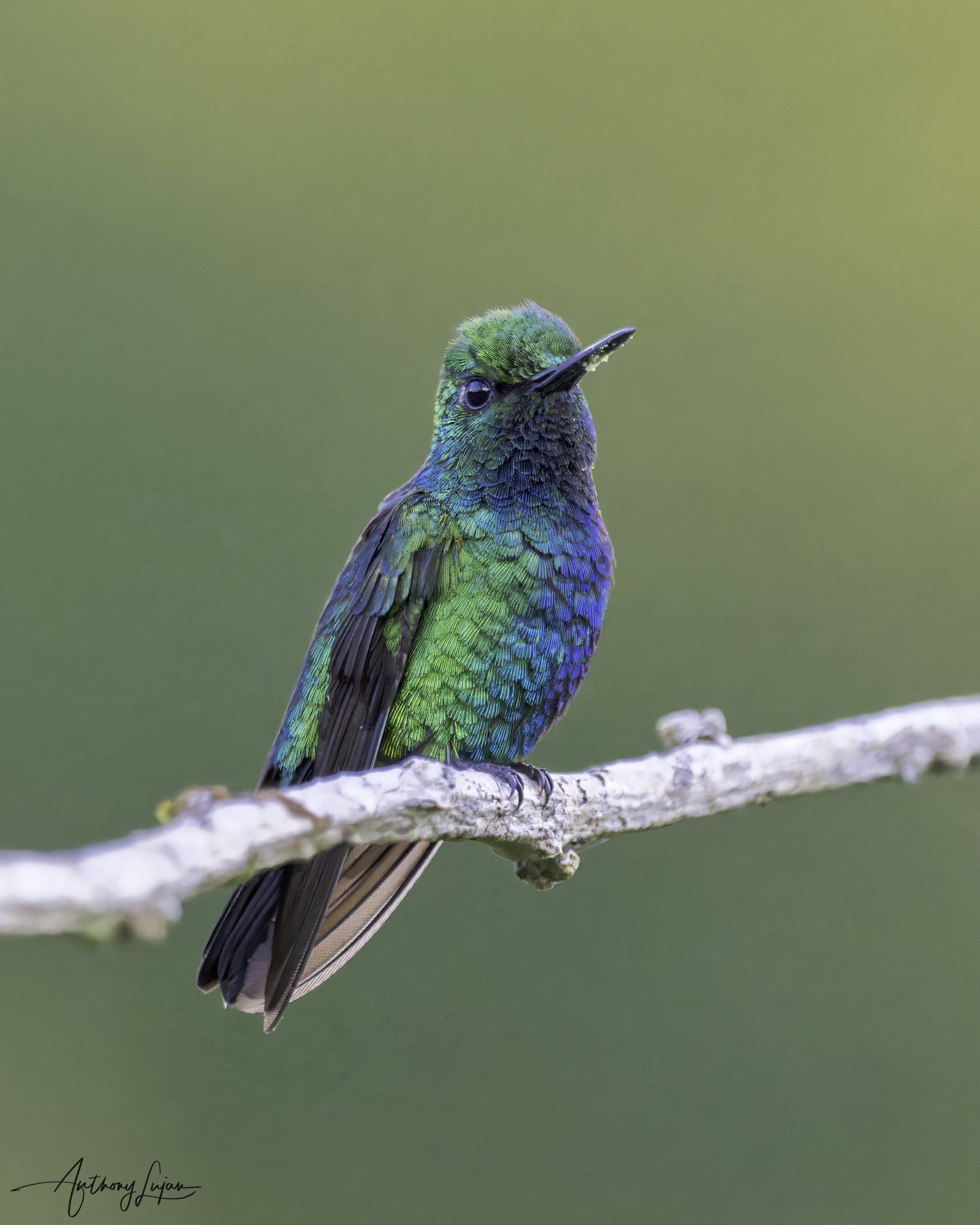
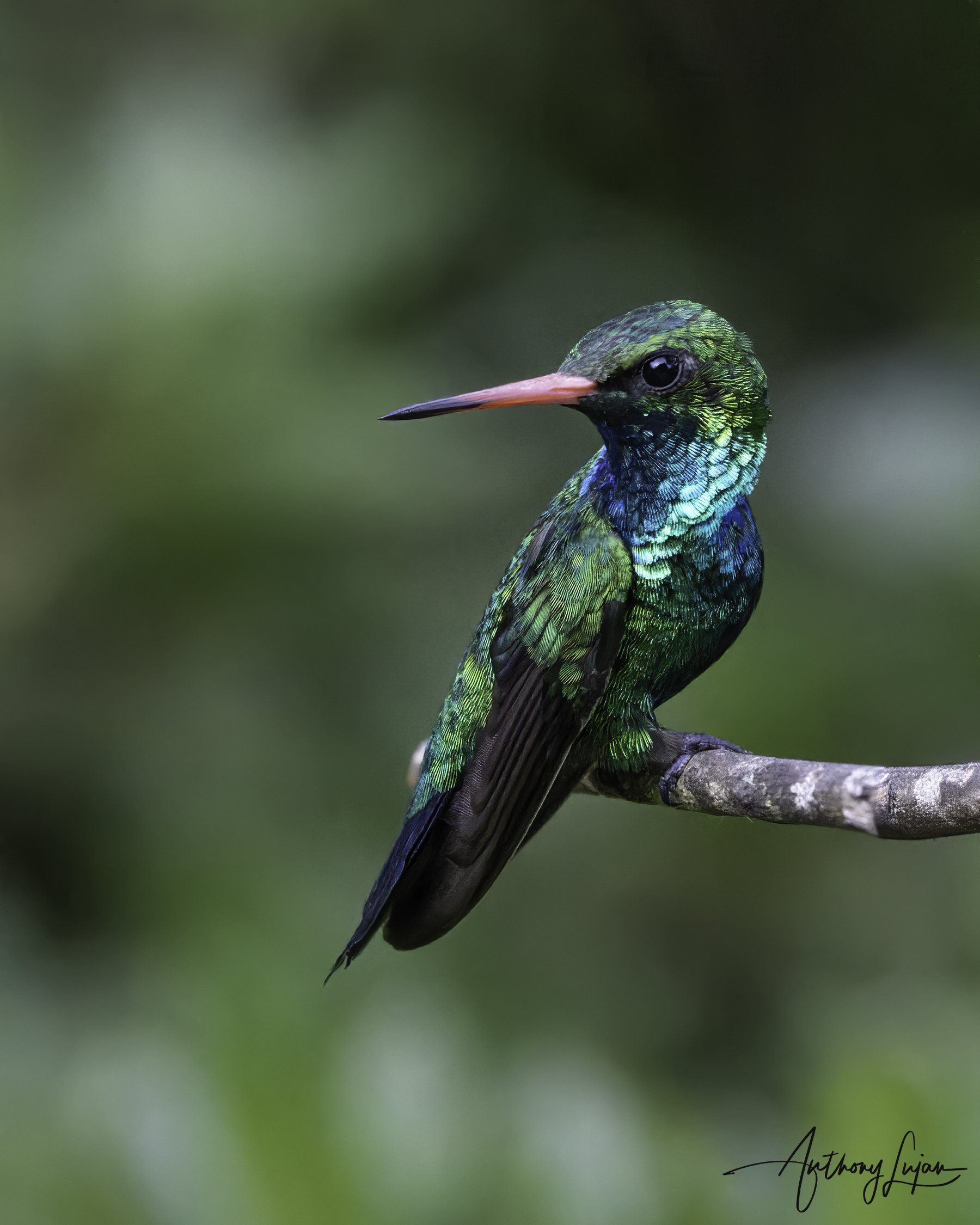
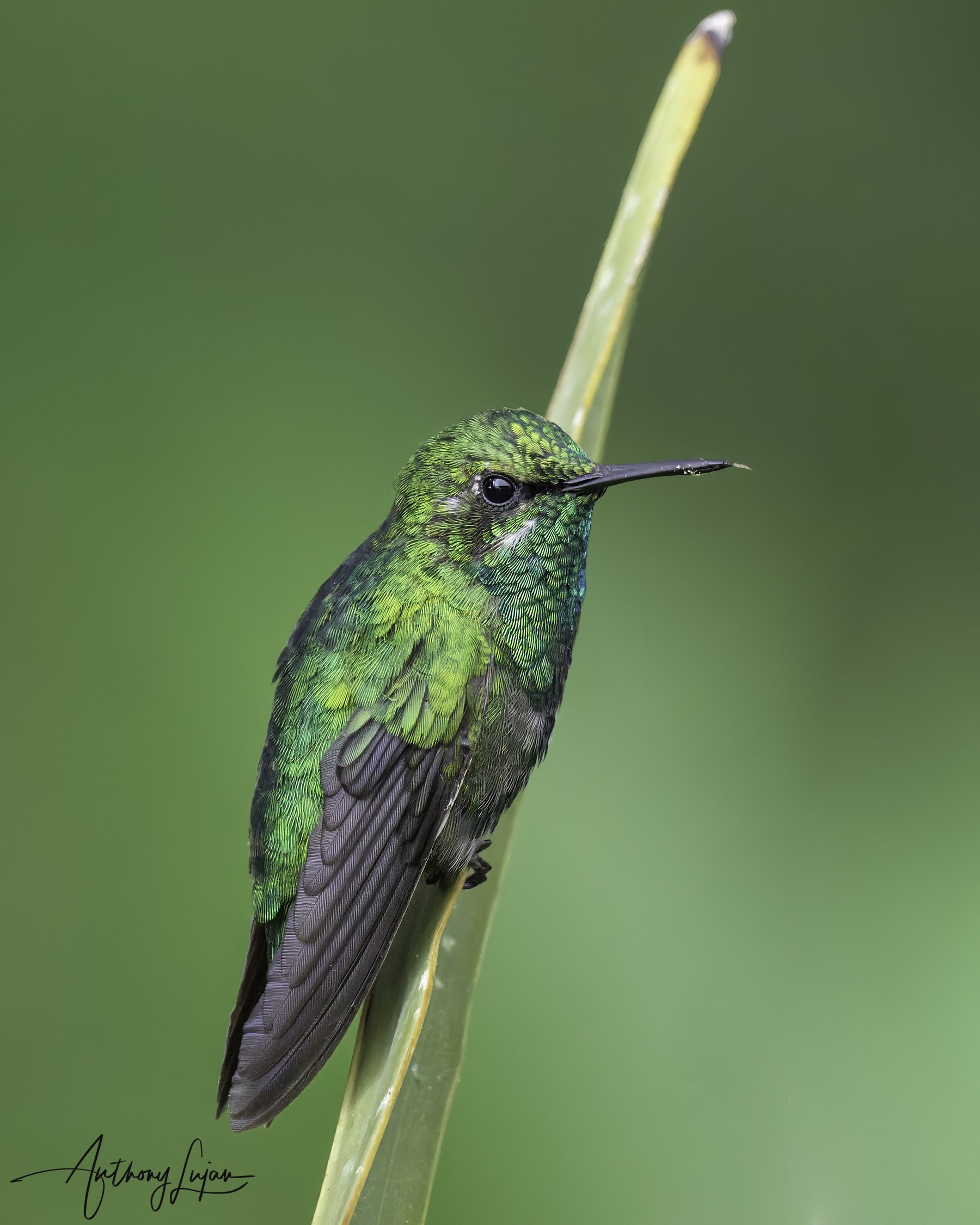
The Coppery Emerald is a localized “emerald” hummingbird of northern Colombia and northwestern Venezuela. The number of mature individuals is unknown, the population is decreasing, it is considered non-migratory, and it is currently listed as Least Concern and monotypic, with no recognized subspecies.
At a Glance
Family: Trochilidae (hummingbirds)
Clades: Trochilini – Emeralds
Genus group: Chlorostilbon — small, iridescent green “emerald” hummingbirds of the Neotropics (10 species total)
Range: Northern Colombia (lower Magdalena valley, Santa Marta region, and Serranía del Perijá) and adjacent northwestern Venezuela.
Habitat: Semi-open and open landscapes including scrublands, forest edges, dry to moist second growth, plantations, and cultivated areas with scattered trees and shrubs.
Elevation: From near sea level up to about 2,600 m (8,500 ft), most frequent between roughly 500 and 1,700 m (1,600–5,600 ft).
Length: About 8–9 cm (3.1–3.5 in).
Weight: About 3–4 g (0.11–0.14 oz).
Number of mature individuals: Unknown
Population trend: Decreasing
Status: Least Concern (IUCN)
Name Origin
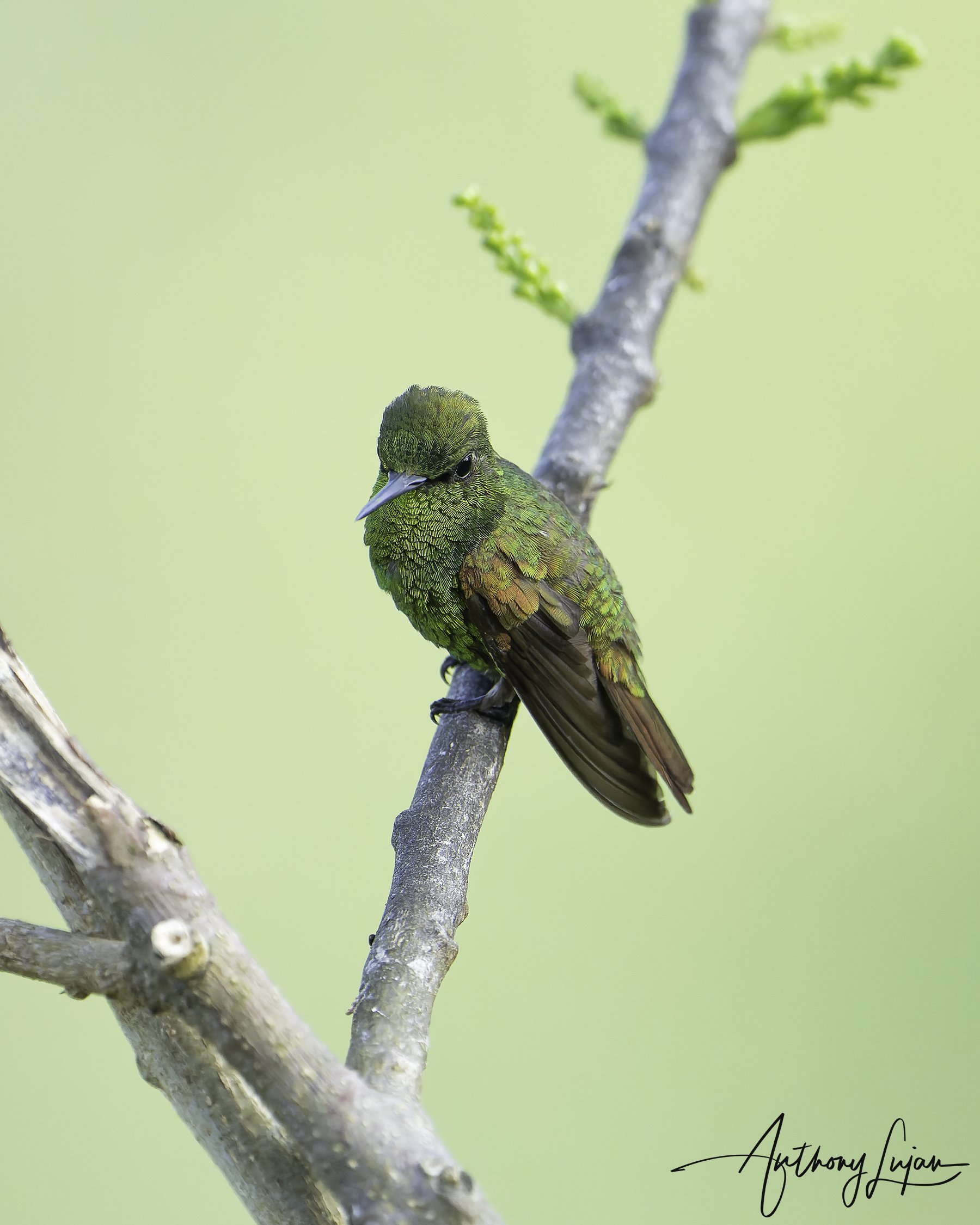
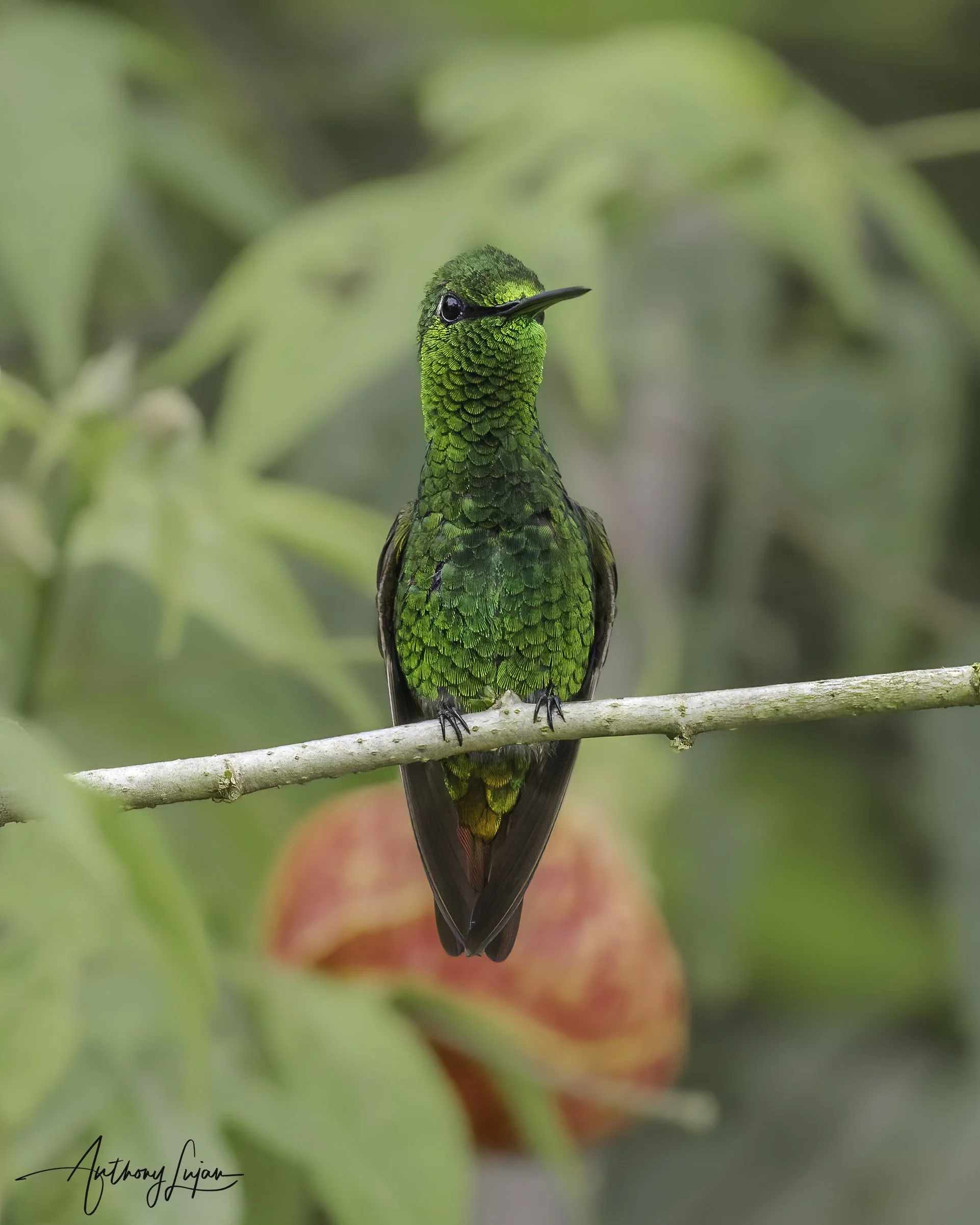
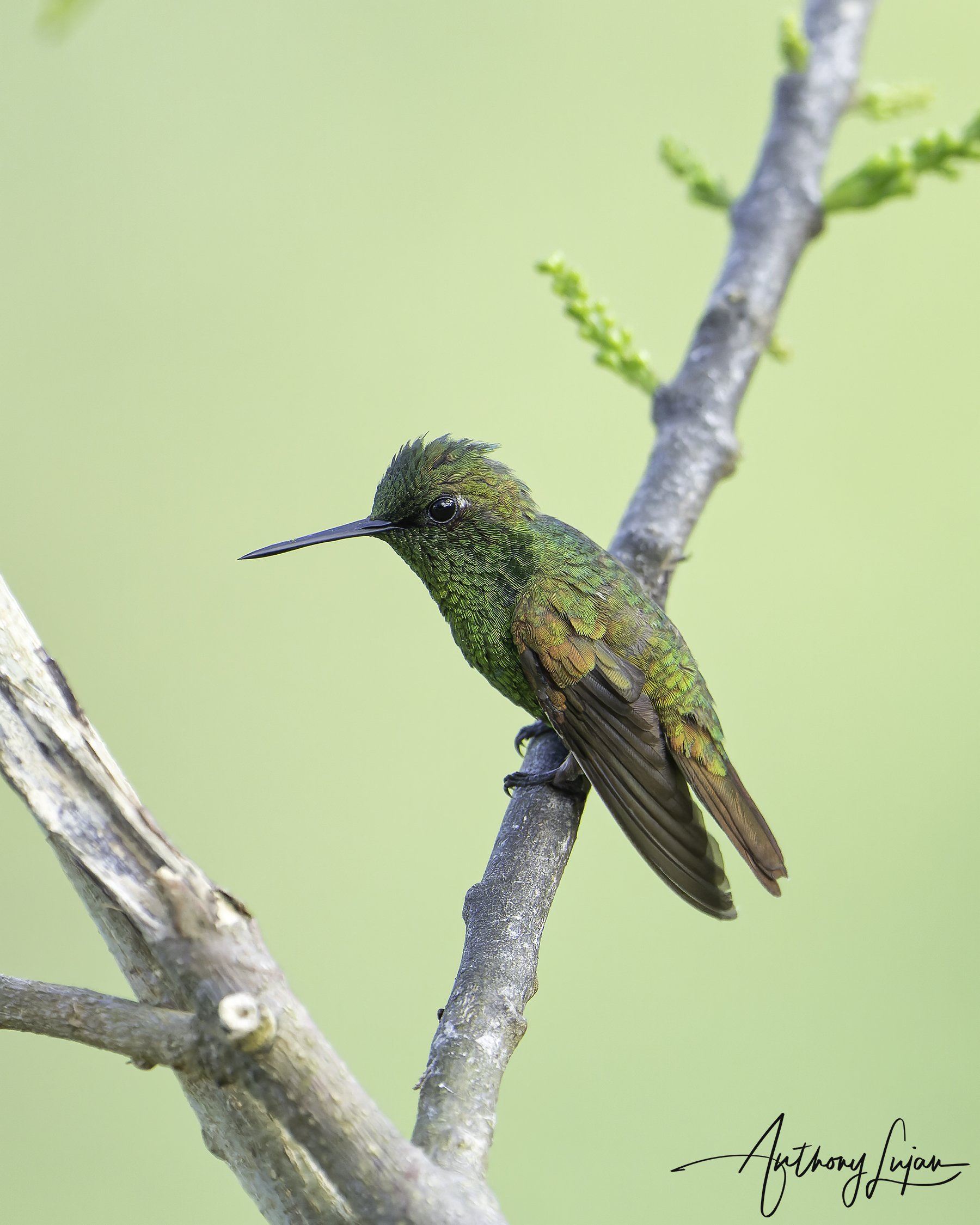
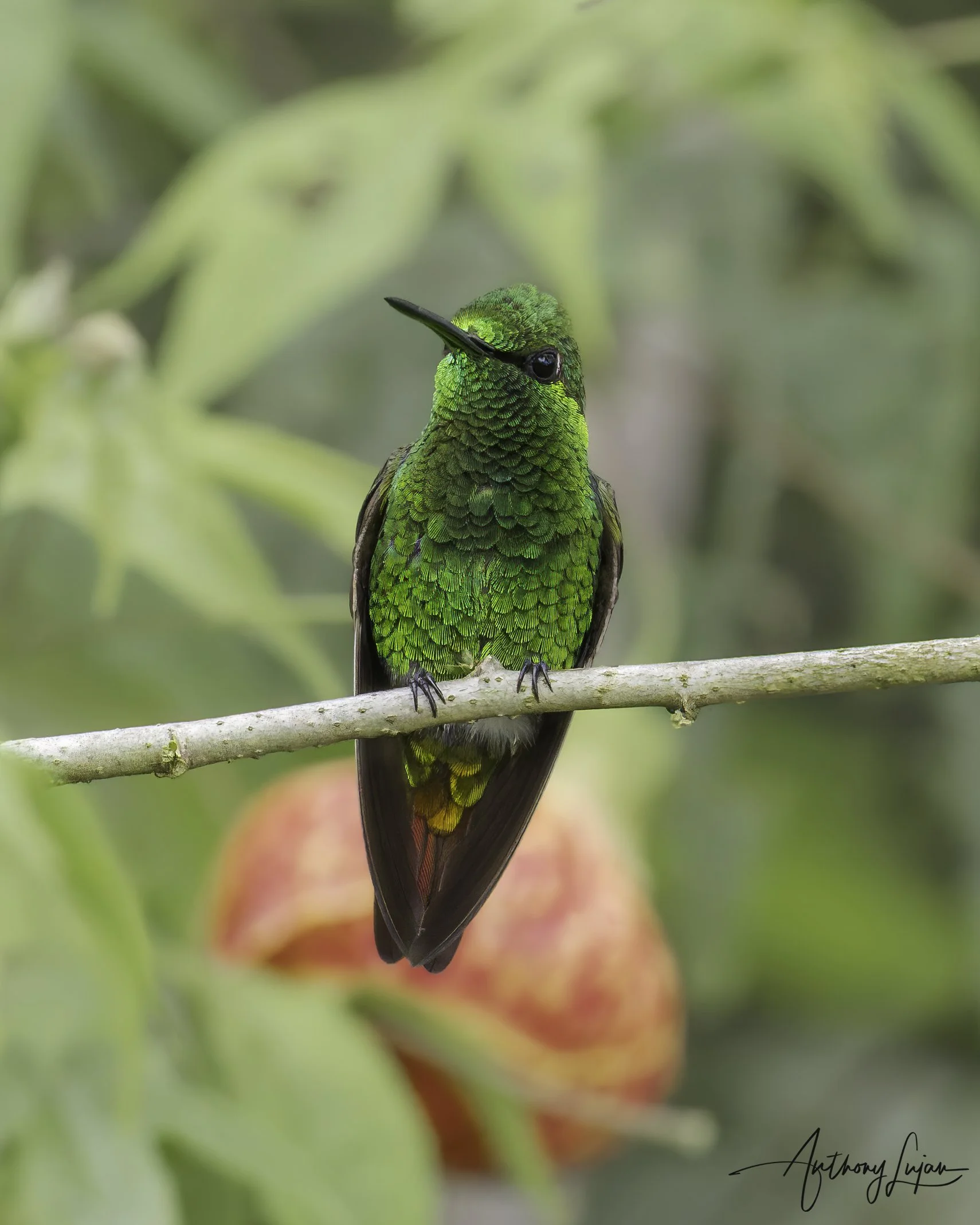
The genus name Chlorostilbon combines Greek for “green” and “shining,” referring to the bright metallic green plumage typical of emerald hummingbirds. The species name russatus means “reddish” or “coppery,” a nod to the warm coppery tones in the bird’s plumage. The English name “Coppery Emerald” emphasizes both its iridescent emerald body and its distinctive coppery sheen.
Subspecies & Distribution
Monotypic — no subspecies recognized.
Distribution: The Coppery Emerald occurs in Colombia’s lower Magdalena River valley and Santa Marta department (including the Sierra Nevada de Santa Marta) and in the Serranía del Perijá along the Colombia–Venezuela border, extending into adjacent northwestern Venezuela. It favors semi-open scrub, forest edges, and cultivated areas within this limited northern range.
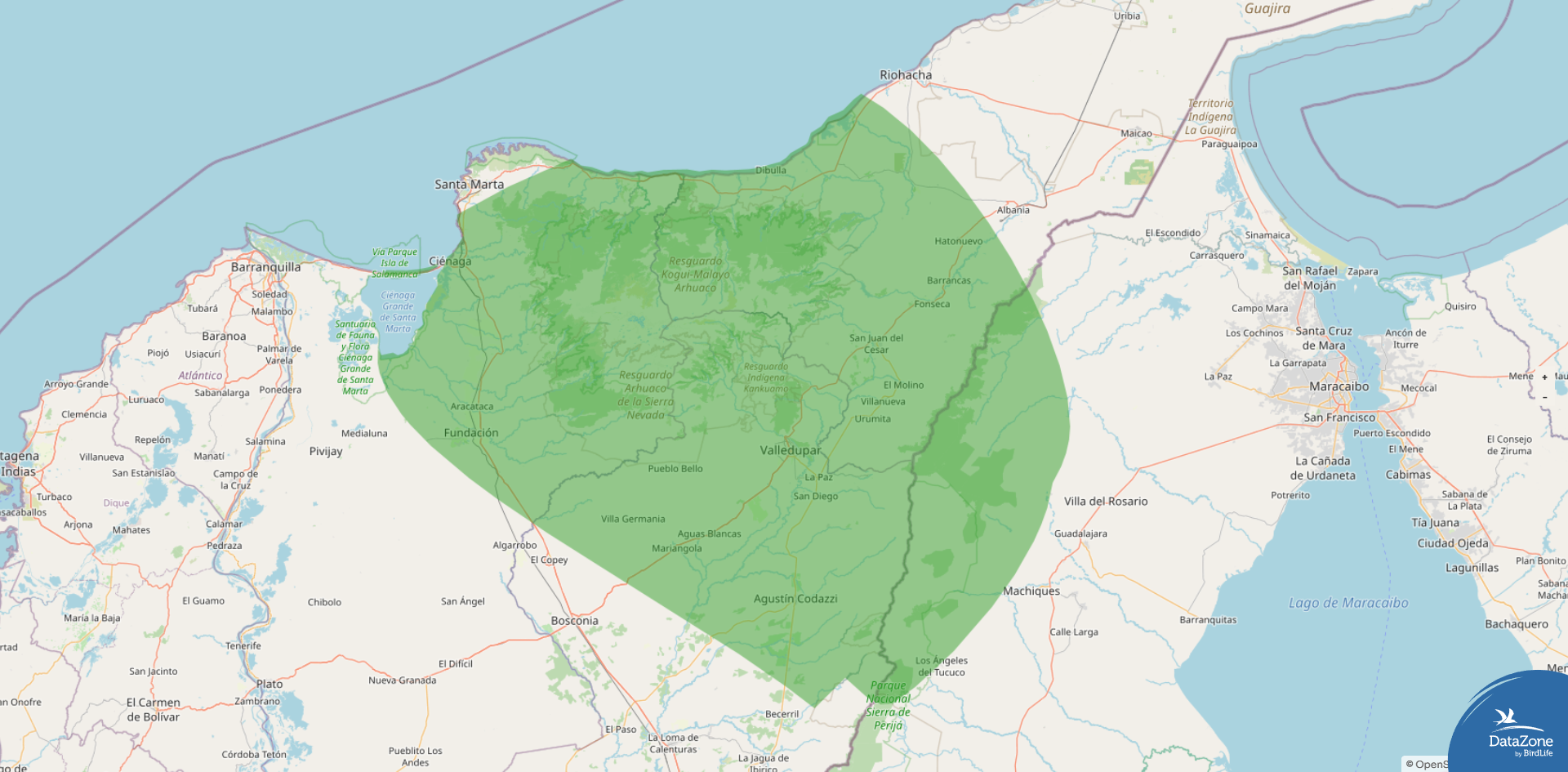
Legend
Green Resident
Species Overview
The Coppery Emerald is a small, warm-toned emerald that occupies a mosaic of scrub, forest edge, and agricultural habitats in northern Colombia and nearby Venezuela. Within its range it can be fairly common in suitable semi-open areas but remains globally localized, tied to specific mountain systems and valleys. Its reliance on edge and semi-open habitats allows it to use human-modified landscapes, yet ongoing changes in land use and forest cover are thought to be driving a gradual decline.
Male Description
Adult males are tiny hummingbirds with a straight, mostly dark bill. The crown, back, and rump are metallic green with a strong bronze or coppery wash, especially on the upperparts. The underparts are glittering golden-green to coppery-green, with the belly often appearing particularly bright and warm toned. The tail is slightly forked and dark, typically blackish to blue-black with a faint metallic sheen. In the field, males look like compact, bronze-green birds with a glowing, coppery underside and a dark, slightly forked tail.
Female Description
Adult females have green upperparts, lacking the strong coppery sheen of the male. The underparts are pale grayish to whitish, sometimes with a light greenish wash or fine spotting on the sides. A subtle pale stripe or spot is present behind the eye, separated from a darker cheek area. The tail is slightly notched, dark with whitish or pale tips or corners on the outer feathers. Females thus appear as small green-backed hummingbirds with pale grayish underparts and a dark tail with pale corners.
Habitat & Behavior
Coppery Emeralds inhabit semi-open to open landscapes such as scrublands, dry to moist second growth, forest edges, hedgerows, plantations, and cultivated areas with scattered trees. They visit a variety of flowering shrubs, trees, and herbs for nectar and also take small insects for protein. Birds typically forage from low to mid-levels, hovering at blooms or briefly perching, and may defend rich nectar patches within their territories. The species is considered non-migratory, remaining year-round within its northern Colombian and Venezuelan range, with only local movements likely in response to flowering and seasonal conditions.
Population
The total number of mature individuals is unknown, but the Coppery Emerald has a relatively small global range confined to parts of northern Colombia and adjacent Venezuela. Within that range it can be locally fairly common in suitable scrub and edge habitats, yet its overall distribution is patchy. Continuing deforestation, agricultural expansion, and changes in land use in the Magdalena valley, Santa Marta region, and Serranía del Perijá are believed to be causing a gradual decline.

Conservation
The Coppery Emerald is assessed as Least Concern because it persists in several regions and appears tolerant of some habitat modification. However, its restricted range, patchy distribution, and decreasing trend make it sensitive to further loss and degradation of semi-open scrub and forest-edge habitats. Protecting remaining scrublands, forest margins, and tree-rich agricultural landscapes in the Santa Marta region, Magdalena valley, and Perijá foothills will benefit this species. Encouraging native flowering shrubs and trees in rural and peri-urban areas can also help sustain local populations.
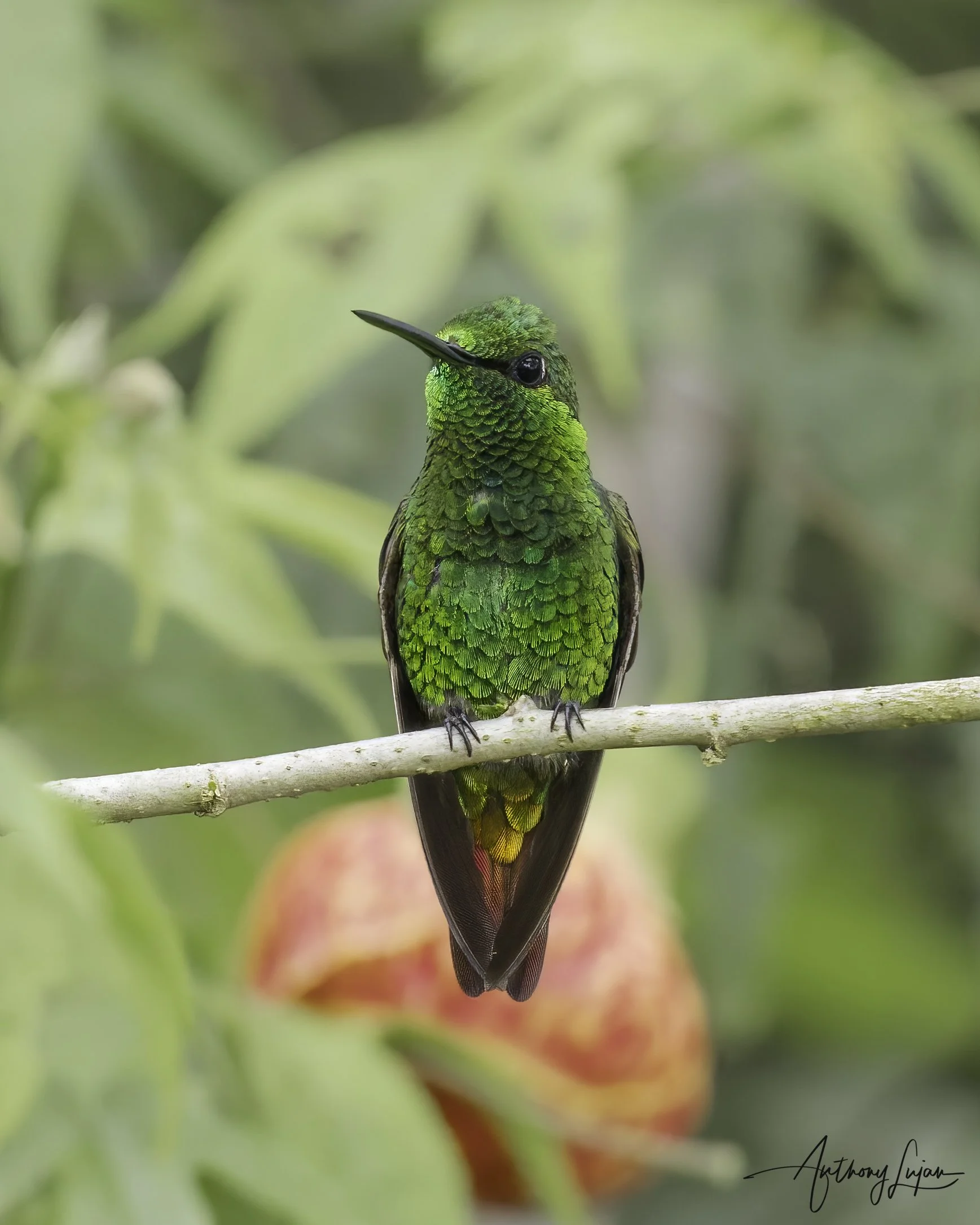
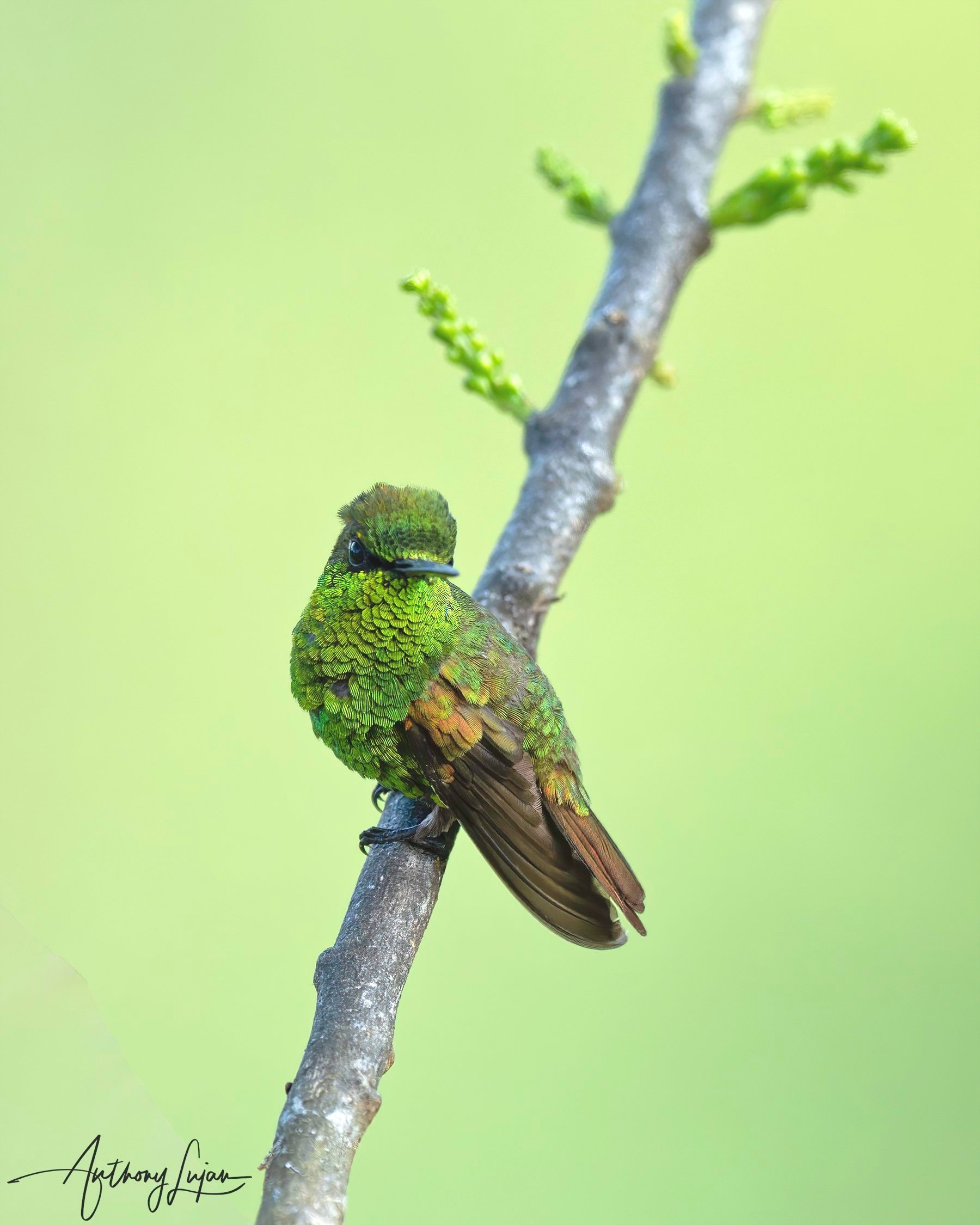
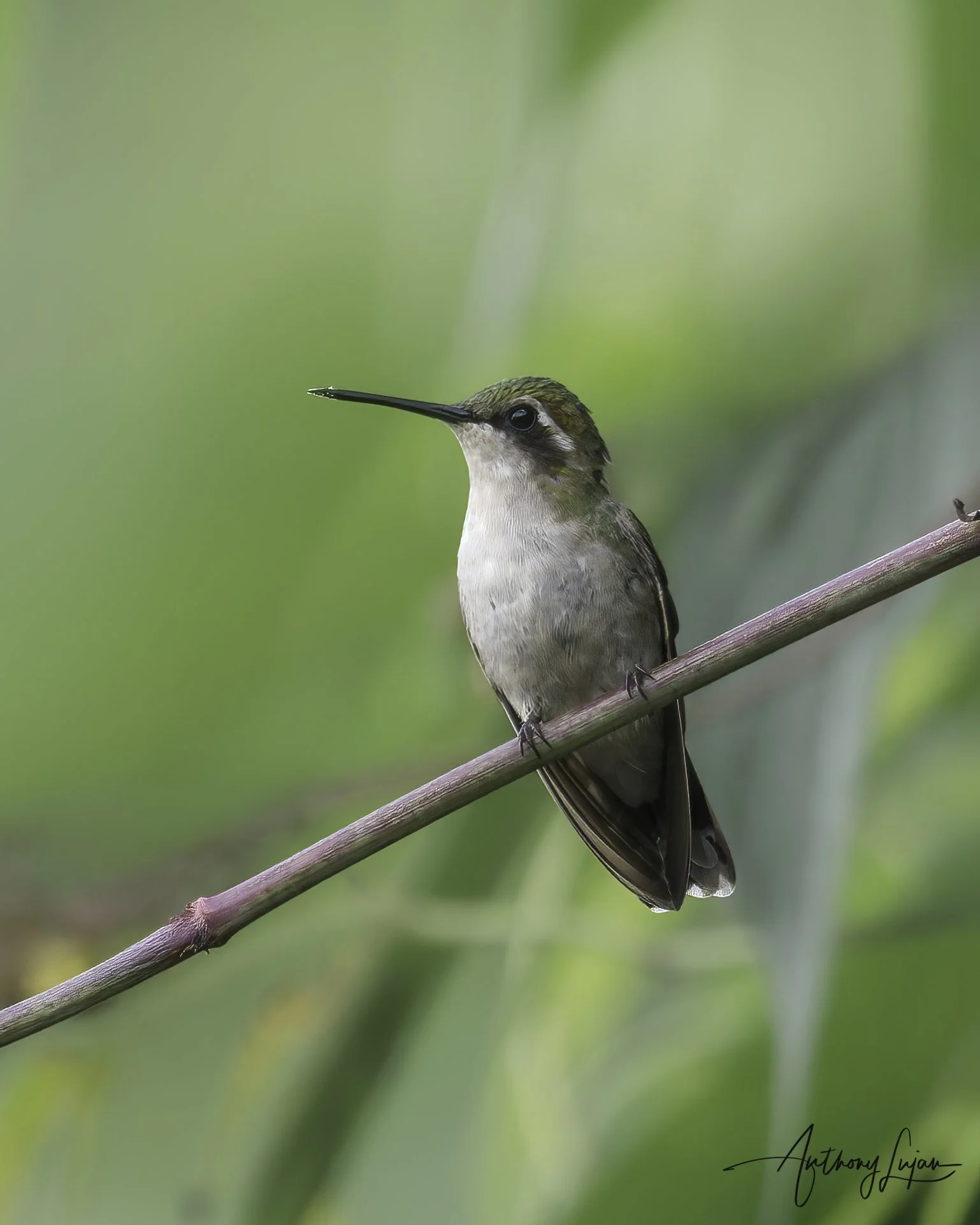
Related species in the Chlorostilbon genus (10 species total):




Please note: The content provided in this article reflects Anthony’s personal experience and photographic approach. Results can vary depending on light, weather, location, equipment, subject behavior, and field conditions.