
Dusky-throated Hermit

Scientific name: Phaethornis squalidus
The Dusky-throated Hermit is a small hermit hummingbird of humid Atlantic Forest understory and edges in southeastern Brazil. The number of mature individuals has not been quantified, the population trend is decreasing, it is not a migrant, and it is currently assessed as Least Concern.
At a Glance
Family: Trochilidae (hummingbirds)
Clade: Phaethornithinae – Hermits
Genus: Phaethornis — 27 species in total
Range: Endemic to southeastern Brazil
Habitat: Humid Atlantic Forest understory, primary and tall secondary forest, forest edges, ravines, and gullies
Elevation: From near sea level to about 2,250 m (7,400 ft)
Length: About 13 cm (5.1 in)
Number of mature individuals: Unknown
Population trend: Decreasing
Movement: Not a migrant
IUCN Red List category: Least Concern
Name Origin
The genus name Phaethornis comes from Phaethon, meaning “shining” or “radiant,” referencing the iridescent plumage typical of hummingbirds. The species name squalidus is Latin for “dusky,” “dirty,” or “dingy,” referring to the darker tones of its throat and overall subdued coloration. The English name “Dusky-throated Hermit” highlights its relatively dark throat compared with some other hermits.
Taxonomy
Phaethornis squalidus is a hermit hummingbird in the subfamily Phaethornithinae. It is one of 27 species in the genus Phaethornis, a diverse group that includes the Little Hermit (P. longuemareus), Reddish Hermit (P. ruber), and Black-throated Hermit (P. atrimentalis).
Subspecies and Distribution
Monotypic species — no recognized subspecies.
Distribution:
The Dusky-throated Hermit is endemic to Brazil. It occurs in southeastern Brazil, mainly in the Atlantic Forest region from southern Minas Gerais and Espírito Santo south through Rio de Janeiro and São Paulo to Santa Catarina, and also in the Iguaçu Falls area of western Paraná. It inhabits the understory of humid primary and tall secondary forests from the coastal littoral zone inland to high montane elevations, as well as shaded ravines and gullies.
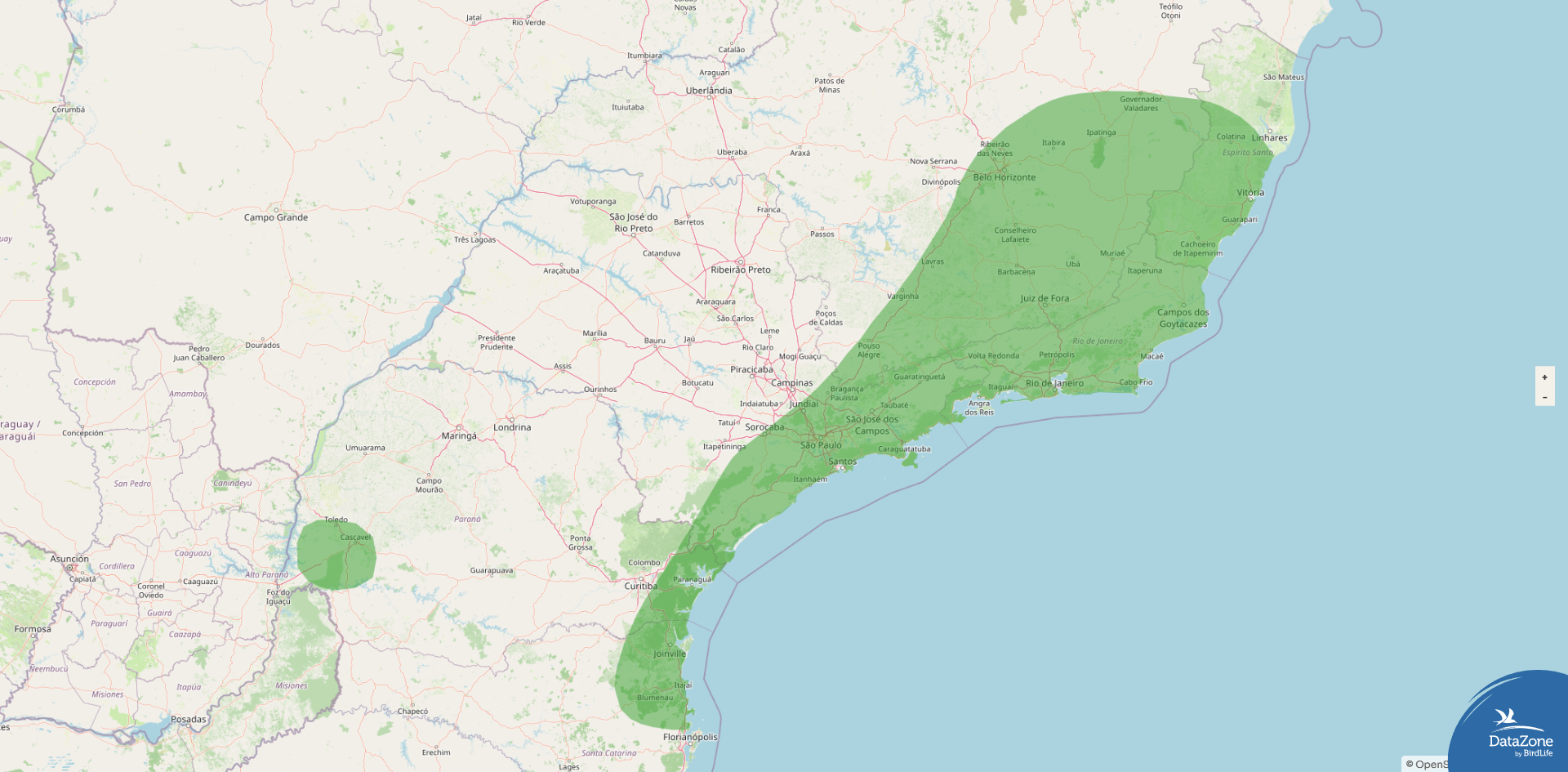
Legend
Green Resident
Species Overview
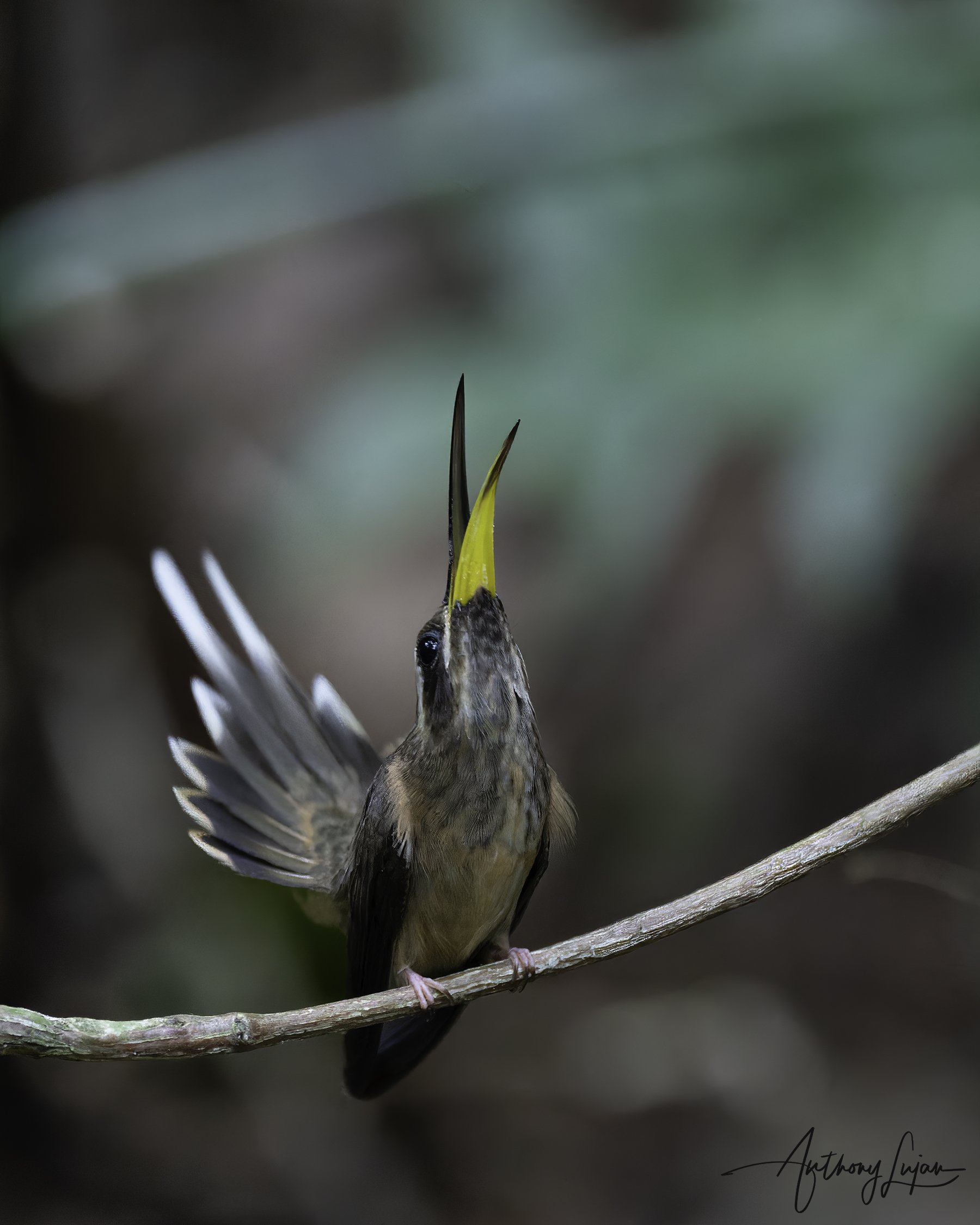
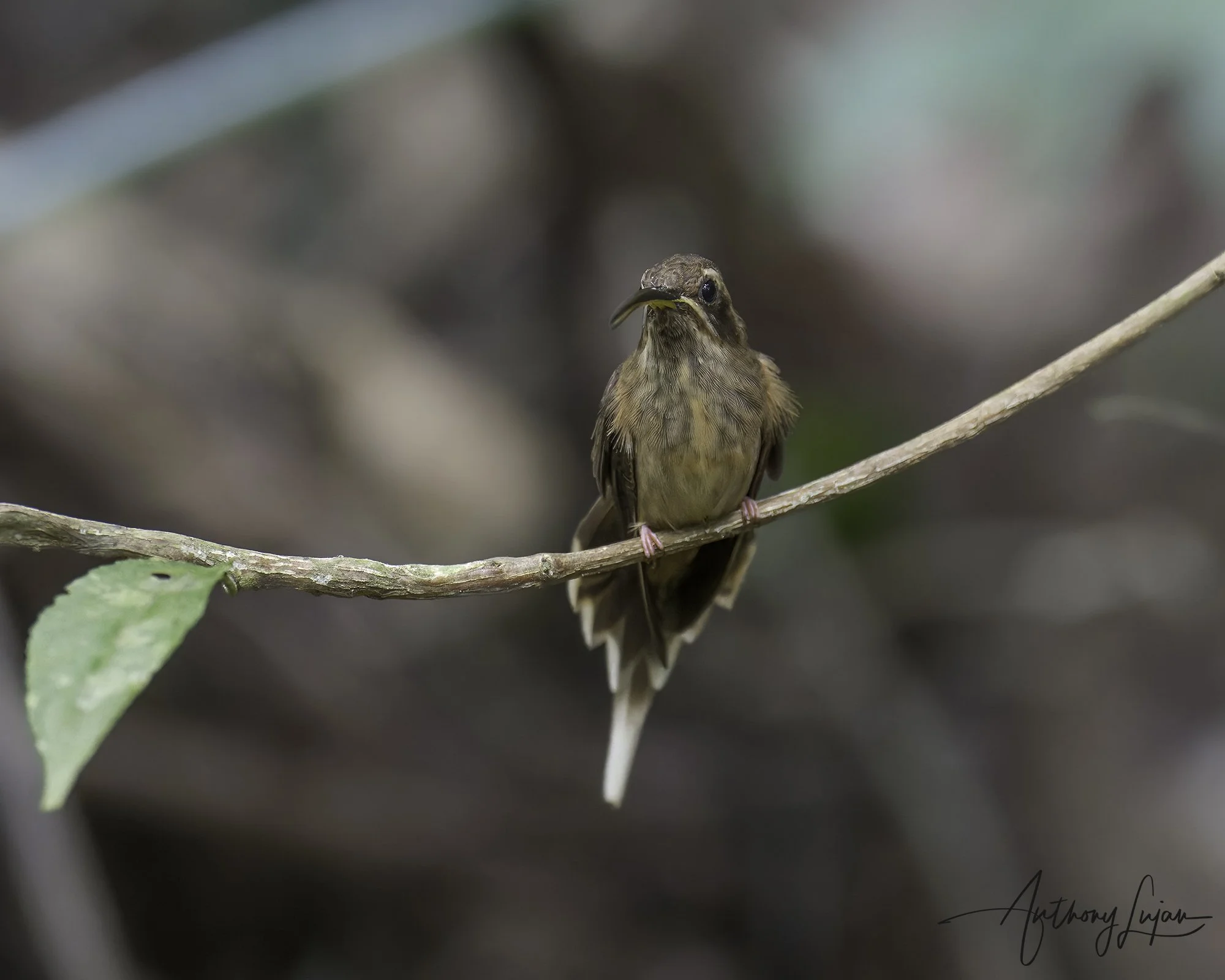
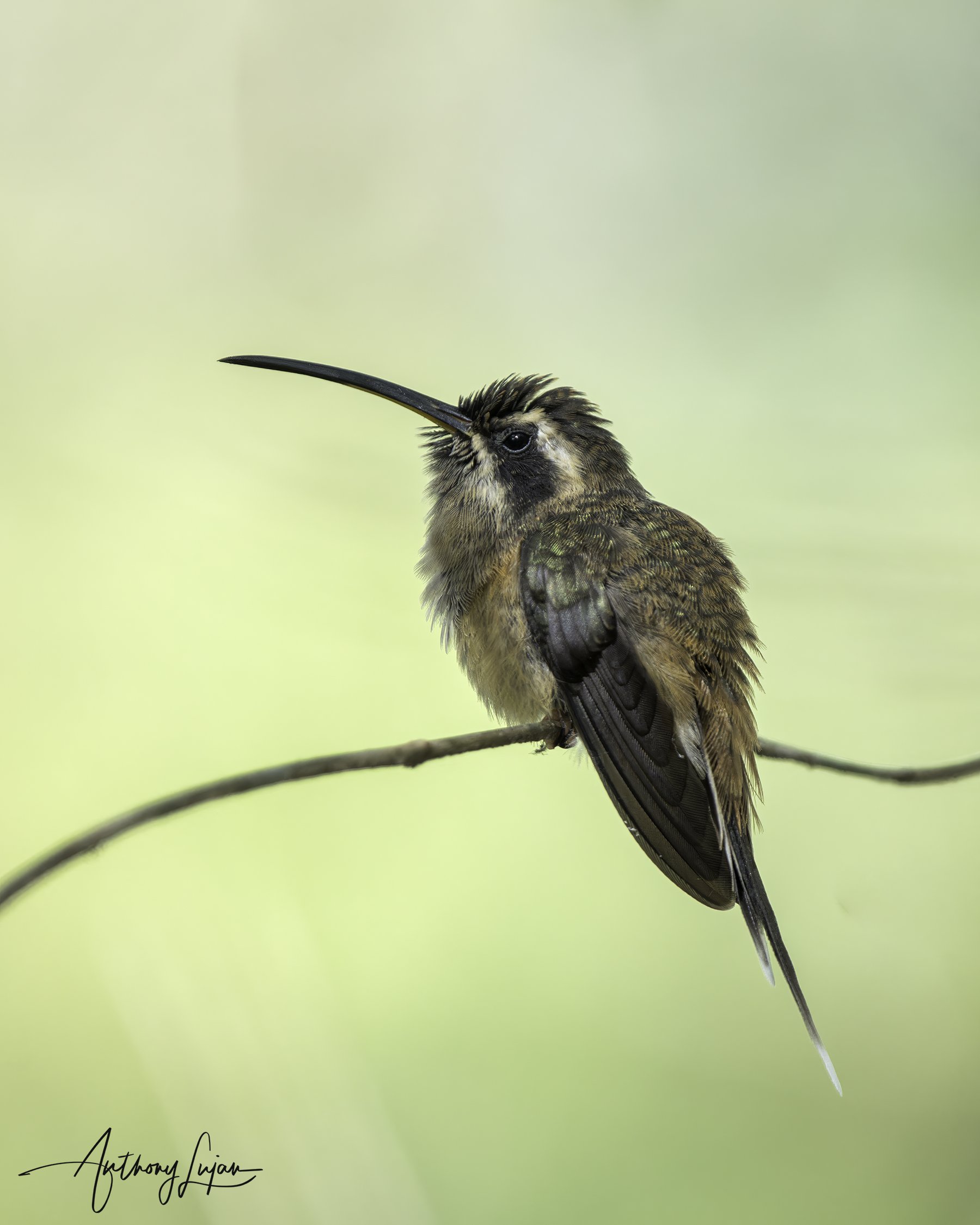
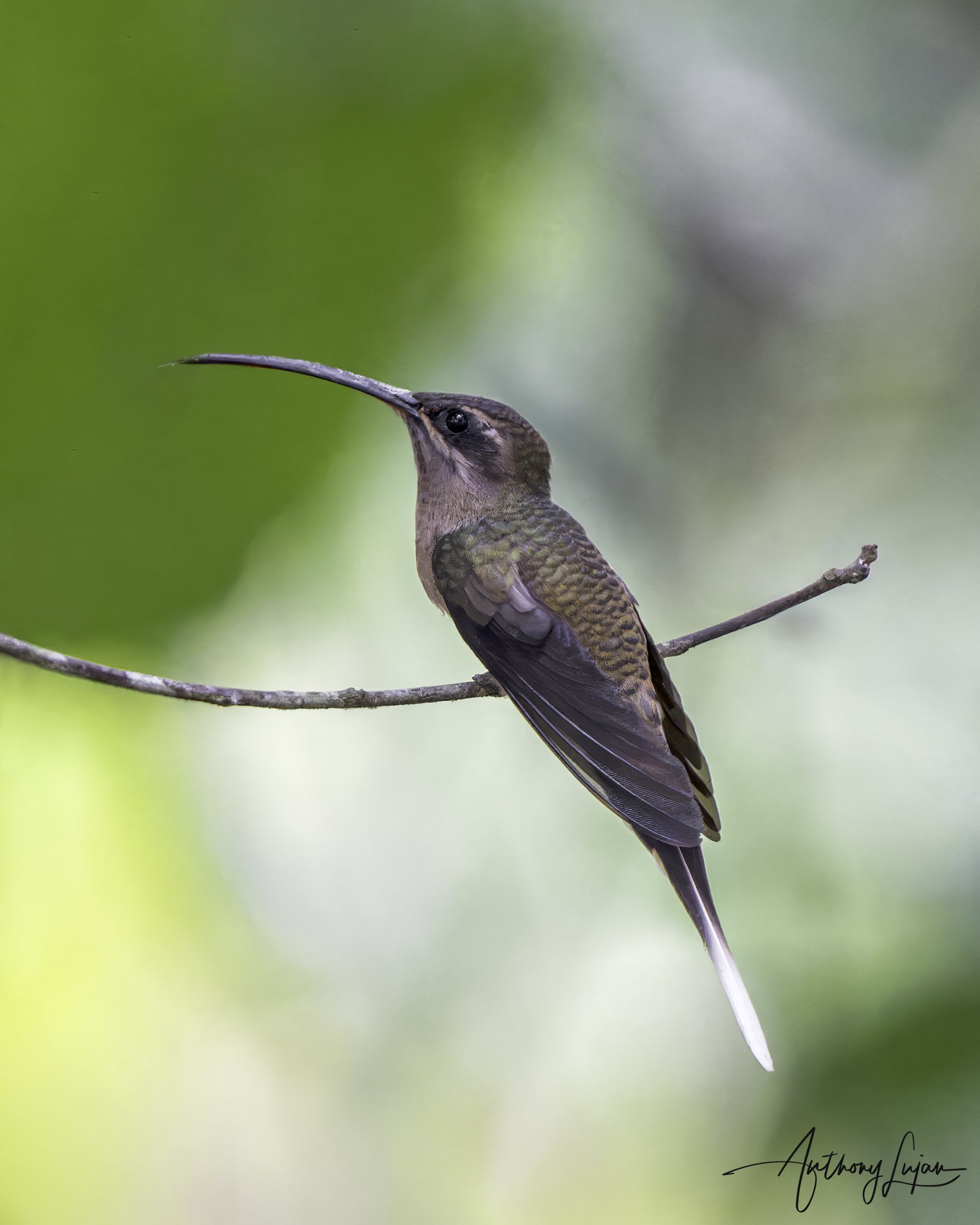
The Dusky-throated Hermit is a subtly colored hermit that blends well into the dim understory of Atlantic Forest. It shows the typical hermit facial pattern with a dark mask and pale facial stripes, a long decurved bill, and a longish tail with white-tipped outer feathers, but its throat and upper breast are comparatively dusky rather than brightly rufous. It moves quietly through dense vegetation, usually alone, following regular nectar routes and often going unnoticed even where present.
Male Description
Males are about 13 cm long, with greenish to bronzy upperparts and dull buff to brownish underparts. The throat and upper breast are dusky or brownish‑gray, giving a “dusky-throated” appearance. The face shows a dark mask with a pale supercilium and moustachial stripe typical of Phaethornis hermits. The bill is long and decurved, adapted for tubular flowers. The tail is relatively long, with central feathers longer and outer feathers bearing small white tips; rufous tones at the base may be present but less bright than in strongly rufous-breasted hermits.
Female Description
Females closely resemble males, with similar greenish upperparts and dusky throat, but may be slightly smaller and show minor differences in tone or bill proportions. Juveniles look broadly similar to adults but may appear somewhat duller, with softer contrast between throat and breast and fresher feather edges.
Habitat & Behavior
Dusky-throated Hermits inhabit the understory of humid Atlantic Forest, including primary forest, mature secondary forest, shaded ravines, and forest edges. They occur from lowland coastal forests up through montane forest belts, often frequenting dark, damp gullies and areas with abundant understory flowers.
They feed mainly on nectar from tubular flowers in the understory, including various forest shrubs and herbs, visiting blossoms along repeated circuits (traplining) rather than defending single nectar sources. They also take small arthropods gleaned from foliage or spiderwebs to supplement their diet. Their movements are typically low and close to the vegetation, and they often hover briefly at flowers or perch momentarily while feeding.
Breeding
Detailed breeding information is limited, but the pattern is expected to match that of other Phaethornis hermits. The female builds a small cup or cone‑shaped nest of plant fibers, moss, and spiderweb, often suspended from the underside of long leaves, thin branches, or roots in sheltered, shaded locations such as ravines or forest edges.
The typical clutch is two white eggs. The female alone incubates the eggs and cares for the nestlings. Incubation and fledging times are not well documented for this species specifically but are likely similar to related hermits, with a several‑week period from egg laying to fledging.
Movement
The Dusky-throated Hermit is considered non‑migratory. It is resident within its southeastern Brazilian range year‑round, possibly making only minor local shifts in response to flowering patterns and seasonal rainfall. There is no evidence of long‑distance or regular seasonal migration.
Population
The total number of mature individuals is unknown. The species is generally considered uncommon to locally fairly common within suitable Atlantic Forest habitat. Continued loss and fragmentation of Atlantic Forest, especially in lowland and mid‑elevation zones, contribute to a decreasing population trend, though the species remains too widespread to qualify for a higher threat category at present.

Conservation
The Dusky-throated Hermit is assessed as Least Concern, but habitat loss is a significant concern. Ongoing deforestation, forest fragmentation, and degradation in the Atlantic Forest—one of the world’s most threatened biomes—pose long‑term risks. The species benefits from the protection of remaining Atlantic Forest reserves and corridors, and conservation of both lowland and montane forest is important for its future.

Checkout Anthony’s playlist of this species! Click the top right dropdown to see all the videos.
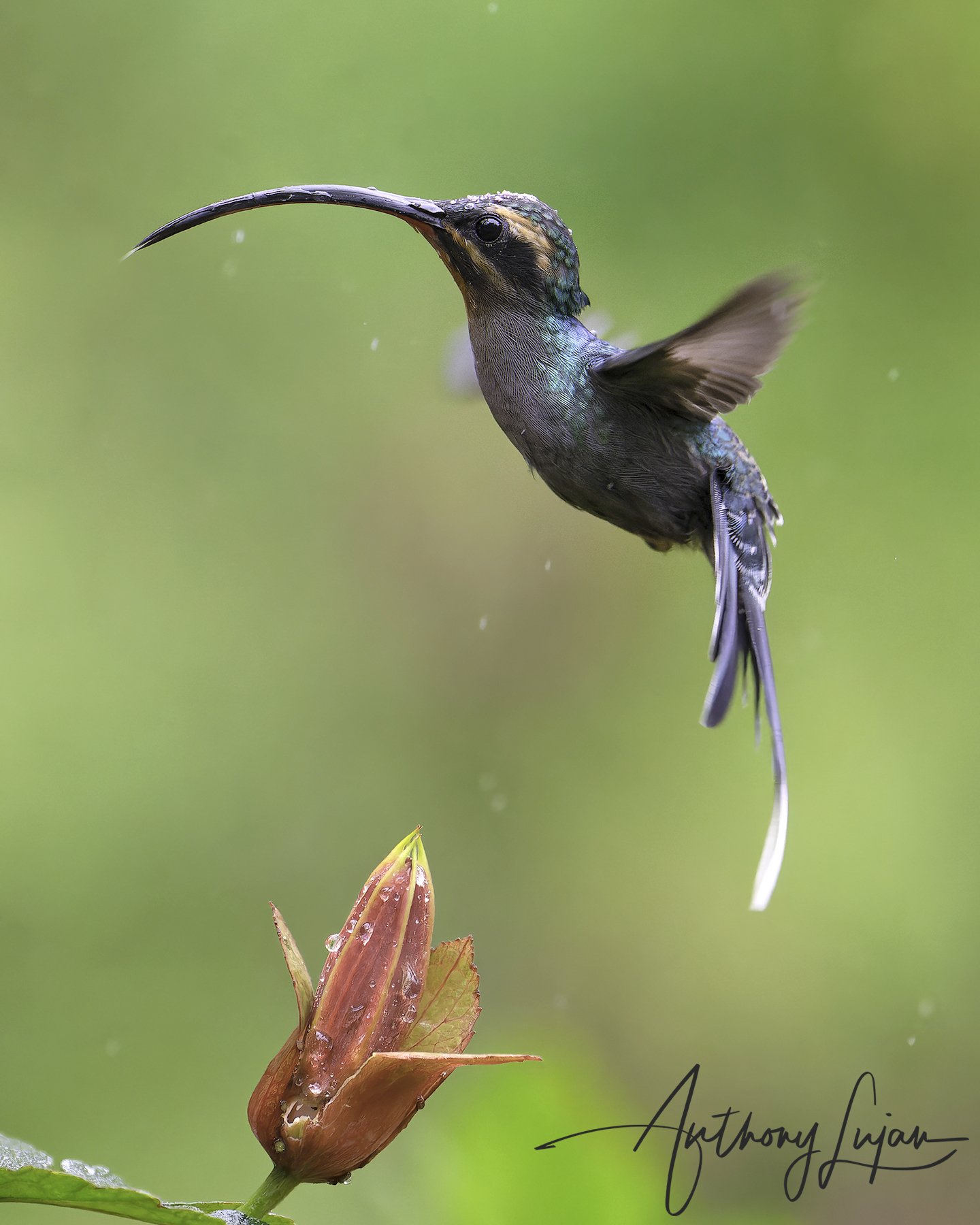
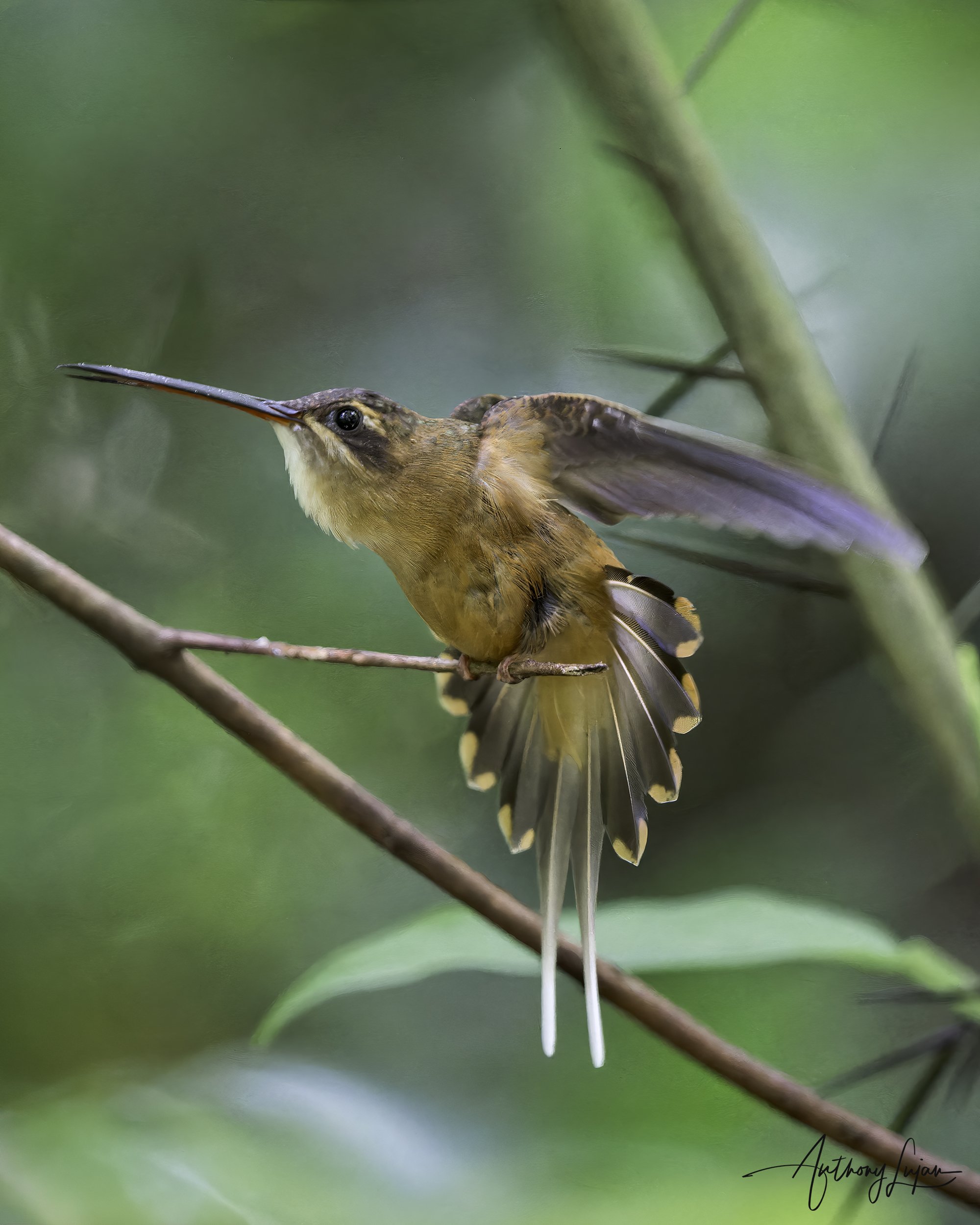
Related species in the Phaethornis genus (27 species total)





Please note: The content provided in this article reflects Anthony’s personal experience and photographic approach. Results can vary depending on light, weather, location, equipment, subject behavior, and field conditions.