
Ecuadorian Piedtail
Scientific name: Phlogophilus hemileucurus
The Ecuadorian Piedtail is a tiny hummingbird of humid premontane and montane forests on the east slope of the Andes in southern Colombia, eastern Ecuador, and northeastern Peru. It is listed as Least Concern, with an unknown number of mature individuals, a decreasing population trend, and it is considered not a migrant.
At a Glance
Family: Trochilidae (hummingbirds)
Clades: Lesbiinae – Coquettes
Genus group: Phlogophilus — piedtails (2 species in total: Ecuadorian Piedtail, Peruvian Piedtail)
Range: East slope of the Andes from southern Colombia (west Putumayo, east Cauca) through eastern Ecuador to northeastern Peru (San Martín and Loreto).
Habitat: Humid premontane and montane evergreen forests, forest edges, and tall secondary growth; also uses some semi‑open habitats near forest such as clearings, trails, and shrubby edges.
Elevation: Primarily 800–1,500 m, occasionally down to about 400 m in Peru.
Length: About 8–9 cm (3.1–3.5 in).
Weight: Around 3–4 g (about 0.1 oz).
Number of mature individuals: Unknown.
Population trend: Decreasing.
Status: Least Concern (IUCN Red List category).
Migration: Not a migrant.
Name Origin
The genus name Phlogophilus combines Greek roots meaning “flame” or “fiery” and “loving,” likely referring to the bird’s affinity for bright flowers or subtle rufous tones in the plumage. The species name hemileucurus means “half‑white tail,” describing the pied pattern created by white patches on the tail. The English name “Ecuadorian Piedtail” references both its strong association with Ecuador and its distinctive black‑and‑white tail pattern.
Taxonomy & Distribution
Monotypic species — no recognized subspecies.
Ecuadorian Piedtail belongs to the Lesbiinae (coquettes and allies), in the tribe Lesbiini, and is one of two species in the genus Phlogophilus, the other being Peruvian Piedtail. It occurs on the east slope of the Andes from southern Colombia through eastern Ecuador to northeastern Peru, within a relatively narrow elevational band where premontane and lower montane evergreen forests predominate. Its distribution is patchy, following suitable forest tracts along the eastern Andean foothills and adjacent low slopes.
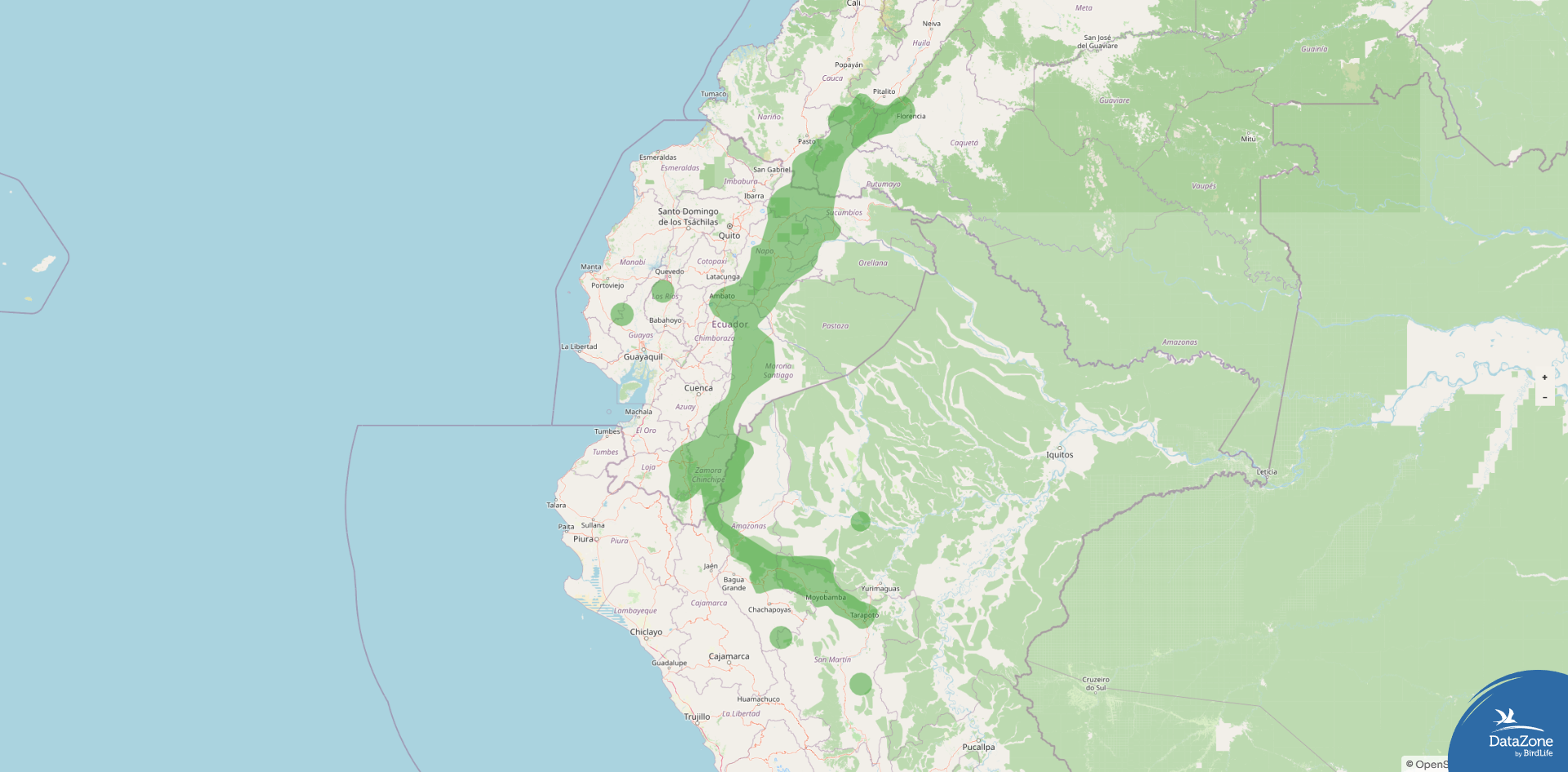
Legend
Green Resident
Species Overview
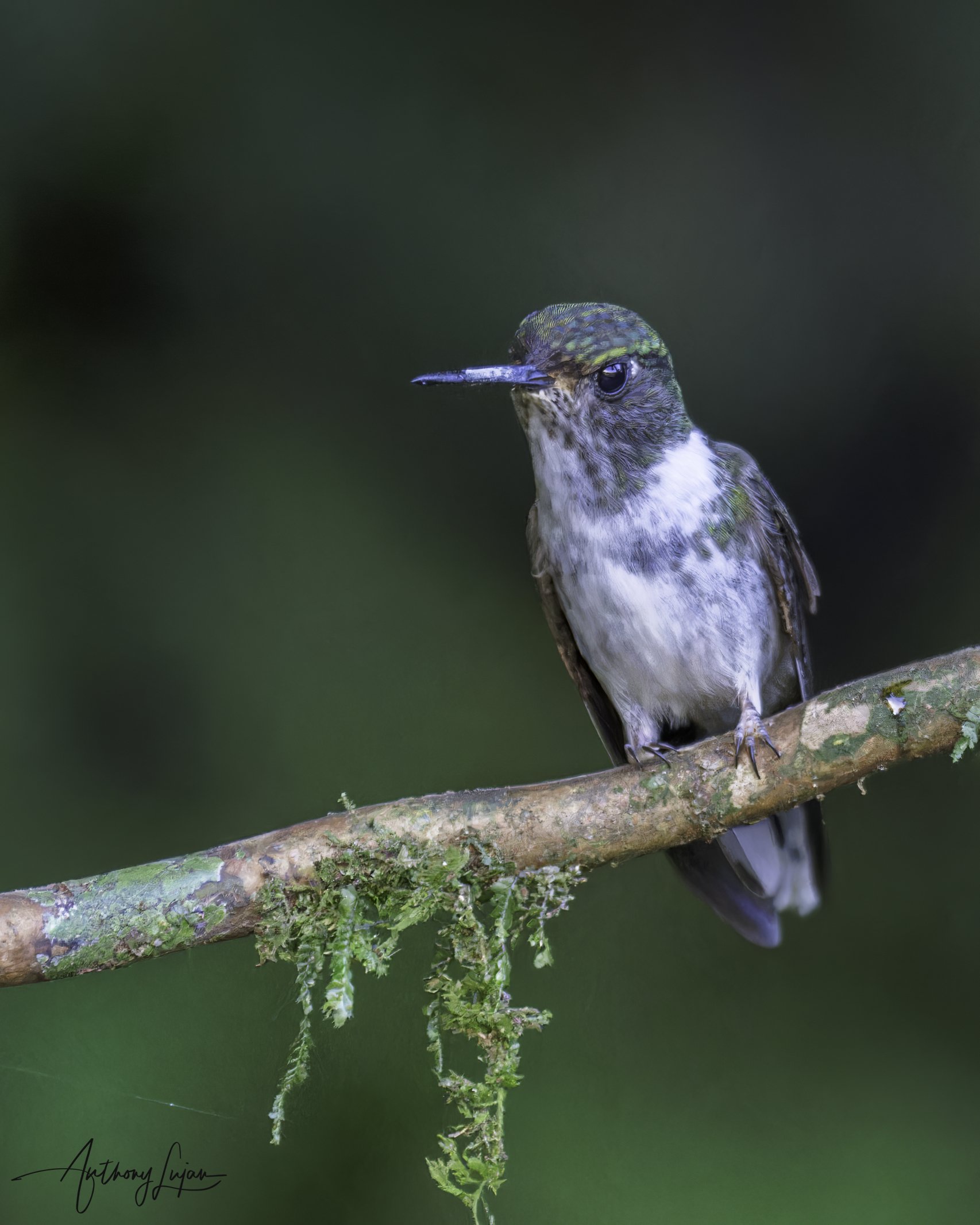
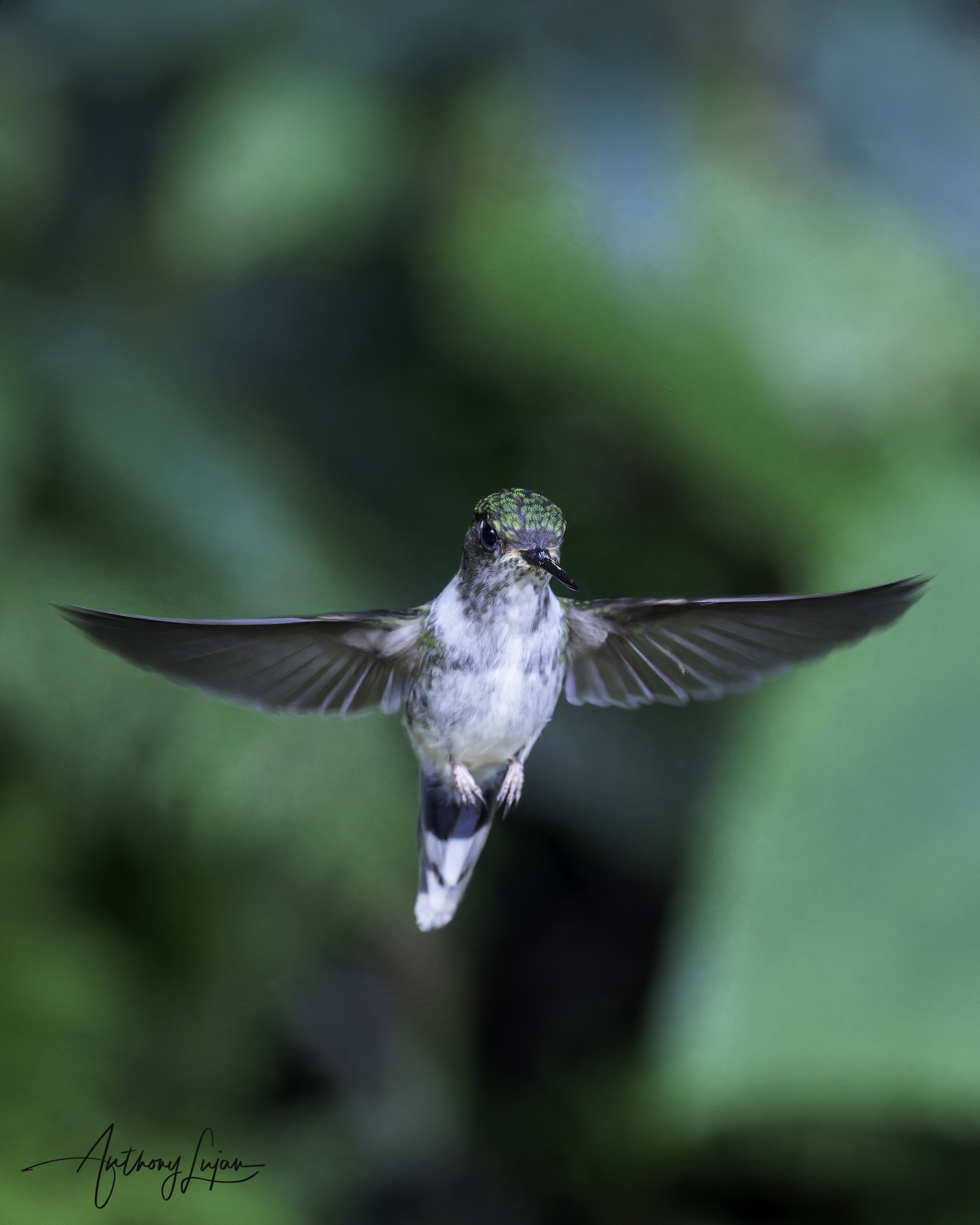
The Ecuadorian Piedtail is a small, unobtrusive hummingbird best known to birders who frequent Andean east‑slope forests. It is often overshadowed by larger, more colorful hummingbirds but is distinctive when seen well, thanks to its pied tail pattern and subtle facial markings. It generally favors the shaded understory and lower mid‑story of humid foothill forests and edges, where it quietly works flowering shrubs and low trees for nectar.
Male Description
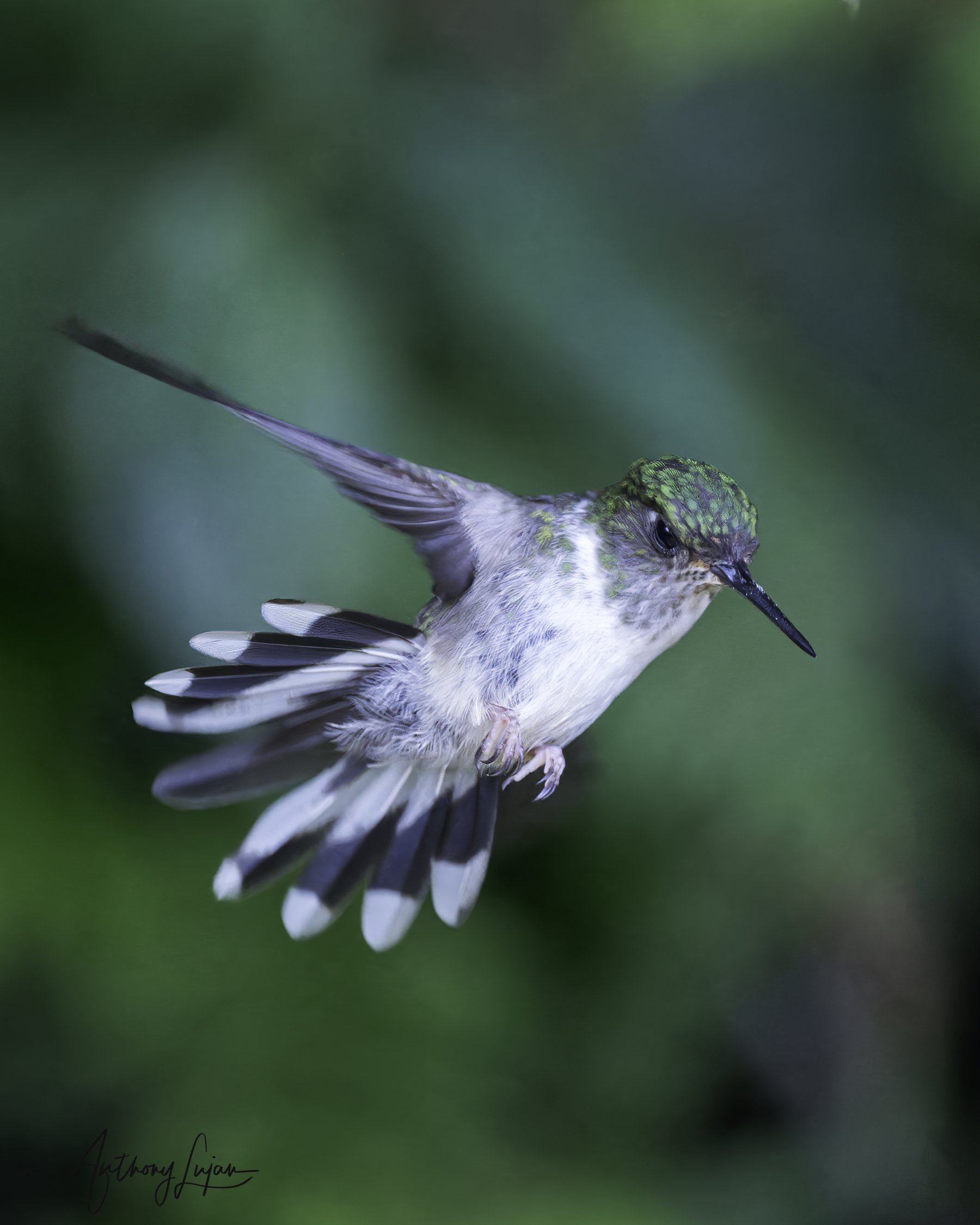
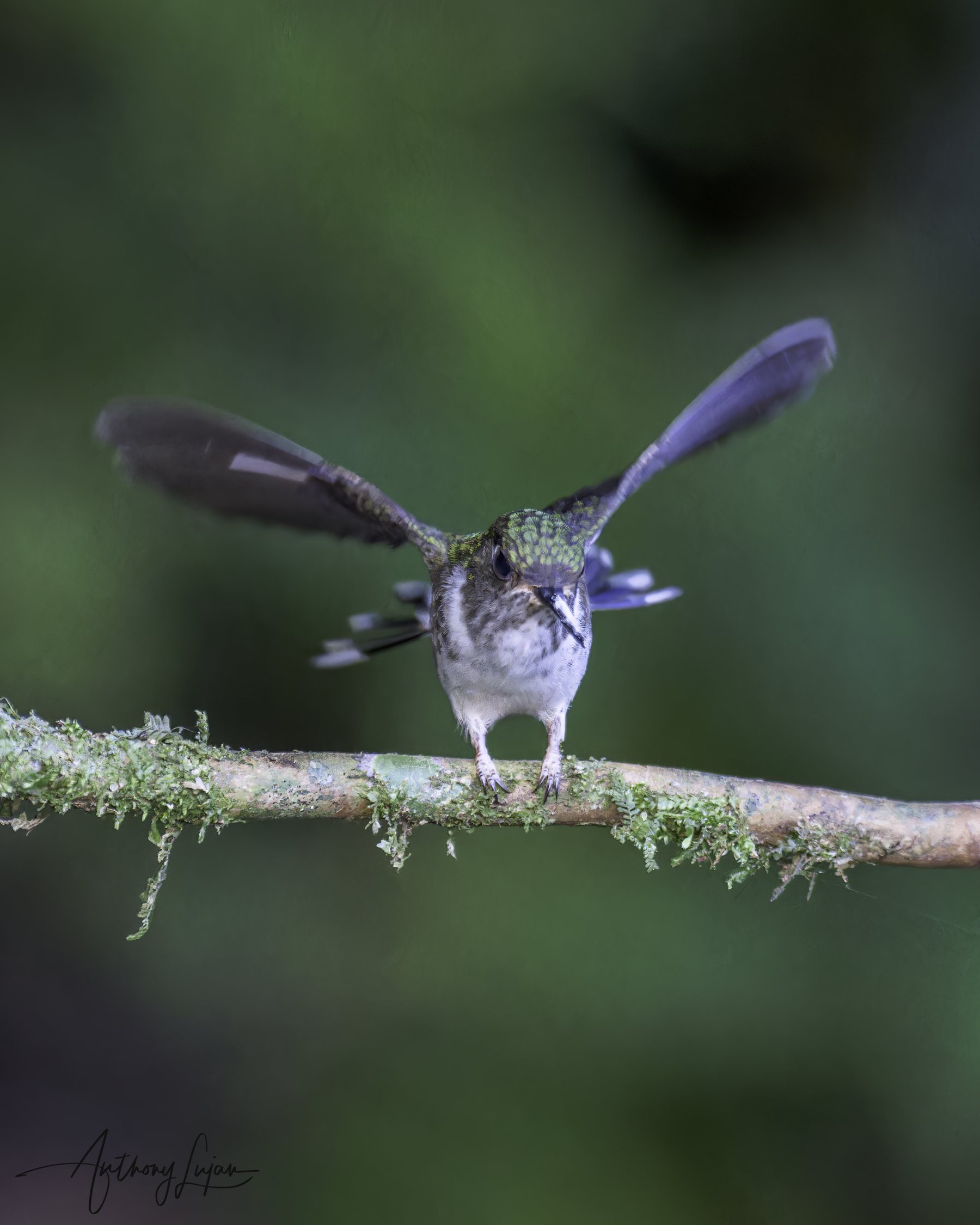
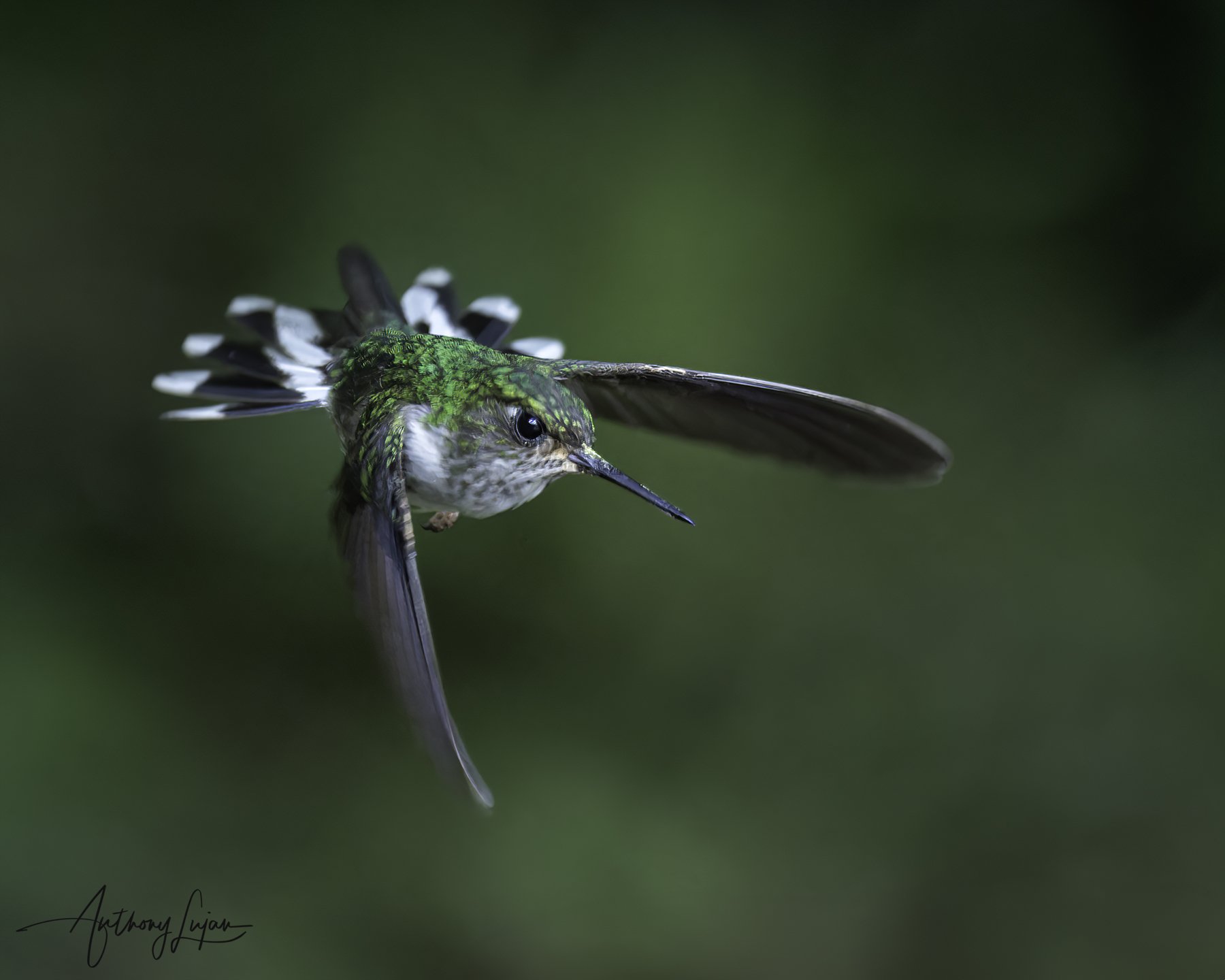
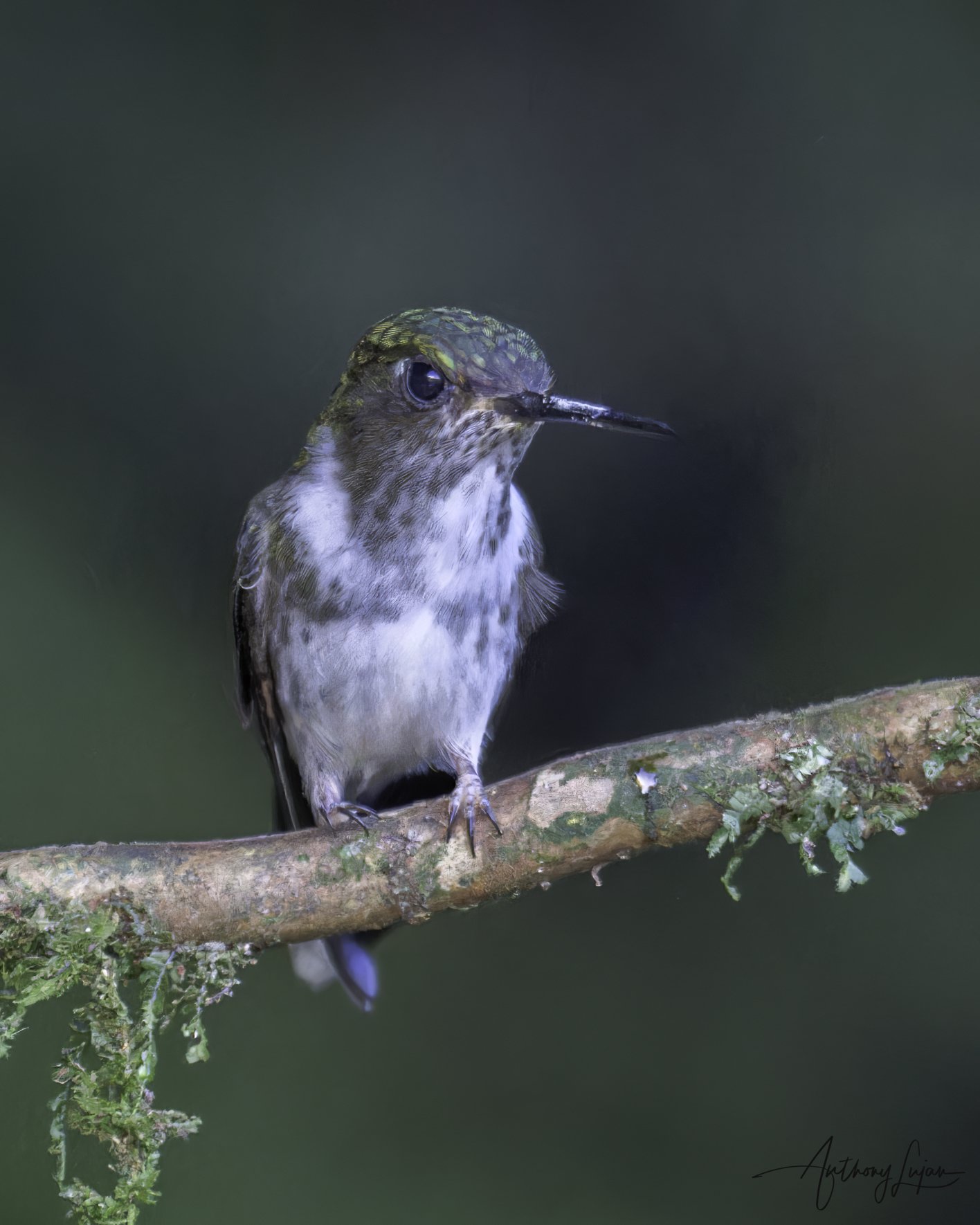
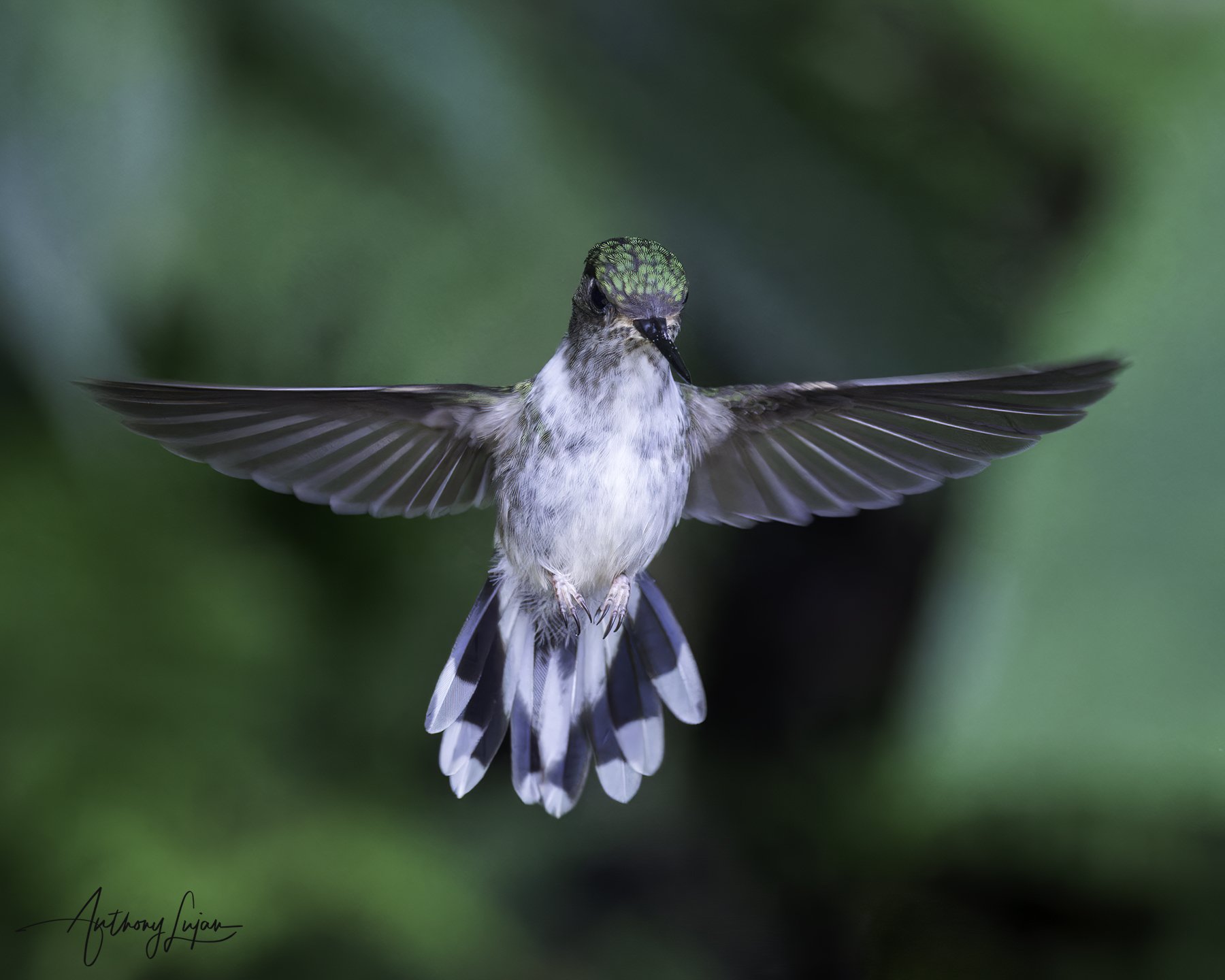
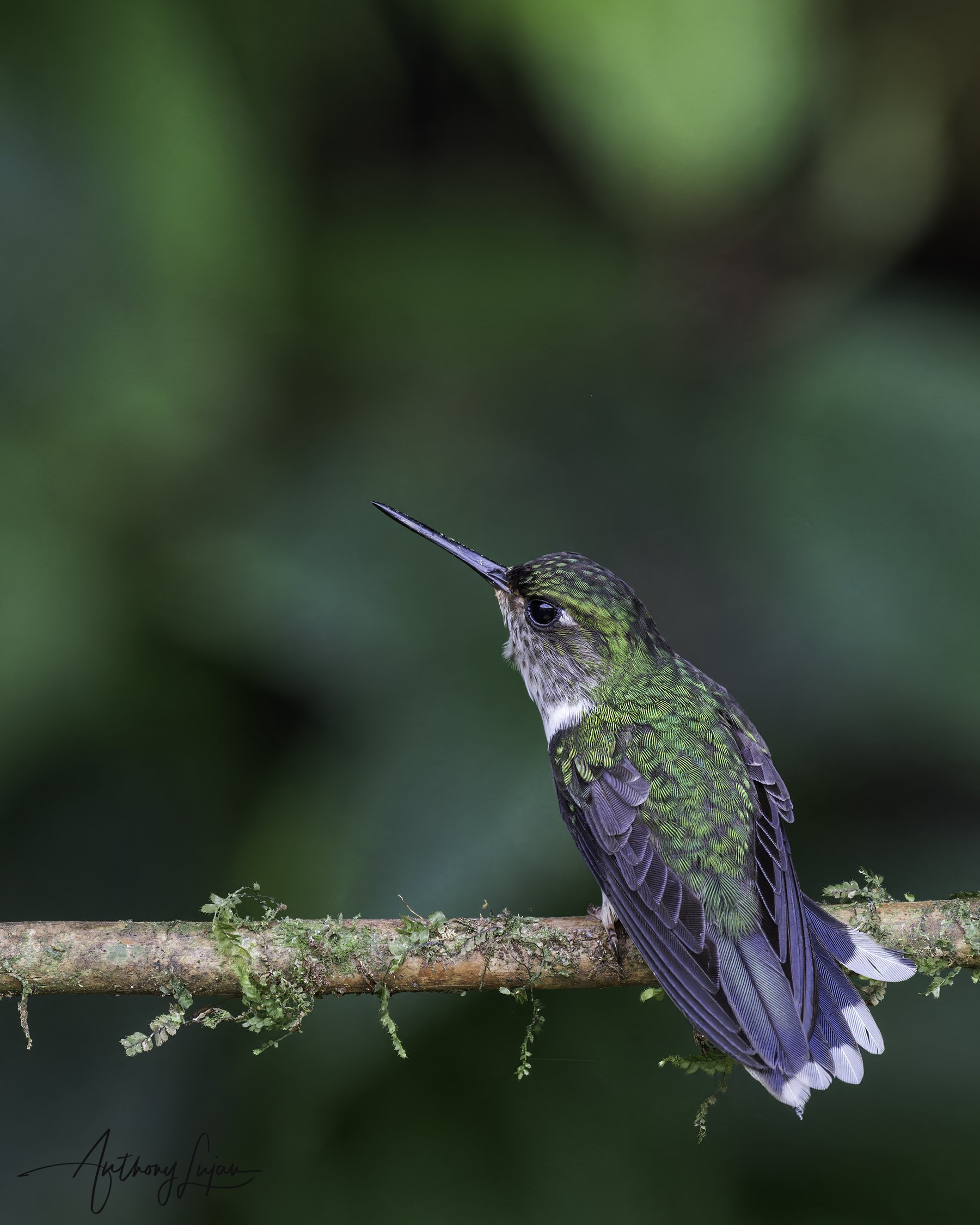
Adult males are tiny, with a fairly short, straight black bill. The crown and upperparts are green, sometimes with a bronzy tone. The face shows a pale eyebrow or supercilium and darker line through the eye, giving a slightly masked appearance. The throat and breast are pale buff to whitish with fine dusky or greenish spotting that can be subtle in the field; the belly can appear buffy or grayish. The tail is the key feature: dark central feathers with white in the outer portions, creating a pied or half‑white effect when the tail is spread. Overall, males appear as small green‑backed hummingbirds with pale underparts and a contrasting black‑and‑white tail.
Female Description
Females look very similar to males, with green upperparts, pale buffy to whitish underparts, and the characteristic pied tail pattern. Their facial pattern is often slightly less distinct, and the underparts spotting may be weaker or more diffuse. Juveniles resemble females but are duller overall, with more brownish tones in the plumage and less sharply defined tail patterning; they gradually acquire the clearer facial markings and tail contrast of adults.
Habitat & Behavior
Ecuadorian Piedtails inhabit humid premontane and montane evergreen forests, especially along forest edges, gaps, trails, and tall secondary growth where flowering shrubs and small trees are accessible. They typically forage at low to mid levels, visiting small tubular flowers on shrubs, vines, and understory trees, often hovering briefly in front of blossoms before moving on. They also take small insects for protein, catching them in flight (hawking) or gleaning them from foliage and spider webs. Unlike some larger hummingbirds, Ecuadorian Piedtails tend to be relatively unobtrusive and less aggressively territorial, quietly working a circuit of flowers within a small area.
Breeding
Breeding behavior follows the typical hummingbird pattern. Males court females with aerial displays that may include U‑shaped or pendulum flights in front of perched females. After mating, the pair does not form a long‑term bond; the male’s role is limited largely to defending feeding territories. The female alone selects a nest site, usually a low, thin horizontal branch, twig, or sheltered spot in a shrub or small tree. She constructs a small cup nest of plant fibers and down, binding the structure with spiderweb and often decorating the outside with mosses and lichens for camouflage. The elastic nest walls allow the structure to expand as the chicks grow. She typically lays one or two white eggs, incubates them alone, and feeds the chicks with regurgitated nectar and insects until they fledge.
Population
Although the total number of mature individuals is unknown, the Ecuadorian Piedtail is considered rare to locally uncommon throughout much of its limited Andean east‑slope range. It occupies a narrow elevational band of forest that is under pressure from agricultural expansion, cattle pastures, tea and coffee plantations, logging, and mining. Despite occurring in some protected areas, its patchy distribution and ongoing habitat loss contribute to a decreasing trend, though not yet at a level that elevates its global threat category beyond Least Concern.

Conservation
Ecuadorian Piedtail is currently assessed as Least Concern, but its decreasing population and dependence on premontane and montane evergreen forests in a relatively narrow elevational zone make it vulnerable to continued deforestation and land‑use change. Conversion of foothill forests to agriculture and pasture, as well as infrastructure and mining development, reduce and fragment suitable habitat. Conservation of intact foothill and lower montane forests, protection of forest corridors along the eastern Andes, and promotion of shade‑grown crops that retain forest structure can all benefit this species. Effective management of protected areas within its range is also important for maintaining viable populations.
Related species in the Phlogophilus genus (2 species in total):
Please note: The content provided in this article reflects Anthony’s personal experience and photographic approach. Results can vary depending on light, weather, location, equipment, subject behavior, and field conditions.