
Scientific name: Chlorostilbon assimilis
The Garden Emerald is a tiny “emerald” hummingbird endemic to southwestern Costa Rica and western Panama. An estimated 50,000–499,999 mature individuals exist, the population is considered stable, it is non-migratory, and it is currently listed as Least Concern with no widely used subspecies.
At a Glance
Family: Trochilidae (hummingbirds)
Clades: Trochilini – Emeralds
Genus group: Chlorostilbon — small, iridescent green “emerald” hummingbirds of the Neotropics (10 species total)
Range: Pacific slope of southwestern Costa Rica and western Panama, including Coiba and Pearl Islands.
Habitat: Edges of woodland and forest, hedgerows, streamside thickets, scrublands, plantations, pastures with trees, and gardens.
Elevation: Mostly from sea level up to about 1,500 m (4,900 ft) in Costa Rica and 1,200 m (3,900 ft) in Panama.
Length: About 7.8–8.5 cm (3.1–3.3 in).
Weight: About 3–4.1 g (0.11–0.14 oz).
Number of mature individuals: 50,000–499,999
Population trend: Stable
Status: Least Concern (IUCN)
Name Origin
The genus name Chlorostilbon comes from Greek roots meaning “green” and “shining,” referencing the glowing emerald tones typical of this group. The species name assimilis means “similar,” reflecting how this tiny emerald resembles several close relatives. The English name “Garden Emerald” highlights its frequent presence in gardens, hedgerows, and other human-modified landscapes.
Subspecies & Distribution
Monotypic — no widely recognized subspecies.
Distribution: The Garden Emerald is found on the Pacific slope of southwestern Costa Rica and western Panama, from about the central Pacific of Costa Rica south through Chiriquí, Veraguas, and into the Canal Zone region, including Coiba and the Pearl Islands. It is most common in open and semi-open habitats rather than dense interior forest.
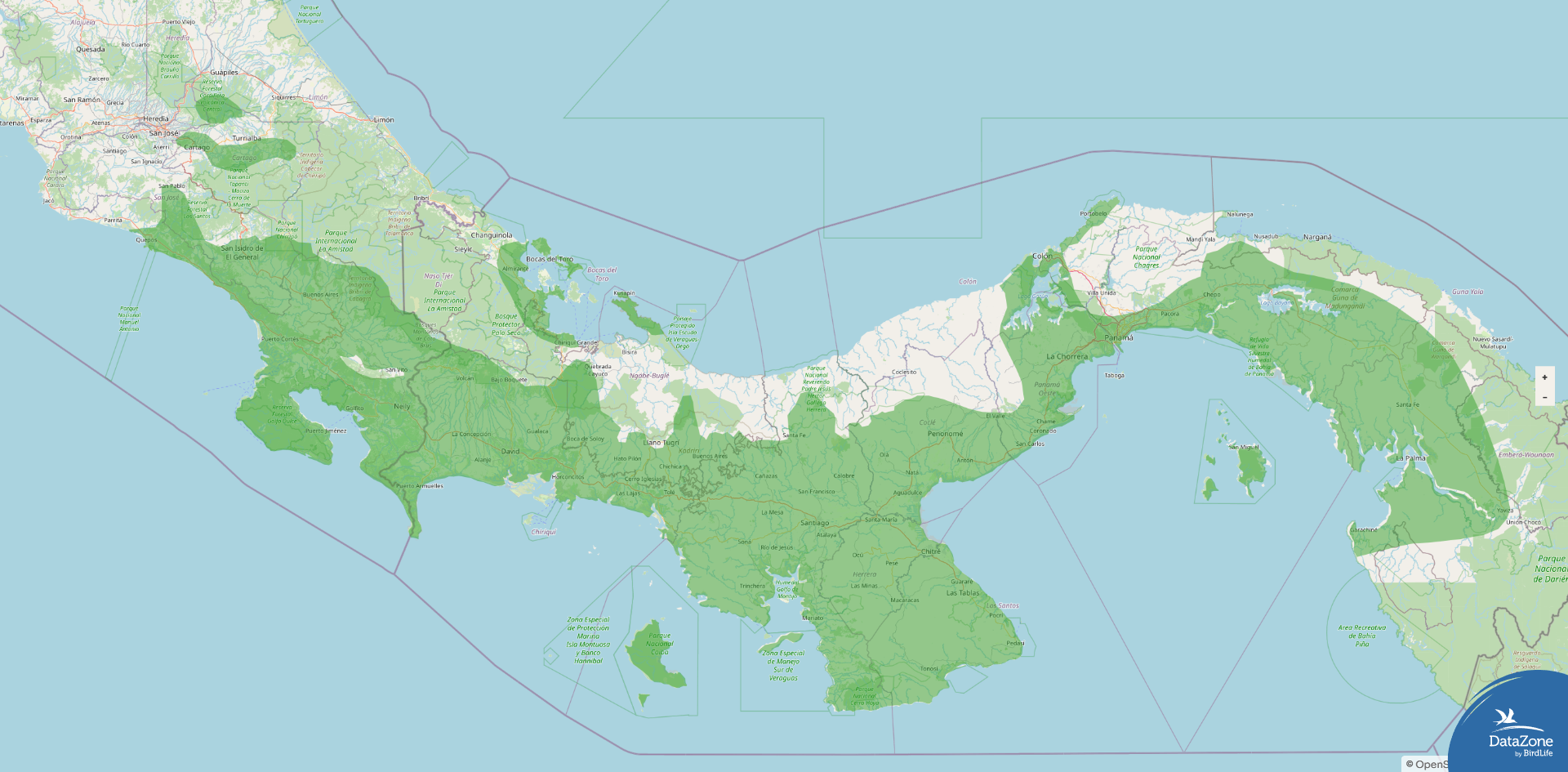
Legend
Green Resident
Species Overview
The Garden Emerald is a classic lowland and foothill “garden hummingbird,” thriving in open and semi-open areas with scattered trees and flowering shrubs. It is often one of the most frequently observed hummingbirds in rural yards, hedgerows, and plantations within its limited range. Its tolerance for human-altered habitats and broad use of edge and early-successional vegetation contribute to its stable conservation status.
Male Description
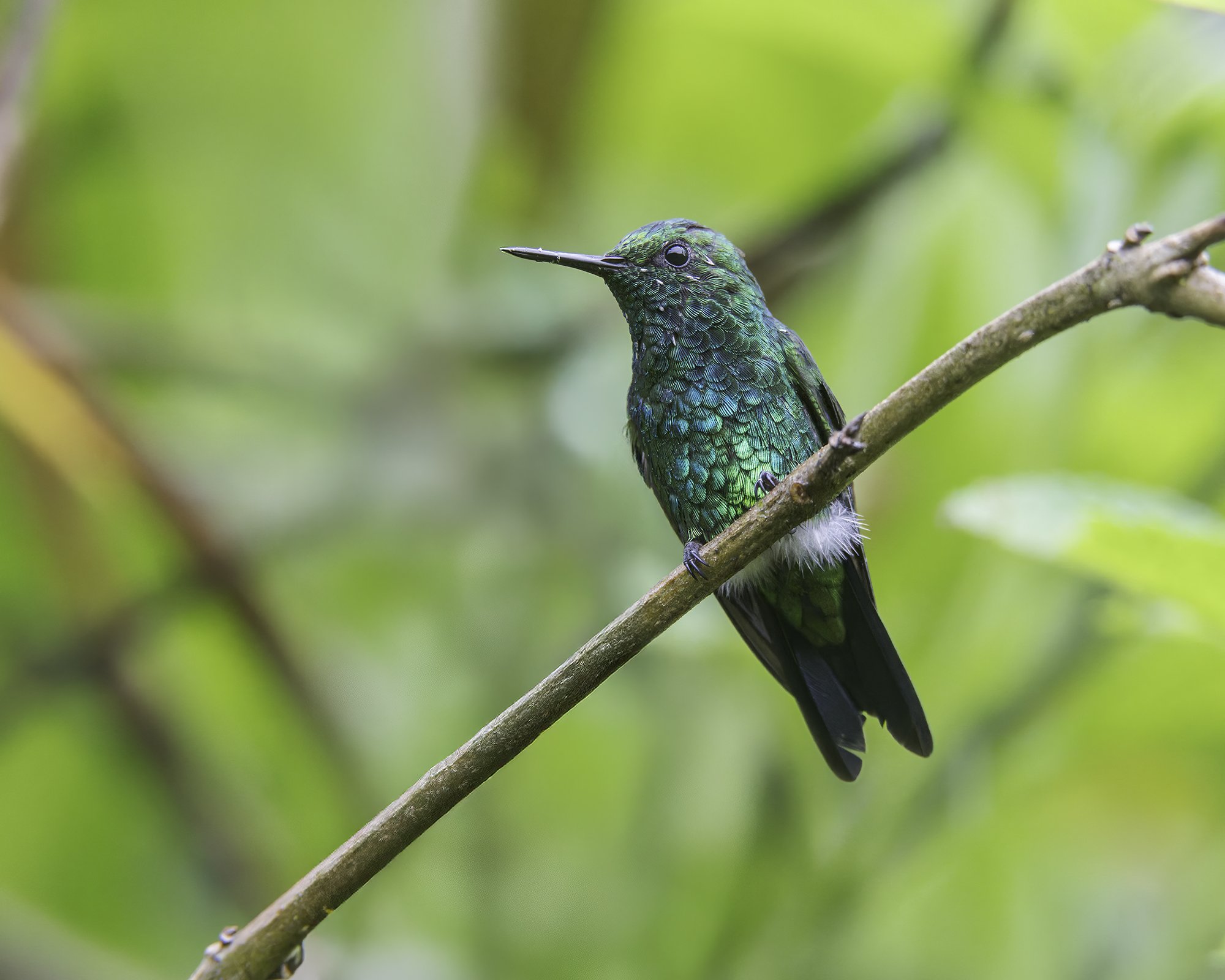
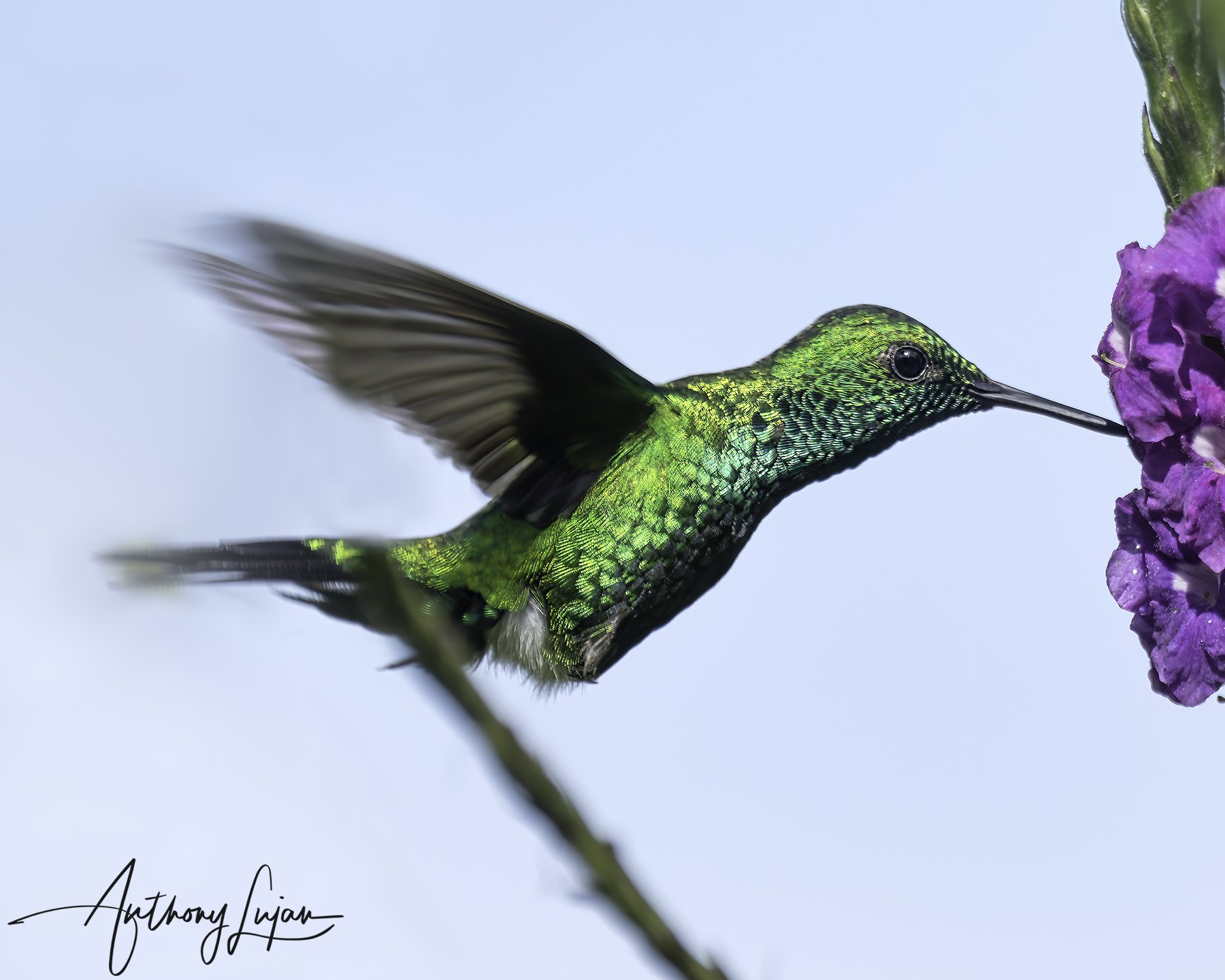
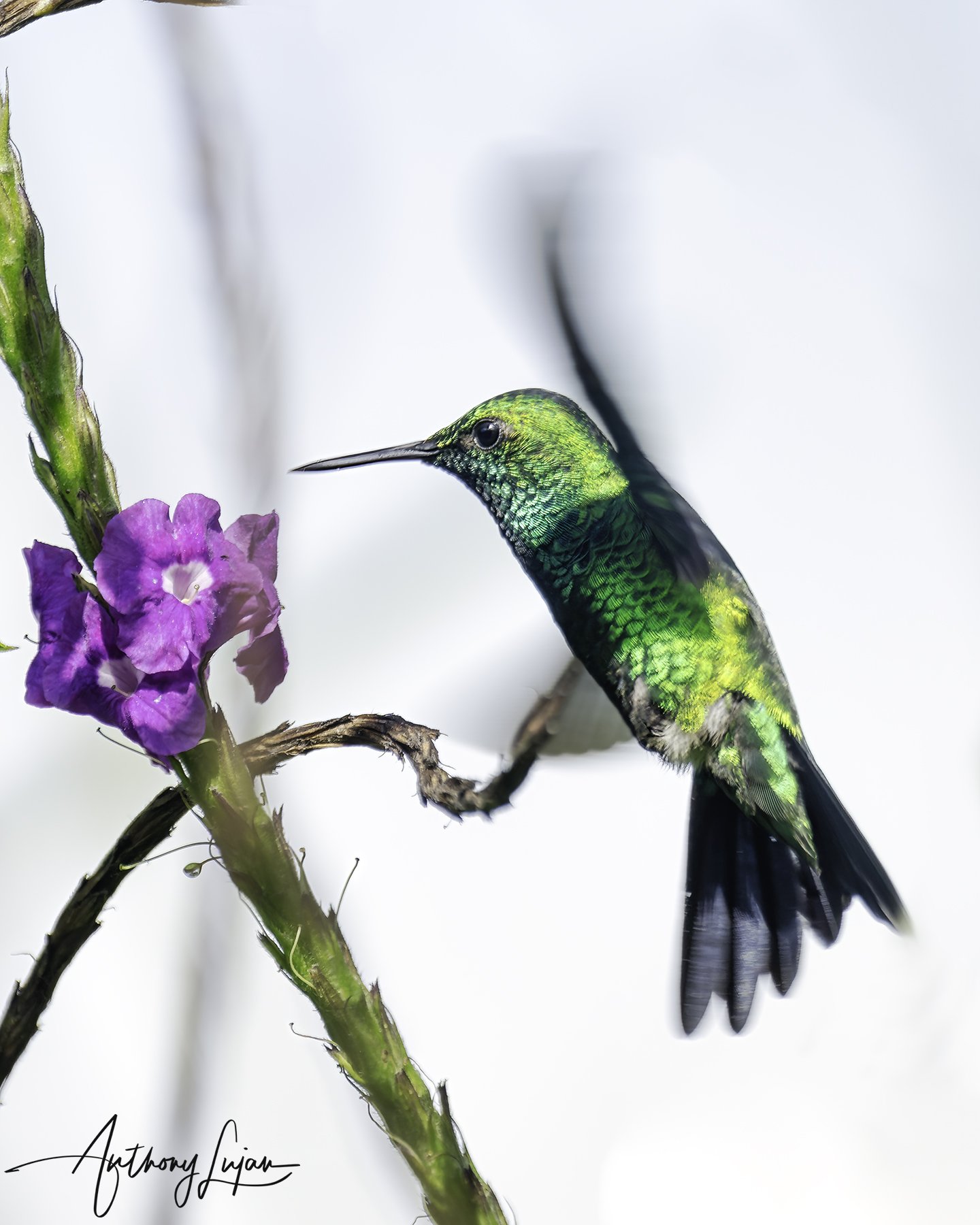
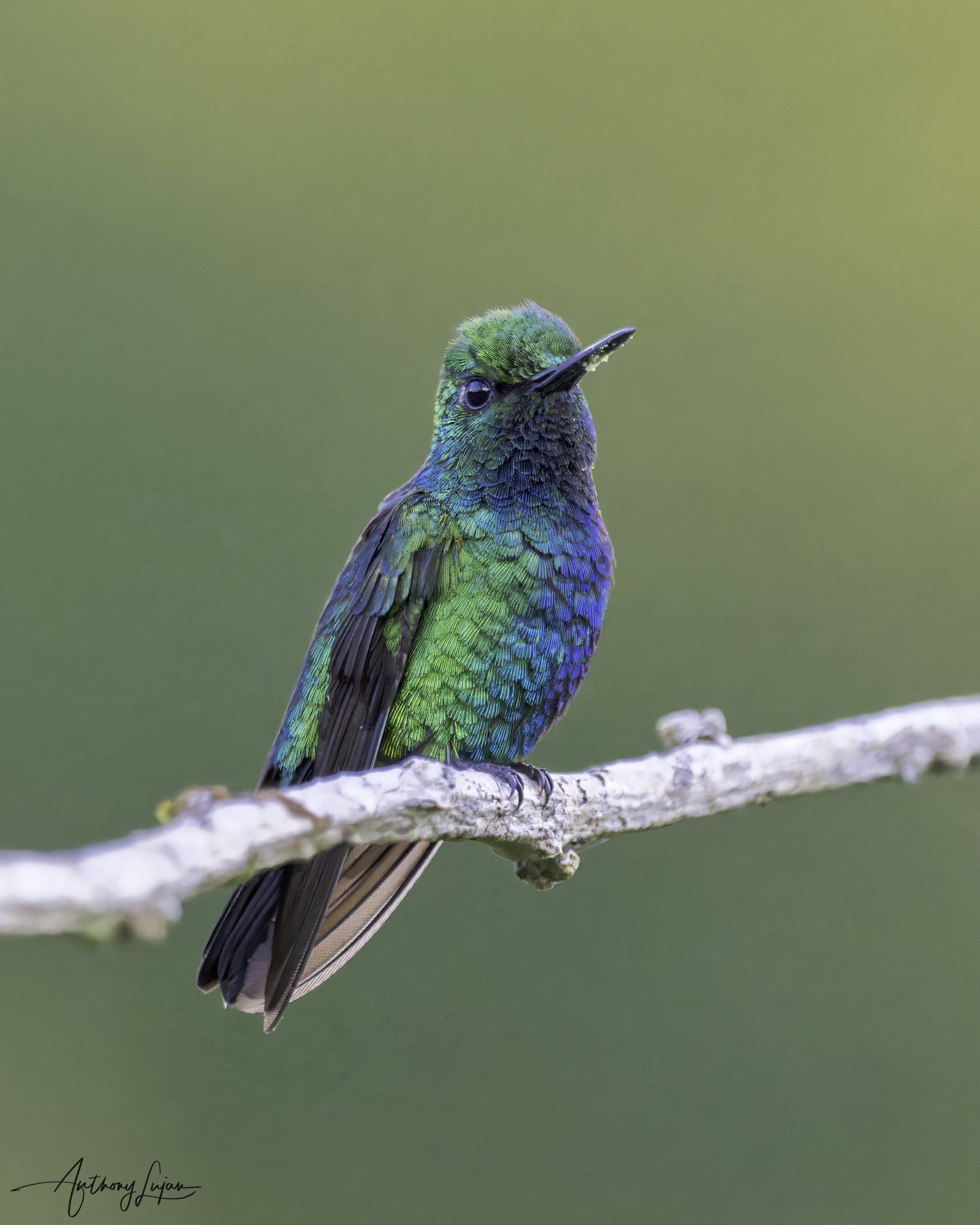
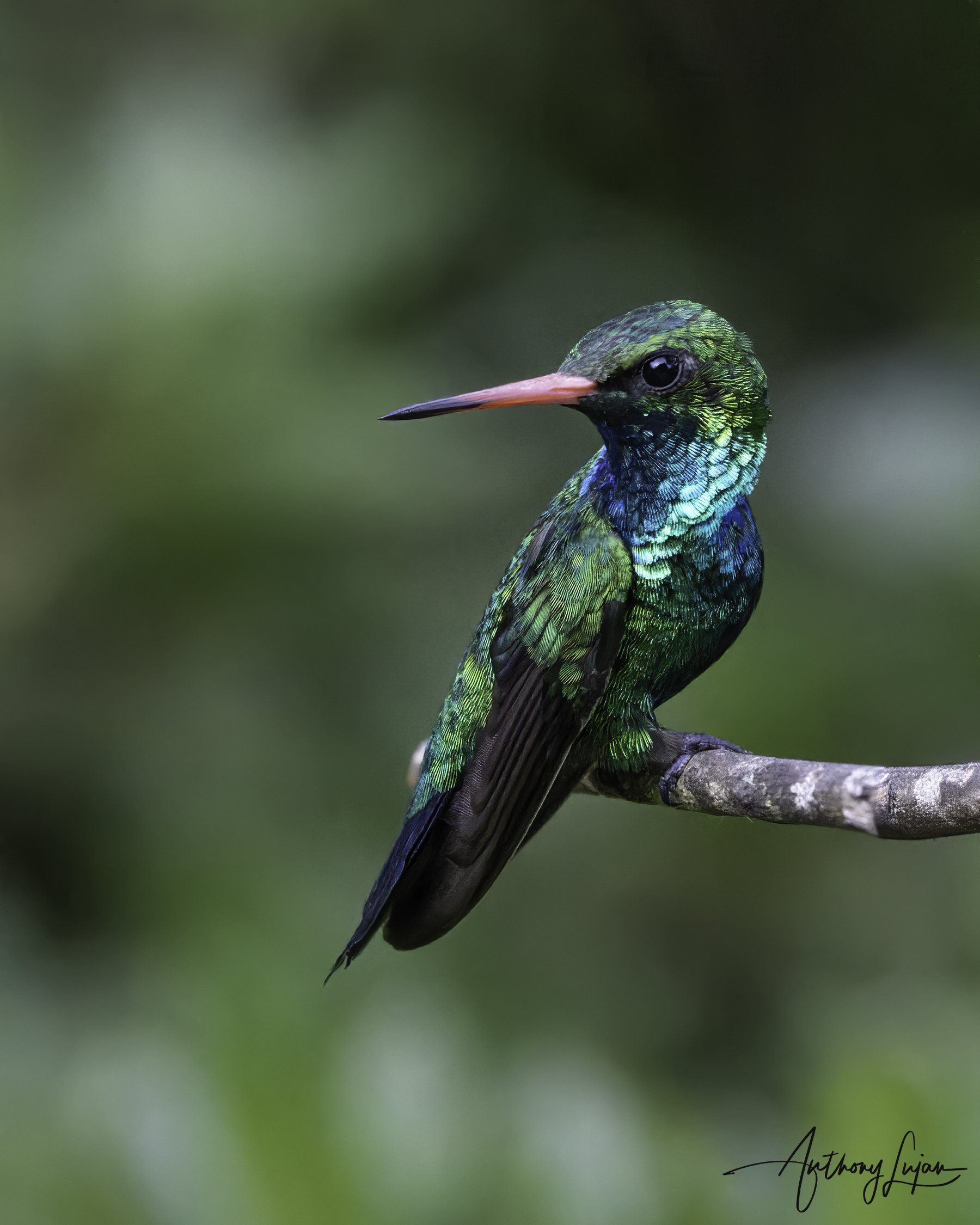
Adult males are tiny with a straight, mostly black bill (sometimes with a slightly paler base to the lower mandible). The crown, back, and rump are bright metallic green. The throat and underparts are also glittering green, often slightly brighter on the throat and chest and slightly duller on the belly. The tail is slightly forked, dark blue-green to blackish with a metallic sheen. In the field, males appear as very small, intensely green hummingbirds with a uniformly green underside and dark, slightly forked tail.
Female Description
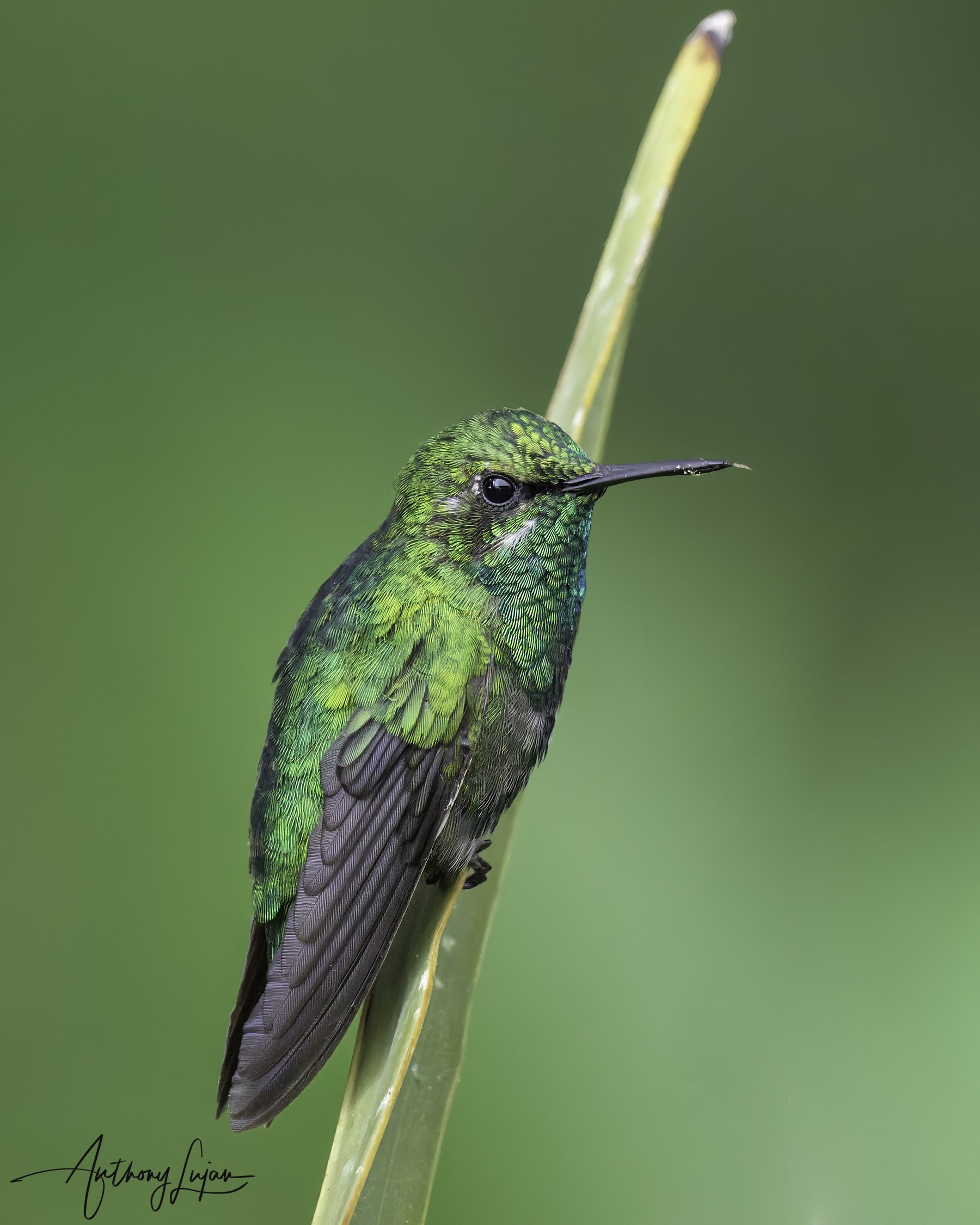
Adult females have green upperparts similar to the male, but the underparts are pale grayish or whitish. The throat and breast are whitish, sometimes with faint grayish mottling, and the belly is whitish to pale gray. There is a narrow white stripe or spot behind the eye against a slightly darker cheek. The tail is slightly notched, dark with distinct white tips on the outer feathers, forming white tail corners. Females thus appear as small green-backed hummingbirds with pale underparts and a dark tail with conspicuous white corners.
Habitat & Behavior
Garden Emeralds favor edges and semi-open habitats: woodland and forest borders, hedgerows, streamside thickets, scrublands, coffee and fruit plantations with shade trees, pastures with scattered trees, and village gardens. They feed on nectar from numerous flowering shrubs, vines, and trees, often visiting ornamental plants and hedges around houses. They also take small insects and spiders gleaned from foliage or caught in short sallies. Birds may be territorial around rich nectar sources, chasing off other hummingbirds from preferred flowers. The species is considered resident within its limited Costa Rica–Panama range, with only local movements as flowering patterns shift.
Population
With an estimated 50,000–499,999 mature individuals, the Garden Emerald is numerically secure within its restricted range. It is common in many suitable lowland and foothill areas, especially where gardens, hedgerows, and plantations provide abundant flowers. Because it favors edge and semi-open habitats, moderate levels of habitat alteration do not appear to be causing major declines at this time, and the population is assessed as stable.

Conservation
The Garden Emerald is listed as Least Concern due to its relatively large population, stable trend, and adaptability to human-modified habitats. Nonetheless, extensive deforestation or conversion of tree- and shrub-rich agricultural landscapes to intensive monocultures or heavily urbanized areas could reduce local populations. Conservation measures that maintain hedgerows, flowering shrubs, shade trees, and mixed-use landscapes will benefit this species and other lowland emeralds.
Interested in coming along? Visit Travel with Me!
Also visit Costa Rica Hummingbird Expedition | July 2021 | 10 Species | Where It All Started
Also visit Costa Rica Hummingbird Expedition | November 2021 | 22 New Species | Second Chances
Also visit Costa Rica Hummingbird Expedition | July 2025 | 32 Species | 10 New | Closing the Gap
Checkout Anthony’s playlist of this species! Click the top right dropdown to see all the videos.
Related species in the Chlorostilbon genus (10 species total):




Please note: The content provided in this article reflects Anthony’s personal experience and photographic approach. Results can vary depending on light, weather, location, equipment, subject behavior, and field conditions.