
Golden-tailed Sapphire

Scientific name: Chrysuronia oenone
The Golden-tailed Sapphire is a small, brilliantly colored hummingbird of western Amazonia and the eastern Andean foothills from Venezuela and Colombia south through Ecuador and Peru into northern Bolivia and adjacent Brazil. The number of mature individuals is unknown, the population is considered stable, it is treated as non-migratory, and it is currently listed as Least Concern with three recognized subspecies.
At a Glance
Family: Trochilidae (hummingbirds)
Clade: Trochilini – Emeralds
Genus group: Chrysuronia — 10 species, 24 subspecies
Range: From the Sierra de Perijá and northern and western Venezuela south through east‑central Colombia to eastern Ecuador, extreme northeastern Peru and adjacent western Brazil, across eastern Peru along the upper Amazon Basin and Andean foothills, and into northern Bolivia.
Habitat: Semi-open, humid landscapes including edges and gaps of lowland and foothill forest, mature secondary forest, gallery forest, shady cacao and coffee plantations, and gardens; generally in moist to wet forest zones.
Elevation: Mostly from lowlands up into foothills, commonly from near sea level to around 1,500–1,700 m depending on region.
Length: About 9.5–10 cm (3.7–3.9 in).
Weight: Males roughly 4.7–6.3 g; females about 4.3–5.3 g.
Number of mature individuals: Unknown
Population trend: Stable
Status: Least Concern (IUCN)
Name Origin
The genus name Chrysuronia is derived from Greek roots meaning “golden tail,” an apt description of the bright coppery or golden tail feathers of this and related species. The species name oenone comes from classical mythology and has been applied here as a proper name, following a long tradition of using mythological figures in scientific names. The English name “Golden-tailed Sapphire” combines its gleaming golden or coppery tail with the sapphire-like blue and green iridescence of the head and body.
Subspecies & Distribution
Chrysuronia oenone oenone
Distribution: Sierra de Perijá, and northern and western Venezuela, south through east‑central Colombia to eastern Ecuador, extreme northeastern Peru (northern Amazonas, northwestern Loreto), and adjacent western Brazil.Chrysuronia oenone josephinae
Distribution: Eastern Peru, primarily along the upper Amazon Basin and Andean foothills.Chrysuronia oenone alleni
Distribution: Northern Bolivia, mainly in La Paz and Pando departments, in humid lowland and submontane forest.
Together, these subspecies form a fairly continuous band from northern Venezuela and Colombia south along the eastern Andean slopes and adjacent Amazonian lowlands through Ecuador and Peru into northern Bolivia and nearby western Brazil.
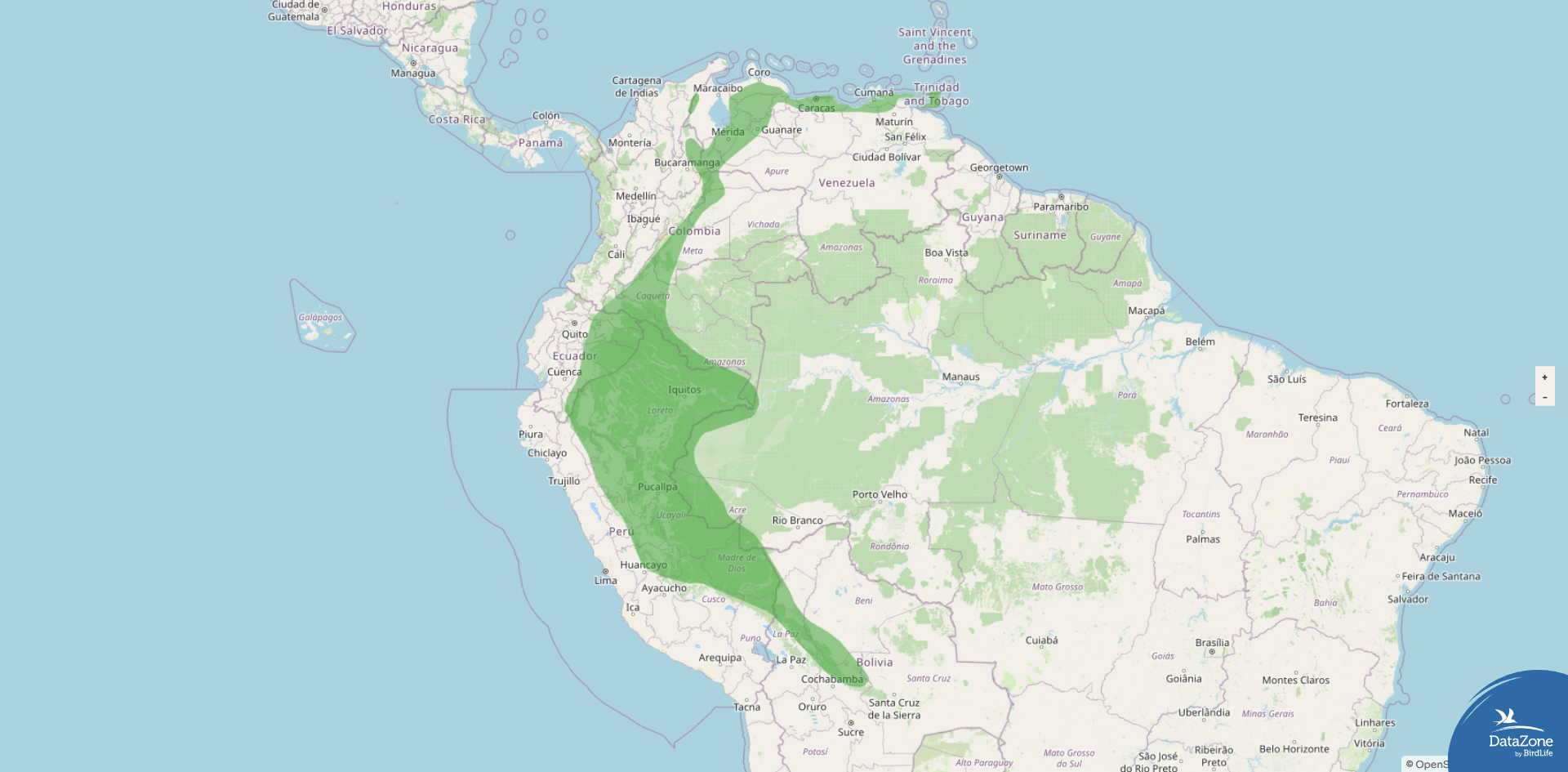
Legend
Green Resident
Species Overview
The Golden-tailed Sapphire is a characteristic hummingbird of semi-open, humid environments in western Amazonia and the eastern foothills of the Andes. It thrives along forest edges, riverine forest, secondary growth, and shaded plantations, where flowering trees and shrubs provide abundant nectar. Its combination of a violet-blue head, glittering green breast, bronze-green flanks, and bright coppery tail makes it one of the more striking small hummingbirds in its range.
Male Description
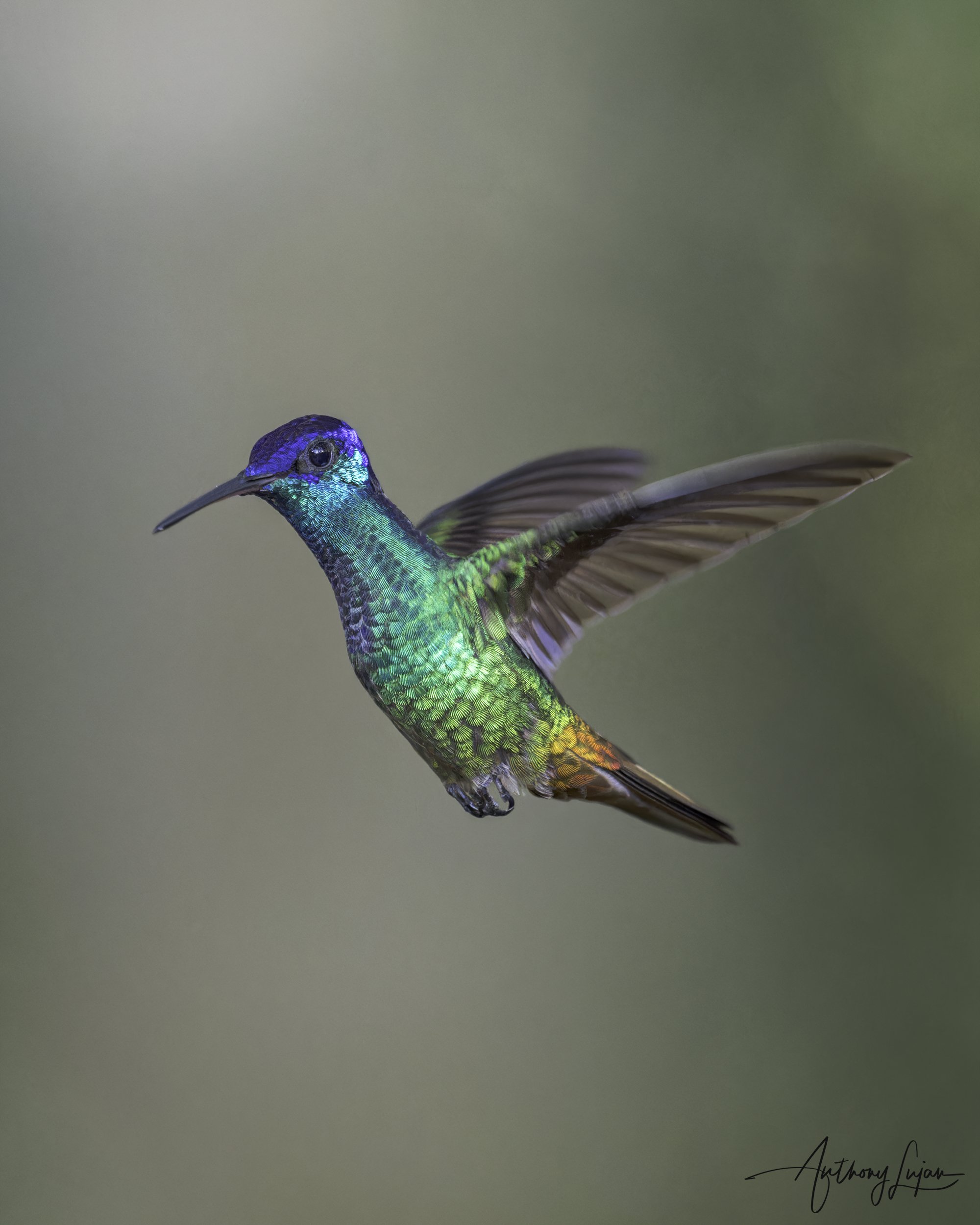
Adult males have a slightly curved bill with a black upper mandible and a red lower mandible tipped in black. The head and throat are violet-blue, the back is bright green, and the color transitions through bronze-green to bright coppery upper tail coverts and a copper-bronze tail. The breast is glittering green, the belly is bronze-green, and the undertail coverts are bronze with whitish edges. The overall impression is of a small, compact hummingbird with a sapphire-blue head and throat, vivid green breast, and a glowing golden or coppery tail.
Female Description
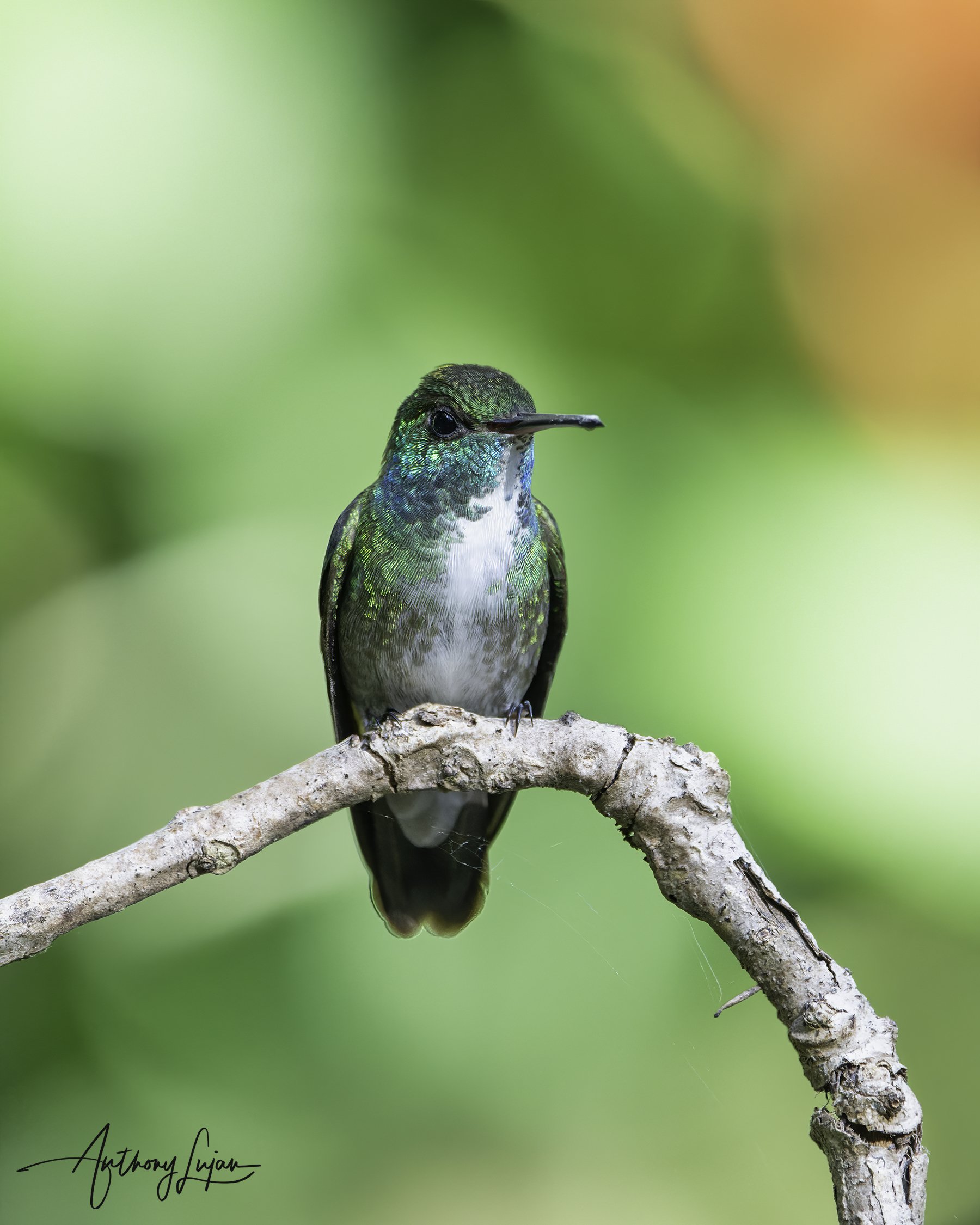
Adult females have a blue crown, green back, and copper-bronze upper tail coverts and tail similar to the male. The underparts are mostly whitish, with blue‑green flecks on the sides of the throat and neck, green on the sides and chest, bronze‑green flanks, and bronze undertail coverts. Juvenile males have a dull green crown, dusky gray throat, and dull green chest before molting into the brighter adult plumage, while juvenile females show duller, more bronze-colored throat speckling. In the field, females appear as green‑backed hummingbirds with a bright golden tail and mostly whitish underparts lightly marked with green and blue flecks.
Habitat & Behavior
Golden-tailed Sapphires inhabit semi-open landscapes at the borders and gaps of humid lowland and foothill forests, including Yungas and adjacent Amazonian terra firme forest, mature secondary forest, gallery forest, shady coffee and cacao plantations, and gardens. They typically forage from the upper understory to the canopy, visiting nectar-rich shrubs such as Aphelandra and trees like Erythrina and Inga, and they also take small arthropods by hawking from perches or gleaning from foliage. Males often defend small feeding territories and may gather in quarrelsome groups at blooming canopy trees, while females more often follow trap-line routes between scattered flowers. The species is mostly sedentary, with no large-scale migratory movements documented.
Population
The global number of mature individuals is unknown, but the Golden-tailed Sapphire is considered widespread and generally uncommon to fairly common in suitable habitat across its range. In some regions it is local and rare, particularly at certain foothill and terra firme forest edges, while in others it is more regularly encountered in open forest borders and shaded plantations. Overall, there is no evidence of major declines, and the population is currently regarded as stable.

Conservation
The Golden-tailed Sapphire is assessed as Least Concern because of its broad distribution from Venezuela and Colombia to northern Bolivia, its use of a variety of semi-open forest and plantation habitats, and its stable population trend. Local habitat loss from deforestation, agricultural expansion, and conversion of shaded plantations to more intensive systems can reduce foraging and nesting sites, particularly along foothill and lowland forest edges. Maintaining humid forest borders, preserving shaded coffee and cacao systems, and protecting foothill and Amazonian forests will help ensure that this species remains secure, while also benefiting many other nectar-feeding birds.
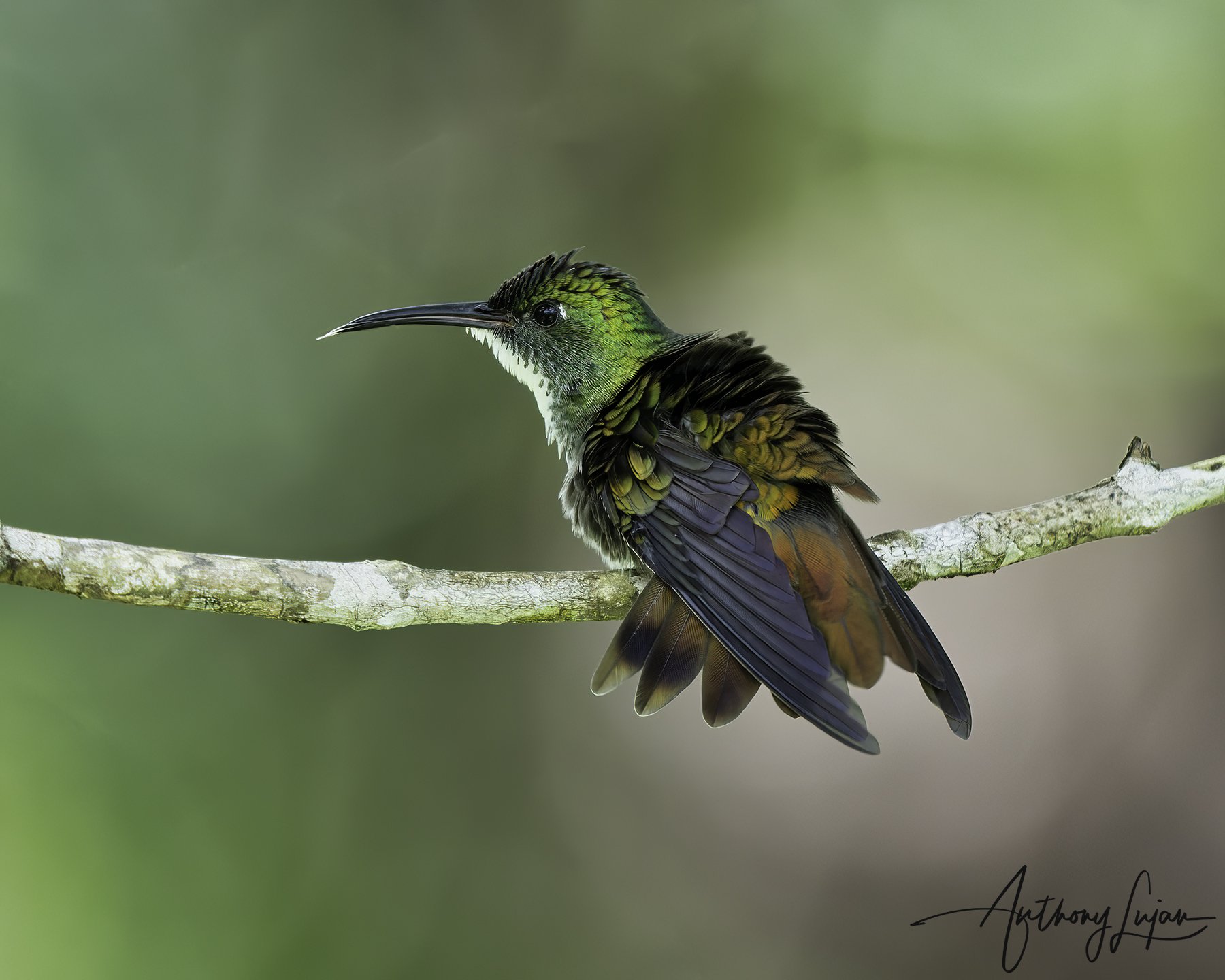
Below is the Golden-tailed Sapphire (Chrysuronia oenone oenone)
Photographed at Hacienda La Leona Birdwatching, Cundinamarca, Colombia, and at Waqanki / Quebrada Mishquiyaquillo and Asociación Koepcke’s Hermit, San Martín, Peru
These individuals belong to the subspecies oenone, which occurs from eastern Colombia and north-western Venezuela south through eastern Ecuador into north-eastern Peru. It inhabits humid forest edge, clearings, and secondary growth, typically between 200 and 1 200 meters.
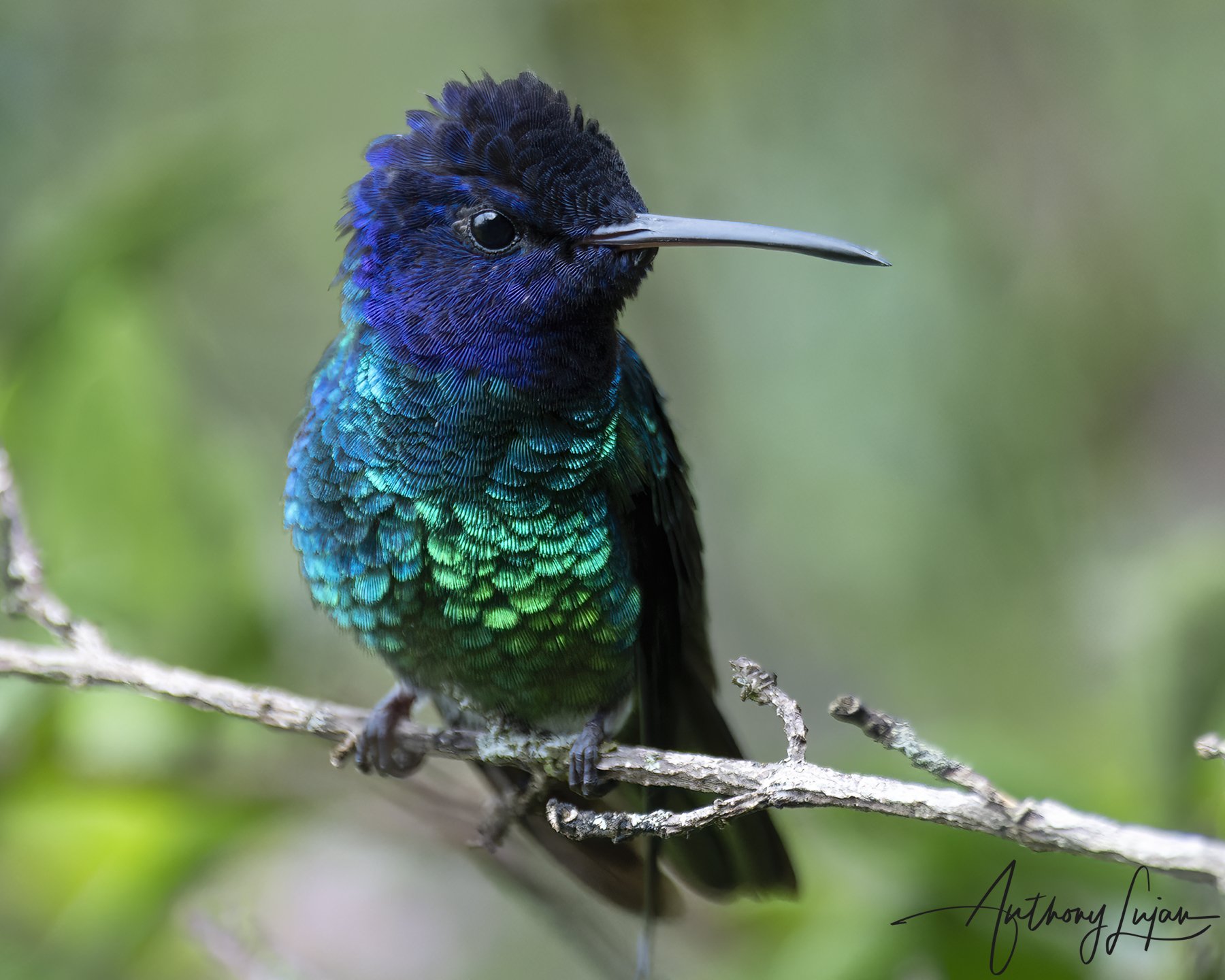
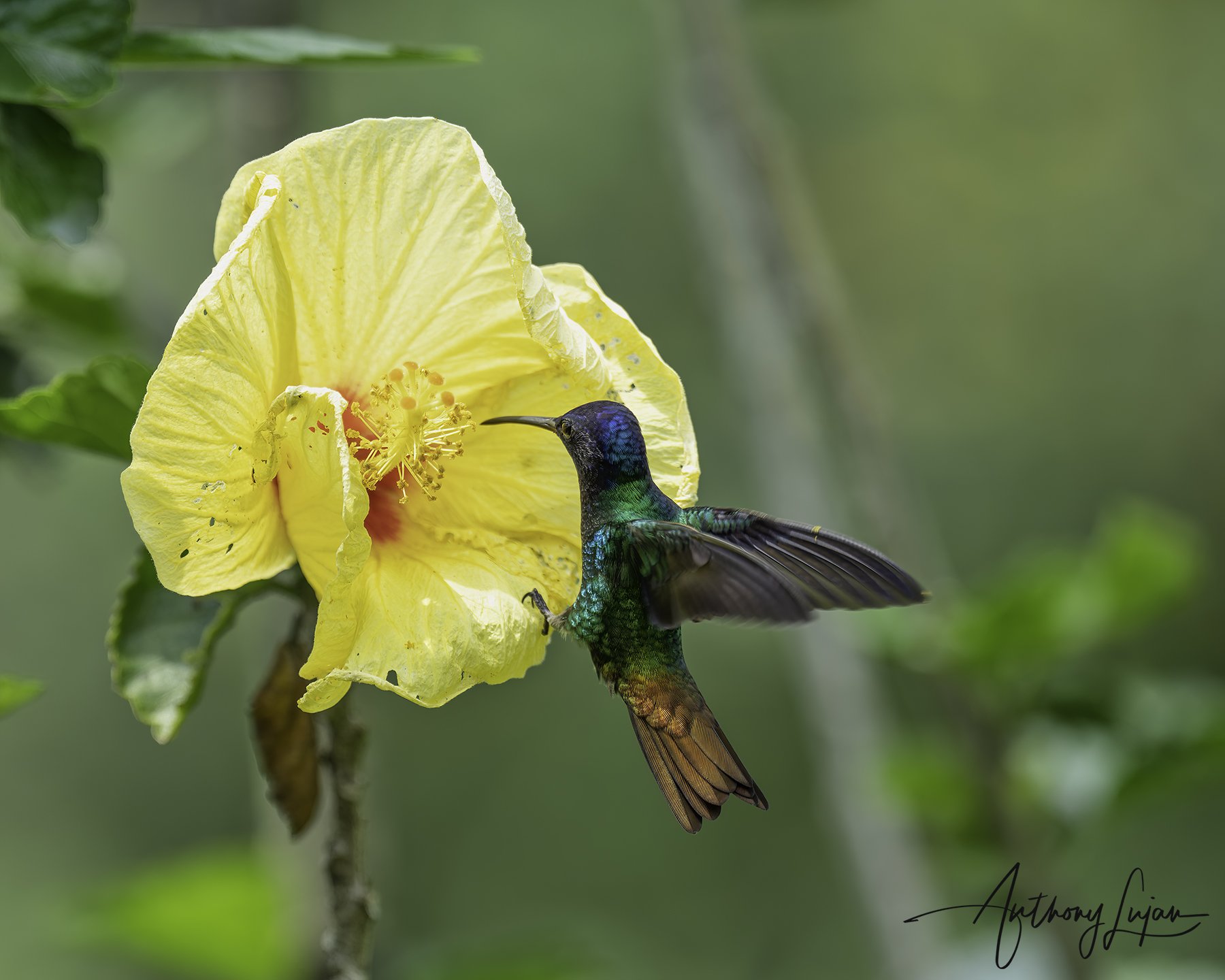
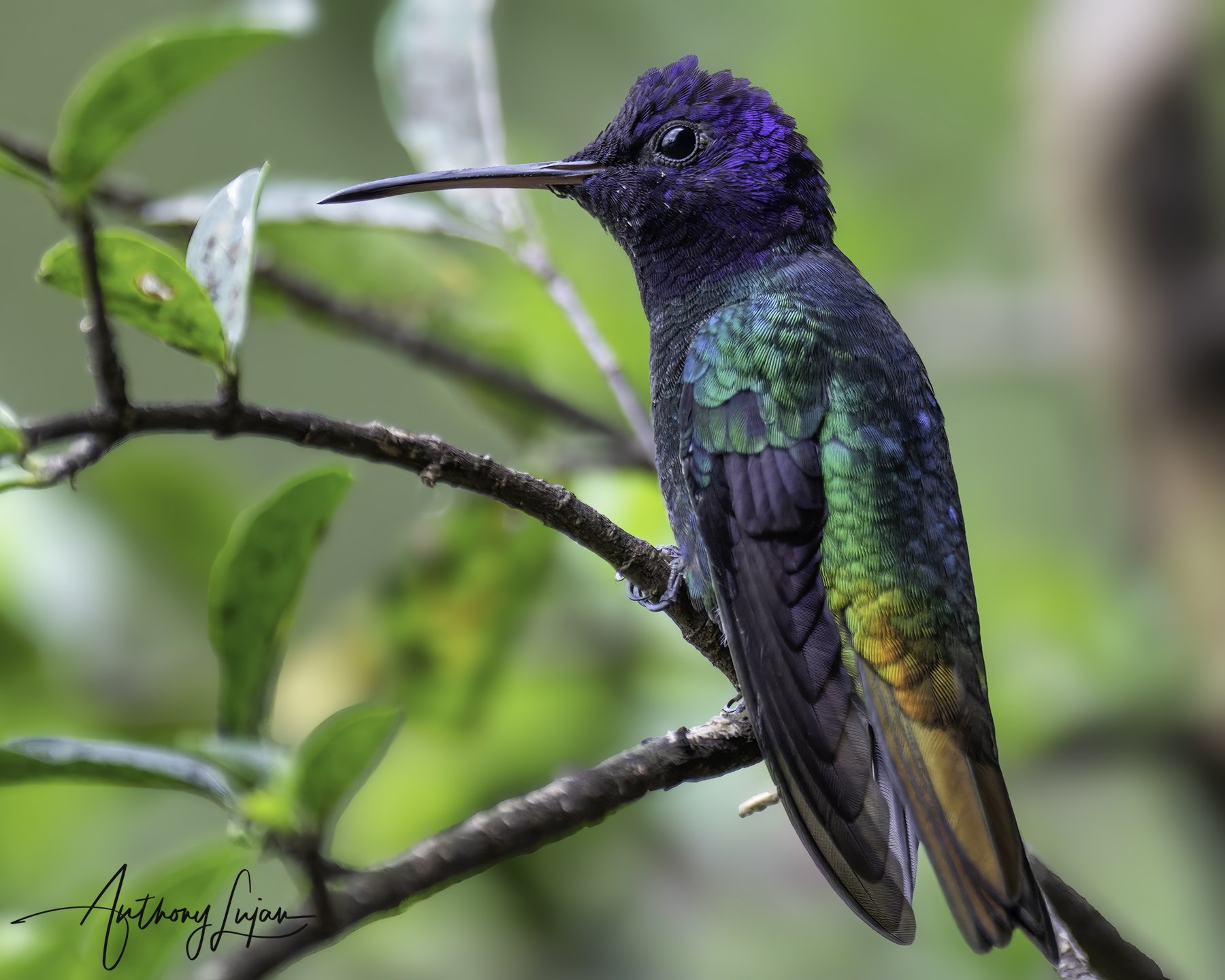
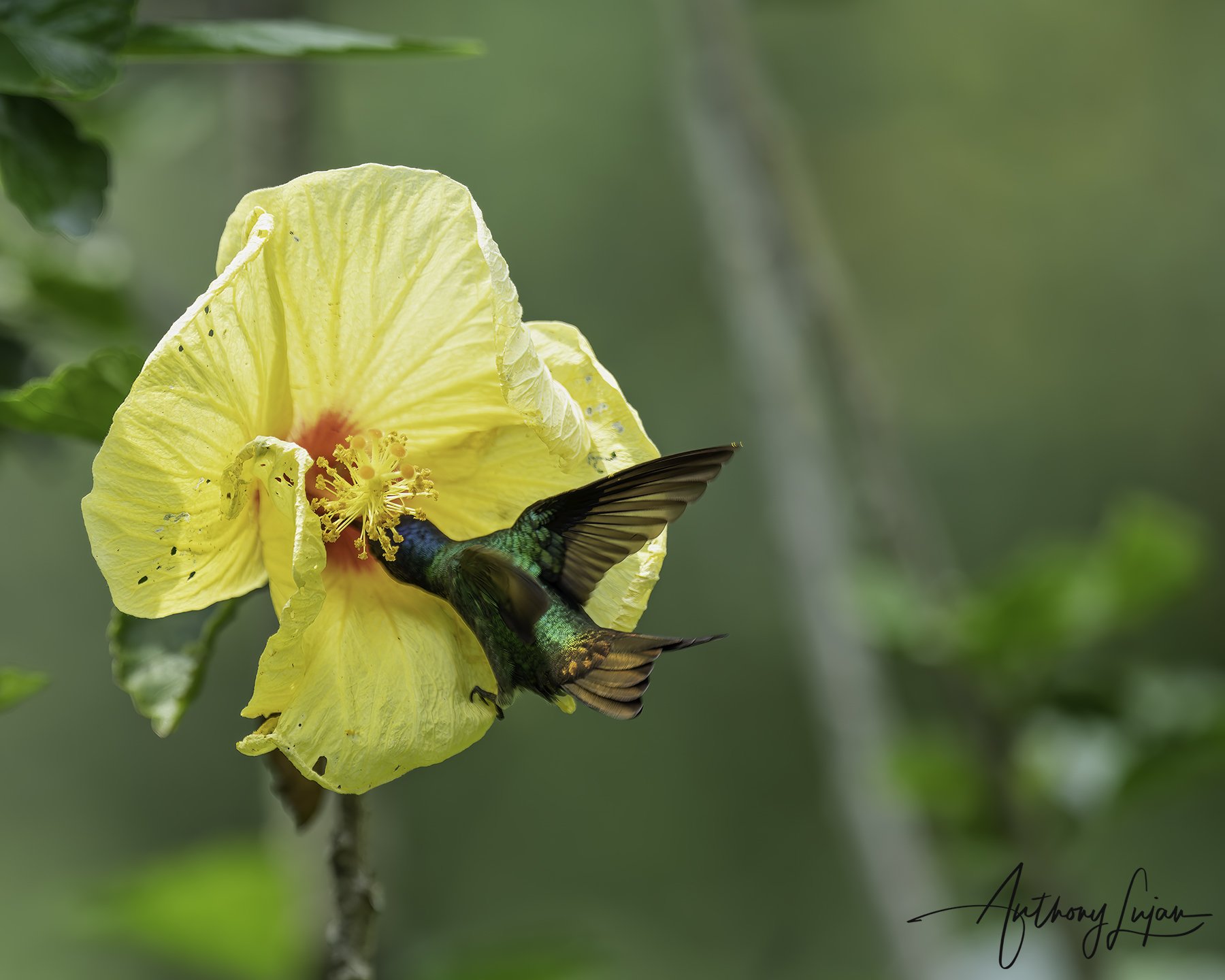
taken in Peru
Related species in the Chrysuronia genus (10 species total):


Please note: The content provided in this article reflects Anthony’s personal experience and photographic approach. Results can vary depending on light, weather, location, equipment, subject behavior, and field conditions.