
Gorgeted Woodstar
Scientific name: Chaetocercus heliodor
The Gorgeted Woodstar is a tiny hummingbird of humid and wet Andean forests in Venezuela, Colombia, and Ecuador. The number of mature individuals is unknown, the population is thought to be decreasing, it is considered non-migratory, and it is currently listed as Least Concern with two recognized subspecies.
At a Glance
Family: Trochilidae (hummingbirds)
Clade: Mellisugini – Bee Hummingbirds
Genus group: Chaetocercus — 6 species, including several tiny “woodstars” of northwestern South America
Range: Andes of Venezuela (Mérida), Colombia, and Ecuador, mainly on humid slopes and foothills.
Habitat: Semi-open to open landscapes in humid zones—edges of moist and wet montane forest, forest clearings, coffee plantations, gardens, and areas with scattered shrubs and trees; occasionally into lower páramo.
Elevation: Typically between about 1,200 and 3,000 m.
Length: About 5.8–6.4 cm (2.3–2.5 in), making it the smallest woodstar and one of the world’s smallest birds.
Weight: Only a few grams; extremely lightweight even for a hummingbird.
Number of mature individuals: Unknown
Population trend: Decreasing
Status: Least Concern (IUCN)
Name Origin
The genus name Chaetocercus means “bristle tail,” referring to the bare, filamentous outer tail feathers of males. The species name heliodor comes from Greek for “gift of the sun,” and also recalls a yellow-green gemstone, reflecting its sparkling, sunlit plumage. The English name “Gorgeted Woodstar” highlights the male’s bright throat “gorget” and its membership in the tiny woodstar group.
Subspecies & Distribution
Chaetocercus heliodor heliodor
Distribution: Andes of Venezuela (Mérida), Colombia, and western Ecuador, typically between about 1,200 and 3,000 m.Chaetocercus heliodor cleavesi
Distribution: Andes of northeastern Ecuador, from western Sucumbíos south to northwestern Morona-Santiago, in similar humid montane habitats.
Overall, Chaetocercus heliodor forms a narrow Andean band from western Venezuela through Colombia into Ecuador, occupying humid forest edges, clearings, and semi-open slopes along this cordillera.
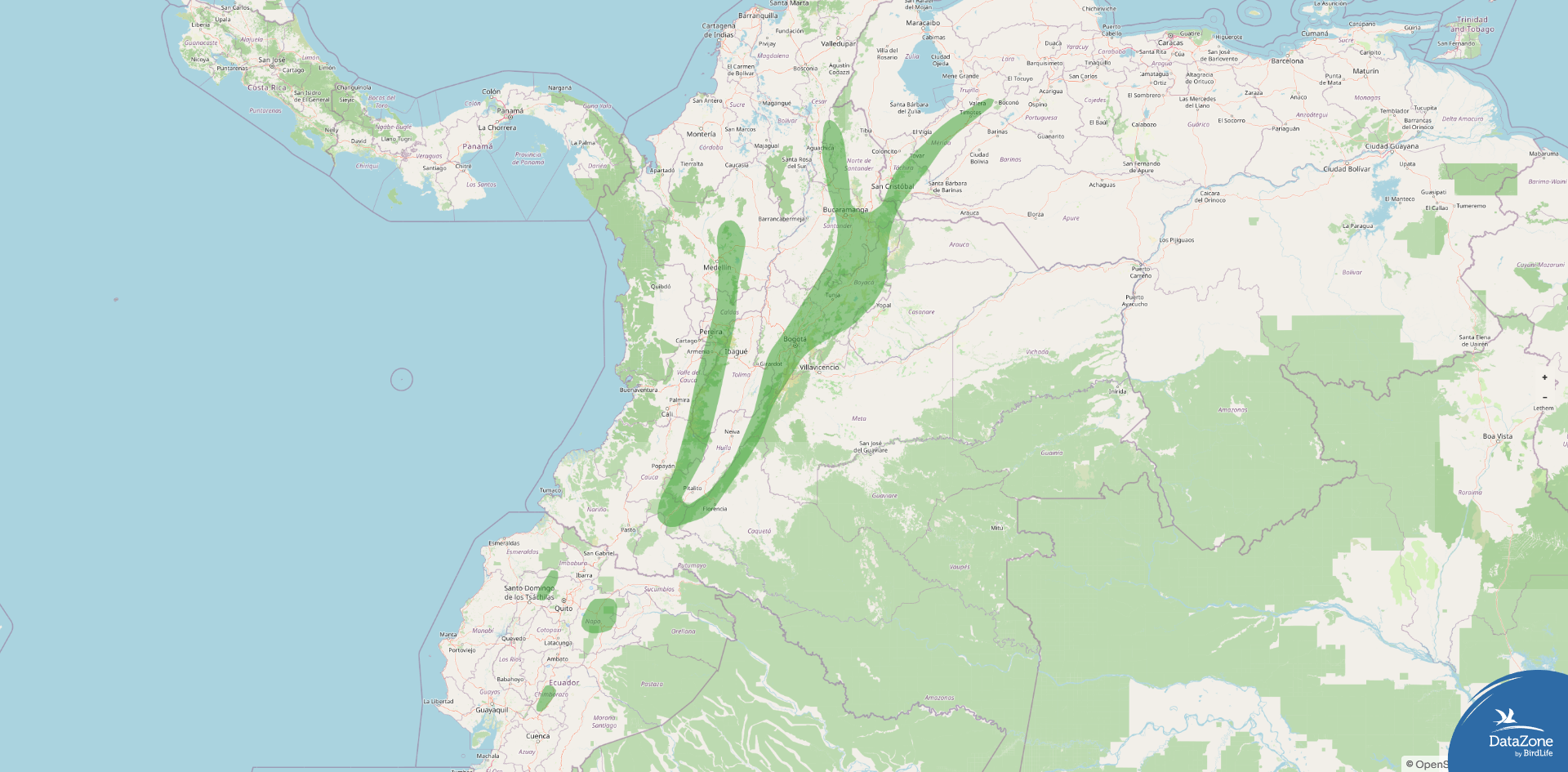
Legend
Green Resident
Species Overview
The Gorgeted Woodstar is one of the smallest hummingbirds and a classic “bee hummingbird,” often resembling a large insect as it hovers at flowers. It favors humid montane forest edges, clearings, and semi-open areas where scattered shrubs and trees provide blossoms. Its tiny size, fast bee-like flight, and rich cinnamon underparts make it distinctive when seen well, but it can be easy to miss in dense Andean vegetation.
Male Description
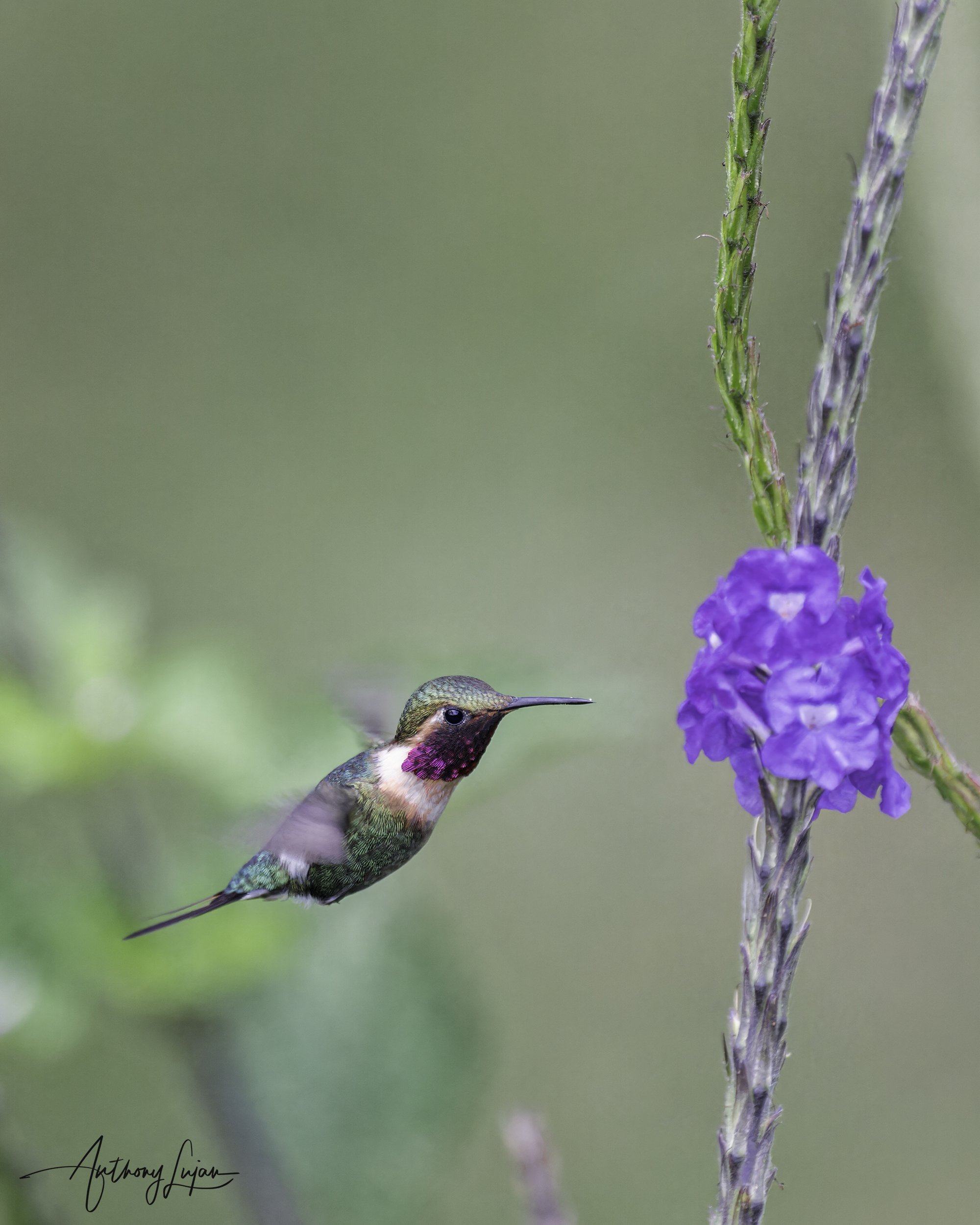
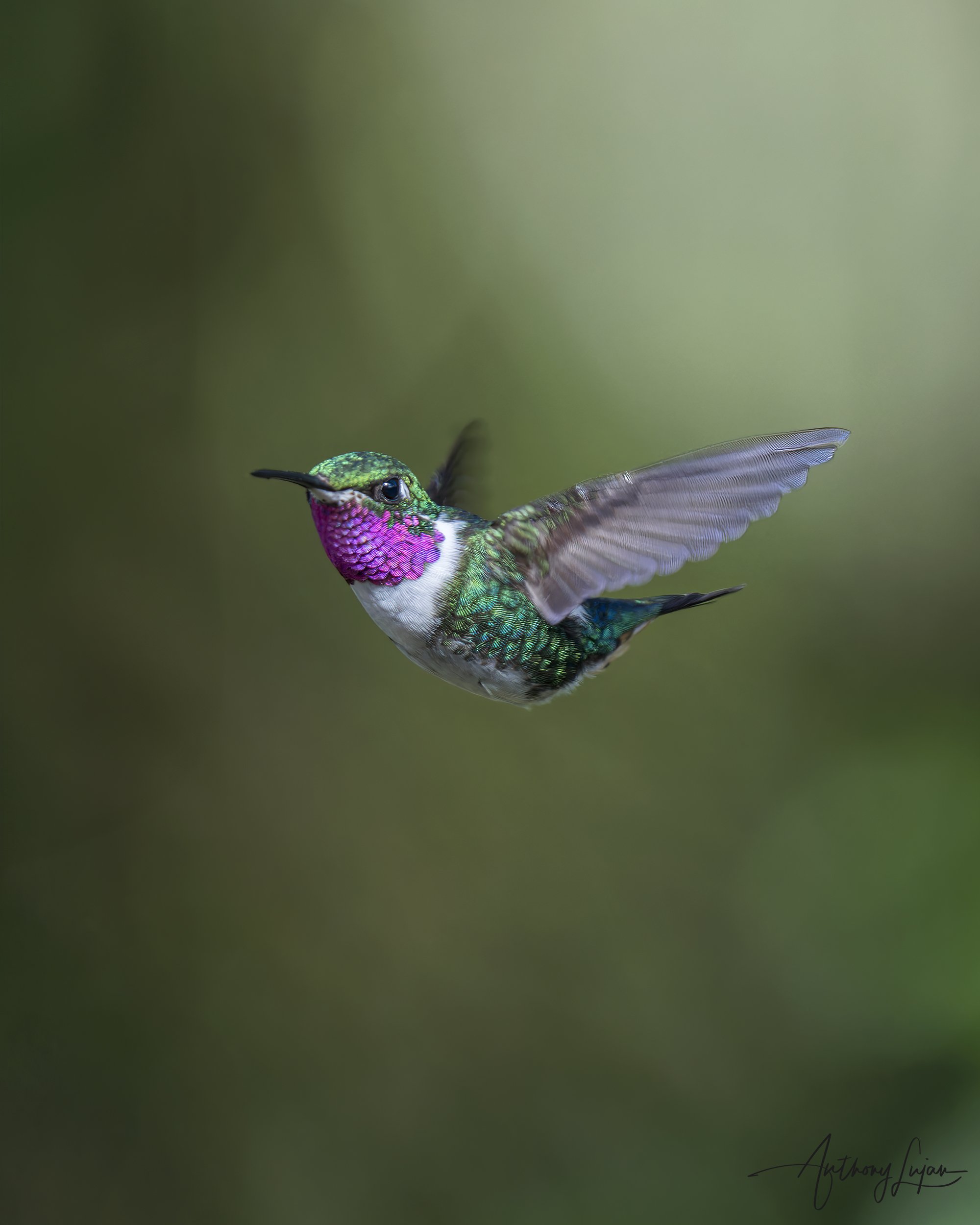
Adult males are very small, with a straight black bill and a compact, short-bodied appearance. The upperparts are dark green to bluish emerald, and the rump and underparts are rich cinnamon-rufous, contrasting with the darker head and upper breast. The throat bears a glittering, wine-colored to purplish gorget that can flash brilliantly in good light. The tail is deeply forked, with very short central feathers and outer feathers reduced to narrow shafts with little or no vane, giving the classic “wire-tailed” woodstar look. Males of subspecies cleavesi are darker overall than the nominate, with a slightly less purplish gorget and a shorter tail. Overall, males appear as tiny dark green woodstars with a wine-colored throat, rich cinnamon underparts, and extremely fine outer tail feathers.
Female Description
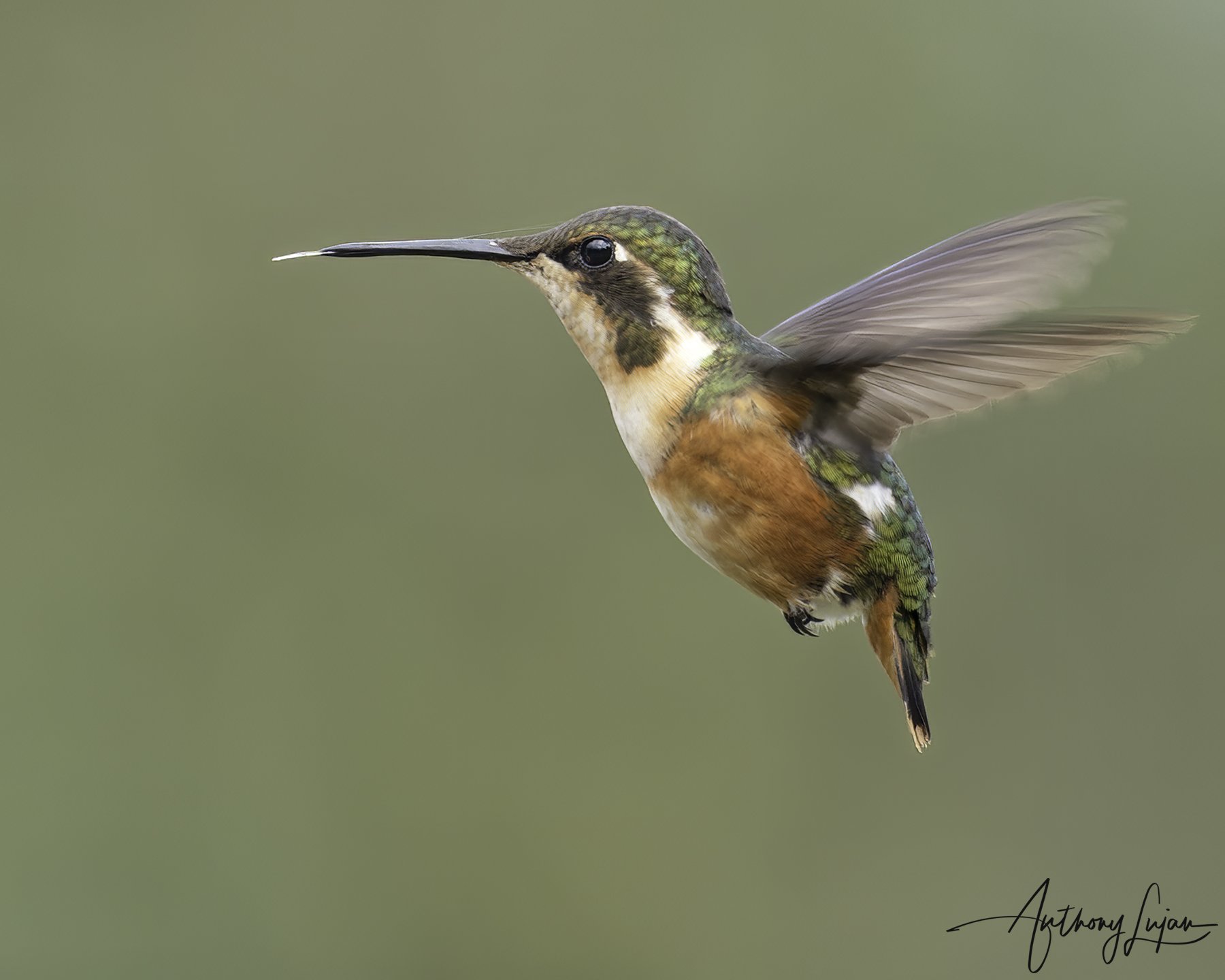
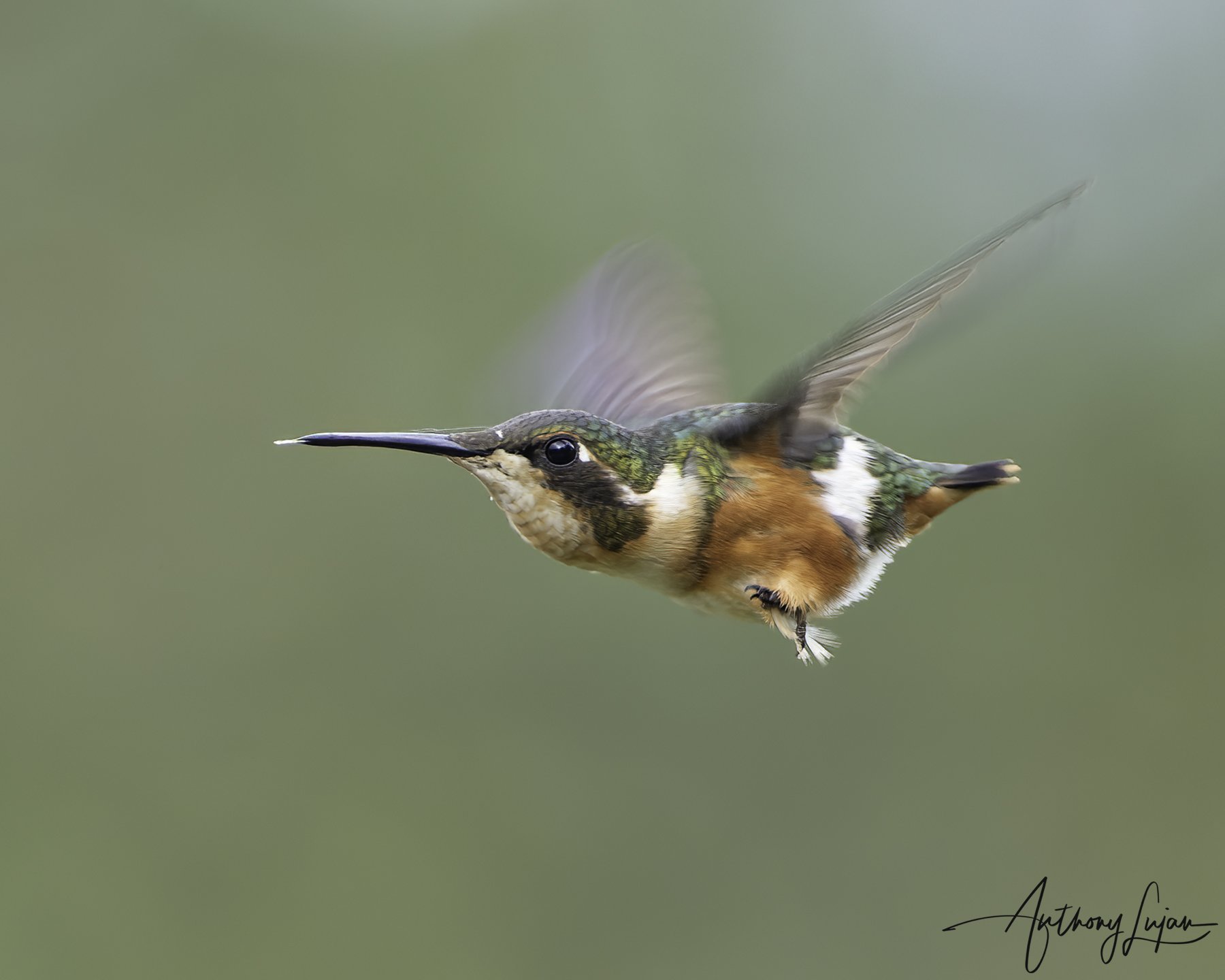
Adult females are bronzy green above with a straight black bill. The underparts are mostly cinnamon-rufous, with the throat and chest slightly paler and the belly and flanks a warmer rufous tone. The tail is rounded rather than deeply forked, cinnamon in color with a bold black subterminal band near the tips of the feathers. Females lack the male’s glittering gorget and extreme tail filaments, instead appearing as tiny, bronzy-green hummingbirds with rich cinnamon underparts and a short, rufous-and-black tail.
Habitat & Behavior
Gorgeted Woodstars inhabit humid and wet montane forests and forest edges, as well as semi-open landscapes such as coffee plantations, gardens, and shrubby clearings with scattered trees. They often forage at low to mid-levels, visiting small flowers on shrubs, vines, and low trees, and they also take tiny insects for protein. Their flight is rapid and bee-like, and they typically occur singly or in very small numbers, sometimes defending favored blossoms but often moving unobtrusively through the vegetation. The species is considered resident throughout its range, with no major migratory movements known, though local elevational shifts likely follow flowering patterns.
Population
The total number of mature individuals is unknown, but the Gorgeted Woodstar is generally considered uncommon and localized within its Andean range. It is usually found at low densities even in suitable habitat, and ongoing habitat alteration has likely reduced some local populations. The overall trend is thought to be decreasing, though not rapidly enough at present to move it beyond Least Concern.

Conservation
The Gorgeted Woodstar is assessed as Least Concern because of its relatively broad, if narrow, Andean range, but its decreasing trend and sensitivity to habitat loss warrant attention. Deforestation, agricultural expansion, and the conversion of traditional shade coffee to more intensive systems can reduce the forest edges and semi-open montane habitats it prefers. Conserving humid montane forest, maintaining traditional shade coffee and agroforestry systems, and preserving hedgerows and flowering shrubs in Andean landscapes will help support this and other small woodstars.
Below is the Gorgeted Woodstar (Chaetocercus heliodor heliodor)
Photographed at Rogitama Biodiversidad, Boyacá, Colombia
This individual belongs to the subspecies heliodor, which occurs along the Eastern Andes of Colombia, from Santander and Boyacá south through Cundinamarca to Meta, and into adjacent western Venezuela (Táchira). It inhabits humid montane forest, forest edge, and gardens between 1,200 and 2,700 meters elevation.


Related species in the Chaetocercus genus (6 species total):



Please note: The content provided in this article reflects Anthony’s personal experience and photographic approach. Results can vary depending on light, weather, location, equipment, subject behavior, and field conditions.