
Green-crowned Plovercrest
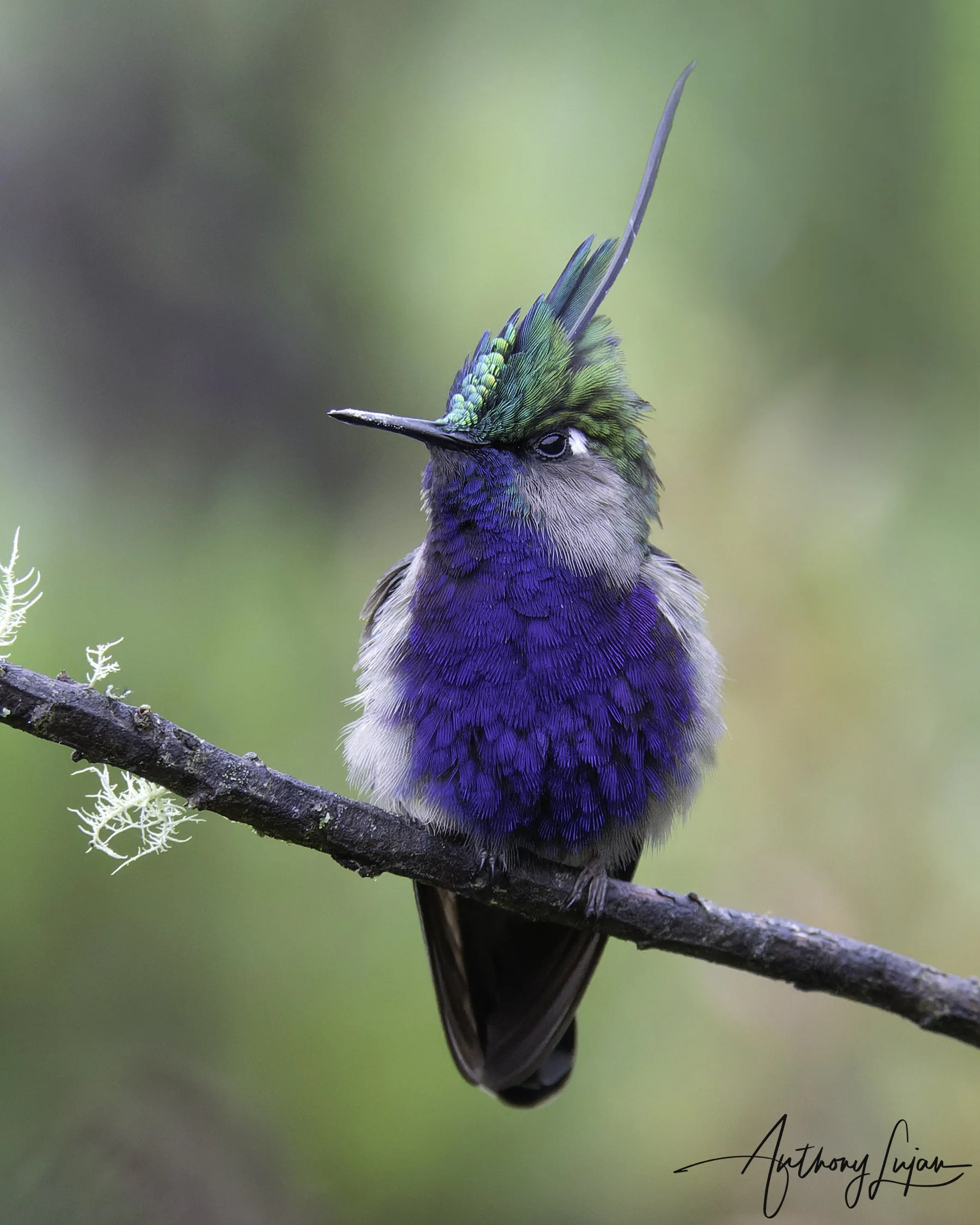
Scientific name: Stephanoxis lalandi
The Green-crowned Plovercrest is a small, crested hummingbird of forest understory and scrub in the Atlantic Forest region of southeastern Brazil. It is a full, monotypic species (not split into subspecies), is endemic to Brazil, and is currently assessed as Least Concern.
At a Glance
Family: Trochilidae (hummingbirds)
Clade: Trochilini – Emeralds
Genus: Stephanoxis — 2 species in total
Range: Atlantic Forest and adjacent woodlands of southeastern Brazil
Habitat: Understory of lowland and montane forest, scrub, and vegetation along watercourses; also light woodland and forest edges
Elevation: Mostly from near sea level up to about 1,500 m, occasionally higher in upland areas
Length: About 8.5–9 cm (3.3–3.5 in)
Weight: Males about 3–3.4 g; females about 2.2–3 g
Number of mature individuals: Unknown
Population trend: Unknown, but locally common where habitat remains
Movement: Resident (no documented large‑scale migrations)
IUCN Red List category: Least Concern
Name Origin
The common name “Green-crowned Plovercrest” refers to the male’s prominent green crest and the plover‑like shape of the raised crest. The genus name Stephanoxis combines Greek roots meaning “crown” and “sharp,” referring to the pointed crest. The species name lalandi honors French naturalist Pierre Antoine Delalande (Latinized as Lalandus/Lalandi), associated with the early description of this taxon.
Taxonomy & Distribution
Stephanoxis lalandi belongs to the “emeralds” (tribe Trochilini) within the hummingbird family Trochilidae. It forms one of two species in the genus Stephanoxis, together with the Purple-crowned Plovercrest (Stephanoxis loddigesii). Historically, the two were lumped as a single species under S. lalandi, but more recent work has restored them as separate, full species. The Green-crowned Plovercrest is endemic to southeastern Brazil, where it occurs in the Atlantic Forest region, including parts of Minas Gerais, Espírito Santo, São Paulo, Paraná, Santa Catarina, and Rio de Janeiro, primarily in forested and semi‑forested landscapes.
Subspecies and Distribution
Monotypic species with no recognized subspecies.
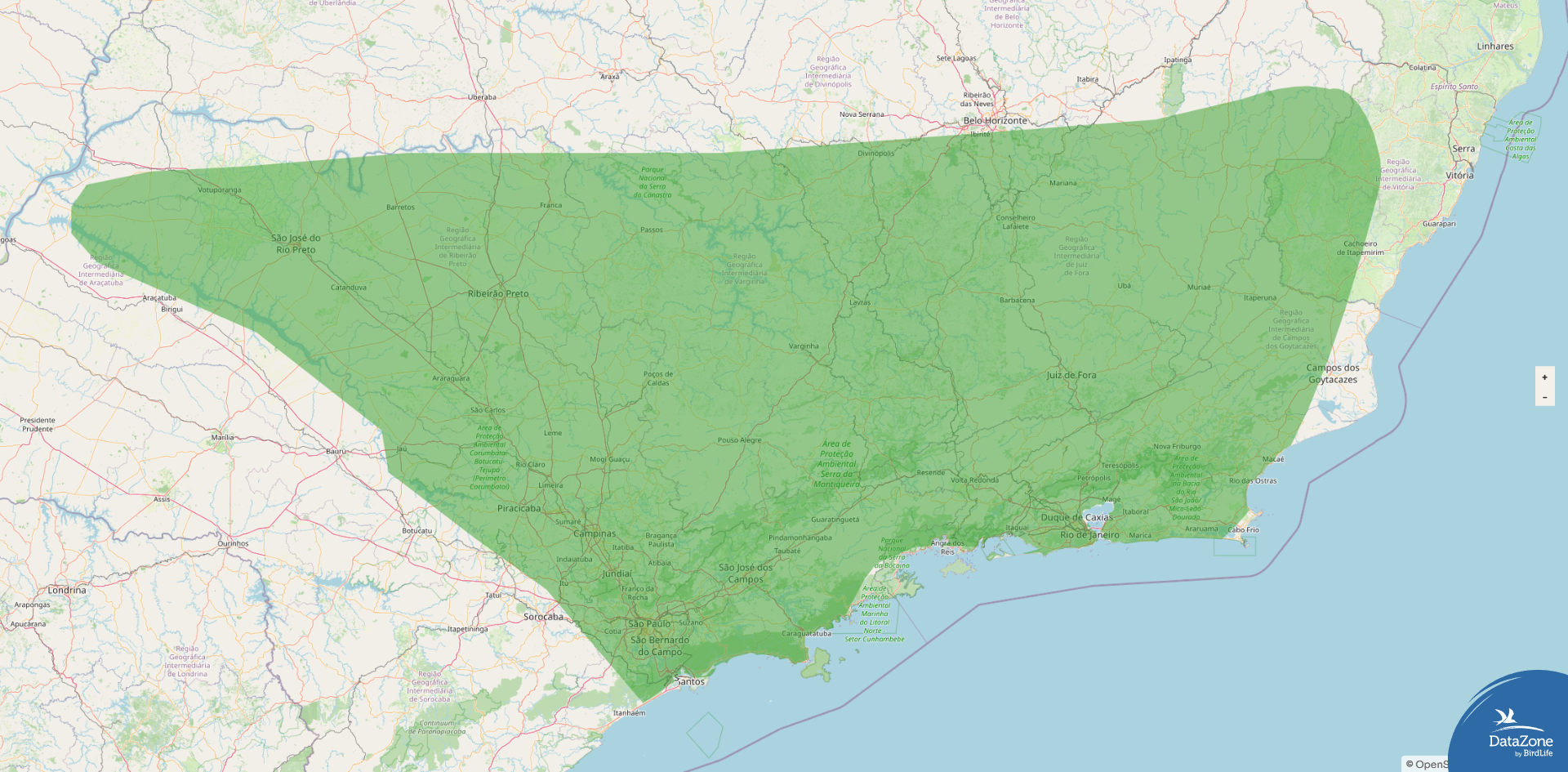
Legend
Green Resident
Species Overview
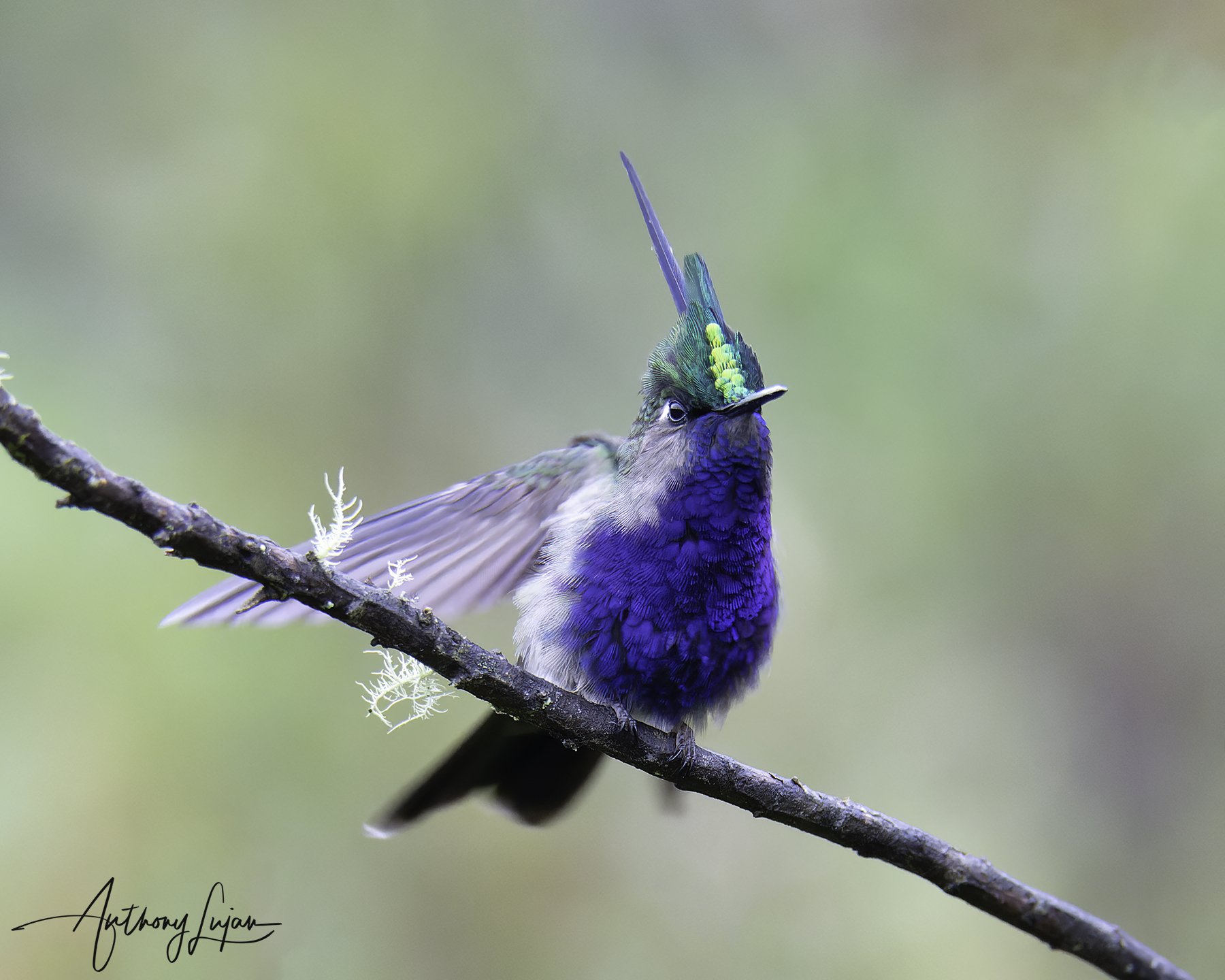
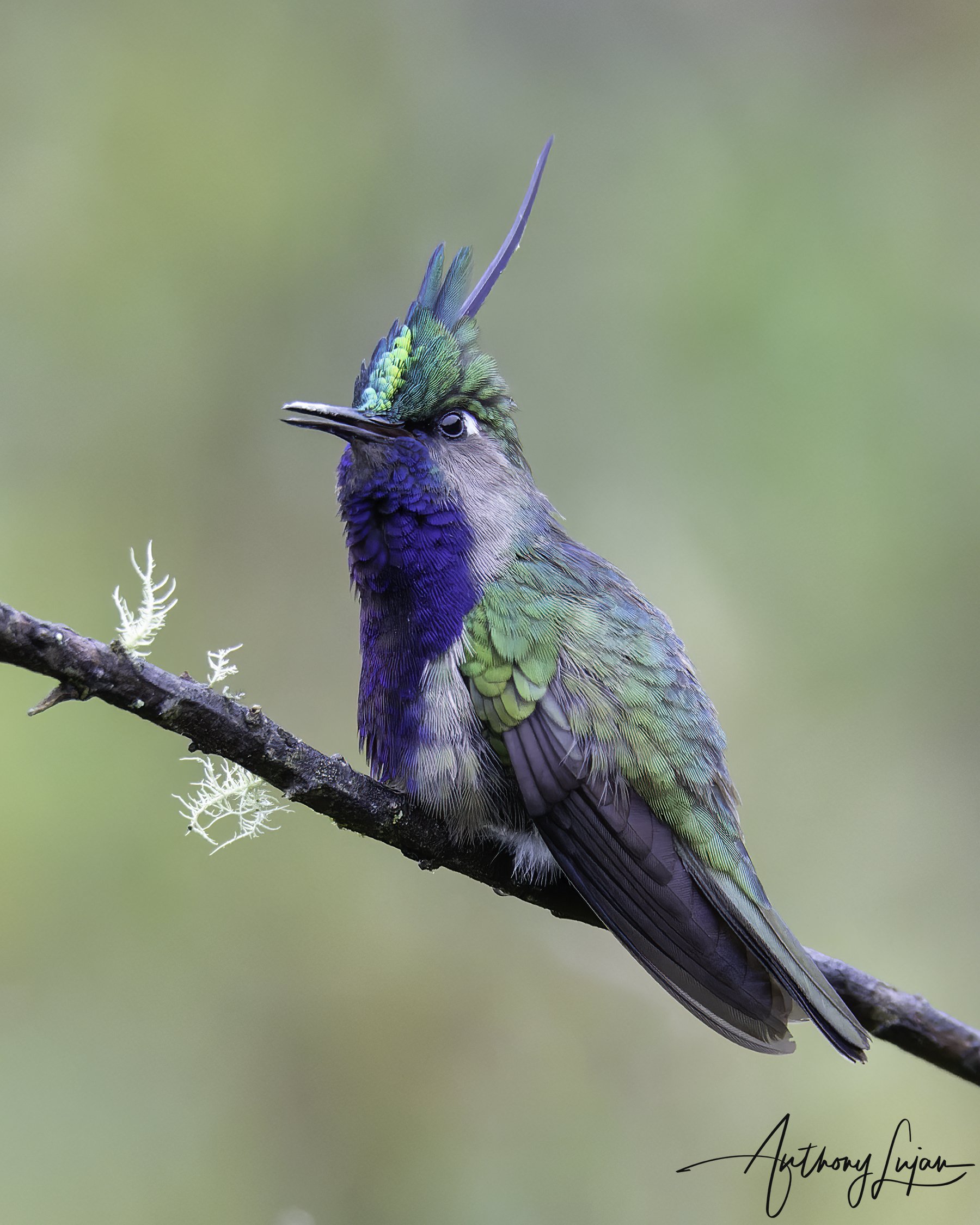
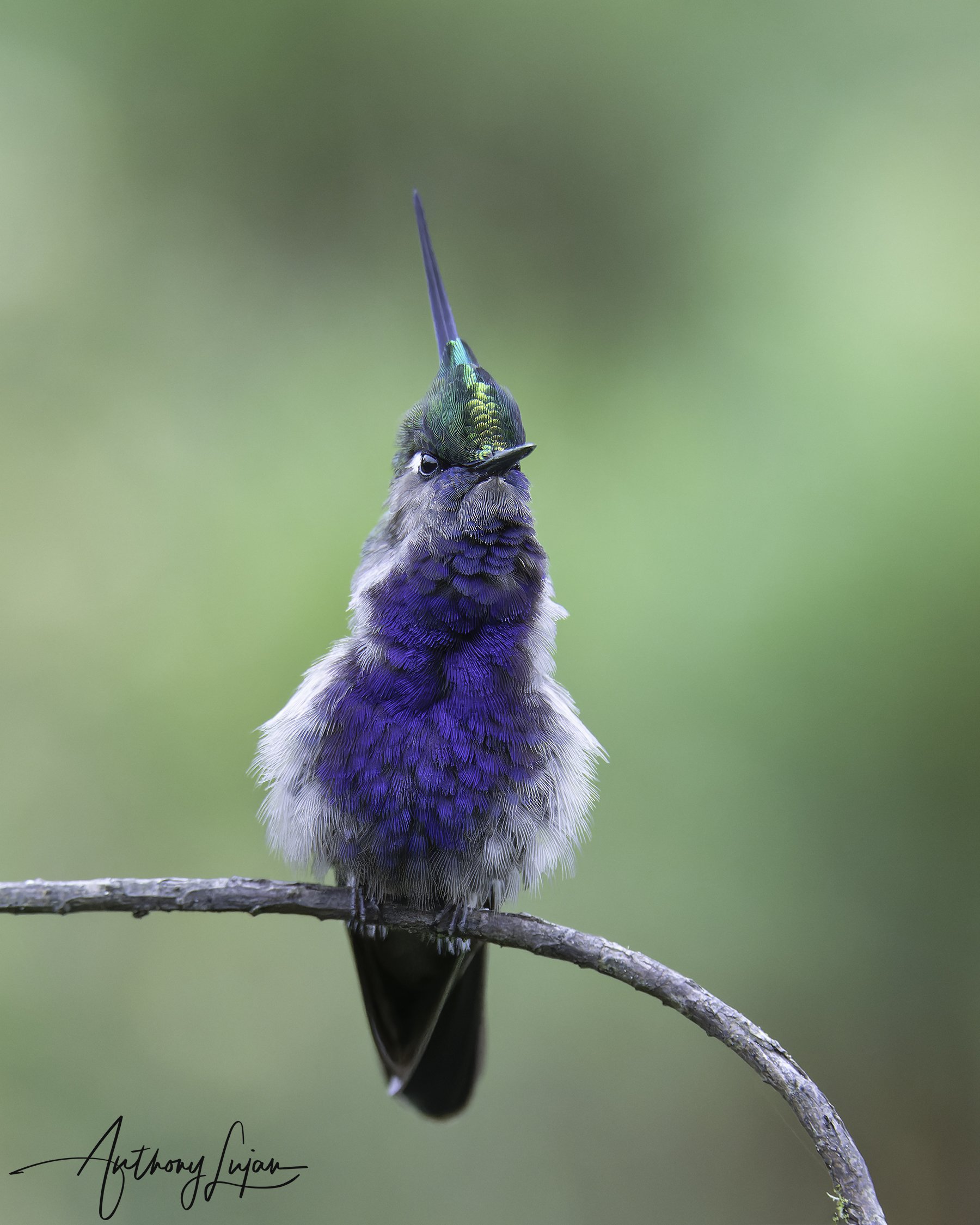
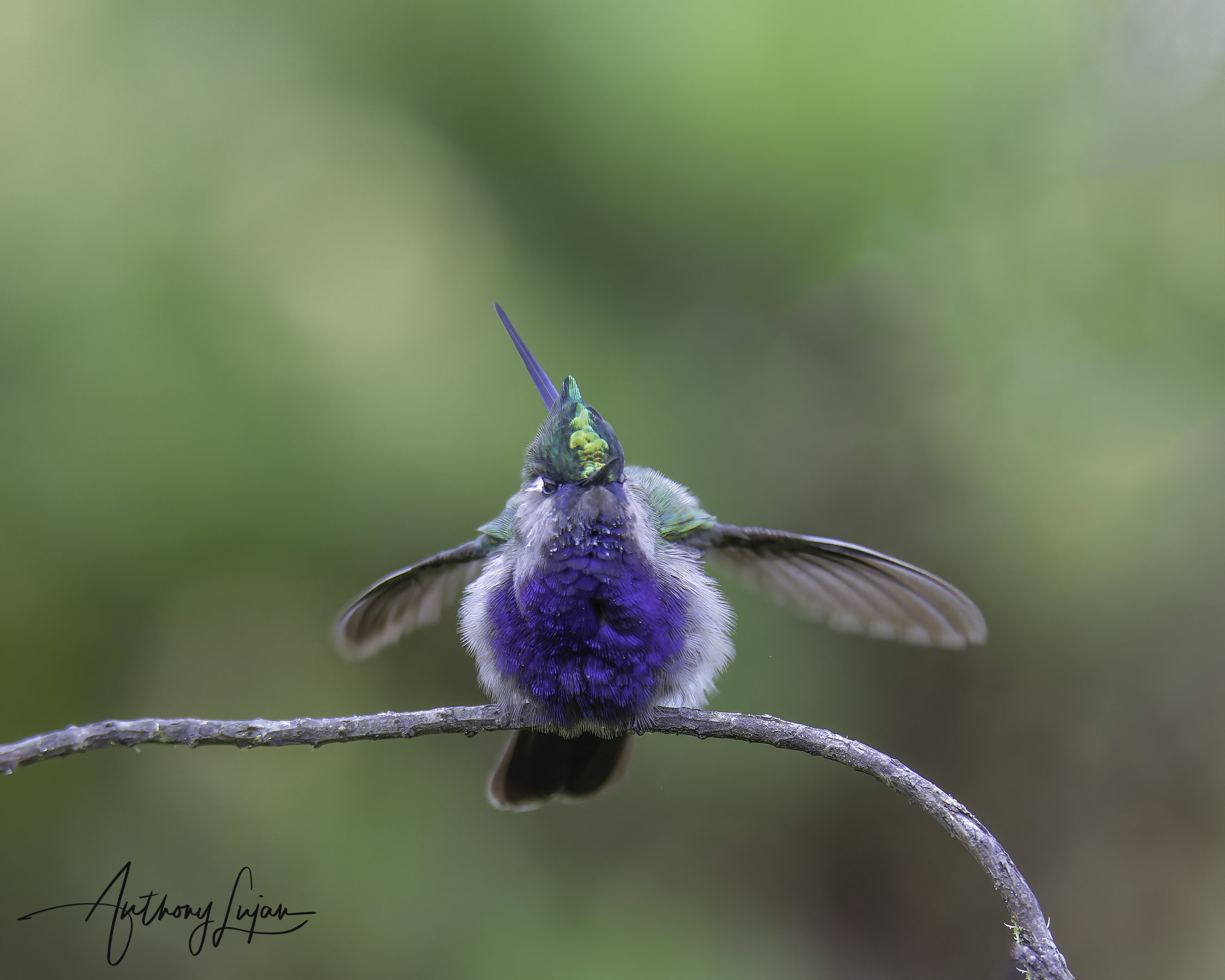
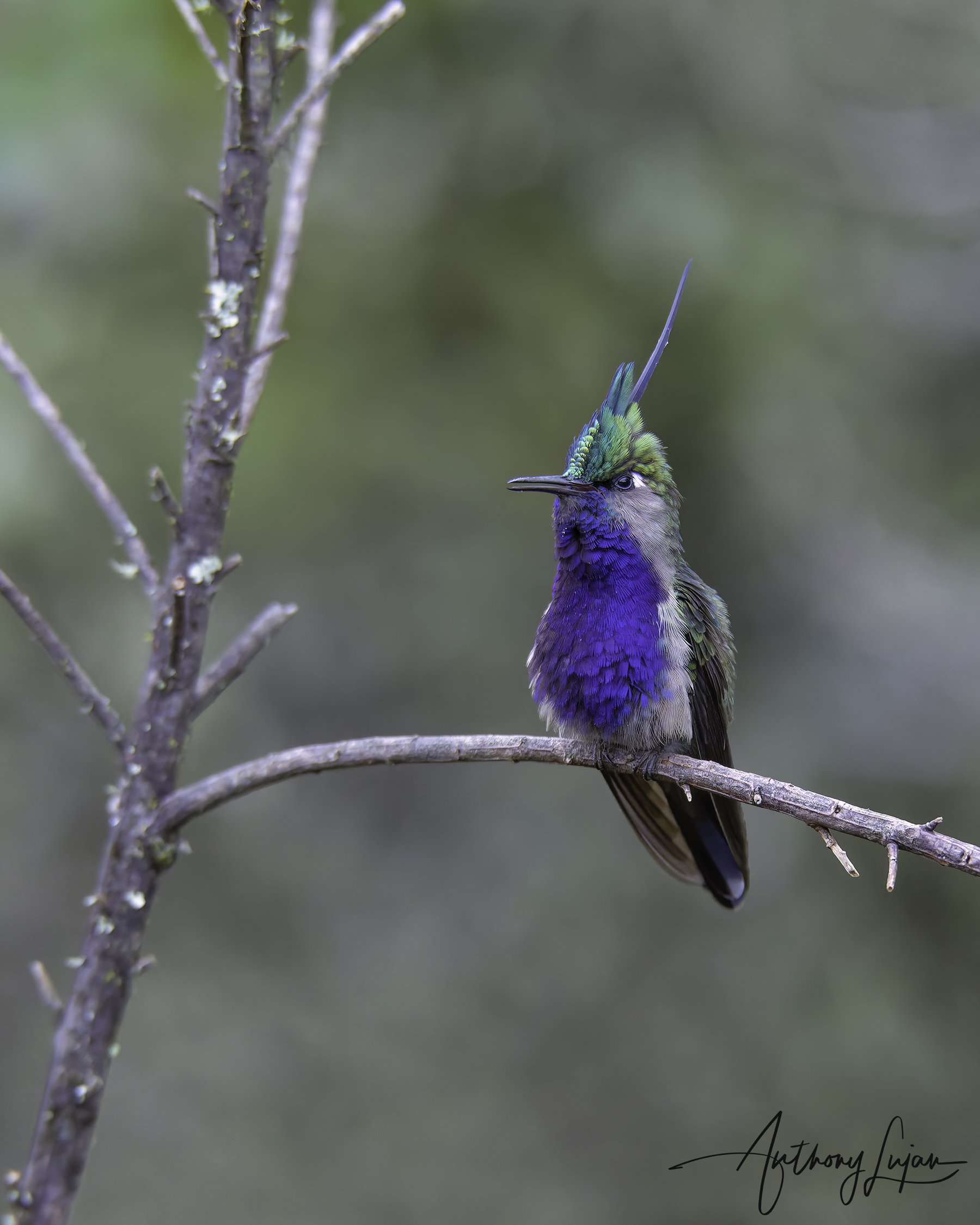
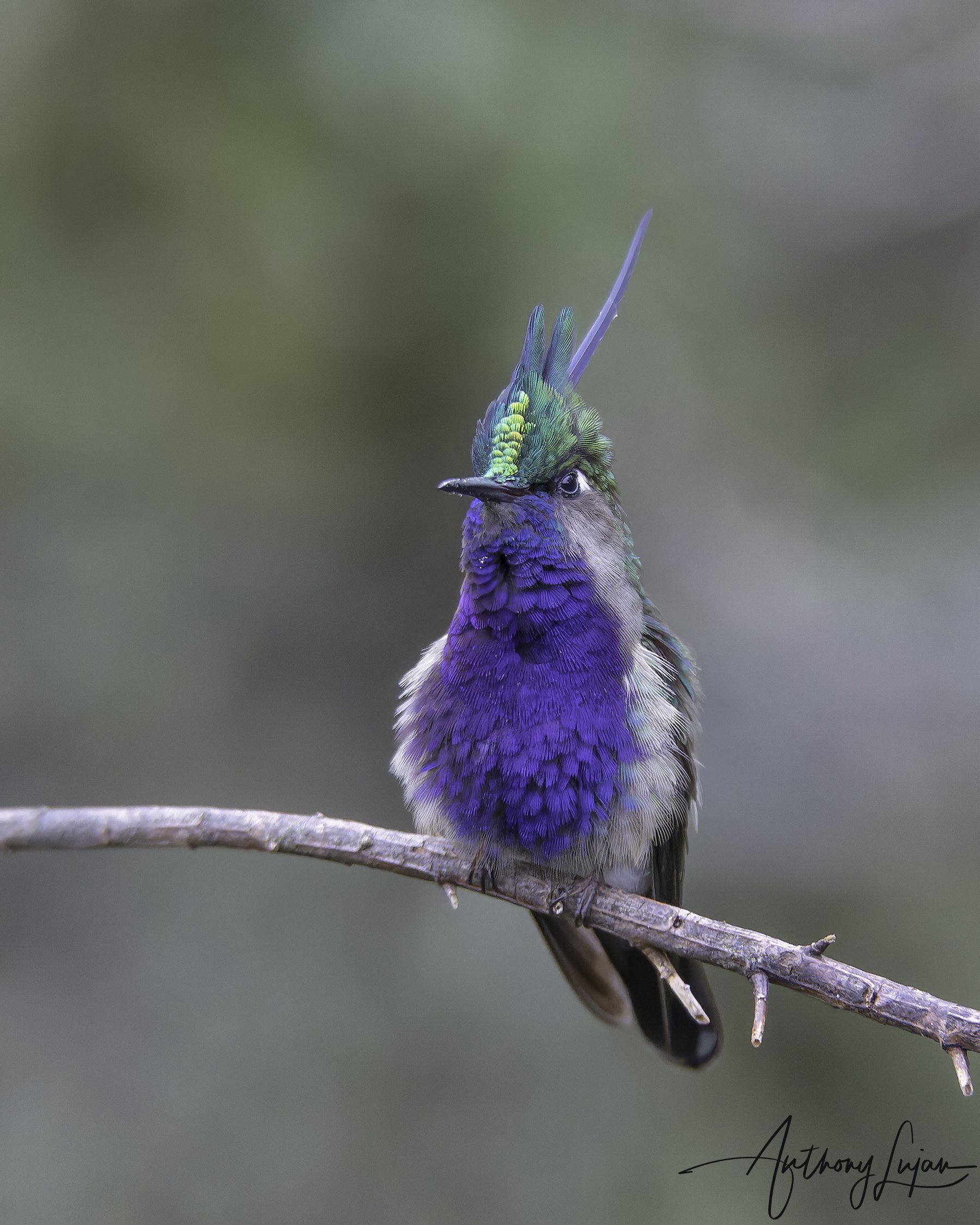
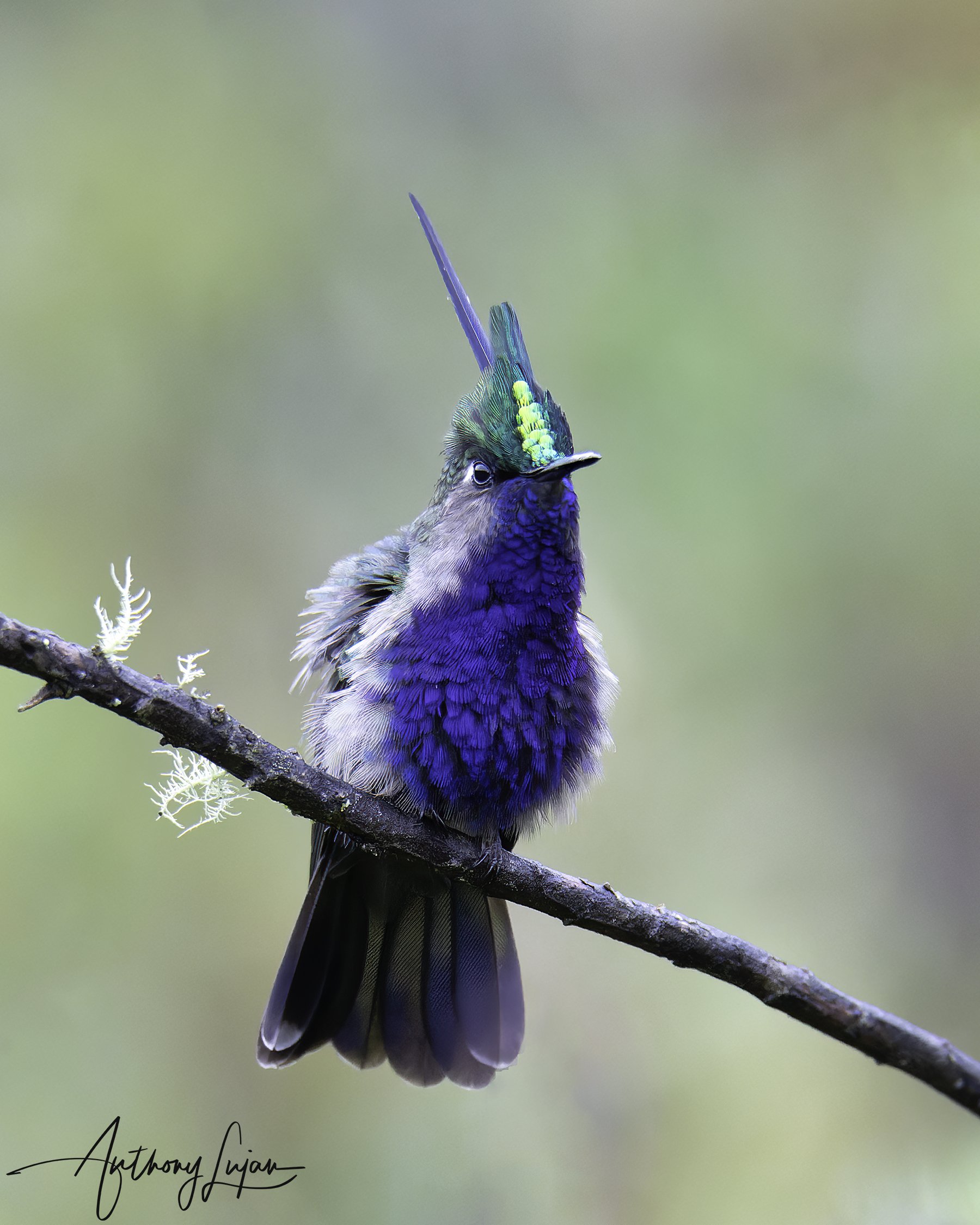
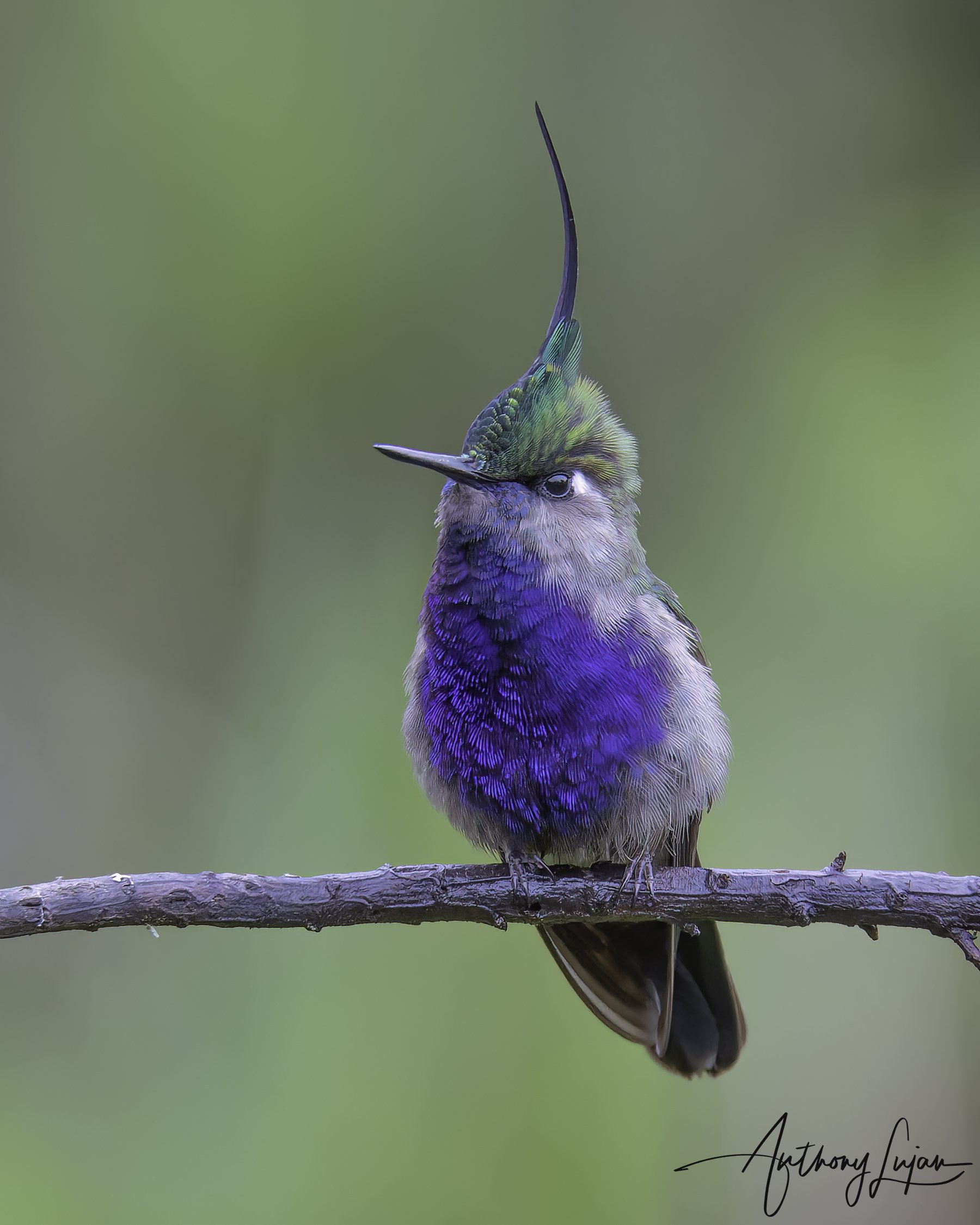
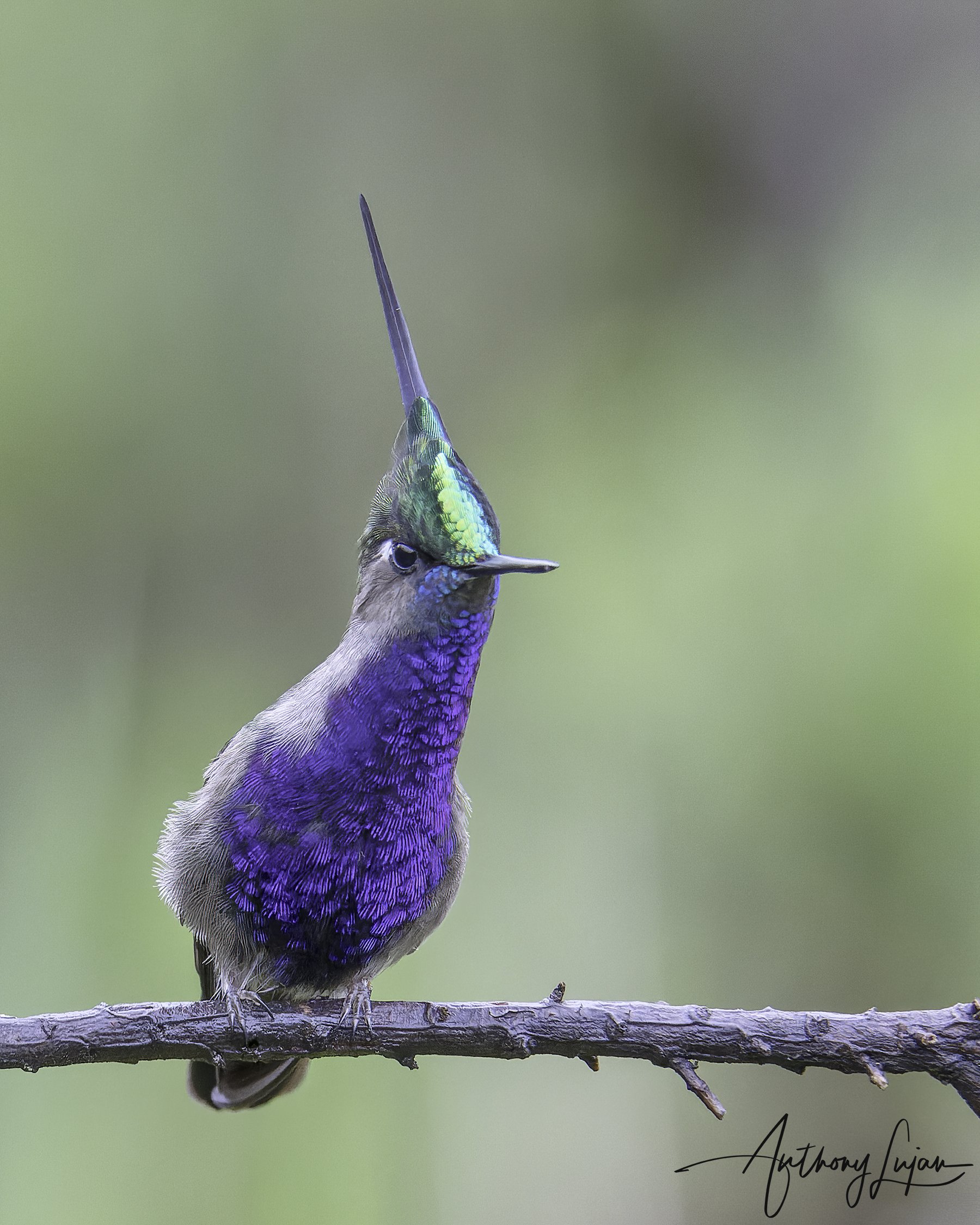
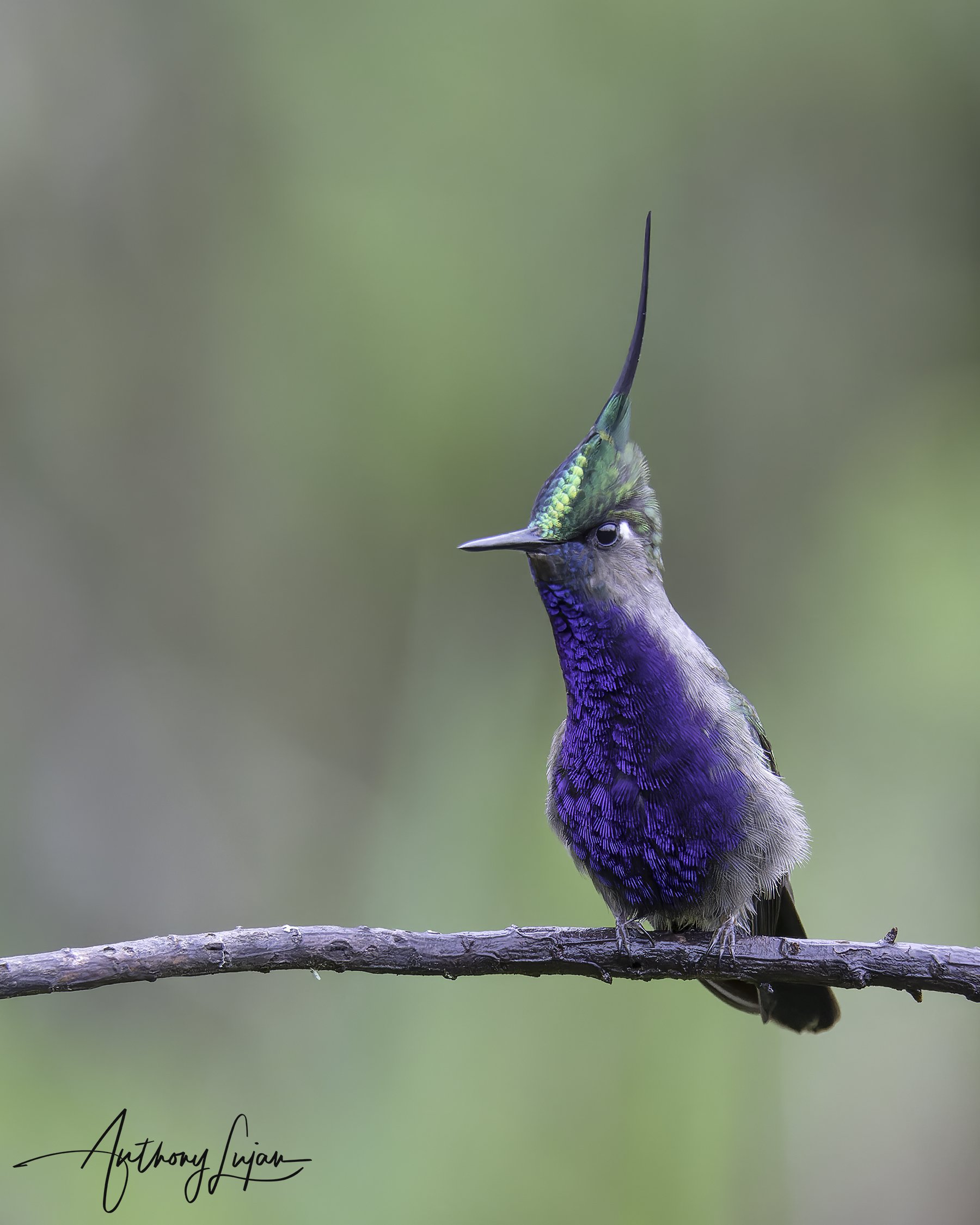
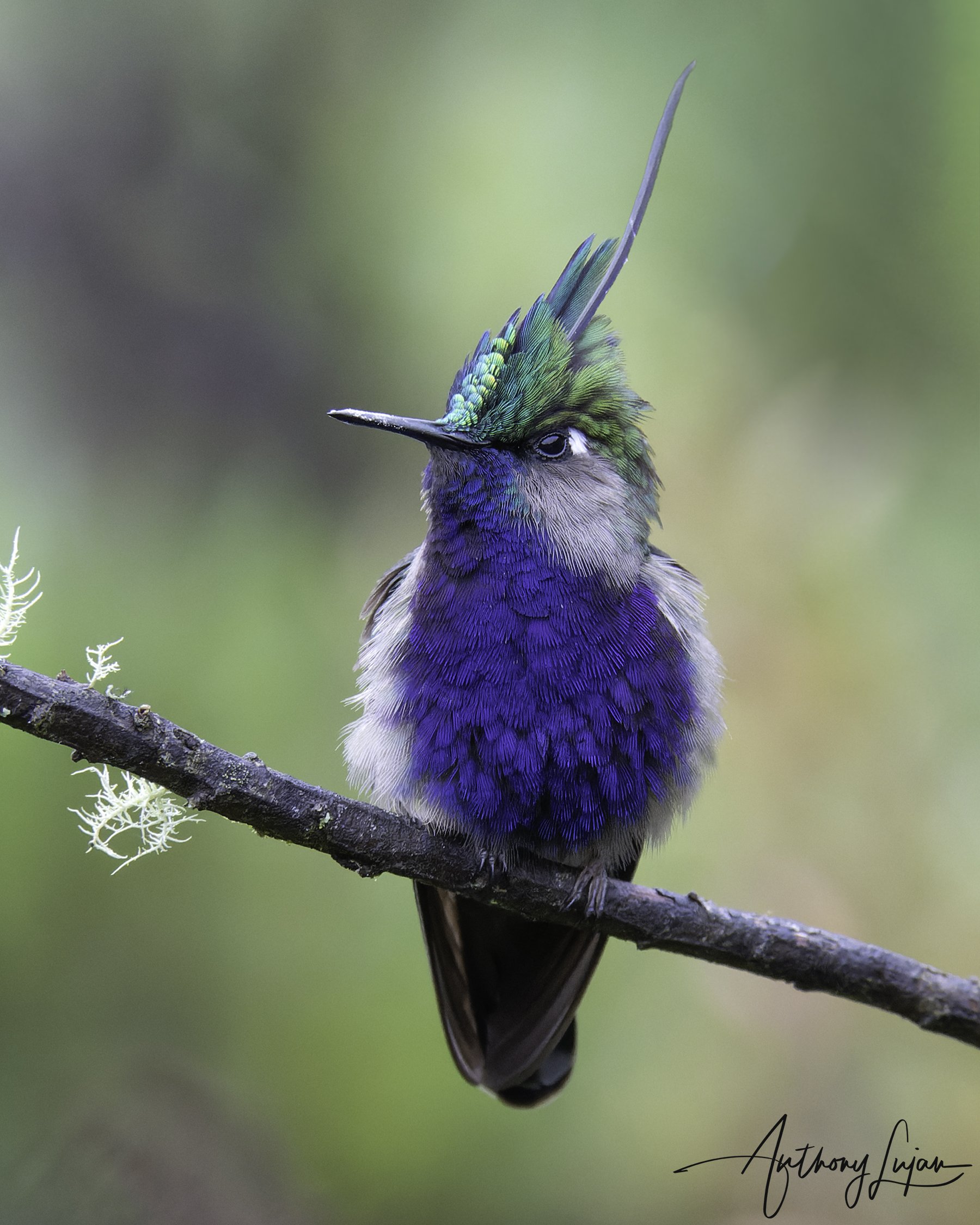
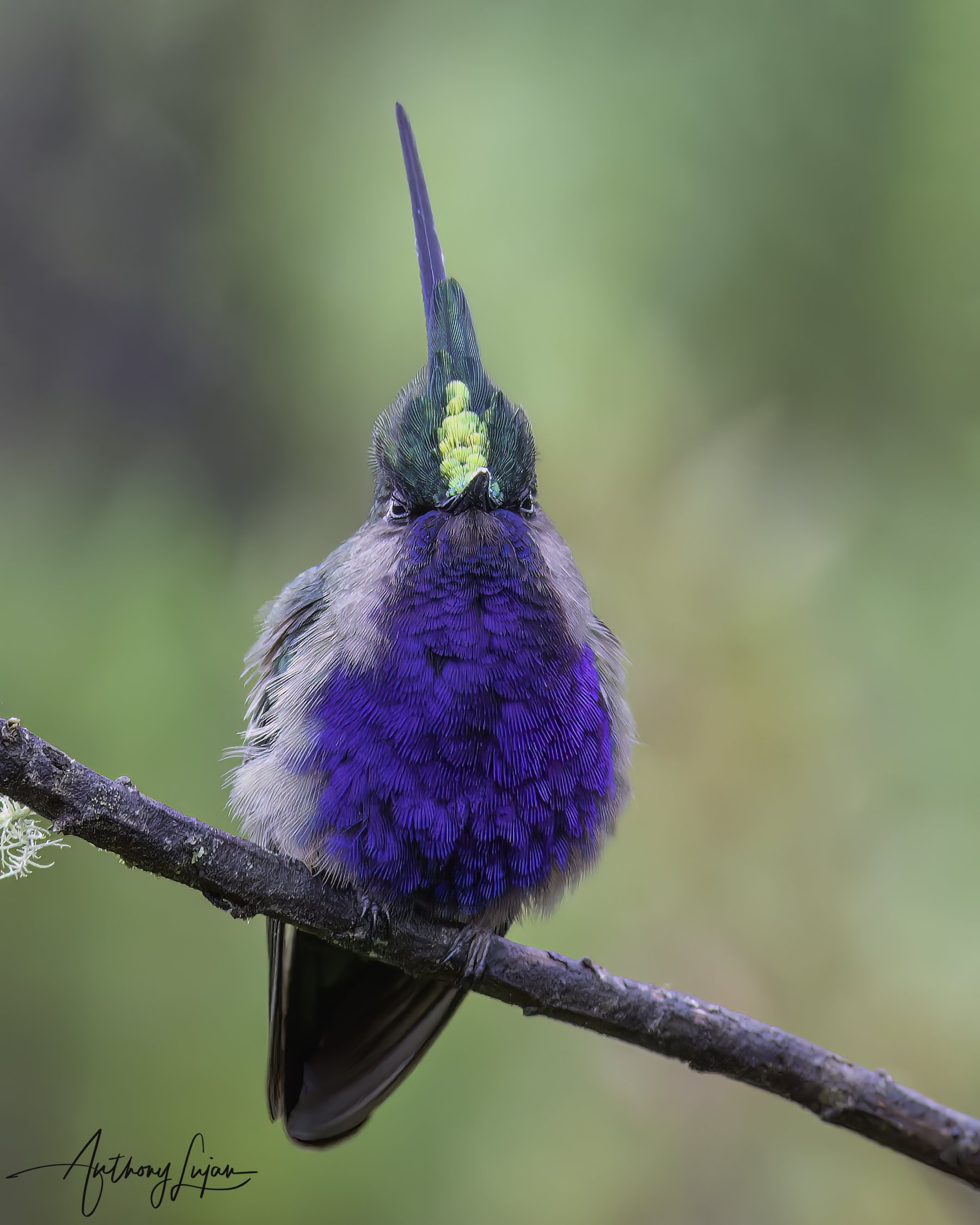
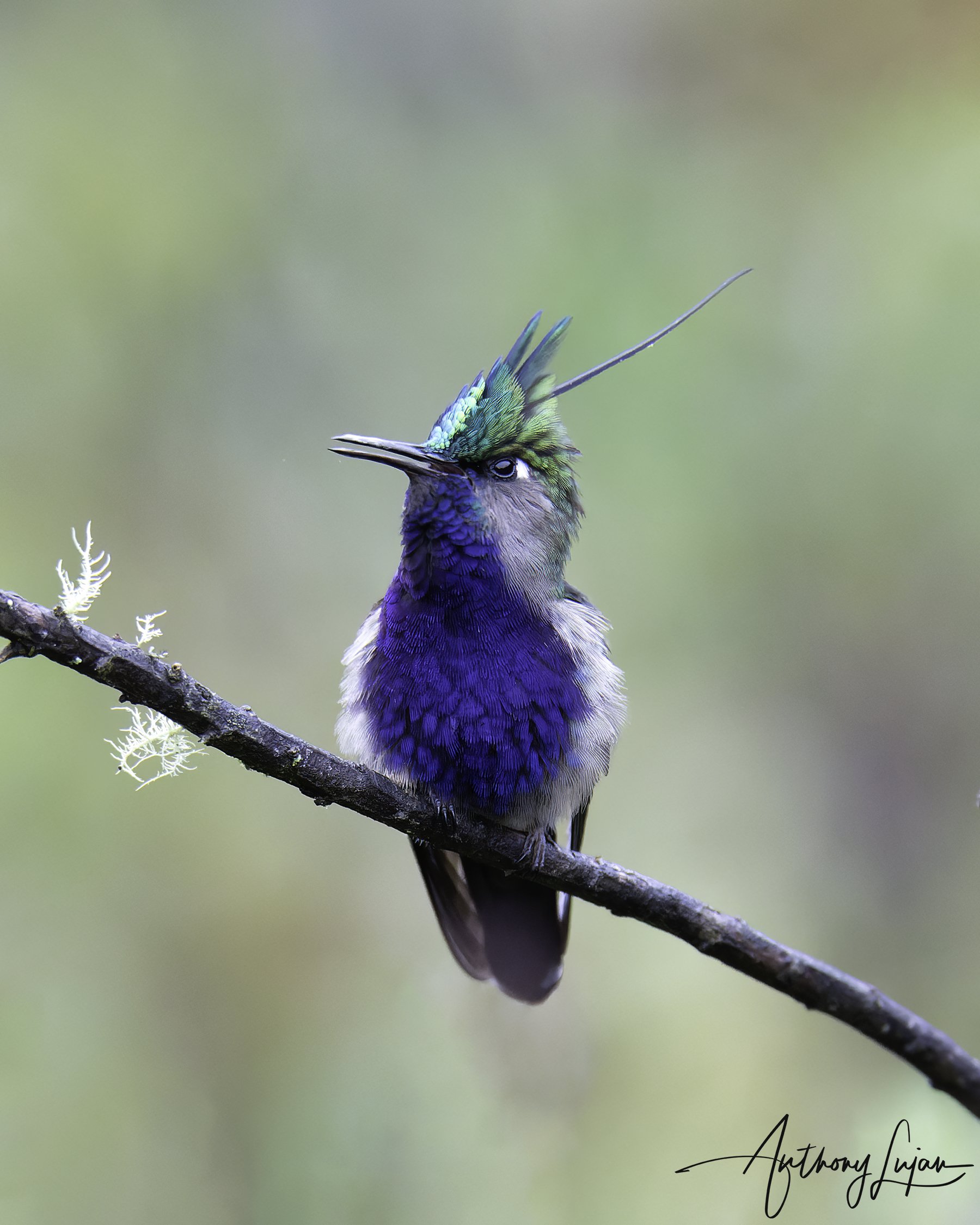
The Green-crowned Plovercrest is a distinctive, small hummingbird best known for the male’s tall, erect green crest and contrasting violet underparts. It inhabits forest understory, edges, and scrubby ravines in the Atlantic Forest belt and nearby uplands, often close to streams and moist thickets. Though considered patchily distributed and locally uncommon in some areas, it can be fairly common where suitable forest and edge habitats persist, including in and around protected areas.
Male Description
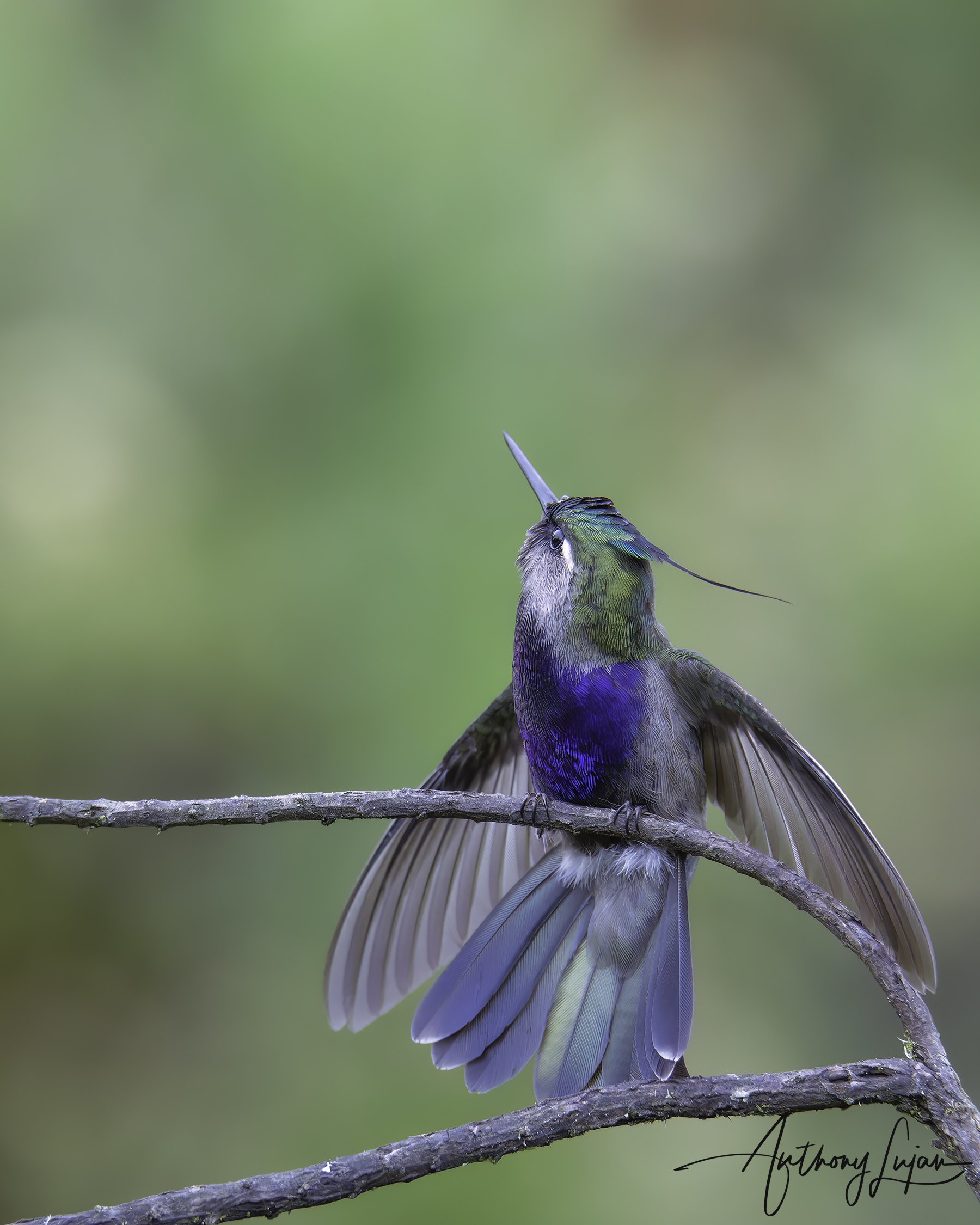
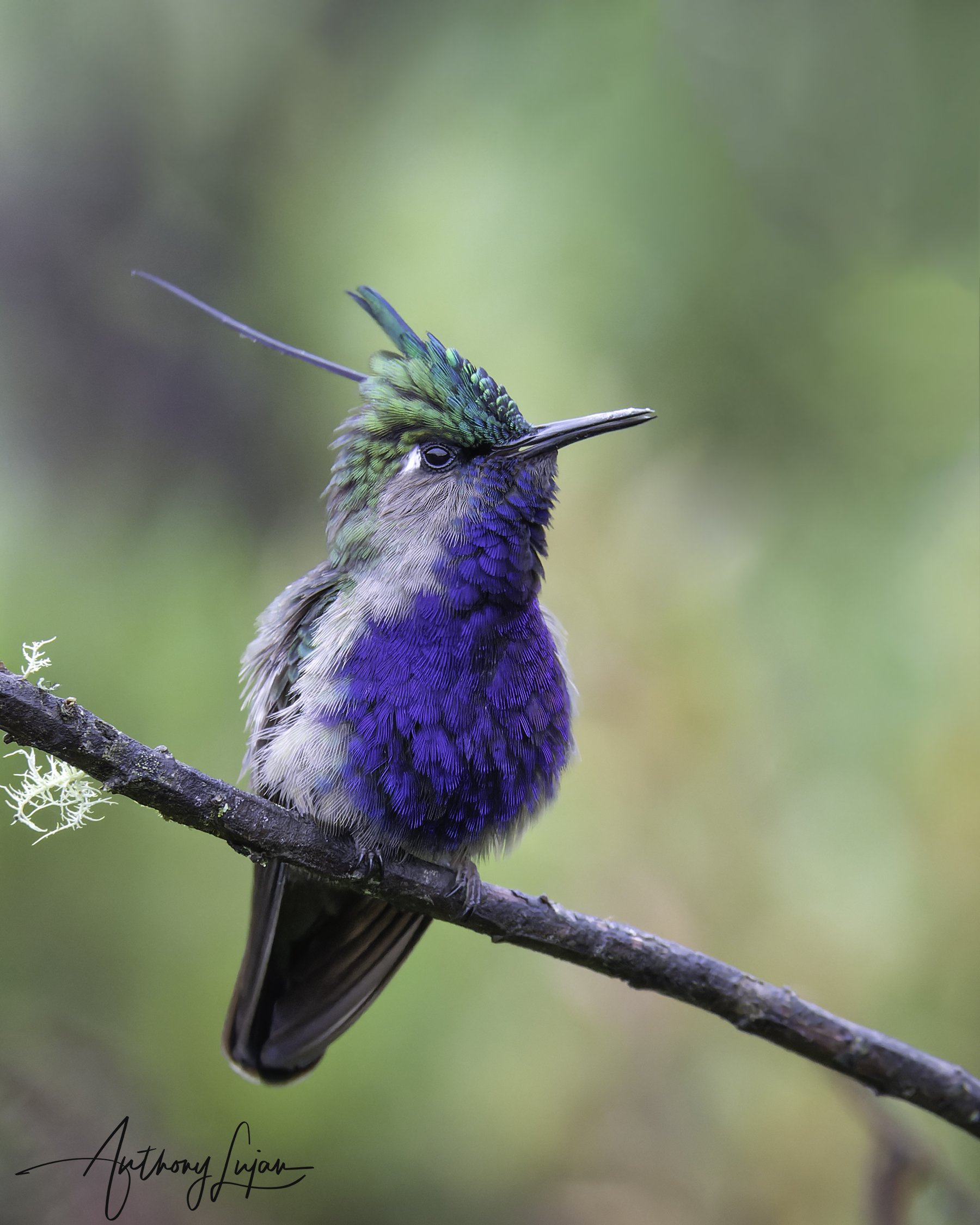
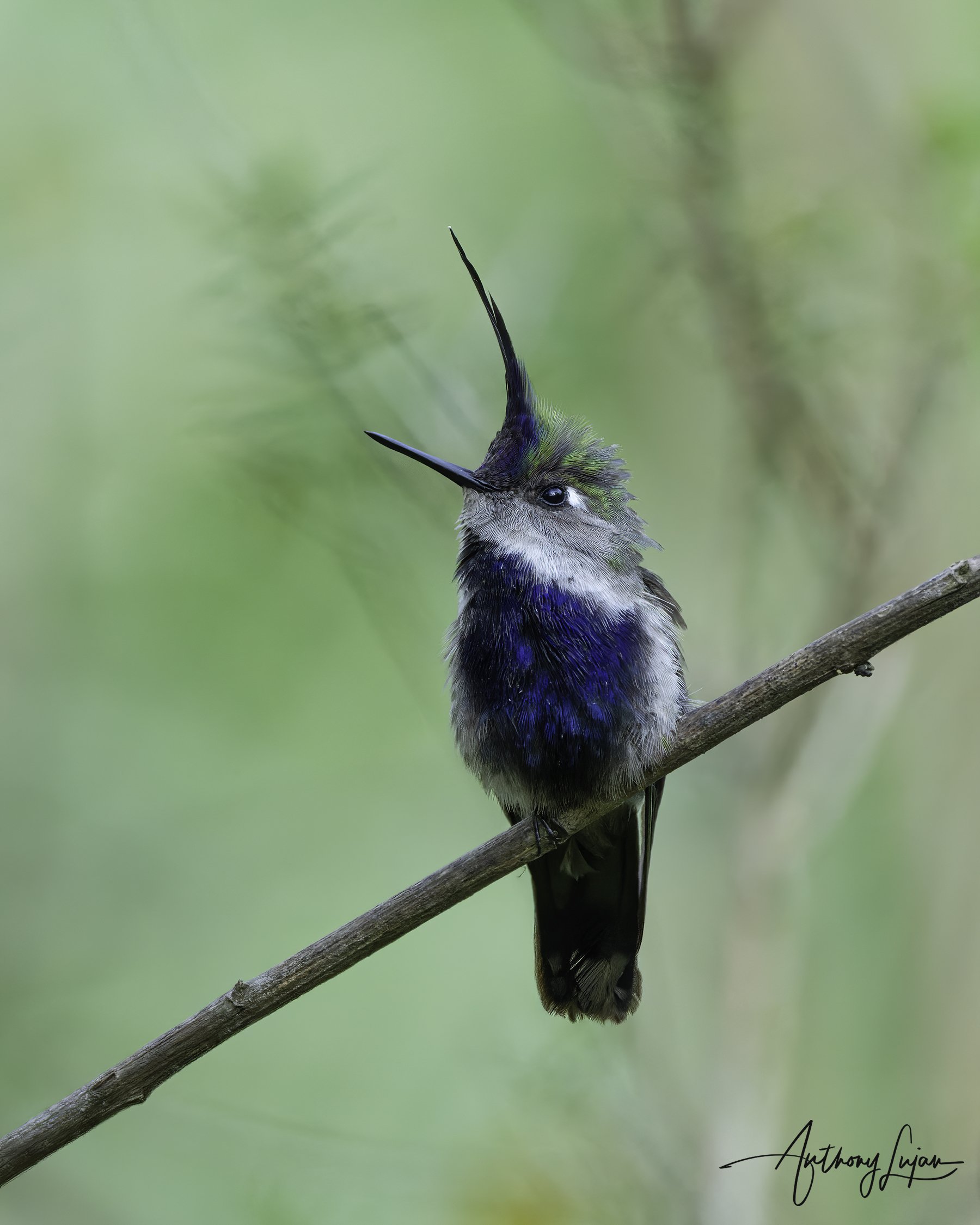
Adult males are mostly iridescent green above, with a short blackish bill and a conspicuous, elongated green crest that can be raised or flattened depending on mood and display. The throat and breast are rich violet to purplish, extending down toward the belly and flanked by grayish sides, while the lower belly and undertail are paler gray to whitish. A small white spot is usually evident behind the eye. The tail is relatively short, greenish with white tipping to the outer feathers. When displaying, males raise and fan the crest and tail and expose the full violet underparts, making them appear larger and more dramatic than in relaxed posture.
Female Description
Females are smaller and lack the male’s large, striking crest, instead having a shorter, less prominent green crest. The upperparts are green, and the underparts are mostly gray to whitish with a greenish wash on the flanks rather than the solid violet of the male. Females show a more obvious white post‑ocular spot and have smaller white tips on the outer tail feathers compared with the Purple-crowned Plovercrest. Juveniles resemble females, with reduced crest and duller colors; young males gradually develop the full crest and violet underparts as they mature.
Habitat & Behavior
Green-crowned Plovercrests inhabit the understory of lowland and montane forests, semi‑open woodlands, and shrubby edges within the Atlantic Forest region. They also occur along forested watercourses, in clearings with scattered bushes, and in lightly wooded farmland where patches of natural scrub or forest remain. Birds typically forage low to mid‑level, visiting flowers in the understory and along forest edges, often favoring tubular blossoms of shrubs and small trees.
They feed mainly on nectar, hovering at flowers or briefly perching to access blossoms, and they supplement their diet with small arthropods taken in short aerial sallies or gleaned from foliage. Males are known to gather at leks to display for females, performing short flights and crest‑raising displays from favored perches. Outside the breeding season, birds are usually seen singly or in pairs and may defend small feeding territories in flower‑rich patches.
Breeding
The breeding season extends primarily from October to March, coinciding with the austral spring and summer when flowers and insects are abundant. Males typically display at leks, where several males occupy nearby perches and repeatedly sing and show their crests to attract visiting females, although solitary display also occurs. After mating, the female alone is responsible for nesting and chick rearing.
She builds a tiny cup nest of plant fibers and moss bound with spiderweb, often decorated externally with bits of lichen or bark for camouflage. Nests are usually placed on horizontal branches or forks in shrubs or small trees within the forest understory or along edges, a few meters above the ground. The typical clutch consists of two white eggs, incubated solely by the female for around two weeks; fledging follows after a nestling period of roughly three weeks, though exact timing can vary with weather and food availability.
Movement
The Green-crowned Plovercrest is considered resident within its Brazilian range, with no large‑scale migratory movements documented. Some local, short‑distance movements may occur as birds track flowering plants within the Atlantic Forest mosaic, shifting between lowland and foothill sites or between more closed forest and shrubbier edges as resources change. Overall, however, the species remains within southeastern Brazil year‑round.
Population
The total number of mature individuals is not known, but the Green-crowned Plovercrest has a relatively restricted range confined to the Atlantic Forest and adjacent areas of southeastern Brazil. Within this range it is described as patchily distributed and locally uncommon to fairly common, depending on the extent and quality of remaining forest and scrub. Because it can use forest edges and some semi‑open habitats, it persists in landscapes that retain at least fragments of native vegetation, though large‑scale deforestation of the Atlantic Forest has undoubtedly reduced available habitat historically.

Conservation
The species is currently assessed as Least Concern, reflecting a relatively large overall range within Brazil and the presence of populations in several protected areas and reserves. Nonetheless, ongoing habitat loss and fragmentation in the Atlantic Forest region remain concerns, as they can isolate populations and reduce suitable understory and scrub habitats. The Green-crowned Plovercrest readily uses man‑made habitats such as farmland and rural mosaics as long as patches of scrub or forest remain, which provides some resilience in working landscapes. Continued protection and restoration of Atlantic Forest remnants, riparian corridors, and shrubby edges will be important for maintaining healthy populations of this endemic species.


Checkout Anthony’s playlist of this species! Click the top right dropdown to see all the videos.
Related species in the Stephanoxis genus (2 species in total):
Please note: The content provided in this article reflects Anthony’s personal experience and photographic approach. Results can vary depending on light, weather, location, equipment, subject behavior, and field conditions.