
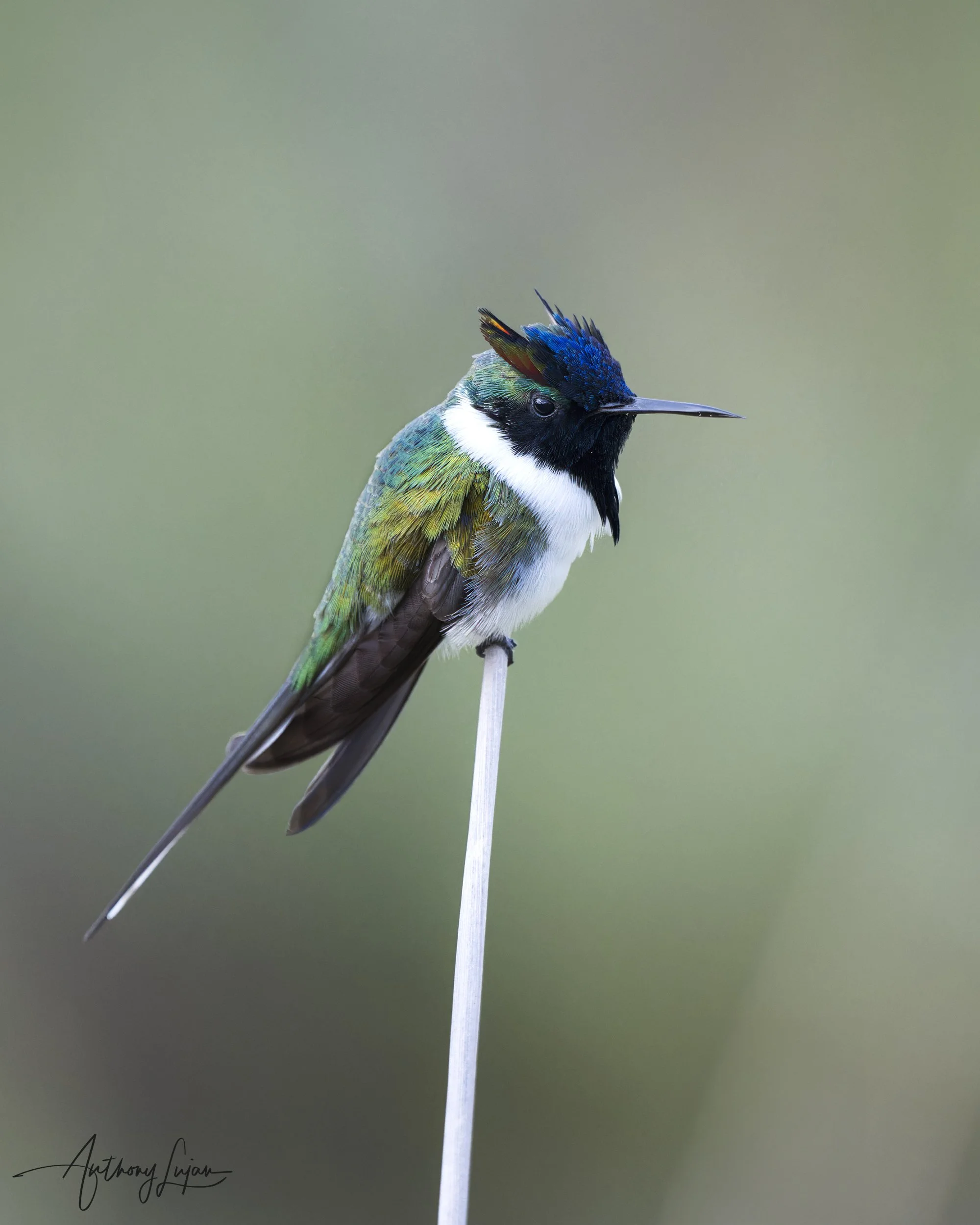
Scientific name: Heliactin bilophus
The Horned Sungem is a tiny, spectacular hummingbird of open and semi‑open habitats in central Brazil and adjacent Bolivia and Suriname. Its number of mature individuals is unknown, its overall population trend is decreasing, it is treated as a full migrant, and it is assessed as Least Concern.
At a Glance
Family: Trochilidae (hummingbirds)
Clade: Polytminae – Mangoes
Genus: Heliactin — 1 species in total
Range: Central Brazil (from southern Maranhão south to São Paulo and west to Mato Grosso, plus Amapá) and adjacent Bolivia (Santa Cruz) and southern Suriname
Habitat: Open and semi‑open landscapes including cerrado savanna, gallery forest, woodland, grassland, and gardens
Elevation: Mostly below 500 m (1,600 ft), occasionally up to about 1,000 m (3,300 ft)
Length: About 9.5–11 cm (3.7–4.3 in)
Weight: About 1.8–2.8 g (0.06–0.10 oz)
Number of mature individuals: Unknown
Population trend: Decreasing
Movement: Full Migrant (migratory in parts of central and eastern Brazil)
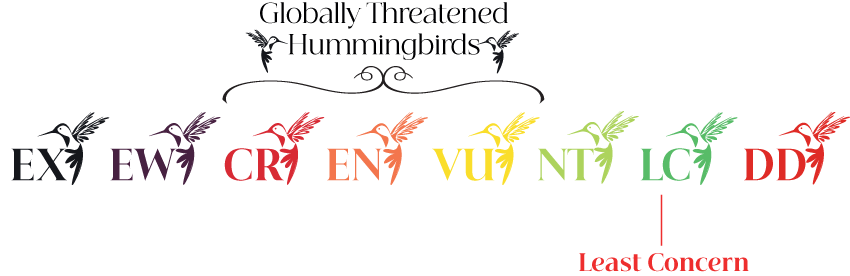
IUCN Red List category: Least Concern
Name Origin
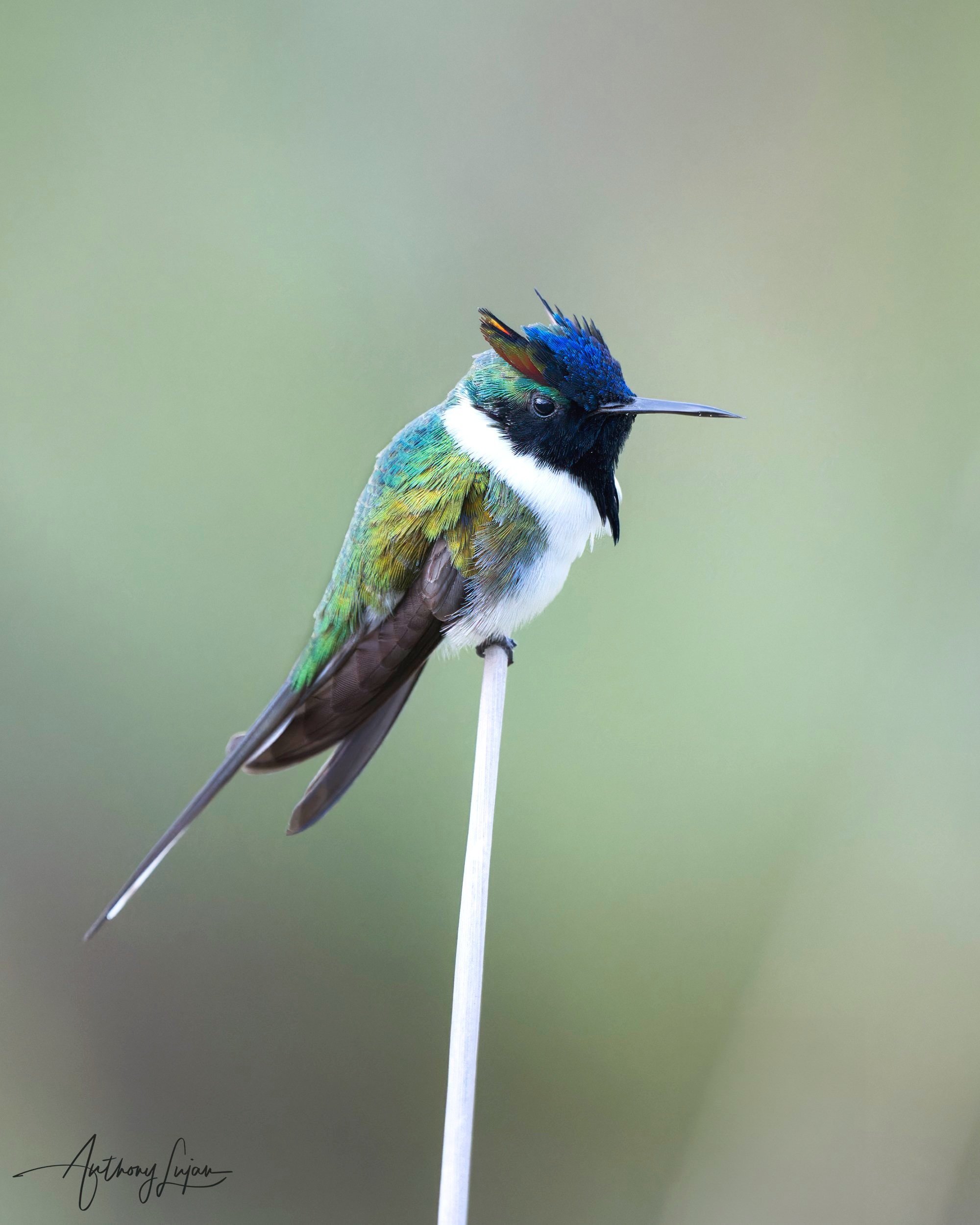
The name “Horned Sungem” refers to the male’s brilliant red, blue, and golden feather tufts above the eyes that resemble tiny horns glowing in sunlight. The genus name Heliactin combines elements meaning “sun” and “ray,” alluding to the sun‑like sparkle of these ornamental tufts. The species name bilophus means “two‑crested,” a further reference to the paired horn‑like crests on the head.
Taxonomy & Distribution
Heliactin bilophus belongs to the mango subfamily Polytminae within the hummingbird family Trochilidae and is the only species in the genus Heliactin. It is found primarily across central Brazil, from southern Maranhão south through Goiás and Minas Gerais to São Paulo and west to Mato Grosso, with disjunct populations in Amapá and small areas of southern Suriname and adjacent Bolivia (Santa Cruz). Within this range it occupies a mosaic of open and semi‑open habitats, especially cerrado savanna and associated gallery forests and woodlands.
Subspecies and Distribution
Monotypic — no subspecies recognized.
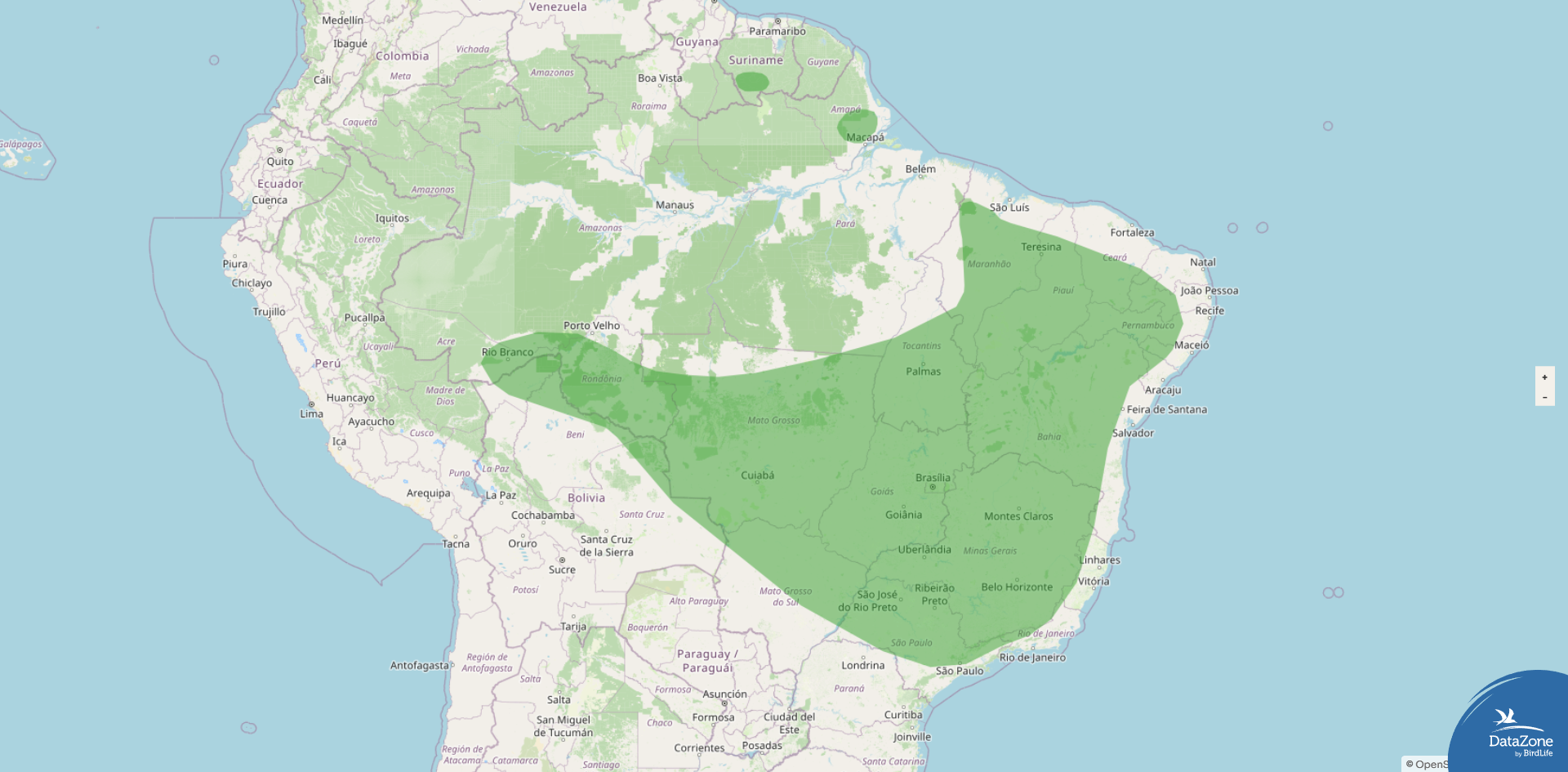
Legend
Green Resident
Species Overview
The Horned Sungem is one of the most distinctive Neotropical hummingbirds, with males showing glittering horn‑like crests and clean white underparts set against a green back and dark tail. It thrives in open, sunlit environments such as cerrado, grasslands with scattered shrubs and trees, and gallery forests along watercourses, and it also uses gardens and other human‑modified habitats with flowering plants. Despite its adaptability and local abundance in some areas, habitat loss and alteration of cerrado and associated open habitats are contributing to a decreasing population trend.
Male Description
Adult males have metallic green upperparts and a mostly dark, slightly forked tail. The underparts are white, sometimes with a faint buff or gray wash on the sides. The most striking features are the paired feather tufts above the eyes, which are bright red, blue, and golden and can be raised or flattened; these “horns” are highly visible in display and good light. The bill is straight, slender, and black. In flight or when the head feathers are raised, males present a vivid contrast of white body, dark tail, and colorful horns, making them unmistakable.
Female Description
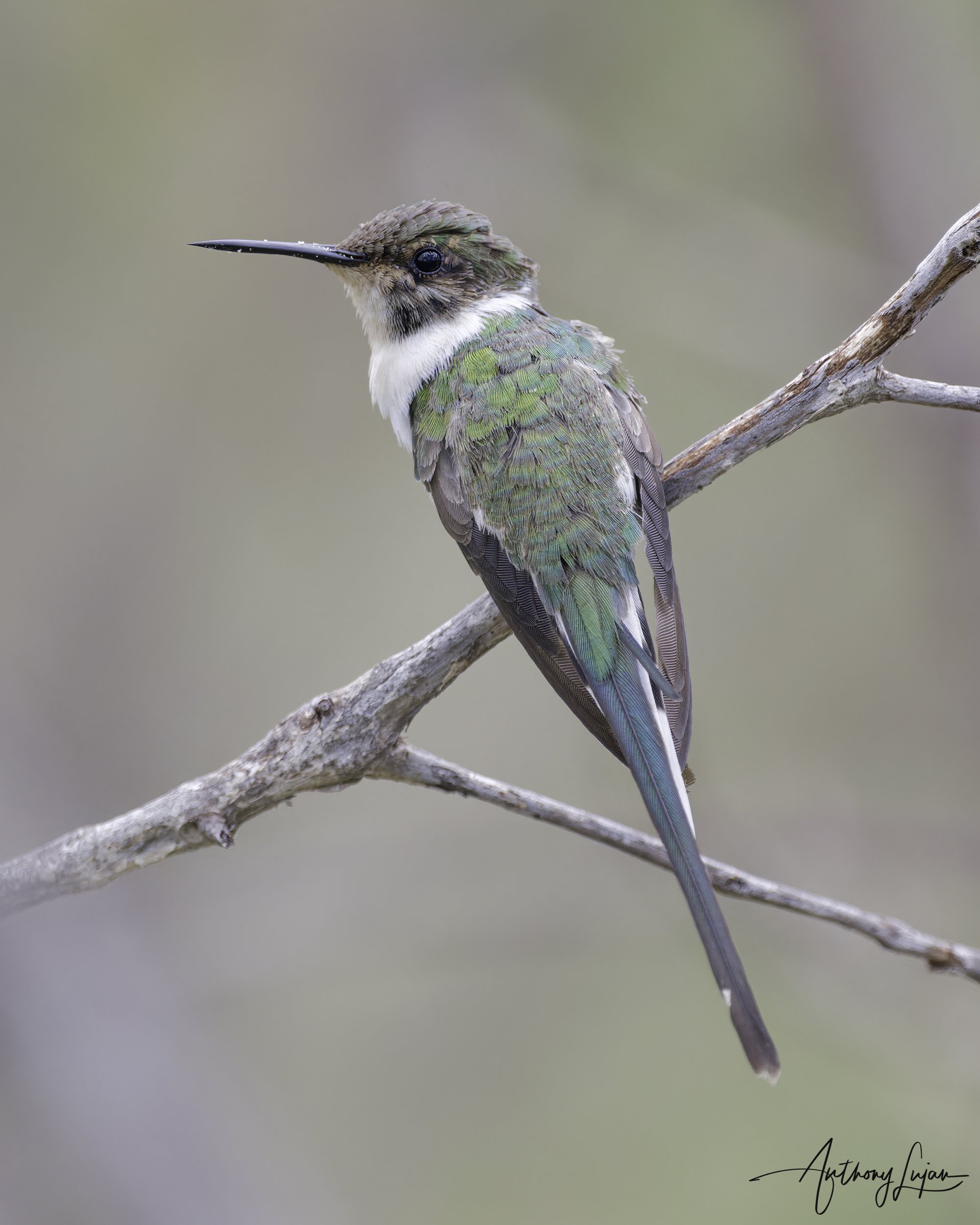
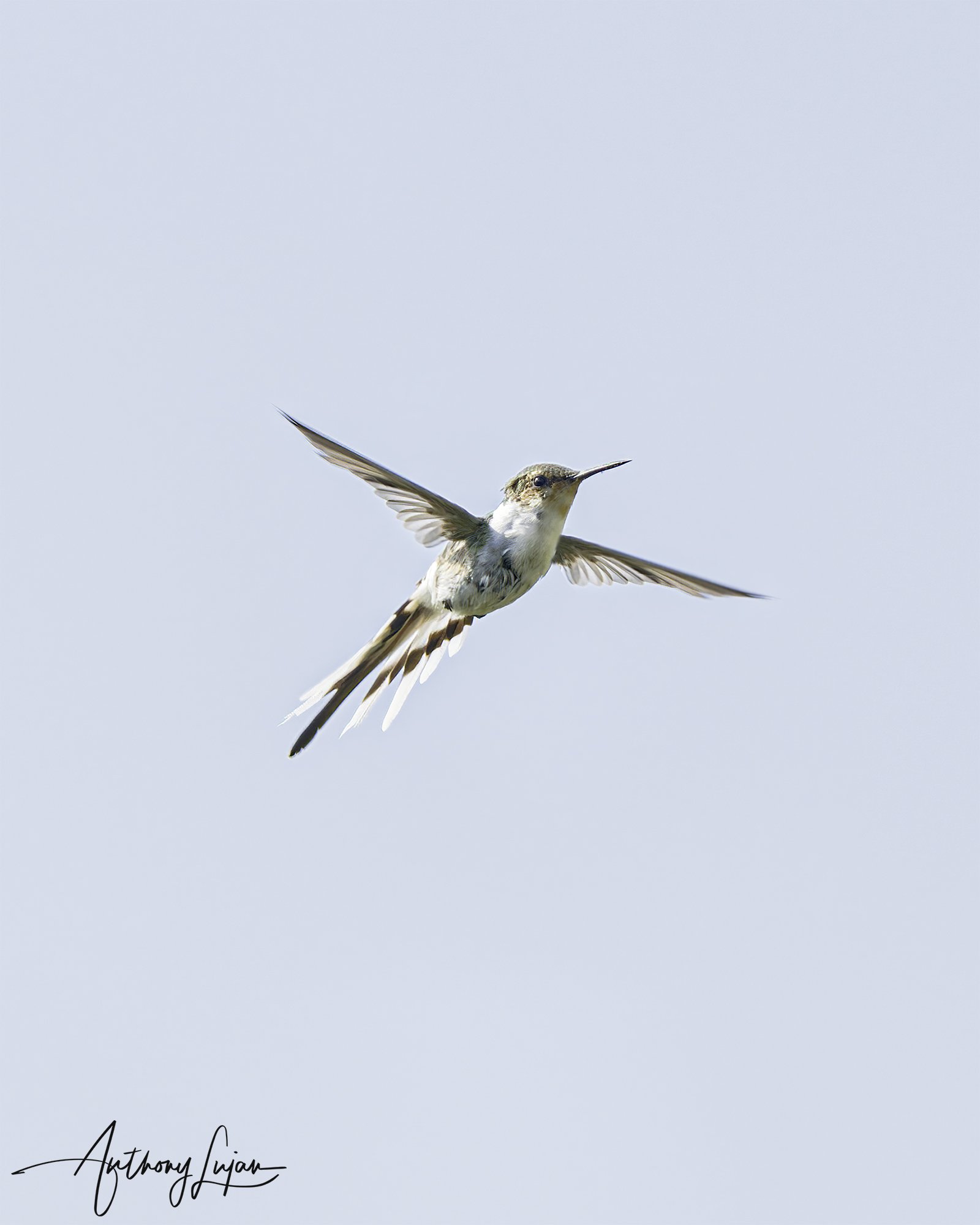
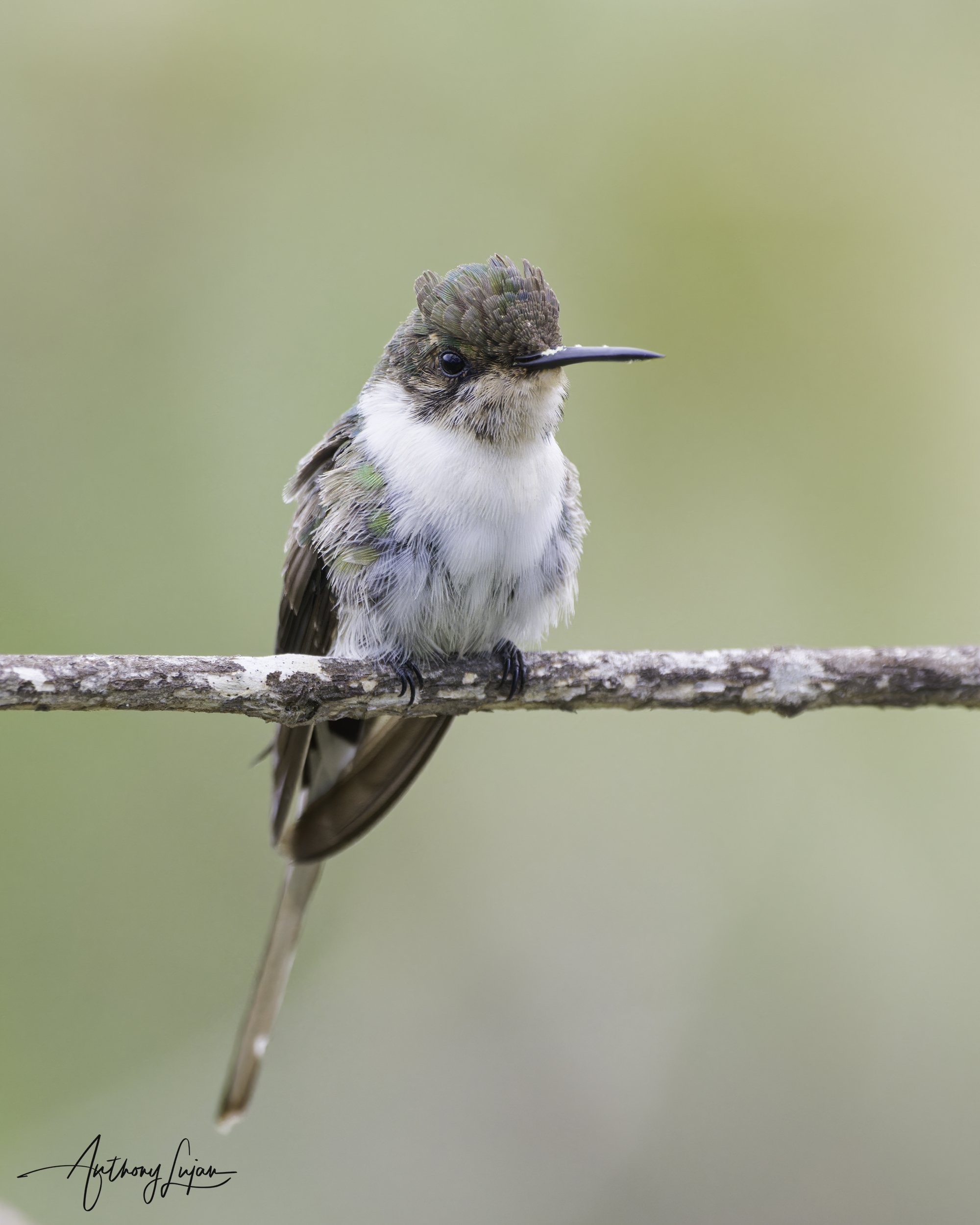
Females lack the male’s bright horn‑like tufts and have a plainer head. The upperparts are metallic green, and the underparts are whitish to pale buff with more mottling or streaking than in males. The tail is similar in shape but often shows more obvious pale tips or edging on the outer feathers. Females look more subdued overall, without the dramatic facial ornaments. Juveniles resemble females, with duller plumage and no developed horns; young males gradually acquire the colorful feather tufts and cleaner underpart contrast as they mature.
Habitat & Behavior
Horned Sungems inhabit a variety of open to semi‑open habitats, including cerrado savanna, dry and moist grasslands with scattered trees and shrubs, edges of gallery forests along rivers, open woodland, and gardens. They prefer sunlit areas where flowering shrubs, herbs, and small trees are abundant and often perch on exposed twigs or fence lines between feeding bouts.
They feed mainly on nectar from a wide array of flowering plants typical of cerrado and open woodland, hovering at blossoms or briefly perching while feeding. They also take small insects and spiders, caught in short aerial sallies or gleaned from vegetation. Males display by perching conspicuously and raising their horn‑like feather tufts, sometimes performing short flights or chases around flowering patches. Birds are often seen singly or in loose, scattered aggregations where flowers are plentiful.
Breeding
Breeding generally occurs from June to October in much of central Brazil, though in some areas nesting can begin as early as April, coinciding with periods of high flower availability. The female alone builds a very small cup‑shaped nest of soft plant fibers and spiderweb, decorating the outside with lichen and other fine materials. Nests are usually placed on a forked branch of a bush or small tree in open or semi‑open habitats, often about 1 m above the ground but sometimes higher.
The typical clutch consists of two white eggs. The female incubates for about 13 days, and chicks fledge 20–22 days after hatching. During nesting, females may be especially secretive around the nest site, but adults continue to forage in nearby flowering patches and open areas.
Movement
The Horned Sungem is migratory in parts of central and eastern Brazil, where it moves in response to seasonal flowering of key plants. Birds shift regionally within the cerrado and adjacent habitats, tracking nectar availability across the landscape rather than undertaking long‑distance, directional migrations to distant regions. In the southern parts of its range it appears more sedentary, with individuals remaining in the same general areas year‑round. Across its distribution it may also make local movements between lower and slightly higher elevations or between drier and moister patches as seasons change.
Population
The total number of mature individuals is unknown, but the Horned Sungem is locally common in suitable habitats across much of central Brazil and adjacent areas. It occurs in several protected areas and also uses human‑modified landscapes such as gardens and lightly grazed grasslands, which has helped it remain widespread. However, ongoing loss and fragmentation of cerrado and associated open habitats through agriculture, pasture expansion, and other land‑use changes are thought to be driving a decreasing population trend overall.
Conservation
The Horned Sungem is currently assessed as Least Concern, reflecting its broad distribution and presence in multiple protected areas, as well as its use of some human‑modified habitats. Nonetheless, the main threat is the large‑scale conversion and degradation of cerrado, one of the world’s most threatened savanna ecosystems. Conservation of cerrado remnants, gallery forests, and open woodland mosaics, along with maintaining flowering shrubs and trees in rural and semi‑urban landscapes, will be important for sustaining this species. Its ability to use gardens and lightly modified habitats provides some resilience, but long‑term persistence depends on retaining substantial tracts of intact or semi‑natural open habitats.
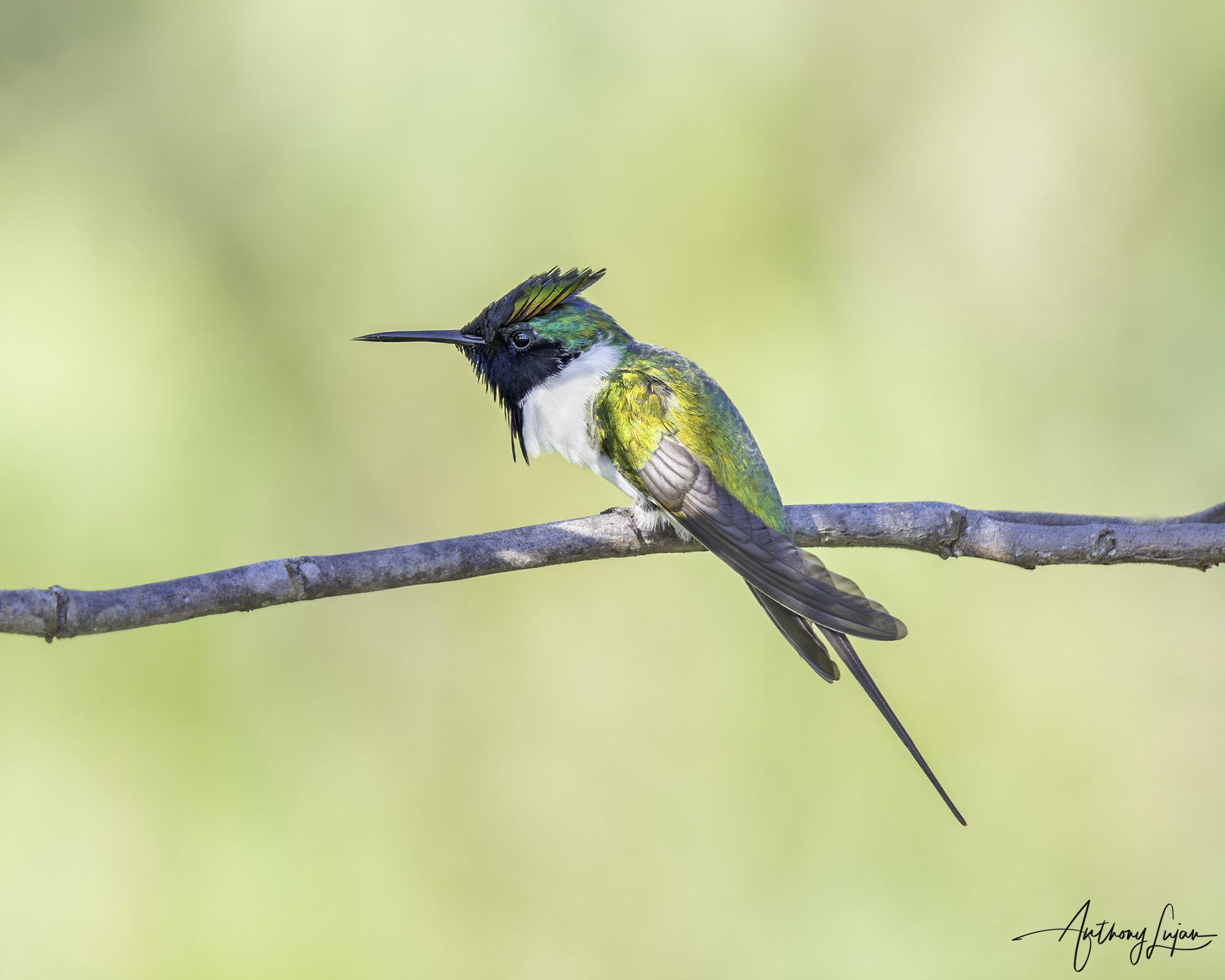
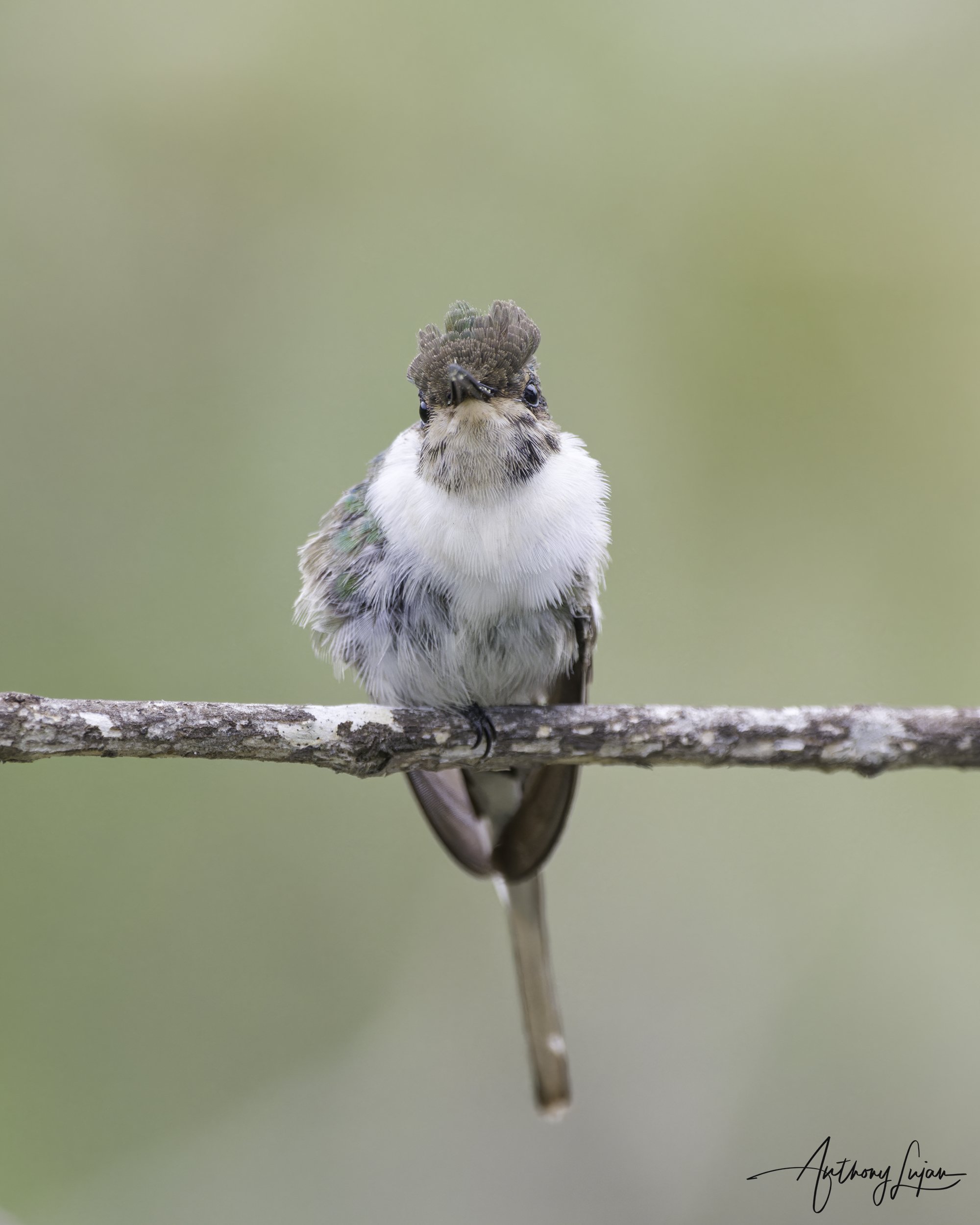
Checkout Anthony’s playlist of this species! Click the top right dropdown to see all the videos.
No related species in the Heliactin genus (1 species in total):
Please note: The content provided in this article reflects Anthony’s personal experience and photographic approach. Results can vary depending on light, weather, location, equipment, subject behavior, and field conditions.