
Long-billed Hermit
Scientific name: Phaethornis longirostris
The Long-billed Hermit is a large hermit hummingbird of humid forest understory, forest edges, and plantations from southern Mexico through Central America and into northwestern South America. The number of mature individuals is unknown, the population trend is decreasing, it is not a migrant, and it is currently assessed as Least Concern.
At a Glance
Family: Trochilidae (hummingbirds)
Clade: Phaethornithinae – Hermits
Genus: Phaethornis — 27 species in total
Range: Southern Mexico through Central America into Colombia, western Ecuador, and northwestern Peru
Habitat: Humid lowland and foothill forest, forest edges, ravines, second growth, plantations, and gardens with forest nearby
Elevation: From near sea level up to about 1,500 m (locally a bit higher in some areas)
Length: About 14–17 cm (5.5–6.7 in)
Weight: Around 6–9 g
Number of mature individuals: Unknown
Population trend: Decreasing
Movement: Not a migrant
IUCN Red List category: Least Concern
Name Origin
The genus name Phaethornis comes from Phaethon, meaning “shining” or “radiant,” reflecting the iridescent plumage of hummingbirds. The species name longirostris means “long‑billed,” describing its notably elongated bill. The English name “Long-billed Hermit” emphasizes both the prominent bill and its membership in the hermit group.
Taxonomy
Phaethornis longirostris is a hermit hummingbird in the subfamily Phaethornithinae. It is one of 27 species in the genus Phaethornis, and represents the Mesoamerican counterpart of several long‑tailed, long‑billed hermits in South America.
Subspecies and Distribution
Four subspecies:
Phaethornis longirostris longirostris
Distribution: Southern Mexico (northern Oaxaca) to northern Honduras.Phaethornis longirostris cephalus
Distribution: Eastern Honduras through Costa Rica and into northwestern Colombia (northern Santander).Phaethornis longirostris susurrus
Distribution: Santa Marta Mountains, northern Colombia.Phaethornis longirostris baroni
Distribution: Western Ecuador (Esmeraldas to Loja) to northwestern Peru (Tumbes, Piura).
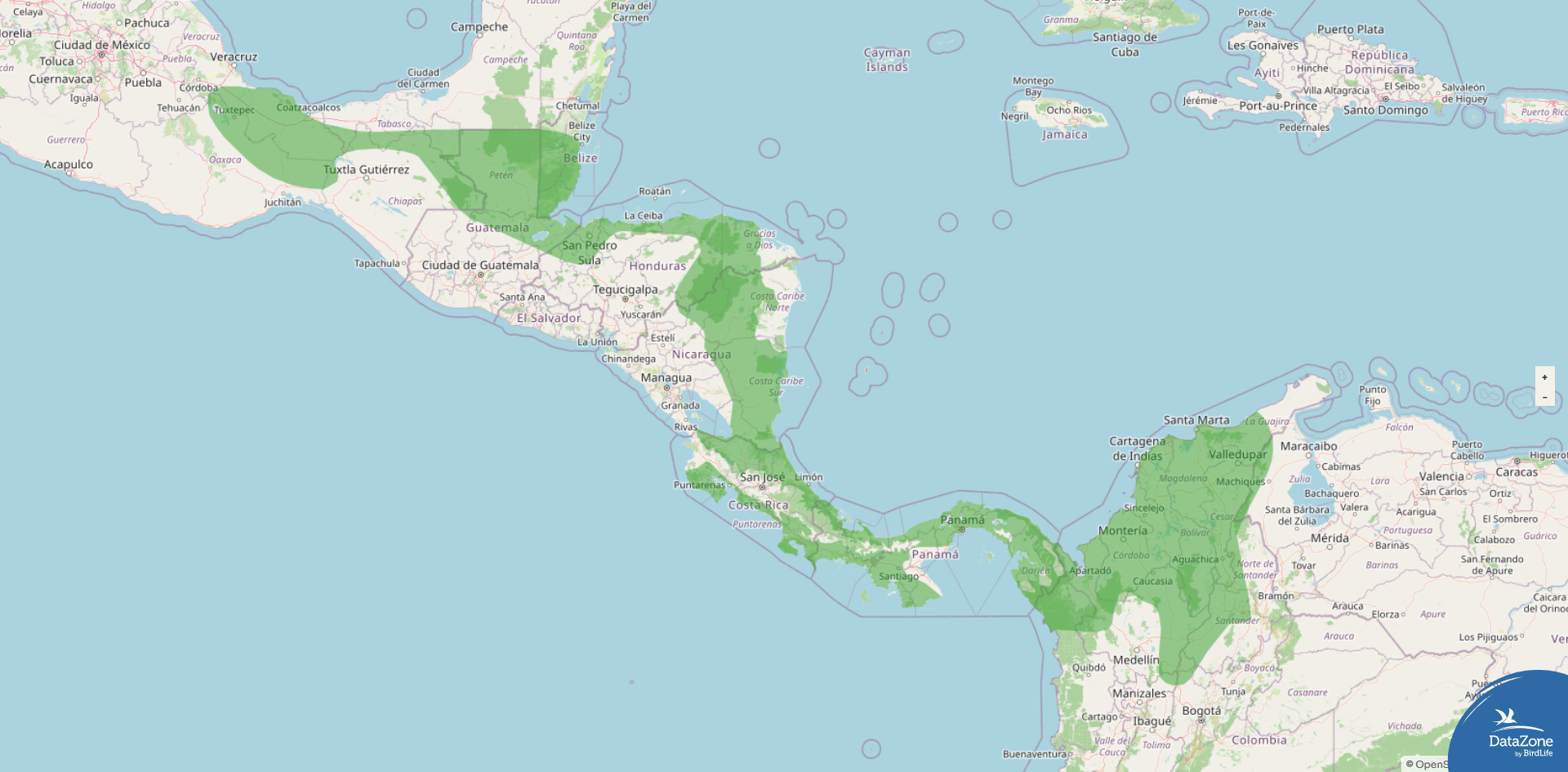
Legend
Green Resident
Species Overview
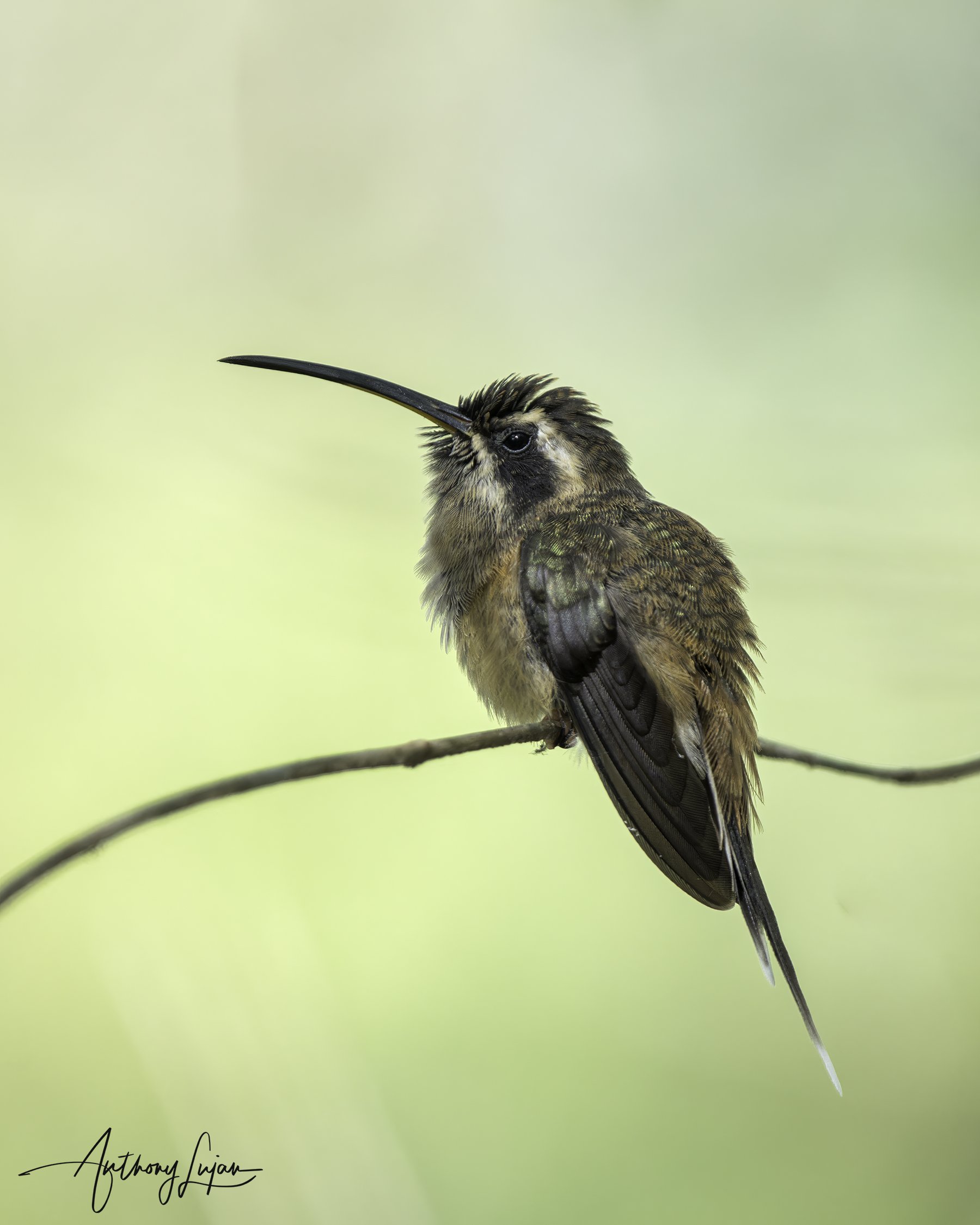
The Long-billed Hermit is a large, long‑tailed hermit with olive‑green upperparts, buffy to rufous underparts, and a very long, decurved bill. It has a bold hermit facial pattern of dark mask crossed by pale superciliary and moustachial stripes, and long central tail feathers ending in white tips. It frequents shady understory and edge habitats from lowlands into foothills and is often encountered at leks where males gather to sing.
Male Description
Males measure about 14–17 cm in length, with a long and strongly decurved bill. The upperparts are olive‑green to bronzy‑green, and the underparts are buffy to rufous, often darker on the breast and sides. The face shows a dark streak through the eye, bordered above by a pale supercilium and below by a pale moustachial stripe. The tail is long and graduated, with elongated central feathers tipped in white and outer feathers showing rufous bases and darker tips. Body size and bill length vary somewhat among subspecies, but the overall appearance remains consistent.
Female Description
Females are similar to males in plumage, with green upperparts, buffy underparts, and the same facial pattern. They may be slightly smaller and have a somewhat shorter and more strongly curved bill. Juveniles resemble adults but may show duller colors and less distinct facial markings until they mature.
Habitat & Behavior
Long-billed Hermits inhabit humid lowland and foothill forest, including primary forest, tall secondary forest, forest edges, ravines, and disturbed areas with dense vegetation, as well as plantations and gardens near forest. They are usually found in the shaded understory and along stream corridors and moist gullies where flowering plants and insects are abundant.
They feed primarily on nectar from tubular flowers, following traplines—repeated circuits among scattered food sources—rather than defending single patches. Understory heliconias and other tubular blossoms are important nectar sources. They also take small arthropods gleaned from foliage or taken in short sallies. Males gather at leks, often in forest ravines, where they sing persistent, high‑pitched songs and display by fanning their tails and hovering in front of females.
Breeding
The species is polygynous: males display at leks, while females alone handle nesting and chick care. The female constructs a cone‑shaped or small cup nest of plant fibers and spiderweb, suspended from the underside of large leaves or similar supports in shaded forest. The nest is typically situated 1–3 m above the ground, often near watercourses or paths.
The clutch generally consists of two white eggs. The female incubates the eggs (about two to three weeks) and later feeds the nestlings until they fledge, which usually occurs about three weeks after hatching, as in other large Phaethornis hermits.
Movement
The Long-billed Hermit is considered non‑migratory. It is a resident species throughout its range from southern Mexico to northwestern Peru, though individuals may make limited local movements along elevational gradients or between forest and edge habitats following flowering cycles and seasonal moisture changes. There is no evidence of regular long‑distance migration.
Population
The total number of mature individuals is unknown. The species is generally described as fairly common to common in suitable habitats, especially in humid foothill and premontane forests and along forested ravines. However, deforestation, habitat degradation, and fragmentation in Mesoamerica and the Chocó/Andean foothill regions are contributing to a gradual decline, even though the species remains widespread.

Conservation
The Long-billed Hermit is currently assessed as Least Concern due to its large range and relatively robust overall population. Nonetheless, habitat loss and fragmentation—particularly the clearing of lowland and foothill forests for agriculture, pasture, and development—pose ongoing threats. Conservation of humid forest tracts, riparian corridors, and structurally complex secondary forests is important for maintaining healthy populations, especially around known lek sites.
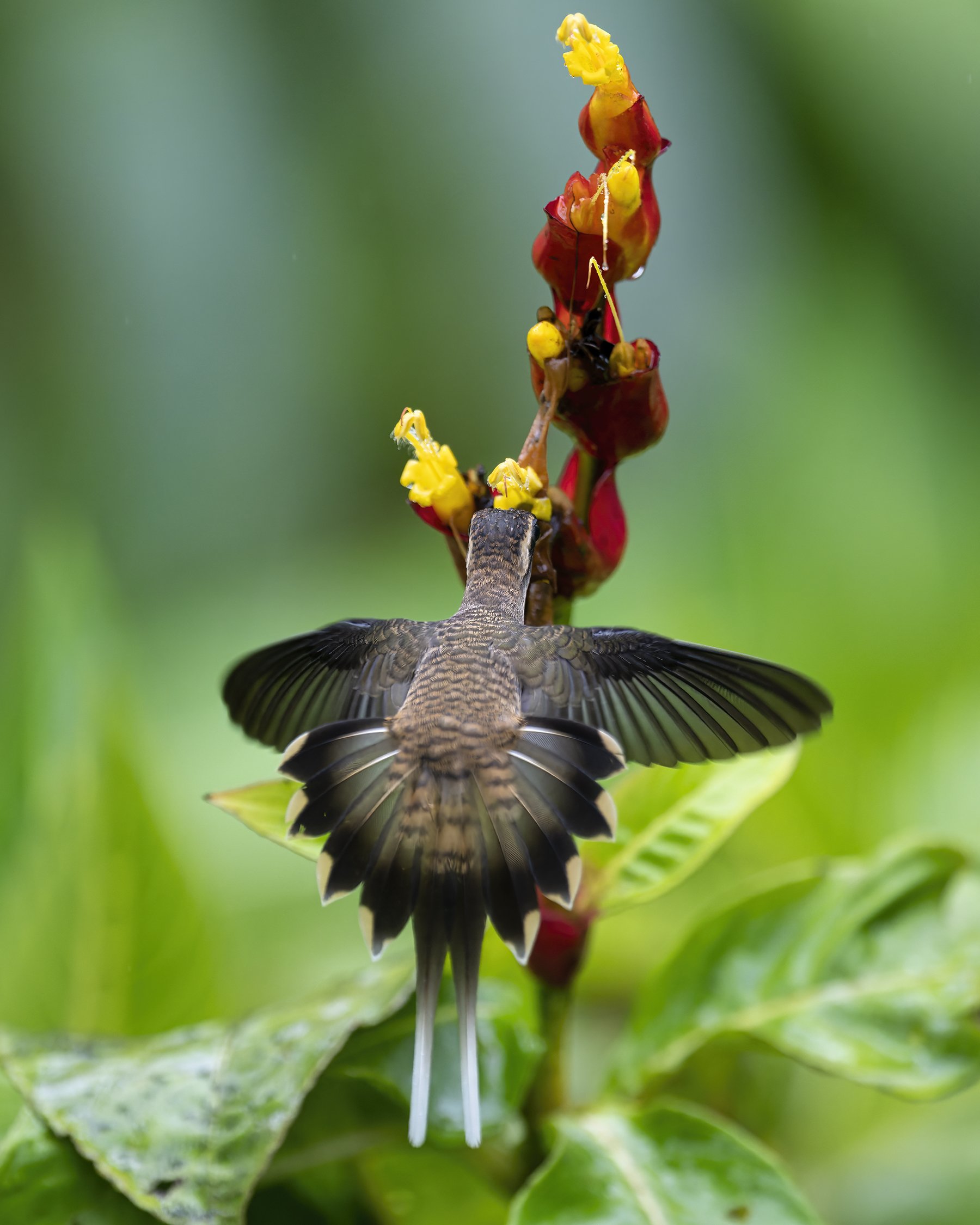
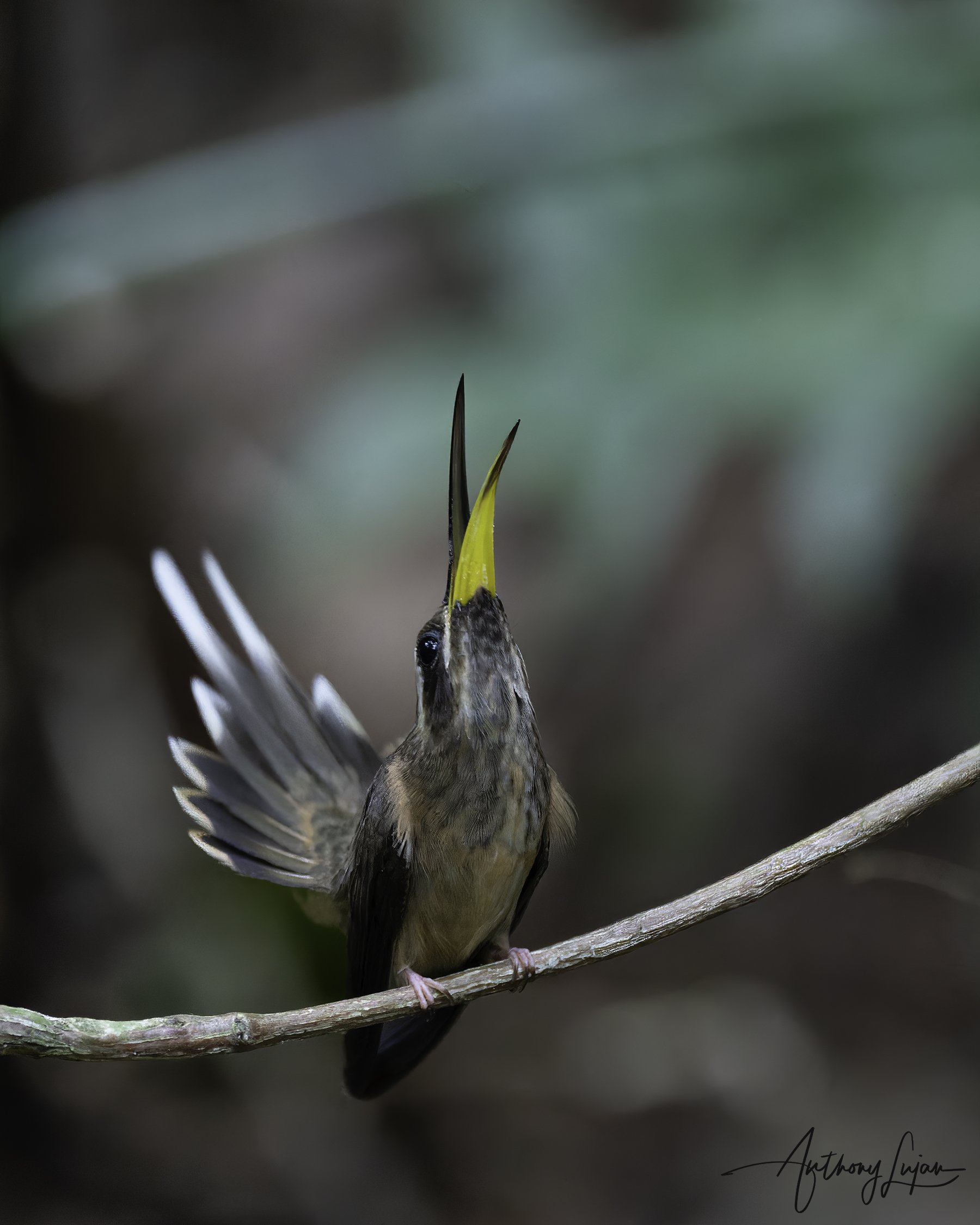
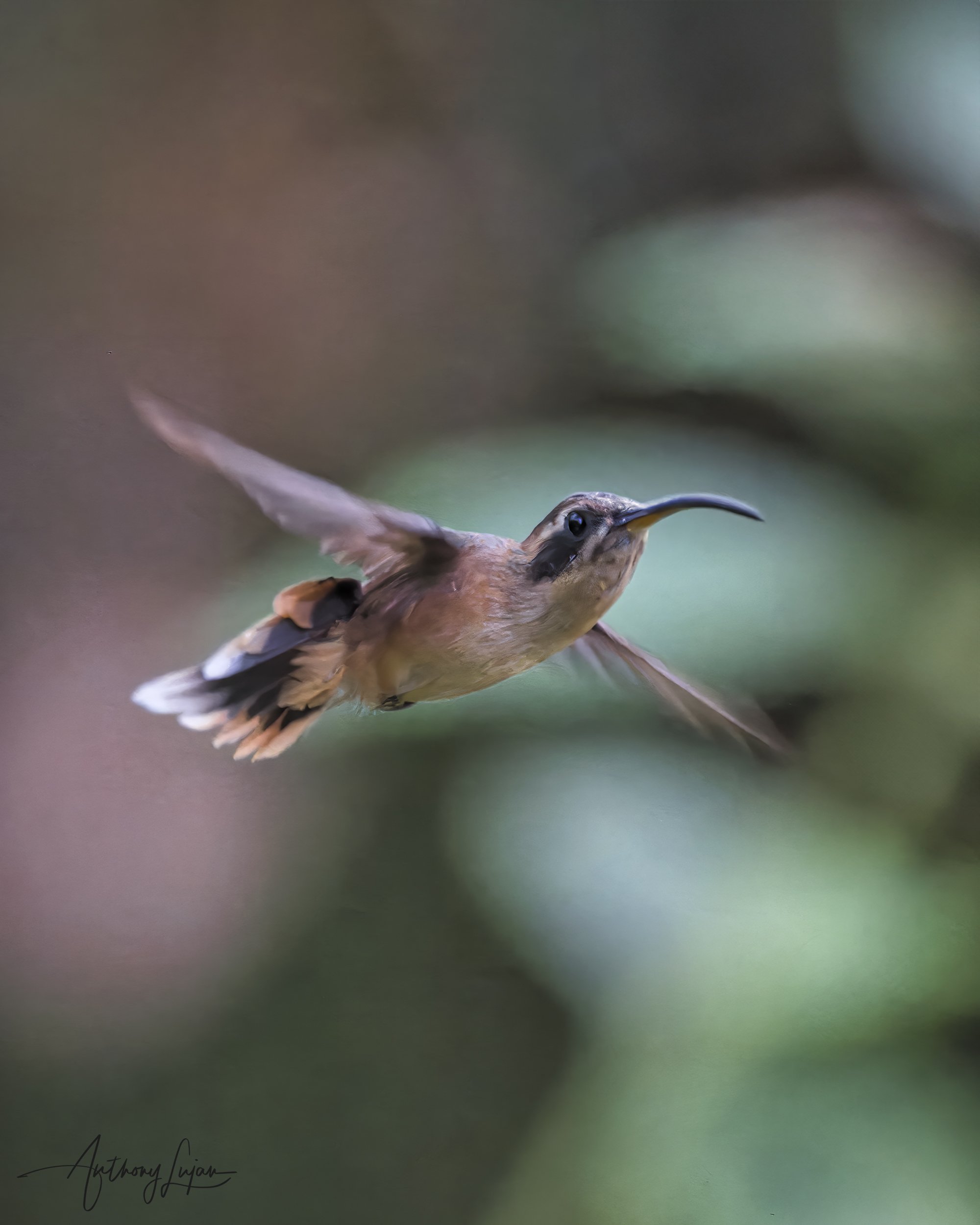
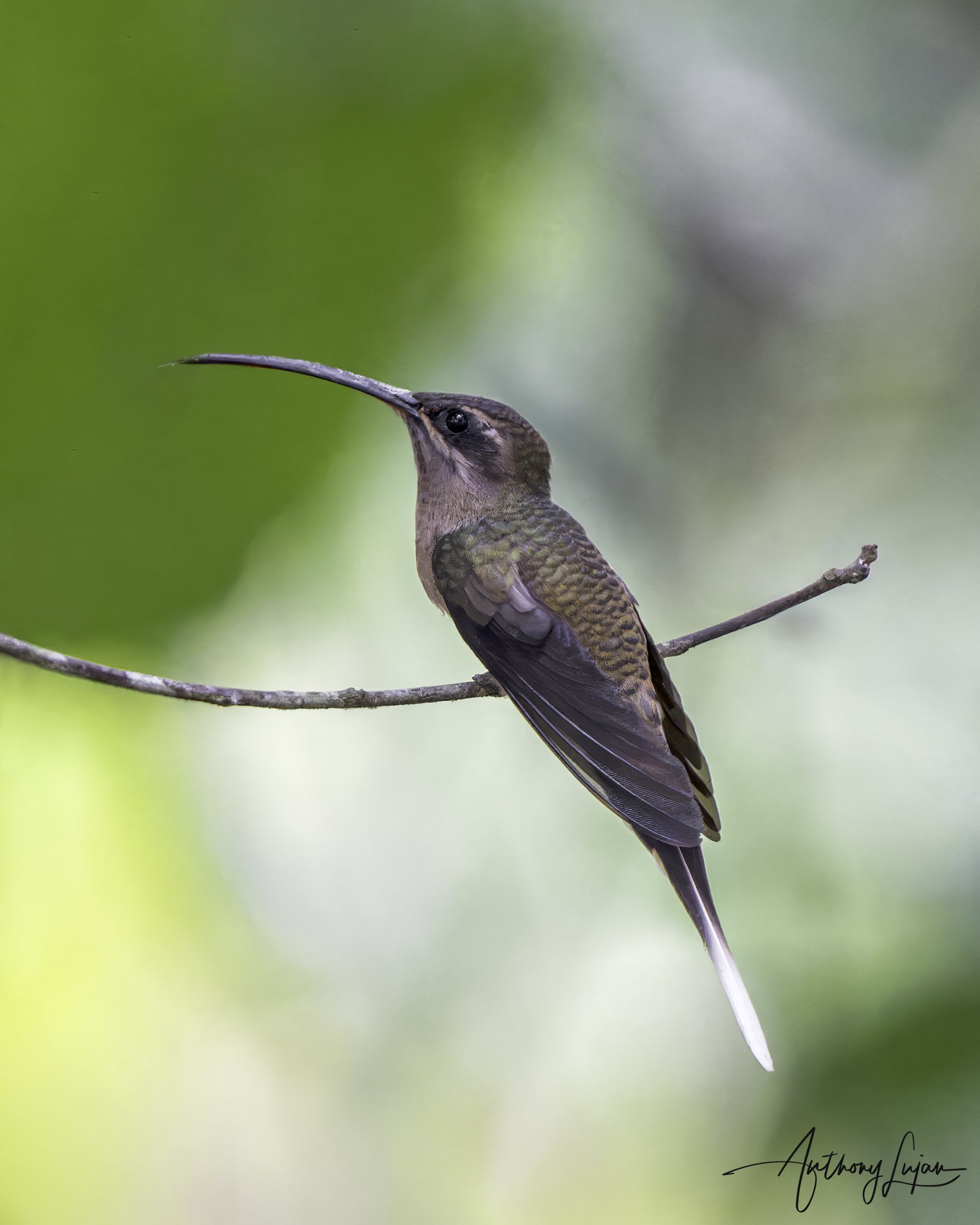
Below is the Long-billed Hermit (Phaethornis longirostris cephalus)
Photographed at Donde Cope – La Unión de Guápiles, Limón, Costa Rica
These individuals belong to the subspecies cephalus, which ranges from eastern Honduras through Nicaragua and Costa Rica into northwestern Colombia. It inhabits humid lowland and foothill forest, especially along streams and forest edges. Compared to other subspecies, cephalus shows slightly more ochraceous underparts, particularly in the southern portion of its range.



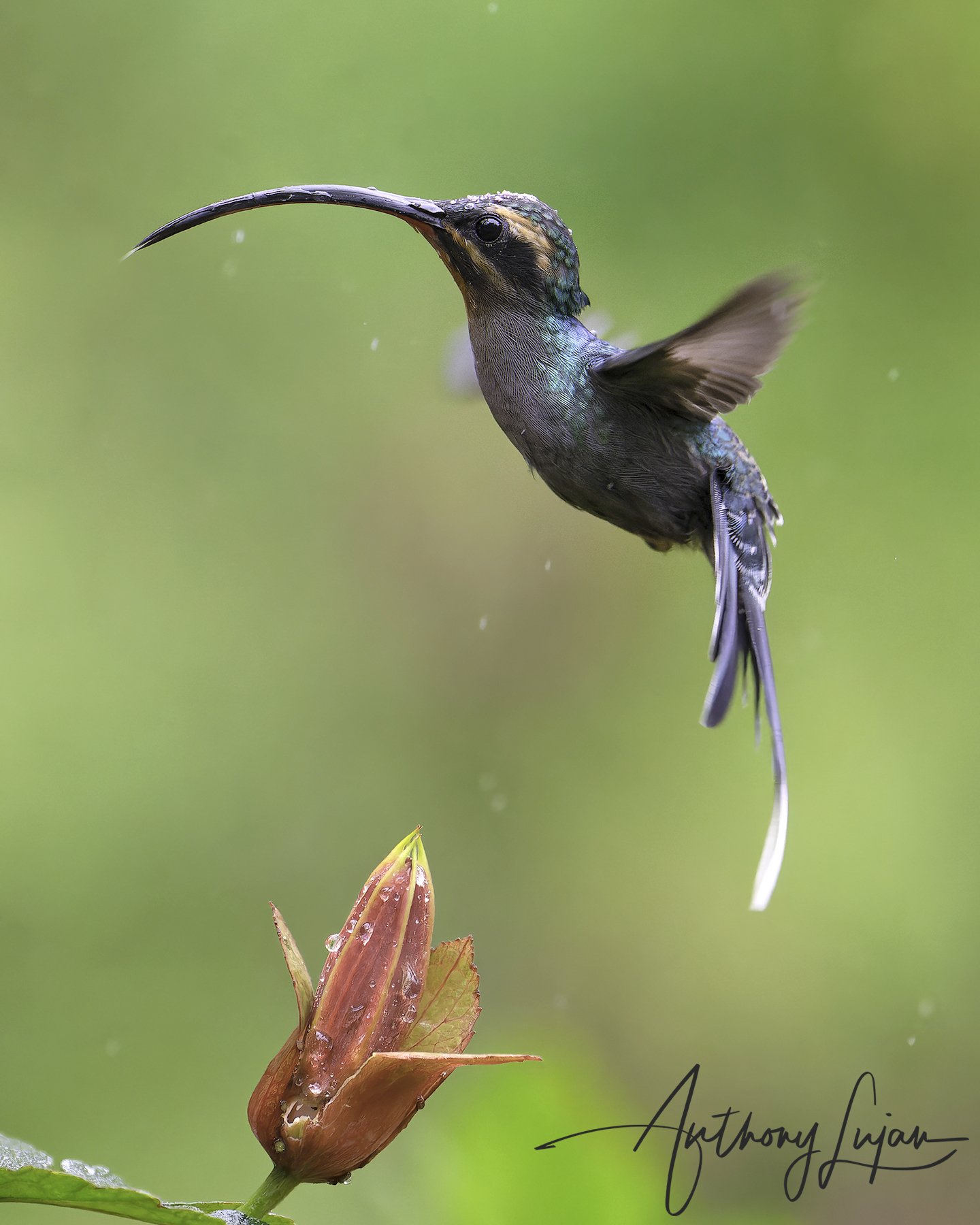
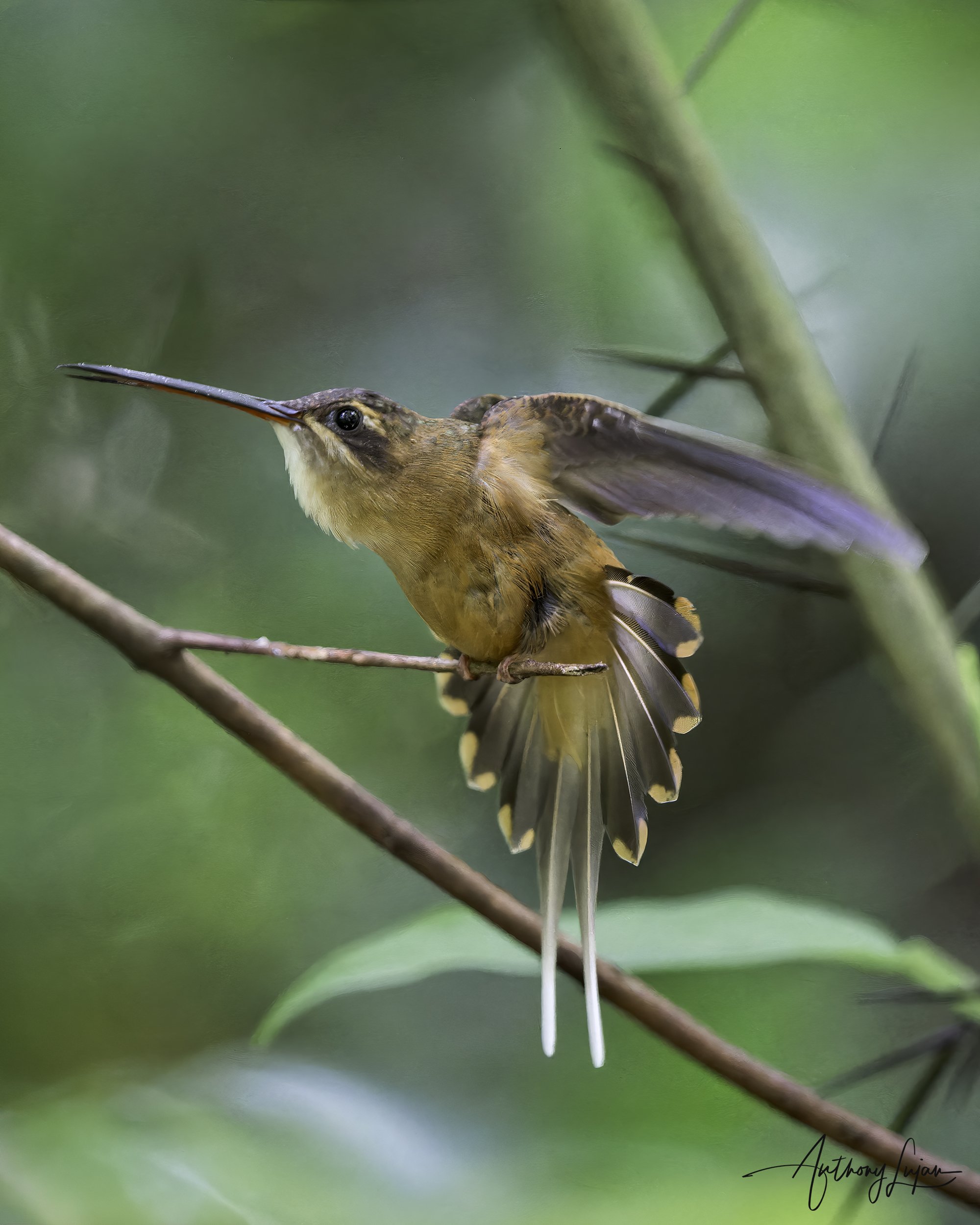
Related species in the Phaethornis genus (27 species total)



Please note: The content provided in this article reflects Anthony’s personal experience and photographic approach. Results can vary depending on light, weather, location, equipment, subject behavior, and field conditions.