
Little Woodstar
Scientific name: Chaetocercus bombus
The Little Woodstar is a tiny, Near Threatened hummingbird found in patchy forest and scrub from southwestern Colombia through western and eastern Ecuador into northern Peru. An estimated 5,000–19,999 mature individuals exist, the population is decreasing, it is considered non-migratory, and it is currently listed as Near Threatened and monotypic.
At a Glance
Family: Trochilidae (hummingbirds)
Clade: Mellisugini – Bee Hummingbirds
Genus group: Chaetocercus — very small “woodstar” hummingbirds of northwestern South America
Range: From extreme southwestern Colombia through western Ecuador into northern Peru, and disjunctly in eastern Ecuador and north‑central Peru.
Habitat: Transition zones between semi‑humid and humid deciduous forest, subtropical and tropical dry forest, moist lowland forest, moist montane forest, and second growth and dry scrub.
Elevation: Roughly sea level to about 2,300 m in western Ecuador, and about 900–3,000 m in eastern Ecuador and Peru.
Length: About 6–7 cm (2.4–2.8 in).
Weight: Only a few grams; among the smallest hummingbirds.
Number of mature individuals: 5,000–19,999
Population trend: Decreasing
Status: Near Threatened (IUCN)
Name Origin
The genus name Chaetocercus comes from Greek roots meaning “bristle tail,” referring to the stiff, filamentous outer tail feathers of males in this group. The species name bombus means “buzzing” or “bumblebee,” evoking both its tiny size and bee‑like flight. The English name “Little Woodstar” reflects its very small size and membership in the “woodstar” group of tiny hummingbirds.
Subspecies & Distribution
Monotypic — no subspecies are recognized. The species occurs from extreme southwestern Colombia through western Ecuador into northern Peru, with additional disjunct populations in eastern Ecuador and north‑central Peru, mainly in transition zones between semi‑humid and humid deciduous forests and associated second growth.
Across this range, Chaetocercus bombus is patchily distributed, occupying small, often isolated blocks of suitable forest and scrub, which contributes to its conservation concern.
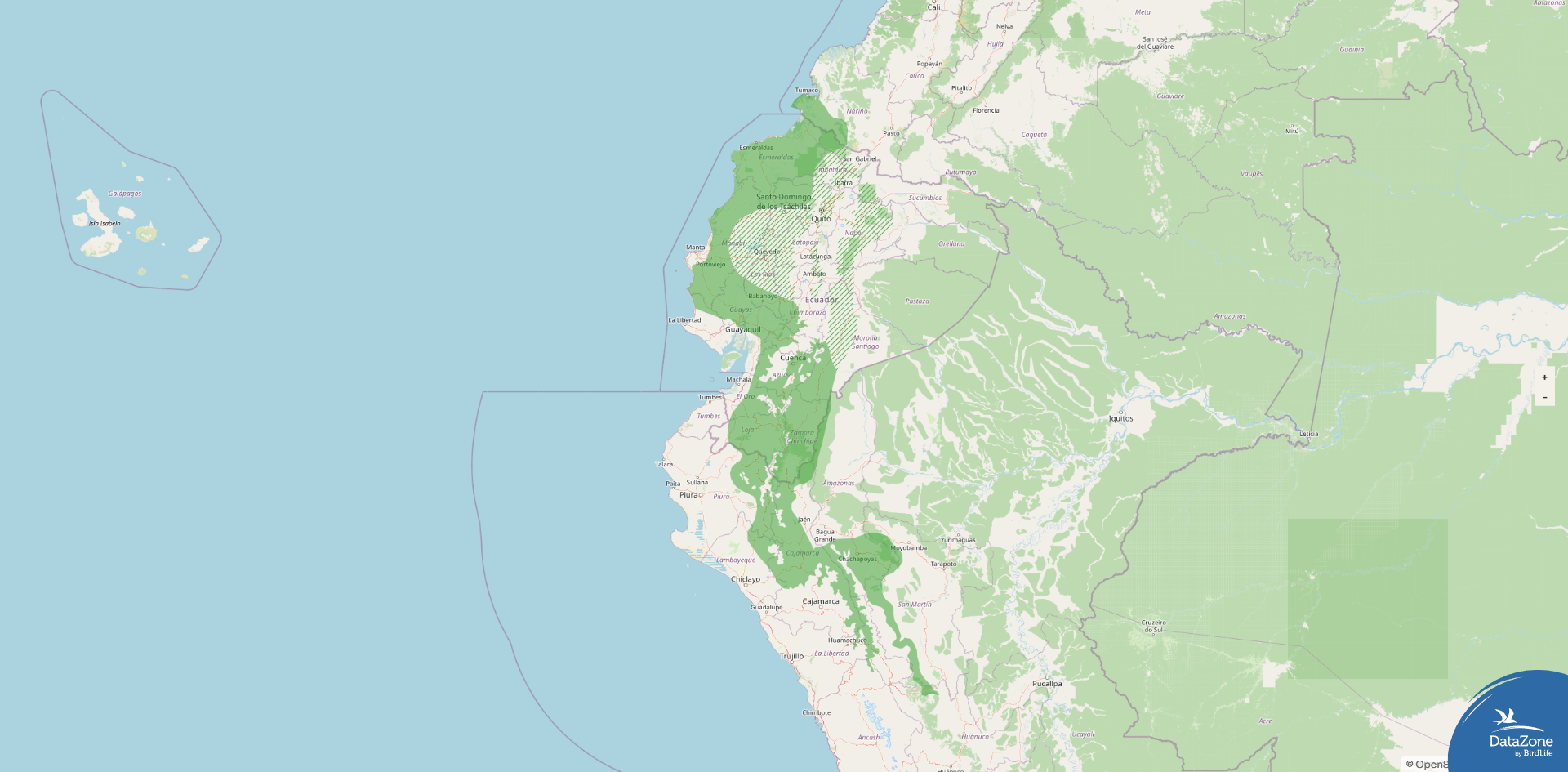
Legend
Green Resident
Species Overview
The Little Woodstar is one of the smallest hummingbirds, a bee‑like species that can easily be overlooked as it zips through low to mid‑level vegetation in forest edges and scrub. It favors transition zones between drier and more humid forests and often uses humid secondary growth and dry scrub where flowers are plentiful. Despite its wide elevational band from lowlands to montane slopes, it is scarce and local throughout, and habitat loss across its fragmented range underlies its Near Threatened status.
Male Description
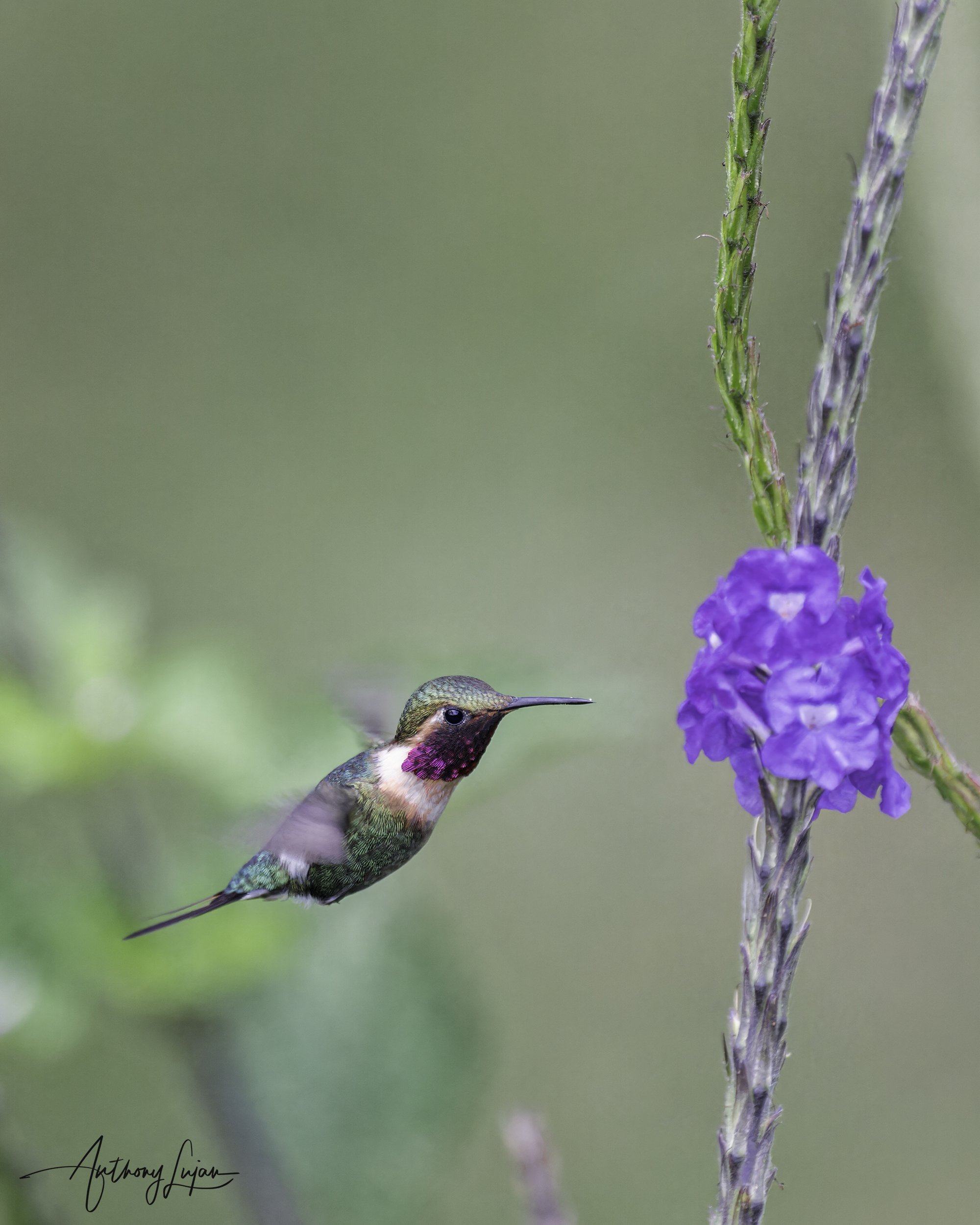
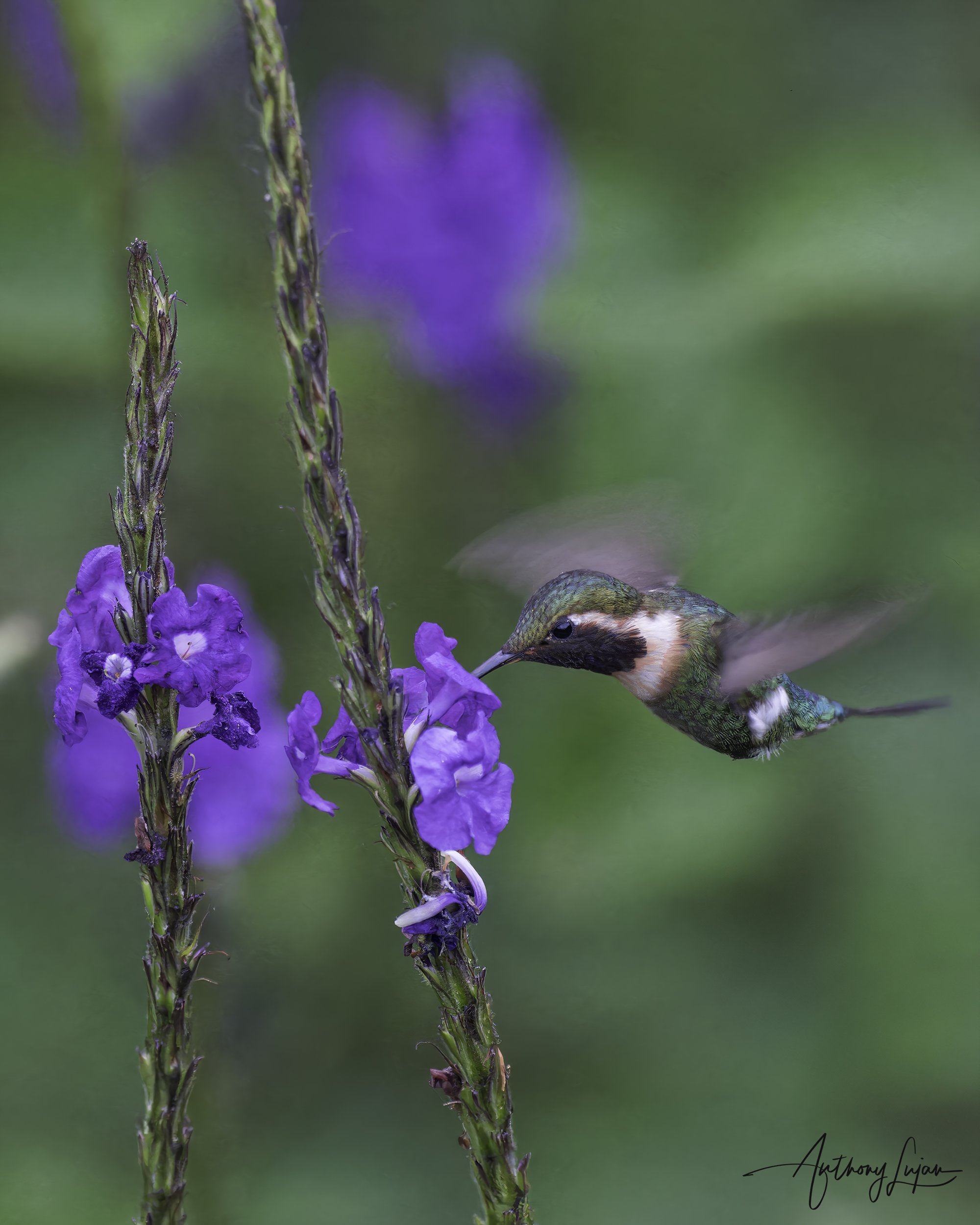
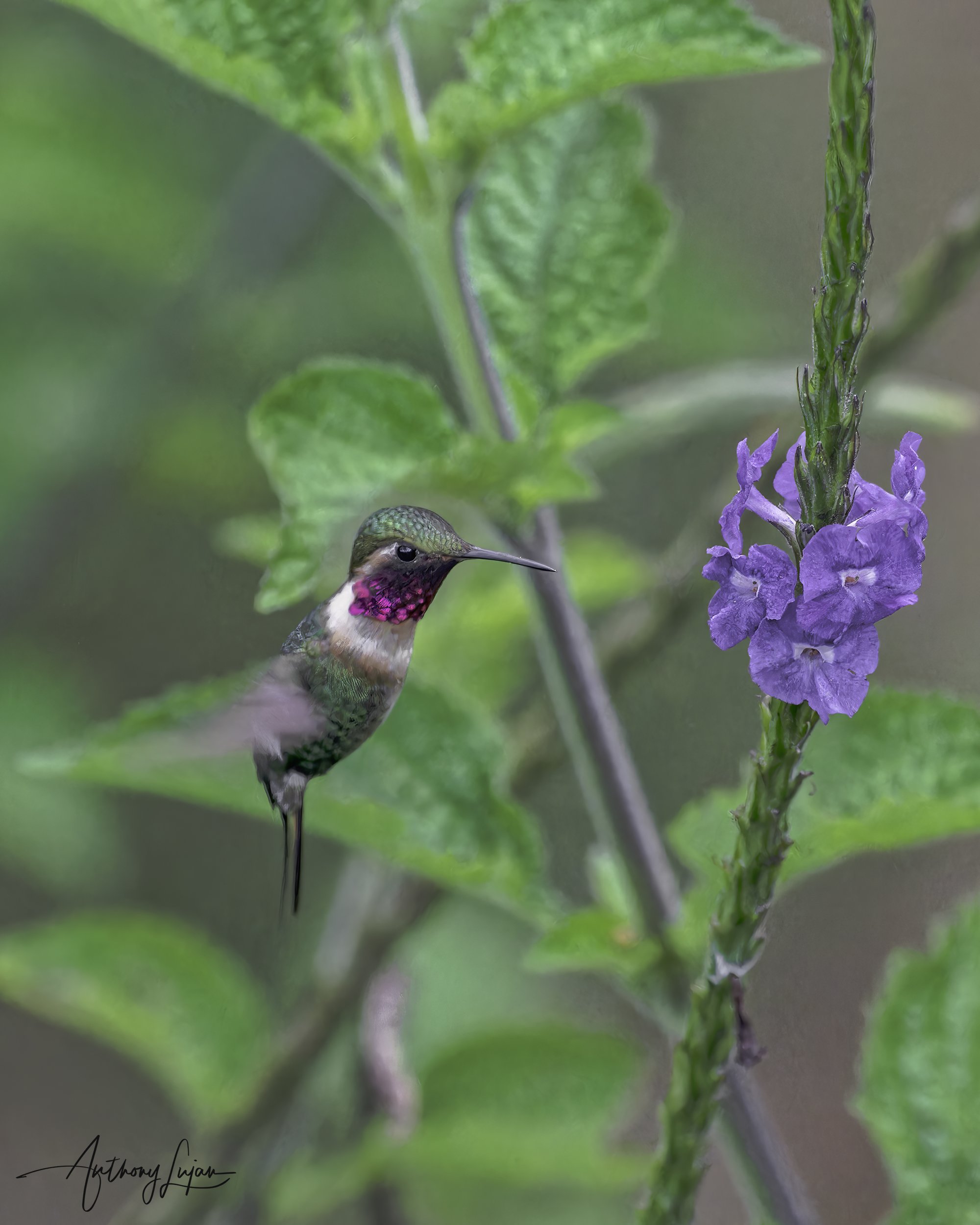
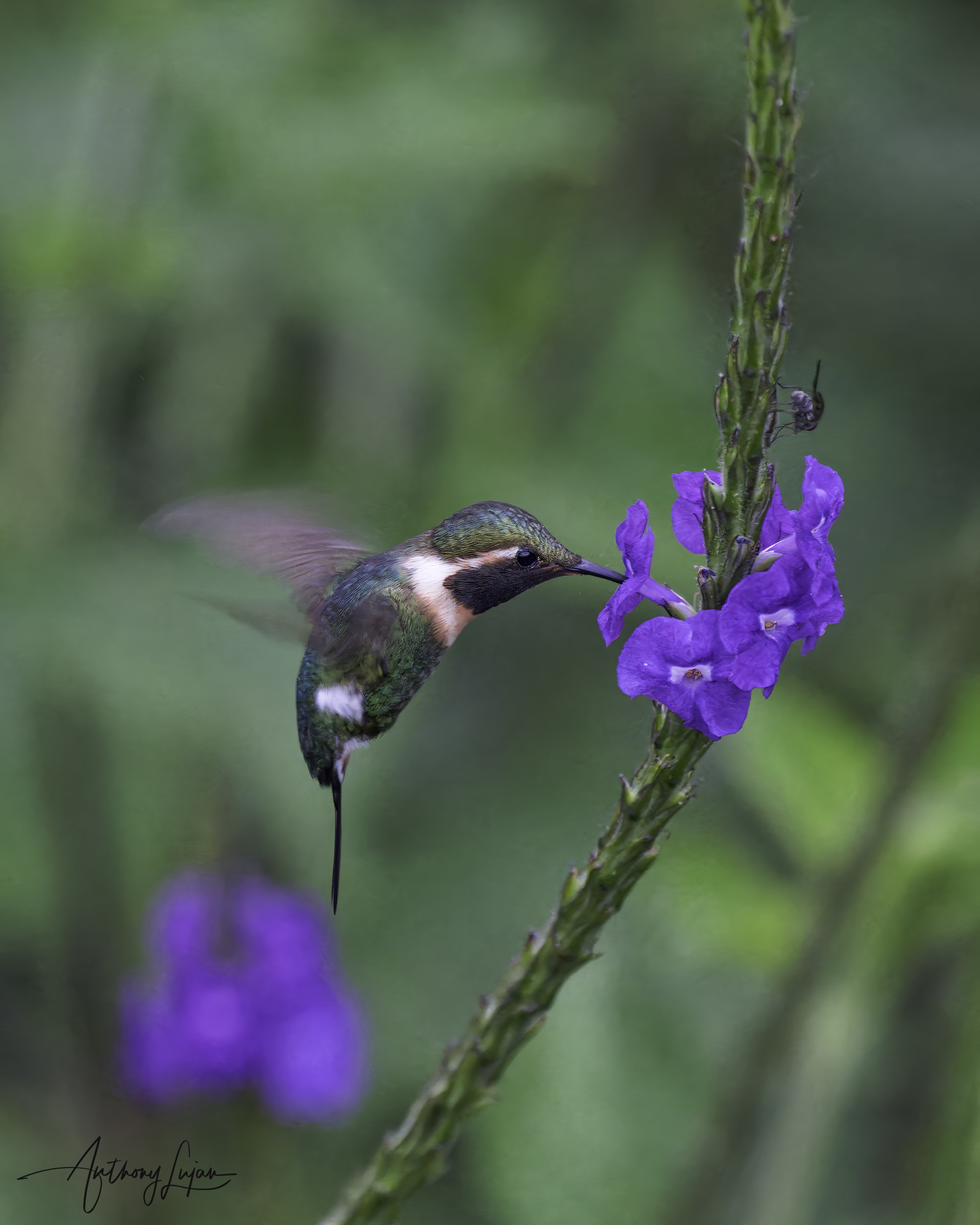
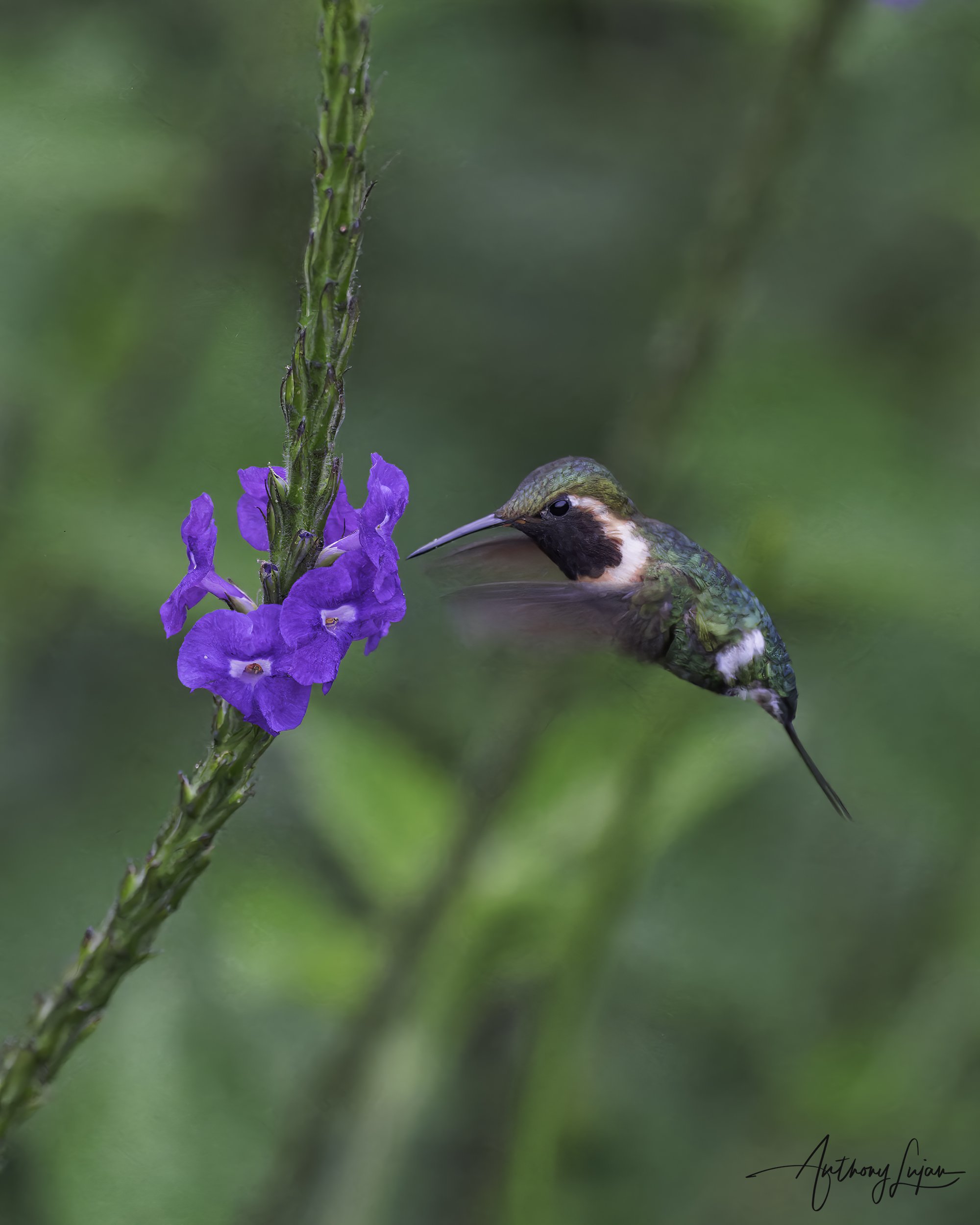
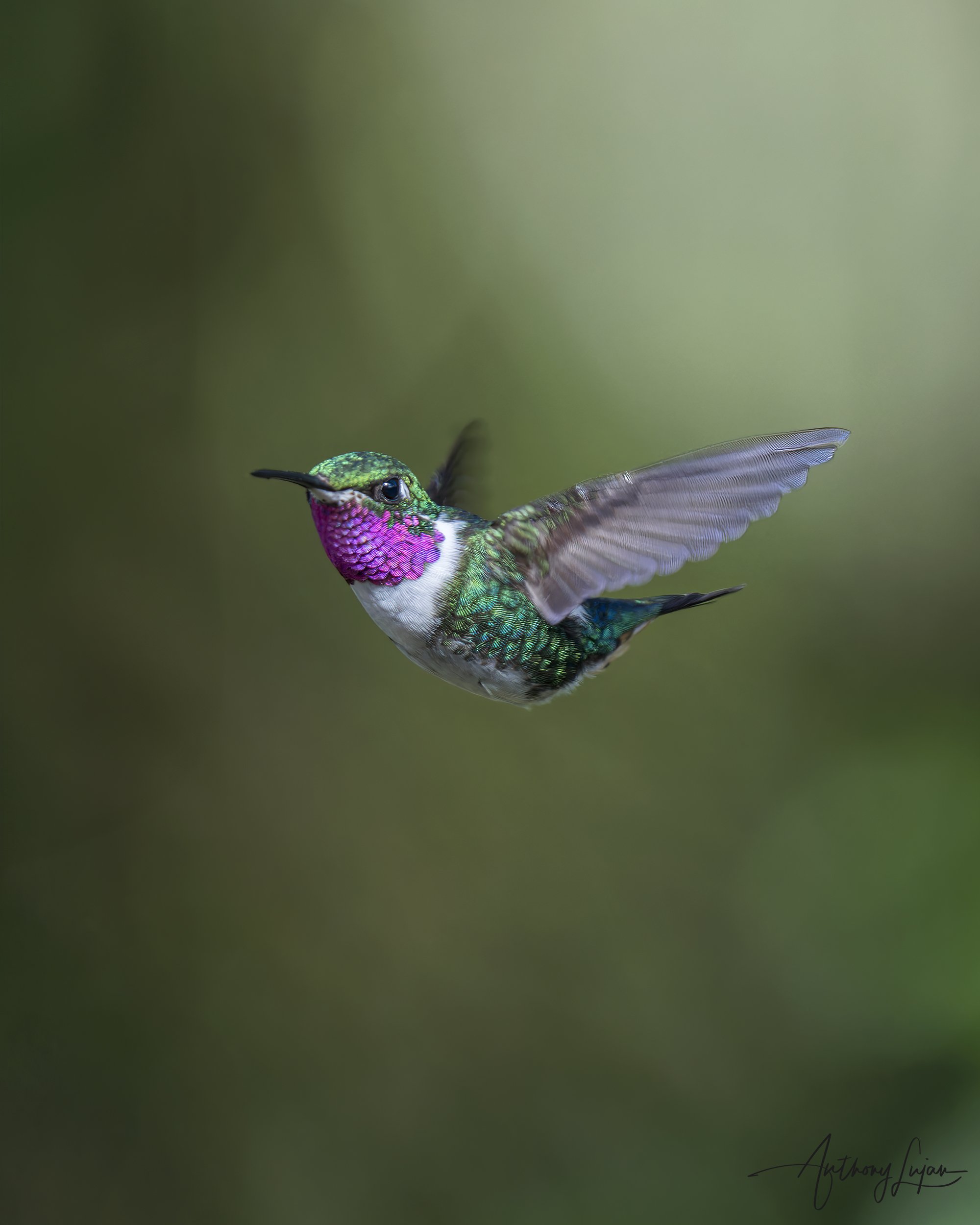
Adult males are mostly dark bronzy blue‑green above and on much of the underparts, with a straight, fairly short black bill. A buffy‑white line runs behind the eye and curves down to meet the buffy chest, creating a pale facial and upper‑breast arc. The gorget is rosy to rosy‑purple, standing out against the darker breast when seen in good light. The tail is deeply forked, and the outermost feathers are reduced to narrow shafts with almost no vanes, giving a distinctive “wire‑tailed” look in flight. Overall, males appear as tiny, dark green woodstars with a rosy gorget, buffy facial line, and extremely narrow outer tail feathers.
Female Description
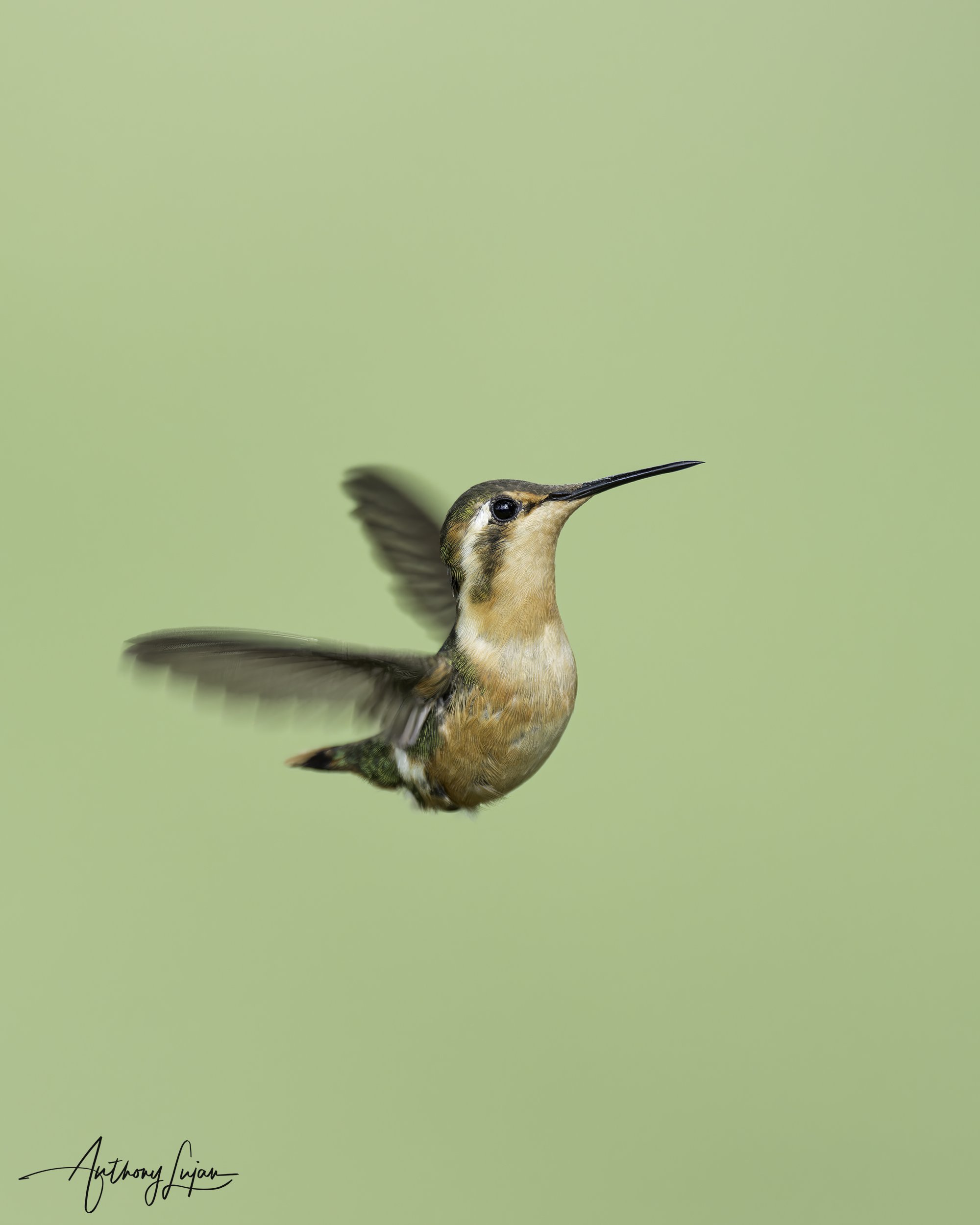
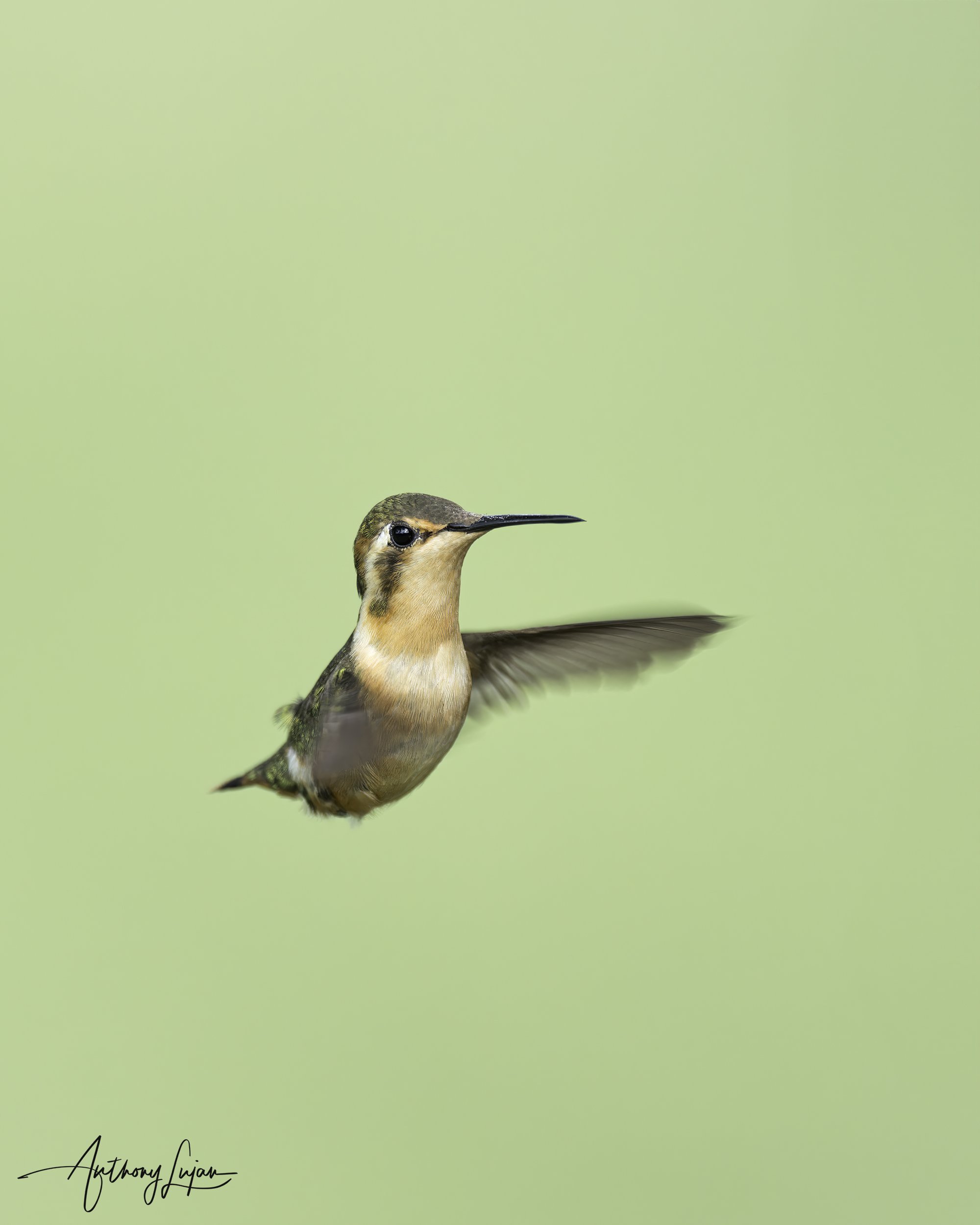
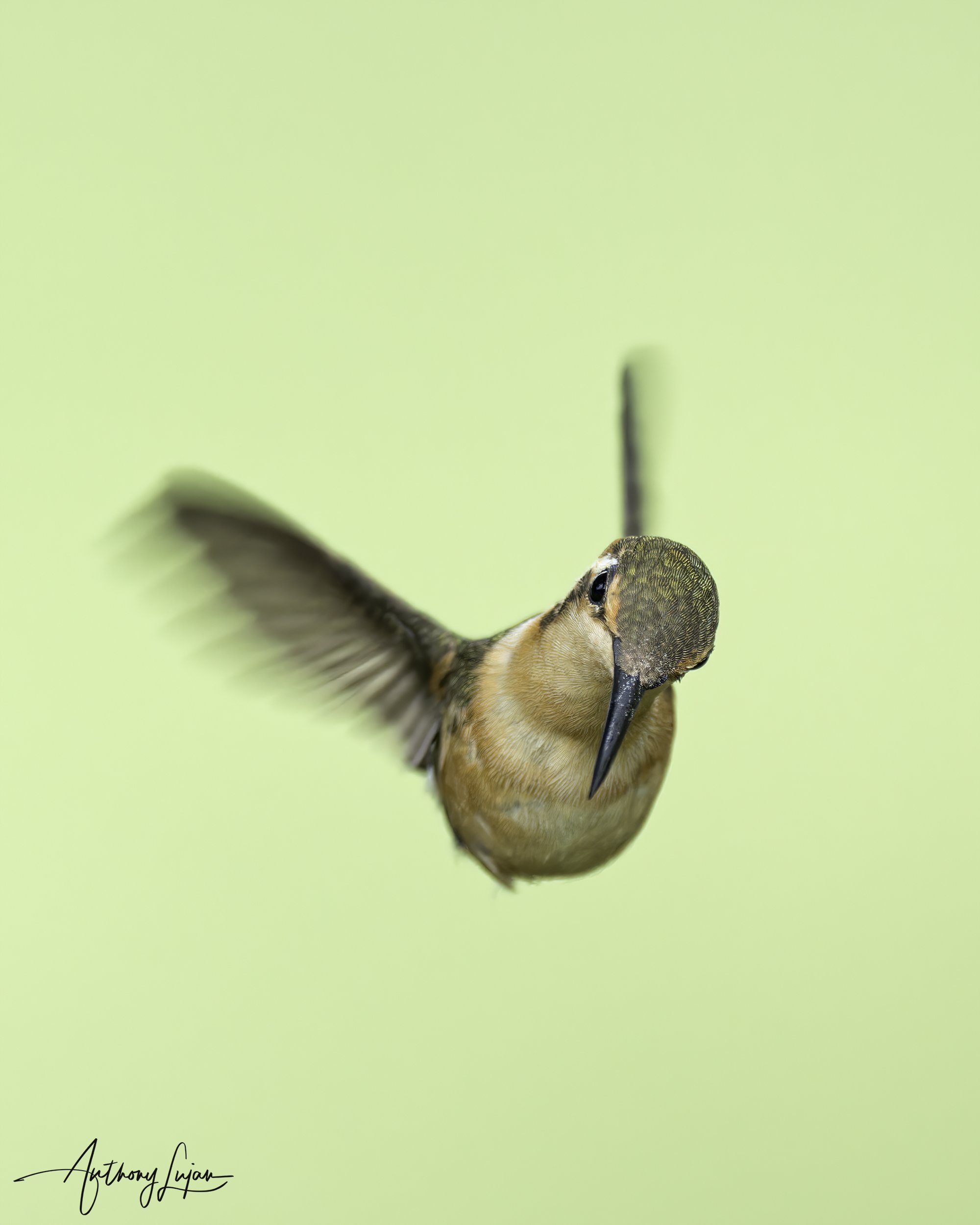
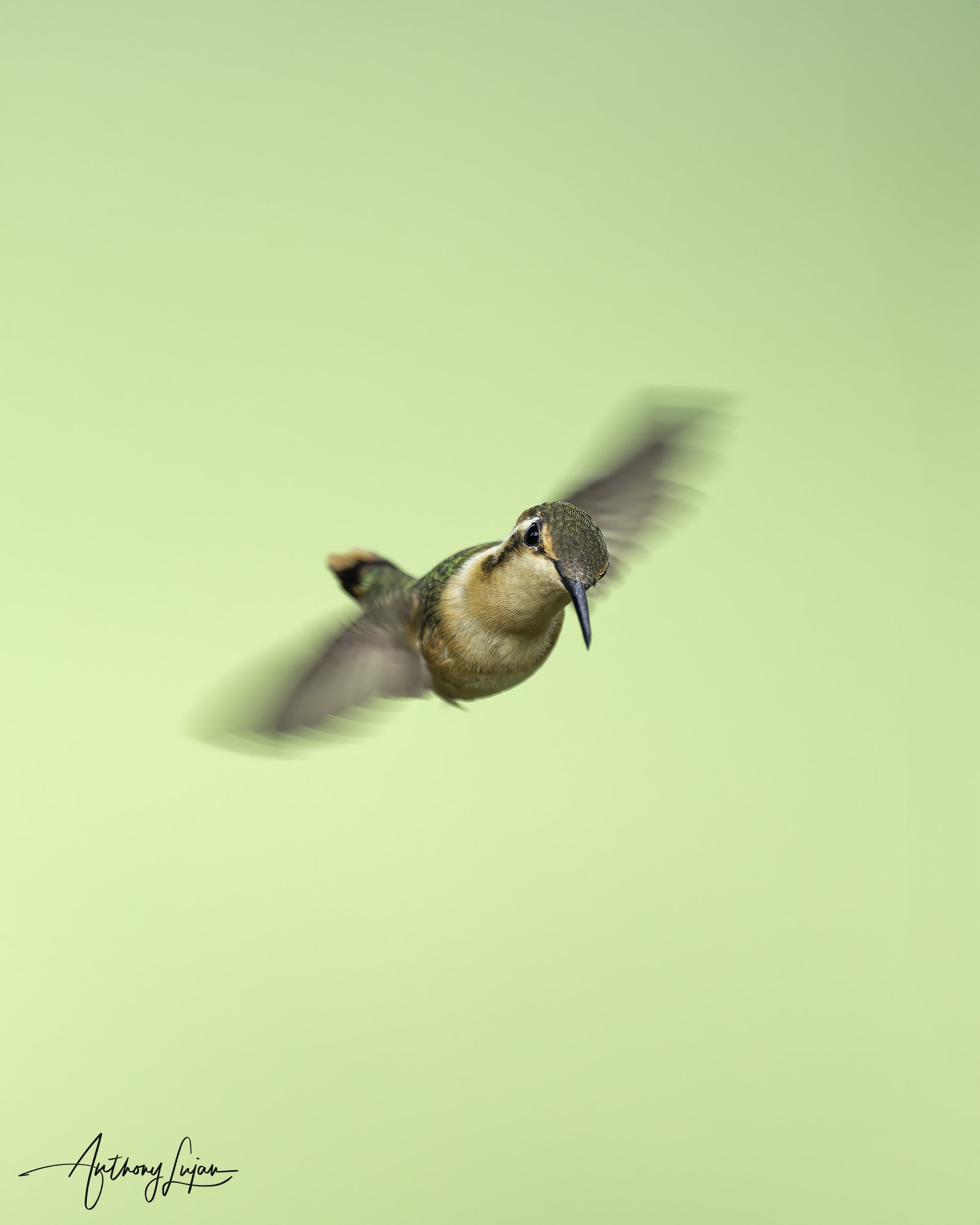
Adult females are bronzy green above, with a straight black bill like the male’s. The underparts are mostly cinnamon or chestnut‑brown, with tawny flanks and vent, giving a warm, buffy look below. The tail is rounded and mostly tawny or rufous with a broad black bar near the end of the feathers. Females lack the rosy gorget and extreme tail filaments of males, instead appearing as tiny, bronzy‑green hummingbirds with rich cinnamon underparts and a short, rufous‑and‑black tail.
Habitat & Behavior
Little Woodstars inhabit a mosaic of forest types, especially the transition between semi‑humid and humid deciduous forest, as well as subtropical and tropical dry forest, moist lowland and montane forest, secondary forest, and dry scrub. They often forage in the lower to mid‑story, visiting small flowers on shrubs, vines, and low trees, and likely take tiny insects as a supplemental protein source. Their flight is bee‑like and fast, and males may perform hovering display flights, but they are generally unobtrusive and easily overlooked even where present. The species is considered resident within its range, with no major migratory movements documented, though local shifts probably track flowering cycles.
Population
The global population is estimated at roughly 5,000–19,999 mature individuals, spread across a somewhat limited and fragmented range in Colombia, Ecuador, and Peru. Within suitable habitat the species is patchy and generally scarce, with many localities supporting only small numbers. Ongoing habitat loss and fragmentation mean that these small, scattered populations are believed to be undergoing a continuing decline.

Conservation
The Little Woodstar is listed as Near Threatened because of its small, decreasing population, patchy distribution, and continuing loss of forest habitat. Deforestation for logging, agricultural expansion, human settlements, and mining continues to reduce and fragment the transition‑zone forests and secondary growth on which it depends. Conservation priorities include protecting remaining forest and scrub in key parts of its range, promoting restoration of secondary forest and hedgerows, and managing land use to retain flowering shrubs and trees in agricultural mosaics. As one of the world’s smallest hummingbirds and a representative of threatened Andean and foothill forests, the Little Woodstar can serve as a flagship for conserving these habitats.
Related species in the Chaetocercus genus (6 species total):


Please note: The content provided in this article reflects Anthony’s personal experience and photographic approach. Results can vary depending on light, weather, location, equipment, subject behavior, and field conditions.