
Long-tailed Sylph
Scientific name: Aglaiocercus kingii
The Long-tailed Sylph is a medium-sized, long‑tailed hummingbird of humid montane and cloud‑forest zones from northern Venezuela south along the Andes through Colombia and Ecuador into Peru and west‑central Bolivia. Its total number of mature individuals is unknown, the overall population trend is decreasing, it is considered an altitudinal migrant, and it is assessed as Least Concern.
At a Glance
Family: Trochilidae (hummingbirds)
Clade: Lesbiini – Coquettes
Genus: Aglaiocercus — 3 species in total
Range: Mountains of coastal and north‑central Venezuela south along the Andes through Colombia and Ecuador into Peru and west‑central Bolivia
Habitat: Humid montane and cloud forests, forest edges, scrubby clearings, second growth, gardens, and high‑elevation shrub and grassland mosaics
Elevation: Mostly from about 900 to 3,000 m (3,000–9,800 ft), most common between roughly 1,400 and 2,800 m
Length: Males about 16–19 cm (6.3–7.5 in) including the long tail; females about 9.7–11.7 cm (3.8–4.6 in)
Weight: Males about 5–6 g (0.18–0.21 oz); females about 4.5–4.7 g (0.16–0.17 oz)
Number of mature individuals: Unknown
Population trend: Decreasing
Movement: Altitudinal Migrant
IUCN Red List category: Least Concern
Name Origin
The name “Long-tailed Sylph” refers to the male’s extremely long tail and the word “sylph,” used for slender, graceful, fairy‑like beings, reflecting its delicate appearance. The genus name Aglaiocercus combines Greek roots meaning “splendid” and “tailed,” again emphasizing the elongated, iridescent tail. The species name kingii commemorates the British naval officer and naturalist Philip Parker King.
Taxonomy & Distribution
Aglaicercus kingii belongs to the coquette tribe Lesbiini within the hummingbird family Trochilidae. The genus Aglaiocercus contains three long‑tailed species: Long-tailed Sylph (A. kingii), Violet-tailed Sylph (A. coelestis), and Venezuelan Sylph (A. berlepschi). The Long-tailed Sylph ranges from northern Venezuela south along the Andes of Colombia and Ecuador into eastern Peru and west‑central Bolivia, occurring on both eastern and some western Andean slopes depending on subspecies. It primarily inhabits humid montane and cloud forests and nearby semi‑open habitats in the foothill and subtropical zones.
Subspecies and Distribution
Six recognized subspecies:
Aglaiocercus kingii margarethae
Distribution: Coastal and north‑central Venezuela, in mountains of Falcón east through coastal and inland ranges to Miranda.Aglaiocercus kingii caudatus
Distribution: Sierra de Perijá and adjacent northern Colombia and western Venezuela, including the Perijá range and Andes from Lara south to Táchira and Norte de Santander.Aglaiocercus kingii emmae
Distribution: Central Andes of northern Colombia south through the Western Andes of southern Colombia into extreme northwest Ecuador (south to Pichincha).Aglaiocercus kingii kingii (nominate)
Distribution: Eastern Andes of Colombia from Santander south to Cundinamarca.Aglaiocercus kingii mocoa
Distribution: Southern Colombia (eastern Nariño), eastern Ecuador, and northern Peru south to Cajamarca.Aglaiocercus kingii smaragdinus
Distribution: Eastern Andes of Peru (south from Amazonas) to west‑central Bolivia (Cochabamba region).
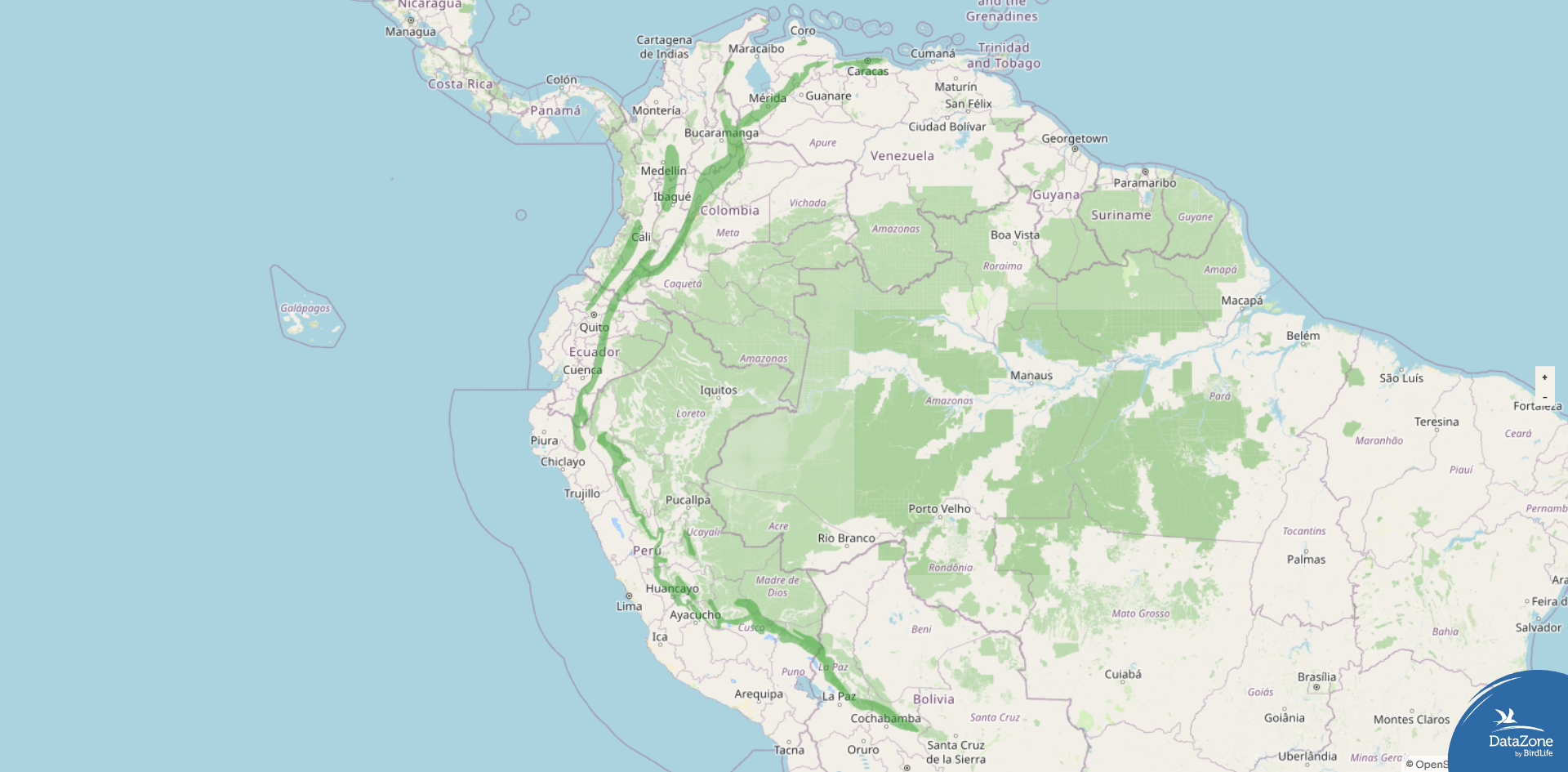
Legend
Green Resident
Species Overview
The Long-tailed Sylph is one of the most striking Andean hummingbirds, with males showing a glittering green body, bluish or blue‑green throat, and an extraordinarily long, iridescent green or bluish tail. It frequents humid montane and cloud‑forest zones, especially forest edges, clearings, and gardens where flowering shrubs and small trees are abundant. Across much of its range it is a familiar and often common visitor to feeders and ornamental plantings at Andean lodges and rural homes, though overall the species is declining with ongoing forest loss and fragmentation.
Male Description
Adult males are medium‑sized hummingbirds with relatively small bodies and extremely long outer tail feathers. The head, back, and underparts are mainly bright emerald green; in many subspecies the throat is bluish or blue‑green and may show a small violet or blue throat patch, though this can be reduced or absent in some forms (such as emmae). The rump can show a pale or whitish patch in younger birds. The tail is deeply forked, with very long, iridescent green or bluish‑green outer tail feathers that can be longer than the body. The bill is straight, short, and black. Overall, males present a slender, elongated silhouette dominated by the long tail.
Female Description
Females are much shorter‑tailed and lack the extreme outer tail feathers. The upperparts are green, while the underparts are whitish to buffy with green spotting or streaking on the throat and sides and a buffy or grayish belly. Many females show a short white “moustache” stripe behind the bill. The tail is shorter, with green central feathers and white tips or edges to the outer feathers; it may be only moderately forked. Juveniles resemble females, with short tails and spotted throats; young males gradually develop the much longer tail feathers and more intense underpart coloration as they mature.
Habitat & Behavior
Long-tailed Sylphs inhabit humid montane and cloud forests, forest edges, clearings, scrubby second growth, and gardens in Andean regions. They are especially associated with areas where flowering shrubs and small trees line forest borders, roads, and ravines, and they are frequent visitors to hummingbird feeders near forested areas. They occur from about 900 to 3,000 m, most commonly between roughly 1,400 and 2,800 m, depending on local climate and vegetation.
They feed primarily on nectar, visiting a wide range of flowering plants, including both native shrubs and ornamental species planted around houses and lodges. They forage by hovering at flowers or briefly perching to access blooms and also take small insects, which they catch by hawking from perches or gleaning near flowers. Males can be territorial around rich nectar sources, performing short chases and display flights that emphasize their long tails.
Breeding
The breeding season varies across the species’ range but often falls within the wet season or periods of peak flower availability. The male builds a distinctive, bulky dome nest of moss and plant fibers with a side entrance, which is attached to a branch or twig and often hidden among leaves or in clumps of moss. The nest’s tunnel‑like entrance and extended tail of material are characteristic for the genus.
The clutch consists of two white eggs. The female incubates the eggs, typically for 15–17 days, and cares for the chicks. Fledging usually occurs about 21–24 days after hatching. In some areas, the species may breed at almost any time of year when conditions allow, with overlapping nesting periods at different elevations.
Movement
The Long-tailed Sylph is an altitudinal migrant with complex movement patterns. Populations in the Andes make seasonal elevational movements between lower and higher zones, tracking flowering and climatic changes. In some regions, certain subspecies are thought to move between countries (for example, caudatus likely moves between Venezuela and Colombia). On the Pacific side of southwestern Colombia, emmae appears to be present only in the wet season, being replaced in the drier months by Violet-tailed Sylph. These movements are primarily up and down mountain slopes and across nearby ranges rather than long‑distance latitudinal migration.
Population
The total number of mature individuals is unknown, but the Long-tailed Sylph has a wide distribution from Venezuela to Bolivia and is common to abundant in suitable habitats across much of its range. It is regularly encountered at feeders and flowering hedges in many Andean towns and lodges. However, ongoing deforestation, conversion of montane forest to pasture and agriculture, and fragmentation of cloud‑forest habitats are contributing to a decreasing population trend. Local declines are most likely where forest clearing for cattle and crops is extensive.

Conservation
The Long-tailed Sylph is assessed as Least Concern due to its broad range and frequent occurrence in many Andean regions, including several protected areas. Its tolerance of forest edges, secondary growth, and gardens with flowering plants gives it some resilience compared with strictly interior‑forest specialists. Nonetheless, continued clearing and fragmentation of montane and cloud forests for agriculture, cattle ranching, and infrastructure pose significant long‑term threats. Conservation of Andean forest belts, maintenance of forest edges and second‑growth corridors, and protection of nectar‑rich habitats and feeder networks in rural communities all help support stable populations.
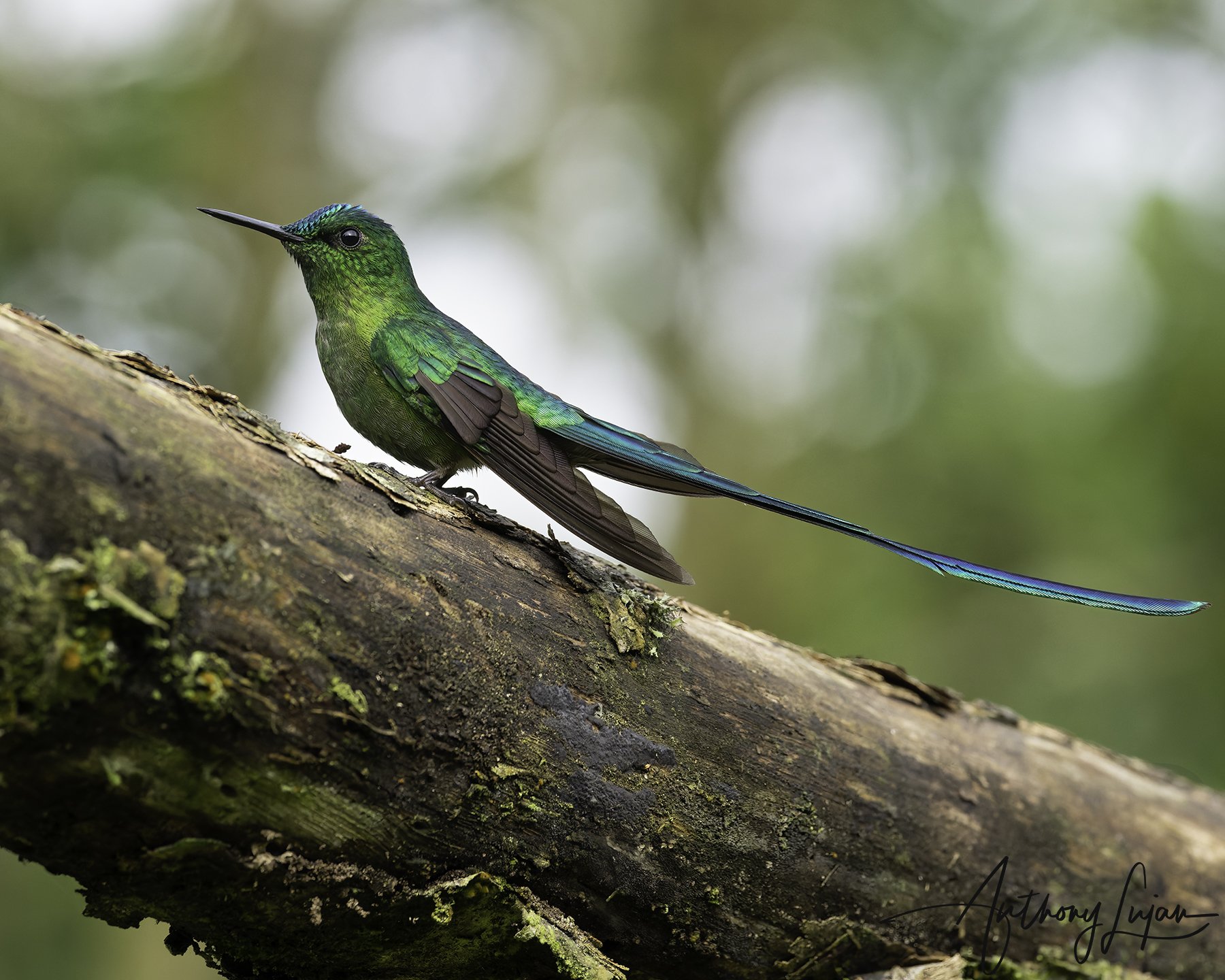
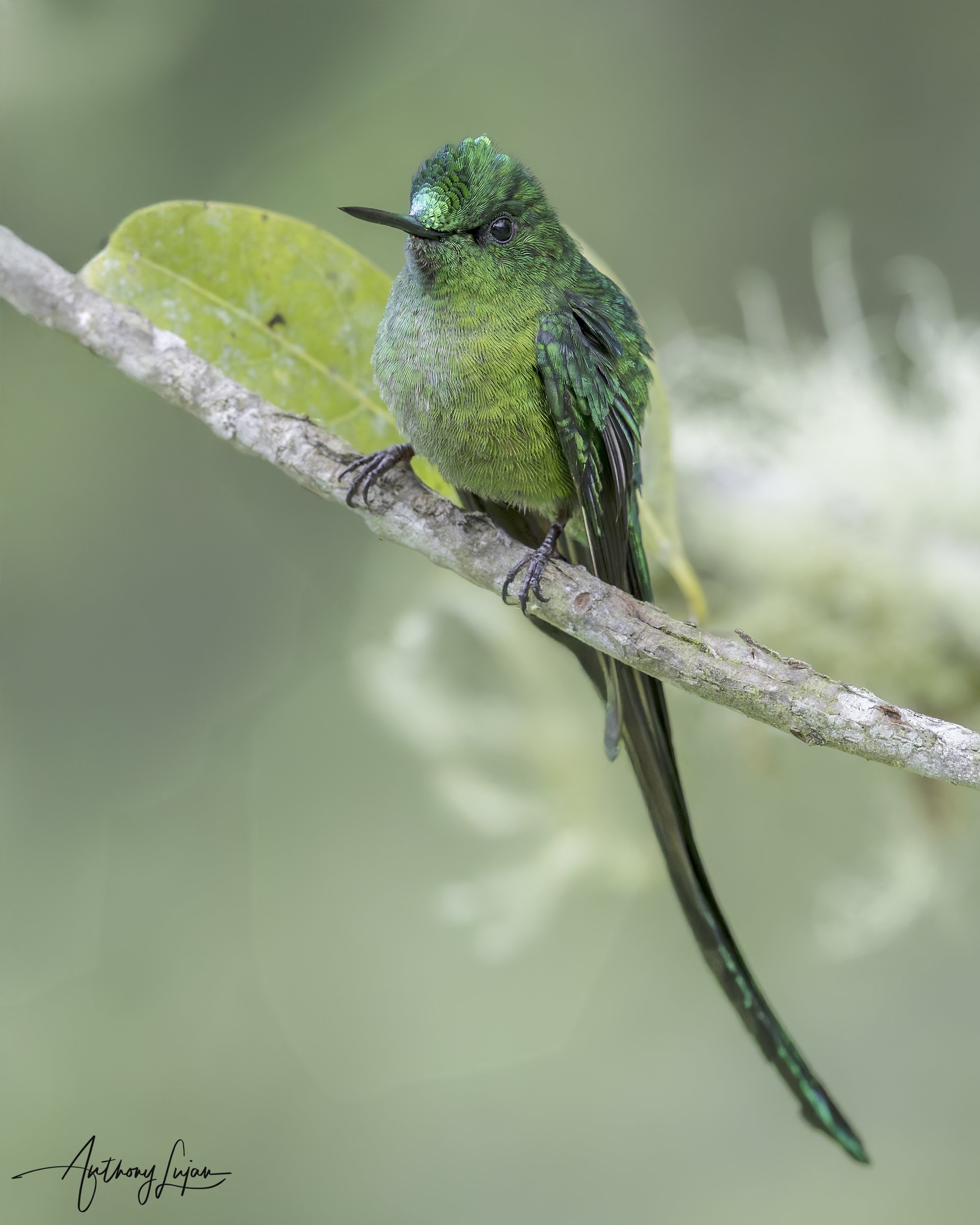
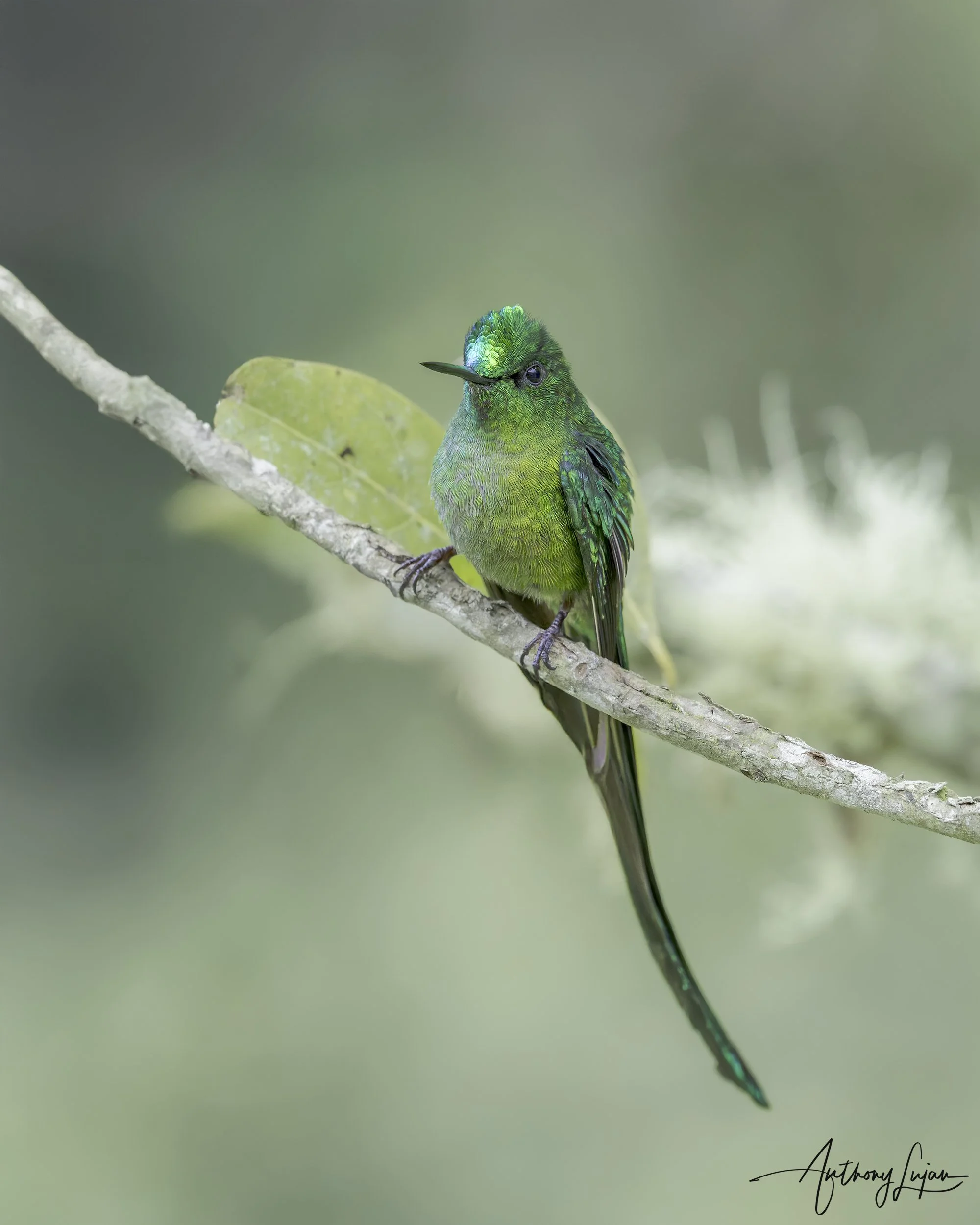
Below is the Long-tailed Sylph (Aglaiocercus kingii margarethae)
Photographed at Reserva Ecológica Río Blanco Lodge, Caldas, Colombia
This individual represents the subspecies margarethae, found throughout the Central Andes of Colombia, including the Caldas region. Here, it is common in humid montane forest, forest edge clearings, and gardens at elevation.
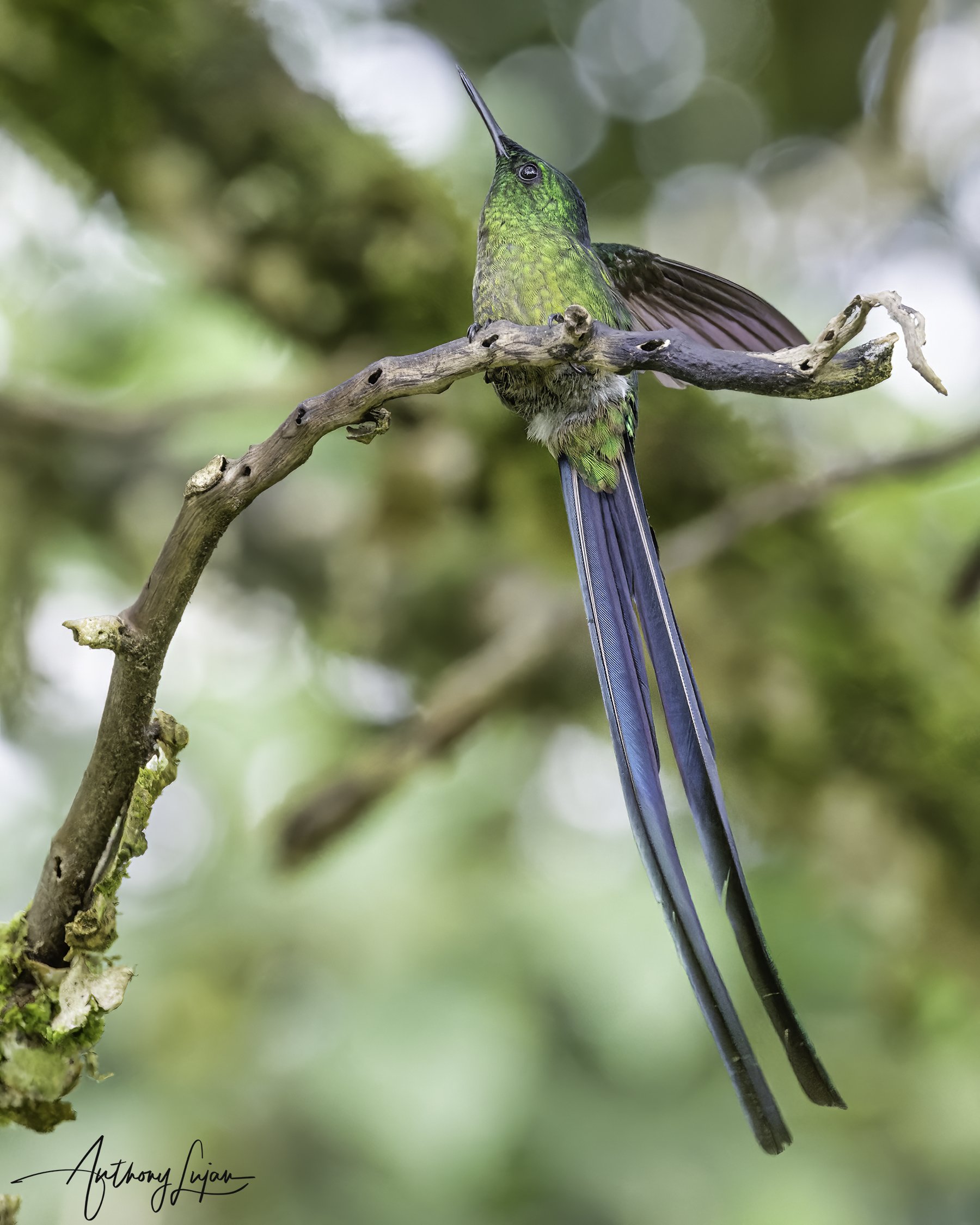
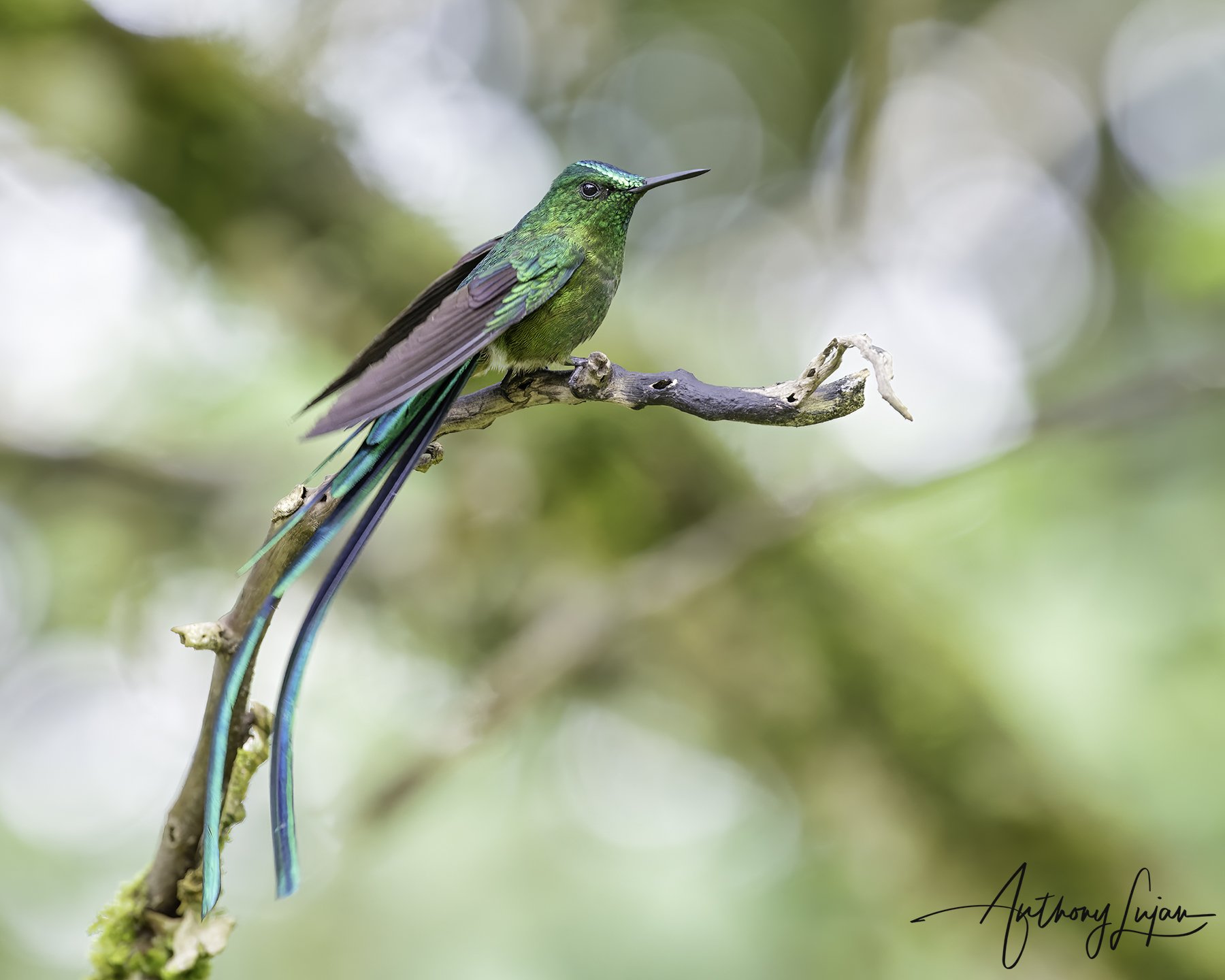
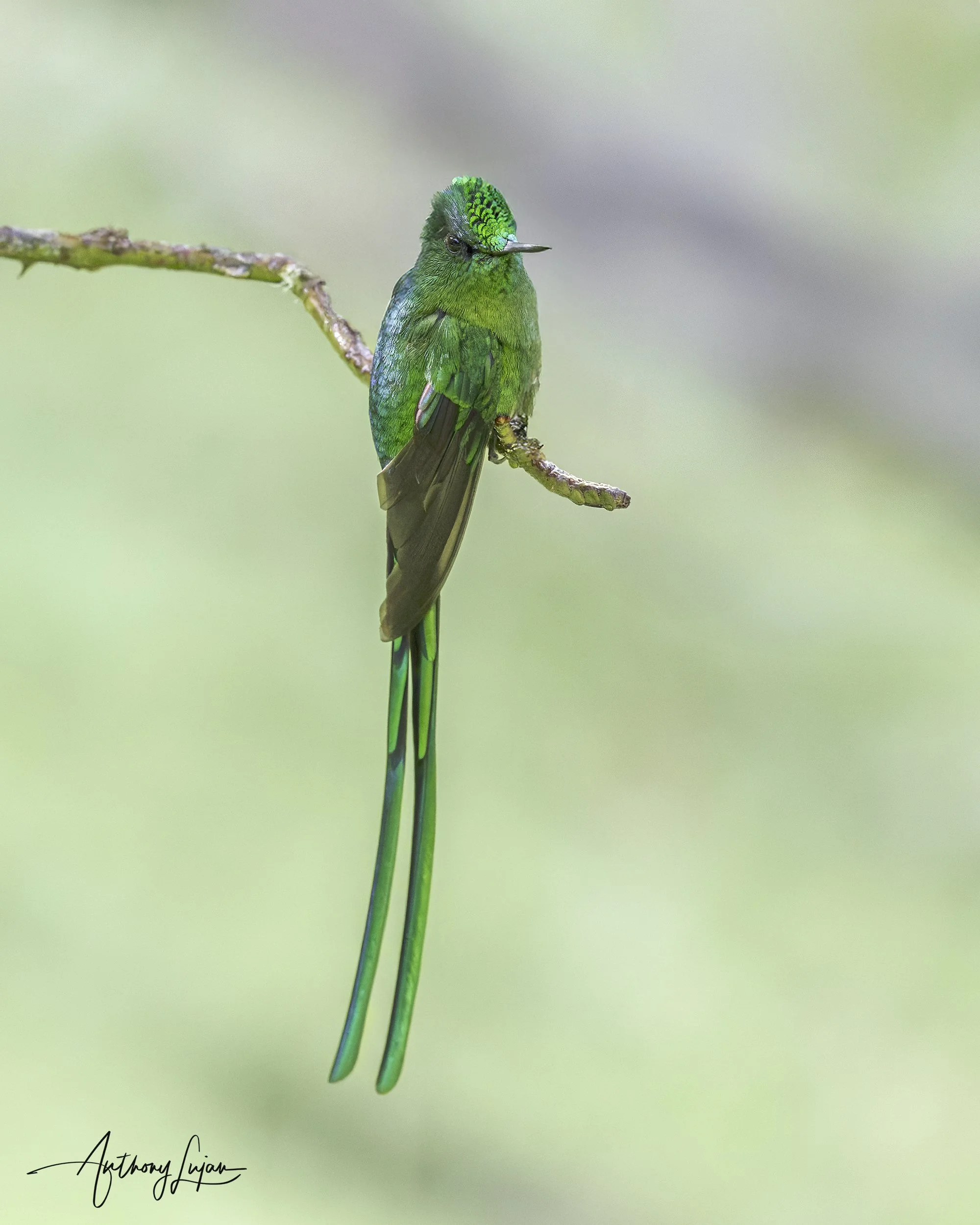
Below is the Long-tailed Sylph (Aglaiocercus kingii emmae)
Photographed at Colibrí del Sol ProAves Reserve, Antioquia, Colombia
This individual belongs to the subspecies emmae, restricted to the high-elevation Western Andes of Colombia near the Páramo del Sol region. At Colibrí del Sol, it occurs in humid elfin forest and shrubby páramo transition zones.
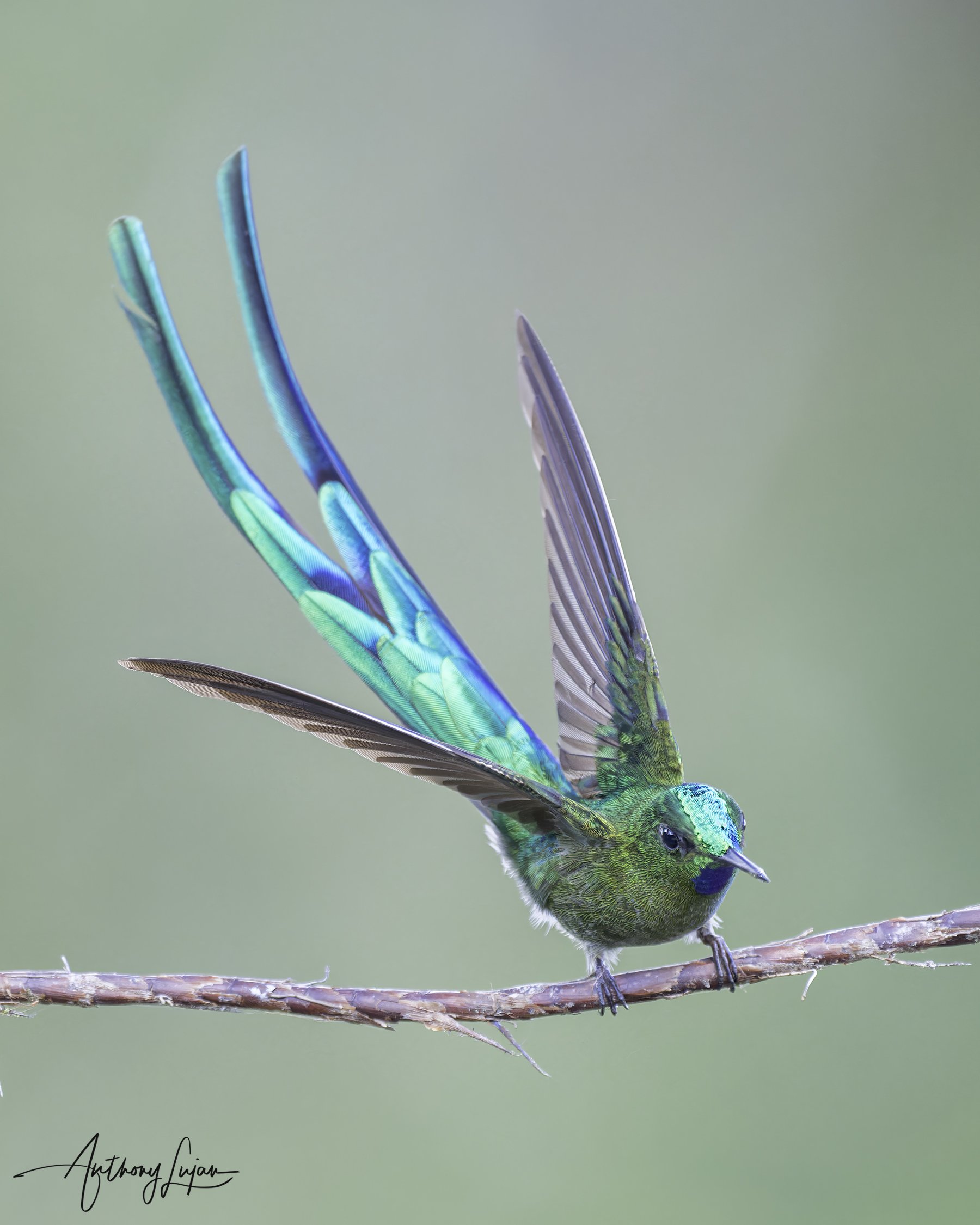
Below is the Long-tailed Sylph (Aglaiocercus kingii mocoa)
Photographed in Bosque de Protección Alto Mayo, Fundo Alto Nieva, San Martín, Peru
This individual belongs to the subspecies mocoa, which ranges from southern Colombia into northern Peru. In Alto Mayo, it occupies humid montane forest and cloud forest edge, often visiting flowering shrubs at mid-level perches.
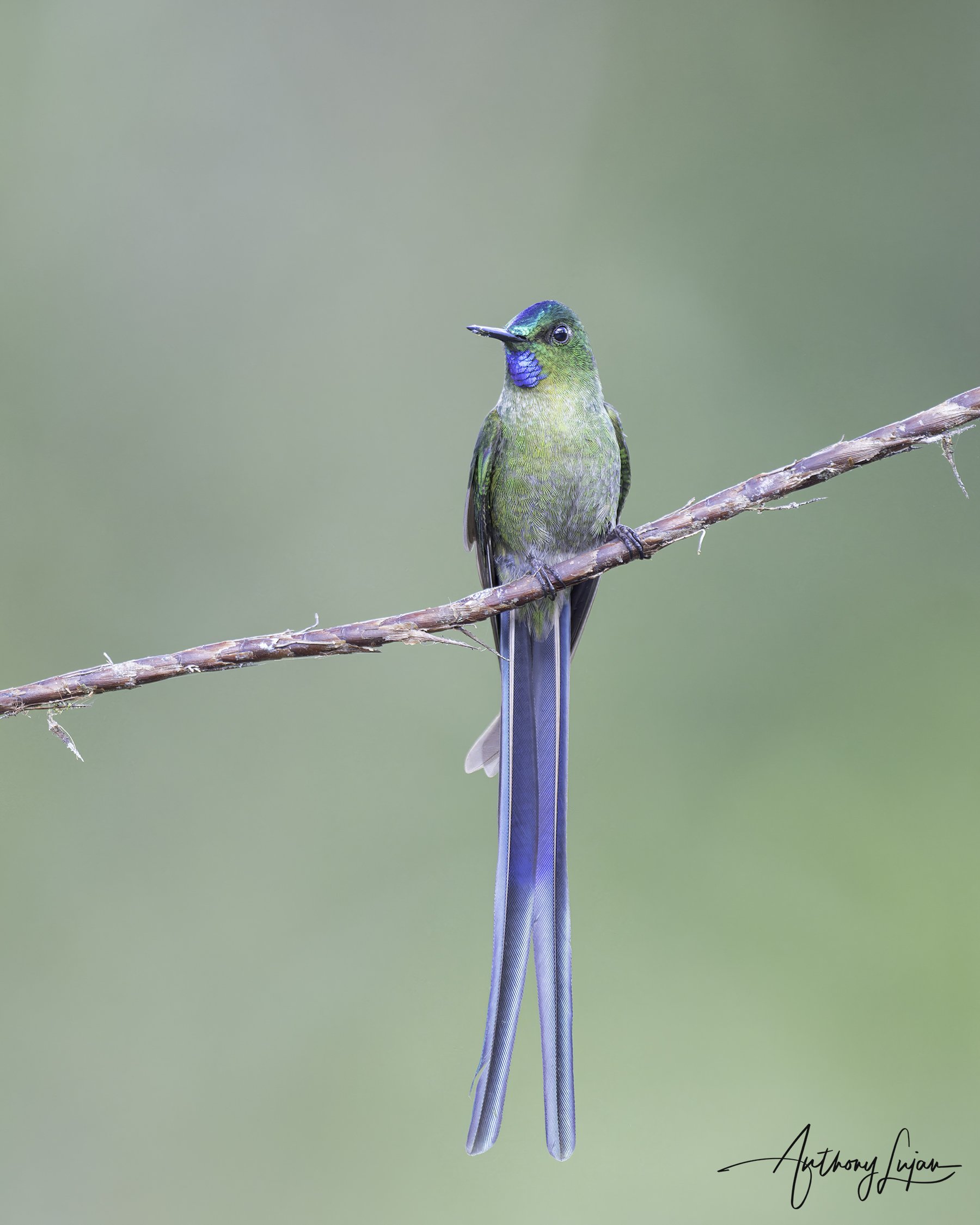
Related species in the Aglaiocercus genus (3 species in total):
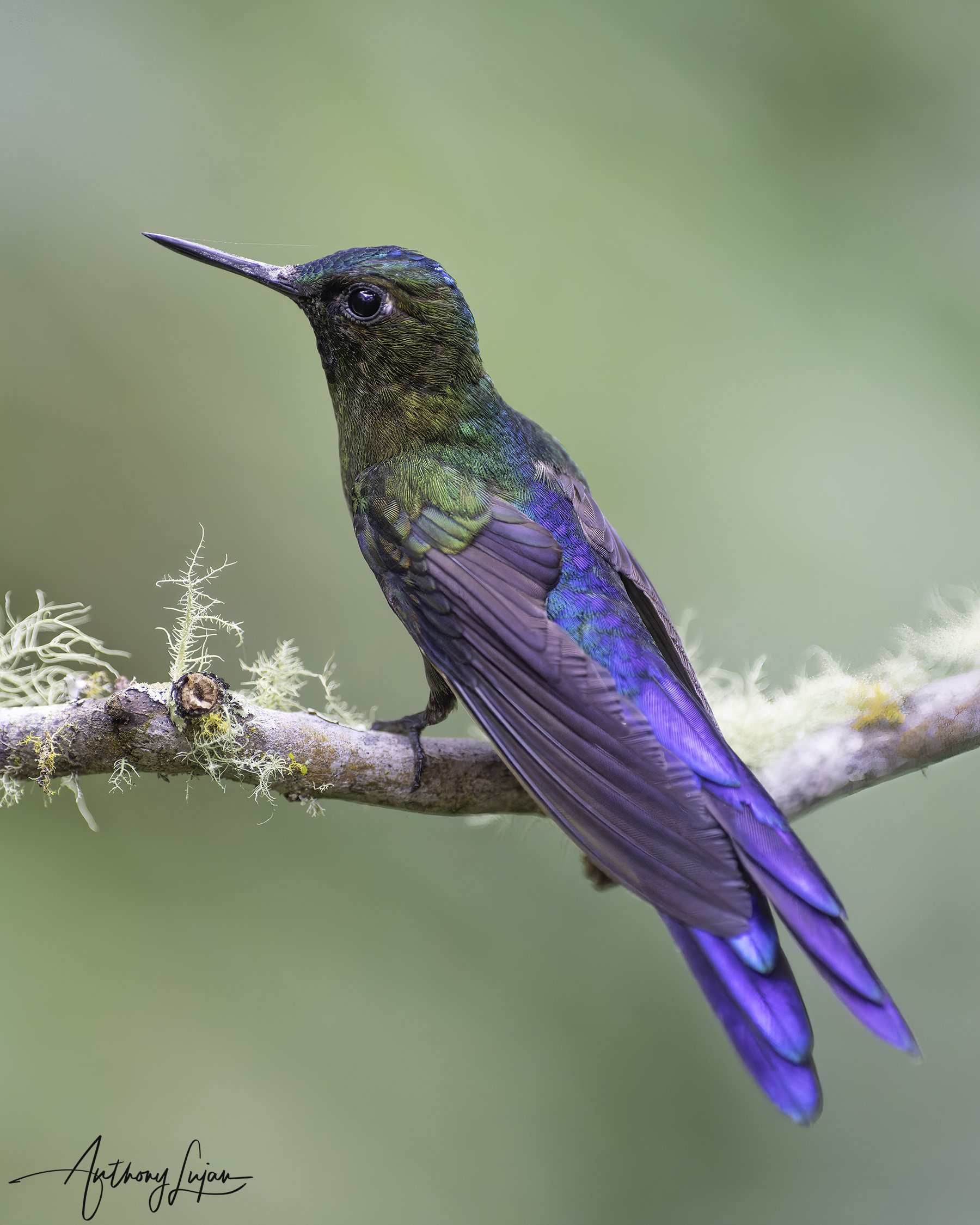
Please note: The content provided in this article reflects Anthony’s personal experience and photographic approach. Results can vary depending on light, weather, location, equipment, subject behavior, and field conditions.