
Longuemare's Sunangel
Scientific name: Heliangelus clarisse
Longuemare’s Sunangel is a small Andean hummingbird found in the mountains of Colombia and Venezuela. The number of mature individuals is unknown, the population is decreasing, it is considered non-migratory, and it is currently listed as Least Concern with two recognized subspecies.
At a Glance
Family: Trochilidae (hummingbirds)
Clade: Lesbiini – “brilliants” of the Andean highlands
Genus group: Heliangelus — “sunangels,” small montane hummingbirds with intense iridescence
Range: Eastern Andes of Colombia and adjacent western Venezuela, including the Sierra de Perijá along the Colombia–Venezuela border.
Habitat: Edges of humid cloudforest and elfin forest, brushy ravines, overgrown pastures, fields with scattered bushes and trees, open woodland, and páramo scrub.
Elevation: About 1,800–3,600 m (5,900–11,800 ft).
Length: Around 9–10 cm (about 3.7–4 in).
Weight: Approximately 3–4 g.
Number of mature individuals: Unknown
Population trend: Decreasing
Status: Least Concern (IUCN)
Name Origin
The genus name Heliangelus combines “sun” and “angel,” referring to the intense, sunlit iridescence of these hummingbirds. The species name clarisse honors Clarisse Longuemare, commemorated in the bird’s scientific name. The English name “Longuemare’s Sunangel” similarly recognizes the Longuemare family and places the species within the radiant “sunangel” group.
Subspecies & Distribution
Two recognized subspecies:
Heliangelus clarisse clarisse
Distribution: Eastern Andes of Colombia and adjacent western Venezuela, where it inhabits the edges of wet cloudforest and elfin forest, along with nearby open country, ravines, and brushy pastures.Heliangelus clarisse violiceps
Distribution: Sierra de Perijá on the Colombia–Venezuela border, occurring in similar high-elevation forest edges, shrubby slopes, and páramo-like scrub along this remote mountain range.
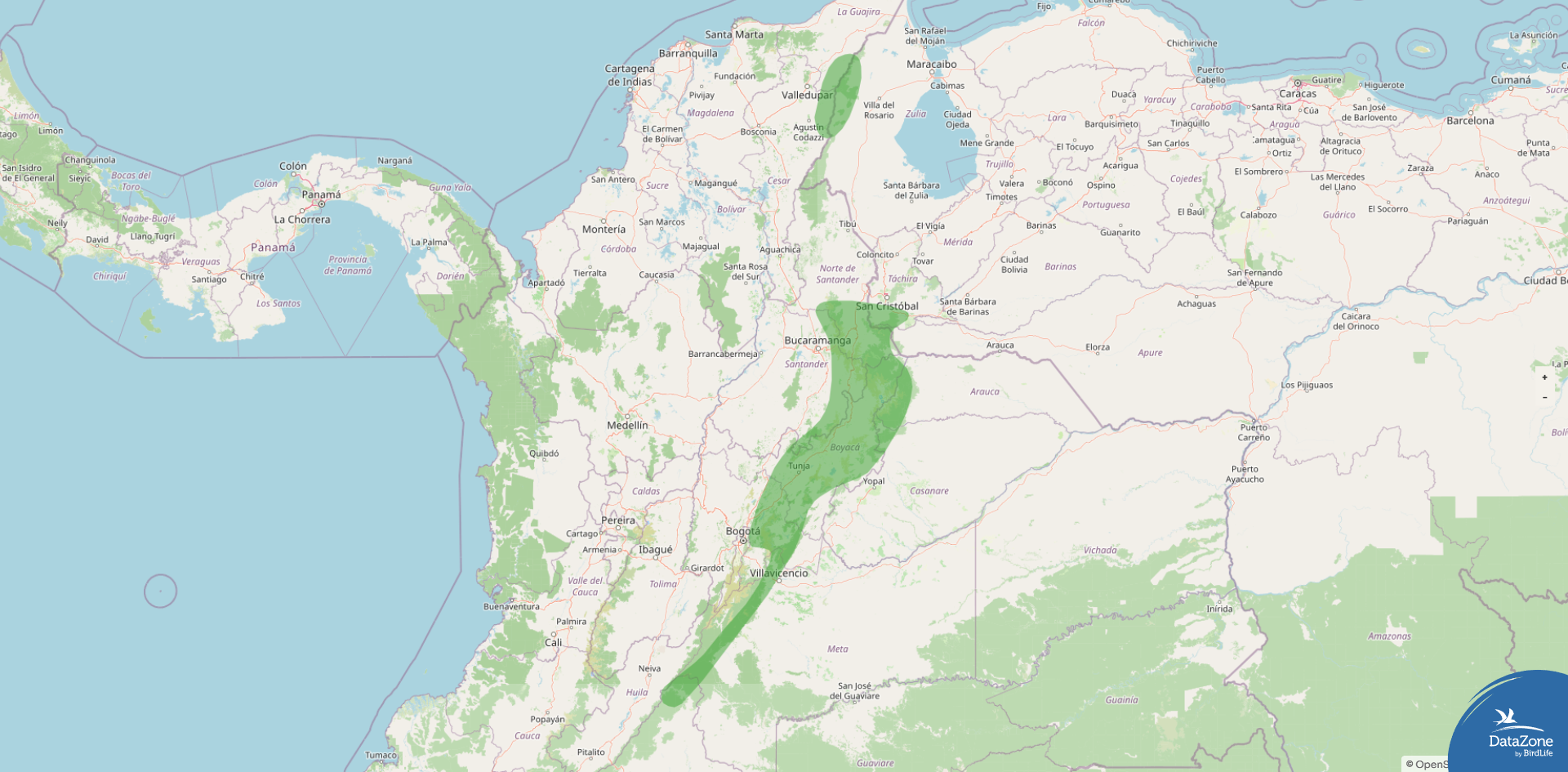
Legend
Green Resident
Species Overview
Longuemare’s Sunangel is a compact, highland hummingbird that favors cool, moist montane habitats with a mix of forest edge, scrub, and open bushy slopes. It is often encountered along trails, ravines, and clearings where flowering shrubs are abundant. Despite its moderately wide range, it is declining where cloudforest and elfin forest are cleared or degraded.
Male Description
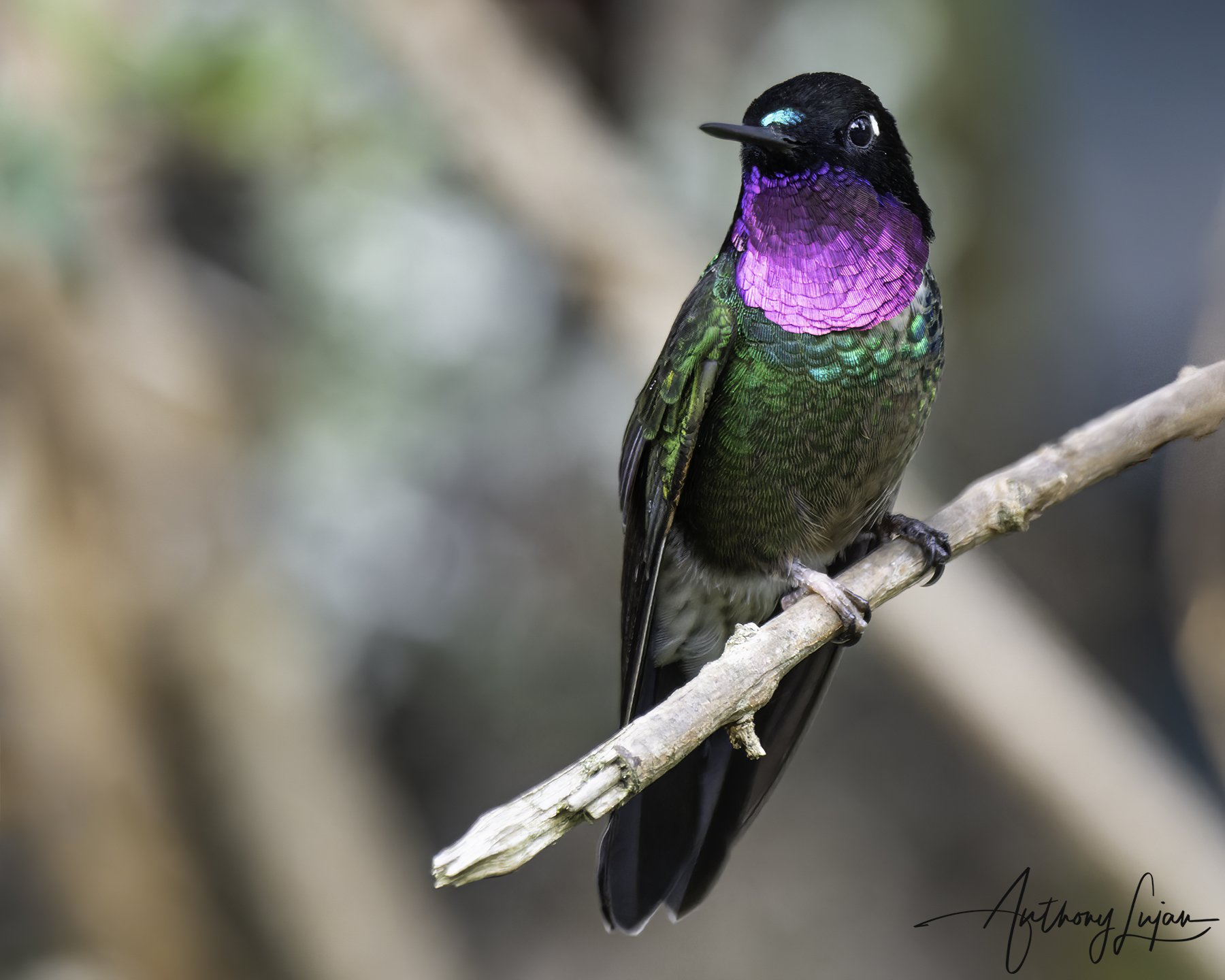
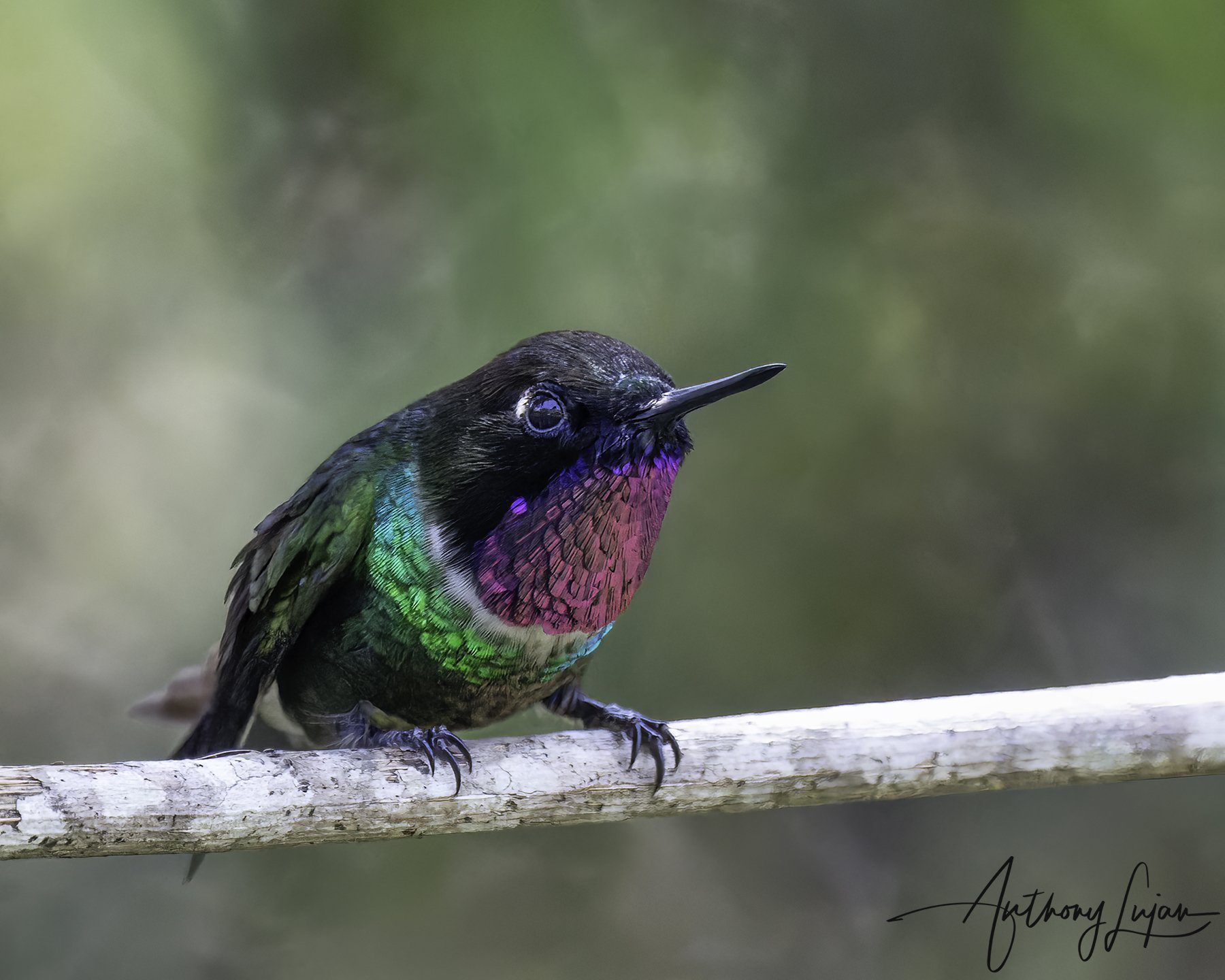
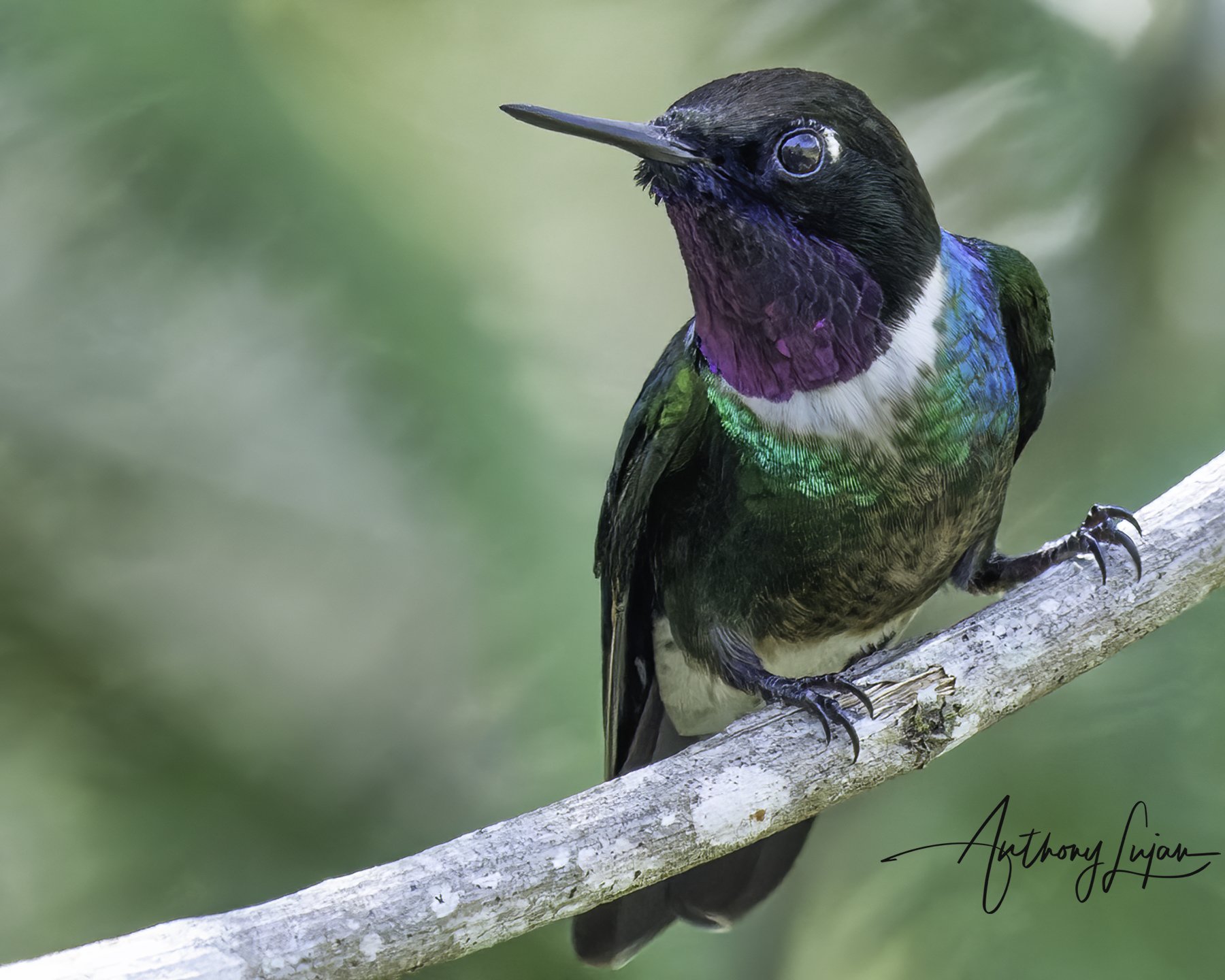
Adult males are small with a straight black bill. The crown is dusky to dark, and the upperparts are dark bronzy green. The throat and upper breast bear a glittering violet to blue-violet gorget, often sharply defined against darker underparts. The belly and flanks are darker greenish to grayish, sometimes with a slight bronzy sheen. The tail is fairly short and slightly forked, dark with a metallic gloss. In the field, males appear as dark, compact hummingbirds whose throats flash bright violet-blue when they turn into the light.
Female Description
Adult females are duller, with green upperparts and a more patterned underside. The throat and upper breast are buffy or grayish with fine dark speckling, and the rest of the underparts are pale buff to whitish with some mottling on the sides. The tail is dark with paler or grayish tips on the outer feathers. Females therefore appear as small green-backed hummingbirds with softly scaled, pale underparts and a modest, dark tail, lacking the strong violet gorget of the male.
Habitat & Behavior
Longuemare’s Sunangels primarily occupy the edges of humid cloudforest and elfin forest, as well as more open areas such as fields with scattered trees, open woodland, brushy ravines, and páramo scrub. They typically forage at low to mid-levels (up to several meters above the ground), visiting flowering shrubs, herbs, and small trees for nectar and also taking small insects. Individuals often defend dense nectar patches, chasing away other hummingbirds from favored flowers. The species is considered resident throughout its range, with no major migratory movements known, though local shifts may follow flowering patterns and seasonal changes in resource availability.
Population
The total number of mature individuals is unknown, but the species occurs patchily along the Eastern Andes of Colombia and into western Venezuela, including the Perijá region. It can be locally common in suitable habitat, yet deforestation, agricultural expansion, and changes in land use are reducing and fragmenting the cloudforest and elfin forest it relies on. As a result, the overall population is thought to be decreasing.

Conservation
Longuemare’s Sunangel is assessed as Least Concern because of its relatively wide distribution, but its decreasing trend and dependence on high-montane forest edges and scrub are causes for attention. Clearing of cloudforest and elfin forest for agriculture, cattle, and infrastructure, as well as uncontrolled burning in páramo zones, reduce available habitat. Conservation measures that protect montane forest, maintain shrubby edges and ravines, and limit further habitat conversion will benefit this species and other Andean sunangels.
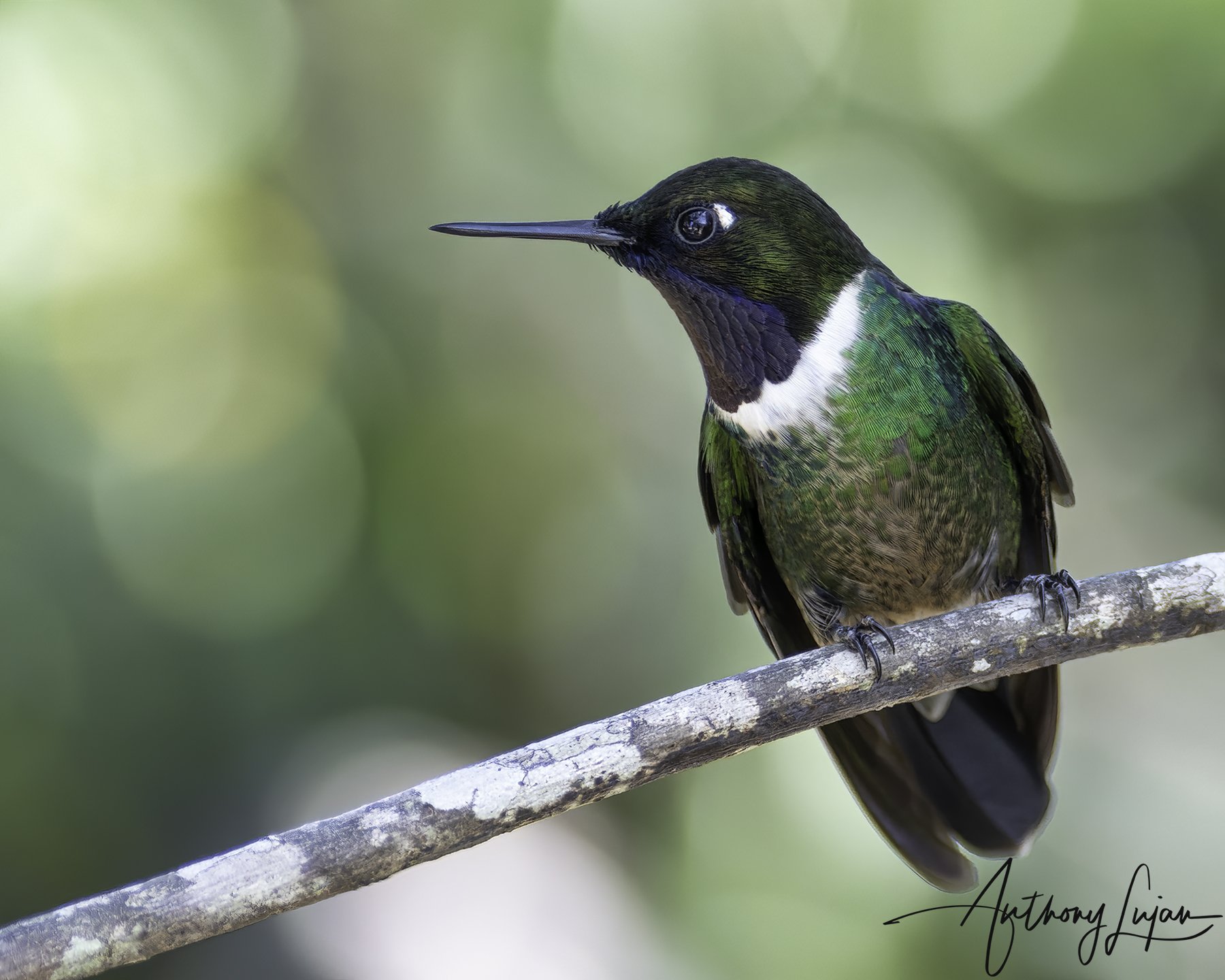
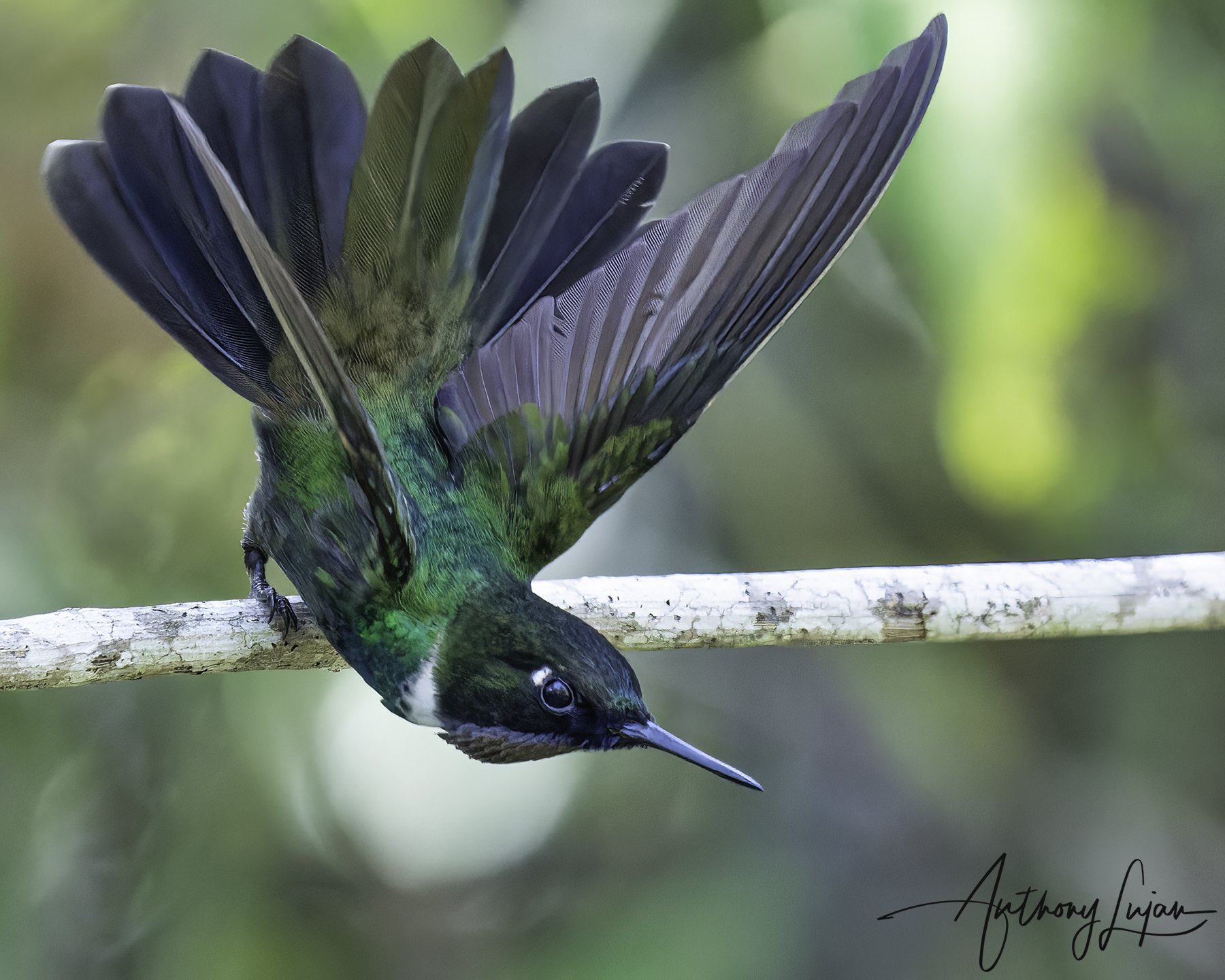
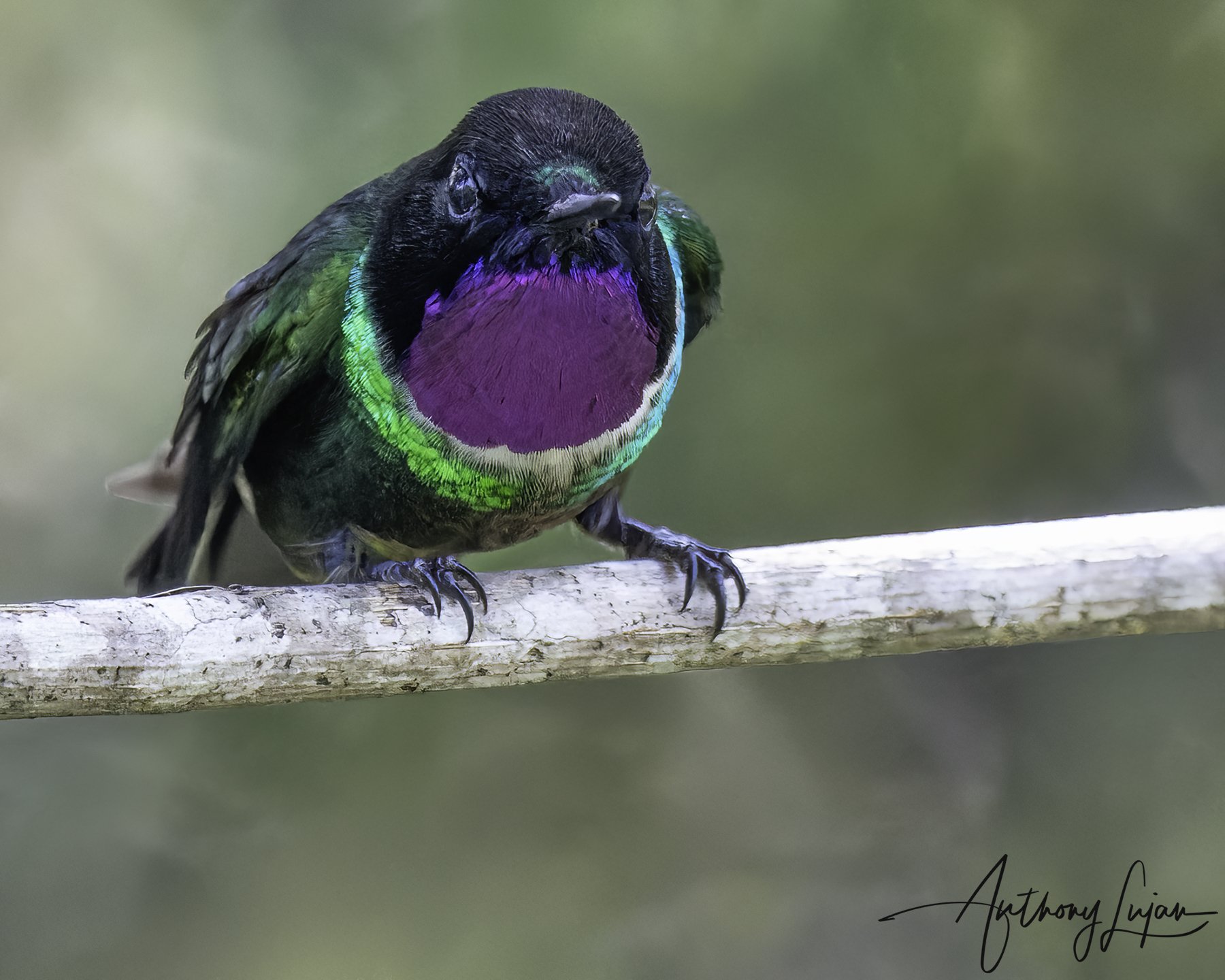
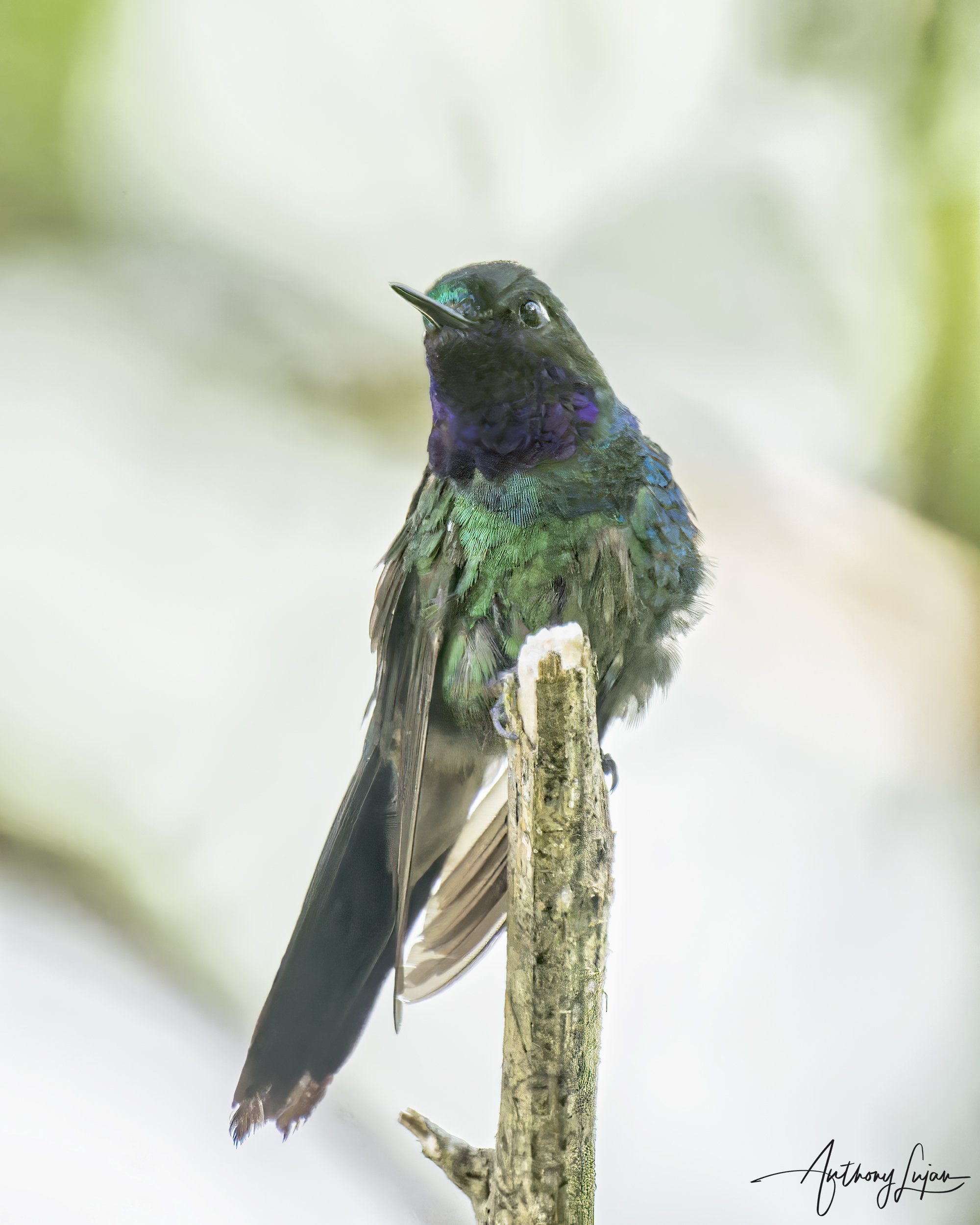
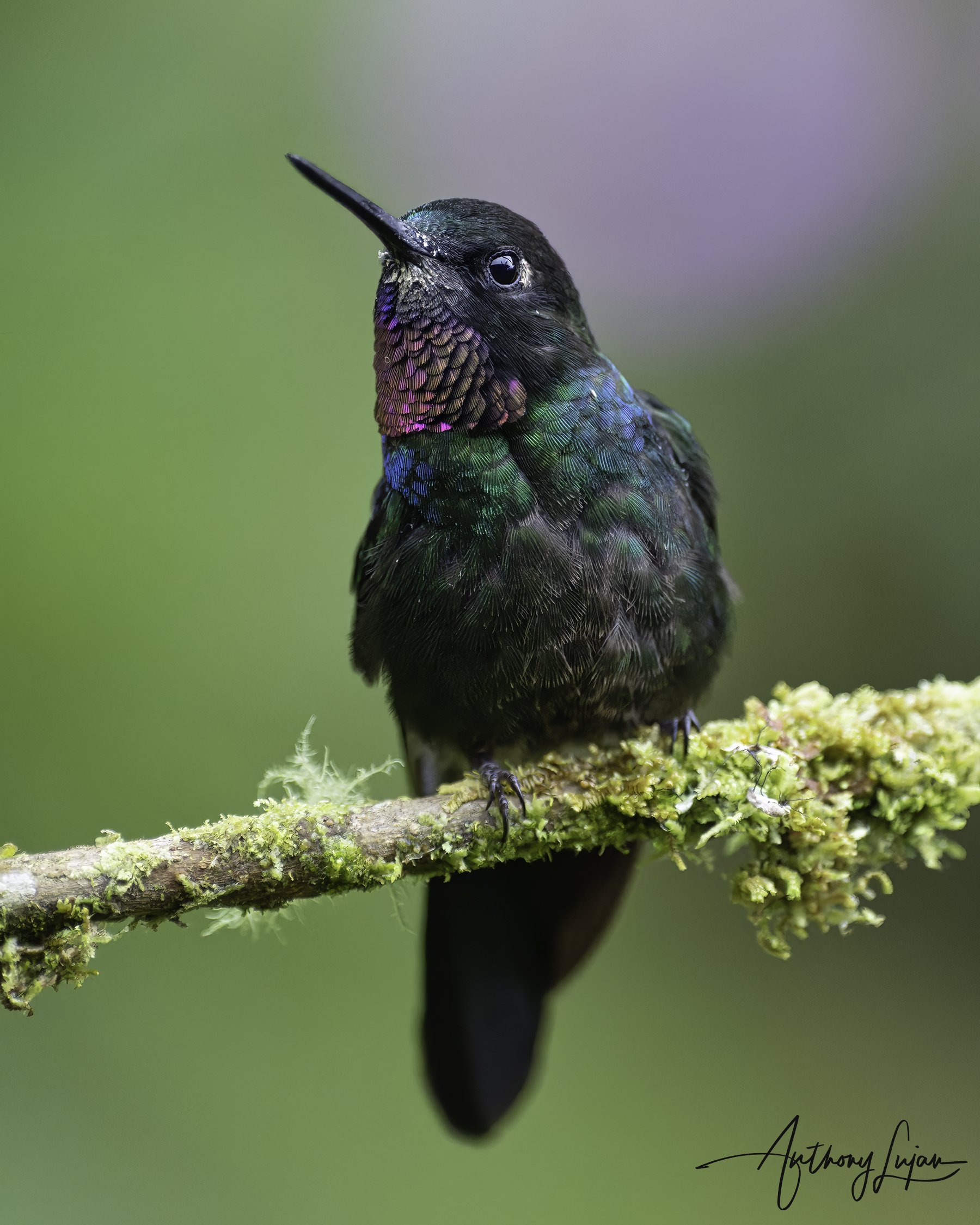
Below is the Longuemare’s Sunangel (Heliangelus clarisse clarisse)
Photographed at Observatorio de Colibríes (Cundinamarca)
These individuals belong to the subspecies clarisse, which is found throughout the Eastern Andes of Colombia, including Cundinamarca. It inhabits humid montane cloudforest, shrubby slopes, and forest edges between roughly 1,800 and 3,300 meters. This form shows a blue-green frontlet and a reddish-violet gorget with a distinct white pectoral band. Females are duller with less iridescence and reduced throat coloration.
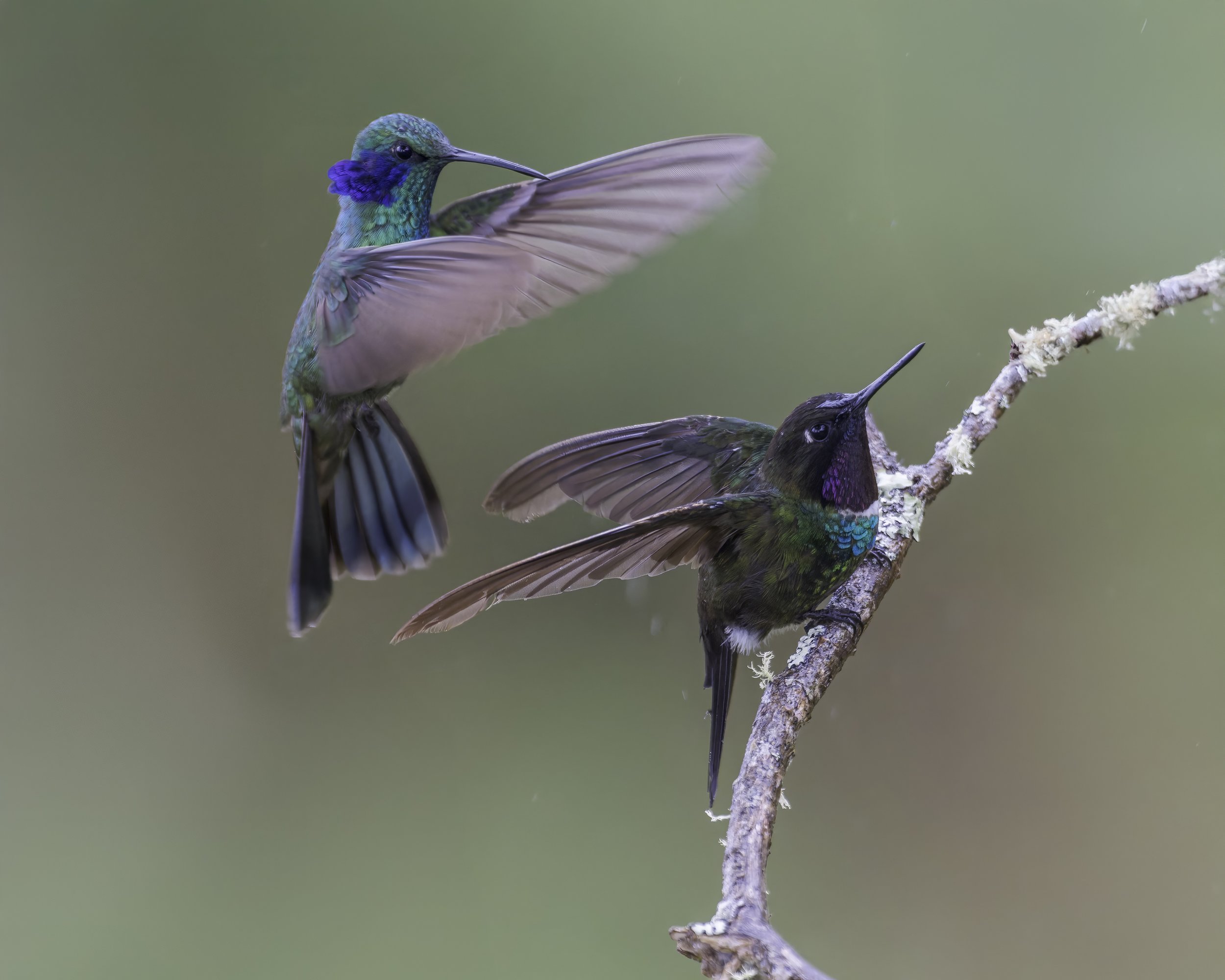
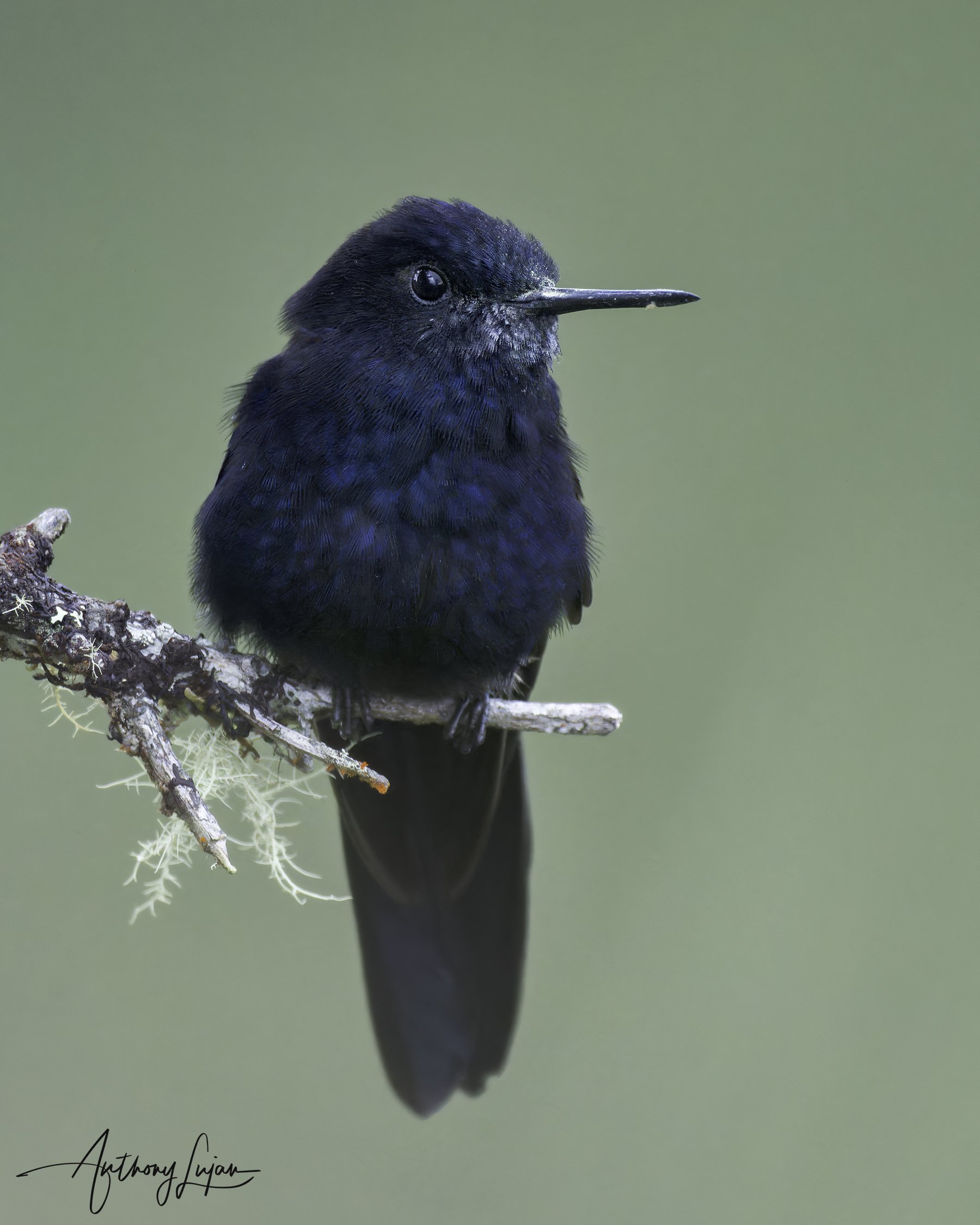
Below is the Longuemare’s Sunangel (Heliangelus clarisse violiceps)
Photographed in ProAves Manaure, Cesar, Colombia
These individuals belong to the subspecies violiceps, which is restricted to the Sierra de Perijá along the Colombia–Venezuela border. This form shares much of the same habitat structure as the nominate but may show differences in the intensity of the gorget color and crown iridescence. Specific diagnostic distinctions are subtle and require direct comparison in the field.
Related species in the Heliangelus genus (9 species total):
Please note: The content provided in this article reflects Anthony’s personal experience and photographic approach. Results can vary depending on light, weather, location, equipment, subject behavior, and field conditions.