

Scientific name: Campylopterus villaviscensio
The Napo Sabrewing is a localized Andean foothill hummingbird found from southern Colombia through eastern Ecuador into northeastern Peru. The number of mature individuals is unknown, the population is believed to be decreasing, and it is listed as Least Concern, monotypic, non-migratory, and tied to humid montane and foothill forests on the east slope of the northern Andes.
At a Glance
Family: Trochilidae (hummingbirds)
Clade: Trochilini – Emeralds
Genus group: Campylopterus — 10 species, 6 subspecies
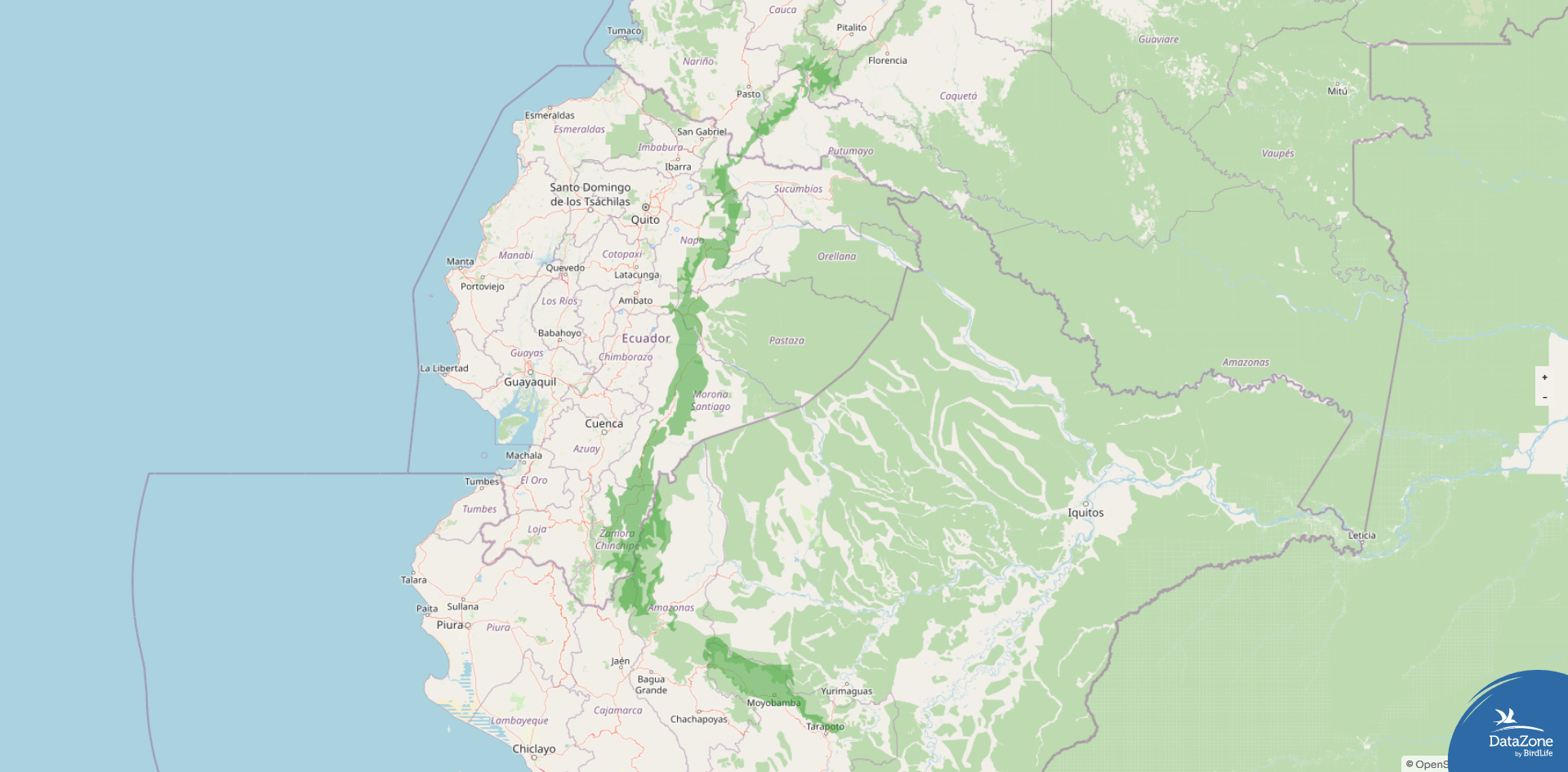
Range: East slope of the northern Andes from southern Colombia through eastern Ecuador into northeastern Peru (as far south as San Martín).
Habitat: Humid montane forest, elfin forest, and secondary forest, mostly on the Andean foothills and lower slopes.
Elevation: Mainly from about 1,000–1,800 m, occasionally as low as 780 m in southern Colombia.
Length: About 13.5 cm (5.3 in).
Weight: Males about 7.4–9.3 g; females about 5.2–7.4 g.
Number of mature individuals: Unknown
Population trend: Decreasing
Status: Least Concern (IUCN)
Name Origin
The genus name Campylopterus means “curved wing,” referring to the thickened, sabre-shaped outer primaries that define sabrewings. The species name villaviscensio honors Villavicencio (or a related name), likely referencing a locality or individual connected to the bird’s discovery. The English name “Napo Sabrewing” refers to the Napo region and river system in the upper Amazon drainage, which overlaps much of the species’ range.
Subspecies & Distribution
The Napo Sabrewing is monotypic, with no recognized subspecies.
Occurs on the east slope of the northern Andes from southern Colombia through eastern Ecuador into northeastern Peru as far as San Martín Department. It inhabits humid montane and elfin forests and secondary forest within this narrow Andean foothill band.
Overall, the species forms a relatively narrow distribution along the east slope of the northern Andes, closely associated with humid foothill and lower montane forests of Colombia, Ecuador, and northeastern Peru.
Ledged
Green Resident
Species Overview
The Napo Sabrewing is a large, powerful hummingbird of humid Andean foothill forests, often considered uncommon and patchily distributed across its range. It favors evergreen and elfin forests and their regenerating counterparts, typically between about 1,000 and 1,800 m, where it forages from the understory to mid-levels. Although it occupies several countries, its range is geographically narrow and its habitat is under pressure from logging, mining, and agricultural expansion, which is driving a decreasing population trend despite its current Least Concern status.
Male Description
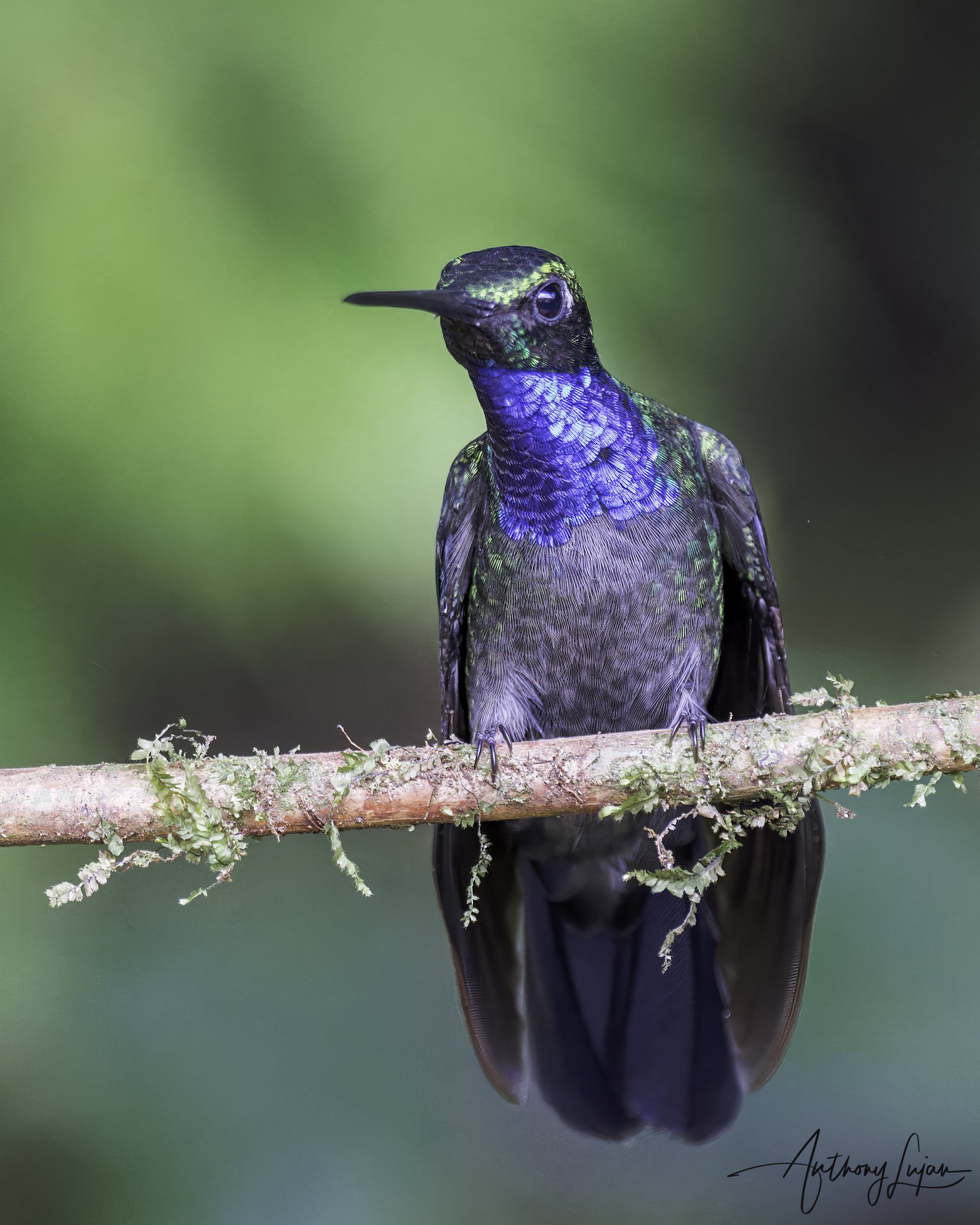
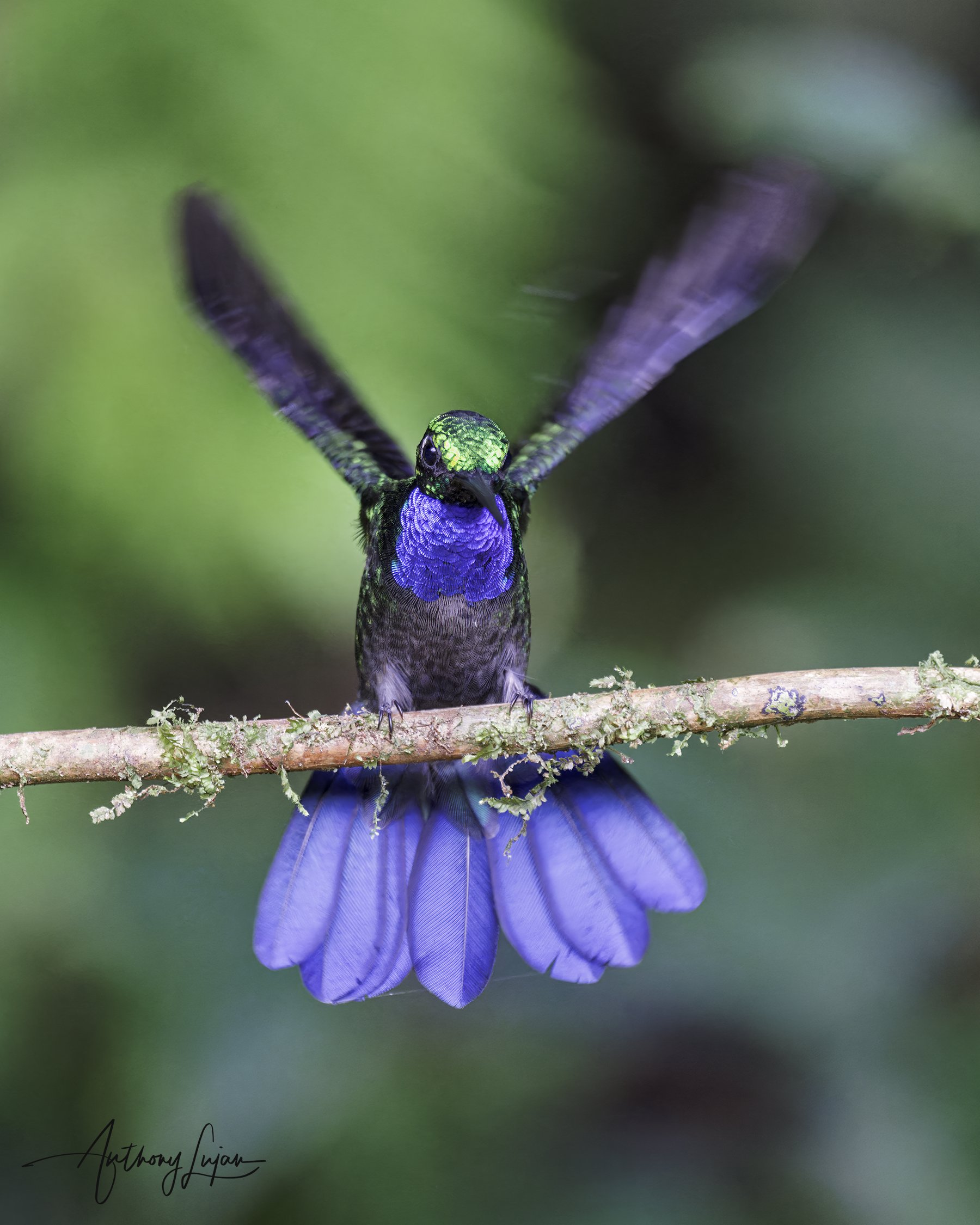
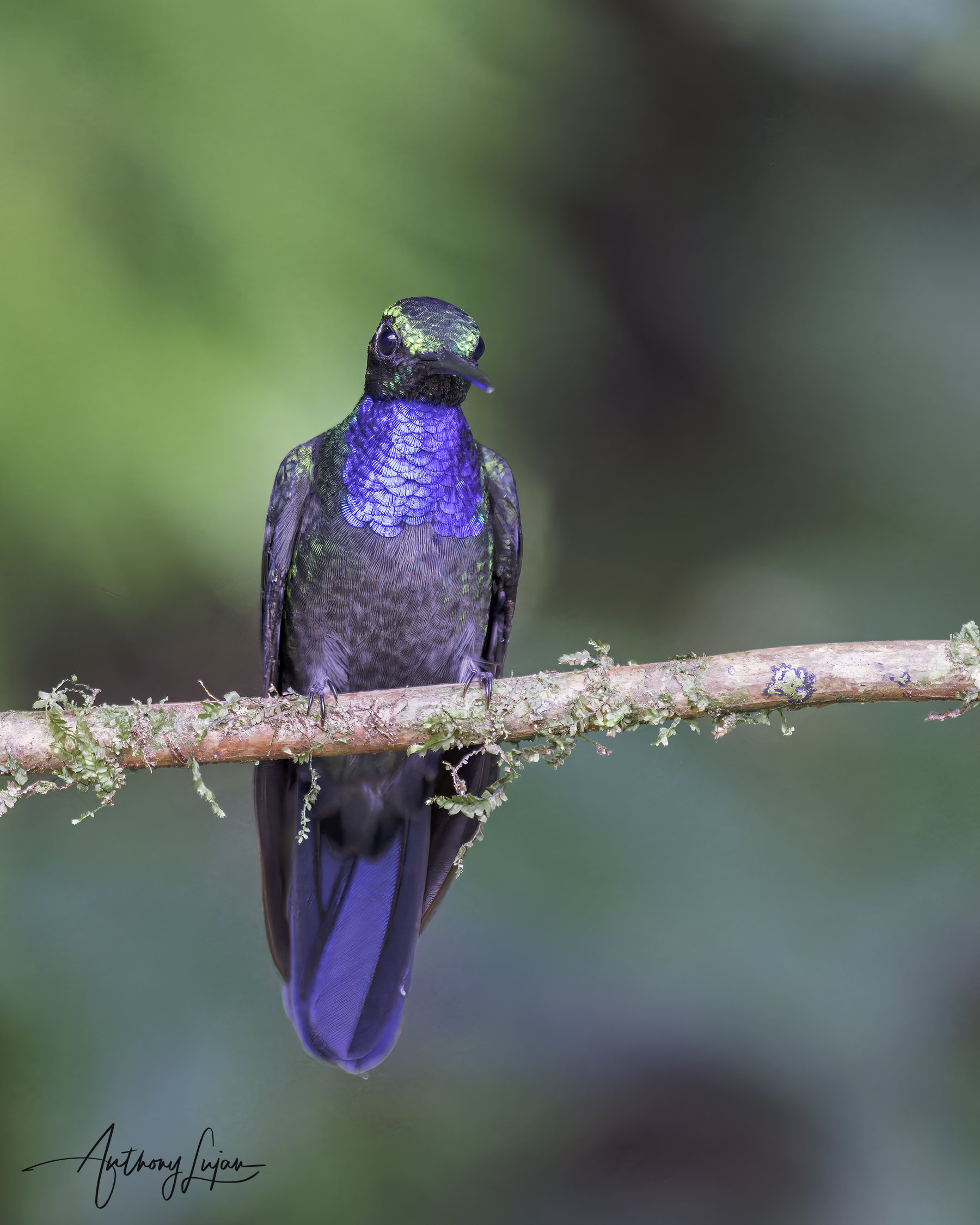
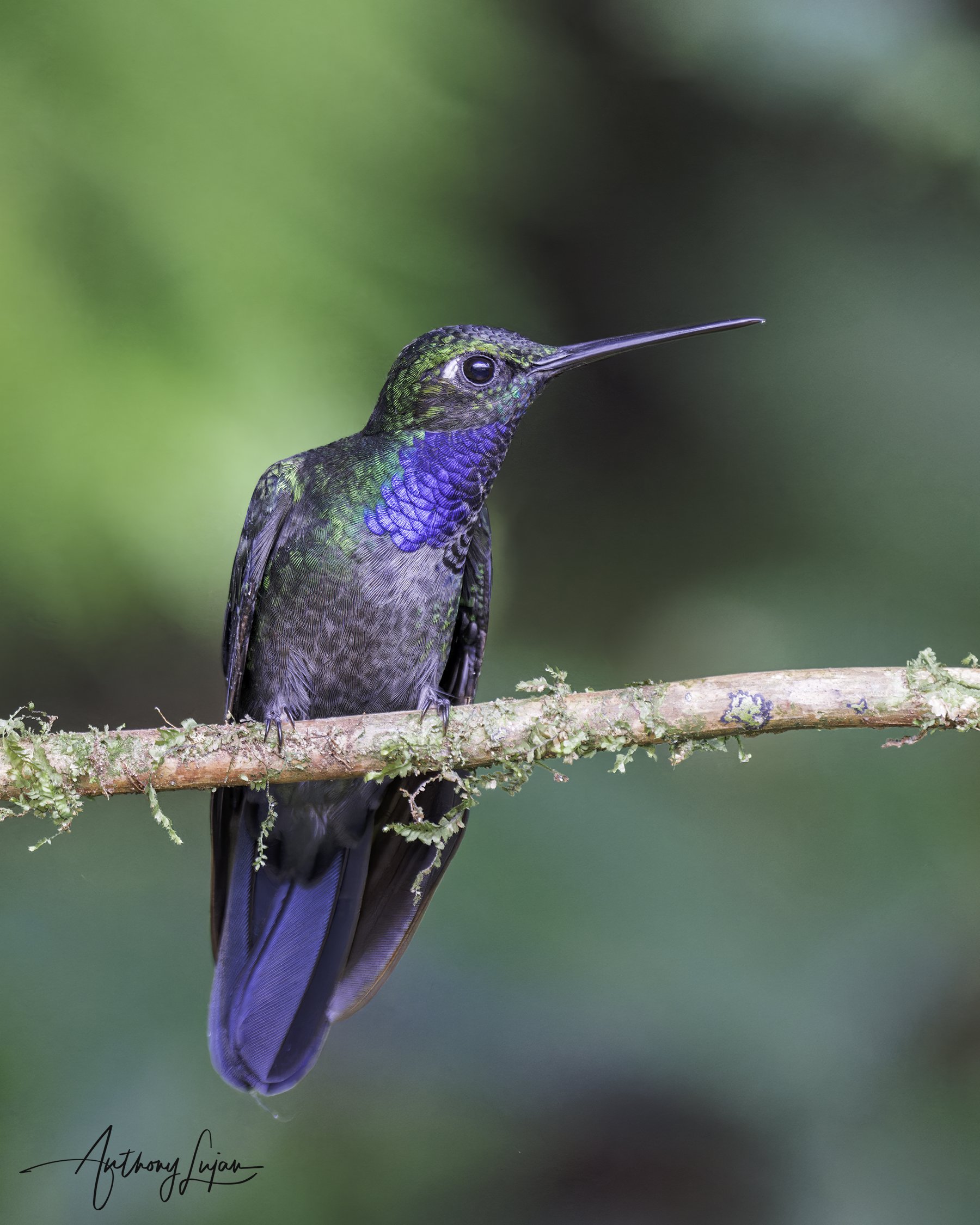
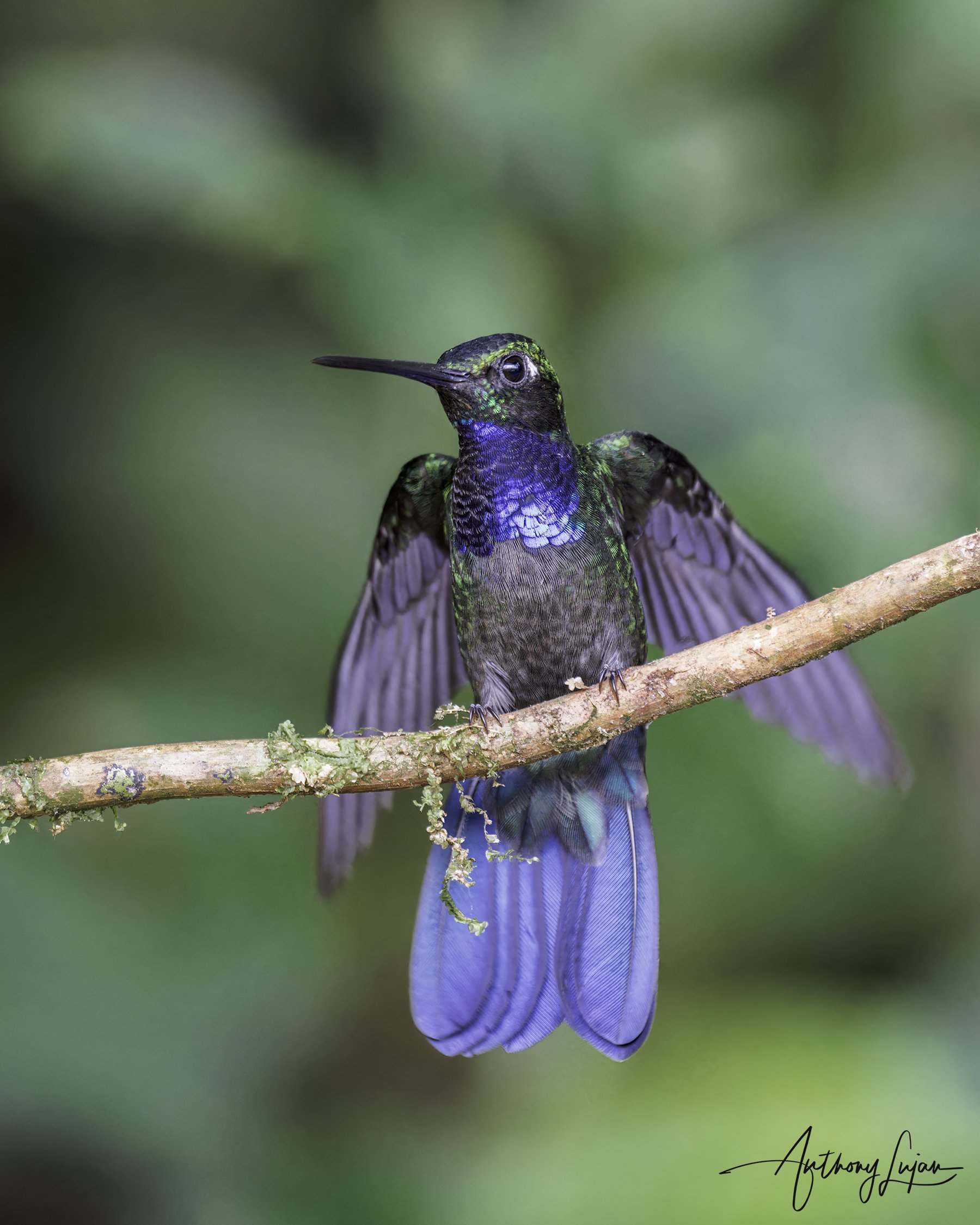
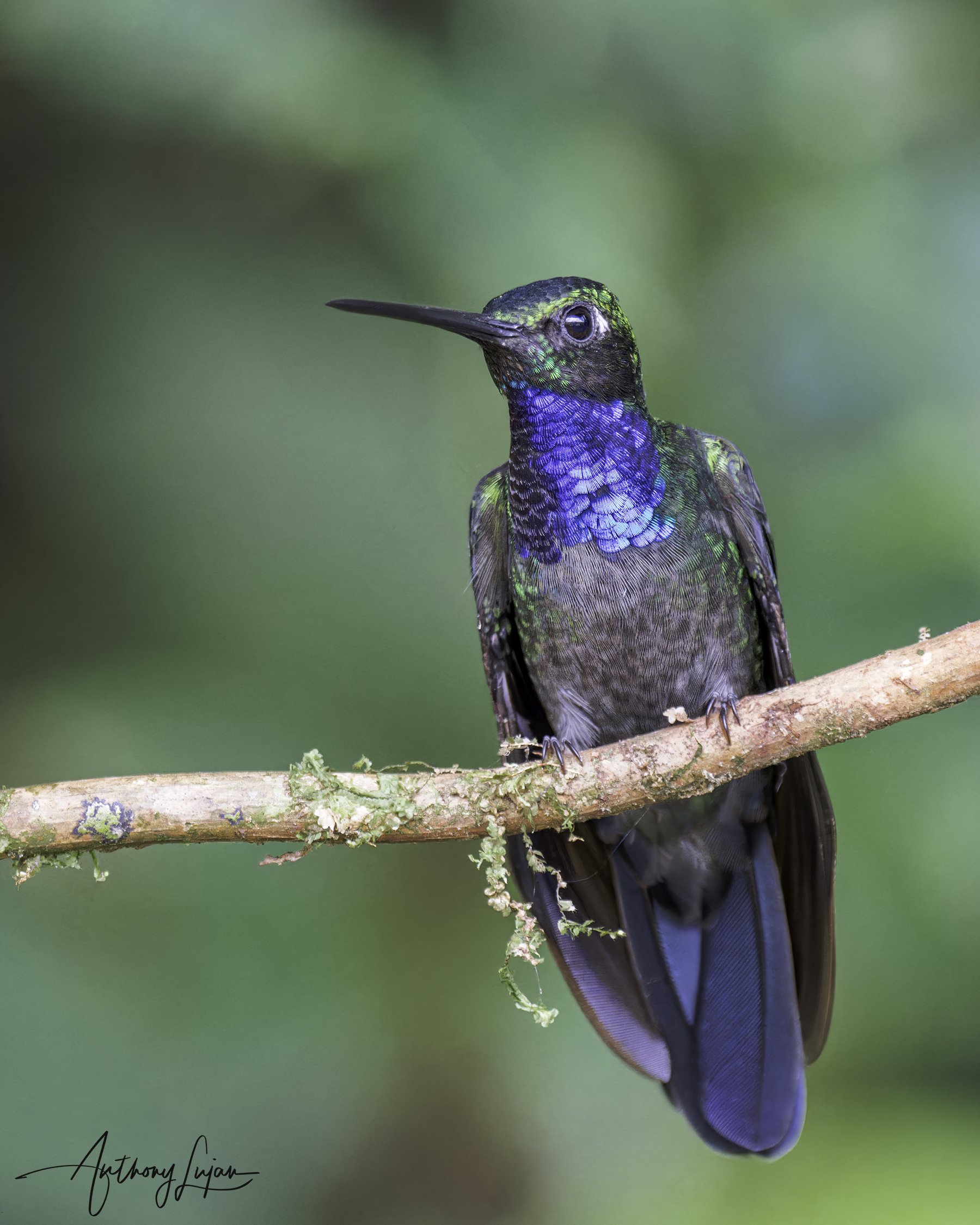
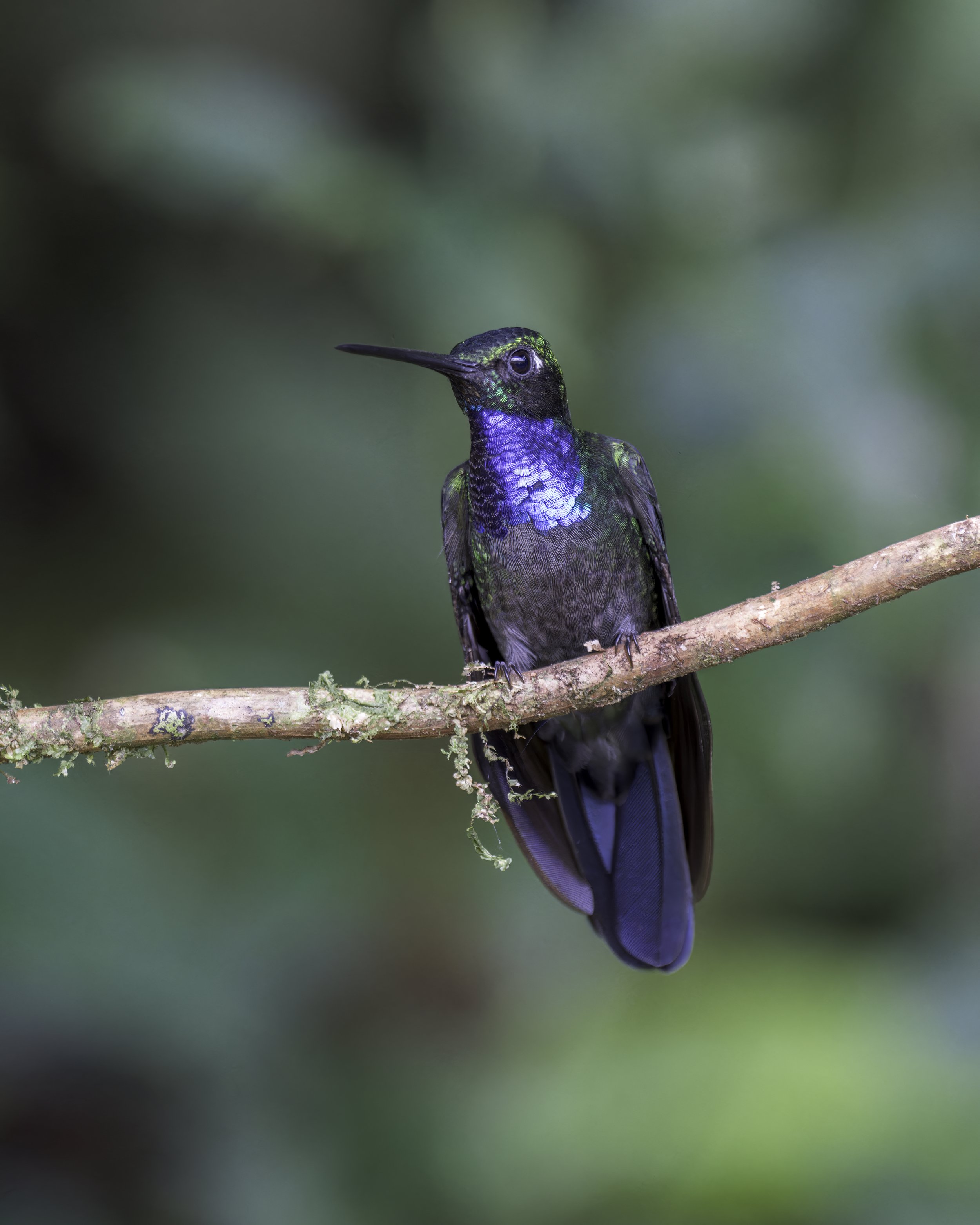
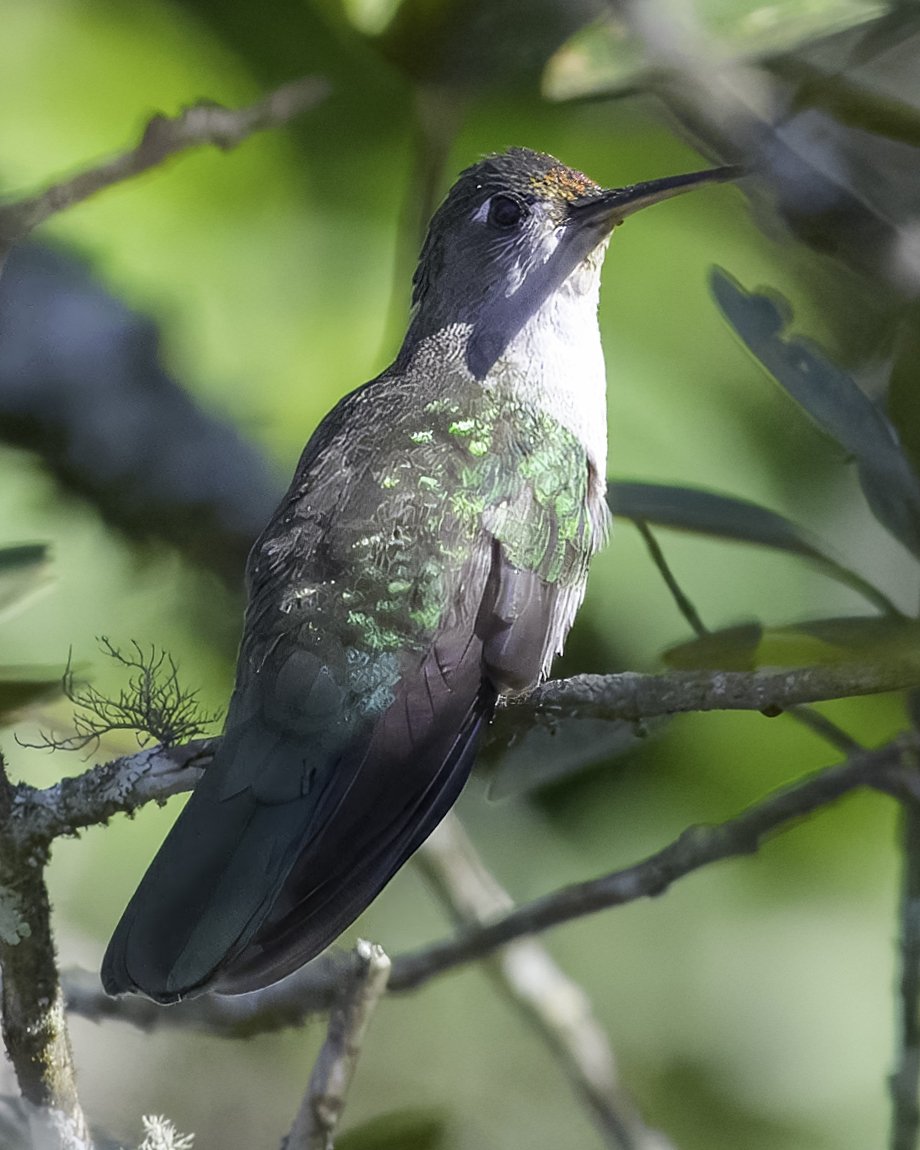
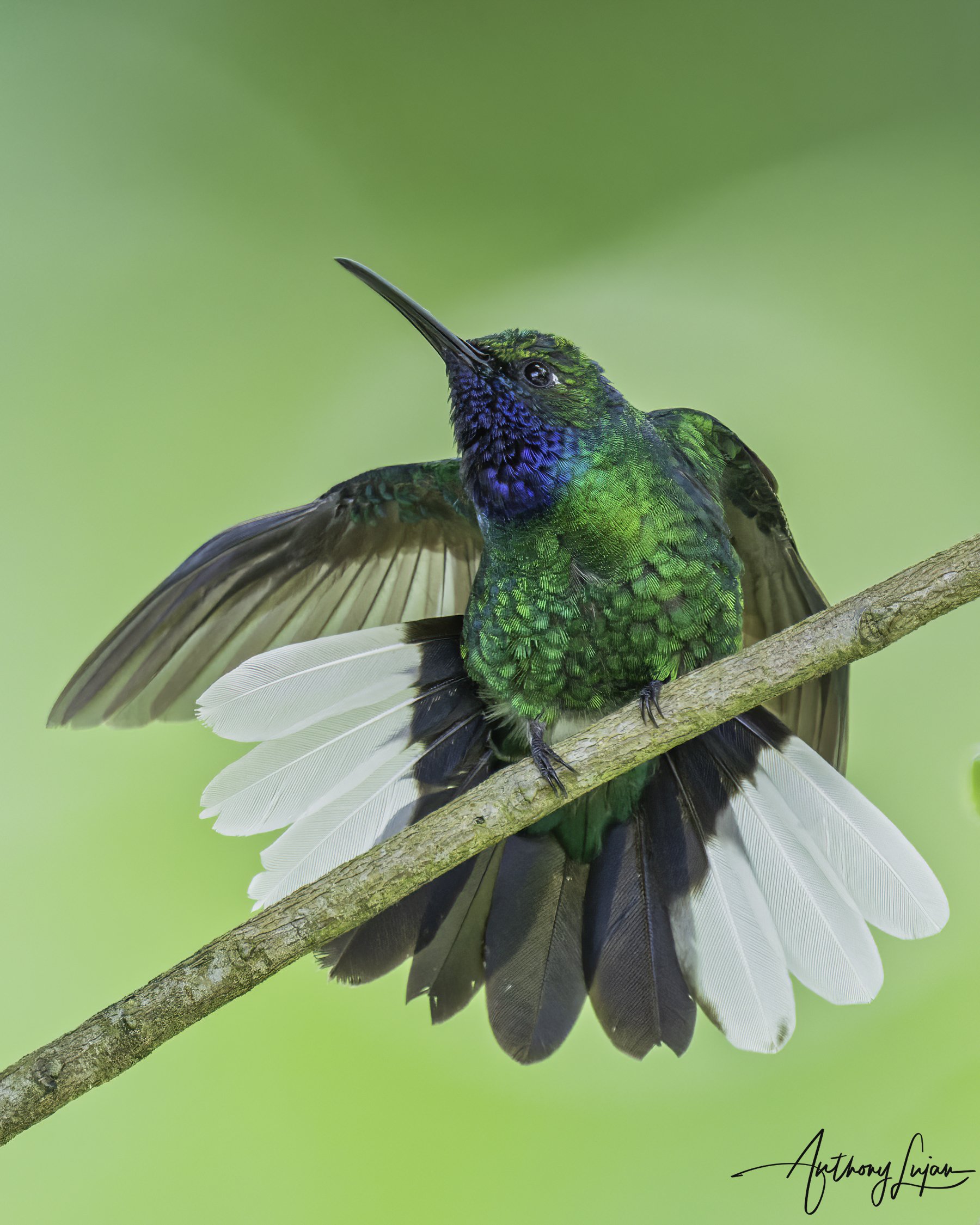
Adult males are large sabrewings with an almost straight black bill and a small white spot behind the eye. The crown is glittering golden green and the rest of the upperparts are bronzy green. The throat and chest are dark violet-blue, contrasting with dark gray underparts marked with green spots, especially on the flanks. The tail has bronze-green central feathers and dark blue outer feathers. In life, males appear as robust, green-backed hummingbirds with a bright golden-green crown, deep violet-blue front, dusky spotted belly, and a dark, bluish tail.
Female Description
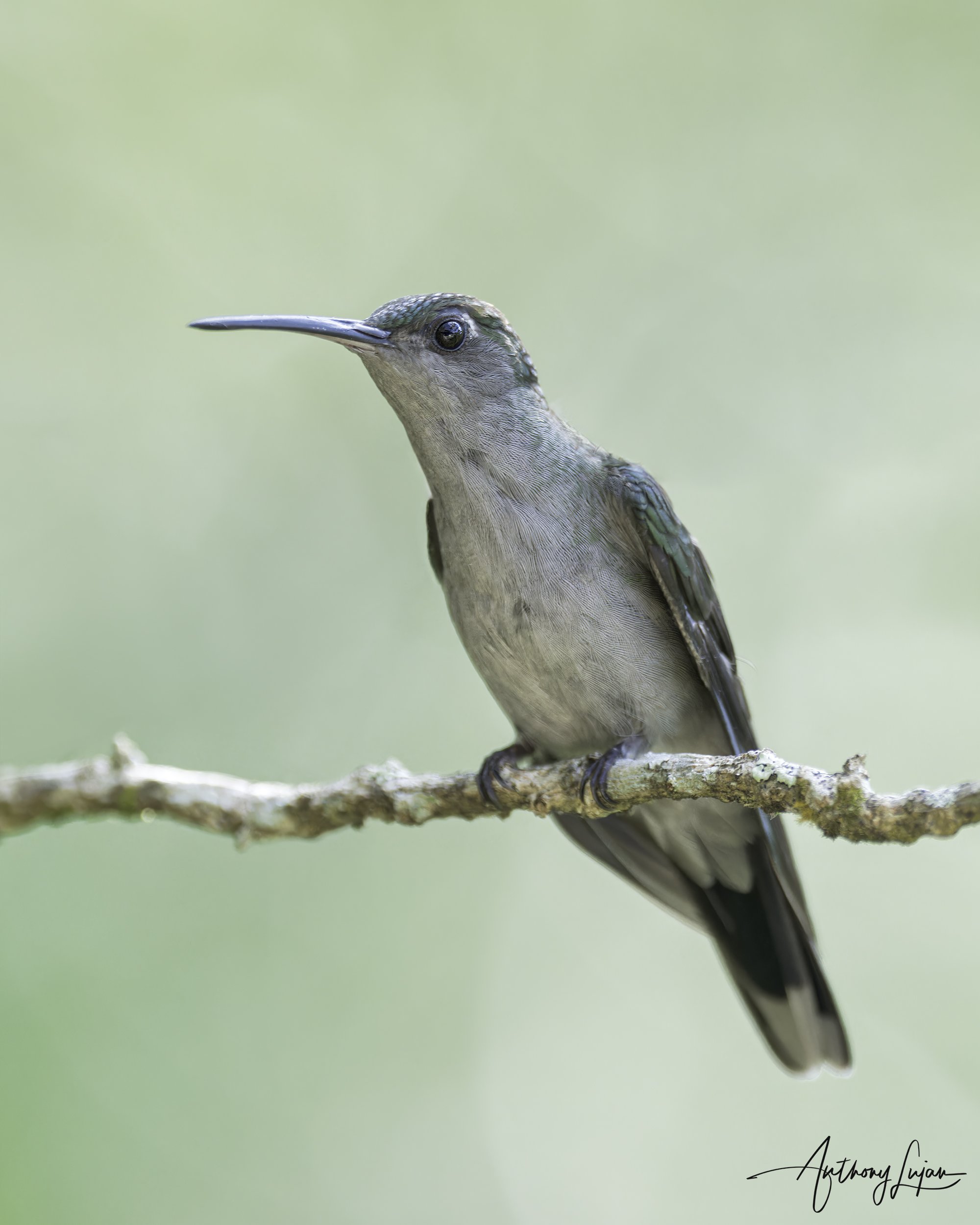
Females have entirely emerald green upperparts and gray underparts, lacking the intense violet-blue throat and chest of the male. The tail is blue-green with whitish-gray tips to the feathers, rather than the fully dark blue tail of the male. Both sexes share the white post-ocular spot and strong, sabre-like wings, but females look overall greener above and plainer, gray-bellied below.
Habitat & Behavior
Napo Sabrewings inhabit humid montane forest, elfin forest, and secondary forest on the east slope of the northern Andes and adjacent foothills. They forage for nectar from the understory to the mid-strata of the forest, taking flowers from shrubs, small trees, and epiphytes, and often following a trap-line route between feeding sites. In addition to nectar, they feed on small insects, typically hawking them from perches within the forest. The species is considered largely sedentary within its range, with no documented long-distance migration, though local movements along the elevational gradient are possible as flowering patterns shift.
Population
The total number of mature Napo Sabrewings is unknown, but the species is described as rare to uncommon along the east slope of the northern Andes. It has a moderately small range and inhabits forests that are increasingly threatened by habitat loss and degradation. These pressures are believed to be causing a decreasing population trend, though exact rates of decline are not yet well quantified.

Conservation
Napo Sabrewing is assessed as Least Concern, but its narrow, foothill Andean range and dependence on humid montane and elfin forests make it vulnerable to ongoing habitat loss. Principal threats include mining, logging, and conversion of forest to agriculture and pasture, which reduce and fragment suitable habitat along the east slope of the Andes. Conservation actions should prioritize protecting remaining foothill and montane forests, regulating land-use changes such as mining and logging, and maintaining forested corridors along the elevational gradient. Continued field surveys and monitoring will be important to refine population estimates, track trends, and inform future conservation assessments.
Related species in the Campylopterus genus (10 species total):



Please note: The content provided in this article reflects Anthony’s personal experience and photographic approach. Results can vary depending on light, weather, location, equipment, subject behavior, and field conditions.