
Scientific name: Lafresnaya lafresnayi
The Mountain Velvetbreast is a medium-sized, long‑billed hummingbird of humid montane forests, forest edges, and high Andean shrublands from Venezuela south through Colombia and Ecuador into central Peru. The total number of mature individuals is unknown, the overall population trend is decreasing, it is considered an altitudinal migrant, and it is currently assessed as Least Concern.
At a Glance
Family: Trochilidae (hummingbirds)
Clade: Heliantheini – Brilliants
Genus: Lafresnaya — monotypic (1 species)
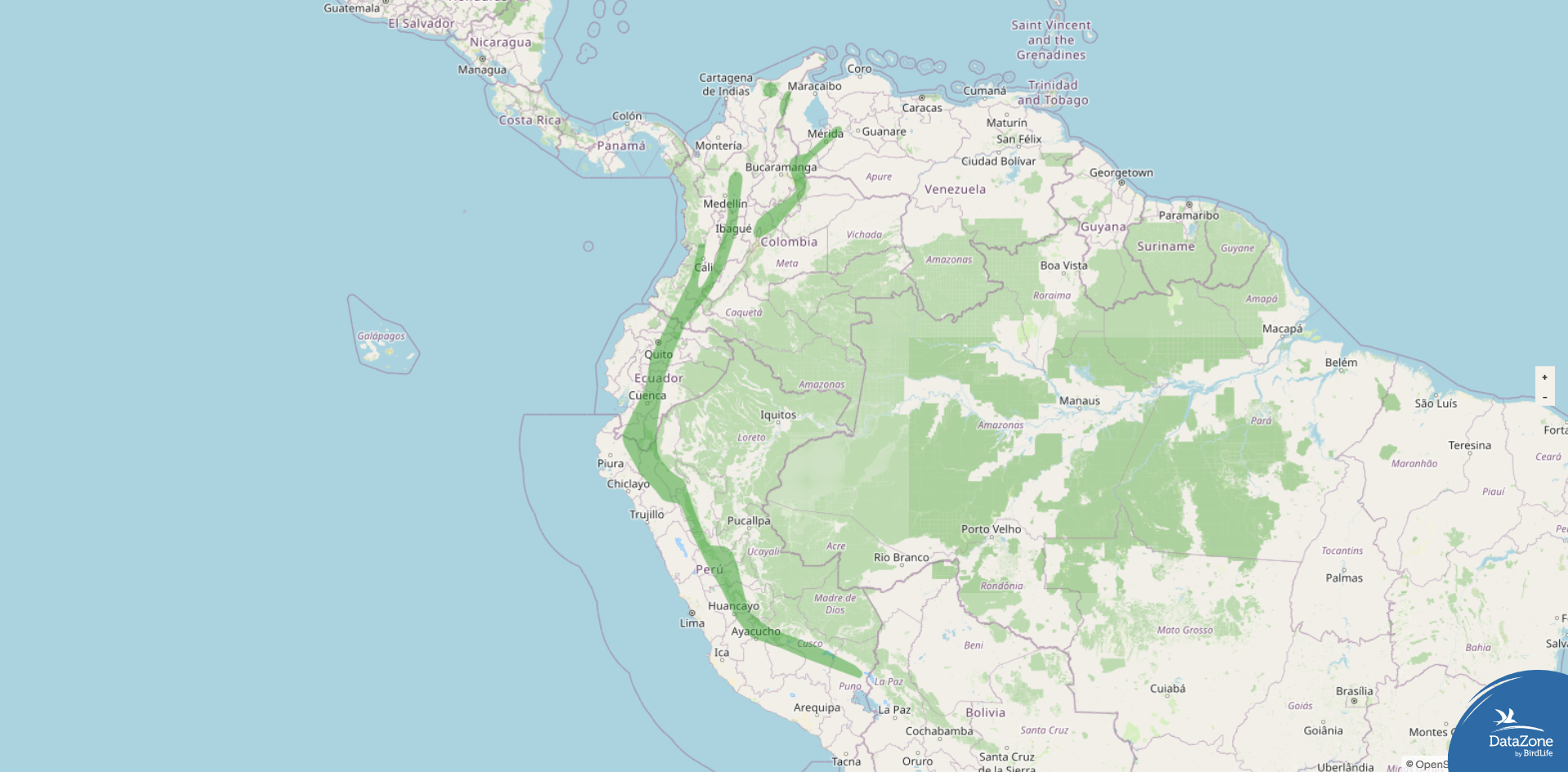
Range: Andes of Venezuela, Colombia, Ecuador, and Peru
Habitat: Humid montane forest and cloud forest edges, shrubby slopes, subpáramo and páramo scrub, and areas with abundant flowering shrubs and trees
Elevation: Generally from about 1,800 to 3,400 m (5,900–11,200 ft); locally up to around 3,700 m in Ecuador; most numerous between roughly 2,000 and 2,800 m
Length: About 12 cm (4.7 in)
Weight: About 5–6 g (0.18–0.21 oz)
Number of mature individuals: Unknown
Population trend: Decreasing
Movement: Altitudinal Migrant
IUCN Red List category: Least Concern
Name Origin
The genus name Lafresnaya commemorates Baron de La Fresnaye, a French ornithologist and collector in the 19th century. The species name lafresnayi is the Latinized form of the same name, effectively repeating the honor. The English name “Mountain Velvetbreast” refers to the bird’s montane distribution and the velvety black underparts of some subspecies, especially the nominate form.
Taxonomy & Distribution
Lafresnaya lafresnayi belongs to the “brilliants,” tribe Heliantheini, within the hummingbird family Trochilidae. It is the only species in the genus Lafresnaya; no other species are currently recognized in this genus or “family‑level” group as you’ve framed it in your template. The Mountain Velvetbreast is distributed discontinuously along the Andes from northern Venezuela through Colombia and Ecuador into central Peru, with several subspecies replacing one another geographically. It primarily inhabits humid montane and cloud‑forest edges and adjacent shrubby habitats at mid to high elevations.
Subspecies and Distribution
Seven subspecies:
Lafresnaya lafresnayi liriope
Distribution: Sierra Nevada de Santa Marta, northern Colombia. This subspecies is restricted to this isolated coastal mountain range, where it inhabits humid montane forest edges and shrubby slopes.Lafresnaya lafresnayi longirostris
Distribution: Central Andes of northern Colombia (Antioquia region). Found mainly on Andean slopes of Antioquia and nearby departments, in humid montane forest edges and shrubby habitats.Lafresnaya lafresnayi greenewalti
Distribution: Andes of western Venezuela (Mérida and Trujillo). Occurs in the Cordillera de Mérida and adjacent ranges, in humid montane forest and subpáramo zones.Lafresnaya lafresnayi lafresnayi (nominate)
Distribution: Eastern Andes of Colombia and extreme southwestern Venezuela. Found from the Eastern Cordillera of Colombia southward, including adjacent Andean areas of southwestern Venezuela.Lafresnaya lafresnayi saul
Distribution: Southwestern Colombia south through Ecuador to extreme northern Peru. Occupies the Andes of southwestern Colombia, then along both slopes in Ecuador, continuing into very northern Peru.Lafresnaya lafresnayi orestes
Distribution: Eastern slopes of the Peruvian Andes (Amazonas to Huánuco). Occurs on the east slope of northern Peru south of the Marañón River, from Amazonas to Huánuco.Lafresnaya lafresnayi rectirostris
Distribution: Central Andes of Peru (south of Huánuco to Junín). Found further south in the Peruvian Andes, from central departments such as Huánuco south into Junín.
Legend
Green Resident
Species Overview
The Mountain Velvetbreast is a distinctive Andean hummingbird with a long, strongly decurved bill and a mostly white tail that is especially conspicuous in flight. It frequents humid montane and cloud‑forest edges, shrubby slopes, and high Andean scrub where flowering shrubs and small trees are abundant. Across much of its range it is uncommon to fairly common in suitable habitat, but habitat loss and changes in montane ecosystems are thought to be causing a gradual population decline.
Male Description
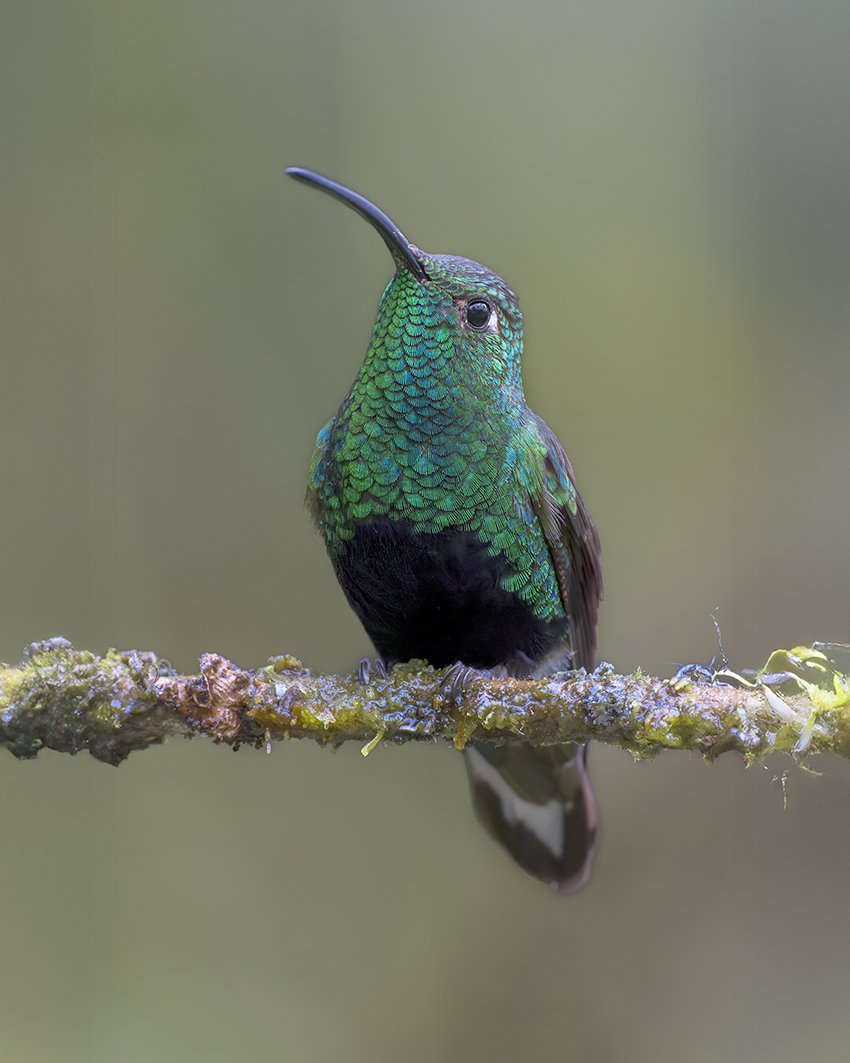
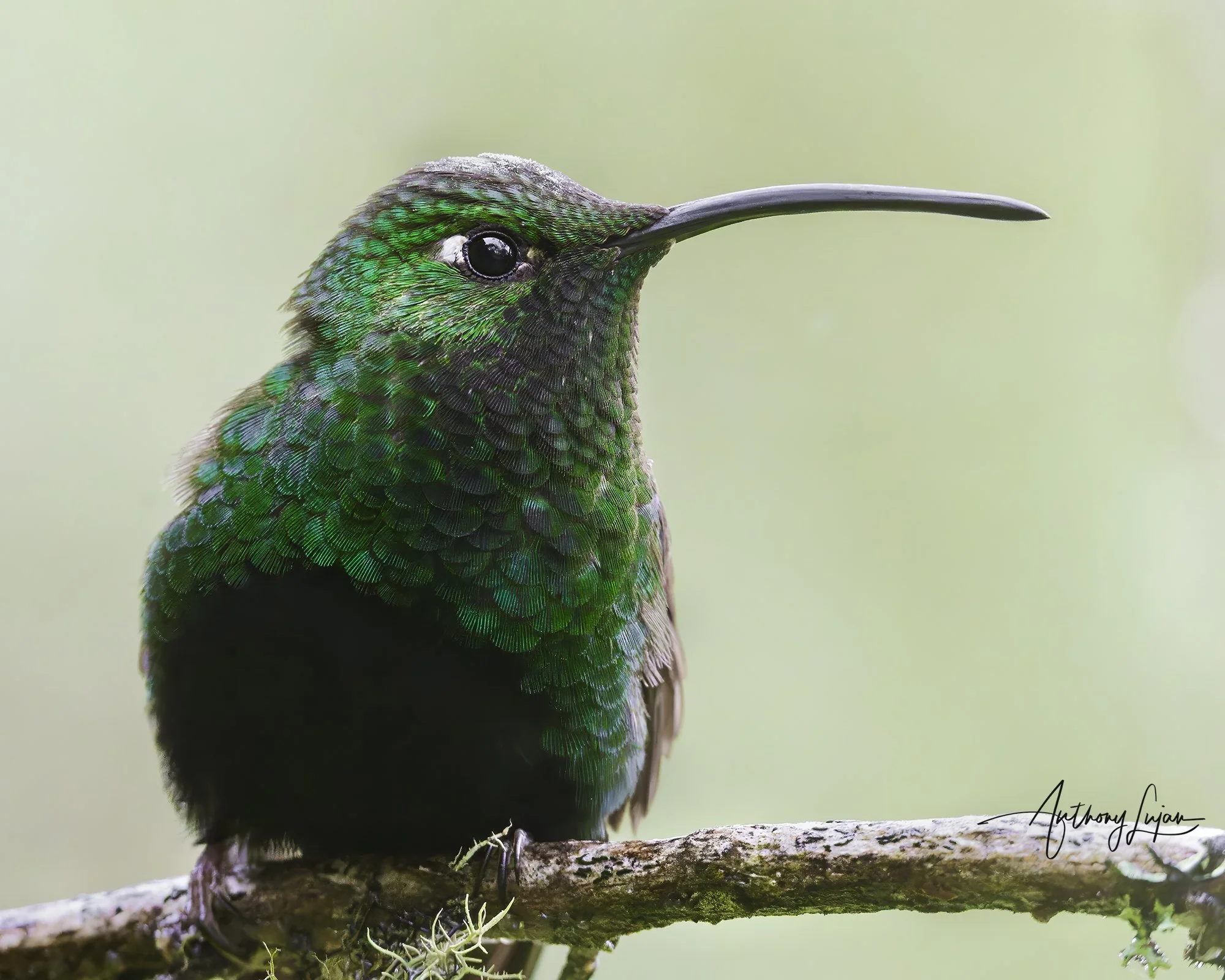
The Mountain Velvetbreast is about 12 cm long and weighs roughly 5–6 g. Plumage varies among subspecies, but males of the nominate form have bright grass‑green upperparts, including crown and back, and a shimmering emerald green throat and chest. The belly is deep, velvety black, giving the “velvetbreast” impression. The central tail feathers are bronzy green, while the outer tail feathers are buff to whitish with blackish tips, making the tail appear largely white in flight. The long bill is strongly decurved and black. Other subspecies differ in the exact tone and contrast of the underparts and tail, but the long decurved bill and mostly white tail remain key field marks.
Female Description
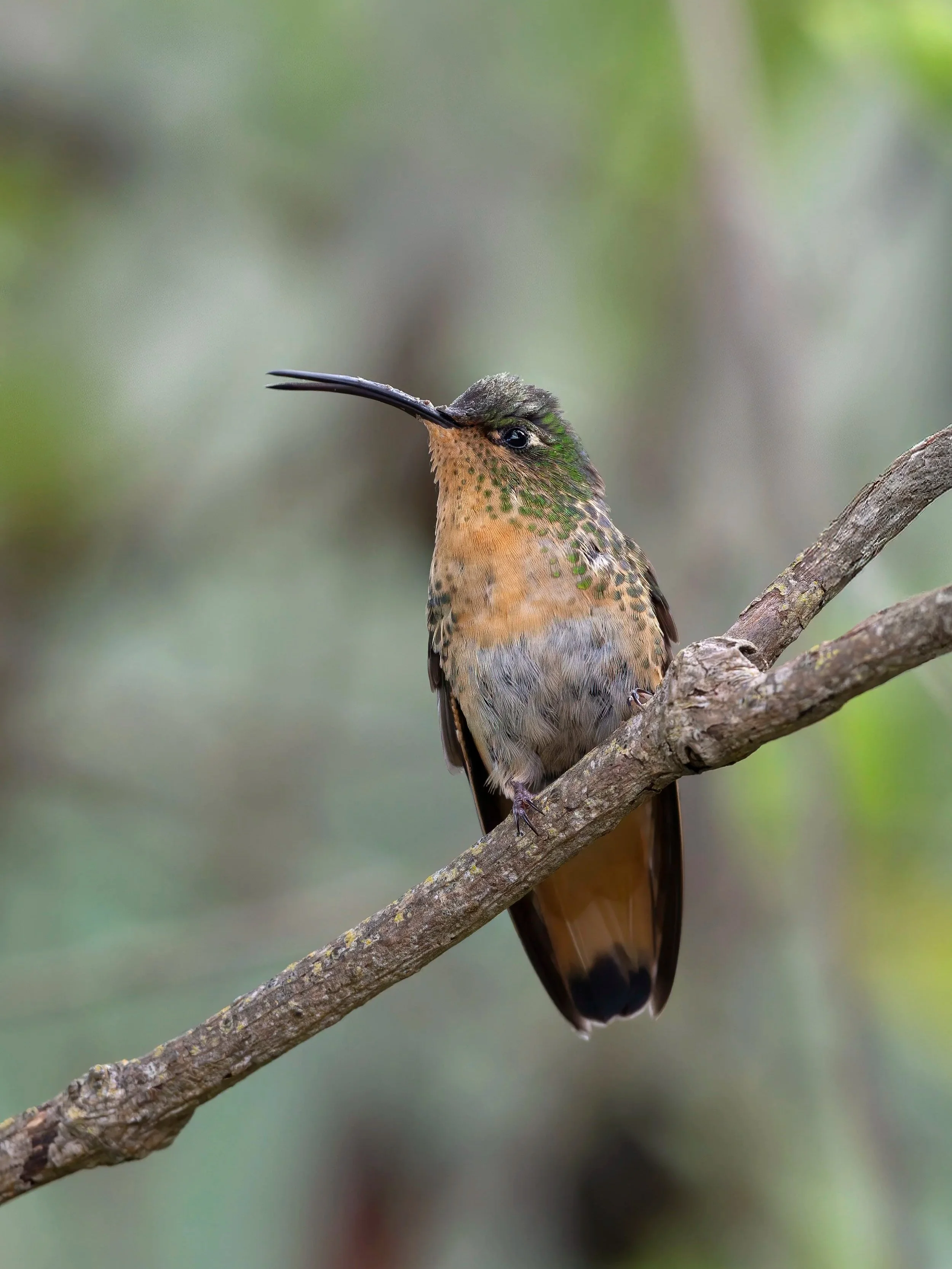
Females differ from males primarily in underpart coloration. In many subspecies, females have white underparts with green spotting or scaling on the throat and sides, lacking the solid black “velvet” belly of the nominate male. In forms closely allied to the nominate, the belly may be buff instead of black, with varying degrees of spotting. The upperparts are green, and the tail pattern with mostly whitish outer feathers and darker tips is similar to that of the male. Juveniles resemble females, with less intense coloration and pattern, and young males gradually develop the richer underparts and stronger contrast as they mature.
Habitat & Behavior
Mountain Velvetbreasts inhabit humid montane forest and cloud‑forest edges, shrubby slopes, subpáramo scrub, and high Andean shrublands. They favor areas where flowering shrubs, small trees, and epiphyte‑rich vegetation line forest borders, ravines, and montane pastures. They generally occur between about 1,800 and 3,400 m in elevation, with some populations regularly reaching 3,500–3,700 m in Ecuador.
They feed primarily on nectar from a wide range of flowering plants, including shrubs, small trees, and high‑elevation shrubs in subpáramo and páramo. Their long decurved bill is well adapted to tubular flowers, and they often visit blooms of genera such as Fuchsia, Bomarea, and others typical of Andean cloud forests. They also take small insects and other arthropods, gleaned from foliage or captured in short aerial sallies. Birds typically forage alone or in loose association with other hummingbirds at rich nectar sources.
Breeding
The breeding season varies geographically but often aligns with local wet seasons and peaks in flower availability in Andean montane zones. The female builds a cup‑shaped nest of plant fibers, moss, and spiderweb, usually placed on a sheltered branch or in dense vegetation along forest edges or shrubby slopes. The nest is typically camouflaged externally with bits of moss and lichen.
The clutch is normally two white eggs. The female alone incubates and cares for the chicks; incubation and fledging periods are not fully documented for this species but are expected to be similar to other medium‑sized brilliants, with about two weeks of incubation and roughly three weeks from hatching to fledging.
Movement
The Mountain Velvetbreast is an altitudinal migrant. It makes seasonal elevational movements, shifting between lower montane forest zones and higher subpáramo and páramo scrub in response to flowering cycles and climatic conditions. During certain seasons it is more abundant at mid‑elevations, while at other times birds move upslope into high Andean shrublands and grasslands where nectar resources peak. These movements are up and down mountain slopes and among neighboring valleys rather than long‑distance latitudinal migrations.
Population
The total number of mature individuals is unknown. The species has a broad distribution along the Andes and is described as common in some parts of its range, especially where humid montane forests remain relatively intact. However, it is more local or uncommon in other areas, and ongoing habitat loss and degradation at mid to high elevations are believed to be causing a slow decline overall. Its reliance on high‑elevation forest edges and shrublands makes it sensitive to deforestation, agricultural expansion, and changes in land use around the treeline.
Conservation
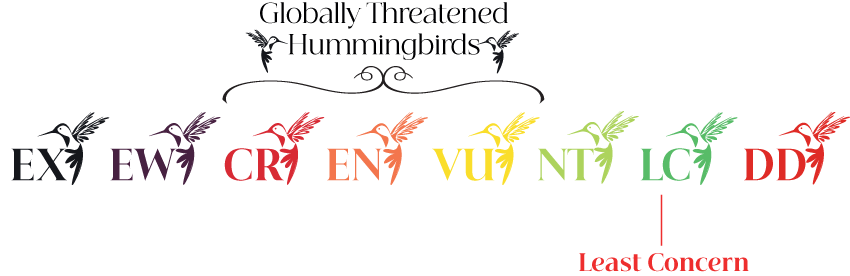
The Mountain Velvetbreast is currently assessed as Least Concern due to its wide range and presence in multiple countries and protected areas. Its ability to use forest edges, shrubby slopes, and high Andean scrub, rather than only pristine interior forest, provides some resilience. Nonetheless, continued deforestation, conversion of montane forest to pasture and agriculture, and changes in páramo and subpáramo management (including burning and grazing) pose long‑term threats. Conservation of montane forest belts, protection and sensible management of subpáramo and páramo shrublands, and maintenance of flowering shrub and tree communities along Andean slopes are important for supporting stable populations.
Below is the Mountain Velvetbreast (Lafresnaya lafresnayi lafresnayi)
Photographed at Reserva Bosque Guajira, Cundinamarca; Hacienda El Bosque, Caldas; and ProAves Manaure, Cesar, Colombia
These individuals belong to the subspecies lafresnayi, which is distributed across the Eastern Andes of Colombia and adjacent areas of southwestern Venezuela. It occupies humid montane forest edges and shrubby slopes between 1,800 and 3,200 meters. This form is characterized by a medium-length decurved bill, green upperparts, and in males, a deep velvet-black belly contrasting with the emerald throat and chest. Females show spotted underparts and a less contrasting belly.

Checkout Anthony’s playlist of this species! Click the top right dropdown to see all the videos.
No other species are currently recognized in the genus Lafresnaya; the Mountain Velvetbreast is the only member of this genus.
Please note: The content provided in this article reflects Anthony’s personal experience and photographic approach. Results can vary depending on light, weather, location, equipment, subject behavior, and field conditions.