
Pale-tailed Barbthroat
Scientific name: Threnetes leucurus
The Pale-tailed Barbthroat is a hermit hummingbird of the Amazon Basin, living in lowland rainforest and river-edge forest from Venezuela and the Guianas south through much of Amazonian Brazil and into Bolivia, Peru, Ecuador, and Colombia. It is closely related to other barbthroats but is distinguished by its paler, buffy tail and underparts, which contrast with the darker, richer tails of species like Band-tailed Barbthroat. As with other hermits, it specializes on understory flowers and often stays in shadowy forest, more often heard or glimpsed briefly than seen well.
At a Glance
Family: Trochilidae (hummingbirds)
Clade: Phaethornithinae – Hermits
Genus group: Threnetes — forest barbthroats of northern South America
Range: Southern and eastern Venezuela and the Guianas through Amazonian Brazil, south into eastern Colombia, eastern Ecuador, eastern Peru, and northern Bolivia
Habitat: Humid lowland terra firme and várzea forest, river islands, river-edge thickets, and older secondary growth with dense understory, often near large rivers and streams
Elevation: Mostly below about 600 m (2,000 ft)
Length: About 10–12 cm (4.0–4.7 in)
Weight: About 4.5–6 g (0.16–0.21 oz)
Number of mature individuals: Not precisely quantified; believed to form a large population across its extensive Amazonian range
Population trend: Decreasing
Status: Least Concern (IUCN)
Name Origin
The genus name Threnetes comes from Greek roots related to “lament” or “dirge,” reflecting the thin, plaintive vocalizations typical of hermit hummingbirds. The species name leucurus combines Greek leukos (“white”) and oura (“tail”), referring to this barbthroat’s characteristically pale tail compared with darker‑tailed relatives; together, Threnetes leucurus essentially means “white‑tailed hermit.”
Subspecies and Distribution
Four subspecies:
Threnetes leucurus leucurus
Distribution: Southern and eastern Venezuela to Guyana and Suriname, south through Amazonian Brazil to northern Bolivia; rare in French Guiana.Threnetes leucurus cervinicauda
Distribution: Eastern Colombia south into northeastern Peru and adjacent western Brazil.Threnetes leucurus rufigastra
Distribution: Central-eastern Peru (south of the Río Marañón) to northern Bolivia (Beni).Threnetes leucurus medianus
Distribution: Northeastern Brazil south of the Amazon (Pará).
Across these subspecies, Pale-tailed Barbthroat occupies much of the Amazon Basin, from southern and eastern Venezuela and the Guianas (Guyana, Suriname, French Guiana) through Amazonian Brazil and south into eastern Colombia, eastern Ecuador, eastern Peru, and northern Bolivia, favoring lowland rainforest and river-edge forest with rich understory.
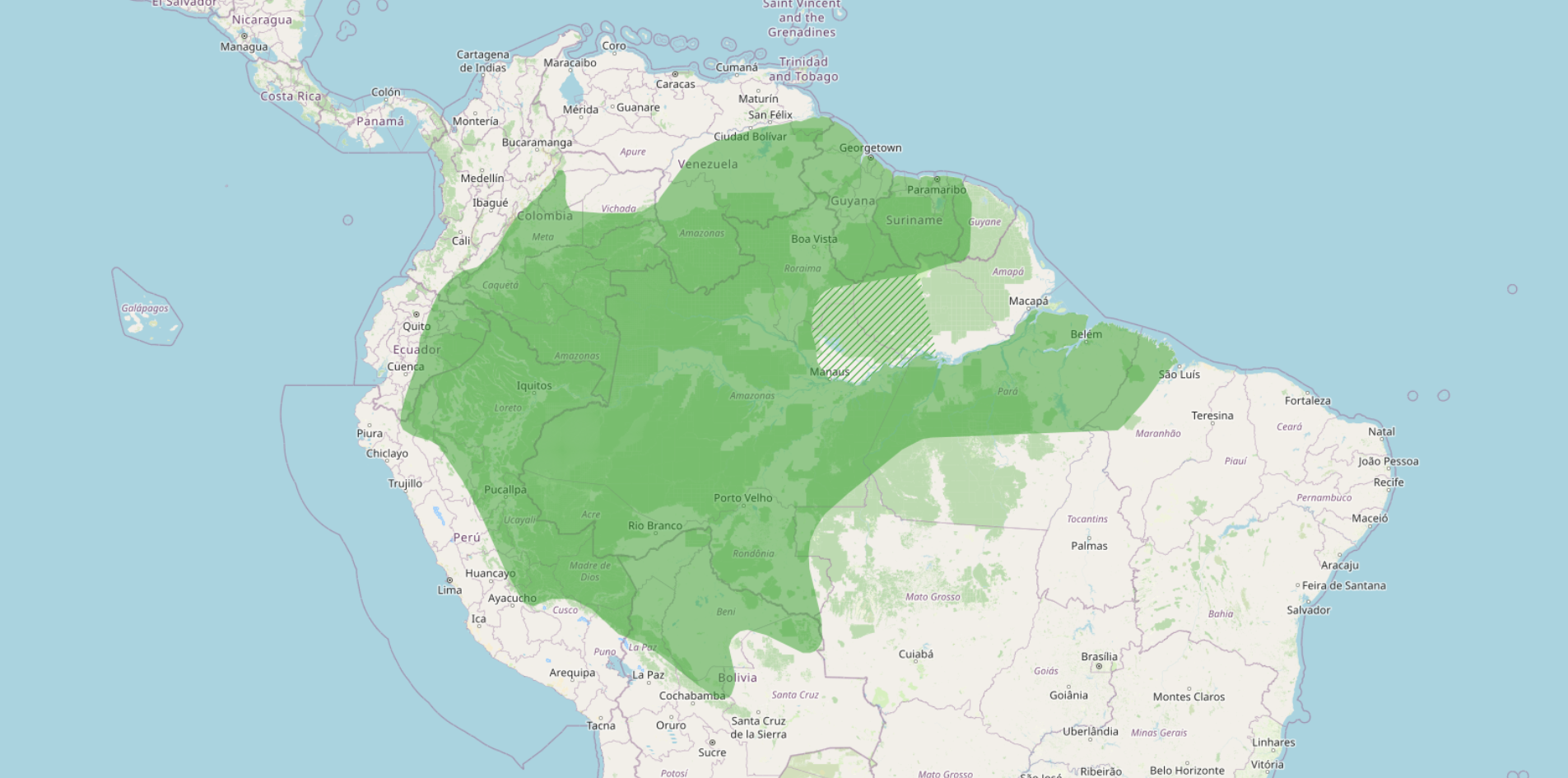
Map provided by Datazone Birdlife.org
Species Overview
The Pale-tailed Barbthroat is an Amazonian forest hermit whose understated plumage is best appreciated at close range. It combines bronzy‑green upperparts with buffy to brownish underparts and a tail that is distinctly paler than in many related hermits, often with buffy or whitish tips that give the tail a washed, pale impression in flight. Though often local and inconspicuous, it can be regular where intact lowland forest and river‑edge habitats persist, especially in areas with plentiful flowering understory. Its wide distribution and presumed large population underpin its classification as Least Concern, even though BirdLife considers its overall population trend to be Decreasing.
Identification
Male
Adult males have bronzy‑green upperparts, a dusky face with a darker ear patch, and a small pale spot behind the eye, typical of hermit hummingbirds. The throat is warm buff to pale rufous, blending into brownish or buffy underparts that are generally paler and less contrasting than those of Band‑tailed Barbthroat. The tail is relatively long and pale, with buffy or whitish outer feathers and paler tips that give a light, washed appearance when fanned, lacking the sharp dark‑and‑white banding of Band‑tailed Barbthroat. The bill is long and slightly decurved, mostly dark with some paler color at the base of the lower mandible, well adapted for probing deep tubular flowers.
Female
Females closely resemble males but are often slightly duller below, with diffuse buffy tones on the breast and belly. Both sexes share the pale‑looking tail and the small post‑ocular spot, and in the field they are usually identified by overall structure, tail tone, and habitat rather than by strong sexual differences. Juveniles look similar to adults but may show fresher or more mottled plumage as they molt into full adult colors.
Habitat and Behavior
Pale-tailed Barbthroat inhabits humid lowland terra firme and seasonally flooded (várzea) forest, river‑edge and island woodland, and older secondary growth, typically below about 600 m. It favors dense understory near rivers, streams, and forest edges, where flowering plants and small arthropods are abundant, and moves through the low to mid‑understory, perching in shade and making short sallies to visit flowers or capture prey. Like other barbthroats, it is a trap‑line feeder, following a repeated circuit of nectar sources rather than defending a single flower patch, and it supplements nectar with small insects and spiders captured by hawking or gleaning from foliage and spiderwebs. The species is believed to be largely resident, with mostly local movements tied to flowering cycles and river dynamics.
Population and Threats
Pale-tailed Barbthroat is assessed as Least Concern and is thought to have a large total population, but BirdLife considers its overall population trend to be Decreasing. It is generally local and uncommon, yet occurs in several protected areas and remains regular where intact lowland forest and river‑edge habitats persist. The main threats are widespread deforestation, habitat degradation, and fragmentation in Amazonian lowlands, which reduce forest cover, simplify the understory, and diminish the availability of key nectar plants needed by this and other forest hummingbirds.

Conservation
Because Pale-tailed Barbthroat is closely tied to humid Amazonian lowland forest and river‑edge habitats, conserving large tracts of primary forest and riparian corridors is essential. Protected areas across the Amazon Basin, together with sustainable forestry and land‑use practices that retain forest cover and understory flowering plants, are important for maintaining its populations. Ongoing monitoring of habitat loss and local populations will help ensure that this hermit remains a characteristic understory hummingbird of Amazonian forests despite its Decreasing trend
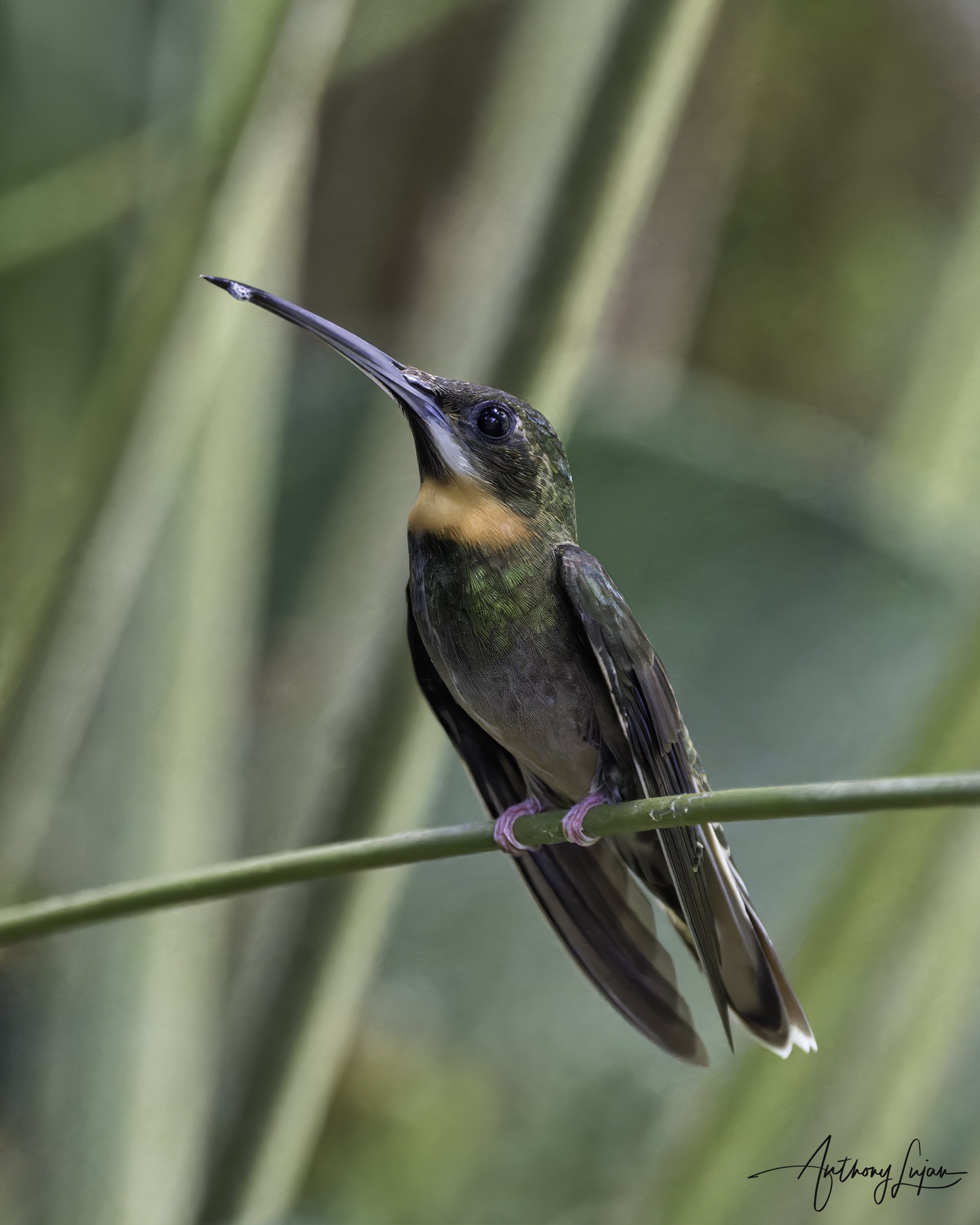
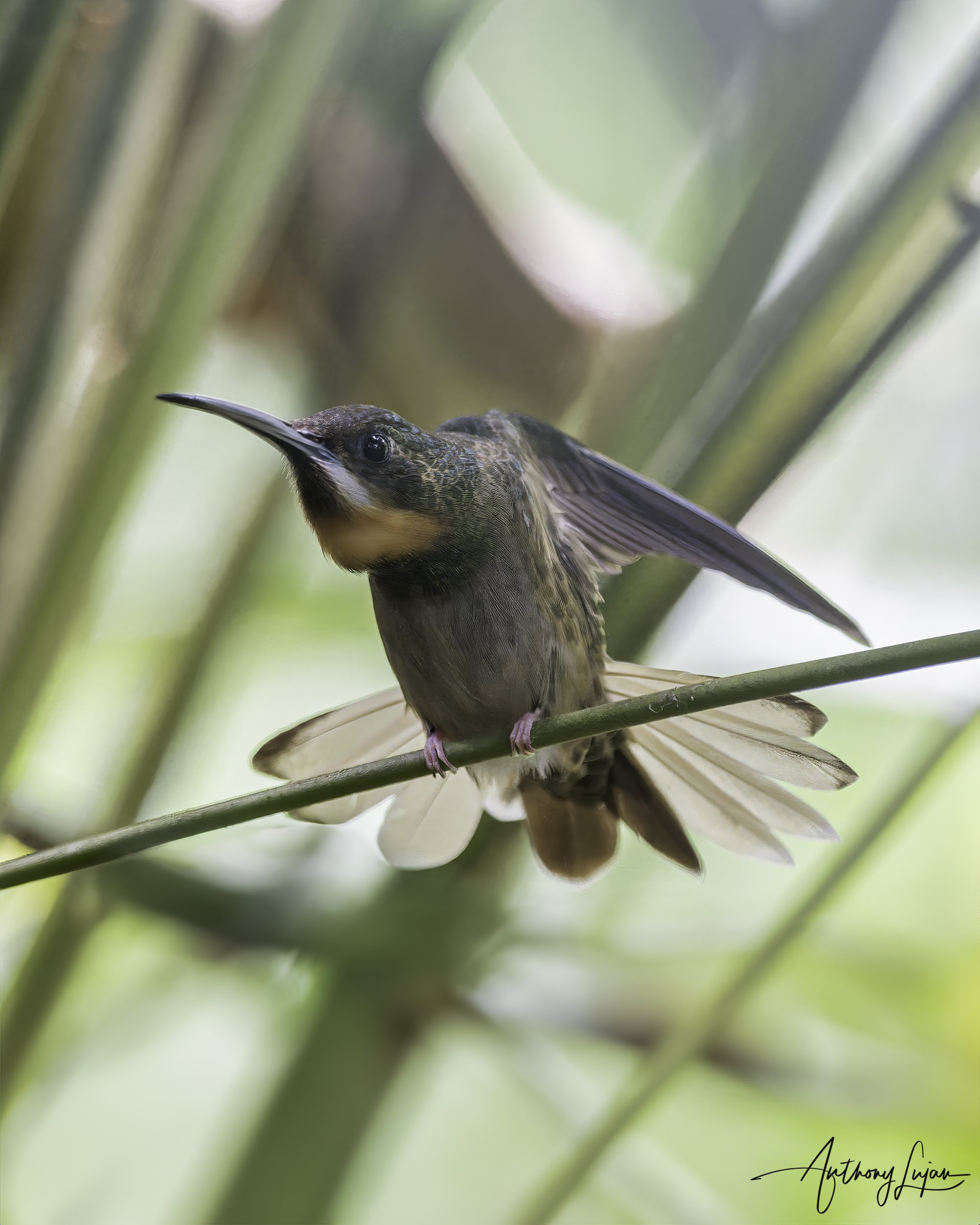
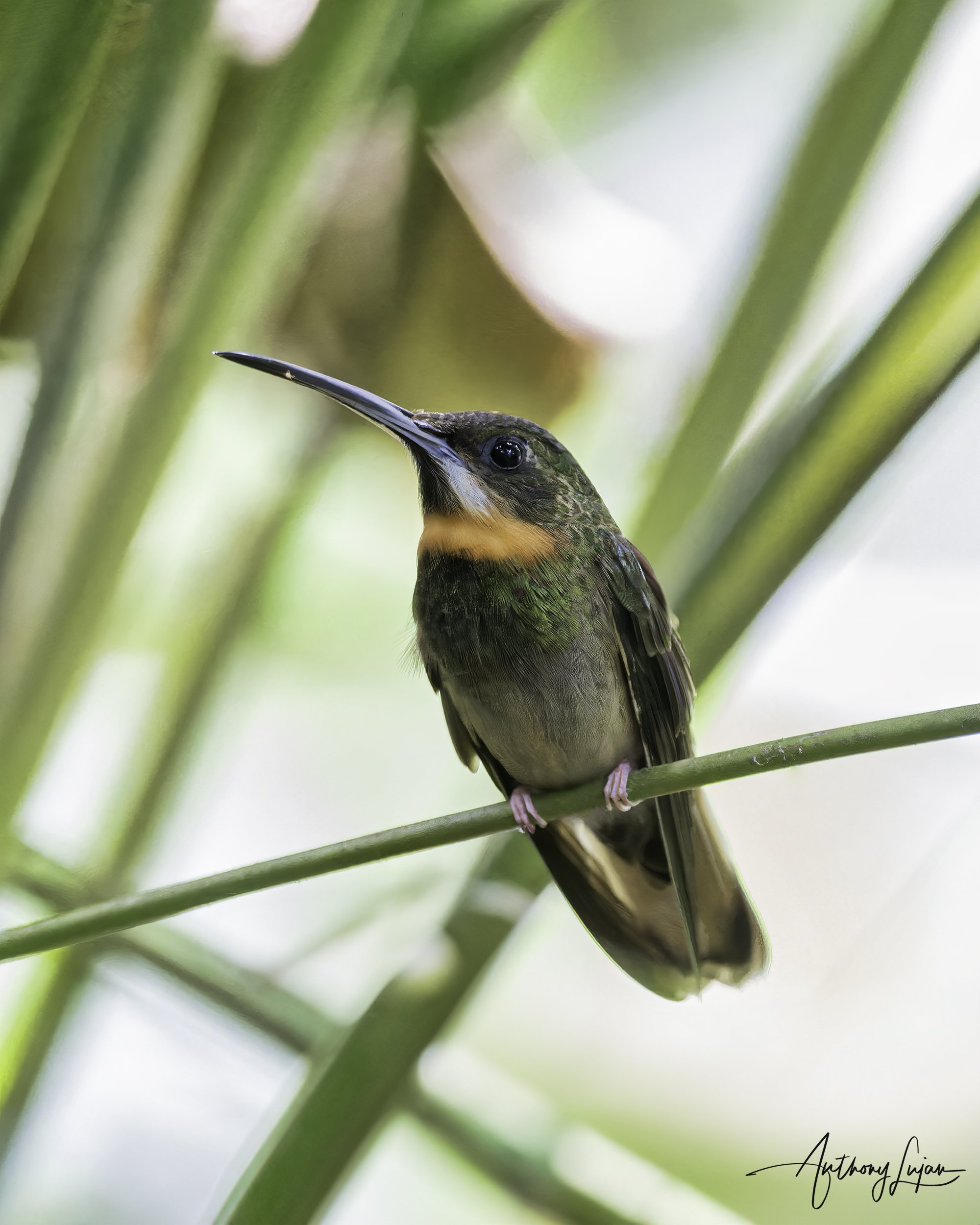
Below is the Pale-tailed Barbthroat (Threnetes leucurus rufigastra)
Photographed at Asociación para la Conservación de Aves y la Biodiversidad Koepcke's Hermit, San Martín, Peru
These individuals belong to the subspecies rufigastra, which occurs from central-eastern Peru (south of the Río Marañón) into northern Bolivia (Beni). It inhabits humid lowland rainforest, especially along edges and clearings with abundant flowering plants. This form is typically marked by warm rufous tones on the underparts, bronzy-green upperparts, and a pale-tipped tail with broad white corners. The straight black bill and strong facial stripe typical of Threnetes are retained.
Checkout Anthony’s playlist of this species! Click the top right dropdown to see all the videos.
Related species in the Threnetes genus (3 species total):
