
Scientific name: Ramphomicron microrhynchum
The Purple-backed Thornbill is a tiny, high-elevation hummingbird of the northern and central Andes from Venezuela to Bolivia. Its global number of mature individuals is unknown, the population trend is believed to be Decreasing, and it is assessed as Least Concern (LC).
At a Glance
Family: Trochilidae (hummingbirds)
Clade: Lesbiini – Coquettes
Genus: Ramphomicron — tiny, high‑elevation thornbills with very short bills and compact bodies
Range: Andes from western Venezuela south through Colombia and Ecuador into Peru and central Bolivia
Habitat: Edges of humid montane forest, Polylepis woodland, elfin forest, páramo, and transition zones; some subspecies also in shrubby areas below treeline
Elevation: About 1,700–3,600 m (5,600–11,800 ft), locally up to around 4,000 m in some regions
Length: Approximately 7.5–9 cm (3.0–3.5 in)
Weight: Roughly 2.5–3.5 g (0.09–0.12 oz)
Number of mature individuals: Unknown
Population trend: Decreasing
Status: Least Concern (IUCN)
Subspecies & Distribution
Four subspecies are generally recognized:
Ramphomicron microrhynchum andicola
Distribution: Andes of western Venezuela, especially Mérida.
Ramphomicron microrhynchum microrhynchum
Distribution: Andes of Colombia and Ecuador, extending into northwestern Peru (south to Cajamarca).
Ramphomicron microrhynchum albiventre
Distribution: Eastern slopes of the Andes in central and southern Peru, from Huánuco south to Apurímac and Cuzco.
Ramphomicron microrhynchum bolivianum
Distribution: Andes of Cochabamba Department in central Bolivia.
Across these subspecies, Purple-backed Thornbill occupies humid montane forest edges, Polylepis woodland, elfin forest, páramo, and the ecotones between them from roughly 1,700 to 3,600 m, locally up to around 4,000 m. The subspecies bolivianum can also be found below the treeline in shrubby montane habitats.
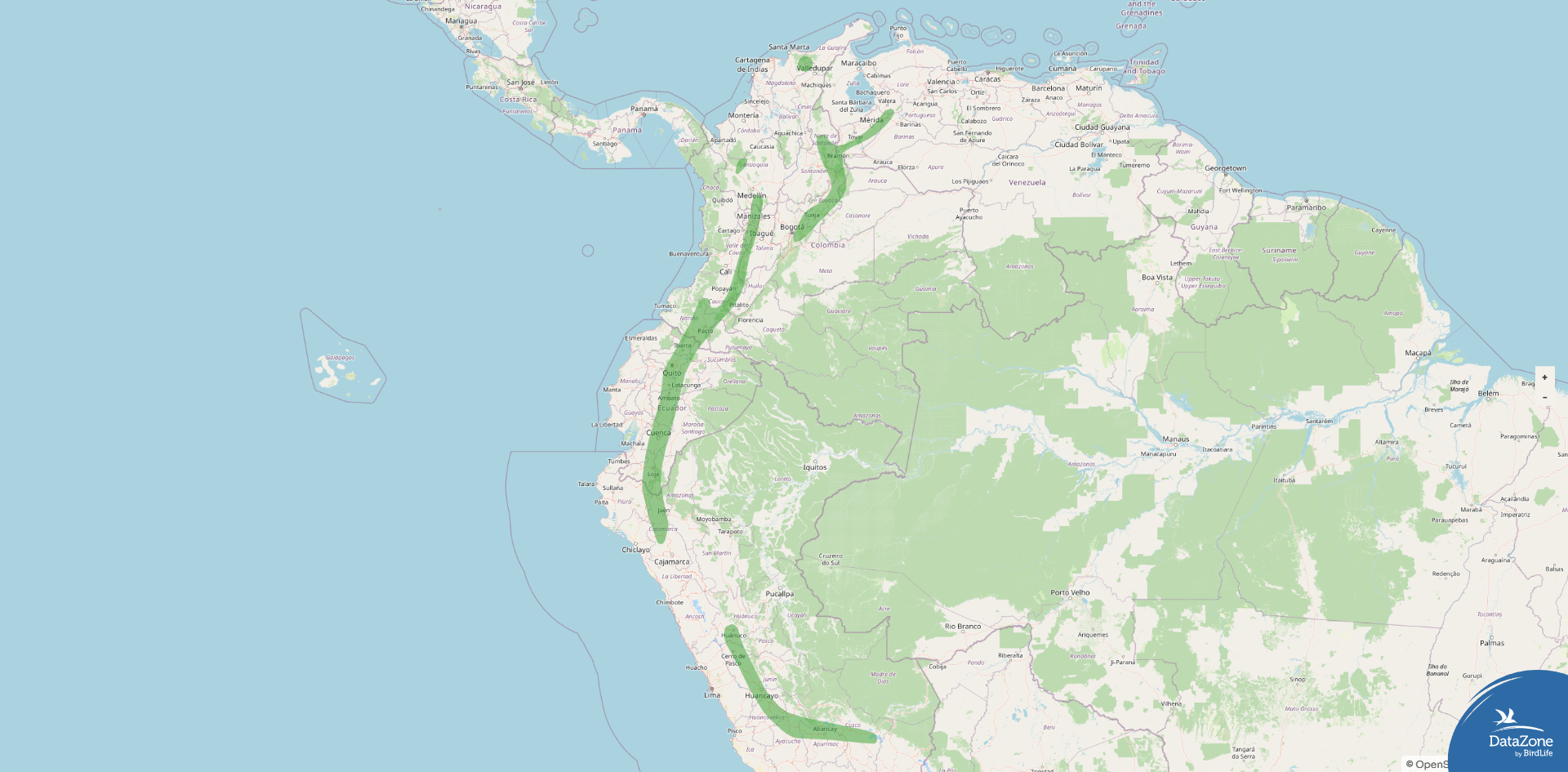
Legend
Green Resident
Species Overview
Purple-backed Thornbill is a tiny, high-elevation hummingbird of the northern and central Andes, instantly recognizable by its short bill and compact silhouette. It is generally uncommon but can be locally regular where flowering shrubs, forest edges, and Polylepis stands are preserved. Despite an unknown global population and a likely Decreasing trend, the species’ broad distribution across multiple Andean countries and presence in protected areas support a current assessment of Least Concern.
Male Description
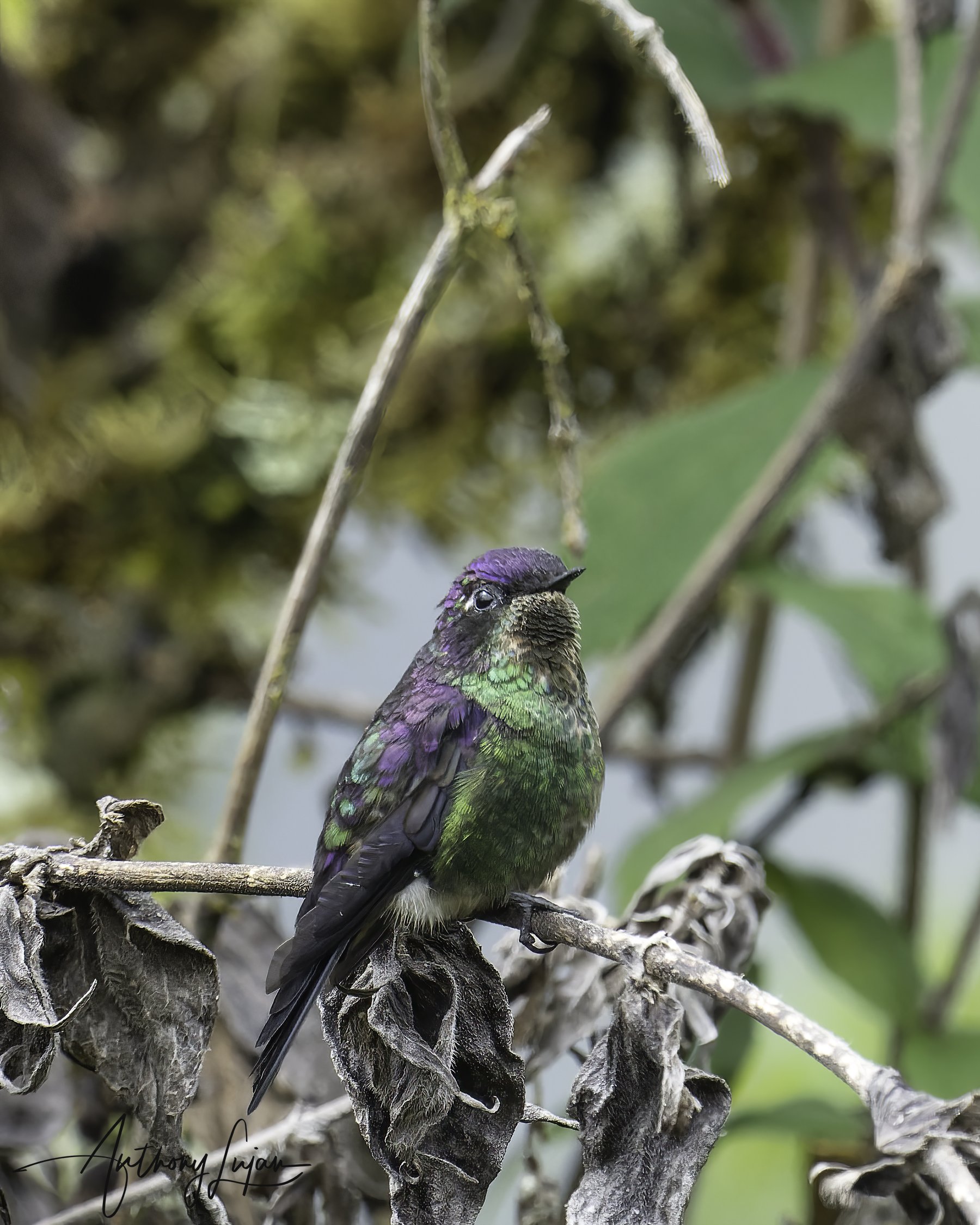
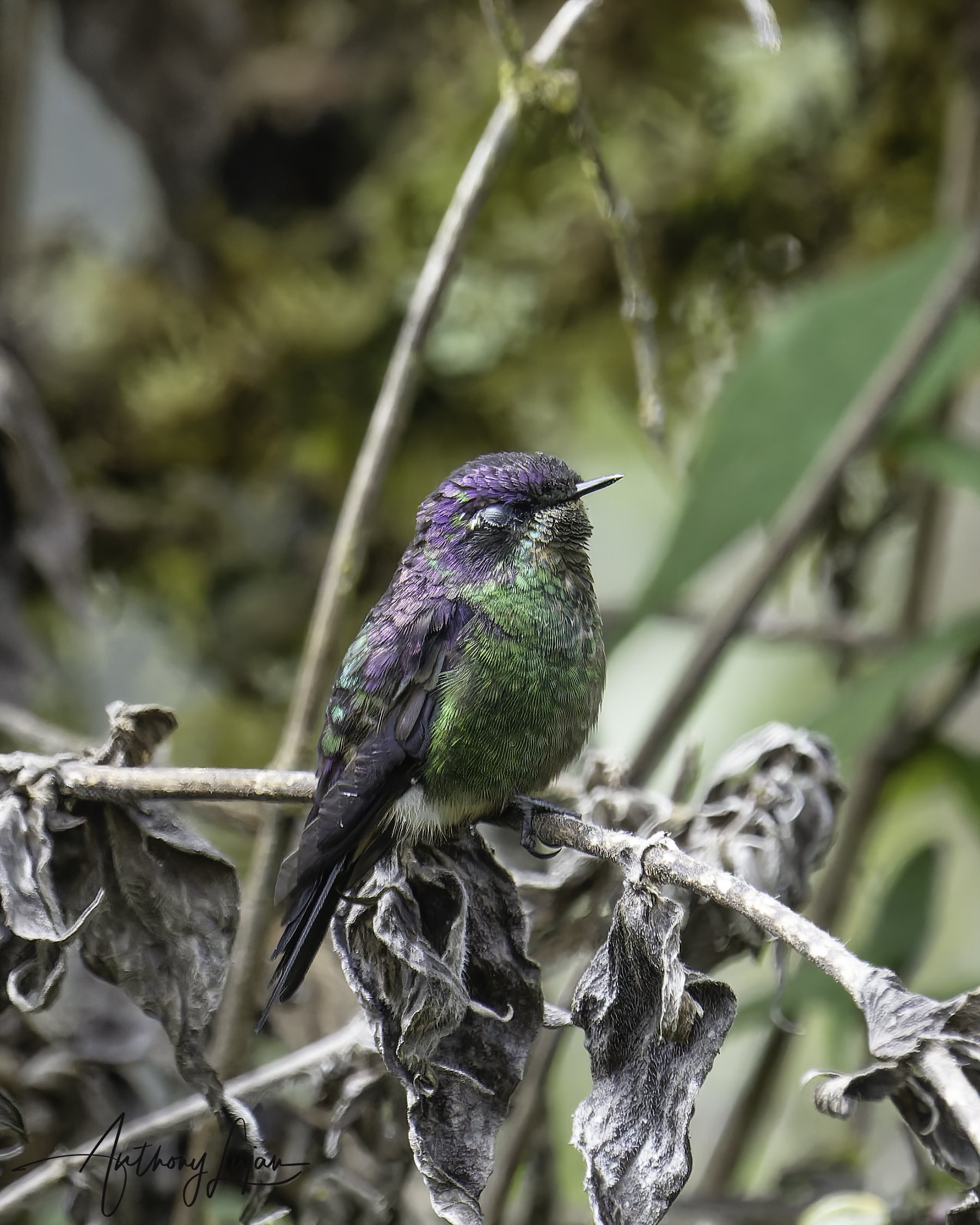
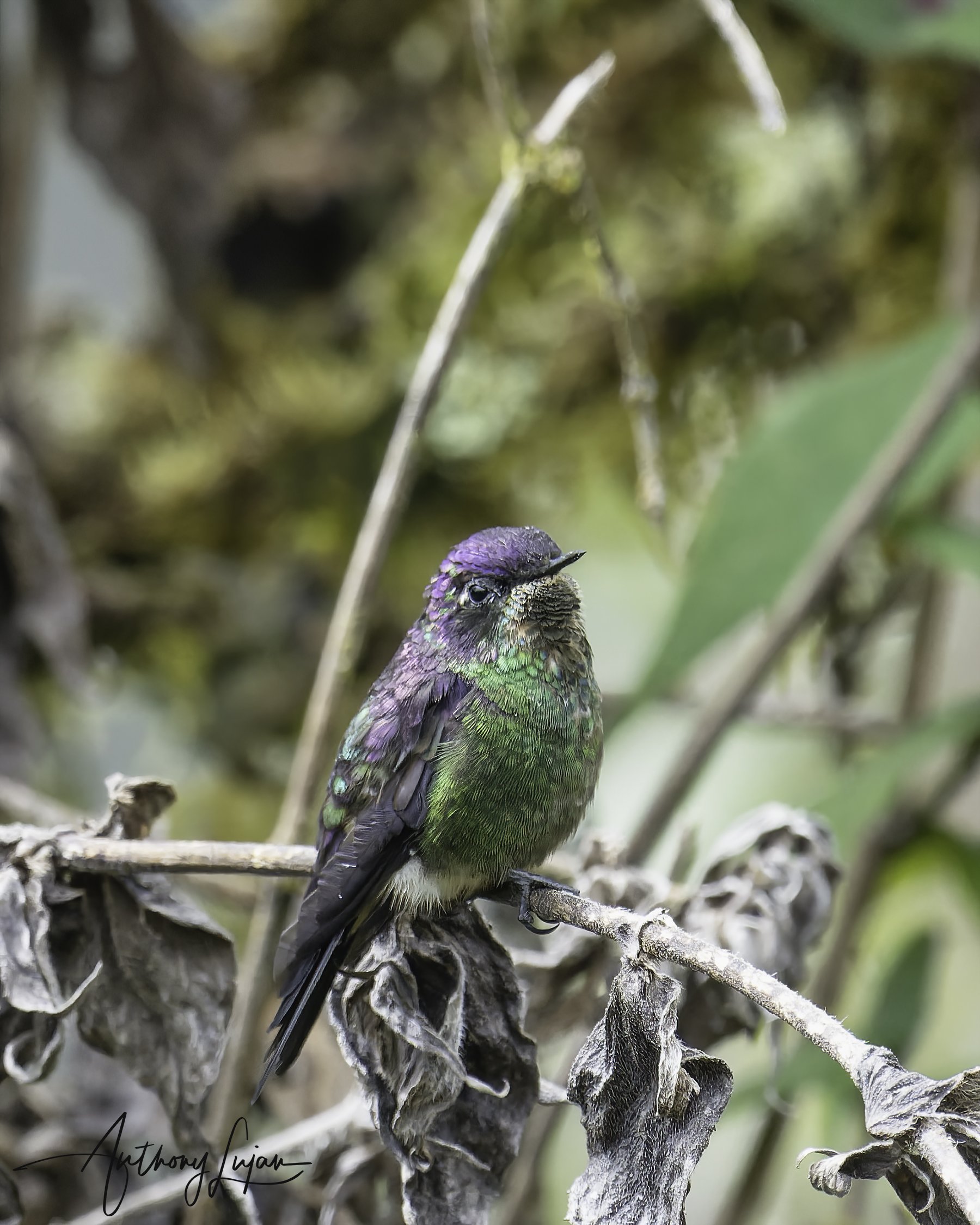
Adult males are very small, short‑billed hummingbirds with a distinctive iridescent violet to purple back and crown that give the species its common name. The gorget is bright metallic green, contrasting sharply with darker, dusky to blackish underparts on the breast and belly. The tail is relatively short and slightly notched, appearing dark overall, while the wings are long and narrow relative to the body. As with all thornbills, the bill is very short, straight, and fine, clearly shorter than in most other high‑Andean hummingbirds.
Female Description
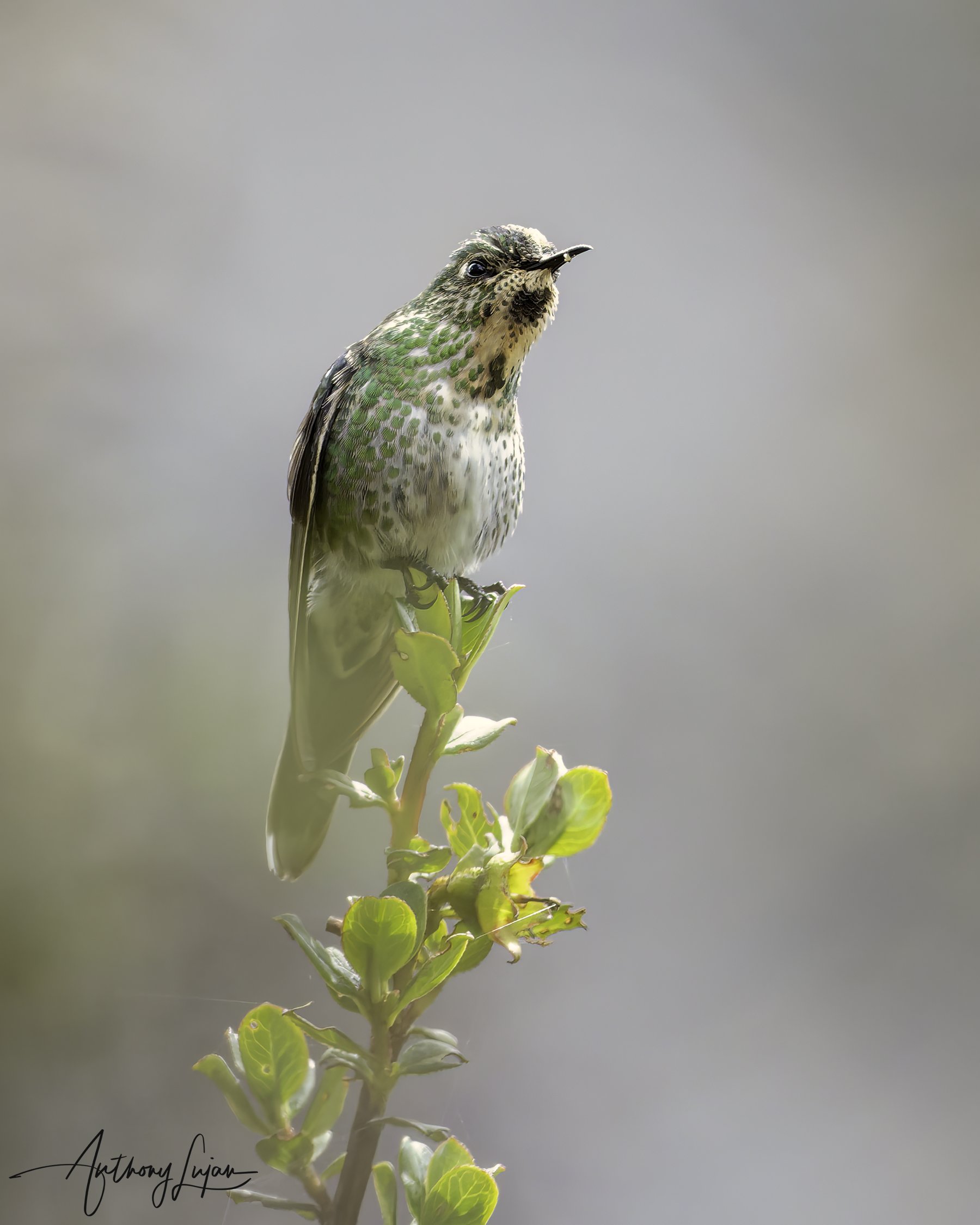
Females lack the fully purple back of males and instead have bronzy‑green upperparts with only limited violet tones. The underparts are whitish to pale gray, marked with dusky or green spotting on the throat and breast, giving a mottled look rather than a solid gorget. The tail is similar in structure but may show slightly more contrast on the outer rectrices, and the bill is the same extremely short, fine thornbill bill.
Habitat & Behavior
Purple-backed Thornbills use the edges of humid montane forest, Polylepis woodlands, elfin forest, páramo, and associated shrubby zones across their Andean range. They are most often found between about 1,700 and 3,600 m, locally reaching around 4,000 m in páramo margins and high forest–páramo transition belts. The bolivianum subspecies in Bolivia also inhabits shrubby montane areas well below the treeline.
They primarily feed on nectar by trap‑lining, visiting a regular circuit of flowers from mid‑level to canopy and sometimes “robbing” nectar by probing at the bases of blossoms. Small insects are also taken, often captured in flight, to supplement their nectar diet. Birds are typically solitary or in very low densities, quickly darting among flowers and perching quietly between feeding bouts.
Population
The global number of mature individuals is unknown, and Purple-backed Thornbill is usually described as uncommon throughout its range. The population is suspected to be Decreasing, mainly due to ongoing deforestation and habitat degradation in humid montane forests, Polylepis woodlands, and páramo. Nevertheless, its wide Andean distribution and occurrence in several protected areas currently buffer it from meeting thresholds for a higher threat category.
Conservation
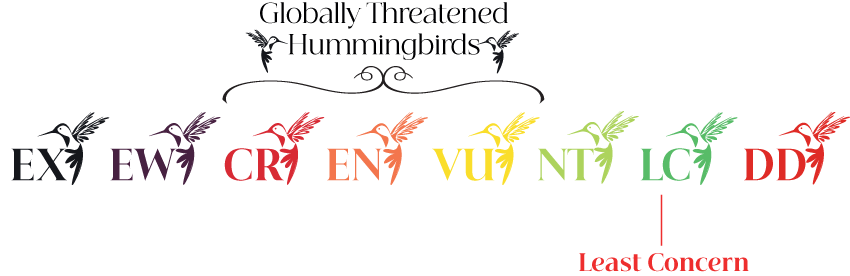
Purple-backed Thornbill is assessed by the IUCN as Least Concern, but with a likely declining population that warrants continued monitoring. Key threats include the loss and fragmentation of montane forest, degradation and burning of páramo and Polylepis habitats, and broader climate‑driven changes at high elevations. Effective conservation will depend on protecting montane forests and páramo, maintaining and restoring Polylepis woodlands, and safeguarding key sites across Venezuela, Colombia, Ecuador, Peru, and Bolivia.
Below is the Purple-backed Thornbill (Ramphomicron microrhynchum microrhynchum)
Photographed at Hotel Termales del Ruíz, Caldas, and PNN Chingaza–Entrada Piedras Gordas, Cundinamarca, Colombia
These individuals belong to the subspecies microrhynchum, found along the Andes from Colombia through Ecuador into northwestern Peru. It occupies elfin forest and páramo edge between 3,000 and 4,000 meters. This form is characterized by its small body size, metallic violet crown and back, and extremely short bill. Males show a green gorget contrasting sharply with their dark underparts.
Checkout Anthony’s playlist of this species! Click the top right dropdown to see all the videos.
Related species in the Ramphomicron genus (2 species total):
Please note: The content provided in this article reflects Anthony’s personal experience and photographic approach. Results can vary depending on light, weather, location, equipment, subject behavior, and field conditions.