
Purple-throated Sunangel
Scientific name: Heliangelus viola
The Purple-throated Sunangel is a striking Andean hummingbird found in Ecuador and northern Peru. The number of mature individuals is unknown, the population is decreasing, it is considered non-migratory, and it is currently listed as Least Concern with three recognized subspecies.
At a Glance
Family: Trochilidae (hummingbirds)
Clade: Lesbiini – “brilliants” of the Andean highlands
Genus group: Heliangelus — “sunangels,” small montane hummingbirds with intense iridescence
Range: West slope of the Andes from north-central Ecuador south into northern Peru (Cajamarca, Amazonas, Piura).
Habitat: Interior and edges of cloudforest and secondary forest, alder woodlands, and shrubby slopes with abundant flowering shrubs.
Elevation: Mostly between about 2,150 and 3,000 m (7,100–9,800 ft).
Length: About 11–12 cm (4.3–4.7 in).
Weight: Approximately 5.1–6.6 g.
Number of mature individuals: Unknown
Population trend: Decreasing
Status: Least Concern (IUCN)
Name Origin
The genus name Heliangelus combines “sun” and “angel,” referring to the brilliant, sunlit iridescence of these hummingbirds. The species name viola alludes to “violet,” referencing the glowing purple of the bird’s throat. The English name “Purple-throated Sunangel” highlights the intense purple gorget that sets this species apart from other sunangels.
Subspecies & Distribution
Three subspecies (following the split treatment):
Heliangelus viola viola (Purple-throated)
Distribution: Andes of northern Peru east of the Río Marañón in Amazonas, with some very local occurrence west of the Marañón in Cajamarca. It inhabits humid cloudforest edges and shrubby slopes on the eastern side of this Andean divide.Heliangelus viola pyropus (Brilliant)
Distribution: Andes of southern Ecuador and northwestern Peru (Piura), occurring along the west Andean slope in cloudforest, alder woodland, and shrubby clearings.Heliangelus viola splendidus
Distribution: Andes of northern Peru west of the Río Marañón in Cajamarca, with some very local records east of the Marañón in Amazonas. It favors similar high-montane forest edges and shrubby habitats on the western side of the river valley.
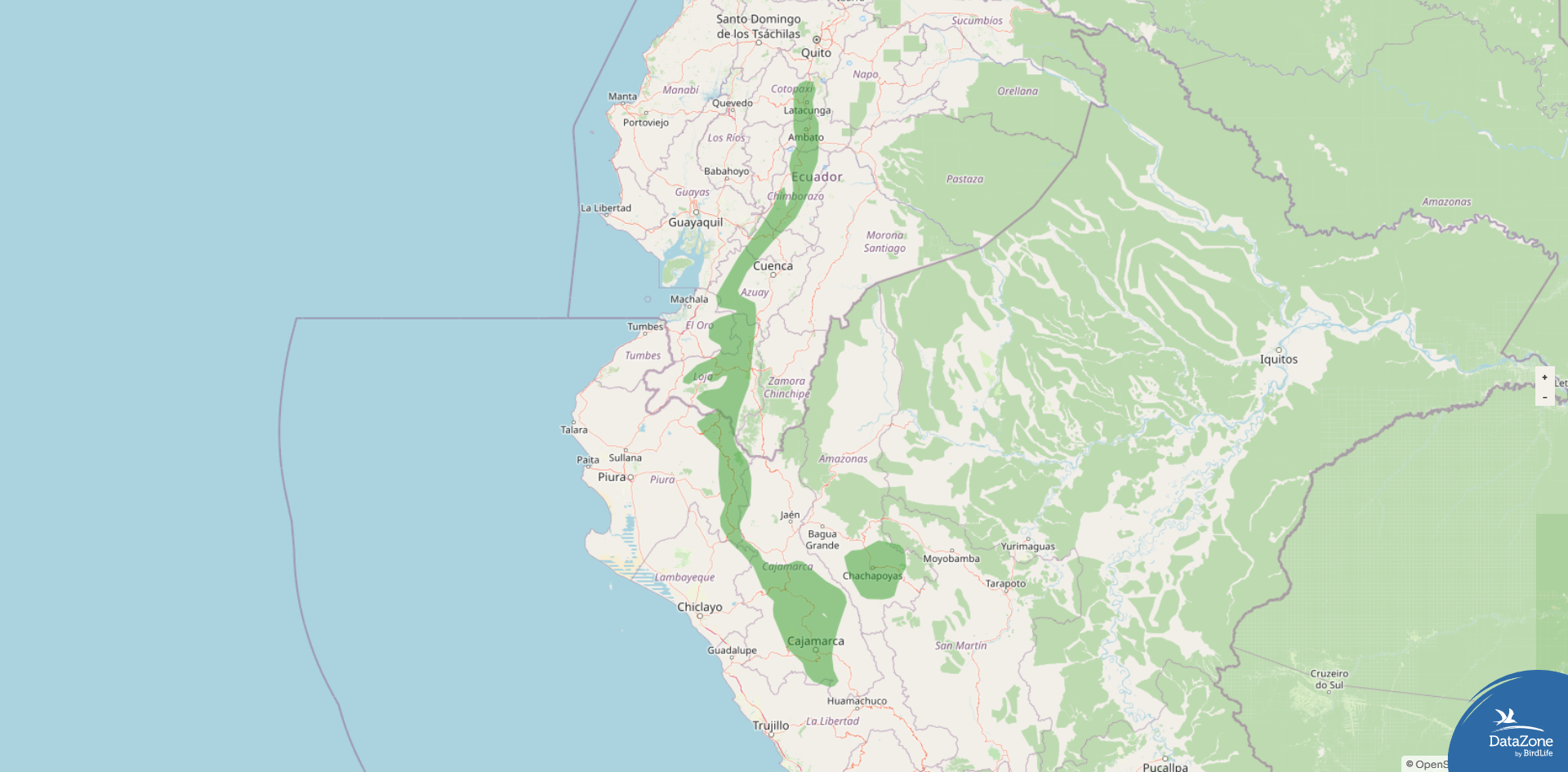
Legend
Green Resident
Species Overview
The Purple-throated Sunangel is a robust, highland hummingbird that thrives in cool, moist Andean forest and shrubby slopes. It often occurs along roadsides, forest edges, and clearings where flowering shrubs and small trees are abundant. Although fairly common locally in suitable habitat, continued forest loss and habitat modification contribute to a slow decline.
Male Description
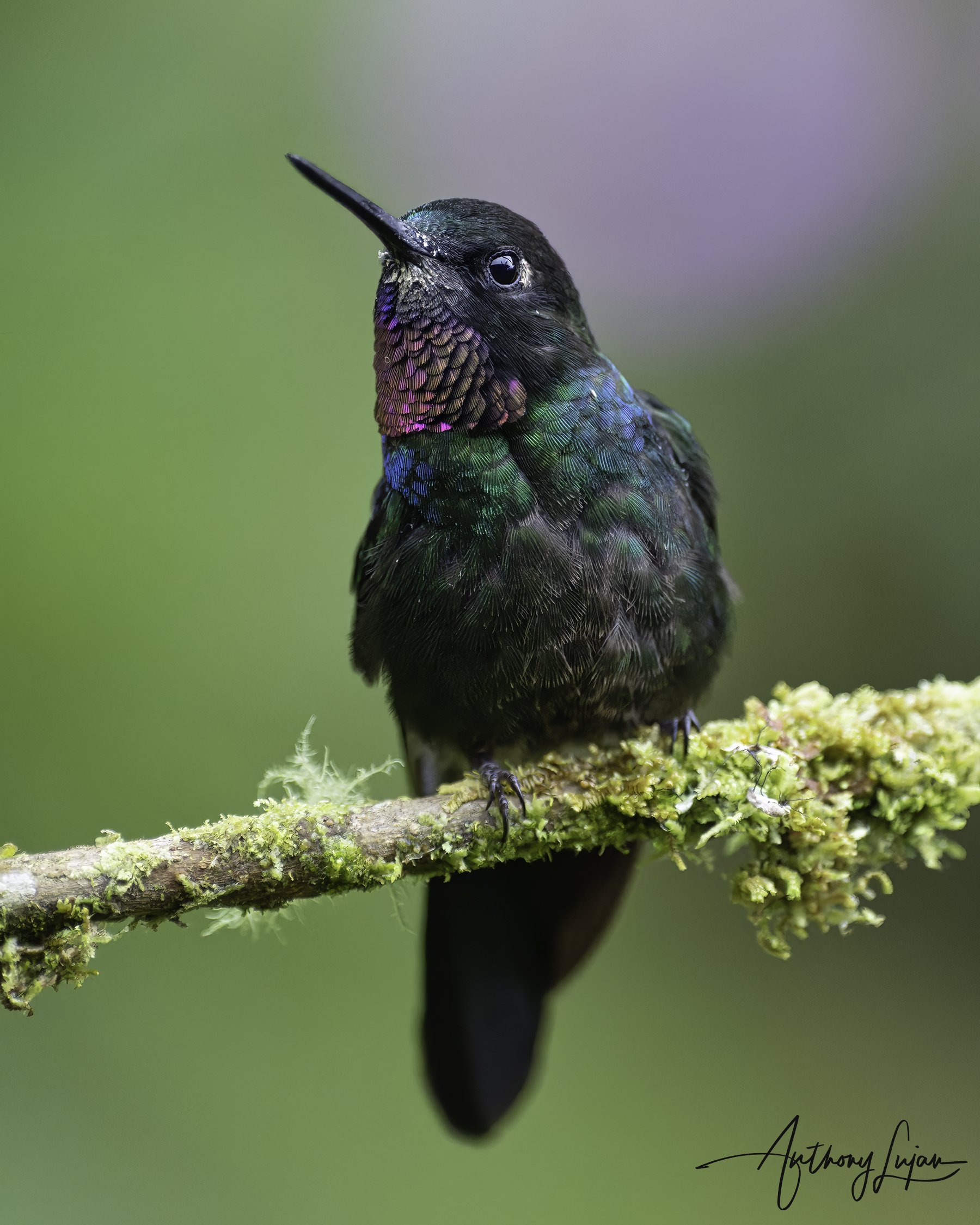
Adult males are stocky with a short, straight black bill. The head and upperparts are dark green to bronzy-green. The throat and upper breast bear a brilliant, intensely iridescent purple patch that can flash violet or magenta depending on the light. Below the gorget there is often a contrasting pale or whitish pectoral band, with darker greenish underparts beneath. The tail is relatively short and slightly forked, dark with a metallic sheen, sometimes showing bluish or bronzy tones. In the field, males appear as dark, compact hummingbirds whose throats blaze purple when they turn toward the sun.
Female Description
Adult females lack the solid purple gorget of the male. The upperparts are green, and the throat and upper breast are buffy or whitish, heavily speckled or scaled with darker spots. The rest of the underparts are pale buff to whitish with some grayish or greenish mottling on the sides. The tail is dark with paler or grayish tips on the outer feathers. Females therefore appear as small, green-backed hummingbirds with a finely spotted pale throat and a modest dark tail, relying on structure, behavior, and range for confident identification.
Habitat & Behavior
Purple-throated Sunangels inhabit the interior and edges of cloudforest, secondary forest, alder (Alnus) woodlands, and shrubby slopes and clearings at high elevations. They frequently visit flowering shrubs and small trees, sometimes concentrating in areas with abundant blooms, including introduced trees like Eucalyptus in parts of Ecuador. They feed on nectar and small insects, catching insects by hawking from exposed perches and by gleaning from foliage. The species is considered resident within its Andean range, with no major migratory movements documented, though local movements along the elevation gradient likely track flowering peaks.
Population
The total number of mature individuals is unknown, but the Purple-throated Sunangel has a relatively restricted range along Andean slopes in Ecuador and northern Peru. It can be locally fairly common where forest and shrubby habitats remain intact, but deforestation, habitat fragmentation, and land-use changes are ongoing across much of its range. These pressures are thought to be driving a gradual decrease in population, even though the species still persists in multiple protected areas.

Conservation
The Purple-throated Sunangel is listed as Least Concern because of its presence across two countries and in several protected reserves, but its decreasing trend warrants continued monitoring. Loss and degradation of cloudforest and montane scrub through logging, agriculture, and development reduce the extent and quality of its habitat. Protecting montane forest, managing secondary growth and alder woodlands, and maintaining shrubby edges and corridors will help conserve this species and other high-Andean sunangels.
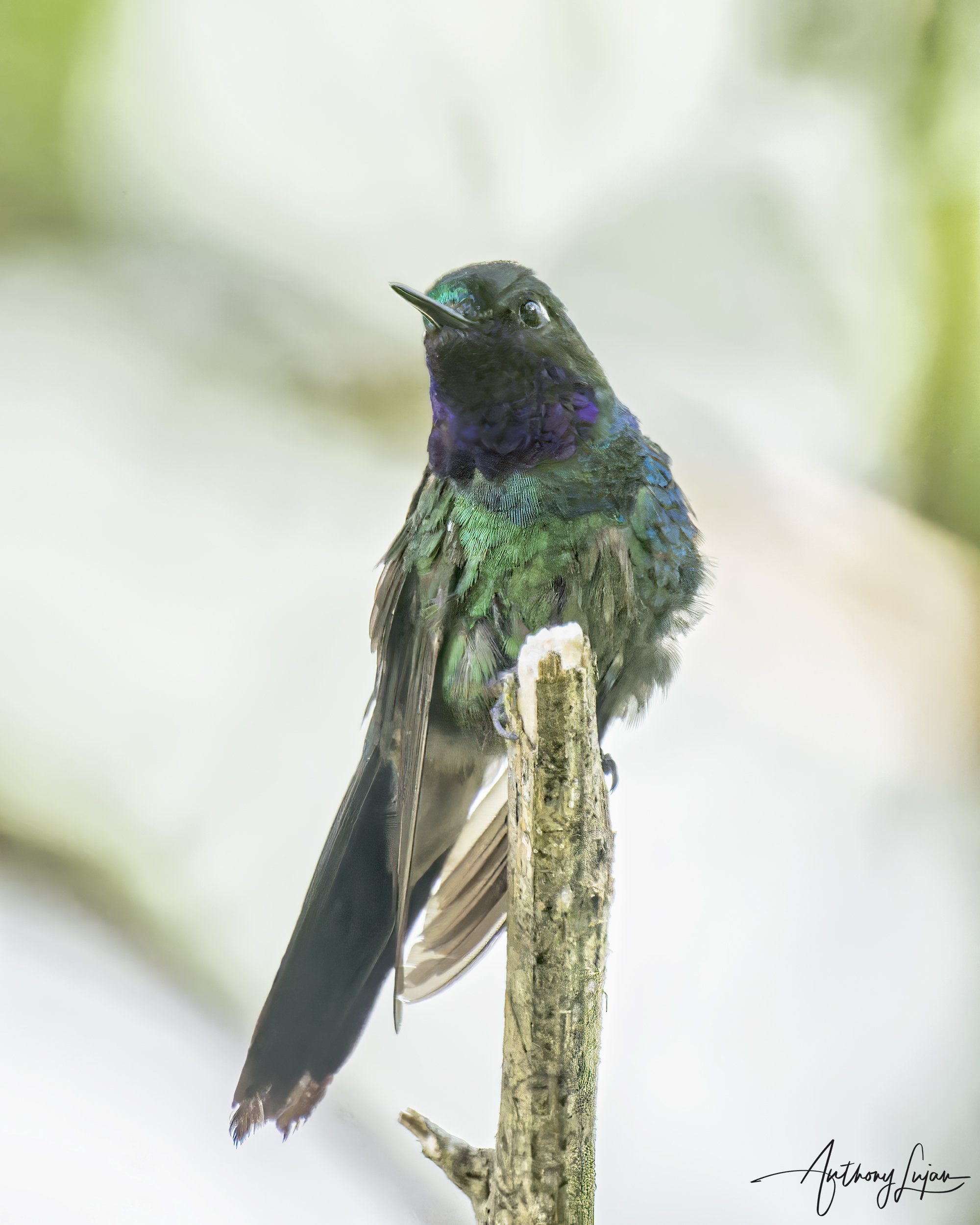
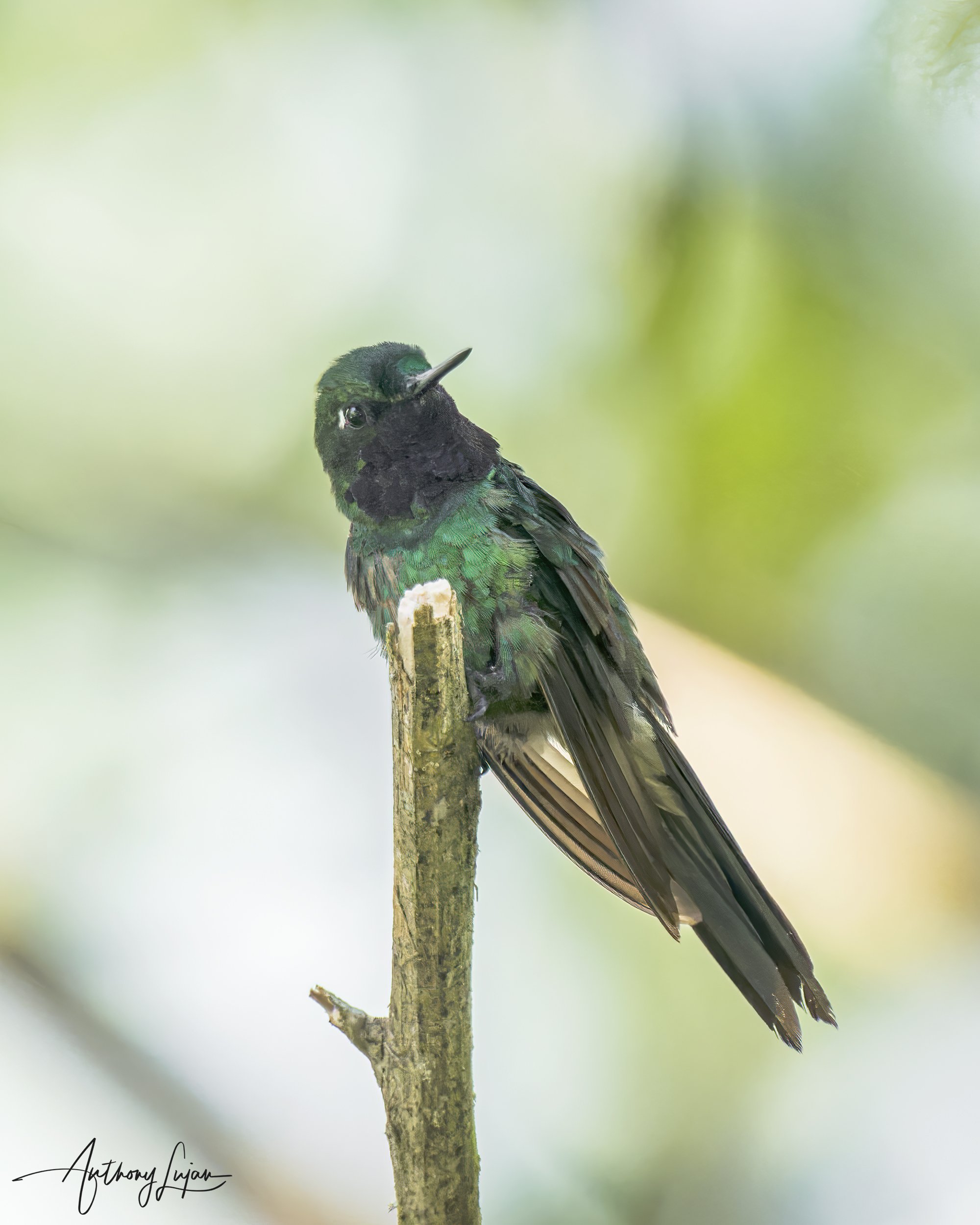
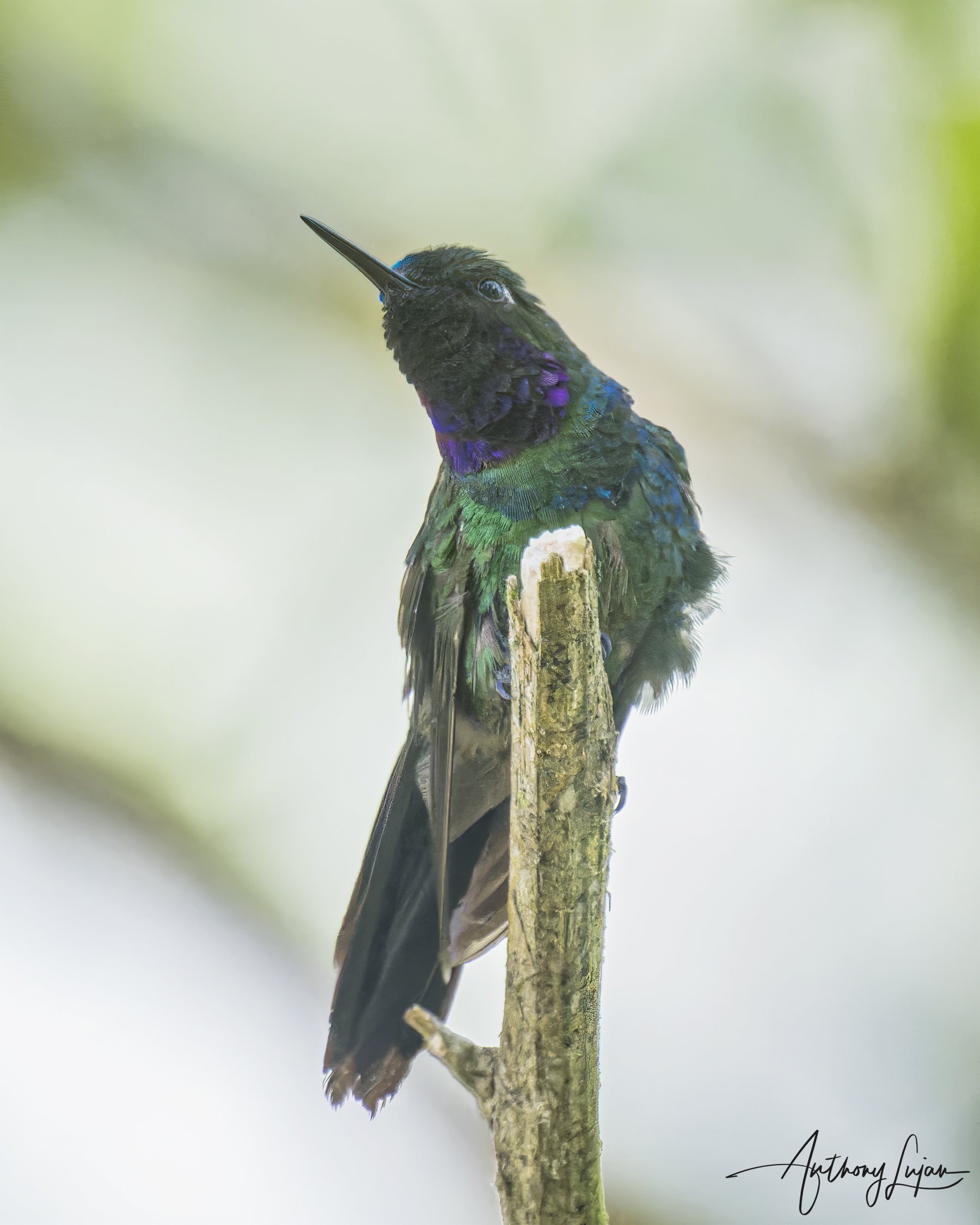
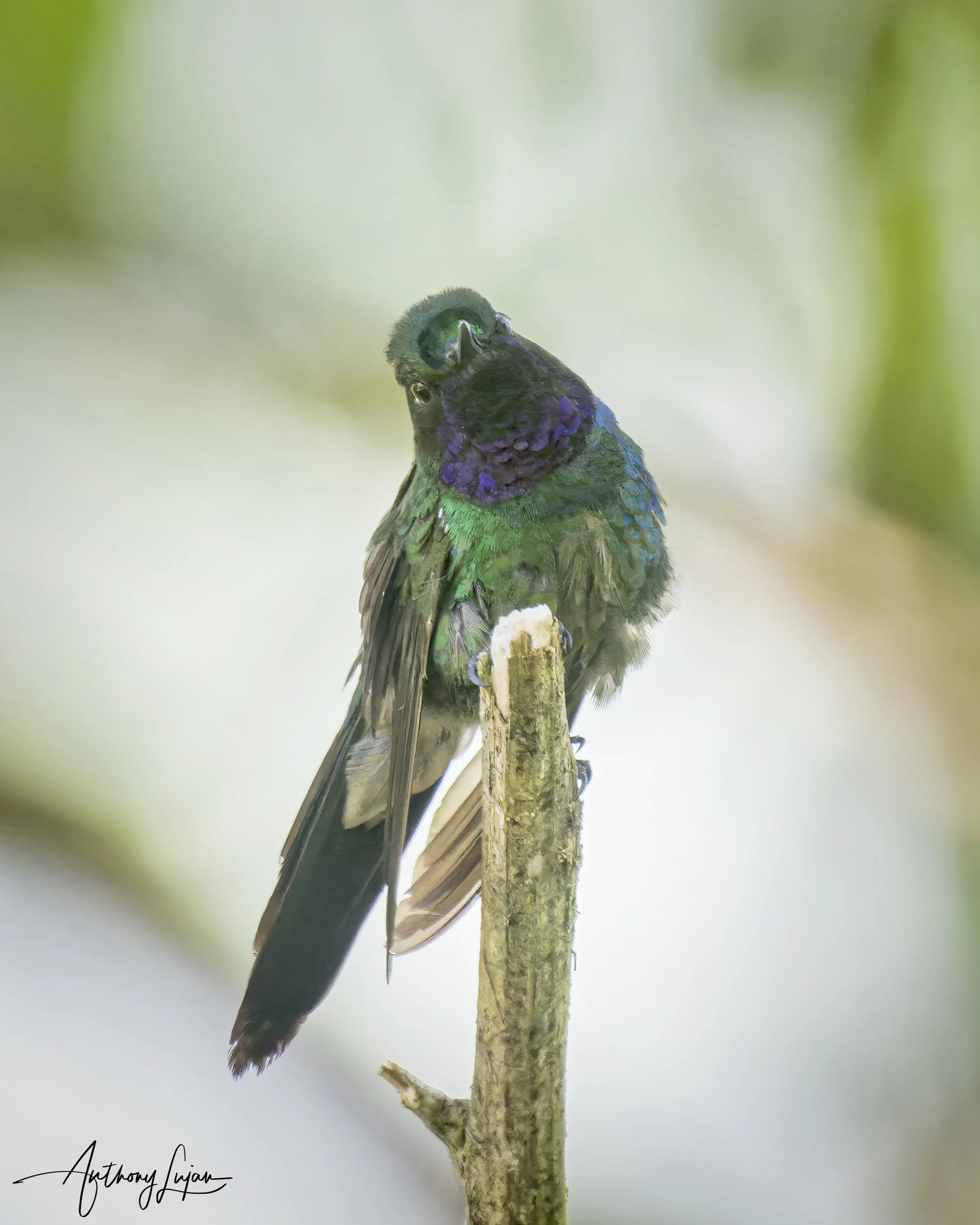
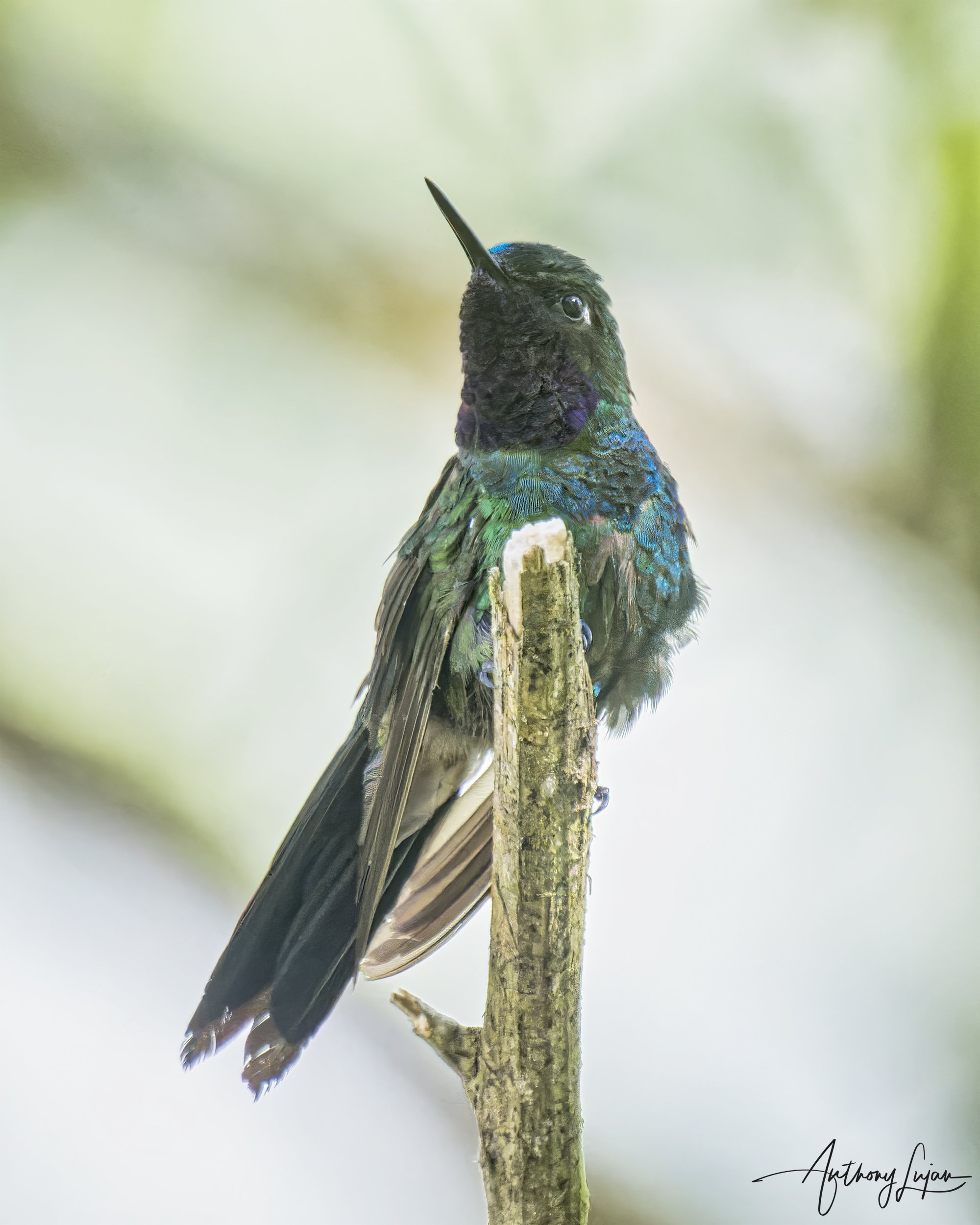
Below is the Violet-throated Starfrontlet (Heliangelus viola viola)
Photographed at Huembo Lodge, Amazonas, Peru
This individual belongs to the subspecies viola, which occurs along the eastern Andes of northern Peru, primarily east of the Río Marañón in Amazonas. It inhabits humid cloud forest edge, elfin forest, and shrubby slopes between 2,000 and 3,000 meters.
The Violet-throated Starfrontlet is a compact Andean hummingbird with a glowing violet throat patch, metallic green upperparts, and a short, straight bill. Males show a brilliant iridescent gorget, while females are duller with grayish underparts and reduced throat color. It forages at flowering shrubs along forest edges and high-elevation clearings.
Checkout Anthony’s playlist of this species! Click the top-right dropdown to see all the videos.
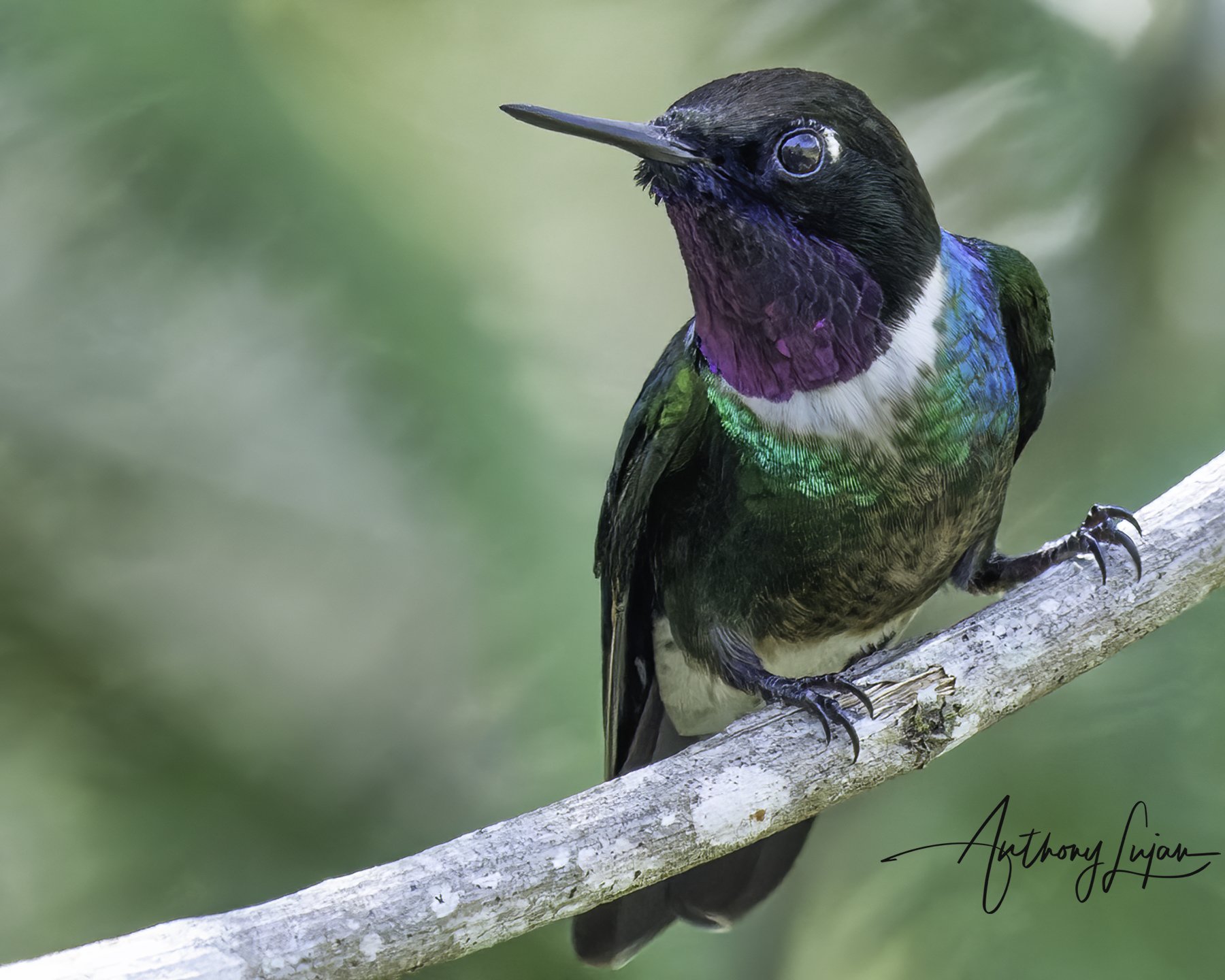
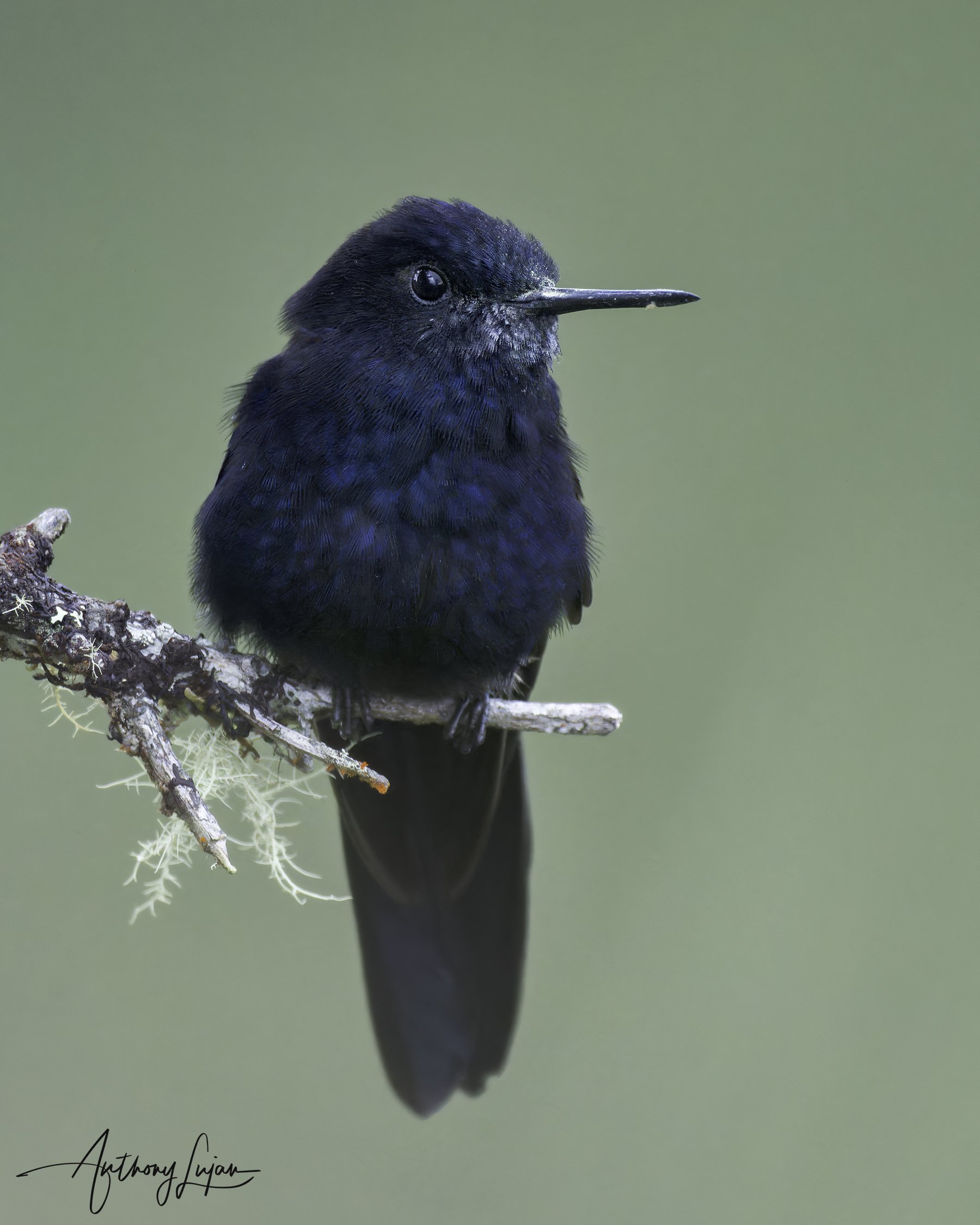
Related species in the Heliangelus genus (9 species total):
Please note: The content provided in this article reflects Anthony’s personal experience and photographic approach. Results can vary depending on light, weather, location, equipment, subject behavior, and field conditions.