
Scientific name: Philodice mitchellii
The Purple-throated Woodstar is a tiny, bee‑like hummingbird of humid forest edges, second growth, and gardens from eastern Panama through western Colombia to western Ecuador. Its global population is estimated at 20,000–49,999 mature individuals, the overall trend is decreasing, it is considered an altitudinal migrant, and it is assessed as Least Concern
At a Glance
Family: Trochilidae (hummingbirds)
Clade: Mellisugini – Bee Hummingbirds
Genus: Philodice — 2 species in total
Range: Eastern Panama (Darién), western Colombia, and western Ecuador
Habitat: Humid forest and cloud‑forest edges, clearings, second growth, and gardens with flowering trees and shrubs
Elevation: From near sea level locally to about 2,400 m, most numerous above 1,000 m and typically between about 800 and 2,000 m
Length: About 6.8–7.5 cm (2.7–3.0 in)
Weight: About 3.0–3.3 g (0.11–0.12 oz)
Number of mature individuals: 20,000–49,999
Population trend: Decreasing
Movement: Altitudinal Migrant (breeds higher, moves lower outside breeding)
IUCN Red List category: Least Concern
Name Origin
The genus name Philodice comes from Greek mythology and has been applied to a small group of elegant, bee‑like hummingbirds. The species name mitchellii honors American naturalist John Mitchell. The English name “Purple-throated Woodstar” refers to the male’s shining violet‑purple throat patch and its woodstar body type: tiny size, short bill, and bumblebee‑like hovering flight.
Taxonomy & Distribution
Philodice mitchellii belongs to the bee hummingbird tribe Mellisugini in subfamily Trochilinae. It is one of two species in Philodice, alongside Magenta-throated Woodstar (P. bryantae). The Purple-throated Woodstar is found discontinuously from eastern Panama’s Darién Province south along both slopes of Colombia’s Western Andes into central Ecuador and in southern Ecuador. It inhabits humid forest and cloud‑forest interiors and edges, as well as nearby second growth and gardens where flowering trees are present.
Subspecies
Monotypic — no subspecies recognized.
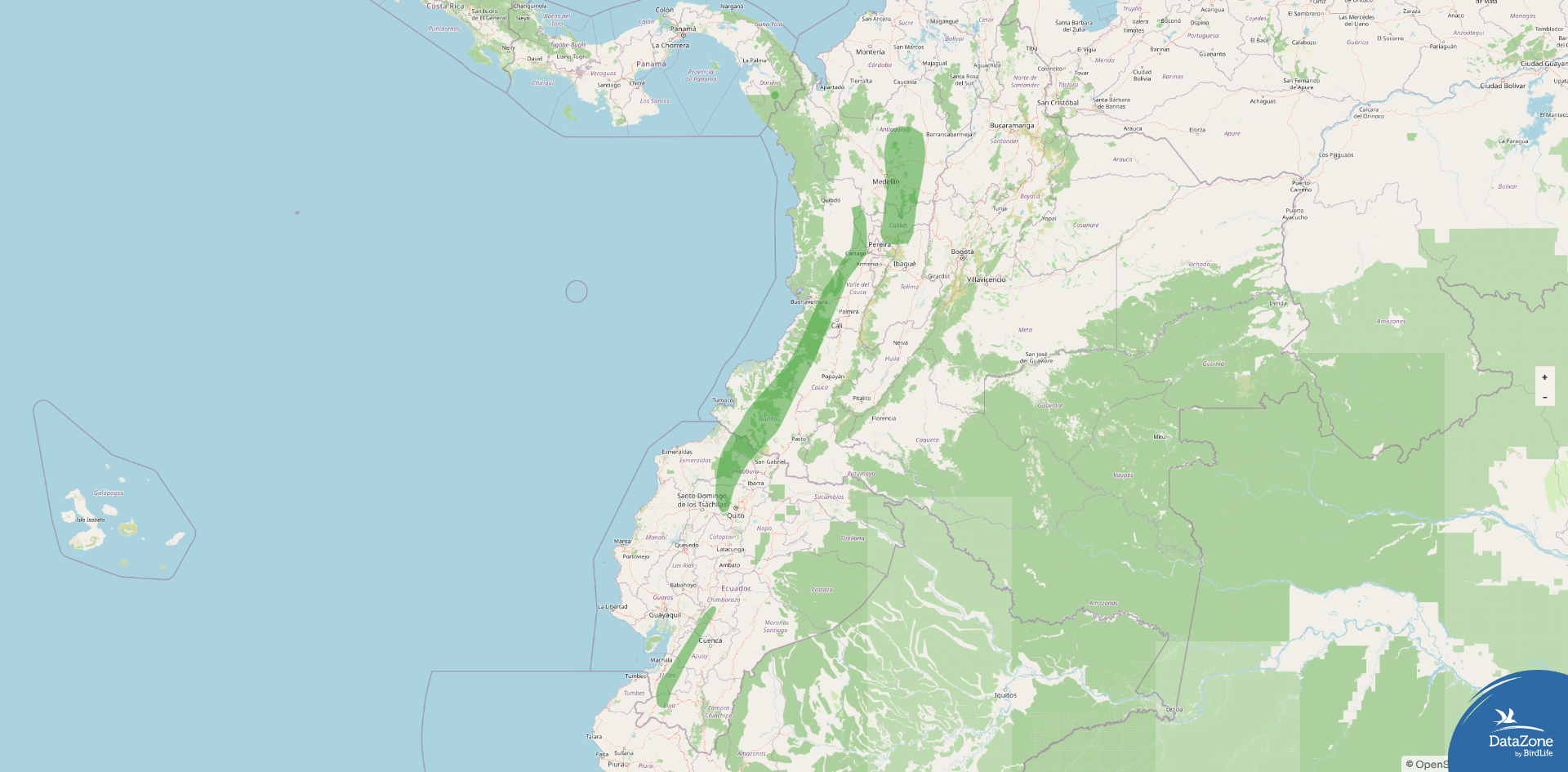
Legend
Green Resident
Species Overview
The Purple-throated Woodstar is a very small hummingbird with a loud, insect‑like wing hum and a bold purple throat in males. It typically forages high in flowering trees such as Cordia and Inga but also visits mid‑story shrubs and gardens, often appearing to “float” as it moves from flower to flower. Within suitable mid‑elevation forests of western Colombia and Ecuador it is uncommon to locally common, yet its global population is relatively small and decreasing.
Male Description
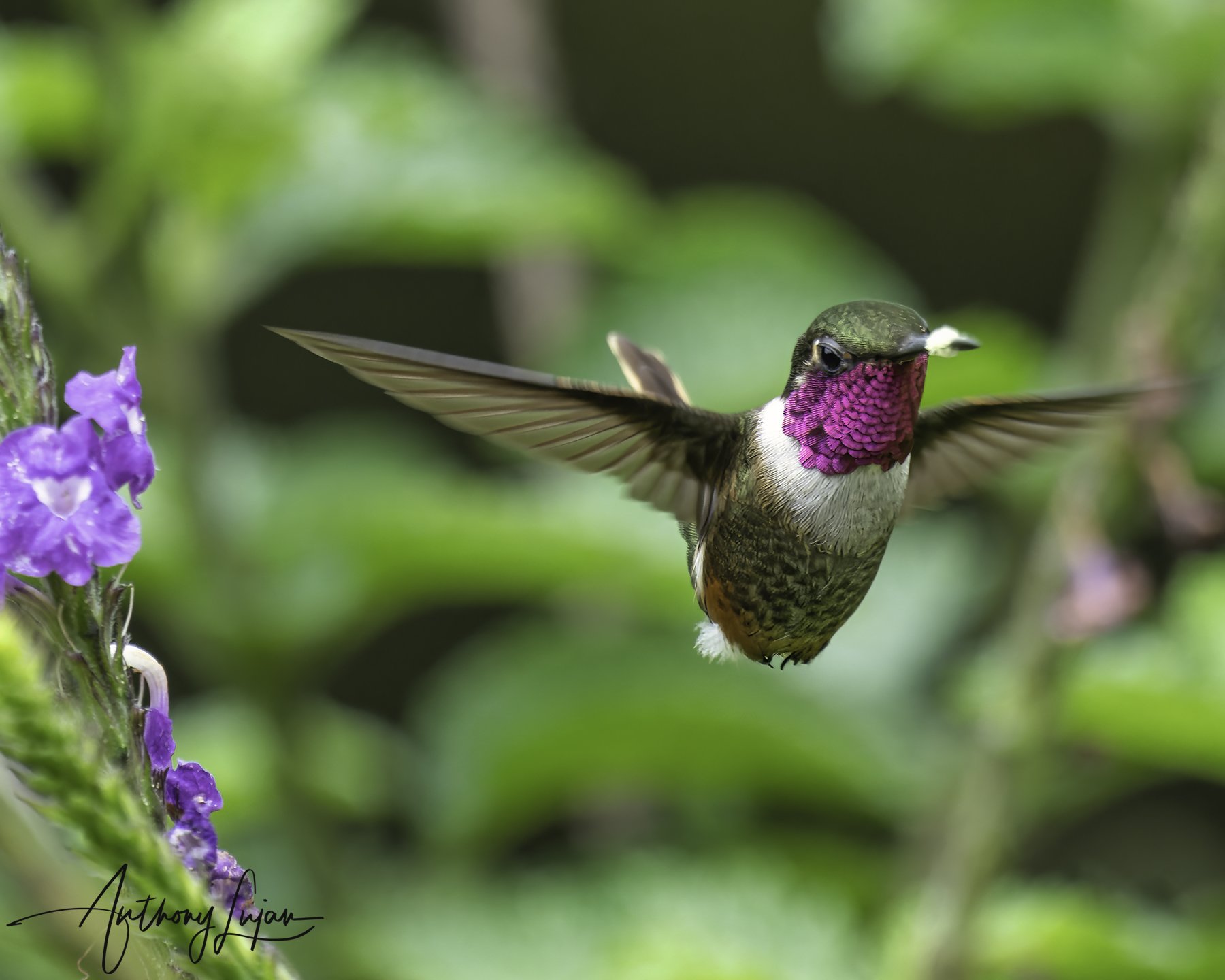
Adult males have dusky bronze‑green upperparts with a small white patch on each side of the rump. The gorget is a shining violet‑purple patch on the throat, bordered below by a neat white band across the upper breast. The lower breast is dusky bronze and the belly and flanks are rufous to cinnamon. The tail is fairly long and forked, brownish‑purple with bronze‑green central feathers and cinnamon outer feathers with a dark subterminal band. The bill is short, straight, and black, and a small white spot behind the eye is often visible.
Female Description
Females share the bronzy green upperparts and white rump patches but lack the purple gorget. They have a buffy‑white throat with dusky speckling at the sides, a white band below the throat, green lower breast, and a rufous belly. The central tail feathers are bronze‑green and the others cinnamon with a black band near the end and paler tips, giving a patterned look when spread. Juveniles resemble females; young males gradually develop the purple gorget and sharper white breast band with maturity.
Habitat & Behavior
Purple-throated Woodstars inhabit humid forest and cloud‑forest edges, clearings, second growth, and gardens at low to mid elevations on the Pacific slope and in some interior Andean valleys. They often forage high in flowering trees—especially Cordia, Inga, and similar species—where males defend small floral territories.
They feed primarily on nectar, hovering at blooms in the canopy and mid‑story and occasionally visiting lower shrubs or garden flowers. Insects and other small arthropods supplement the diet, taken by hawking from perches or picked from foliage. Their flight is agile and direct, with a characteristic loud wing hum that has earned them nicknames like “buzzing hummingbird” in Spanish.
Breeding
In southwestern Colombia, Purple-throated Woodstars breed mainly between December and May; breeding seasons elsewhere are less well documented but likely follow local peaks in flowering. The female builds a tiny cup nest of fine plant fibers and spiderweb on a thick branch of a tall tree, typically 8–12 m above ground.
The clutch contains two white eggs. The female alone incubates for about 15–17 days; the fledging period is not precisely known but is expected to be around three weeks based on similar bee hummingbirds. Males do not assist with nesting but may continue to defend feeding territories nearby.
Movement
The Purple-throated Woodstar is an altitudinal migrant. In Colombia it breeds at higher elevations and moves to lower elevations outside the breeding season, tracking flowering and climatic conditions along mountain slopes. These movements are primarily up and down elevation gradients within the same general regions rather than long‑distance latitudinal migrations.
Population
The global population is estimated at 20,000–49,999 mature individuals. The species has a relatively restricted range from eastern Panama through western Colombia to western Ecuador and is considered uncommon to locally common in suitable habitats. It appears to depend strongly on native flowering trees for nectar, and habitat changes that reduce these resources can impact local numbers. The overall trend is decreasing, though precise rates are not quantified.

Conservation
The Purple-throated Woodstar is assessed as Least Concern, with a small but apparently declining population and a limited geographic range. It occurs in several protected areas and also uses disturbed and second‑growth habitats, which offers some resilience to moderate forest loss. However, continued deforestation and degradation of humid and cloud forests in western Colombia and Ecuador, along with the loss of native flowering trees, remain key concerns. Maintaining forest edges, secondary forests, and native tree cover in agricultural mosaics is important for the species’ long‑term persistence.

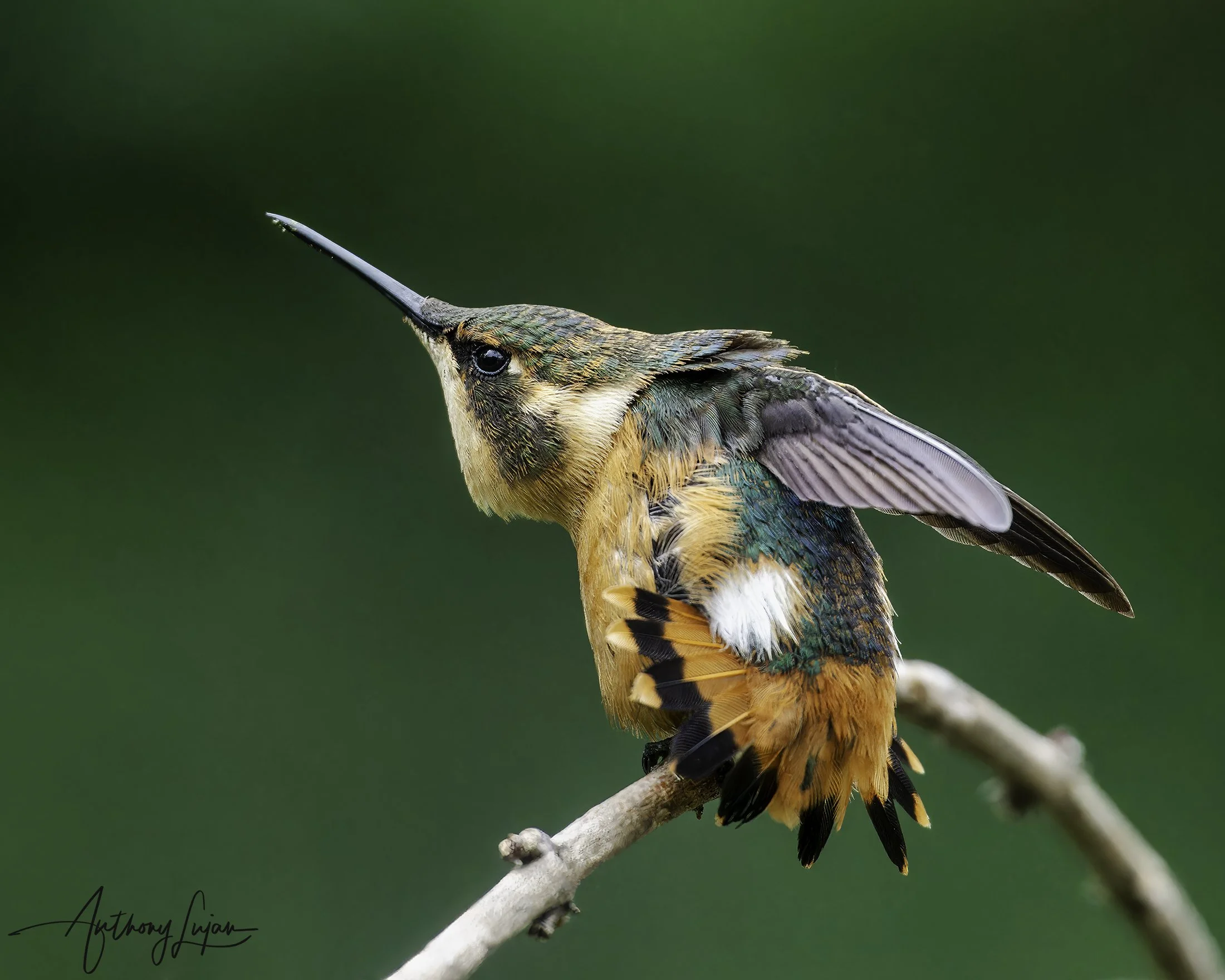
Related species in the Philodice genus (2 species in total):

Please note: The content provided in this article reflects Anthony’s personal experience and photographic approach. Results can vary depending on light, weather, location, equipment, subject behavior, and field conditions.