
Ruby-topaz Hummingbird
Scientific name: Chrysolampis mosquitus
The Ruby-topaz Hummingbird (often shortened to “Ruby Topaz”) is a small, brilliantly iridescent hummingbird of open and semi‑open habitats across northern and central South America and Trinidad and Tobago. The total number of mature individuals is unknown, the global population trend is uncertain, it is treated as fully migratory, and it is currently assessed as Least Concern.
At a Glance
Family: Trochilidae (hummingbirds)
Clade: Polytminae – Mangoes
Genus: Chrysolampis — monotypic (1 species)
Range: Eastern Panama, northern Colombia and Venezuela, the Guianas, much of northern, central, and eastern Brazil, eastern Bolivia, Trinidad and Tobago, and the ABC islands (Aruba, Bonaire, Curaçao); vagrants to Peru, Argentina, and possibly Paraguay
Habitat: Edges and interiors of open savanna‑like landscapes, shrubby arid hillsides, dry and moist scrub, forest edges, gardens, cultivated areas, and coastal lowlands
Elevation: Mostly below about 500 m (1,600 ft), but locally up to roughly 1,700 m (5,600 ft)
Length: About 8–9.5 cm (3.1–3.7 in)
Weight: About 2.5–5 g (0.09–0.18 oz)
Number of mature individuals: Unknown
Population trend: Unknown
Movement: Full Migrant (migratory throughout much of its range, with complex regional movements)
IUCN Red List category: Least Concern
Name Origin
The genus name Chrysolampis combines Greek roots meaning “golden” and “shining,” referring to the male’s fiery golden and ruby iridescence. The species name mosquitus likely refers to its mosquito‑like size and rapid, darting flight. The English name “Ruby-topaz Hummingbird” describes the male’s brilliant ruby‑red crown and top of the head combined with the glowing golden‑topaz throat and breast.
Taxonomy
Chrysolampis mosquitus belongs to the mango clade (subfamily Polytminae) within the hummingbird family. It is the only species in the genus Chrysolampis; no other species are recognized in this genus in your “family” framework.
The Ruby-topaz Hummingbird has a broad but patchy distribution. It occurs from eastern Panama east through northern Colombia, Venezuela, and the Guianas into northeastern Brazil. From there it extends south through central and eastern Brazil as far as Mato Grosso and west into eastern Bolivia. Its range includes Trinidad and Tobago and the ABC islands (Aruba, Bonaire, Curaçao). Vagrants have been recorded in Peru and Argentina, with at least one unconfirmed sighting in Paraguay. Within this large range it is most frequent in lowland and foothill zones with open or semi‑open vegetation.
Subspecies and Distribution
Monotypic — no subspecies recognized.
Distribution: The Ruby-topaz Hummingbird is widely distributed across northern South America, including Trinidad and Tobago and several small Caribbean islands. It occupies open and semi‑open habitats from eastern Panama and northern Colombia eastward along the Caribbean and northern South American coast, across Venezuela and the Guianas, and southwards through much of northern and central Brazil and into eastern Bolivia. It is a vagrant further south into Argentina and possibly Paraguay.
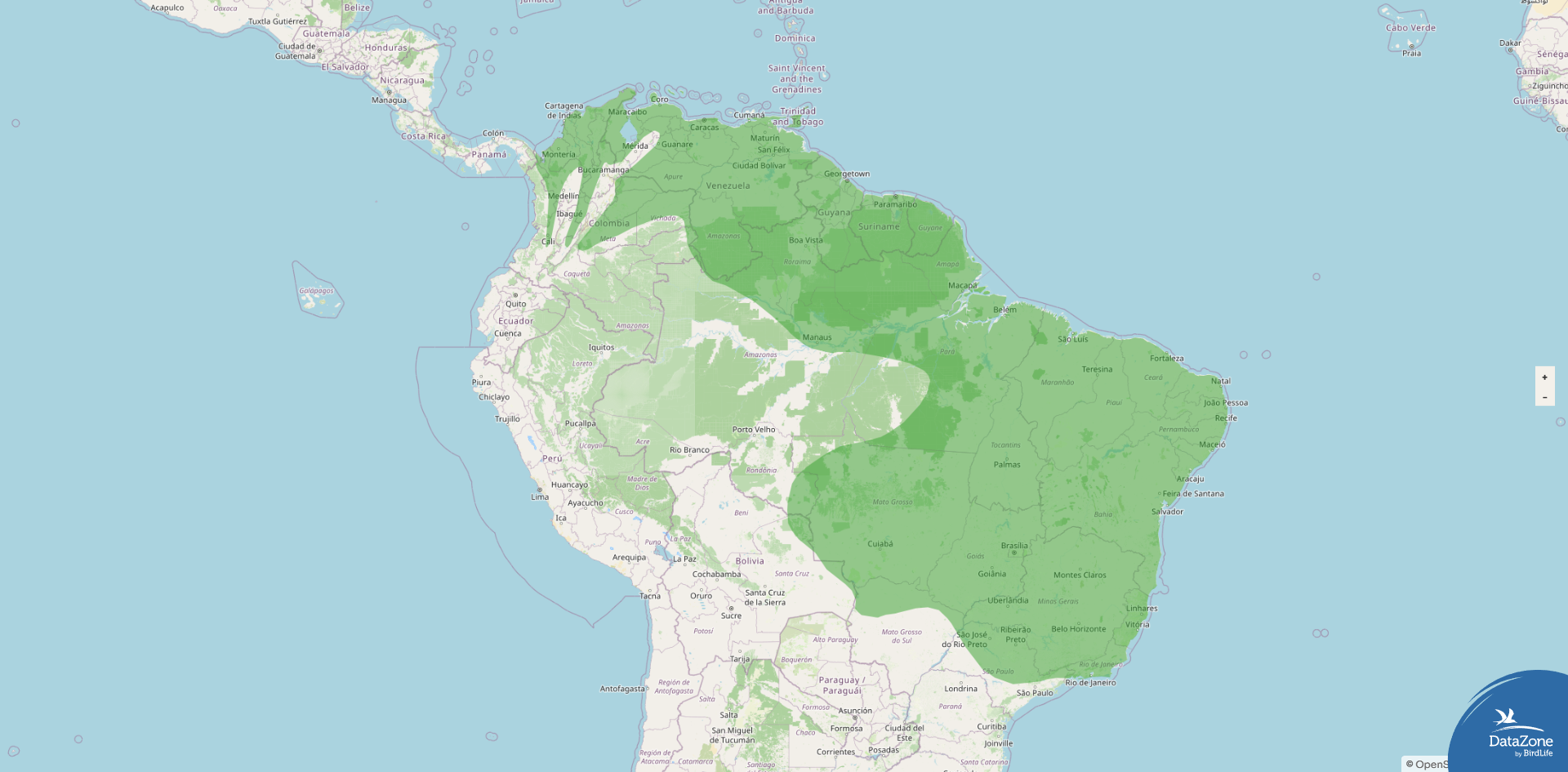
Legend
Green Resident
Species Overview
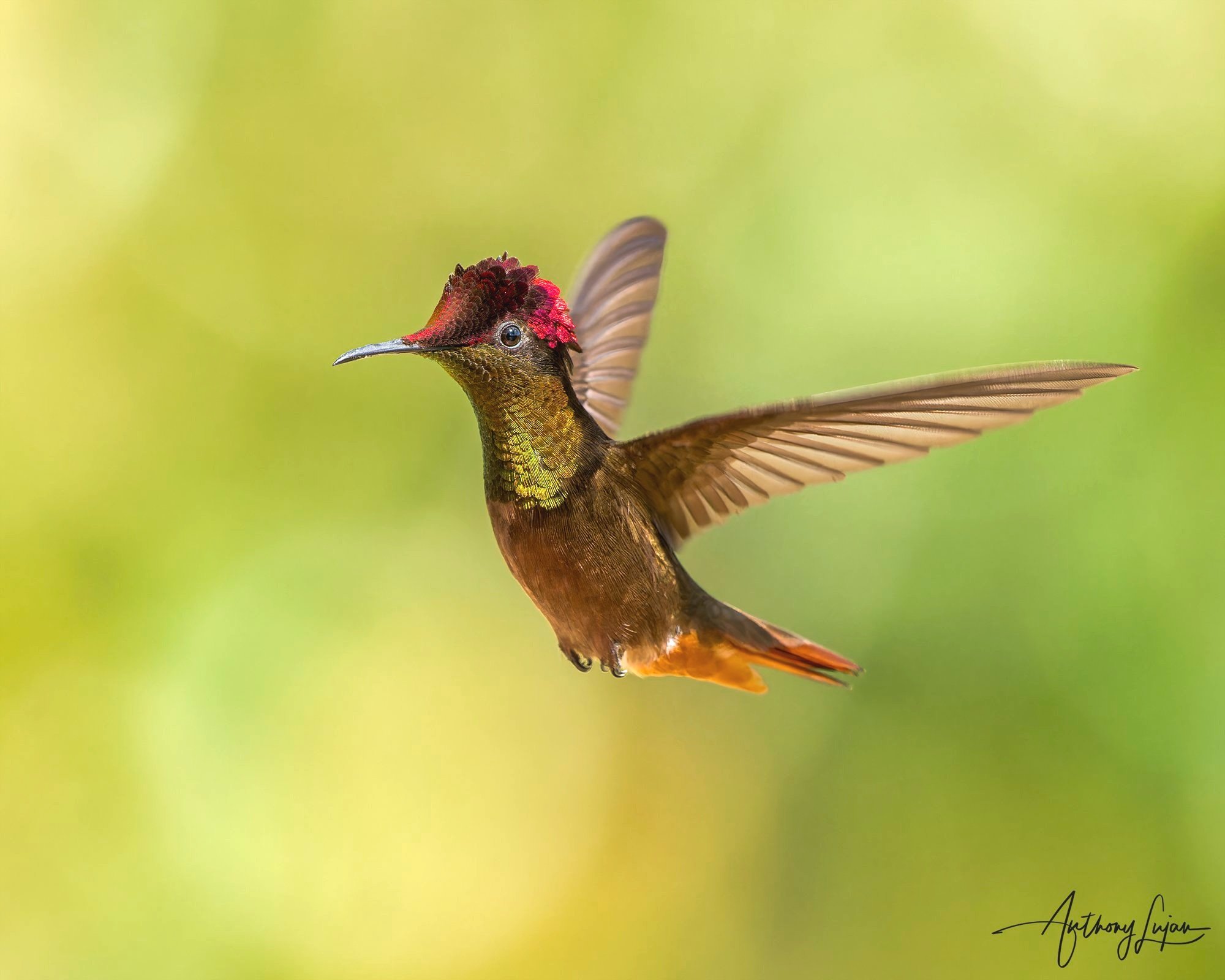
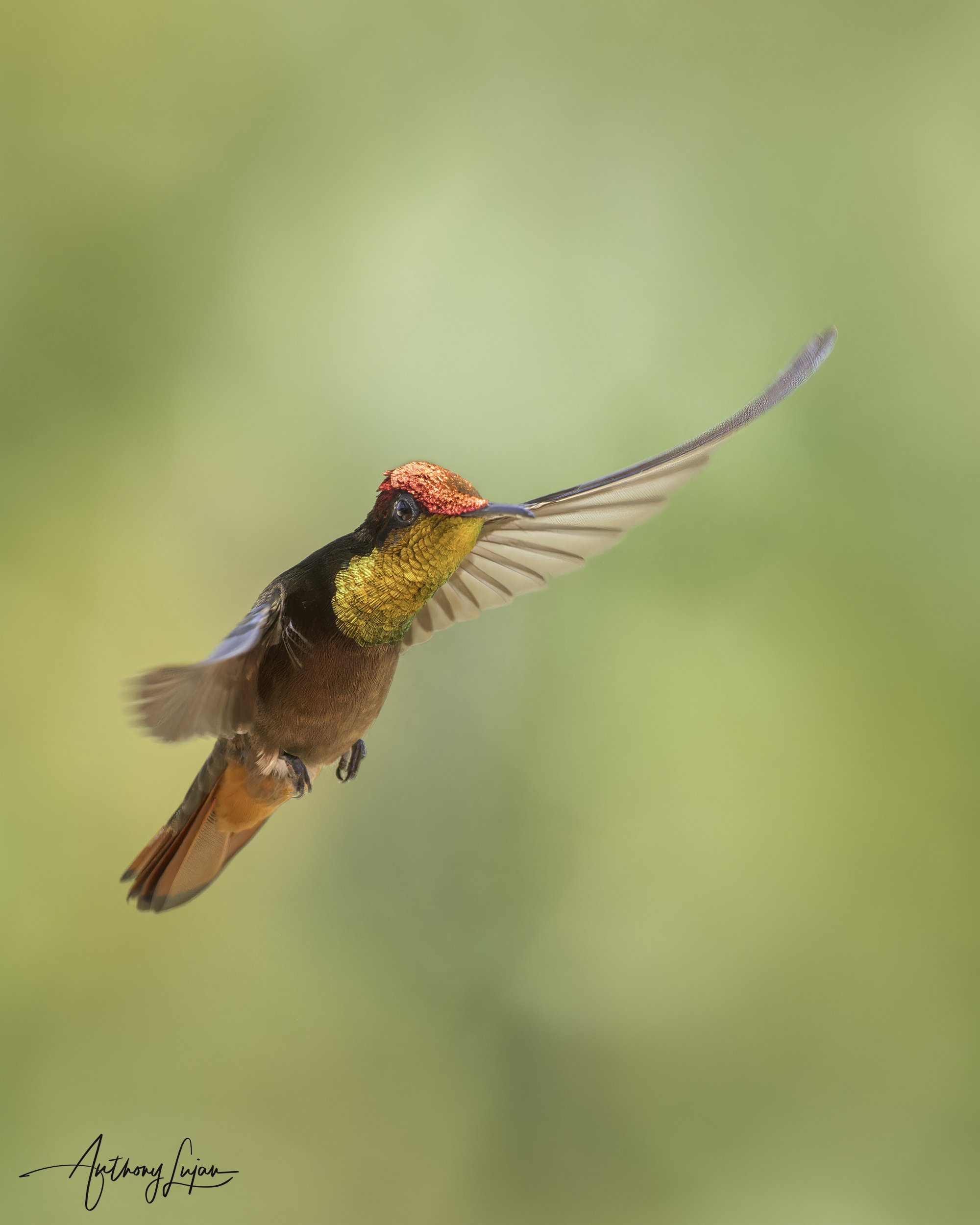
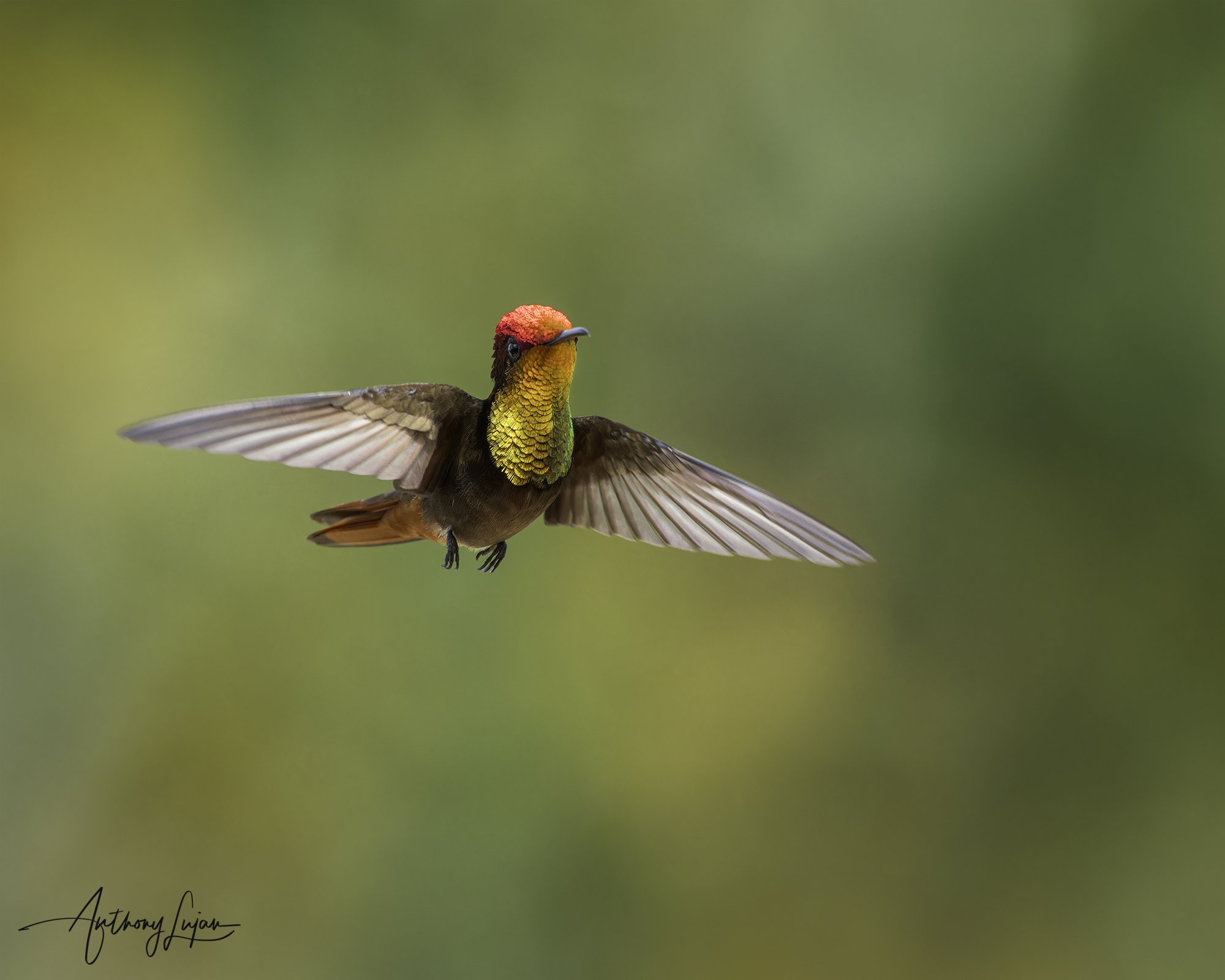
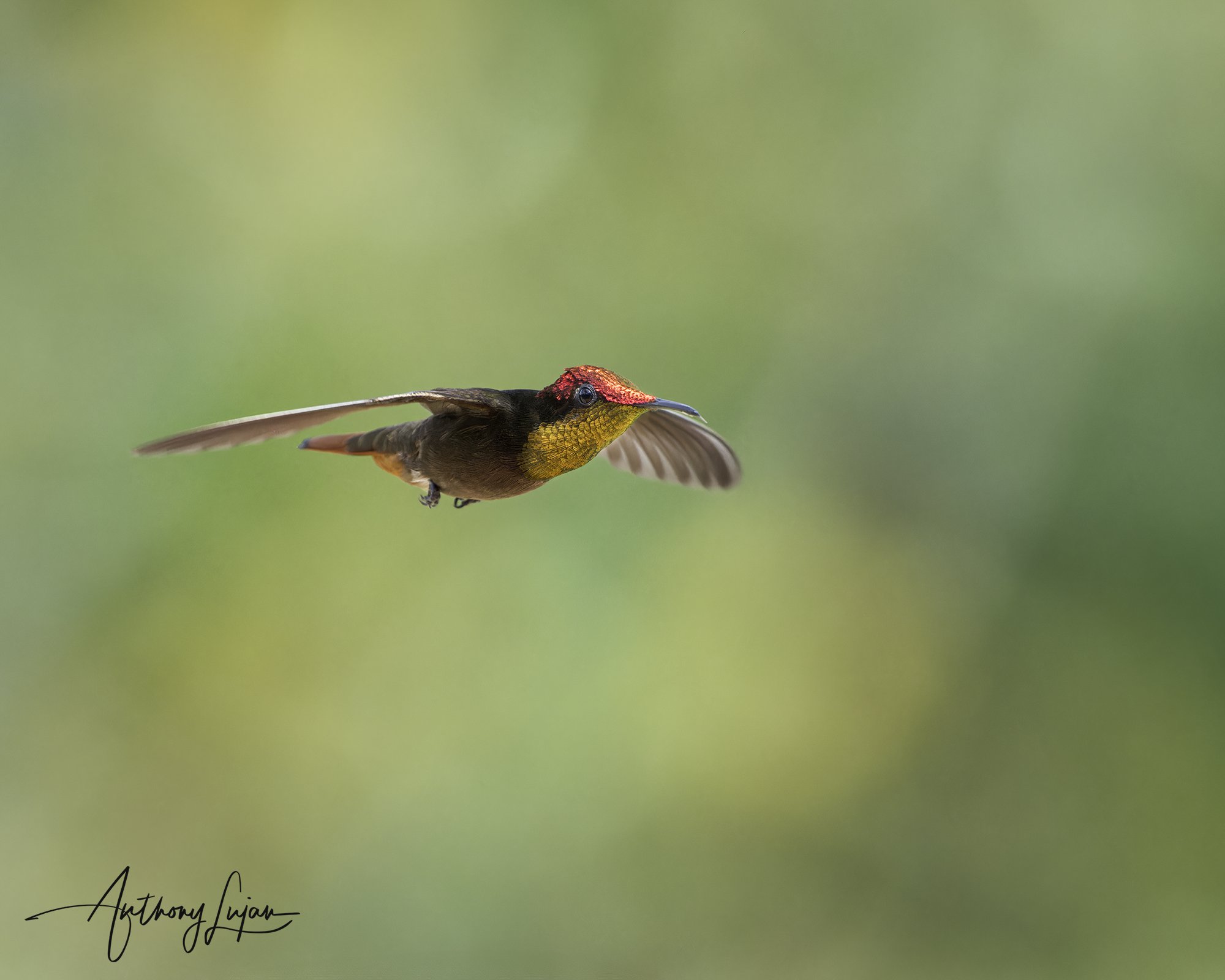
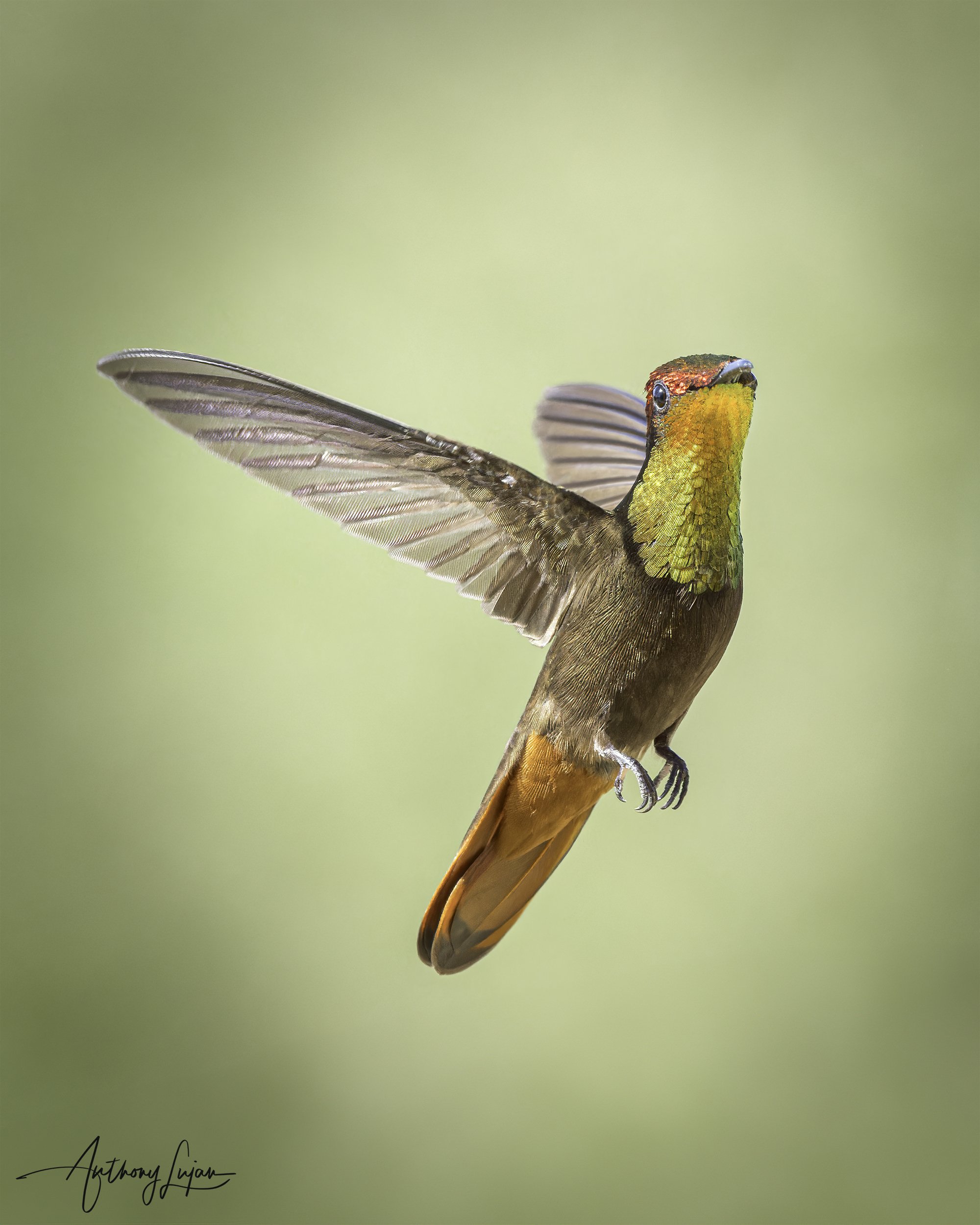
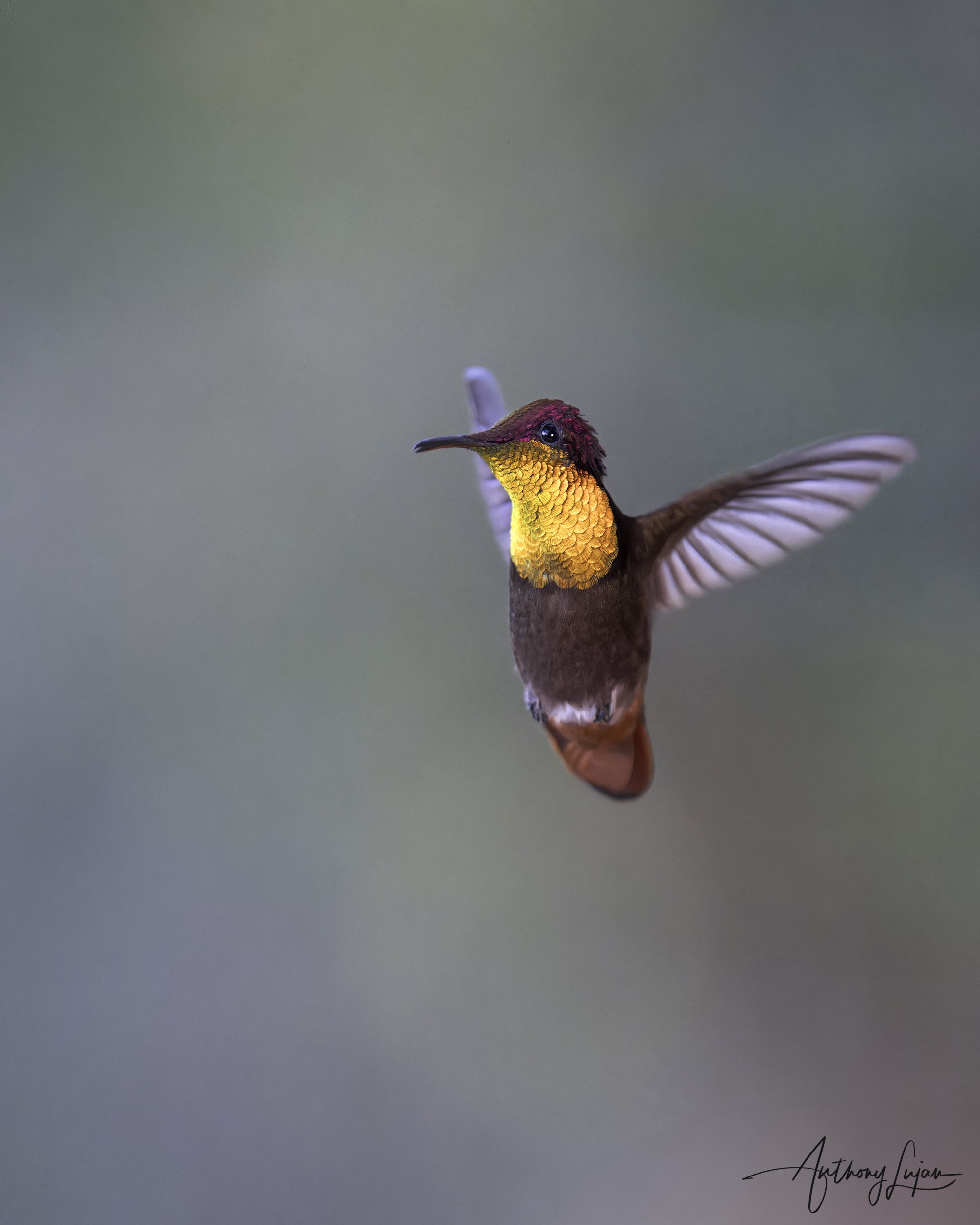
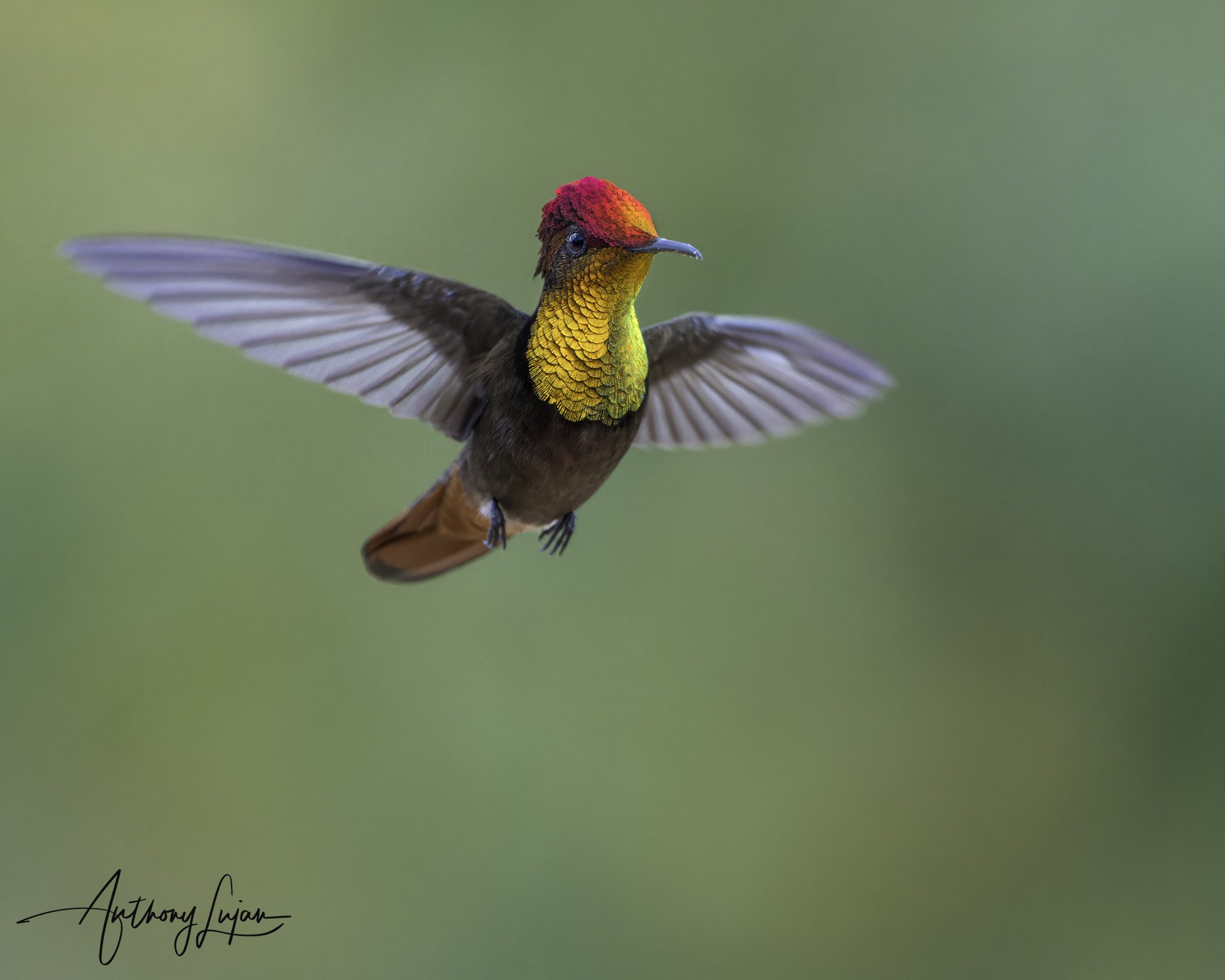
The Ruby-topaz Hummingbird is a highly iridescent species, particularly striking in the male, whose crown and nape flash deep ruby‑red and whose throat and breast glow golden or topaz‑colored in strong light. The species favors open to semi‑open habitats such as savanna edges, shrubby hillsides, gardens, and cultivated areas, often perching conspicuously on exposed twigs or wires. It is considered migratory, but its movement patterns vary regionally and are not fully understood, with different populations shifting north–south, east–west, or between coastal and inland areas at different times of year.
Male Description
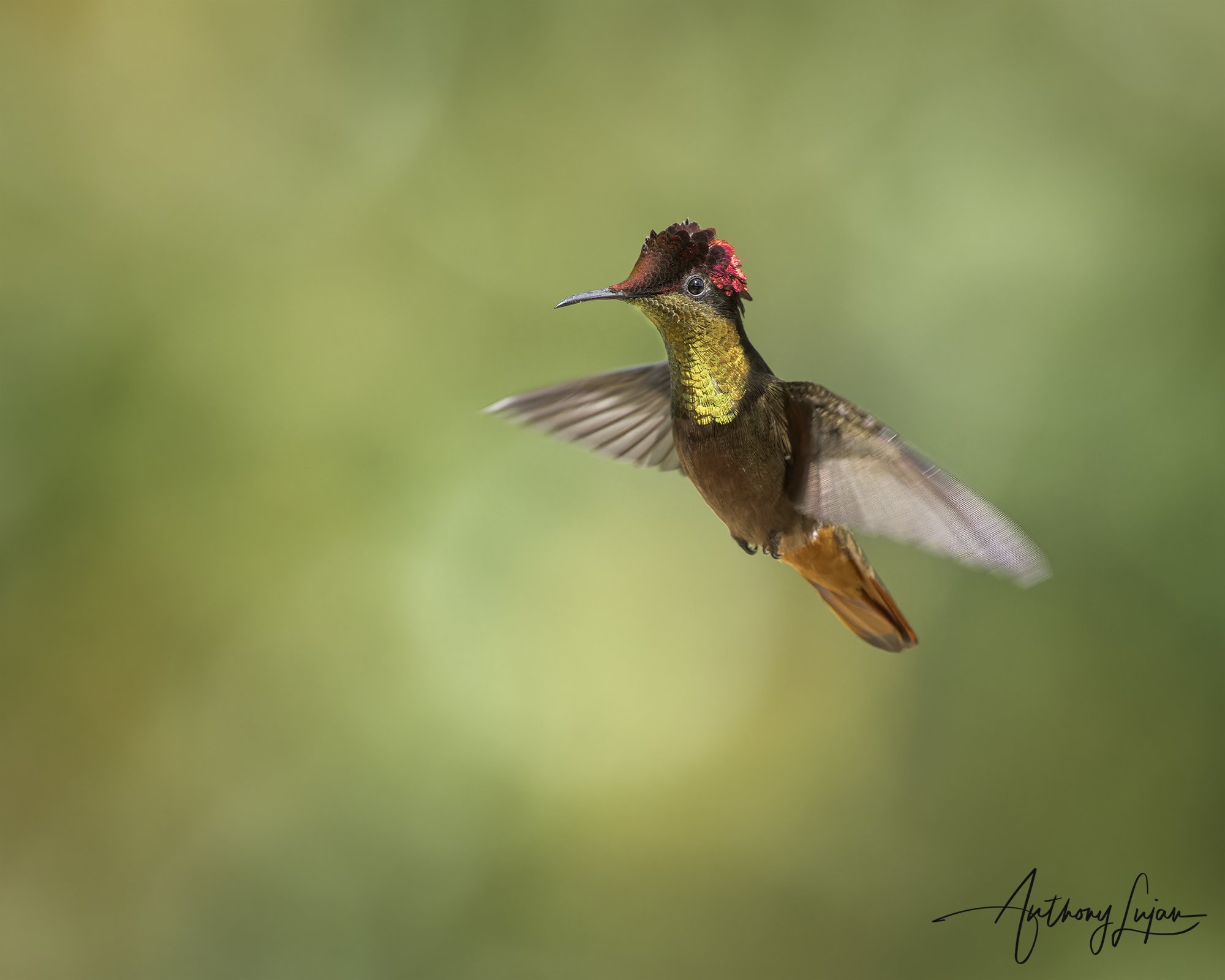
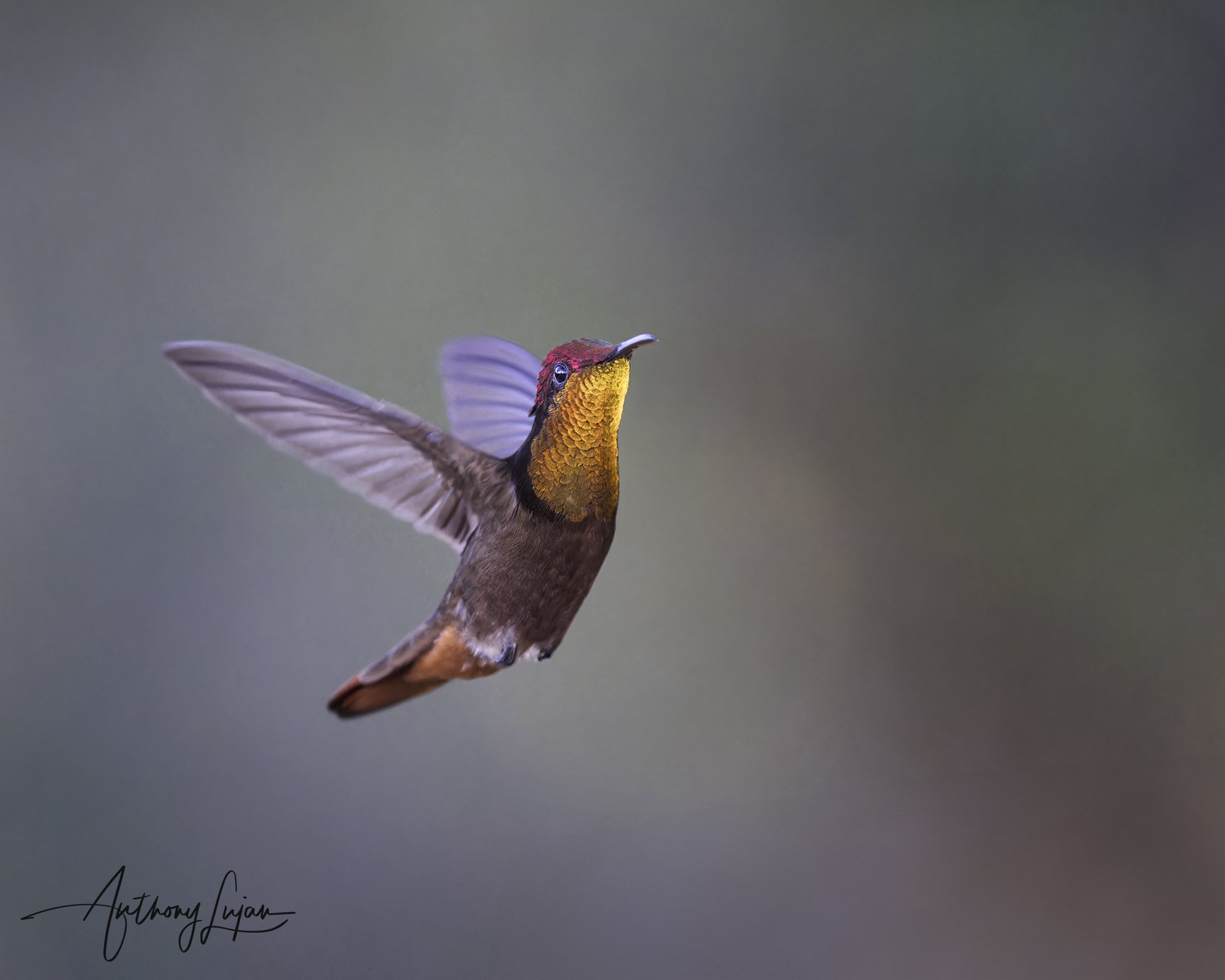
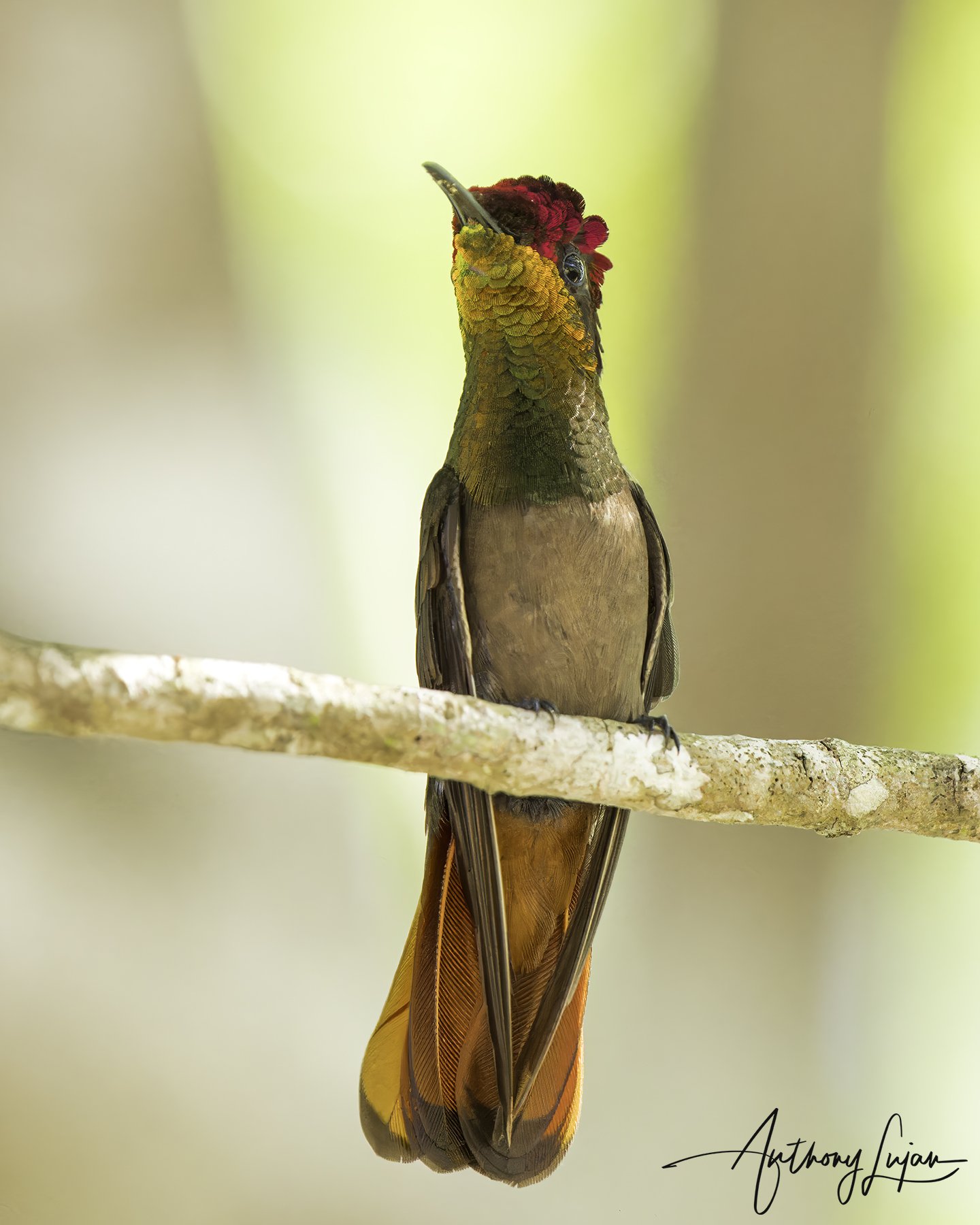
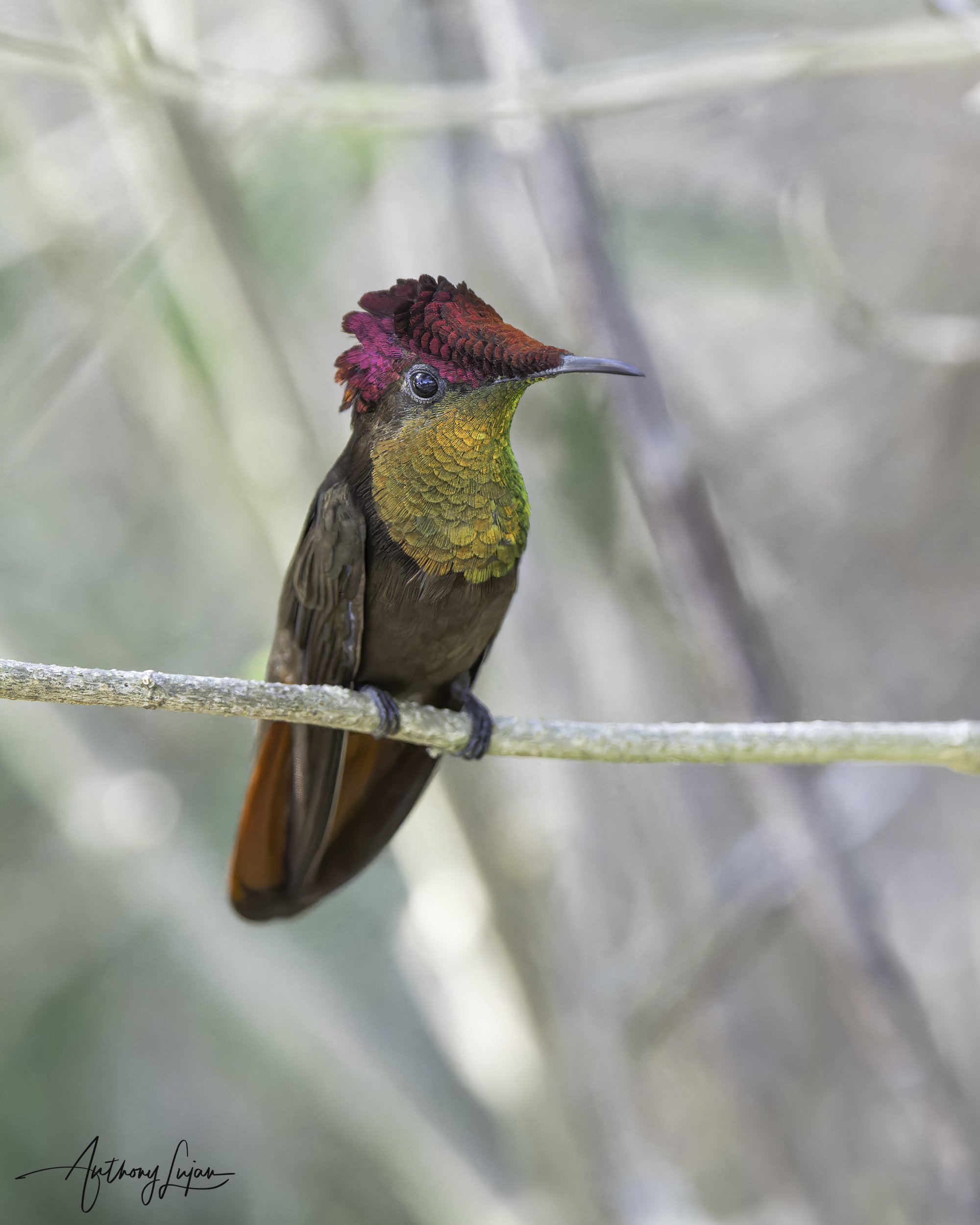
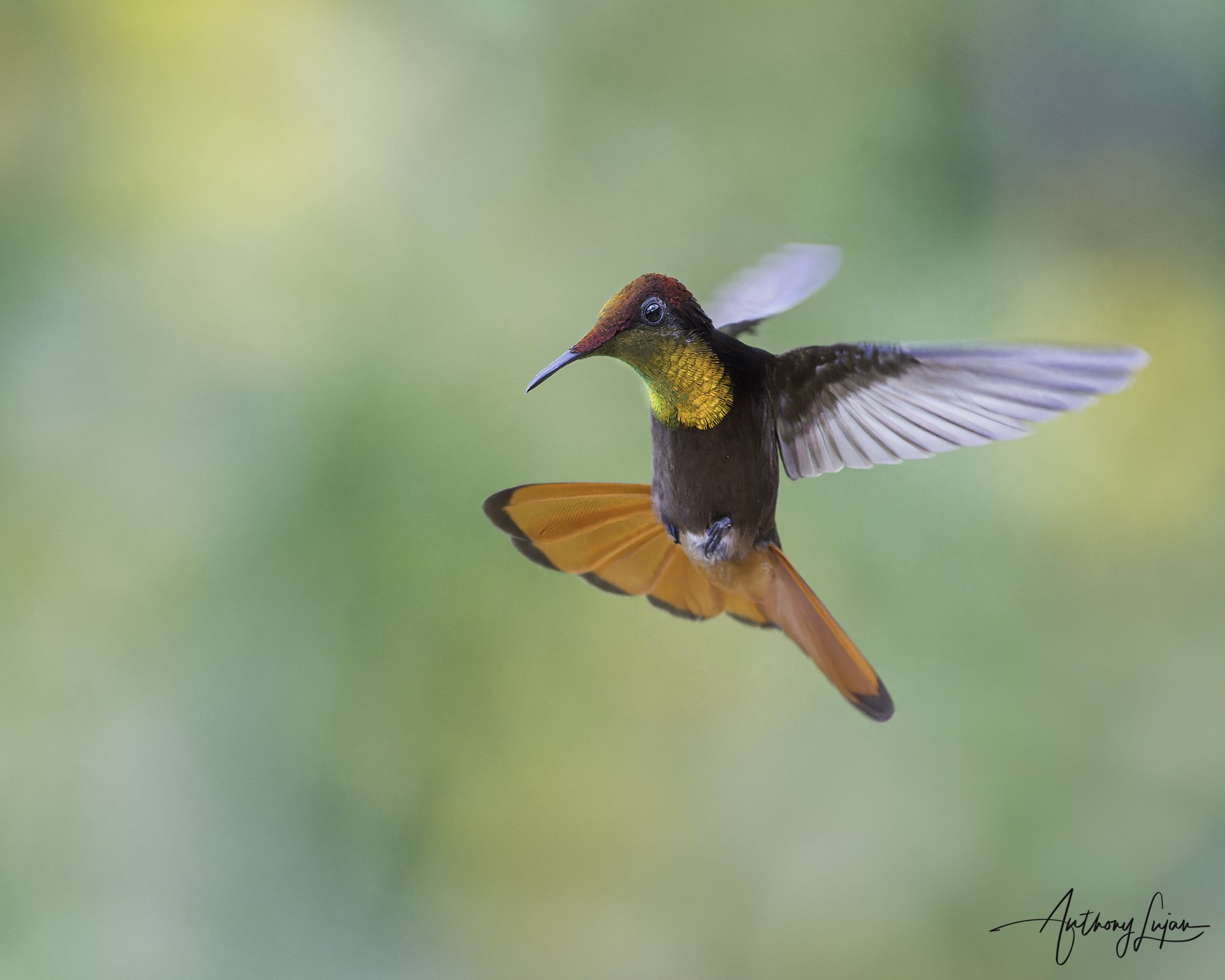
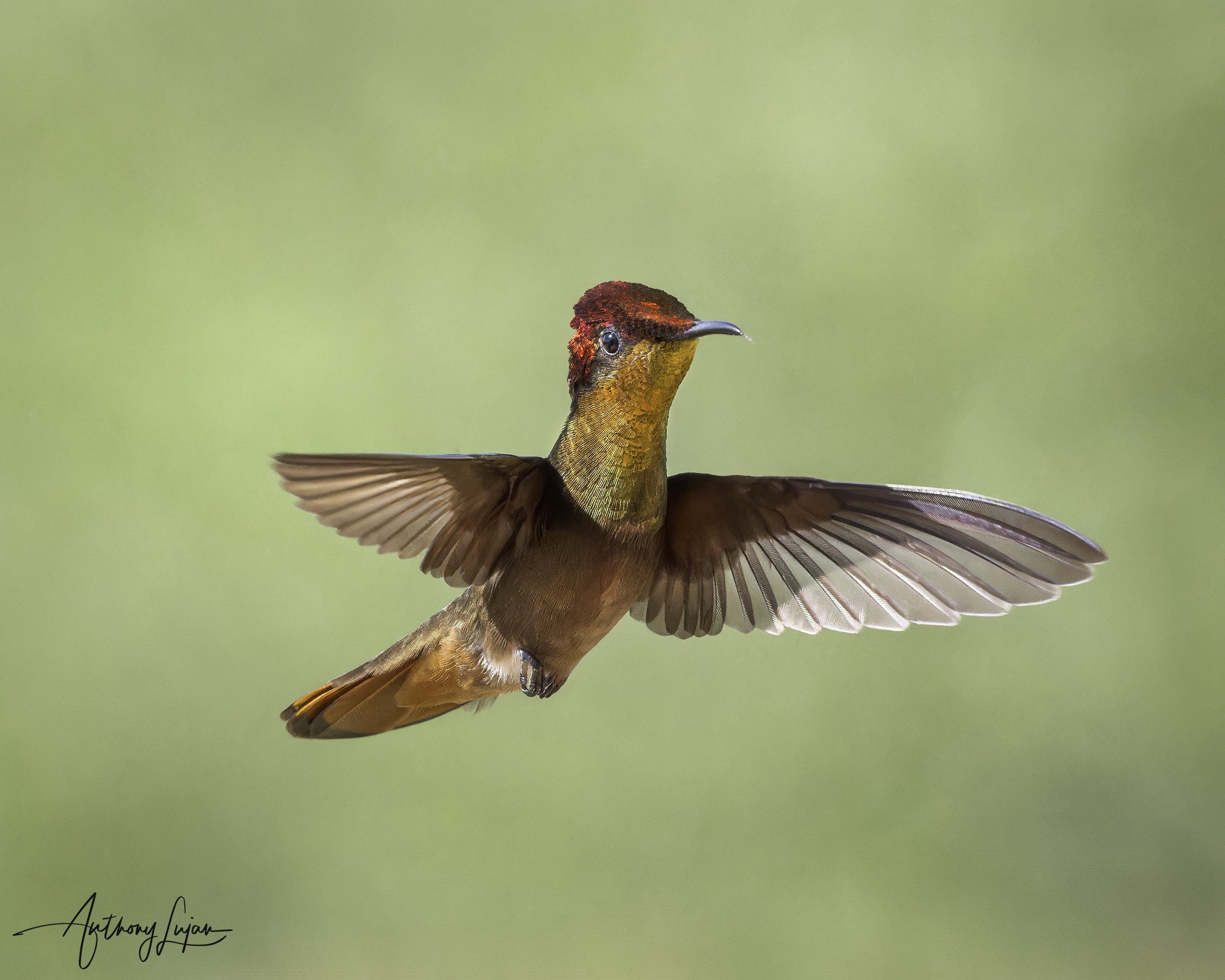
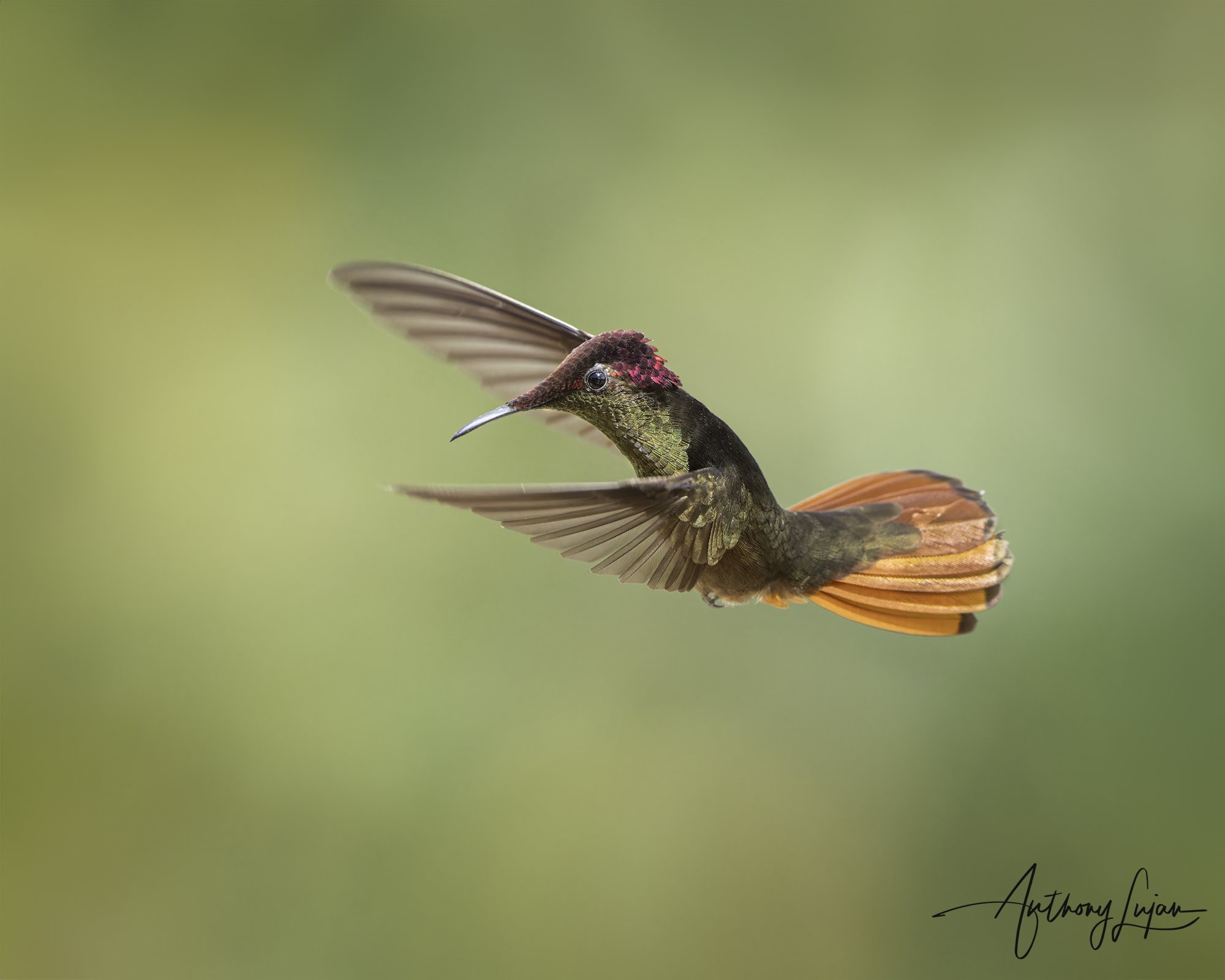
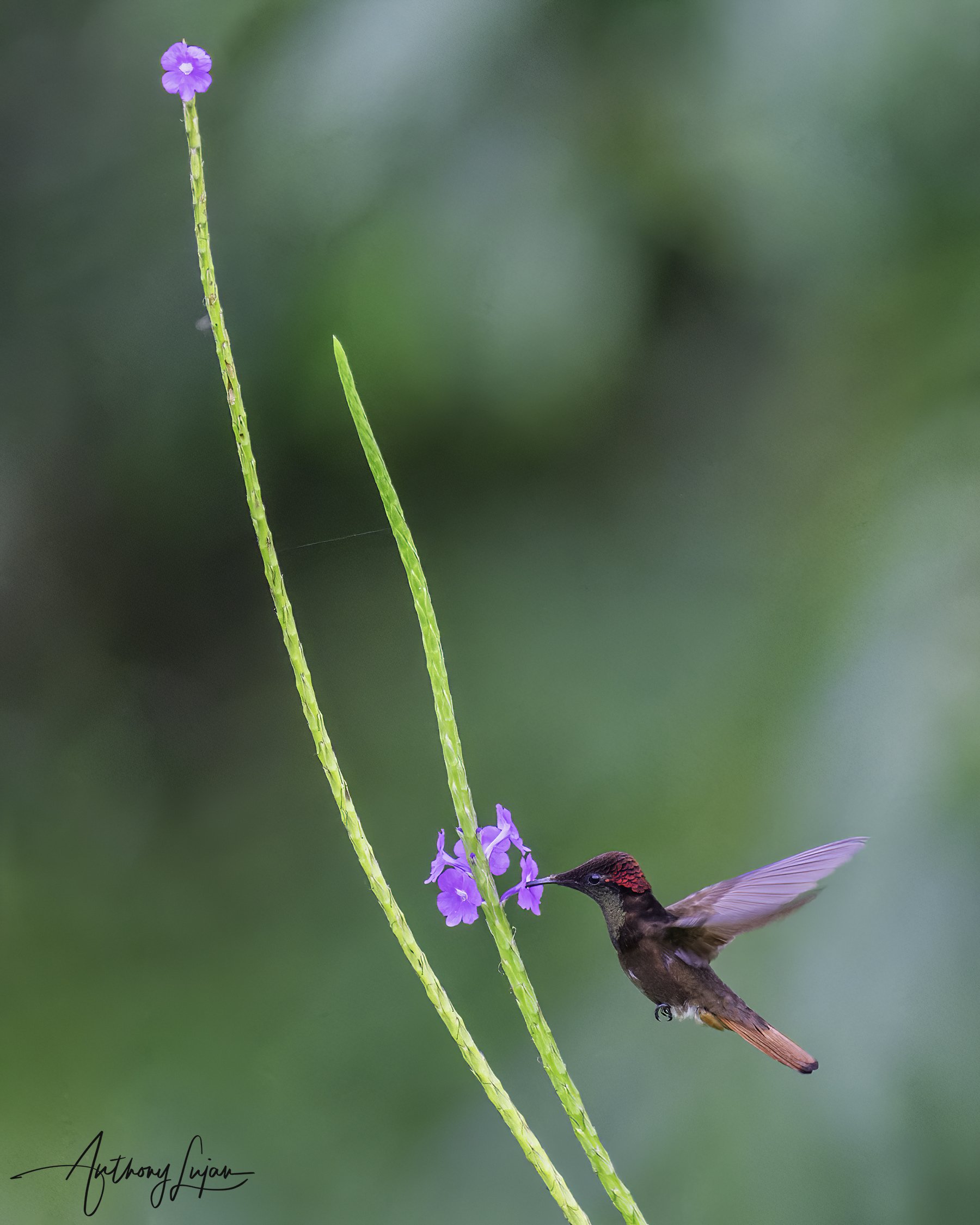
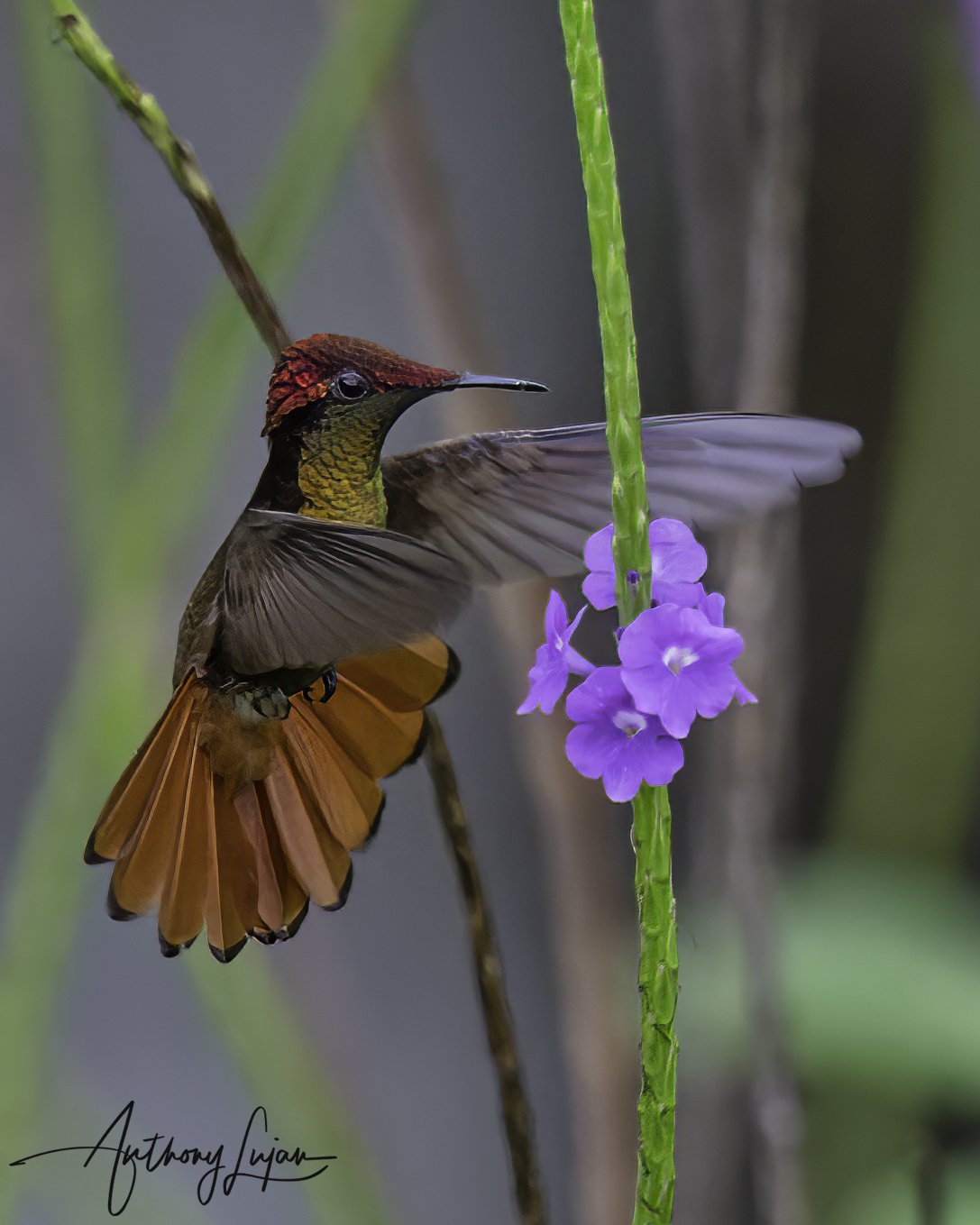
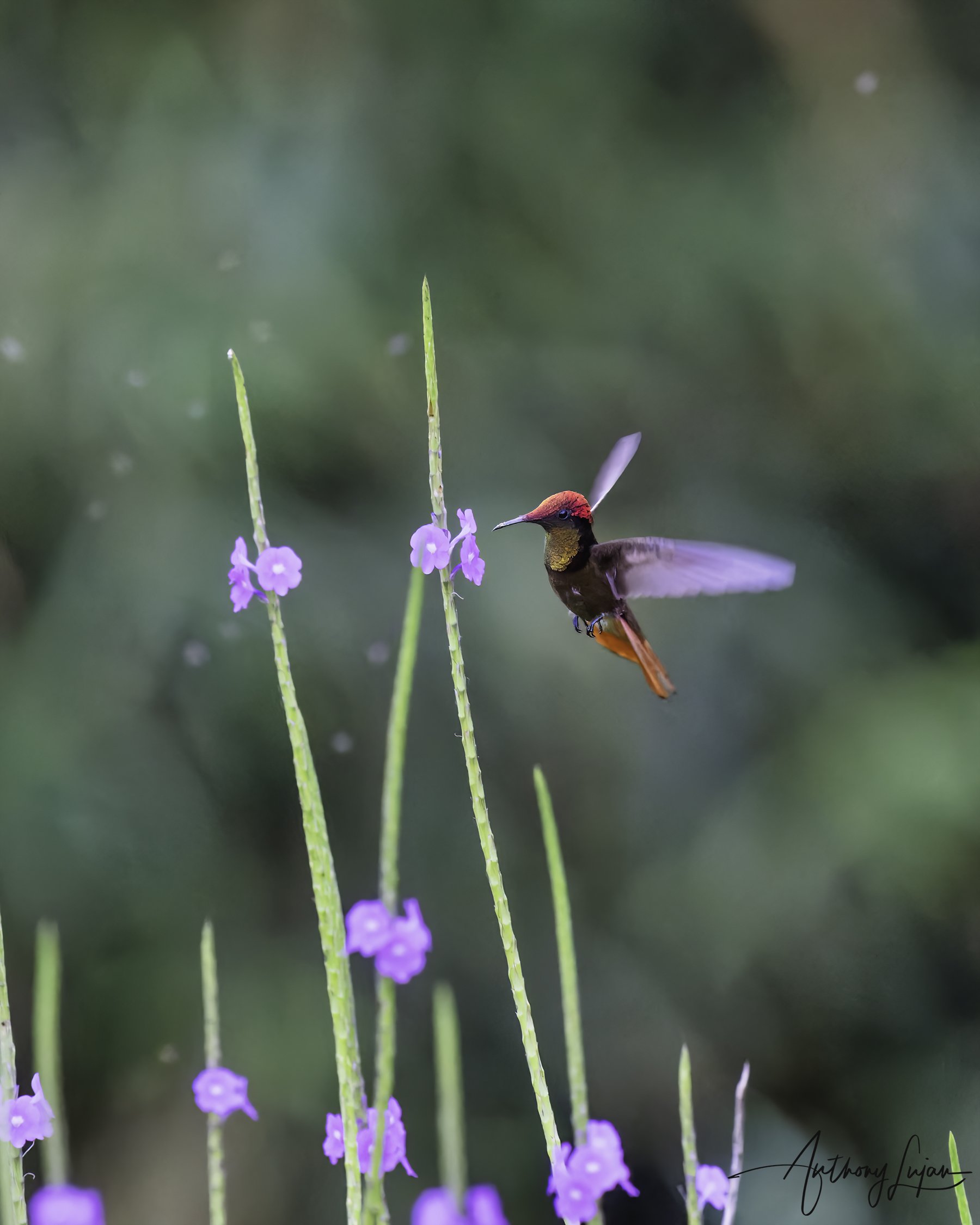
Adult males are 8–9.5 cm long and weigh about 2.5–5 g. They have an almost straight, relatively short black bill. The upperparts are dark brown with an olive gloss. The crown and nape are glossy ruby‑red, forming a strongly iridescent cap that can look dull brownish when not well lit. The throat and breast are typically iridescent golden or golden‑orange, though in some individuals and light they may appear more emerald green. The rest of the underparts, including belly and flanks, are brown.
The tail is chestnut to rufous with black tips, often looking warm reddish in flight. When perched, males may appear relatively dull until they turn into the light, at which point the head and throat flash brilliantly.
Female Description
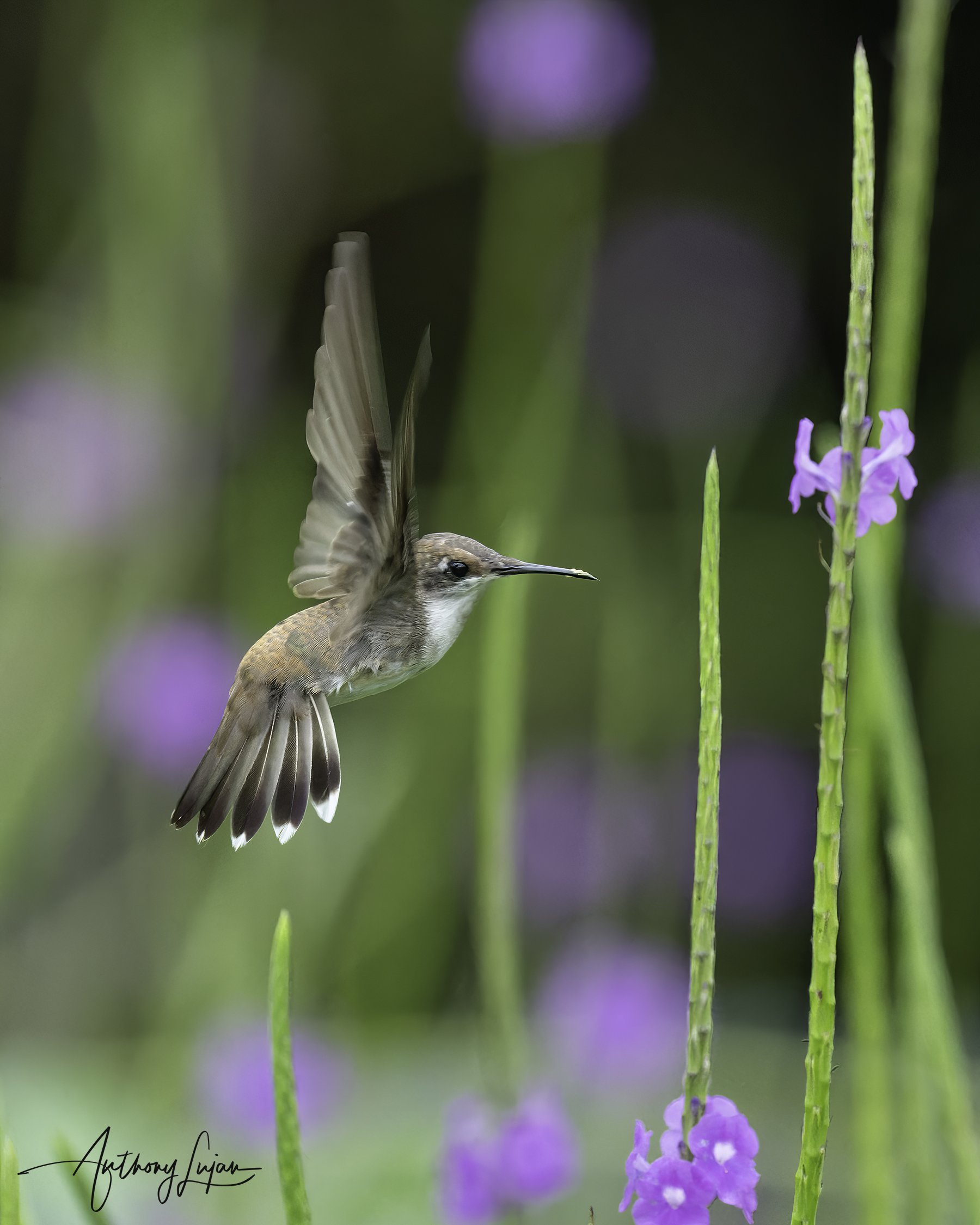
Females have bronze‑green upperparts and pale gray underparts. The chin and throat are whitish to pale gray, sometimes washed faintly buff and with subtle spotting, and the breast and belly are light gray. The tail is largely chestnut with a dark subterminal band and white tips, while the central tail feathers are olive green. The bill is straight and black, similar in length to the male’s. Juveniles resemble females, with males gradually developing the intense head and throat iridescence as they age.
Habitat & Behavior
Ruby-topaz Hummingbirds inhabit the interiors and edges of open savanna‑like landscapes, disturbed scrub, shrubby arid hillsides, forest edges, gardens, and cultivated areas. They are common in coastal lowlands and inland riverine zones where shrubby vegetation and flowering trees are interspersed with open ground. They can be found in both natural savannas and human‑modified landscapes, including farms, orchards, and suburban gardens.
They feed on nectar from a wide variety of flowering shrubs, trees, epiphytes, cacti, and crops. They show a preference for high‑sugar flowers such as those of samaan trees and Ixora plants where available. Birds typically forage by hovering at blossoms or perching to feed, and they supplement their diet with small insects caught in short aerial sallies or gleaned from foliage. Males often perch on exposed twigs, fence lines, or wires to survey their surroundings and may be territorial around rich nectar sources.
Breeding
The breeding season varies across the range, reflecting local rainfall and flowering patterns. In the northern parts of the range, breeding spans roughly December to June, while in much of Brazil it occurs mostly from about September to March. The female constructs a small cup nest from fine plant fibers and spider silk, decorating the exterior with lichens for camouflage.
Nests are typically placed on a small branch or in a fork of a branch between about 1 and 4 m above the ground, often in shrubs or small trees at forest edges, in gardens, or in open country. The clutch consists of two white eggs. The female alone incubates and feeds the chicks; incubation is around two weeks, followed by a nestling period of roughly three weeks before fledging, similar to other small hummingbirds.
Movement
The Ruby-topaz Hummingbird is migratory throughout much of its range, though its movements are complex and not fully defined. In Brazil it appears to move north–south seasonally, while along the northern coast of South America and offshore islands it shifts east–west, tracking flowering and climatic conditions. Birds in Trinidad and Tobago and neighboring mainlands may make short migrations between islands and coastal regions. Overall, the species is considered a full migrant with regionally variable patterns rather than a simple, single-direction migration.
Population
The total number of mature individuals is unknown. The species has a very large geographic range and is often locally common in suitable open and semi‑open habitats, especially in areas with abundant flowering shrubs and trees. Although detailed trend data are lacking, there is no strong evidence of rapid global decline. The flexibility to use savannas, scrub, gardens, and agricultural landscapes may buffer the species against some forms of habitat change.

Conservation
The Ruby-topaz Hummingbird is assessed as Least Concern due to its extensive range and apparent overall abundance. No major widespread threats are known, though local pressures include habitat alteration in coastal and savanna ecosystems, heavy pesticide use in agricultural areas, and urban development that removes flowering vegetation. Protecting and restoring savanna edges, shrubby habitats, and nectar‑rich gardens, as well as maintaining flowering tree plantings in rural and urban landscapes, will continue to benefit the species.
taken in Brazil
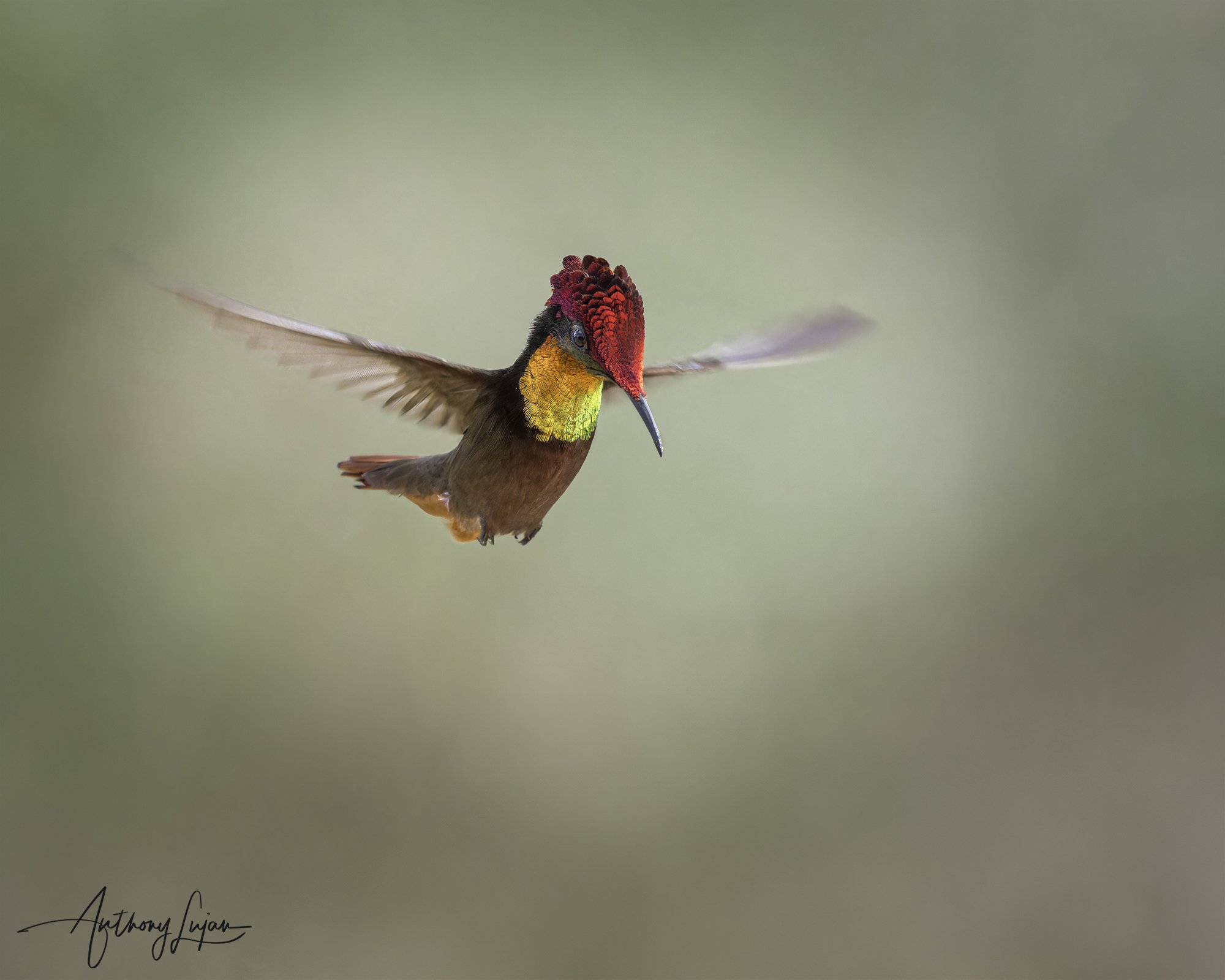
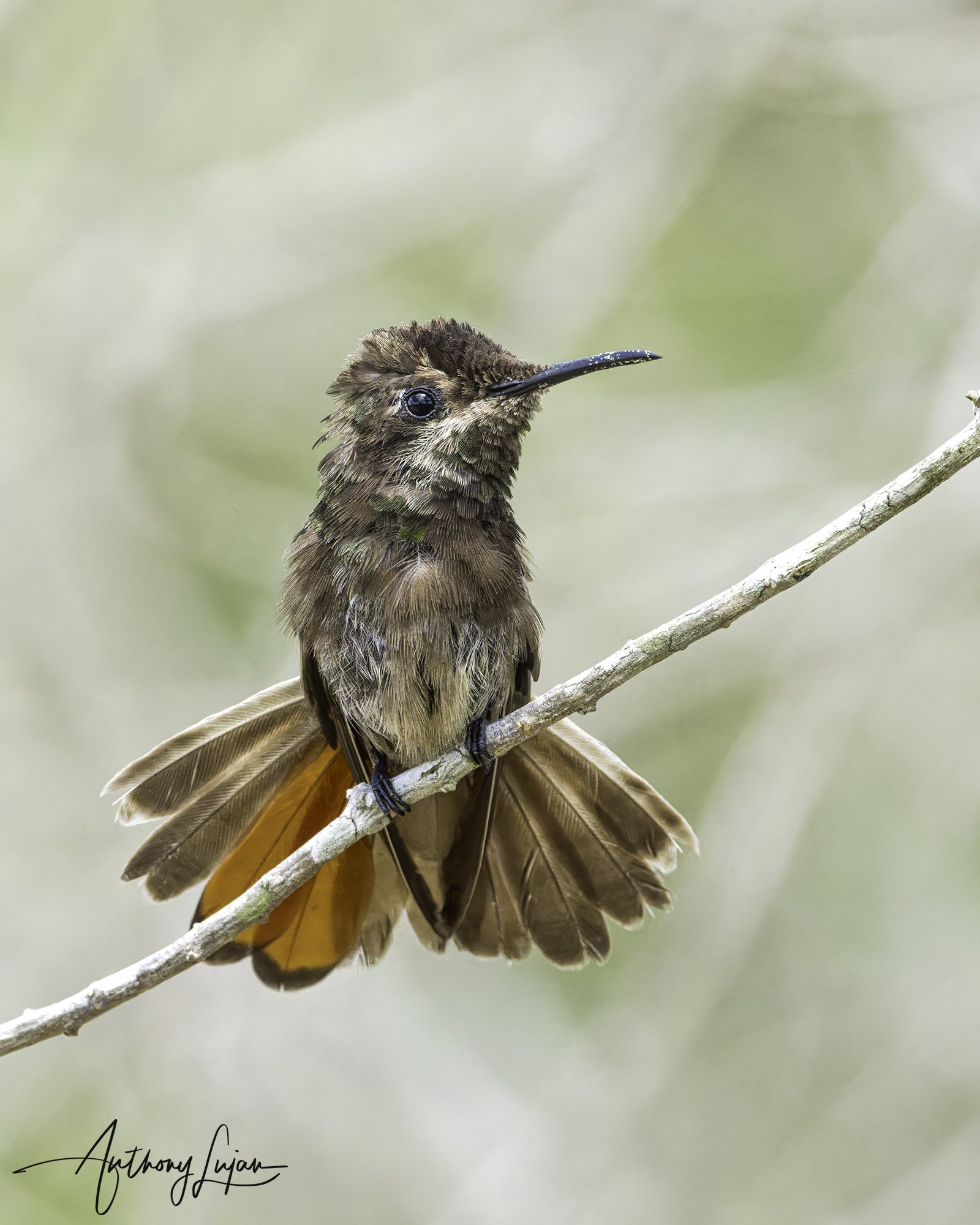
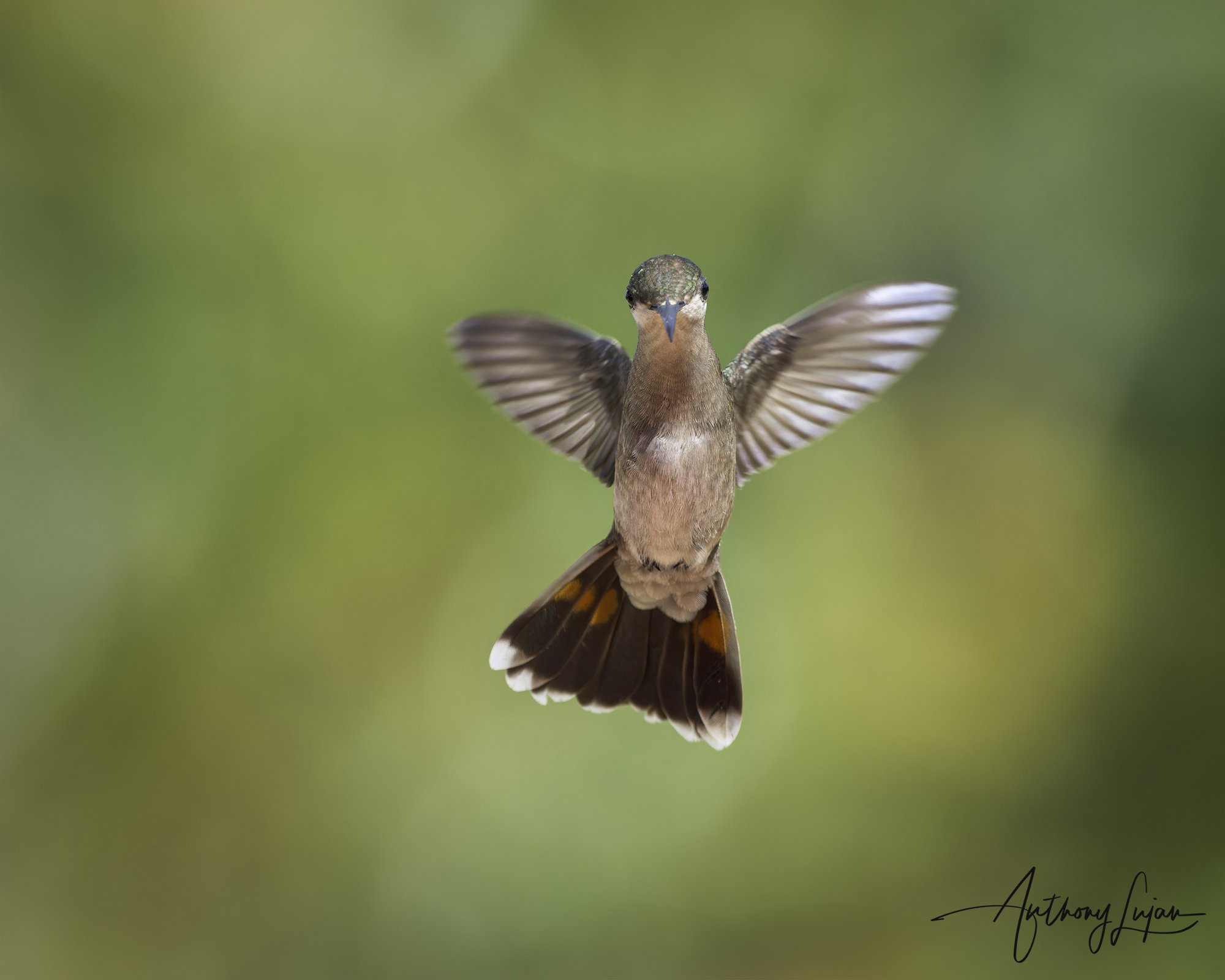
taken in Colombia
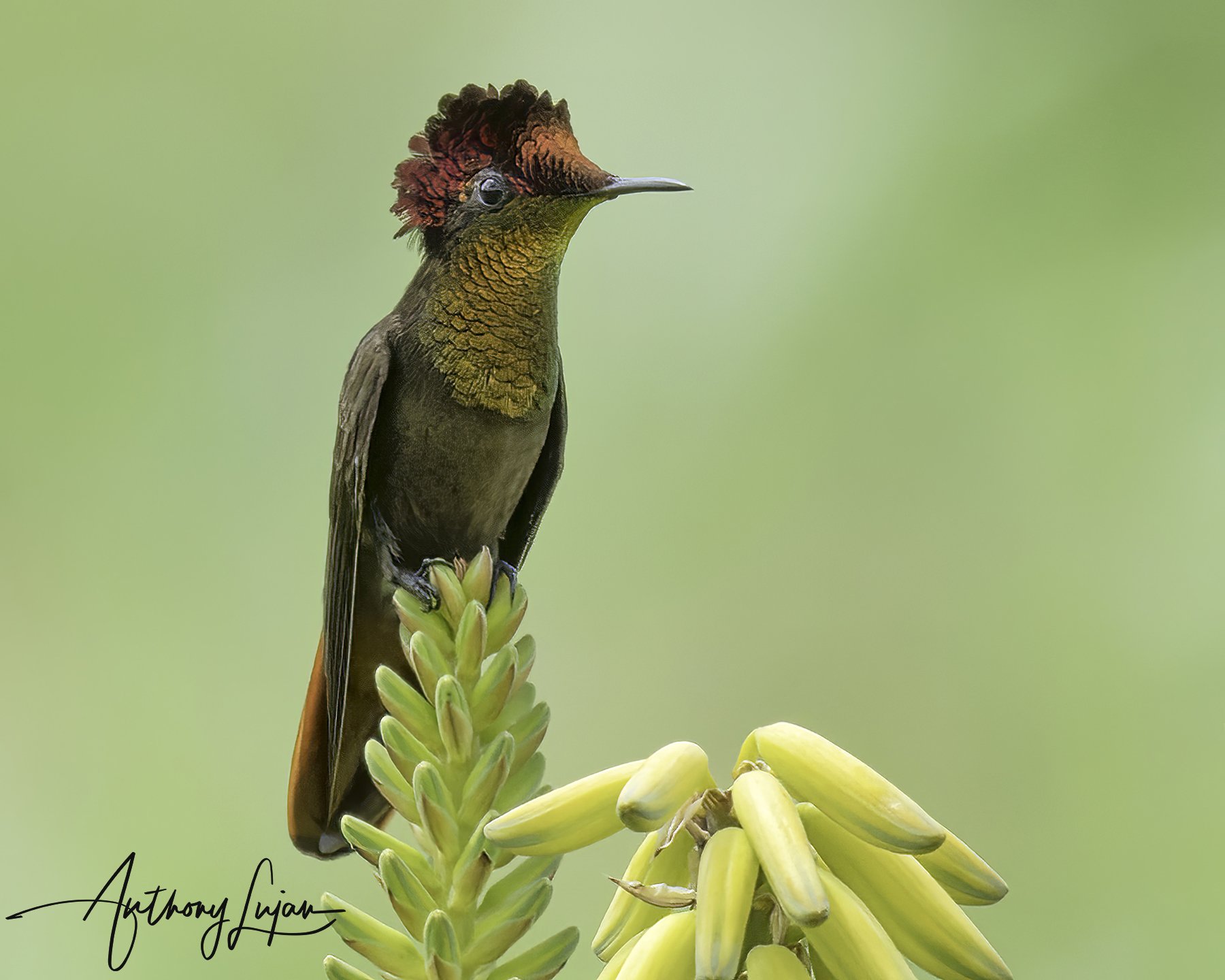
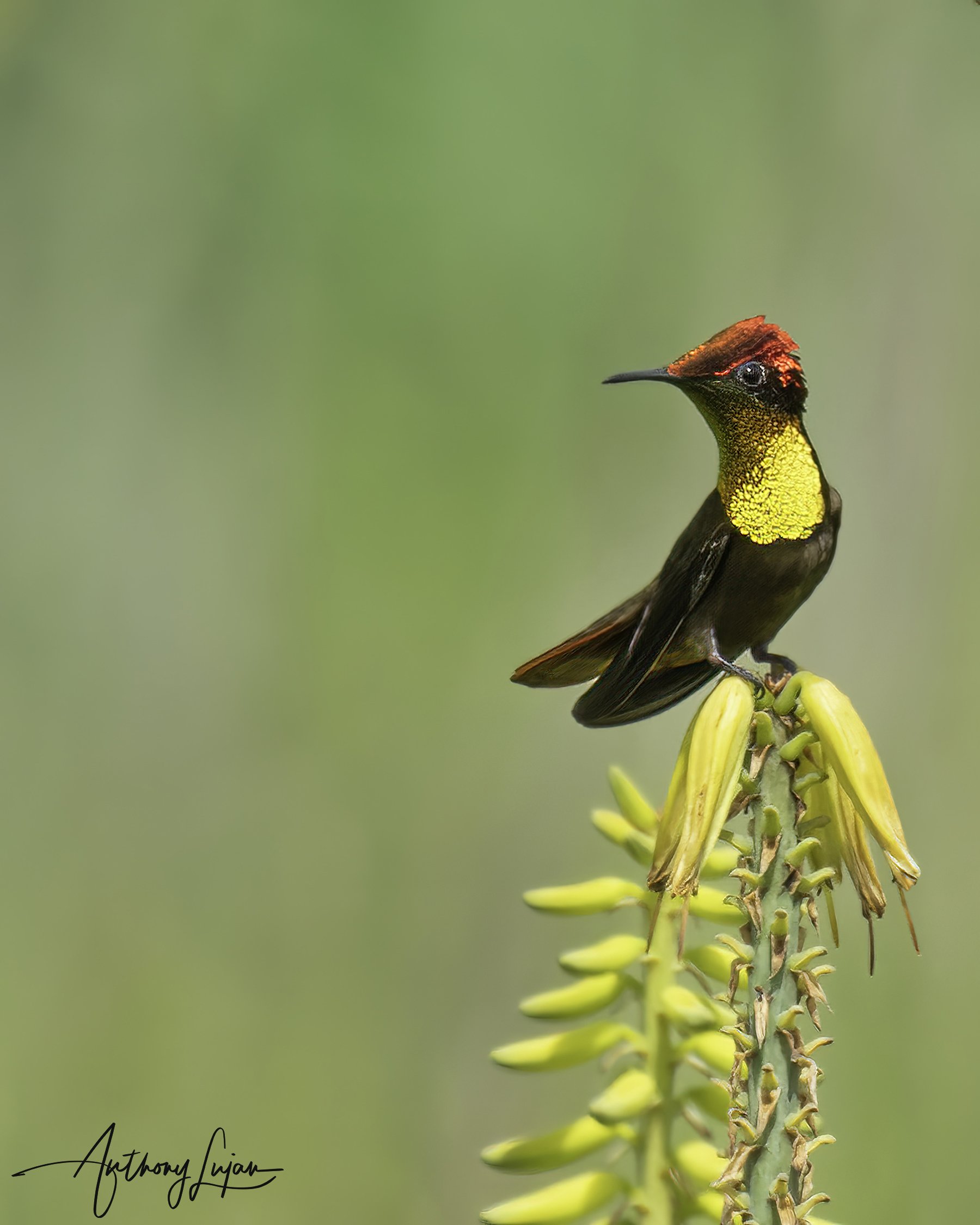
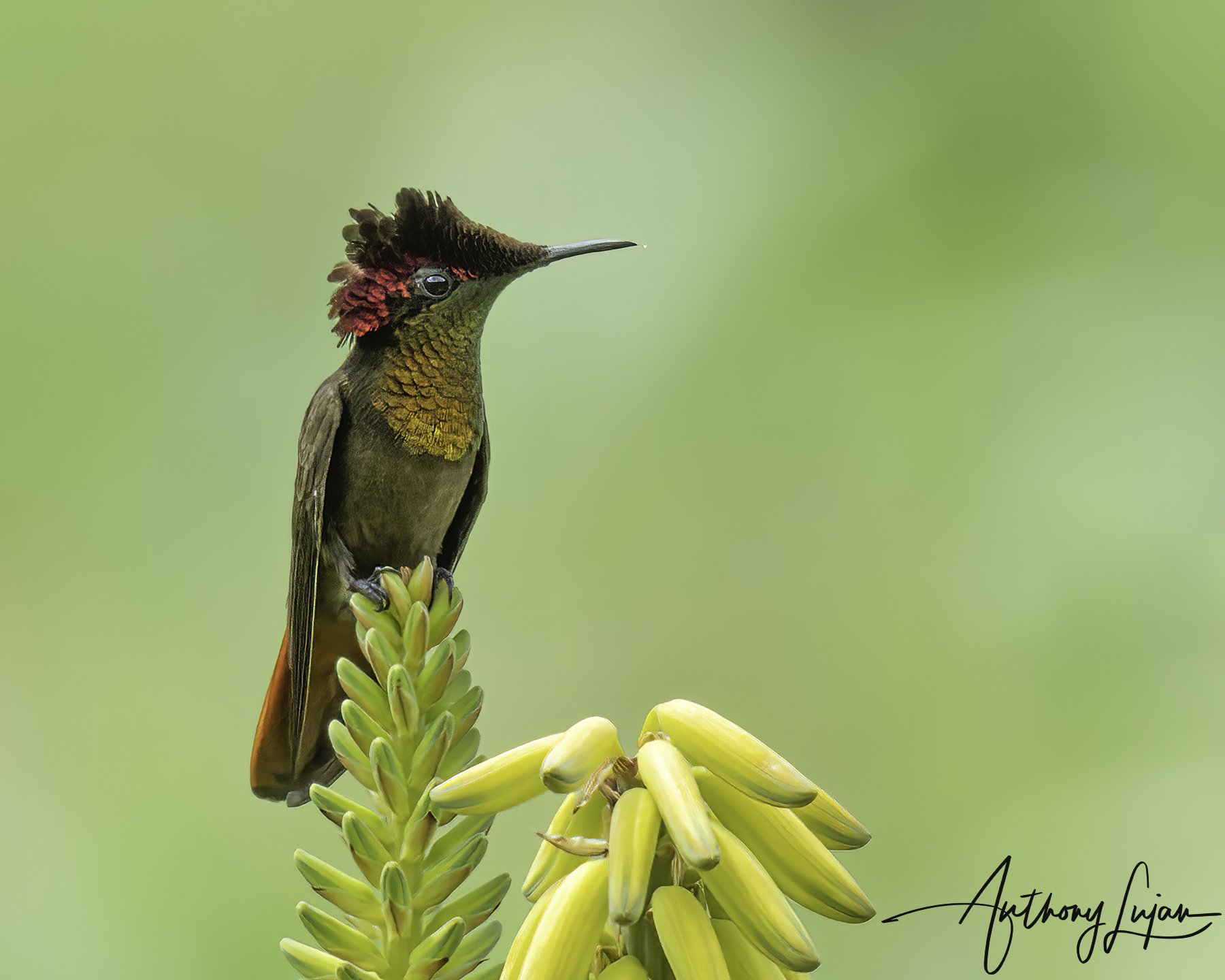
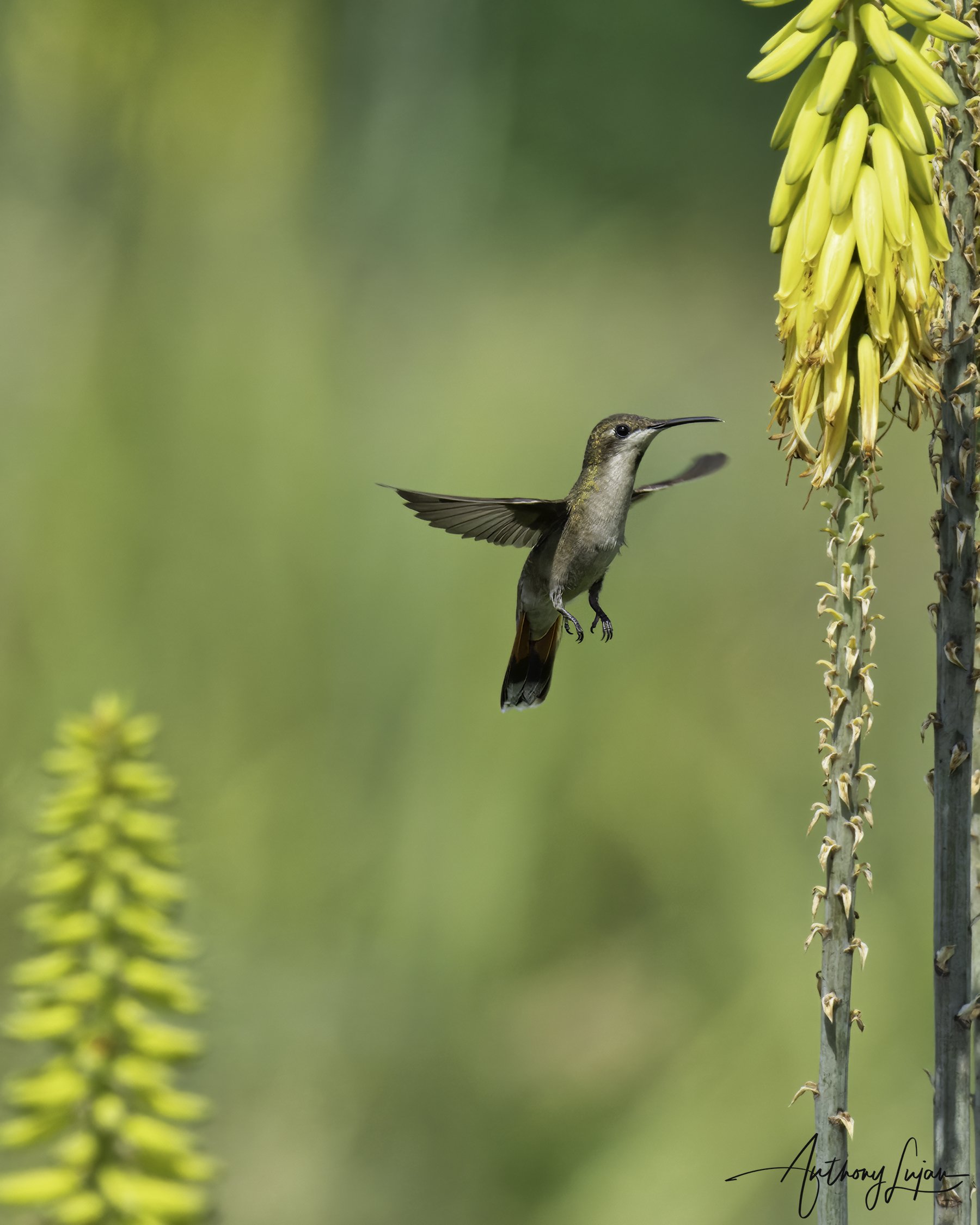
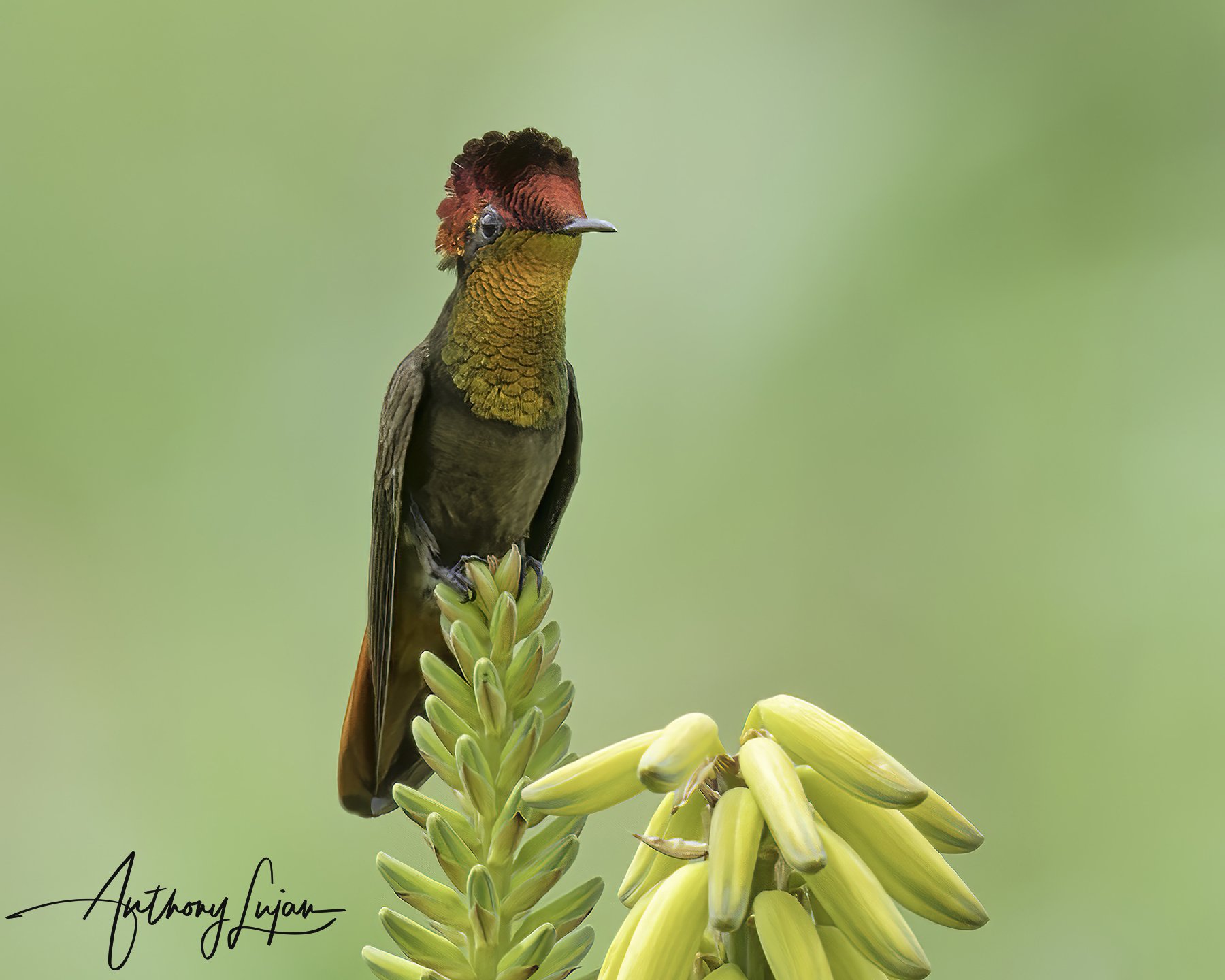
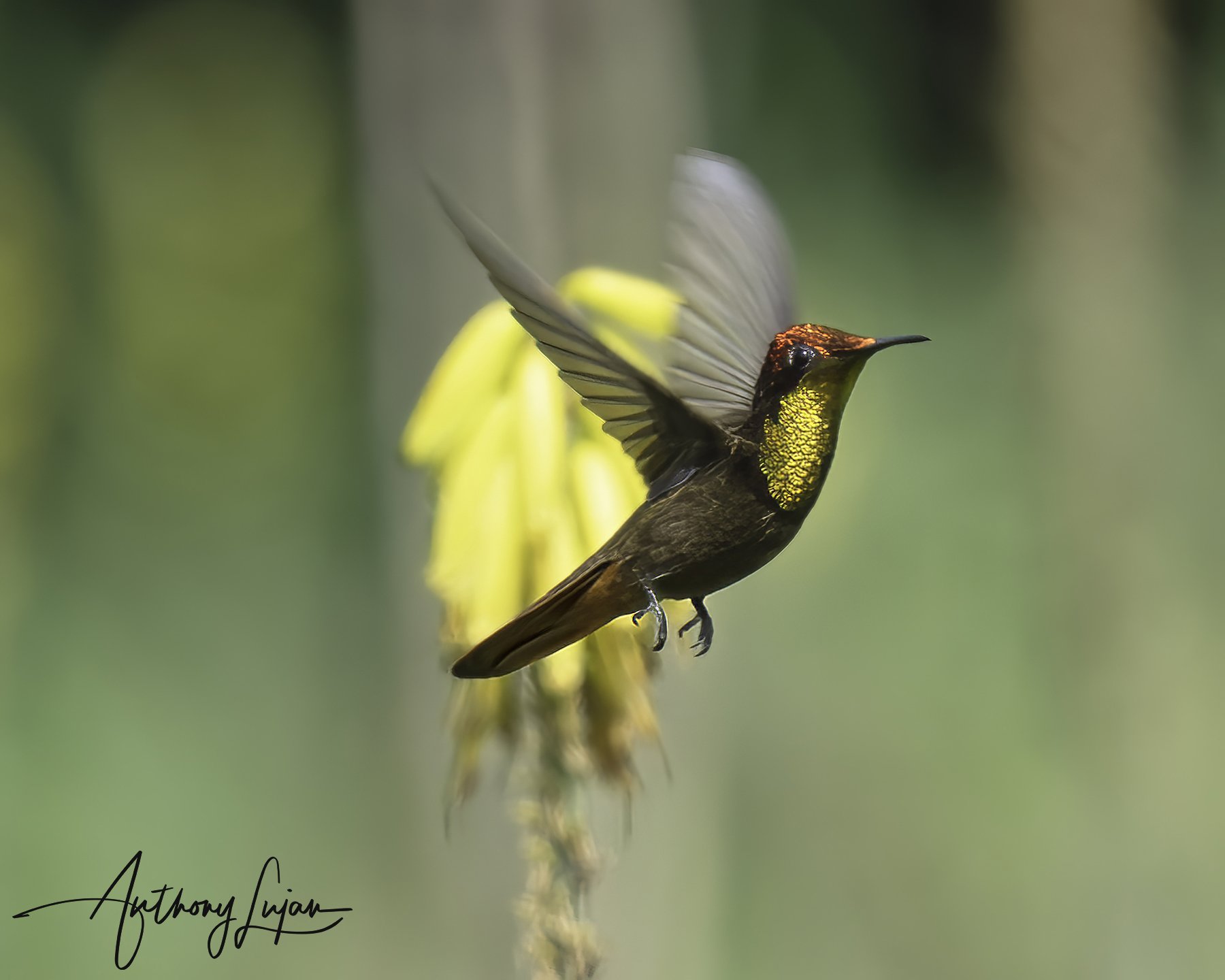
taken in Trinidad and Tobago
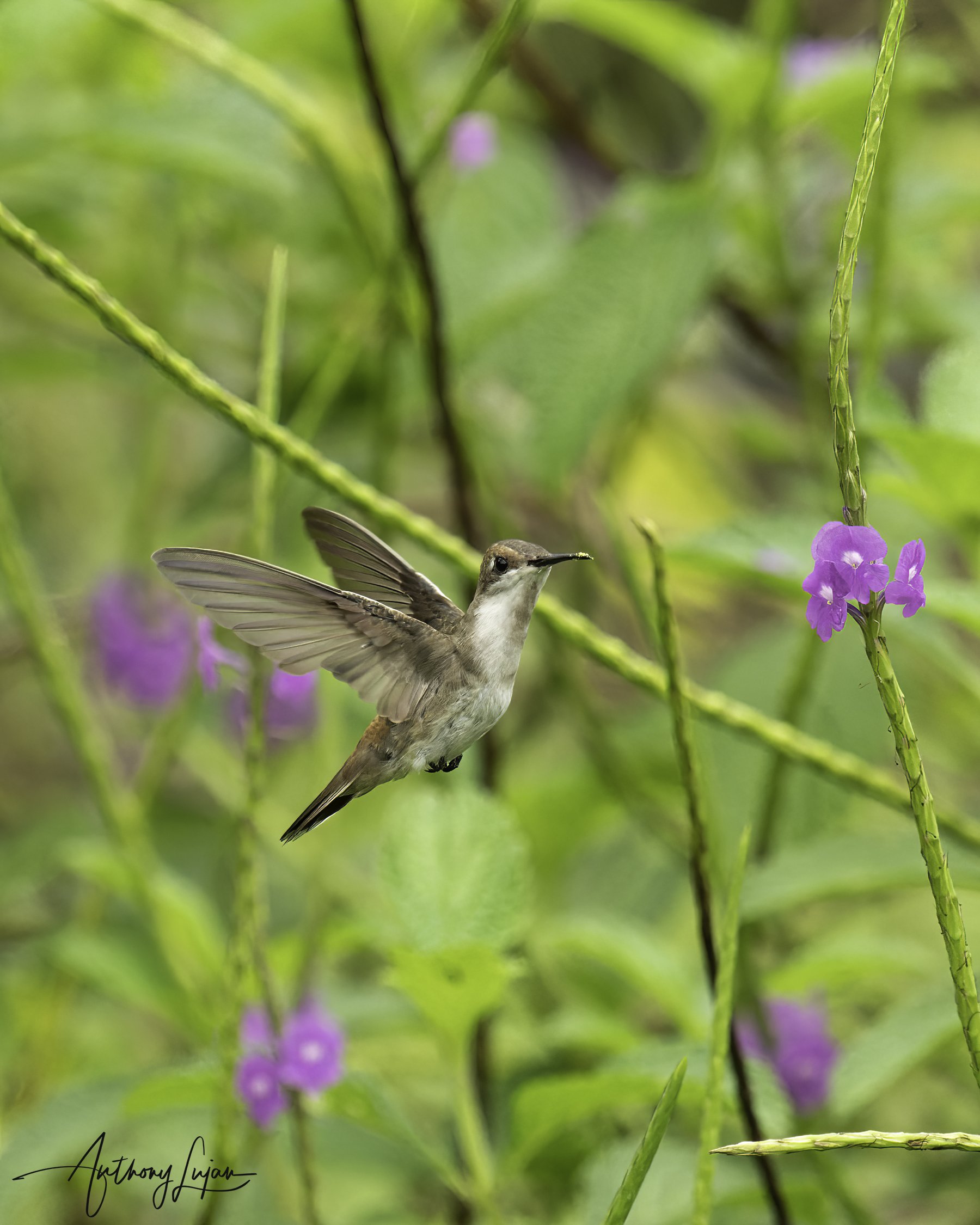
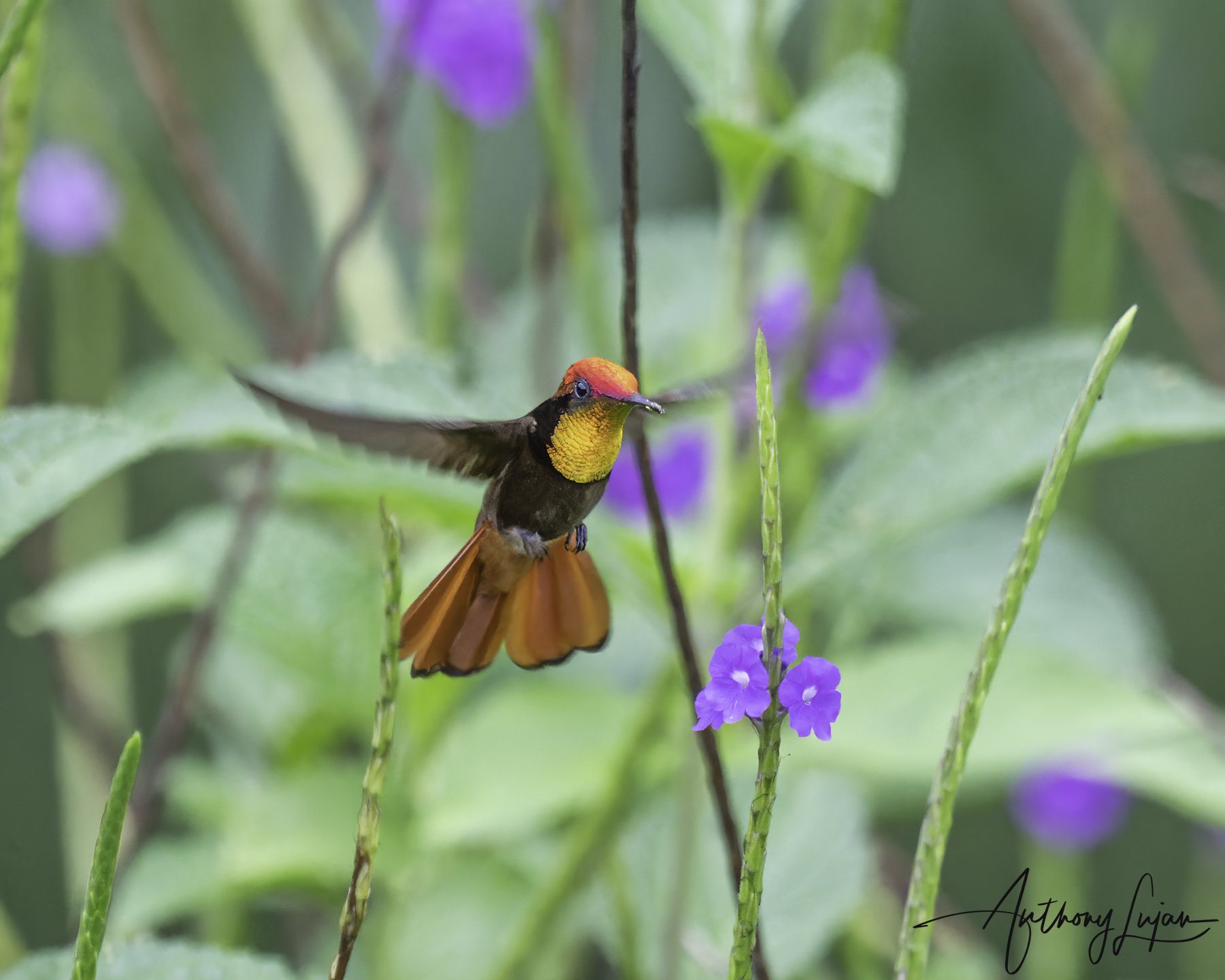
No other species is currently recognized in the genus Chrysolampis; the Ruby-topaz Hummingbird is the only member of this genus.
Please note: The content provided in this article reflects Anthony’s personal experience and photographic approach. Results can vary depending on light, weather, location, equipment, subject behavior, and field conditions.