
Ruby-throated Hummingbird
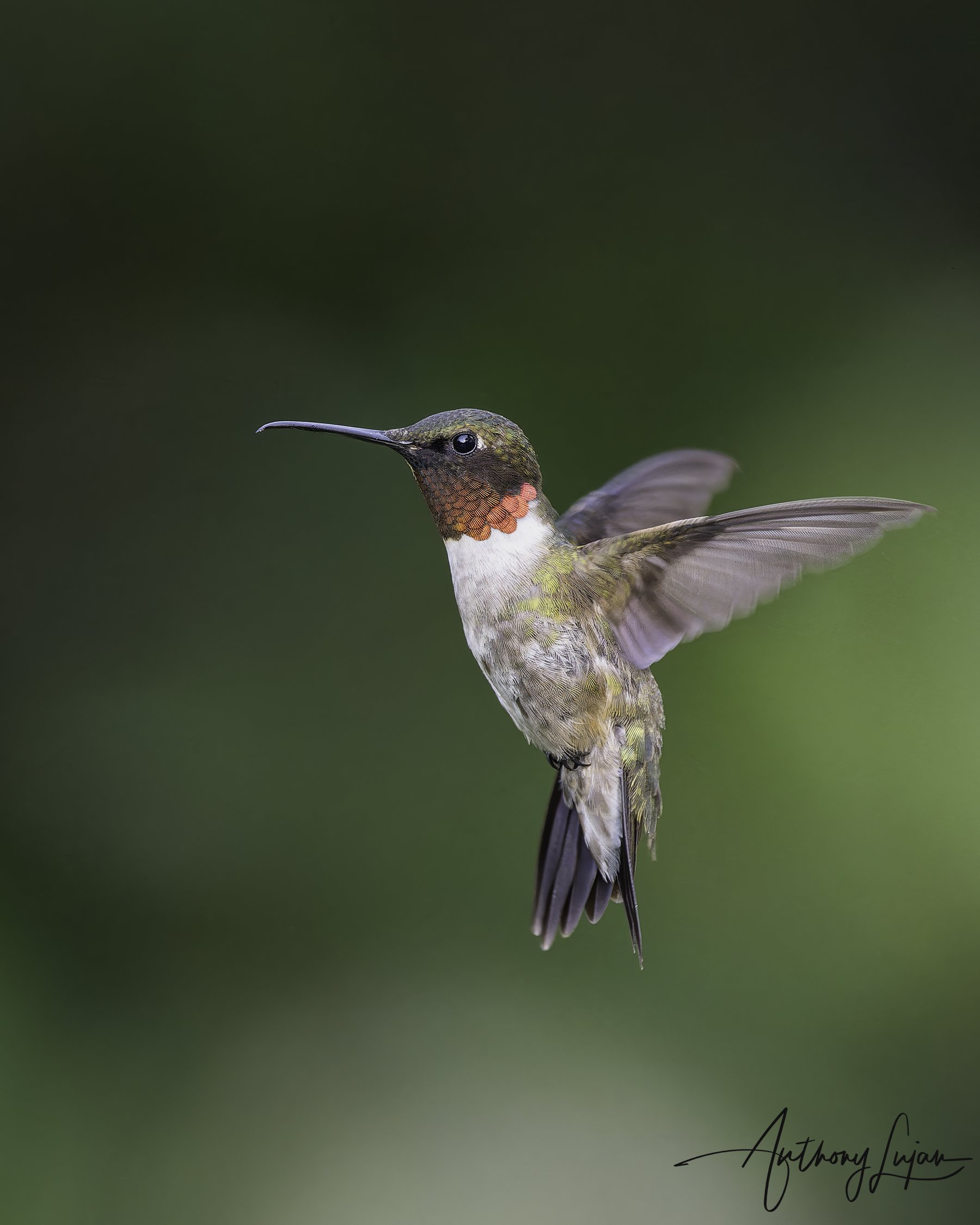
Scientific name: Archilochus colubris
The Ruby-throated Hummingbird is the most widespread and abundant hummingbird in eastern North America, breeding from the Gulf Coast to southern Canada and wintering mainly in Mexico and Central America. Its global number of mature individuals is estimated at about 36,000,000, the population trend is Increasing, and it is assessed as Least Concern (LC).
At a Glance
Family: Trochilidae (hummingbirds)
Clade: Mellisugini – Bee Hummingbirds
Genus: Archilochus — small, mostly North American hummingbirds with slender bills and narrow tails
Range: Breeds throughout most of eastern North America (eastern U.S. and southern Canada); winters primarily in southern Mexico, Central America (to Costa Rica and western Panama), and parts of the southeastern U.S. and Caribbean
Habitat: Open and semi‑open habitats including deciduous and mixed forests and edges, orchards, gardens, city parks, shelterbelts, and riparian corridors
Elevation: Mostly lowlands and foothills, locally into higher elevations where suitable habitat and flowers occur
Length: About 7–9 cm (2.8–3.5 in)
Weight: Roughly 2–6 g (0.07–0.21 oz), often around 3–4 g in adults
Number of mature individuals: ~36,000,000
Population trend: Increasing
Status: Least Concern (IUCN)
Name Origin
The genus name Archilochus is derived from Greek and used as a poetic or honorary name for this small hummingbird genus. The species name colubris is a latinized form of an old name for hummingbirds, used in early scientific descriptions rather than as a descriptive term. Together, Archilochus colubris is a traditional binomial name, with the common name “Ruby-throated” providing the key descriptive element referring to the male’s red throat.
Subspecies & Distribution
Ruby-throated Hummingbird is monotypic, with no recognized subspecies.
Its distribution includes:
Breeding range: Most of eastern North America, including the eastern United States east of roughly the 100th meridian and southern Canada where eastern and mixed deciduous forests occur.
Non‑breeding range: Winters mainly in southern Mexico, Central America (as far south as Costa Rica and western Panama), and parts of the West Indies; some birds also winter in Florida and along the Gulf Coast.
Many Ruby-throated Hummingbirds migrate across or around the Gulf of Mexico, making long nonstop flights or following the Texas and Gulf coasts between breeding and wintering grounds.
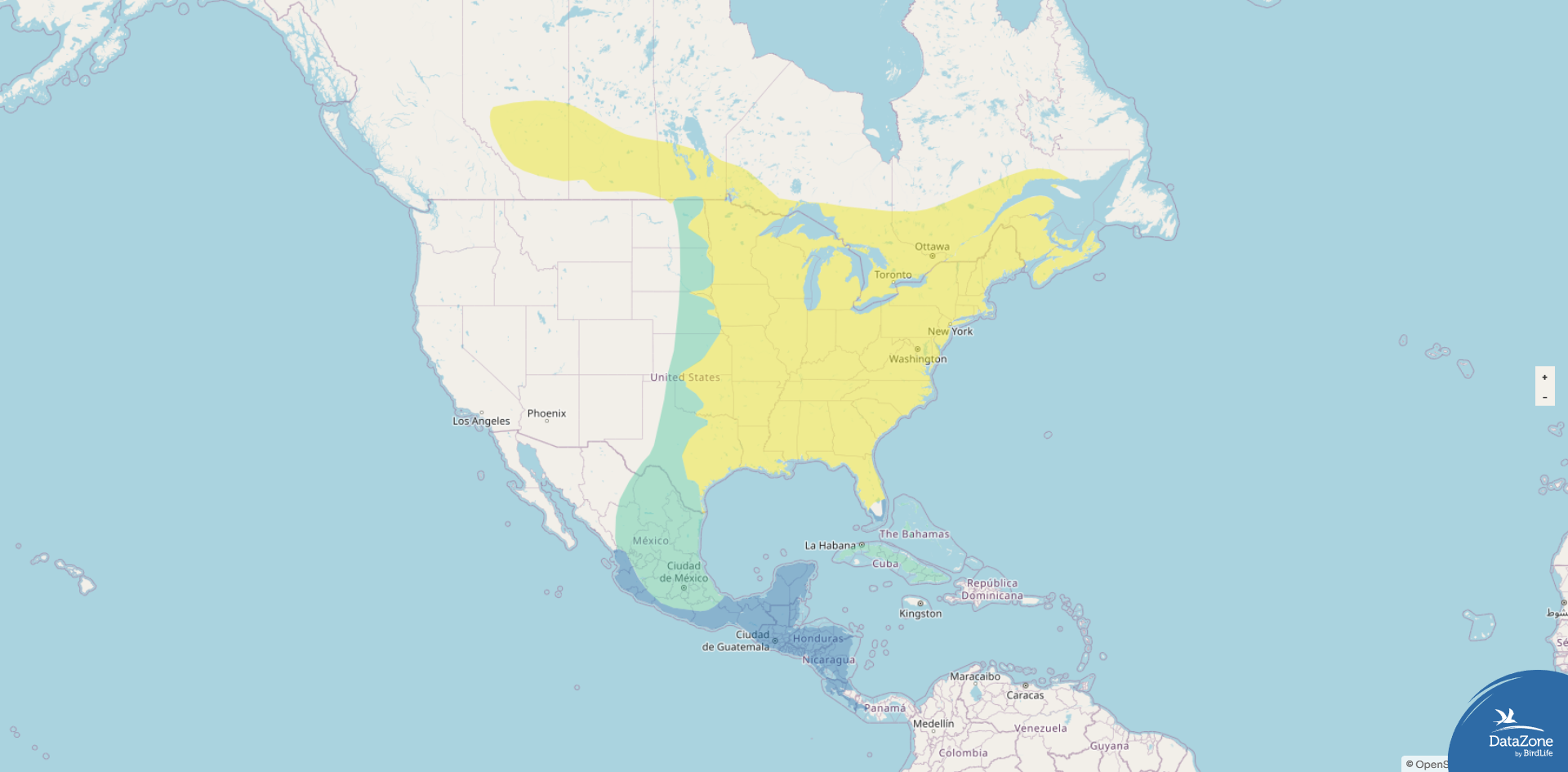
Ledged
Green Resident
Yellow Breeding
Blue Non-breeding
Species Overview
The Ruby-throated Hummingbird is the iconic hummingbird of eastern North America and the only regularly breeding hummingbird species in much of this region. It is a familiar visitor to backyard feeders, gardens, and forest edges, where it hovers among flowers and performs agile aerial maneuvers. With an estimated 36 million mature individuals and an overall Increasing trend, this species is currently secure, though it still depends on healthy breeding and wintering habitats along its migratory routes.
Male Description
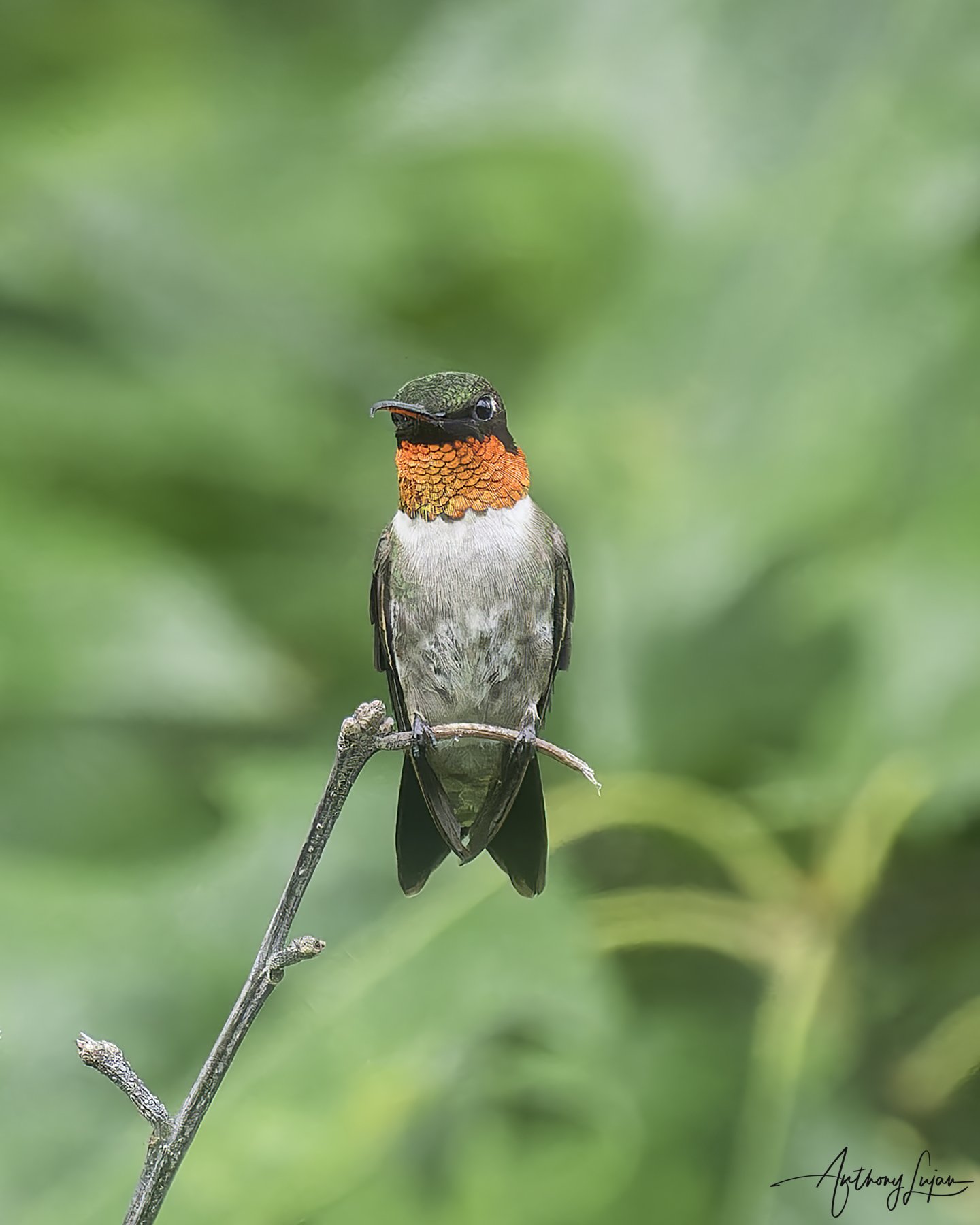
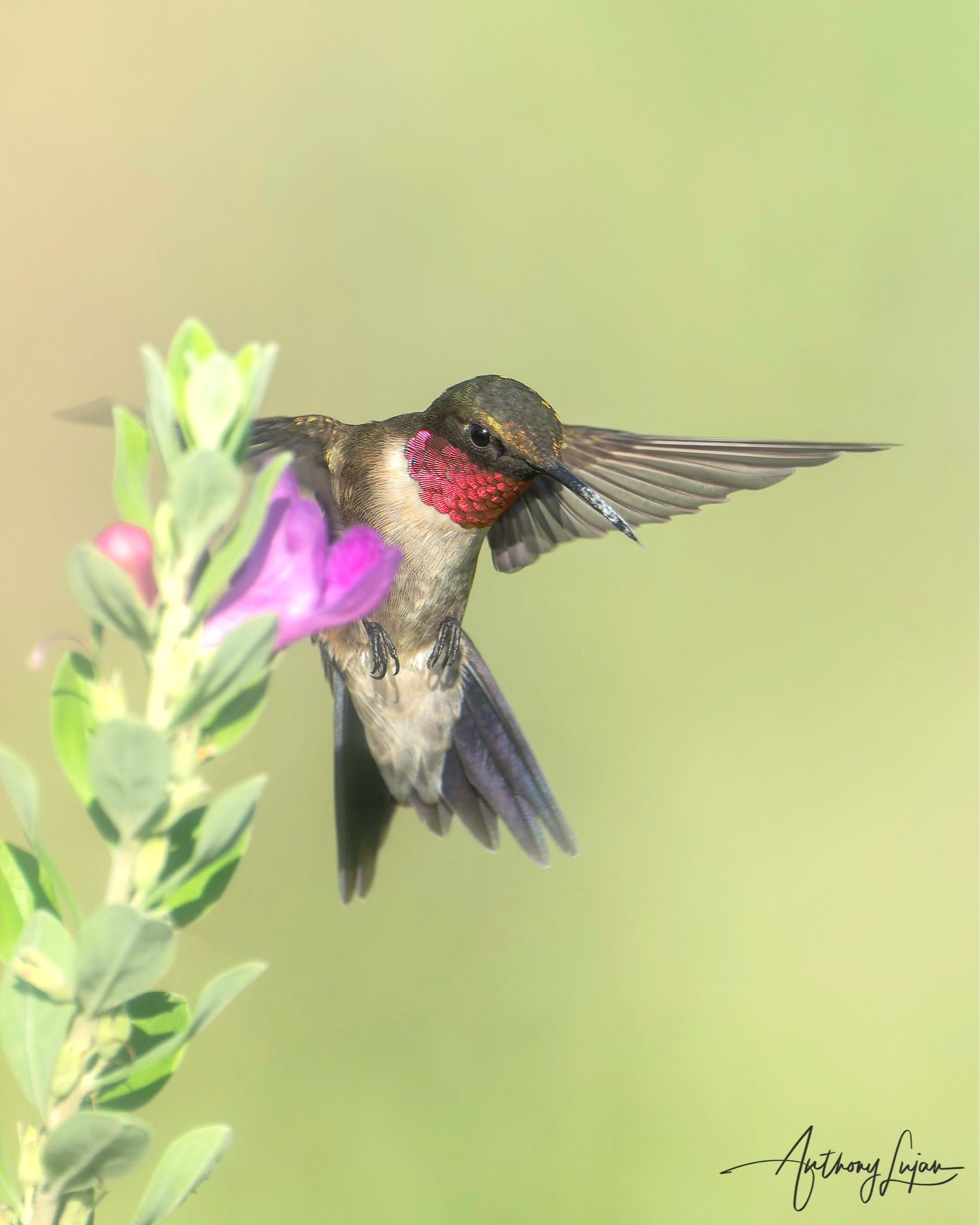
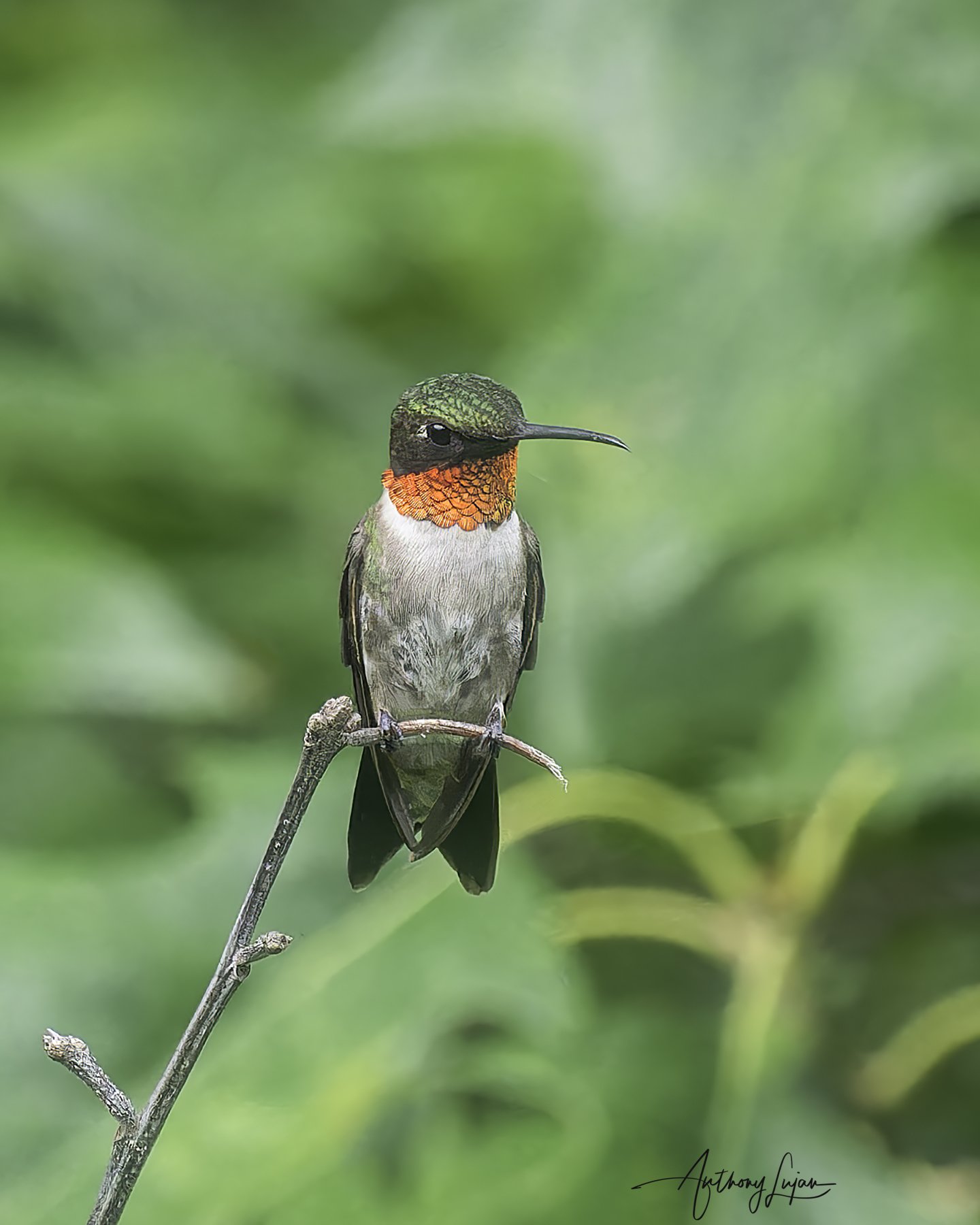
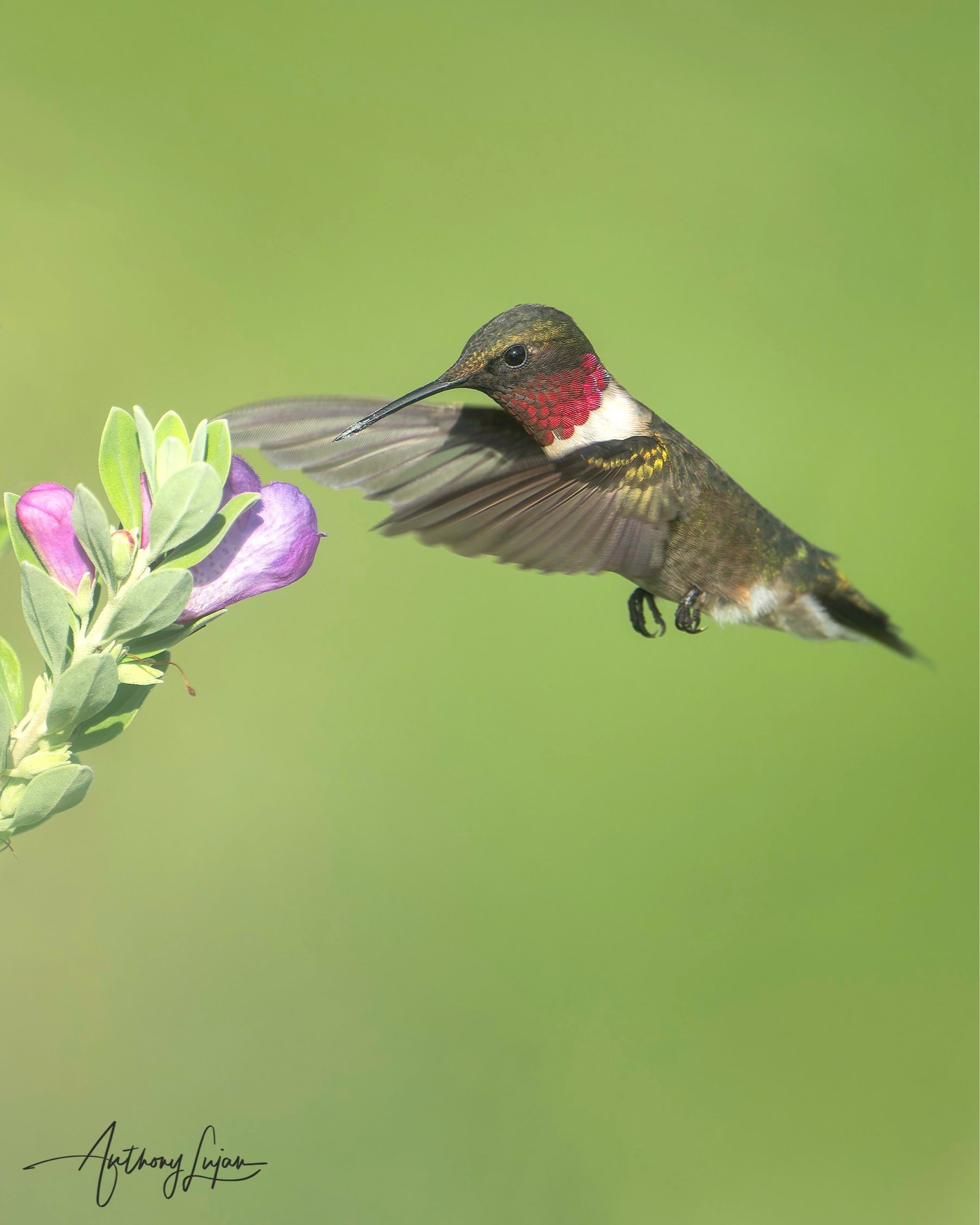
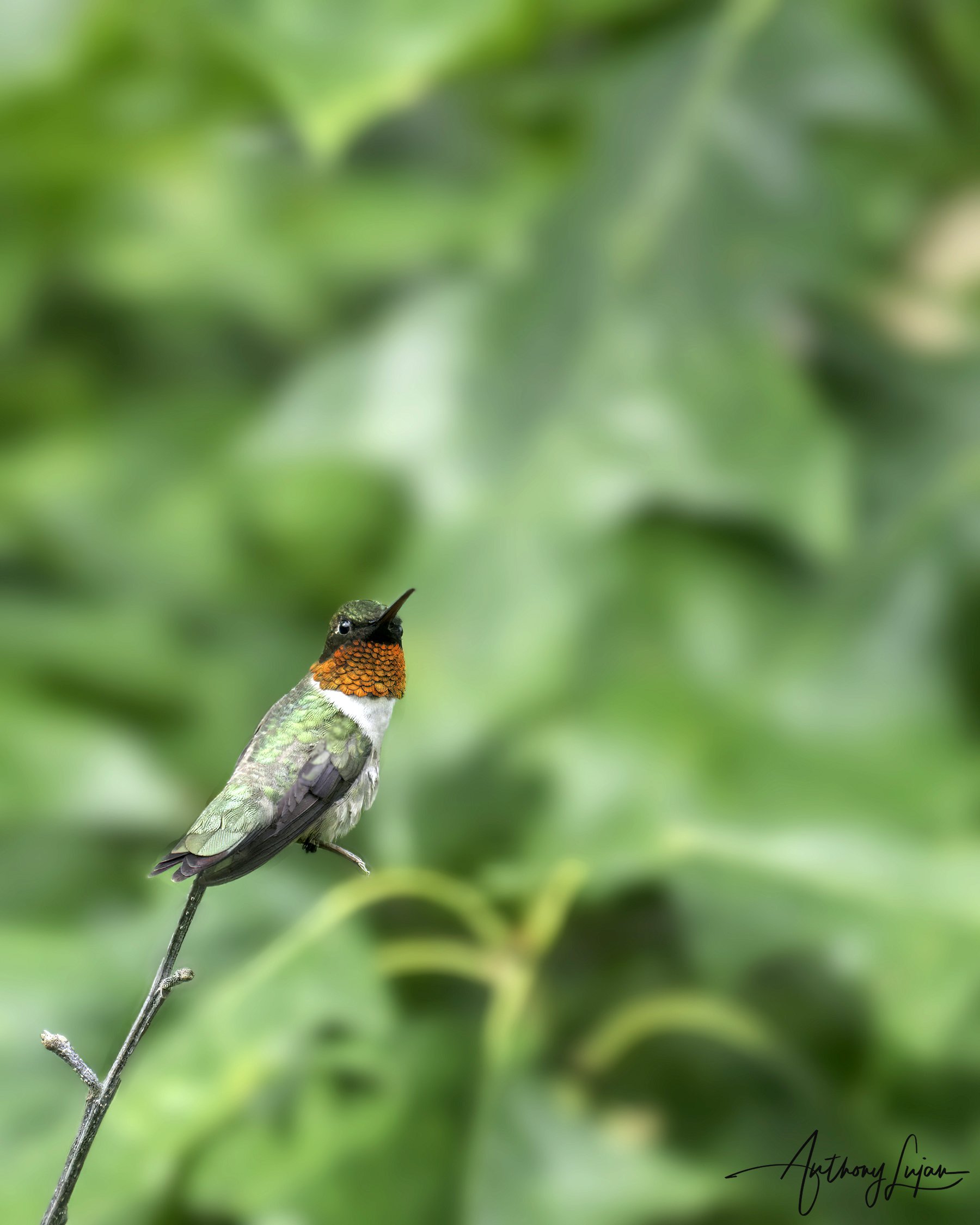
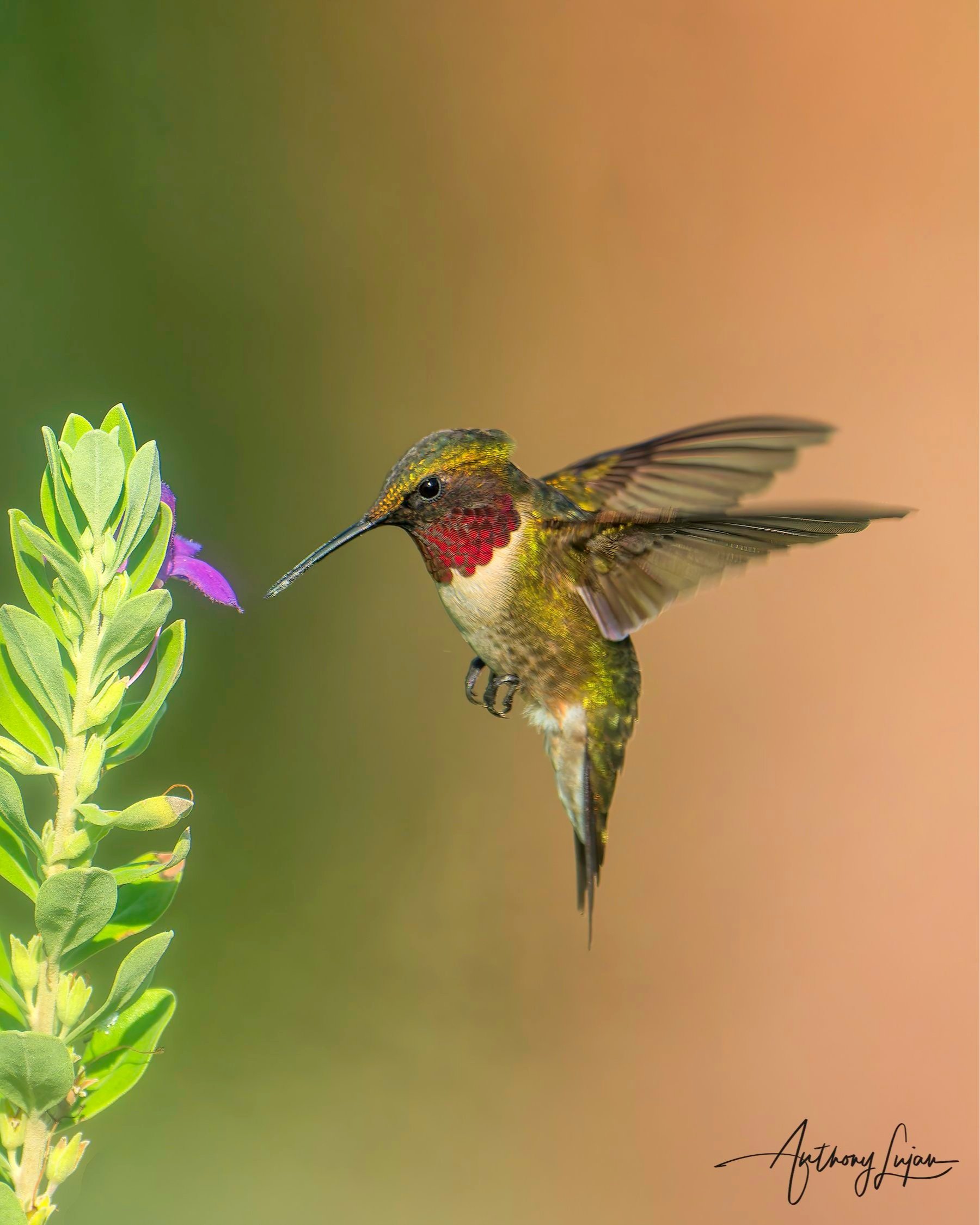
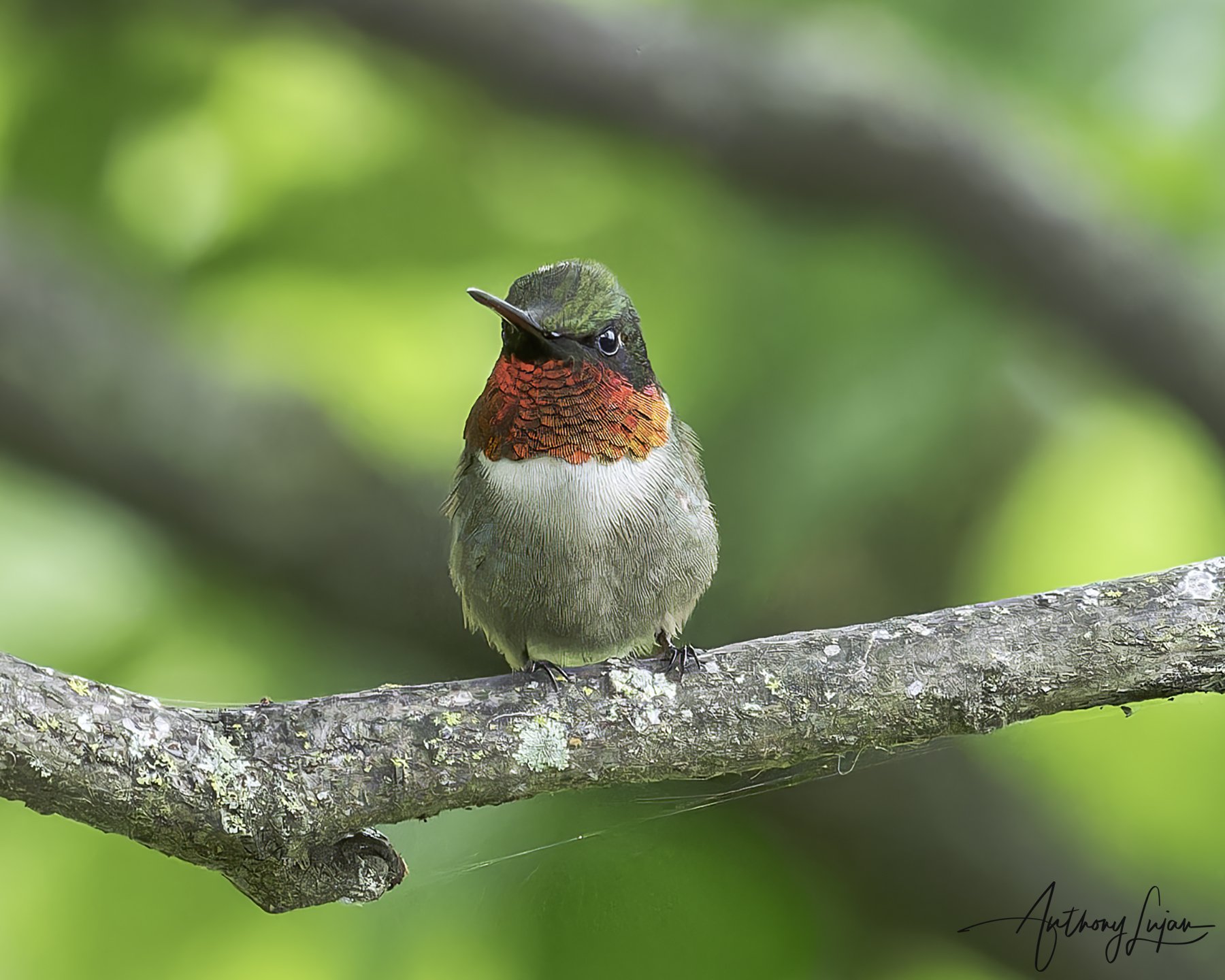
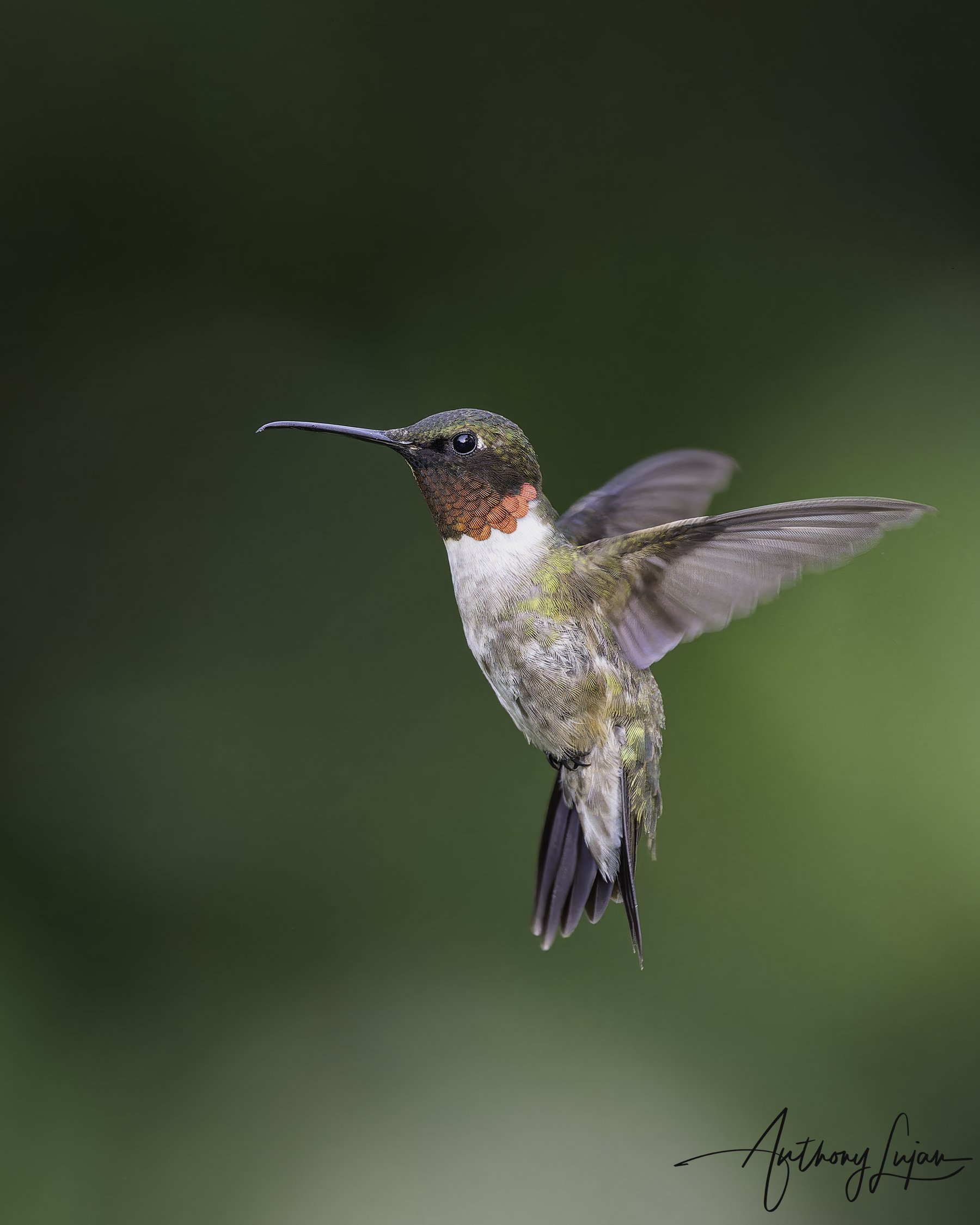
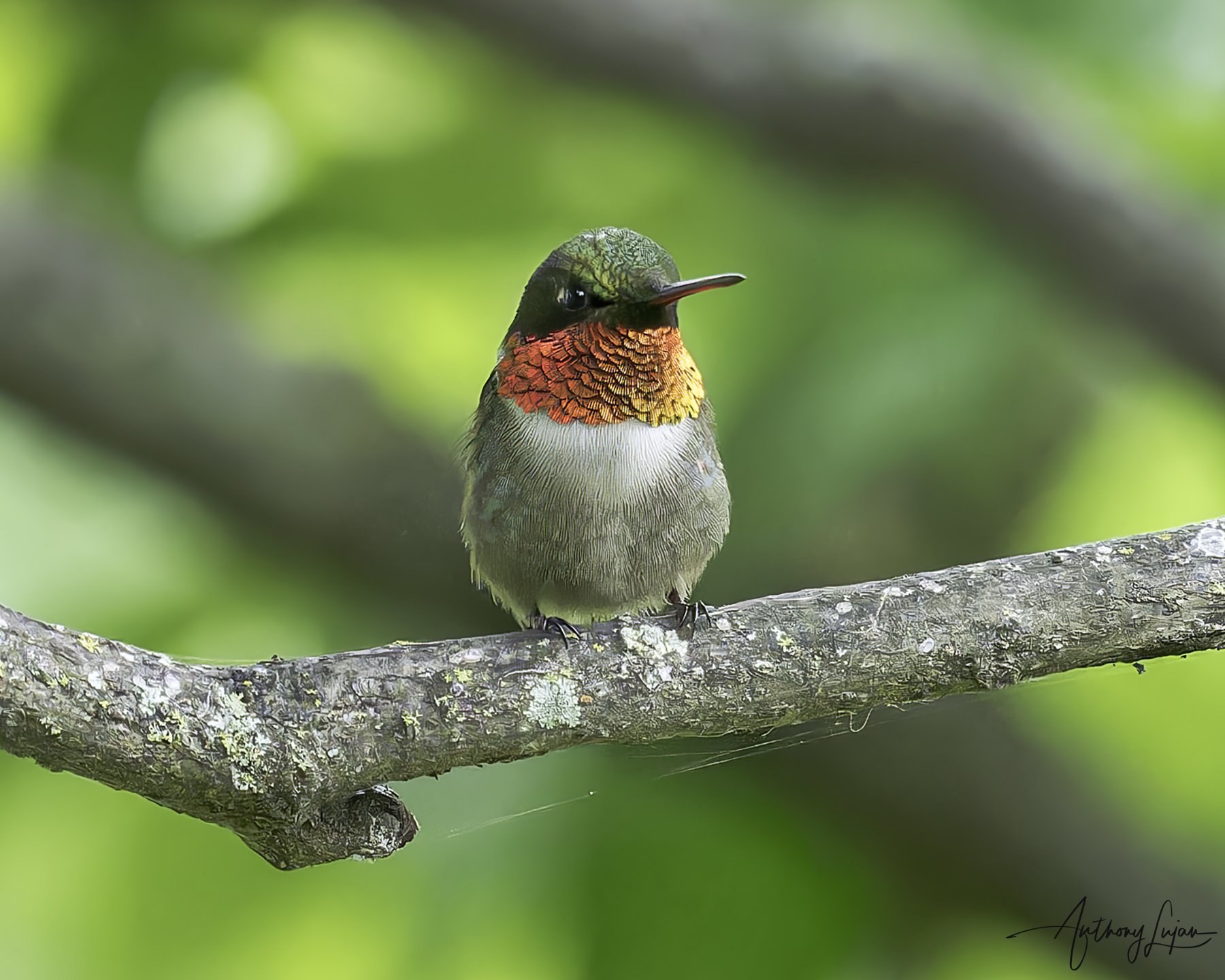
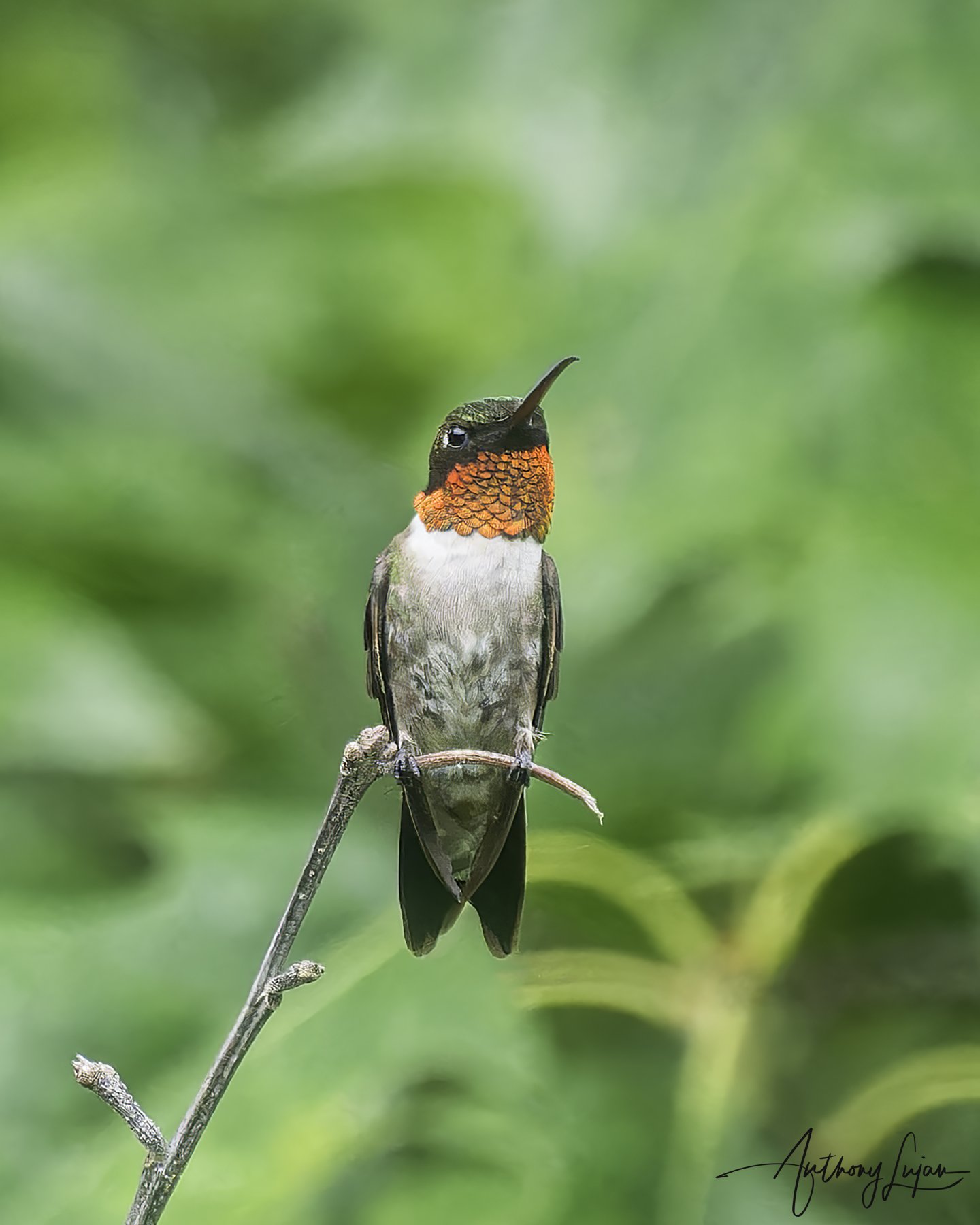
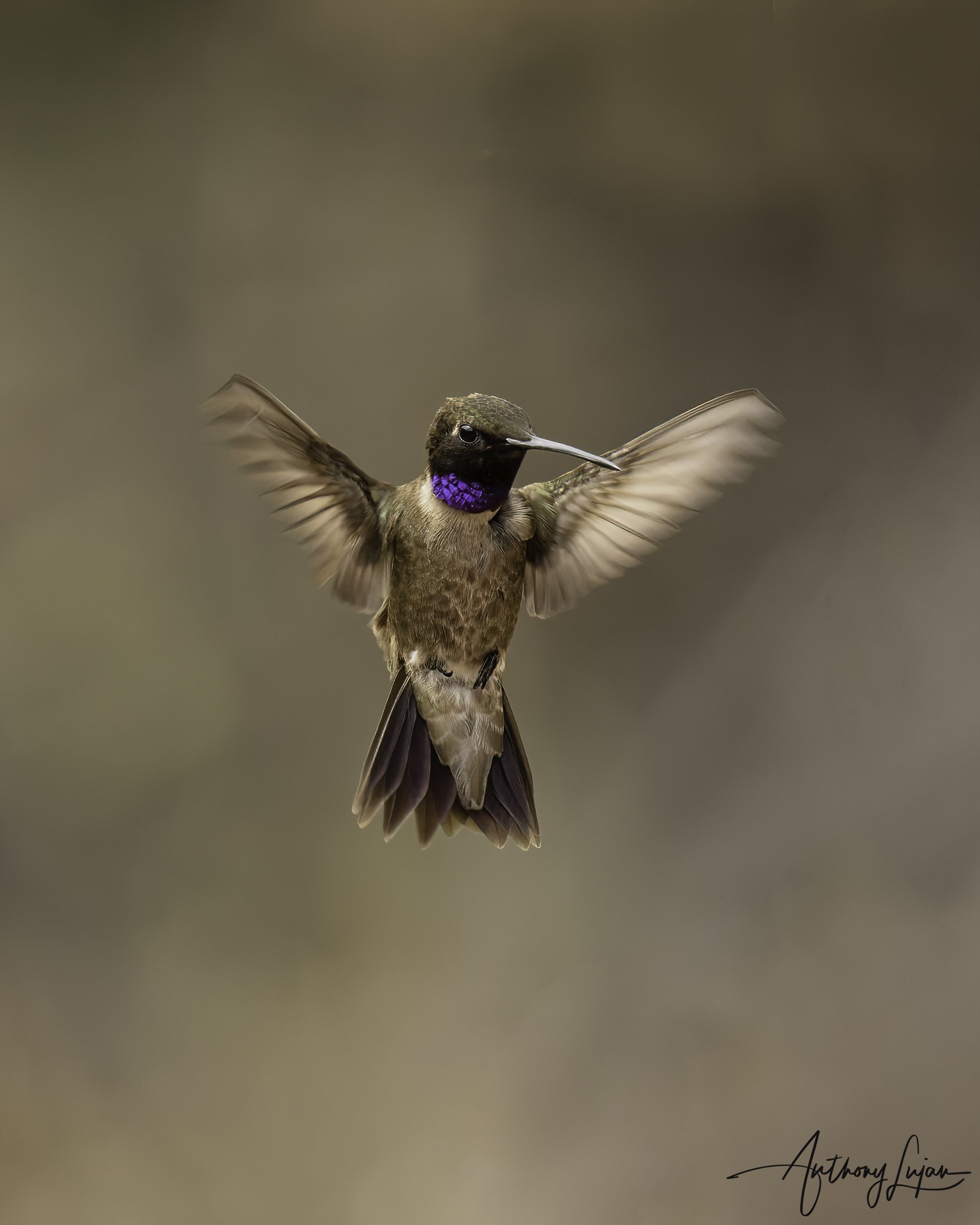
Adult males are small hummingbirds with a bright iridescent ruby‑red throat patch (gorget), which can appear black in poor light but flashes vivid red when viewed at the right angle. The head and back are metallic green, and the underparts are mostly grayish‑white with some green on the flanks. The tail is forked and dark, often appearing black with a faint violet sheen. The bill is straight, slender, and black, suited to probing tubular flowers.
Female Description
Females lack the red gorget and instead have a white or grayish throat, often plain or with faint dusky streaks. The upperparts are golden‑green, and the underparts are whitish to grayish, with greenish sides. The tail is rounded or slightly notched with dark feathers that have white tips on the outer tail feathers, a key field mark for females and juveniles. Females are slightly larger overall and have somewhat longer bills than males.
Habitat & Behavior
Ruby-throated Hummingbird’s breed in a variety of semi‑open habitats, including deciduous and pine forests and edges, orchards, gardens, city parks, shelterbelts, and riparian corridors. During winter they use tropical deciduous forests, forest edges, citrus groves, hedgerows, old fields, and other open habitats with flowering plants. They are strongly migratory, with many individuals undertaking long nonstop flights across the Gulf of Mexico between North America and Central America, doubling their fat reserves beforehand to fuel the journey.
They feed on nectar from a wide range of flowering plants, including wildflowers, shrubs, vines, and trees, and readily visit hummingbird feeders. Insects and spiders are also important in their diet, captured in flight or gleaned from foliage and webs. Males defend small feeding and display territories, while females build tiny cup nests on tree branches and provide all parental care, raising one or two broods per season.
Population
The Ruby-throated Hummingbird’s global population is estimated at around 36 million mature individuals, making it the most numerous hummingbird species in North America. Overall, the population trend is Increasing over the long term, even though some recent analyses suggest localized declines or fluctuations. Its large range, adaptability to human‑modified habitats, and widespread use of feeders have helped maintain and grow populations.

Conservation
Ruby-throated Hummingbird is currently assessed as Least Concern and is not considered globally threatened. Nonetheless, habitat loss and degradation on both breeding and wintering grounds, as well as changes in floral resources and climate, can affect local populations and migration success. Conservation efforts that protect deciduous and mixed forests, maintain hedgerows and riparian corridors, and promote native flowering plants in gardens and landscapes will support healthy populations across its range.
Checkout Anthony’s playlist of this species! Click the top right dropdown to see all the videos.
Related species in the Archilochus genus (2 species total):
Please note: The content provided in this article reflects Anthony’s personal experience and photographic approach. Results can vary depending on light, weather, location, equipment, subject behavior, and field conditions.
Your purchase SUPPORTS conservation efforts, so the more you buy, the more you help hummingbirds.