
Santa Marta Blossomcrown
Scientific name: Anthocephala floriceps
The Santa Marta Blossomcrown is a tiny, range-restricted hummingbird found only in the isolated Sierra Nevada de Santa Marta of northern Colombia. An estimated 500–2,500 mature individuals exist, the population is decreasing, it is an altitudinal migrant within this single mountain system, and it is currently listed as Vulnerable and monotypic.
At a Glance
Family: Trochilidae (hummingbirds)
Clade: Trochilini – Emeralds
Genus group: Anthocephala — 2 species, 2 subspecies (by broader treatment; this species is monotypic)
Range: Endemic to the Sierra Nevada de Santa Marta in northern Colombia.
Habitat: Humid primary and mature secondary montane forest and forest edges, including dense understory and older second growth.
Elevation: Mostly between about 400 and 1,700 m on the slopes of the Sierra Nevada de Santa Marta, with seasonal movements along this elevational band.
Length: About 8.4 cm (3.3 in).
Weight: Around 2.7–3.0 g.
Number of mature individuals: 500–2,500
Population trend: Decreasing
Status: Vulnerable (IUCN)
Name Origin
The genus name Anthocephala combines Greek roots meaning “flower” and “head,” likely referring to the bright, crown-like coloration on the heads of blossomcrown hummingbirds. The species name floriceps similarly means “flower-headed,” reinforcing the image of a blossom-like crown. The English name “Santa Marta Blossomcrown” links this colorful head pattern to the species’ exclusive home in the Sierra Nevada de Santa Marta.
Subspecies & Distribution
Anthocephala floriceps
Monotypic; no subspecies are recognized. This species occurs only in the Sierra Nevada de Santa Marta of northern Colombia, where it inhabits humid montane forest and older second growth on the slopes of this isolated mountain range.
Across its very small range, Anthocephala floriceps is confined to a narrow band of mid-elevation forest within the Santa Marta Mountains, making it one of Colombia’s most localized hummingbirds.
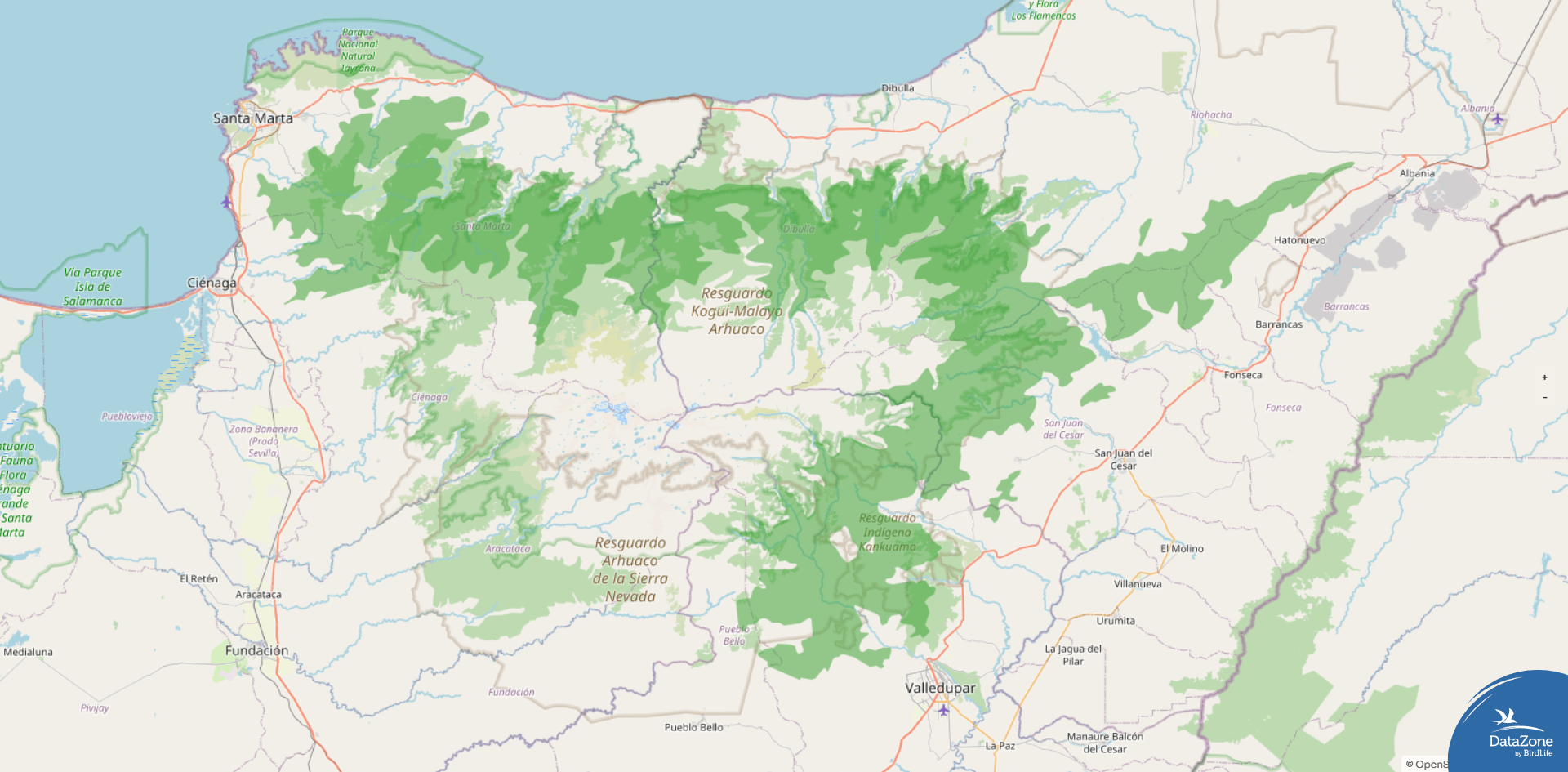
Legend
Green Resident
Species Overview
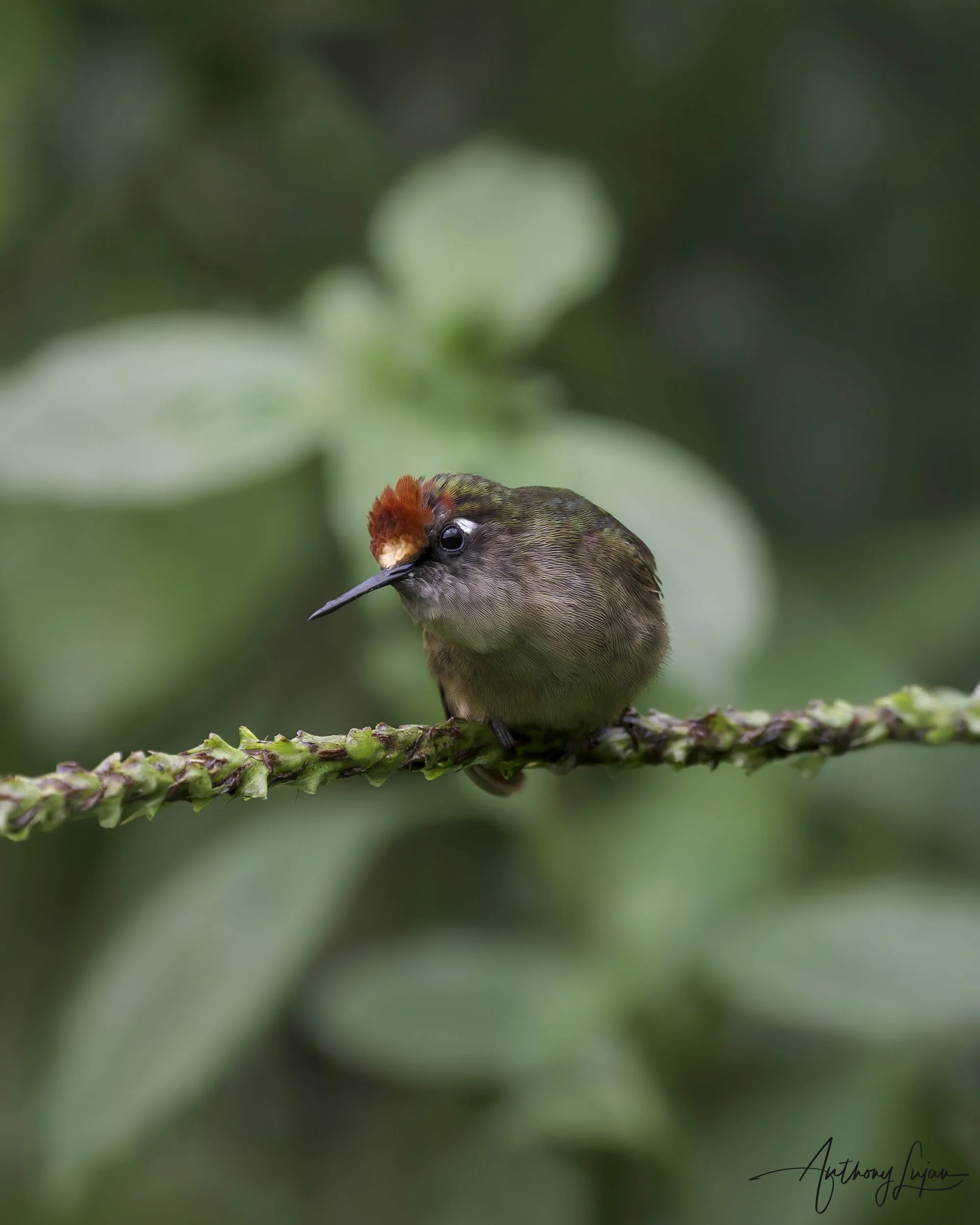
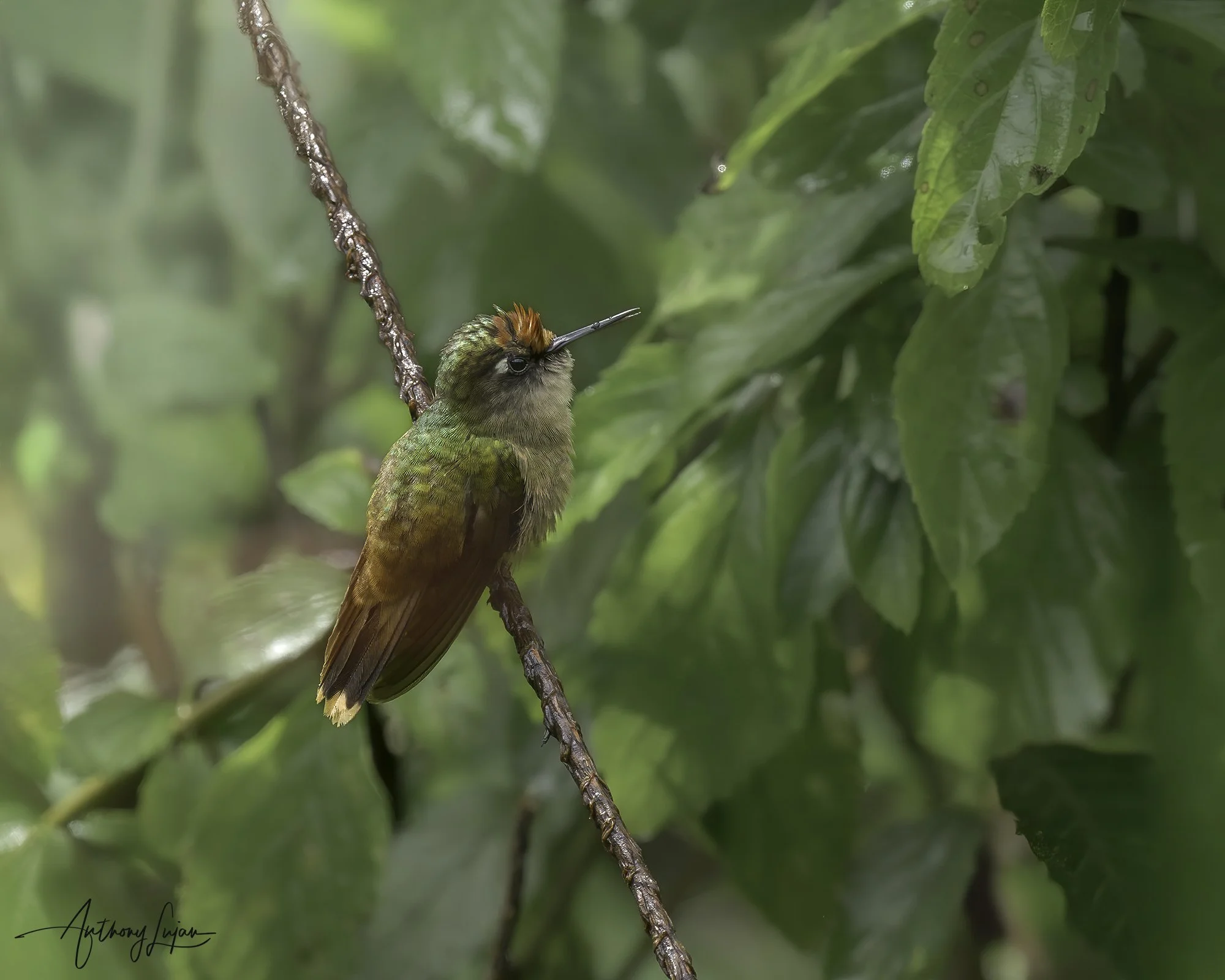
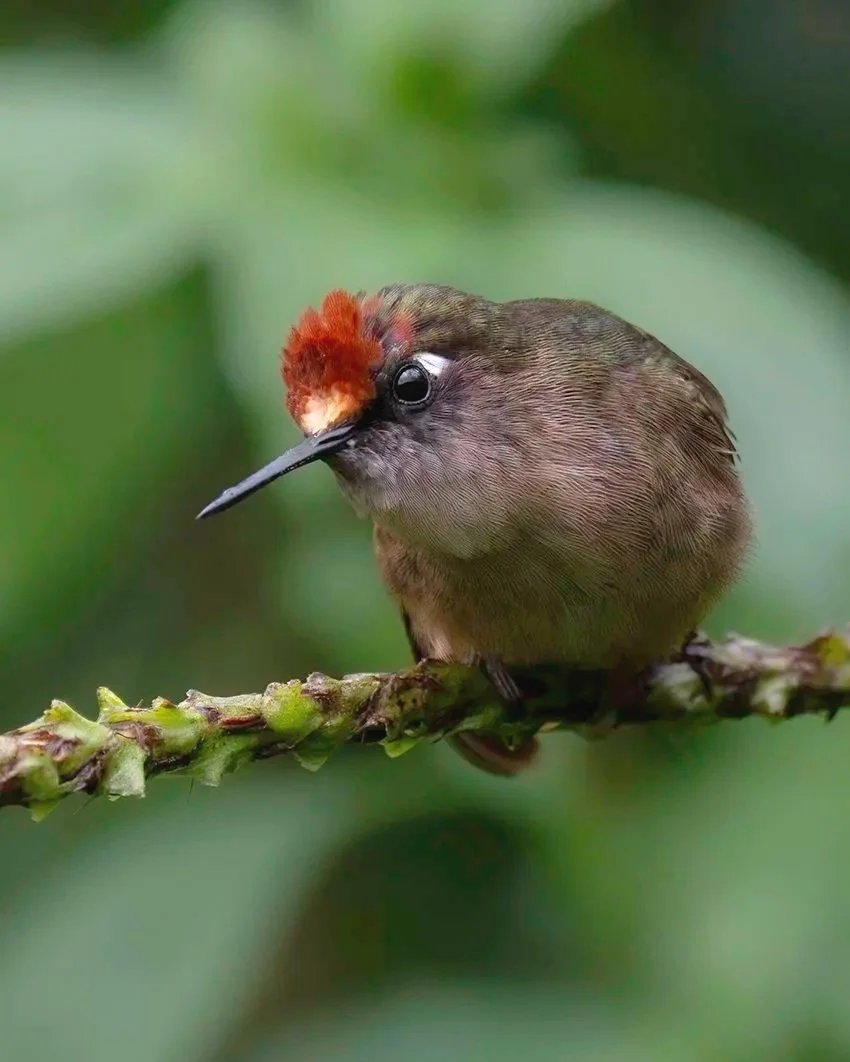
The Santa Marta Blossomcrown is an attractive, little-known hummingbird that lives in the understory of humid forest and older second growth in the Santa Marta range. Its buffy forecrown and rufous hindcrown, set against shining green upperparts and grayish-buff underparts, give it a distinctive, warm-toned look. Because it is both endemic to a single mountain system and dependent on intact forest, it has become an important symbol of conservation in the Santa Marta region.
Male Description
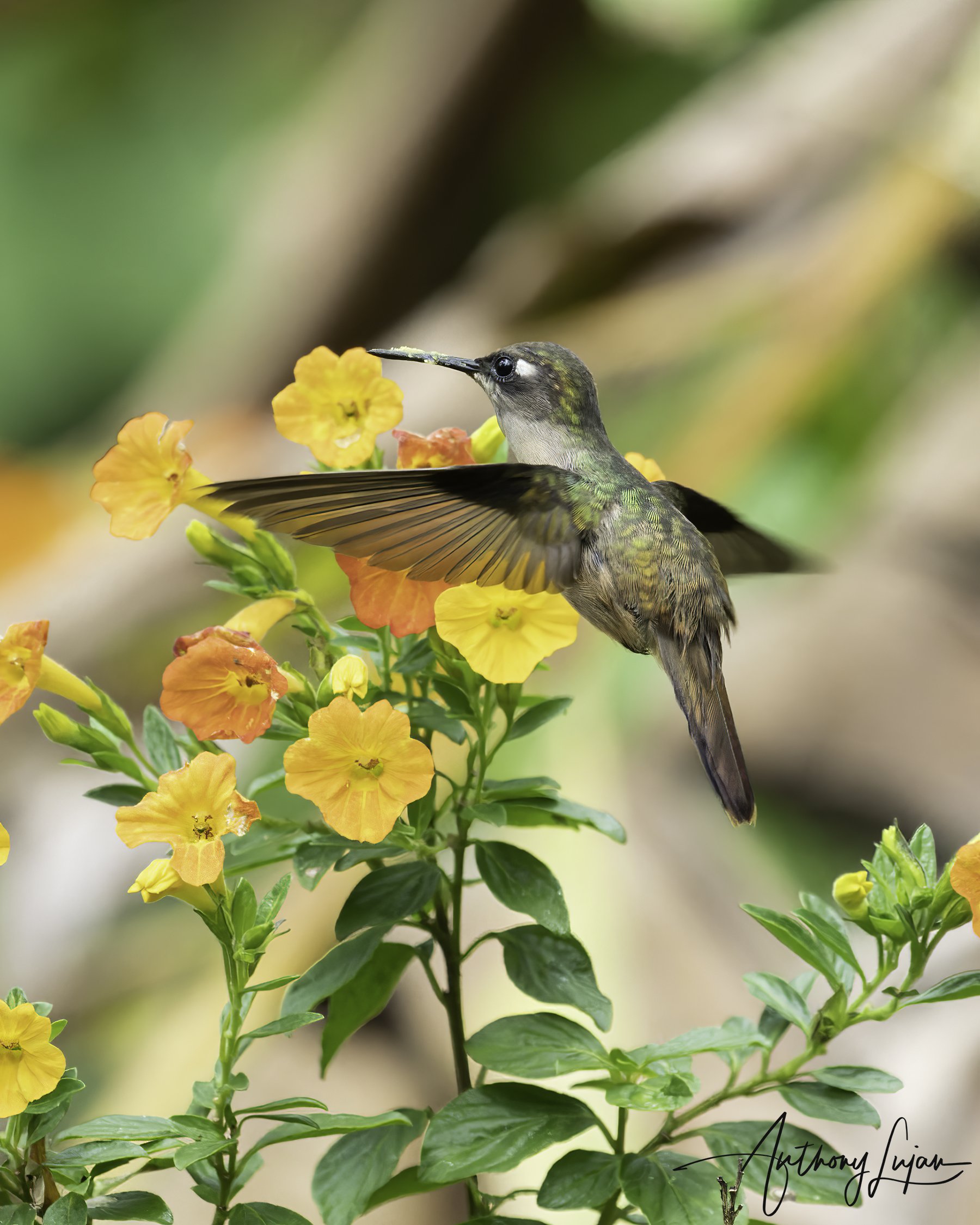
Adult males have a straight black bill and a striking head pattern: a buffy white forecrown leading into a rufous-chestnut hindcrown, with the rest of the upperparts shining green. A small white spot is present behind the eye. The lower back and uppertail coverts are rusty, and the underparts are grayish buff. The tail is bronzy green, more or less squared, with buffy tips to the feathers; all but the central pair of rectrices have a black subterminal bar near the tips. Overall, males appear as small, warm-toned hummingbirds with a pale-and-rufous “blossom” crown, green back, rusty rump, and a bronzy tail with pale tips.
Female Description
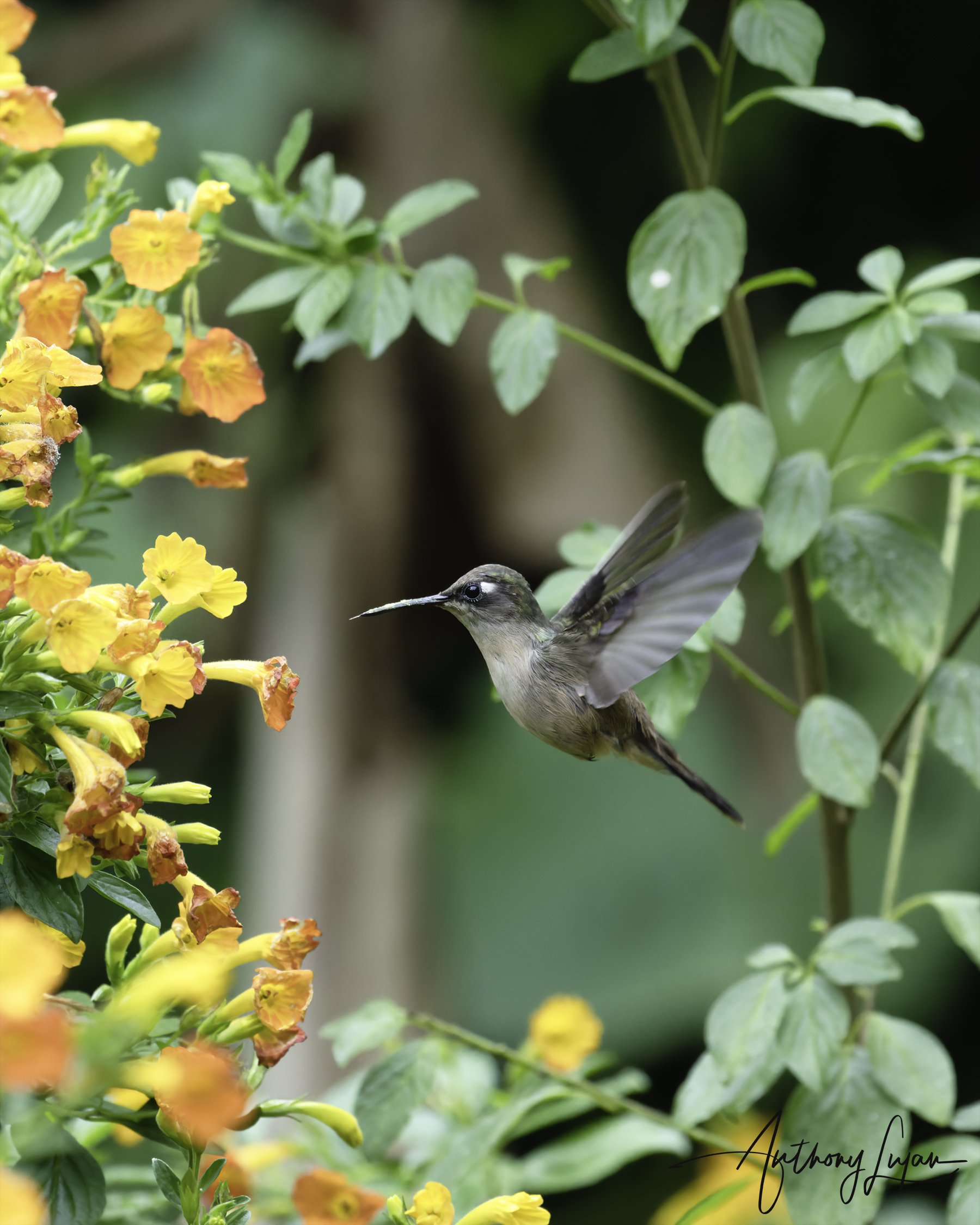
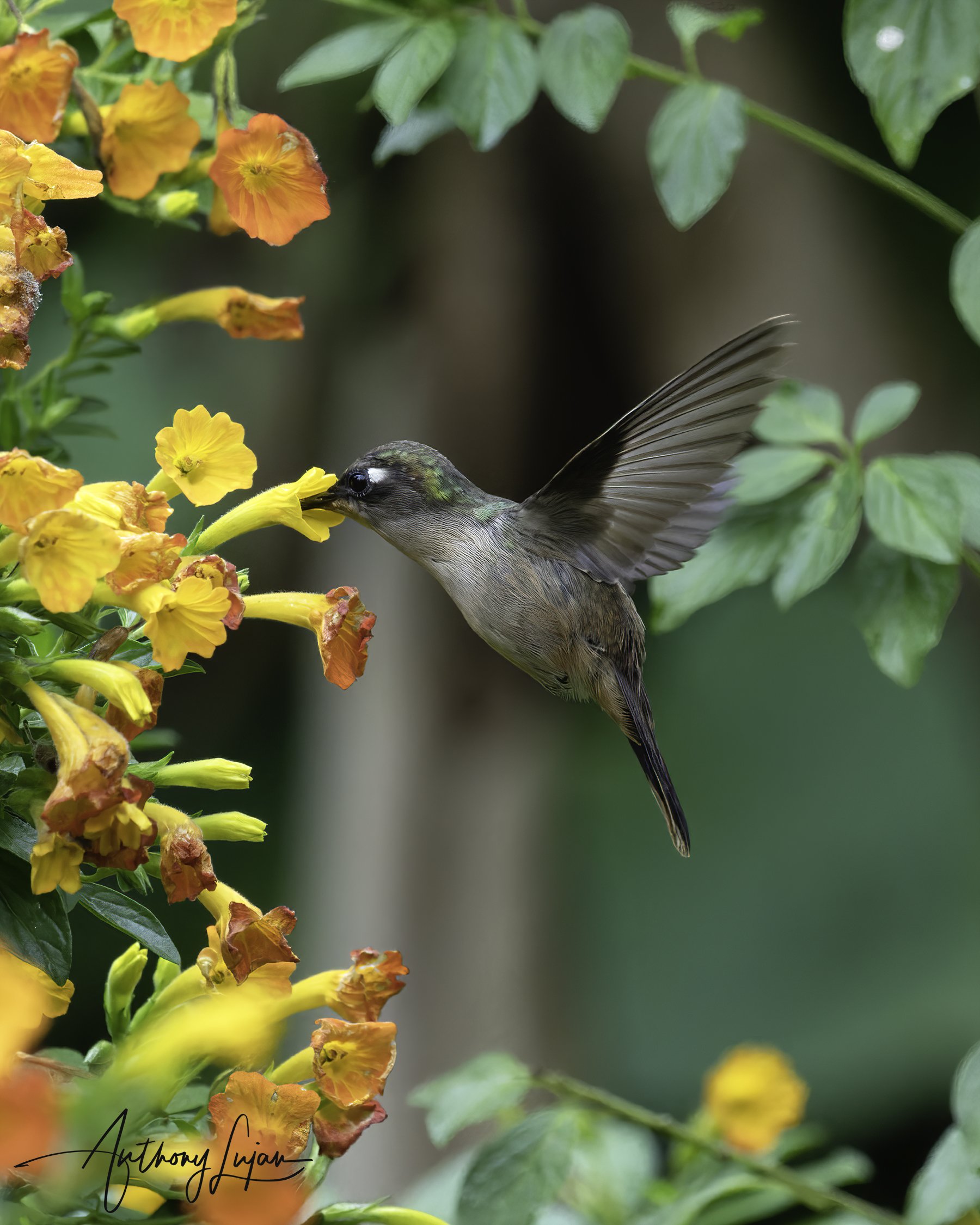
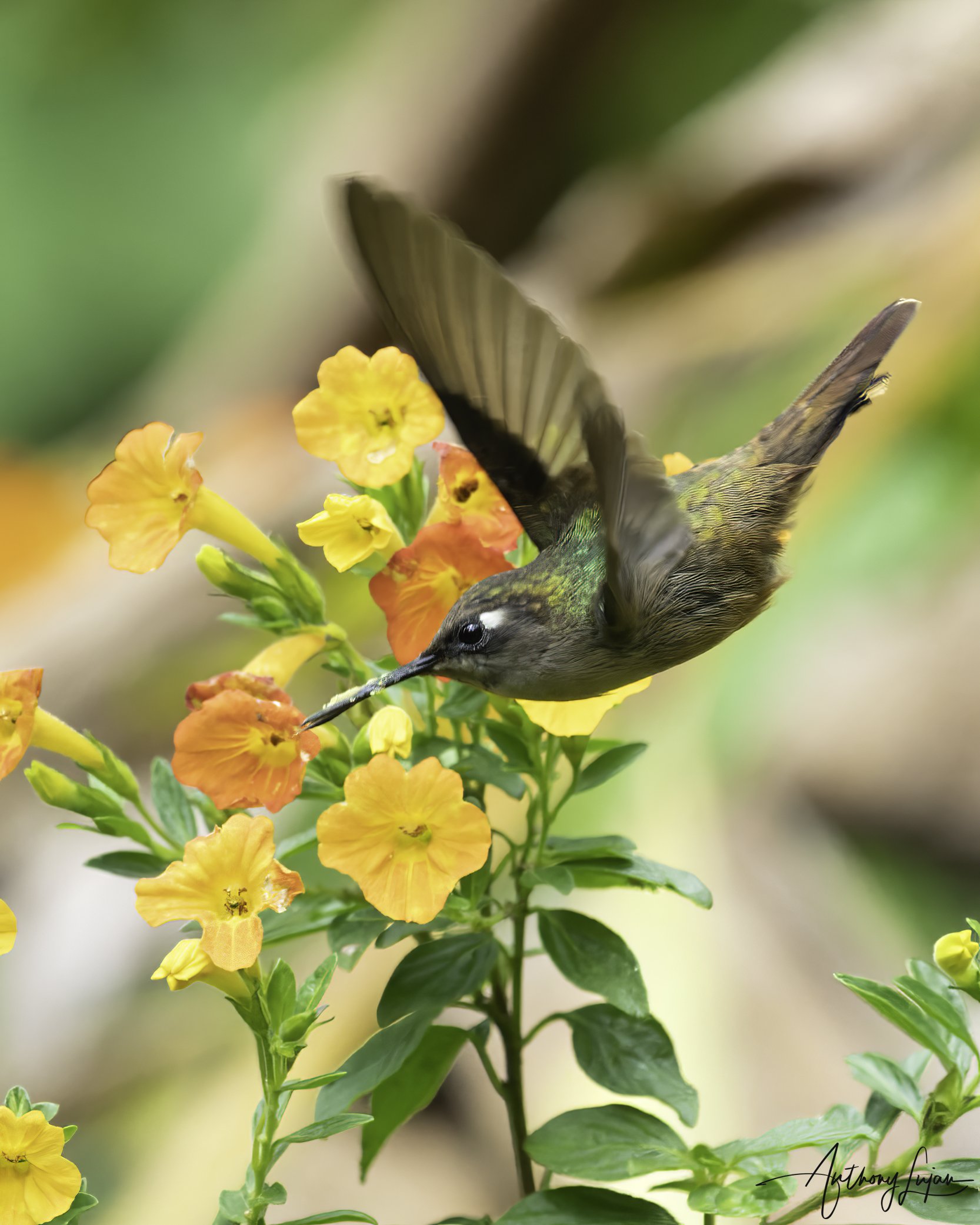
Females resemble males in size and general pattern but have the entire crown brownish rather than a sharply contrasting buff forecrown and rufous hindcrown. The upperparts remain shining green with a rusty lower back, and the underparts are grayish buff, similar to the male. The tail pattern is also comparable, with bronzy-green feathers tipped buffy and dark subterminal bars on all but the central pair. In the field, females look like duller-headed versions of the male, lacking the clean two-toned crown but otherwise sharing the species’ distinctive warm green-and-rufous tones.
Habitat & Behavior
Santa Marta Blossomcrowns inhabit the understory and lower levels of humid montane forest and mature second growth, often in dense vegetation and along forest edges. They typically forage close to the ground, visiting small flowers in the understory and occasionally feeding at flowering bananas and other low shrubs, and they likely take tiny insects as a supplemental protein source. The species is an altitudinal migrant within the Santa Marta range, moving up and down the slopes between roughly 400 and 1,700 m in response to seasonal changes in flowering and forest conditions, though the details of these movements remain poorly studied.
Population
The global population of Anthocephala floriceps is estimated at only 500–2,500 mature individuals, all confined to a single mountain system. Within suitable humid forest and older second growth it appears to be uncommon but regularly present, especially where forest remains relatively intact. Ongoing habitat loss and fragmentation in the Sierra Nevada de Santa Marta are believed to be driving a continuing decline in numbers.

Conservation
The Santa Marta Blossomcrown is listed as Vulnerable due to its very small, declining population, extremely restricted range, and dependence on intact montane forest. Forest within the Sierra Nevada de Santa Marta continues to be cleared and degraded for agriculture, settlement, and illegal crops, reducing and fragmenting the habitat this species requires. Because it does not adapt well to heavily modified or open environments, the loss of mature forest and older second growth poses a serious threat. Conservation actions include expanding and effectively managing protected areas in the Santa Marta range, restoring degraded forest, and working with local communities to reduce deforestation and promote sustainable land use. As a visually distinctive and highly localized bird, the Santa Marta Blossomcrown serves as a strong flagship for conserving the unique biodiversity of the Sierra Nevada de Santa Marta.
Checkout Anthony’s playlist of this species! Click the top right dropdown to see all the videos.
Related species in the Anthocephala genus (2 species total):

Please note: The content provided in this article reflects Anthony’s personal experience and photographic approach. Results can vary depending on light, weather, location, equipment, subject behavior, and field conditions.