
Santa Marta Woodstar
Scientific name: Chaetocercus astreans
The Santa Marta Woodstar is a tiny hummingbird found only in Colombia’s isolated Sierra Nevada de Santa Marta. The number of mature individuals is unknown, the population is considered stable, it is treated as non-migratory, and it is currently listed as Least Concern, endemic to Colombia and monotypic.
At a Glance
Family: Trochilidae (hummingbirds)
Clade: Mellisugini – Bee Hummingbirds
Genus group: Chaetocercus — 6 species, all tiny “woodstars” of northern South America and Trinidad
Range: Endemic to the Sierra Nevada de Santa Marta in northern Colombia.
Habitat: Edges of montane forest, semi-open woodlands, coffee plantations, shrubby areas, and occasionally the lower edges of páramo.
Elevation: About 825–2,000 m.
Length: About 7 cm (2.8 in).
Weight: A few grams; typical of a very small woodstar.
Number of mature individuals: Unknown
Population trend: Stable
Status: Least Concern (IUCN)
Name Origin
The genus name Chaetocercus means “bristle tail,” referring to the filamentous outer tail feathers of male woodstars. The species name astreans likely alludes to “star” or “star-like,” echoing the sparkling appearance of this tiny hummingbird. The English name “Santa Marta Woodstar” ties this minute bee-hummingbird to its home in the Sierra Nevada de Santa Marta.
Subspecies & Distribution
Monotypic — no subspecies are recognized. It occurs only in the Sierra Nevada de Santa Marta of northern Colombia, where it inhabits humid montane forest edges, semi-open woodlands, shrubby clearings, and coffee plantations, occasionally reaching the lower limits of páramo vegetation.
Within this small range, Chaetocercus astreans is restricted to mid‑elevation slopes of the Santa Marta massif, making it one of several localized endemics of this mountain system.
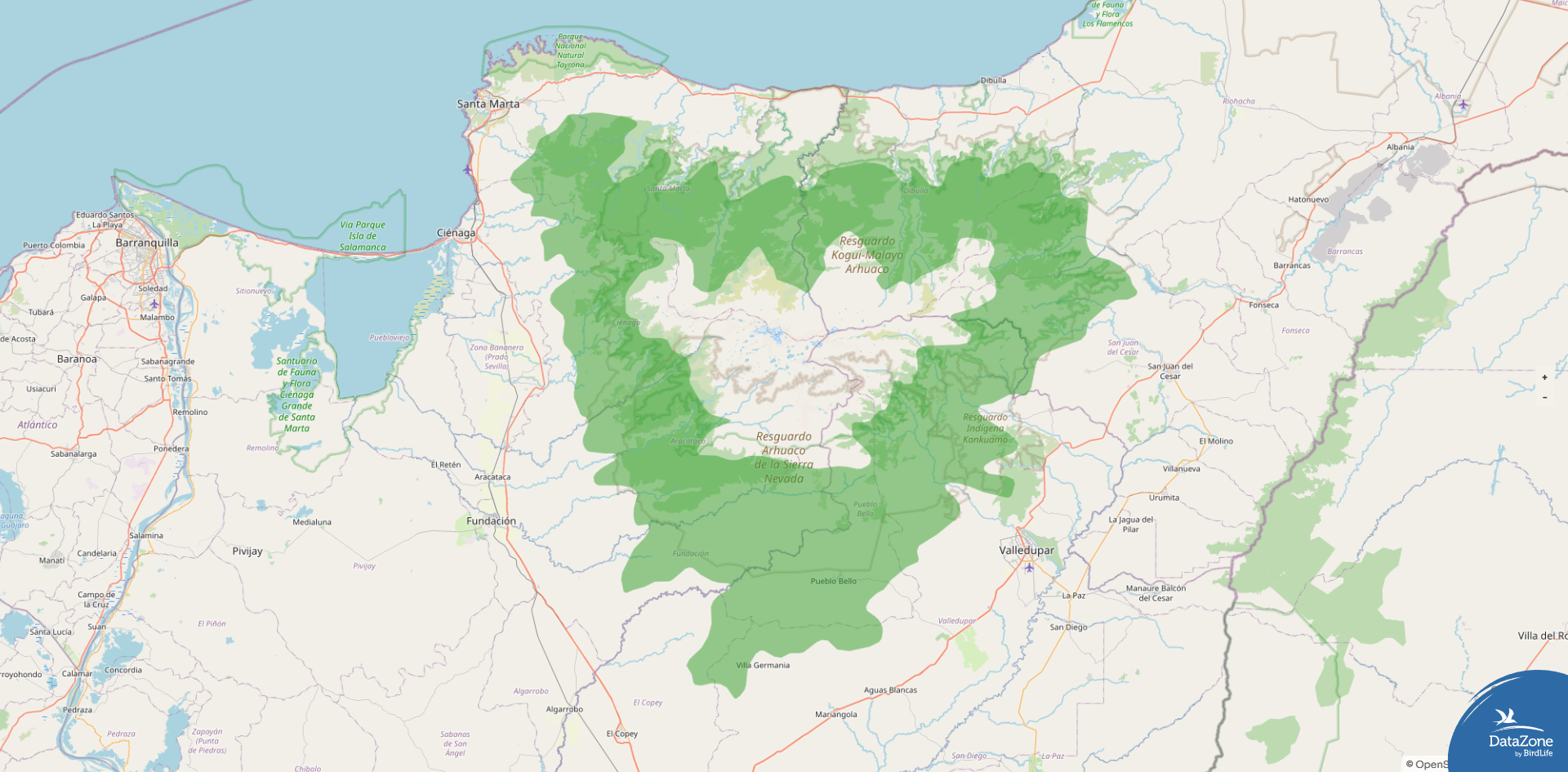
Legend
Green Resident
Species Overview
The Santa Marta Woodstar is a classic tiny “bee hummingbird,” flitting through forest edges, shrubby patches, and shade coffee at mid‑elevations in the Santa Marta range. It feeds at flowering shrubs and trees, often in semi‑open areas where sunlight reaches the canopy and understory. Though it has a limited range, it is locally common and uses some human-altered landscapes, which contributes to its current Least Concern status.
Male Description
Adult males are about 7 cm long with a straight black bill. The head is shiny green and the rest of the upperparts are dark, shiny bluish. The throat bears a reddish to purplish gorget extending across the neck, which can look like a glittering purple patch in good light. The breast is gray, and the belly is bluish with a white spot on the flanks. The tail is deeply forked, with very short central feathers and outer feathers reduced to bare shafts, giving the characteristic “wire-tailed” woodstar silhouette. Overall, males appear as very small, green-and-blue woodstars with a reddish‑purple gorget, gray breast, bluish belly, white flank spot, and a deeply forked, filament-tailed rear.
Female Description
Adult females have bronzy green upperparts and a straight black bill like the male. The underparts are pale cinnamon‑rufous, with a darker cheek patch and a distinct white spot on the flanks. The tail is rounded rather than deeply forked, with green central feathers and outer feathers that are cinnamon with a dark bar near the tips. In the field, females look like tiny bronzy-green hummingbirds with warm cinnamon underparts, a dark cheek patch, a white flank spot, and a short, cinnamon-and-dark tail.
Habitat & Behavior
Santa Marta Woodstars occupy the edges of subtropical and tropical moist montane forest, semi-open woodlands, shrubby slopes, and shade coffee plantations, sometimes reaching into high-altitude grasslands at the lower edge of páramo. They forage at a variety of small flowers on shrubs and trees, hovering in front of blooms to sip nectar, and also take tiny insects for protein. Males can be quite territorial at rich flowering patches, chasing away other hummingbirds as they defend feeding sites. The species is regarded as resident within the Santa Marta range, with no major migratory movements known, though local movements likely follow flowering patterns along the elevational gradient.
Population
The global population size is unknown, but the Santa Marta Woodstar is considered locally common in suitable habitats within its small range. It tolerates certain human-modified landscapes such as coffee plantations and shrubby clearings, as long as flowering plants are available. Despite ongoing deforestation in the Sierra Nevada de Santa Marta, there is currently no evidence for rapid declines, and the overall trend is assessed as stable.

Conservation
The Santa Marta Woodstar is listed as Least Concern because, although it has a restricted range and unknown population size, it remains locally common and uses some semi‑natural and agricultural habitats. However, deforestation, agricultural expansion, and habitat degradation in the Sierra Nevada de Santa Marta threaten montane forests and edges, and continued loss of natural habitat could eventually impact the species. Protecting and managing forest within Sierra Nevada de Santa Marta National Park and other reserves, maintaining shade coffee and hedgerows with flowering shrubs, and limiting further deforestation will help sustain this endemic woodstar.


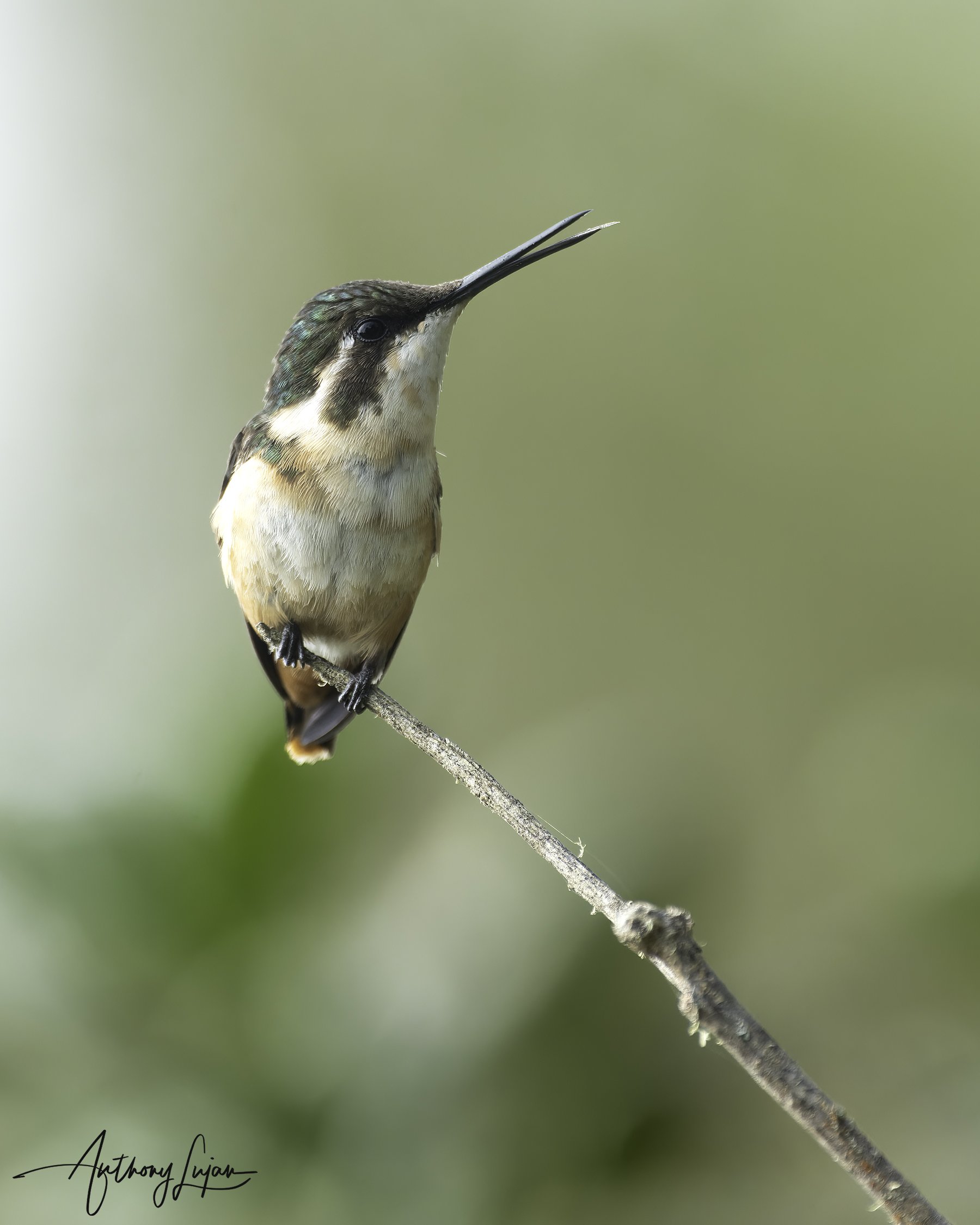
Checkout Anthony’s playlist of this species! Click the top right dropdown to see all the videos.
Related species in the Chaetocercus genus (6 species total):

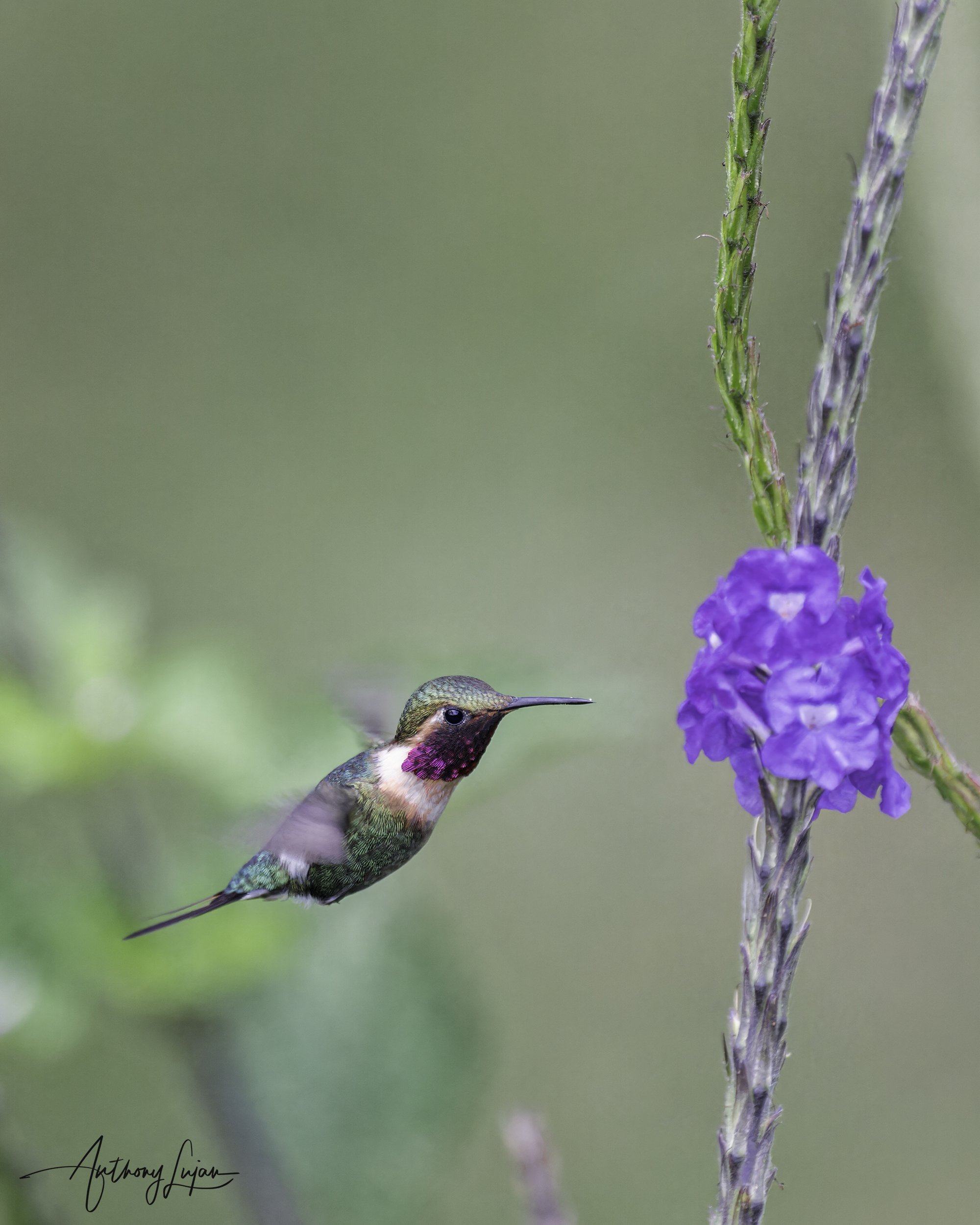


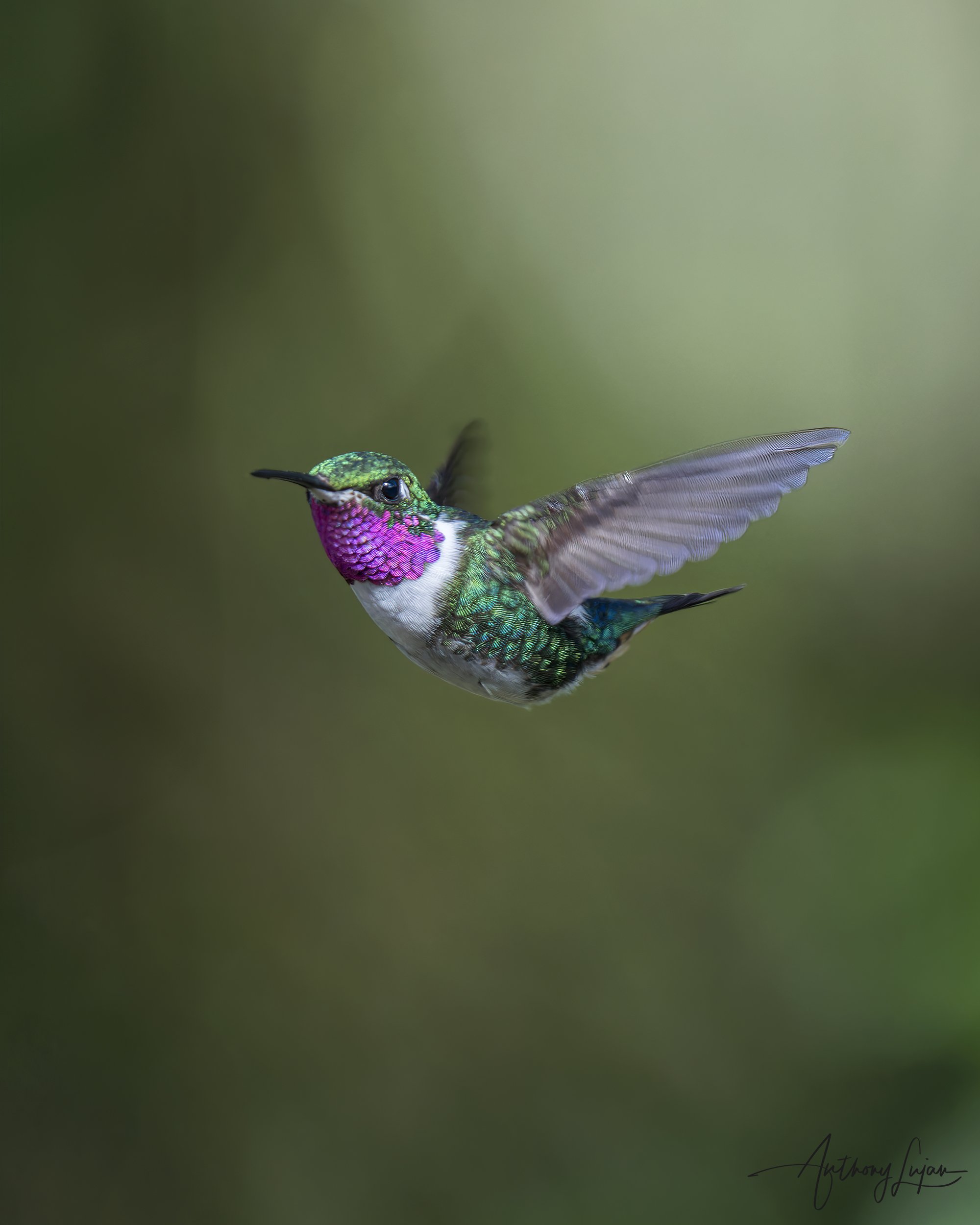
Please note: The content provided in this article reflects Anthony’s personal experience and photographic approach. Results can vary depending on light, weather, location, equipment, subject behavior, and field conditions.