
Stripe-throated Hermit
Scientific name: Phaethornis striigularis
The Stripe-throated Hermit is a small hermit hummingbird of humid lowland forests, forest edges, thickets, and gardens from southern Mexico through Central America to northwestern South America. The number of mature individuals is unknown, the population trend is believed to be decreasing, it is not a migrant, and it is currently assessed as Least Concern.
At a Glance
Family: Trochilidae (hummingbirds)
Clade: Phaethornithinae – Hermits
Genus: Phaethornis — 27 species in total
Range: Southern Mexico and Belize south through most of Central America into western, central, and northern Colombia, western Ecuador, and northeastern Venezuela
Habitat: Humid lowland and foothill forest, woodland, clearings, thickets, second growth, and gardens, mainly in humid regions but locally also in drier deciduous habitats
Elevation: Primarily lowlands and foothills from sea level up to about 1,200–1,800 m
Length: About 9–10 cm (3.5–3.9 in)
Weight: About 2–3 g
Number of mature individuals: Unknown
Population trend: Decreasing
Movement: Not a migrant (resident with local movements)
IUCN Red List category: Least Concern
Name Origin
The genus name Phaethornis derives from Phaethon, associated with the sun in Greek mythology, combined with “bird,” and is used for hermit hummingbirds. The species name striigularis means “streaked throat,” referring to the fine streaking on the throat that helps distinguish this species from other small hermits. The English name “Stripe-throated Hermit” is a direct translation of this feature.
Taxonomy
Phaethornis striigularis is a hermit hummingbird in the subfamily Phaethornithinae. It is one of the smaller Phaethornis species and has several described subspecies across its broad range. These subspecies show subtle variation in tone of the upperparts, throat streaking, and tail pattern, corresponding to different regions from southern Mexico to northern South America.
Subspecies and Distribution
Four subspecies are widely recognized:
Phaethornis striigularis saturatus
Distribution: Southern Mexico (Veracruz and Oaxaca) south through much of Central America to northwestern Colombia.Phaethornis striigularis subrufescens
Distribution: Western Colombia and western Ecuador (Pacific lowlands, south to El Oro).Phaethornis striigularis striigularis
Distribution: Northern Colombia (including the Magdalena Valley) and adjacent western Venezuela.Phaethornis striigularis ignobilis
Distribution: Northern Venezuela (both Andean slopes and northern coastal mountains).
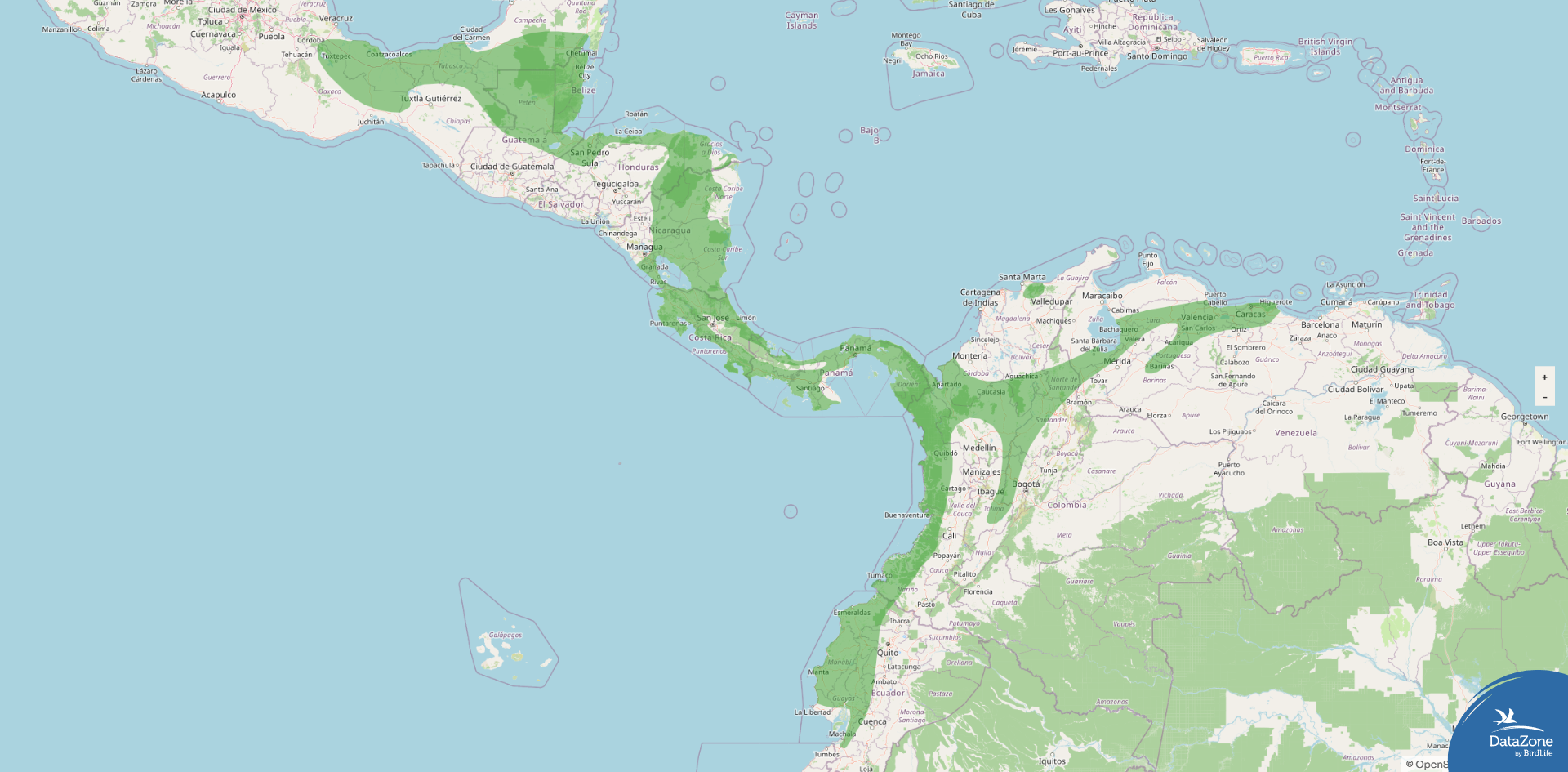
Legend
Green Resident
Species Overview
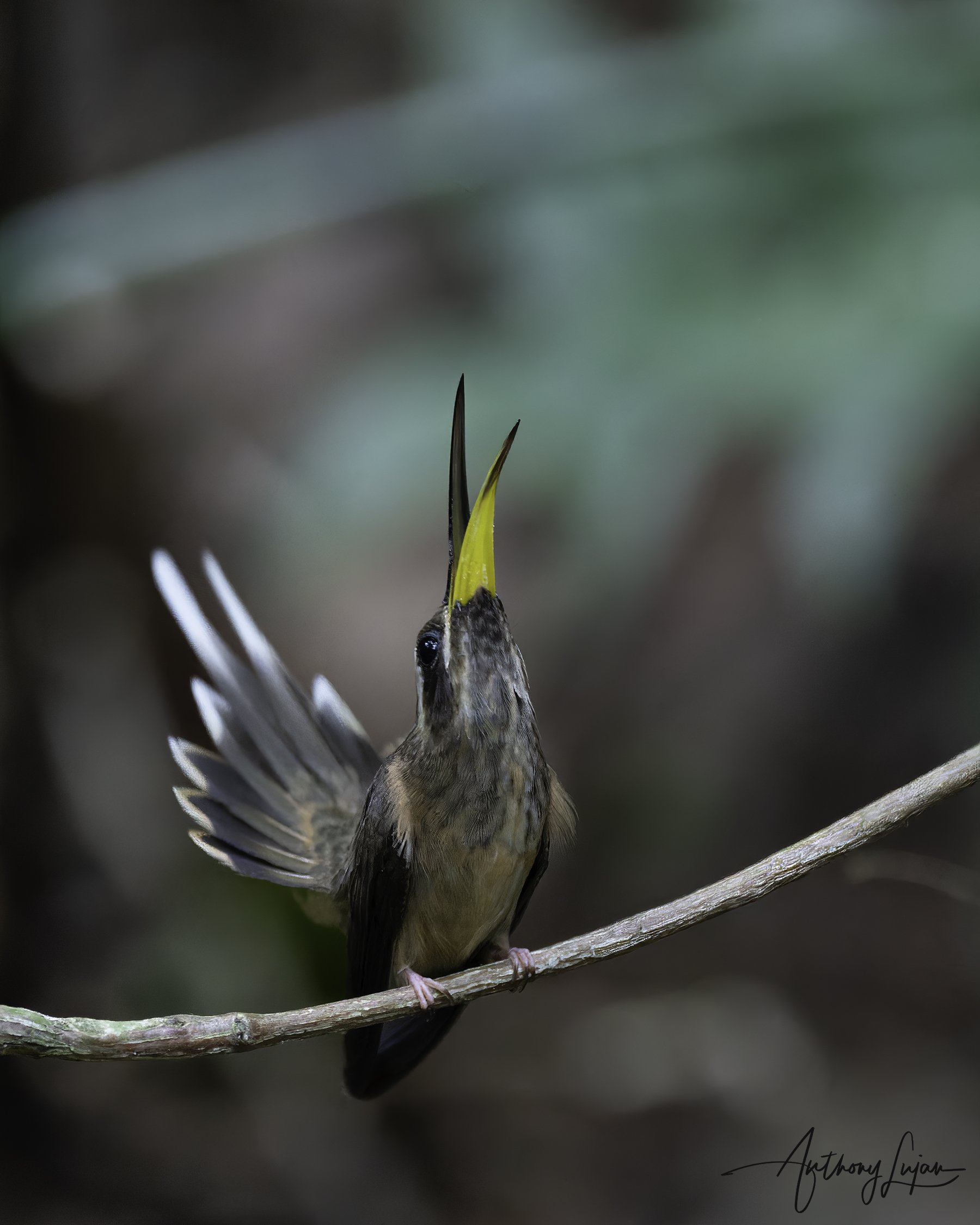
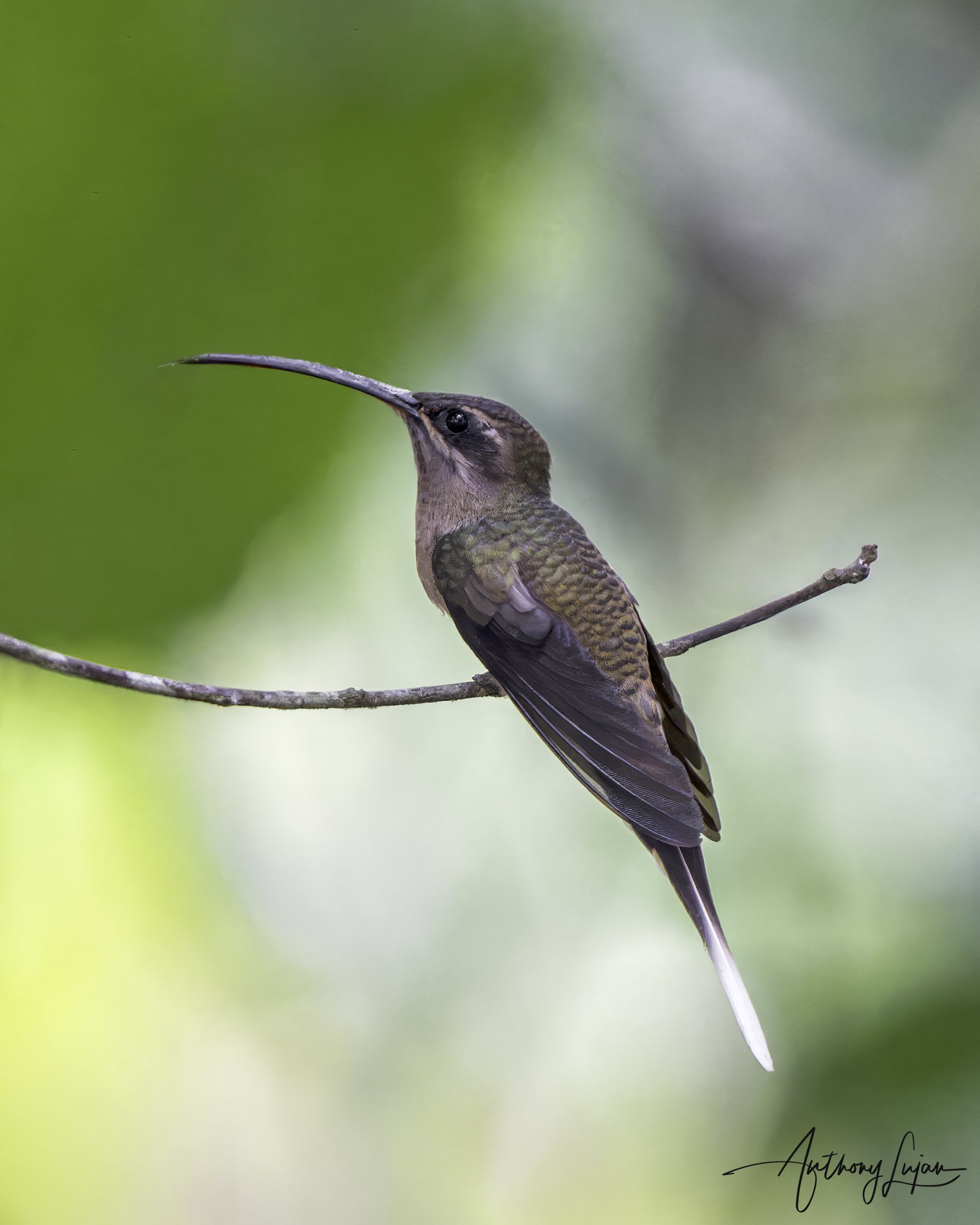
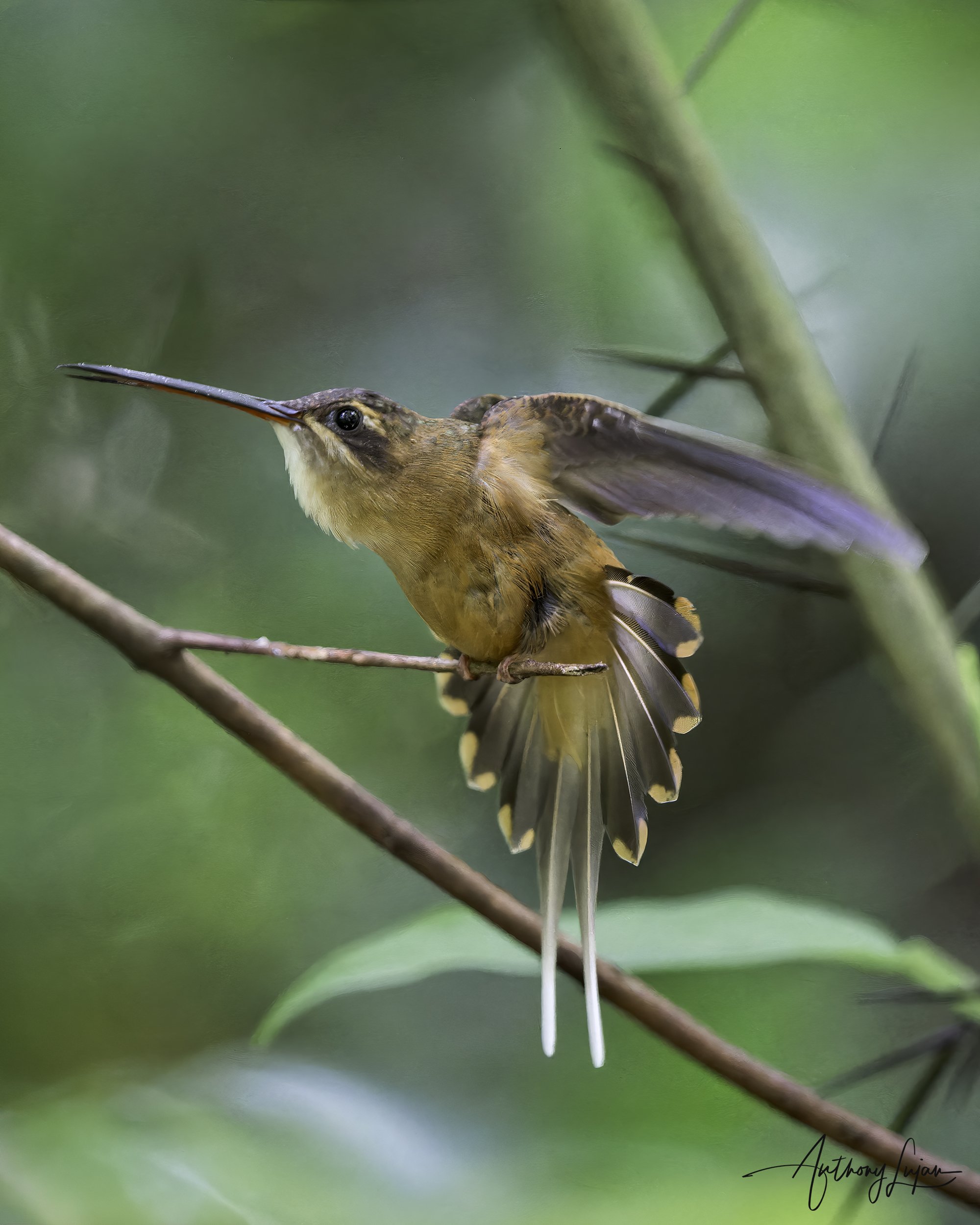
The Stripe-throated Hermit is a small, fast‑moving hermit with dull iridescent green upperparts, pale buff to grayish underparts, and a subtly streaked throat. Its face shows the characteristic hermit “bandit mask”: a dark stripe through the eye bordered above and below by whitish‑buff lines. It has a long, decurved bill with the basal half of the lower mandible yellowish and the rest black, and a relatively short, dark tail with pale or ochraceous tips that vary by subspecies. This species favors dense understory and edges, where it moves quickly along traplines near the forest floor.
Male Description
Males measure about 9–10 cm in length and weigh roughly 2–3 g. The wing coverts, mantle, nape, and crown are dull iridescent green, while the rump and uppertail coverts are pale rufous. The central underparts and lower throat are pale grayish‑brown, with small, dark streaks on the throat that can be faint and difficult to see in the field. The belly and flanks are buffy. The face bears a blackish mask through the eye, bordered above by a whitish‑buff supercilium and below by a whitish‑buff malar stripe. The flight feathers and tail are blackish; the tail feathers are tipped whitish to ochraceous depending on subspecies. The bill is long and decurved, with a yellowish basal half to the lower mandible and black elsewhere.
Female Description
Females closely resemble males in size and plumage, with similar green upperparts, pale underparts, and facial pattern. The throat streaking may be slightly less distinct in some individuals, but differences between the sexes are subtle and not always obvious in the field. Juveniles are generally duller, with softer throat patterning and fresher feather edges until they molt into adult plumage.
Habitat & Behavior
Stripe-throated Hermits occupy a wide range of wooded habitats in humid regions, including lowland and foothill rainforest, secondary forest, woodland, forest clearings, thickets, and gardens. They also occur in gallery forest and semi‑deciduous woodland in somewhat drier zones, as long as flowering plants and understory cover are available. Birds typically forage in the understory and low mid‑levels, often along trails, streams, and edges.
They are classic trapline feeders, following regular routes between scattered nectar sources rather than defending a single territory. They visit a variety of tubular flowers in the understory and edges and supplement their diet with small arthropods such as insects and spiders. Stripe-throated Hermits often appear restless and quick, darting from flower to flower near the ground or in dense thickets, and are frequently detected by their high, thin calls.
Breeding
Breeding seasons vary across the broad range, often aligning with local wet seasons and peaks in flowering. As with other hermits, the female builds a hanging, cone‑shaped nest from plant fibers, rootlets, and spiderweb. The nest is typically suspended from the underside of a long, drooping leaf or from a slender root or branch in sheltered understory, sometimes overhanging streams or paths.
The clutch usually consists of two white eggs. The female alone is responsible for nest construction, incubation, and chick feeding, visiting the nest to regurgitate nectar and small arthropods to the young. Incubation and nestling periods together span several weeks, with fledglings quickly joining the dense understory where adults forage.
Movement
The Stripe-throated Hermit is considered not a migrant. It is resident throughout most of its range from southern Mexico to northern South America. Individuals may make local movements between lowland and foothill sites or shift within landscapes as flowering patterns and moisture levels change, but there is no evidence of regular long‑distance migration.
Population
The total number of mature individuals is unknown, but the Stripe-throated Hermit is generally described as fairly common to common in suitable habitats across much of its range. It occurs in numerous protected areas and is tolerant of habitat modification, often using forest edge, second growth, and gardens. Nonetheless, continued deforestation and fragmentation in lowland and foothill forests are expected to drive a slow decline in overall numbers.

Conservation
The Stripe-throated Hermit is assessed as Least Concern due to its wide distribution, relative abundance, and adaptability to a range of wooded habitats. However, ongoing habitat loss and fragmentation throughout Mesoamerica and northern South America—especially in lowland rainforest and foothills—remain significant threats. Conservation of forest mosaics that include primary forest, secondary growth, riparian strips, and flowering gardens supports this species and other understory hummingbirds.
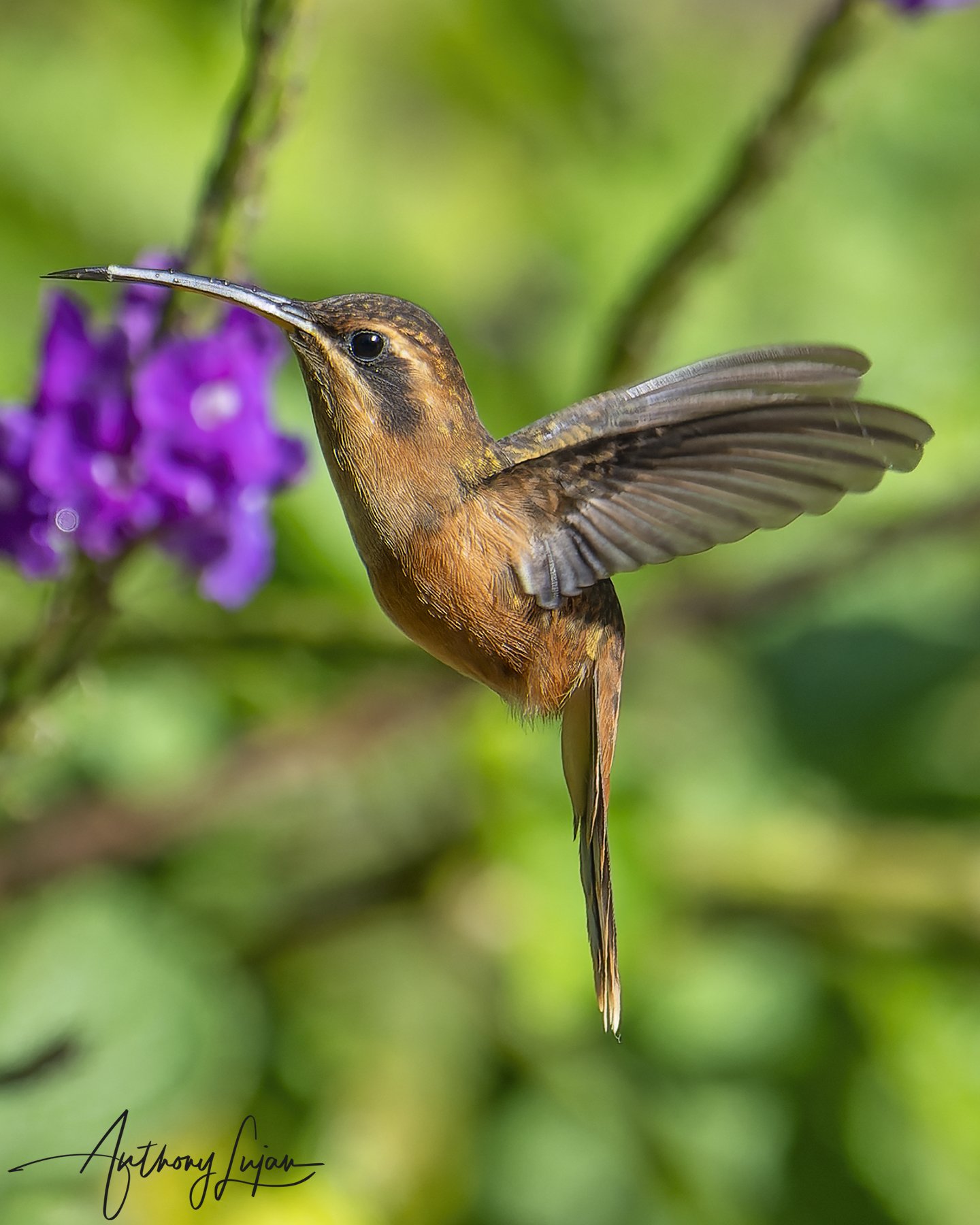
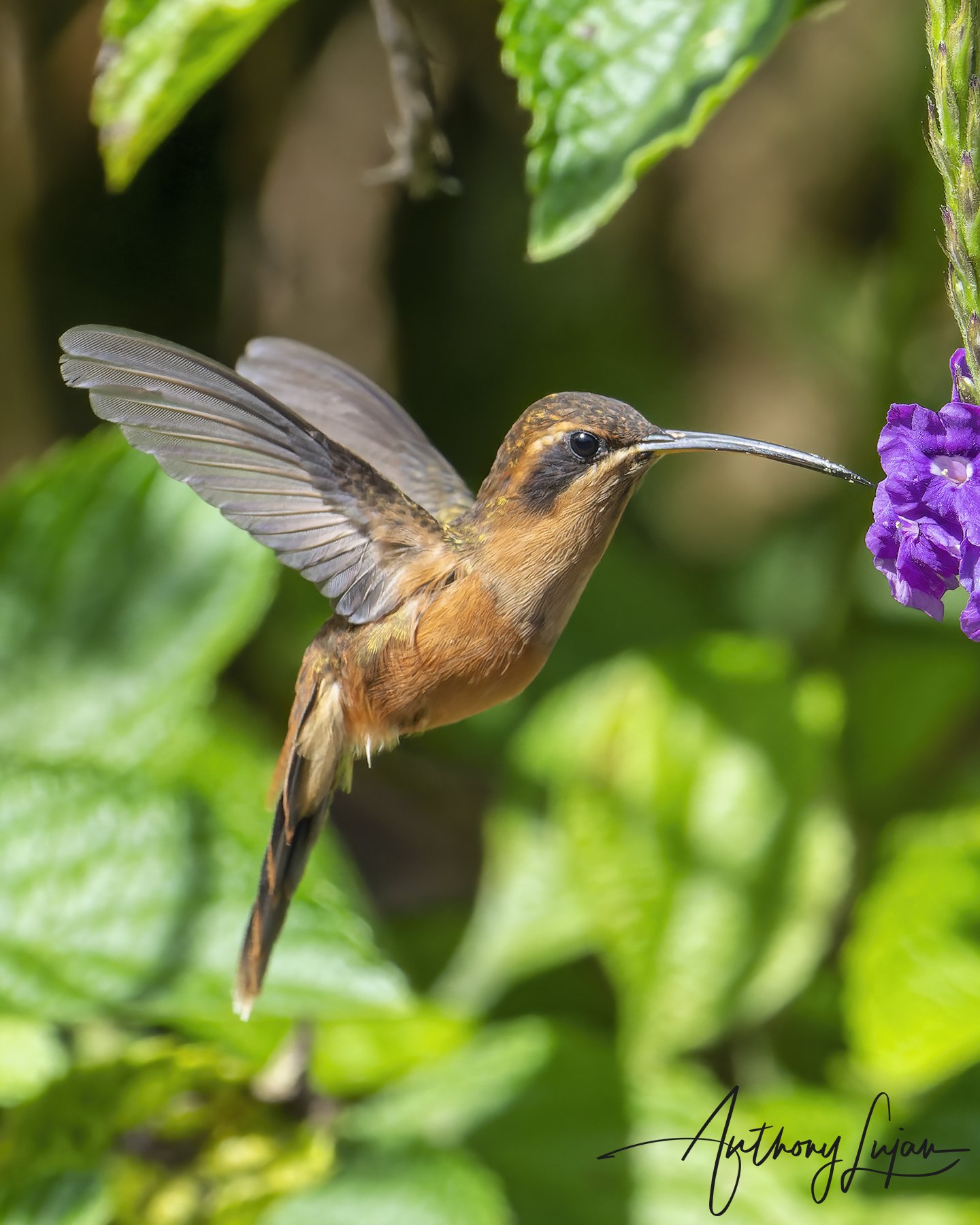
Below is the Stripe-throated Hermit (Phaethornis striigularis saturatus)
Photographed at Donde Cope – La Unión de Guápiles and Nectar & Pollen Reserve, Limón; Rancho Naturalista, Cartago; and Cerro Marín, Oaxaca, Mexico
These individuals belong to the subspecies saturatus, which ranges from southern Mexico through Central America to northwestern Colombia. Birds in this group show slightly richer brown upperparts and pale underparts with subtle throat streaking. They inhabit lowland forest and secondary growth below 1,000 meters.

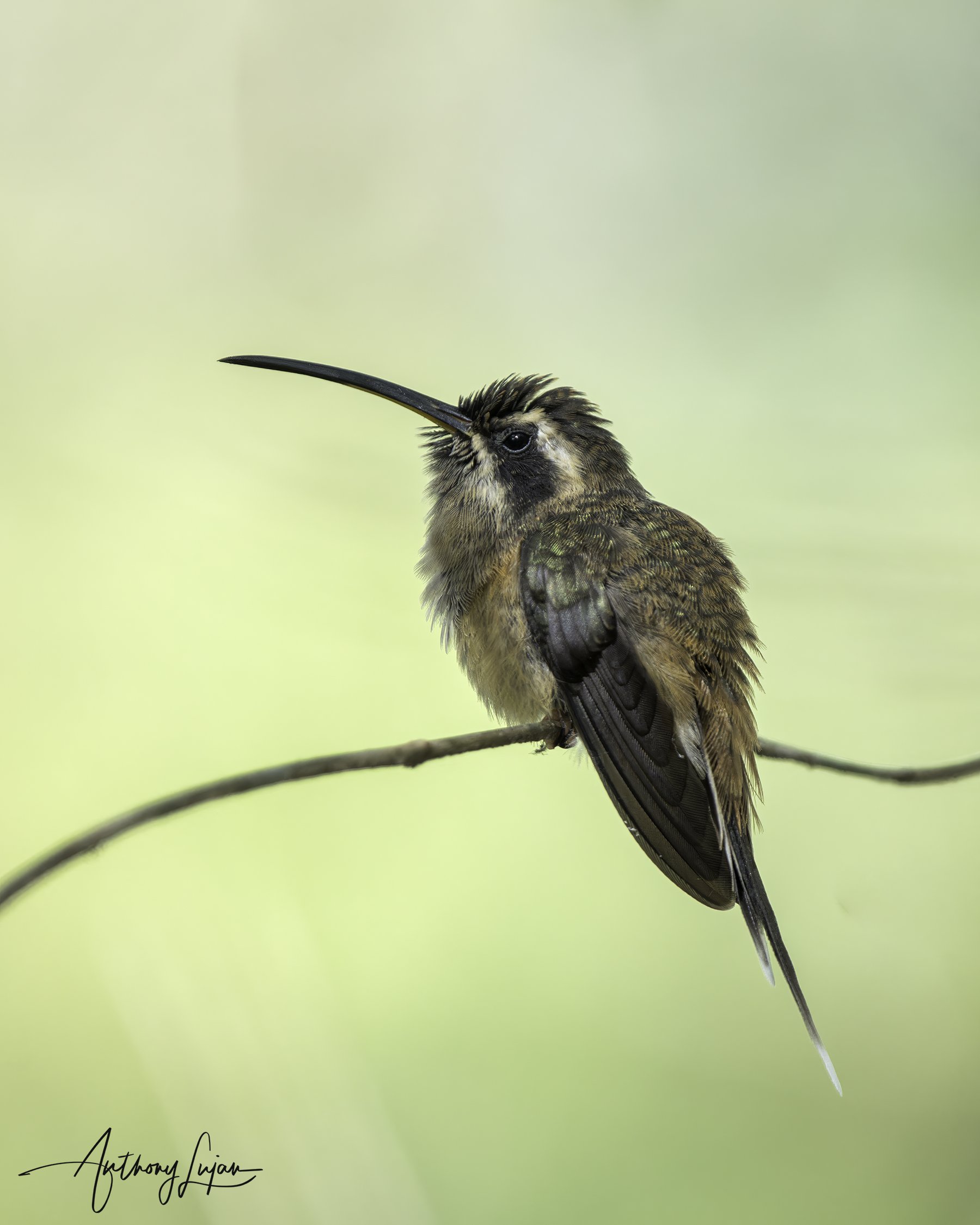
Below is the Stripe-throated Hermit (Phaethornis striigularis striigularis)
Photographed at Observatorio de Aves de Minca, Magdalena, Colombia
This individual belongs to the nominate subspecies striigularis, which occurs in northern Colombia and into adjacent western Venezuela. It is typically found in the Magdalena Valley and nearby foothills, where it frequents lower montane forest edges and secondary growth.

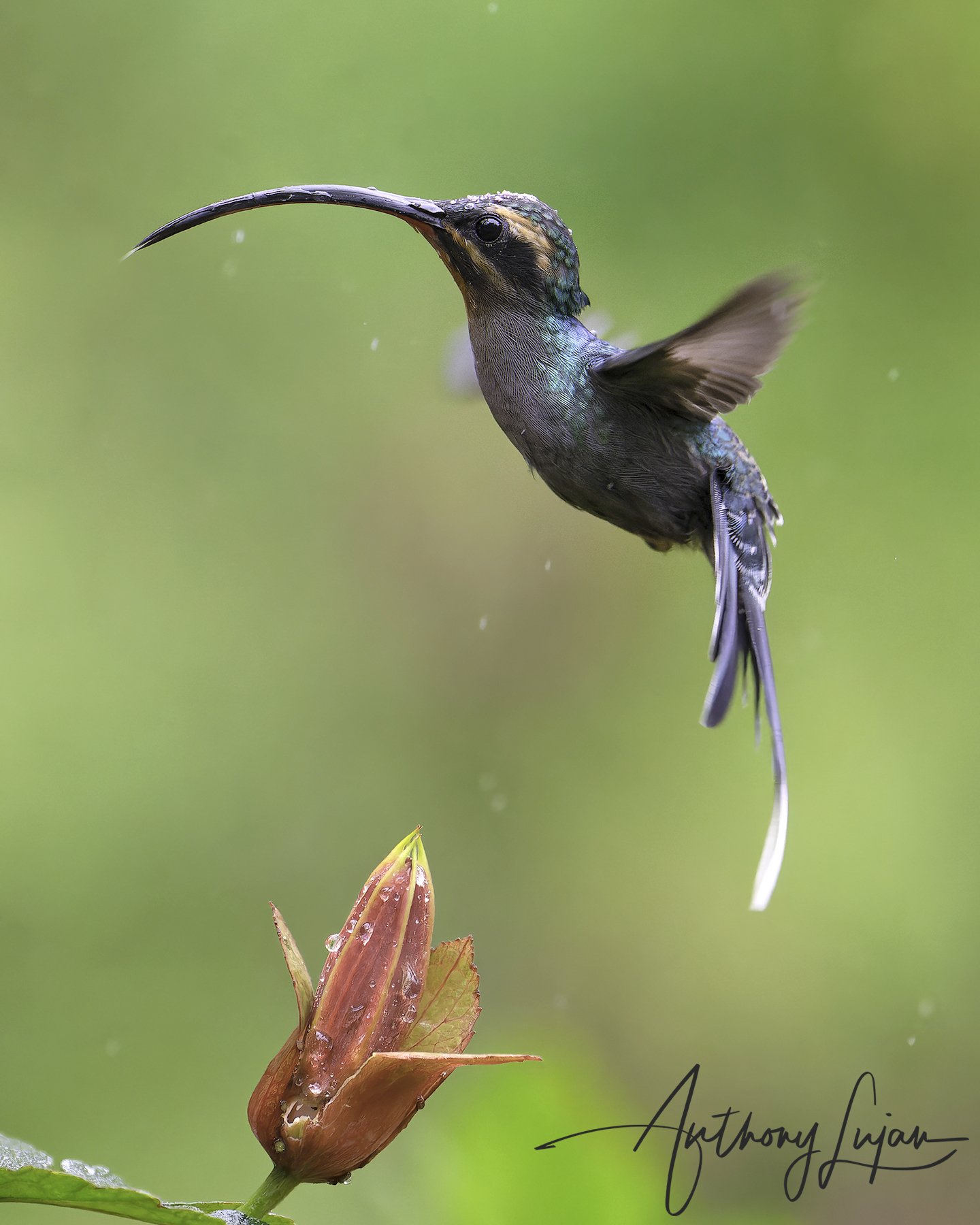
Related species in the Phaethornis genus (27 species total)





Please note: The content provided in this article reflects Anthony’s personal experience and photographic approach. Results can vary depending on light, weather, location, equipment, subject behavior, and field conditions.