

Scientific name: Eupetomena macroura
The Swallow-tailed Hummingbird is a large South American hummingbird of semi-open habitats, gardens, and woodland edges from Brazil into neighboring countries. The number of mature individuals is unknown, the population trend is unknown, it is not a migrant, and it is currently assessed as Least Concern.
At a Glance
Family: Trochilidae (hummingbirds)
Clade: Trochilini – Emeralds
Genus: Eupetomena — 2 species in total
Range: Brazil, Peru, Bolivia, Paraguay, Guyana region, and extreme northeast Argentina
Habitat: Semi-open woodland, savanna, forest edges, gardens, parks, plantations, and urban areas
Elevation: Mostly lowlands, locally to about 1,500 m
Length: About 15 cm (5.9 in)
Weight: About 6–8 g
Number of mature individuals: Unknown
Population trend: Unknown
Movement: Not a migrant
IUCN Red List category: Least Concern
Name Origin
The genus name Eupetomena refers to graceful or beautiful flight, which fits this species well. The species name macroura means “large-tailed,” referring to its long, deeply forked tail. The common name “Swallow-tailed Hummingbird” also highlights that swallow-like tail shape.
Taxonomy
Eupetomena macroura belongs to the emerald clade, tribe Trochilini, within Trochilidae. The genus Eupetomena currently includes two species in your template framework. This species is widespread in east-central South America and is especially associated with open and semi-open landscapes rather than dense humid forest interiors.
Its range spans much of Brazil and extends into southeastern Peru, northern and eastern Bolivia, Paraguay, extreme northeast Argentina, and the Guianas region. It is especially common in Brazil’s open habitats and also occurs in cities where flowering plants and ornamental gardens are available.
Subspecies and Distribution
Five subspecies:
Eupetomena macroura macroura
Distribution: Suriname and north, central, and southeast Brazil to Paraguay and extreme northeast Argentina.Eupetomena macroura simoni
Distribution: Northeastern Brazil (south Maranhão, Piauí, Ceará, Pernambuco, Bahia to central Goiás and Minas Gerais).Eupetomena macroura cyanoviridis
Distribution: Southeastern Brazil (Serra do Mar, eastern São Paulo).Eupetomena macroura hirundo
Distribution: Southeast Peru (upper Urubamba Valley, Cuzco).Eupetomena macroura boliviana
Distribution: Southeast Peru (Pampas del Heath) and northern Bolivia (La Paz, Beni).
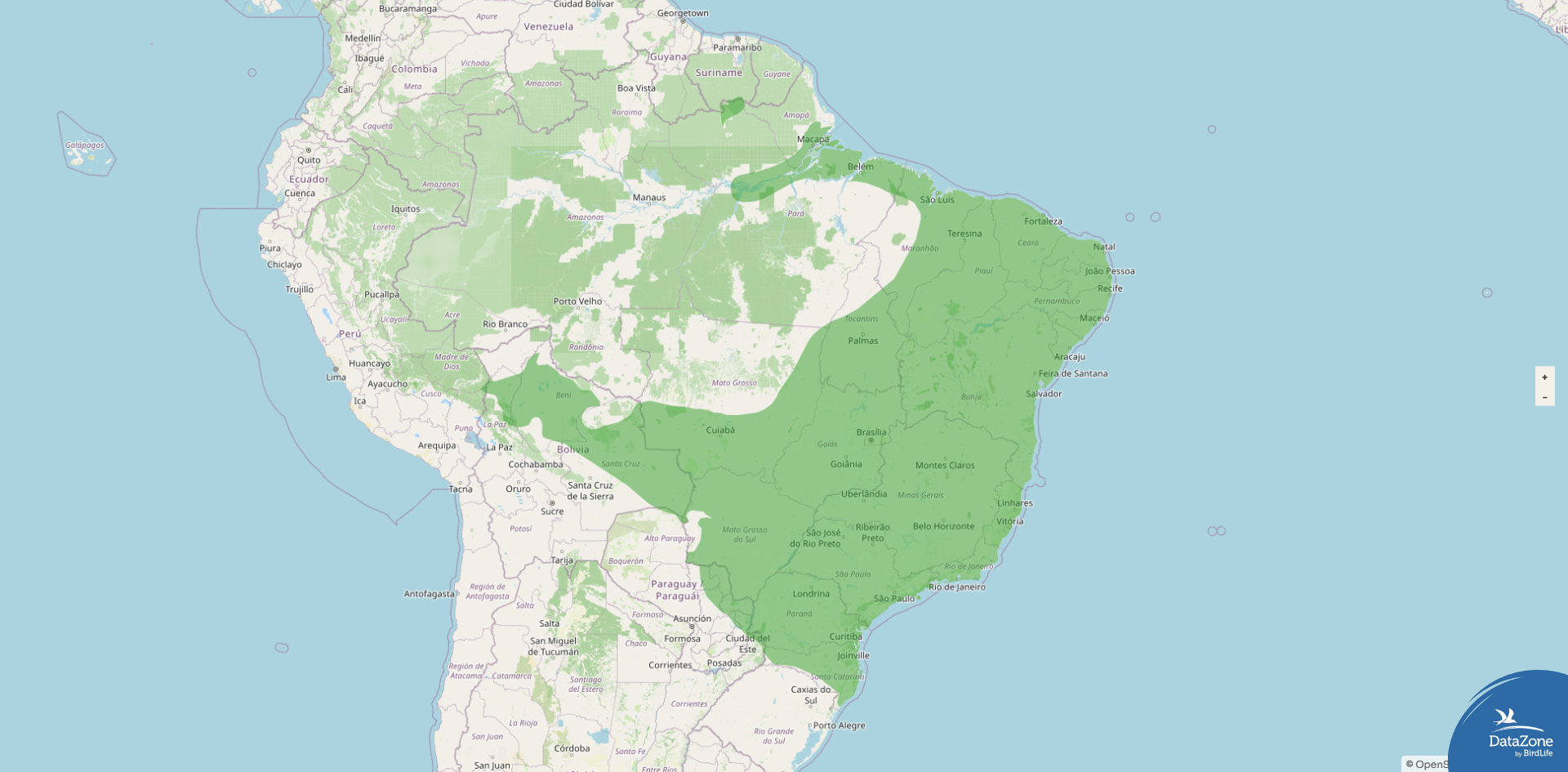
Legend
Green Resident
Species Overview
The Swallow-tailed Hummingbird is one of the largest and most conspicuous hummingbirds in its range. It has a long, deeply forked tail, strong flight, and a dark blue to violet head and throat that contrast with the green body. It is a highly adaptable species that does well in open country, gardens, and city parks, often becoming one of the most familiar hummingbirds where flowering shrubs are abundant.
Male Description
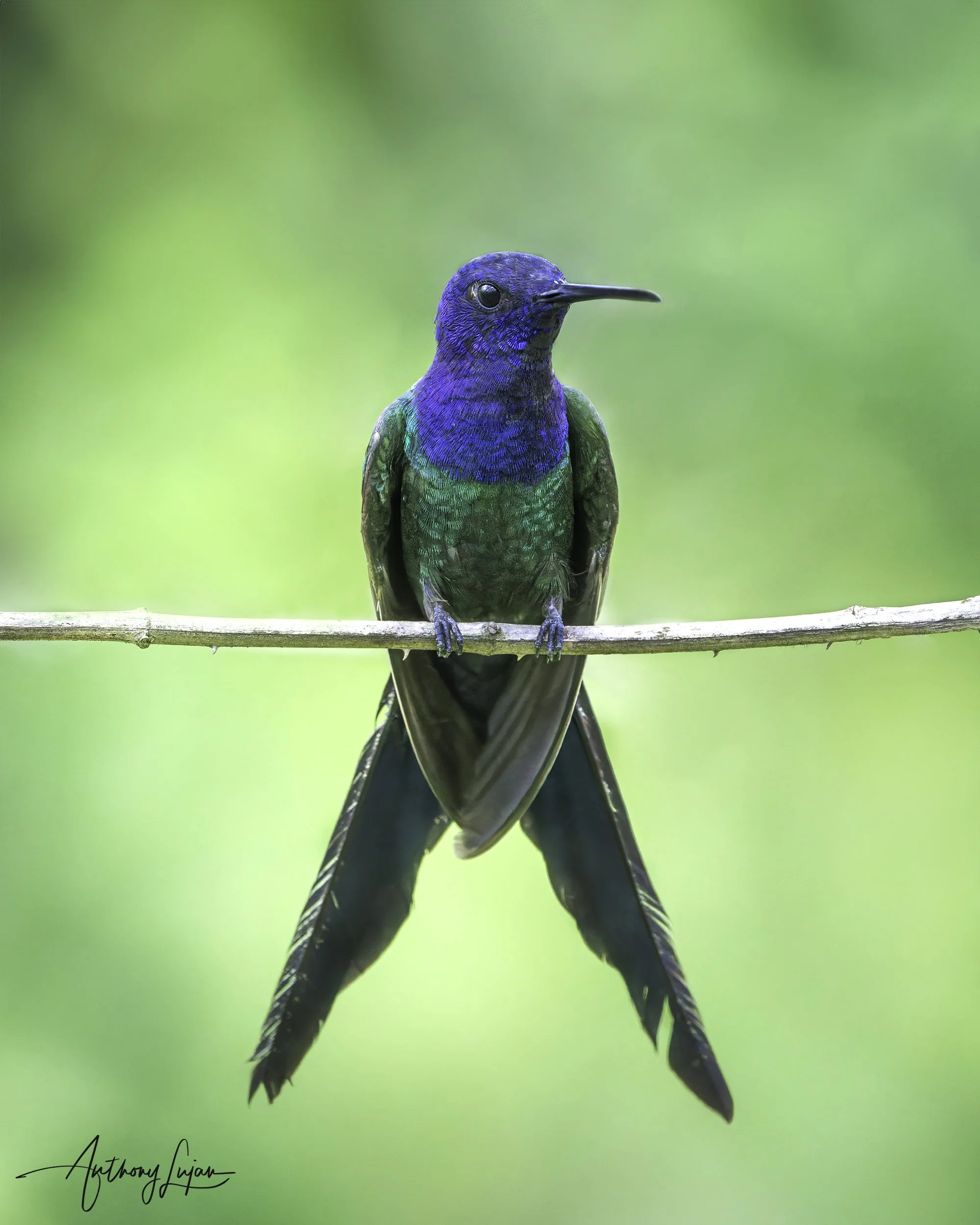
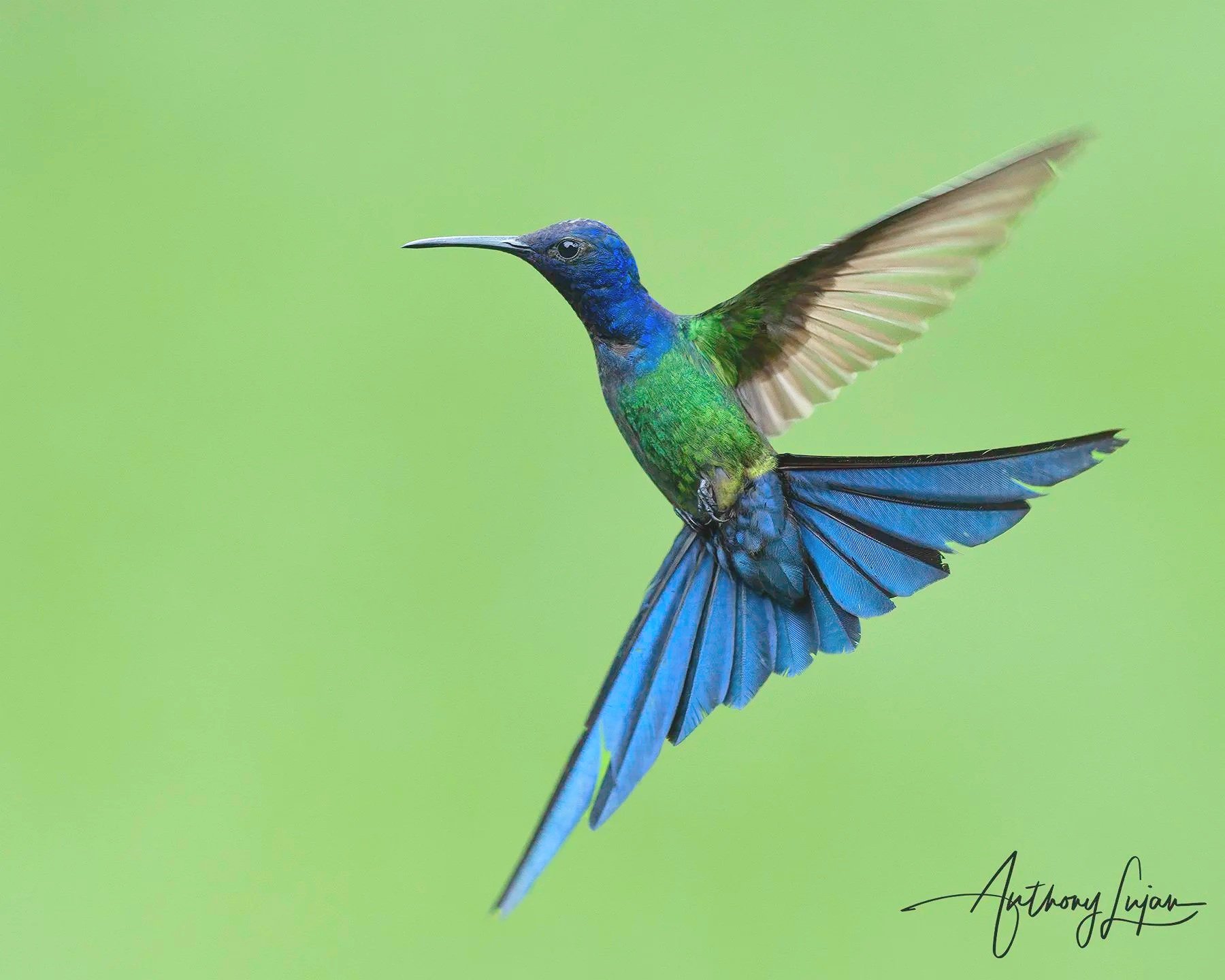
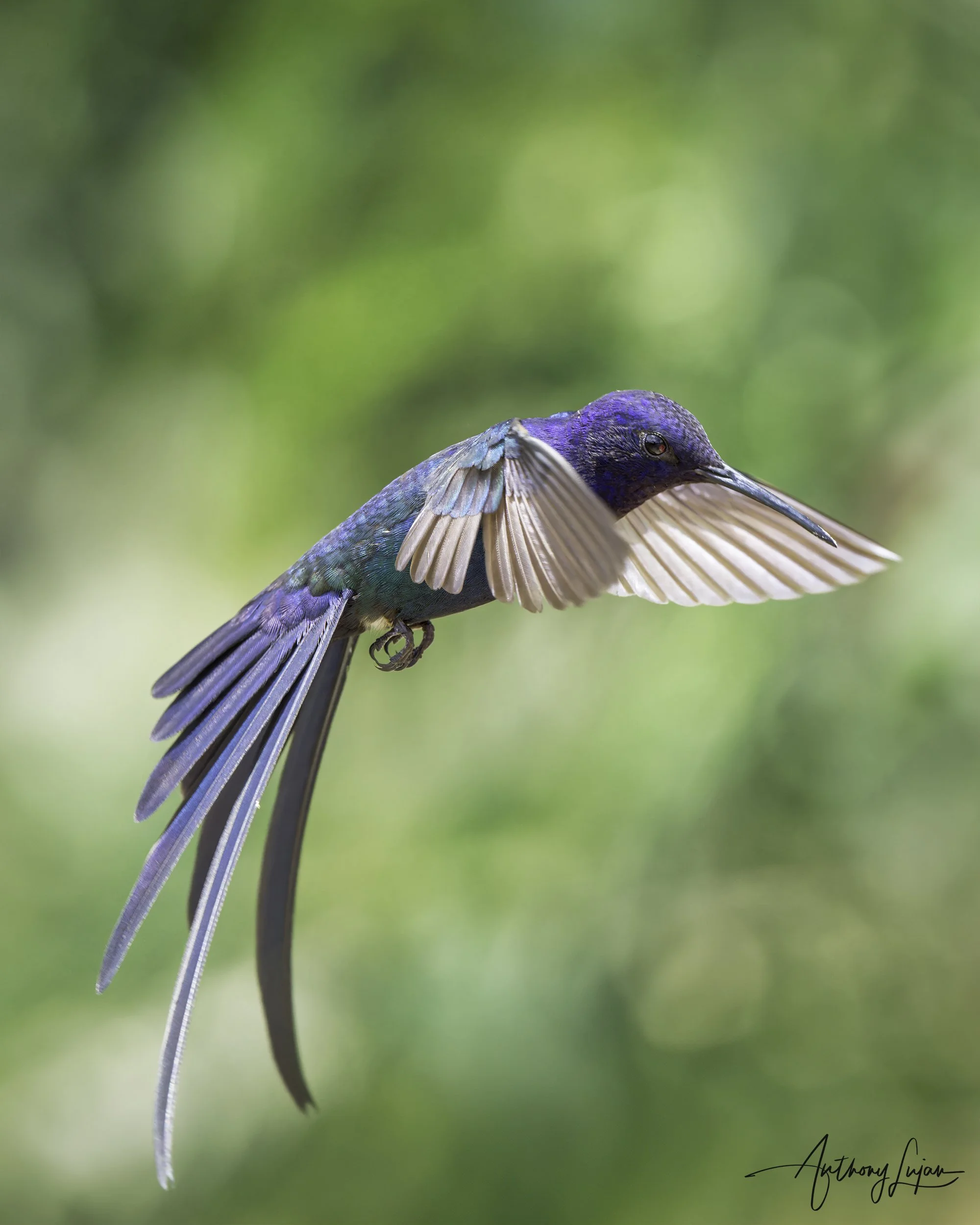
Adult males are about 15 cm long and have a robust build. The head and throat are deep violet-blue to dark blue, while the upperparts are bronzy-green to metallic green. The bill is slightly curved and black. The underparts are greenish to dusky, and the tail is long, dark, and deeply forked, often with a striking blue sheen.
Females
Females are similar to males but usually show less intense blue on the head and throat and somewhat duller overall coloration. The tail remains long and forked, and the body retains the same general green-and-blue impression. Juveniles resemble females and are less glossy, with a more subdued appearance until full maturity.
Habitat & Behavior
Swallow-tailed Hummingbirds use a wide variety of semi-open habitats, including forest edges, savannas, plantations, gardens, parks, and roadside trees. They are especially common in open and urbanized landscapes where flowering plants are widely available. They can be aggressive at nectar sources and often dominate feeding stations or flowering trees.
They feed mainly on nectar but also take small insects. Their strong flight and territorial behavior make them highly visible around flowering shrubs and trees. In some places they are among the most common hummingbirds in human-altered habitats, and they often perch conspicuously on exposed branches or wires.
Breeding
Breeding timing varies by region and often follows local rains and flowering periods. The female builds a small cup nest of plant fibers, moss, and spiderweb, usually placed on a branch in a sheltered site. The nest is well camouflaged with moss and lichens.
The typical clutch is two white eggs. The female incubates the eggs and cares for the young alone. As with most hummingbirds, the nestling period lasts several weeks before the chicks fledge.
Movement
The Swallow-tailed Hummingbird is not a migrant. It is generally resident throughout most of its range, though some populations may make short local movements or seasonal shifts in response to dry-season conditions and flowering cycles. These are not true long-distance migrations.
Population
The total number of mature individuals is unknown. The species is nevertheless very common in many parts of Brazil and other areas within its range, especially in open habitats and around human settlements. Because the population trend is listed as unknown, long-term change is less certain than for some other hummingbirds, but the species remains widespread and secure overall.

Conservation
The Swallow-tailed Hummingbird is currently assessed as Least Concern. Its broad distribution, adaptability to open and altered habitats, and ability to live in gardens and urban areas help support the species. Even so, local habitat change can affect some populations, especially where native flowering habitat is reduced.
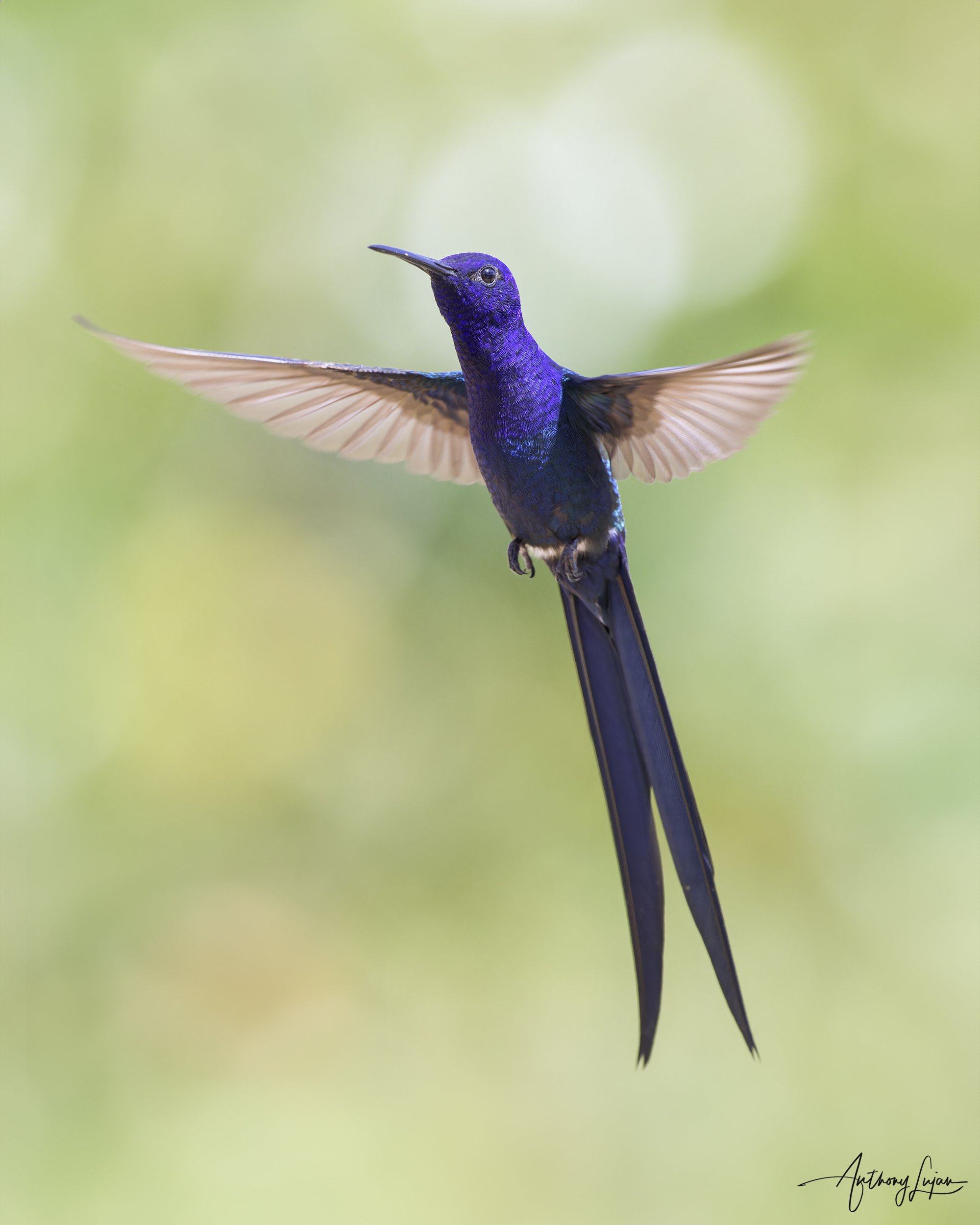
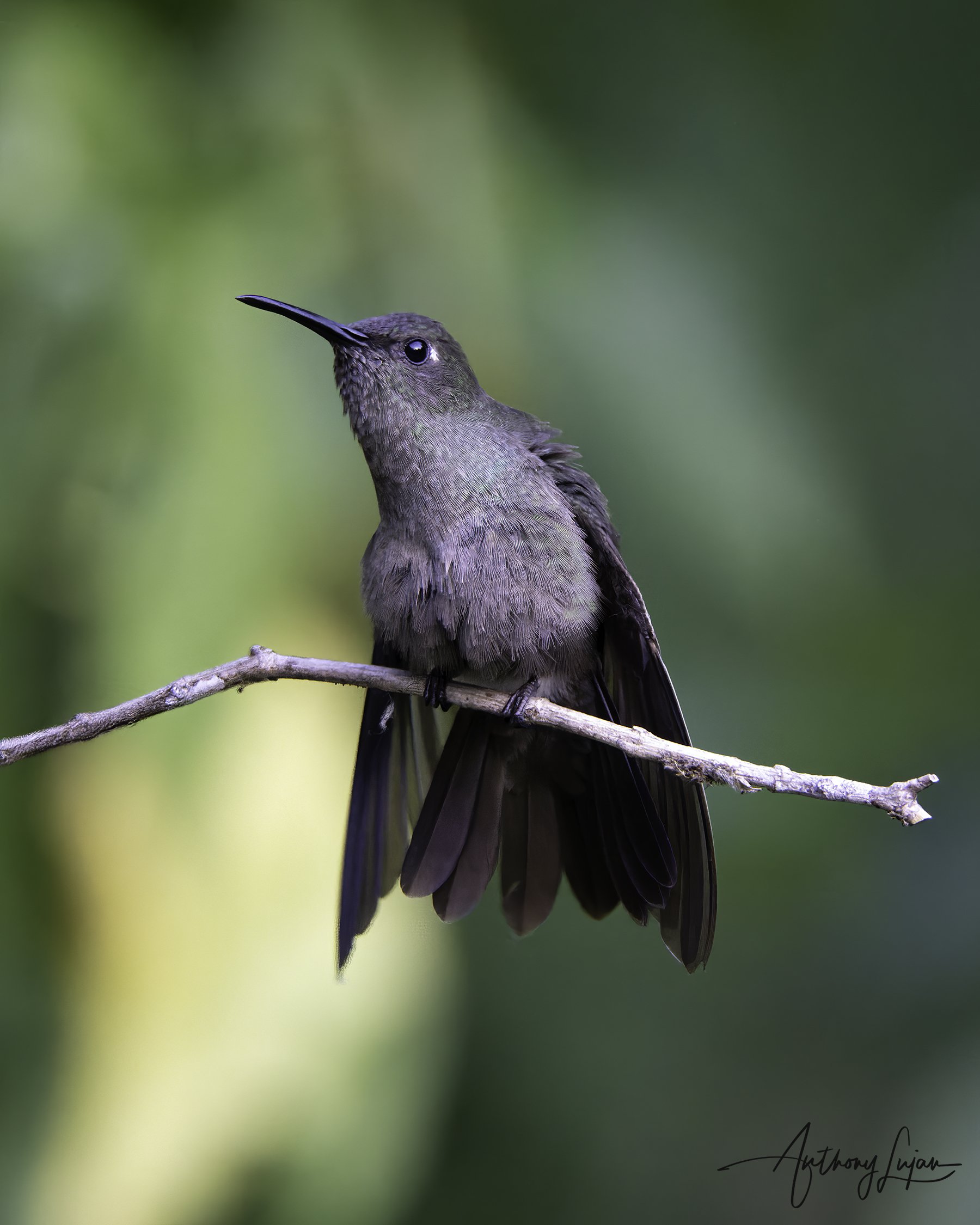
Below is the Swallow-tailed Hummingbird (Eupetomena macroura simoni)
Photographed at Boa Nova – Lajedo dos Beija-Flores, Bahia; Jardim dos Beija-Flores, Brasília, Distrito Federal; and Minas Gerais, Brazil
These individuals belong to the subspecies simoni, which occurs across northeastern Brazil, including southern Maranhão, Piauí, Bahia, Pernambuco, central Goiás, Distrito Federal, and Minas Gerais. Slightly paler and more bluish in tone than other populations, simoni inhabits drier open woodlands, savannas, and urban parks, where it is highly territorial and aggressive around feeders.
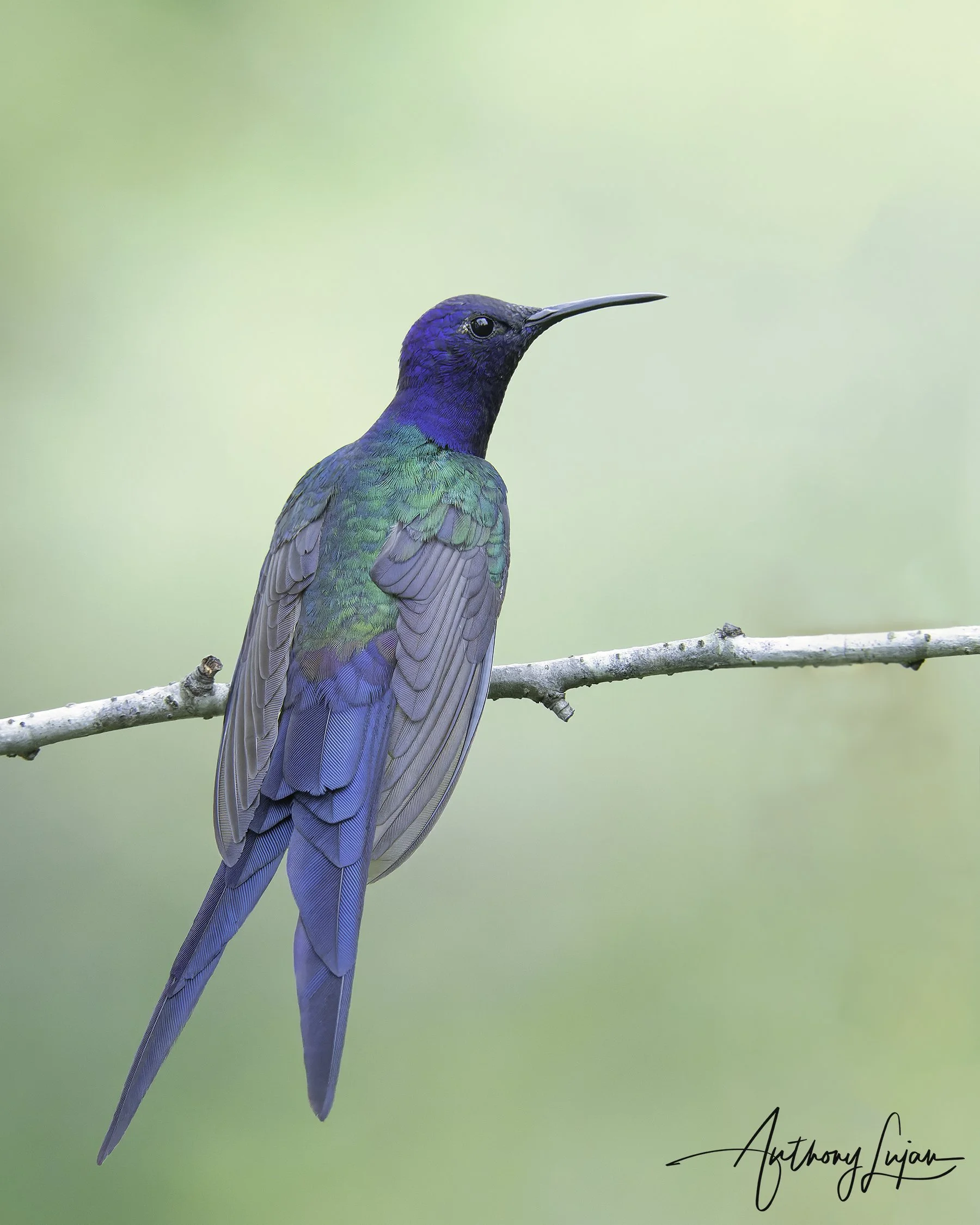
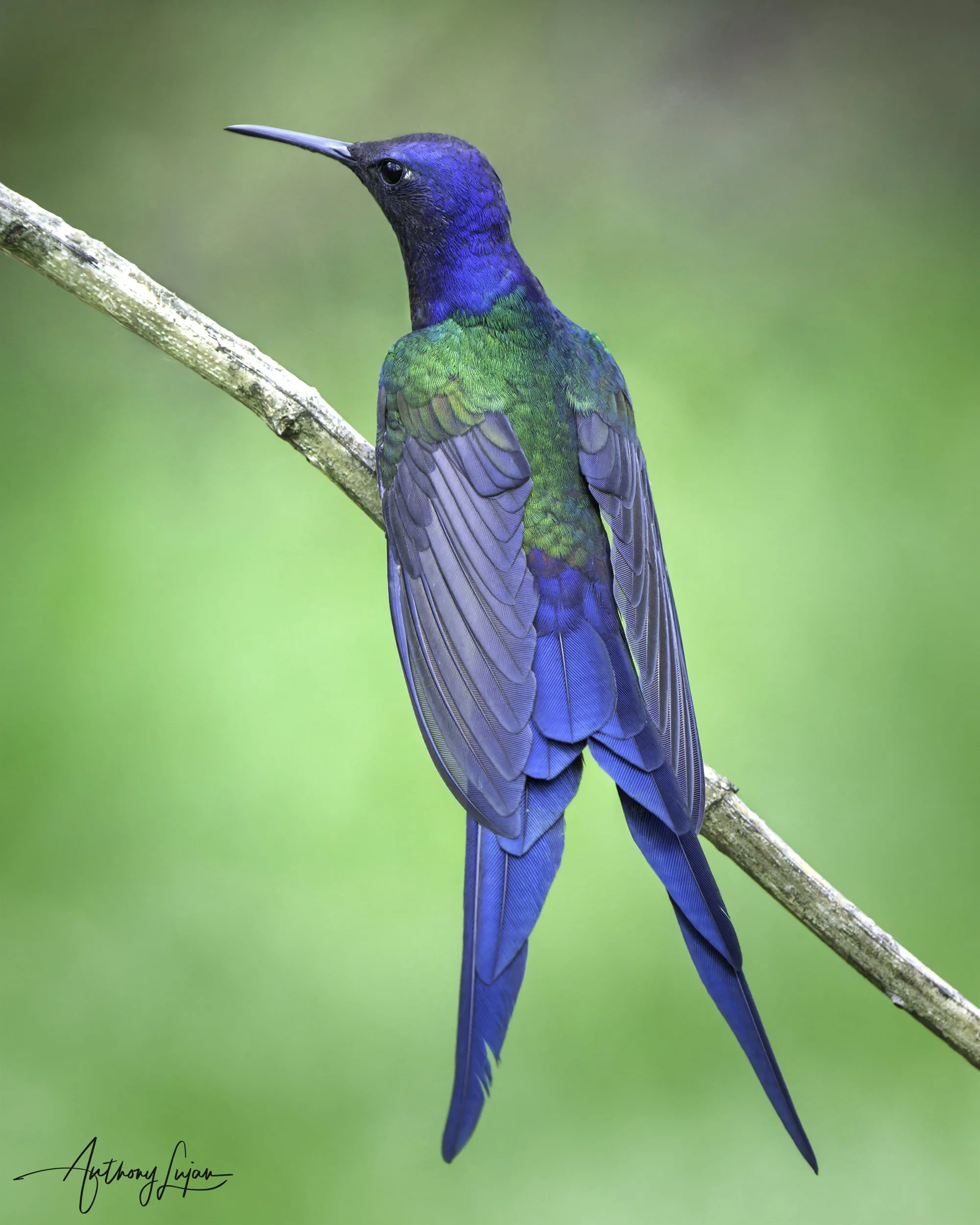
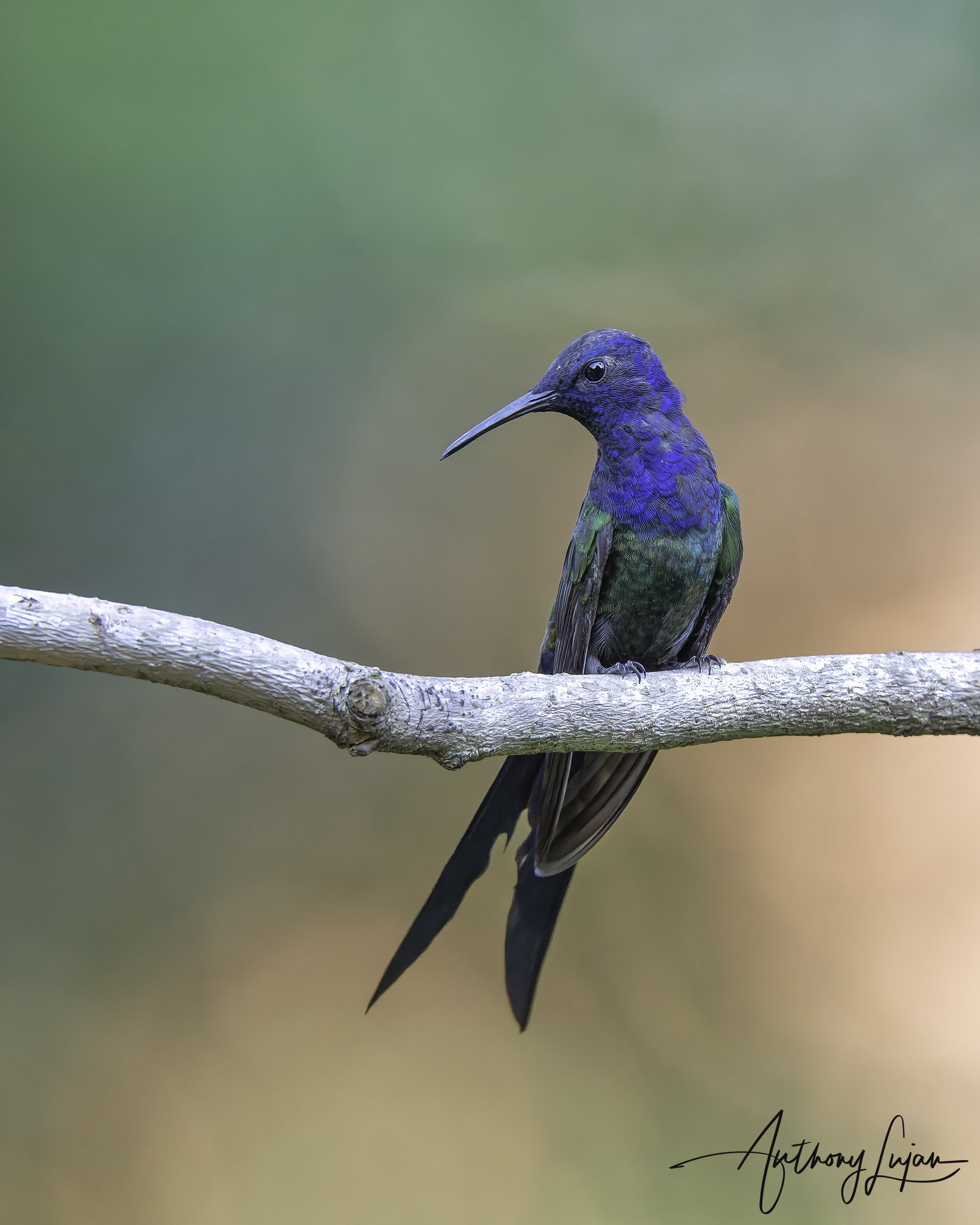
Below is the Swallow-tailed Hummingbird (Eupetomena macroura cyanoviridis)
Photographed at Pousada da Fazenda, Monte Alegre do Sul, São Paulo, Brazil
This individual belongs to the subspecies cyanoviridis, which is restricted to the Serra do Mar region of southeastern Brazil, specifically eastern São Paulo. Compared to other populations, this form may show deeper green and blue iridescence. It frequents humid forest edge and adjacent gardens, often seen perching conspicuously or chasing intruders from favored flower patches.
Checkout Anthony’s playlist of this species! Click the top right dropdown to see all the videos.
Related species in the Eupetomena genus (2 species total)

Please note: The content provided in this article reflects Anthony’s personal experience and photographic approach. Results can vary depending on light, weather, location, equipment, subject behavior, and field conditions.