
White-throated Mountain-gem

Scientific name: Lampornis castaneoventris
The White-throated Mountain-gem is a highland hummingbird of the Costa Rica–Panama region, most characteristic of oak and cloud forests in the Talamanca–Chiriquí highlands.
At a Glance
Family: Trochilidae (hummingbirds)
Clade: Mellisugini – “Bee” hummingbirds
Genus group: Lampornis — mountain-gems, medium to large highland hummingbirds with bold facial patterns and colorful throats.
Range: Highlands of south‑central Costa Rica and western Panama (Chiriquí and nearby highlands).
Habitat: Interior, edges, and shrubby clearings of humid montane oak forest and cloudforest; also highland gardens and forest‑edge communities.
Elevation: Mostly about 1,500 m (4,900 ft) up to timberline; often reported from roughly 1,200–3,000 m depending on local topography.
Length: About 12 cm (4.7 in).
Weight: About 5–6 g (0.18–0.21 oz)
Status: Least Concern (IUCN)
Name Origin
The genus name Lampornis combines Greek lampros (“bright,” “shining”) and ornis (“bird”), referring to the bright metallic plumage and vivid throats typical of mountain-gems. The species name castaneoventris comes from Latin castaneus (“chestnut-colored”) and venter (“belly”), referencing the rich rufous‑chestnut underparts of the female. Together, Lampornis castaneoventris evokes a “bright bird with chestnut belly,” matching the striking female plumage.
Subspecies and Distribution
Taxonomy varies: some authorities split a Gray-tailed Mountain-gem (Lampornis castaneoventris) as distinct, while others treat it within a broader White-throated Mountain-gem complex. In your treatment, follow BirdLife/HBW and treat White-throated Mountain-gem Lampornis castaneoventris as a species with two subspecies:
Lampornis castaneoventris cinereicauda (Gray-tailed)
Distribution: Highlands of south‑central Costa Rica, mainly the Cordillera de Talamanca and adjacent ranges.
Distribution: Highlands of western Panama, especially the mountains of Chiriquí Province.Lampornis castaneoventris castaneoventris (Blue-tailed)
Distribution: Highlands of western Panama, especially the mountains of Chiriquí Province.
Across these subspecies, White-throated Mountain-gem is found in the highlands of south‑central Costa Rica and western Panama, where it inhabits humid montane oak forest, cloudforest, and shrubby clearings from about 1,500 m to timberline, locally from roughly 1,200–3,000 m.
BirdLife/HBW has separated these White-throated Mountain-Gems, but the checklist I rely on is eBird. So here are two different maps for comparison.
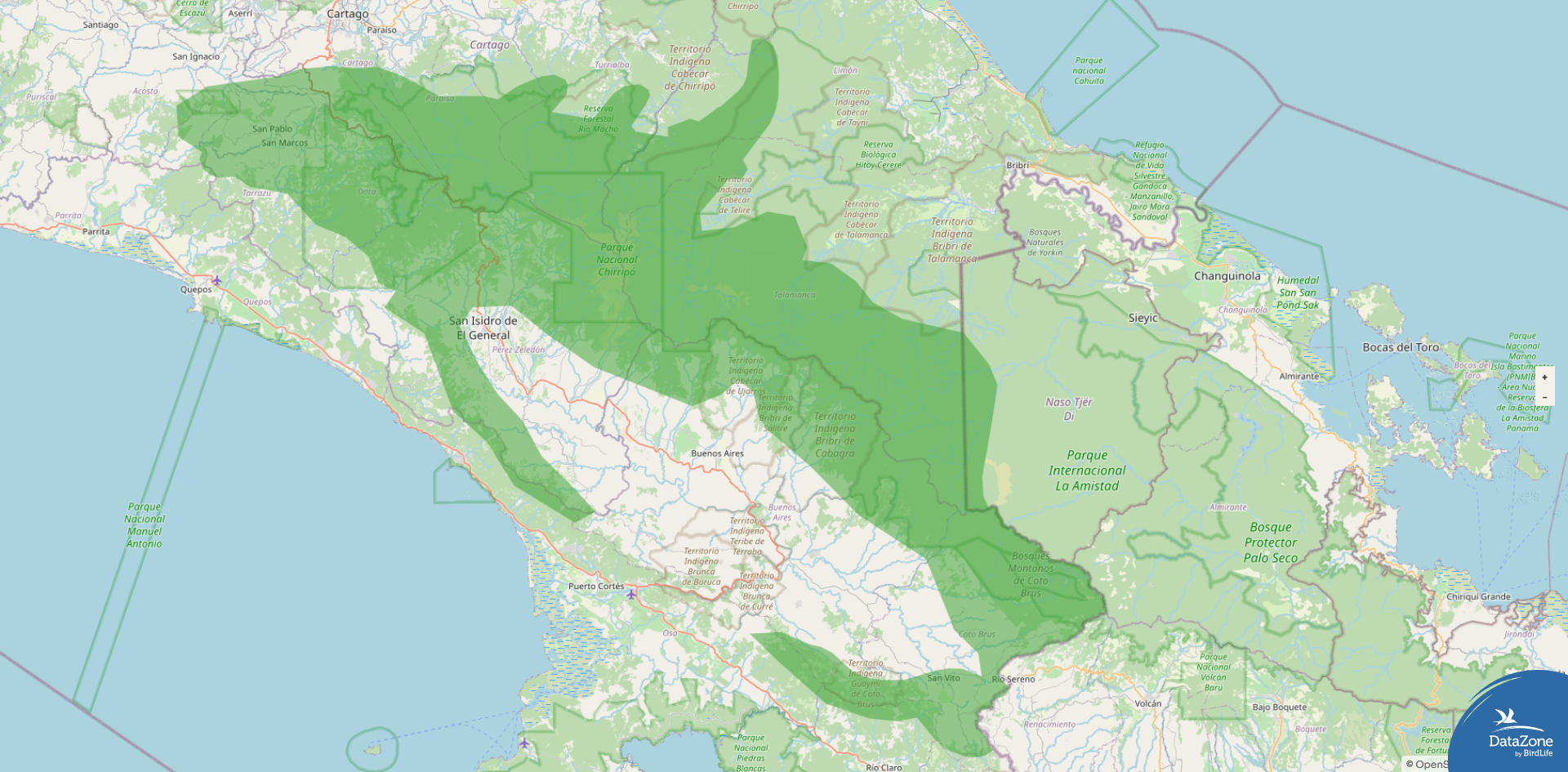
Gray-tailed distribution
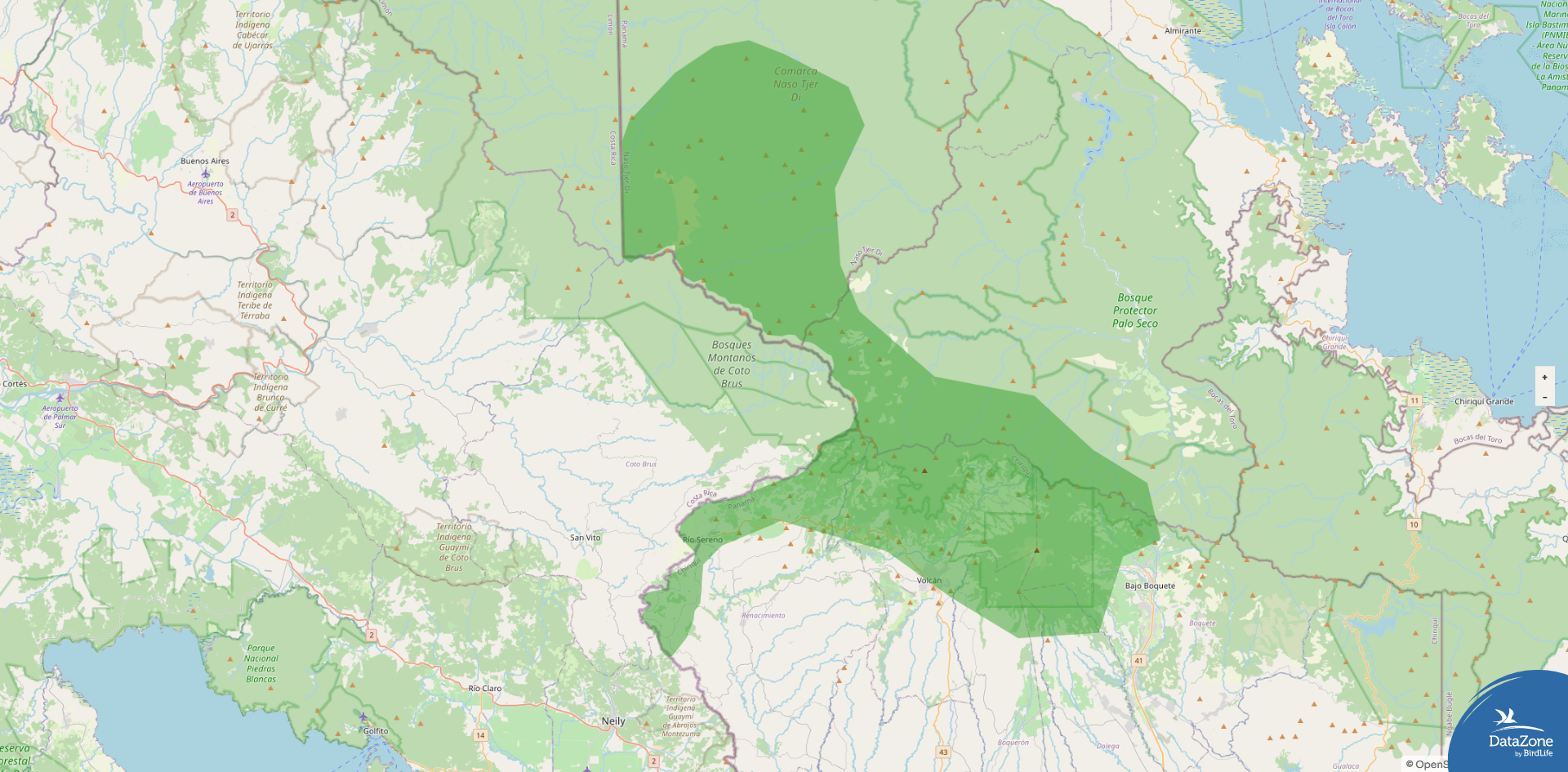
Blue-tailed distribution
Identification
Male
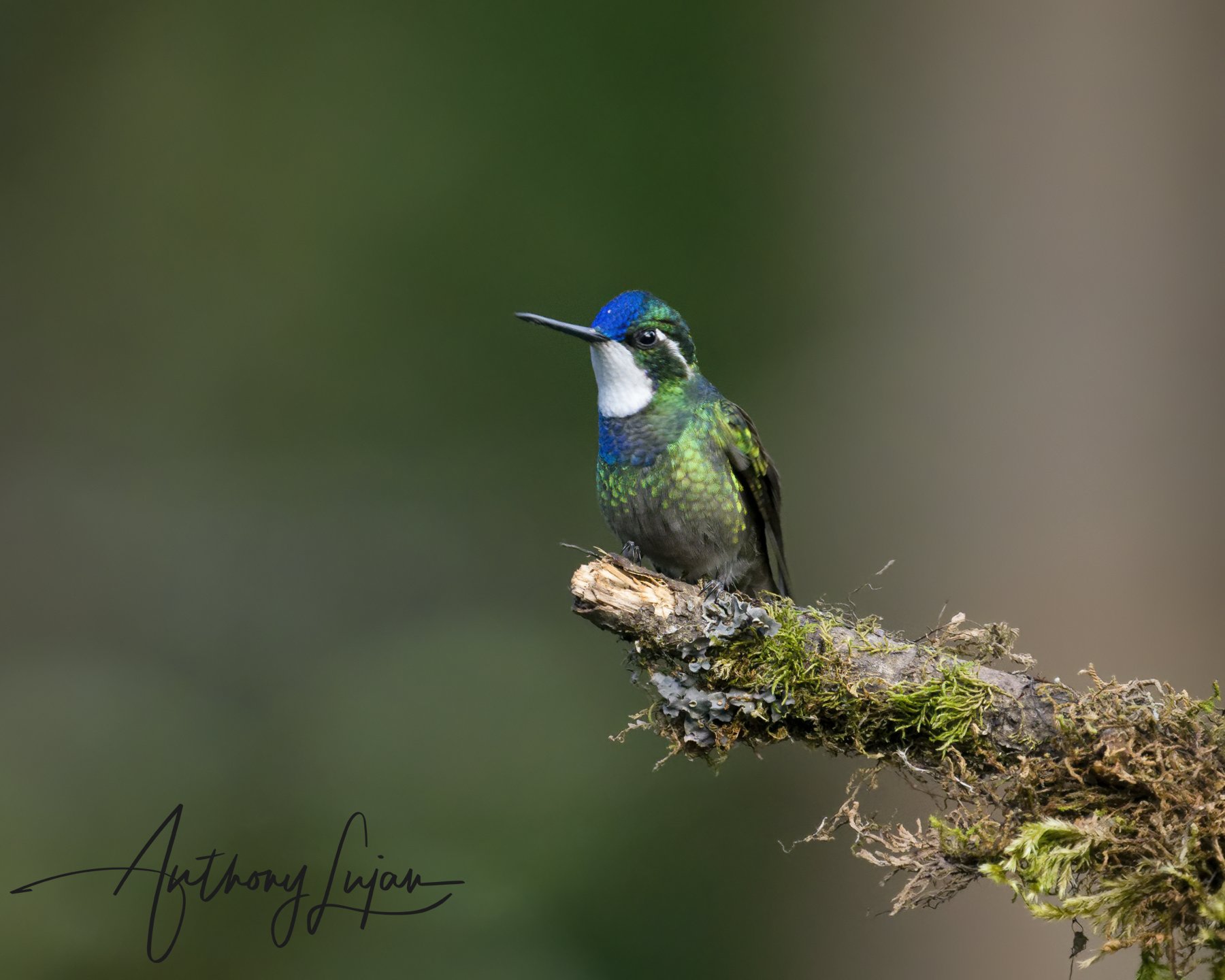
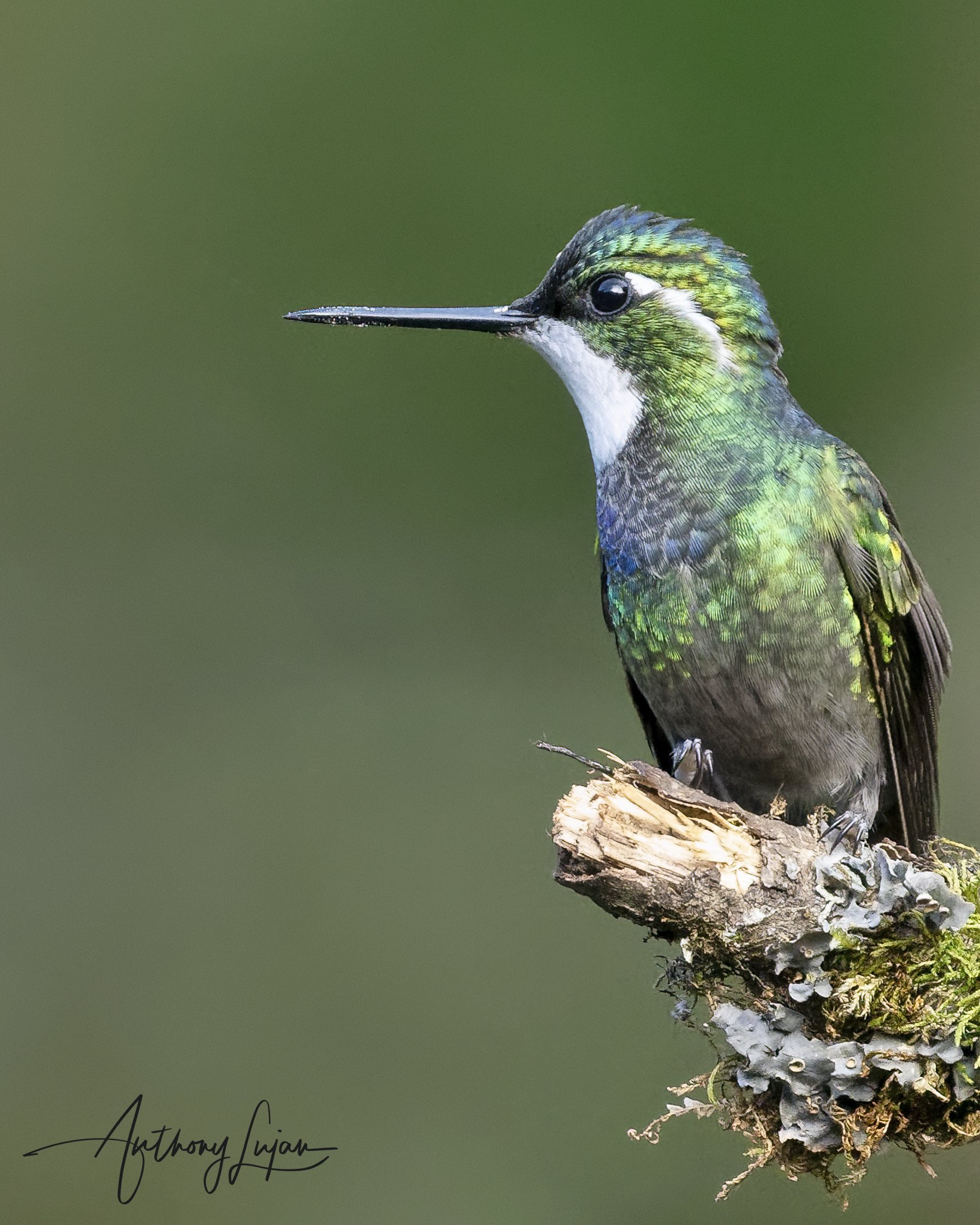
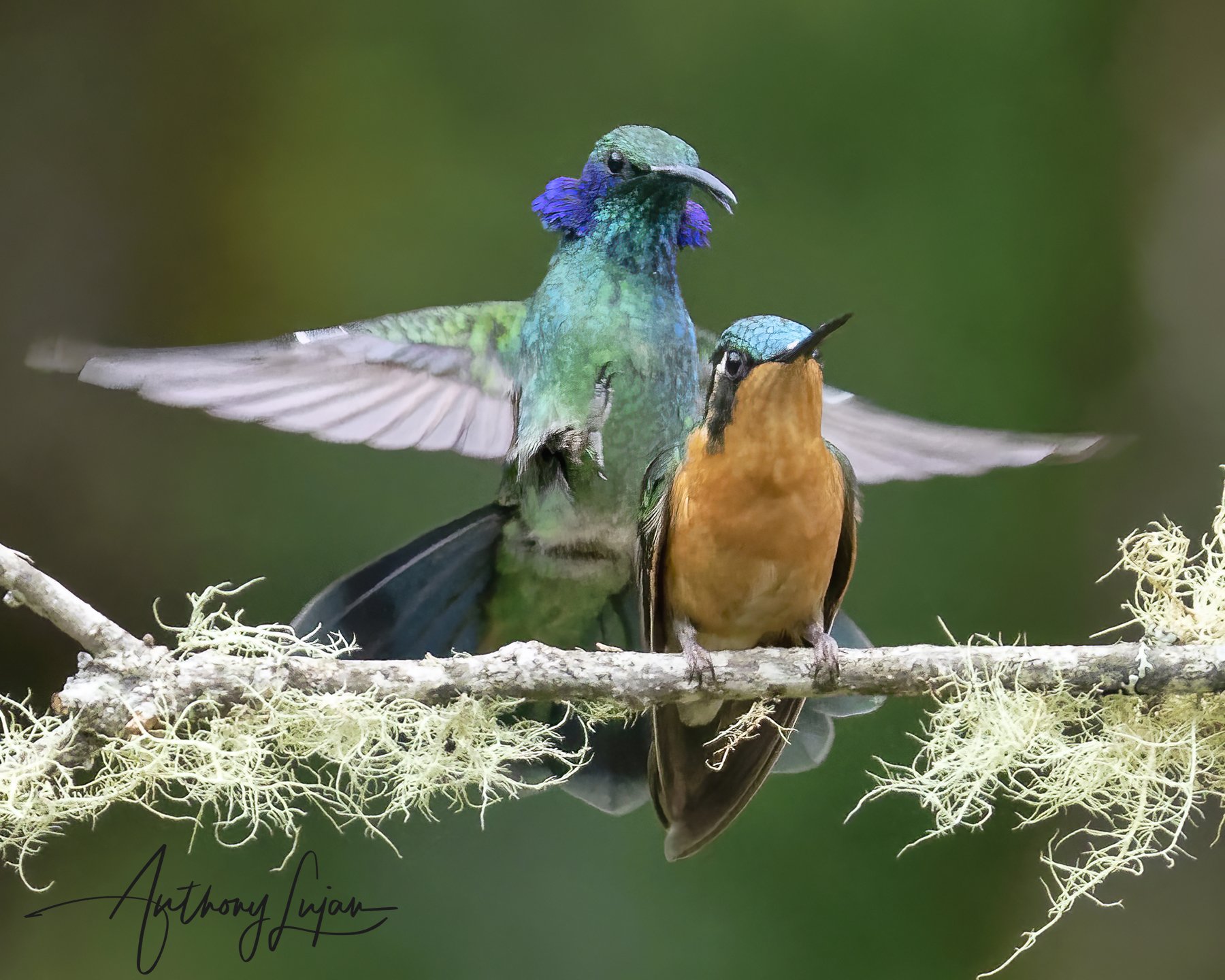
Adult males are medium‑sized, mostly dark bronzy‑green above with an emerald‑green crown and a medium‑length straight black bill. They show dark cheeks framed by a bold white stripe behind the eye, giving the classic mountain-gem facial pattern. The chin and throat are bright white, sharply set off from bright green sides of the neck and upper breast, while the lower breast and vent are dark gray. The tail is black to bluish black and slightly notched.
Female
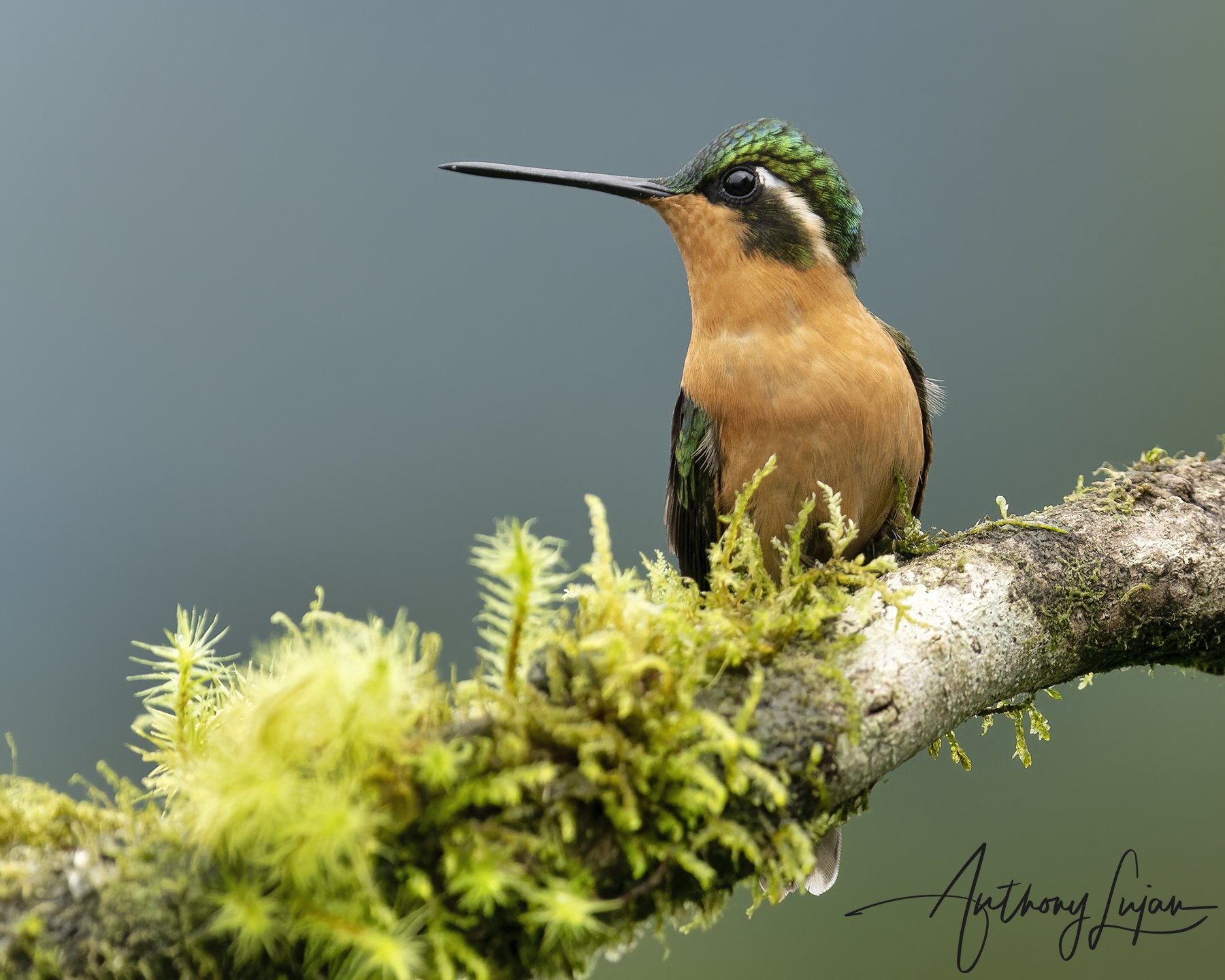
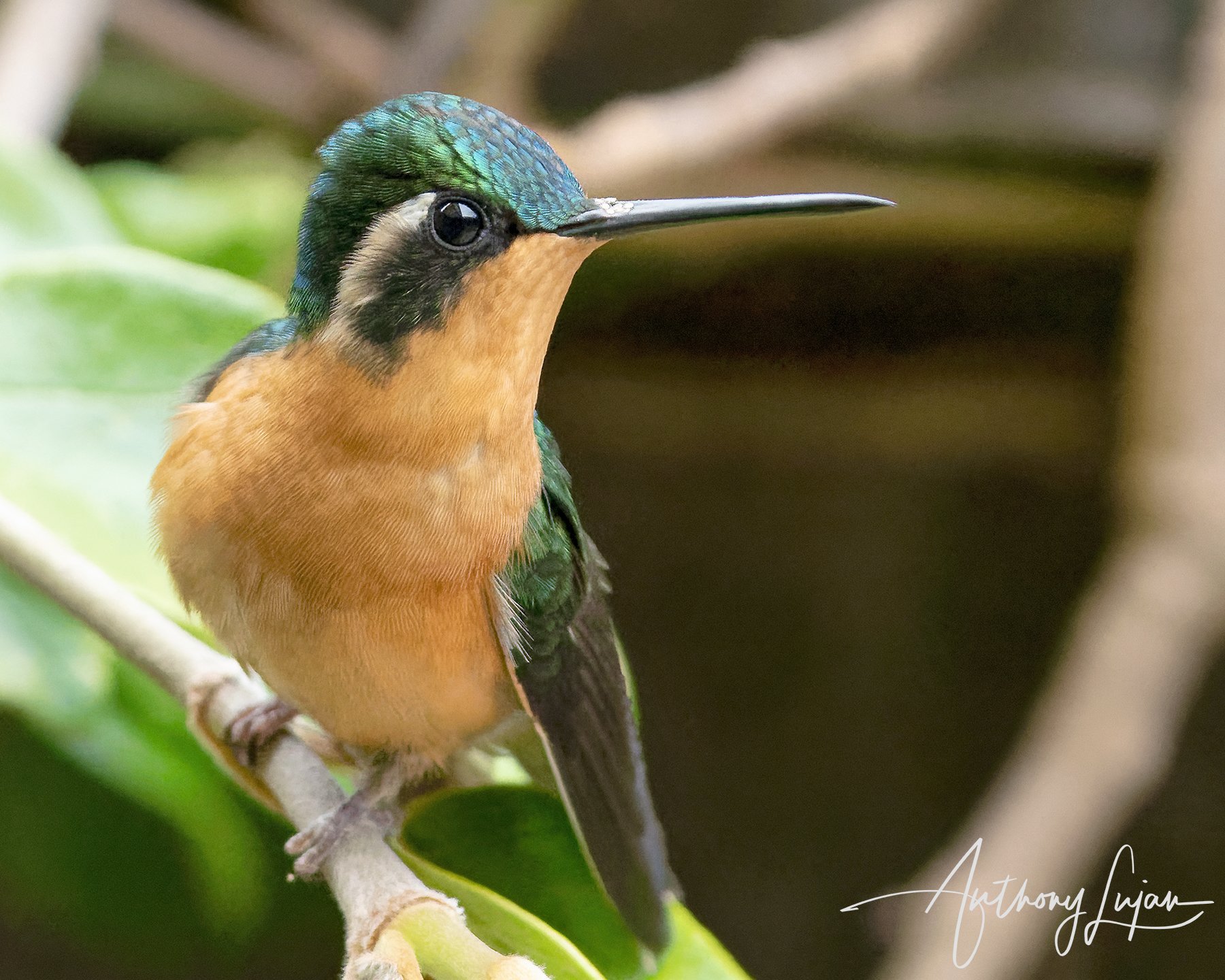
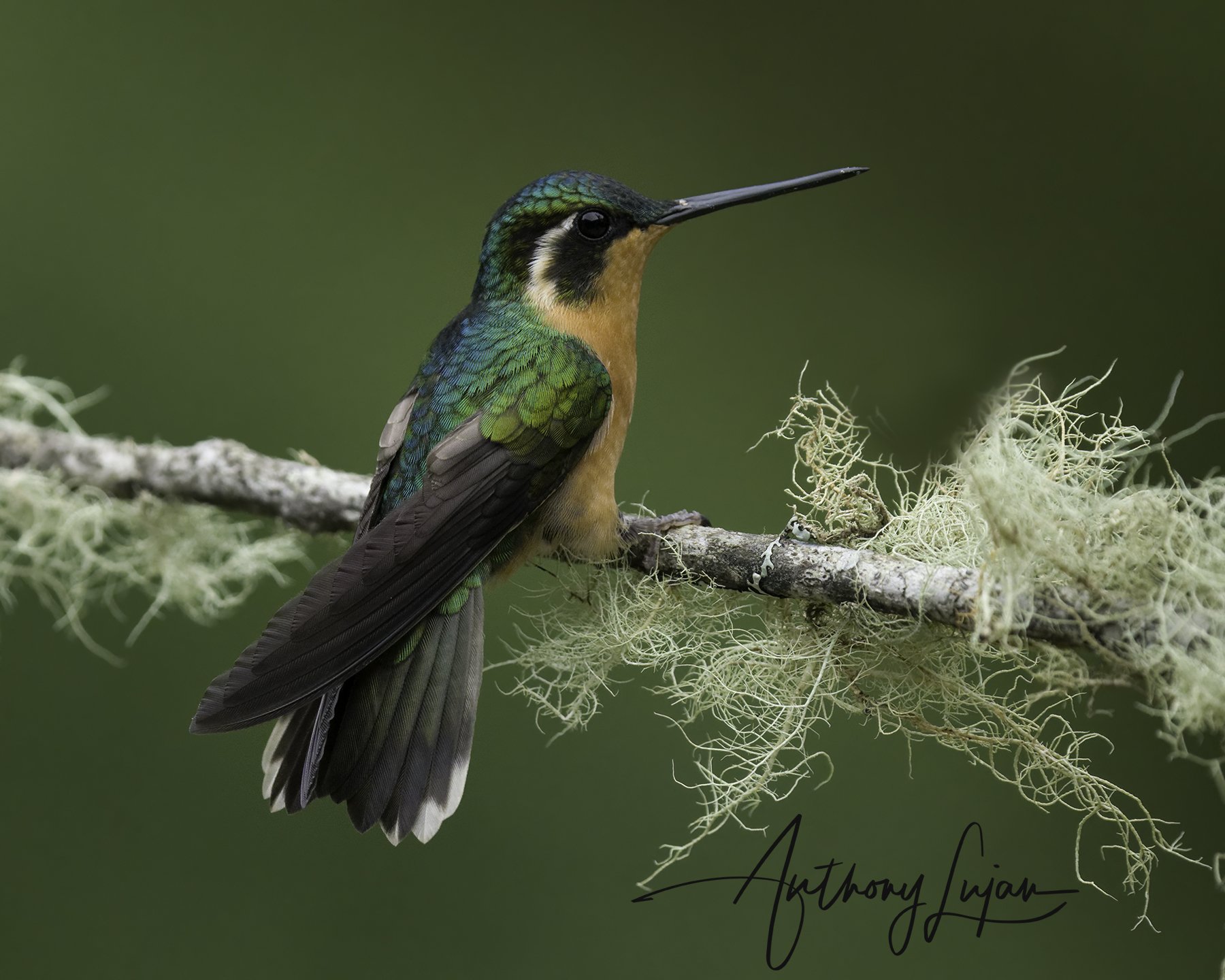
Females have entirely bright green upperparts and a similar facial pattern but with rufous underparts. Their throat and belly are dark rufous to chestnut, and the undertail coverts are gray with white or buff edges. Compared with males, females lack the white throat and instead show the rich chestnut belly that inspired the name castaneoventris.
Habitat and Behavior
White-throated Mountain-gems inhabit the interior, edges, and shrubby clearings of humid montane oak forest and cloudforest, and also visit gardens and shrubby areas in highland communities near forest. They occur mainly from about 1,500 m up to timberline, with many records between roughly 1,200 and 3,000 m where flowering shrubs and epiphytes are abundant.
They feed on nectar from a variety of flowering plants; males typically concentrate at epiphytes in forest interiors, while females more often feed in shrubby clearings and edges. Males defend rich flower patches aggressively, are dominant over smaller hummingbirds, and subordinate to larger species such as Fiery-throated Hummingbird (Panterpe insignis). Both sexes also take small arthropods gleaned from foliage to supplement their nectar diet.
Population
The global number of mature individuals is unknown, but the species is considered common within its relatively small highland range. The population trend is assessed as Stable, and there is no evidence of rapid declines at present. Its narrow distribution, however, makes it inherently sensitive to extensive habitat loss or degradation.

Conservation
The IUCN lists White-throated Mountain-gem as Least Concern, but notes that this hummingbird is potentially threatened by human activities such as deforestation for timber and agriculture. Conservation of this species depends on maintaining humid montane oak forest and cloudforest in the highlands of Costa Rica and western Panama, especially within the Talamanca and Chiriquí ranges. Protected areas that safeguard high‑elevation forests, along with bird‑friendly land use in surrounding landscapes, will help keep this attractive mountain-gem common.
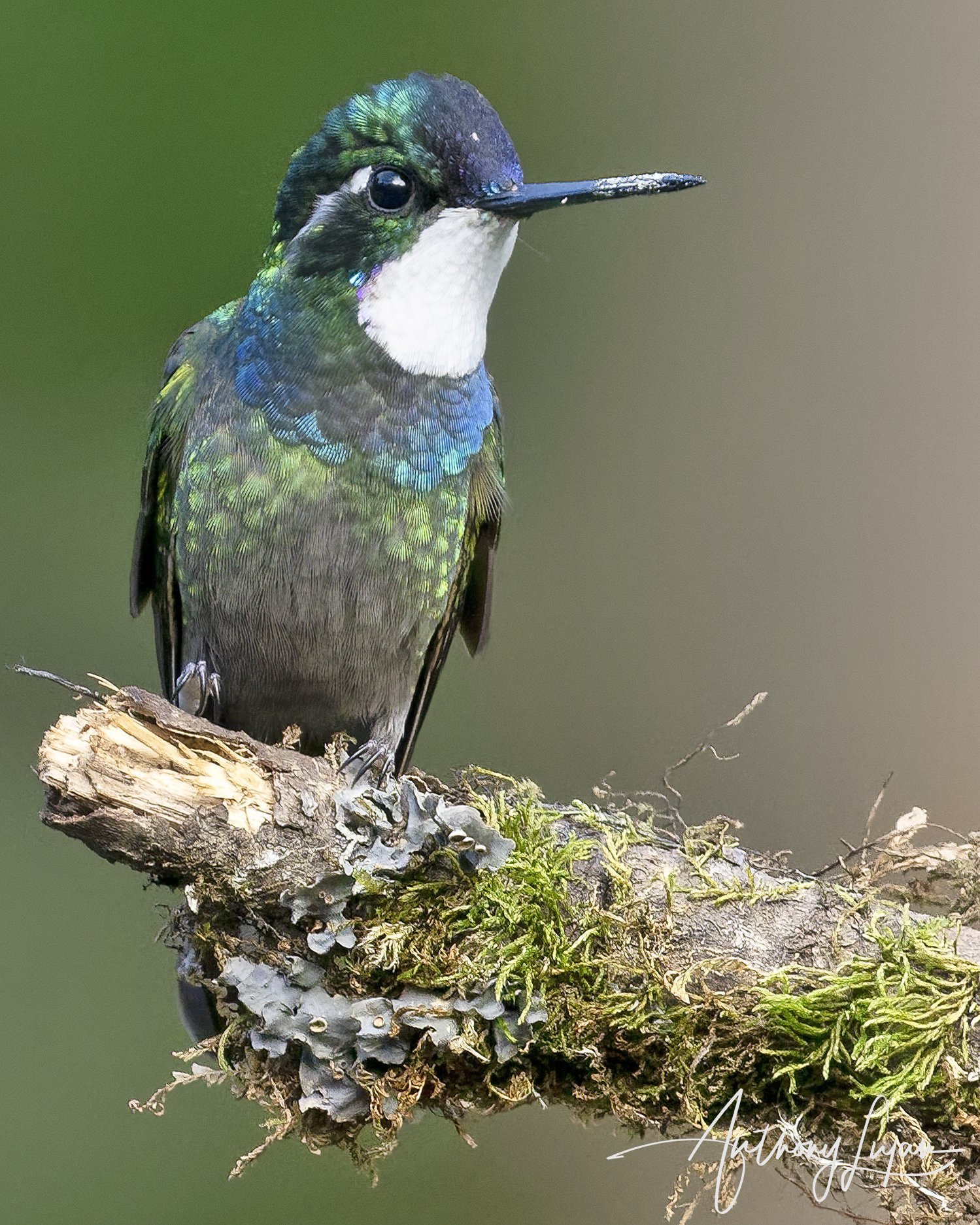
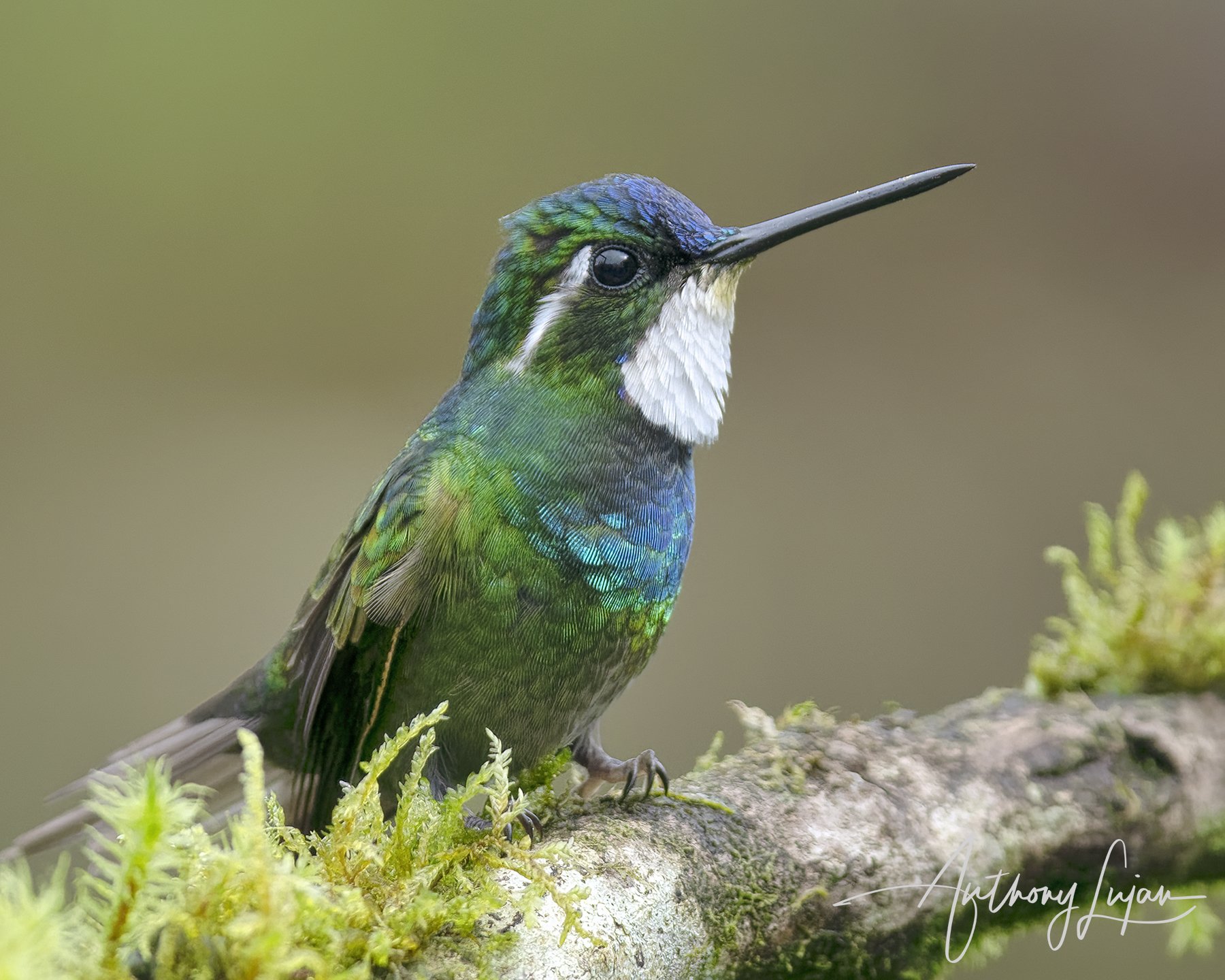
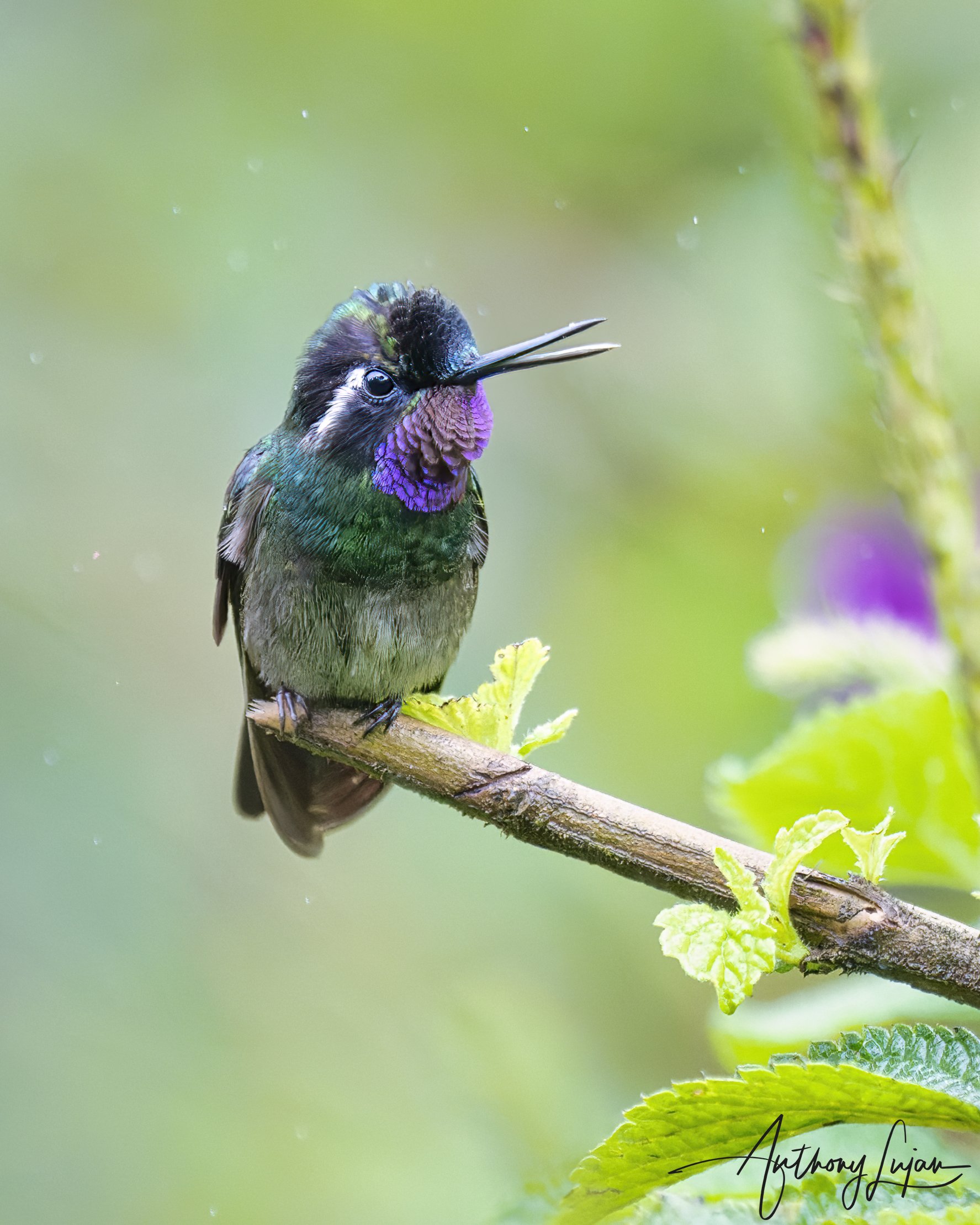
Below are individuals of the White-throated Mountain-gem (Gray-tailed) (Lampornis castaneoventris cinereicauda)
Photographed throughout Costa Rica
These individuals belong to the subspecies cinereicauda, found in the Cordillera de Talamanca of southern Costa Rica. It inhabits humid montane forests and adjacent clearings, usually at elevations between 1,500 and 3,100 meters. Males are identified by their vivid blue crown, sharp white throat, and gray tail, while females show muted colors and pale throats. This subspecies is locally common in highland reserves and gardens.
Checkout Anthony’s playlist of this species! Click the top-right dropdown to see all the videos.
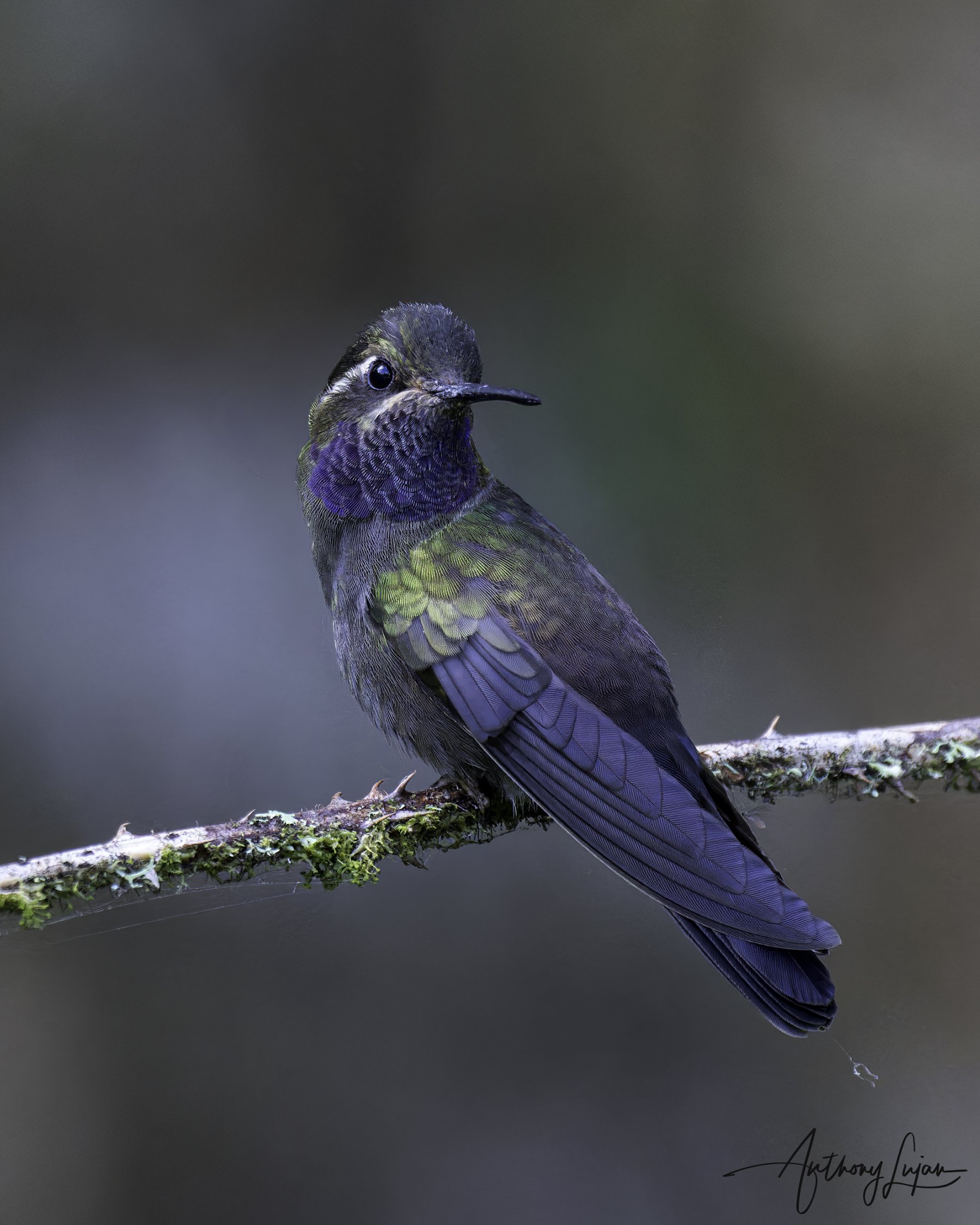
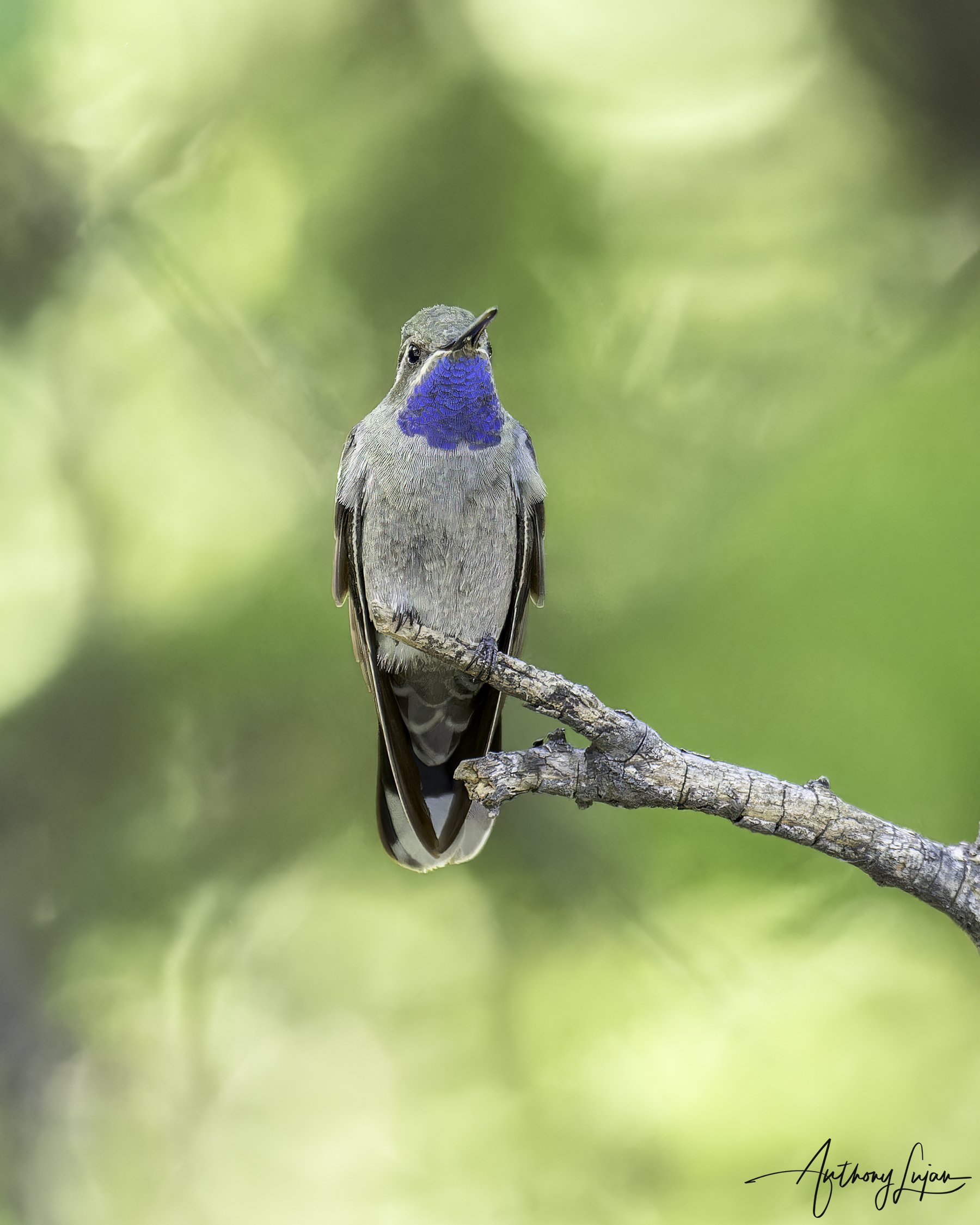
Related species in the Lampornis genus (7 species total):


Please note: The content provided in this article reflects Anthony’s personal experience and photographic approach. Results can vary depending on light, weather, location, equipment, subject behavior, and field conditions.