
White-throated Hummingbird
Scientific name: Leucochloris albicollis
The White-throated Hummingbird is a small species of forest edges, woodland, parks, and gardens in southeastern South America. The number of mature individuals is unknown, the population trend is decreasing, it is a full migrant, and it is currently assessed as Least Concern.
At a Glance
Family: Trochilidae (hummingbirds)
Clade: Trochilini – Emeralds
Genus: Leucochloris — 1 species total
Range: Southeastern Brazil, Paraguay, Uruguay, northeastern Argentina
Habitat: Forest edges, woodland, marshes, scrublands, parks, gardens
Elevation: Near sea level to 1,000 m (3,300 ft), occasionally to 2,100 m
Length: 10–11.5 cm (3.9–4.5 in)
Weight: Males 5–8 g (0.18–0.28 oz); females ~4.5 g (0.16 oz)
Number of mature individuals: Unknown
Population trend: Decreasing
Movement: Full migrant
IUCN Red List category: Least Concern
Name Origin
The genus name Leucochloris combines Greek words for "white" (leukos) and "green" (chloros), describing its plumage. The species name albicollis means "white-throated" from Latin albus (white) and collum (neck). The English name highlights its distinctive white throat.
Taxonomy
Leucochloris albicollis is the sole species in its monotypic genus within the emeralds clade (Trochilini).
Subspecies and Distribution
Monotypic — no recognized subspecies.
Distribution: Eastern Paraguay, southeastern Brazil from Minas Gerais and Espírito Santo south, Uruguay, and northeastern Argentina. Found in semi-open to open landscapes including forest edges, marshes, scrublands, parks, and gardens.
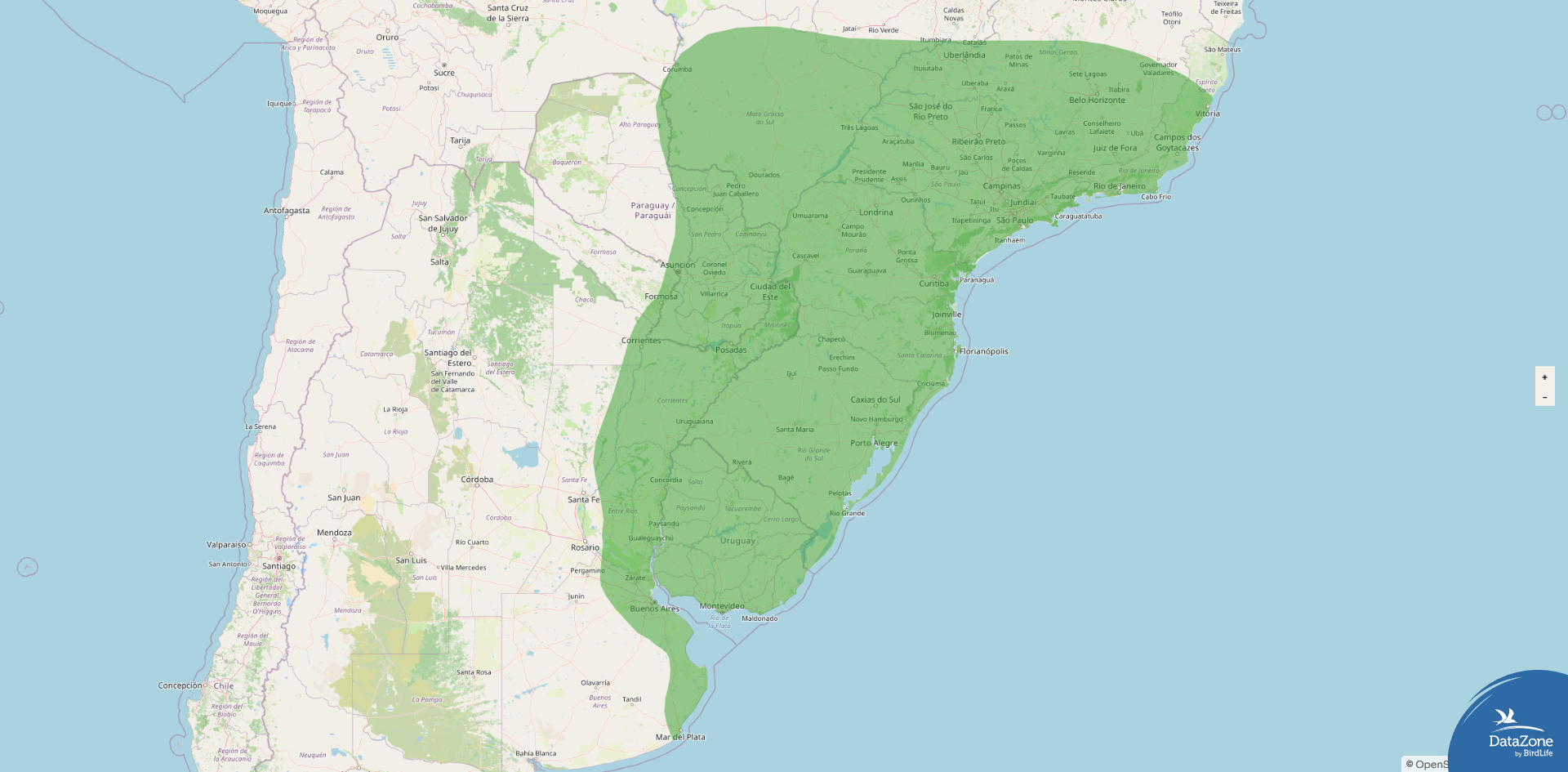
Legend
Green Resident
Species Overview
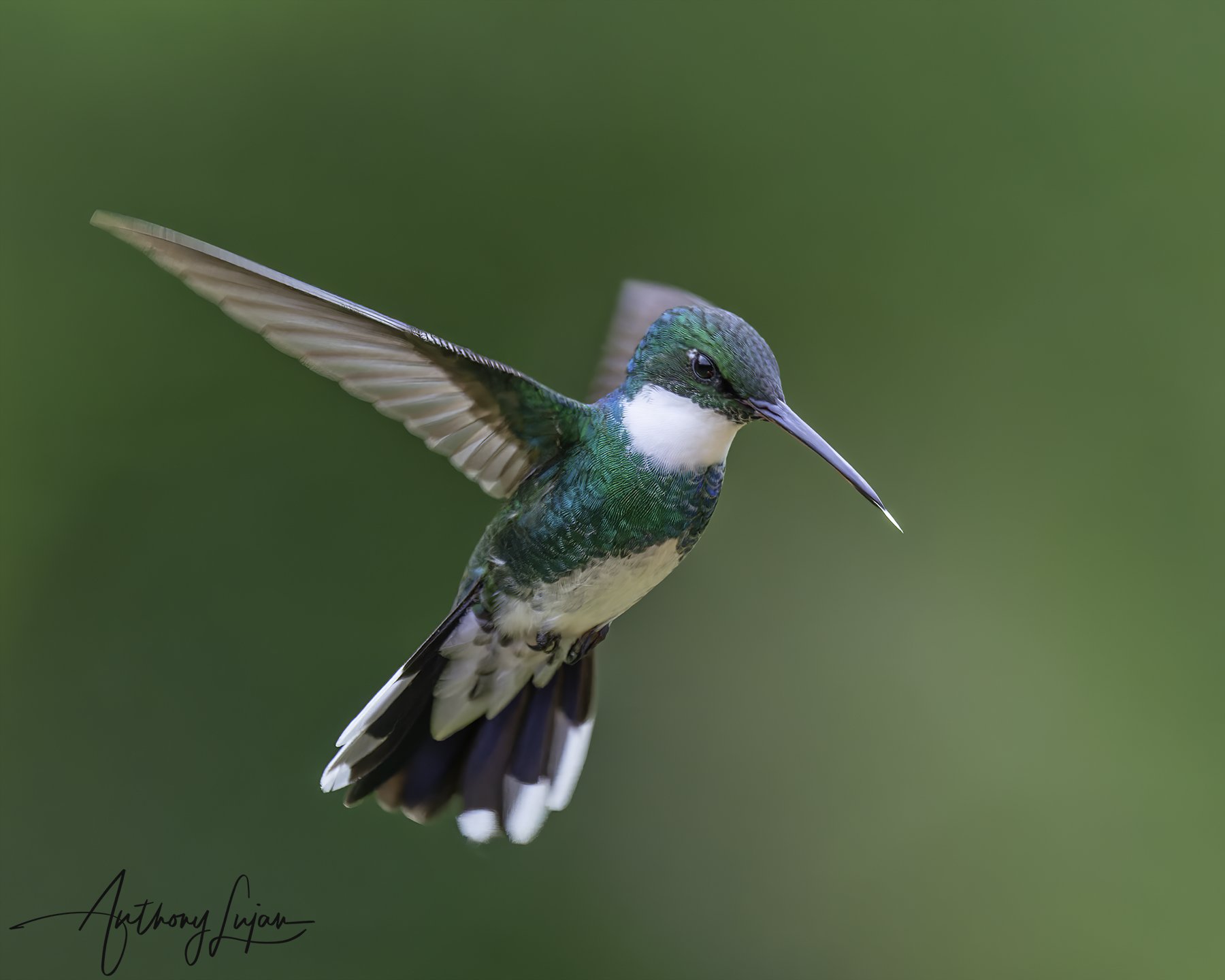
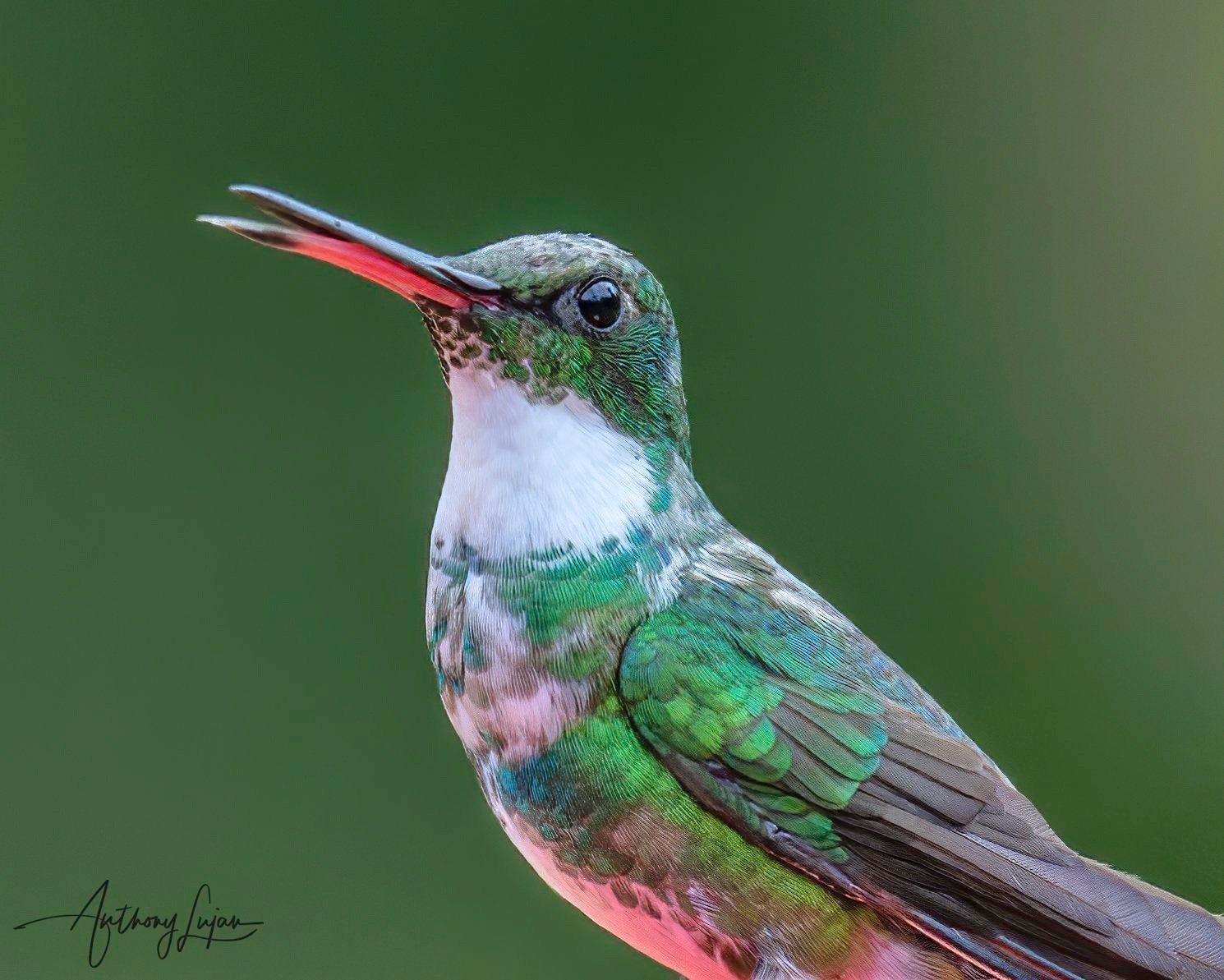
The White-throated Hummingbird is unmistakable with its iridescent green head and upperparts contrasting sharply against a pure white throat and central belly. It favors semi-open habitats where it perches conspicuously and forages at a variety of flowering plants. One of the few truly migratory hummingbirds in South America.
Male Description
Iridescent green head, upperparts, wing coverts, chin, and neck sides. White throat and central belly with golden- to bronze-green sides and flanks. Wings purple-brown. Tail dark with white tips. Chin feathers brilliant green with white edges. Males larger and more vividly colored.
Female Description
Similar to males but slightly smaller with less intense iridescence. Same white throat and belly pattern with green upperparts. Wings and tail show same coloration. Females average 4.5 g compared to males' 5–8 g range. Juveniles resemble females.
Habitat & Behavior
Inhabits forest edges, woodland, marshes, scrublands, parks, and gardens in semi-open landscapes. Forages on nectar from diverse flowering plants at various heights. Territorial at rich nectar sources. Flight direct and powerful for its size.
Breeding
Breeding season spans October to March coinciding with austral spring/summer. Female builds cup nest; lays two white eggs. Female incubates and cares for young alone. Nest typically placed in sheltered shrub or tree branch.
Movement
Full migrant — one of few South American hummingbirds making seasonal long-distance movements. Tracks flowering resources across its range in southeastern South America. Migration timing tied to seasonal flowering patterns.
Population
Total number of mature individuals unknown. Generally common across range in suitable semi-open habitat. Decreasing due to habitat loss from deforestation, urbanization, and agricultural expansion in its core southeastern Brazil range.

Conservation
Least Concern due to relatively broad distribution despite decreasing population trend. Adaptable to parks and gardens helps persistence. Vulnerable to forest edge degradation and conversion of woodland to intensive agriculture. Benefits from garden plantings.
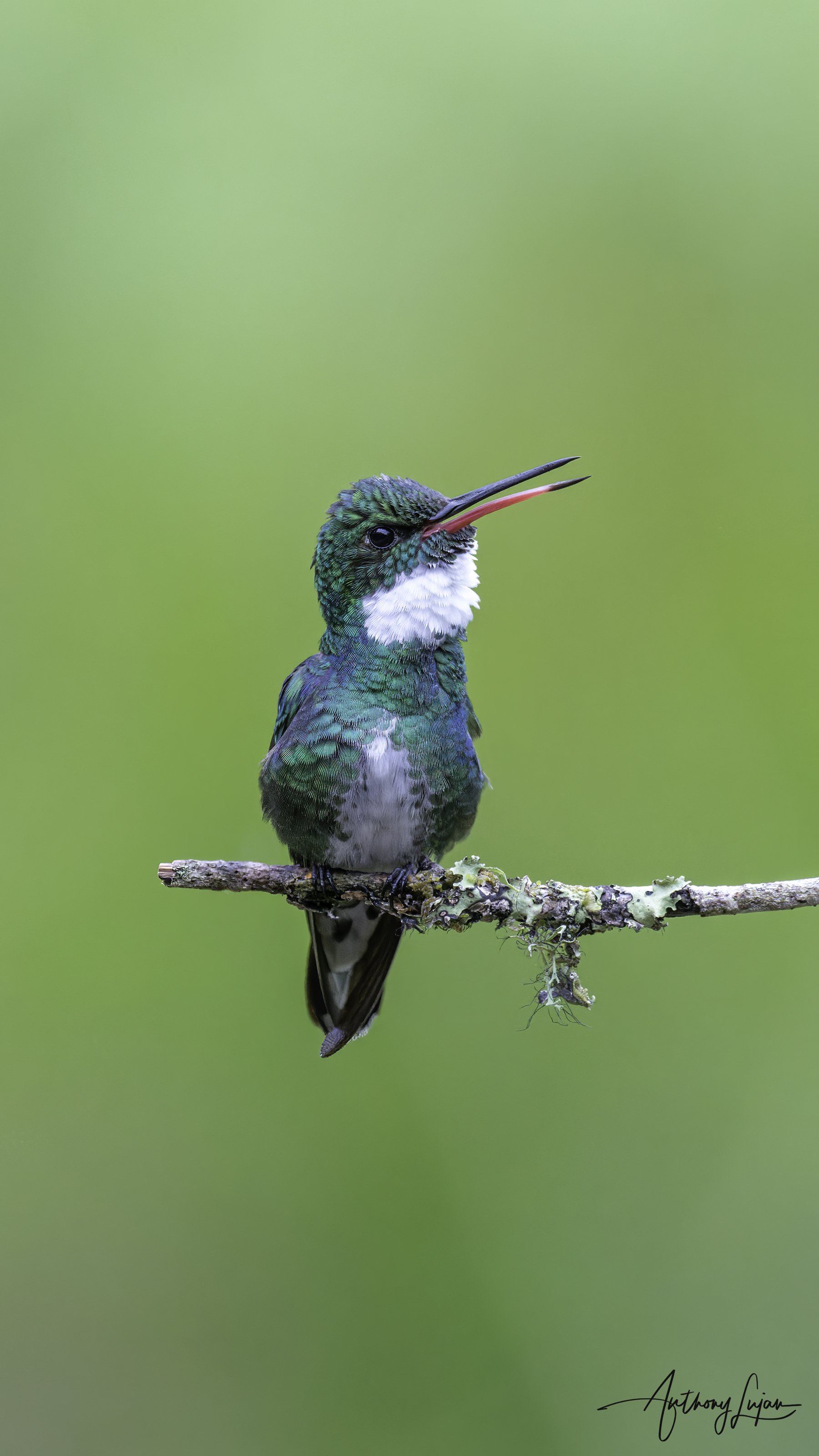
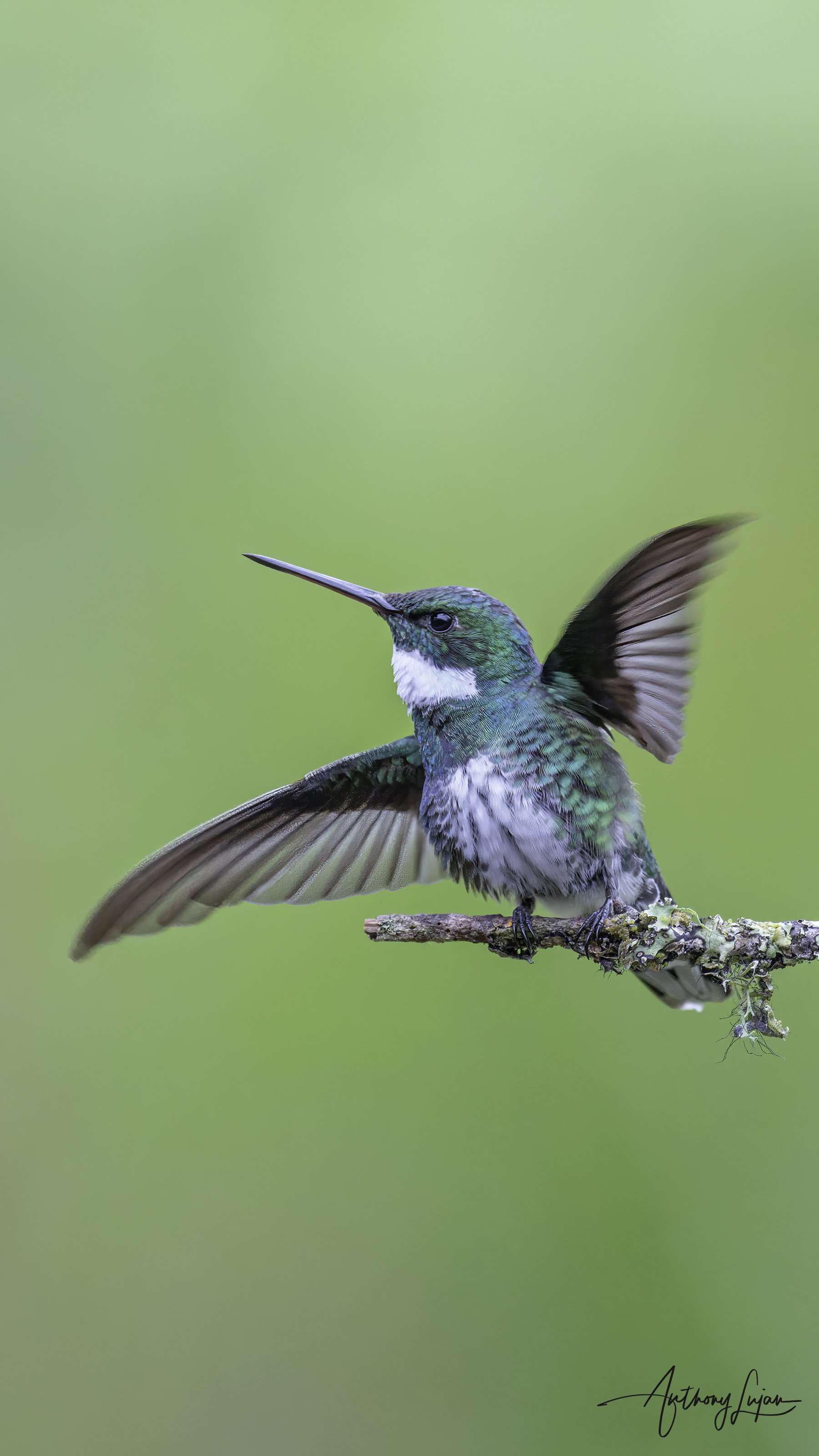
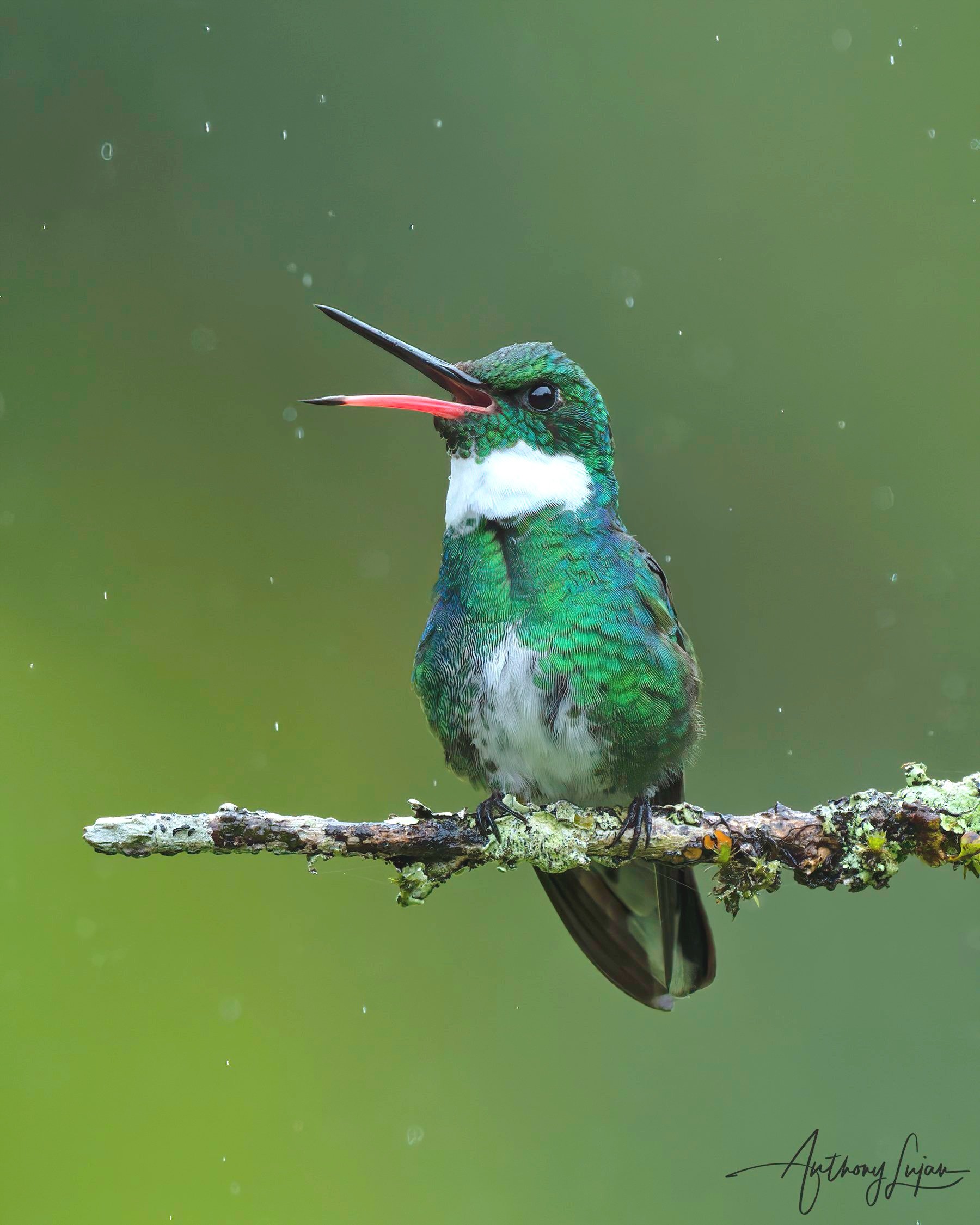
Checkout Anthony’s playlist of this species! Click the top right dropdown to see all the videos.
No other species is currently recognized in the genus Leucochloris; the White-throated Hummingbird is the only member of this genus.
Please note: The content provided in this article reflects Anthony’s personal experience and photographic approach. Results can vary depending on light, weather, location, equipment, subject behavior, and field conditions.