
White-vented Plumeleteer
Scientific name: Chalybura buffonii
The White-vented Plumeleteer is a robust “emerald” hummingbird of humid forests and edges from Panama south through Colombia, Venezuela, Ecuador, and into northwestern Peru. An estimated 500,000–4,999,999 mature individuals exist, the population is decreasing, it is considered non-migratory, and it is currently listed as Least Concern with five recognized subspecies.
At a Glance
Family: Trochilidae (hummingbirds)
Clades: Trochilini – Emeralds
Genus group: Chalybura — medium-sized, heavy-plumaged plumeleteers with bright feet (2 species total)
Range: Central and eastern Panama south through much of Colombia and into western and north-central Venezuela, southwestern Ecuador (El Oro), and northwestern Peru (Tumbes).
Habitat: Humid to very humid forest interior and edges, mature secondary forest, semi-open areas with tall trees, forest clearings, coffee and cacao plantations, and riverine woodland from lowlands into foothills.
Elevation: From near sea level up to about 2,000 m (6,600 ft).
Length: About 10.5–12 cm (4.1–4.7 in).
Weight: About 6–8 g (0.21–0.28 oz).
Number of mature individuals: 500,000–4,999,999
Population trend: Decreasing
Status: Least Concern (IUCN)
Name Origin
The genus name Chalybura refers to the metallic, steel-like sheen of the tail. The species name buffonii honors the French naturalist Georges-Louis Leclerc, Comte de Buffon. The English name “White-vented Plumeleteer” highlights the conspicuous white undertail coverts (“vent”) and the fluffy leg plumes typical of plumeleteers.
Subspecies & Distribution
Five subspecies:
Chalybura buffonii micans
Distribution: Central and eastern Panama, western Colombia (south to Nariño), the Cauca Valley, and upper Magdalena Valley. It is found in humid and very humid forests and edges, as well as shaded plantations and riverine corridors across this trans-Andean region.Chalybura buffonii buffonii (nominate)
Distribution: Central Colombia (upper/middle Magdalena Valley), southern and western Maracaibo basin, adjacent slopes in extreme northeastern Colombia, and northwestern Venezuela (Zulia, western Mérida). It inhabits forest and forest edges, secondary growth, and semi-open wooded landscapes in these inter-Andean and coastal basins.Chalybura buffonii aeneicauda
Distribution: Northern Colombia (lower Magdalena Valley, Santa Marta region) east to western and north-central Venezuela (southern slope of the Andes and coastal slopes). Birds here use humid forests, foothill slopes, and forest edges on both Andean and coastal ranges.Chalybura buffonii caeruleogaster (Blue-bellied)
Distribution: Northern and central Colombia on the eastern slope of the East Andes. This subspecies is found along humid Andean slopes and foothill forests, often at higher elevations within the species’ range.Chalybura buffonii intermedia (Ecuadorian)
Distribution: Subtropical southwestern Ecuador (El Oro) and northwestern Peru (Tumbes). It occupies humid foothill and lowland forests, forest edges, and semi-open wooded habitats in this disjunct, southwestern population.
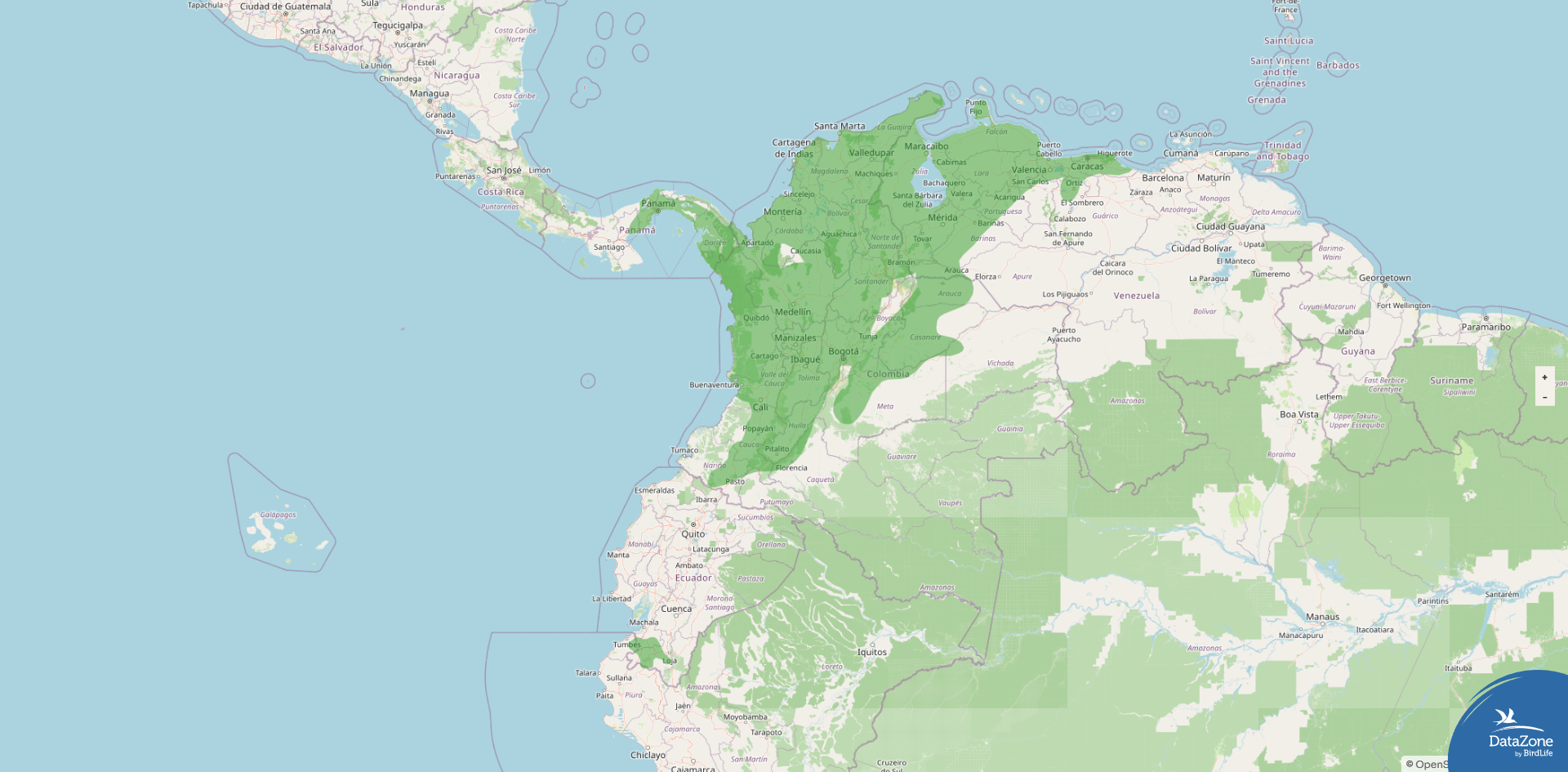
Legend
Green Resident
Species Overview
The White-vented Plumeleteer is a heavy-bodied forest hummingbird, usually seen in the understory and lower mid-story of humid forests, along forest edges, and in mature secondary growth and shaded plantations. It often forages in semi-open patches within forest, such as clearings, gaps, and along rivers, where flowering shrubs and trees are abundant. Despite its broad range and use of some secondary habitats, ongoing deforestation and forest degradation across its range are believed to be causing a gradual decline.
Male Description
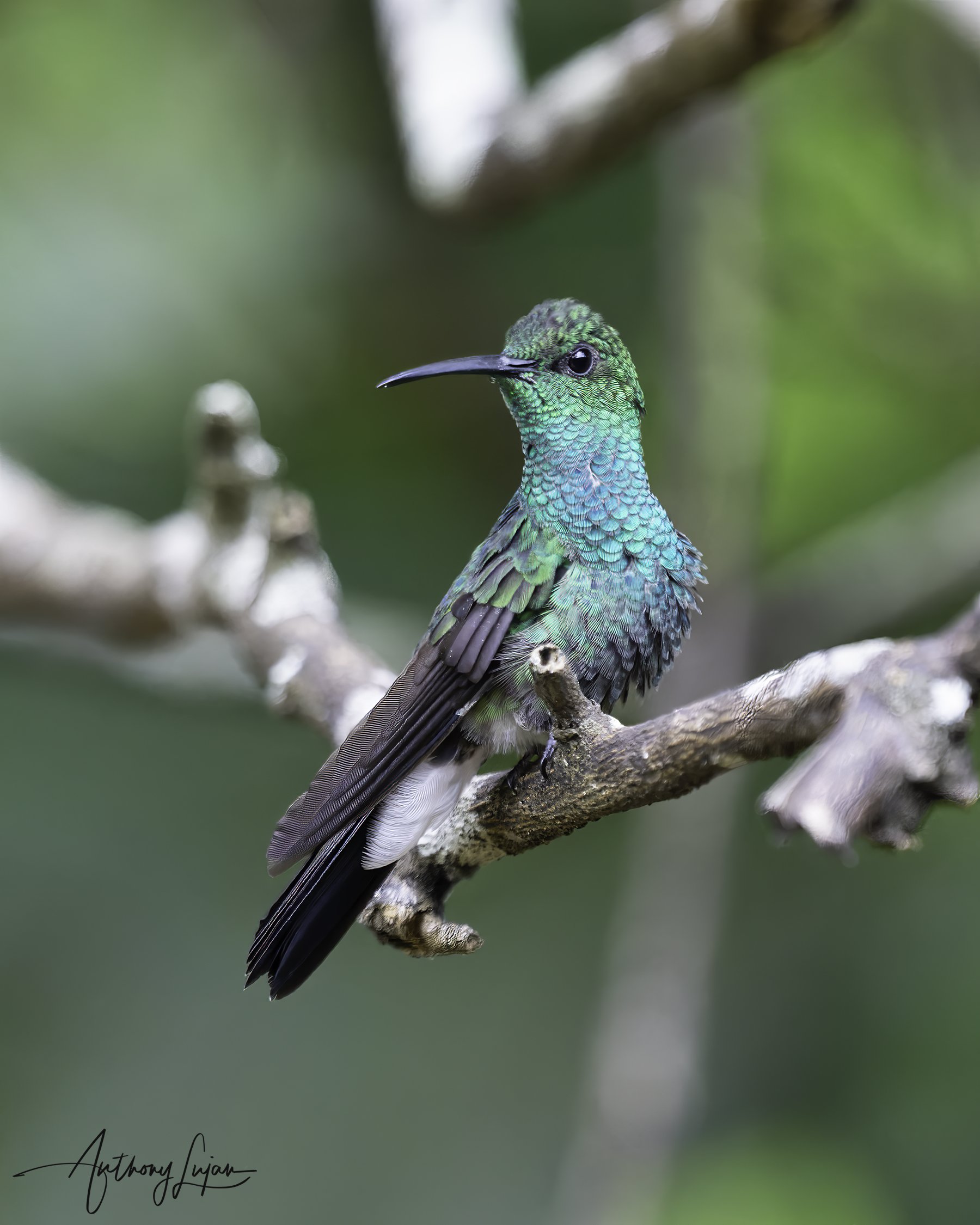
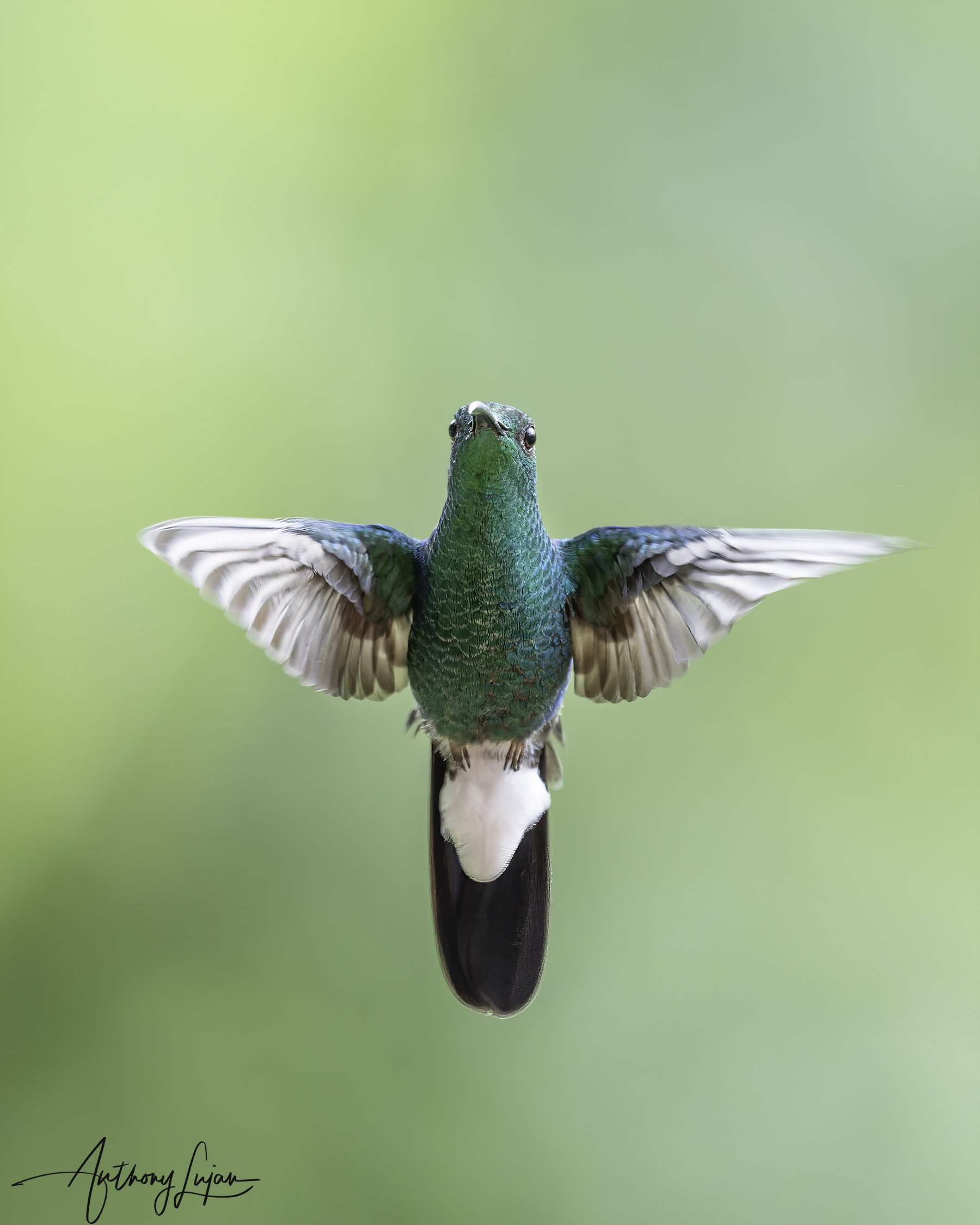
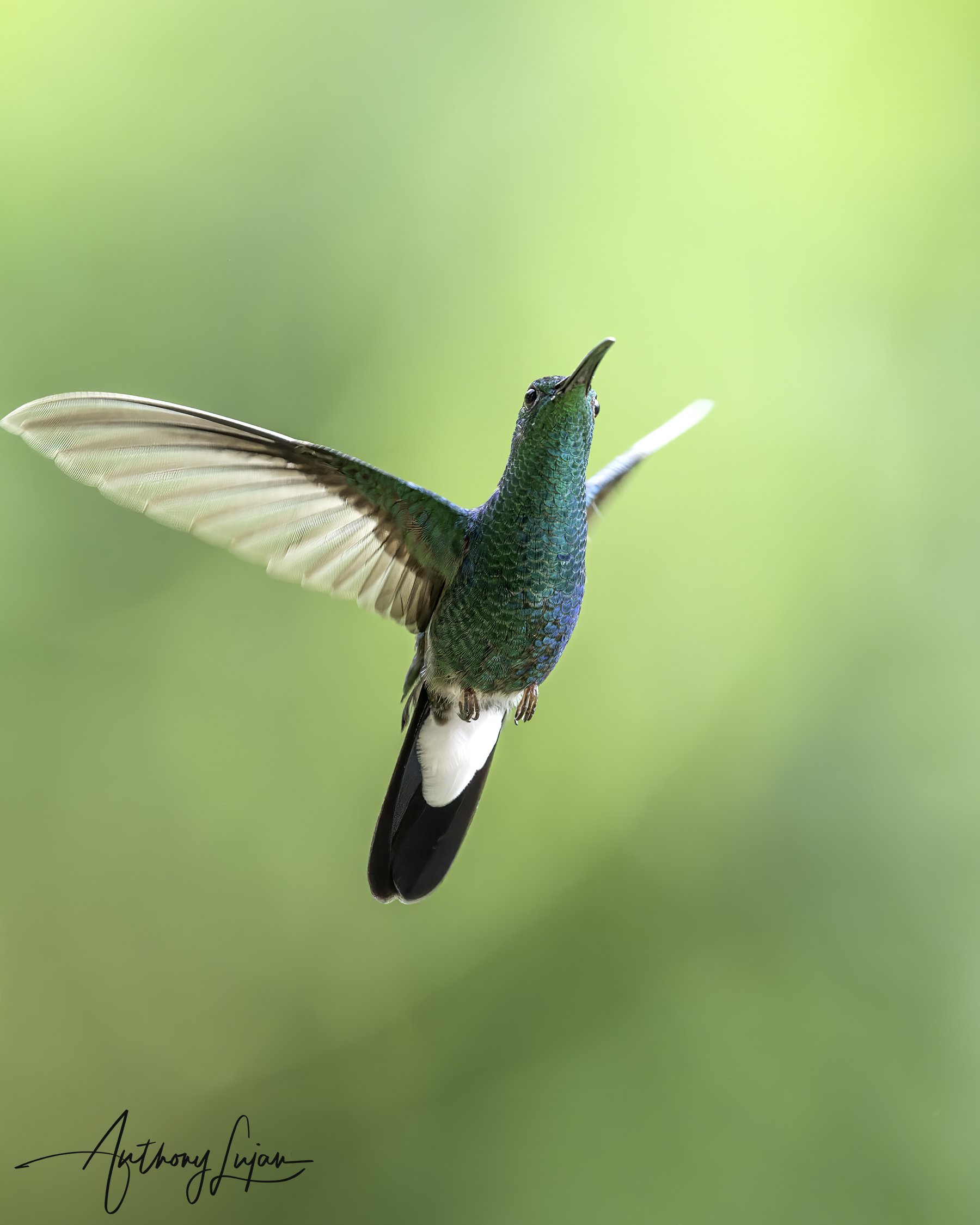
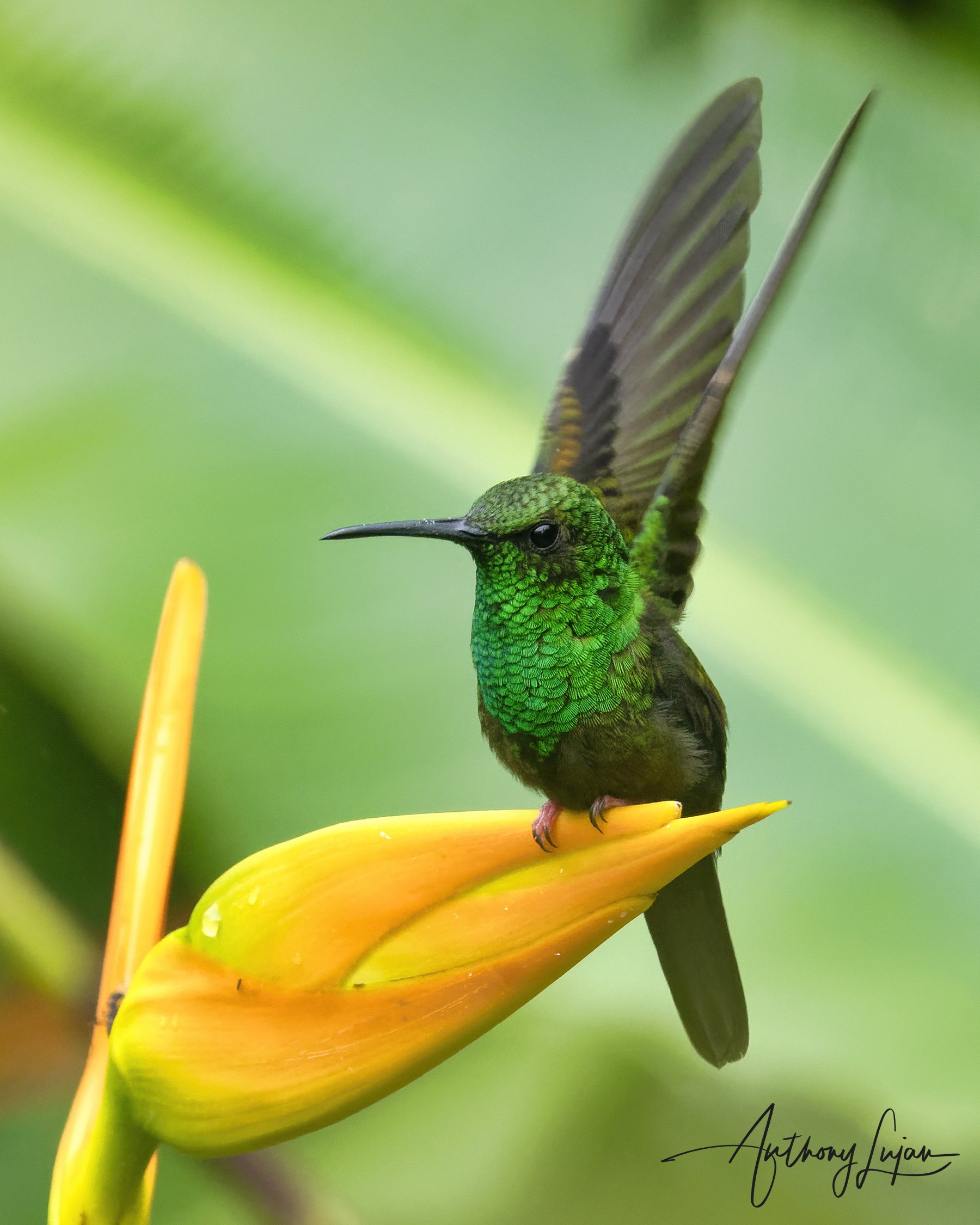
Adult males have a longish, slightly decurved black bill and dark feet. The upperparts are metallic green, sometimes with a bronzy sheen. The throat and underparts are also green, though some subspecies—for example, “Blue-bellied” caeruleogaster—have more bluish underparts. The undertail coverts are puffy and pure white, forming a prominent “vent” patch that contrasts with the dark tail. The tail is fairly long and blue-black with a metallic gloss. In the field, males appear as medium-sized, dark green hummingbirds with a longish bill, bright white vent, and dark tail.
Female Description
Adult females are similar in size and structure, with a long, slightly decurved black bill, but differ in coloration. The upperparts are metallic green, while the underparts are pale gray to whitish, usually without heavy spotting. The undertail coverts are white and somewhat fluffy, though less conspicuously puffed than in males. The tail is dark with a bluish gloss and may show slightly paler tips on the outer feathers. Females therefore appear as green-backed hummingbirds with pale grayish underparts, white vent, and a dark tail.
Habitat & Behavior
White-vented Plumeleteers inhabit a broad range of humid forest types: lowland evergreen forest, very humid foothill forest, forest edges, mature secondary forest, coffee and cacao plantations with shade trees, and riverine forest. They tend to stay in shaded environments, especially along forest borders, clearings with tall vegetation, and streams and ravines. They feed on nectar from a variety of flowers, including Heliconia and other tubular blossoms, often defending rich patches aggressively against other hummingbirds. They also take small arthropods, captured by hawking from perches or gleaned from foliage. Birds typically forage from near ground level up into the lower canopy.
Breeding
Breeding seasons vary regionally: nesting has been recorded in Panama around September, in the Magdalena Valley from roughly February to August, and in the Eastern Andes from June to November, with some populations in Venezuela possibly breeding throughout much of the year. The nest is a cup of plant down and fibers bound with spiderweb, with moss and lichens on the exterior, placed on a horizontal branch or fork up to about 2.5 m (8 ft) above the ground. The female lays two eggs, incubates them, and raises the young; one closely monitored nest fledged a chick about 21 days after hatching.
Population
With an estimated 500,000–4,999,999 mature individuals, the White-vented Plumeleteer is still numerically strong over its extensive range. It is often locally common in suitable forests, edges, and shaded agricultural landscapes. However, because it relies heavily on forested and semi-forested habitats, widespread deforestation, fragmentation, and conversion of forest to pasture or intensive crops reduce its available habitat and are thought to be driving a slow overall decline.

Conservation
The White-vented Plumeleteer is listed as Least Concern due to its large population and wide distribution, but its decreasing trend reflects ongoing forest loss and degradation across Panama, Colombia, Venezuela, Ecuador, and Peru. Conservation measures that protect humid lowland and foothill forests, maintain shaded coffee and cacao plantations, preserve forest edges and riverine corridors, and retain Heliconia-rich understory will benefit this species and many other forest-dependent hummingbirds.
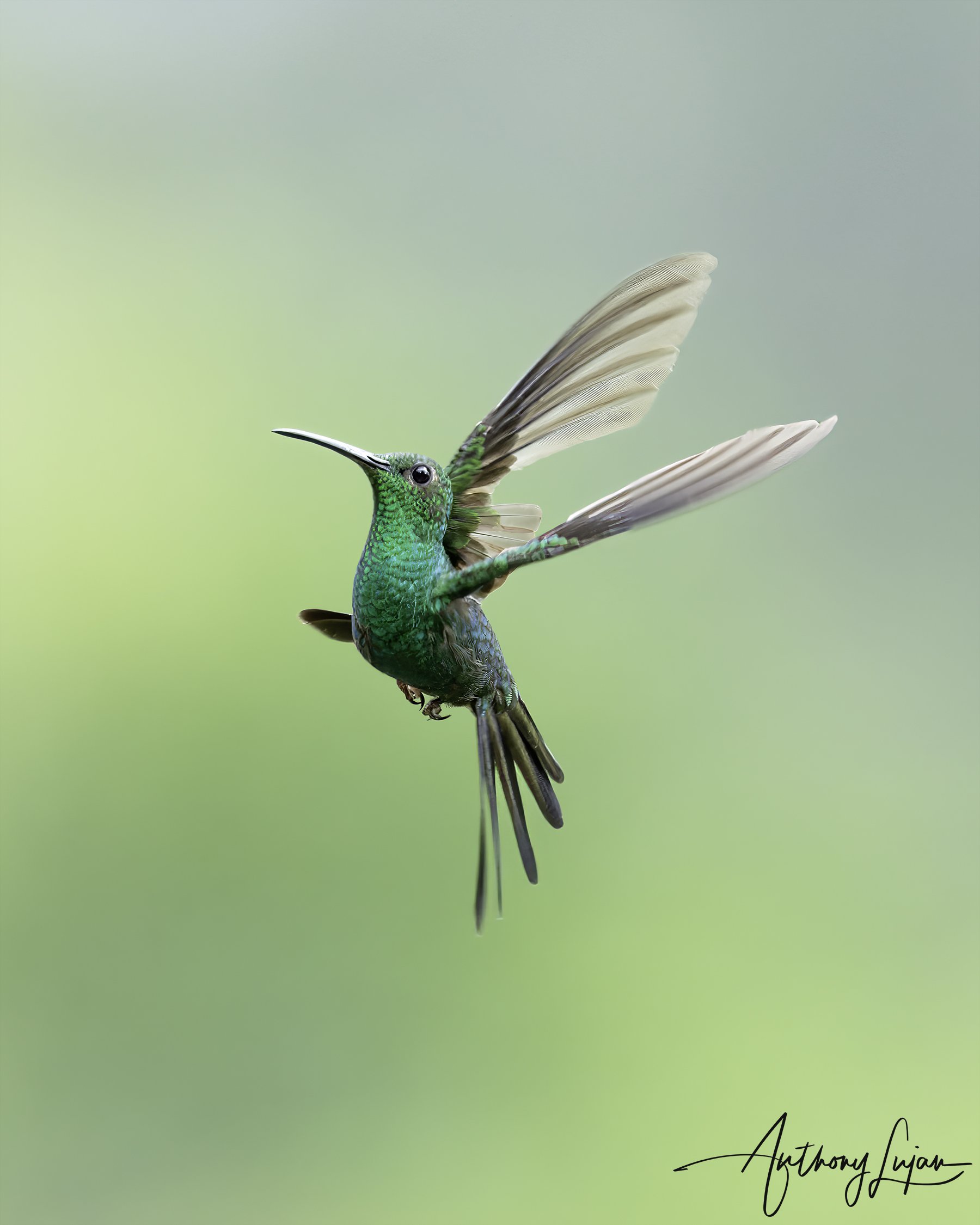
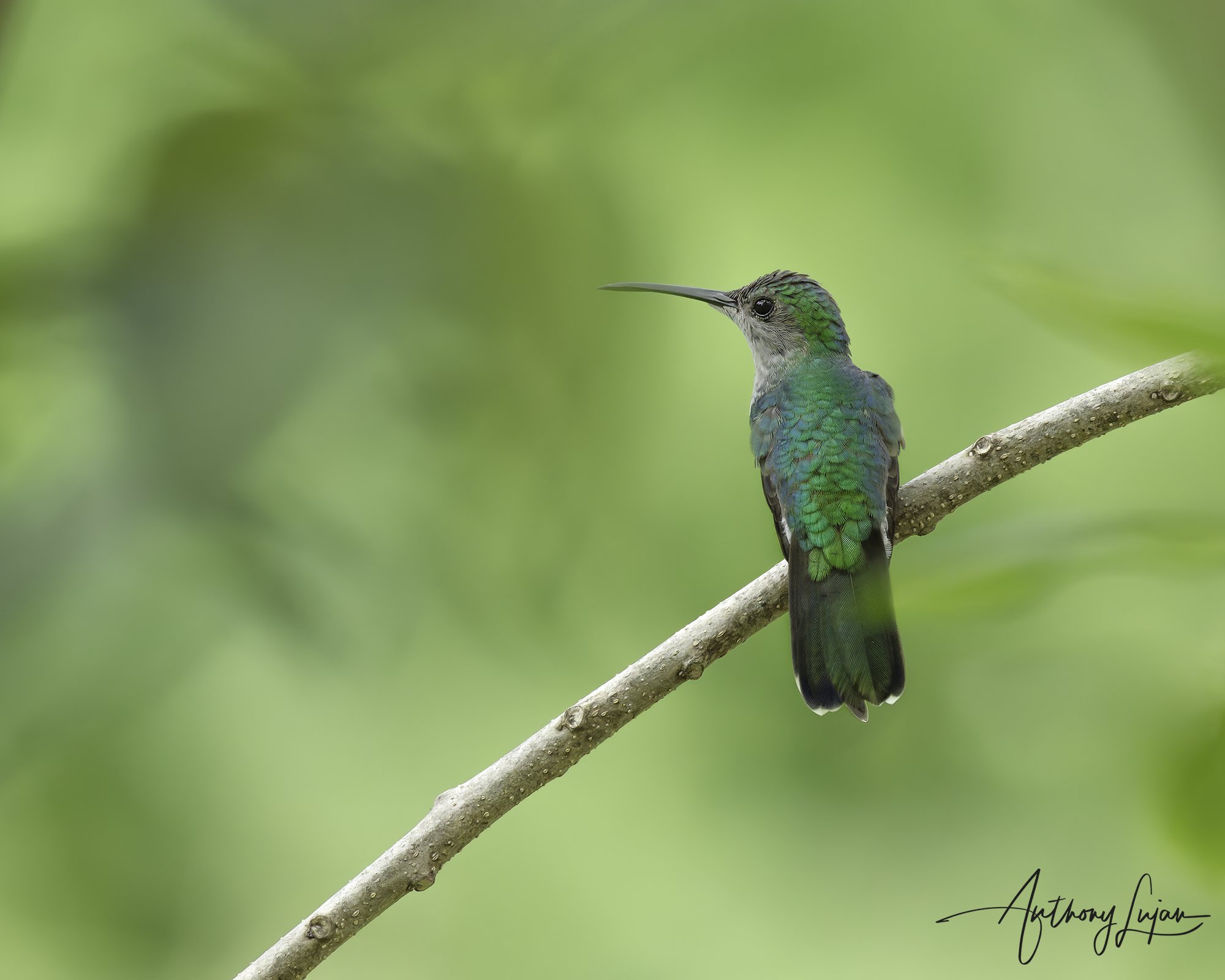
Below are individuals of the White-vented Plumeleteer (Chalybura buffonii aeneicauda)
Photographed at:
Hummingbirds Tayrona, Magdalena, Colombia
Hotel Minca, Magdalena, Colombia
Observatorio de Aves de Minca, Magdalena, Colombia
These individuals belong to the subspecies aeneicauda, found in northern Colombia (lower Magdalena Valley, Santa Marta region) and western/north-central Venezuela. They inhabit humid forests and edges, showing metallic green upperparts and a crisp white vent.
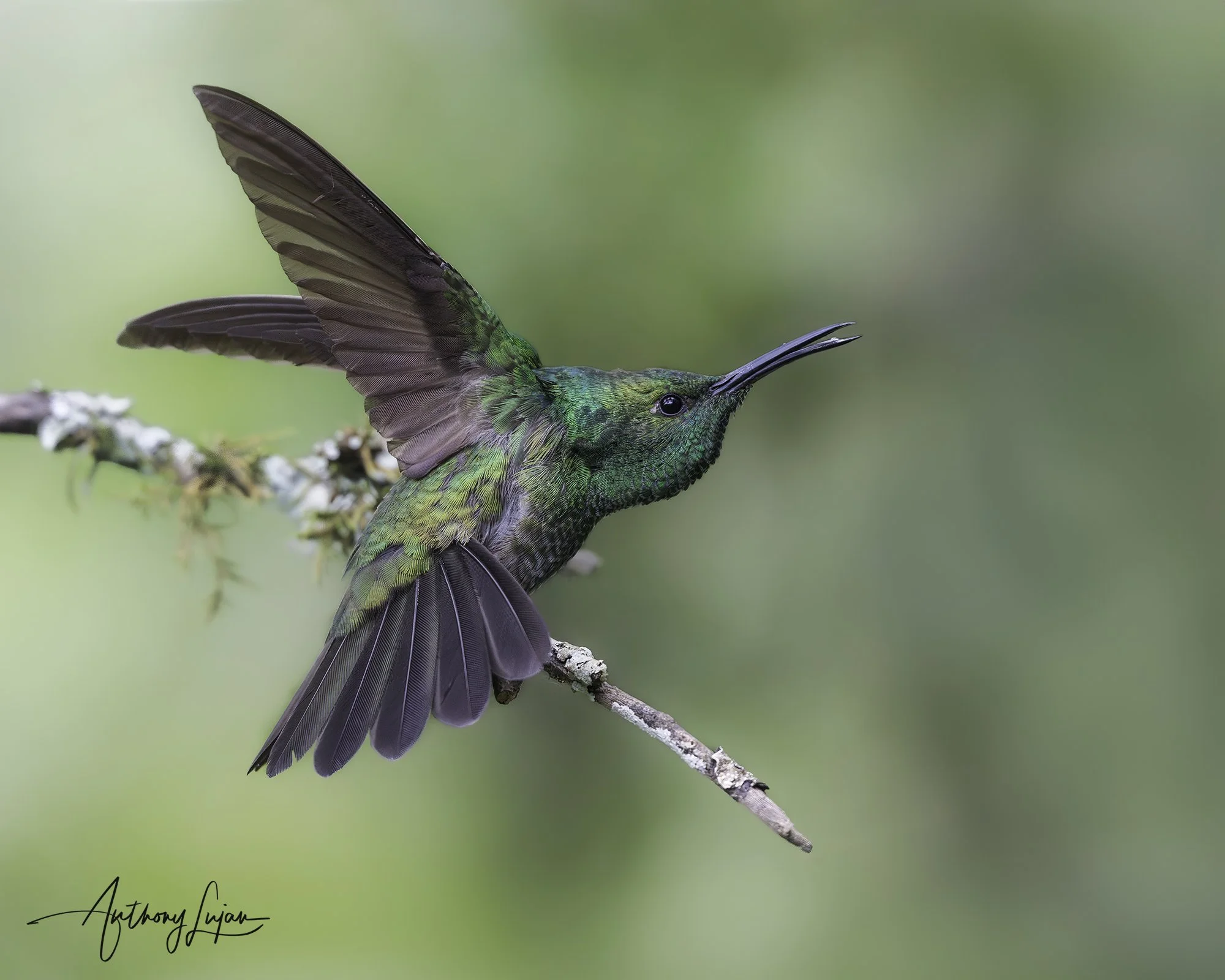
Below are individuals of the White-vented Plumeleteer (Chalybura buffonii buffonii)
Photographed at:
RN Retorno del Colibrí, Tolima, Colombia
These individuals belong to the subspecies buffonii, found in central Colombia (upper/middle Magdalena Valley) and adjacent Venezuela. This population frequents humid forest, secondary growth, and plantations, with metallic green upperparts and distinctive white vent.
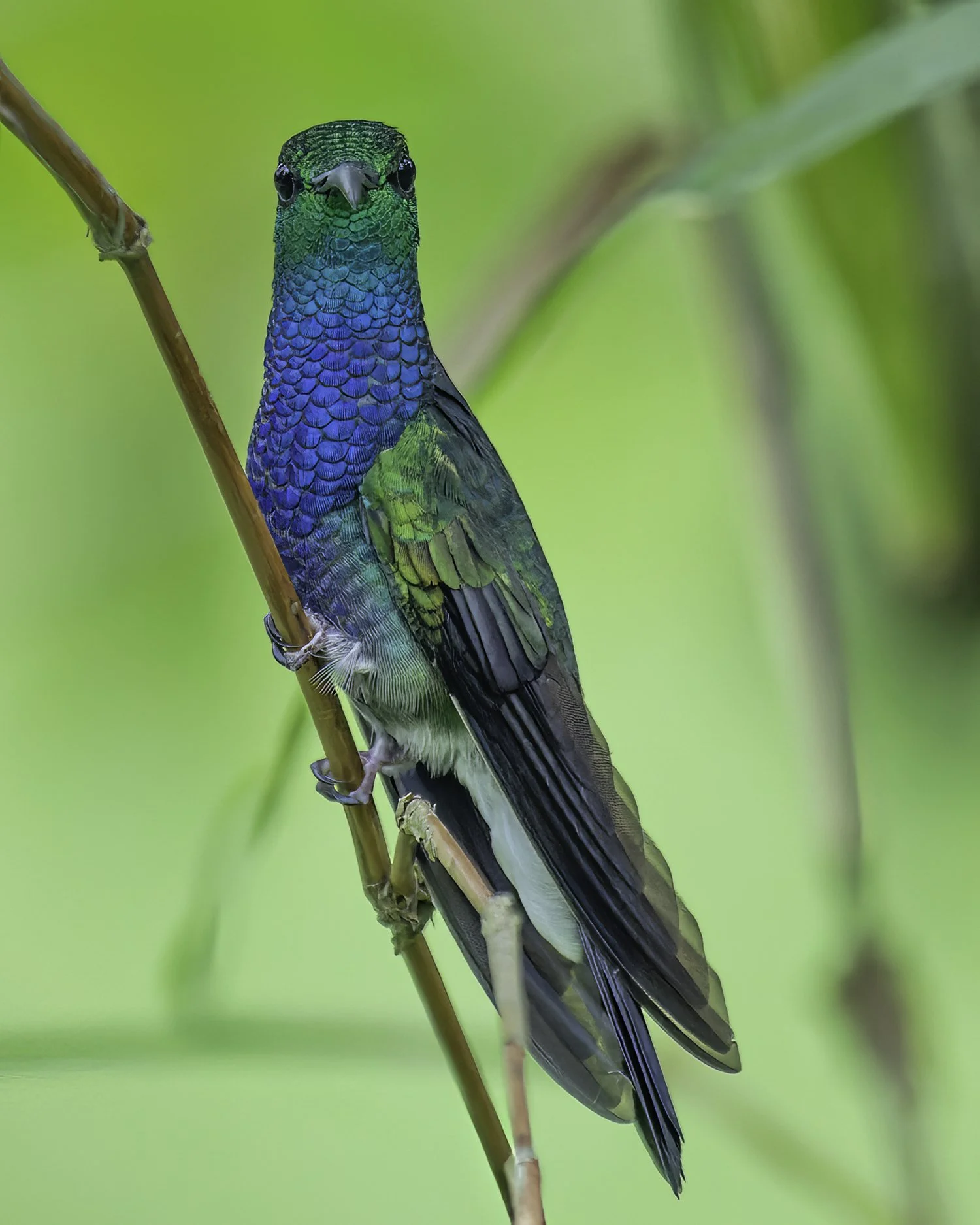
Below are individuals of the White-vented Plumeleteer (Blue-bellied) (Chalybura buffonii caeruleogaster)
Photographed at:
Hacienda La Leona Birdwatching, Cundinamarca, Colombia
These individuals belong to the caeruleogaster (“Blue-bellied”) subspecies, which occurs on the eastern slope of the East Andes in northern and central Colombia. They are recognized by their deeper blue underparts and otherwise similar metallic green upperparts, foraging at flowers in humid forests and edges.
Checkout Anthony’s playlist of this species! Click the top right dropdown to see all the videos.
Related species in the Chalybura genus (2 species total):
Please note: The content provided in this article reflects Anthony’s personal experience and photographic approach. Results can vary depending on light, weather, location, equipment, subject behavior, and field conditions.