
White-vented Violetear

Scientific name: Colibri serrirostris
The White‑vented Violetear is a medium-sized, metallic green hummingbird of semi‑open habitats in southern Brazil, Bolivia, Paraguay, and northern Argentina. It is currently listed as Least Concern, but both the number of mature individuals and the overall population trend are considered unknown.
At a Glance
Family: Trochilidae (hummingbirds)
Clades: Polytminae – Mangos
Genus group: Colibri — medium to large “violetears” with violet ear patches in males (5 species: Brown, Mexican, Lesser, Sparkling, White‑vented)
Range: Southern Brazil, eastern Bolivia, central Paraguay, and northern Argentina.
Habitat: Semi‑open scrublands, savanna, cerrado, seasonally flooded grasslands, and gardens and parks with scattered trees and flowering shrubs.
Elevation: Mostly from lowlands to mid‑elevations, locally reaching higher slopes where suitable semi‑open habitats occur.
Length: About 8.5–9 cm (3.3–3.5 in).
Weight: Small‑to‑medium hummingbird, similar to other violetears.
Number of mature individuals: Unknown.
Population trend: Unknown.
Status: Least Concern (IUCN Red List category).
Name Origin
The genus name Colibri comes from a Caribbean word for hummingbird, later adopted into European languages for this group. The species name serrirostris means “saw‑billed,” referring to the fine serrations along the cutting edges of the bill. The English name “White‑vented Violetear” highlights the pale white vent and undertail area combined with the violet “ear” patch typical of violetears.
Taxonomy & Distribution
Monotypic — no recognized subspecies.
White‑vented Violetear is the southernmost member of the violetears, ranging across southern Brazil, eastern Bolivia, central Paraguay, and northern Argentina. Within this broad band over south‑central South America, it is often patchy but can be locally common where semi‑open habitats with scattered flowering trees and shrubs are available.
Movement (Resident / Local Movements)
This species is not a true migrant. It is largely resident throughout its range, though some populations may shift locally in response to flowering or seasonal conditions, including limited elevational movements. These local shifts do not form long‑distance migratory patterns; overall the species is best described as non‑migratory with local movements.
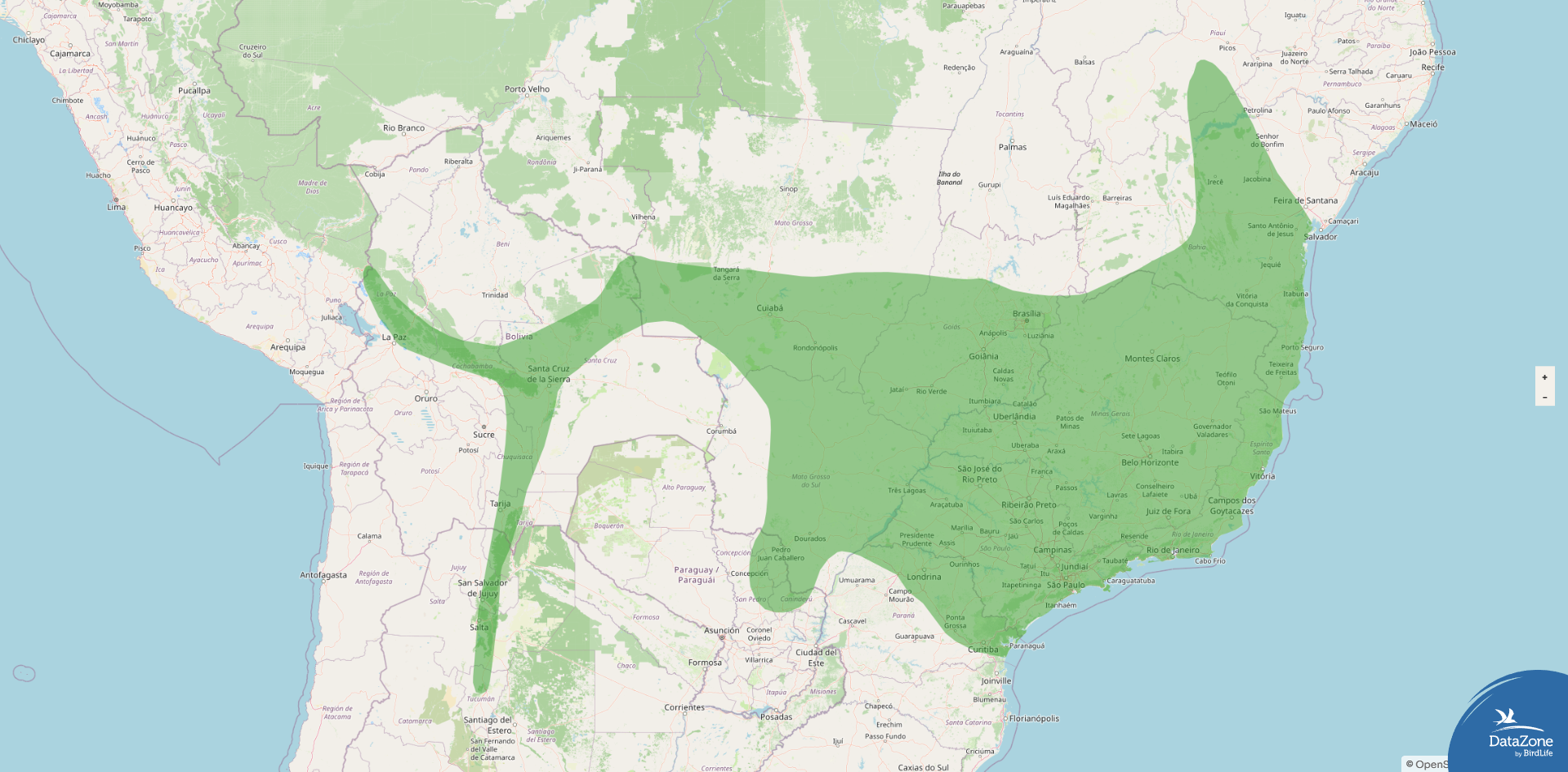
Legend
Green Resident
Species Overview
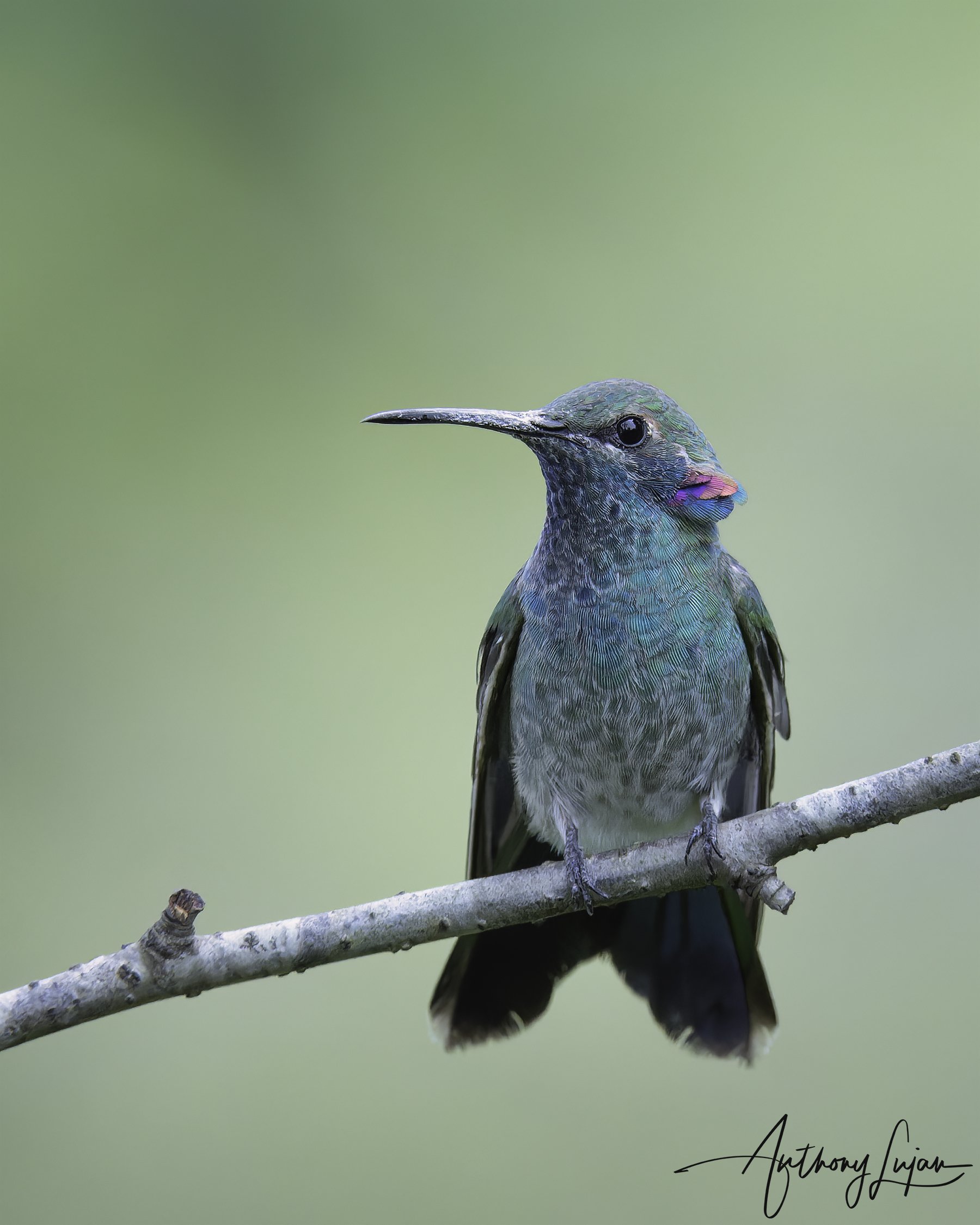
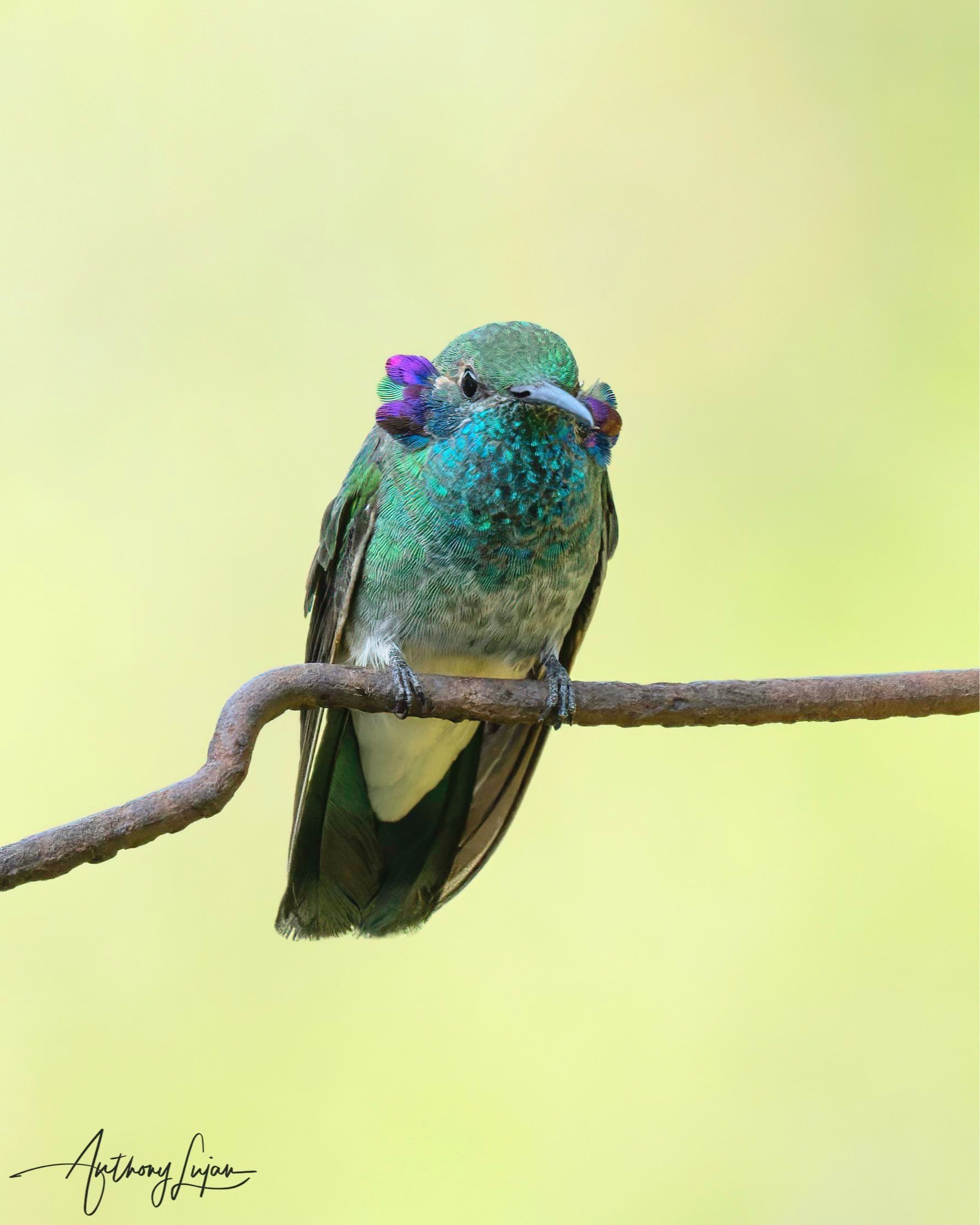
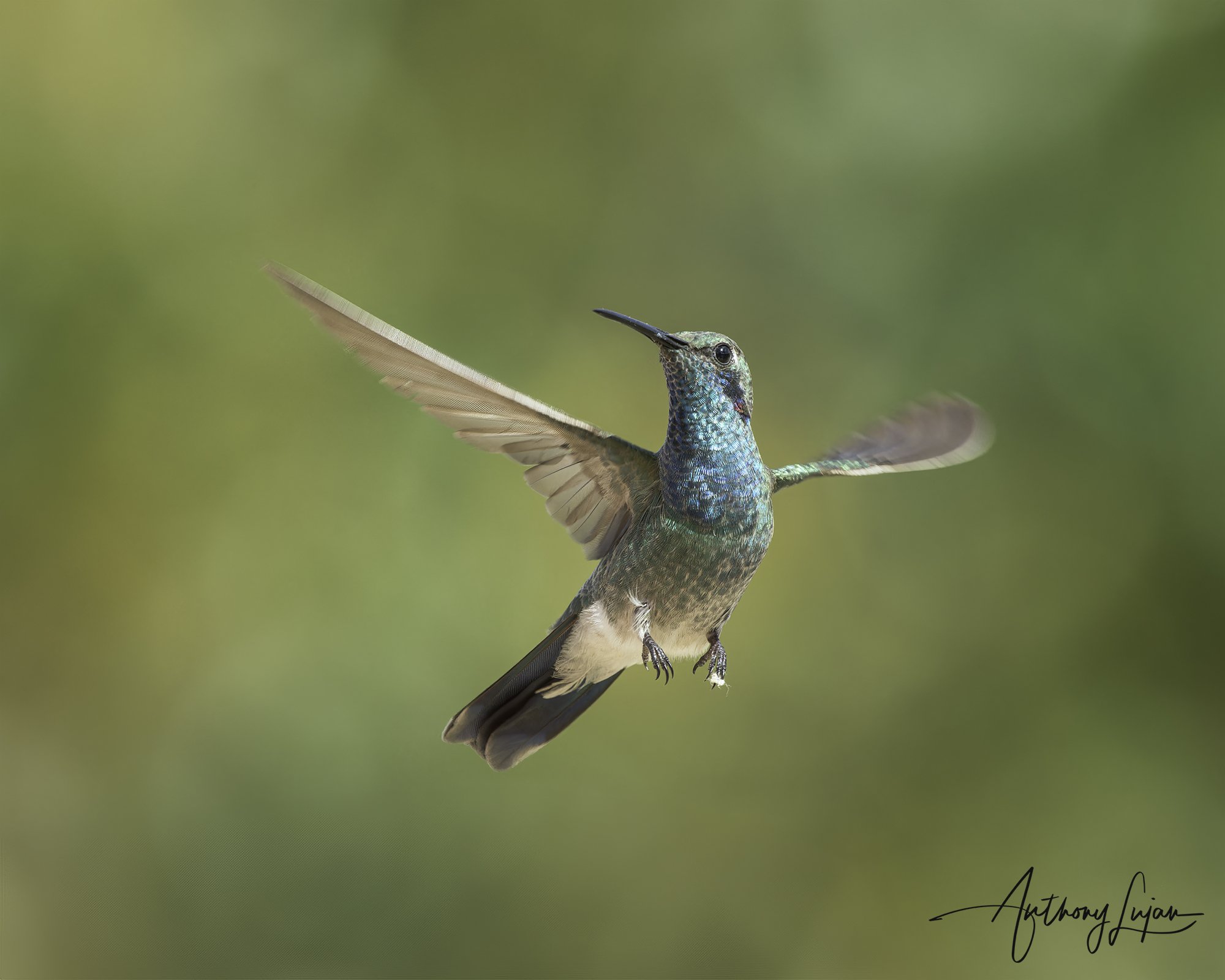
The White‑vented Violetear is a shimmering green hummingbird with a distinctive whitish vent and undertail coverts, plus a violet ear patch on the sides of the head. It favors more open and drier habitats than many of its congeners, thriving in scrub, cerrado, savanna, and human‑altered landscapes with flowering plants. In suitable areas it can be a conspicuous visitor to gardens, fencerows, and scattered flowering trees in open country.
Male Description
Adult males are metallic green above and on most of the underparts, with a clear violet patch behind and below the eye forming the “violetear.” The vent and undertail coverts are whitish and contrast with the green belly and flanks, giving the species its common name. The tail is dark with a greenish or bluish gloss and a darker subterminal band, and the bill is straight and dark, with fine serrations along the edges. In the field, males show a green body, pale vent, violet ear patch, and a dark, subtly shimmering tail.
Female Description
Females closely resemble males but are typically slightly duller, with a somewhat less extensive or less intensely colored violet ear patch. The whitish vent and undertail coverts remain visible, though the contrast may be a bit less sharp. Juveniles are duller overall, with reduced iridescence and a less distinct violet patch on the sides of the head.
Habitat & Behavior
White‑vented Violetears use a range of semi‑open habitats, including scrublands, savanna, cerrado, seasonally flooded grasslands, and gardens and parks with scattered trees and shrubs. They feed on nectar from a variety of flowering trees, shrubs, and herbs, often favoring isolated flowering bushes or trees within otherwise open landscapes. Like other violetears, they can be assertive and territorial, chasing away other hummingbirds from favored nectar sources, and they also take small insects for protein, often by hawking from exposed perches.
Breeding
Breeding timing varies across its wide range but generally aligns with favorable weather and nectar availability. The female builds a small cup nest from fine plant fibers and spiderweb, often decorated with lichens, and usually places it on a horizontal branch or in a fork a short distance above the ground or above low vegetation. She lays two white eggs and alone carries out incubation and chick‑rearing, as is typical for hummingbirds.
Population
The total number of mature individuals is unknown and detailed trend data are lacking, but the White‑vented Violetear’s broad range and frequent occurrence in suitable semi‑open habitats suggest a large overall population. It also occurs in a number of protected areas and appears tolerant of a degree of habitat modification, provided flowering trees and shrubs remain available.

Conservation
Currently assessed as Least Concern, the species shows no evidence of a rapid global decline. Habitat changes in cerrado, savannas, and scrub—such as agricultural expansion, grazing, and altered fire regimes—may affect local abundance and distribution. Conserving semi‑natural savannas and scrub, maintaining flowering trees and shrubs in rural and urban landscapes, and protecting key open habitats all help support this species and other hummingbirds of semi‑open country.
Checkout Anthony’s playlist of this species! Click the top right dropdown to see all the videos.
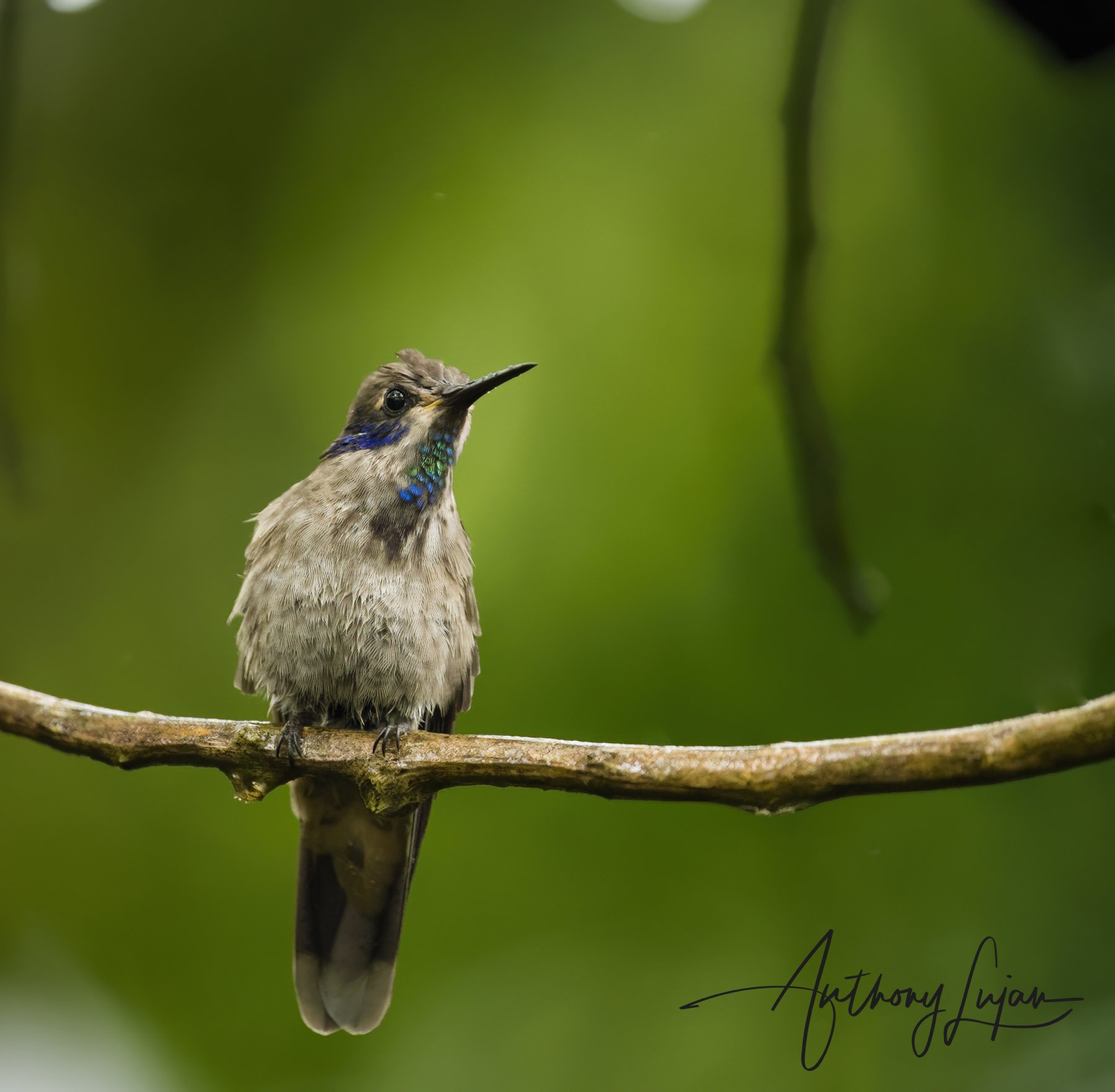
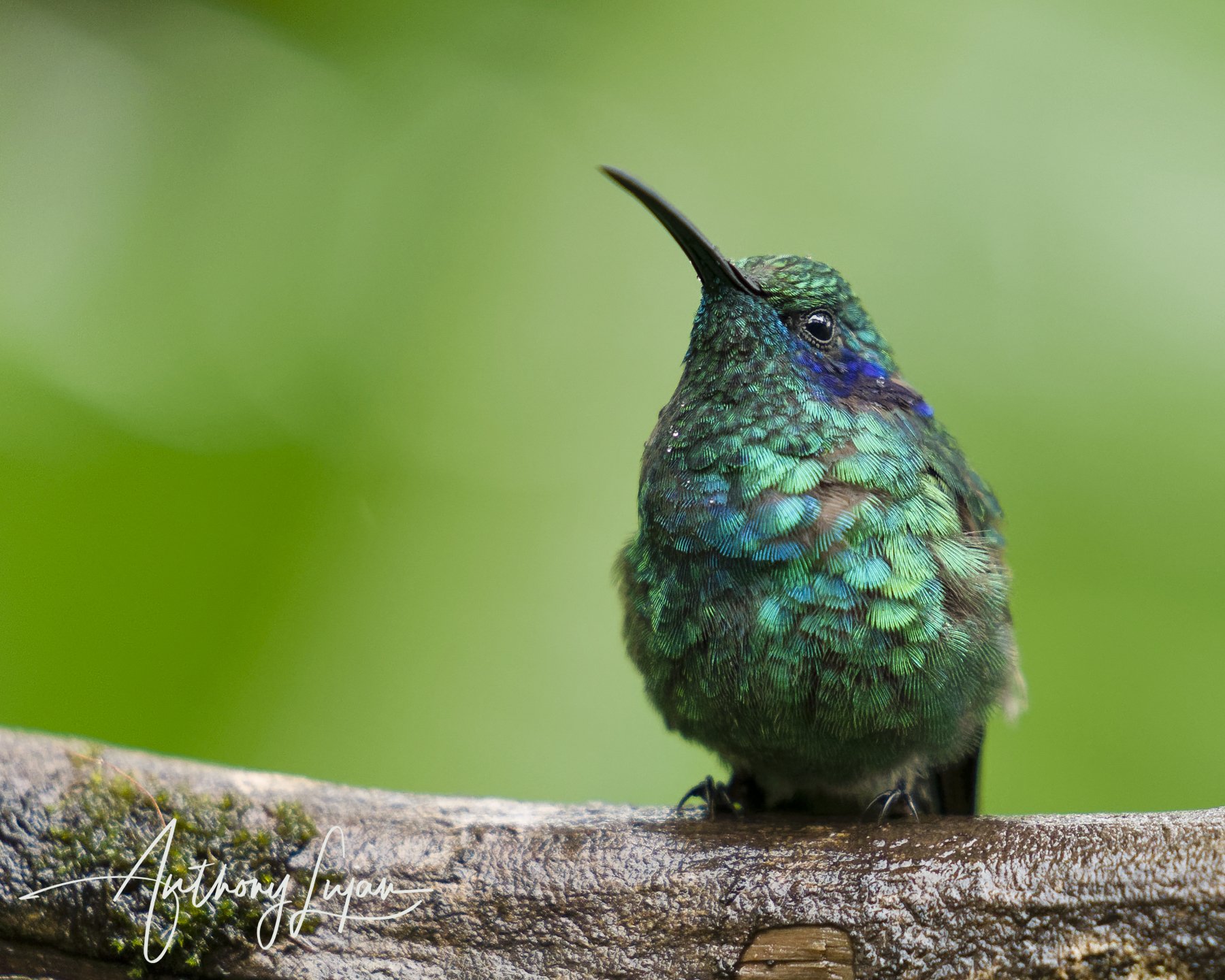
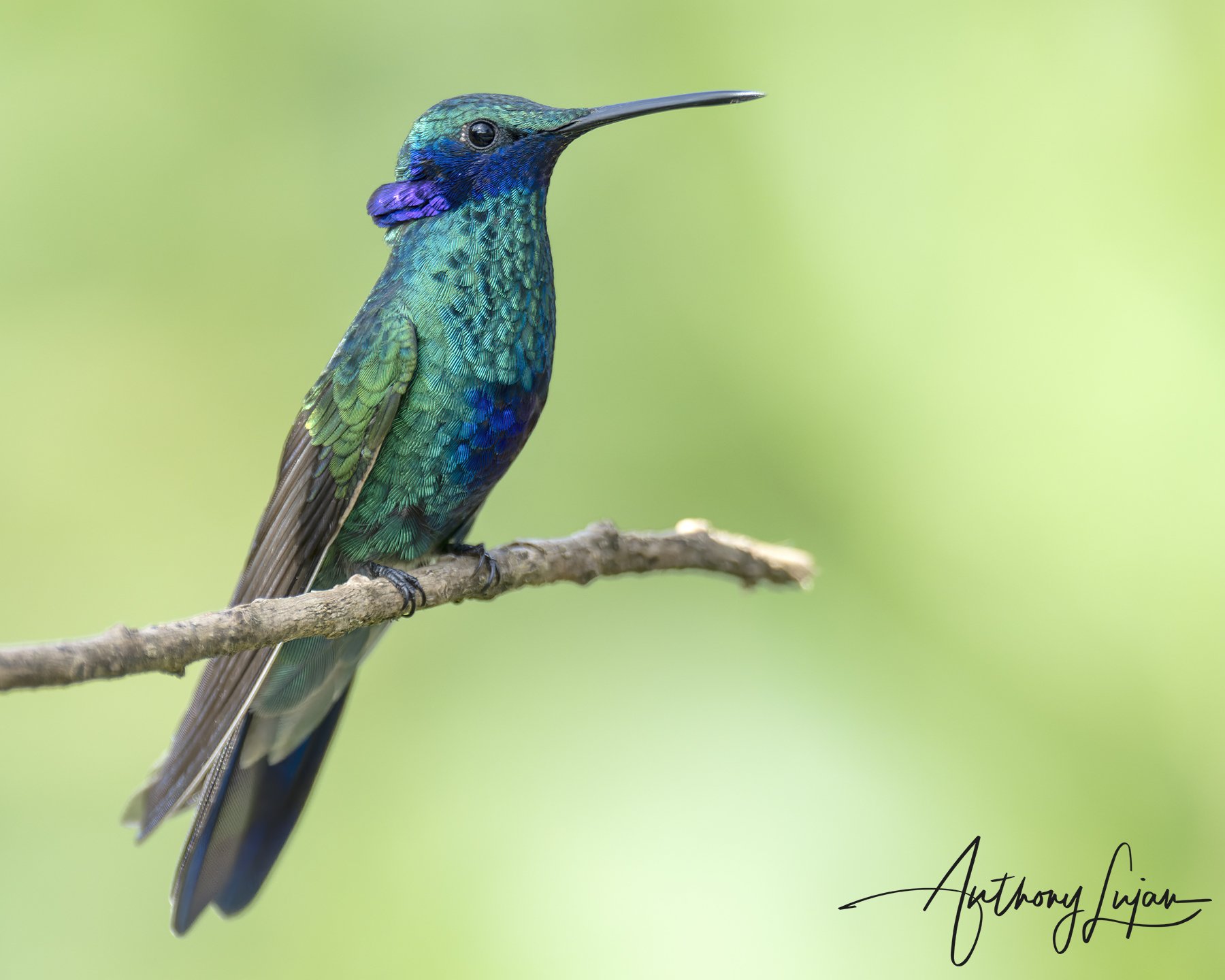
Related species in the Colibri genus (5 species total):


Please note: The content provided in this article reflects Anthony’s personal experience and photographic approach. Results can vary depending on light, weather, location, equipment, subject behavior, and field conditions.