
Wire-crested Thorntail
Scientific name: Discosura popelairii
The Wire-crested Thorntail is a tiny, ornate hummingbird of humid Andean foothill forests on the eastern slope of the Andes from Colombia through Ecuador to Peru, with possible occurrence in adjacent northern Bolivia. Its number of mature individuals is unknown, its overall population trend is decreasing, it is considered non‑migratory, and it is assessed as Least Concern.
At a Glance
Family: Trochilidae (hummingbirds)
Clade: Lesbiini – Coquettes
Genus: Discosura — 5 species in total
Range: Eastern Andes foothills of Colombia, eastern Ecuador, and eastern Peru (south to Puno), with at least one record from northern Bolivia
Habitat: Humid foothill and lower montane forest and forest edges on the eastern Andean slope
Elevation: Mostly from about 500 to 1,500 m (1,600–4,900 ft)
Length: Males about 11.4 cm (4.5 in) including tail; females about 7.5–8.2 cm (3.0–3.2 in)
Weight: About 2.5 g (0.09 oz)
Number of mature individuals: Unknown
Population trend: Decreasing
Movement: Not a migrant (resident, with local elevational shifts only)
IUCN Red List category: Least Concern
Name Origin
The name “Wire-crested Thorntail” refers to the male’s extraordinary head and tail: a wiry, filamentous crest that looks like fine wires projecting from the crown, and a long, narrow, pointed tail typical of thorntails. The genus name Discosura refers to the distinctive tail shapes in this group, and the species name popelairii honors Jean Baptiste Louis Joseph Baron Popelaire de Terloo, a Belgian explorer and naturalist active in tropical America.
Taxonomy & Distribution
Discosura popelairii belongs to the coquette tribe Lesbiini within the hummingbird family Trochilidae. The genus Discosura contains five species known as thorntails. The Wire-crested Thorntail occurs along the eastern slopes of the Andes, from eastern Colombia’s Meta region south through eastern Ecuador and into eastern Peru as far as Puno, with a few records from extreme northern Bolivia. It is closely linked to humid foothill and lower montane forests and their edges, mostly within a relatively narrow elevational band.
Subspecies and Distribution
Monotypic; no recognized subspecies.
Distribution: The Wire-crested Thorntail is found in humid forest and forest edges of the Andean foothills on the eastern side of the Andes from eastern Colombia through eastern Ecuador to eastern Peru (south to Puno), with at least one record from adjacent northern Bolivia.
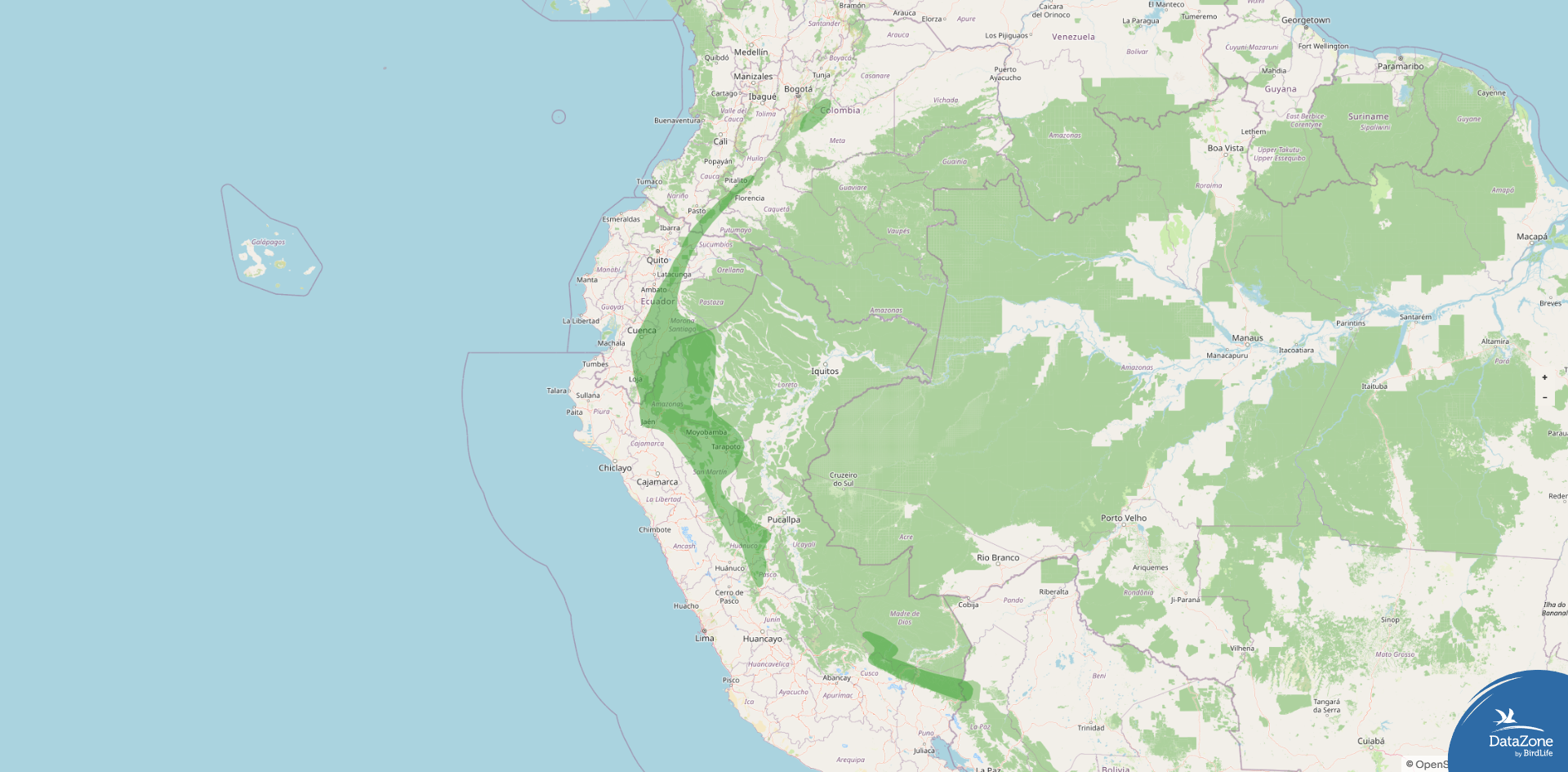
Legend
Green Resident
Species Overview
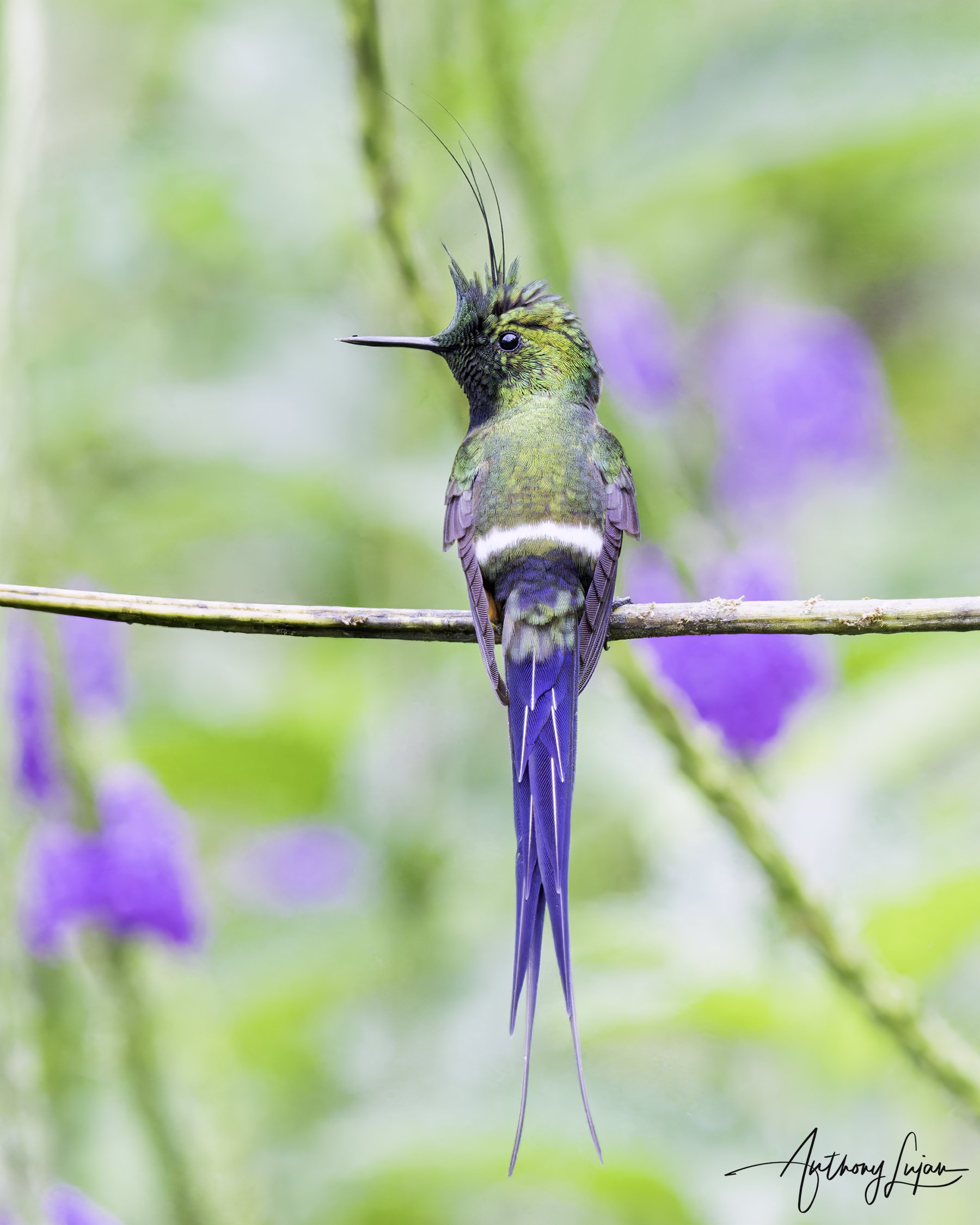
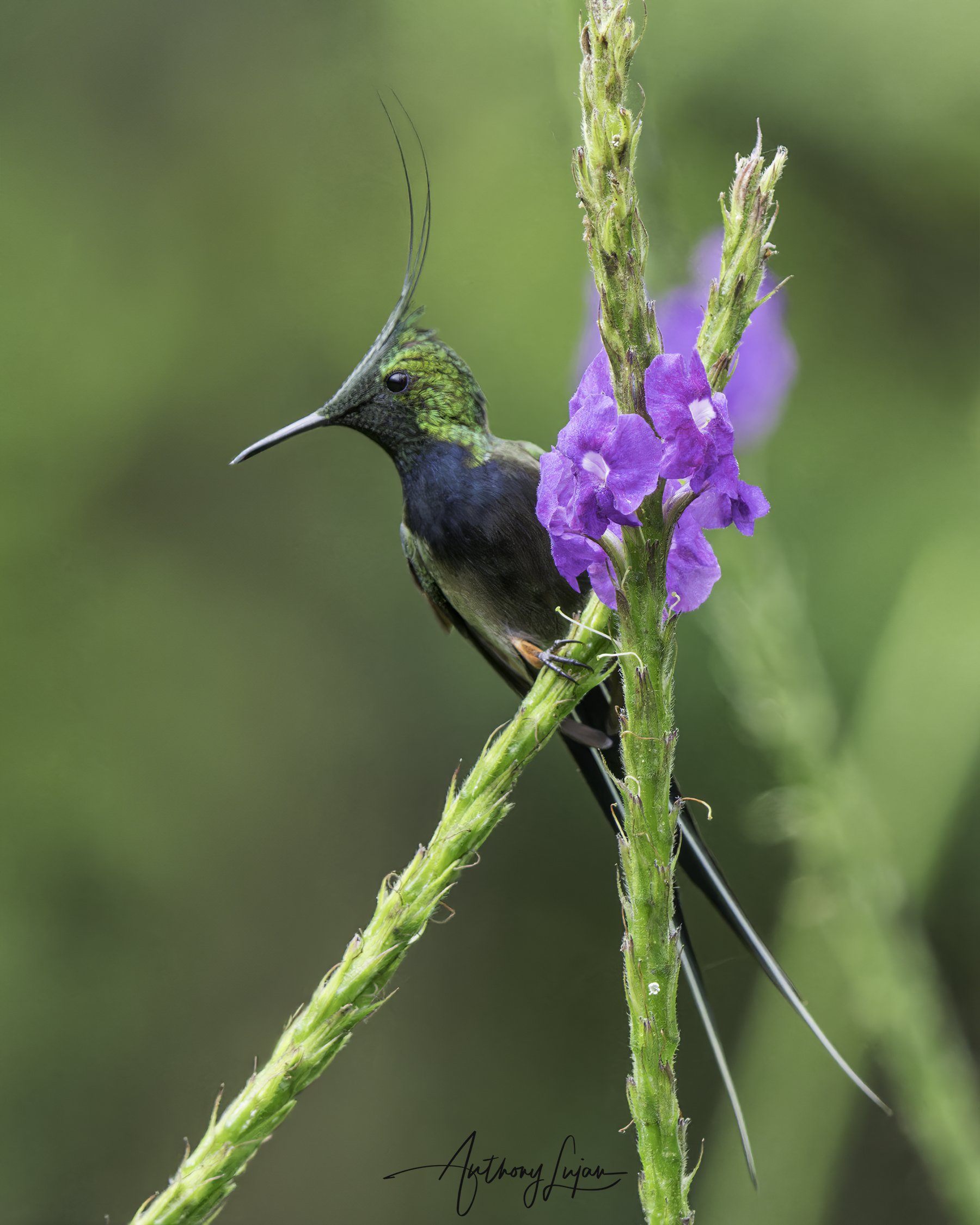
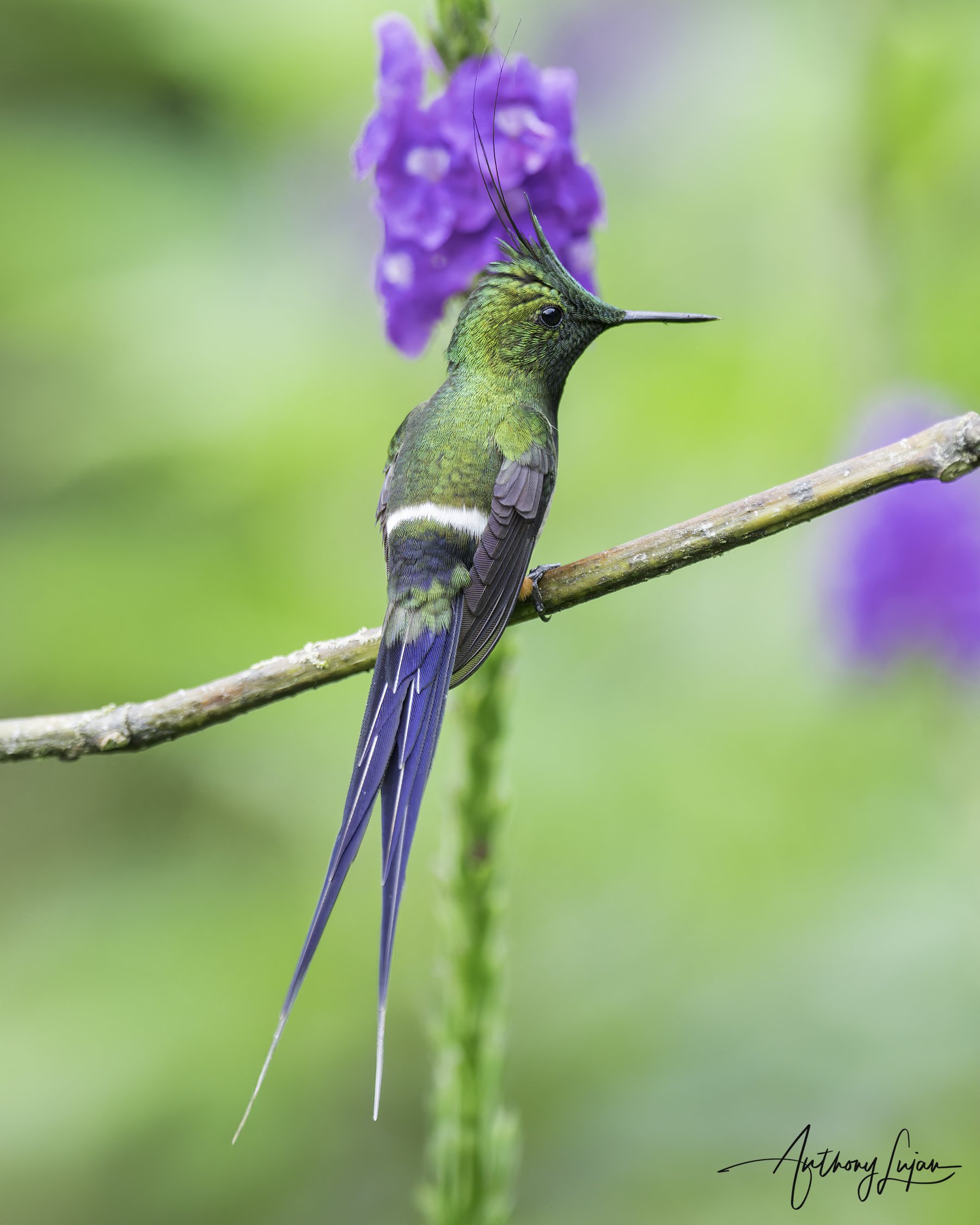
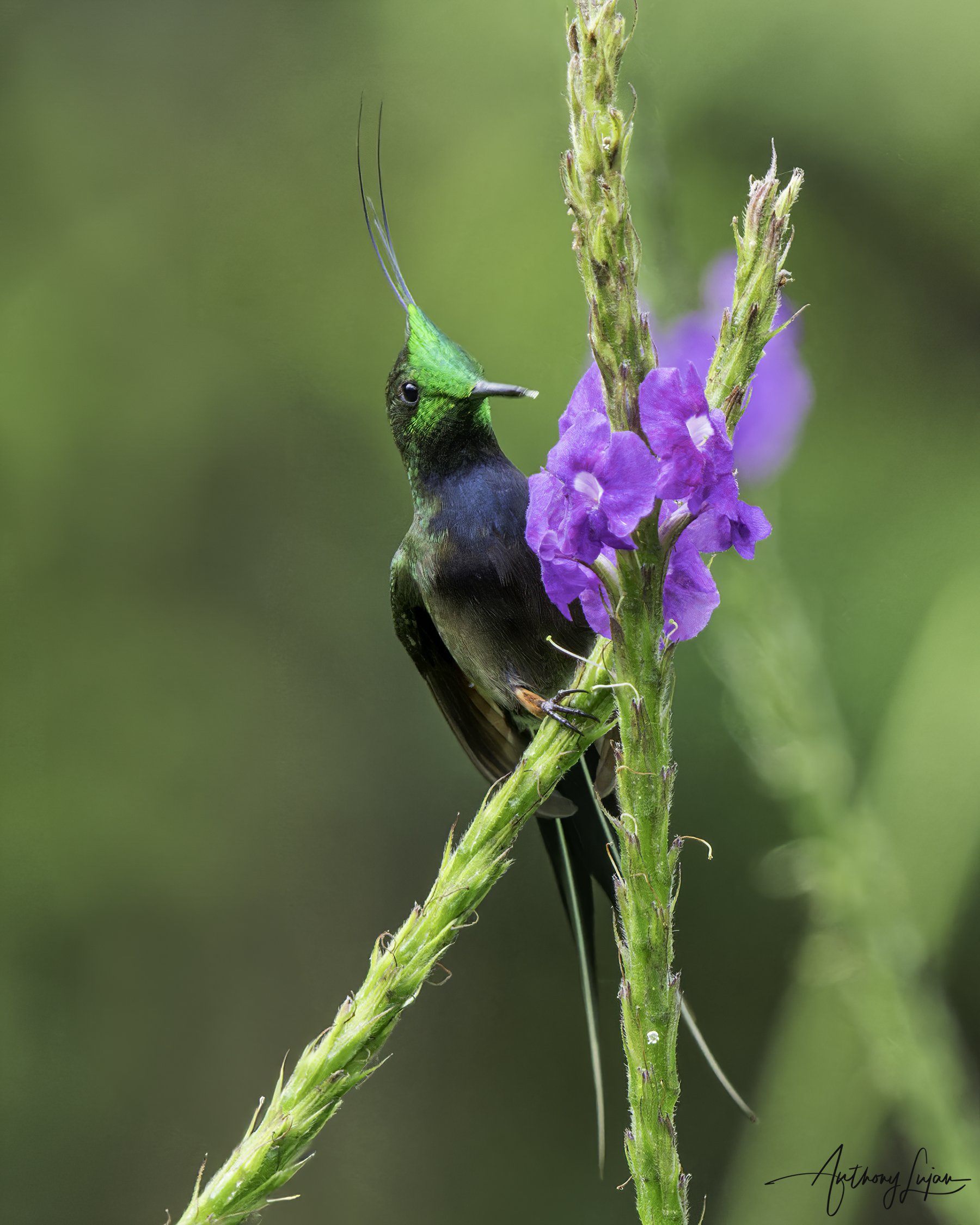
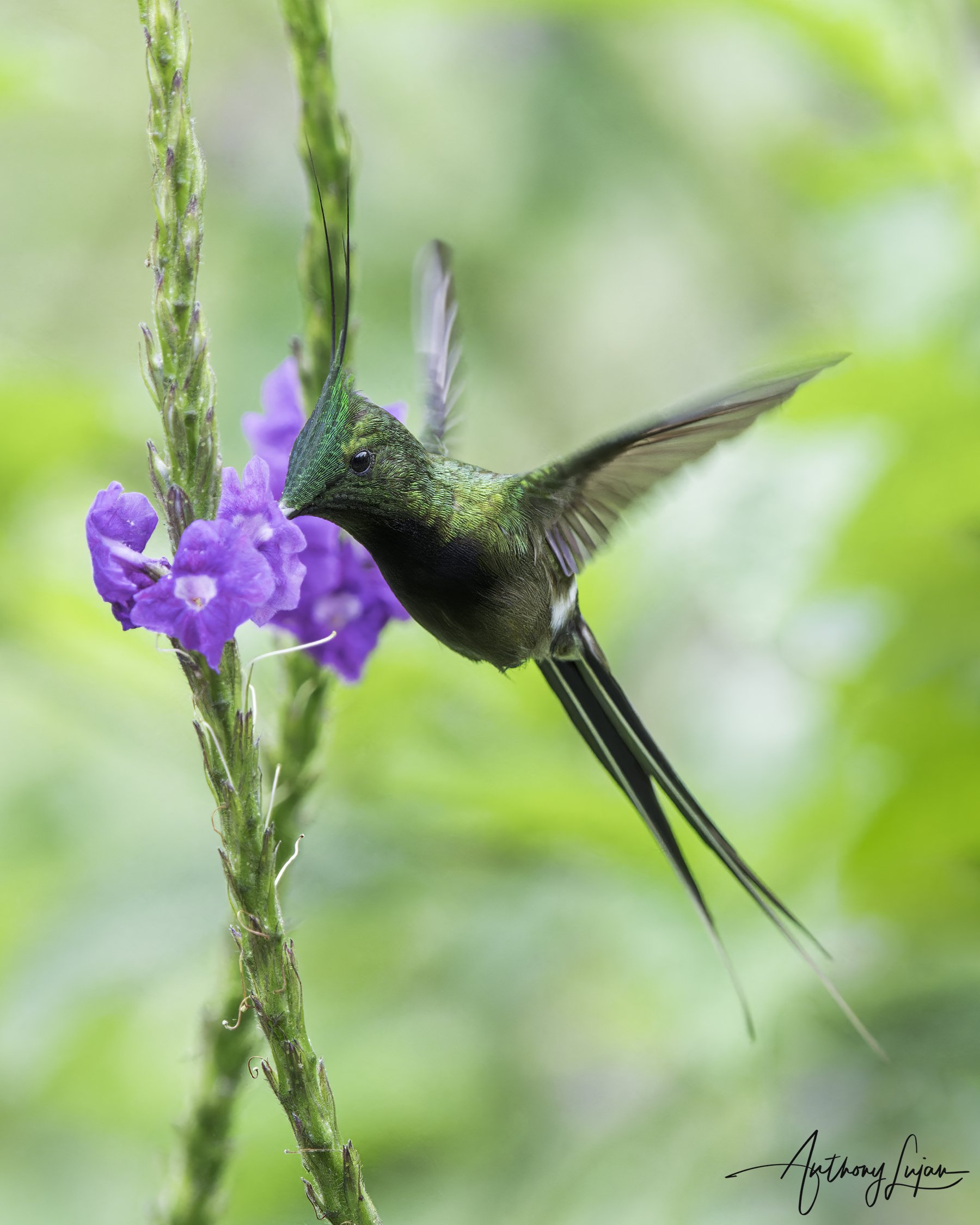
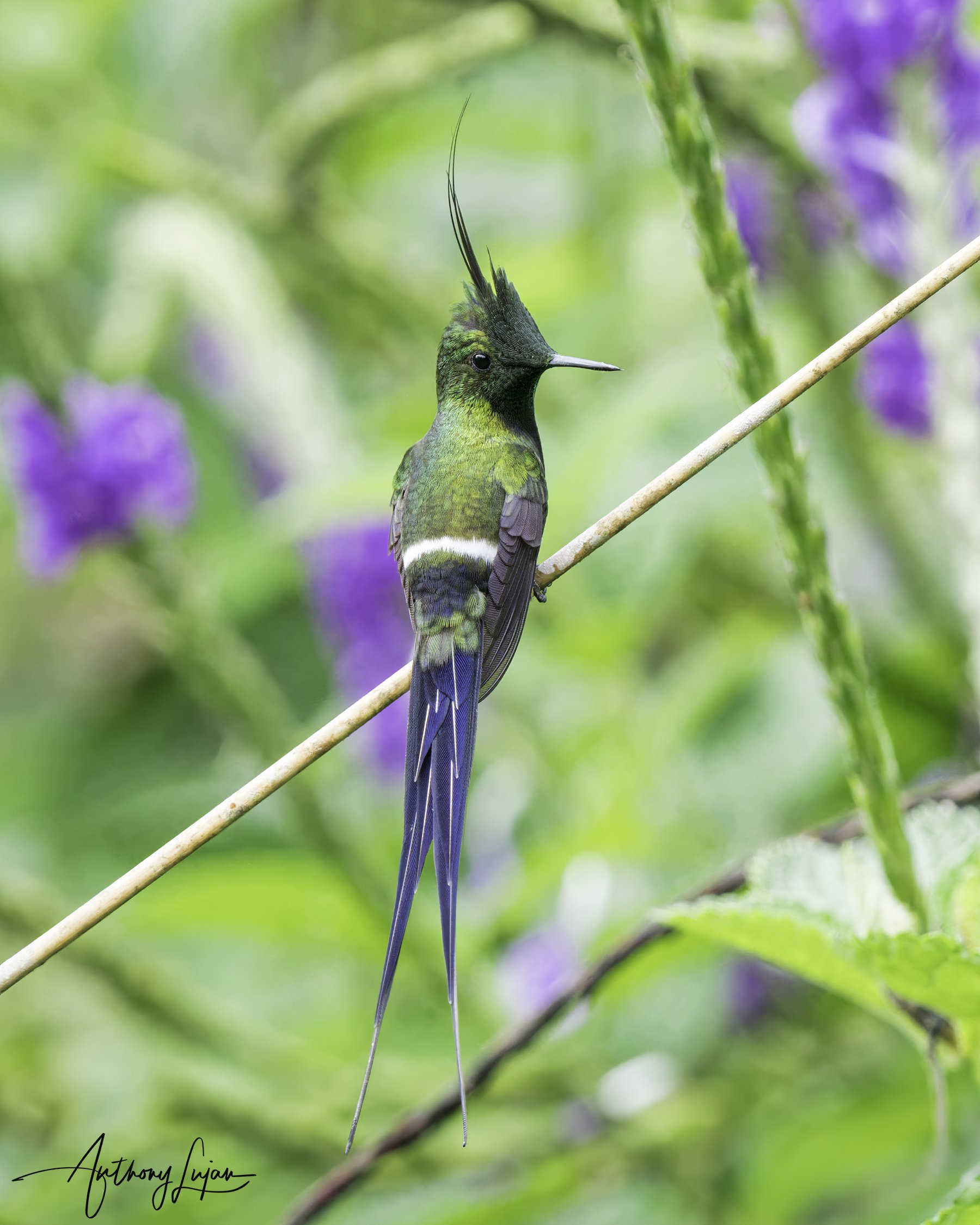
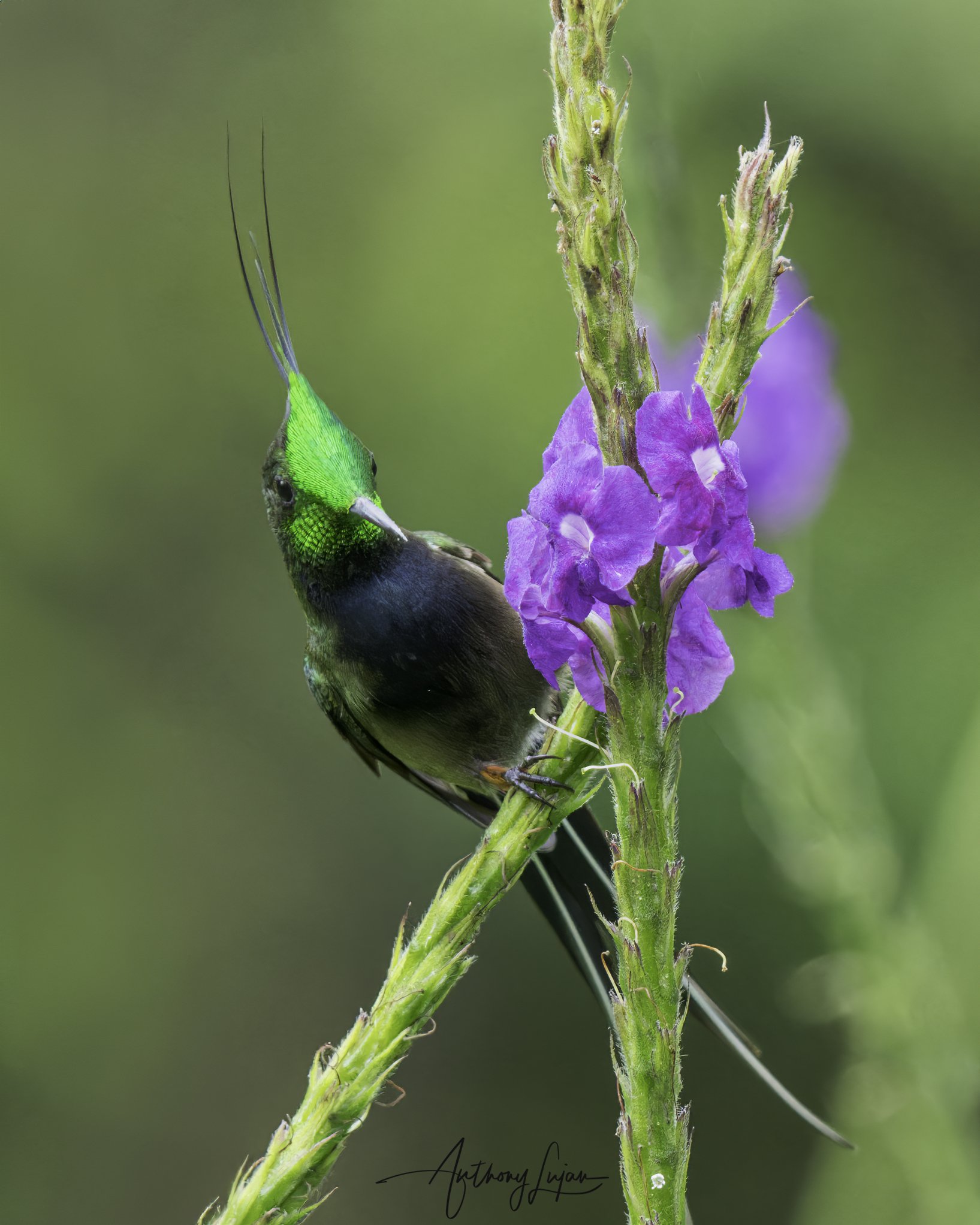
The Wire-crested Thorntail is one of the most spectacular small hummingbirds of the eastern Andean foothills, with males showing a tiny green body, long forked tail, and a distinctive, upright wire‑like crest. It forages high in the canopy and along forest edges, often hovering at flowers in the outer foliage or at clearings where flowering shrubs and trees are accessible. Despite its eye‑catching appearance, it is often overlooked due to its small size and canopy‑level habits, and its specialized foothill forest habitat is increasingly under pressure, contributing to a declining population trend.
Male Description
Adult males are tiny, with bright green upperparts and a striking, filamentous crest formed by several elongated, wire‑like feathers arising from the crown and curving upward and backward. The rump bears a conspicuous white band, typical of thorntails. The underparts are green, sometimes with bluish tones on the breast. The tail is very long and deeply forked, with narrow, pointed outer feathers giving a sharp “thorn” appearance; the tail is dark with greenish gloss. The bill is short, straight, and black. The combination of wire‑like crest, white rump band, long forked tail, and tiny size makes adult males unmistakable.
Female Description
Females are smaller‑tailed and lack the male’s wire‑like crest. The upperparts are metallic green, and the underparts are whitish to pale gray with dark spotting or streaking on the throat and breast and greenish flanks. The tail is shorter and only slightly forked, with green central feathers and white tips or edges on the outer feathers; the white rump band is present but less conspicuous than in males. Juveniles resemble females, with short tails and no developed crest; young males gradually acquire the crest and longer tail feathers as they mature.
Habitat & Behavior
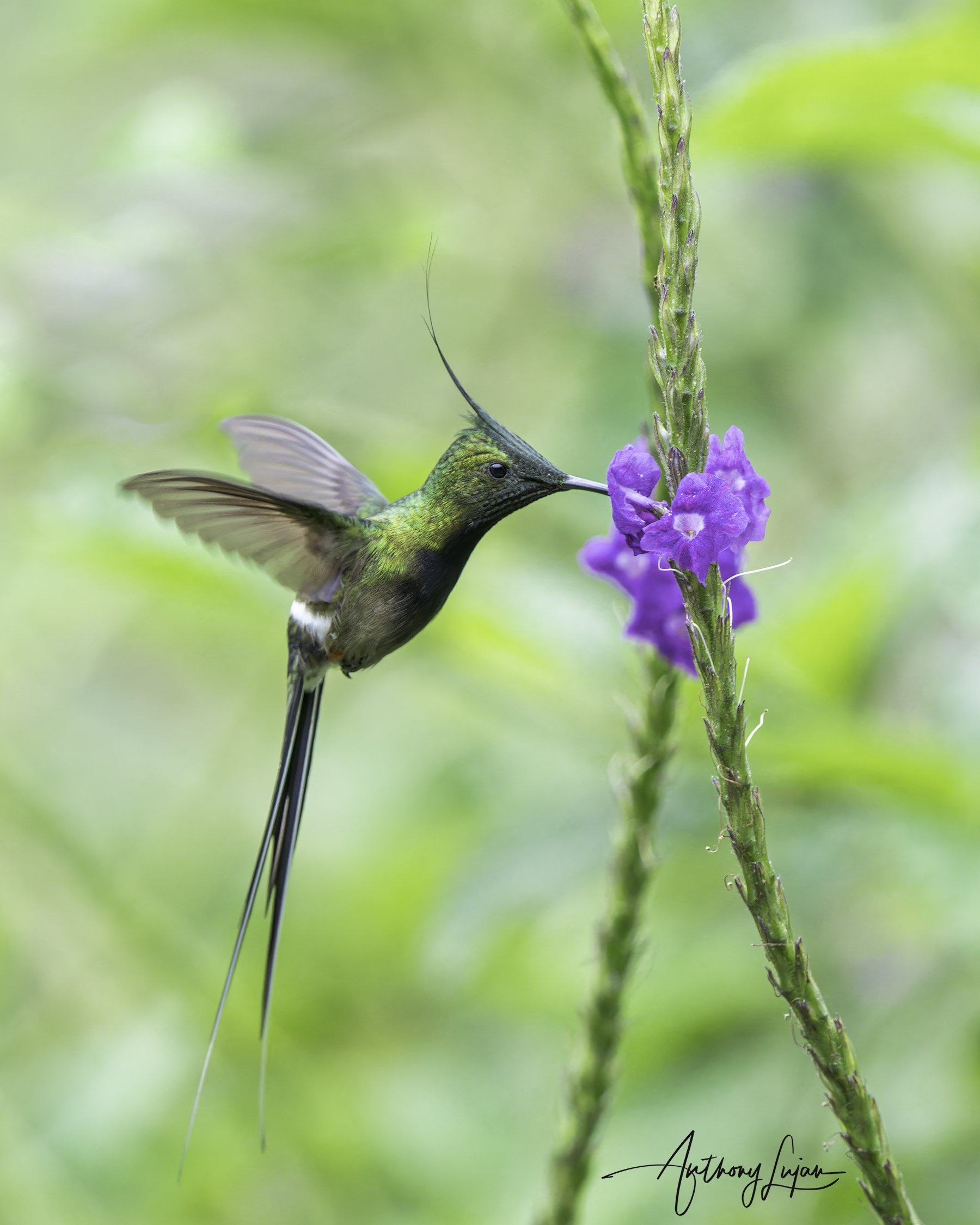
Wire-crested Thorntails inhabit humid foothill and lower montane forests and their edges along the eastern slope of the Andes. They are typically found in the canopy and upper levels of the forest, including along borders, clearings, and riverine corridors where flowering trees and shrubs are plentiful. Birds often feed at small tubular flowers in the outer foliage of canopy trees and can appear “bee‑like” as they hover at blossoms high above the ground.
They feed mainly on nectar, visiting flowers of trees, shrubs, and epiphytes, and also take tiny insects for protein, usually hawked from perches or gleaned near flowers. Their flight is agile and rapid, with quick darting movements and hovering pauses. They are usually seen singly or in pairs and may concentrate around particularly rich flowering trees in foothill forests.
Breeding
The breeding season is not fully documented but appears to coincide with periods of abundant flowering in foothill forests, typically within the wetter months of the year. The female alone constructs a small cup nest of plant fibers and spiderweb, camouflaged externally with moss and lichen. Nests are placed on thin, horizontal branches or in forks of shrubs or small trees, usually some distance above the ground within forest or along edges.
The clutch consists of two white eggs. The female performs all incubation and chick‑rearing. While precise timing is not well known for this species, incubation is likely around two weeks and fledging about three weeks after hatching, similar to other very small Andean hummingbirds.
Movement
Wire-crested Thorntails are considered resident and are classed as not migratory. They do not undertake large‑scale latitudinal migrations, though local elevational shifts likely occur as birds track flowering trees and shrubs along the foothill zone. These short‑range movements may involve shifting between slightly different elevations or forest types but remain within the same general Andean foothill regions.
Population
The total number of mature individuals is unknown, and the species is generally considered uncommon across its range. It occupies a relatively narrow elevational band of foothill forest that is often fragmented and subject to ongoing deforestation and degradation. Within intact habitat it can be locally regular but seldom abundant. The overall population trend is decreasing, largely due to habitat loss and fragmentation along the eastern Andean slope.

Conservation
The Wire-crested Thorntail is assessed as Least Concern because of its broad geographic range from Colombia to Peru and its presence in several protected areas. However, its dependence on humid foothill forests, a habitat under severe threat from deforestation for agriculture, cattle ranching, and other land uses, makes it vulnerable. Continued loss and fragmentation of Andean foothill forest are expected to drive further declines. Conservation of continuous tracts of foothill and lower montane forest, especially along elevational gradients and in key floristically rich areas, is important for safeguarding this species over the long term.
Related species in the Discosura genus (5 species in total):

Please note: The content provided in this article reflects Anthony’s personal experience and photographic approach. Results can vary depending on light, weather, location, equipment, subject behavior, and field conditions.