

Scientific name: Selasphorus ellioti
The Wine-throated Hummingbird is a tiny highland hummingbird of southern Mexico and northern Central America, often described as “bumblebee‑sized.” It inhabits humid and semi‑humid montane forests and edges in southern Mexico, Guatemala, Honduras, and El Salvador, where males flash a deep wine‑colored throat. Despite its small global population (20,000–49,999 mature individuals) and a Decreasing trend, it remains locally fairly common in suitable highland habitats and is currently assessed as Least Concern.
At a Glance
Family: Trochilidae (hummingbirds)
Clade: Mellisugini – “Bee” hummingbirds
Genus group:Selasphorus — small hummingbirds with fiery gorgets or rufous tones, including Bumblebee, Scintillant, and Volcano Hummingbirds
Range: Southern Mexico (Chiapas) south through Guatemala to northern El Salvador and western Honduras
Habitat: Interiors, edges, and clearings of semi‑humid to humid pine–oak and evergreen forest, cloudforest, and adjacent shrublands in highland regions
Elevation: About 1,500–3,500 m (4,900–11,500 ft), mainly above 2,000 m in much of its range
Length: Around 7 cm (about 2.8 in)
Weight: About 2–3 g (0.07–0.11 oz)
Number of mature individuals: 20,000–49,999
Population trend: Decreasing
Status: Least Concern (IUCN)
Name Origin
The genus name Selasphorus comes from Greek roots interpreted as “light‑bearing” or “glowing,” referring to the intense iridescent plumage shown by many species in this group. The species name ellioti honors the American zoologist Daniel Giraud Elliot, a prominent 19th‑century ornithologist. Together, Selasphorus ellioti can be read as “Elliot’s glowing hummingbird,” while the English name emphasizes the male’s wine‑colored throat.
Subspecies and Distribution
Two subspecies:
Selasphorus ellioti ellioti
Distribution: Southern Mexico (Chiapas) and much of Guatemala, where it inhabits humid and semi‑humid montane forests and edges above about 1,500–2,000 m.Selasphorus ellioti selasphoroides
Distribution: Western Honduras and northern El Salvador, in similar high‐elevation pine–oak and evergreen montane forests and adjacent shrublands.
Across these subspecies, Wine-throated Hummingbird is endemic to highlands south of the Isthmus of Tehuantepec, with a range spanning southern Mexico, Guatemala, western Honduras, and northern El Salvador, where it favors humid and semi‑humid montane forest zones between about 1,500 and 3,500 m.
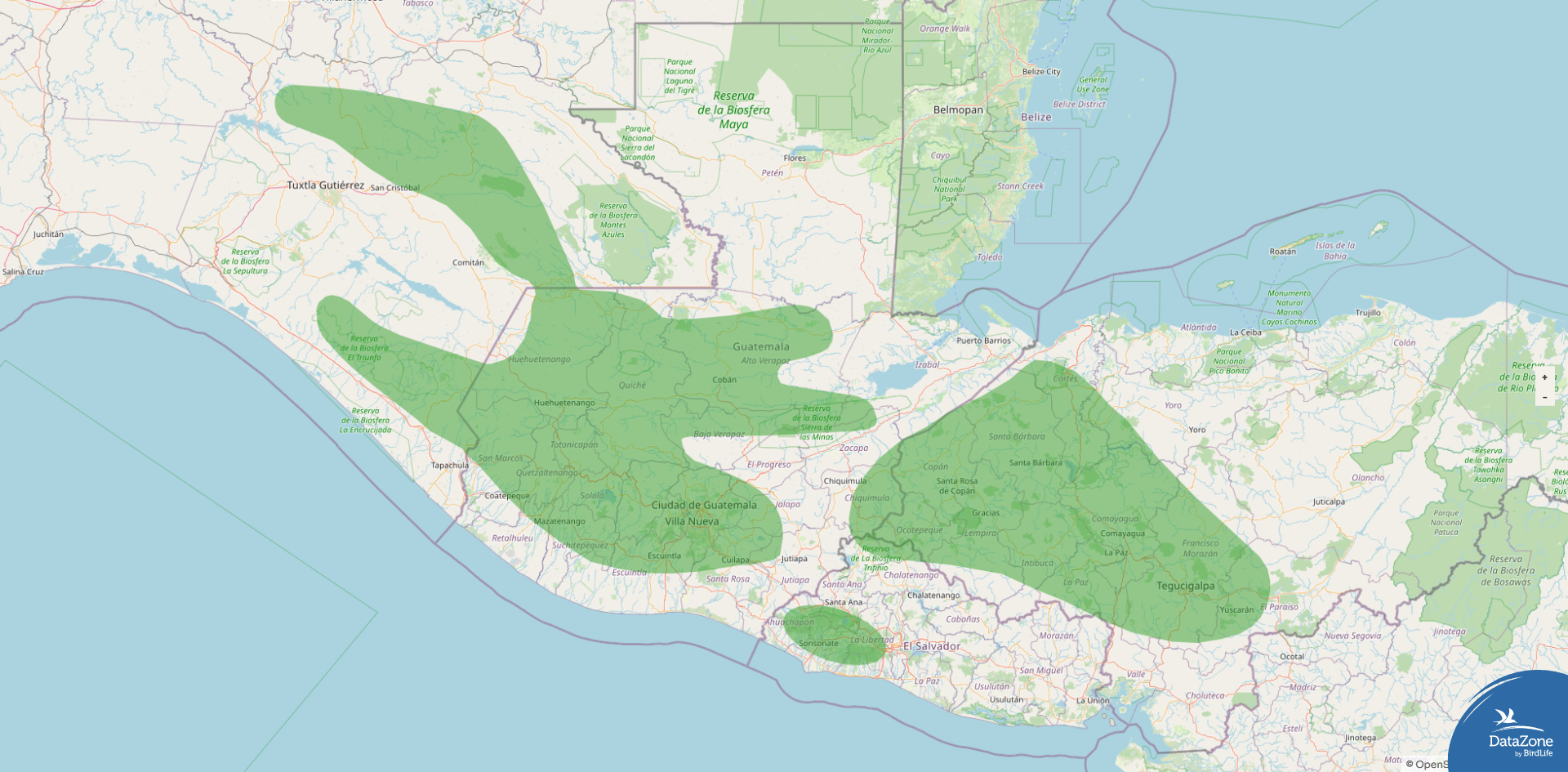
Legend
Green Resident
Species Overview
The Wine-throated Hummingbird is one of the smallest hummingbirds in Mesoamerica and the southern counterpart to Mexico’s Bumblebee Hummingbird, from which it is geographically separated by the Isthmus of Tehuantepec. It is closely tied to humid and semi‑humid montane forests and edges, where males display a deep wine‑colored gorget that stands out against the cool, misty highland backdrop. With a global population estimated at 20,000–49,999 mature individuals and a Decreasing trend due to pressure on highland forests, it is listed as Least Concern globally but considered Threatened within Mexico.
Identification
Male
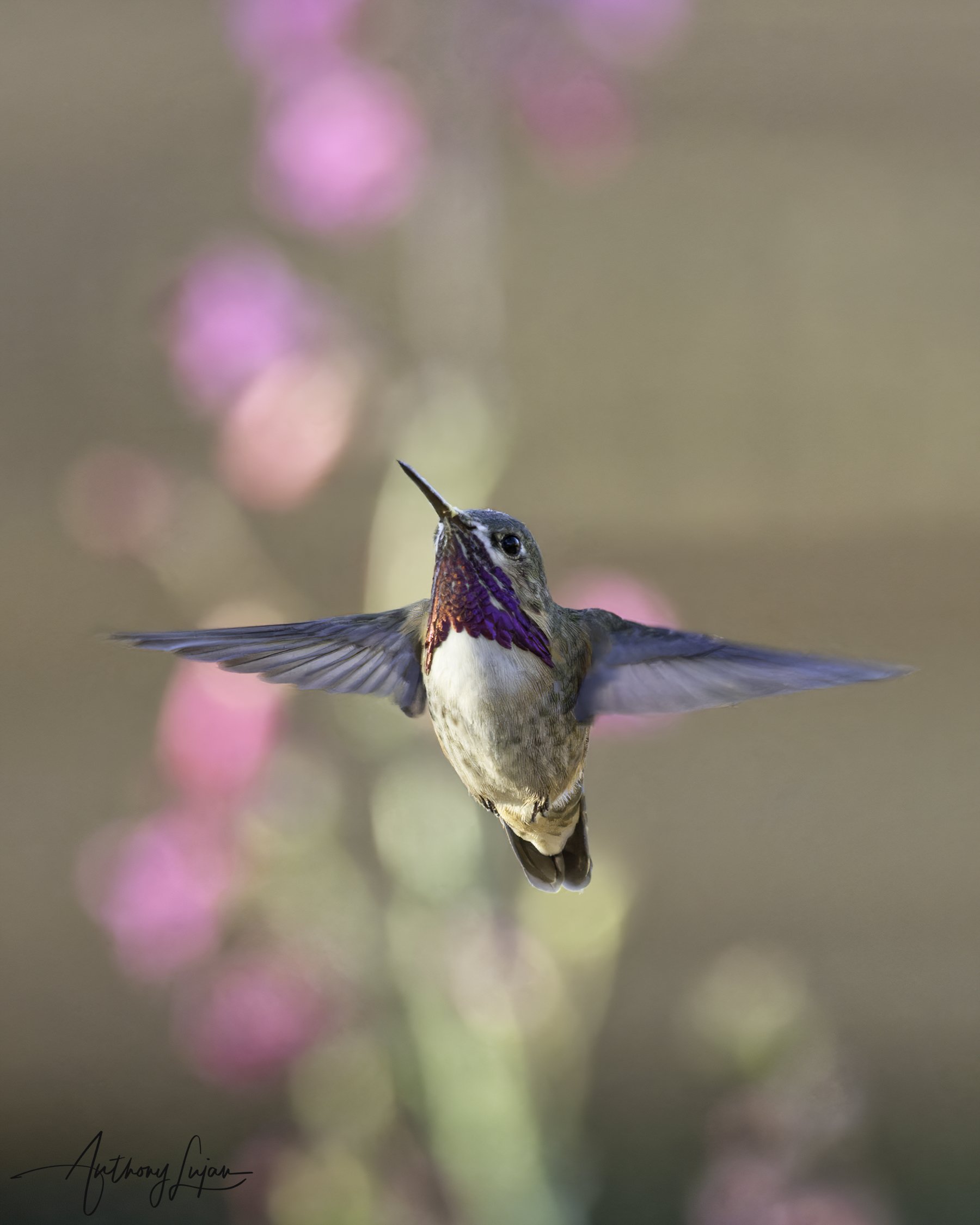
Adult males are tiny, with green upperparts and a short, straight black bill. The throat bears a rich wine‑purple to magenta gorget that can appear almost blackish until lit, then flash bright wine tones; this gorget extends onto the upper breast. The rest of the underparts are whitish to buffy with rufous or cinnamon wash on the flanks, and the tail is somewhat rounded with rufous‑edged dark feathers. In the field, the combination of very small size, wine‑colored throat, and high‑elevation pine–oak and cloudforest habitat helps distinguish males from other regional hummingbirds.
Female
Females lack the solid wine‑colored gorget and instead show a whitish throat with fine spotting or faint dusky marks. The upperparts are green, and the underparts are whitish to buff with rufous wash on the flanks, similar in pattern to other small Selasphorus females. The tail is greenish with rufous bases and paler tips on the outer feathers, and overall females appear as small, warm‑toned highland hummingbirds best identified by range, elevation, and association with males. Juveniles resemble females until young males begin to develop their wine‑colored throat feathers.
Habitat and Behavior
Wine-throated Hummingbirds inhabit interiors, edges, and clearings of semi‑humid to humid pine–oak and evergreen forest, cloudforest, and adjacent shrublands in mountain regions. They are usually found between about 1,500 and 3,500 m, often more frequent above 2,000 m, in highlands of Chiapas, Guatemala, western Honduras, and northern El Salvador. Within these habitats they often forage at low to middle levels in the vegetation, visiting flowers along forest edges, roadsides, and in semi‑open woodland.
Their diet consists primarily of nectar from a variety of flowering plants in montane forests, though detailed plant preferences remain poorly documented. Like other hummingbirds they also take small arthropods for protein, especially during breeding. Males display at dispersed leks, singing from exposed perches and performing short display flights to attract females, a behavior similar to other Selasphorus and former Atthis hummingbirds.
Population and Threats
Wine-throated Hummingbird has a relatively small total population estimated at 20,000–49,999 mature individuals, and this population is believed to be Decreasing. Its highland forest habitat is under pressure from clearing for agriculture, grazing, and development, particularly in Mexico and parts of Central America. As a result, the Mexican government treats it as Threatened, and continued habitat loss and fragmentation could further reduce its already limited population.

Conservation
Conservation of Wine-throated Hummingbird depends on protecting humid and semi‑humid pine–oak and evergreen montane forests and associated shrublands across its range in southern Mexico and northern Central America. Maintaining continuous forest cover and forest–edge mosaics, limiting agricultural expansion into highland forests, and supporting protected areas in Chiapas, Guatemala, Honduras, and El Salvador are key measures. Monitoring population trends and habitat change, and promoting bird‑friendly highland land use, will help ensure this diminutive “wine‑throated” hummingbird persists across its limited range.
Below are individuals of the Wine-throated Hummingbird (Selasphorus ellioti ellioti)
Photographed at:
Zunil, Quetzaltenango, Quetzaltenango, Guatemala
These individuals belong to the subspecies ellioti, found in the highlands of southern Mexico (Chiapas) and Guatemala. It inhabits humid montane forests and adjacent edges and clearings, typically between 1,400 and 3,000 meters elevation. Males are distinguished by their brilliant wine-red gorget, while females are green above and pale below with cinnamon sides. This subspecies is locally common in high-elevation reserves and gardens.


View all the videos by clicking the three lines in the top right corner for the playlist.
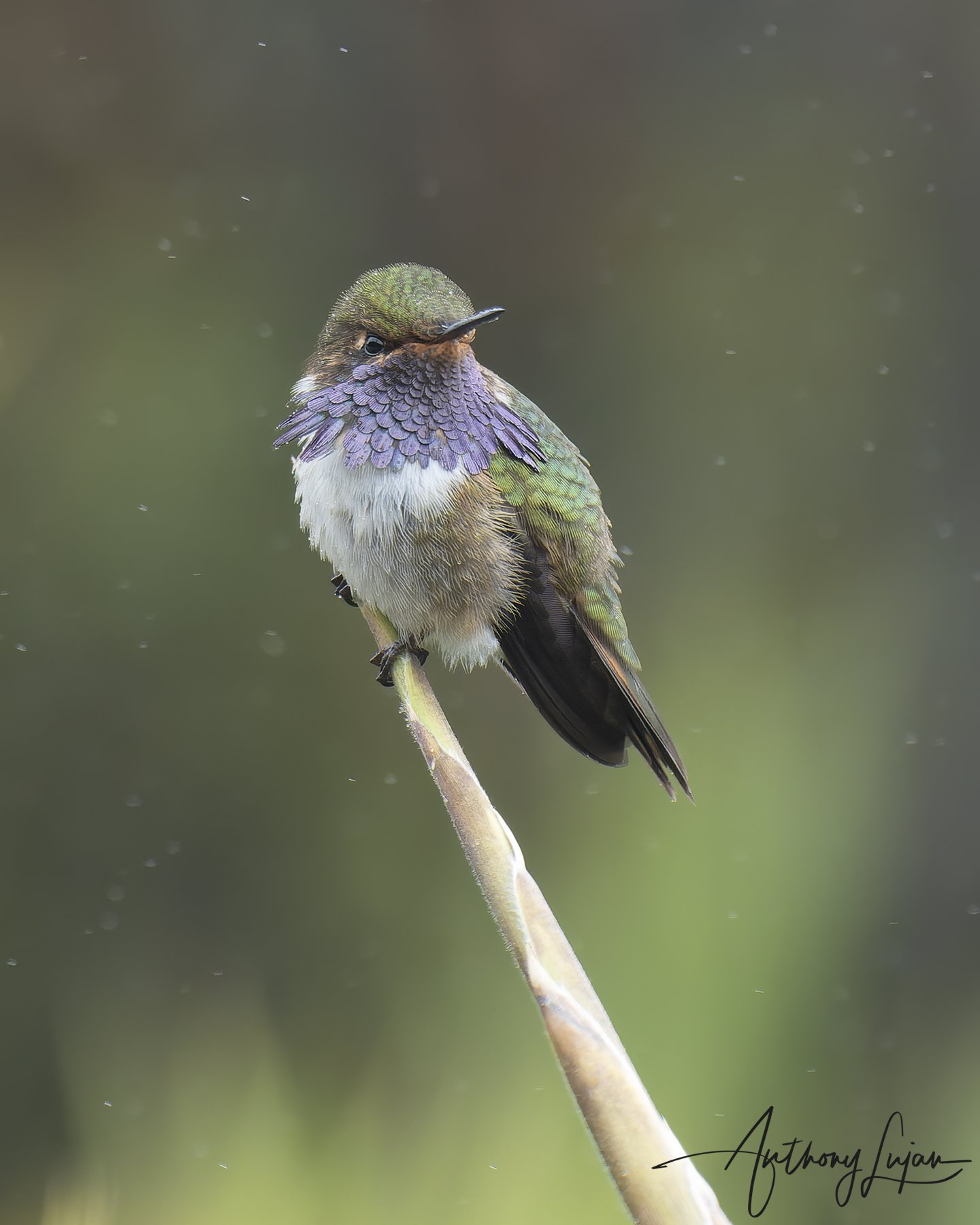
Related species in the Selasphorus genus (9 species total):





Please note: The content provided in this article reflects Anthony’s personal experience and photographic approach. Results can vary depending on light, weather, location, equipment, subject behavior, and field conditions.