
Black-bellied Hummingbird
Scientific name: Eupherusa nigriventris
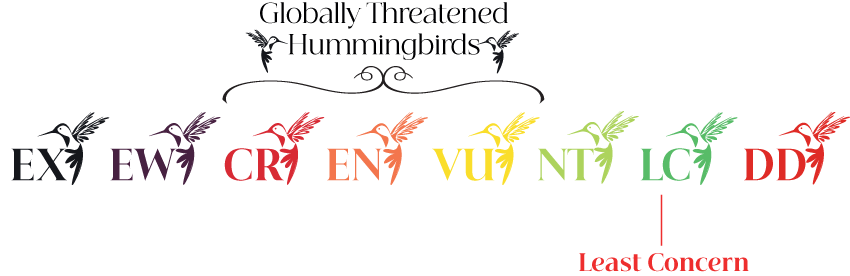
The Black-bellied Hummingbird is a mid‑elevation hummingbird of humid montane forests from Costa Rica into western Panama, mainly on the Caribbean slope. Its global number of mature individuals is estimated at 50,000–499,999, the population trend is Decreasing, and it is assessed as Least Concern (LC).
At a Glance
Family: Trochilidae (hummingbirds)
Clade: Trochilini – Emeralds
Genus: Eupherusa — small forest hummingbirds with broad tails and contrasting wing or tail patterns
Range: Highlands of Costa Rica and western Panama, mainly on the Caribbean slope, with some local records on the Pacific slope
Habitat: Humid and very humid montane forest, forest edges, and adjacent second growth; often along streams, clearings, and flowering forest edges
Elevation: Mostly about 700–1,800 m (2,300–5,900 ft), occasionally lower or higher depending on local conditions
Length: About 8–9 cm (3.1–3.5 in)
Weight: Roughly 3–4 g (0.11–0.14 oz)
Number of mature individuals: 50,000–499,999
Population trend: Decreasing
Status: Least Concern (IUCN)
Name Origin
The genus name Eupherusa likely derives from Greek roots meaning “good” or “true” (eu), and is applied to a small group of elegant, forest‑dwelling hummingbirds. The species name nigriventris comes from Latin niger (“black”) and venter (“belly”), referring directly to the dark underparts that distinguish this species. Together, Eupherusa nigriventris means roughly “black‑bellied Eupherusa,” a straightforward description of this hummingbird’s striking dark belly.
Subspecies & Distribution
Black-bellied Hummingbird is monotypic, with no recognized subspecies.
It occurs:
In Costa Rica, mainly on the Caribbean slope of the Cordillera Central and Cordillera de Talamanca in humid foothill and montane forest.
In western Panama, extending into Chiriquí and adjacent highlands, mostly on the Caribbean slope but locally on the Pacific slope where suitable forest remains.
Across this range, Black-bellied Hummingbird inhabits humid and very humid montane forest and edges, second growth, and clearings with abundant flowering shrubs between roughly 700 and 1,800 m.
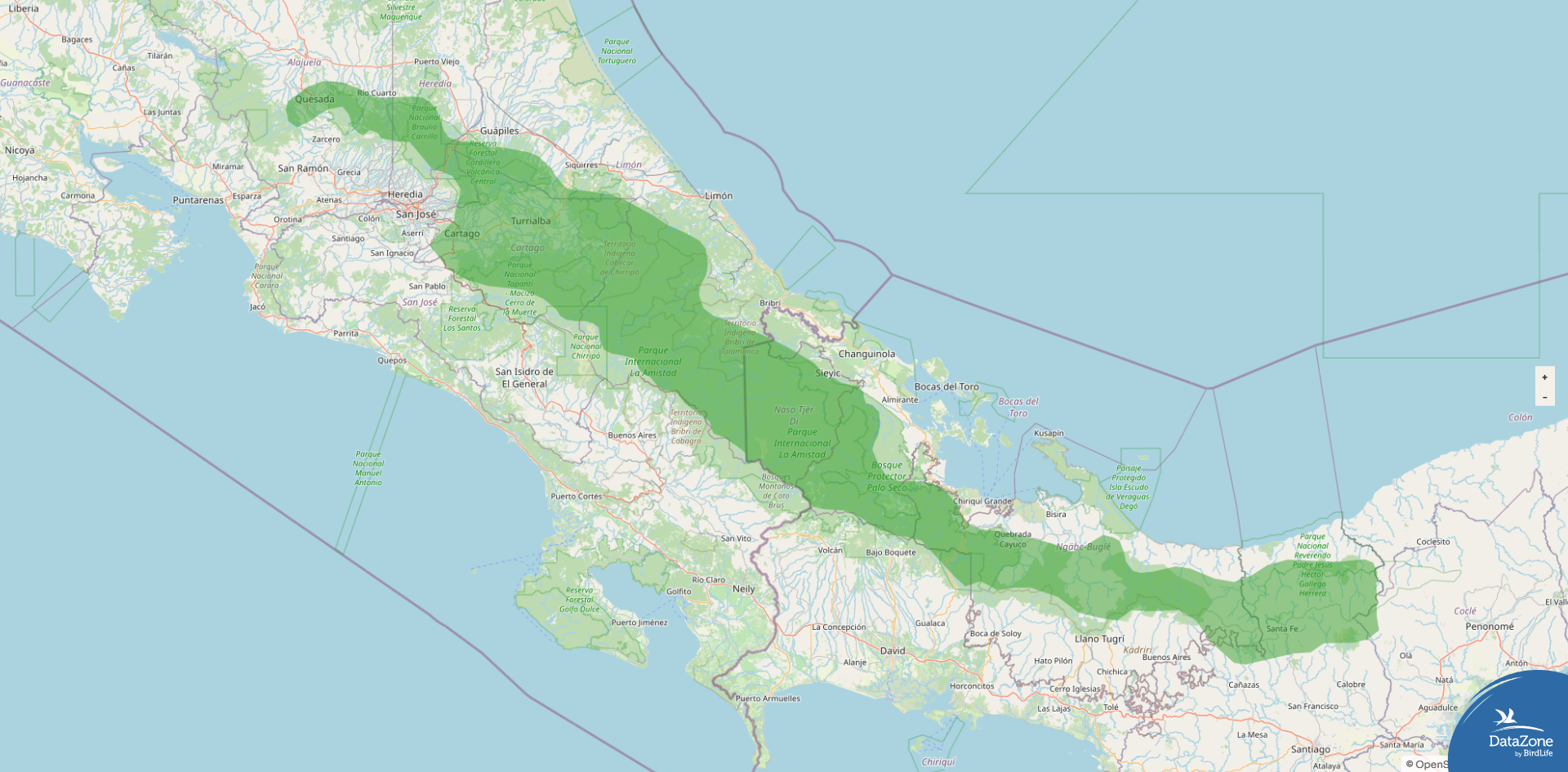
Legend
Green Resident
Species Overview
Black-bellied Hummingbird is a small, dark‑bellied hummingbird of Central American cloudforests and humid foothill forests, most often seen along forest edges, clearings, and stream corridors. Within its limited range in Costa Rica and western Panama it is generally uncommon to fairly common in intact habitat, but patchy and sensitive to forest loss and fragmentation. With an estimated 50,000–499,999 mature individuals and a Decreasing population trend, it is currently assessed as Least Concern but may decline further if montane forests continue to be degraded.
Male Description
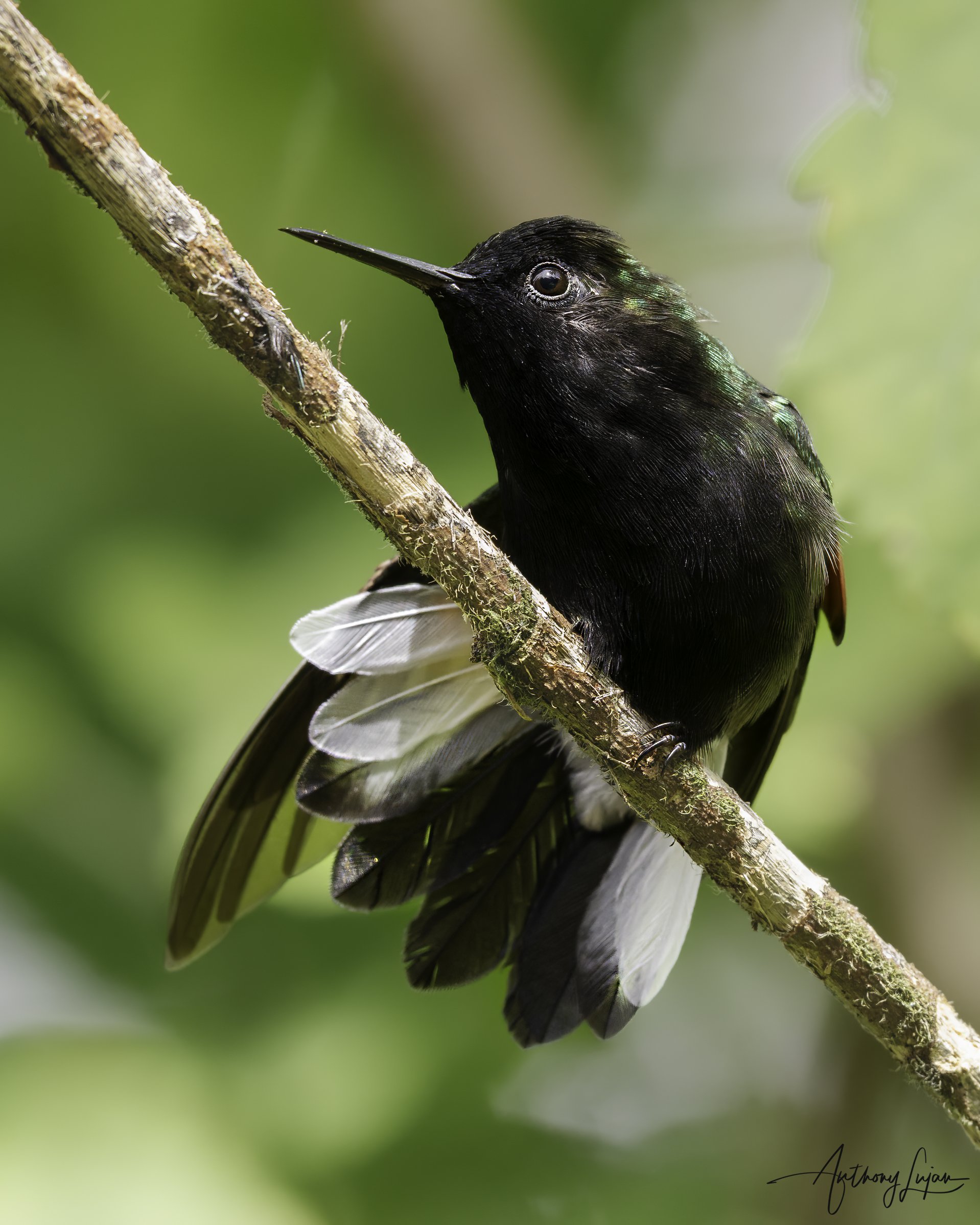
Adult males are small hummingbirds with dark, mostly blackish underparts and contrasting green upperparts. The head and upperparts are bright metallic green, often with bronzy tones on the back, while the lower breast and belly appear sooty to blackish, giving the species its name. The tail is fairly long and slightly rounded, dark with some bluish or bronzy sheen, and the wings are dusky with contrasting rufous patches in the flight feathers typical of Eupherusa. The bill is straight, medium‑length, and dark, adapted to feeding at tubular forest flowers.
Female Description
Females are similar in size but have paler, more mottled underparts, often grayish or whitish with darker spotting instead of a uniformly black belly. The upperparts are metallic green like the male, and the tail is also dark with similar structure and subtle sheen. Females show the same basic Eupherusa wing pattern with rufous in the wing that can be visible in good views, and share the straight, dark bill.
Habitat & Behavior
Black-bellied Hummingbirds inhabit humid and very humid montane forests, forest edges, and adjacent second growth, often near streams, clearings, or along roads and trails with flowering shrubs. They are found primarily between about 700 and 1,800 m elevation, sometimes slightly lower on the Caribbean slope and locally higher where suitable forest persists.
They feed on nectar from a variety of forest flowers, including epiphytes, shrubs, and small trees along edges and gaps, and also take small insects as a protein source. Birds may defend rich flower patches, but in many areas they behave more as trap‑liners, moving among scattered nectar sources within foothill and montane forest.
Population
The global population of Black-bellied Hummingbird is estimated at 50,000–499,999 mature individuals. The trend is considered Decreasing, likely due to ongoing deforestation, habitat fragmentation, and degradation of humid foothill and montane forests in Costa Rica and western Panama. Although still locally fairly common in some protected and well‑forested areas, its limited range and dependence on intact humid forest make it vulnerable to continued habitat loss.
Conservation
Black-bellied Hummingbird is assessed as Least Concern, but with a suspected declining population driven by habitat loss and fragmentation. Conservation of this species depends on protecting humid foothill and montane forests in Costa Rica and western Panama, especially on the Caribbean slope of major cordilleras. Maintaining forest cover, safeguarding edges and second growth with abundant flowering plants, and preserving key protected areas will help secure the future of this regional montane hummingbird.


For more details on the trips behind this species, visit the Costa Rica Hummingbird Expedition | July 2025 page and explore My Travel 2025-05 Costa Rica for guides and trip reports.
Checkout Anthony’s playlist of this species! Click the top right dropdown to see all the videos.
Related species in the Eupherusa genus (4 species total):


Please note: The content provided in this article reflects Anthony’s personal experience and photographic approach. Results can vary depending on light, weather, location, equipment, subject behavior, and field conditions.