
Black-chinned Hummingbird
Scientific name: Archilochus alexandri
The Black-chinned Hummingbird is a widespread hummingbird of western North America, breeding from southwestern Canada through much of the western United States into northern Mexico and wintering mainly in western and central Mexico. Its global number of mature individuals is estimated at about 8,800,000, the population trend is Increasing, and it is assessed as Least Concern (LC).
At a Glance
Family: Trochilidae (hummingbirds)
Clade: Mellisugini – Bee Hummingbirds
Genus: Archilochus — small, mostly North American hummingbirds with slender bills and narrow tails
Range: Breeds across much of western North America from southern British Columbia and Alberta south through the western U.S. into northern Mexico; winters mainly in western and central Mexico
Habitat: Semiarid and riparian habitats, mountain and alpine meadows, canyons with thickets, chaparral, orchards, and suburban gardens with trees and shrubs
Elevation: From lowlands and foothills to montane elevations, locally up to around 2,600 m (8,500 ft) after breeding
Length: About 8–9 cm (3.1–3.5 in)
Weight: Roughly 3–4 g (0.11–0.14 oz)
Number of mature individuals: ~8,800,000
Population trend: Increasing
Status: Least Concern (IUCN)
Name Origin
The genus name Archilochus is derived from Greek, possibly referencing a personal name and used here as a poetic or honorary genus name for small hummingbirds. The species name alexandri honors Dr. Alexandre, an associate of early describers of the species, or possibly another historical figure named Alexander, as was common in 19th‑century taxonomy. Together, Archilochus alexandri is a commemorative name rather than a descriptive one, reflecting the tradition of naming species after people.
Subspecies & Distribution
Black-chinned Hummingbird is monotypic, with no recognized subspecies.
Its distribution includes:
Breeding range: Much of the western United States and adjacent southwestern Canada, from southern British Columbia and Alberta south through Washington, Oregon, California, Nevada, Utah, Colorado, Arizona, New Mexico, and into western and central Texas, as well as parts of northern Mexico.
Non‑breeding range: Winters mainly along the Pacific coast and interior of western and central Mexico, from Sonora and Sinaloa south to Guerrero and beyond.
Black-chinned Hummingbirds migrate between breeding grounds in western North America and wintering areas in Mexico, with some individuals wandering eastward along the Gulf Coast in winter.
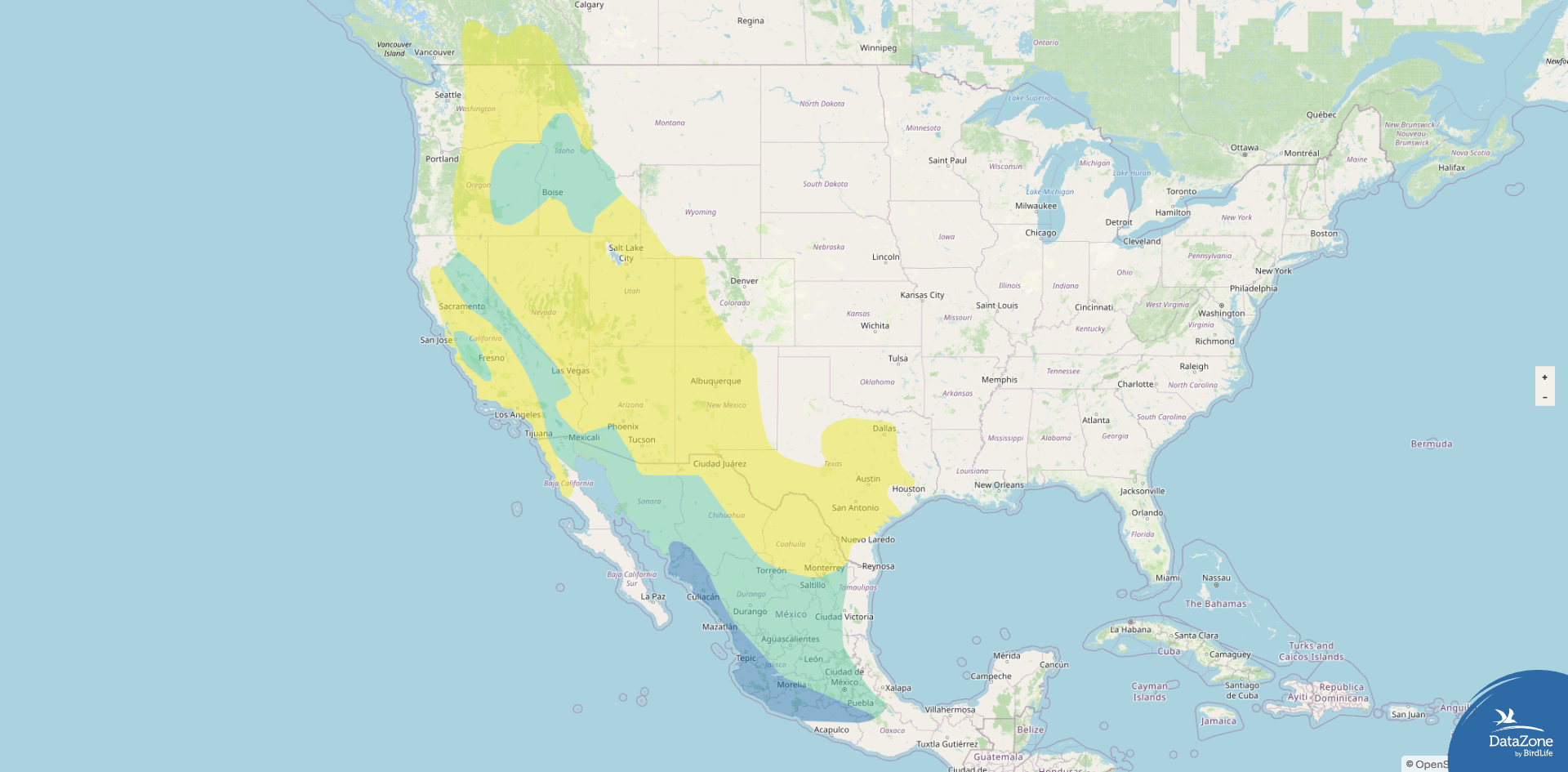
Ledged
Green Resident
Yellow Breeding
Blue Non-breeding
Species Overview
The Black-chinned Hummingbird is one of the most widespread and adaptable hummingbirds in western North America. It breeds in a wide variety of habitats, from riparian woodlands and mountain meadows to suburban yards and parks, as long as flowers and small trees or shrubs are available. With an estimated 8.8 million mature individuals and evidence of an Increasing trend, it is a species of relatively low conservation concern, and may even benefit in some areas from gardens and feeders.
Male Description
Adult males are small hummingbirds with a mostly dark, “blackish” head and chin, and a narrow iridescent violet band at the base of the gorget that is most visible in good light. The back and crown are metallic green, and the underparts are grayish to whitish with some green on the sides. The tail is dark and slightly forked, and the bill is straight, slender, and black. In poor light the throat may appear entirely black, but when the bird turns, the thin violet band flashes at the lower edge of the gorget.
Female Description
Females lack the dark chin and violet gorget and instead have a whitish throat and pale grayish underparts with greenish sides. The upperparts are metallic green, similar to the male. The tail is dark with white tips on the outer feathers, a key feature for separating females and immatures from some other species. Females share the same slim, straight black bill and overall size and shape, but appear plainer and paler in the head and throat.
Habitat & Behavior
Black-chinned Hummingbirds use a wide variety of habitats, including deserts, chaparral, riparian corridors, mountain and alpine meadows, canyons with thickets, orchards, and suburban gardens. They are particularly associated with streamside habitats and wooded washes in arid regions, but they adapt readily to urban and suburban areas with flowering ornamentals and feeders. After breeding, they often move upslope into higher elevations where nectar sources are abundant.
They feed on nectar from a broad array of flowering plants, as well as small insects and spiders captured in flight or gleaned from foliage. Males establish and defend small display and feeding territories, performing pendulum or shuttle displays in front of females, while females select nest sites and provide all parental care. During migration they may pass through a variety of open habitats, including grasslands and agricultural areas, stopping wherever flowers and feeders are available.
Population
The Black-chinned Hummingbird’s global breeding population is estimated at about 8.8 million mature individuals. Long‑term monitoring indicates that populations have increased slightly over recent decades, with a small positive trend. The species’ ability to use both natural and human‑modified habitats, including gardens and urban areas with feeders, contributes to its large and growing population.

Conservation
Black-chinned Hummingbird is listed as Least Concern and is not considered a high‑priority conservation species at present. Key habitats, especially riparian woodlands and streamside vegetation in arid regions, remain important for sustaining populations and should be protected where possible. In many places, hummingbird gardens and feeders support local numbers, but maintaining native flowering plants and healthy riparian zones will be crucial for long‑term resilience in the face of climate and land‑use changes.
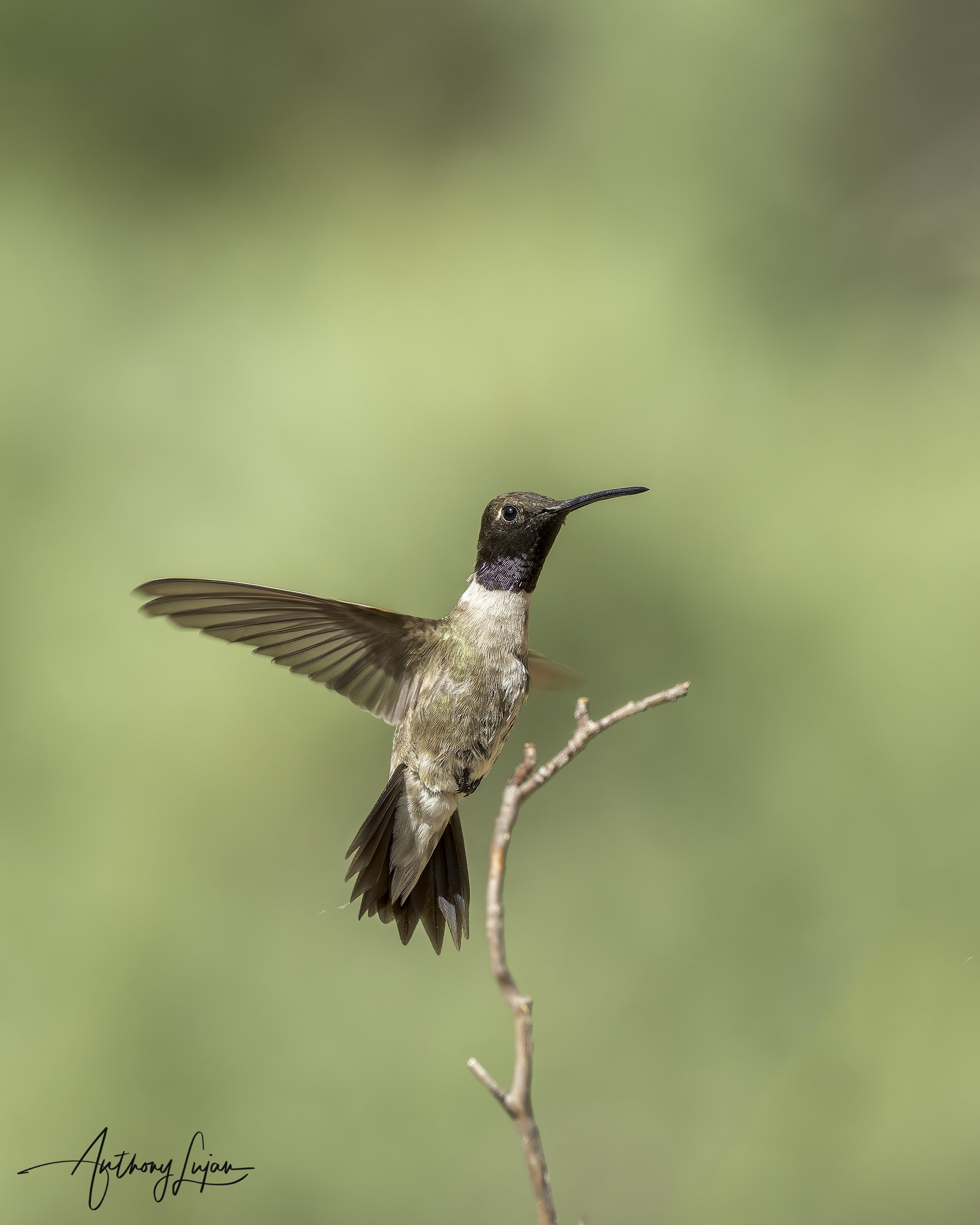
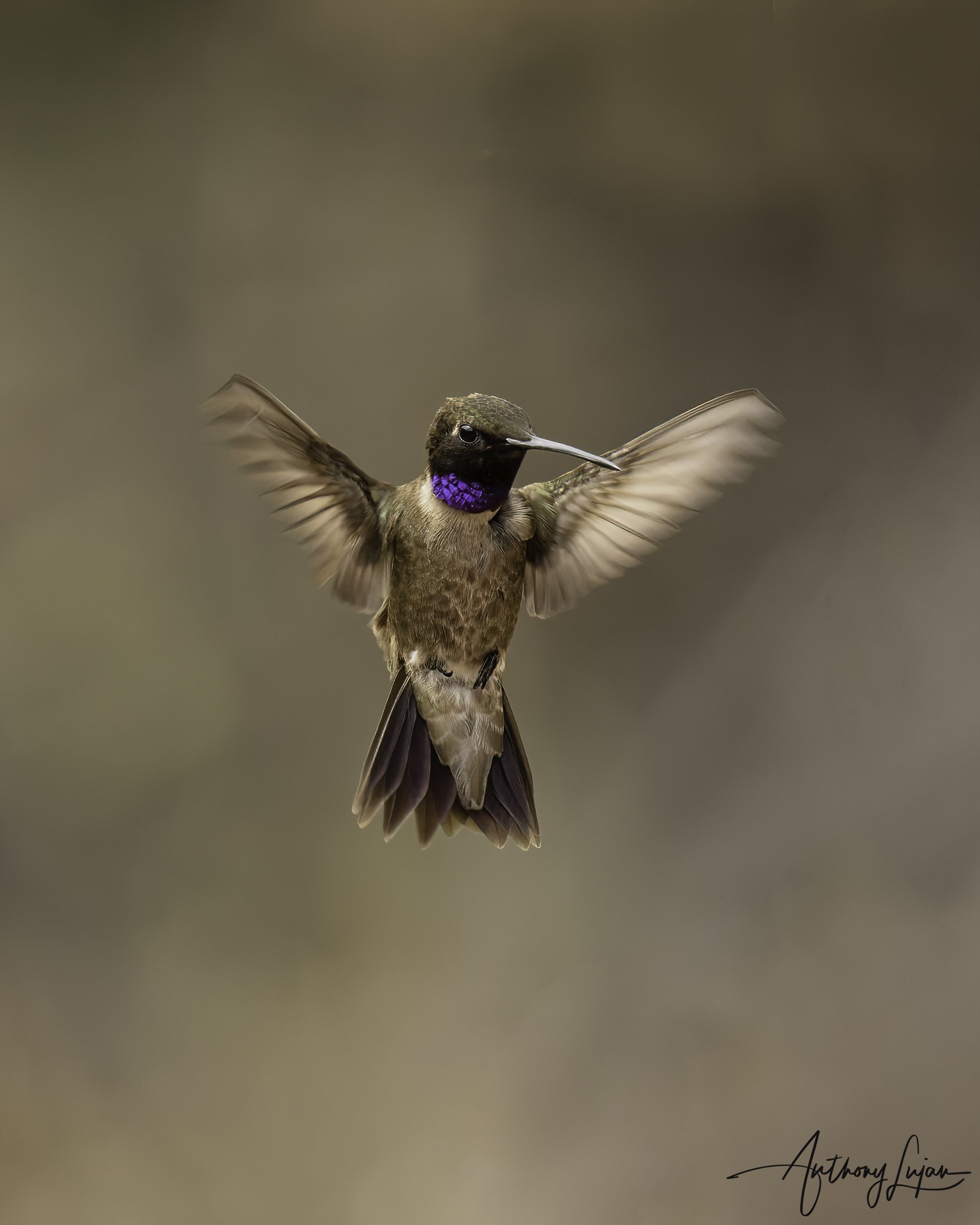
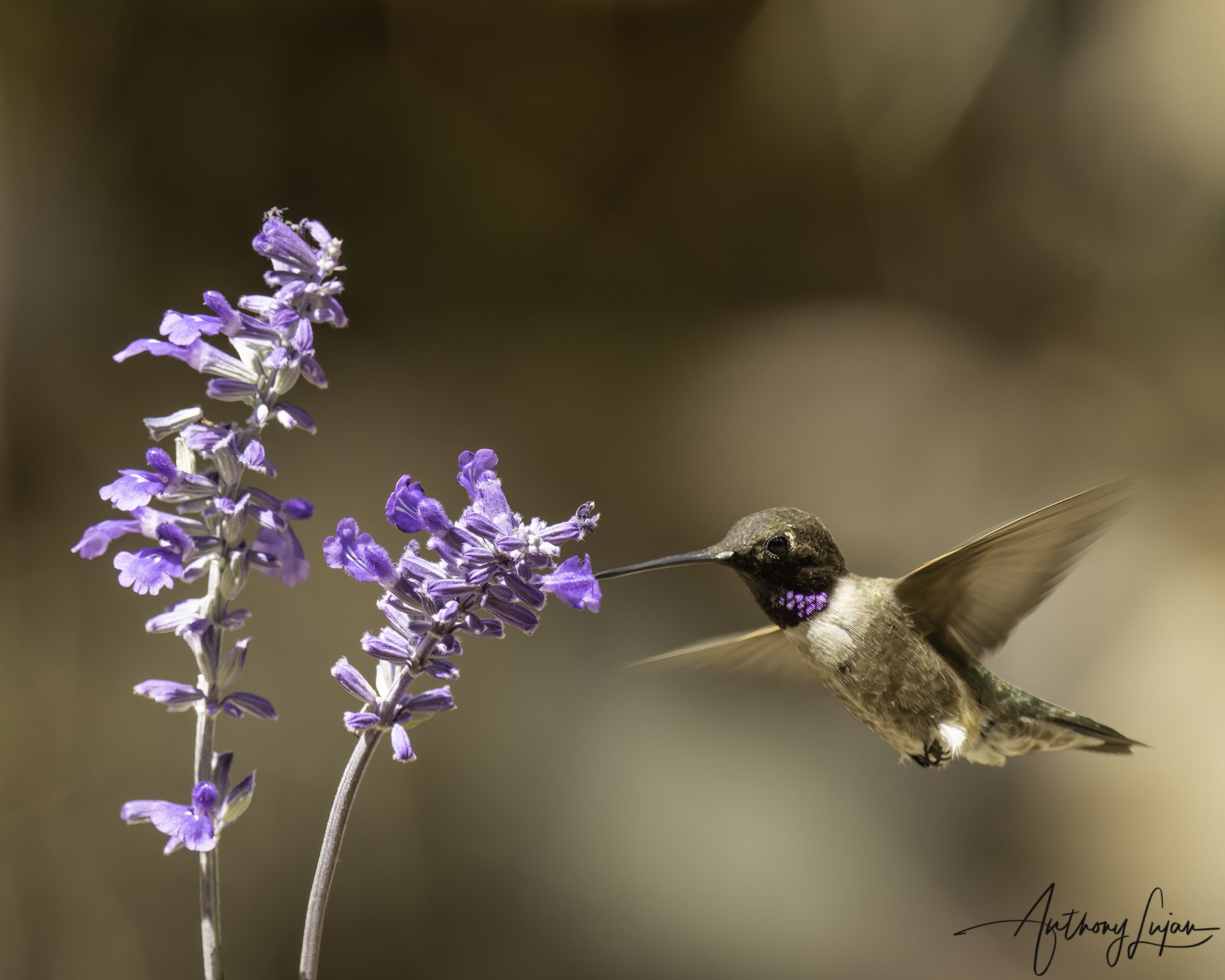
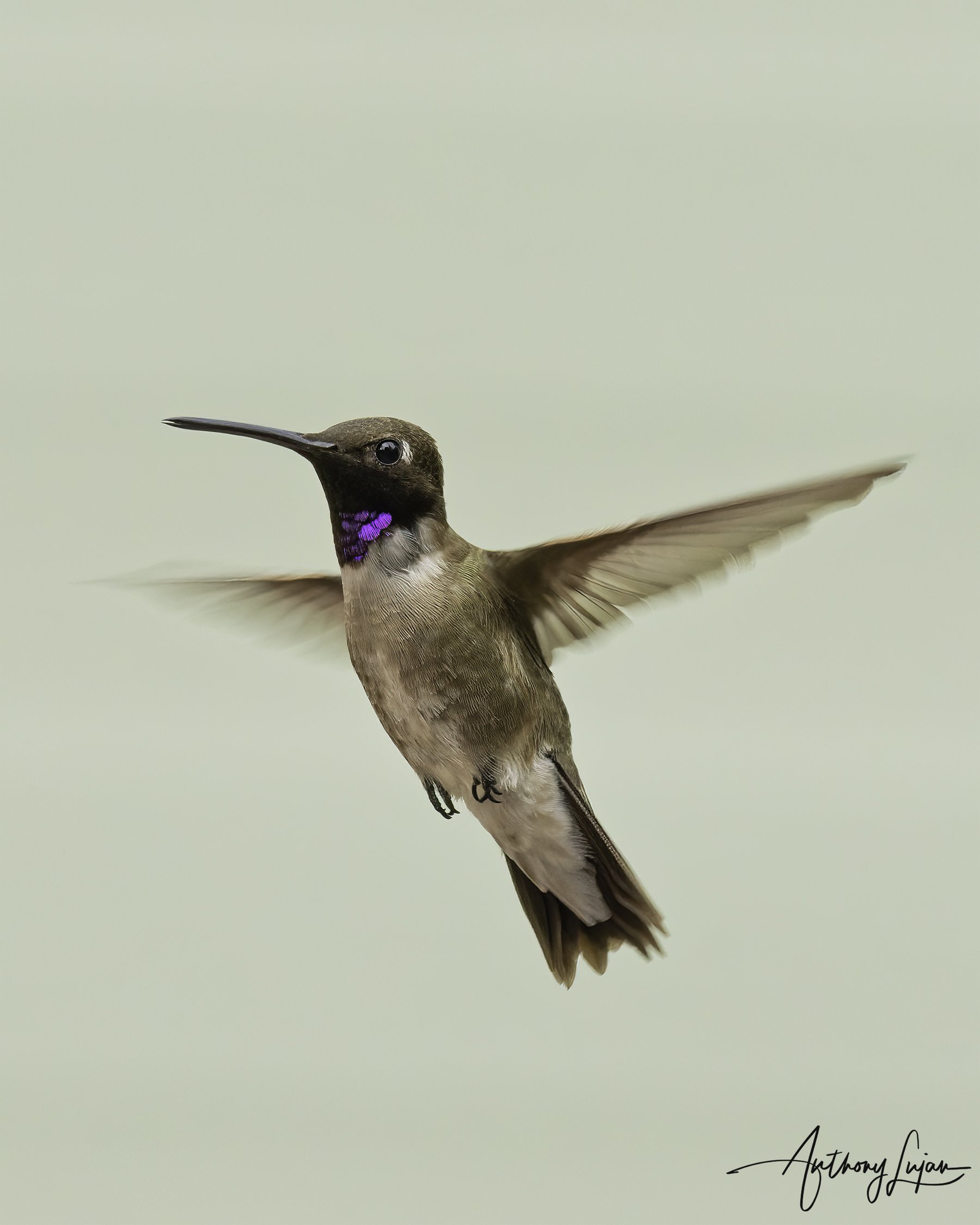
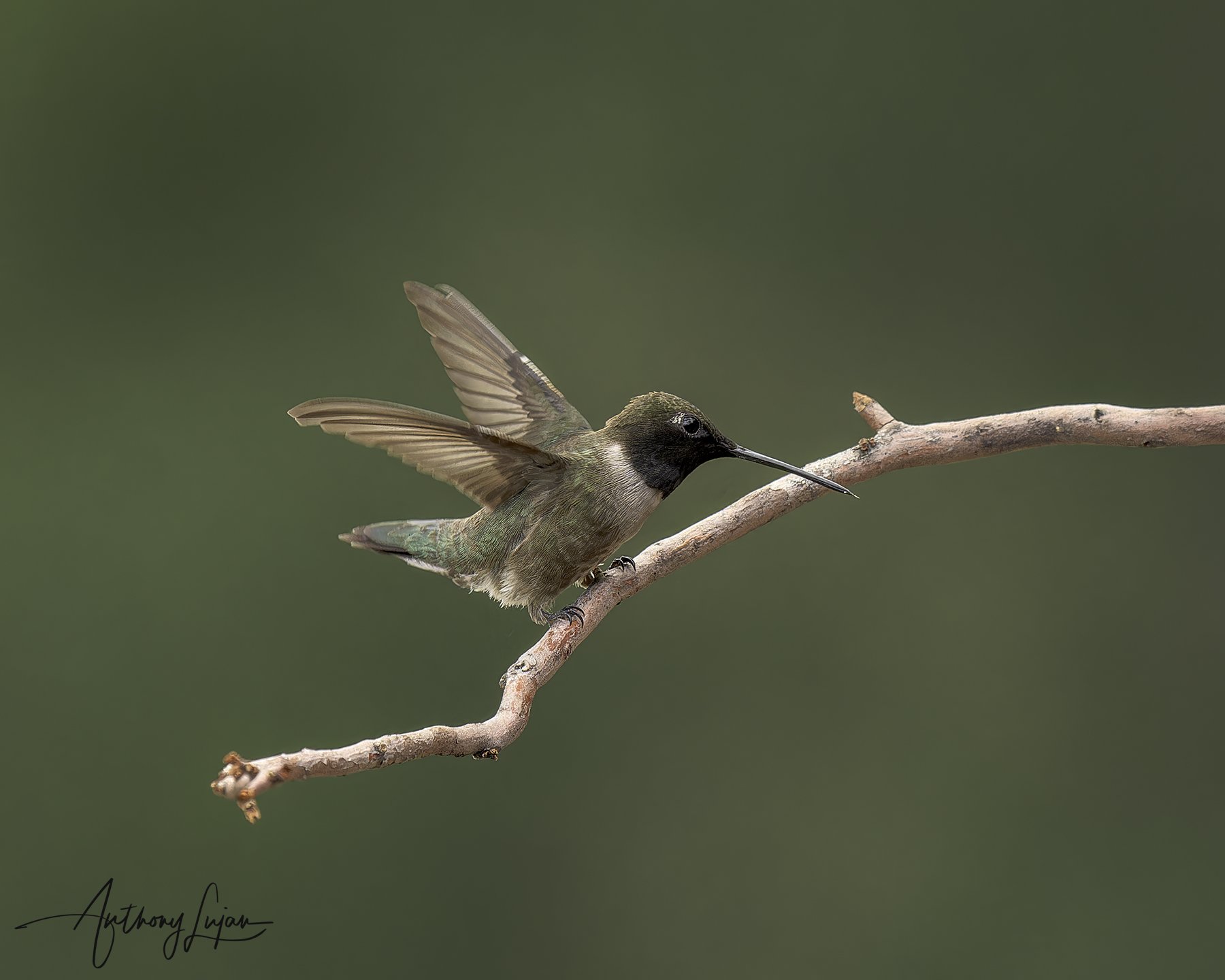
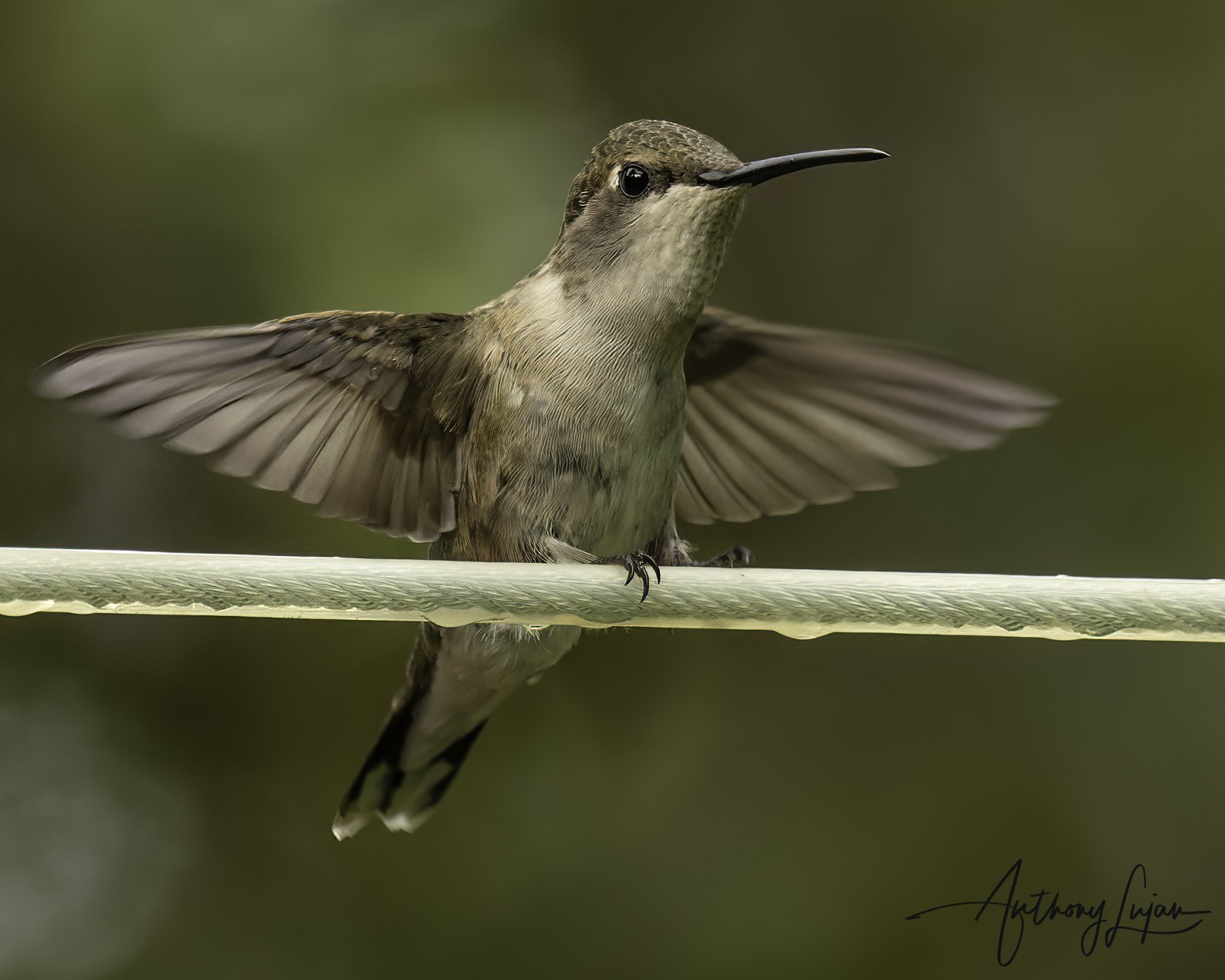
Checkout Anthony’s playlist of this species! Click the top right dropdown to see all the videos.
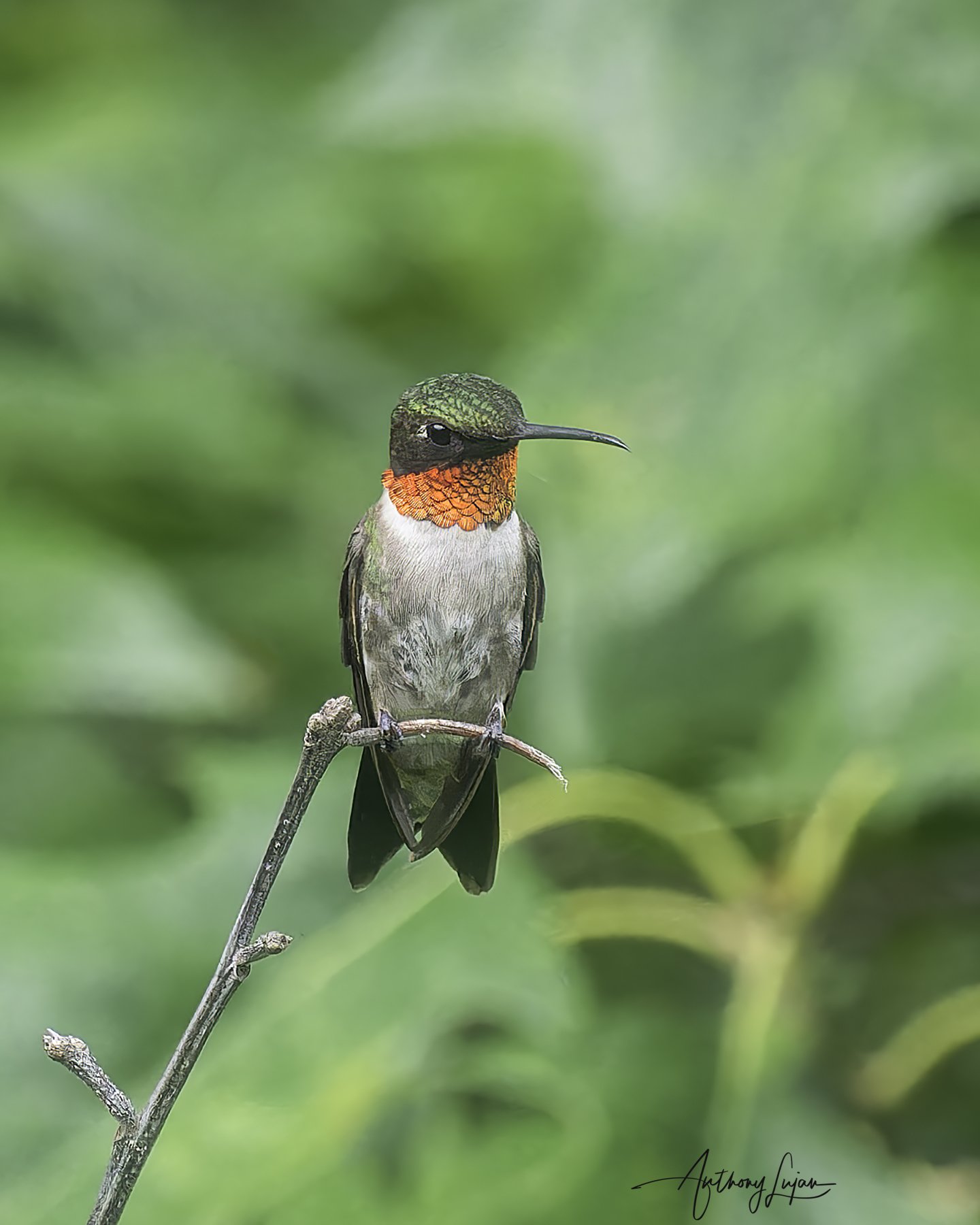
Related species in the Archilochus genus (2 species total):
Please note: The content provided in this article reflects Anthony’s personal experience and photographic approach. Results can vary depending on light, weather, location, equipment, subject behavior, and field conditions.