
Scientific name: Ramphomicron dorsale
The Black-backed Thornbill is a high-elevation hummingbird endemic to Colombia’s Sierra Nevada de Santa Marta. Its global number of mature individuals is unknown, the population trend is Decreasing, and it is assessed as Near Threatened (NT).
At a Glance
Family: Trochilidae (hummingbirds)
Clade: Lesbiini – Coquettes
Genus:Ramphomicron — tiny, high‑elevation thornbills with very short bills and compact bodies
Range: Endemic to the Sierra Nevada de Santa Marta, northern Colombia
Habitat: Edges of humid and very humid montane forest, elfin forest, and shrub‑dominated slopes and páramo near treeline
Elevation: Roughly 2,000 m up to near the snowline, around 4,600 m (about 6,600–15,100 ft)
Length: About 9–10 cm (3.5–4.0 in)
Weight: Around 4–5 g (0.14–0.18 oz)
Number of mature individuals: Unknown
Population trend: Decreasing
Status: Near Threatened (IUCN)
Subspecies & Distribution
Black-backed Thornbill is monotypic, with no recognized subspecies.
It is restricted entirely to:
The isolated Sierra Nevada de Santa Marta massif in northern Colombia, separate from the main Andes
High‑elevation zones where humid montane forest transitions into elfin forest, shrub thickets, and páramo near treeline
Within this small range it occurs from about 2,000 m up to nearly 4,600 m, often along ridges and open slopes with scattered shrubs and flowering plants.
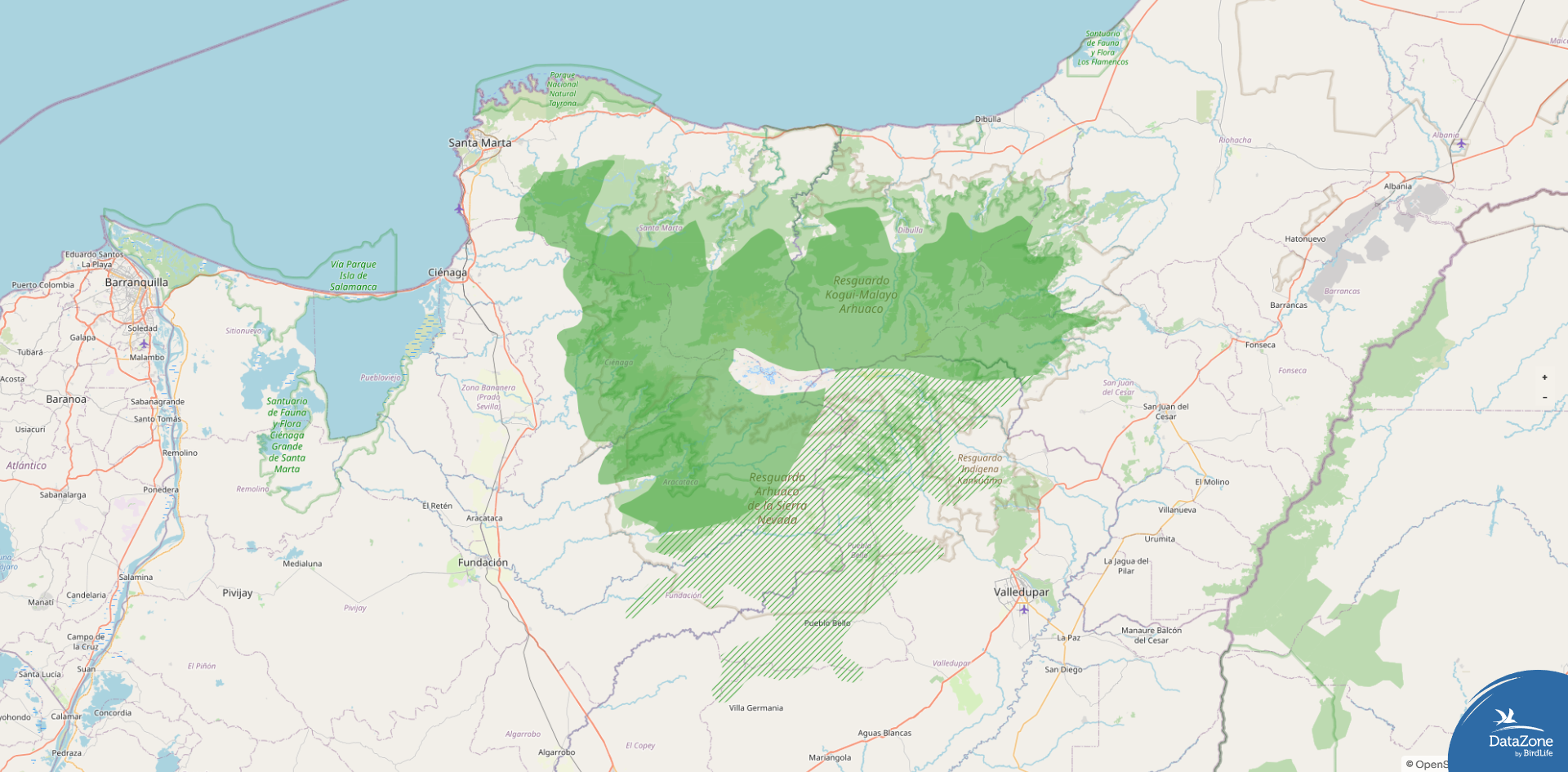
Legend
Green Resident
Species Overview
Black-backed Thornbill is a rare, localized hummingbird known only from Colombia’s Santa Marta range, making it a highly sought‑after endemic for visiting birders. It is generally uncommon and occurs at relatively low densities, usually at a handful of accessible high‑altitude sites. Its narrow elevational and geographic range, combined with habitat pressure, has led to its current Near Threatened status.
Male Description
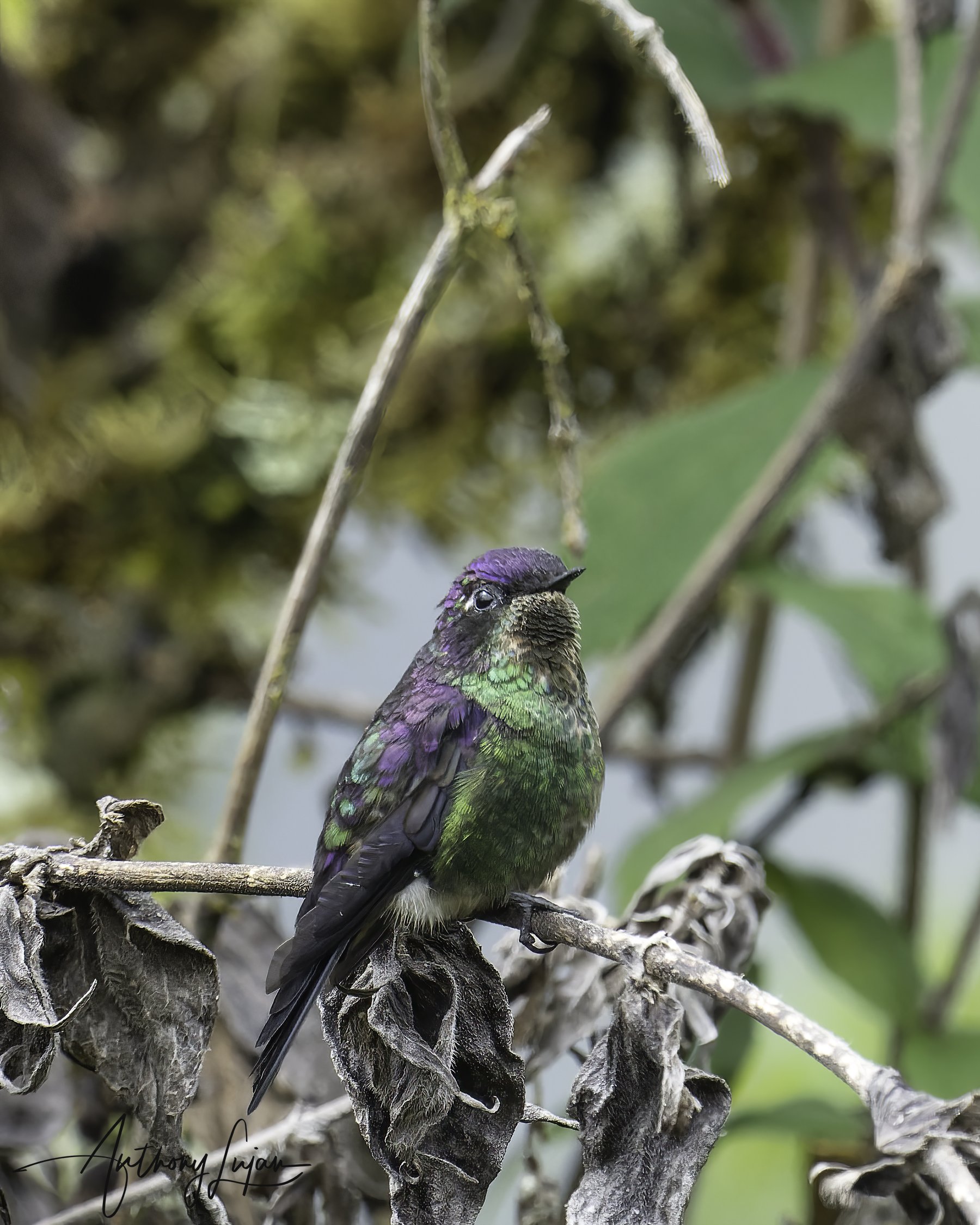
Adult males are compact, dark hummingbirds with blackish to dark bronzy‑green upperparts that give the “black‑backed” appearance. The throat and breast show iridescent green with bronzy or golden tones in good light, grading to paler grayish underparts toward the belly. The tail is fairly short and slightly forked or notched, with dark central feathers and paler or whitish tips to the outer rectrices. As in other thornbills, the bill is very short, straight, and fine, appearing noticeably shorter than in most high‑Andean hummingbirds.
Female Description
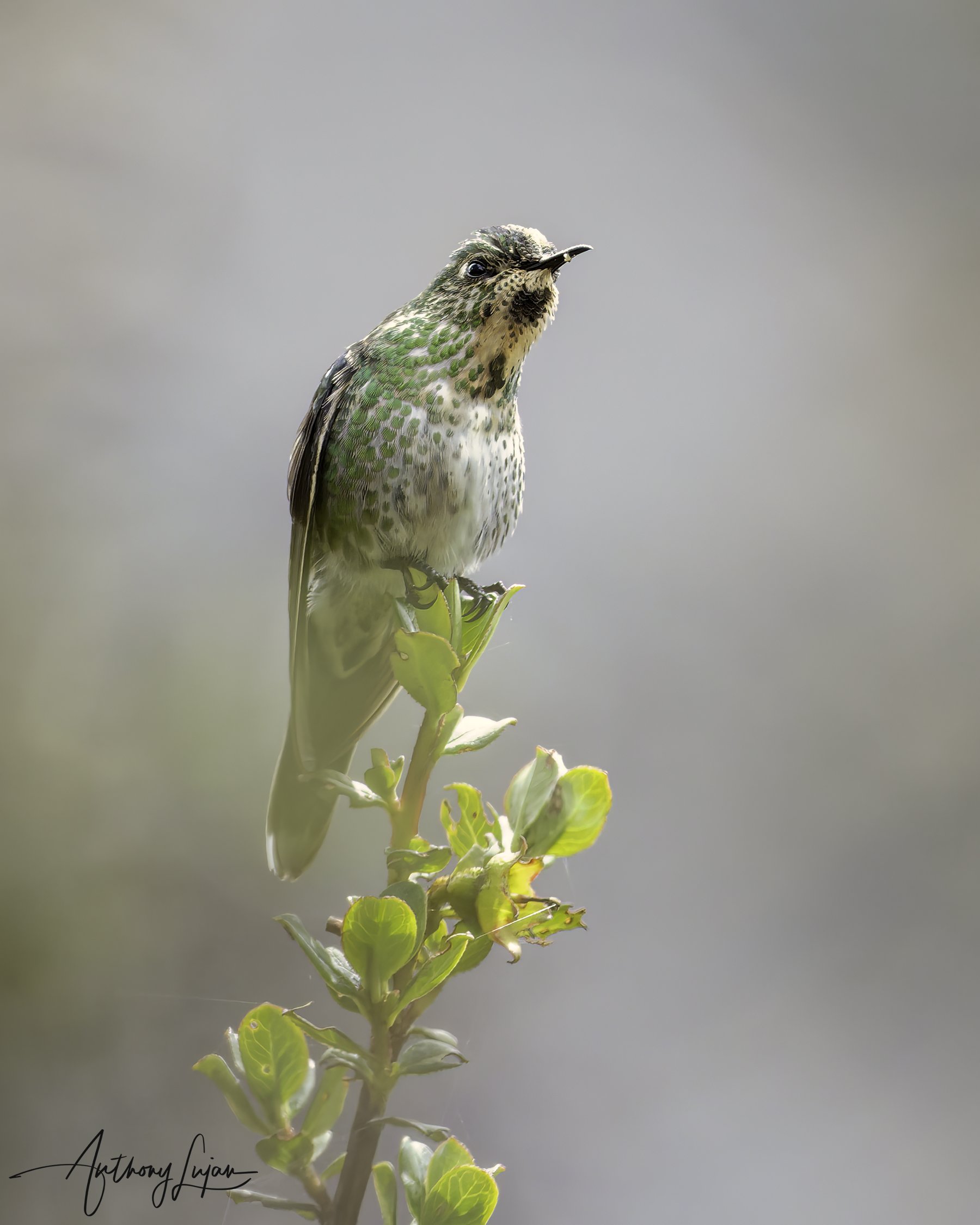
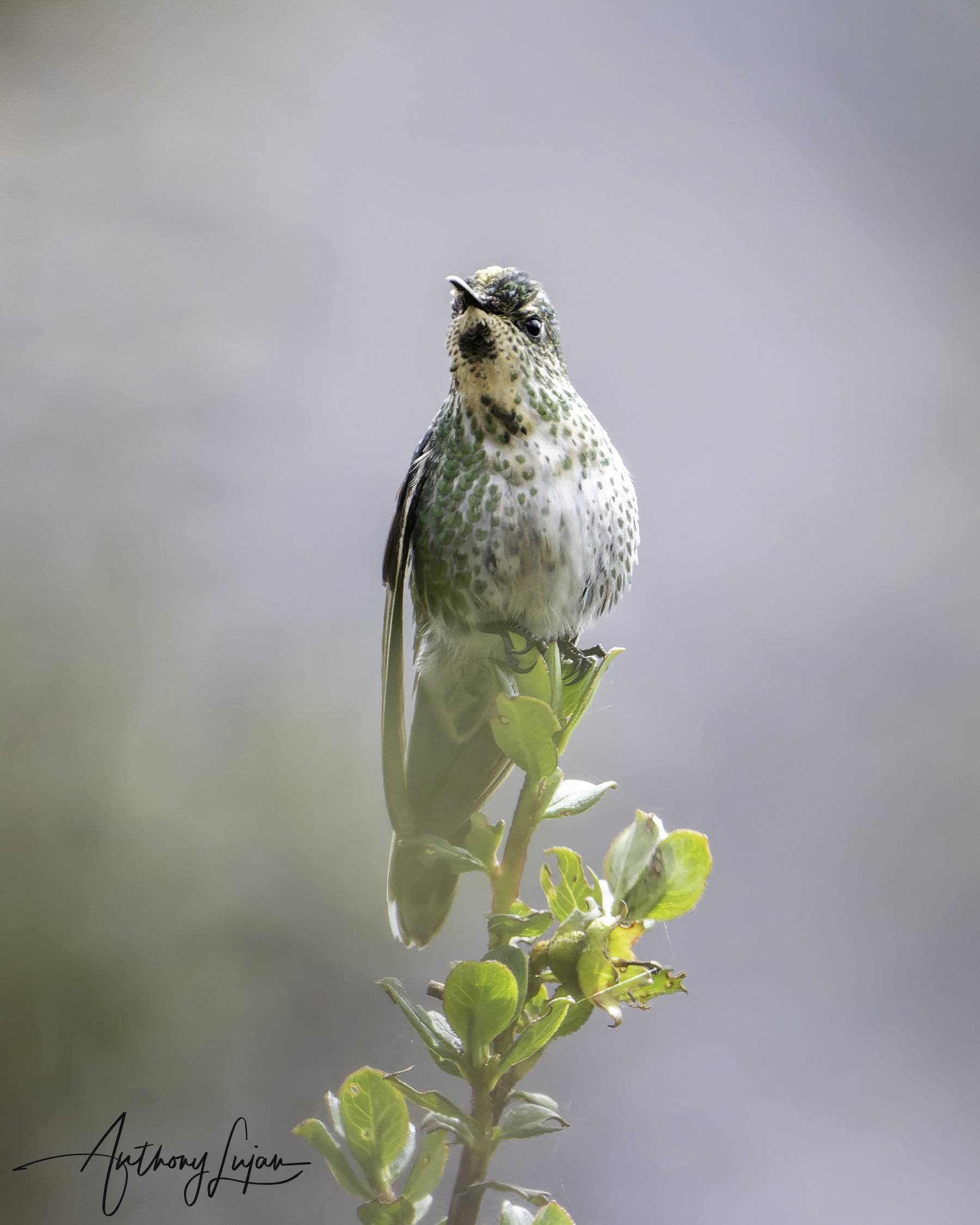
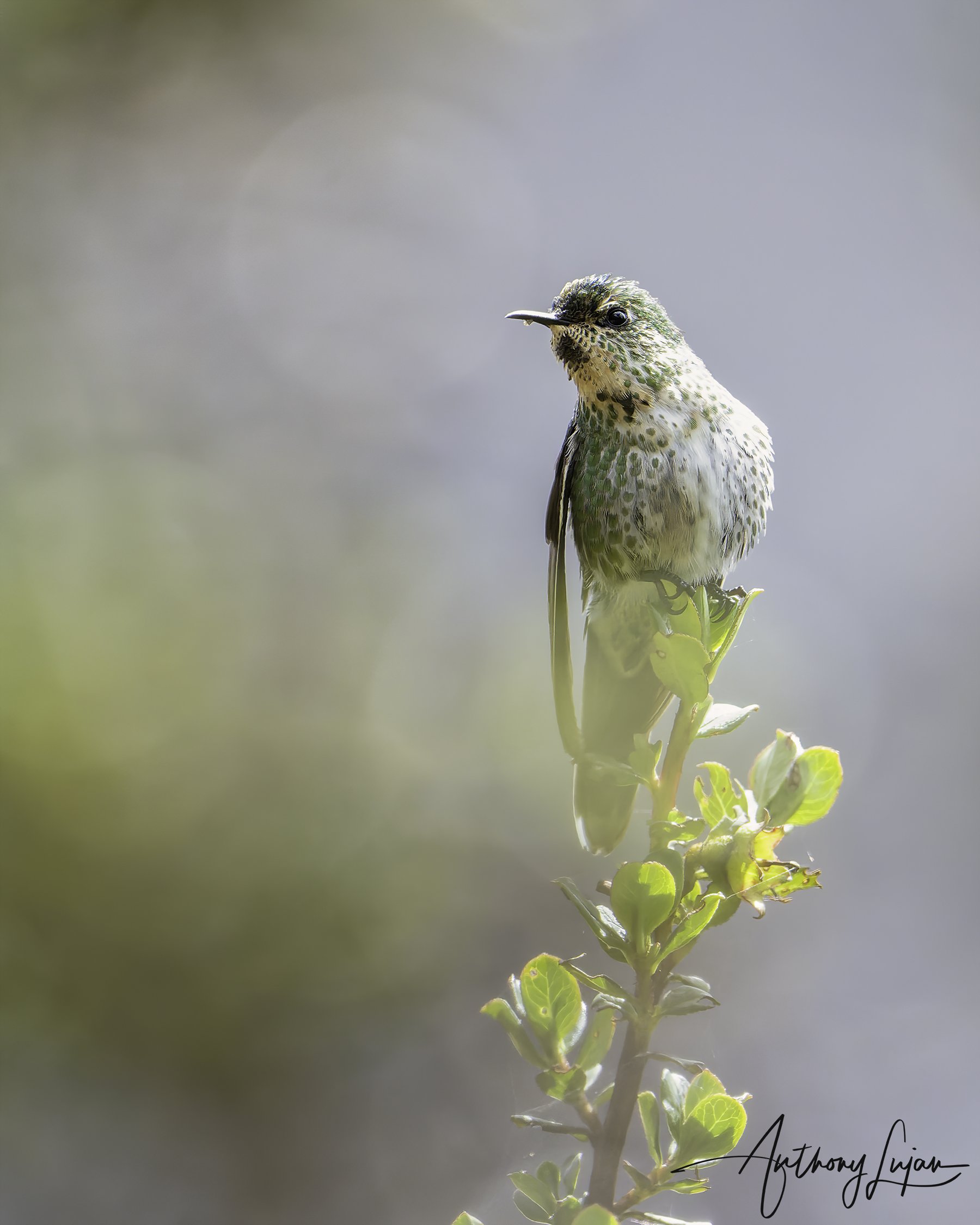
Females are similar in size but overall duller, with dark green to bronzy upperparts lacking the intense male iridescence. The throat and underparts are grayish to buff‑tinged with some green spotting or mottling on the sides, and they lack a fully developed glittering gorget. The tail pattern is comparable to the male’s, and the bill is the same short, fine thornbill type.
Habitat & Behavior
Black-backed Thornbills inhabit the edges of humid and very humid montane forest, elfin forest, high‑elevation shrublands, and páramo slopes near the treeline. They are often seen along ridges, open slopes, or forest margins where scattered shrubs and small trees provide nectar. The species likely makes local elevational movements in response to flowering cycles but is not known to undertake long‑distance migrations.
They feed on nectar from a variety of high‑elevation flowers, including shrubs, small trees, and herbs typical of Santa Marta montane habitats, and they also take small arthropods as a protein source. Like many high‑Andean hummingbirds, they perch frequently between feeding bouts and can be rather unobtrusive when not visiting conspicuous flower patches.
Population
The total number of mature individuals is unknown, but the species is believed to have a small global population confined to a single mountain massif. It is considered uncommon and localized, with records from a limited number of sites and a narrow elevational band. The population trend is assessed as Decreasing, likely driven by ongoing habitat loss and degradation in the Sierra Nevada de Santa Marta.

Conservation
Black-backed Thornbill is listed as Near Threatened, approaching thresholds for threatened categories due to its small range, suspected small population, and continuing habitat decline. Key threats include deforestation, agricultural expansion, burning, and other disturbances affecting high‑elevation forest, elfin forest, and shrub–páramo mosaics in the Santa Marta region. Conservation priorities include protecting and restoring high‑elevation habitats within the Sierra Nevada de Santa Marta, reducing burning and deforestation, and monitoring both population size and habitat trends for this localized endemic.
Below is a juvenile male.
Related species in the Ramphomicron genus (2 species total):
Please note: The content provided in this article reflects Anthony’s personal experience and photographic approach. Results can vary depending on light, weather, location, equipment, subject behavior, and field conditions.