

Scientific name: Lophornis helenae
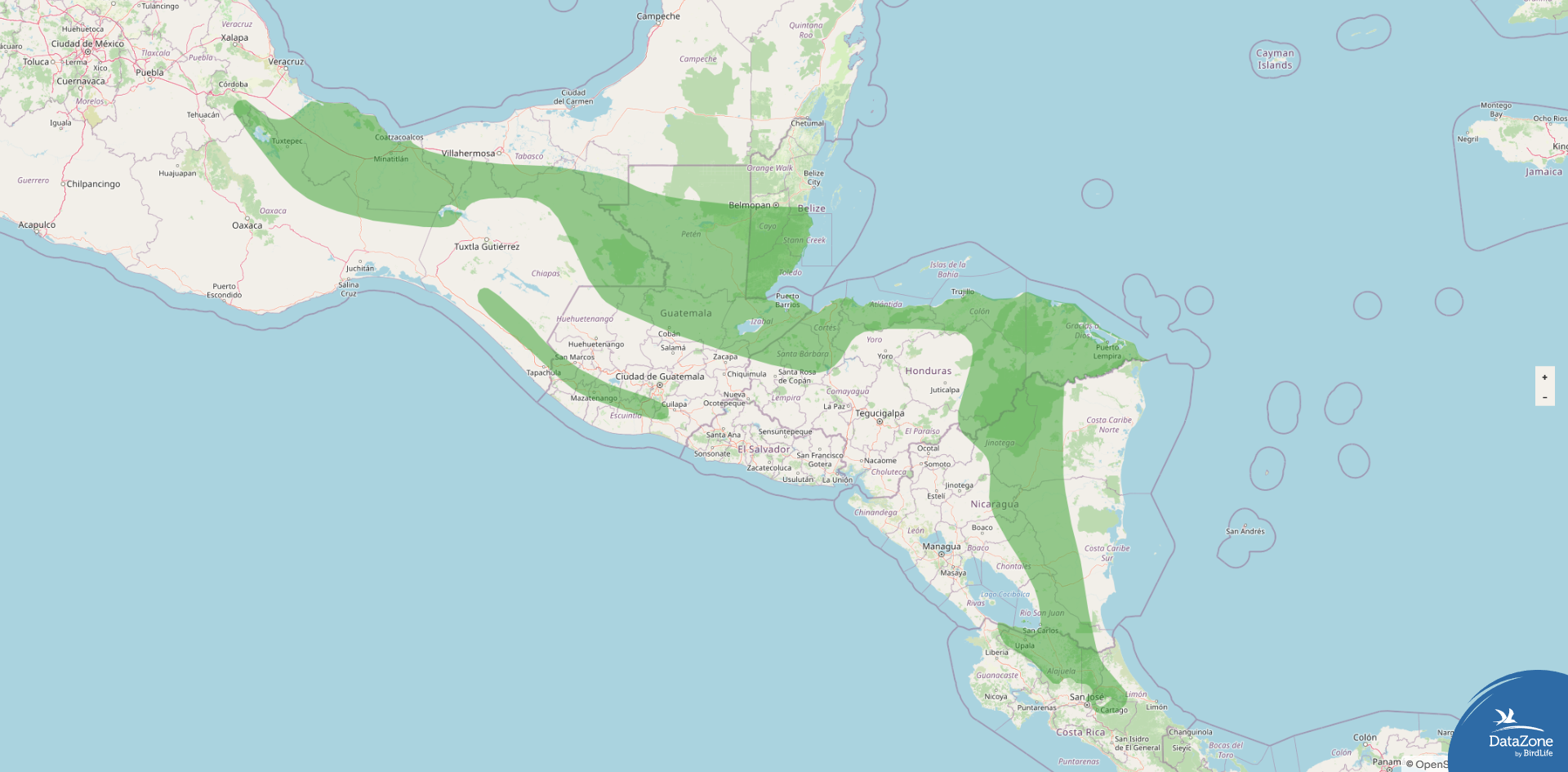
The Black-crested Coquette is a tiny forest-edge hummingbird of southeastern Mexico and northern Central America, from southern Veracruz south through Guatemala, Belize, Honduras, Nicaragua, and into eastern Costa Rica. Its global number of mature individuals is estimated at 20,000–49,999, the population trend is Decreasing, and it is assessed as Least Concern (LC).
At a Glance
Family: Trochilidae (hummingbirds)
Clade: Lesbiini – Coquettes
Genus:Lophornis — very small, ornate coquettes with crests and often striking head and neck plumes
Range: Southern Veracruz in Mexico south through eastern Guatemala, southern Belize, and eastern Honduras and Nicaragua into eastern Costa Rica; also a separate Pacific-slope population from Chiapas south through much of western Guatemala
Habitat: Semi-open landscapes at the edges of humid montane and lowland evergreen forests, forest gaps, and brushy or shrubby areas
Elevation: From near sea level to about 1,500 m in Mexico, and between roughly 300 and 1,200 m in Costa Rica
Length: About 6.5–7.5 cm (2.6–3.0 in)
Weight: Around 2.0–2.5 g (about 0.07–0.09 oz)
Number of mature individuals: 20,000–49,999
Population trend: Decreasing
Status: Least Concern (IUCN)
Name Origin
The genus name Lophornis combines Greek lophos (“crest”) and ornis (“bird”), referring to the elaborate crests and ornamental head plumes typical of coquettes. The species name helenae is an eponym honoring a woman named Helena (likely linked to the original describer’s circle), as is common in 19th‑century taxonomy. Together, Lophornis helenae essentially means “Helena’s crested bird,” highlighting both its ornate crest and its commemorative namesake.
Subspecies & Distribution
Black-crested Coquette is monotypic, with no recognized subspecies.
It occurs in two main parts of Mesoamerica:
On the Caribbean/eastern side, from southern Veracruz in Mexico south through eastern Guatemala, southern Belize, and eastern Honduras and Nicaragua into eastern Costa Rica.
On the Pacific side, in a separate population from Chiapas in southern Mexico south through much of western Guatemala.
Across this range, it inhabits semi-open landscapes at the edges of humid montane and lowland evergreen forests, as well as gaps and brushy clearings, from near sea level to about 1,500 m in Mexico and roughly 300–1,200 m in Costa Rica.
Ledged
Green Resident
Species Overview
The Black-crested Coquette is a tiny, ornate hummingbird and one of the most distinctive coquettes of Mesoamerica, with a limited but fairly continuous range from southeastern Mexico to eastern Costa Rica. Within this region it is generally uncommon but can be locally fairly common where flowering shrubs and forest edges are abundant. Its small global population and reliance on semi‑open forest landscapes make it sensitive to habitat alteration, though current declines have not yet pushed it beyond the Least Concern category.
Male Description
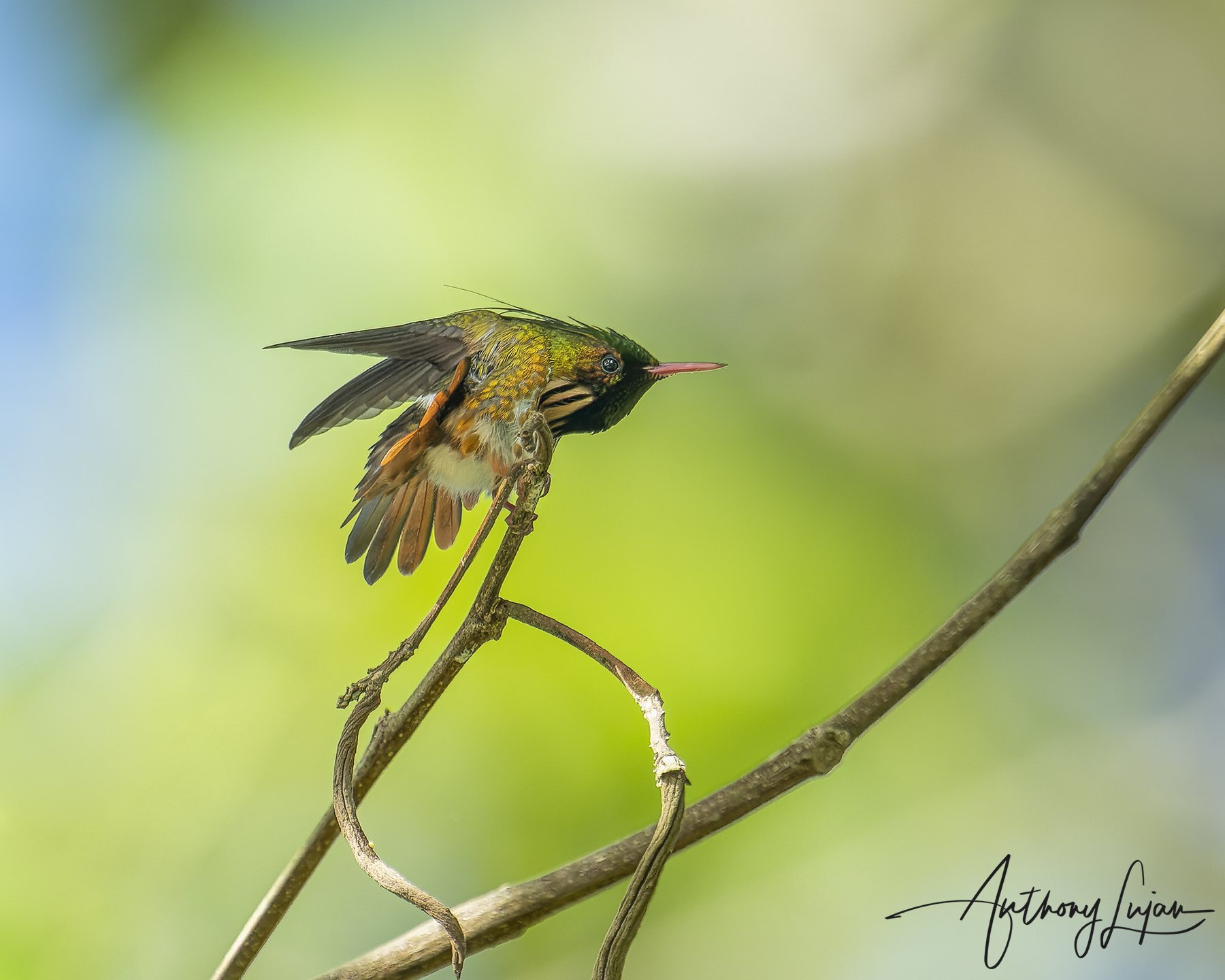
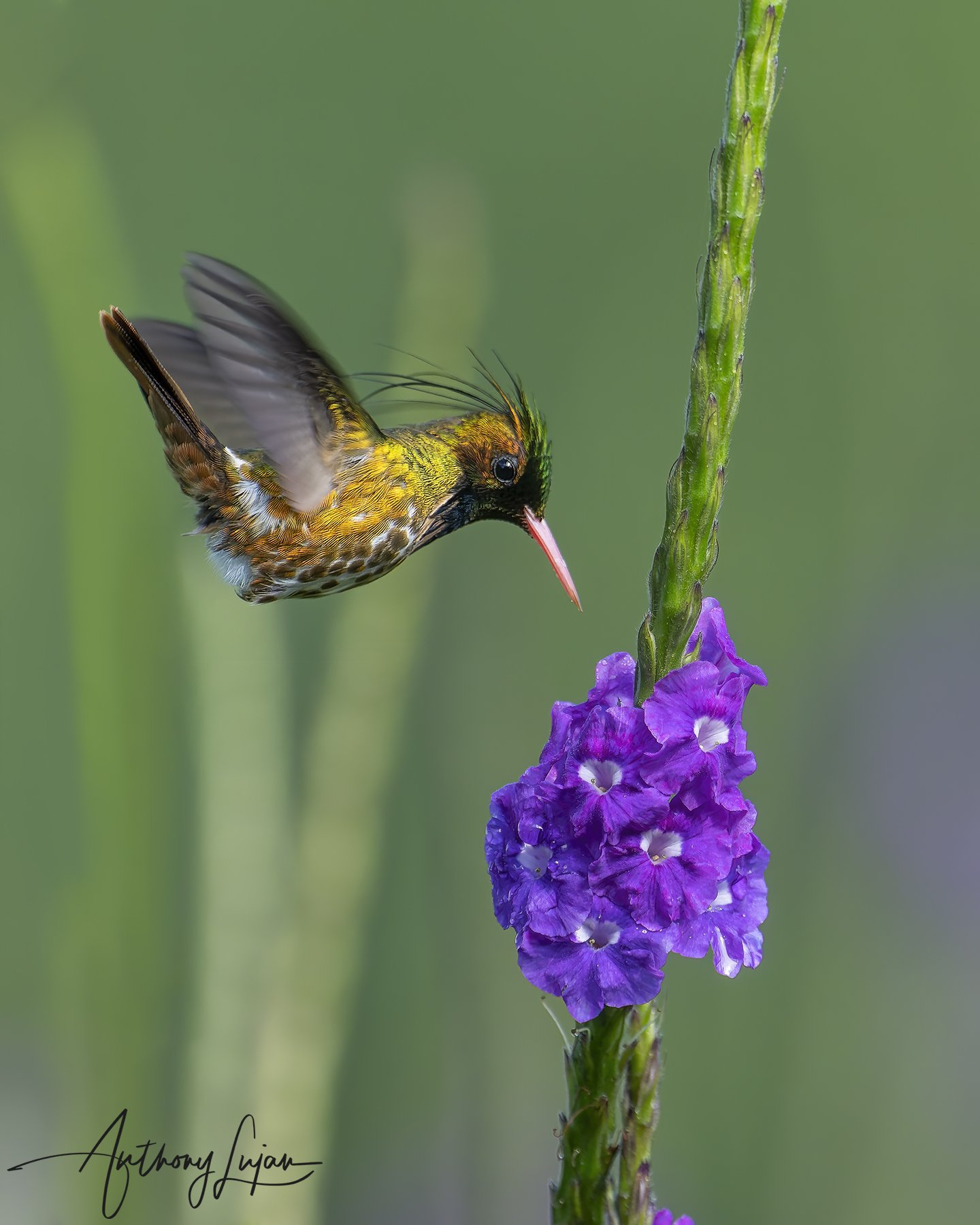
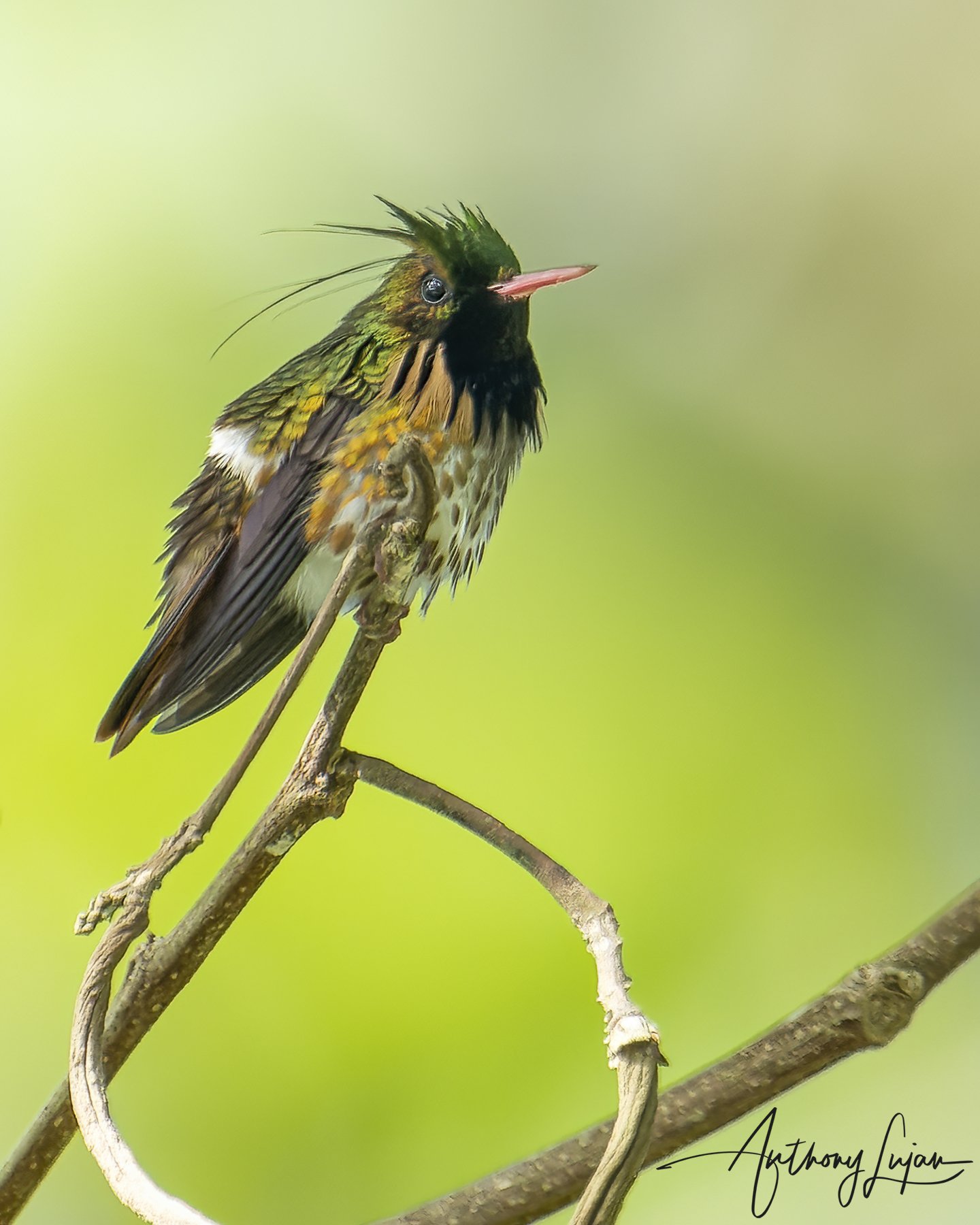
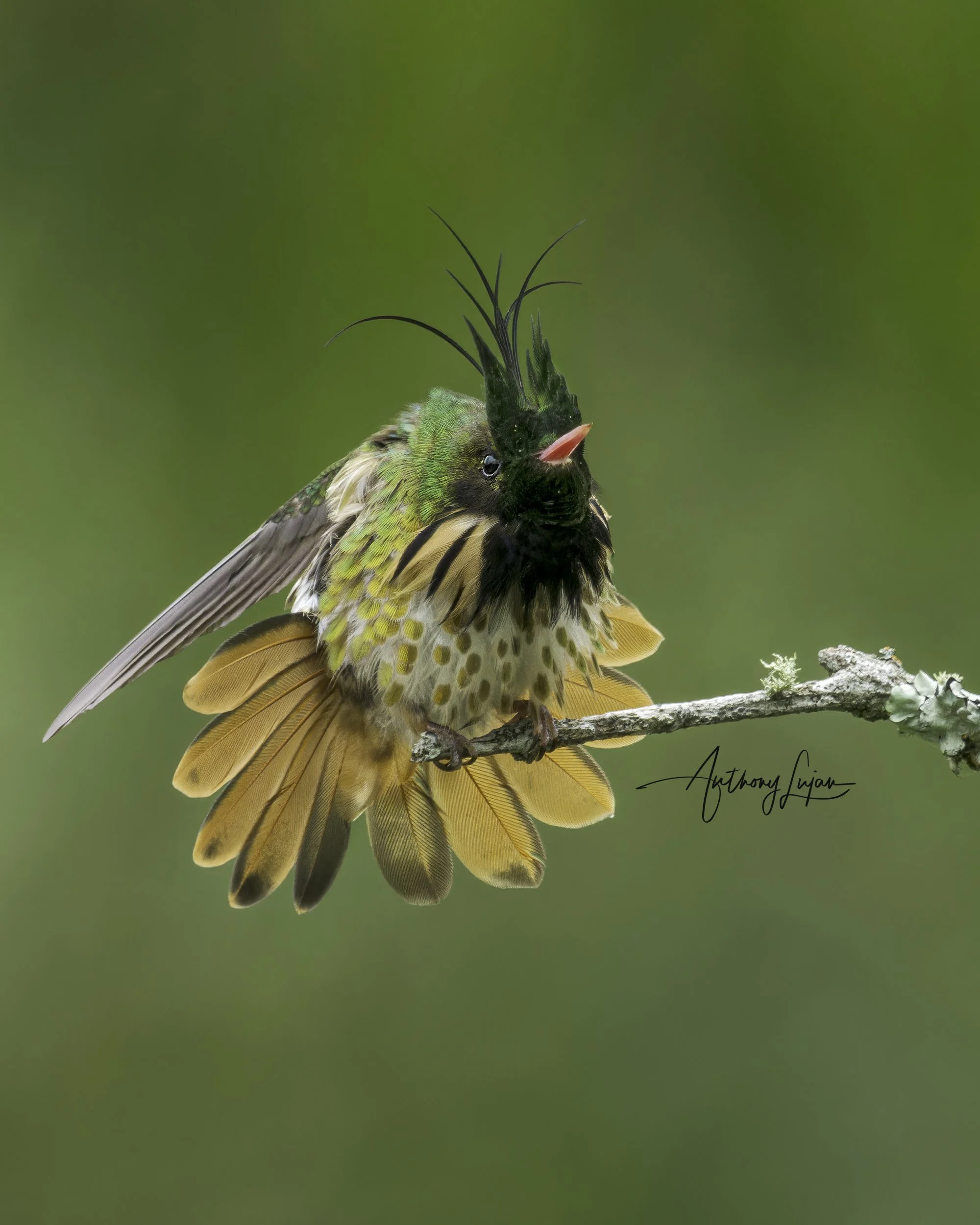
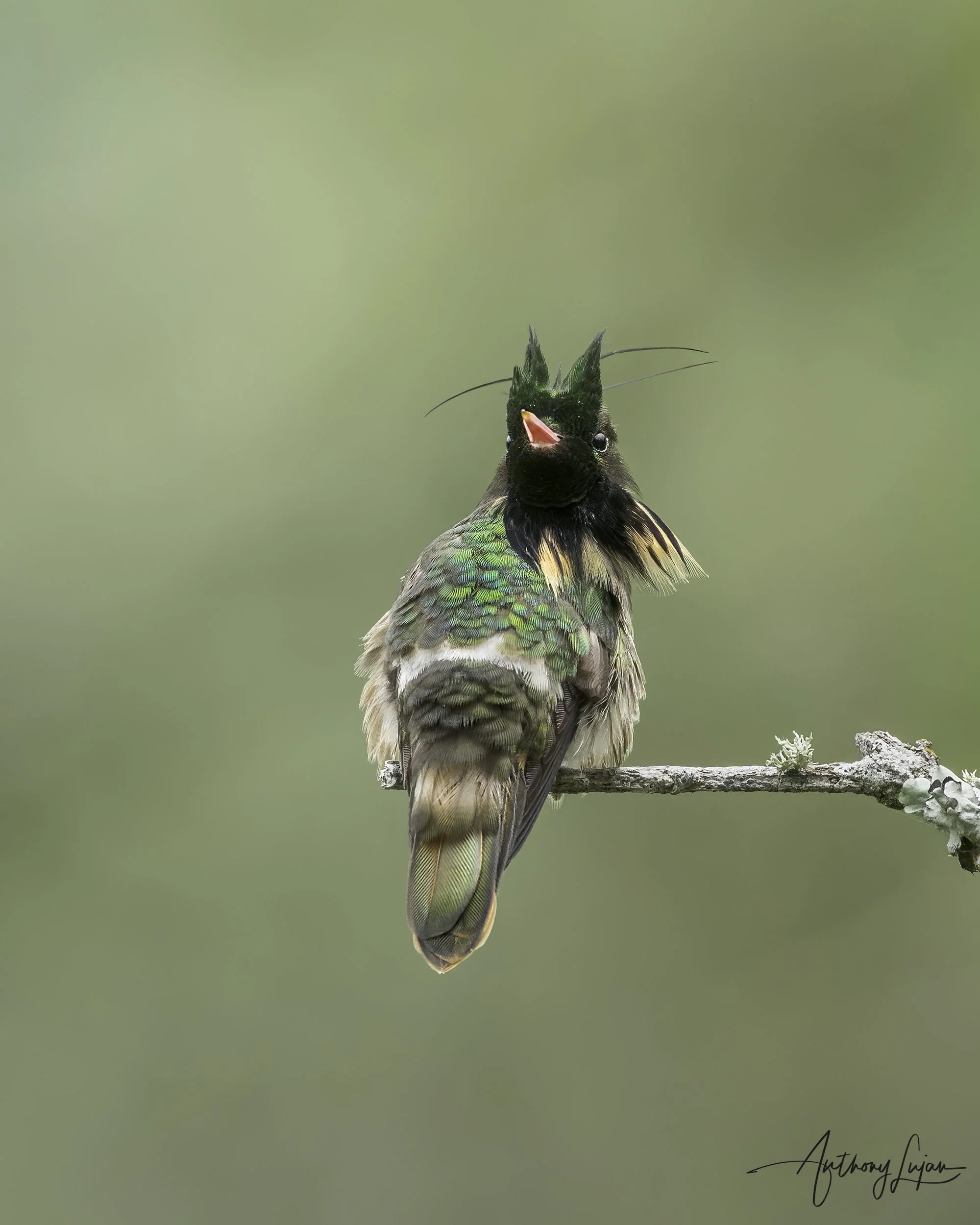
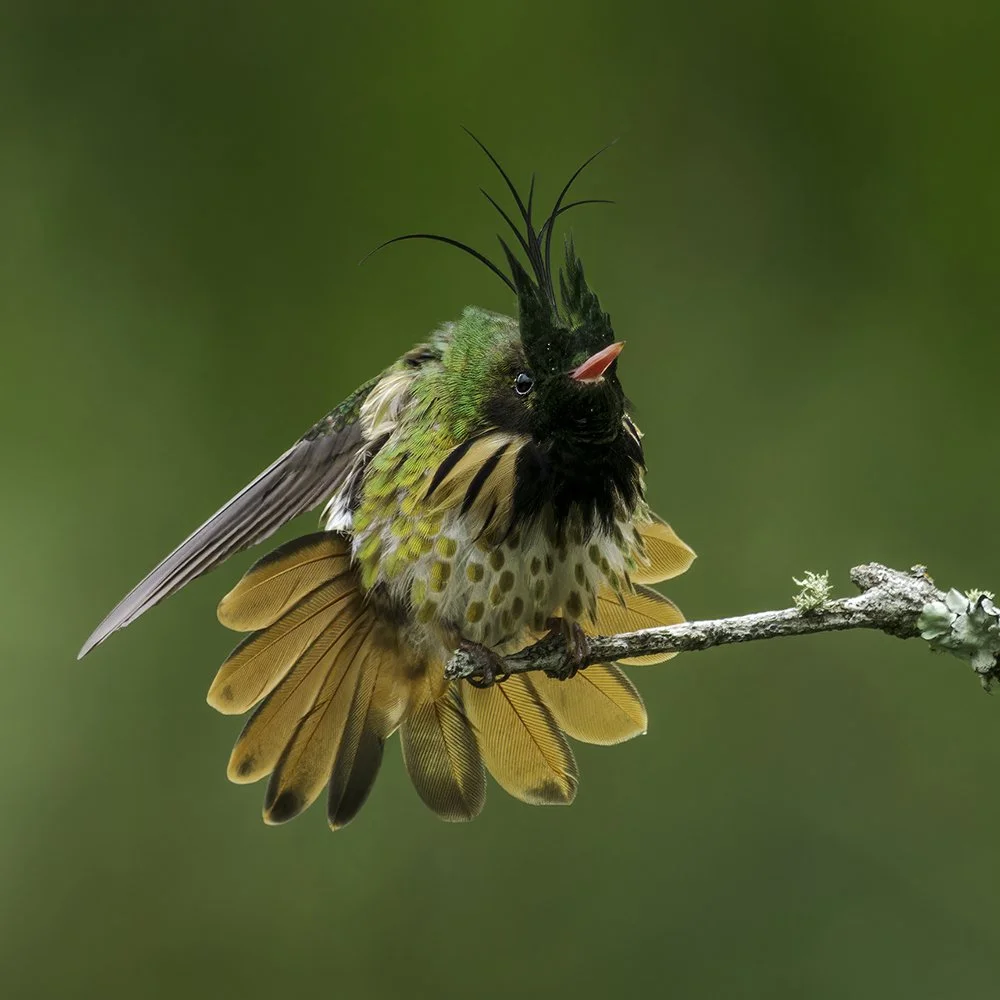
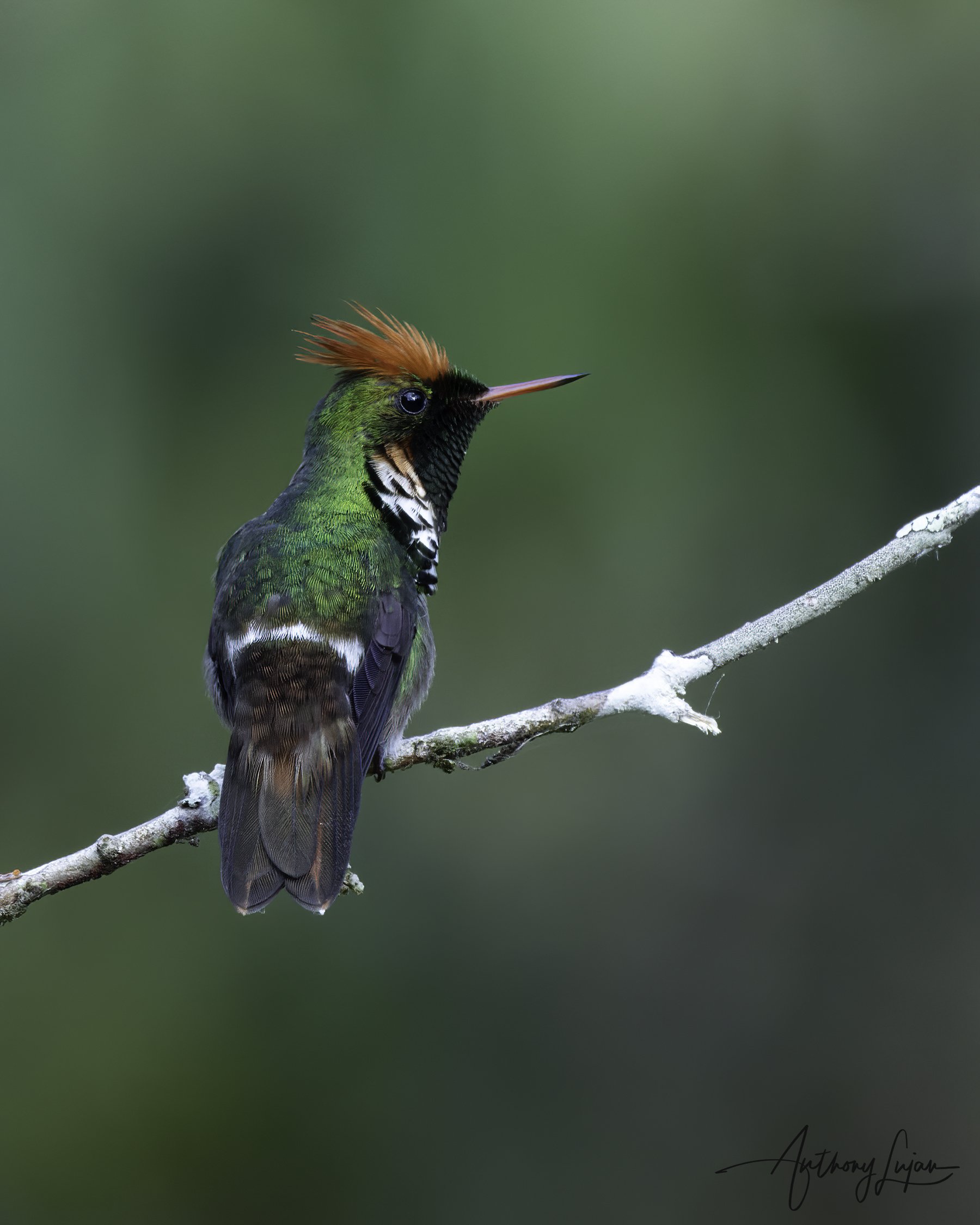
Adult males are minute hummingbirds with a striking black crest projecting from the crown, giving the species its English name. The upperparts are metallic green, and the head shows contrasting patterning with the black crest and often a buffy or rufous band across the forehead or nape depending on light and angle. The throat is glittering green, usually set off by buffy or rufous sides of the neck and upper breast, and the underparts are pale with green spotting or suffusion. The tail is relatively short with bronzy or rufous tones, and the bill is short, straight, and dark.
Female Description
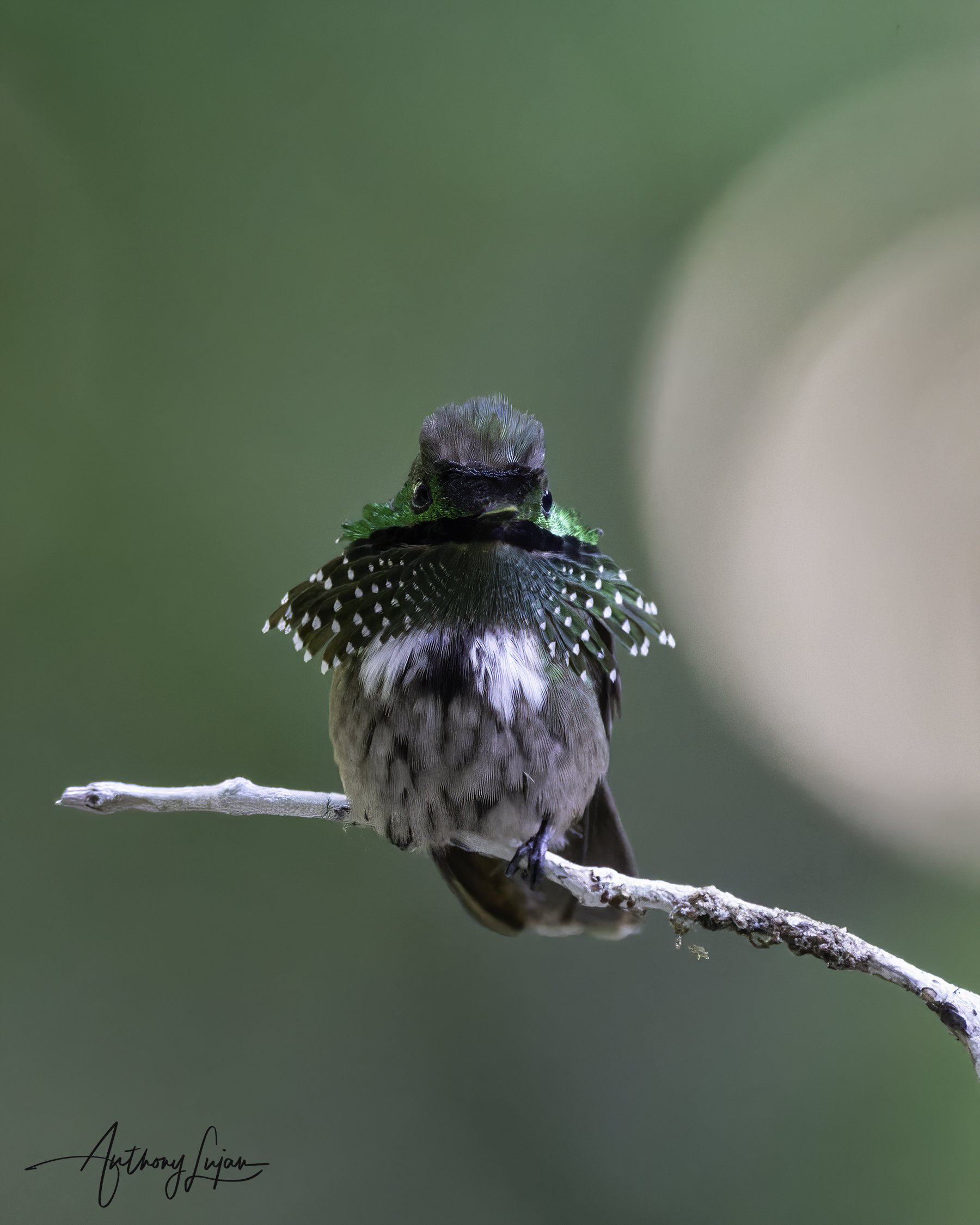
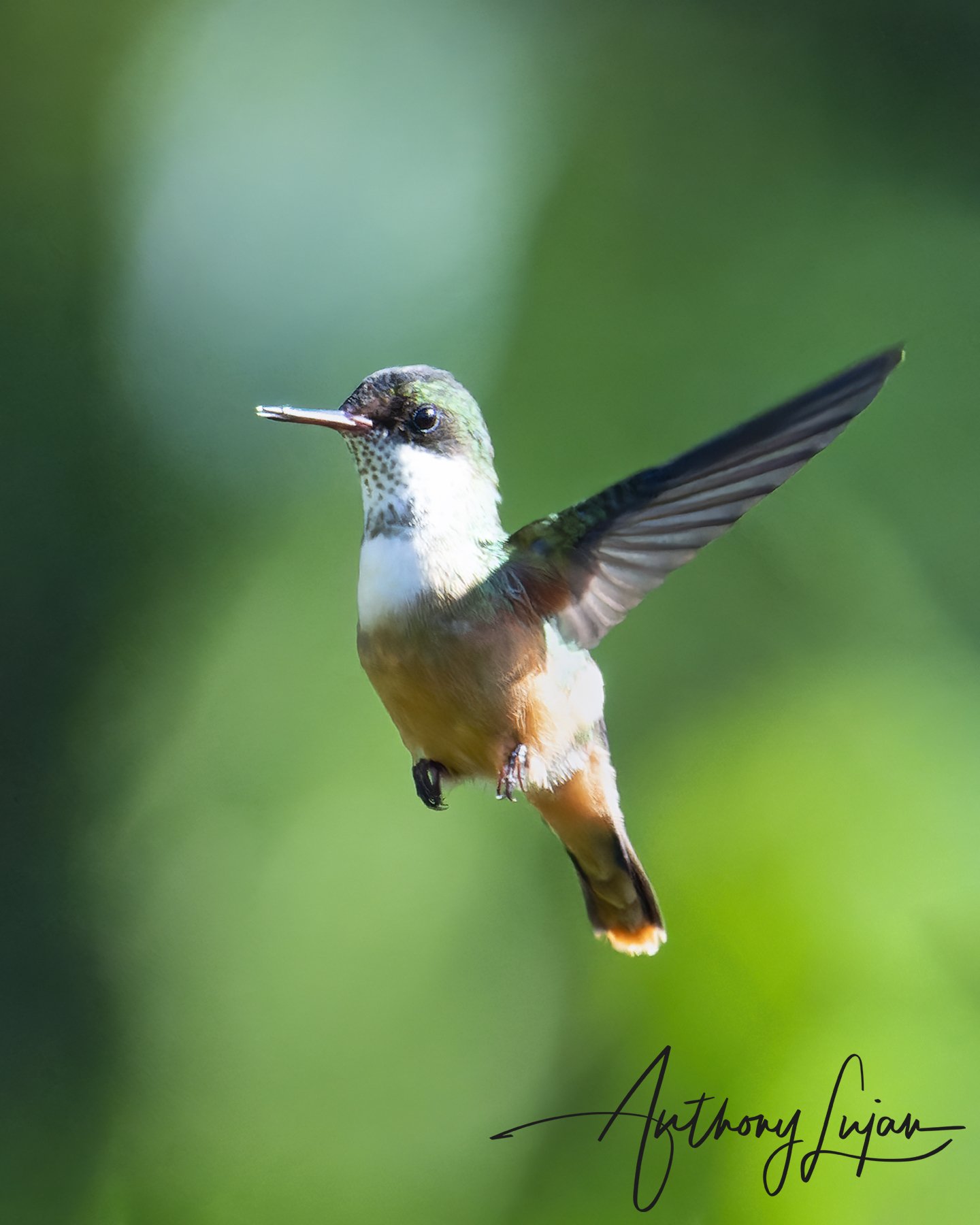
Females lack the male’s black crest and show a plain green crown and upperparts. The underparts are whitish to buffy with green spotting on the sides of the breast and flanks. Their tail is somewhat longer relative to body size, greenish above with some rufous or buff on the outer feathers and paler tips, giving a subtly patterned appearance. Females share the short, straight dark bill and overall tiny proportions but appear much plainer and less ornamented than males.
Habitat & Behavior
Black-crested Coquettes frequent semi-open forest mosaics—edges of humid montane and lowland evergreen forests, clearings, shrubby second growth, and gaps with flowering shrubs and small trees. They typically occur from the lowlands up to mid‑elevations, reaching about 1,500 m in Mexico and 1,200 m in Costa Rica, and in Costa Rica have been noted to move upslope or downslope locally with flowering conditions. Because they are so small, they can be easily overlooked, often appearing briefly at flowering trees before darting away.
They feed primarily on nectar from a variety of small flowers, especially in shrub layers and at forest edges, and also take tiny insects for protein. Like other coquettes, they tend to hover delicately around blossoms and may show rapid, agile flights between flowers, often visiting lower and mid‑story blooms rather than tall canopy flowers. Individuals are usually solitary, and males may perform aerial displays or chases near favored flowering patches.
Population
The global population of Black-crested Coquette is estimated at 20,000–49,999 mature individuals. The overall trend is thought to be Decreasing, likely due to ongoing loss and degradation of humid forest and edge habitats within its relatively small range. Although locally fairly common in some areas, its total numbers are modest, and scattered distribution and habitat dependence add to its vulnerability.

Conservation
Black-crested Coquette is assessed as Least Concern because its estimated population size and range are still above threat thresholds, but its declining trend is a concern. Deforestation, conversion of forest to agriculture or pasture, and simplification of forest edges and second growth all reduce the flowering shrub and tree resources it relies on. Protecting humid and evergreen forests, maintaining structurally diverse edges and shrubby clearings, and conserving key sites from southern Mexico to eastern Costa Rica will be crucial for keeping this tiny coquette a regular part of Mesoamerican bird communities.
Photographed in Costa Rica
Interested in coming along? Visit Travel with Me!
Also visit Costa Rica Hummingbird Expedition | July 2021 | 10 Species | Where It All Started
Also visit Costa Rica Hummingbird Expedition | November 2021 | 22 New Species | Second Chances
Also visit Costa Rica Hummingbird Expedition | July 2025 | 32 Species | 10 New | Closing the Gap
Photographed in Guatemala

View all the videos by clicking the three lines in the top right corner for the playlist.
Related species in the Lophornis genus (11 species total):


Please note: The content provided in this article reflects Anthony’s personal experience and photographic approach. Results can vary depending on light, weather, location, equipment, subject behavior, and field conditions.