
Blue-chested Hummingbird
Scientific name: Polyerata amabilis
The Blue-chested Hummingbird is a small, colorful hummingbird of humid lowlands and foothills from Nicaragua through Costa Rica and Panama into western Colombia and western Ecuador. An estimated 500,000–4,999,999 mature individuals exist, the population is decreasing, it is considered non-migratory, and it is currently listed as Least Concern and monotypic.
At a Glance
Family: Trochilidae (hummingbirds)
Clade: Trochilini – Emeralds
Genus group: Polyerata — 3 species, 3 subspecies
Range: Caribbean slope from southeastern Nicaragua through Costa Rica and Panama, and on the Pacific slope of Panama into western Colombia and western Ecuador.
Habitat: Subtropical and tropical moist lowland and foothill forest, forest edges, second growth, plantations, rural gardens, and heavily degraded former forest.
Elevation: Mostly from sea level to about 900 m, locally up to roughly 1,200 m in some foothill areas.
Length: About 10–11 cm (3.9–4.3 in).
Weight: Approximately 4–5 g.
Number of mature individuals: 500,000–4,999,999
Population trend: Decreasing
Status: Least Concern (IUCN)
Name Origin
The genus name Polyerata comes from Greek roots meaning “much adorned” or “richly decorated,” a reference to the bright, ornamental plumage of these small emerald hummingbirds. The species name amabilis means “lovely” or “charming,” highlighting its attractive blue chest and overall beauty. The English name “Blue-chested Hummingbird” directly describes the male’s glittering blue chest, the single most distinctive feature in the field.
Subspecies & Distribution
Occurs from the Caribbean slope of southeastern Nicaragua through Costa Rica and Panama, and south on the Pacific slope of Panama into western Colombia and western Ecuador. Birds range from humid lowland forest and edges near sea level into lower foothills, often following bands of suitable forest and second growth.
Across this range, Polyerata amabilis is patchily distributed but can be fairly common in appropriate habitats, particularly along forest borders, clearings, plantations, and gardens with abundant flowering shrubs.
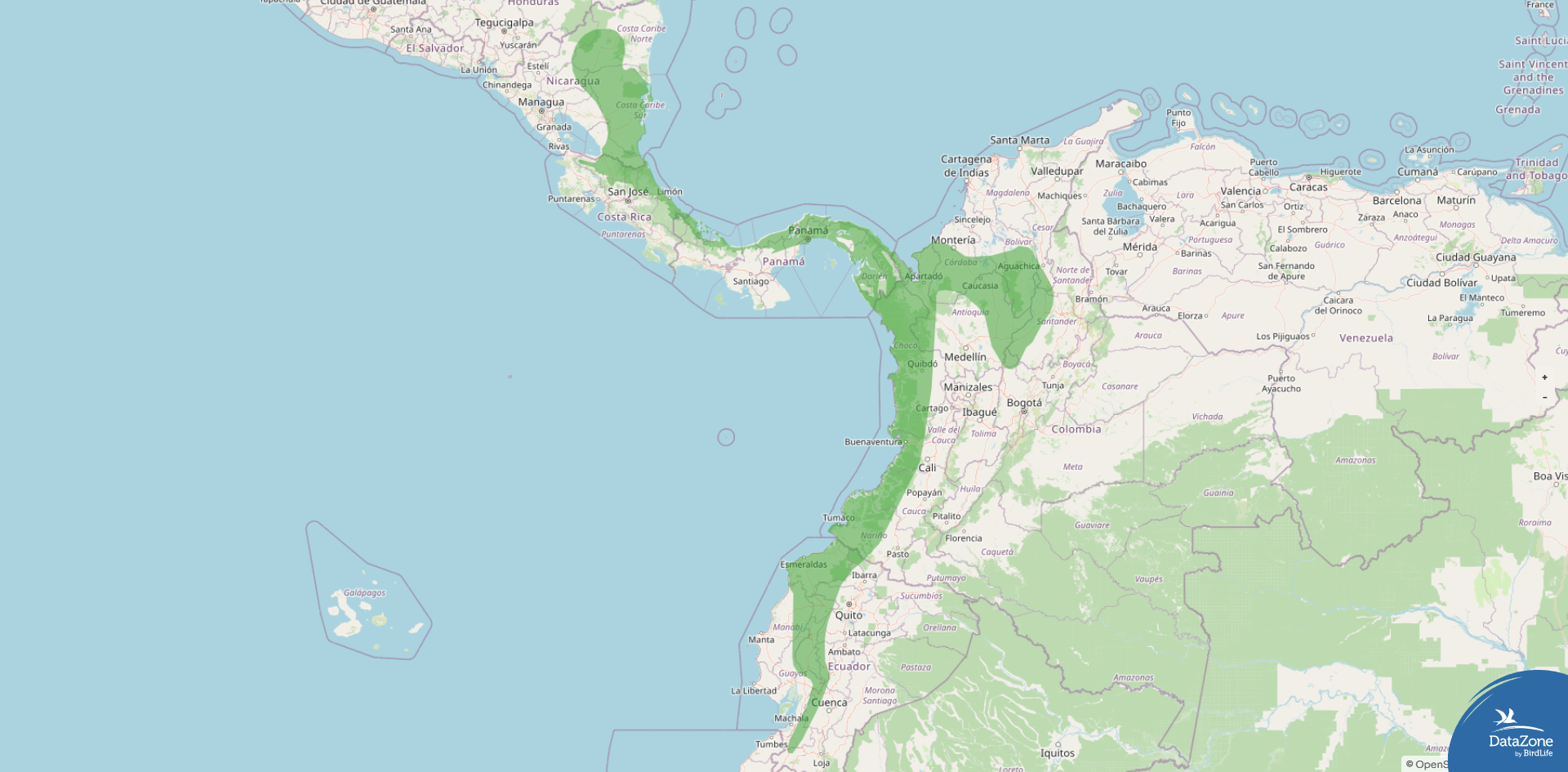
Legend
Green Resident
Species Overview
The Blue-chested Hummingbird is a characteristic small emerald of the Caribbean slope and adjacent Pacific lowlands in southern Central America and northwestern South America. It favors warm, humid lowland and foothill forests, especially edges, clearings, and semi-open areas with scattered flowering shrubs and trees. Its reliance on both natural and human-modified habitats, including plantations and gardens, allows it to remain locally common despite ongoing habitat changes, though overall numbers are thought to be declining.
Male Description
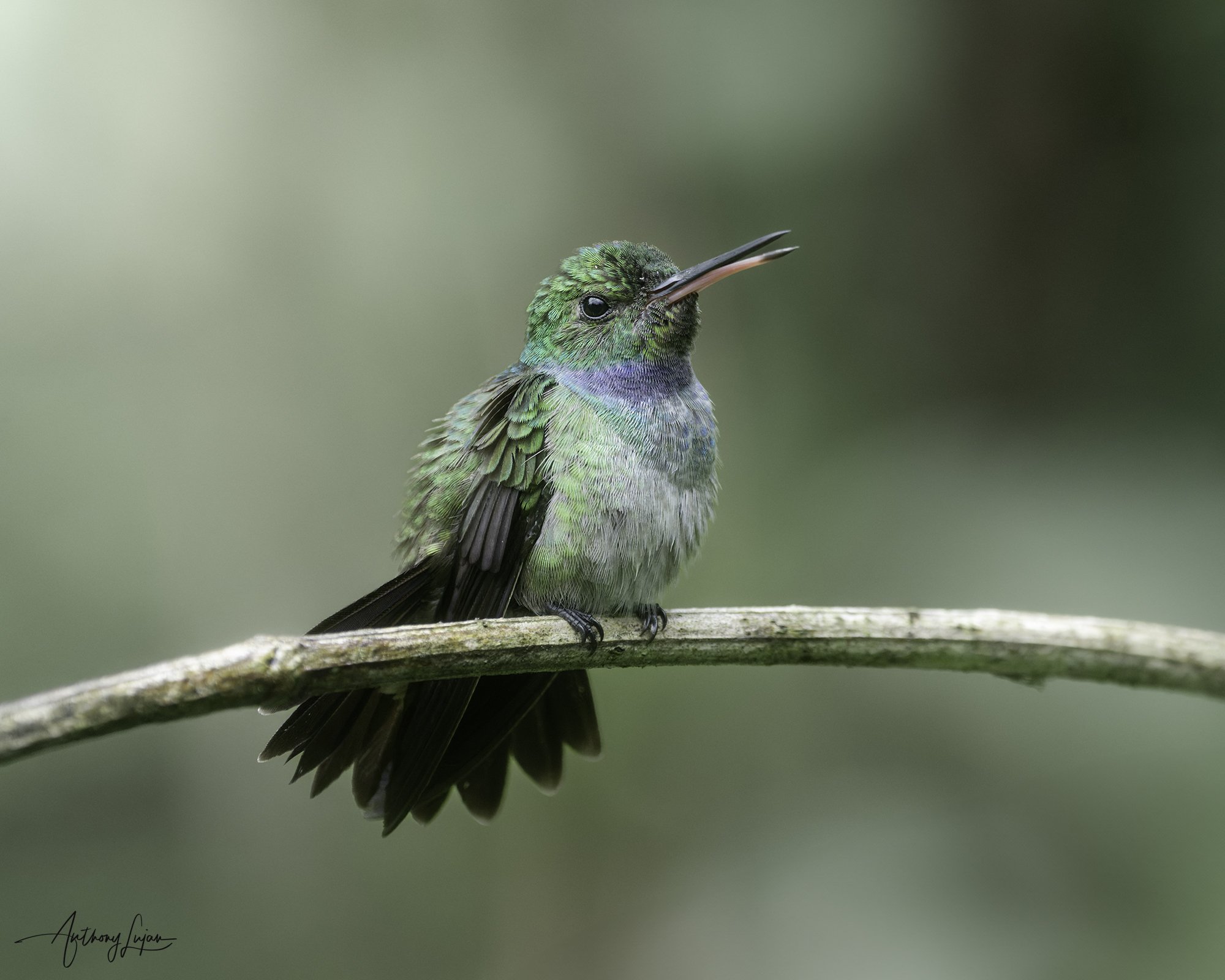
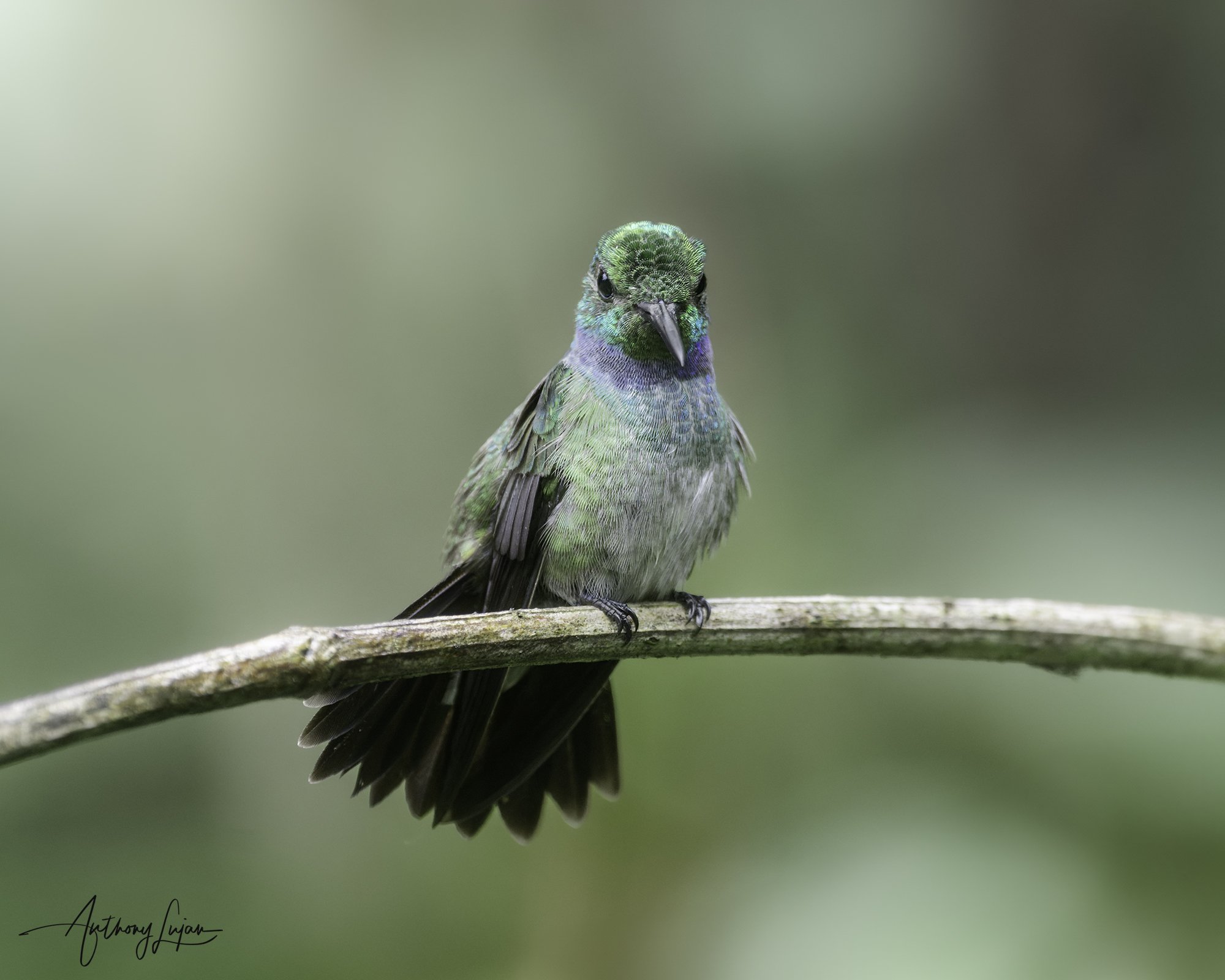
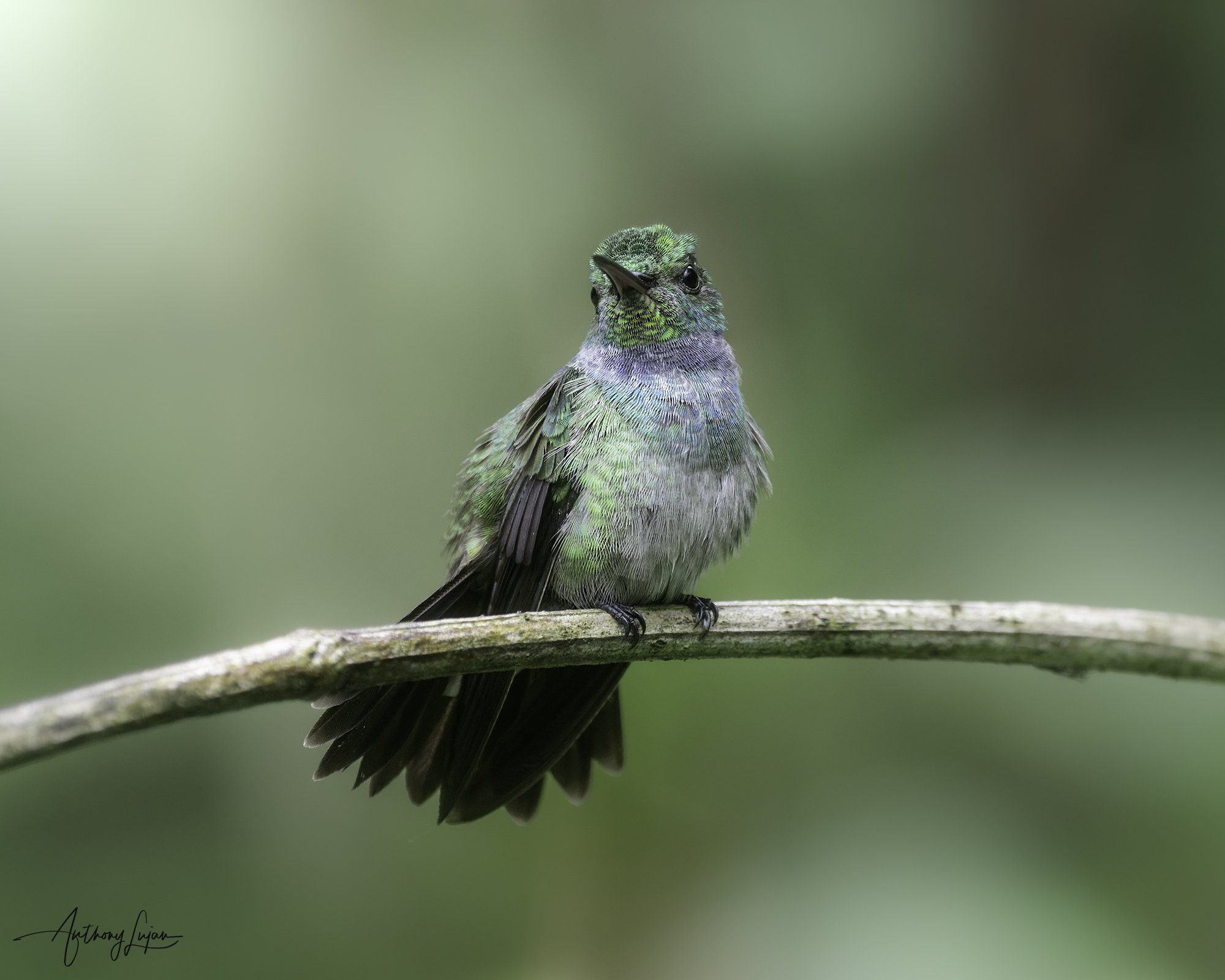
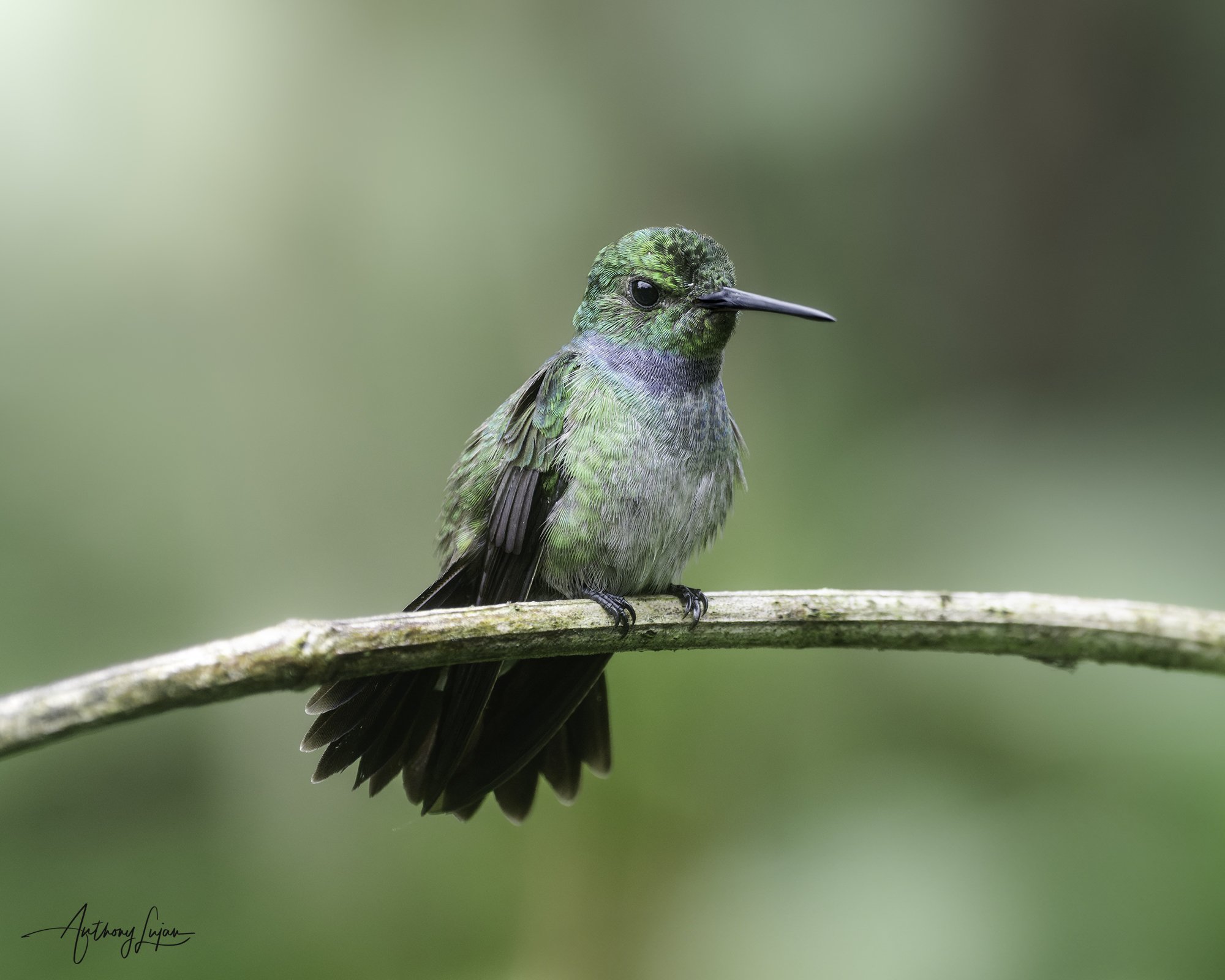
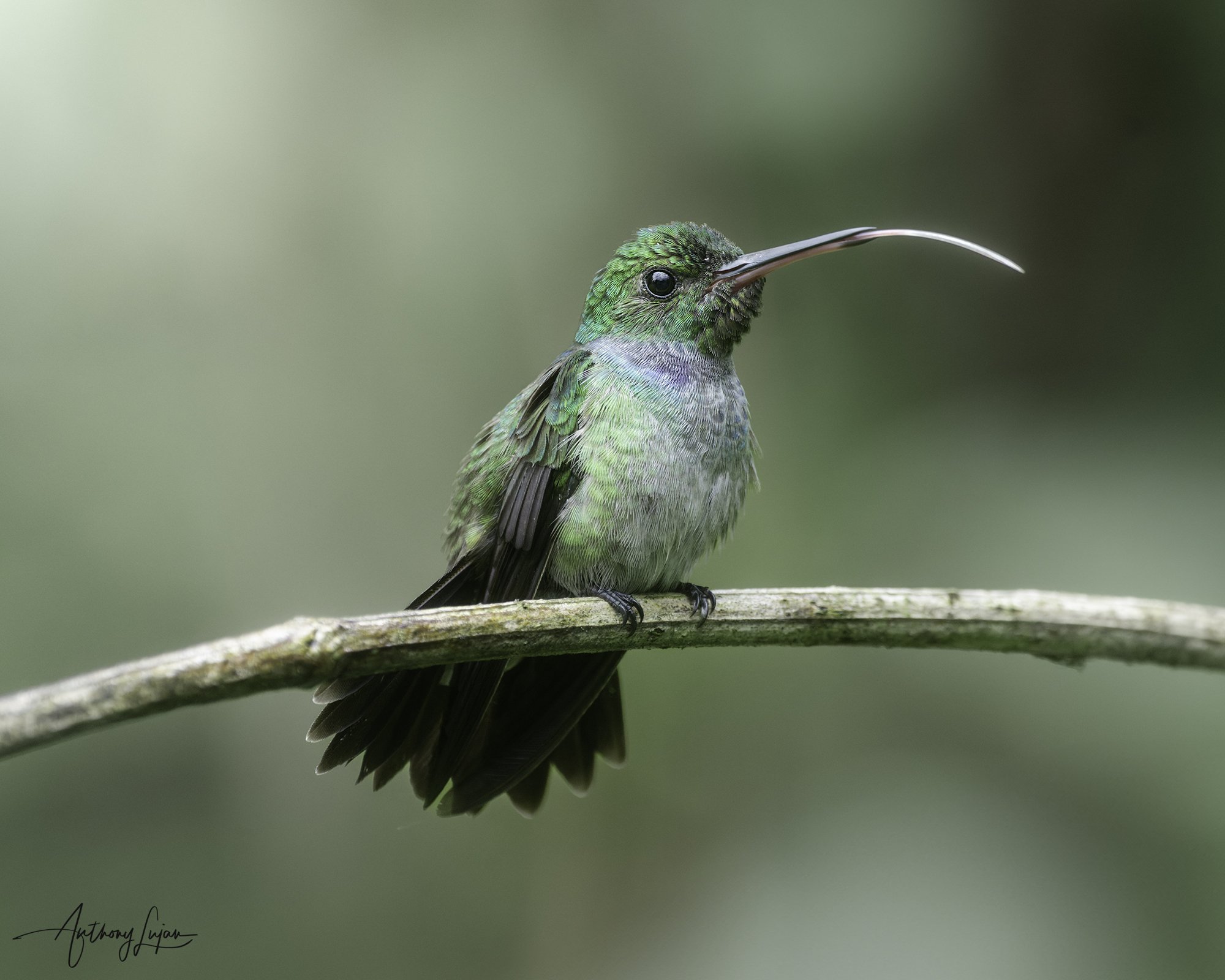
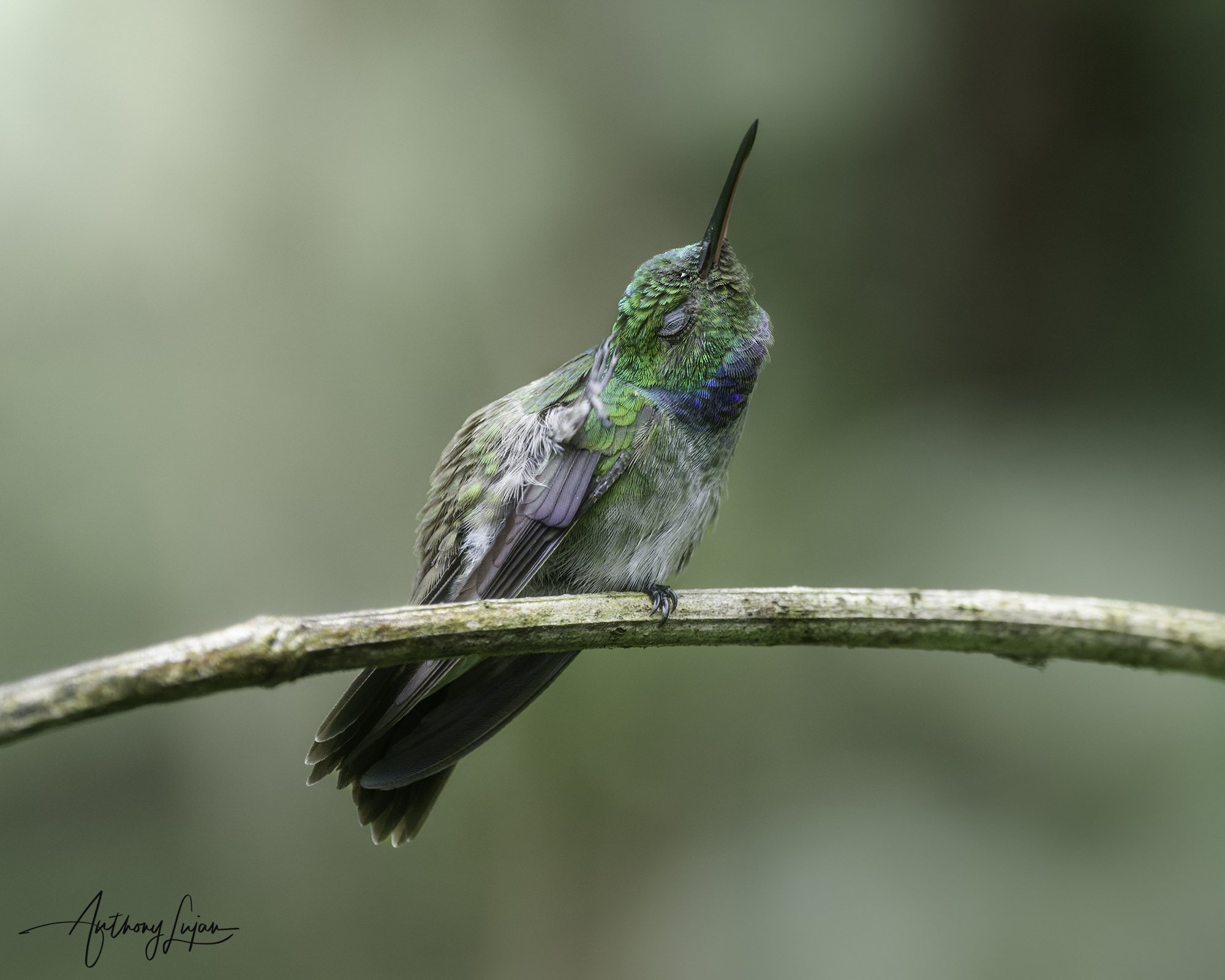
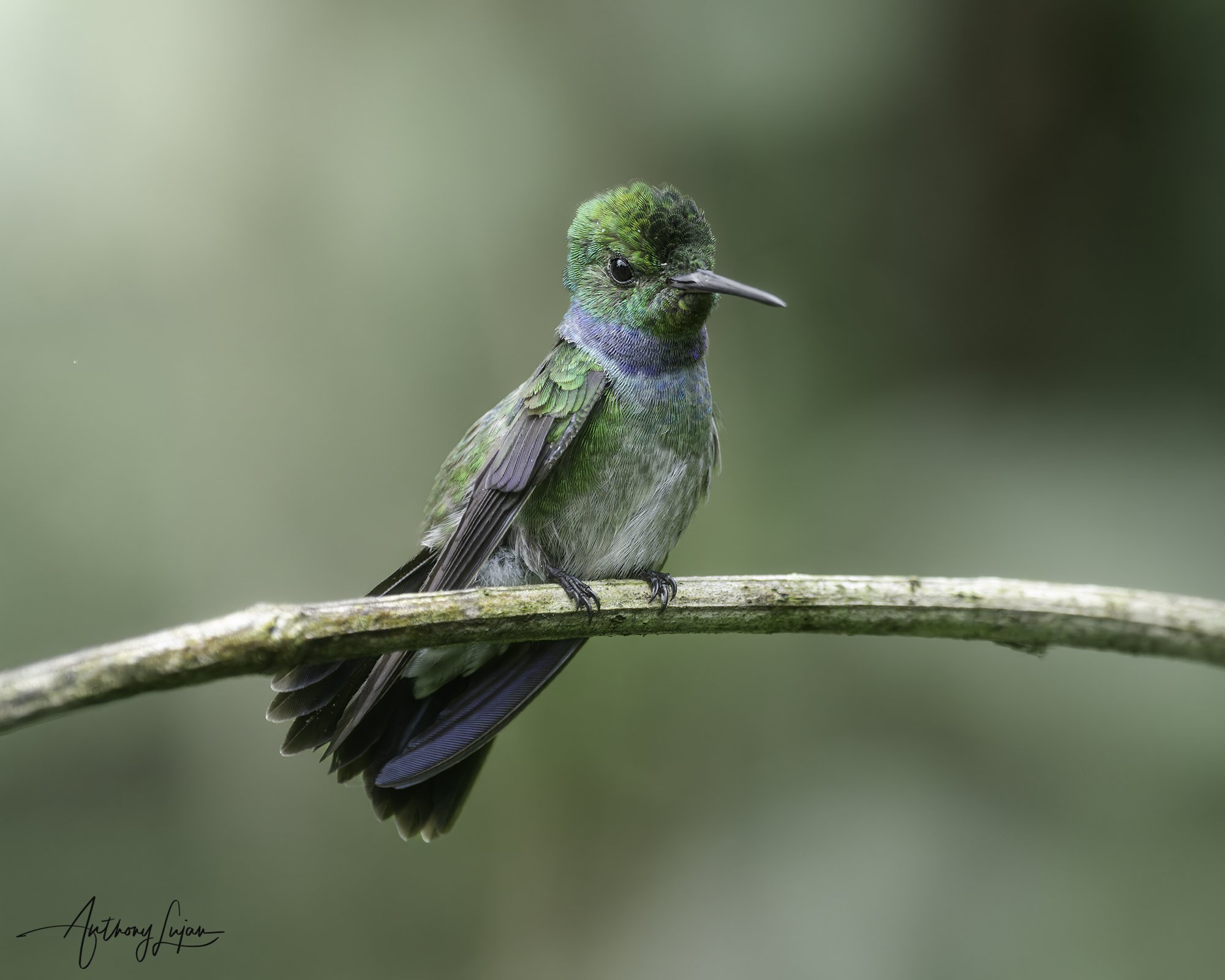
Adult males have a bright green crown and upperparts, a glittering purple-blue to blue-violet throat and upper breast that form the blue chest, and a grayish to whitish lower belly and undertail area. The tail is dark, often bluish-black and slightly forked, with no extensive white patches, and the bill is straight and black. In good light the contrast between the vivid blue chest, green head and back, and pale belly gives a clean, compact appearance that makes males stand out among other small green hummingbirds.
Female Description
Females lack the solid, glittering blue chest of males and instead show green upperparts with a whitish or grayish underpart washed or spotted with green on the chest and sides. The throat and upper breast often have green spots or scaling on a whitish background, and the tail is dark with little or no white, sometimes with slightly paler tips. Juveniles resemble females but may show buffy or grayish feather edges and less crisp spotting. Overall, females appear as small green hummingbirds with pale, lightly spotted underparts and a darker tail, lacking the intense blue chest of adult males.
Habitat & Behavior
Blue-chested Hummingbirds inhabit subtropical and tropical moist lowland and foothill forest, forest edges, second growth, plantations, and rural gardens, often favoring semi-open areas at the forest margin. They feed on nectar from a variety of flowering shrubs, trees, and epiphytes, using both trap-lining routes between scattered flowers and defending small feeding territories, especially where nectar is limited. In addition to nectar, they take tiny insects and spiders gleaned from foliage or caught in short sallies, providing essential protein. Males can be notably aggressive at rich nectar sources, chasing other hummingbirds and even large insects such as bees and hawk moths. The species is generally considered resident, with no strong evidence for long-distance migration, though local movements likely track flowering cycles and seasonal resource availability.
Population
With an estimated 500,000–4,999,999 mature individuals, the Blue-chested Hummingbird has a moderately large global population relative to its geographically limited range. It is often fairly common in suitable habitat, particularly in lowland and foothill areas where forest edges, second growth, and gardens provide continuous nectar sources. Nevertheless, deforestation and degradation of humid lowland forest throughout parts of Central America and northwestern South America are thought to be driving an overall decreasing population trend.

Conservation
The Blue-chested Hummingbird is listed as Least Concern due to its relatively large population and presence across multiple countries, but its decreasing trend reflects ongoing habitat loss and degradation. Clearing of lowland and foothill forest for agriculture, pasture, and development reduces the extent and connectivity of its preferred habitats, though the species’ use of second growth, plantations, and gardens offers some resilience. Conservation of remaining humid lowland and foothill forests, maintenance of forested corridors, and promotion of wildlife-friendly agriculture with flowering hedgerows and shade trees will help support this species and other nectar-dependent birds. Continued monitoring is important to ensure that declines do not accelerate to the point where a higher threat category becomes warranted.
For more details on the trips behind this species, visit the Costa Rica Hummingbird Expedition | July 2025 page and explore My Travel 2025-05 Costa Rica for guides and trip reports.
Checkout Anthony’s playlist of this species! Click the top right dropdown to see all the videos.
Related species in the Polyerata genus (3 species total):


Please note: The content provided in this article reflects Anthony’s personal experience and photographic approach. Results can vary depending on light, weather, location, equipment, subject behavior, and field conditions.